

The portable projector market has exploded in recent years, transforming from basic business tools into sophisticated entertainment hubs that can turn any wall into a movie theater. Two standout contenders have emerged in this space: the TCL C1 Google TV Portable Projector and the JMGO PicoPlay 1080P Smart Portable Projector. Both launched in 2024, representing the latest thinking in portable projection technology, but they take dramatically different approaches to solving the same fundamental problem—how to create big-screen entertainment anywhere.
Before diving into specifics, it's worth understanding what separates today's portable projectors from the clunky business units your teacher wheeled into class. Modern portable projectors integrate smart TV platforms (think Android TV or Google TV built right in), automatic image correction systems, and surprisingly capable audio—all while being small enough to toss in a backpack.
The key technical challenge these devices face is the brightness-portability trade-off. Traditional home theater projectors pump out 2,000-3,000 lumens (lumens measure how much light a projector outputs), but they're massive, hot, and power-hungry. Portable projectors typically max out around 400-500 lumens, which means they work best in dim or dark rooms. This isn't necessarily a limitation—it just defines how and where you'll use them.
The other major consideration is the smart platform integration. Instead of needing a separate streaming stick or laptop, these projectors run apps like Netflix and YouTube directly. This built-in capability transforms them from simple display devices into complete entertainment systems.
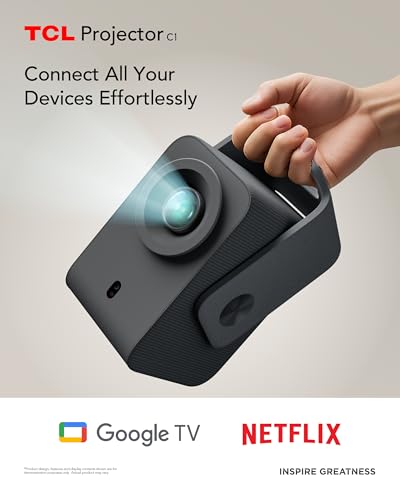
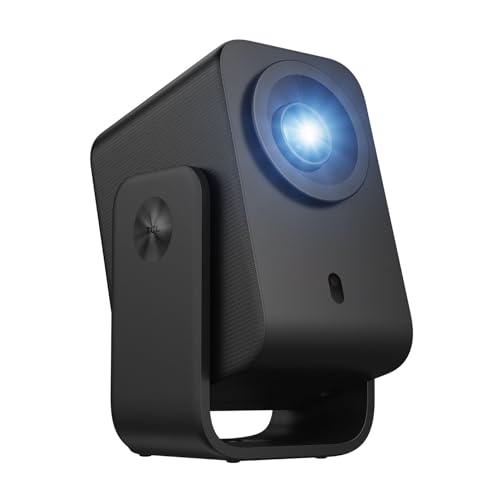
The TCL C1 represents what I'd call the "home theater replacement" approach. Released in early 2024, it's designed as a compact but capable streaming machine that happens to be portable, rather than a truly mobile device. At roughly the size of a lunchbox with an integrated handle, it prioritizes streaming convenience and setup automation over ultimate portability.
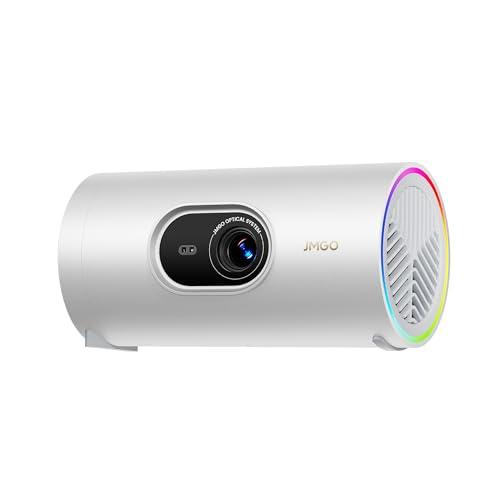
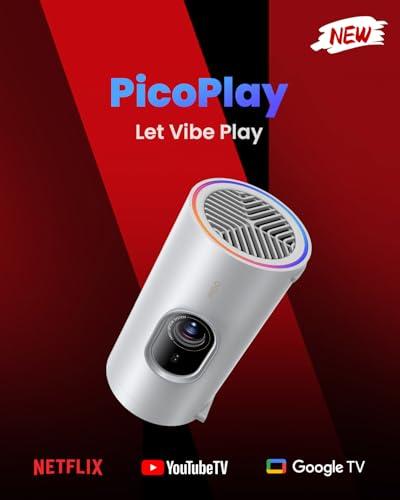
The JMGO PicoPlay, also from 2024, takes the opposite approach—it's a "go anywhere" device about the size of a large travel mug. Rather than replacing your home entertainment system, it extends entertainment to places where traditional setups can't reach. This fundamental philosophical difference shapes everything about how these devices work and who should buy them.
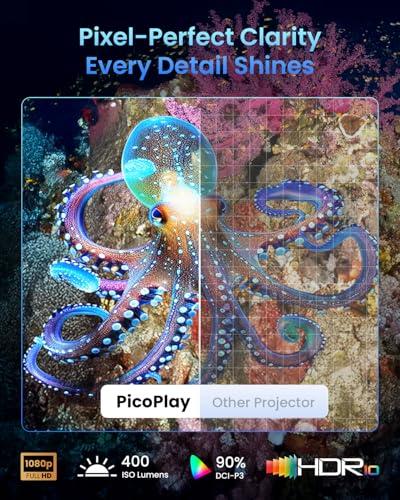
When it comes to picture quality, the numbers tell an interesting story. The JMGO PicoPlay outputs 400 ISO lumens compared to the TCL C1's 230 ISO lumens—that's a 75% brightness advantage that makes a noticeable difference in real-world viewing. ISO lumens is the standardized measurement that accounts for how brightness decreases over the projector's lifespan, so it's more reliable than the inflated "ANSI lumens" some manufacturers claim.
This brightness difference means the JMGO PicoPlay can handle slightly brighter rooms and larger screen sizes more effectively. In our research across user reviews, the PicoPlay consistently performed better in situations with some ambient light—think a living room with curtains drawn but not blackout conditions.
However, the TCL C1 compensates with some clever engineering. Its sealed optical engine prevents dust from entering the light path, which is crucial for long-term performance. Most portable projectors use open designs where dust gradually accumulates on internal components, dimming output and degrading image quality over time. TCL's sealed approach maintains consistent brightness throughout the projector's 30,000-hour LED lifespan.
The TCL C1 also includes TrueHue technology, which analyzes each frame and adjusts color and contrast in real-time. Based on reviewer feedback, this produces smoother, more film-like images that look particularly good with movie content. The trade-off is that colors appear more natural but less "punchy" than the JMGO PicoPlay's more saturated output.
For color accuracy, the JMGO PicoPlay has a technical edge, covering 124% of the Rec.709 color space (the standard for HD video) and 90% of DCI-P3 (the cinema standard). This wider color gamut—the range of colors a display can reproduce—results in more vibrant greens, deeper reds, and richer overall color reproduction.
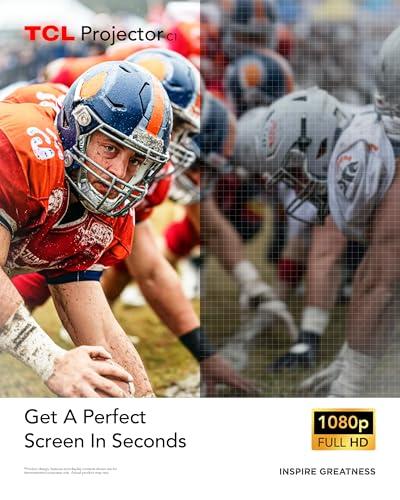
The bottom line on image quality: If you're primarily watching in dark rooms, both deliver excellent 1080p images that look sharp and detailed at 50-80 inch screen sizes. The JMGO PicoPlay handles brighter environments better, while the TCL C1 optimizes for cinema-like viewing in controlled lighting.
This is where the TCL C1 demonstrates its "home theater replacement" philosophy most clearly. It runs full Google TV—the same platform you'd find on high-end Sony or TCL TVs—with official Netflix certification. This matters more than you might think. Many portable projectors claim Netflix support but can only access it through screen mirroring or unofficial apps that deliver lower quality streams.
The TCL C1's Google TV implementation includes Google Assistant voice control, Chromecast built-in for seamless phone casting, and access to over 10,000 apps through the Google Play Store. The interface feels responsive and polished, with dedicated remote buttons for Netflix, YouTube, Disney+, and other major services.
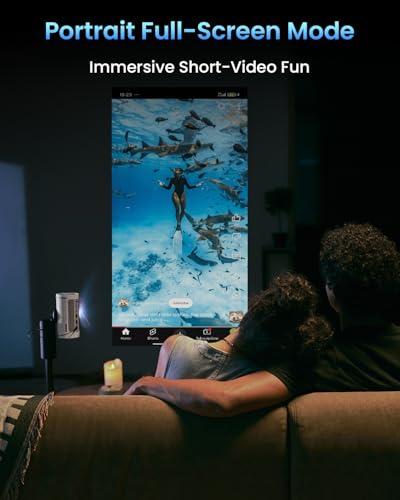
The JMGO PicoPlay also runs Google TV, but our research suggests it's a more limited implementation. Loading times are slower, and some users report occasional glitches when switching between apps. However, the PicoPlay includes one unique feature that's genuinely innovative: Vertical Play mode. This optimizes the projector for TikTok, Instagram Reels, and other vertical content—something no other projector in this category offers.
For gaming, both projectors support modern consoles through HDMI 2.1 connections. The TCL C1 includes automatic game mode switching and low-latency processing, making it particularly well-suited for PlayStation 5 or Xbox Series X gaming. Input lag measurements from reviews suggest both are adequate for casual gaming, though serious competitive gamers will still prefer dedicated gaming monitors.
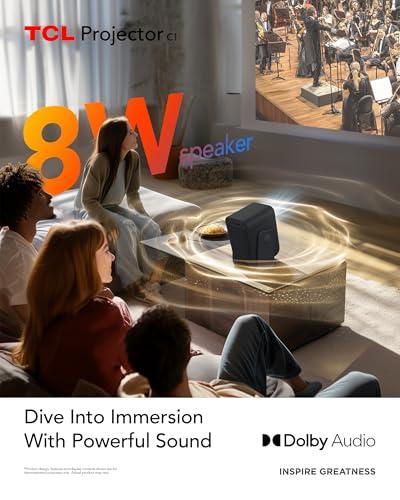
Both projectors pack 8-watt speakers, but they implement audio quite differently. The TCL C1 uses a rear-facing Dolby Audio speaker optimized for dialogue clarity and movie soundtracks. Based on user feedback, it delivers clear, intelligible audio that fills small to medium rooms adequately, though it lacks the bass response for action movies at high volumes.
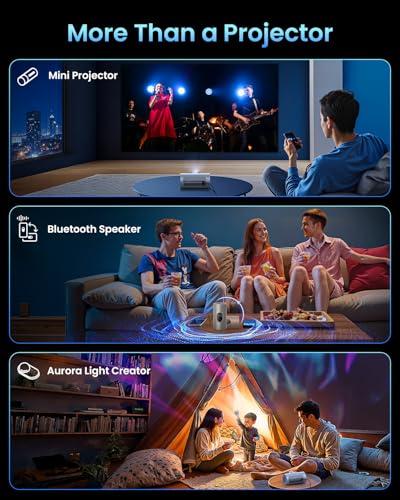
The JMGO PicoPlay takes a more creative approach with an omnidirectional speaker design that projects sound in all directions. This creates a more immersive audio experience for music and can fill oddly-shaped spaces more evenly. The PicoPlay also doubles as a standalone Bluetooth speaker, complete with music-synchronized ambient lighting around its base.
Both projectors can output audio to external speakers or headphones, though the TCL C1 includes a dedicated 3.5mm headphone jack while the PicoPlay relies on Bluetooth or HDMI ARC connections. For serious movie watching, you'll likely want external audio with either projector, but both deliver surprisingly capable built-in sound for casual viewing.
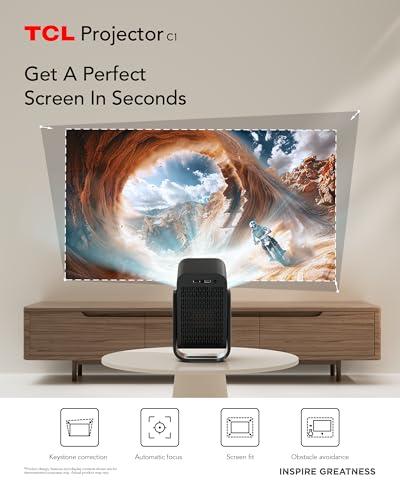
Modern portable projectors have largely solved the setup complexity that plagued earlier generations, but these two devices take different approaches. The TCL C1 emphasizes comprehensive automation—power it on, and its systems immediately begin auto-focusing, correcting keystone distortion (the trapezoid effect when projecting at an angle), detecting obstacles in the projection path, and aligning the image to your screen or wall.
This obstacle avoidance feature deserves special mention. Using sensors, the projector can detect objects like picture frames or furniture in the projection path and automatically adjust the image shape to avoid them. It's the kind of smart feature that seems gimmicky until you use it, then becomes indispensable.
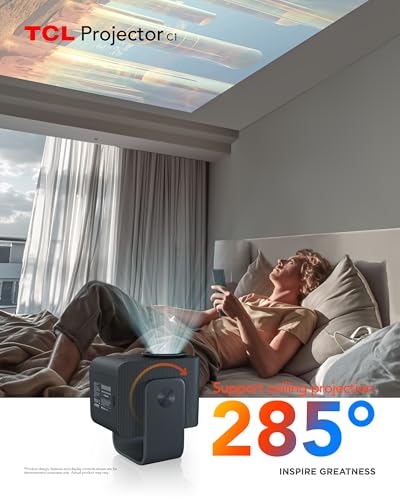
The TCL C1's 285-degree gimbal design allows projection from almost any angle, including straight up at the ceiling—perfect for bedroom movie nights. The gimbal feels robust and maintains position reliably, even when adjusted frequently.
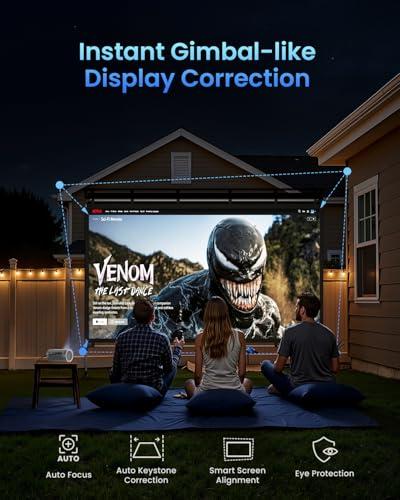
The JMGO PicoPlay uses a different approach with its FlexiSmart system, which relies on a Time-of-Flight (ToF) sensor—the same technology used in smartphone cameras for portrait mode. This sensor measures distances to objects in the projection path, enabling rapid autofocus and automatic keystone correction. The system also includes eye protection that dims or pauses projection if someone walks into the light beam.
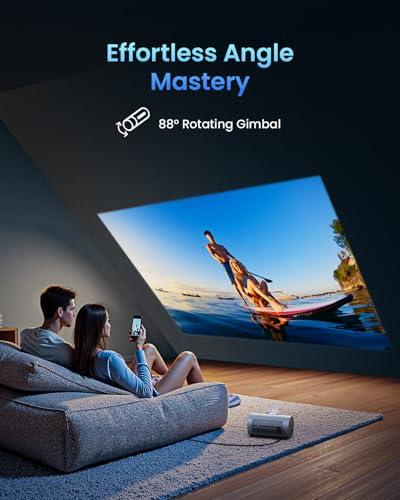
The PicoPlay's 88-degree rotating gimbal is more limited than the TCL's range, but it includes automatic orientation detection. Rotate the projector, and it immediately recognizes the new position and adjusts accordingly.
Setup verdict: The TCL C1 offers more comprehensive automation and projection flexibility, while the JMGO PicoPlay prioritizes speed and modern sensor-based convenience.
This is where the fundamental design philosophies become most apparent. The TCL C1 weighs 1.77 kg (just under 4 pounds) with dimensions roughly equivalent to a thick hardcover book. It includes a built-in handle and feels substantial—like a piece of equipment you'd move between rooms but not necessarily pack for travel.
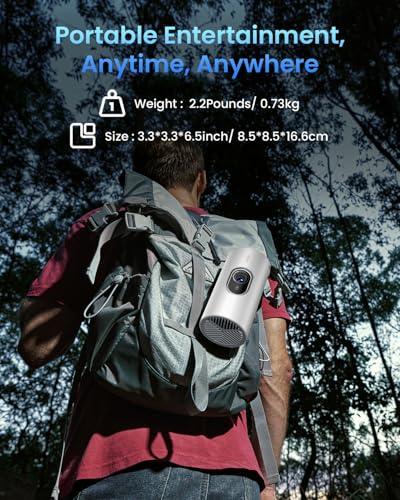
The JMGO PicoPlay, at just 740 grams (1.6 pounds), represents a completely different portability class. Its cylindrical design fits easily in backpacks, and the included carrying pouch makes travel simple. The size difference is dramatic—you could fit three PicoPlays in the space occupied by one TCL C1.
However, portability involves more than just size and weight. The TCL C1 plugs directly into wall power and works immediately. The JMGO PicoPlay requires external power—either a 65W USB-C power bank or connection to wall power. While this enables true wireless operation, it also means additional accessories and planning for portable use.
The power story reveals each projector's intended use case. The TCL C1 draws 65 watts from standard AC power, making it plug-and-play but tethered to outlets. For most home use scenarios, this isn't limiting—you're typically projecting near available power anyway.
The JMGO PicoPlay runs on USB-C power, opening up more flexible power options. A 65W power bank provides 3-4.5 hours of video playback or up to 7 hours of music playback. JMGO also offers an optional battery tripod that integrates power and mounting into one accessory. This flexibility enables true anywhere-entertainment but requires additional investment and planning.
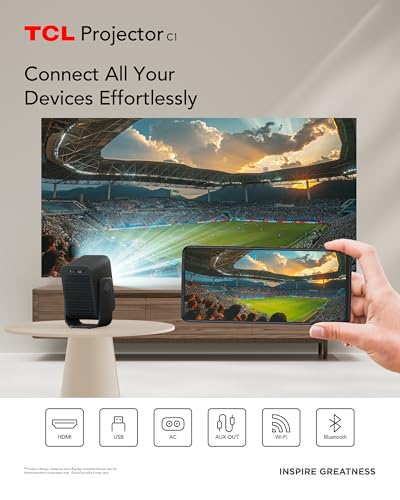
Both projectors offer similar connectivity options with HDMI 2.1, USB ports, and modern Wi-Fi and Bluetooth. The TCL C1 includes a dedicated 3.5mm audio output, while the JMGO PicoPlay relies on digital audio connections.
At the time of writing, the TCL C1 typically costs significantly less than the JMGO PicoPlay—often $100-150 less depending on sales and availability. This price difference reflects their different target markets and feature sets.
The TCL C1 delivers exceptional value for home-focused use. Its comprehensive Google TV implementation eliminates the need for external streaming devices, its sealed optical engine ensures long-term reliability, and its automated setup features work consistently across various room configurations. For someone wanting to replace or supplement a living room TV with projection, the TCL represents a complete solution at an attractive price.
The JMGO PicoPlay commands a premium for its ultra-portable form factor and multi-function capabilities. When you factor in its role as projector, high-quality Bluetooth speaker, and ambient lighting system, the price becomes more reasonable. The additional cost reflects the engineering required to pack this functionality into such a compact package.
After extensive research into user experiences and expert reviews, clear usage patterns emerge for each projector.
Choose the TCL C1 Google TV Portable Projector if you want a home theater replacement that happens to be portable rather than truly mobile entertainment. It excels in apartments, condos, or homes where space constraints make traditional TVs impractical. The comprehensive streaming integration means you can eliminate cable boxes, streaming sticks, and other external devices. It's perfect for renters who want big-screen entertainment without mounting permanent fixtures, or for anyone who values setup simplicity over ultimate portability.
The sealed optical engine makes the TCL C1 a better long-term investment for regular home use. The automated setup features work consistently, and the projection flexibility handles various room layouts effectively. Gaming performance is solid for casual console gaming, and the overall package delivers premium home entertainment at a reasonable price.
Choose the JMGO PicoPlay 1080P Smart Portable Projector when portability and flexibility matter more than comprehensive features. It's ideal for frequent travelers, college students, or anyone who wants to bring big-screen entertainment to various locations. The multi-function design means it can replace several devices—projector, Bluetooth speaker, and ambient lighting—making it valuable for small living spaces or situations where every device needs to earn its place.
The PicoPlay works best for social viewing scenarios—parties, gatherings, outdoor events—where its brighter output, vertical content support, and lighting effects add to the experience. While it requires more planning for power management, the ability to create cinema experiences anywhere makes it worth the extra complexity for the right user.
Both the TCL C1 and JMGO PicoPlay represent excellent examples of how portable projector technology has evolved. The TCL prioritizes comprehensive home entertainment in a compact package, while the JMGO emphasizes ultimate portability and multi-function capability.
Your choice should align with your primary use case: stationary flexibility and streaming convenience with the TCL C1, or maximum portability and social features with the JMGO PicoPlay. Both deliver surprisingly good image quality for their size and price, proving that portable projection technology has finally reached mainstream viability.
The portable projector category continues evolving rapidly, with improvements in brightness, battery technology, and smart features appearing regularly. Both of these 2024 models represent the current state-of-the-art and should remain competitive for several years. Choose based on your specific needs rather than trying to future-proof—the technology is advancing too quickly for any device to remain cutting-edge indefinitely.
| TCL C1 Google TV Portable Projector | JMGO PicoPlay 1080P Smart Portable Projector |
|---|---|
| Brightness - Critical for viewing in different lighting conditions | |
| 230 ISO lumens (requires dark rooms for best experience) | 400 ISO lumens (handles dimmer daylight and ambient lighting better) |
| Size & Weight - Determines true portability and storage convenience | |
| 1.77 kg (3.9 lbs), lunchbox-sized with handle | 740g (1.6 lbs), travel mug size fits in backpacks |
| Smart TV Platform - Affects streaming app availability and performance | |
| Full Google TV with certified Netflix, 10,000+ apps | Google TV with slower loading, includes unique Vertical Play mode |
| Power Requirements - Impacts where and how you can use the projector | |
| AC power only (65W), plug-and-play operation | USB-C powered, requires power bank or battery tripod for portable use |
| Maximum Screen Size - Larger projection capability for bigger viewing experiences | |
| 120 inches maximum | 180-200 inches maximum |
| Gimbal Range - Flexibility for projection angles and ceiling mounting | |
| 285° swivel range with ceiling projection capability | 88° rotating gimbal with automatic orientation detection |
| Audio System - Built-in sound quality affects need for external speakers | |
| 8W rear-facing Dolby Audio speaker | 8W omnidirectional Bluetooth speaker with 360° sound projection |
| Setup Automation - Reduces manual adjustments for quick viewing | |
| Comprehensive: autofocus, auto keystone, obstacle avoidance, screen alignment | FlexiSmart system with ToF sensor autofocus and eye protection |
| Durability Features - Long-term reliability and maintenance needs | |
| Sealed optical engine prevents dust, IP5X rating, 30,000-hour LED life | Standard open design, no specific dust protection mentioned |
| Unique Features - Special capabilities that differentiate each model | |
| TCL C1: Gaming console optimization, Bluetooth speaker mode | JMGO PicoPlay: 3-in-1 design with ambient lighting, vertical content support |
| Color Performance - Image vibrancy and accuracy for different content types | |
| TrueHue technology for film-like smoothness, natural color reproduction | 124% Rec.709, 90% DCI-P3 color gamut for more vibrant, saturated colors |
| Best Use Case - Primary scenarios where each projector excels | |
| Dark room home theater replacement, apartment living, console gaming | Travel entertainment, outdoor events, social gatherings, ultra-portable needs |
The JMGO PicoPlay is significantly brighter at 400 ISO lumens compared to the TCL C1 at 230 ISO lumens. This 75% brightness advantage means the JMGO PicoPlay can handle rooms with some ambient light better, while the TCL C1 works best in dark or dimly lit environments.
The JMGO PicoPlay is much more portable, weighing only 740g (1.6 lbs) with a travel mug-sized design that fits easily in backpacks. The TCL C1 weighs 1.77 kg (3.9 lbs) and is lunchbox-sized, making it better for room-to-room movement rather than true travel portability.
Yes, both the TCL C1 and JMGO PicoPlay run Google TV with access to Netflix, YouTube, and other streaming apps. However, the TCL C1 offers a more comprehensive Google TV experience with faster performance and certified Netflix support, while the JMGO PicoPlay includes unique features like Vertical Play mode for TikTok content.
The TCL C1 is better suited for home theater use due to its sealed optical engine that prevents dust buildup, comprehensive automated setup features, and optimized performance in dark rooms. Its TrueHue technology also delivers more film-like image quality that's ideal for movie watching.
The JMGO PicoPlay can run on USB-C power banks or an optional battery tripod for 3-4.5 hours of video playback, making it truly portable. The TCL C1 requires AC power only and must be plugged into a wall outlet, limiting its portability to locations with available power.
Both deliver excellent 1080p image quality, but with different strengths. The JMGO PicoPlay offers more vibrant colors with 124% Rec.709 color coverage and HDR10 support. The TCL C1 provides smoother, more cinematic images with its TrueHue technology and maintains consistent quality longer due to its dust-sealed design.
The JMGO PicoPlay can project up to 180-200 inches maximum, while the TCL C1 maxes out at 120 inches. However, both projectors perform best at 50-80 inch screen sizes where image brightness and sharpness are optimal for comfortable viewing.
The TCL C1 is better for gaming due to its automatic game mode switching, low-latency processing, and direct HDMI 2.1 connection optimized for PlayStation 5 and Xbox Series X. The JMGO PicoPlay also supports gaming but lacks the specialized gaming optimizations of the TCL C1.
Both feature 8W speakers but with different designs. The TCL C1 has a rear-facing Dolby Audio speaker optimized for dialogue clarity in movies. The JMGO PicoPlay uses an omnidirectional design that projects sound in all directions and can function as a standalone Bluetooth speaker with ambient lighting effects.
The TCL C1 typically offers better value for home-focused use, providing comprehensive Google TV streaming, automated setup, and long-term durability at a lower price point. The JMGO PicoPlay commands a premium for its ultra-portable design and multi-function capabilities as a projector, speaker, and ambient light system.
Both projectors offer automated setup but with different approaches. The TCL C1 provides comprehensive automation including autofocus, auto keystone correction, obstacle avoidance, and screen alignment with a 285° gimbal range. The JMGO PicoPlay uses FlexiSmart system with ToF sensor technology for rapid autofocus and automatic orientation detection with an 88° rotating gimbal.
The JMGO PicoPlay is ideal for travel and outdoor use due to its compact size, battery power capability, and brighter output that handles varied lighting conditions better. The TCL C1 is better suited for indoor use where AC power is available and you want a more permanent entertainment setup that can be moved between rooms as needed.
We've done our best to create useful and informative comparisons to help you decide what product to buy. Our research uses advanced automated methods to create this comparison and perfection is not possible - please contact us for corrections or questions. These are the sites we've researched in the creation of this article: youtube.com - thegadgetflow.com - notebookcheck.net - shopabunda.com - youtube.com - youtube.com - youtube.com - youtube.com - tcl.com - androidauthority.com - manuals.plus - westcoast.co.uk - techbuzzireland.com - youtube.com - newatlas.com - projectorcentral.com - youtube.com - thegadgetflow.com - youtube.com - global.jmgo.com - youtube.com - bestbuy.com - projector-database.com - notebookcheck.net - eu.jmgo.com

Privacy Policy
Terms and Conditions - Affiliate Policy
Home Security
© Copyright 2008-2026.
11816 Inwood Rd #1211, Dallas, TX 75244