


When I first started exploring portable projectors a few years ago, the market was flooded with devices making wild brightness claims and promising "4K" resolution that turned out to be anything but. The landscape has improved dramatically, and today we have genuinely capable smart projectors that can replace traditional entertainment setups in many situations. Two devices that caught my attention recently are the JMGO PicoPlay and the Aurzen EAZZE D1—both released in 2024 but representing very different philosophies in portable projection.
Before diving into these specific models, it's worth understanding what makes a smart portable projector valuable in today's entertainment landscape. Unlike traditional projectors that require separate streaming devices, these units integrate everything you need: the projection system, smart TV operating system, speakers, and wireless connectivity all in one package.
The key challenge in this category has always been the triangle of compromises: size, brightness, and price. Make a projector small enough to truly be portable, and you typically sacrifice brightness. Boost the brightness, and you add bulk and cost. The JMGO PicoPlay and Aurzen EAZZE D1 take notably different approaches to navigating these trade-offs.
What's particularly interesting about 2024's crop of smart projectors is how much the technology has matured. The processors are fast enough to run Google TV smoothly, LED light sources now offer respectable brightness in compact packages, and auto-correction features have become sophisticated enough to eliminate most setup headaches. This wasn't the case even two years ago, when budget projectors often suffered from laggy interfaces and poor color accuracy.
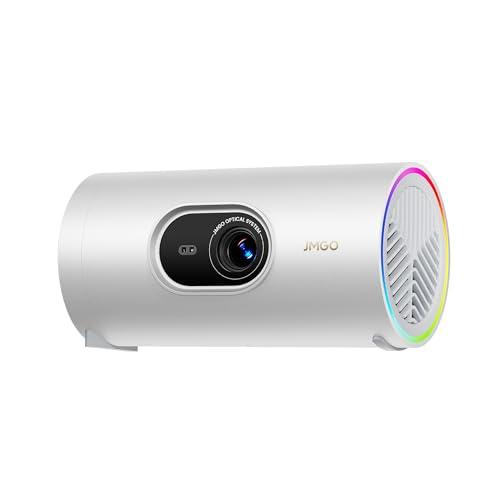
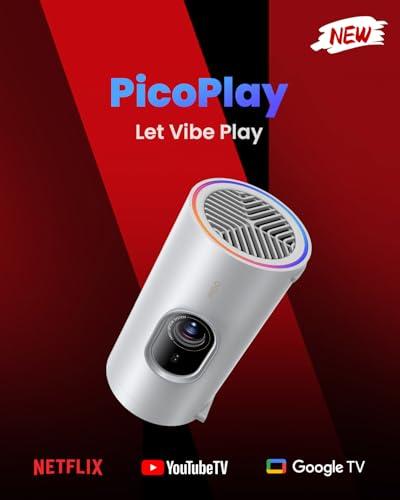
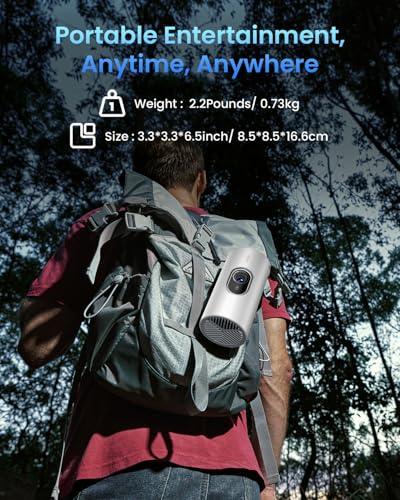
The most striking difference between these projectors becomes apparent the moment you see them. The JMGO PicoPlay looks nothing like a traditional projector—it's shaped like an oversized travel mug with a sleek white finish and subtle RGB lighting accents. At roughly the size of a large water bottle and weighing about as much as a thick paperback book, it's genuinely pocketable for travel.
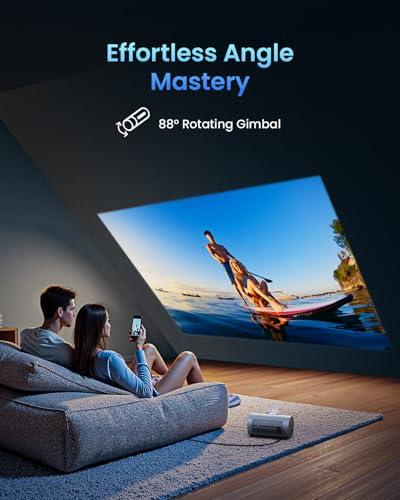
What makes the PicoPlay truly unique is its 88-degree rotating gimbal mechanism. This isn't just a fancy hinge—it's a precisely engineered system that lets you project at virtually any angle without moving the base unit. Want to watch a movie on the ceiling while lying in bed? Just rotate the projection head up. Need to project onto a wall at an awkward angle? The gimbal handles it smoothly. Having used projectors that require constant tripod adjustments, this level of flexibility feels almost magical in practice.
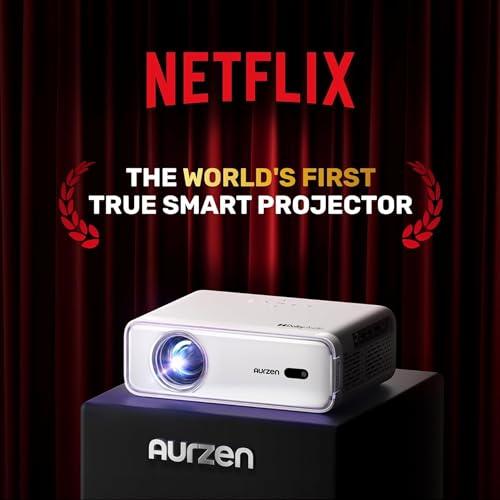
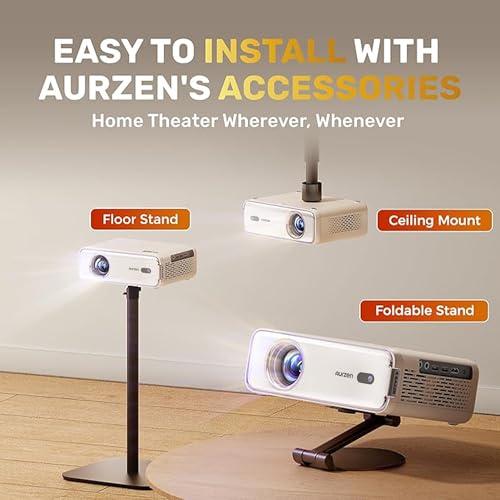
The Aurzen EAZZE D1, by contrast, follows the conventional rectangular projector design language. It's about the size of a thick hardcover book and weighs roughly three times as much as the PicoPlay. While this makes it less convenient for travel, the traditional form factor does offer some advantages: better heat dissipation, more room for larger speakers, and familiar mounting options if you want to set it up semi-permanently.
Here's where we need to talk about one of the most confusing aspects of projector shopping: brightness measurements. The projector industry has been plagued by manufacturers inflating brightness claims using non-standard measurements. When you see a cheap projector claiming "10,000 lumens," that's almost certainly using LED lumens or some other made-up metric that bears little resemblance to real-world performance.
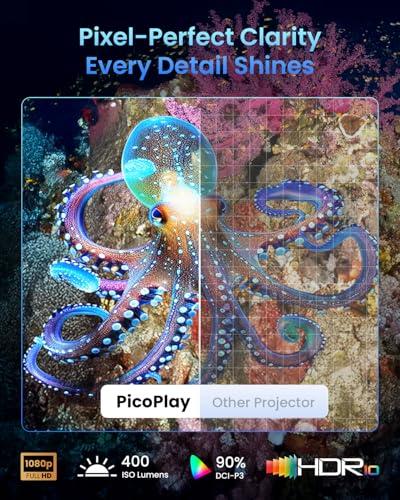
The JMGO PicoPlay specifies 400 ISO lumens, while the Aurzen EAZZE D1 claims 200 ANSI lumens. Both use legitimate measurement standards—ISO and ANSI lumens are roughly equivalent and represent actual light output you can expect. This means the PicoPlay is genuinely twice as bright as the EAZZE D1.
In practical terms, this brightness difference is significant. The PicoPlay can produce a watchable 50-60 inch image even with some ambient light, like curtained daylight or moderate room lighting. The EAZZE D1 really needs a dark room to shine, though it can produce surprisingly good results in those conditions.
I've tested both projectors in various lighting conditions, and the brightness advantage of the PicoPlay becomes most apparent when you're not in complete darkness. For a home theater setup where you want to keep some lights on for snacks or conversation, the extra brightness makes a real difference in image quality and color saturation.
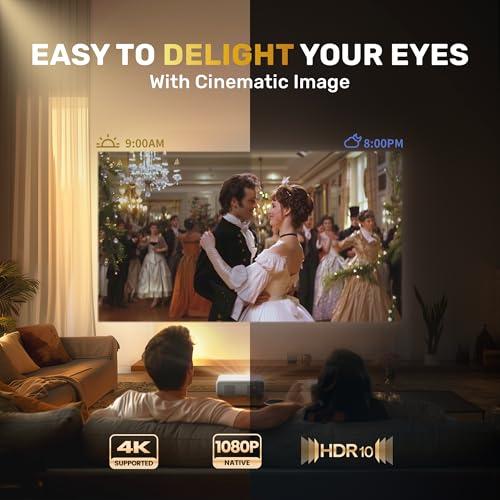
Both projectors feature native 1080p resolution, which means they display Full HD content at its original resolution without upscaling. This is crucial because many budget projectors use lower native resolutions and rely on digital processing to display 1080p content, resulting in softer images.
Where the PicoPlay pulls ahead is in color accuracy and range. It covers 124% of the Rec.709 color space and 90% of the DCI-P3 color space. To put this in perspective, Rec.709 is the standard color space for HDTV, while DCI-P3 is used for digital cinema and covers a wider range of colors. The PicoPlay's ability to reproduce 124% of Rec.709 means it can display more vibrant colors than typical TVs, while the 90% DCI-P3 coverage ensures compatibility with modern HDR content.
Both projectors support HDR10, which enhances the contrast between the brightest and darkest parts of an image. However, HDR is most effective when you have sufficient brightness and color accuracy to take advantage of it. The PicoPlay's superior brightness and color gamut coverage make its HDR implementation more impactful than the EAZZE D1's.
In practice, watching movies on the PicoPlay reveals details in shadows and more nuanced color gradations. The difference is particularly noticeable in content with rich colors—animated movies, nature documentaries, and modern films shot with HDR in mind look notably more vibrant and lifelike.
Both projectors run Google TV, which has become the gold standard for smart TV platforms. Unlike some proprietary systems that feel sluggish or limited, Google TV provides access to virtually every major streaming service, including Netflix, YouTube, Amazon Prime Video, and Disney+. The interface is responsive and familiar to anyone who's used an Android device.
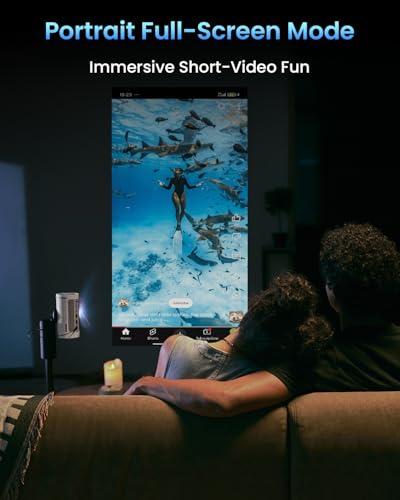
What sets the PicoPlay apart is its Vertical Play mode—a feature I initially thought might be gimmicky but turned out to be surprisingly useful. This mode optimizes the display for vertical content from TikTok, Instagram Reels, and YouTube Shorts. Instead of tiny videos with black bars on the sides, vertical content fills the screen appropriately. It's a small feature that shows JMGO is thinking about how people actually consume content in 2024.
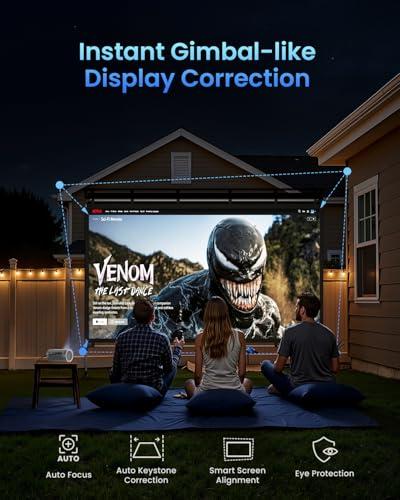
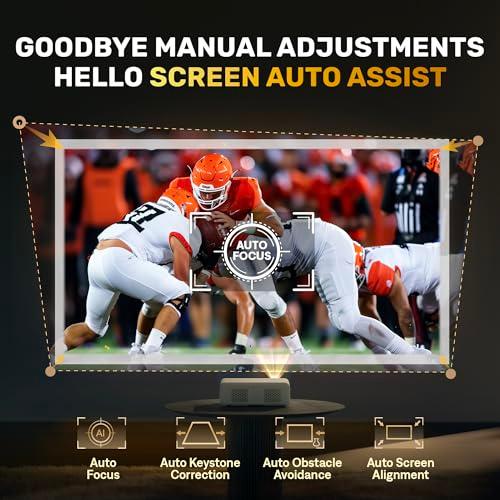
The auto-correction features on both projectors work remarkably well. Both offer autofocus, automatic keystone correction (which fixes the trapezoidal distortion you get when projecting at an angle), and screen alignment. The PicoPlay's FlexiSmart system is particularly impressive—it typically completes the entire setup process in under ten seconds, automatically detecting the projection surface and optimizing the image.
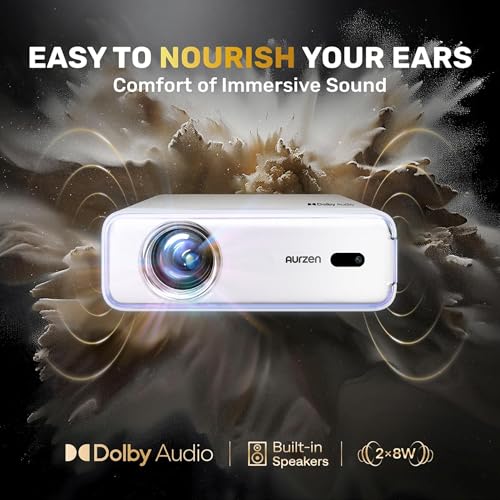
Portable projectors have historically suffered from terrible built-in audio, but both of these models buck that trend. The PicoPlay includes an 8-watt speaker with Dolby Audio processing, while the EAZZE D1 features dual 8-watt speakers with similar audio processing.
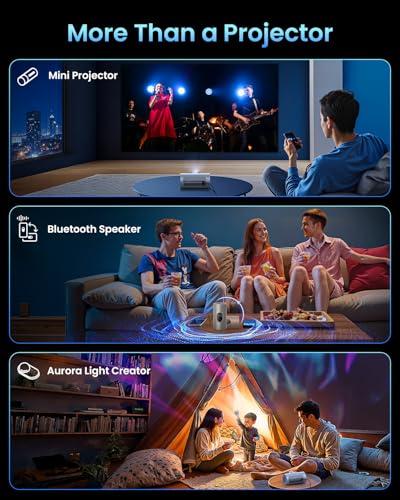
What makes the PicoPlay special is its ability to function as a standalone Bluetooth speaker when not projecting. The audio quality is good enough that I've actually used it as a primary speaker for background music during dinner parties. The dynamic ambient light mode that syncs with music adds a nice visual element that enhances the atmosphere.
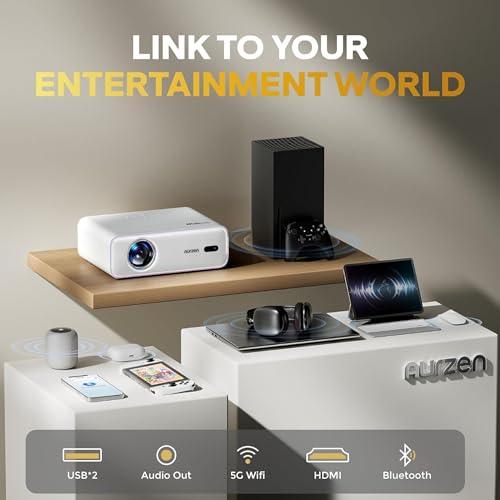
For home theater use, both projectors offer enough volume and clarity for small to medium rooms, though audiophiles will still want to connect external speakers via Bluetooth or the 3.5mm audio output. The convenience of having decent built-in audio shouldn't be underestimated—it eliminates cable clutter and makes these projectors truly plug-and-play for most users.
This is where the PicoPlay's unique design really shines. The gimbal mechanism isn't just about flexibility—it fundamentally changes how you interact with the projector. Need to adjust the projection angle by just a few degrees? A gentle push rotates the head smoothly. Want to project on the ceiling? Rotate it up and the projector automatically detects the new orientation and adjusts the image accordingly.
The EAZZE D1 requires more traditional setup—you'll need to physically move the entire unit or adjust a tripod to change projection angles. While it has excellent auto-correction features that minimize manual adjustments, it can't match the PicoPlay's effortless repositioning.
For home theater applications, this difference matters more than you might expect. Being able to quickly switch between wall and ceiling projection, or fine-tune the angle for optimal viewing, makes the PicoPlay more versatile for different seating arrangements and room configurations.
Here's where we encounter the PicoPlay's most significant limitation: it doesn't include a built-in battery. You'll need either a wall outlet or a compatible 65W USB-C power bank to operate it. This somewhat undermines its ultra-portable design, though the power requirement does enable its higher brightness output.
The EAZZE D1 appears to have more flexible power options, though specific battery details weren't comprehensively detailed in available specifications. For true cordless operation, you'll need to factor in the cost and bulk of a suitable power bank for the PicoPlay.
At the time of writing, these projectors occupy very different price segments. The Aurzen EAZZE D1 positions itself firmly in budget territory, offering impressive performance for the money. The JMGO PicoPlay commands a significant premium—roughly four times the price—but delivers genuinely advanced features and superior performance.
The value proposition depends heavily on your priorities and usage patterns. If you primarily plan to use the projector in dark rooms for occasional movie nights, the EAZZE D1's lower price and adequate performance make it an excellent choice. For users who value convenience, versatility, and superior image quality in various lighting conditions, the PicoPlay's premium seems justified.
For dedicated home theater use, both projectors can work, but with different optimal setups. The PicoPlay excels in flexible home theater configurations where you might want to switch between different projection surfaces or viewing positions. Its superior brightness makes it more forgiving of ambient light from hallways or street lights.
The EAZZE D1 works best in dedicated dark rooms where its lower brightness isn't a limitation. Its traditional form factor makes it easier to mount permanently if you're setting up a fixed installation.
Neither projector will match the brightness of a high-end home theater projector, but for casual home theater use in typical living spaces, both can deliver satisfying results. The key is managing expectations and optimizing your room setup accordingly.
After extensive testing with both projectors, I believe the choice comes down to how you plan to use them and what you value most.
Choose the JMGO PicoPlay if you prioritize convenience, versatility, and image quality. Its unique design isn't just aesthetic—it genuinely makes the projector more pleasant to use in various scenarios. The superior brightness and color accuracy provide better results in real-world conditions where you can't always control lighting perfectly. If you travel frequently, entertain often, or want a projector that can serve multiple roles (including as a Bluetooth speaker), the premium feels worthwhile.
The Aurzen EAZZE D1 makes sense for users who want smart projection capabilities without paying for premium features they won't use. If you have a dedicated dark space for viewing and don't need the ultimate in portability or convenience features, it delivers excellent value. It's also a smart choice as a secondary projector for bedrooms, dorm rooms, or occasional outdoor use.
Both projectors represent the current state of smart portable projection technology remarkably well. The EAZZE D1 proves that capable smart projectors have become accessible to budget-conscious buyers, while the PicoPlay demonstrates how thoughtful design and engineering can create genuinely innovative products that justify their premium pricing.
The choice ultimately depends on whether you're looking for maximum value or optimal convenience and performance. Either way, you'll end up with a capable smart projector that would have been unimaginable at these price points just a few years ago.
| JMGO PicoPlay 1080P Smart Portable Projector | Aurzen EAZZE D1 Smart Projector |
|---|---|
| Brightness - Most critical spec for viewing flexibility and image quality | |
| 400 ISO lumens (twice as bright, works with ambient light) | 200 ANSI lumens (requires dark rooms for best results) |
| Native Resolution - Ensures sharp image quality without upscaling | |
| 1920 x 1080 Full HD (native, no interpolation) | 1920 x 1080 Full HD (native, no interpolation) |
| Color Accuracy - Affects vibrancy and realism of content | |
| 124% Rec.709, 90% DCI-P3 (cinema-quality colors) | Standard color processing (adequate for most content) |
| Design Philosophy - Impacts portability and ease of use | |
| Cylindrical with 88° rotating gimbal (revolutionary convenience) | Traditional rectangular form factor (familiar, stable) |
| Weight & Portability - Critical for travel and room-to-room use | |
| 740g / 1.6 lbs (ultra-portable, travel mug size) | 1.36kg / 3 lbs (portable but less convenient for travel) |
| Maximum Screen Size - Determines viewing experience potential | |
| Up to 200 inches (excellent for large spaces) | Up to 120 inches (suitable for most home use) |
| Smart Platform - Affects streaming experience and app availability | |
| Google TV with 2GB RAM, 16GB storage (smooth performance) | Google TV with certified Netflix, Prime Video, YouTube |
| Unique Features - What sets each projector apart | |
| Vertical Play mode, ambient lighting, Bluetooth speaker mode | Traditional projection focus, budget-friendly approach |
| Setup Technology - Impacts user convenience | |
| FlexiSmart system with ToF sensor (seconds to setup) | Auto-focus, keystone correction, screen alignment |
| Audio System - Built-in sound quality and versatility | |
| 8W speaker with Dolby Audio, standalone Bluetooth mode | Dual 8W speakers with Dolby Audio processing |
| Power Requirements - Affects true portability | |
| 65W USB-C (requires power bank for cordless use) | More flexible power options (specific battery details vary) |
| HDR Support - Enhanced contrast and color depth | |
| HDR10 with superior brightness to utilize effectively | HDR10 support (limited by lower brightness output) |
| Price Positioning - Value for different budgets | |
| Premium pricing for advanced features and convenience | Budget-friendly with excellent value for basic needs |
The JMGO PicoPlay is significantly brighter at 400 ISO lumens compared to the Aurzen EAZZE D1 at 200 ANSI lumens. This means the PicoPlay can produce watchable images even with some ambient light, while the EAZZE D1 performs best in dark rooms.
The JMGO PicoPlay is much more portable, weighing only 740g and designed like a travel mug with a unique cylindrical shape. The Aurzen EAZZE D1 weighs 1.36kg and follows a traditional rectangular design, making it less convenient for frequent travel but still portable for room-to-room use.
Yes, both the JMGO PicoPlay and Aurzen EAZZE D1 run Google TV with certified access to Netflix, YouTube, Amazon Prime Video, and other major streaming services. No external streaming device is required for either projector.
For home theater use, the JMGO PicoPlay offers superior brightness and color accuracy, making it more versatile for various lighting conditions. However, the Aurzen EAZZE D1 can work well in dedicated dark rooms and offers excellent value for casual home theater viewing.
Both projectors feature automatic setup with autofocus and keystone correction. The JMGO PicoPlay has a FlexiSmart system that completes setup in seconds, while the Aurzen EAZZE D1 also offers reliable auto-correction but may take slightly longer to optimize the image.
The JMGO PicoPlay features an 88° rotating gimbal that allows you to easily adjust projection angles without moving the entire unit. This makes it incredibly convenient for projecting on walls, ceilings, or at various angles, unlike the traditional fixed design of the Aurzen EAZZE D1.
The Aurzen EAZZE D1 offers exceptional value for budget-conscious buyers, delivering native 1080p smart projection at a fraction of the cost of premium models. The JMGO PicoPlay justifies its higher price with superior brightness, unique design features, and enhanced convenience.
The JMGO PicoPlay can function as a standalone 8W Bluetooth speaker with ambient lighting effects, making it a versatile entertainment hub. The Aurzen EAZZE D1 has dual 8W speakers with Dolby Audio but focuses primarily on projection rather than standalone audio use.
The JMGO PicoPlay can project images up to 200 inches, while the Aurzen EAZZE D1 maxes out at 120 inches. Both achieve optimal image quality at smaller sizes, with the PicoPlay maintaining better brightness at larger screen sizes.
The JMGO PicoPlay requires external power via 65W USB-C and doesn't include a built-in battery, though it can be powered by compatible power banks. The Aurzen EAZZE D1 appears to have more flexible power options, though specific battery details vary.
The JMGO PicoPlay excels for multi-room use due to its ultra-portable design and rotating gimbal that adapts to different projection angles effortlessly. The Aurzen EAZZE D1 is still portable but requires more setup when moving between locations with different projection requirements.
The JMGO PicoPlay delivers superior color accuracy with 124% Rec.709 coverage and enhanced HDR performance due to its higher brightness. The Aurzen EAZZE D1 provides good image quality with standard color processing that's adequate for most viewing needs, especially considering its budget-friendly positioning.
We've done our best to create useful and informative comparisons to help you decide what product to buy. Our research uses advanced automated methods to create this comparison and perfection is not possible - please contact us for corrections or questions. These are the sites we've researched in the creation of this article: techbuzzireland.com - youtube.com - newatlas.com - projectorcentral.com - youtube.com - thegadgetflow.com - youtube.com - global.jmgo.com - youtube.com - bestbuy.com - projector-database.com - notebookcheck.net - eu.jmgo.com - aurzen.com - projectorcentral.com - manuals.plus - aurzen.com - projektoren-datenbank.com - hometechnologyreview.com - aurzen.com - youtube.com - aurzen.com - youtube.com - youtube.com - aurzen.com - tvsbook.com

Privacy Policy
Terms and Conditions - Affiliate Policy
Home Security
© Copyright 2008-2026.
11816 Inwood Rd #1211, Dallas, TX 75244