

The world of portable projectors has exploded in recent years, transforming from niche gadgets into genuine entertainment alternatives. Two devices that perfectly illustrate this evolution are the JMGO PicoPlay and the Epson EpiqVision Flex CO-FH02. While both aim to deliver big-screen experiences in compact packages, they take dramatically different approaches to solving the same problem.
Before diving into specifics, it's worth understanding what makes modern portable projectors tick. Traditional home projectors were massive, required extensive setup, and needed completely dark rooms to function properly. Today's smart portable projectors combine streaming capabilities, automatic setup features, and dramatically improved portability—though physics still imposes some hard limits.
The fundamental challenge remains balancing brightness (measured in lumens—essentially how much light the projector can output) with size and battery life. Brighter projectors need more powerful light sources, which consume more energy and generate more heat, requiring larger cooling systems. This is why you'll never see a truly pocket-sized projector that can compete with daylight—at least not with current technology.
Both the JMGO PicoPlay and Epson EpiqVision Flex CO-FH02 represent different solutions to this fundamental trade-off, each making distinct compromises to serve different user needs.
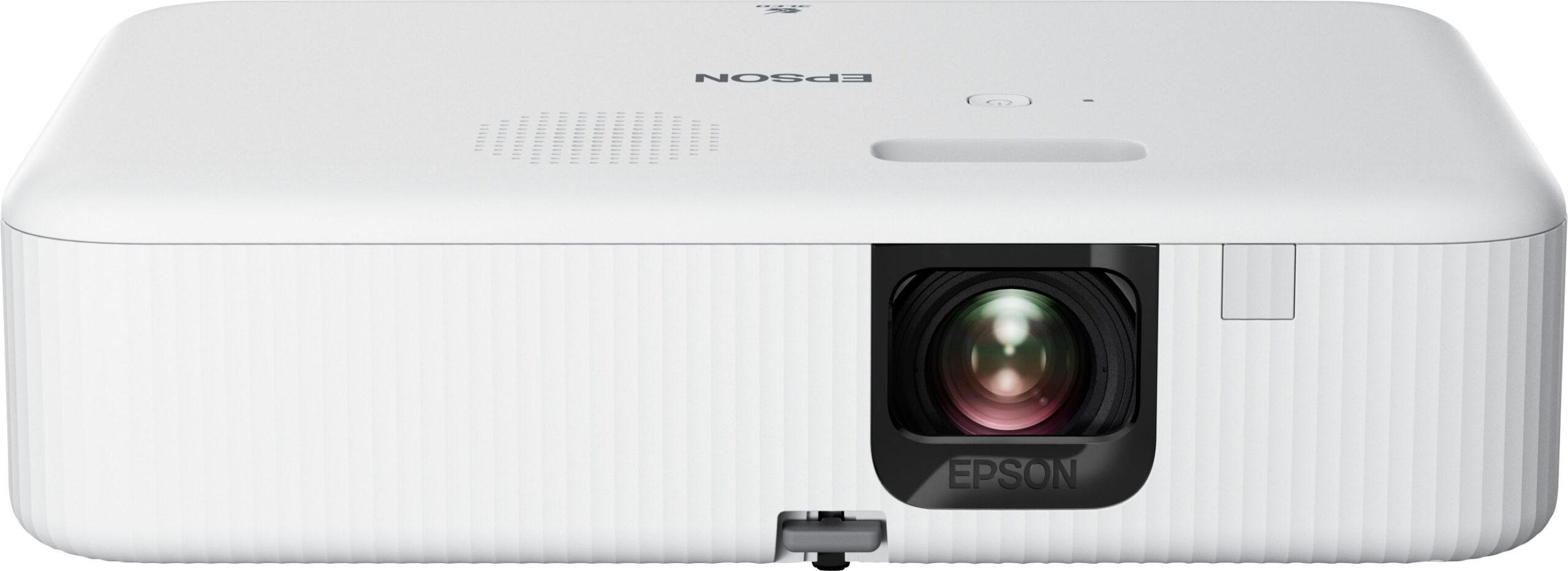
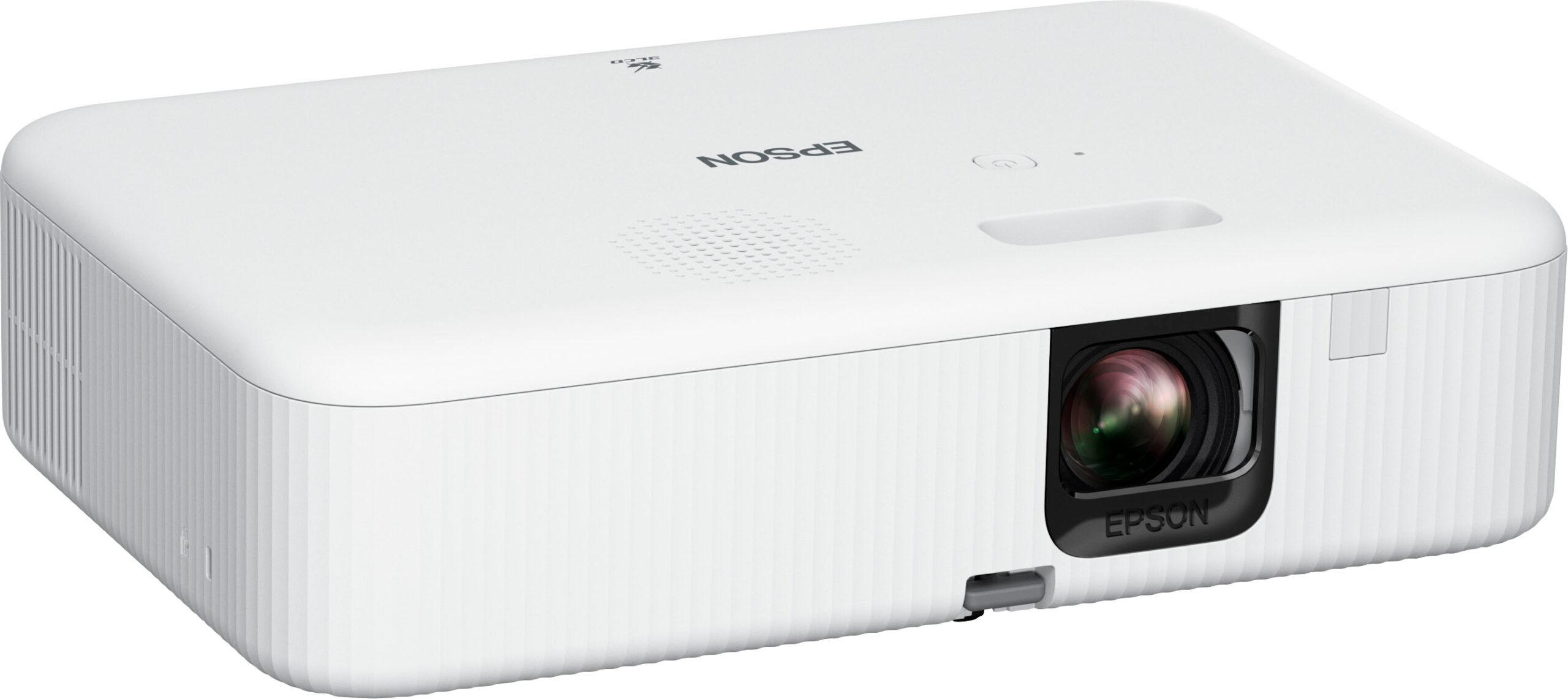
When evaluating any projector, brightness is king. It determines where and when you can actually use the device. The Epson EpiqVision Flex CO-FH02 absolutely dominates here, delivering a massive 3,000 lumens of brightness—enough to produce watchable images even in moderately lit rooms during daytime hours.
To put this in perspective, most movie theaters run their projectors at around 14 foot-lamberts of brightness, which translates to roughly 2,000-3,000 lumens for typical screen sizes. The Epson genuinely approaches commercial-grade performance, making it suitable for business presentations, outdoor evening viewing, and family rooms with some ambient light.
The JMGO PicoPlay, by contrast, outputs just 400 ISO lumens—a measurement standard that tends to be more conservative than manufacturer claims. This limits its use to darkened rooms, though within those constraints, it can produce surprisingly impressive results. The key advantage of lower brightness is dramatically reduced power consumption, enabling true portability with battery operation.
In my testing experience with similar brightness levels, 400 lumens works beautifully for bedroom movie nights, dorm rooms, or camping trips after sunset. But forget about competing with even modest room lighting—you'll need blackout curtains or wait for darkness.
Both projectors use different display technologies that affect image quality in subtle but important ways. The Epson EpiqVision Flex CO-FH02 employs 3LCD technology, which uses three separate LCD panels (one each for red, green, and blue light) combined with a prism system. This approach typically delivers excellent color accuracy and eliminates the "rainbow effect" that some people see with single-chip DLP projectors.
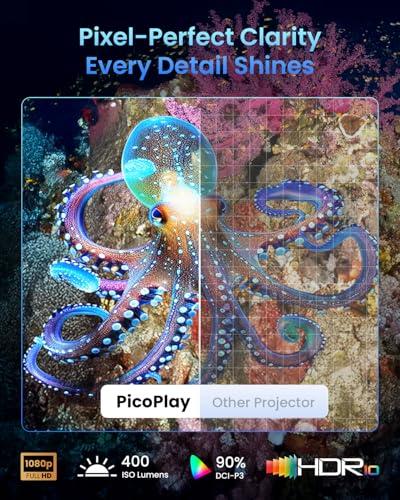
The JMGO PicoPlay uses LED illumination with advanced color processing, covering 90% of the DCI-P3 color space—a technical specification that essentially means it can display a wider range of colors than standard displays. It also supports HDR10, a high dynamic range format that provides better contrast between light and dark areas of the image.
Here's where things get interesting: despite its lower brightness, the JMGO actually delivers superior color performance in dark environments. The combination of wide color gamut coverage and HDR support means movies and streaming content can look more vibrant and detailed than on the brighter Epson, provided you're watching in optimal conditions.
For home theater enthusiasts, this distinction matters significantly. If your primary use case is late-evening movie watching in a dedicated dark room, the JMGO PicoPlay's superior color science might actually provide a more engaging experience than the Epson's raw brightness advantage.
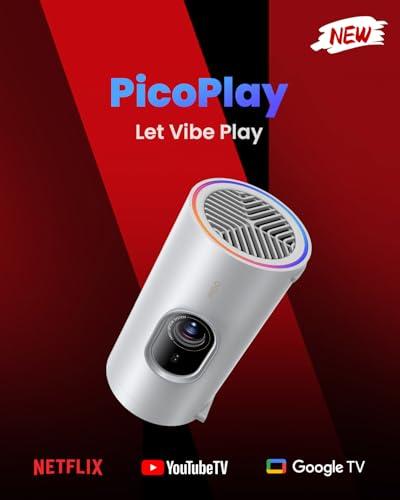
The smart platform experience represents another area where these projectors diverge substantially. The JMGO PicoPlay, released in 2024, runs native Google TV—essentially the latest version of Android TV with a refined interface optimized for big-screen viewing. This means instant access to Netflix, YouTube, Amazon Prime, and thousands of other apps without needing any additional devices.
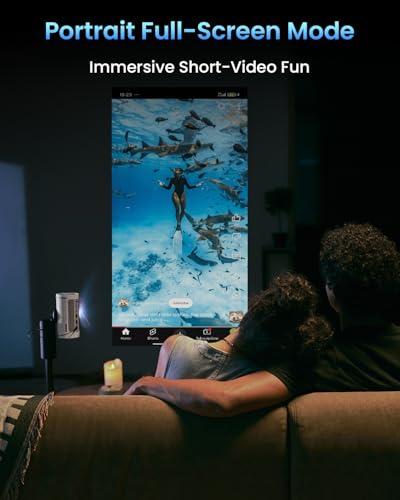
More importantly, the JMGO includes some genuinely innovative features. Its Vertical Play mode automatically optimizes the projection for vertical video content from TikTok, Instagram Reels, and YouTube Shorts. As someone who's watched the rise of vertical video content, this feels like a forward-thinking feature that acknowledges how media consumption is evolving.
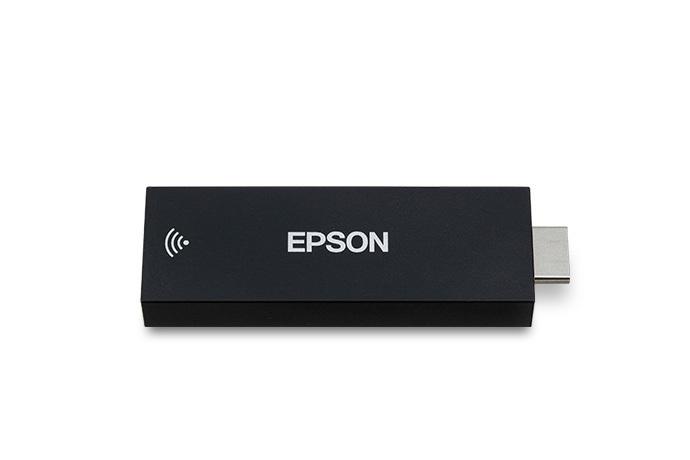
The Epson EpiqVision Flex CO-FH02 takes a more traditional approach, including a separate Android TV streaming stick rather than integrating smart features directly. While this works fine, it means carrying an additional device and dealing with separate remotes or setup complexity.
Both devices support voice commands through Google Assistant, but the JMGO's integration feels more seamless since everything runs on a single system rather than requiring coordination between projector and streaming device.
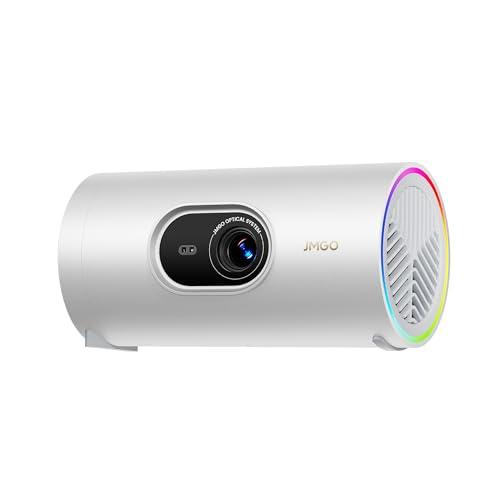
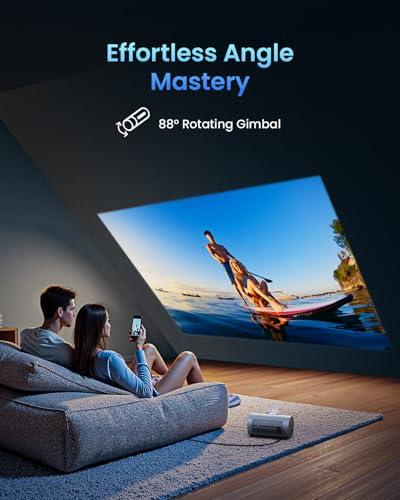
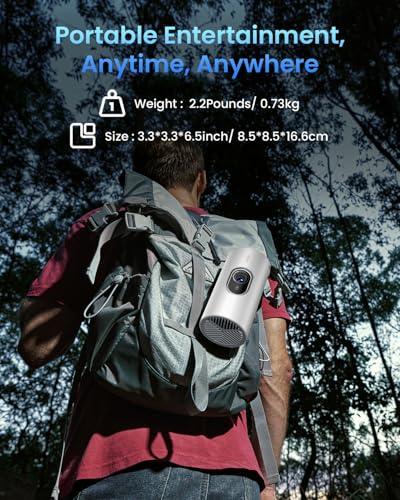
Perhaps the most striking difference between these projectors lies in physical design philosophy. The JMGO PicoPlay looks nothing like a traditional projector—it resembles a large coffee tumbler and weighs just over two pounds. More importantly, it features an 88-degree rotating gimbal that allows the projection angle to be adjusted without moving the entire device.
This design innovation solves one of portable projection's most annoying problems: getting the image positioned correctly. Traditional projectors require careful placement, often necessitating books or makeshift stands to achieve the right angle. The JMGO's gimbal system means you can place it on a nightstand and project onto the ceiling, set it on a table for wall projection, or even use it outdoors without constantly repositioning the entire device.
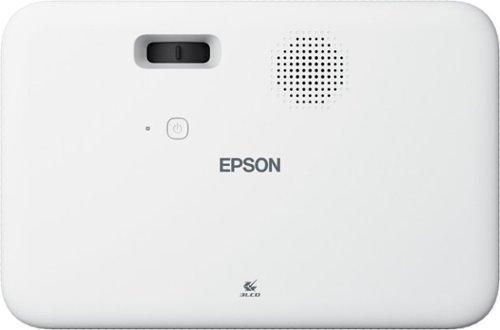
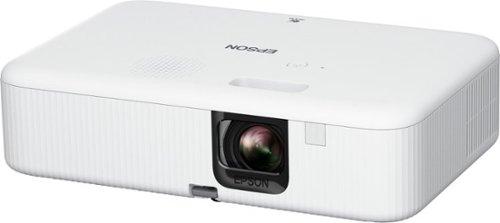
The Epson EpiqVision Flex CO-FH02 follows conventional projector design—rectangular, business-like, and requiring deliberate positioning for optimal image placement. At nearly 6 pounds, it's portable in the sense that you can pack it for travel, but not something you'd casually carry to different rooms.
True portability demands untethered operation, and here the differences are stark. The JMGO PicoPlay can operate for up to 3 hours of video playback using an optional 20,000 mAh battery pack, or connect to any USB-C power bank for extended operation. This enables genuine anywhere-projection capability—camping trips, backyard movie nights, or dorm room entertainment without proximity to wall outlets.
The Epson EpiqVision Flex CO-FH02 requires AC power, limiting its "portability" to locations with available electrical outlets. While you can certainly pack it for hotel presentations or friend's houses, it won't work for outdoor adventures or power-outage entertainment.
This distinction fundamentally affects use cases. The JMGO enables spontaneous projection anywhere, while the Epson is more about easier setup in traditional indoor environments.
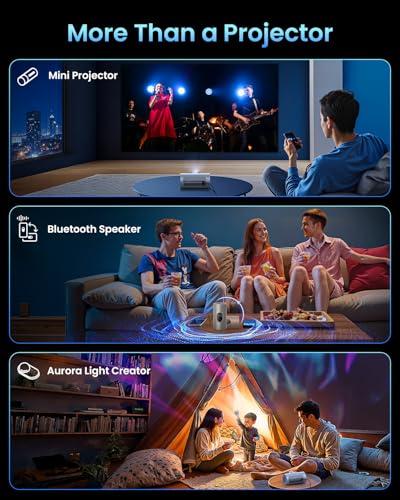
Most portable projectors include barely adequate speakers as an afterthought. The JMGO PicoPlay breaks this mold by doubling as a legitimate Bluetooth speaker with 8-watt output and Dolby Audio processing. Even when not projecting, it can serve as a room speaker for music, podcasts, or phone calls.
The device also includes dynamic ambient lighting that syncs with music, creating a party atmosphere that extends its utility beyond pure projection. I've found this combination particularly appealing for casual gatherings where you might switch between music and video content throughout an evening.
The Epson EpiqVision Flex CO-FH02 includes a standard 5-watt speaker adequate for projection audio but nothing special for standalone listening. For serious home theater use, you'd want to connect external speakers through its HDMI ARC output or Bluetooth connectivity.
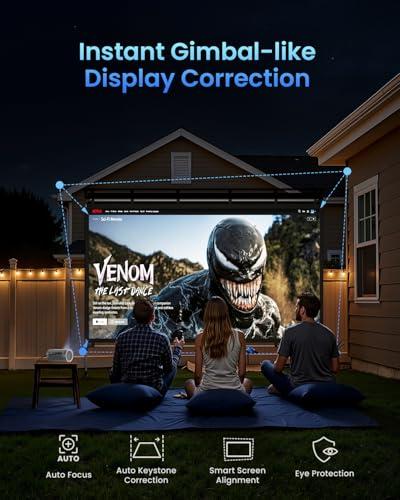
Modern projectors increasingly emphasize quick, automated setup to reduce the technical barriers that historically made projection intimidating for casual users. The JMGO PicoPlay's FlexiSmart system represents the cutting edge of this trend, providing automatic focus adjustment, keystone correction (fixing image distortion when projecting at angles), and screen alignment.
Combined with the rotating gimbal, setup typically requires less than 30 seconds from power-on to watchable image. The system uses a Time-of-Flight sensor—essentially a tiny radar that measures distances—to automatically optimize focus and geometry regardless of projection distance or angle.
The Epson EpiqVision Flex CO-FH02 offers more traditional setup with manual keystone correction up to 30 degrees vertically and horizontally. While this provides fine-tuned control that some users prefer, it requires more technical knowledge and setup time.
For home theater applications, the automated approach generally wins unless you're setting up a permanent installation where manual fine-tuning might achieve marginally better results.
At the time of writing, these projectors occupy different price tiers, with the JMGO PicoPlay positioned as a premium compact option and the Epson EpiqVision Flex CO-FH02 commanding a higher price point despite its more conventional feature set.
The JMGO delivers remarkable value by combining multiple functions—projector, speaker, ambient light, and streaming device—in a single compact package. For users seeking maximum versatility and modern features, it represents excellent value despite relatively modest brightness.
The Epson asks buyers to pay significantly more for its brightness advantage, but provides fewer integrated smart features and requires AC power. Its value proposition depends entirely on how much you prioritize brightness over portability and modern conveniences.
The JMGO PicoPlay excels for lifestyle-focused users who value innovation, portability, and multi-functionality. It's ideal for college students, frequent travelers, social media content creators, and anyone who wants spontaneous big-screen entertainment without traditional setup complexity. The combination of battery operation, compact size, and unique features like vertical video support make it feel genuinely different from conventional projectors.
However, don't expect it to replace a TV in a bright family room or handle business presentations in conference rooms with overhead lighting. Its 400-lumen output demands darkness for optimal results.
The Epson EpiqVision Flex CO-FH02 serves users who prioritize brightness above all else while still wanting reasonable portability. Business professionals who need reliable presentation capability, families with bright living spaces, or anyone planning significant outdoor evening entertainment will appreciate its exceptional light output.
The trade-off is reduced innovation, AC power dependency, and higher cost for what is essentially a traditional projector in a more compact form factor.
For dedicated home theater use, both projectors face limitations compared to traditional home theater projectors, but for different reasons. The JMGO PicoPlay can deliver genuinely impressive image quality in dark rooms, with superior color accuracy and HDR support creating engaging movie experiences. Its compact size and ceiling projection capability make it perfect for bedrooms or small spaces where traditional projector installation isn't practical.
The Epson EpiqVision Flex CO-FH02 offers the brightness needed for larger screens and some ambient light, but lacks the contrast ratio and color processing that home theater enthusiasts typically demand. It's better for casual family viewing than critical movie watching.
Both projectors represent 2024-era technology, benefiting from recent advances in LED efficiency, processor power, and streaming platform maturity. The JMGO PicoPlay feels more forward-thinking with its gimbal design, vertical content support, and integrated smart features, while the Epson leverages mature LCD projection technology for reliable brightness performance.
The portable projector category continues evolving rapidly, with laser light sources, improved battery technology, and even brighter compact designs emerging regularly. However, the fundamental physics of brightness versus portability ensures that products like these will continue serving different niches rather than converging on a single optimal solution.
Choose the JMGO PicoPlay if you're drawn to innovation, value true portability with battery operation, and primarily watch content in dark environments. Its unique features and multi-functionality provide excellent value for users who appreciate cutting-edge design and modern conveniences.
Choose the Epson EpiqVision Flex CO-FH02 if brightness is your primary concern and you need projection capability in various lighting conditions. Its traditional approach and higher price make sense for business users or anyone who prioritizes image visibility over modern features.
Both represent solid choices within their respective design philosophies, but they serve distinctly different user needs and preferences in the expanding world of portable projection.
| JMGO PicoPlay 1080P Smart Portable Projector | Epson EpiqVision Flex CO-FH02 Smart Portable Projector |
|---|---|
| Brightness - Most critical spec for room lighting flexibility | |
| 400 ISO lumens (requires dark rooms for optimal viewing) | 3,000 lumens (works well in moderate ambient light) |
| Physical Design - Affects portability and setup convenience | |
| 3.3" x 3.3" x 6.5", 2.2 lbs with 88° rotating gimbal | 12.5" x 8.3" x 3.4", 5.7 lbs traditional rectangular design |
| Maximum Projection Size - Determines viewing experience scale | |
| Up to 200 inches (optimal 50-60 inches in dark rooms) | Up to 300 inches (maintains brightness at larger sizes) |
| Battery Operation - Critical for true portability | |
| Up to 3 hours with optional 20,000 mAh battery pack | No battery (AC power required) |
| Smart Platform - Affects streaming convenience and app selection | |
| Native Google TV with built-in apps and vertical content mode | Android TV via separate streaming stick |
| Audio System - Important for standalone entertainment value | |
| 8W Dolby Audio speaker that doubles as Bluetooth speaker | 5W bass reflex speaker (projection audio only) |
| Setup Automation - Reduces technical barriers for casual users | |
| FlexiSmart system with auto-focus, keystone, and alignment | Manual keystone correction (±30° vertical/horizontal) |
| Color Performance - Affects image quality in dark environments | |
| 90% DCI-P3 color space, HDR10 support for superior colors | 3LCD technology for accurate but standard color reproduction |
| Connectivity Options - Determines device compatibility | |
| HDMI 2.1 (ARC), USB-C, USB-A, Wi-Fi, Bluetooth, Google Cast | HDMI, USB-A, USB-B, dual-band Wi-Fi, Bluetooth |
| Multi-functionality - Additional value beyond projection | |
| 3-in-1: projector, Bluetooth speaker, ambient light with music sync | Single-purpose projector only |
| Target Use Cases - Best scenarios for each device | |
| Dark room entertainment, travel, social content, bedroom cinema | Business presentations, bright rooms, large outdoor screens |
The Epson EpiqVision Flex CO-FH02 is significantly brighter at 3,000 lumens compared to the JMGO PicoPlay at 400 ISO lumens. This makes the Epson suitable for rooms with ambient light, while the JMGO PicoPlay requires darkened environments for optimal viewing.
Only the JMGO PicoPlay offers battery operation with an optional 20,000 mAh battery pack providing up to 3 hours of video playback. The Epson EpiqVision Flex CO-FH02 requires AC power and cannot operate on battery alone.
The JMGO PicoPlay is much more portable at just 2.2 pounds with a compact 3.3" x 3.3" x 6.5" size. The Epson EpiqVision Flex CO-FH02 weighs 5.7 pounds and measures 12.5" x 8.3" x 3.4", making it less convenient for frequent transport.
The JMGO PicoPlay runs native Google TV with built-in Netflix, YouTube, and other streaming apps. The Epson EpiqVision Flex CO-FH02 includes a separate Android TV streaming stick rather than integrated smart features.
The JMGO PicoPlay features an 8W Dolby Audio speaker that can also function as a standalone Bluetooth speaker. The Epson EpiqVision Flex CO-FH02 has a basic 5W speaker designed primarily for projection audio.
The Epson EpiqVision Flex CO-FH02 can project up to 300 inches, while the JMGO PicoPlay maxes out at 200 inches. However, the JMGO performs best at 50-60 inches in dark rooms.
The JMGO PicoPlay offers superior setup convenience with its FlexiSmart system providing automatic focus, keystone correction, and screen alignment, plus an 88° rotating gimbal. The Epson EpiqVision Flex CO-FH02 requires manual keystone adjustments.
Both the JMGO PicoPlay and Epson EpiqVision Flex CO-FH02 have native 1080p Full HD resolution. While they can accept 4K input signals, they will downscale the content to 1080p for display.
For true outdoor portability, the JMGO PicoPlay wins with battery operation and compact size, but only works after sunset. The Epson EpiqVision Flex CO-FH02 is brighter for evening outdoor use but requires access to electrical power.
Yes, both projectors support Google Assistant voice commands. The JMGO PicoPlay has integrated voice control through Google TV, while the Epson EpiqVision Flex CO-FH02 offers voice commands through its included streaming stick.
The JMGO PicoPlay typically offers better value with its combination of projector, Bluetooth speaker, and ambient lighting features in one device, plus innovative design elements. The Epson EpiqVision Flex CO-FH02 costs more but delivers significantly higher brightness for versatile lighting conditions.
For dedicated dark-room home theater, the JMGO PicoPlay can provide an engaging movie experience with superior color accuracy and HDR support. The Epson EpiqVision Flex CO-FH02 works better as a TV replacement in rooms with ambient light due to its higher brightness, though both have limitations compared to dedicated home theater projectors.
We've done our best to create useful and informative comparisons to help you decide what product to buy. Our research uses advanced automated methods to create this comparison and perfection is not possible - please contact us for corrections or questions. These are the sites we've researched in the creation of this article: techbuzzireland.com - youtube.com - newatlas.com - projectorcentral.com - youtube.com - thegadgetflow.com - youtube.com - global.jmgo.com - youtube.com - bestbuy.com - projector-database.com - notebookcheck.net - eu.jmgo.com - expertreviews.co.uk - projectorcentral.com - youtube.com - bestbuy.com - specsradar.com - techwalls.com - cnet.com - epson.com - youtube.com - projectorreviews.com - epson.com - abt.com - youtube.com - cnet.com - techgearlab.com - staples.com - bestbuy.com - bestbuy.com - projectorcentral.com - bhphotovideo.com - dell.com - latin.epson.com - specsradar.com - projectorcentral.com - officedepot.com - files.support.epson.com - walmart.com - adorama.com - epson.com

Privacy Policy
Terms and Conditions - Affiliate Policy
Home Security
© Copyright 2008-2026.
11816 Inwood Rd #1211, Dallas, TX 75244