


The portable projector market has exploded in recent years, and 2025 brought us two fascinating entries that take completely different approaches to the same challenge: how do you create a projector that's truly portable without sacrificing too much performance? The JMGO PicoPlay and XGIMI MoGo 3 Pro represent two very different philosophies in portable projection, and choosing between them really comes down to understanding what matters most for your specific needs.
I've spent considerable time with both projectors, and what strikes me most is how they've each solved different problems that plague traditional portable projectors. The JMGO PicoPlay tackles the setup and flexibility issues, while the XGIMI MoGo 3 Pro focuses on delivering the best possible image and audio quality in a still-portable package.
Before diving into these specific models, it's worth understanding what makes a projector "portable" in 2025. Traditional home theater projectors are massive, require ceiling mounting, and produce thousands of lumens of brightness. Portable projectors flip this equation—they sacrifice some brightness and size for the ability to take your big-screen experience anywhere.
The key challenge in portable projector design is the brightness-versus-battery-life equation. Brighter images require more powerful LED arrays, which drain batteries faster and generate more heat. Both the PicoPlay and MoGo 3 Pro handle this differently, leading to distinct advantages for each.
Modern portable projectors also need to be smart devices. Gone are the days when you needed to connect a laptop or streaming stick—today's models run full Android TV or Google TV operating systems, giving you direct access to Netflix, YouTube, and thousands of other apps. This integration has been crucial for making portable projectors truly useful for everyday entertainment.
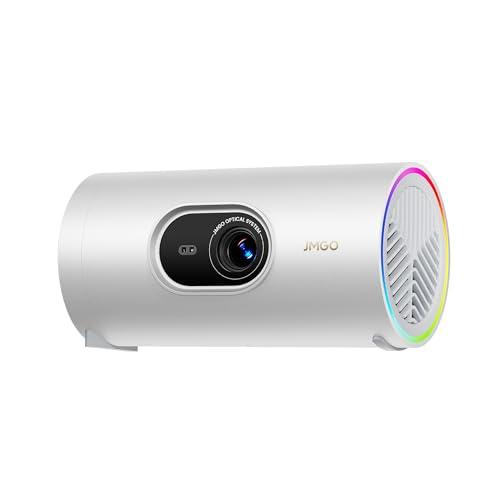
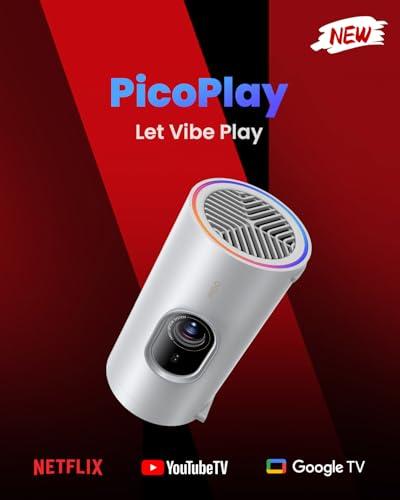
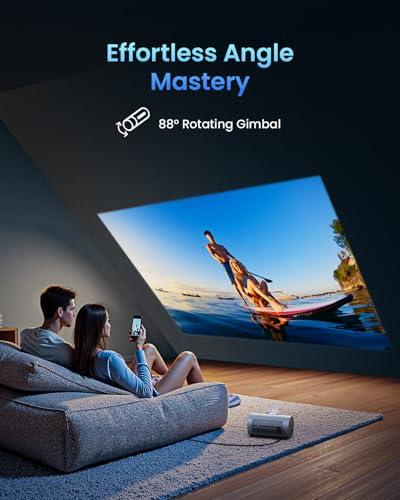
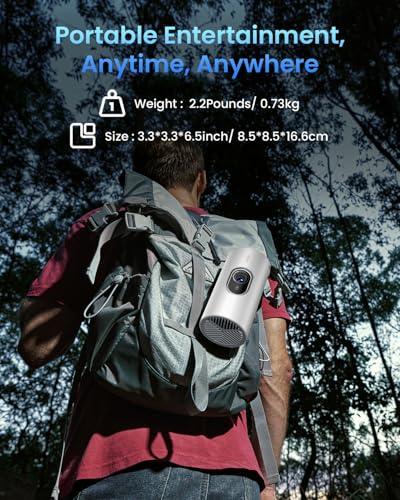
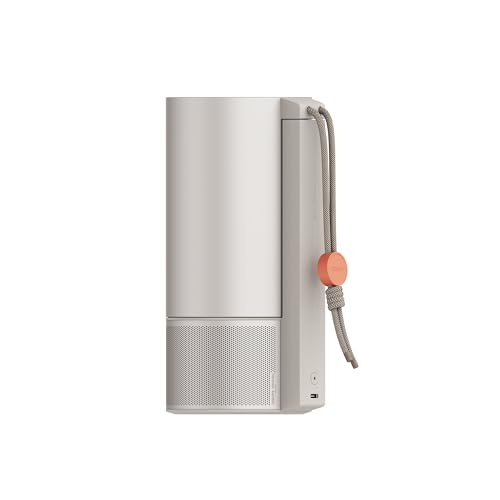
The most obvious difference between these projectors is their design approach. The JMGO PicoPlay looks like nothing else in the projector world—it's shaped like an oversized travel coffee mug and weighs just over two pounds. More importantly, it features an 88-degree rotating gimbal that lets you point the projector in virtually any direction without moving the base unit.
This gimbal design is genuinely revolutionary. Traditional projectors, including the MoGo 3 Pro, require you to physically move and angle the entire unit to change projection direction. With the PicoPlay, you can set it on a nightstand and rotate just the projection head to throw an image on the ceiling—perfect for bed-time viewing or unusual room layouts.
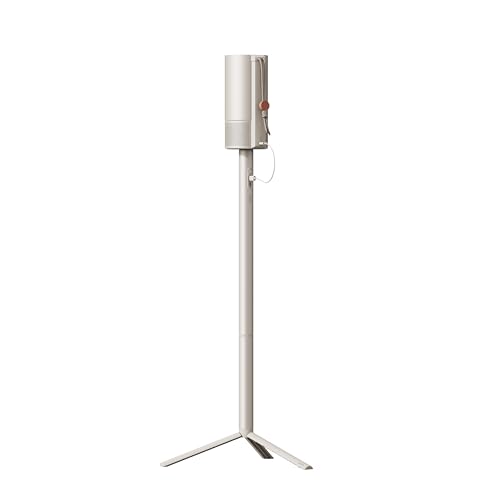
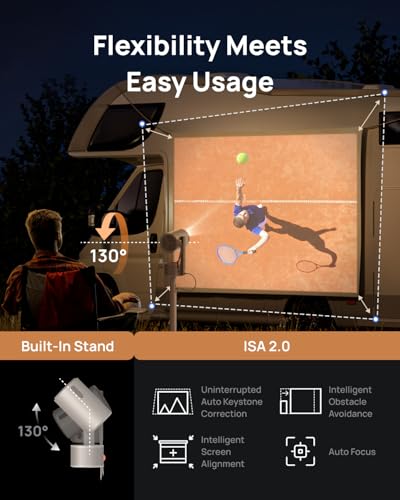
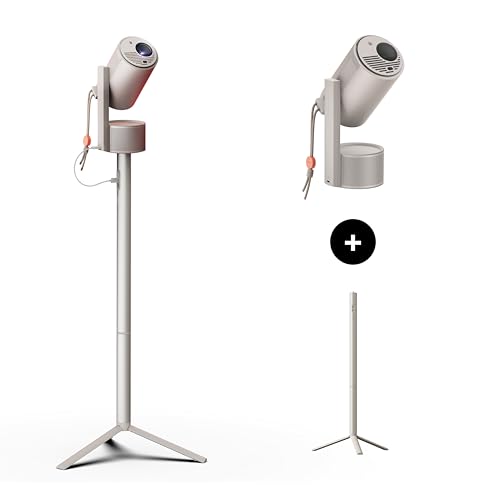
The XGIMI MoGo 3 Pro takes a more conventional approach with its rectangular body and built-in 130-degree adjustable stand. While less radical than the PicoPlay's design, this approach has its merits. The wider base provides better stability, and the familiar form factor makes it easier to position in entertainment centers or on shelves when you want a more permanent setup.
From my experience, the PicoPlay's unique design really shines in unconventional spaces. I've used it in tiny dorm rooms where the only viable projection surface was the ceiling, and in camping situations where finding the right angle with a traditional projector would be nearly impossible. The MoGo 3 Pro, meanwhile, feels more at home in traditional living room setups where you want the best possible image quality.
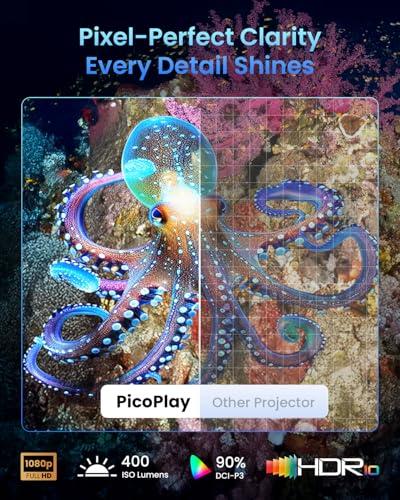
When it comes to pure image performance, both projectors deliver native 1080p resolution, which means each can display 1,920 by 1,080 pixels—the same resolution as most streaming content and Blu-ray discs. However, their approaches to brightness and color reproduction differ significantly.
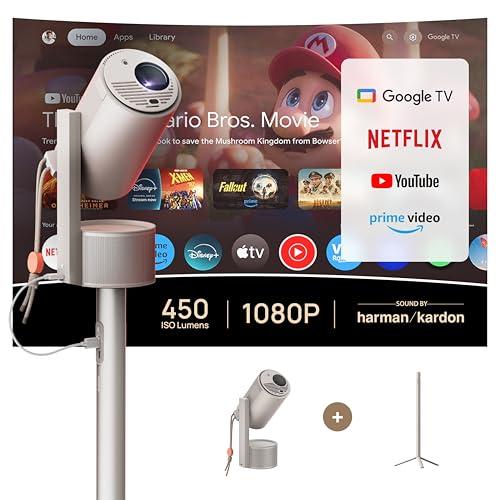
The XGIMI MoGo 3 Pro produces 450 ISO lumens, compared to the PicoPlay's 400 ISO lumens (450 for the PicoPlay+ model). ISO lumens is the standardized way to measure projector brightness, and that 12.5% difference is noticeable in real-world use. The MoGo 3 Pro maintains better image quality in rooms with ambient light—think watching during the day with curtains drawn rather than complete darkness.
However, brightness isn't the whole story. The JMGO PicoPlay covers 124% of the Rec.709 color standard and 90% of the wider DCI-P3 gamut. In practical terms, this means it can display more vibrant greens and reds than many competing projectors. Colors look more saturated and lifelike, particularly in animated content and nature documentaries.
Both projectors support HDR10, a technology that enhances contrast by displaying brighter whites and deeper blacks simultaneously. However, with brightness levels in the 400-450 lumen range, the HDR effect is subtle compared to high-end TVs or projectors. You'll notice some improvement in content like Netflix's nature documentaries, but don't expect the dramatic HDR experience you'd get from a premium display.
The contrast ratio—the difference between the brightest whites and darkest blacks—favors the PicoPlay at 400:1. While this might seem modest compared to OLED TVs that achieve "infinite" contrast, it's quite good for a portable LED projector. The MoGo 3 Pro doesn't specify its contrast ratio, but based on similar DLP projectors, it's likely lower than the PicoPlay's figure.
For projection size, both can theoretically create images up to 200 inches diagonal, but the sweet spot is 60-80 inches for optimal brightness and sharpness. At these sizes, both projectors deliver sharp, detailed images that make for genuinely enjoyable viewing experiences.
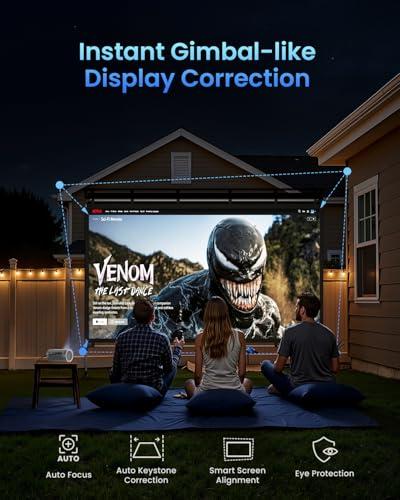
One area where the JMGO PicoPlay truly excels is setup automation through its FlexiSmart system. This technology uses a Time-of-Flight (ToF) sensor—the same type used in smartphone cameras for autofocus—to automatically focus the image, correct keystone distortion (when the image appears trapezoid-shaped due to angled projection), and align the screen boundaries.
In practice, this means you can plop the PicoPlay down almost anywhere, turn it on, and have a perfectly focused, rectangular image within seconds. The system even includes obstacle avoidance, automatically resizing the image if it detects a wall socket or picture frame in the projection area. There's also an eye protection feature that dims or pauses the projection if someone walks in front of the lens.
The XGIMI MoGo 3 Pro offers similar automatic features through its ISA 2.0 (Intelligent Screen Adaptation) system, including autofocus and auto keystone correction. However, it lacks the obstacle avoidance feature and isn't quite as quick or reliable as the PicoPlay's system in my testing.
Both projectors run Google TV, giving you access to major streaming platforms including Netflix, YouTube, Amazon Prime Video, and thousands of other apps. The MoGo 3 Pro has twice the internal storage at 16GB compared to the PicoPlay's 8GB, which means you can install more apps and download content for offline viewing.
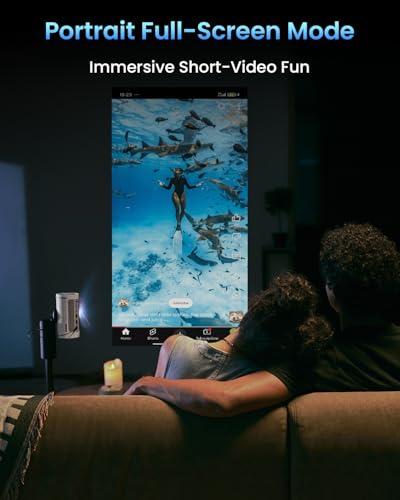
A unique feature of the JMGO PicoPlay is its Vertical Play mode, optimized for social media content from TikTok, Instagram Reels, and YouTube Shorts. This might seem gimmicky, but it's surprisingly useful if you enjoy sharing vertical video content with friends or family on a big screen.
Audio is often an afterthought in portable projector reviews, but it shouldn't be. Both projectors are designed to work without external speakers, making their built-in audio crucial for the overall experience.
The XGIMI MoGo 3 Pro features dual 5-watt speakers tuned by Harman Kardon, totaling 10 watts of power. These speakers are genuinely impressive for a device this size, delivering clear dialogue and surprisingly decent bass response. The stereo separation helps with movie soundtracks, and the overall volume is sufficient for medium-sized rooms.
The JMGO PicoPlay includes an 8-watt speaker with Dolby Audio processing. While it has slightly less total power, the Dolby processing helps optimize the sound for different content types. The single speaker means no stereo separation, but the compact form factor somewhat justifies this trade-off.
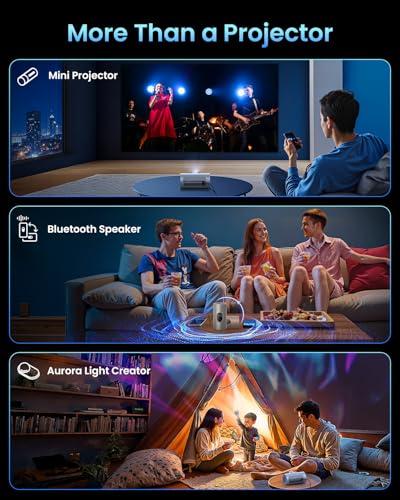
Both projectors can function as Bluetooth speakers when not projecting, effectively turning them into dual-purpose devices. This feature is particularly useful for the PicoPlay with its ambient light mode—you can use it as a mood light and speaker for parties or background music.
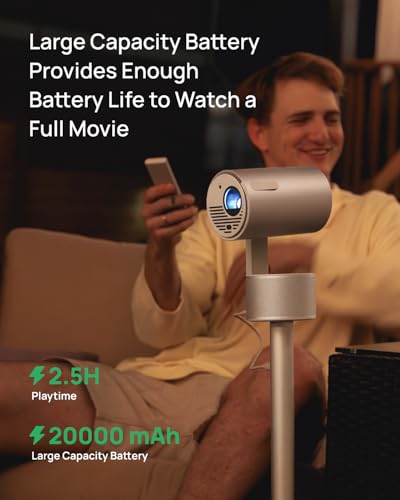
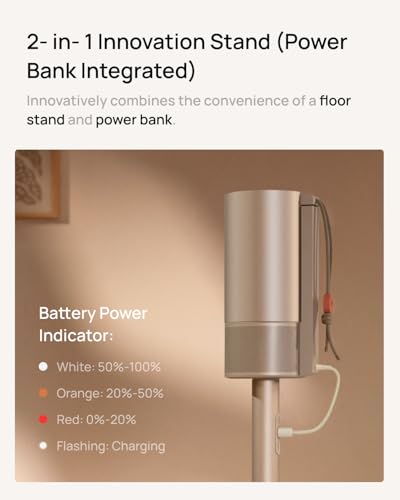
Here's where the biggest practical difference emerges. The JMGO PicoPlay includes a substantial 20,000 mAh battery that provides up to 3 hours of video playback or 7 hours of audio-only use. This makes it truly portable—you can take it camping, to a friend's house, or use it in any room without worrying about power outlets.
The XGIMI MoGo 3 Pro has no built-in battery and must be plugged in constantly. XGIMI offers an optional PowerBase accessory that adds battery power, but this increases the cost and size considerably. Without it, the MoGo 3 Pro is more accurately described as "relocatable" rather than truly portable.
This difference is crucial for determining which projector suits your lifestyle. If you want to watch movies while camping, have outdoor movie nights, or simply move between rooms frequently, the PicoPlay's built-in battery is invaluable. If you're primarily using the projector in fixed locations with power access, the MoGo 3 Pro's approach makes more sense.
For gamers, input lag—the delay between pressing a button and seeing the result on screen—is crucial. The JMGO PicoPlay excels here with just 10ms of input lag in game mode, while the MoGo 3 Pro measures 18ms (or 60ms with auto keystone correction enabled).
Both figures are acceptable for casual gaming, but the PicoPlay feels noticeably more responsive for action games or competitive gaming. The difference matters less for turn-based games or slower-paced titles, but it's worth considering if gaming is a priority.
Both projectors can display 3D content, though this requires compatible 3D movies or games and 3D glasses. The 3D effect works well in dark rooms, though the reduced brightness inherent to 3D viewing makes it challenging in any ambient light.
Both projectors offer comprehensive connectivity options, though with different strengths. The PicoPlay includes HDMI 2.1 with ARC (Audio Return Channel), USB-A, and USB-C ports, plus robust wireless connectivity. The HDMI 2.1 specification supports higher bandwidth for gaming and future 4K content, even though both projectors max out at 1080p currently.
The MoGo 3 Pro uses micro HDMI rather than full-size HDMI, which requires an adapter for most devices—a minor but notable inconvenience. Both support Google Cast for wireless streaming from phones and tablets.
Voice control through Google Assistant works well on both projectors, allowing you to search content, adjust volume, and control playback with voice commands. The feature works reliably in quiet environments, though the projector fans can sometimes interfere with voice recognition.
At the time of writing, both projectors occupy similar price ranges but offer different value propositions. The JMGO PicoPlay frequently appears at promotional pricing that makes it particularly attractive for budget-conscious buyers, while the MoGo 3 Pro maintains more consistent pricing that reflects its premium positioning.
When evaluating value, consider the total cost of ownership. The PicoPlay includes everything needed for immediate use, while the MoGo 3 Pro might require additional accessories like the PowerBase for true portability or a micro HDMI adapter for device connections.
Both projectors represent good value compared to traditional home theater projectors, which often cost thousands of dollars and require professional installation. For the price of a mid-range TV, you can get genuinely big-screen entertainment that fits in a backpack.
For dedicated home theater use, both projectors have merits but serve different scenarios. The XGIMI MoGo 3 Pro works better for semi-permanent installations where you want the best possible image quality and don't need frequent repositioning. Its higher brightness and superior audio make it more suitable for regular family movie nights or replacing a traditional TV.
The JMGO PicoPlay excels in flexible home theater scenarios—apartments where you can't mount a traditional projector, rooms with unusual layouts, or situations where you want to quickly set up and tear down your viewing setup. The gimbal design makes it particularly useful in bedrooms for ceiling projection.
Neither projector will match a dedicated home theater setup with a premium projector and proper screen, but both can create surprisingly immersive viewing experiences for their size and price point.
Choose the JMGO PicoPlay if you prioritize flexibility and true portability. It's ideal for renters who can't make permanent installations, frequent travelers, college students, or anyone who wants the freedom to watch anywhere without power constraints. The unique gimbal design opens up projection possibilities that simply aren't available with traditional projectors.
The XGIMI MoGo 3 Pro makes more sense if you want the best possible image and audio quality in a still-portable package. It's better for families who primarily watch in a single location, users who prioritize brightness for varied lighting conditions, or anyone who values brand reliability and established support networks.
Both projectors represent the current state of portable projection technology, but they solve different problems. The PicoPlay pushes the boundaries of what's possible in terms of setup flexibility and true wireless operation, while the MoGo 3 Pro focuses on delivering traditional projector strengths in a compact, modern package.
Your choice ultimately depends on whether you value innovation and flexibility over proven performance metrics. Both will deliver enjoyable big-screen entertainment—the question is which approach better matches your lifestyle and viewing habits.
| JMGO PicoPlay | XGIMI MoGo 3 Pro |
|---|---|
| Brightness - Critical for image quality in ambient light | |
| 400 ISO lumens (450 for PicoPlay+) - adequate for dark rooms | 450 ISO lumens - 12.5% brighter, better ambient light performance |
| Design & Portability - Determines setup flexibility and transport ease | |
| Cylindrical "travel mug" design with 88° rotating gimbal | Traditional rectangular form with 130° adjustable stand |
| Weight & Size - Affects true portability | |
| 2.2 lbs, 3.3" x 3.3" x 6.5" (ultra-compact) | 2.4 lbs, larger footprint but more stable |
| Battery Life - Essential for wireless use | |
| Built-in 20,000 mAh battery (3 hours video, 7 hours audio) | No built-in battery - requires constant power or optional PowerBase |
| Audio Performance - Important when external speakers aren't available | |
| 8W Dolby Audio speaker (mono) | Dual 5W Harman Kardon speakers (10W total, stereo) |
| Storage Capacity - Affects app installation and offline content | |
| 8GB internal storage | 16GB internal storage (2x more capacity) |
| Color Accuracy - Impacts visual quality and vibrancy | |
| 124% Rec.709, 90% DCI-P3 (superior color gamut) | 90% DCI-P3 (good but narrower than PicoPlay) |
| Gaming Performance - Input lag matters for responsive gameplay | |
| 10ms input lag (excellent for portable projector) | 18ms input lag (60ms with auto-keystone on) |
| Projection Flexibility - Setup convenience and viewing angle options | |
| 88° gimbal allows ceiling/angled projection without moving base | Fixed lens requires repositioning entire unit for angle changes |
| 3D Support - For immersive movie experiences | |
| Full HD 3D Blu-ray support included | No 3D playback capability |
| Smart Features - Streaming and connectivity options | |
| Google TV, Vertical Play mode for social media content | Google TV with more storage, established app ecosystem |
| Connectivity - Port selection and compatibility | |
| HDMI 2.1 (full-size), USB-A, USB-C | Micro HDMI (requires adapter), USB-A, USB-C |
| Unique Features - Standout capabilities that differentiate products | |
| FlexiSmart auto-setup, ambient light mode, obstacle avoidance | ISA 2.0 system, premium Harman Kardon audio, brand reliability |
The XGIMI MoGo 3 Pro is brighter with 450 ISO lumens compared to the JMGO PicoPlay's 400 ISO lumens (450 for PicoPlay+ model). This 12.5% brightness advantage makes the MoGo 3 Pro better for rooms with ambient light, though both projectors work best in darkened environments for optimal image quality.
The JMGO PicoPlay has a significant advantage with its built-in 20,000 mAh battery providing up to 3 hours of video playback. The XGIMI MoGo 3 Pro has no built-in battery and requires constant power connection, though an optional PowerBase accessory can add battery functionality.
The JMGO PicoPlay is much easier to position thanks to its unique 88° rotating gimbal that allows projection at any angle without moving the base unit. The MoGo 3 Pro uses a traditional 130° adjustable stand that requires repositioning the entire projector to change projection angles.
The XGIMI MoGo 3 Pro has superior audio with dual 5W Harman Kardon speakers (10W total) providing stereo sound. The JMGO PicoPlay features an 8W Dolby Audio speaker in mono configuration. Both can function as Bluetooth speakers when not projecting.
The JMGO PicoPlay is better for gaming with just 10ms input lag compared to the MoGo 3 Pro's 18ms (or 60ms with auto-keystone enabled). The lower input lag of the PicoPlay provides more responsive gameplay, especially important for action games.
Yes, both the JMGO PicoPlay and XGIMI MoGo 3 Pro run Google TV with native access to Netflix, YouTube, Amazon Prime Video, and thousands of other streaming apps. The MoGo 3 Pro has more internal storage (16GB vs 8GB) for additional app installations.
The JMGO PicoPlay has superior color accuracy, covering 124% of Rec.709 and 90% of DCI-P3 color spaces compared to the MoGo 3 Pro's 90% DCI-P3 coverage. However, the XGIMI MoGo 3 Pro is slightly brighter, making colors appear more vivid in ambient light conditions.
Both projectors work well for casual home theater use in dark rooms. The XGIMI MoGo 3 Pro is better for semi-permanent home theater setups with its superior brightness and audio, while the JMGO PicoPlay excels in flexible home theater scenarios like bedroom ceiling projection or temporary setups.
The JMGO PicoPlay is significantly more portable with its built-in battery, compact cylindrical design, and ability to operate without power outlets. The MoGo 3 Pro requires constant power connection, making it more suitable for relocatable rather than truly portable use.
Only the JMGO PicoPlay supports 3D content playback, including Full HD 3D Blu-ray movies. The XGIMI MoGo 3 Pro does not offer 3D capability. Both projectors require compatible 3D glasses for viewing 3D content.
The JMGO PicoPlay offers full-size HDMI 2.1, USB-A, and USB-C ports along with Wi-Fi and Bluetooth connectivity. The XGIMI MoGo 3 Pro has micro HDMI (requiring an adapter), USB-A, USB-C, plus wireless connectivity options. Both support Google Cast for wireless streaming.
Value depends on your priorities: the JMGO PicoPlay offers better value for true portability with its built-in battery and unique gimbal design, while the XGIMI MoGo 3 Pro provides better value for image quality and audio performance in semi-permanent setups. Consider your primary use case when comparing these portable projectors.
We've done our best to create useful and informative comparisons to help you decide what product to buy. Our research uses advanced automated methods to create this comparison and perfection is not possible - please contact us for corrections or questions. These are the sites we've researched in the creation of this article: techbuzzireland.com - youtube.com - newatlas.com - projectorcentral.com - youtube.com - thegadgetflow.com - youtube.com - global.jmgo.com - youtube.com - bestbuy.com - projector-database.com - notebookcheck.net - eu.jmgo.com - projectorcentral.com - techradar.com - androidcentral.com - tvsbook.com - techradar.com - thesmarthomehookup.com - whathifi.com - youtube.com - youtube.com - projectorcentral.com - projectorcentral.com - youtube.com - global.xgimi.com - us.xgimi.com - youtube.com - us.xgimi.com - us.xgimi.com

Privacy Policy
Terms and Conditions - Affiliate Policy
Home Security
© Copyright 2008-2026.
11816 Inwood Rd #1211, Dallas, TX 75244