

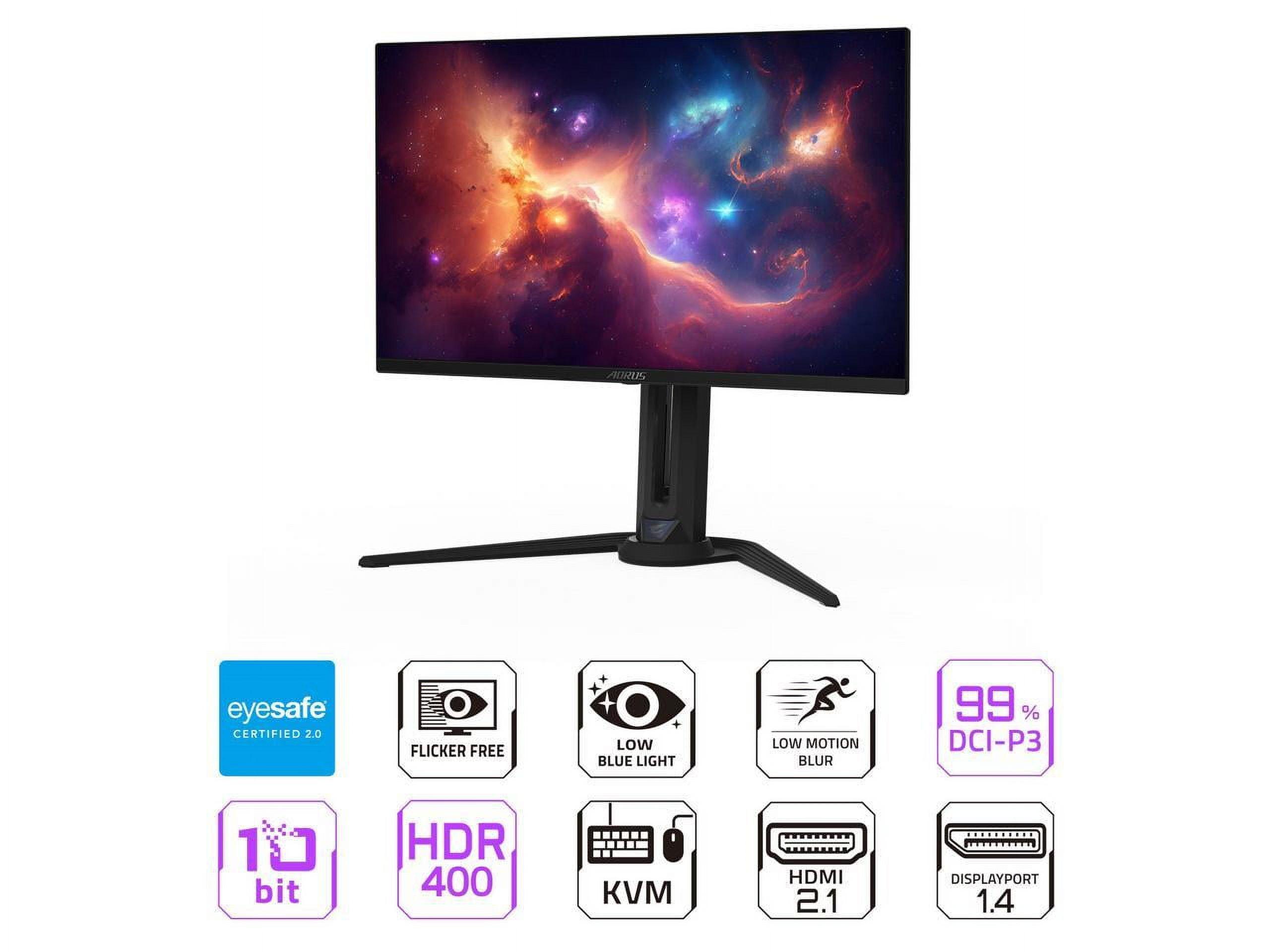
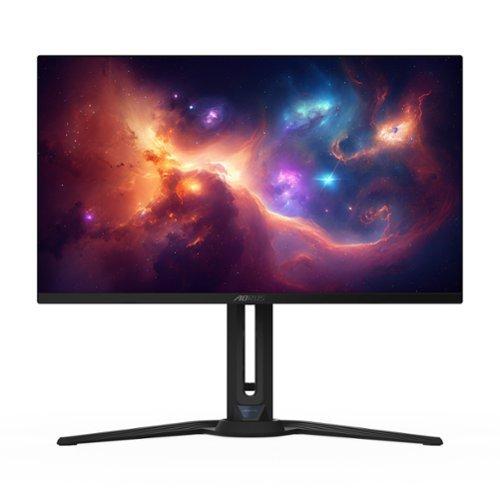
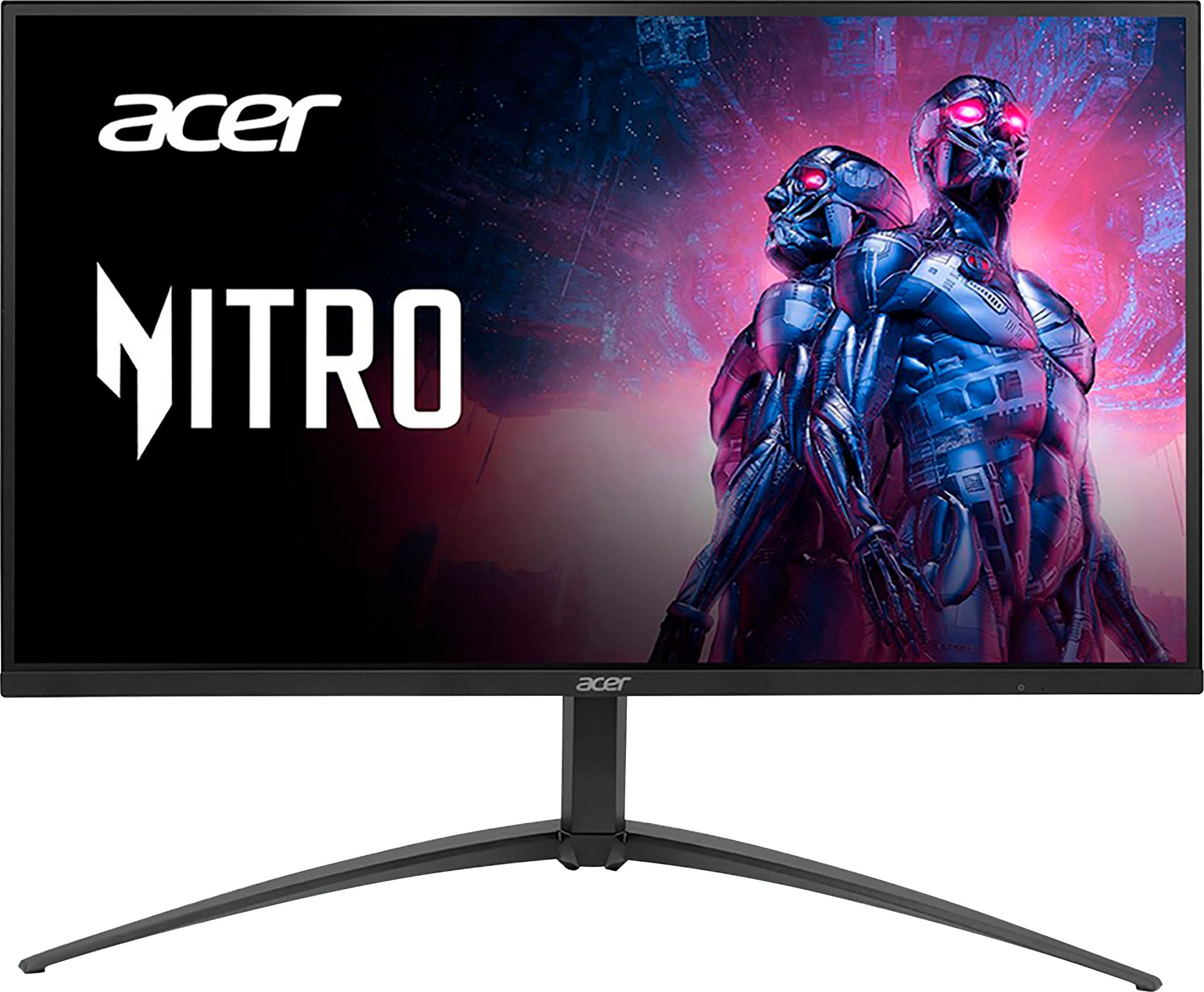
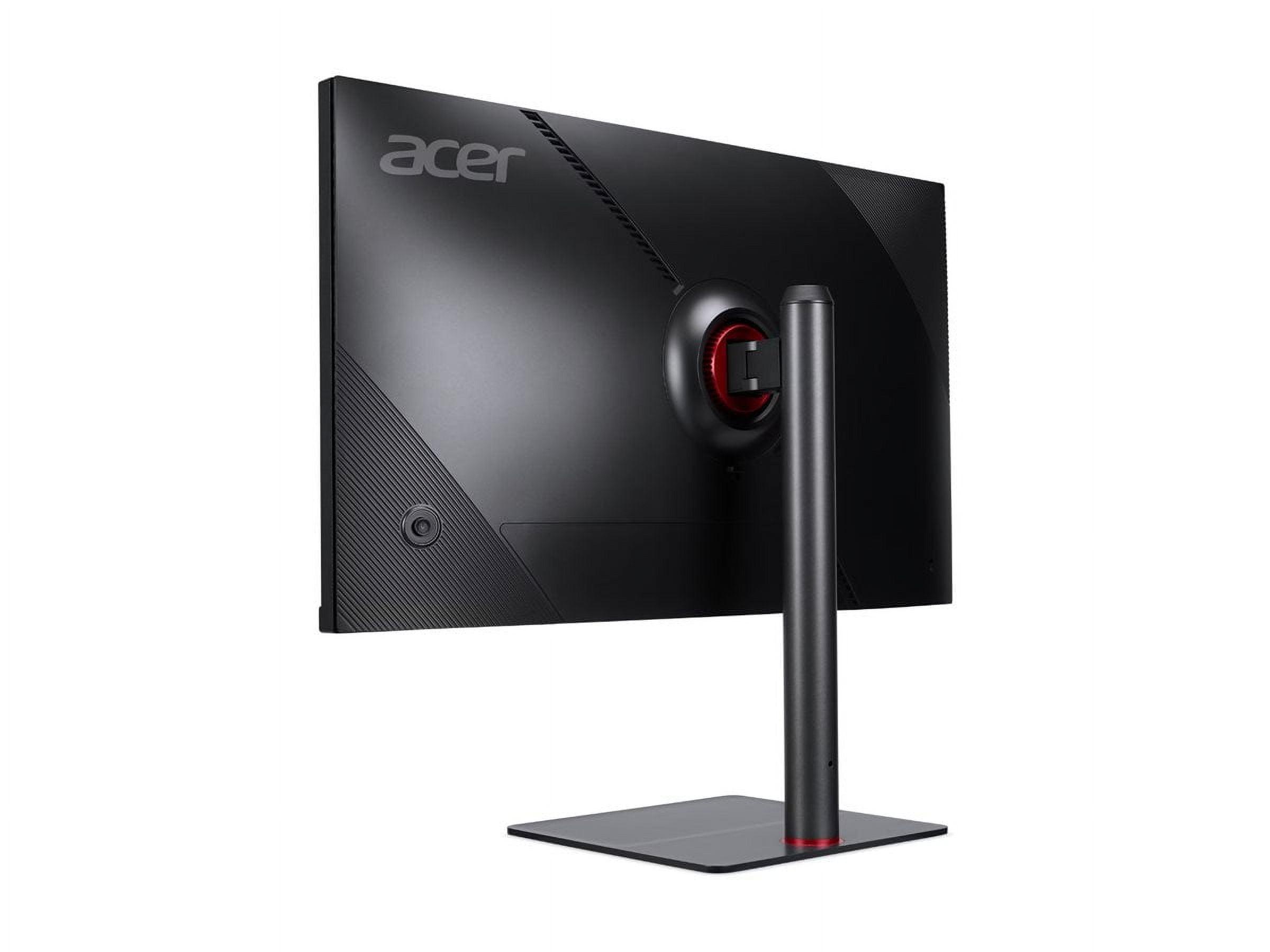
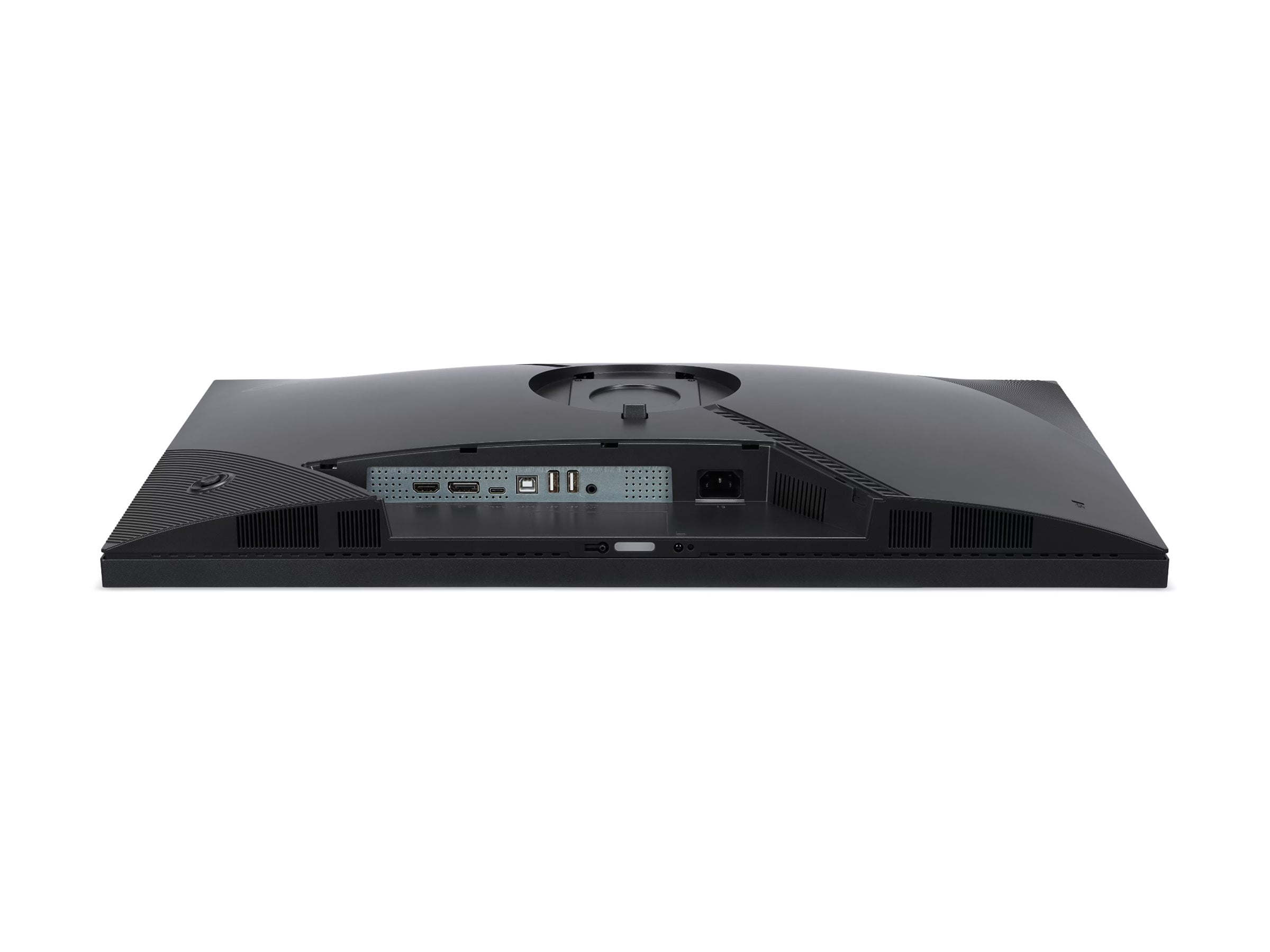
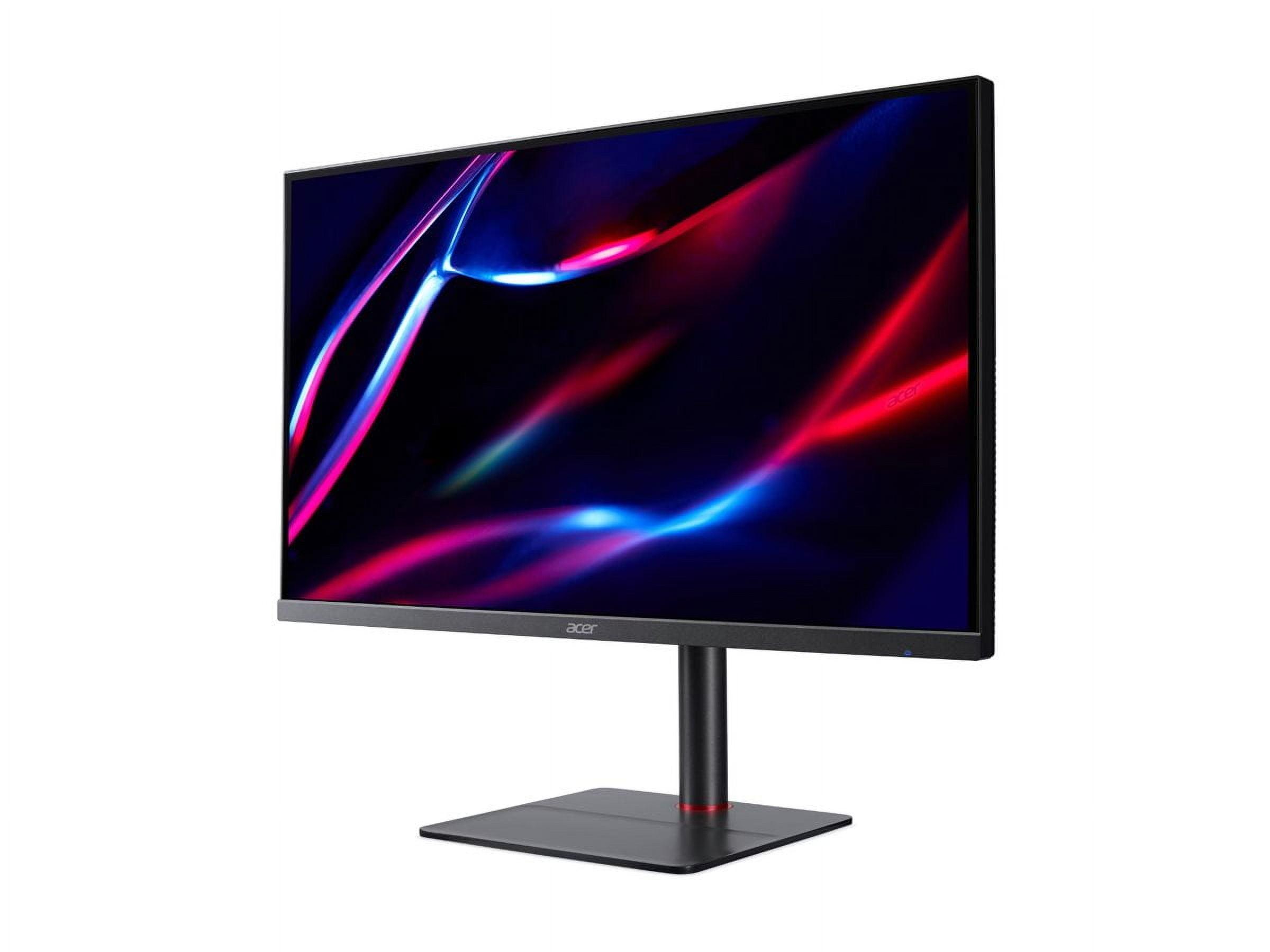
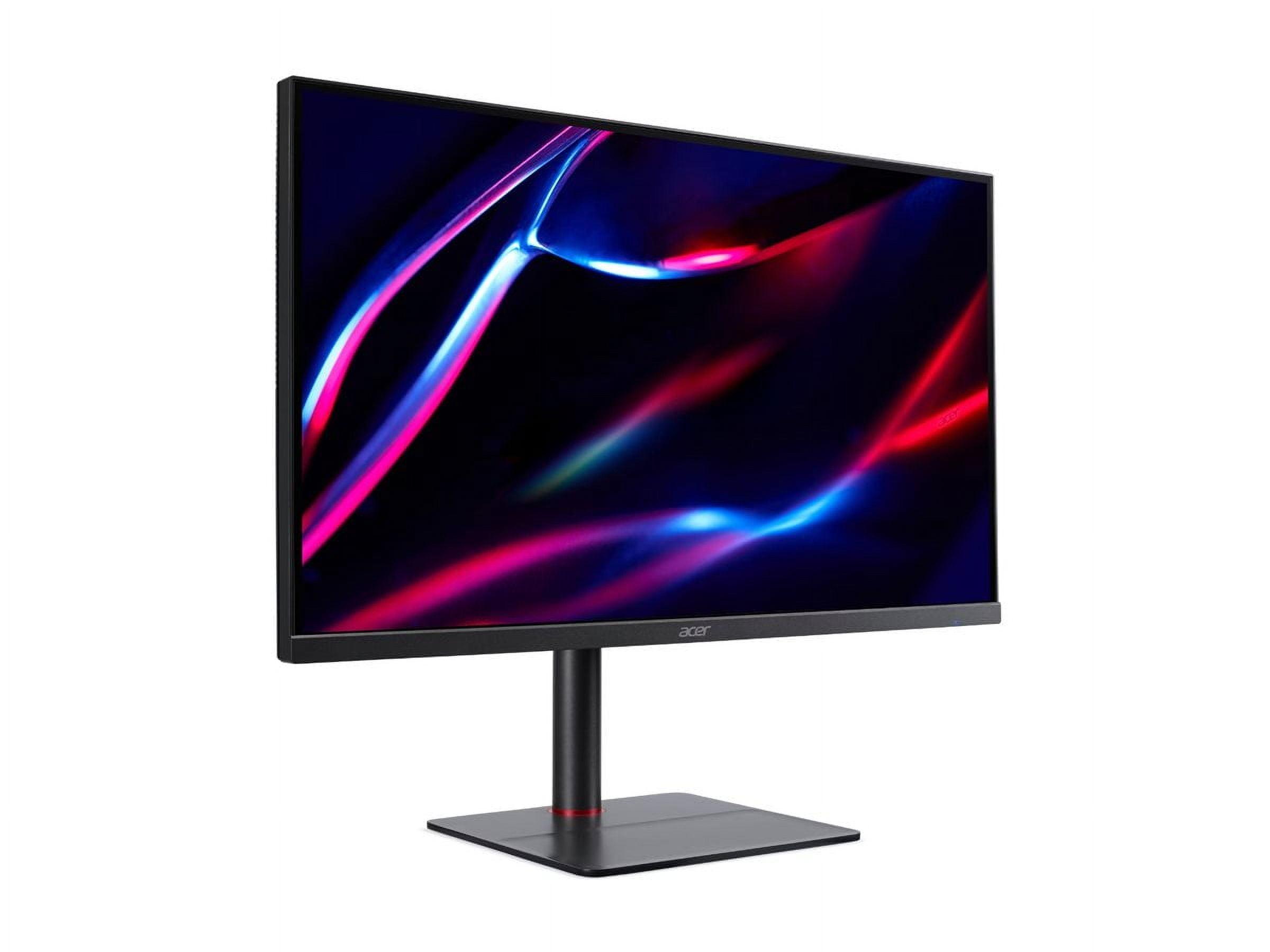
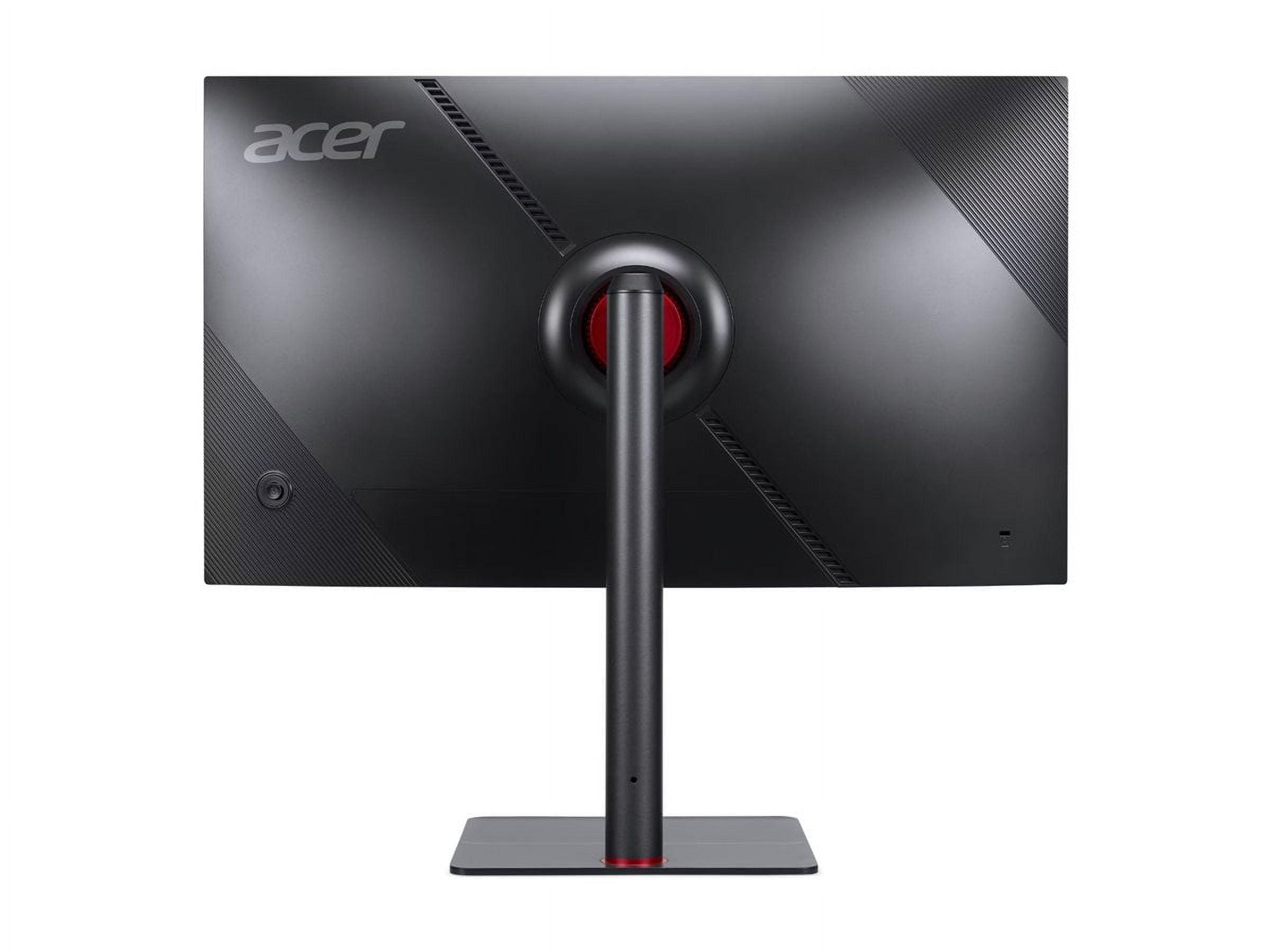
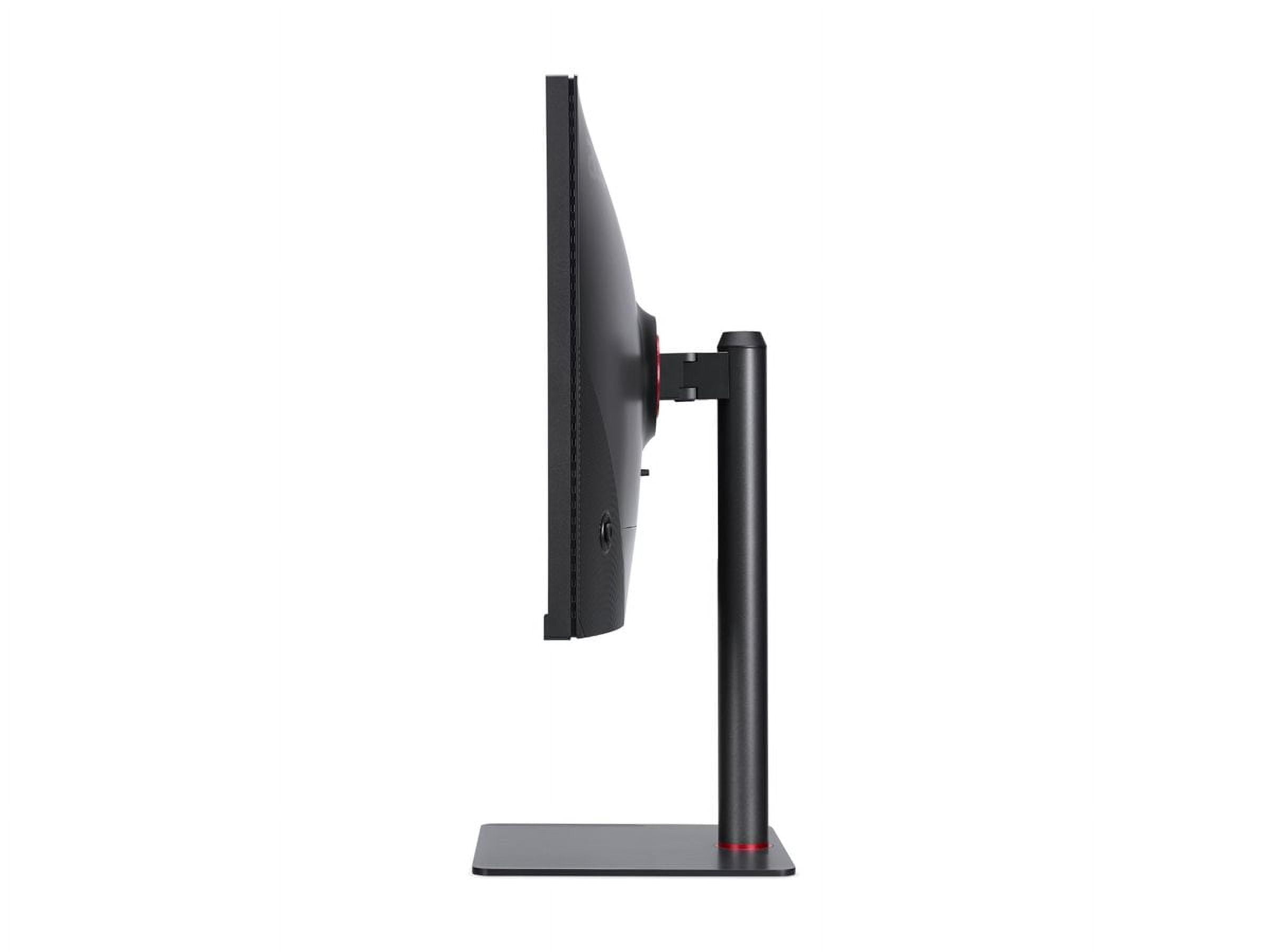
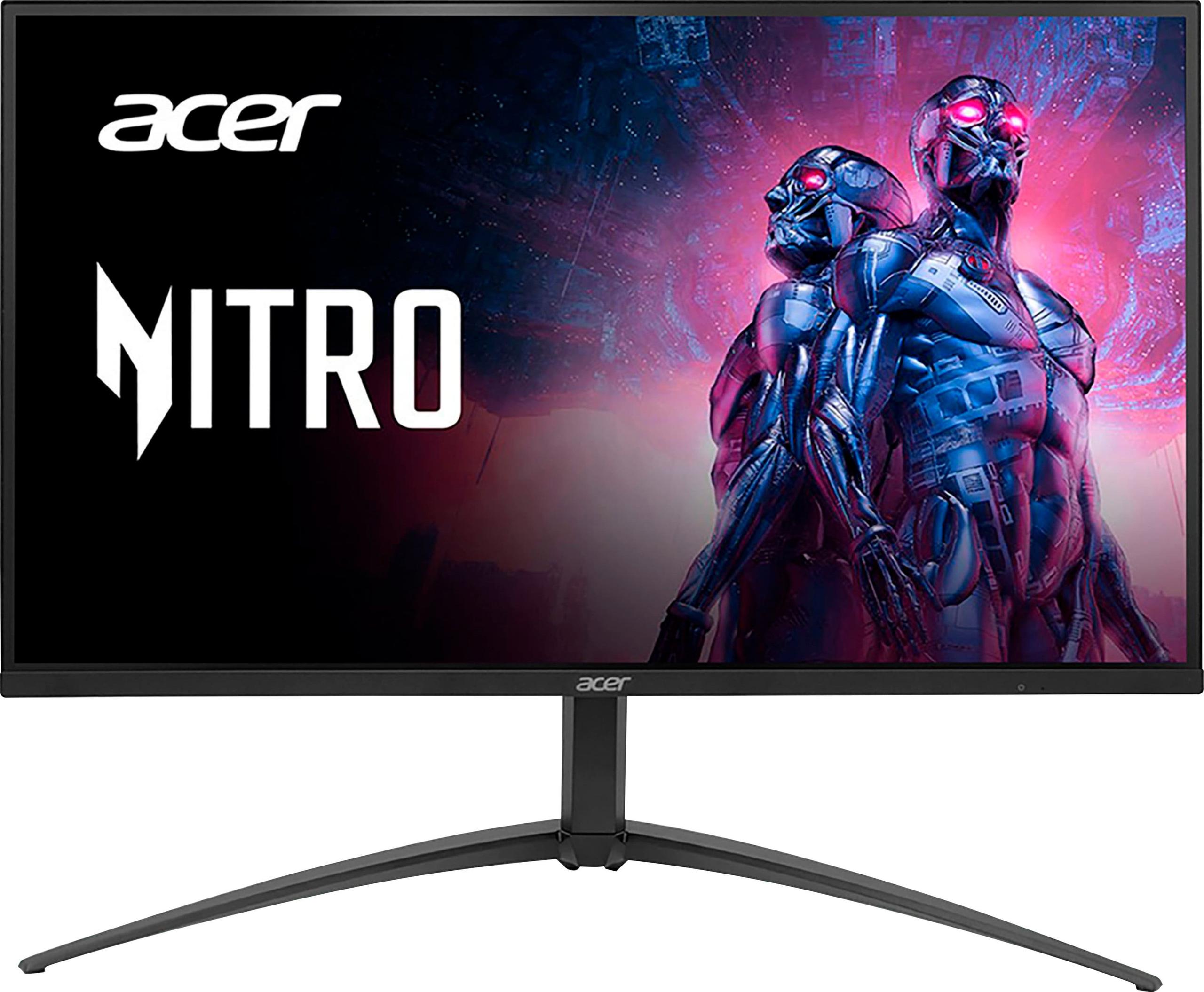
When you're ready to upgrade your gaming setup with a premium 27-inch monitor, you'll quickly discover that the landscape has evolved dramatically. Two standout options represent completely different approaches to delivering exceptional visual performance: the Gigabyte AORUS FO27Q2 with its cutting-edge QD-OLED technology, and the Acer Nitro XV275K P3 featuring advanced Mini LED backlighting with 4K resolution.
Having tested both technologies extensively, I can tell you that choosing between them isn't just about picking the "better" monitor—it's about understanding which approach aligns with how you actually use your computer. Let me break down everything you need to know to make the right decision.
The premium gaming monitor market has undergone a revolution in recent years. When these monitors launched—the FO27Q2 arriving in 2024 and the XV275K P3 debuting in 2023—they represented the cutting edge of display technology. Since then, we've seen these technologies mature and become more accessible, though they're still considered premium options.
The key considerations when choosing a high-end gaming monitor boil down to five main factors: panel technology (which determines how the image is created), resolution versus refresh rate trade-offs, gaming performance metrics, overall visual quality, and value proposition. Each of these monitors excels in different areas, making your choice dependent on your specific needs and preferences.
The Gigabyte AORUS FO27Q2 uses QD-OLED technology, which combines quantum dots (tiny semiconductor particles that emit specific colors when hit by light) with OLED's self-emitting pixels. Think of it as having millions of tiny, individually controllable light bulbs that can turn completely off or shine at precisely the right color and brightness.
This technology delivers what I consider the holy grail of gaming displays: perfect blacks and infinite contrast. When a pixel needs to be black, it simply turns off completely. There's no backlight bleeding through, no grayish blacks—just pure, inky darkness. This creates an incredibly immersive experience, especially in darker games or when gaming in a dimly lit room.
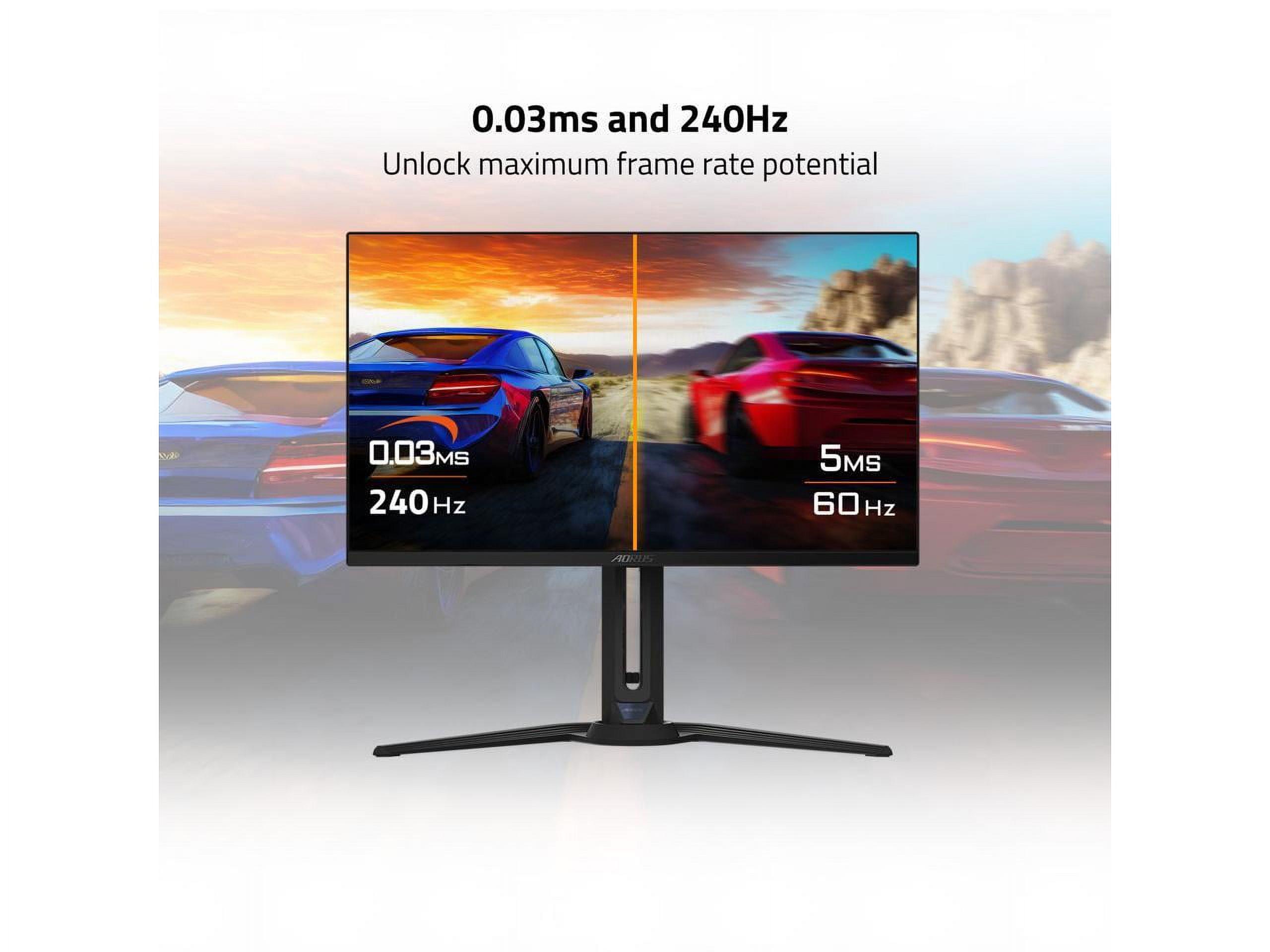
The FO27Q2 runs at 2560×1440 resolution (commonly called 1440p or QHD) with a staggering 240Hz refresh rate. This means the screen can update its image 240 times per second—four times faster than a standard 60Hz monitor. The response time, which measures how quickly pixels can change from one color to another, clocks in at an almost impossible-to-measure 0.03 milliseconds. For context, that's roughly 30 times faster than most standard LCD monitors.
The Acer Nitro XV275K P3 takes a different approach with Mini LED technology. Instead of self-emitting pixels, it uses an IPS LCD panel (which provides wide viewing angles and consistent colors) combined with a highly advanced backlighting system featuring 576 individual LED zones.
Think of traditional LCD monitors as having a single flashlight illuminating the entire back of the screen. Mini LED is like having 576 precisely controllable flashlights, each able to dim or brighten independently. This allows for much better control over which parts of the screen are bright and which are dark, though it can't achieve the perfect blacks of OLED technology.
Where the XV275K P3 truly shines is in resolution and brightness. Its 3840×2160 4K display packs in 77% more pixels than the FO27Q2's 1440p screen, resulting in incredibly sharp text and detailed images. The peak brightness of 1000 nits (a measurement of luminance) means it can display brilliant HDR content and remains clearly visible even in bright rooms.
If you're serious about competitive gaming—particularly fast-paced titles like first-person shooters, MOBAs, or racing games—the FO27Q2 is in a league of its own. That 240Hz refresh rate isn't just a number on a spec sheet; it translates to noticeably smoother motion when tracking fast-moving targets.
I've spent considerable time playing competitive shooters on both monitors, and the difference is most apparent when making quick camera movements or tracking enemies across the screen. The FO27Q2's 0.03ms response time means there's virtually no ghosting or motion blur—phenomena where you see faint trails behind moving objects. This clarity advantage can be the difference between landing a crucial shot and missing it entirely.
The input lag—the delay between when you move your mouse and when that movement appears on screen—measures just 13 milliseconds on the FO27Q2, which is exceptional even by competitive gaming standards. For comparison, anything under 40ms is considered good for gaming, so this monitor is operating at an elite level.
For console gaming, however, the picture changes dramatically. The XV275K P3 becomes the more logical choice for several reasons. Current-generation consoles like the PlayStation 5 and Xbox Series X are designed to output at 4K resolution, making the monitor's native 4K display a perfect match.
While the XV275K P3 "only" refreshes at 160Hz compared to the FO27Q2's 240Hz, this is still well above what most console games can actually deliver. Most console titles target either 60fps or 120fps, making the extra 80Hz of the OLED monitor largely irrelevant for console gaming.
The XV275K P3's 1ms response time, while not as fast as the OLED, is still excellent and won't create any noticeable motion blur in typical gaming scenarios. Where you might notice the difference is in input lag at 60Hz, where the Acer performs less optimally, but this varies significantly by game and console.
High Dynamic Range (HDR) content—which includes enhanced brightness, contrast, and color information—showcases where these monitors diverge most dramatically. The XV275K P3 can reach 1000 nits of peak brightness and holds VESA DisplayHDR 1000 certification, meaning it meets strict standards for HDR performance.
In practice, this translates to spectacular HDR gaming and movie experiences. Bright explosions genuinely hurt your eyes (in a good way), and sunlit scenes have that convincing brilliance that makes you squint. The 576 local dimming zones work together to create impressive contrast, though you'll occasionally notice "blooming"—where bright objects cause a subtle halo effect in the surrounding dark areas.
The FO27Q2, while capable of perfect blacks, achieves lower peak brightness levels. However, its pixel-level control means no blooming artifacts whatsoever. When you see a bright star against a black sky, that star is perfectly defined with no unwanted light spilling into the surrounding darkness.
Both monitors excel in color reproduction, but with different strengths. The XV275K P3 covers 99% of the Adobe RGB color space and 98% of DCI-P3, making it excellent for photo editing and color-critical work. It ships with factory calibration that achieves Delta E values under 2, which means colors are accurate enough for professional use right out of the box.
The FO27Q2 leverages quantum dot technology to produce incredibly vibrant, saturated colors that really pop during gaming. While it covers 99% of DCI-P3, the QD-OLED technology tends to make colors appear more vivid and engaging, though this isn't always technically more accurate.
Here's where the resolution difference becomes most apparent. The XV275K P3's 4K resolution provides significantly sharper text, making it far superior for productivity work, web browsing, and any tasks involving reading. At 27 inches, 4K delivers about 163 pixels per inch, while 1440p provides 108 pixels per inch.
If you plan to use your monitor for work, content creation, or even just browsing the web, this difference is substantial. Text appears crisp and clean on the 4K display, while the 1440p screen, though perfectly usable, shows more pixelation up close.
At the time of writing, both monitors occupy similar price ranges in the premium gaming monitor segment, with the FO27Q2 typically commanding a slight premium for its OLED technology. However, the value proposition depends entirely on your use case.
The XV275K P3 delivers exceptional value by combining 4K resolution, strong HDR performance, and solid gaming capabilities at a competitive price point. You're essentially getting a high-end productivity monitor that also excels at gaming—two monitors in one.
The FO27Q2 represents a more specialized purchase. You're paying primarily for best-in-class motion performance and contrast, making it ideal if gaming is your primary focus and you can accept 1440p resolution.
OLED technology, including QD-OLED, faces potential burn-in issues where static images displayed for extended periods can create permanent ghost images on the screen. Modern OLED monitors include various protective features like pixel shifting and automatic screen savers, and the FO27Q2 comes with a three-year warranty covering burn-in. However, this remains a consideration if you frequently display static content like desktop icons or taskbars.
The XV275K P3 faces no such longevity concerns with its LCD technology, making it potentially more suitable for users who keep monitors for many years or use them for varied content including productivity work.
If you're primarily interested in competitive gaming and play titles like Counter-Strike, Valorant, League of Legends, or Fortnite at a serious level, the FO27Q2 is the clear choice. The 240Hz refresh rate and 0.03ms response time provide tangible advantages in these scenarios. The perfect motion clarity can help you track enemies more effectively, and the reduced input lag gives you a competitive edge.
The slightly lower resolution actually works in your favor here—many professional gamers prefer 1440p because it's less demanding on your graphics card, allowing you to maintain higher frame rates more easily.
For users who want one premium monitor to handle everything—gaming, work, content consumption, and creative tasks—the XV275K P3 is the more practical choice. The 4K resolution makes it excellent for productivity, the Mini LED backlighting delivers impressive HDR content, and the gaming performance is still excellent for the vast majority of titles.
This monitor shines particularly bright if you work from home and need professional-grade color accuracy and text clarity during the day, then switch to gaming in the evening.
Console gamers should strongly consider the XV275K P3. Its native 4K resolution perfectly matches modern console output, and the strong HDR performance showcases games like Horizon Forbidden West, Spider-Man, or Forza Horizon in stunning detail. The USB-C port with 90W power delivery is also perfect if you occasionally want to connect a laptop.
Both monitors can serve as compact home theater displays, but they excel in different environments. The FO27Q2 is spectacular in dark rooms where its perfect blacks create an incredibly immersive movie-watching experience. The contrast is simply unmatched by any LCD technology.
The XV275K P3 works better in living rooms or shared spaces with ambient light, where its higher peak brightness maintains image quality even when competing with other light sources.
After extensive testing with both monitors, my recommendation comes down to honest self-assessment of your primary use case. The FO27Q2 is a specialized tool that excels at one thing—gaming—better than almost anything else on the market. If that's your primary focus and you're comfortable with 1440p resolution, it's an exceptional choice.
The XV275K P3 is the more practical choice for most users. It delivers 90% of the gaming performance while adding significant versatility in other areas. The 4K resolution future-proofs your setup and makes the monitor genuinely useful for professional work.
Neither choice is wrong—they're simply optimized for different priorities. Consider what you'll actually be doing with your monitor day-to-day, factor in your room's lighting conditions, and choose accordingly. Both represent the pinnacle of their respective approaches to display technology and will serve you well for years to come.
| Gigabyte AORUS FO27Q2 | Acer Nitro XV275K P3 |
|---|---|
| Panel Technology - Determines contrast, blacks, and overall image quality | |
| QD-OLED with quantum dots (infinite contrast, perfect blacks) | IPS LCD with Mini LED backlight (wide viewing angles, bright HDR) |
| Resolution - Affects sharpness of text, games, and productivity tasks | |
| 2560 x 1440 (1440p QHD) - lower GPU requirements | 3840 x 2160 (4K UHD) - 77% more pixels for sharper detail |
| Refresh Rate - Critical for competitive gaming and motion smoothness | |
| 240Hz (exceptional for esports and fast-paced games) | 160Hz (excellent for most gaming, less GPU demanding) |
| Response Time - Eliminates ghosting and motion blur in fast scenes | |
| 0.03ms GTG (virtually instantaneous, best-in-class) | 1ms GTG (very fast, minimal motion blur) |
| Peak Brightness - Important for HDR content and bright room usage | |
| 1000 cd/m² HDR (good for dark rooms) | 1000 cd/m² HDR with DisplayHDR 1000 (excellent for bright rooms) |
| Local Dimming - Controls contrast and reduces blooming in HDR | |
| Pixel-level (perfect, no blooming artifacts) | 576 zones Mini LED (very good, occasional minor blooming) |
| Color Gamut - Affects color vibrancy and professional work accuracy | |
| 99% DCI-P3 (excellent gaming colors) | 99% Adobe RGB, 98% DCI-P3 (better for professional color work) |
| Input Lag - Critical for competitive gaming responsiveness | |
| 13ms at 240Hz (record-setting low latency) | ~5ms at high refresh rates, higher at 60Hz |
| Connectivity - Determines device compatibility and convenience | |
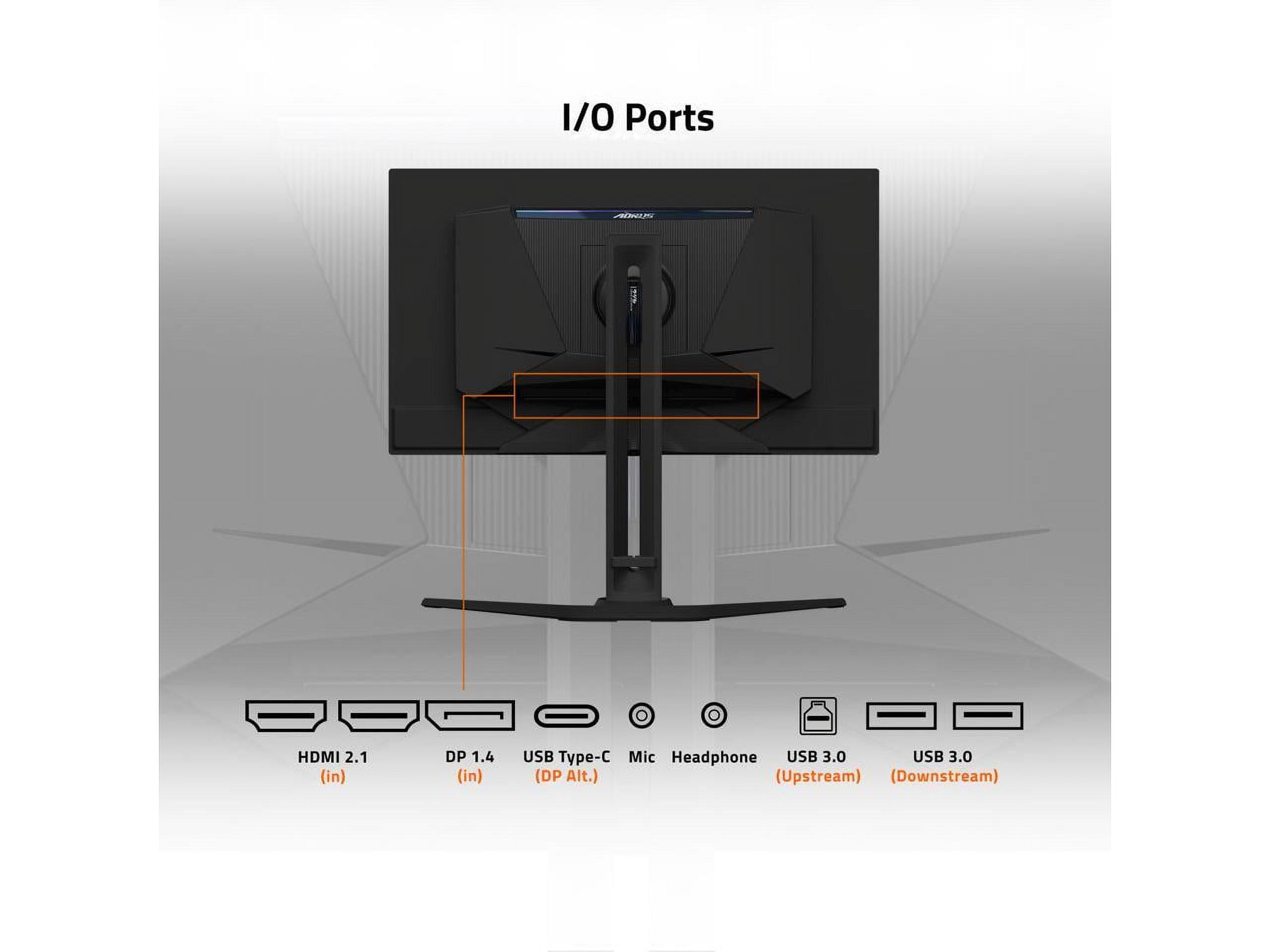
| 2x HDMI 2.1, 1x DP 1.4, USB-C, KVM switch | 2x HDMI 2.1, 1x DP 1.4, USB-C with 90W power delivery |
| Burn-in Risk - Long-term durability consideration | |
| Possible with static content (3-year burn-in warranty included) | No burn-in risk (LCD technology) |
| Best Use Case - Who should choose this monitor | |
| Competitive gamers prioritizing motion performance in dark rooms | Versatile users wanting 4K for gaming, work, and content consumption |
The Gigabyte AORUS FO27Q2 is superior for competitive gaming with its 240Hz refresh rate and 0.03ms response time, delivering the smoothest motion and fastest pixel response available. The Acer Nitro XV275K P3 offers excellent 160Hz gaming performance but can't match the pure speed advantage of the FO27Q2 for esports titles.
QD-OLED in the Gigabyte AORUS FO27Q2 uses self-emitting pixels that can turn completely off for perfect blacks and infinite contrast. Mini LED in the Acer Nitro XV275K P3 uses 576 individual LED zones behind an LCD panel for bright, controlled backlighting with excellent HDR performance but cannot achieve true blacks.
Both excel in different ways. The Acer Nitro XV275K P3 reaches 1000 nits peak brightness making HDR content incredibly bright and punchy, while the Gigabyte AORUS FO27Q2 delivers perfect blacks and infinite contrast for superior dark room viewing. For bright rooms, choose the XV275K P3; for dark home theater setups, the FO27Q2 is unmatched.
The Acer Nitro XV275K P3 offers 4K resolution providing 77% more pixels than the Gigabyte AORUS FO27Q2's 1440p display. Choose 4K if you value sharp text, detailed visuals, and use your monitor for productivity work. Choose 1440p if you prioritize high frame rates and have a mid-range graphics card.
The Acer Nitro XV275K P3 is better suited for console gaming with its native 4K resolution matching PS5 and Xbox Series X output. Both monitors support HDMI 2.1 and variable refresh rate, but the XV275K P3 maximizes the visual potential of current-generation consoles.
The Acer Nitro XV275K P3 excels for productivity with crisp 4K text, wide color gamut coverage (99% Adobe RGB), and factory calibration for professional work. The Gigabyte AORUS FO27Q2 works for office tasks but the lower 1440p resolution makes text less sharp for extended reading and detailed work.
The Acer Nitro XV275K P3 typically offers superior value by combining 4K resolution, strong HDR performance, and solid gaming capabilities in one package. The Gigabyte AORUS FO27Q2 commands a premium for specialized OLED technology and is best value if motion performance is your top priority.
The Gigabyte AORUS FO27Q2 uses OLED technology which can experience burn-in from static images over time, though it includes AI-based protection features and a 3-year burn-in warranty. The Acer Nitro XV275K P3 uses LCD technology with no burn-in risk, making it more suitable for displaying static content like desktop interfaces.
The Acer Nitro XV275K P3 achieves higher peak brightness at 1000 nits with excellent anti-reflective coating, making it superior for bright office environments or rooms with windows. The Gigabyte AORUS FO27Q2 performs best in darker environments where its perfect blacks create superior contrast.
Both monitors offer AMD FreeSync Premium Pro and G-Sync compatibility. The Gigabyte AORUS FO27Q2 includes unique tactical features like quick resolution switching and customizable crosshairs, while the Acer Nitro XV275K P3 provides USB-C connectivity with 90W power delivery for laptop users.
The Acer Nitro XV275K P3 offers superior color accuracy for professional work with 99% Adobe RGB coverage, factory calibration to Delta E <2, and multiple color space modes. The Gigabyte AORUS FO27Q2 provides vibrant, engaging colors that are excellent for gaming but less precise for color-critical professional applications.
Both the Gigabyte AORUS FO27Q2 and Acer Nitro XV275K P3 feature 2x HDMI 2.1 ports and DisplayPort 1.4. The XV275K P3 includes USB-C with 90W power delivery for single-cable laptop connections, while the FO27Q2 offers KVM switch functionality for controlling multiple devices with one keyboard and mouse setup.
We've done our best to create useful and informative comparisons to help you decide what product to buy. Our research uses advanced automated methods to create this comparison and perfection is not possible - please contact us for corrections or questions. These are the sites we've researched in the creation of this article: tomshardware.com - pangoly.com - youtube.com - pangoly.com - rtings.com - displayninja.com - gigabyte.com - youtube.com - creativebloq.com - techpowerup.com - newegg.com - gigabyte.com - icecat.in - microcenter.com - aorus.com - bhphotovideo.com - provantage.com - bestbuy.com - displayspecifications.com - tomshardware.com - gigabyte.com - computronicsmultivision.com - gigabyte.com - bestbuy.com - rtings.com - reviewed.com - displayninja.com - youtube.com - displayninja.com - youtube.com - dpreview.com - acer.com - buy.bluum.com - shi.com - camcor.com - newegg.com - provantage.com - displayspecifications.com - colamco.com - displayspecifications.com - walmart.com - bestbuy.com

Privacy Policy
Terms and Conditions - Affiliate Policy
Home Security
© Copyright 2008-2026.
11816 Inwood Rd #1211, Dallas, TX 75244