

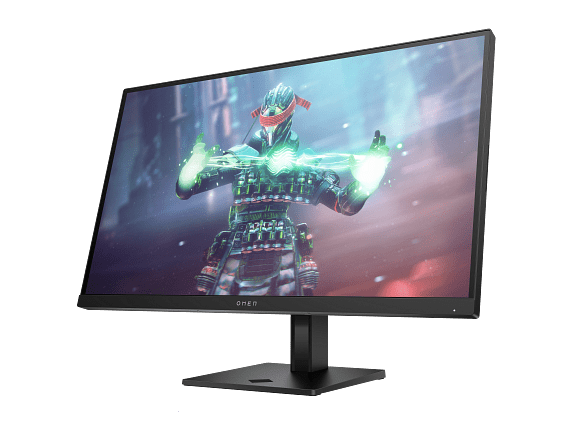
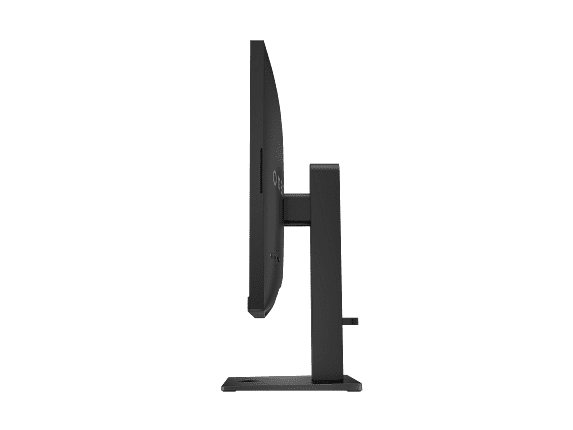
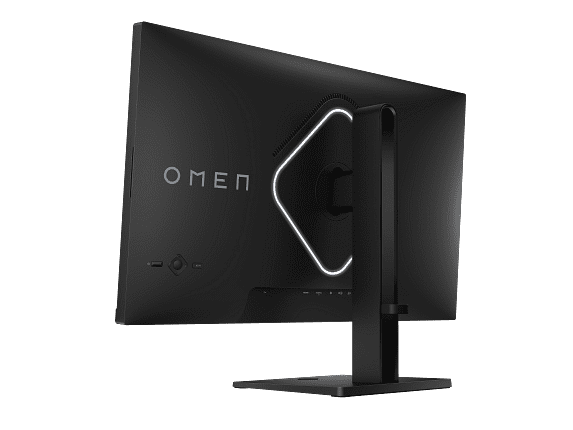
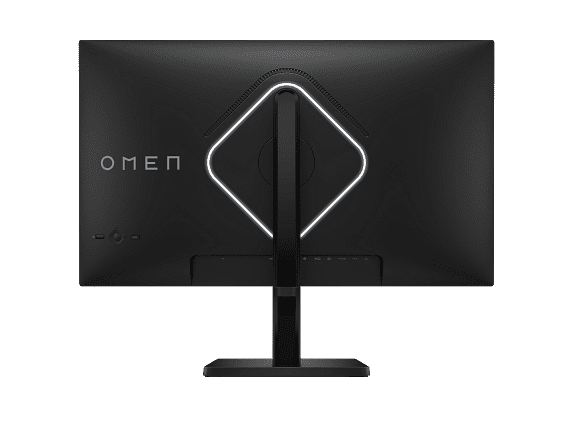
When it comes to gaming monitors, the choices have never been better—or more confusing. Two standout options that perfectly illustrate the current state of gaming displays are the Gigabyte AORUS FO27Q2 and the HP Omen 27k. These monitors represent fundamentally different approaches to gaming excellence, and understanding their strengths will help you make the right choice for your setup.
Gaming monitors have evolved dramatically over the past few years. Gone are the days when you simply picked the cheapest 1080p display and called it good. Today's gaming monitors are sophisticated pieces of technology that can make or break your gaming experience, whether you're competing in esports tournaments or exploring vast open worlds.
The key factors that separate great gaming monitors from mediocre ones include panel technology (the fundamental way the screen creates images), refresh rate (how many times per second the image updates), response time (how quickly pixels can change colors), and color accuracy (how true-to-life the colors appear). Each of these elements affects your gaming experience in different ways, and the balance between them determines what kind of gamer the monitor is best suited for.
What makes this comparison particularly interesting is that both the AORUS FO27Q2 and Omen 27k launched in 2024, representing the latest thinking in gaming monitor design. The Gigabyte focuses on cutting-edge OLED technology with maximum gaming performance, while the HP emphasizes practical 4K gaming with comprehensive features.
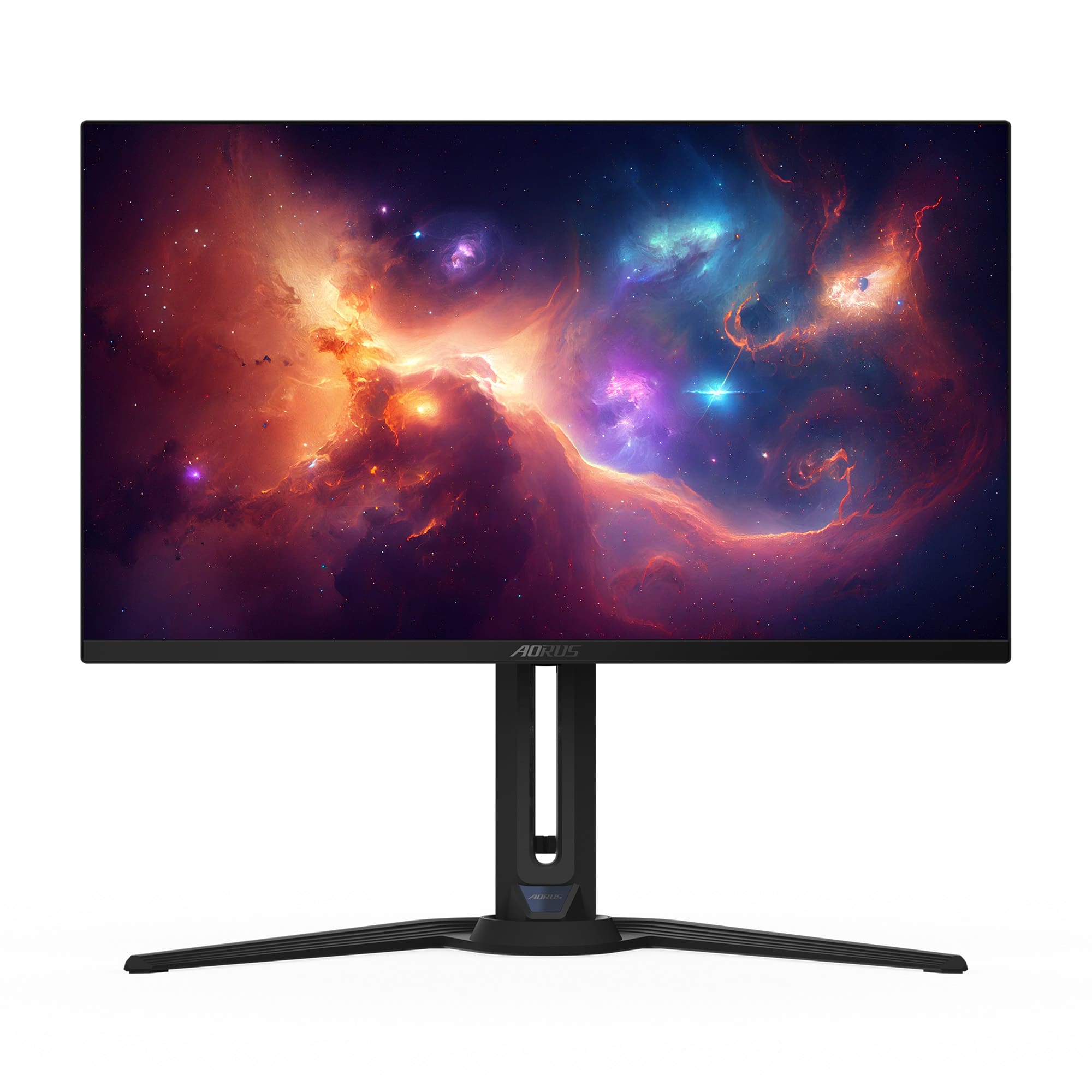
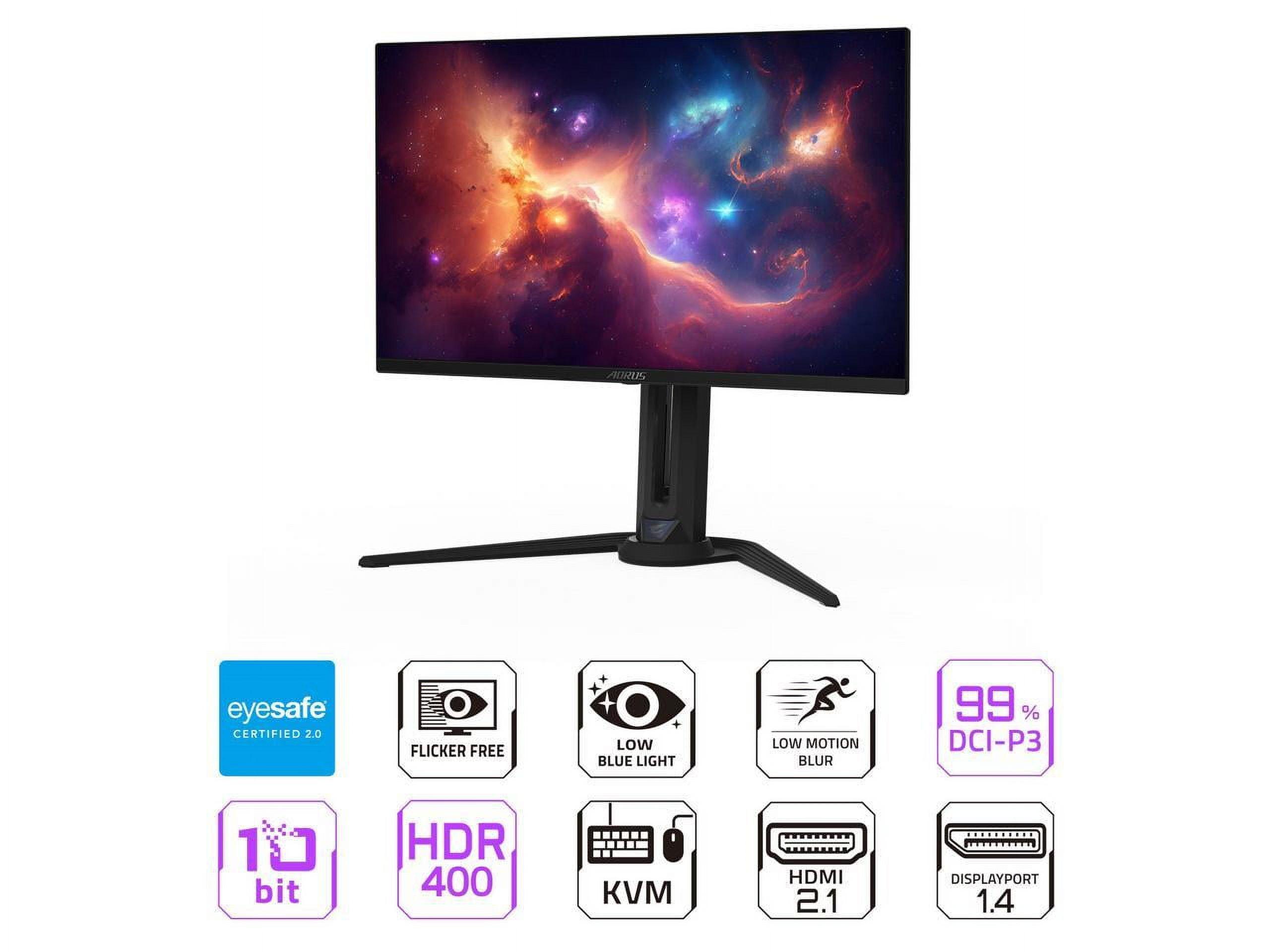
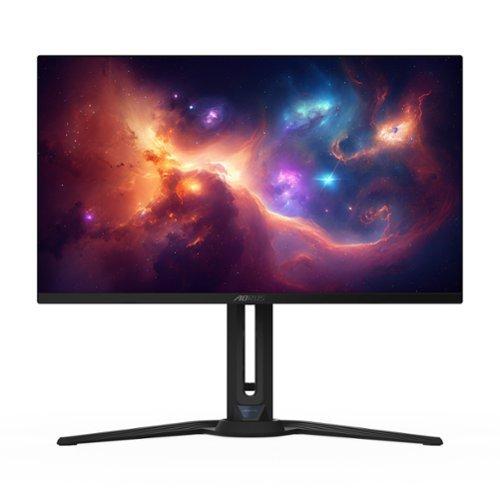
The AORUS FO27Q2 represents Gigabyte's entry into the premium QD-OLED gaming market. QD-OLED stands for Quantum Dot Organic Light Emitting Diode—a mouthful that essentially means each pixel creates its own light while quantum dots enhance color purity. This technology, pioneered by Samsung, combines the infinite contrast of OLED (where black pixels are completely off) with the color vibrancy of quantum dots.
Released in 2024, this monitor reflects the gaming industry's growing embrace of OLED technology. For years, OLED was primarily found in TVs and premium laptops, but falling prices and improved durability have finally brought it to desktop gaming monitors. The FO27Q2 runs at 2560×1440 resolution (often called QHD or 1440p) with a blazing fast 240Hz refresh rate.
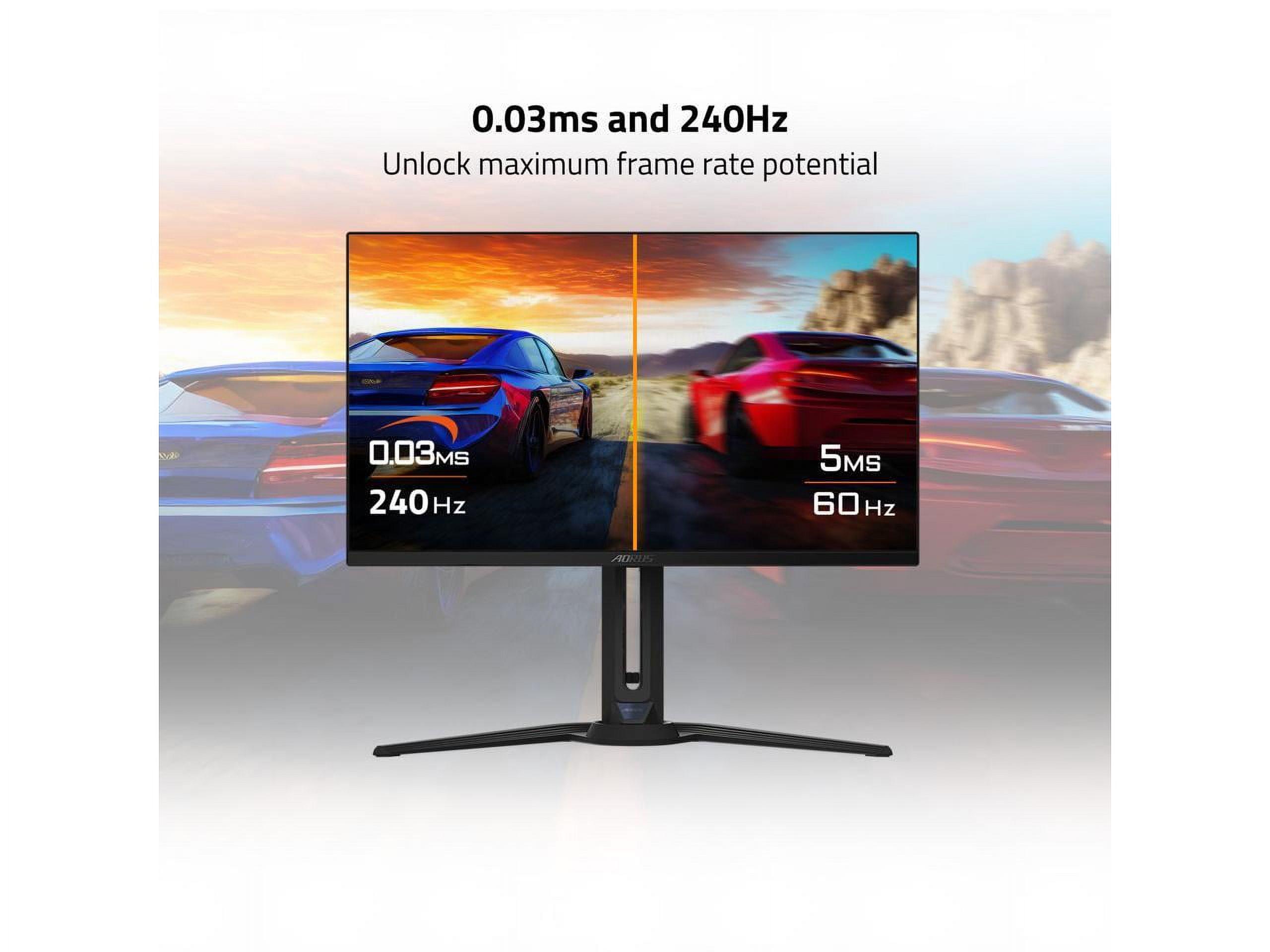
What sets this monitor apart is its response time specification of 0.03 milliseconds gray-to-gray (GTG). To put that in perspective, most gaming monitors range from 1-5ms, and anything under 1ms is considered excellent. The AORUS FO27Q2 achieves response times that are essentially instantaneous from a human perception standpoint.
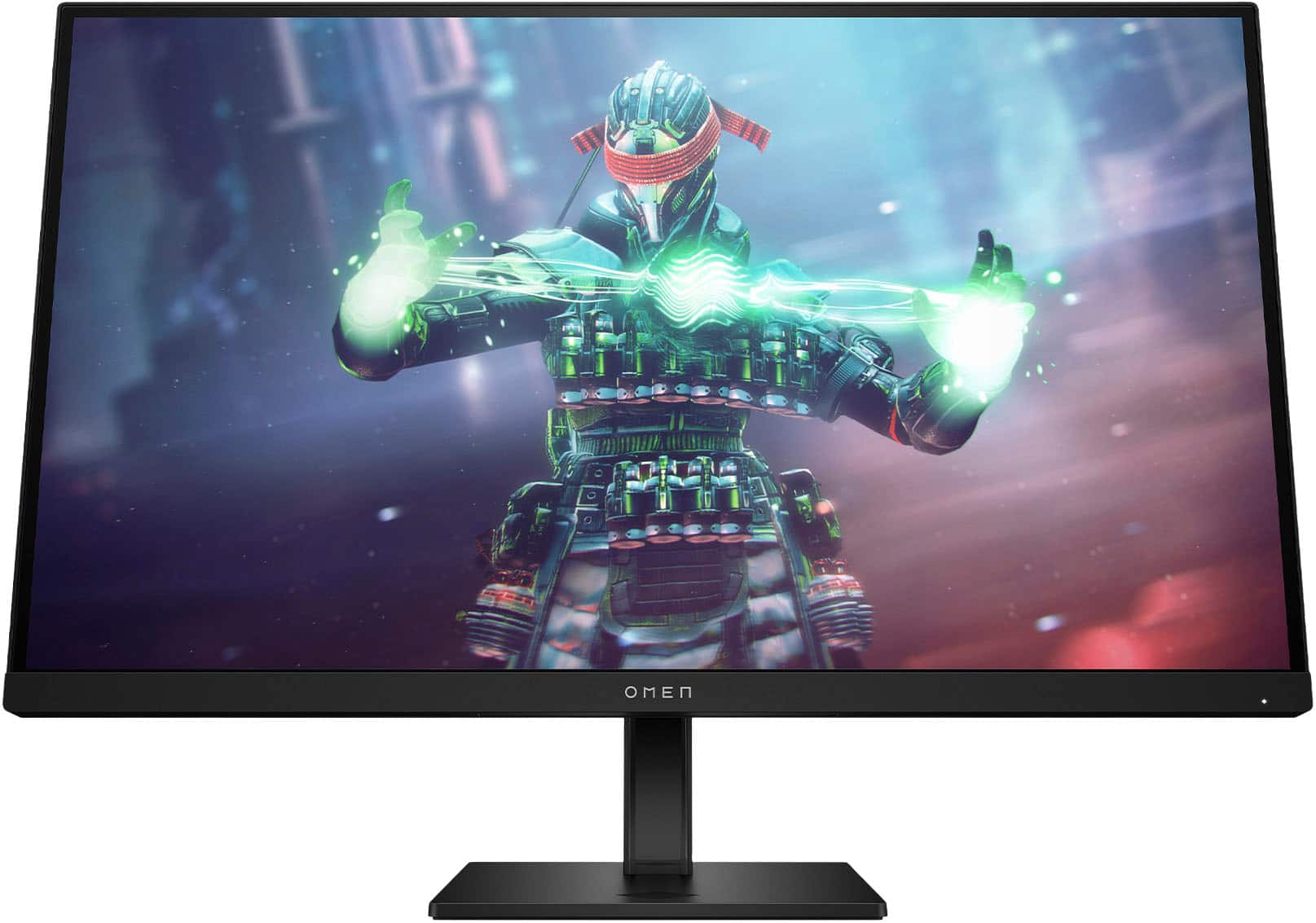
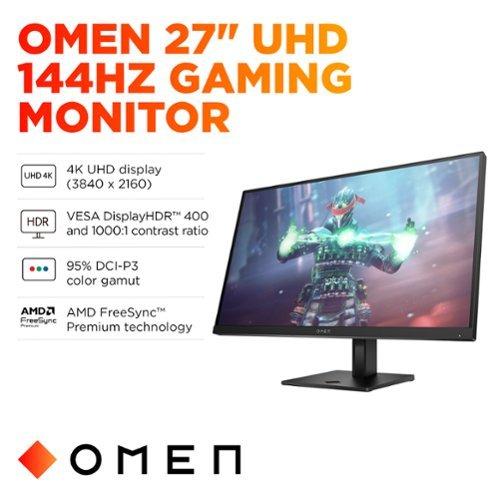
The HP Omen 27k, also released in 2024, takes a completely different approach. Rather than chasing the absolute cutting edge of display technology, HP focused on delivering 4K gaming at 144Hz with a comprehensive feature set that doesn't break the bank.
4K UHD resolution (3840×2160) provides four times the pixels of 1080p and about 1.8 times the pixels of 1440p. This translates to incredibly sharp text and game details, especially noticeable on a 27-inch screen where the pixel density reaches 163 pixels per inch. The Omen 27k uses an IPS (In-Plane Switching) panel, which is known for excellent color accuracy and wide viewing angles, though it can't match OLED's infinite contrast.
What makes the Omen 27k particularly compelling is its built-in KVM switch—a feature that lets you control multiple devices (like a gaming PC and a work laptop) with a single keyboard and mouse setup. This seemingly simple feature can transform how you use your workspace.
This is where the AORUS FO27Q2 absolutely dominates. OLED technology means that when a pixel needs to display black, it simply turns off completely. This creates what's called "infinite contrast"—the difference between the brightest white and the darkest black is essentially limitless. In practice, this means that dark scenes in games look incredibly realistic, with shadows that have actual depth and detail that doesn't get washed out.
The Omen 27k, using IPS technology, suffers from the same limitation as all LCD monitors: it relies on a backlight that shines through liquid crystals. Even when those crystals are twisted to block light, some always leaks through, creating what's called "IPS glow." This means blacks appear more like dark gray, especially when viewing the screen in a dark room.
For gaming, this difference is most noticeable in atmospheric titles like horror games, space simulators, or any game with dramatic lighting. The FO27Q2 will show details in shadows that simply disappear into grayness on traditional LCD monitors.
Both monitors excel at color reproduction, but in different ways. The AORUS FO27Q2 covers 99% of the DCI-P3 color space with 10-bit color depth, meaning it can display over 1 billion different colors. The quantum dot technology enhances color purity, making reds more vibrant, greens more lush, and blues more saturated than traditional displays.
The Omen 27k takes a more measured approach, covering 99% of sRGB and 95% of DCI-P3. While these numbers seem lower, they're actually more than sufficient for most gaming and creative work. HP has focused on color accuracy rather than maximum saturation, which means colors look natural and true-to-life rather than artificially boosted.
For content creators or anyone who works with photos and videos, the Omen 27k's approach is actually preferable. For pure gaming enjoyment, the AORUS FO27Q2's vibrant colors create a more immersive experience.
Here's where the Omen 27k fights back. 4K resolution provides noticeably sharper images than 1440p, especially for text, UI elements, and fine details in games. The difference is immediately apparent when reading small text or examining intricate textures in modern games.
However, there's a trade-off: 4K gaming requires significantly more GPU power. While the FO27Q2 at 1440p can achieve high frame rates with a mid-range graphics card, the Omen 27k really demands a high-end GPU to take full advantage of its resolution and refresh rate capabilities.
The AORUS FO27Q2 operates at 240Hz, meaning it can display 240 unique frames per second when paired with a capable graphics card. This is significantly higher than the Omen 27k's 144Hz maximum. For competitive gaming, especially fast-paced titles like first-person shooters or racing games, higher refresh rates provide a genuine advantage.
The difference between 144Hz and 240Hz isn't as dramatic as going from 60Hz to 144Hz, but it's still noticeable to experienced gamers. Motion appears smoother, and there's less input lag between when you move your mouse and when the action appears on screen. If you're serious about competitive gaming, every millisecond matters.
The FO27Q2's 0.03ms response time is genuinely impressive. Response time measures how quickly pixels can change from one color to another, and faster response times reduce motion blur and ghosting (where moving objects leave trails behind them).
The Omen 27k's 1ms response time is still excellent—most gamers won't notice any motion blur at this speed. However, the AORUS monitor has been certified with VESA ClearMR 13000, compared to the Omen's ClearMR 5000 rating. This certification measures motion clarity in standardized conditions, with higher numbers indicating clearer motion.
Input lag—the delay between when you perform an action and when it appears on screen—is crucial for competitive gaming. Professional reviews have measured the AORUS FO27Q2 at just 13ms total input lag, which is exceptionally low for any monitor, let alone a 240Hz OLED.
The Omen 27k performs well in this area too, though not quite at the same level. For most gamers, the difference won't be noticeable, but professional esports players often seek every possible advantage.
The HP Omen 27k has a significant advantage for console gamers thanks to its HDMI 2.1 port with full bandwidth support. This enables 4K gaming at 120Hz on PlayStation 5 and Xbox Series X, taking full advantage of next-generation console capabilities.
The AORUS FO27Q2, while it supports adaptive sync technologies, is primarily designed for PC gaming. Console gamers would need to choose between 4K at lower refresh rates or 1440p at higher refresh rates, depending on the specific game and console settings.
The Omen 27k's built-in KVM switch is genuinely useful for anyone who uses multiple devices. Whether you're switching between a gaming PC and a work laptop, or managing both a desktop and console, being able to control everything with one keyboard and mouse is incredibly convenient.
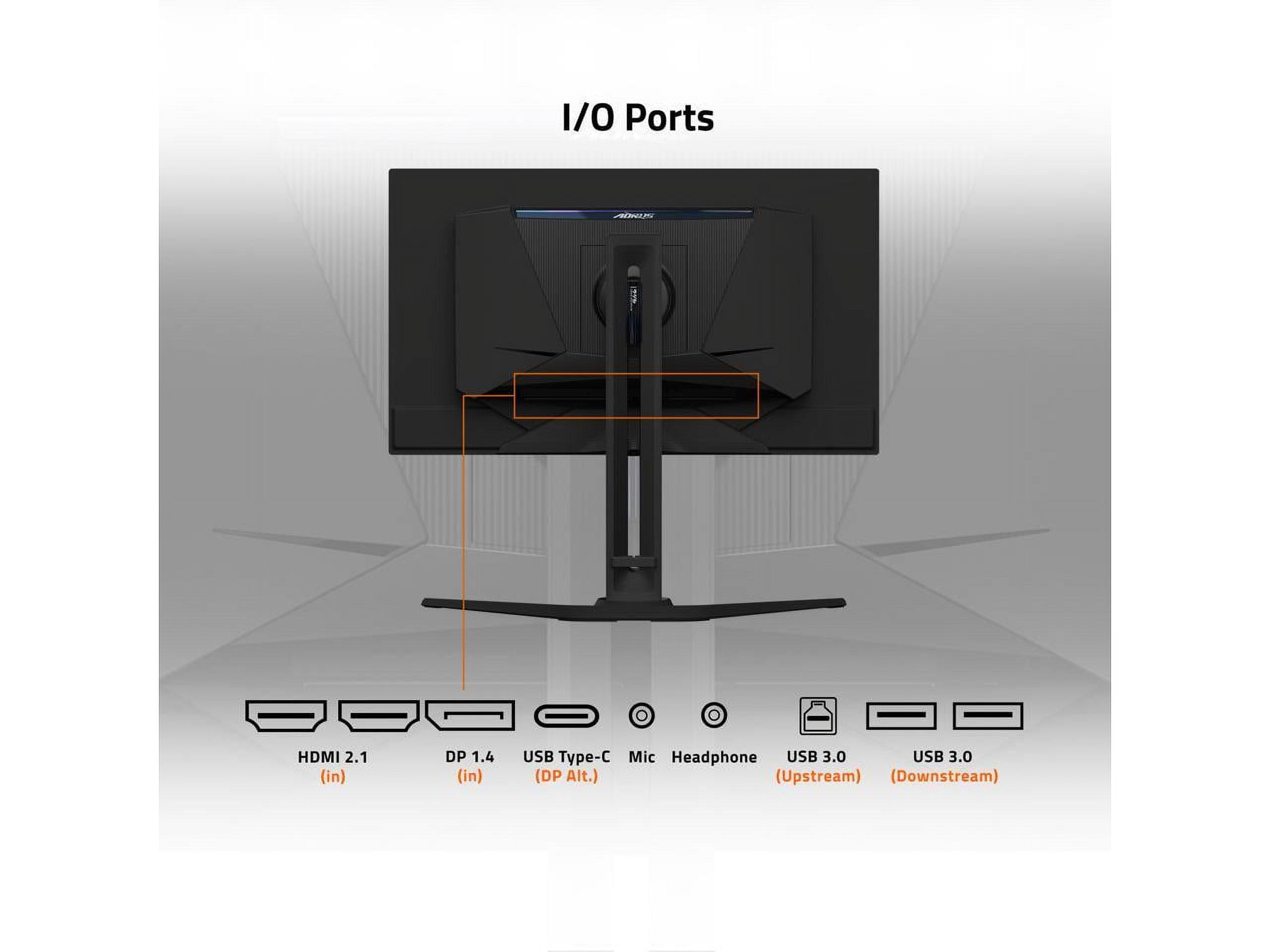
The FO27Q2 includes USB-C connectivity and can function as a KVM switch, but the Omen 27k makes this functionality more central to its design philosophy.
Both monitors support HDR (High Dynamic Range), which provides greater contrast between bright and dark areas of the image. However, they achieve this differently.
The AORUS FO27Q2 supports VESA DisplayHDR True Black 400, which is specifically designed for displays that can achieve perfect blacks (like OLED). The "True Black" designation is only awarded to monitors that can completely turn off pixels, creating infinite contrast.
The Omen 27k supports VESA DisplayHDR 400, which provides enhanced brightness and contrast compared to standard displays, though it can't match OLED's perfect blacks.
At the time of writing, both monitors are priced competitively within their respective categories, though the AORUS FO27Q2 commands a premium for its OLED technology. The price difference isn't dramatic, but it's worth considering what you're getting for the extra cost.
The FO27Q2 includes a three-year warranty that specifically covers OLED burn-in, which is impressive for this technology. Burn-in occurs when static images (like game UI elements or desktop icons) are displayed for extended periods, potentially causing permanent image retention. Gigabyte's confidence in offering burn-in coverage suggests their AI-based OLED care features are effective.
The Omen 27k offers excellent value by delivering 4K gaming with comprehensive features at a lower price point. IPS panels have proven longevity and don't suffer from burn-in concerns, making them a safer long-term investment for users who display static content frequently.
For users considering these monitors in a home theater setup, both have merits. The AORUS FO27Q2 excels for movie watching thanks to its infinite contrast and perfect blacks, which make dark scenes in films look incredibly realistic. The OLED technology is essentially the same as what's found in premium TVs.
However, the Omen 27k's 4K resolution provides sharper detail for streaming content, and its larger color gamut coverage makes it better suited for mixed media consumption. The anti-glare coating also helps in rooms with ambient lighting.
Both monitors include built-in speakers, though neither is particularly impressive for serious media consumption. External speakers or headphones remain the best option for quality audio.
You're primarily a PC gamer who values visual quality above all else. The FO27Q2 is perfect for enthusiasts who want to experience games as developers intended, with perfect blacks, vibrant colors, and smooth motion. It's especially compelling for single-player games with rich visuals or competitive games where every frame matters.
The monitor also makes sense if you're building a high-end gaming setup and want a display that matches the capabilities of premium graphics cards. The 1440p resolution is actually ideal for this, as it allows high-end GPUs to achieve the high frame rates needed to take advantage of the 240Hz refresh rate.
You want a versatile monitor that handles everything well. The Omen 27k is ideal for users who game, work, and consume media on the same display. Its 4K resolution provides incredible sharpness for productivity tasks, while the 144Hz refresh rate ensures smooth gaming.
This monitor is particularly compelling for console gamers who want to take full advantage of their PlayStation 5 or Xbox Series X. The HDMI 2.1 support and 4K resolution provide the best possible console gaming experience.
It's also the better choice for anyone who needs to connect multiple devices regularly. The built-in KVM switch and comprehensive port selection make it genuinely useful for complex setups.
Both the Gigabyte AORUS FO27Q2 and HP Omen 27k represent excellent approaches to gaming monitor design, but they serve different needs. The AORUS monitor pushes the boundaries of what's possible with current display technology, offering an experience that's genuinely transformative for gaming enthusiasts who can appreciate the difference.
The Omen 27k takes a more pragmatic approach, delivering outstanding performance across a broader range of use cases while maintaining excellent value. For most users, it provides the better balance of features, performance, and practicality.
Your choice ultimately depends on your priorities: cutting-edge visual technology and maximum gaming performance, or versatile 4K capability with comprehensive features. Both monitors will serve their intended audiences exceptionally well, representing the best of what 2024's gaming monitor technology has to offer.
| Gigabyte AORUS FO27Q2 | HP Omen 27k |
|---|---|
| Display Technology - Fundamentally affects image quality and gaming experience | |
| QD-OLED (infinite contrast, perfect blacks) | IPS LCD (consistent colors, no burn-in risk) |
| Resolution - Determines sharpness and GPU requirements | |
| 2560×1440 (QHD) - easier to drive at high framerates | 3840×2160 (4K UHD) - 78% more pixels, requires powerful GPU |
| Refresh Rate - Higher rates provide smoother motion and competitive advantage | |
| 240Hz (maximum esports performance) | 144Hz (excellent for most gaming, less GPU demanding) |
| Response Time - Lower values reduce motion blur in fast games | |
| 0.03ms GTG (essentially instantaneous) | 1ms GTG (excellent, imperceptible to most users) |
| HDR Support - Enhances contrast and color range | |
| VESA DisplayHDR True Black 400 (perfect blacks) | VESA DisplayHDR 400 (good brightness boost) |
| Color Gamut - Wider coverage means more vibrant colors | |
| 99% DCI-P3, 10-bit (cinema-grade vibrancy) | 99% sRGB, 95% DCI-P3 (accurate, natural colors) |
| Console Gaming - Next-gen console compatibility | |
| Limited to 1440p at high refresh rates | Native 4K/120Hz via HDMI 2.1 for PS5/Xbox Series X |
| Connectivity - Ports and multi-device features | |
| USB-C KVM, tactical gaming features | Built-in KVM switch, comprehensive port selection |
| Burn-in Risk - Long-term durability consideration | |
| Possible with OLED (3-year burn-in warranty included) | No burn-in risk with IPS technology |
| Input Lag - Critical for competitive gaming responsiveness | |
| 13ms total (record-setting performance) | Slightly higher but still excellent for gaming |
| Price Category - Value positioning at time of writing | |
| Premium OLED pricing with comprehensive warranty | Strong 4K gaming value with extensive features |
| Best For - Primary use case recommendation | |
| PC enthusiasts prioritizing visual quality and esports | Versatile users wanting 4K clarity and console compatibility |
The Gigabyte AORUS FO27Q2 is superior for competitive gaming with its 240Hz refresh rate and 0.03ms response time, providing maximum performance for esports. The HP Omen 27k at 144Hz is still excellent for most competitive gaming but can't match the AORUS FO27Q2's ultra-fast specifications.
QD-OLED in the AORUS FO27Q2 offers infinite contrast with perfect blacks and vibrant colors, while IPS in the Omen 27k provides consistent color accuracy without burn-in risk. QD-OLED delivers superior visual impact, but IPS offers proven long-term reliability.
The HP Omen 27k features 4K resolution (3840×2160) providing sharper images than the AORUS FO27Q2's 1440p resolution. However, 4K requires more powerful graphics cards to maintain high frame rates, while the FO27Q2 is easier to drive at maximum refresh rates.
The Omen 27k excels for console gaming with HDMI 2.1 support enabling native 4K/120Hz on PS5 and Xbox Series X. The AORUS FO27Q2 works with consoles but limits you to either 4K at lower refresh rates or 1440p at higher refresh rates.
The HP Omen 27k typically offers better value with 4K resolution and comprehensive features at a lower price point. The AORUS FO27Q2 commands a premium for cutting-edge OLED technology but includes a 3-year burn-in warranty that adds significant value.
The Omen 27k is better for productivity work due to its 4K resolution providing sharp text and detailed images, plus a built-in KVM switch for managing multiple devices. The AORUS FO27Q2 can handle productivity but the 1440p resolution isn't as sharp for detailed work.
The AORUS FO27Q2 delivers superior HDR with VESA DisplayHDR True Black 400 certification, achieving perfect blacks and infinite contrast that traditional LCD monitors cannot match. The Omen 27k supports HDR400 but cannot achieve the same contrast levels as the FO27Q2's OLED technology.
The AORUS FO27Q2 has potential burn-in risk like all OLED displays, but includes AI-based OLED care features and a 3-year burn-in warranty for protection. The HP Omen 27k uses IPS technology with no burn-in risk, making it safer for users who display static content frequently.
The AORUS FO27Q2 excels for movie watching with perfect blacks and infinite contrast creating cinematic visuals, especially in dark scenes. The Omen 27k offers sharper 4K detail for streaming content but cannot match the FO27Q2's contrast performance in dark room viewing.
The AORUS FO27Q2 offers 240Hz for maximum competitive advantage and ultra-smooth motion, while the HP Omen 27k provides 144Hz which is still excellent for gaming. Most gamers will find 144Hz perfectly smooth, but competitive esports players benefit from the FO27Q2's higher refresh rate.
The HP Omen 27k offers more comprehensive connectivity with HDMI 2.1, built-in KVM switch, and extensive USB hub functionality for managing multiple devices. The AORUS FO27Q2 includes USB-C and tactical gaming features but focuses more on gaming-specific connectivity than general versatility.
Choose the HP Omen 27k's 4K resolution if you want maximum sharpness and have a powerful GPU, especially for console gaming. Select the AORUS FO27Q2's QD-OLED if you prioritize visual quality with perfect blacks and infinite contrast, particularly for atmospheric gaming and competitive esports where the FO27Q2 excels.
We've done our best to create useful and informative comparisons to help you decide what product to buy. Our research uses advanced automated methods to create this comparison and perfection is not possible - please contact us for corrections or questions. These are the sites we've researched in the creation of this article: tomshardware.com - pangoly.com - youtube.com - pangoly.com - rtings.com - displayninja.com - gigabyte.com - youtube.com - creativebloq.com - techpowerup.com - newegg.com - gigabyte.com - icecat.in - microcenter.com - aorus.com - bhphotovideo.com - provantage.com - bestbuy.com - displayspecifications.com - tomshardware.com - gigabyte.com - computronicsmultivision.com - gigabyte.com - tomshardware.com - windowscentral.com - digitaltrends.com - youtube.com - hp.com - youtube.com - hp.com - hp.com - displayspecifications.com - files.bbystatic.com - newegg.com - hp.com - hp.com - hp.com - hp.com - target.com - files.bbystatic.com - displayspecifications.com

Privacy Policy
Terms and Conditions - Affiliate Policy
Home Security
© Copyright 2008-2026.
11816 Inwood Rd #1211, Dallas, TX 75244