

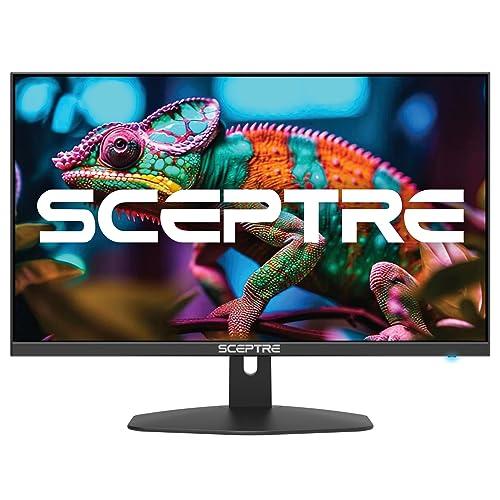
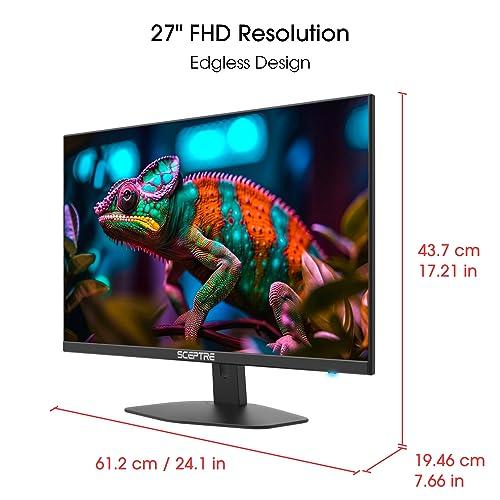
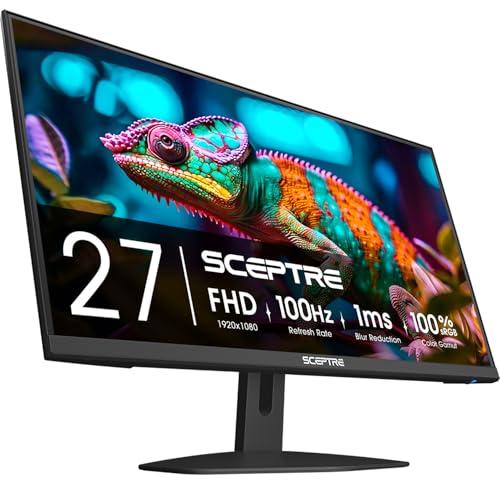
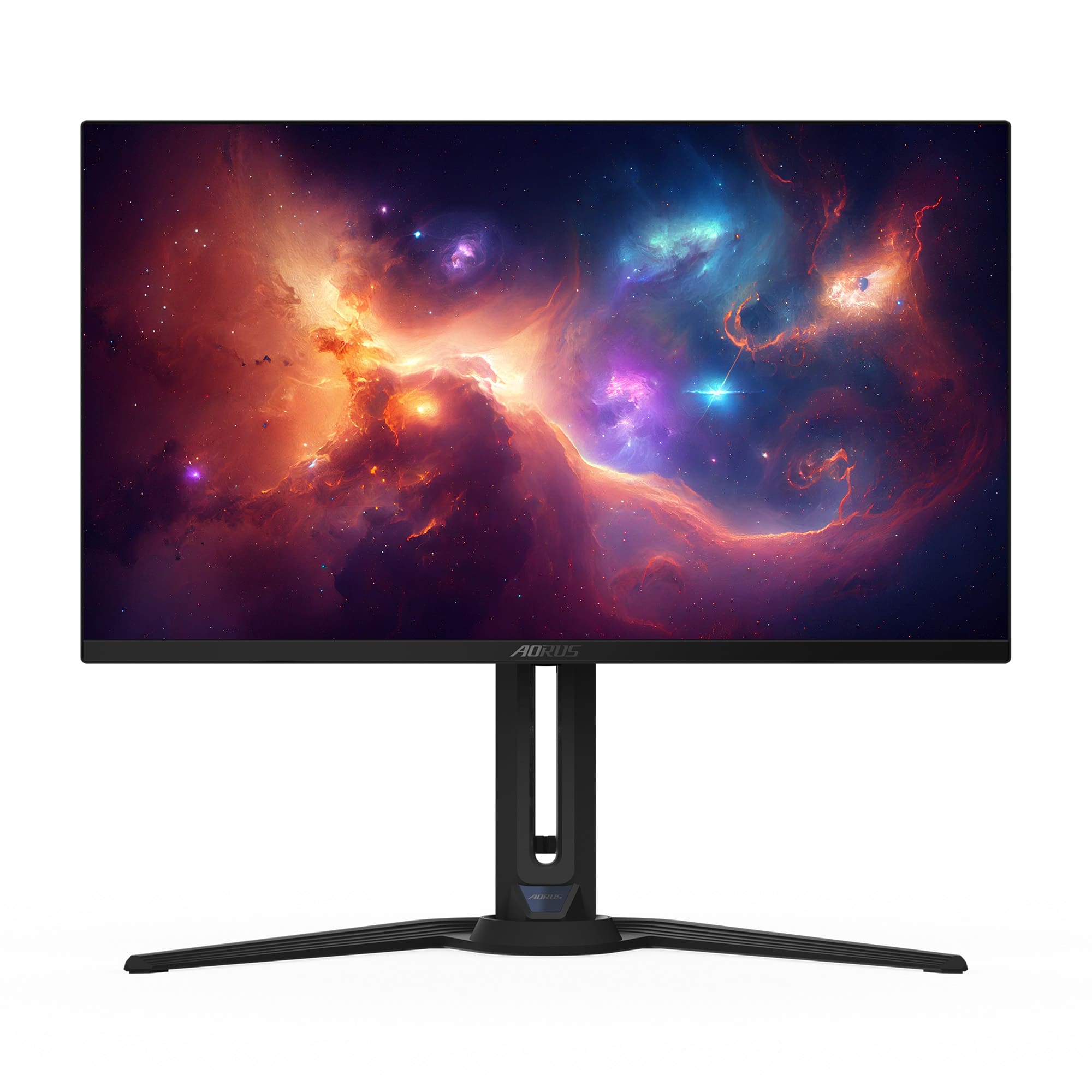
Shopping for a gaming monitor in 2024 can feel overwhelming, especially when you're comparing products from completely different price tiers. Today we're diving deep into two 27-inch gaming monitors that couldn't be more different: the budget-friendly Sceptre E275W-FW100T and the premium Gigabyte AORUS FO27Q2.
At the time of writing, these monitors represent a fascinating study in value versus performance, with the AORUS FO27Q2 costing roughly seven times more than the Sceptre. But is that premium justified? And more importantly, which one belongs on your desk?
Before we jump into the comparison, let's establish what makes a gaming monitor tick in 2024. The display world has evolved dramatically over the past few years, with new panel technologies, higher refresh rates, and improved color accuracy becoming standard features rather than luxury additions.
Panel technology forms the foundation of any monitor's performance. Traditional LCD panels use a backlight that shines through liquid crystals to create images, while newer OLED (Organic Light Emitting Diode) panels feature pixels that light themselves. This fundamental difference affects everything from contrast ratios to response times.
Refresh rate, measured in hertz (Hz), tells you how many times per second your monitor can display a new image. Higher refresh rates create smoother motion, particularly important for fast-paced gaming. Response time, measured in milliseconds (ms), indicates how quickly pixels can change from one color to another – crucial for eliminating ghosting and blur during rapid movement.
Color gamut describes the range of colors a display can reproduce, while HDR (High Dynamic Range) capability determines whether your monitor can display the bright highlights and deep shadows that make modern games and movies look more realistic.
Released in 2023, the Sceptre E275W-FW100T represents what I'd call the "sweet spot" of budget gaming monitors. At roughly one-seventh the cost of premium alternatives, it packs a surprising number of features into an affordable package.
This monitor uses a VA (Vertical Alignment) panel – a type of LCD technology that sits between the faster TN panels and the color-accurate IPS panels in terms of performance characteristics. VA panels excel at producing deeper blacks than IPS displays while maintaining decent viewing angles, making them popular choices for both gaming and entertainment.
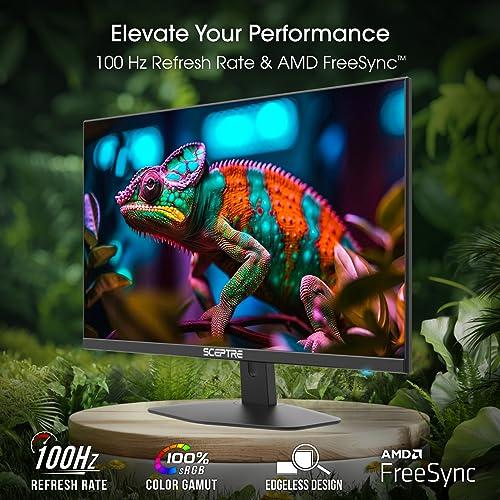
The Sceptre delivers a 100Hz refresh rate, which represents a significant upgrade over standard 60Hz office monitors. While it won't satisfy competitive esports players who demand 240Hz or higher, that 100Hz refresh rate provides noticeably smoother gameplay in most titles. The monitor supports AMD FreeSync adaptive sync technology, which eliminates screen tearing by synchronizing the display's refresh rate with your graphics card's frame output.
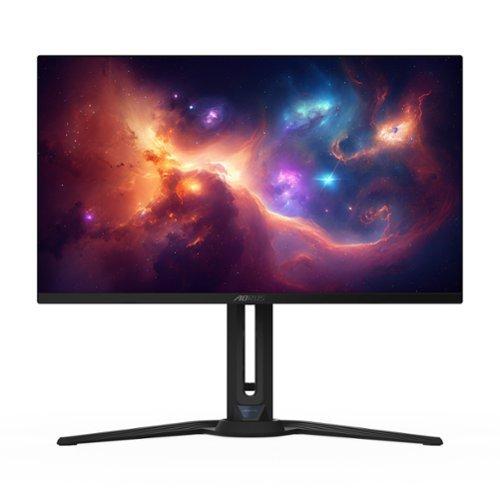
The AORUS FO27Q2, released in 2024, represents the cutting edge of gaming monitor technology. This premium display features a QD-OLED (Quantum Dot Organic Light Emitting Diode) panel – a relatively new technology that combines the perfect blacks and infinite contrast of OLED with the enhanced color volume of quantum dot technology.
QD-OLED panels are manufactured by Samsung and represent one of the most significant advances in display technology in recent years. Unlike traditional LCD monitors that require a backlight, each pixel in an OLED display produces its own light. When a pixel needs to be black, it simply turns off completely, creating true blacks that LCD panels simply cannot match.
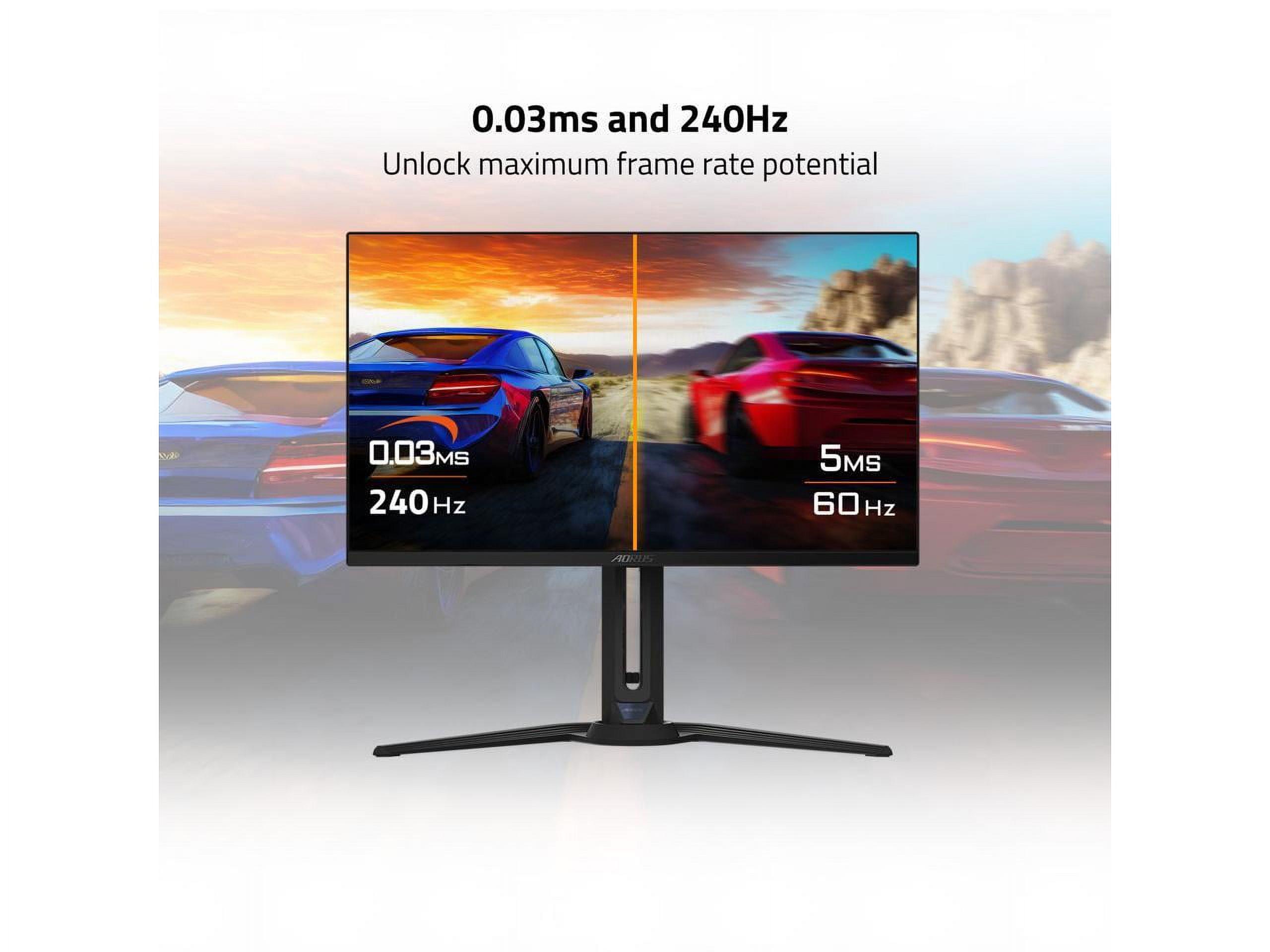
The AORUS FO27Q2 pushes performance boundaries with a 240Hz refresh rate and an almost impossibly fast 0.03ms response time. To put that in perspective, that's roughly 167 times faster than the Sceptre's 5ms response time.
The technology gap between these monitors is enormous, and it shows most dramatically in image quality. The Sceptre's VA panel produces a respectable 3,000:1 contrast ratio, which means the brightest whites are 3,000 times brighter than the darkest blacks the panel can produce. That's actually quite good for LCD technology and noticeably better than most IPS panels.
However, the AORUS FO27Q2's QD-OLED panel achieves a contrast ratio that's essentially infinite. When pixels turn completely off to produce black, there's no measurable light output, creating a contrast ratio that LCD technology simply cannot match. This translates to dramatically more realistic images, especially in dark scenes where you can make out details in shadows while bright elements remain brilliant.
Color reproduction tells a similar story. The Sceptre covers 100% of the sRGB color space – the standard range used for most web content and older games. That's perfectly adequate for general use and ensures colors appear as intended by content creators.
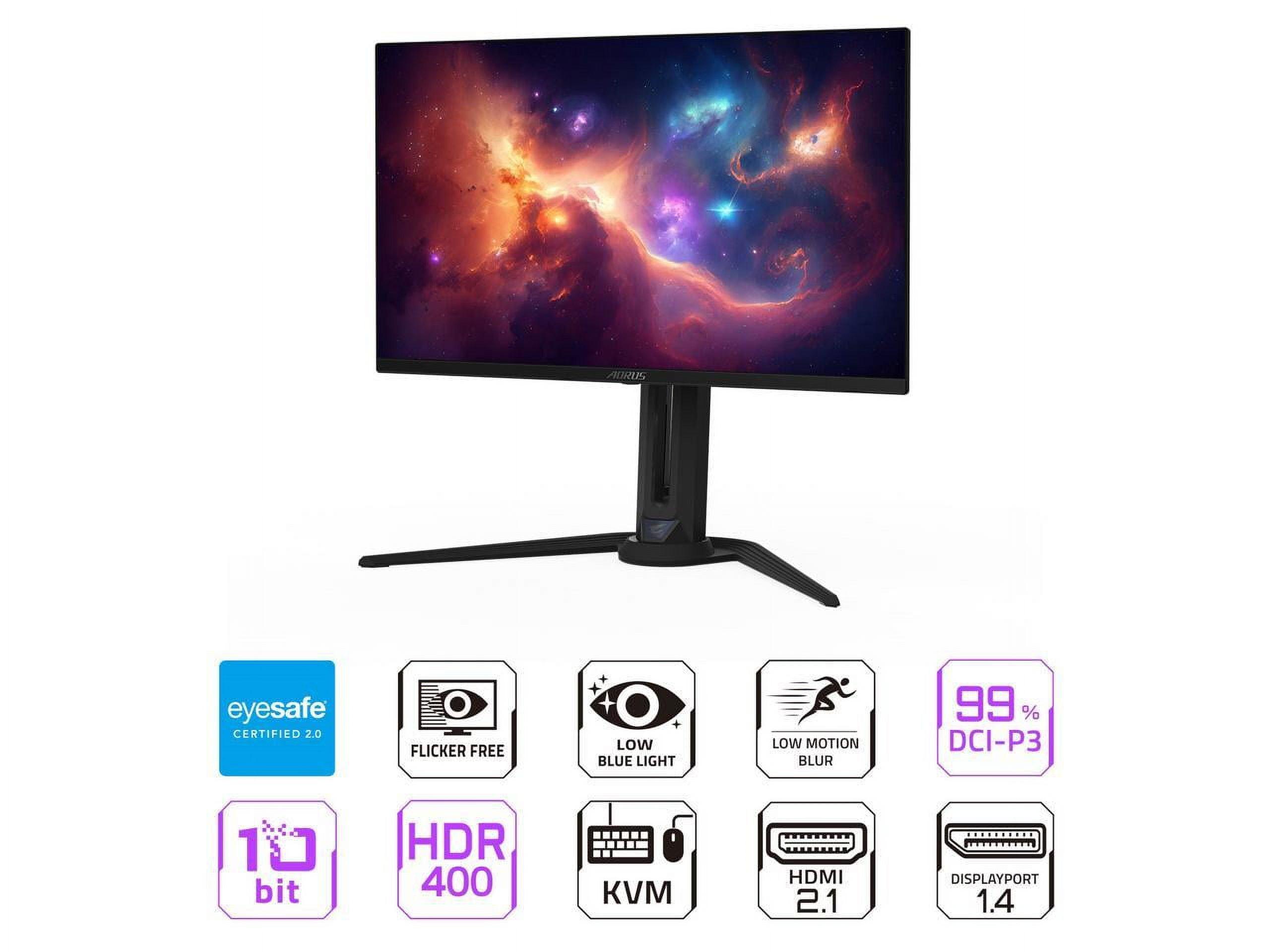
The AORUS monitor covers 99% of the much wider DCI-P3 color space, which encompasses about 25% more colors than sRGB. This wider gamut means more vibrant, lifelike colors, particularly noticeable in HDR content and modern games designed to take advantage of wider color ranges.
Here we encounter one of the most significant practical differences between these monitors. The Sceptre uses a 1920×1080 Full HD resolution across its 27-inch panel, resulting in roughly 82 pixels per inch. That pixel density is frankly borderline for a 27-inch display in 2024.
Based on extensive user feedback and professional reviews, text sharpness suffers noticeably at this size and resolution combination. If you're planning to use this monitor for productivity work involving lots of reading or detailed graphics work, the lower pixel density becomes apparent quickly. However, for gaming and video watching, the resolution proves adequate, especially if you're sitting at a comfortable distance from the screen.
The AORUS FO27Q2 delivers 2560×1440 QHD resolution, providing about 108 pixels per inch. This higher pixel density creates noticeably sharper text and more detailed images across all use cases. The resolution sweet spot makes it equally suitable for gaming, productivity work, and content creation.
From a gaming performance perspective, the resolution difference matters significantly. Your graphics card needs to push about 78% more pixels to drive 1440p compared to 1080p. If you're running older or mid-range graphics hardware, the Sceptre's lower resolution might actually deliver better frame rates in demanding games.
Gaming performance represents the most dramatic difference between these monitors, and it's where the AORUS FO27Q2 truly justifies its premium pricing.
Response Times and Motion Clarity
The Sceptre delivers a 5ms gray-to-gray response time, with a 1ms MPRT (Moving Picture Response Time) when motion blur reduction is enabled. While these specifications sound reasonable on paper, user reviews consistently mention noticeable ghosting behind fast-moving objects, particularly in competitive shooters or racing games.
This ghosting occurs because VA panels, while excellent for contrast, typically struggle with pixel transition speeds. Fast-moving objects leave brief trails or shadows, which can affect gameplay precision and visual clarity during intense gaming sessions.
The AORUS monitor achieves a 0.03ms response time that's virtually instantaneous. Based on professional testing, this monitor actually set records for input lag performance, even outperforming some monitors with higher refresh rates. The OLED technology's inherent speed advantage means pixels switch states almost instantly, eliminating ghosting entirely.
Refresh Rate Capabilities
The Sceptre's 100Hz refresh rate provides a meaningful upgrade over standard 60Hz displays. You'll notice smoother motion in games, reduced input lag, and an overall more responsive feel. However, competitive gamers will still find limitations, particularly in fast-paced esports titles where every millisecond matters.
The AORUS FO27Q2's 240Hz refresh rate delivers buttery-smooth motion that's immediately apparent. If you're playing competitive games like Counter-Strike, Valorant, or Overwatch, the higher refresh rate provides a genuine competitive advantage. Your movements appear more fluid, enemy movements are easier to track, and the overall gaming experience feels more responsive.
Adaptive Sync Technology
Both monitors support adaptive sync technology, but with different capabilities. The Sceptre offers basic AMD FreeSync within a 48-100Hz variable refresh rate range. This eliminates screen tearing and provides smoother gameplay when your frame rates fluctuate.
The AORUS monitor supports AMD FreeSync Premium Pro and is also G-Sync Compatible, working seamlessly with both AMD and NVIDIA graphics cards. The adaptive sync range is much wider, and the Premium Pro certification ensures low latency gaming with HDR content.
High Dynamic Range represents one of the biggest dividing lines between budget and premium monitors. HDR content displays brighter highlights and deeper shadows simultaneously, creating more realistic and immersive visuals.
The Sceptre E275W-FW100T lacks HDR support entirely, maxing out at 280 nits of brightness. While that's adequate for typical indoor lighting conditions, it limits the monitor's compatibility with modern HDR games and streaming content.
The AORUS FO27Q2 is certified for VESA DisplayHDR True Black 400, meaning it can display true blacks while achieving 400 nits of brightness in HDR content. More impressively, it can reach 1,000 nits peak brightness in small areas, creating stunning HDR effects where bright explosions or sunlight can appear genuinely brilliant while maintaining perfect blacks in shadow areas.
For home theater use, this HDR capability transforms the viewing experience. HDR movies and shows display with dramatically improved contrast and color depth, making the AORUS monitor a compelling choice for multimedia entertainment beyond gaming.
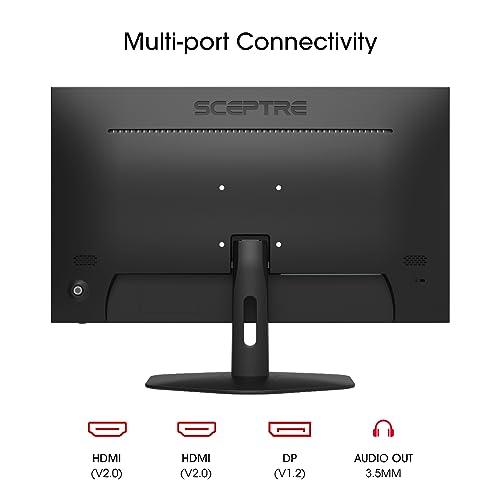
Physical design and features reveal another significant gap between these products. The Sceptre keeps things simple with a tilt-only stand and basic connectivity. While the monitor includes built-in speakers and covers the essential connection needs with HDMI and DisplayPort inputs, it lacks modern conveniences like USB ports or advanced ergonomic adjustments.
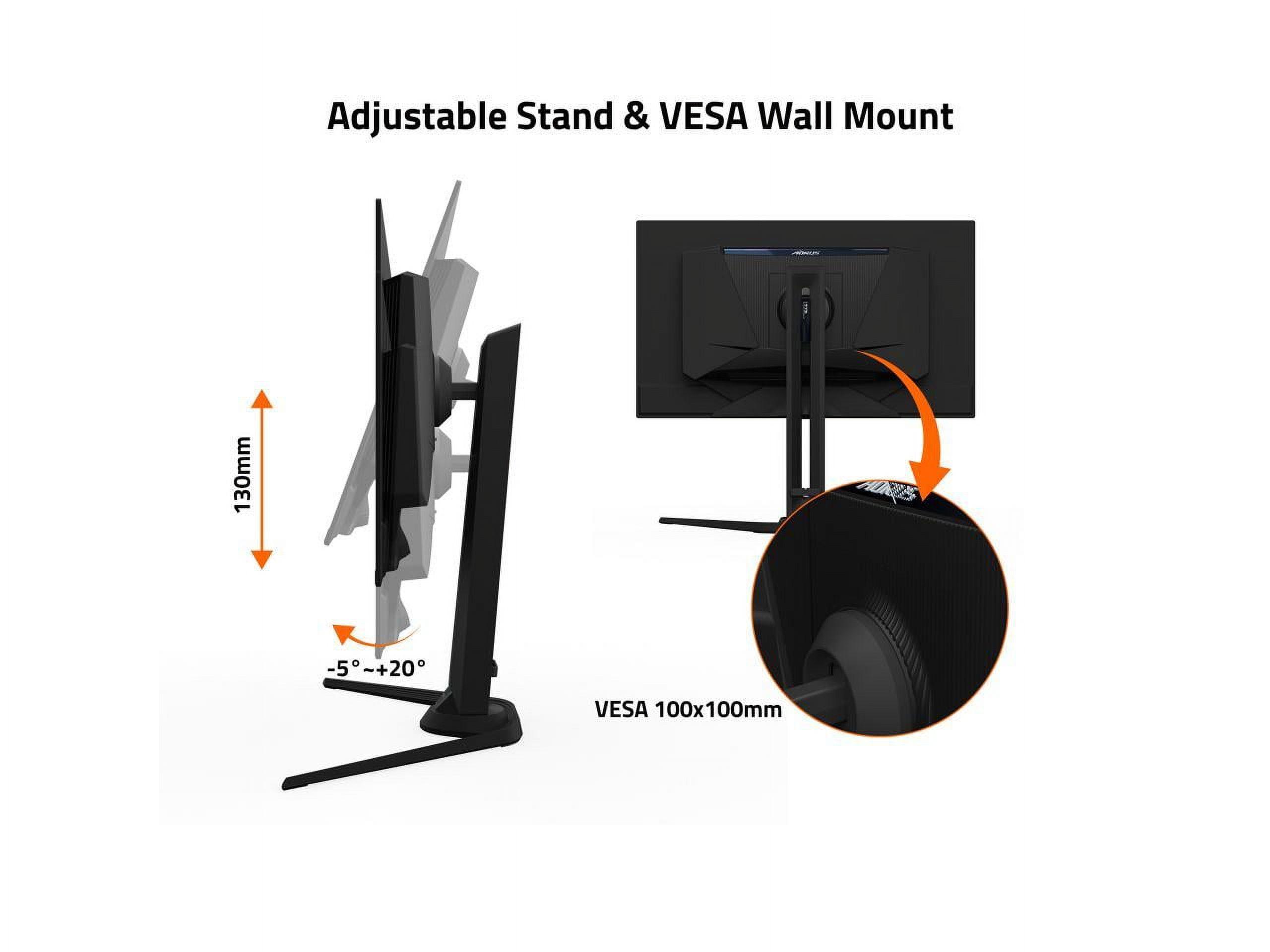
The AORUS FO27Q2 includes a fully adjustable stand supporting height, tilt, swivel, and even portrait orientation. The build quality feels premium, and the feature set includes practical additions like a KVM switch for controlling multiple computers with one keyboard and mouse setup.
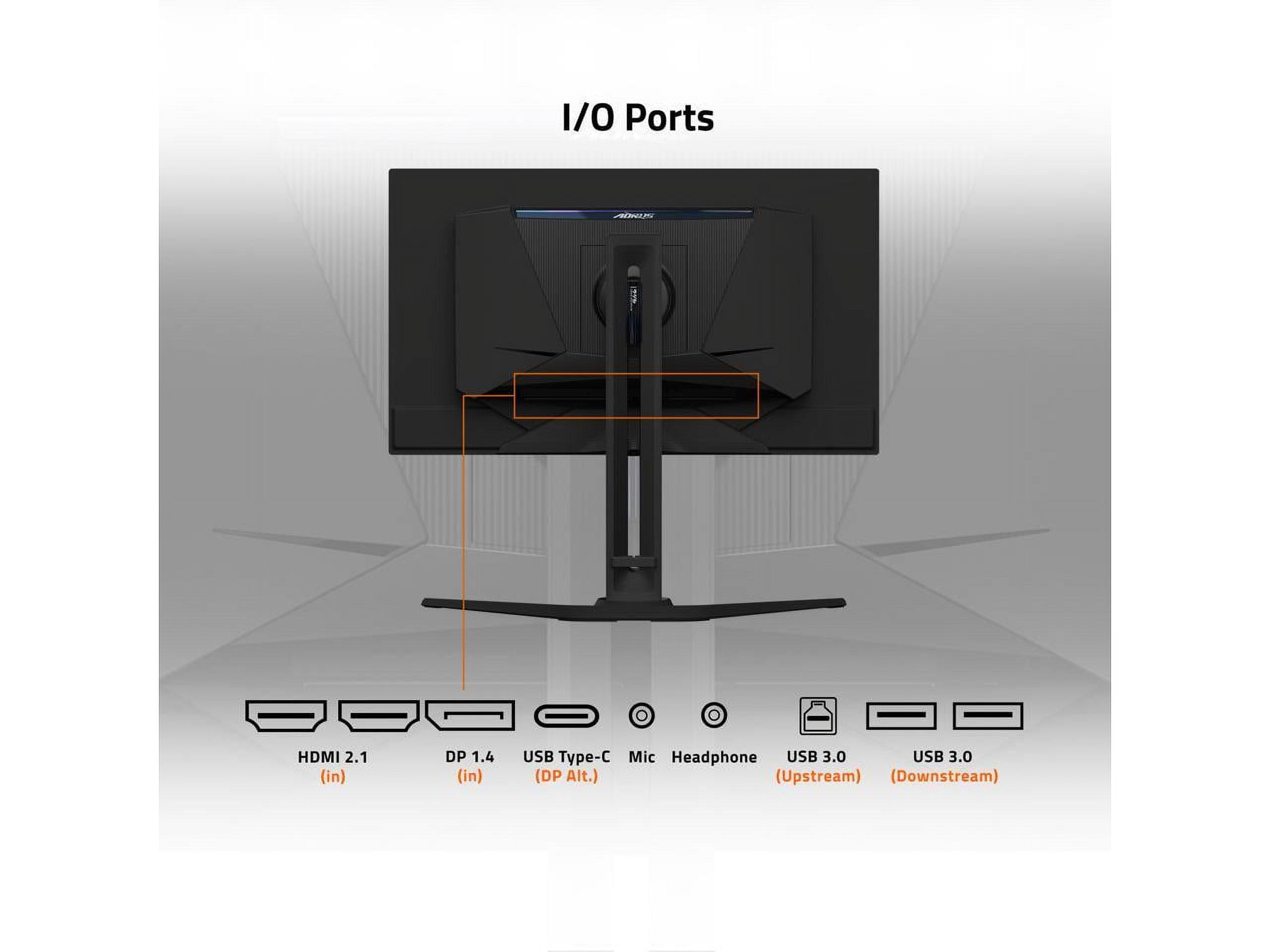
Connectivity options showcase the generational difference. The AORUS monitor includes HDMI 2.1 ports capable of handling 4K/120Hz from modern gaming consoles, USB-C with power delivery, and multiple USB ports for device connectivity. These features might seem minor, but they significantly improve daily usability.
Discussing OLED monitors requires addressing the elephant in the room: burn-in concerns. OLED panels can suffer permanent image retention if static elements remain on screen for extended periods. This includes taskbars, game HUDs, or any persistent interface elements.
However, monitor manufacturers have made significant strides in OLED care technology. The AORUS FO27Q2 includes AI-based OLED care features like pixel shifting, automatic screen savers, and burn-in prevention algorithms. Gigabyte backs their confidence with a three-year warranty that specifically covers burn-in damage – something virtually unheard of in the OLED space.
For typical gaming and mixed-use scenarios, burn-in risks are minimal with proper usage habits. Avoid leaving static images displayed for hours, use screen savers, and vary your content regularly.
At the time of writing, the price difference between these monitors reflects genuinely different technologies rather than simple brand markup. The Sceptre E275W-FW100T delivers solid budget performance for users who need gaming capability without premium features.
This monitor makes sense for office workers who occasionally game, students on tight budgets, or anyone building a secondary monitor setup. The VA panel's good contrast makes it suitable for movie watching, while the 100Hz refresh rate provides a meaningful gaming upgrade over basic displays.
The AORUS FO27Q2 targets serious gamers, content creators, and users who demand the best possible image quality. The premium pricing reflects cutting-edge QD-OLED technology that's only recently become available at this price point.
For competitive gamers, the AORUS monitor provides genuine performance advantages through faster response times and higher refresh rates. Content creators benefit from the accurate colors and wider color gamut. Home theater enthusiasts will appreciate the HDR capabilities and infinite contrast ratio.
Choose the Sceptre E275W-FW100T if you're working with a limited budget but want gaming capability beyond basic 60Hz monitors. It's perfect for casual gaming, office productivity, and general entertainment. The VA panel provides better contrast than similarly priced IPS alternatives, making it a solid choice for mixed-use scenarios.
However, be aware of the limitations. The 1080p resolution on a 27-inch panel creates noticeable pixelation for text work, and the slower response times cause ghosting in fast-paced games. If competitive gaming or professional work are priorities, saving for a higher-tier monitor makes sense.
Choose the AORUS FO27Q2 if you can invest in premium display technology for long-term use. This monitor excels at competitive gaming, content creation, and home theater applications. The QD-OLED technology delivers image quality that simply wasn't available at this price point just a few years ago.
The AORUS monitor makes particular sense if you play competitive games where response time matters, work with color-critical content, or want a single display that handles gaming, productivity, and entertainment equally well. The advanced connectivity options and build quality make it a long-term investment.
These monitors represent two valid approaches to gaming display technology. The Sceptre E275W-FW100T proves you don't need to spend premium dollars for decent gaming performance, while the Gigabyte AORUS FO27Q2 demonstrates what's possible when cutting-edge technology meets thoughtful engineering.
Based on our research into user experiences and professional reviews, both monitors succeed in their respective market segments. The Sceptre delivers impressive value for budget-conscious users, while the AORUS sets new standards for premium gaming monitor performance.
Your choice ultimately depends on your budget, performance requirements, and how you prioritize image quality versus cost savings. Either way, you'll get a capable gaming monitor – the question is whether you need the absolute best or just something good enough to get the job done.
| Sceptre E275W-FW100T | Gigabyte AORUS FO27Q2 |
|---|---|
| Panel Technology - Determines contrast, colors, and response speed | |
| VA LCD with LED backlight (good contrast for LCD) | QD-OLED with quantum dots (perfect blacks, infinite contrast) |
| Resolution - Affects sharpness and GPU requirements | |
| 1920×1080 Full HD (adequate for gaming, pixelated text on 27") | 2560×1440 QHD (sharp at all distances, moderate GPU load) |
| Refresh Rate - Higher rates create smoother motion in games | |
| 100Hz (smooth upgrade from 60Hz, good for casual gaming) | 240Hz (ultra-smooth, competitive advantage in esports) |
| Response Time - Lower means less ghosting in fast scenes | |
| 5ms GTG (noticeable ghosting in fast games) | 0.03ms GTG (virtually instant, zero ghosting) |
| Color Gamut - Wider ranges show more vibrant colors | |
| 100% sRGB (standard web colors, adequate coverage) | 99% DCI-P3 (25% more colors than sRGB, vibrant HDR) |
| HDR Support - Enables brighter highlights and deeper shadows | |
| None (limited to standard dynamic range) | DisplayHDR True Black 400 (stunning contrast in HDR content) |
| Peak Brightness - Higher allows better visibility and HDR | |
| 280 nits (fine for dim rooms, no HDR capability) | 1,000 nits peak (brilliant HDR highlights, good for bright rooms) |
| Adaptive Sync - Eliminates screen tearing during gaming | |
| AMD FreeSync 48-100Hz (basic tear-free gaming) | FreeSync Premium Pro + G-Sync Compatible (wider range, both GPU brands) |
| Stand Adjustability - Affects comfort during long sessions | |
| Tilt only (limited positioning options) | Height, tilt, swivel, pivot (full ergonomic flexibility) |
| Connectivity - Determines device compatibility and features | |
| 2× HDMI 2.0, 1× DisplayPort, headphone jack | 2× HDMI 2.1, DisplayPort, USB-C, USB hub, KVM switch |
| Warranty Coverage - Protection against panel issues | |
| Standard 3-year warranty (no burn-in concerns with LCD) | 3-year including burn-in protection (rare OLED coverage) |
| Best Use Cases - Who should consider each monitor | |
| Budget gaming, office work, casual entertainment | Competitive gaming, content creation, premium home theater |
The Gigabyte AORUS FO27Q2 is significantly better for competitive gaming with its 240Hz refresh rate and 0.03ms response time, compared to the Sceptre E275W-FW100T's 100Hz and 5ms response time. The AORUS monitor provides smoother motion tracking and faster input response that can give you a competitive edge in esports titles.
The primary difference is display technology: the Sceptre E275W-FW100T uses traditional VA LCD technology while the Gigabyte AORUS FO27Q2 features cutting-edge QD-OLED technology. This means the AORUS delivers perfect blacks, infinite contrast, and much faster response times, while the Sceptre offers solid budget performance with good contrast for LCD.
The Gigabyte AORUS FO27Q2 offers dramatically better picture quality with its infinite contrast ratio, perfect blacks, HDR support, and wider color gamut covering 99% DCI-P3. The Sceptre E275W-FW100T provides decent viewing with its VA panel's good contrast, but cannot match OLED's superior image quality for home theater use.
Yes, the resolution difference is significant. The Sceptre E275W-FW100T uses 1080p resolution which can appear pixelated for text work on a 27-inch screen, while the AORUS FO27Q2's 1440p resolution provides much sharper text and images. However, the lower resolution of the Sceptre is easier to drive with older graphics cards.
The Gigabyte AORUS FO27Q2 is better for productivity due to its sharper 1440p resolution, accurate colors, and fully adjustable stand. The Sceptre E275W-FW100T can handle basic office tasks but its 1080p resolution on 27 inches makes text less sharp, and it only offers tilt adjustment.
Only the Gigabyte AORUS FO27Q2 supports HDR with DisplayHDR True Black 400 certification, capable of 1,000 nits peak brightness for stunning contrast. The Sceptre E275W-FW100T lacks HDR support entirely, limiting it to standard dynamic range content with a maximum of 280 nits brightness.
The AORUS FO27Q2 offers superior connectivity with HDMI 2.1 ports, USB-C, USB hub, and KVM switch functionality for multiple device setups. The Sceptre E275W-FW100T provides basic connectivity with HDMI 2.0 ports and DisplayPort, but lacks modern features like USB-C or advanced device switching capabilities.
The Sceptre E275W-FW100T uses LCD technology so burn-in is not a concern. The Gigabyte AORUS FO27Q2 uses OLED technology which can potentially suffer burn-in, but includes AI-based protection features and comes with a 3-year warranty that covers burn-in damage, making it much safer than typical OLED displays.
Both offer good value in their price ranges. The Sceptre E275W-FW100T provides excellent budget value with 100Hz gaming performance and good contrast at an entry-level price. The AORUS FO27Q2 offers premium value with cutting-edge QD-OLED technology, superior gaming performance, and professional-grade features that justify its higher cost.
Yes, both work with gaming consoles, but the Gigabyte AORUS FO27Q2 is better suited with its HDMI 2.1 ports supporting higher refresh rates from modern consoles. The Sceptre E275W-FW100T works with consoles through HDMI 2.0 but is limited to lower refresh rates and resolution combinations.
The AORUS FO27Q2 has significantly better build quality with a premium stand offering height, tilt, swivel, and pivot adjustments. The Sceptre E275W-FW100T has a basic build with only tilt adjustment available, though both monitors support VESA mounting for aftermarket stands.
For dedicated home theater use, the Gigabyte AORUS FO27Q2 is the clear winner with its perfect blacks, HDR support, infinite contrast, and wider color gamut that make movies and shows look dramatically better. The Sceptre E275W-FW100T can serve as a secondary entertainment display but lacks the HDR and contrast capabilities needed for premium home theater experiences.
We've done our best to create useful and informative comparisons to help you decide what product to buy. Our research uses advanced automated methods to create this comparison and perfection is not possible - please contact us for corrections or questions. These are the sites we've researched in the creation of this article: pcvarge.com - walmart.com - cubed.run - productchart.com - displayninja.com - target.com - youtube.com - versus.com - youtube.com - youtube.com - sceptre.com - sceptre.com - tomshardware.com - pangoly.com - youtube.com - pangoly.com - rtings.com - displayninja.com - gigabyte.com - youtube.com - creativebloq.com - techpowerup.com - newegg.com - gigabyte.com - icecat.in - microcenter.com - aorus.com - bhphotovideo.com - provantage.com - bestbuy.com - displayspecifications.com - tomshardware.com - gigabyte.com - computronicsmultivision.com - gigabyte.com

Privacy Policy
Terms and Conditions - Affiliate Policy
Home Security
© Copyright 2008-2026.
11816 Inwood Rd #1211, Dallas, TX 75244