

When you're shopping for a high-performance gaming monitor, you'll quickly discover that not all 27-inch, 240Hz displays are created equal. Today we're comparing two monitors that represent completely different philosophies in gaming display design: the Gigabyte AORUS FO27Q2 and the BenQ Zowie XL2746K. One pushes the boundaries of visual technology, while the other focuses laser-sharp on competitive gaming performance.
Understanding these differences isn't just about specs on paper—it's about matching the right tool to your specific gaming needs and budget. Let's dive deep into what makes each monitor special and help you figure out which one deserves a spot on your desk.
Gaming monitors today fall into distinct camps based on their intended use. At one end, you have displays built for competitive esports where every millisecond matters and visual distractions must be eliminated. At the other end, you'll find monitors designed for immersive gaming experiences where image quality, color accuracy, and visual impact take center stage.
The core considerations when choosing between these approaches include display technology (the actual panel that creates the image), resolution (how many pixels you get), response time (how quickly pixels can change color), and specialized gaming features. Each choice involves trade-offs, and understanding these trade-offs is crucial for making the right decision.
Both the AORUS FO27Q2 and XL2746K share the same 27-inch size and 240Hz refresh rate—meaning they can display up to 240 frames per second for incredibly smooth motion. However, they achieve this performance through completely different approaches and target very different users.
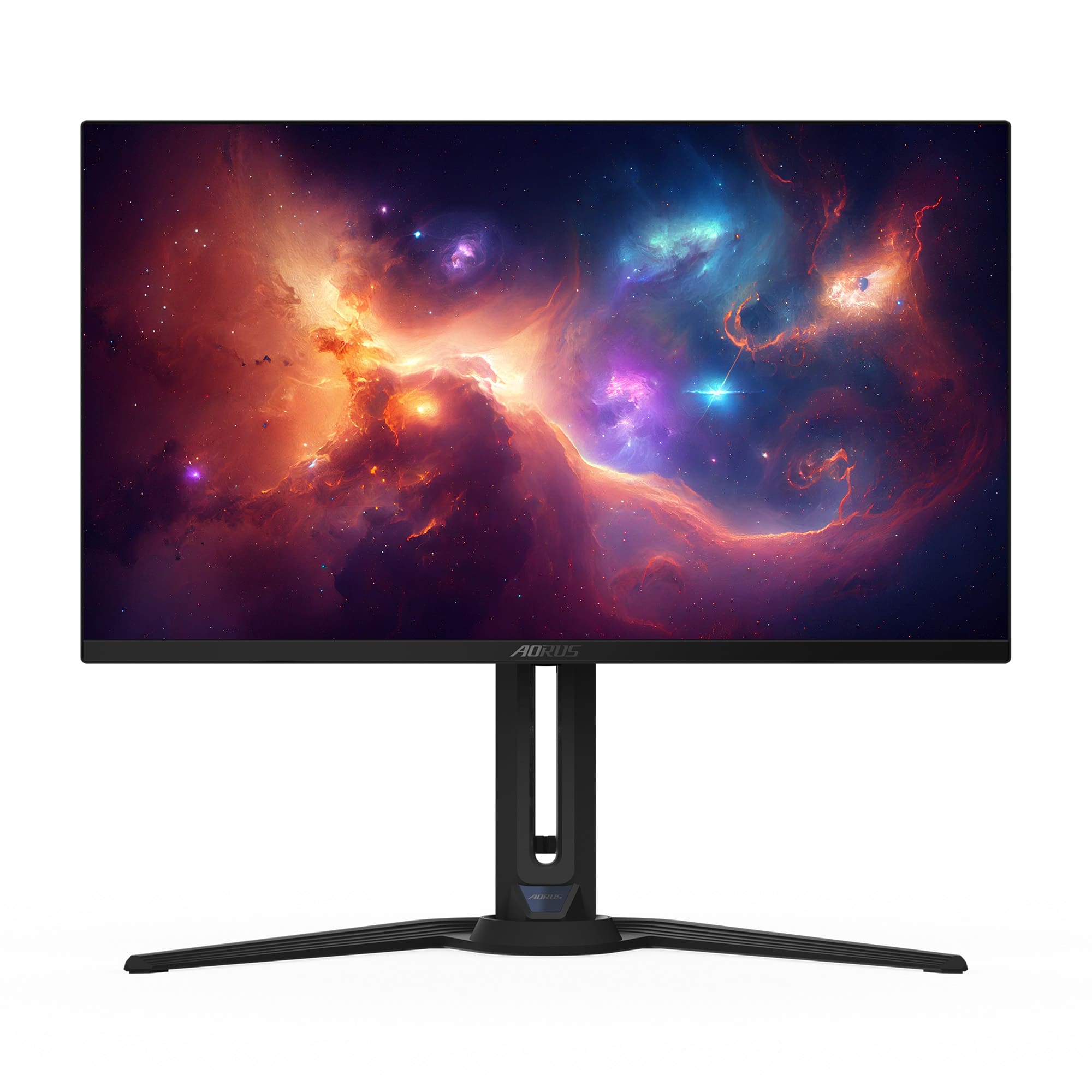
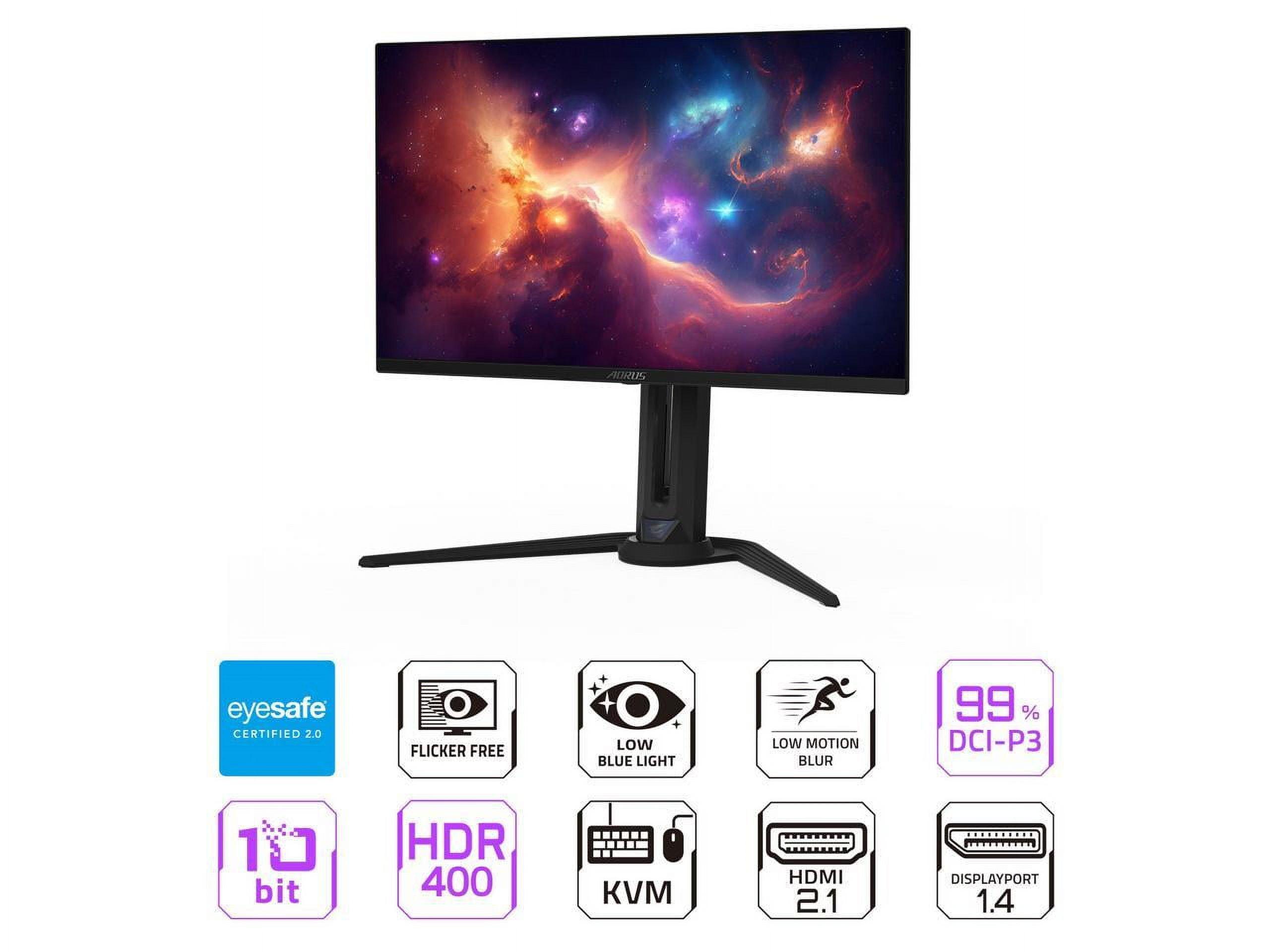
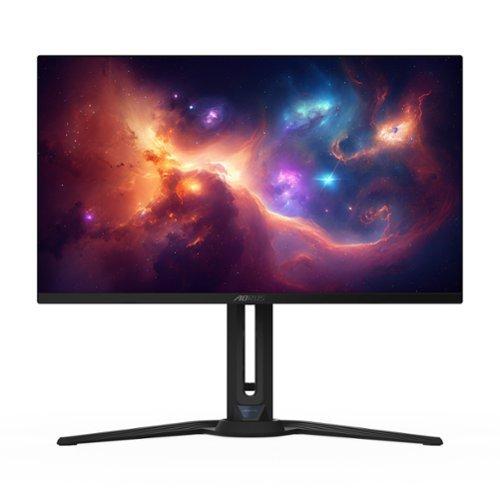
Released in 2024, the AORUS FO27Q2 represents Gigabyte's entry into the premium QD-OLED gaming monitor space. QD-OLED stands for Quantum Dot Organic Light-Emitting Diode—a mouthful that describes a revolutionary display technology combining the best aspects of OLED's per-pixel lighting control with quantum dot technology's enhanced color production.
What makes this special? Unlike traditional LCD monitors that use a backlight shining through layers of liquid crystals, each pixel in a QD-OLED display generates its own light. This means true black levels (pixels can actually turn completely off) and an infinite contrast ratio. The quantum dot layer enhances color reproduction, delivering 99% coverage of the DCI-P3 color space—the same standard used in movie theaters.
The FO27Q2 runs at 2560×1440 resolution (often called 1440p or QHD), providing 78% more pixels than 1080p displays. This translates to noticeably sharper text, more detailed game environments, and the ability to see more information on screen without things becoming cramped.
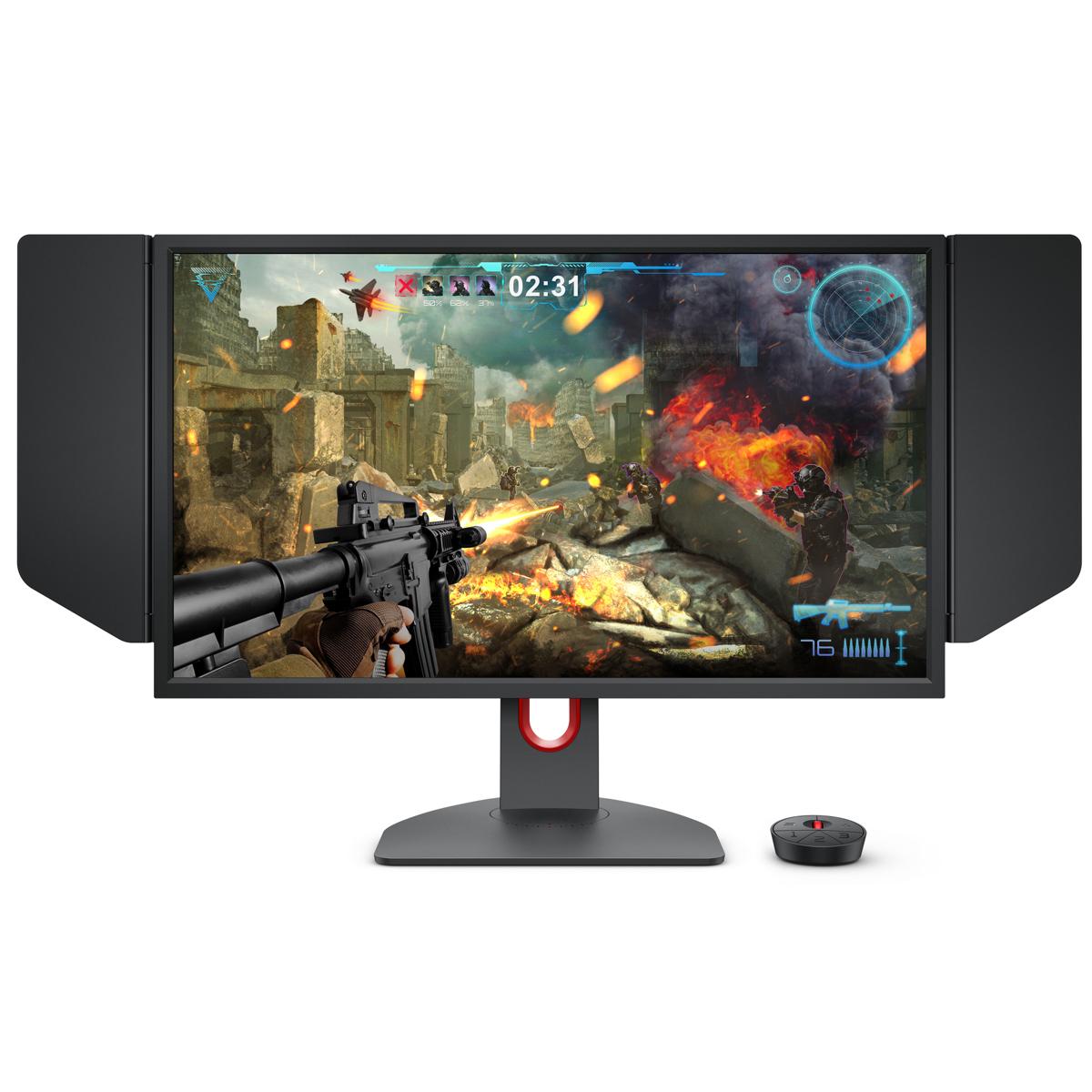
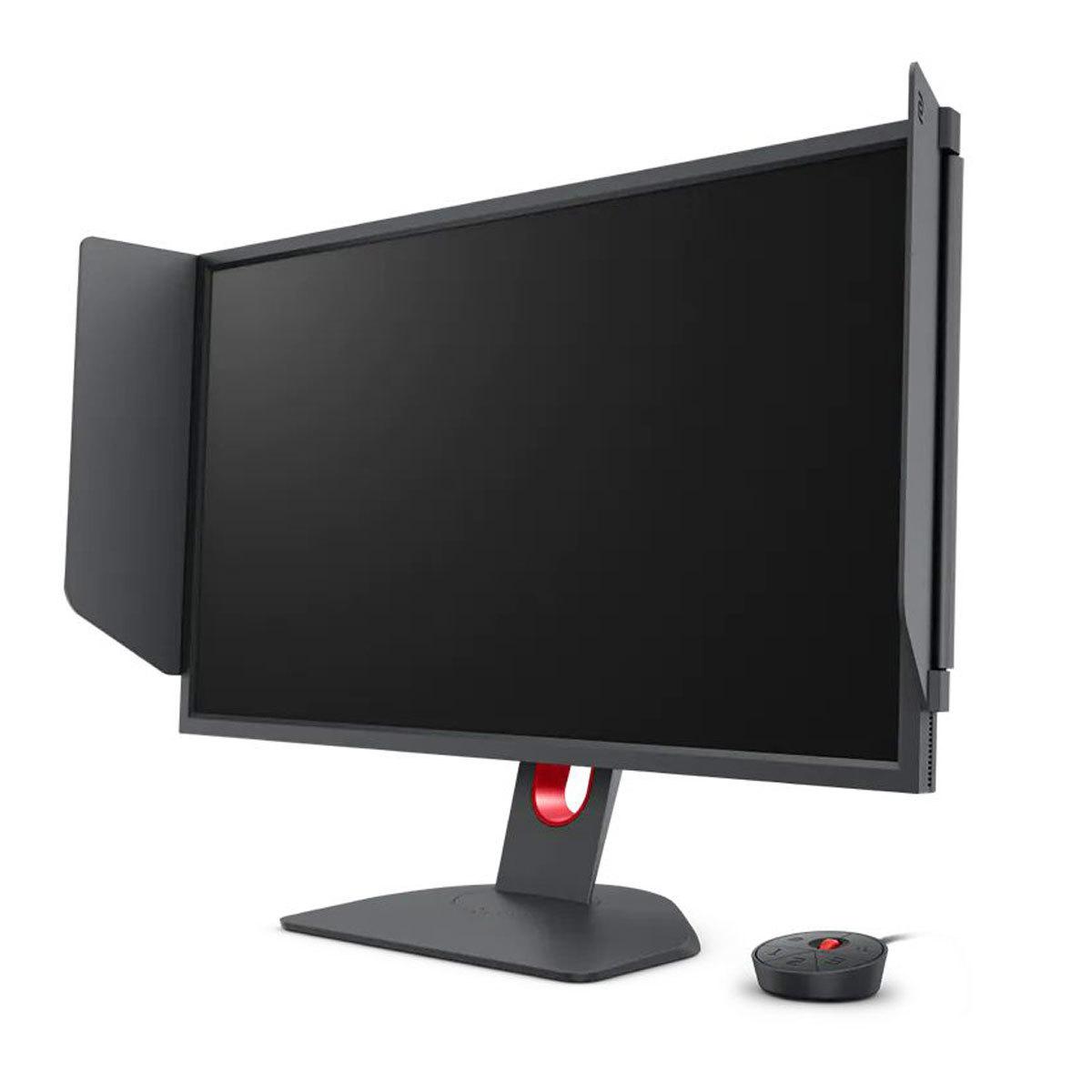
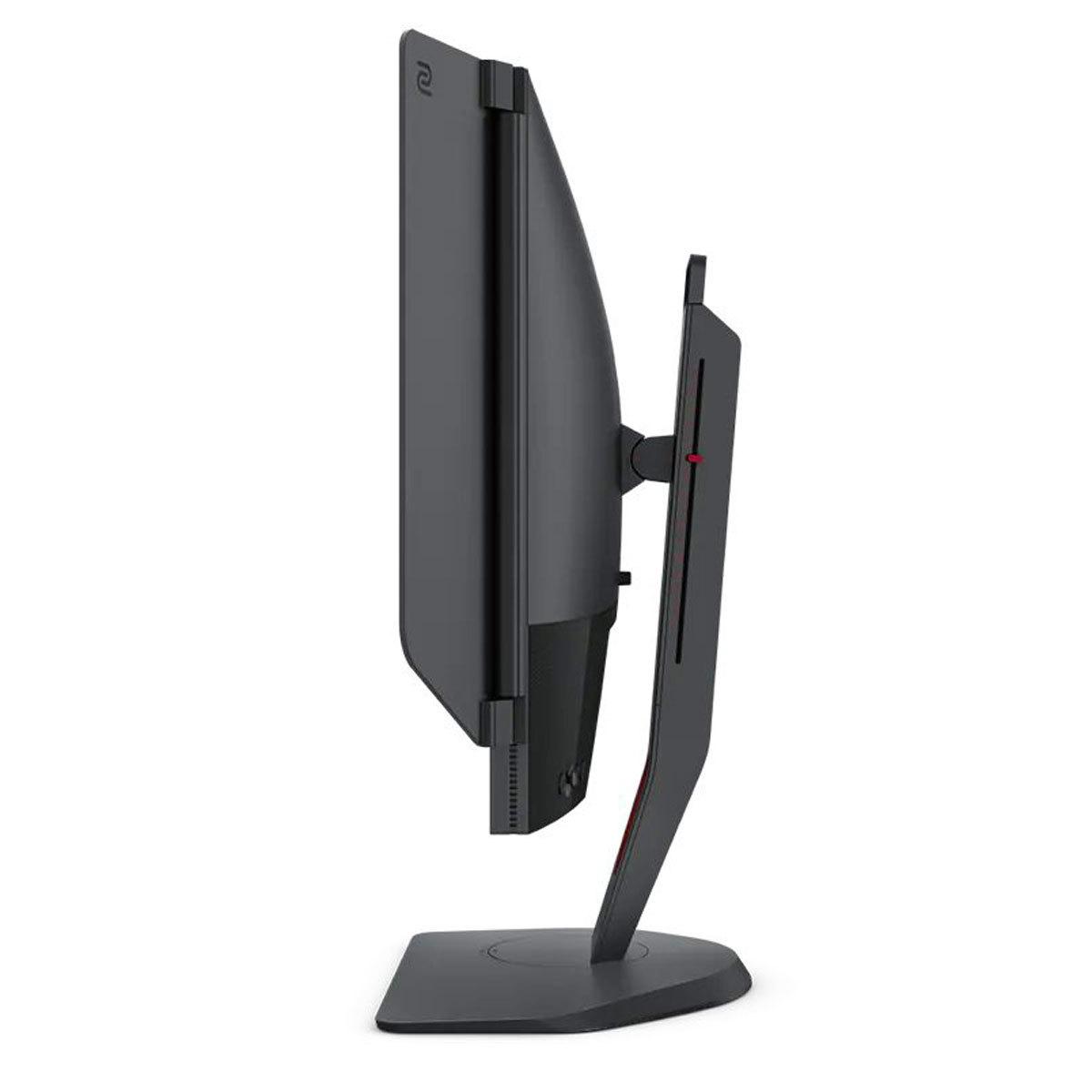
The XL2746K, released in 2022, takes a completely different approach. BenQ's Zowie brand has spent years perfecting monitors specifically for competitive esports, and this model represents the culmination of that focus. It uses a TN (Twisted Nematic) panel—an older technology that sacrifices visual quality for pure speed and consistency.
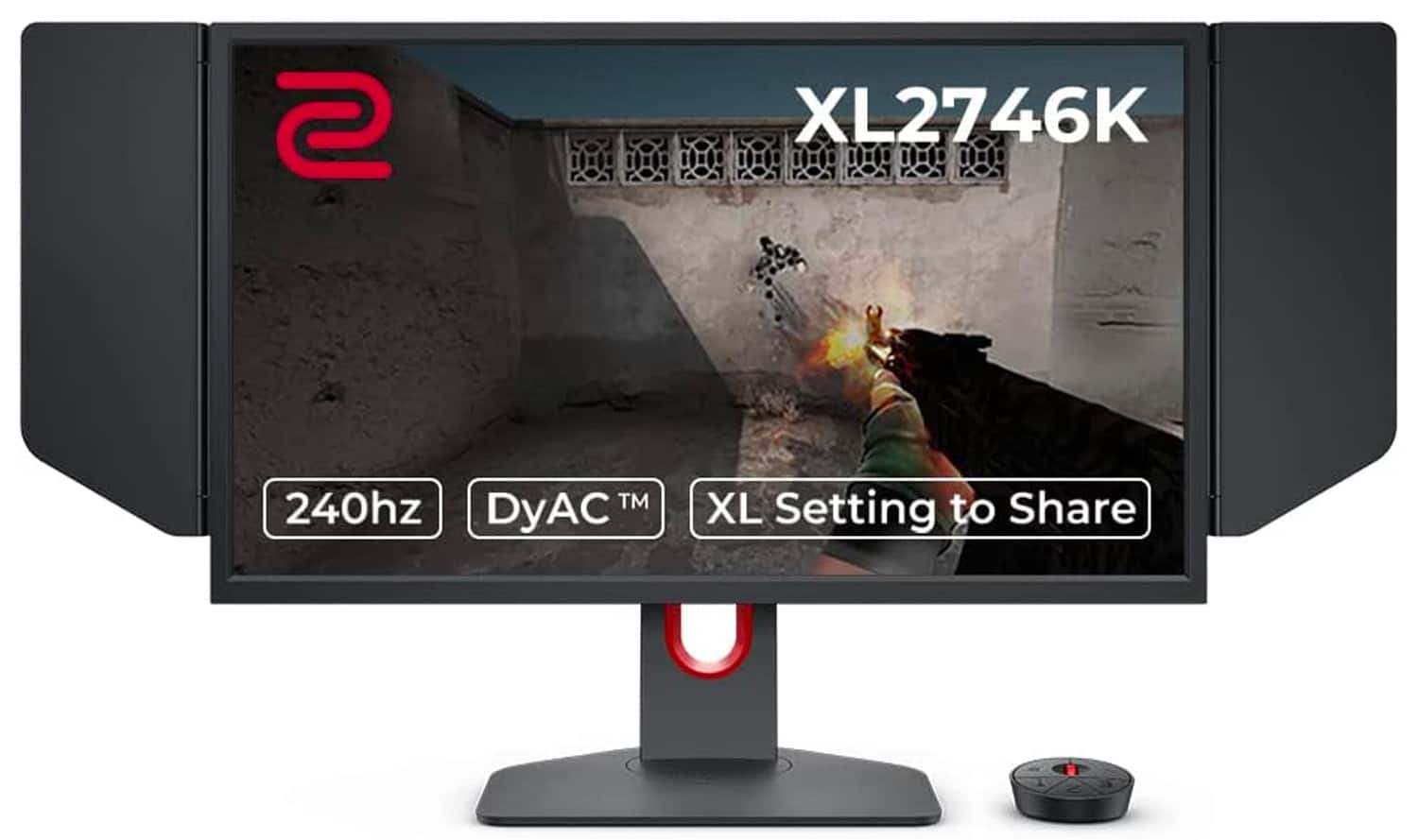
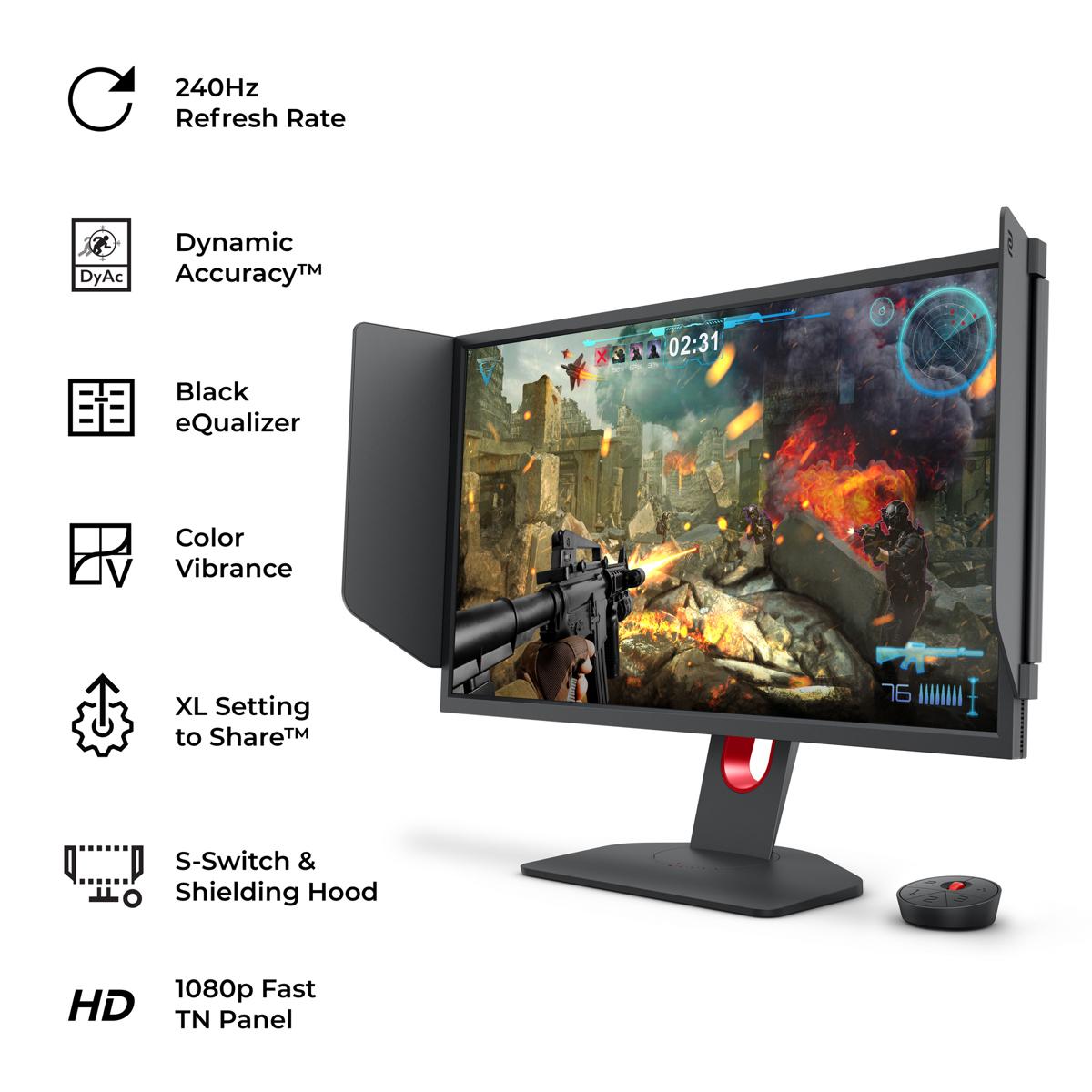
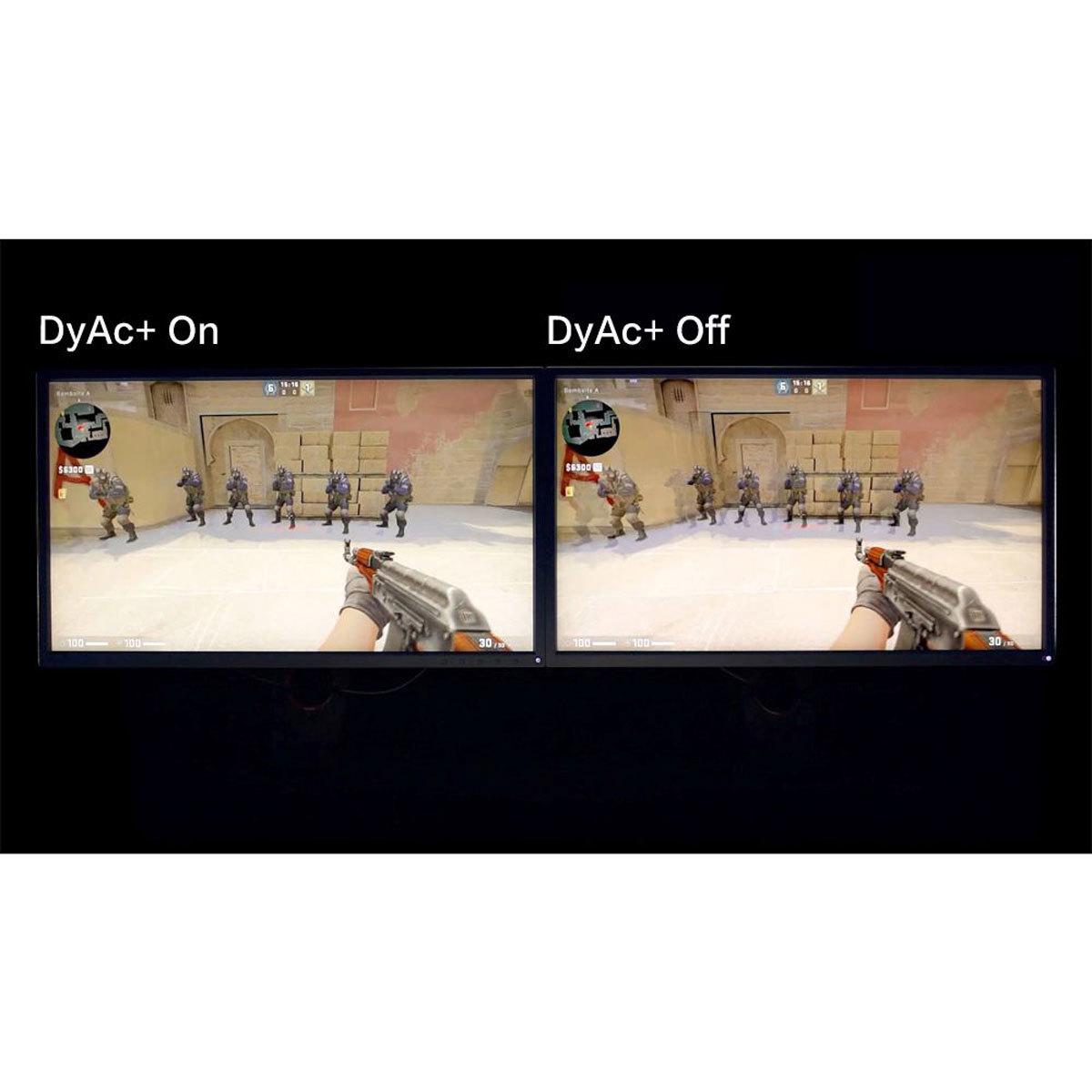
TN panels excel in competitive gaming because they offer extremely fast pixel response times and minimal input lag (the delay between your mouse click and the action appearing on screen). The XL2746K features BenQ's DyAc+ technology, which uses advanced backlight strobing to virtually eliminate motion blur during fast-paced gaming sequences. When you're tracking an enemy's movement in a first-person shooter, this clarity can mean the difference between landing your shots and missing entirely.
This monitor sticks with 1920×1080 resolution (1080p), which might seem like a downgrade in 2024. However, many competitive players actually prefer 1080p because it allows for higher frame rates on lower-end hardware and makes enemy targets appear slightly larger—potentially easier to spot and hit.
The visual quality difference between these monitors is dramatic and immediately noticeable. The AORUS FO27Q2's QD-OLED technology delivers what can only be described as a transformative gaming experience. Colors pop with intensity that makes HDR content truly shine, while dark scenes reveal details you simply can't see on traditional monitors.
I've spent considerable time with OLED gaming monitors, and the first time you experience true blacks—where dark areas of the screen actually turn off completely—it fundamentally changes your expectations. Loading up a game like Cyberpunk 2077 or any atmospheric single-player title reveals shadow details and contrast that makes the experience more immersive than you might expect from a monitor upgrade.
The XL2746K, by contrast, offers the more utilitarian visual experience typical of TN panels. Colors appear washed out compared to modern IPS or OLED displays, and viewing angles are limited—move too far to either side and colors shift noticeably. However, this consistency across different lighting conditions is actually viewed as an advantage by many competitive players who want predictable performance in tournament environments.
For content consumption and single-player gaming, the FO27Q2 wins decisively. The combination of higher resolution and OLED technology makes everything from YouTube videos to AAA game cutscenes significantly more engaging. The monitor's factory color calibration achieves professional-grade accuracy with a Delta E deviation of just 1.8 in sRGB mode—meaning colors appear almost exactly as content creators intended.
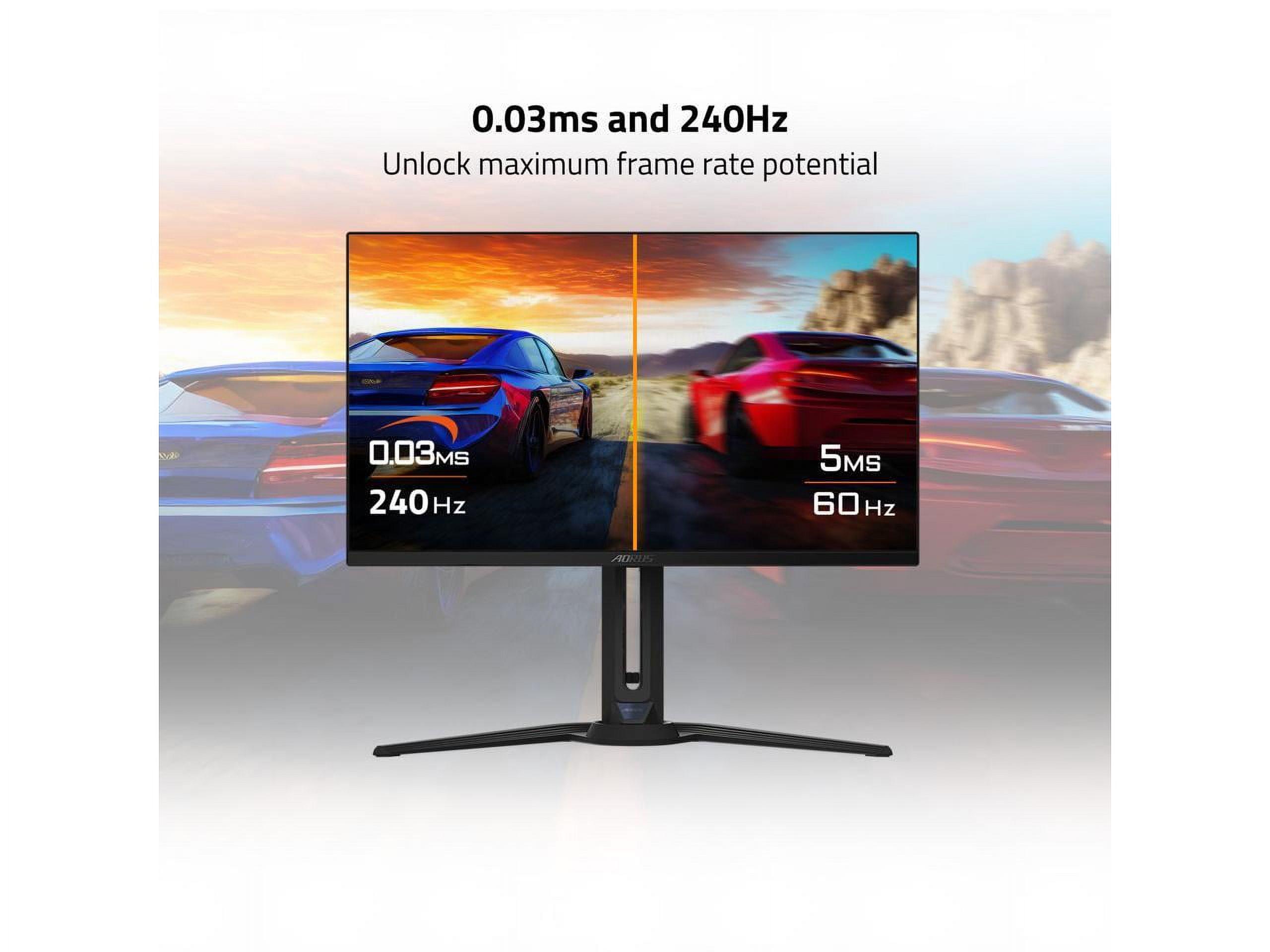
Both monitors claim 240Hz refresh rates, but their approach to motion clarity differs significantly. The AORUS FO27Q2 achieves an exceptional 0.03ms gray-to-gray response time—among the fastest measurements available. More importantly, independent testing shows it delivers a record-low 13ms total input lag at 240Hz, actually outperforming many monitors with higher refresh rates.
This performance comes from the inherent advantages of OLED technology. Since each pixel controls its own light output, there's no need for liquid crystals to physically rotate (as in LCD technology), enabling near-instantaneous color changes. The result is motion clarity that surpasses even the best traditional gaming monitors.
The XL2746K takes a different approach with its DyAc+ (Dynamic Accuracy Plus) technology. This system uses precise backlight strobing to reduce motion blur specifically during fast-paced gaming scenarios. While the technique adds slight input lag compared to non-strobing modes, the motion clarity improvement in competitive games can be substantial. Professional esports players consistently praise DyAc+ for making it easier to track opponents during rapid movements.
In practical terms, both monitors excel at motion clarity, but in different ways. The FO27Q2 offers superior overall responsiveness and works exceptionally well across all game genres. The XL2746K's DyAc+ provides specialized motion enhancement that's particularly beneficial in competitive FPS games where tracking moving targets is crucial.
Gaming-specific features reveal each monitor's target audience most clearly. The AORUS FO27Q2 includes a "Tactical Switch"—a physical button that instantly switches the display to a 24-inch window mode for competitive gaming. This clever feature lets players enjoy the full 27-inch, 1440p experience for single-player games while switching to a smaller, more focused view for competitive sessions.
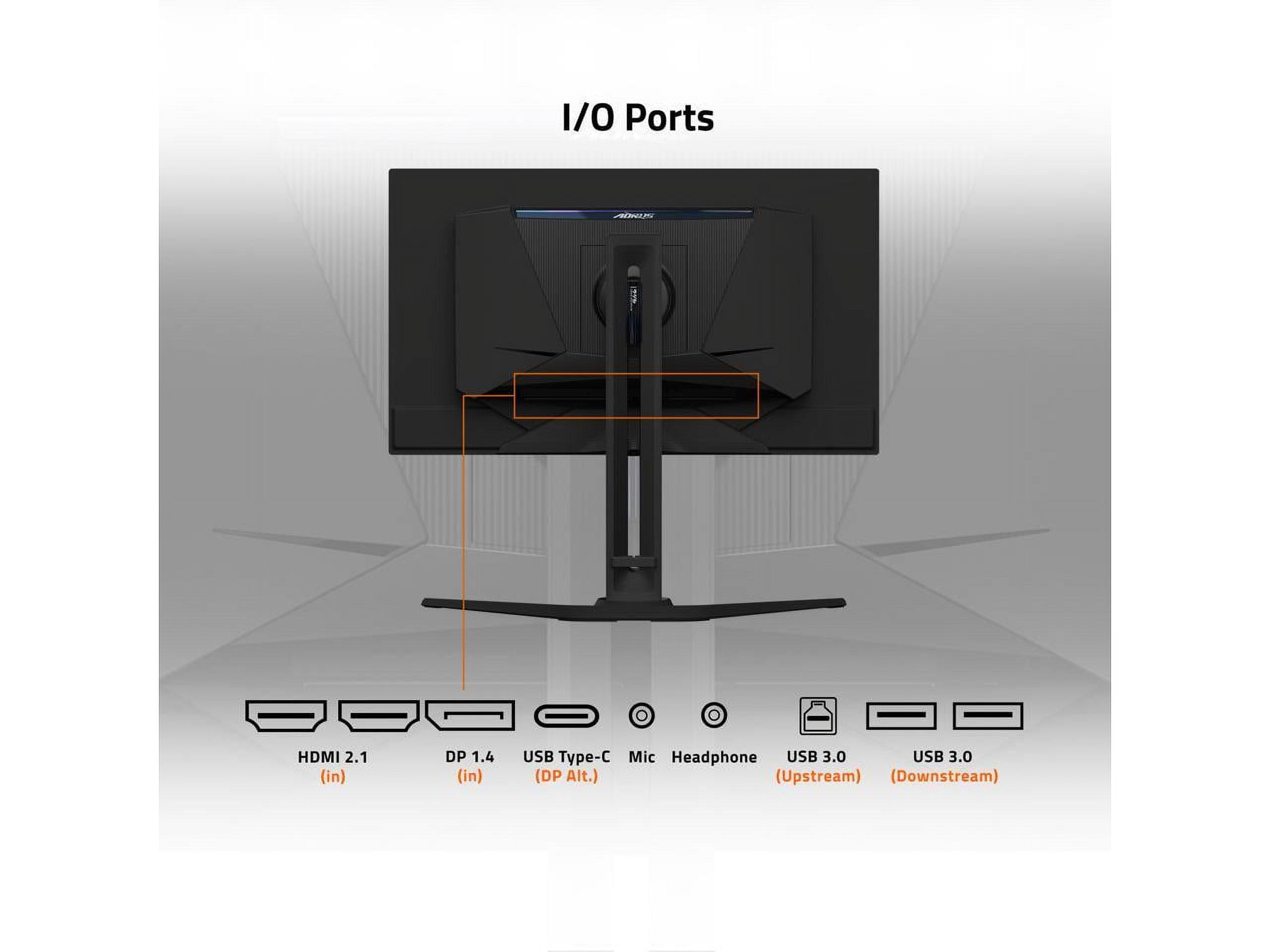
The monitor also includes comprehensive connectivity with HDMI 2.1 ports (essential for next-generation consoles), DisplayPort, USB-C with power delivery, and a built-in KVM switch. The KVM functionality allows you to control multiple computers with a single keyboard and mouse setup—incredibly useful for streamers or users with gaming and work systems.
AI-based OLED care features address the traditional concern about OLED burn-in (permanent image retention). These include automatic pixel shifting, logo dimming, and screen savers that activate when static images are detected. Gigabyte backs this technology with a three-year warranty that specifically covers burn-in damage—unusual confidence in OLED longevity.
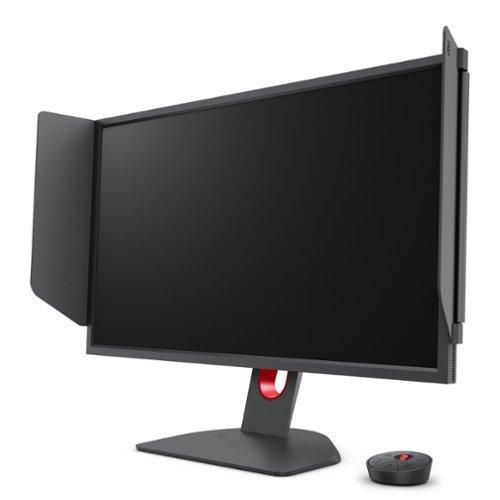
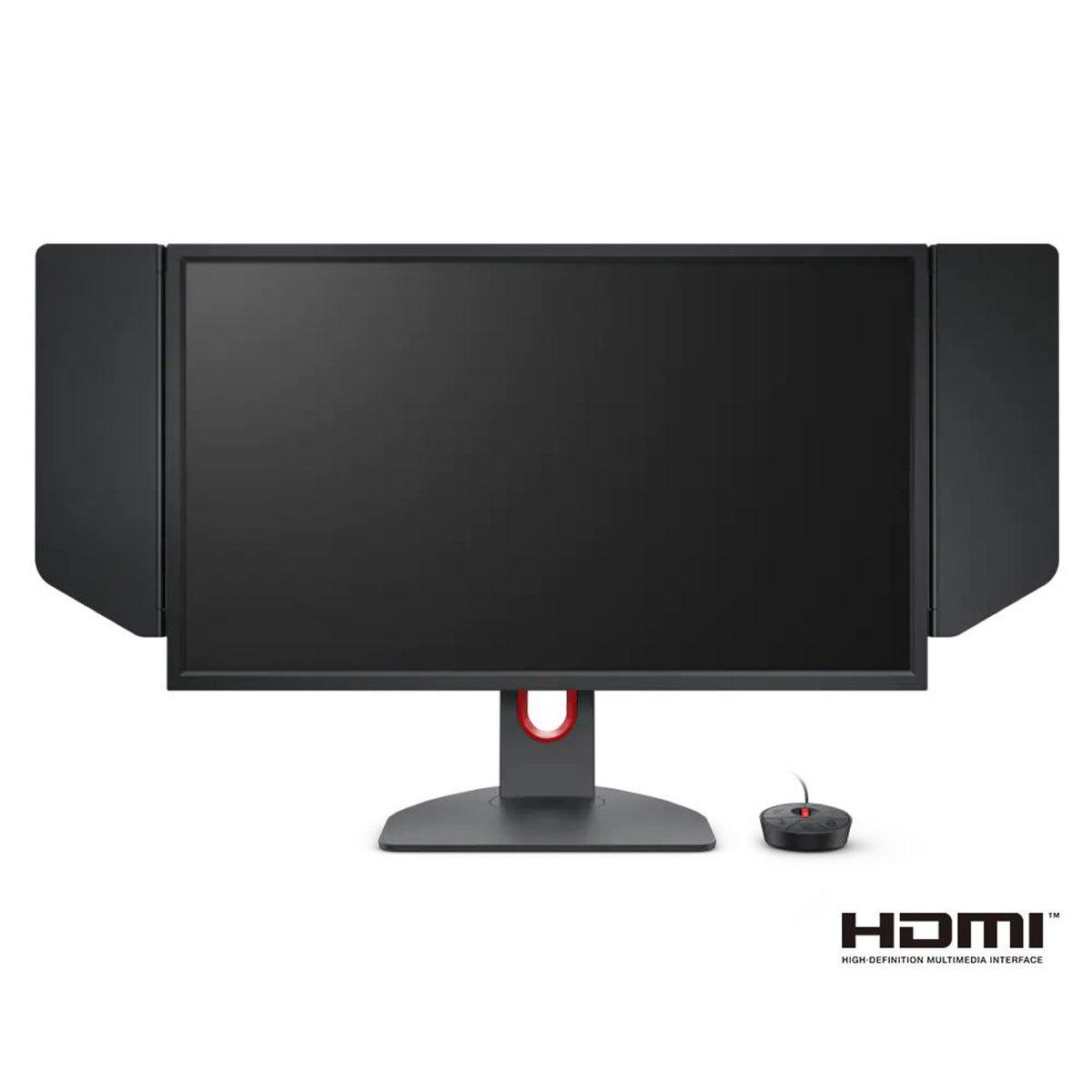
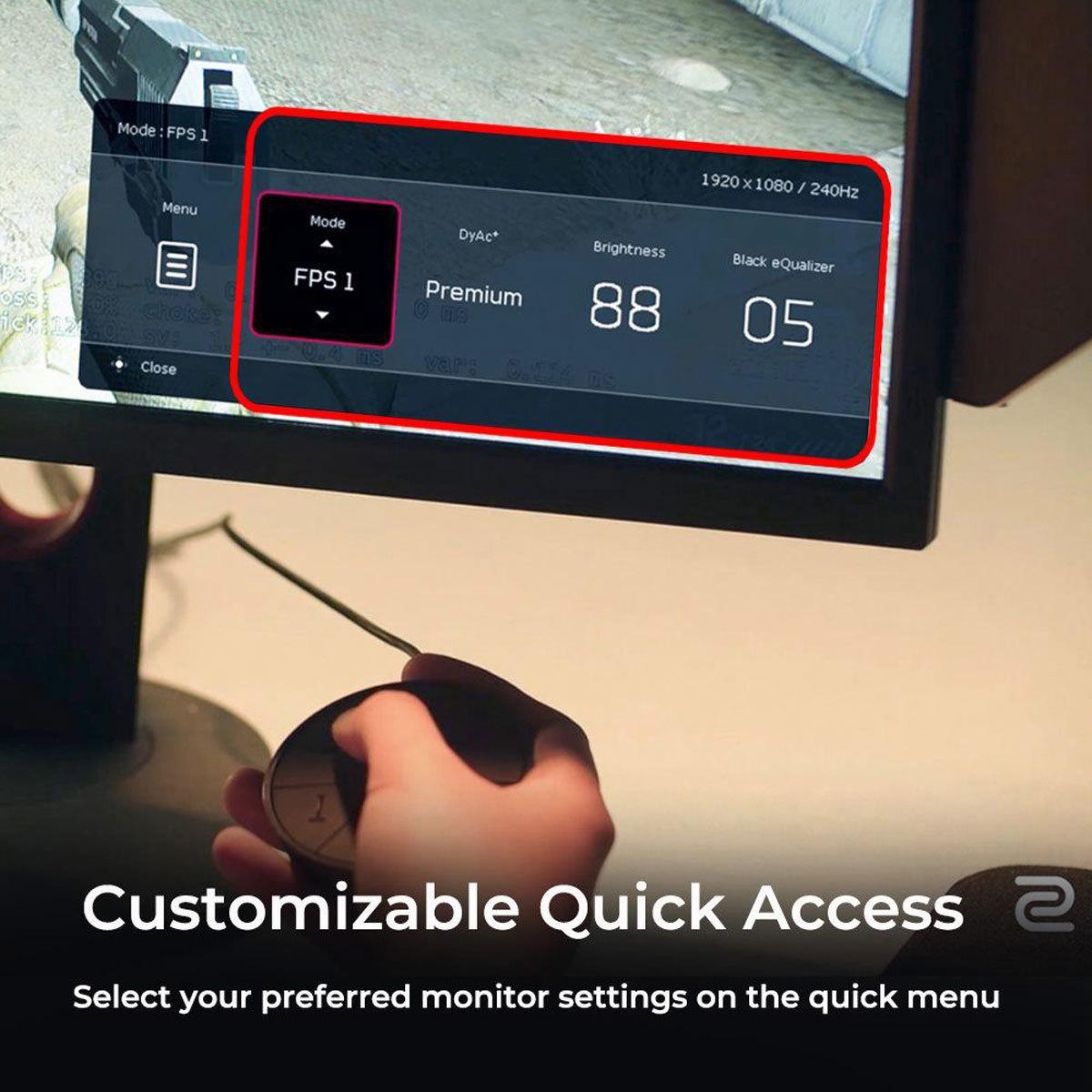
The XL2746K focuses entirely on competitive gaming optimization. The included S Switch is a wireless controller that allows instant switching between up to three saved profiles without navigating through on-screen menus—essential during tournaments or when switching between games with different optimal settings.
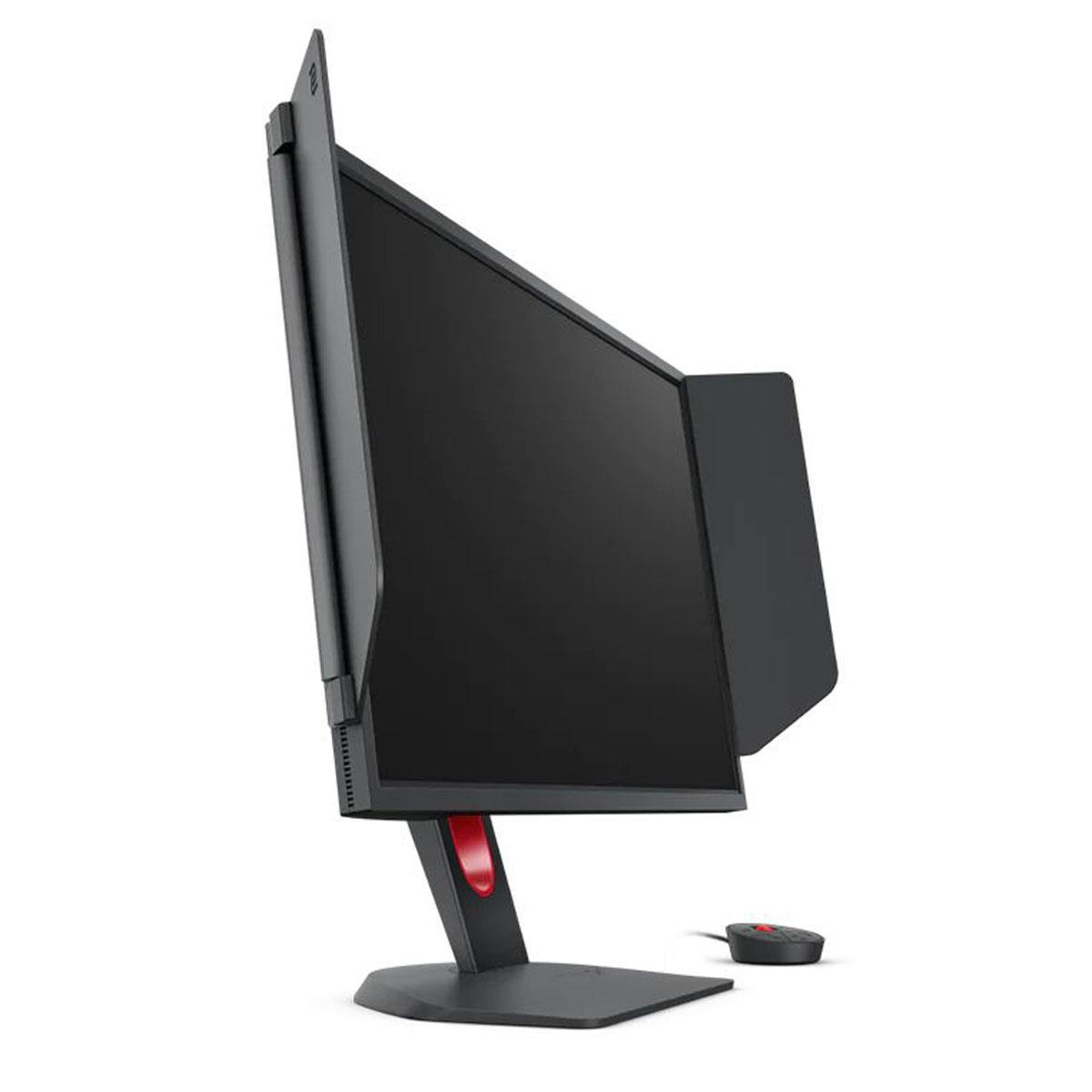
Black eQualizer technology brightens dark areas of the image without affecting bright areas, effectively allowing players to see enemies hiding in shadows. Color Vibrance provides fine-tuned saturation control to help distinguish between different elements in competitive games. The detachable Shielding Hood blocks peripheral distractions—a feature you'll commonly see in professional esports setups.
Console compatibility reveals another key difference between these monitors. The AORUS FO27Q2 includes HDMI 2.1 connectivity, allowing full compatibility with PlayStation 5 and Xbox Series X at their native 1440p/120Hz modes. The higher resolution better matches these consoles' typical output, and HDR support enhances compatible games significantly.
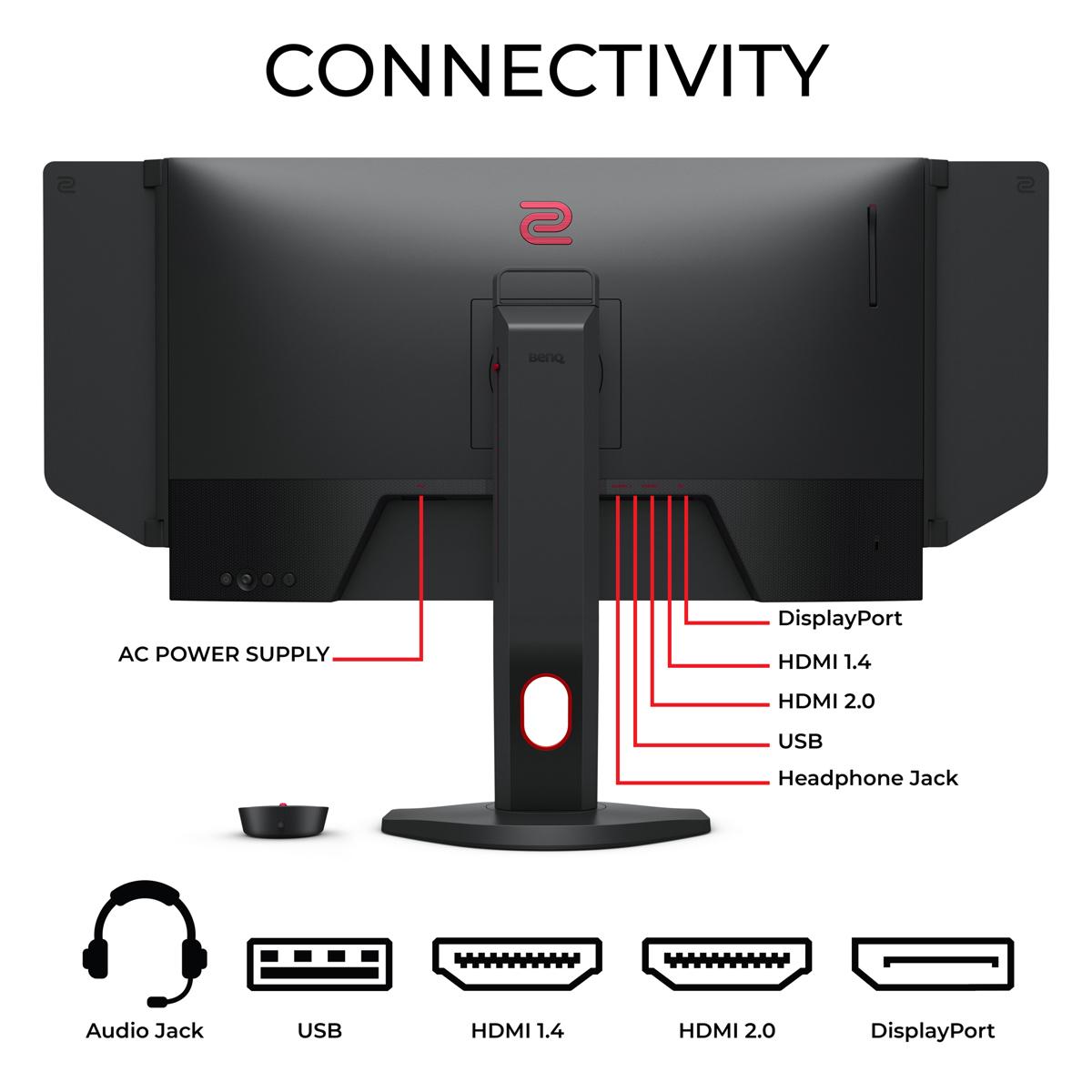
The XL2746K offers HDMI 2.0 connectivity, supporting up to 120Hz at 1080p on consoles. While this works fine for competitive gaming, you're not taking full advantage of modern consoles' capabilities. Three HDMI ports do provide excellent connectivity for multiple devices, making it easy to switch between gaming systems.
For single-player console gaming, the FO27Q2 provides a substantially better experience. The combination of higher resolution, HDR support, and OLED's superior contrast makes story-driven games more visually engaging. However, if your console gaming focuses on competitive multiplayer titles, the XL2746K's specialized features might prove more beneficial.
While neither monitor is primarily designed for home theater use, the AORUS FO27Q2 performs admirably in this role. The QD-OLED technology, HDR support, and excellent color accuracy make it suitable for movie watching, especially in darkened rooms where OLED's superior contrast shines. The 27-inch size limits its home theater application compared to larger displays, but for desktop viewing or smaller spaces, it's quite capable.
The XL2746K is poorly suited for home theater use. The TN panel's limited viewing angles, poor contrast, and lack of HDR support make it inadequate for movie watching or general entertainment consumption.
At the time of writing, the AORUS FO27Q2 commands a modest premium over the XL2746K—typically around $50-100 more depending on sales and availability. This price difference represents exceptional value when you consider the technological gap between QD-OLED and TN panel technology.
The FO27Q2 offers significantly more monitor for a relatively small price increase. You're getting cutting-edge display technology, higher resolution, better color accuracy, more connectivity options, and broader versatility. For most users, this represents a clear value advantage.
The XL2746K provides focused value for its specific use case. If your gaming consists primarily of competitive esports titles and you don't need the visual quality improvements of OLED technology, it offers proven performance at a slightly lower cost. However, the value proposition has weakened as OLED gaming monitors have become more affordable.
Choose the AORUS FO27Q2 if you want the best overall gaming experience available today. This monitor excels for players who enjoy both competitive and single-player games, anyone interested in content creation or consumption, and users who want a display that will remain impressive for years to come. The superior visual quality, broader compatibility, and advanced features make it the better choice for most people.
The FO27Q2 is particularly compelling for users building high-end gaming systems capable of driving 1440p at high frame rates. If you have a powerful graphics card and want to see what modern games can really look like, this monitor will showcase that capability beautifully.
Choose the XL2746K if competitive esports gaming represents your primary or exclusive use case. Professional and aspiring professional players in games like CS:GO, Valorant, or Apex Legends will appreciate the specialized features and proven tournament compatibility. The DyAc+ technology and esports-focused design elements provide advantages that matter in competitive scenarios.
The XL2746K also makes sense for users with lower-end graphics cards who want to maximize frame rates at 1080p, or players who strongly prefer the established ecosystem of professional esports equipment.
The gaming monitor landscape has evolved dramatically in recent years, and these two monitors represent the current state of that evolution. The AORUS FO27Q2 showcases where gaming displays are heading—superior visual technology, broader versatility, and premium features at increasingly accessible prices. The XL2746K represents the refined endpoint of traditional gaming monitor design, perfected for a specific but important use case.
For most users reading this comparison, the AORUS FO27Q2 represents the better investment. The visual quality improvement is immediately noticeable and enhances every gaming session, while the modest price premium delivers substantial long-term value. OLED technology has matured to the point where reliability concerns are largely addressed, especially with Gigabyte's comprehensive warranty coverage.
However, competitive gaming remains a legitimate specialty where the XL2746K continues to excel. If your gaming revolves around achieving the highest possible performance in competitive titles, the specialized features and proven track record of BenQ's Zowie monitors provide tangible advantages.
The choice ultimately comes down to whether you prioritize cutting-edge visual technology and versatility, or specialized competitive gaming performance. Both monitors excel in their intended roles—it's just a matter of determining which role better matches your gaming needs and preferences.
| Gigabyte AORUS FO27Q2 | BenQ Zowie XL2746K |
|---|---|
| Display Technology - Determines overall visual quality and performance characteristics | |
| QD-OLED (Quantum Dot OLED) - Premium technology with infinite contrast | TN (Twisted Nematic) - Fast but limited color/viewing angles |
| Resolution - Higher resolution means sharper images and more screen real estate | |
| 2560×1440 (1440p) - 78% more pixels for detailed gaming | 1920×1080 (1080p) - Lower resolution but higher frame rates possible |
| Response Time - Critical for competitive gaming to minimize blur and ghosting | |
| 0.03ms GTG - Among the fastest available, excellent for all gaming | ~1ms GTG equivalent - Very fast, optimized for competitive play |
| Input Lag - Total delay from input to screen response, crucial for competitive gaming | |
| 13ms total - Record-breaking low latency at 240Hz | Slightly higher but still excellent for esports |
| Color Accuracy - Important for immersive gaming and any creative work | |
| 99% DCI-P3, Delta E <2 - Professional-grade color reproduction | Basic sRGB coverage - Adequate for competitive gaming only |
| HDR Support - Enhances contrast and color in compatible games | |
| DisplayHDR True Black 400 - Excellent HDR with true blacks | No HDR support - Limited to standard dynamic range |
| Motion Clarity Technology - Reduces blur during fast-paced gaming | |
| Natural OLED clarity + strobing options | DyAc+ backlight strobing - Specifically optimized for FPS games |
| Connectivity - Determines compatibility with consoles and multiple devices | |
| HDMI 2.1, DisplayPort 1.4, USB-C with KVM - Full next-gen console support | 3×HDMI 2.0, DisplayPort 1.2 - Good connectivity but limited console features |
| Gaming Features - Specialized tools for different gaming styles | |
| Tactical Switch, AI OLED Care, multiple game modes | S Switch controller, Black eQualizer, DyAc+, Shielding Hood |
| Target Use Case - Who each monitor is designed for | |
| Enthusiast gamers wanting premium visuals + competitive performance | Competitive esports players prioritizing speed over visual quality |
| Burn-in Protection - OLED-specific concern about permanent image retention | |
| AI-based protection + 3-year burn-in warranty coverage | Not applicable - TN panels don't suffer from burn-in |
| Viewing Angles - How image quality holds up when viewed from the side | |
| 178° in all directions - Excellent from any angle | 170°H/160°V - Colors shift significantly off-center |
| Future-Proofing - How well the monitor will age with new games and hardware | |
| Cutting-edge OLED tech + higher resolution ages well | Established but older technology, may feel dated sooner |
The BenQ Zowie XL2746K is specifically designed for competitive esports with features like DyAc+ motion blur reduction, Black eQualizer for spotting enemies in dark areas, and tournament-proven reliability. However, the Gigabyte AORUS FO27Q2 offers record-low input lag at just 13ms and includes a Tactical Switch for quick resolution changes, making it excellent for competitive play while also excelling at other gaming types.
The primary difference is display technology and resolution. The AORUS FO27Q2 uses cutting-edge QD-OLED technology with 1440p resolution for superior visual quality, while the XL2746K uses a TN panel with 1080p resolution optimized purely for competitive gaming speed and consistency.
The Gigabyte AORUS FO27Q2 delivers significantly better picture quality with its QD-OLED panel offering infinite contrast, true blacks, 99% DCI-P3 color coverage, and HDR support. The BenQ Zowie XL2746K has basic color reproduction and limited viewing angles typical of TN panels, prioritizing speed over visual quality.
The AORUS FO27Q2 is better for console gaming with HDMI 2.1 support for full PlayStation 5 and Xbox Series X compatibility at 1440p/120Hz, plus HDR support for enhanced visuals. The XL2746K supports consoles at 1080p/120Hz via HDMI 2.0 but doesn't take full advantage of next-gen console capabilities.
The Gigabyte AORUS FO27Q2 offers better overall value despite its higher price, providing cutting-edge OLED technology, higher resolution, superior color accuracy, and broader versatility for a modest premium. The BenQ Zowie XL2746K provides focused value for competitive esports players who don't need premium visual quality.
The AORUS FO27Q2 includes AI-based OLED care features like pixel shifting and automatic screen savers to prevent burn-in, plus Gigabyte offers a 3-year warranty that specifically covers burn-in damage. Modern OLED panels have significantly improved burn-in resistance compared to earlier generations.
The Gigabyte AORUS FO27Q2 technically has faster response times at 0.03ms GTG and achieves lower total input lag. However, the XL2746K's DyAc+ technology provides specialized motion clarity that many competitive players prefer for FPS games, even if the raw response time measurements are slightly higher.
The AORUS FO27Q2 is excellent for content creation with professional-grade color accuracy (Delta E <2), higher 1440p resolution, and good viewing angles. The BenQ Zowie XL2746K is not suitable for color-critical work due to its TN panel's poor color reproduction and limited viewing angles.
The Gigabyte AORUS FO27Q2 is significantly better for single-player gaming, offering immersive visuals with OLED's infinite contrast, vibrant colors, HDR support, and higher resolution that makes games look more detailed and engaging. The XL2746K focuses purely on competitive multiplayer performance.
Both the AORUS FO27Q2 and XL2746K support 240Hz refresh rates for incredibly smooth gaming. Both also support variable refresh rate technologies like FreeSync to eliminate screen tearing, though the FO27Q2 includes more advanced FreeSync Premium Pro support.
The Gigabyte AORUS FO27Q2 offers more versatile connectivity with HDMI 2.1, DisplayPort 1.4, USB-C with power delivery, and built-in KVM switch functionality. The BenQ Zowie XL2746K provides three HDMI 2.0 ports and DisplayPort 1.2, which is adequate but lacks the advanced features and next-gen console support.
Choose the AORUS FO27Q2 if you want the best overall gaming experience with premium visuals, play various game types, need color accuracy for content work, or game on multiple platforms including consoles. Choose the XL2746K if you focus exclusively on competitive esports titles like CS:GO or Valorant and prioritize specialized gaming features over visual quality.
We've done our best to create useful and informative comparisons to help you decide what product to buy. Our research uses advanced automated methods to create this comparison and perfection is not possible - please contact us for corrections or questions. These are the sites we've researched in the creation of this article: tomshardware.com - pangoly.com - youtube.com - pangoly.com - rtings.com - displayninja.com - gigabyte.com - youtube.com - creativebloq.com - techpowerup.com - newegg.com - gigabyte.com - icecat.in - microcenter.com - aorus.com - bhphotovideo.com - provantage.com - bestbuy.com - displayspecifications.com - tomshardware.com - gigabyte.com - computronicsmultivision.com - gigabyte.com - rtings.com - youtube.com - bestbuy.com - versus.com - youtube.com - versus.com - forums.blurbusters.com - pcmonitors.info - youtube.com - bhphotovideo.com - zowie.benq.com - bhphotovideo.com - device.report - newegg.com - bestbuy.com - displayspecifications.com - provantage.com - zowie.benq.com - smallonlineshop.com.sg - camcor.com

Privacy Policy
Terms and Conditions - Affiliate Policy
Home Security
© Copyright 2008-2026.
11816 Inwood Rd #1211, Dallas, TX 75244