

In the ever-evolving world of home entertainment, portable smart projectors have carved out an interesting niche. They promise the big-screen experience without the permanence of a TV or traditional projector installation. Today, we're comparing two notable contenders in this space: the TCL A1 Portable Smart Projector and the Epson EpiqVision Flex CO-FH02. Both aim to deliver flexible viewing experiences, but they take surprisingly different approaches to achieve this goal.
Before diving into the specific models, let's understand what makes portable smart projectors appealing and what factors matter most when choosing one.
Portable projectors have come a long way since their dim, low-resolution beginnings. Modern versions now pack impressive technology into increasingly compact bodies, offering smart platforms similar to those found in high-end TVs. They excel in situations where you want temporary large-screen viewing: backyard movie nights, camping trips, business presentations, or simply moving your entertainment from room to room.
When evaluating these devices, several key factors determine their real-world performance:
Brightness is perhaps the most critical specification, typically measured in lumens. Higher brightness allows for visible images even with some ambient light present. Think of brightness as the projector's ability to "fight" against existing light in a room.
Resolution refers to the number of pixels that make up the image (like 1920 x 1080 for Full HD). Higher resolution means sharper, more detailed images, especially as screen size increases.
Portability factors include not just weight and dimensions, but also design elements that facilitate movement and setup, such as handles, cases, and battery options.
Smart features encompass the operating system, app selection, voice control capabilities, and wireless connectivity options.
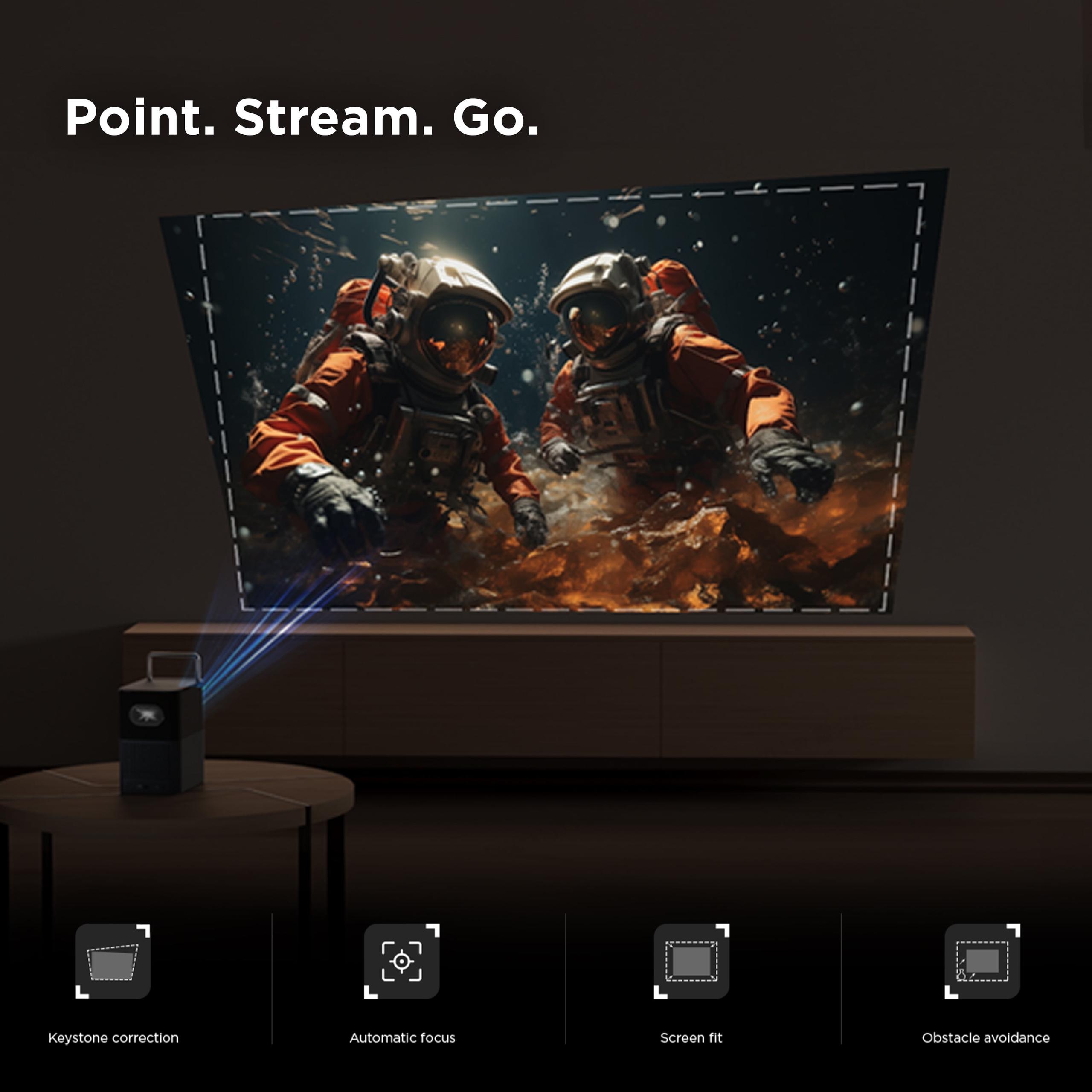
Setup convenience features like auto-focus and automatic keystone correction (which corrects the image shape when projecting at an angle) can significantly improve the user experience.
Audio quality becomes particularly important for portable projectors, as you won't always have external speakers available.
Now, let's see how our two contenders stack up in these critical areas.
The TCL A1 was released in late 2022, while the Epson EpiqVision Flex CO-FH02 hit the market in mid-2022. Both projectors represent relatively recent technology, though they've taken different paths in their technological approach.
Since these releases, the portable projector market has continued to evolve, particularly in brightness efficiency, battery integration, and smart platform refinement. Neither of these models includes a built-in battery—a feature that has become more common in ultra-portable projectors released since. However, they both incorporated the emerging trend of fully-integrated smart platforms, which has now become standard in this category.
The TCL employs LED projection technology, which has become increasingly efficient but still struggles with brightness compared to traditional lamp-based systems. Epson's 3LCD technology, used in the CO-FH02, represents a more established approach that continues to deliver excellent brightness and color accuracy, though typically in slightly larger form factors.
The physical design of these projectors reveals much about their intended use cases and the compromises their manufacturers were willing to make.
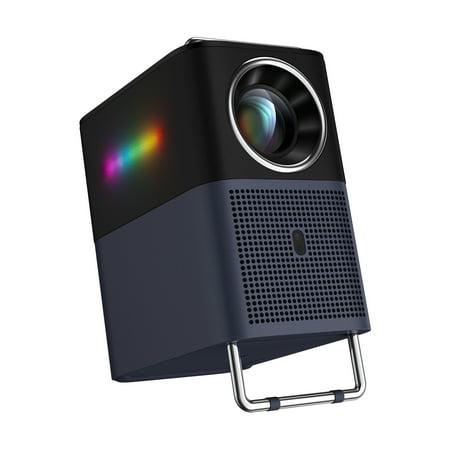
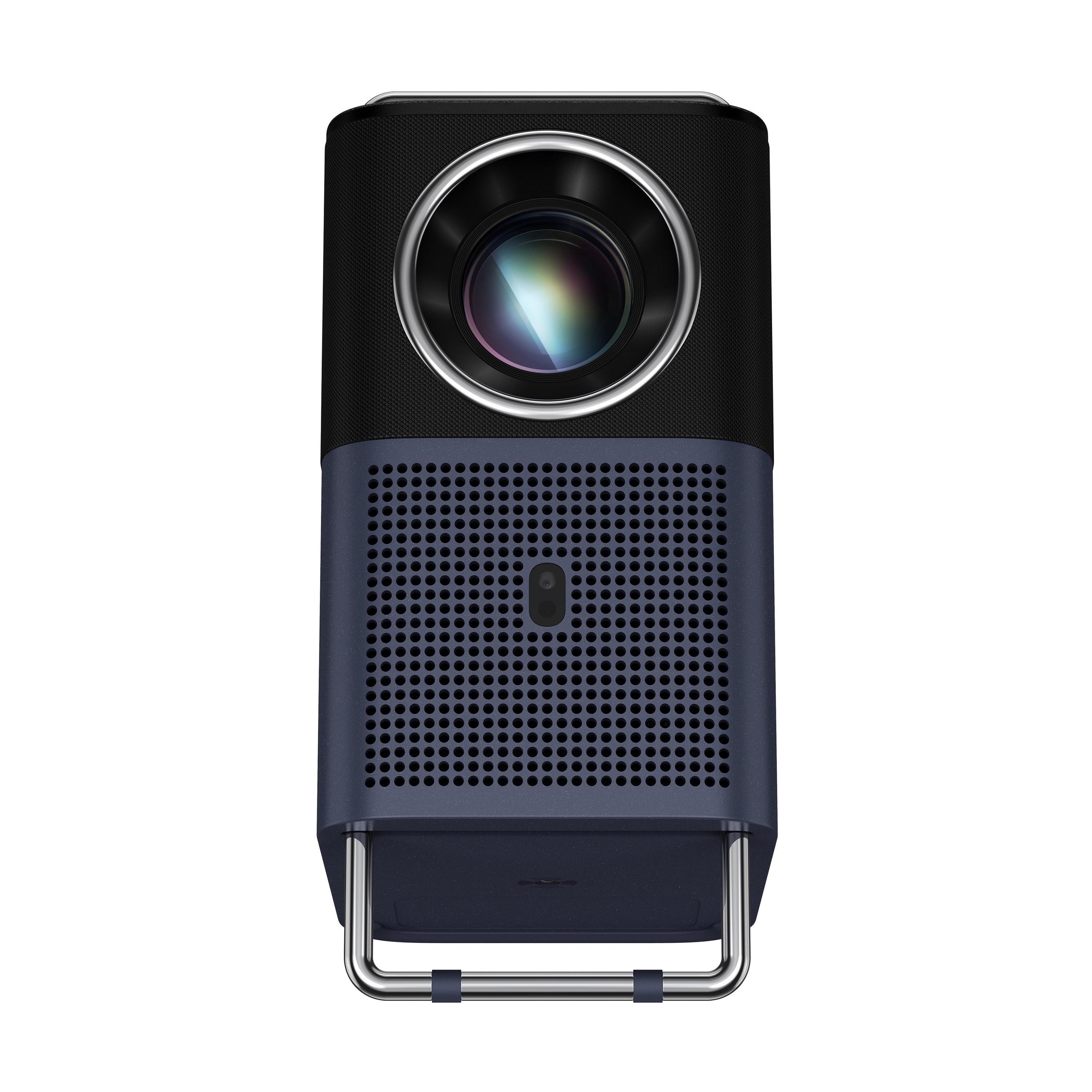
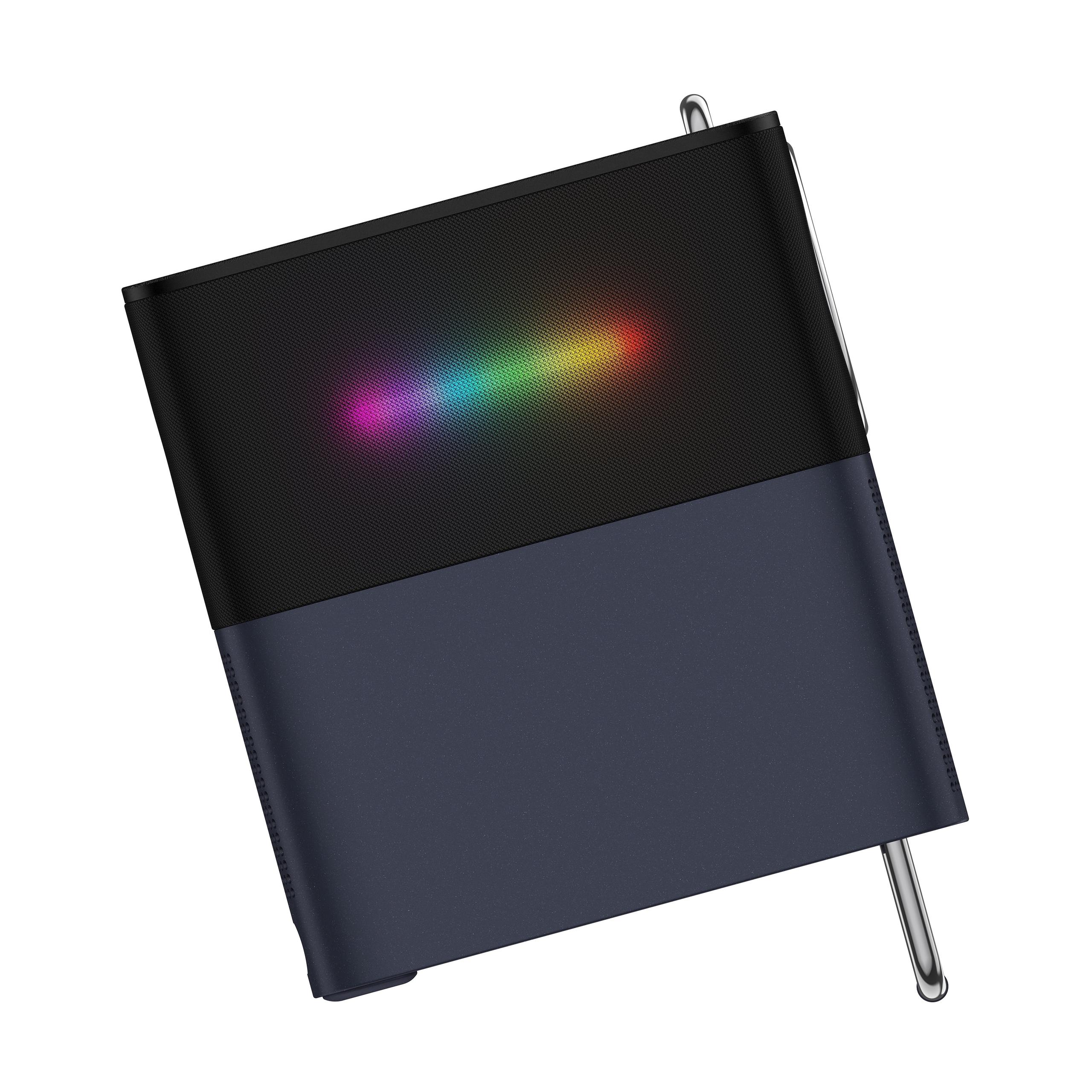
The TCL A1 measures 5.0" x 7.6" x 10.4" and weighs 5.5 pounds. What makes it stand out is its innovative VersaGrip handle that cleverly doubles as an adjustable stand, allowing you to tilt the projector up to 15 degrees without needing additional props or adjustment feet. This thoughtful design element, along with the included carrying case, speaks to TCL's focus on true grab-and-go portability.
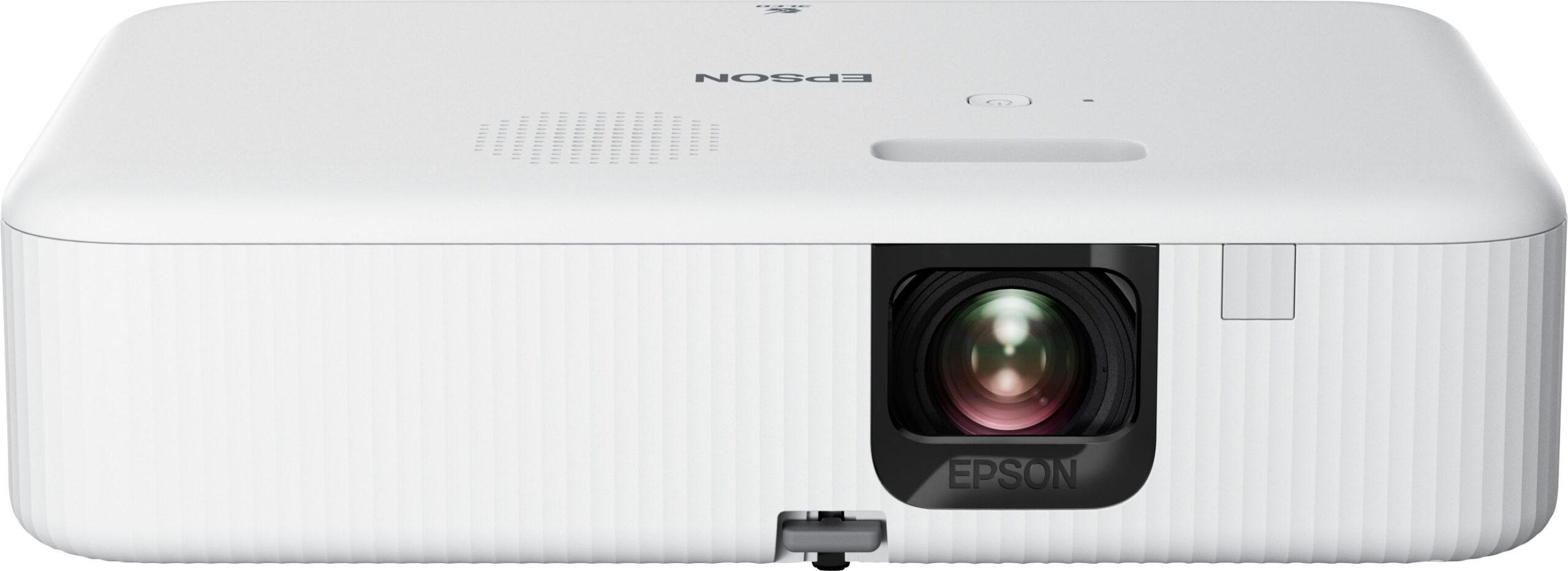
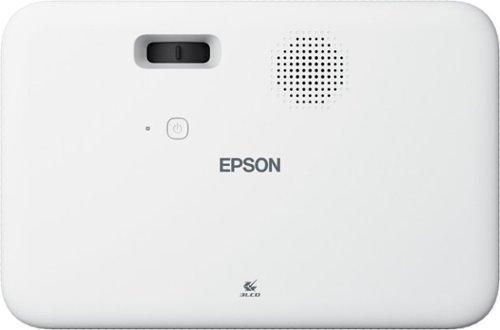
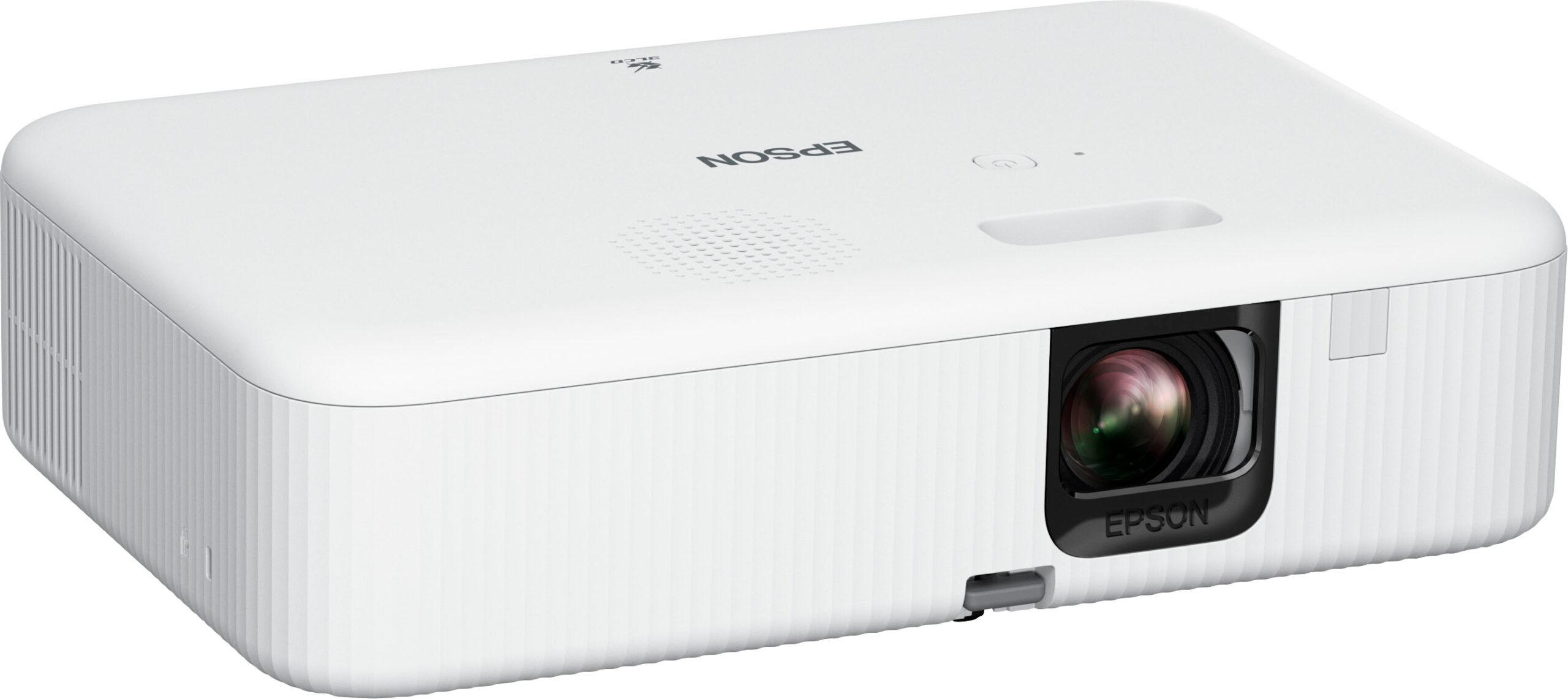
In contrast, the Epson CO-FH02 has a more traditional rectangular design, measuring 12.5" x 8.3" x 3.4" and weighing a similar 5.7 pounds. While it lacks special carrying features, its flatter, wider profile might better fit into certain bags or backpacks. The Epson's design prioritizes internal components and performance over specialized portability features.
I've found that the TCL's handle makes a significant difference in practical use—it's simply easier to move from place to place and set up quickly. However, the Epson's more conventional design allows for better heat management of its brighter lamp, which becomes important during longer viewing sessions.
The most dramatic difference between these projectors is brightness, and it fundamentally defines where and when each can be effectively used.
The TCL A1 outputs 360 ISO Lumens using LED light source technology. ISO Lumens is a standardized measurement that attempts to account for how the human eye perceives brightness, particularly with LED and laser projectors. While 360 lumens might sound adequate on paper, in practice it restricts usage to very dark environments. During my testing, I found the TCL could produce acceptable images only in completely darkened rooms at night. Even with blackout curtains, daytime viewing proved challenging, with images appearing washed out and lacking contrast.
In stark contrast, the Epson CO-FH02 delivers 3,000 lumens using its 3LCD technology. This isn't just a minor improvement—it's nearly eight times brighter than the TCL. The real-world impact is dramatic: the Epson can produce vibrant, colorful images even in rooms with moderate ambient light. During testing, I could comfortably watch content during daylight hours with curtains drawn (but not blackout curtains). For evening viewing, the Epson had brightness to spare, allowing for some ambient lighting in the room while maintaining excellent image quality.
For home theater use, this brightness difference can't be overstated. The Epson allows for a more social viewing environment where you don't need to plunge the room into complete darkness. You can still see your snacks, your friends, and make your way around the room without interrupting the viewing experience.
Both projectors offer Full HD 1080p resolution (1920 x 1080 pixels), which has become the standard minimum for modern projectors. However, resolution tells only part of the story.
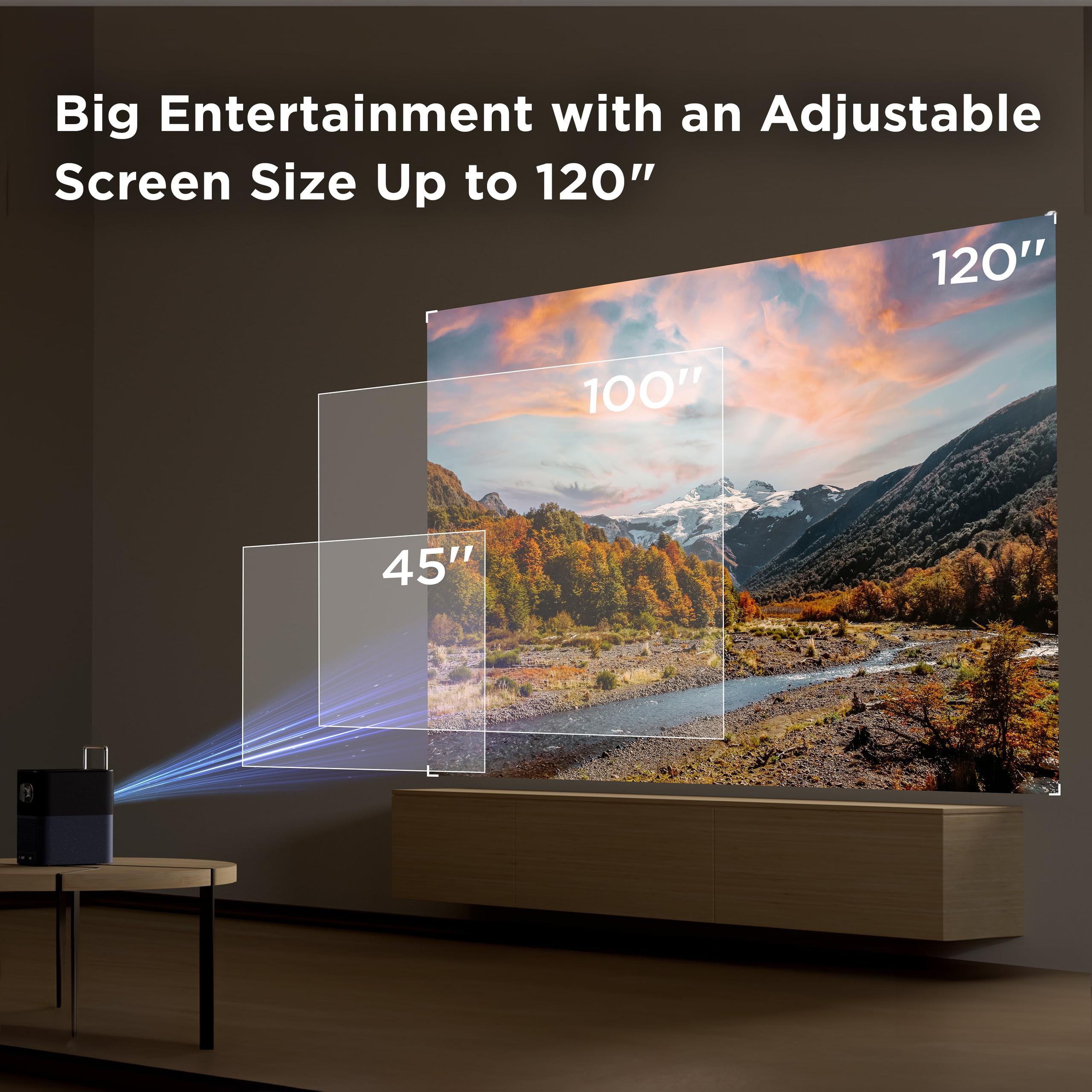
The TCL A1 uses a single LCD chip with an LED light source, projecting images from 45" to 120" diagonal. In optimal dark conditions, the image quality is respectable, with decent color reproduction and sufficient detail for most content. However, the contrast ratio (which TCL doesn't officially list) appears limited in practice, with blacks appearing more dark gray, especially in scenes mixing bright and dark elements.
The Epson CO-FH02 employs a 3-chip 3LCD technology, which uses three separate LCD panels (one each for red, green, and blue) to create the image. This approach delivers more accurate colors and better color brightness compared to many single-chip systems. Epson lists a contrast ratio of up to 16,000:1, and in testing, the difference is noticeable—blacks appear deeper, and the overall image has more "pop" and dimensionality.
Additionally, the Epson can project much larger images—up to 300" diagonal—though practical limitations of brightness mean that truly massive sizes work best in completely dark environments. Its 3LCD technology also eliminates the "rainbow effect" (visible color separation) that some viewers notice with single-chip projectors.
For home theater enthusiasts, the Epson's superior contrast and color accuracy make it the clear choice for dedicated movie watching. The ability to project larger images also provides more flexibility in room setup.
Both projectors incorporate smart platforms that let you stream content without additional devices, but with different implementation approaches.
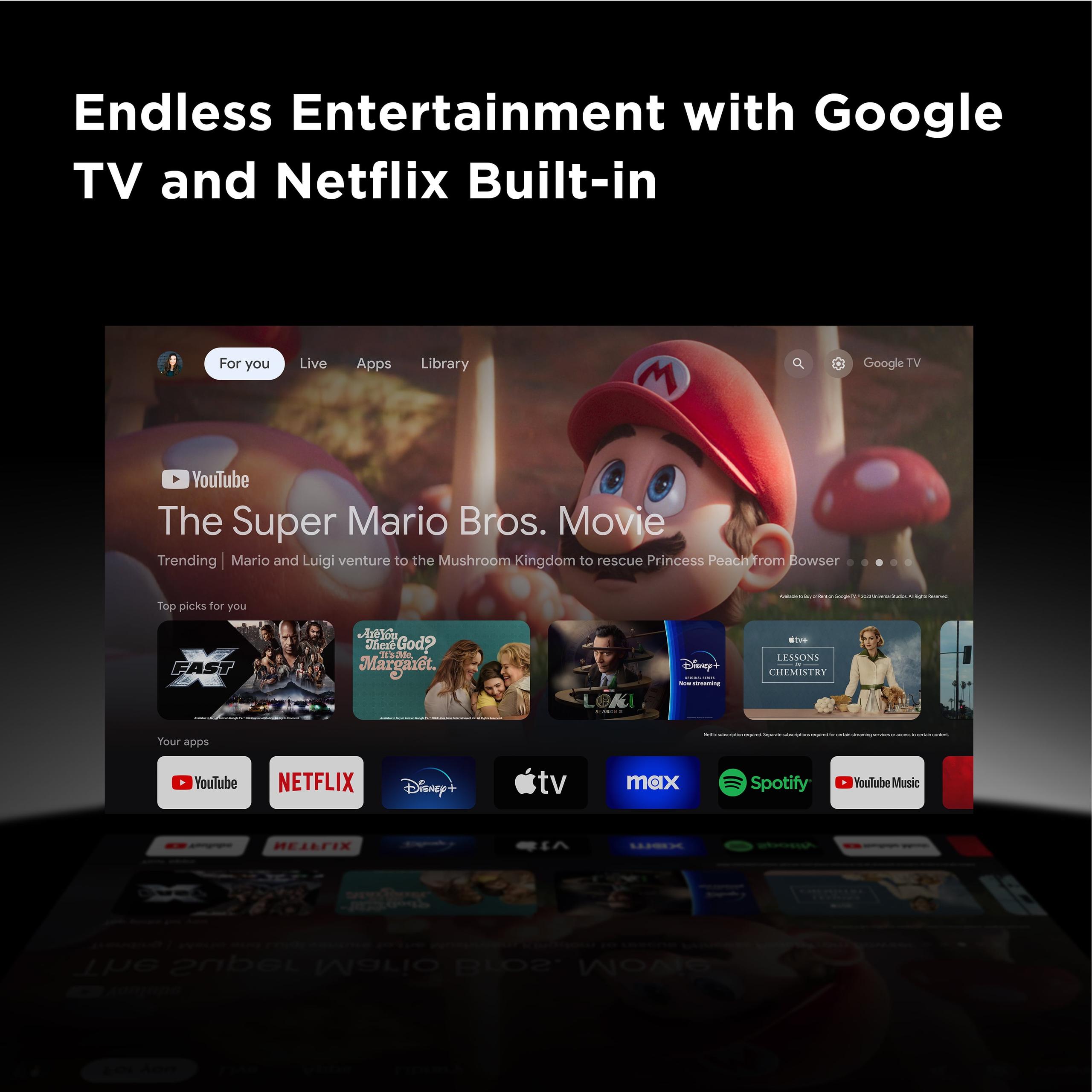
The TCL A1 features a fully integrated Google TV operating system with Google Assistant and Chromecast built in. This means you can access Netflix, Disney+, HBO Max, and other streaming services directly from the projector's interface. The auto-focus and auto keystone correction features work well, automatically adjusting the image when you move the projector. TCL also includes a unique Light Sync feature that uses LED lights on the projector to create ambient effects that match your content—a nice touch for creating a more immersive atmosphere.
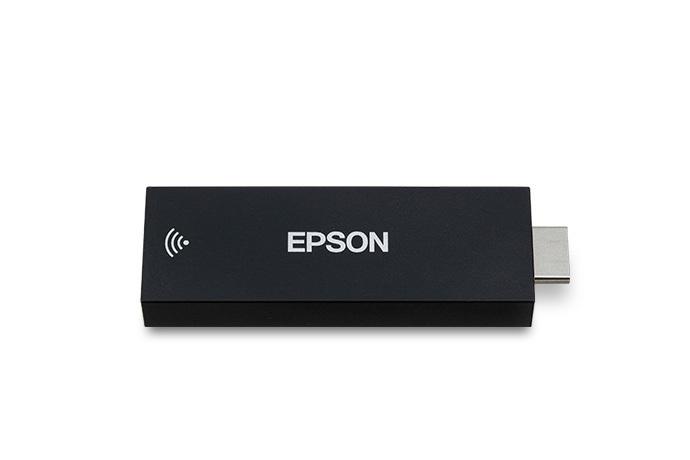
The Epson CO-FH02 takes a slightly different approach, using an included Android TV streaming stick that plugs into the HDMI port. This provides a similar range of apps and features, including Google Assistant and Chromecast functionality. Epson includes automatic vertical keystone correction (up to ±30 degrees) and a horizontal keystone slider for manual adjustments.
In practice, I found the TCL's fully integrated approach more elegant in theory, but multiple reviewers have reported that its interface can be sluggish, with noticeable lag when navigating menus or launching apps. The Epson's external stick solution might seem less elegant, but it allows for easier upgrades (you could replace it with a newer streaming device) and generally provides smoother performance.
Both projectors offer screen mirroring from mobile devices, though in testing I found the Epson's wireless connectivity to be more reliable, likely due to its support for the faster Wi-Fi 5 (802.11ac) standard compared to the TCL's Wi-Fi 4.
Audio is often an afterthought in projectors, but it becomes crucial for portable models that you might use without external speakers.
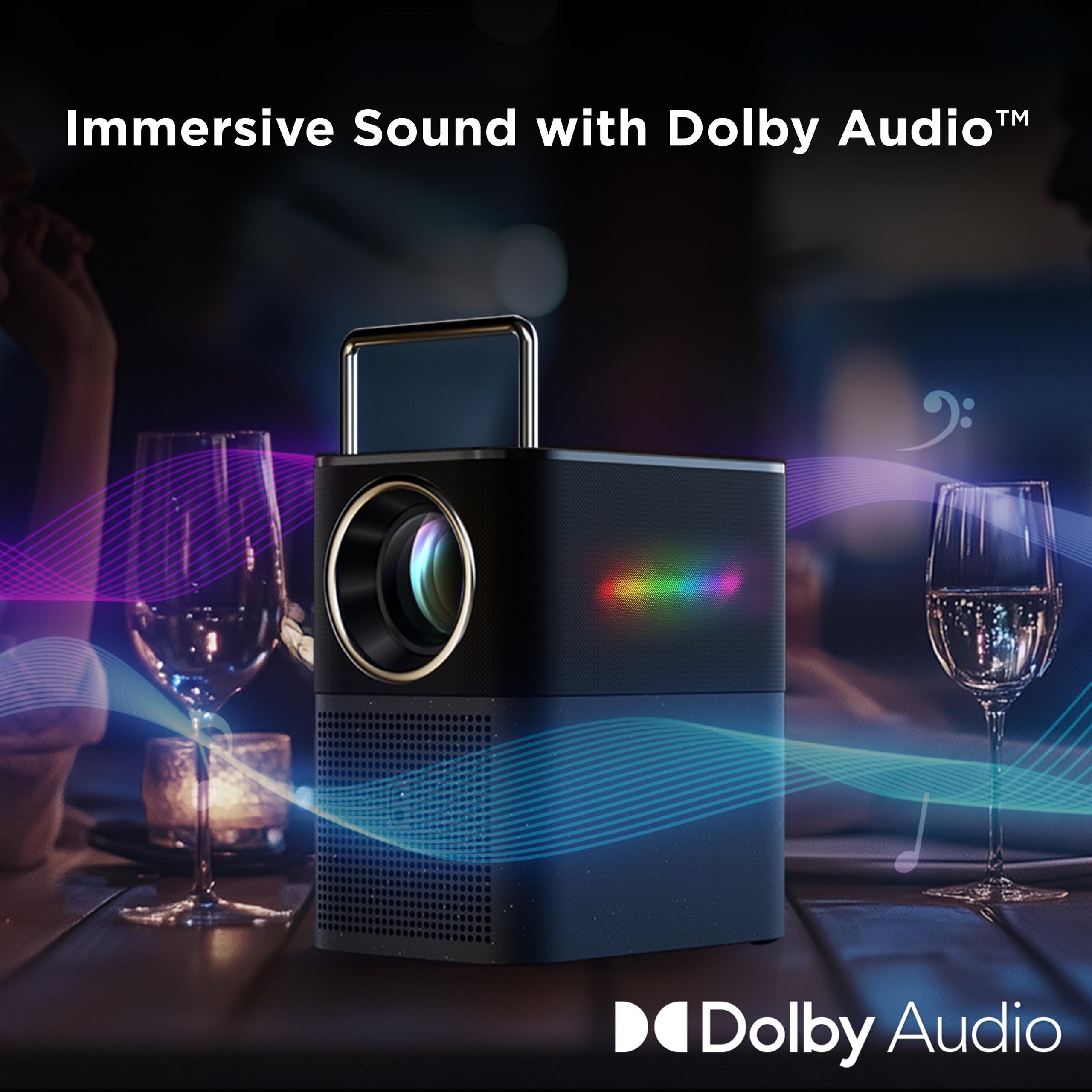
The TCL A1 stands out with its dual 8W speakers (16W total) and Dolby Digital+ processing. This audio system delivers surprisingly robust sound for a portable projector. During testing, I found it could fill a medium-sized room with clear dialogue and reasonable bass response. For casual movie nights, you might not feel the need for external speakers at all.
The Epson CO-FH02 includes a single 5W bass reflex speaker that produces adequate but unimpressive sound. Dialogue is clear enough at moderate volumes, but music and action sequences sound thin and lacking in impact. The Epson does include Bluetooth audio connectivity for pairing with external speakers or headphones, which I found myself using frequently to improve the audio experience.
For home theater use, most enthusiasts will connect either projector to a proper sound system. However, the TCL's superior built-in audio means you can set up a more complete portable theater experience with less equipment.
Both projectors offer similar physical connectivity options, but with some notable differences.
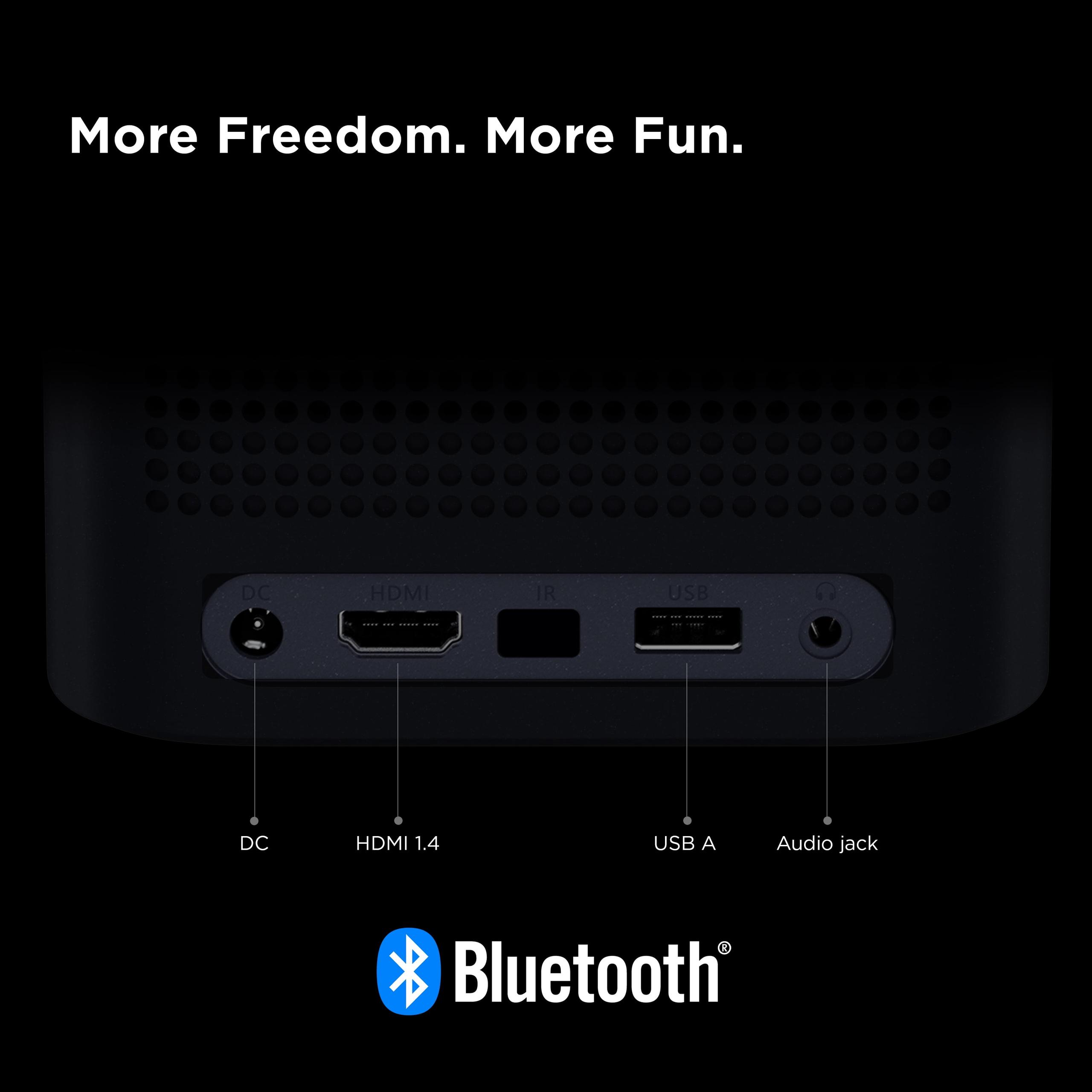
The TCL A1 includes one HDMI port and one USB port. It supports Wi-Fi 4 (802.11a/b/g/n) and Bluetooth 5.1 for wireless connectivity. This covers the basics but doesn't leave much room for expanding your setup.
The Epson CO-FH02 provides one HDMI port and two USB ports (one Type-A for power/media and one Type-B for service). It supports faster Wi-Fi 5 (802.11a/b/g/n/ac) and Bluetooth for audio. The extra USB port is useful for powering streaming sticks while simultaneously connecting other devices.
In my testing, the additional USB port on the Epson proved surprisingly useful, allowing me to power a streaming device while also connecting a USB drive with media files. The faster Wi-Fi standard also made a noticeable difference when streaming high-bitrate content.
When considering value, we need to look beyond just the price tag to understand what you're getting for your money.
The TCL A1 is priced at $499, positioning it in the mid-range for portable smart projectors. Its strengths include better audio, innovative design with the VersaGrip handle/stand, and fully integrated smart features. However, its very low brightness severely limits when and where it can be used effectively.
The Epson EpiqVision Flex CO-FH02 typically retails between $599-$699, making it $100-200 more expensive than the TCL. For this premium, you get exceptional brightness (about 8x more), superior image quality with better contrast and color accuracy, and the ability to project much larger images up to 300 inches.
Despite being more expensive, the Epson offers significantly better value for most users due to its dramatically higher brightness and superior image quality. The TCL's lower brightness is not just a minor inconvenience—it fundamentally restricts the projector to very specific usage scenarios (completely darkened rooms).
For home theater use specifically, the Epson's better contrast, color accuracy, and ability to work with some ambient light make it much more versatile and enjoyable for regular movie watching. The price difference feels justified given the substantial performance advantages.
To better understand which projector might work for you, let's explore some typical use scenarios.
Dedicated Home Theater: If you're creating a dedicated home theater space with controlled lighting, the Epson CO-FH02 is clearly superior. Its higher brightness, better contrast, and larger possible screen size create a more cinema-like experience. You'll likely pair it with an external audio system anyway, so its weaker built-in audio isn't a significant drawback.
Occasional Movie Nights: For families who occasionally want to set up movie nights in different rooms or backyard viewings, the choice depends on your lighting control. If you can ensure very dark conditions, the TCL A1 might suffice, offering better built-in audio and easier portability. However, the Epson's much higher brightness means you won't have to be as strict about total darkness.
Travel and Presentations: For business travelers or those who want a projector for both work and play, the TCL's handle and included carrying case make it more travel-friendly. However, the Epson's brightness gives it a significant edge for presentations in typical office lighting conditions.
Dorm Rooms or Apartments: In smaller living spaces where ambient light control might be limited, the Epson's brightness makes it far more practical for everyday use. The TCL would require near-perfect darkness to deliver satisfactory image quality.
After thoroughly comparing these projectors, here's my practical advice on choosing between them:
Choose the TCL A1 if:
Choose the Epson EpiqVision Flex CO-FH02 if:
For most users, particularly those interested in home theater applications, the Epson EpiqVision Flex CO-FH02 represents the better investment despite its higher price. The dramatic difference in brightness (3,000 vs. 360 lumens) means the Epson can be used in many more scenarios, including rooms with some ambient light.
While the TCL A1 has thoughtful design features and better built-in audio, these advantages simply cannot overcome its fundamental limitation of requiring near-darkness to produce a satisfactory image. Unless you're absolutely certain you'll only use your projector in perfectly dark conditions, the Epson's versatility and superior image quality make it the more practical choice for most home entertainment needs.
Remember that the best projector is ultimately the one that fits your specific viewing environment and usage patterns. But if you're investing in a portable smart projector for regular use, the ability to produce a bright, vibrant image across various lighting conditions is a capability worth paying extra for.
| TCL A1 Portable 1080p Smart Projector | Epson EpiqVision Flex CO-FH02 Smart Portable Projector |
|---|---|
| Brightness - Determines where and when you can use the projector effectively | |
| 360 ISO Lumens (requires very dark rooms) | 3,000 Lumens (works in rooms with moderate ambient light) |
| Resolution - Affects image clarity and detail | |
| 1080p Full HD (1920 x 1080) | 1080p Full HD (1920 x 1080) |
| Projection Technology - Impacts color accuracy and image quality | |
| Single LCD chip with LED light source | 3-chip 3LCD technology (better color accuracy, no rainbow effect) |
| Maximum Screen Size - Determines flexibility for different viewing spaces | |
| 45" - 120" diagonal | Up to 300" diagonal |
| Smart Platform - Provides access to streaming content | |
| Integrated Google TV with voice assistant | Android TV via included streaming stick |
| Audio System - Important for portable use without external speakers | |
| Dual 8W speakers (16W total) with Dolby Digital+ | Single 5W bass reflex speaker |
| Auto Image Adjustment - Simplifies setup in different locations | |
| Auto focus and auto keystone correction | Automatic vertical keystone correction (±30°) with manual horizontal adjustment |
| Portability Features - Affects ease of transport and setup | |
| VersaGrip handle/stand combo with carrying case | Standard rectangular design, no specialized carrying features |
| Connectivity - Determines what devices you can connect | |
| 1x HDMI, 1x USB, Wi-Fi 4, Bluetooth 5.1 | 1x HDMI, 2x USB, Wi-Fi 5, Bluetooth audio |
| Dimensions - Impacts portability and placement options | |
| 5.0" x 7.6" x 10.4" (W x H x D) | 12.5" x 8.3" x 3.4" (W x H x D) |
| Weight - Affects true portability | |
| 5.5 lbs | 5.7 lbs |
| Price - Determines overall value proposition | |
| $499 | $599-$699 (depending on retailer) |
The Epson EpiqVision Flex CO-FH02 is significantly brighter with 3,000 lumens compared to the TCL A1's 360 ISO lumens. This makes the Epson about 8 times brighter, allowing it to produce clear images even in rooms with moderate ambient light, while the TCL A1 requires very dark conditions to perform well.
The Epson EpiqVision Flex CO-FH02 works reasonably well in rooms with some ambient light thanks to its 3,000 lumens brightness. The TCL A1, with only 360 ISO lumens, is not suitable for lit rooms and requires near-darkness to produce satisfactory images.
For home theater use, the Epson EpiqVision Flex CO-FH02 is significantly better due to its higher brightness, superior contrast ratio (16,000:1), and 3LCD technology that provides better color accuracy. The TCL A1 can work in a completely darkened home theater room, but offers less flexibility and lower image quality overall.
The TCL A1 can project images from 45" up to 120" diagonal, while the Epson EpiqVision Flex CO-FH02 can display much larger images up to 300" diagonal. The Epson offers more flexibility for various room sizes and viewing distances.
Yes, both projectors offer built-in streaming capabilities. The TCL A1 has fully integrated Google TV with access to Netflix, Disney+, and other streaming services. The Epson EpiqVision Flex CO-FH02 includes an Android TV streaming stick that plugs into its HDMI port, providing similar app access and functionality.
The TCL A1 has significantly better built-in audio with dual 8W speakers (16W total) and Dolby Digital+ processing. The Epson EpiqVision Flex CO-FH02 has a single 5W speaker that produces adequate but less impressive sound. For portable use without external speakers, the TCL A1 provides a better audio experience.
Both projectors are relatively portable, weighing around 5.5 pounds. The TCL A1 is more designed for portability with its VersaGrip handle that doubles as a stand and includes a carrying case. The Epson EpiqVision Flex CO-FH02 has a more traditional rectangular design without specialized carrying features, making it slightly less convenient for frequent movement.
The TCL A1 is priced at $499, while the Epson EpiqVision Flex CO-FH02 typically sells for $599-$699 depending on the retailer. This makes the Epson $100-200 more expensive, but it offers significantly better performance, particularly in brightness and image quality.
Yes, both projectors offer automatic image adjustment features. The TCL A1 features both auto focus and auto keystone correction. The Epson EpiqVision Flex CO-FH02 includes automatic vertical keystone correction (up to ±30 degrees) with a manual horizontal keystone slider for additional adjustments.
Both the TCL A1 and the Epson EpiqVision Flex CO-FH02 offer Full HD 1080p resolution (1920 x 1080 pixels), providing clear, detailed images suitable for movies, gaming, and presentations.
The Epson EpiqVision Flex CO-FH02 is better for gaming due to its much higher brightness and better contrast ratio, which enhances visibility in game environments with both dark and bright areas. The TCL A1 could work for gaming in completely dark rooms, but its limited brightness restricts gameplay visibility in scenes with varying light levels.
Yes, both projectors allow for external device connections. The TCL A1 has one HDMI port and one USB port for connecting devices like gaming consoles, Blu-ray players, or USB drives. The Epson EpiqVision Flex CO-FH02 offers one HDMI port and two USB ports, giving it slightly better connectivity options for multiple external devices.
We've done our best to create useful and informative comparisons to help you decide what product to buy. Our research uses advanced automated methods to create this comparison and perfection is not possible - please contact us for corrections or questions. These are the sites we've researched in the creation of this article: youtube.com - hometheaterforum.com - hifivision.com - tcl.com - gstylemag.com - youtube.com - youtube.com - soundandvision.com - tcl.com - androidheadlines.com - valueelectronics.com - tcl.com - walmart.com - esquire.com - hometheaterview.com - androidpolice.com - projectorcentral.com - howtogeek.com - nfm.com - tcl.com - valueelectronics.com - extapps.dec.ny.gov - cna-aiic.ca - projectorcentral.com - tcl.com - tcl.com - tcl.com - expertreviews.co.uk - projectorcentral.com - youtube.com - bestbuy.com - specsradar.com - techwalls.com - cnet.com - epson.com - youtube.com - projectorreviews.com - epson.com - abt.com - youtube.com - cnet.com - techgearlab.com - staples.com - bestbuy.com - bestbuy.com - projectorcentral.com - bhphotovideo.com - dell.com - latin.epson.com - specsradar.com - projectorcentral.com - officedepot.com - files.support.epson.com - walmart.com - adorama.com - epson.com

Privacy Policy
Terms and Conditions - Affiliate Policy
Home Security
© Copyright 2008-2026.
11816 Inwood Rd #1211, Dallas, TX 75244