

The home projector market has undergone a remarkable transformation over the past decade. What was once a niche product category reserved for dedicated home theater enthusiasts has evolved into a diverse ecosystem of specialized projectors designed to meet specific needs and use cases. Today's consumers can choose from models optimized for gaming, smart functionality, portability, or pure cinematic performance.
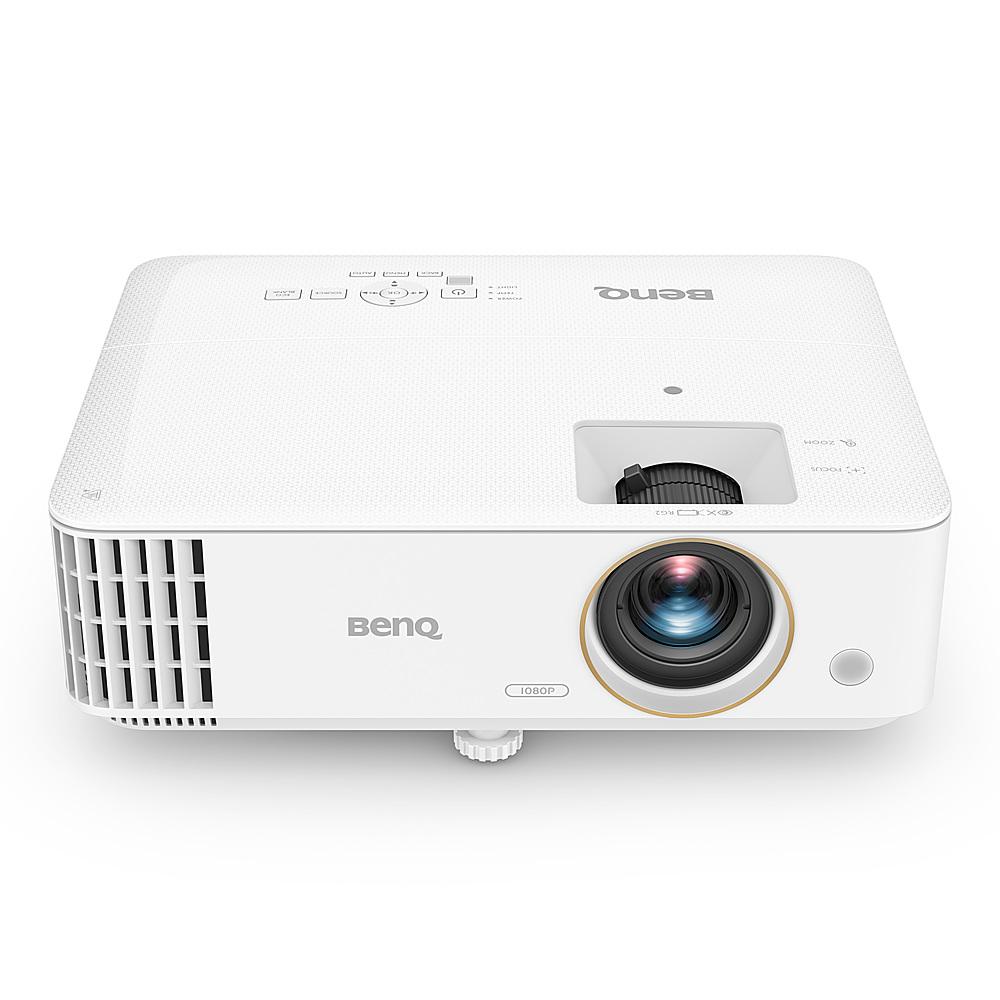
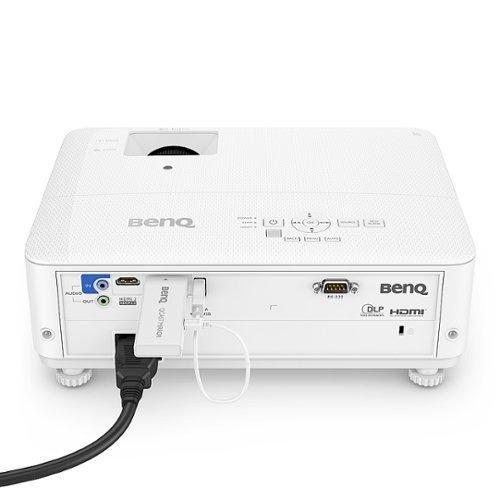
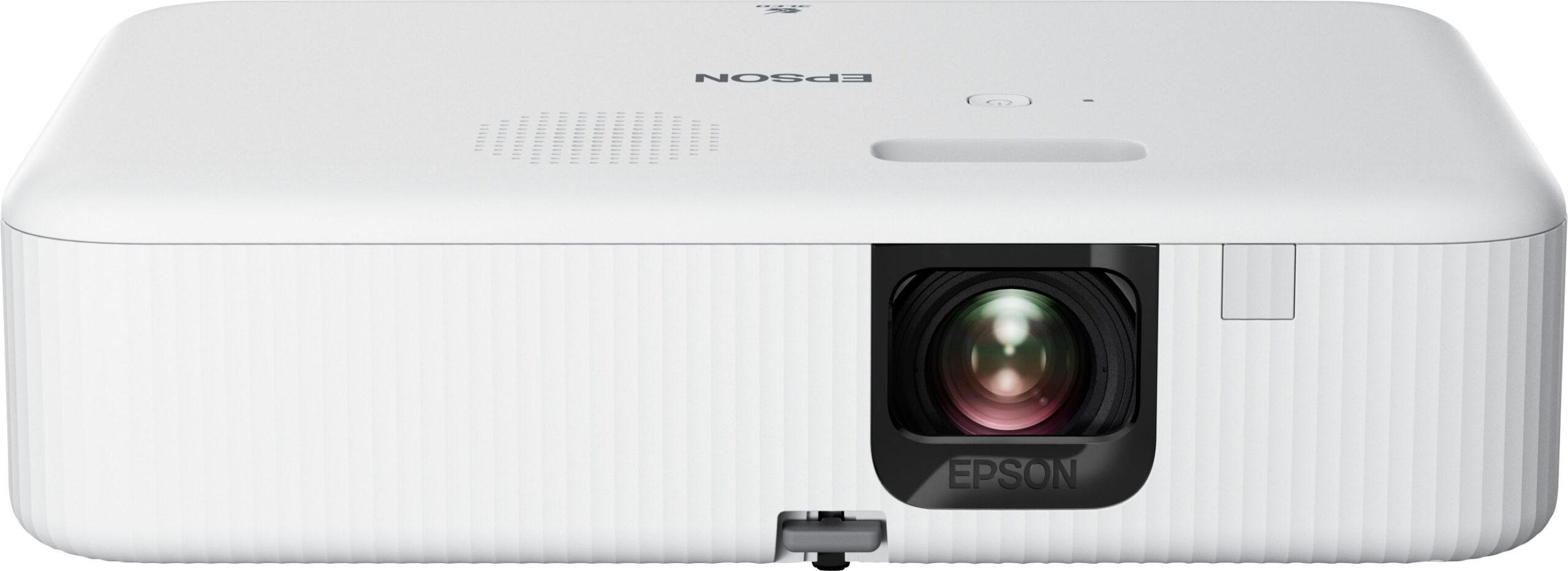
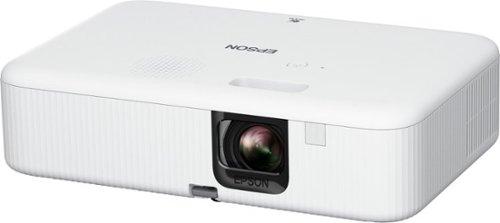
Released in late 2021, the BenQ TH685P (priced around $799-$899) represents an evolution in BenQ's gaming projector lineup, building upon the success of its predecessor, the TH685. The newer "P" model retains the gaming-focused DNA while adding refinements to image quality and usability. Meanwhile, the Epson EpiqVision Flex CO-FH02 (typically $599-$699) hit the market in 2022 as part of Epson's push into the smart projector space, emphasizing ease of use, portability, and integrated streaming capabilities.
These two projectors exemplify different approaches to home entertainment, with each making specific trade-offs to excel in their intended use cases. Let's dive into what makes each unique and who might benefit most from their distinct feature sets.
The fundamental difference between these projectors begins with their core imaging technologies. The BenQ TH685P uses Digital Light Processing (DLP) technology, which employs a single chip with millions of microscopic mirrors that rapidly flip back and forth to create images. DLP projectors are known for their fast pixel response times and excellent motion handling—crucial for gaming—but they can sometimes produce what's called the "rainbow effect," where some viewers see momentary flashes of rainbow-colored artifacts during fast-moving scenes or when shifting their gaze across the screen.
In contrast, the Epson CO-FH02 utilizes 3LCD technology, which splits light through three separate LCD panels (one each for red, green, and blue) before recombining them for projection. This approach eliminates the rainbow effect entirely and typically delivers more accurate, vibrant colors. The technology also ensures equal color and white brightness—a significant advantage compared to some DLP projectors where color brightness may fall below the advertised white brightness spec.
Since 2021, both technologies have seen incremental improvements in efficiency and image quality, though the fundamental strengths and weaknesses remain consistent. If you're sensitive to the rainbow effect (about 10-15% of viewers are), the Epson's 3LCD approach might be the safer choice.
One of the most impressive features of both projectors is their ability to produce bright, visible images even in rooms that aren't completely dark—a crucial capability for casual viewing environments like living rooms or multipurpose spaces.
The BenQ TH685P boasts 3,500 ANSI lumens, which represents serious brightness for a home projector. This specification uses the standardized ANSI method, generally considered the most reliable brightness measurement. In practice, this means the TH685P can maintain vibrant, visible images even with some ambient light present—perfect for afternoon gaming sessions or watching sports with friends where you don't want to sit in total darkness.
The Epson CO-FH02 advertises 3,000 lumens of equal color and white brightness. What's noteworthy here is the "equal" designation, as Epson's 3LCD technology naturally produces the same brightness level for both color and white content. Independent testing has shown the CO-FH02 can actually exceed its rating, measuring over 3,200 lumens in its Dynamic mode. This makes it exceptionally bright for its price point and suitable for environments with moderate ambient light.
Since their release, both manufacturers have focused on maintaining high brightness while improving power efficiency, rather than simply pushing brightness numbers higher, which often comes at the cost of color accuracy and lamp life.
Color accuracy and reproduction significantly impact the viewing experience, whether you're gaming or streaming movies. The BenQ TH685P covers 95% of the Rec.709 color gamut, the standard color space for HDTV content. This is respectable coverage that ensures relatively accurate colors for most content, though it falls short of the wider color gamuts used in HDR content (like DCI-P3 or Rec.2020).
The HDR support in the TH685P helps extract more detail from compatible content, but like most projectors in this price range, it can't deliver the dramatic HDR impact you'd see on a high-end television. Rather than making colors pop with extreme brightness, projector HDR tends to focus on preserving detail in very bright and very dark areas of the image.
The Epson CO-FH02 doesn't specify its exact color gamut coverage, but the inherent advantages of 3LCD technology typically result in richer, more accurate colors than similarly priced DLP projectors. The CO-FH02 also features automatic scene-based color correction, which analyzes content in real-time and adjusts settings to optimize the image. This helps maintain consistent color performance across different types of content, from vivid animation to muted documentaries.
In recent years, both manufacturers have improved their color processing algorithms, with the latest models offering better out-of-box color accuracy than their predecessors from just a few years ago.
Contrast ratio—the difference between the brightest whites and darkest blacks a display can produce—remains a persistent challenge for projectors, especially in this price range. The BenQ TH685P lists a 10,000:1 contrast ratio, while the Epson CO-FH02 claims up to 16,000:1. However, these manufacturer-provided specifications often use measurement methods that yield the most favorable numbers.
In practical terms, neither projector can produce the deep blacks you'd see on a good OLED or high-end LCD TV. This is especially noticeable when using these projectors in rooms with ambient light, where blacks tend to appear more gray than truly black. However, the Epson's higher contrast ratio specification, combined with the color advantages of 3LCD technology, typically results in images with more perceived depth and dimensionality.
For true home theater enthusiasts, it's worth noting that significant advancements in projector contrast performance generally start at higher price points, particularly with models using more advanced technologies like laser phosphor light sources or dynamic iris systems.
Input lag—the time between when your controller sends a signal and when that action appears on screen—is perhaps the single most important specification for gaming projectors. This is where the BenQ TH685P truly shines with an outstanding 8.3ms of input lag at 1080p/120Hz and 16ms at 60Hz. These numbers put it in the elite tier of gaming projectors and make it suitable even for competitive gaming where reaction time is critical.
To put this in perspective, most non-gaming projectors (including the Epson CO-FH02) typically have input lag measurements in the 50-100ms range—perfectly acceptable for movies and casual use but potentially frustrating for fast-paced games. While Epson doesn't publish official input lag specifications for the CO-FH02, comparable models in their lineup suggest it's likely in this standard range.
The gaming focus of the TH685P is a deliberate design decision by BenQ, who has been refining their gaming projector technology since well before the 2021 release of this model. The improvement over time has been remarkable—gaming projectors from just five years ago often had input lag measurements 2-3 times higher than today's best models.
Complementing the low input lag of the BenQ TH685P is its support for refresh rates up to 120Hz, double the standard 60Hz found in the Epson CO-FH02 and most consumer displays. Higher refresh rates mean more frames displayed per second, resulting in smoother motion and more responsive gameplay.
The advantage becomes particularly noticeable in fast-paced games like first-person shooters, racing games, or competitive fighting games, where the extra frames provide both visual smoothness and a slight competitive edge in reaction time. Console gamers with PlayStation 5 or Xbox Series X/S will appreciate that the TH685P can display the 120Hz output these consoles are capable of in compatible games.
Since the TH685P's release, 120Hz gaming has become more mainstream, with more game titles supporting high refresh rates, making this feature increasingly valuable for enthusiast gamers.
The BenQ TH685P includes several gaming-specific enhancements beyond just low input lag. Its Game Mode adjusts image processing to enhance visibility in dark scenes without washing out the entire image—particularly useful in games with dark environments like horror titles or stealth games. The Game Sound Mode optimizes audio for gaming, emphasizing positional audio cues and dialogue clarity.
By contrast, the Epson CO-FH02 lacks gaming-specific optimizations, focusing instead on general entertainment use. This reflects the different target audiences for these projectors: dedicated gamers versus casual content consumers seeking versatility.
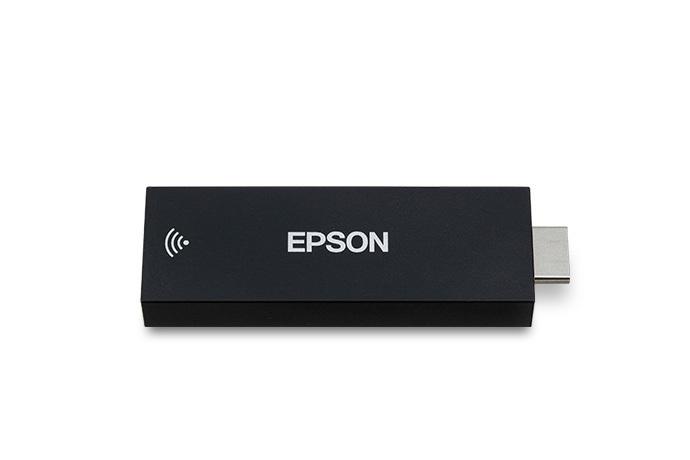
Perhaps the starkest difference between these projectors is in their approach to smart features. The Epson CO-FH02 comes with a full Android TV experience via an included dongle that plugs directly into the projector. This provides access to thousands of apps, including major streaming services like Netflix, Disney+, YouTube, and Hulu, all without requiring any additional devices.
The Android TV integration represents Epson's recognition of the shift toward streaming content that's occurred since 2020. The interface is familiar to anyone who's used an Android phone or tablet, with voice search capabilities through Google Assistant and personalized recommendations based on viewing habits.
In contrast, the BenQ TH685P has no built-in smart platform. To stream content, you'll need to connect an external device like a Roku, Apple TV, Chromecast, or gaming console. While this might seem like a disadvantage, it actually provides greater flexibility to choose your preferred streaming platform and upgrade it independently of the projector.
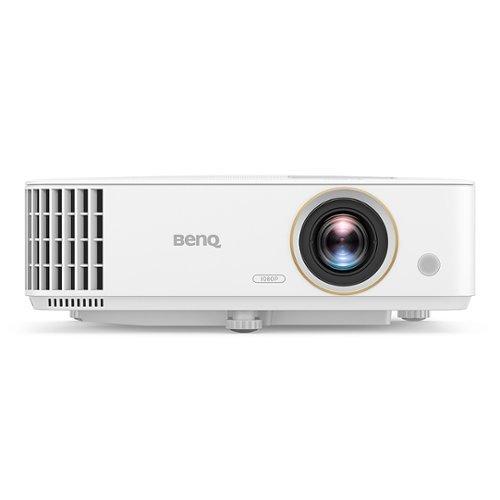
The connectivity options of each projector further reflect their different philosophies. The BenQ TH685P offers a more comprehensive selection of inputs, including two HDMI 2.0 ports, a VGA port for connecting older computers, and USB for power. This allows for connecting multiple devices simultaneously—perhaps a gaming console and a streaming stick—without having to swap cables.
The Epson CO-FH02 takes a more streamlined approach with just one HDMI port alongside its USB-A connector. The assumption here is that the built-in Android TV will handle most of your content needs, reducing the necessity for multiple inputs. The projector also features dual-band Wi-Fi and Bluetooth connectivity, the latter allowing you to connect wireless speakers or headphones directly to the projector—a convenient feature the BenQ lacks.
Since these models were released, the trend toward wireless connectivity has continued to accelerate, with newer projector models increasingly emphasizing wireless casting and streaming capabilities.
Both projectors are relatively compact and lightweight, making them suitable for moving between rooms or taking to friends' homes for movie nights or gaming sessions. The Epson CO-FH02 has a slight edge in portability at 5.7 pounds versus the BenQ TH685P's 6.2 pounds, and its dimensions are somewhat more backpack-friendly.
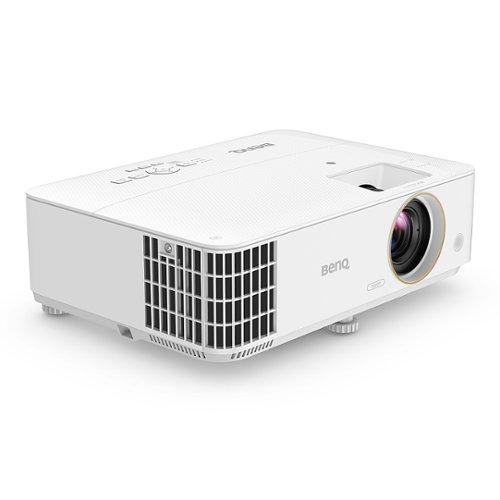
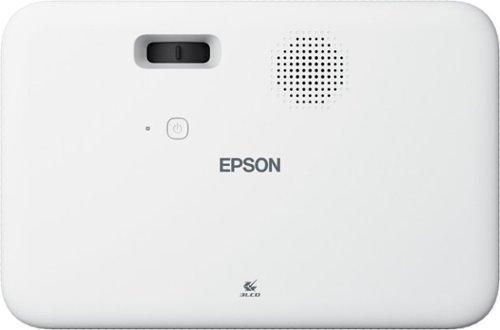
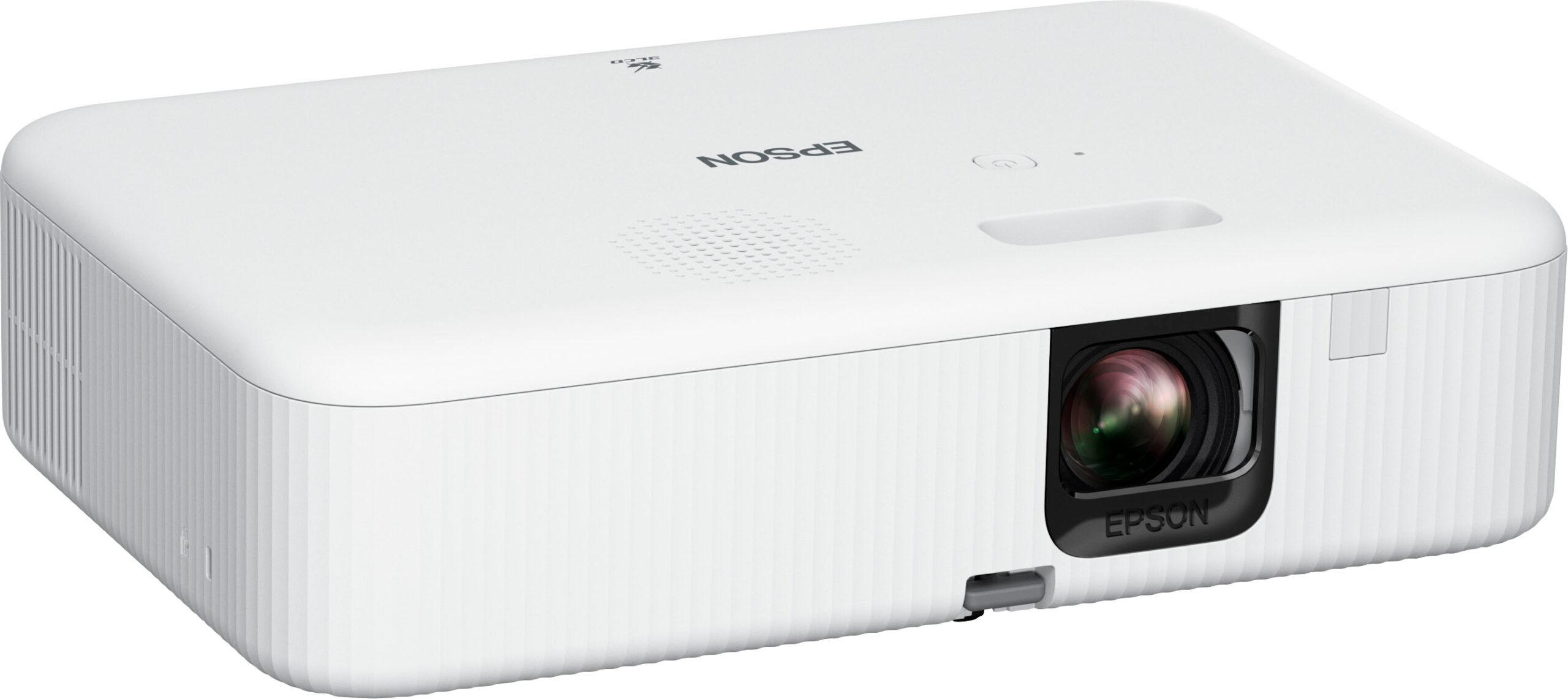
The design philosophies differ subtly: the BenQ has a more traditional projector look with its rectangular housing and front-facing lens, while the Epson sports a more modern, lifestyle-oriented design with rounded edges and a cleaner aesthetic that wouldn't look out of place in a contemporary living room.
Setting up a projector can be frustrating, particularly when dealing with off-center placement or uneven surfaces. Here, the Epson CO-FH02 offers significant advantages with its automatic vertical keystone correction (adjusting the image shape when the projector isn't perfectly level with the screen) and additional horizontal keystone adjustment. This allows for quicker, more flexible setup in imperfect environments.
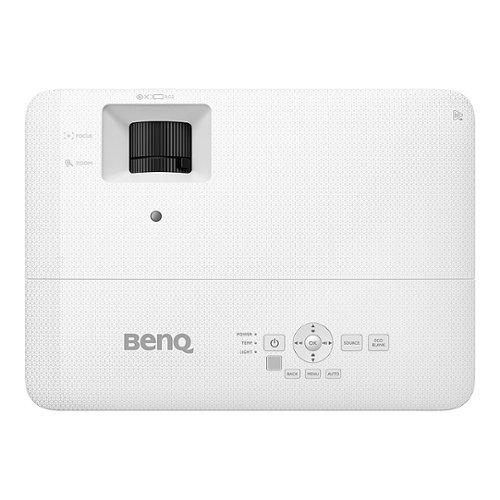
The BenQ TH685P provides vertical keystone correction (±40°) but requires manual adjustment. It does include a 1.3x zoom lens with manual focus, giving some flexibility in placement distance.
Both projectors offer similar throw ratios (the distance needed to project a given image size), with the BenQ requiring approximately 8.2 feet to project a 100-inch image, while the Epson needs about 8.5 feet for the same size. Neither falls into the "short throw" category that would allow placement very close to the wall or screen.
Recent years have seen increasing emphasis on automatic setup features in the projector market, with higher-end models now offering auto-focus and even automatic screen detection to simplify the setup process further.
Built-in audio is an area where most projectors struggle due to size constraints limiting speaker quality and power. Both the BenQ TH685P and Epson CO-FH02 feature 5W speaker systems that provide adequate sound for casual viewing but fall short of a dedicated audio setup.
The Epson's bass reflex speaker design gives it a slight edge in audio richness, while BenQ's Game Sound Mode offers tailored audio processing for gaming content. However, for a true home theater experience with either projector, you'll want to connect external speakers or a soundbar.
The Epson's Bluetooth audio output capability provides a convenient wireless option for connecting to external speakers without running audio cables, a feature the BenQ lacks. This can be particularly useful in temporary setups or rooms where cable management is challenging.
Audio technology in projectors has seen modest improvements since these models were released, with newer premium models increasingly featuring more powerful speakers and advanced audio processing, though dedicated audio systems still provide dramatically better performance.
Both projectors use traditional UHP (Ultra High Performance) lamps rather than the newer laser or LED light sources found in more expensive models. The BenQ TH685P offers impressive lamp longevity with up to 15,000 hours in its eco mode (LampSave), while the Epson CO-FH02 provides up to 12,000 hours in its ECO mode.
To put these numbers in perspective, even at 4 hours of use per day, these projectors should operate for 8-10 years before requiring a lamp replacement. When that time comes, replacement lamps typically cost $100-200, significantly less than upgrading to a new projector.
It's worth noting that lamp brightness diminishes gradually over time, typically losing 20-30% of its original brightness by the time it reaches half its rated lifespan. This is normal for all lamp-based projectors and represents a long-term consideration for ownership.
The Epson CO-FH02, with its 3LCD design, uses air filters that require periodic cleaning or replacement to maintain optimal cooling and performance. The BenQ TH685P, like many DLP projectors, has a sealed optical engine that doesn't require filter maintenance, potentially reducing long-term maintenance requirements.
When evaluating these projectors, it's important to consider what you're getting for your investment rather than simply looking at the price tags. The BenQ TH685P ($799-$899) commands a premium price compared to the Epson CO-FH02 ($599-$699), but delivers specialized gaming performance that justifies the cost for its target audience.
For serious gamers, particularly those playing competitive titles where responsiveness matters, the BenQ's ultra-low input lag and 120Hz refresh rate capabilities represent essential features worth the additional investment. The value proposition strengthens further if you already own streaming devices and don't need the integrated smart features of the Epson.
Conversely, for general entertainment users who prioritize convenience, built-in streaming, and occasional gaming, the Epson offers compelling value with its Android TV integration, superior color reproduction, and automatic setup features, all at a lower price point.
Choose the BenQ TH685P if:
Choose the Epson EpiqVision Flex CO-FH02 if:
For a dedicated home theater setup, neither projector represents the ultimate solution—both make compromises to achieve their respective goals of gaming performance or smart functionality and portability. Dedicated home theater enthusiasts might consider stepping up to models with higher native contrast, better color gamut coverage, and more advanced features like lens shift and superior optics.
However, for their intended purposes, both the BenQ TH685P and Epson EpiqVision Flex CO-FH02 deliver impressive performance and value. The BenQ excels as a dedicated gaming display with occasional movie duty, while the Epson shines as a versatile, user-friendly entertainment hub that can handle some casual gaming.
The choice ultimately comes down to your primary use case, existing equipment, and which set of compromises aligns better with your viewing habits and preferences. Either way, you'll be enjoying the immersive experience of a big-screen projection that simply can't be matched by even the largest televisions at these price points.
| BenQ TH685P 1080p HDR Gaming Projector | Epson EpiqVision Flex CO-FH02 Smart Portable Projector |
|---|---|
| Price - Initial investment consideration | |
| $799-$899 | $599-$699 |
| Display Technology - Impacts color accuracy and viewing experience | |
| DLP (single-chip) - Faster response, may cause rainbow effect | 3LCD (three-chip) - Better color accuracy, no rainbow effect |
| Brightness - Critical for viewing with ambient light | |
| 3,500 ANSI lumens - Excellent for lit rooms | 3,000 lumens (color and white) - Very good, measured over 3,200 in Dynamic mode |
| Resolution - Determines image clarity and detail | |
| 1920x1080 (Full HD) with HDR10 support | 1920x1080 (Full HD) |
| Input Lag - Crucial for responsive gaming | |
| 8.3ms at 120Hz, 16ms at 60Hz - Outstanding for competitive gaming | Not rated for gaming, likely 50+ms - Suitable for casual use only |
| Refresh Rate - Affects motion smoothness | |
| Up to 120Hz - Superior for fast-action gaming | Standard 60Hz |
| Smart Features - Convenience for content access | |
| None built-in, requires external streaming devices | Android TV built-in with access to Netflix, Disney+, etc. |
| Audio Capabilities - For standalone use without external speakers | |
| 5W mono speaker | 5W bass reflex speaker with Bluetooth audio output option |
| Connectivity - Flexibility for multiple devices | |
| 2 HDMI, USB, VGA inputs | 1 HDMI input, USB-A port, Wi-Fi and Bluetooth |
| Setup Features - Ease of positioning and alignment | |
| Manual zoom (1.3x), Manual focus, Vertical keystone (±40°) | No optical zoom, Automatic vertical keystone (±30°), Horizontal keystone (±30°) |
| Dimensions and Weight - Portability consideration | |
| 12.28" x 4.33" x 8.86", 6.2 lbs | 12.5" x 8.3" x 3.4", 5.7 lbs - Slightly more portable |
| Lamp Life - Long-term maintenance cost factor | |
| Up to 15,000 hours (LampSave mode) | Up to 12,000 hours (ECO mode), 6,000 hours (Normal mode) |
| Color Performance - Visual quality impact | |
| 95% Rec.709 color gamut, 10-bit color processing | Not specified, but 3LCD typically offers better color saturation than comparable DLP |
| Contrast Ratio - Affects image depth and black levels | |
| 10,000:1 - Good for gaming, moderate for movies | Up to 16,000:1 - Better for movie viewing |
| Best Use Case - Primary purpose assessment | |
| Serious gaming with occasional movie watching | All-purpose entertainment with built-in streaming and casual gaming |
The BenQ TH685P is significantly better for gaming with its 8.3ms input lag at 120Hz (16ms at 60Hz) and specialized gaming features. The Epson EpiqVision Flex CO-FH02 doesn't have gaming-specific optimizations and likely has input lag above 50ms, making it suitable only for casual gaming. If gaming is your priority, the BenQ TH685P is the clear choice with its Game Mode that enhances visibility in dark scenes and support for 120Hz refresh rate.
The Epson EpiqVision Flex CO-FH02 has far superior smart features with built-in Android TV, giving you direct access to Netflix, Disney+, YouTube, and thousands of other apps without needing external devices. The BenQ TH685P has no smart features built-in and requires connecting a streaming device like a Roku, Apple TV, or gaming console to access content. If easy streaming is important to you, the Epson CO-FH02 offers much better convenience.
Both projectors offer excellent brightness, but the BenQ TH685P has a slight edge with 3,500 ANSI lumens compared to the Epson CO-FH02's 3,000 lumens. However, the Epson uses 3LCD technology that produces equal color and white brightness, while DLP projectors like the BenQ sometimes have lower color brightness than their rated white brightness. In real-world use, both projectors perform well in rooms with some ambient light, though the BenQ TH685P may maintain slightly better image visibility in brighter conditions.
The Epson EpiqVision Flex CO-FH02 typically offers better color accuracy for movies due to its 3LCD technology, which naturally produces more vibrant, accurate colors with equal color and white brightness. The BenQ TH685P covers 95% of the Rec.709 color space, which is good but not exceptional. For movie enthusiasts concerned with color accuracy, the Epson CO-FH02 will generally provide a more satisfying viewing experience with richer colors.
The Epson EpiqVision Flex CO-FH02 is easier to set up with its automatic vertical keystone correction and additional horizontal keystone adjustment, allowing for quick alignment even when the projector isn't perfectly positioned. It's also slightly lighter at 5.7 pounds versus the BenQ TH685P's 6.2 pounds. The BenQ offers manual adjustments only, requiring more time to perfect the image. For users who frequently move their projector between locations, the Epson CO-FH02 offers more convenient setup.
The BenQ TH685P typically costs between $799-$899, while the Epson EpiqVision Flex CO-FH02 is more affordable at $599-$699. The $200 price difference reflects the BenQ's specialized gaming features and higher brightness rating. Whether the premium is worth it depends on your priorities—gamers will likely find the BenQ TH685P worth the extra cost, while general entertainment users might prefer the better value of the Epson CO-FH02.
Neither projector offers exceptional audio, but the Epson EpiqVision Flex CO-FH02 has a slight advantage with its 5W bass reflex speaker system that produces somewhat richer sound. The BenQ TH685P has a standard 5W mono speaker. More importantly, the Epson also offers Bluetooth audio output, allowing you to connect wireless speakers or headphones without extra cables. For a proper home theater experience, external speakers are recommended with either projector, but the Epson CO-FH02 provides more flexible audio options.
For watching sports, the BenQ TH685P has an advantage with its higher brightness (3,500 ANSI lumens) and excellent motion handling due to its DLP technology, which prevents motion blur during fast-moving action. The Epson CO-FH02 is still very capable with sports content, but may not maintain the same clarity during the fastest action sequences. If you primarily watch sports in rooms with ambient light (like daytime viewing parties), the BenQ TH685P might provide a slightly better experience.
The BenQ TH685P offers longer lamp life with up to 15,000 hours in its LampSave mode, compared to the Epson CO-FH02's 12,000 hours in ECO mode. The BenQ also has a sealed optical engine that doesn't require filter maintenance, while the Epson's 3LCD design includes air filters that need periodic cleaning or replacement. For longer-term ownership with minimal maintenance, the BenQ TH685P has a slight advantage.
Yes, both the BenQ TH685P and Epson EpiqVision Flex CO-FH02 can connect to modern gaming consoles via HDMI. However, the BenQ offers significant advantages for console gaming with its low input lag and support for 120Hz refresh rate on PS5 and Xbox Series X/S. The BenQ also has two HDMI ports compared to the Epson's single port, allowing you to connect multiple consoles simultaneously. Serious console gamers will have a much better experience with the BenQ TH685P.
For a dedicated home theater movie experience, the Epson EpiqVision Flex CO-FH02 generally provides better image quality with its 3LCD technology delivering more accurate colors and better contrast (16,000:1 vs. the BenQ's 10,000:1). It also includes built-in streaming, eliminating the need for external devices. The BenQ TH685P offers HDR support, which can enhance movie content, but its primary strengths are gaming-focused. For pure movie enthusiasts, the Epson CO-FH02 typically provides a more cinematic experience.
Both projectors have similar throw ratios, requiring about 8-9 feet to project a 100-inch image, but the Epson EpiqVision Flex CO-FH02 offers more flexibility in placement thanks to its automatic keystone correction in both vertical and horizontal directions. It's also slightly smaller and lighter (5.7 lbs vs. 6.2 lbs). The BenQ does offer a 1.3x zoom lens, providing some adjustment range. For tight spaces where perfect placement might be challenging, the Epson CO-FH02 adapts more easily to non-ideal positioning, making it better suited for small apartments.
We've done our best to create useful and informative comparisons to help you decide what product to buy. Our research uses advanced automated methods to create this comparison and perfection is not possible - please contact us for corrections or questions. These are the sites we've researched in the creation of this article: youtube.com - projectorcentral.com - androidguys.com - bhphotovideo.com - techradar.com - newegg.com - projectorcentral.com - cnet.com - staples.com - cdw.com - youtube.com - shi.com - touchboards.com - projectorcentral.com - youtube.com - iconicmicro.com - adorama.com - publicsector.shidirect.com - adorama.com - expertreviews.co.uk - projectorcentral.com - youtube.com - bestbuy.com - specsradar.com - techwalls.com - cnet.com - epson.com - youtube.com - projectorreviews.com - epson.com - abt.com - youtube.com - cnet.com - techgearlab.com - staples.com - bestbuy.com - bestbuy.com - projectorcentral.com - bhphotovideo.com - dell.com - latin.epson.com - specsradar.com - projectorcentral.com - officedepot.com - files.support.epson.com - walmart.com - adorama.com - epson.com

Privacy Policy
Terms and Conditions - Affiliate Policy
Home Security
© Copyright 2008-2026.
11816 Inwood Rd #1211, Dallas, TX 75244