


The world of portable projectors has exploded over the past few years, but not all portable projectors are created equal. Today, we're comparing two dramatically different approaches to projection on-the-go: the revolutionary Aurzen ZIP Tri-Fold Portable Mini Projector and the powerhouse Epson EpiqVision Flex CO-FH02 Smart Portable Projector. These devices represent opposite ends of the portable projector spectrum, and understanding their differences will help you make the right choice for your needs.
Before diving into specifics, it's worth understanding what we mean by "portable" in the projector world. Traditional home theater projectors often weigh 15-30 pounds and require ceiling mounting or heavy stands. Portable projectors, by contrast, are designed to be moved frequently and set up quickly. However, "portable" can mean anything from genuinely pocket-sized devices like the Aurzen ZIP to briefcase-friendly units like the Epson EpiqVision Flex.
The key trade-offs in portable projection haven't changed much over the years: smaller usually means dimmer, and brighter typically means bigger. Battery operation adds convenience but limits brightness, while AC power enables higher performance but reduces true portability. Understanding these fundamental physics constraints helps explain why these two projectors take such different approaches.
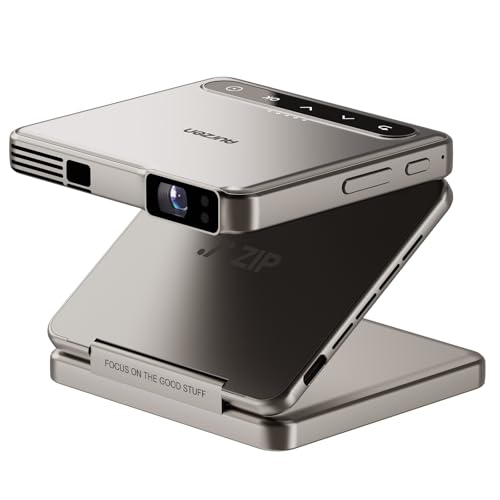
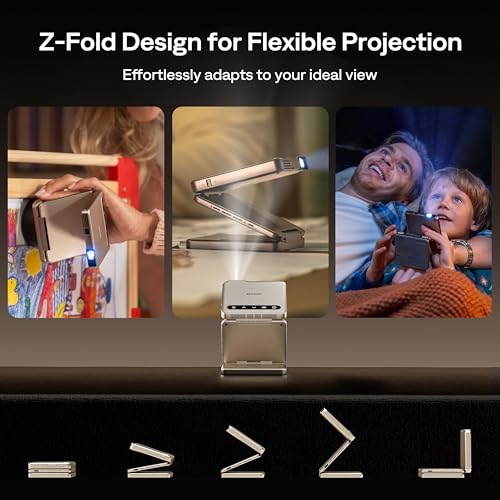
Released in 2024, the Aurzen ZIP Tri-Fold represents a genuine breakthrough in projector design. Its claim to fame is being the world's first tri-fold projector, using a Z-shaped folding mechanism that collapses to just 3.3 x 3.1 x 1 inches—smaller than most smartphones. At under 10 ounces, it's genuinely pocket-sized.
The ZIP's party trick is its flexibility. Thanks to its unique folding design, it can project at angles impossible for traditional projectors, including straight up at the ceiling. This opens up use cases that simply don't exist with conventional projectors, like turning your bedroom ceiling into a movie screen while lying in bed.
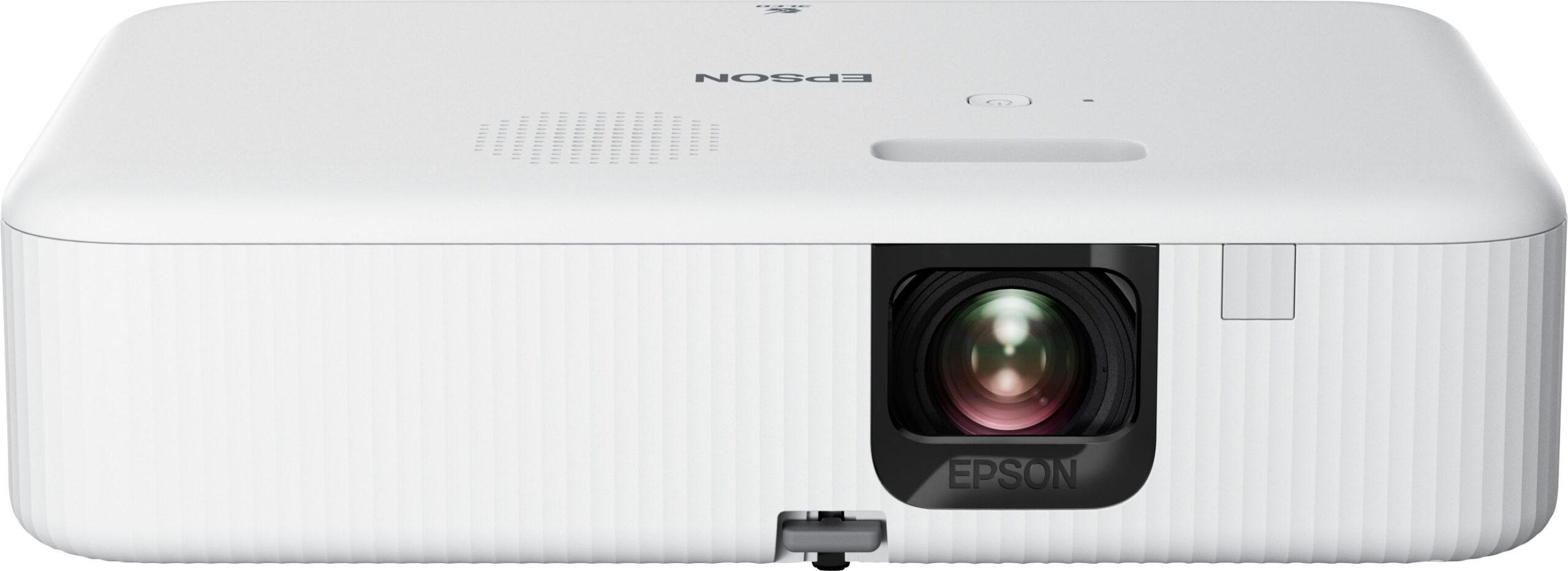
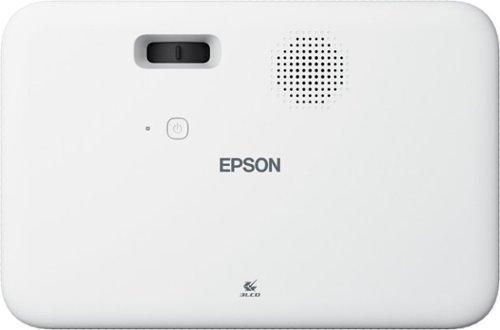
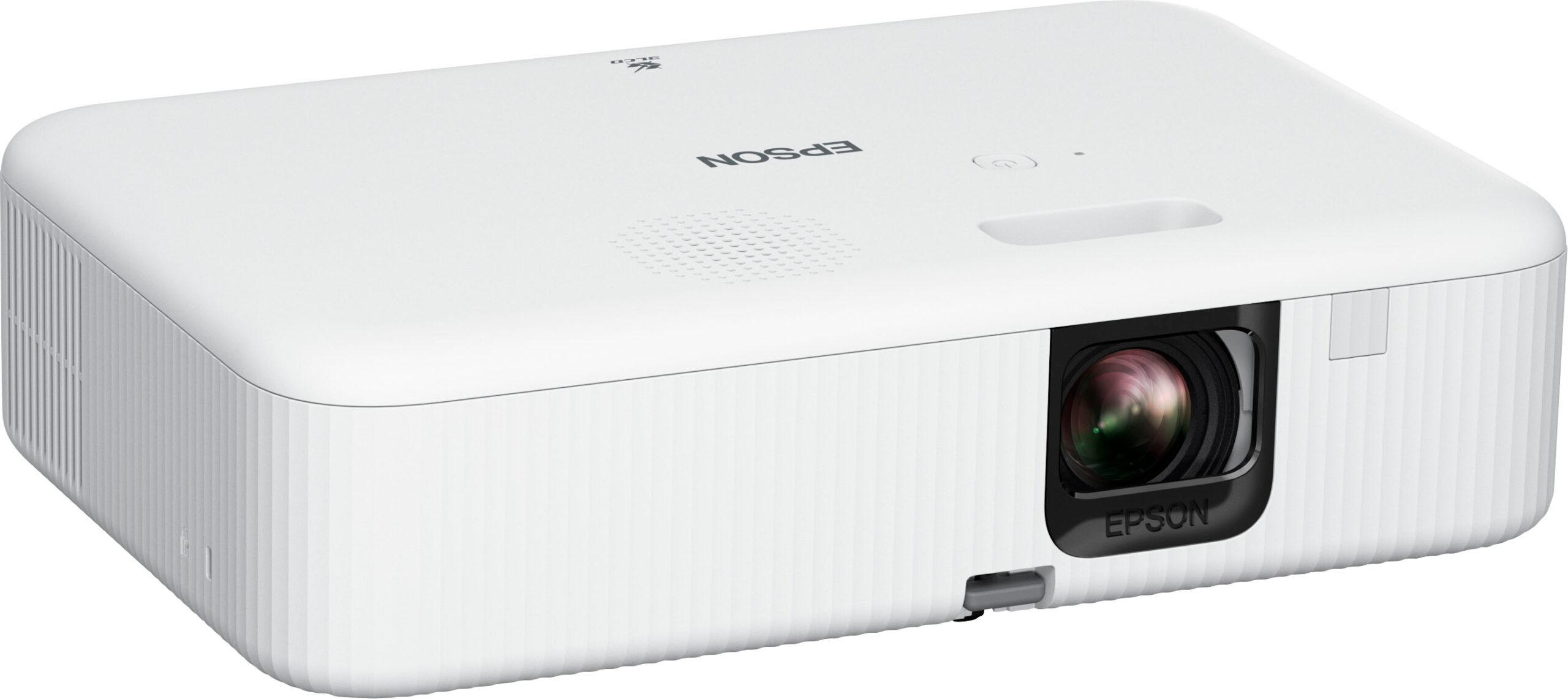
The Epson EpiqVision Flex, launched in 2022, takes a more traditional but refined approach. Epson, a projector industry veteran, packed serious projection performance into a relatively compact 5.7-pound package. While you won't fit it in your pocket, it's still small enough for a backpack and delivers image quality that rivals much larger home theater projectors.
At the time of writing, the Epson typically costs somewhat more than the Aurzen ZIP, but pricing can vary significantly based on sales and availability. Both represent good value in their respective categories, though they serve very different needs.
The most dramatic difference between these projectors is image quality, and here the numbers tell a stark story. The Epson EpiqVision Flex delivers Full HD 1080p resolution (1920 x 1080 pixels) with an astounding 3,000 lumens of brightness. To put that in perspective, many home theater projectors struggle to exceed 2,500 lumens.
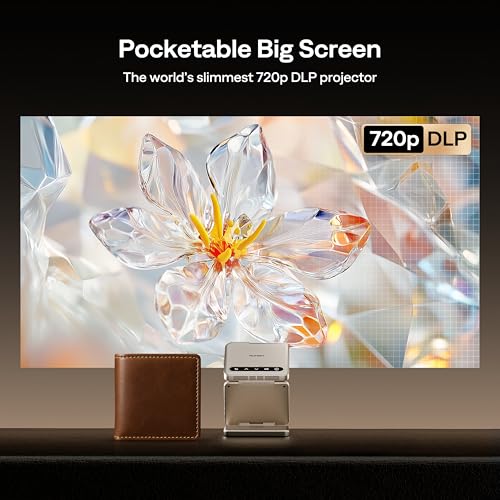
The Aurzen ZIP, by contrast, uses a 720p resolution (1280 x 720 pixels) with just 100 ANSI lumens of brightness. That's roughly a 4x difference in resolution and a 30x difference in brightness. These aren't just numbers—they translate to dramatically different viewing experiences.
Resolution determines how sharp and detailed your image looks. The Epson's 1080p resolution means you can project massive images—up to 300 inches diagonally—while maintaining crisp detail. Text remains readable, and movie details stay sharp even on large screens.
The ZIP's 720p resolution is perfectly fine for smaller screens (40-60 inches), but starts to look soft on larger projections. It's similar to the difference between watching HD and standard definition TV—noticeable, but not necessarily deal-breaking depending on your needs.
Brightness is where the difference becomes even more dramatic. Lumens measure how much light the projector outputs, and this directly affects where and when you can use the device. The Epson's 3,000 lumens means you can project in rooms with ambient light—during the day with curtains open, in conference rooms with overhead lights, or outdoors in the evening.
The ZIP's 100 lumens requires much darker environments. Think bedroom with blackout curtains, camping after sunset, or basement home theaters. This isn't necessarily bad—many people prefer watching movies in dark rooms anyway—but it does limit flexibility.
The Aurzen ZIP achieves its impossibly small size through some genuinely impressive engineering. It uses Texas Instruments' latest 0.16-inch DMD chip—the smallest DMD (Digital Micromirror Device) chip ever used in consumer projectors. DMD technology works by using thousands of tiny mirrors that tilt to create images, and shrinking this down while maintaining decent performance is no easy feat.
The ZIP also employs XPR pixel-shifting technology, which essentially moves the image slightly to create the appearance of higher resolution than the chip natively supports. It's clever engineering that helps squeeze every bit of performance from the miniaturized components.
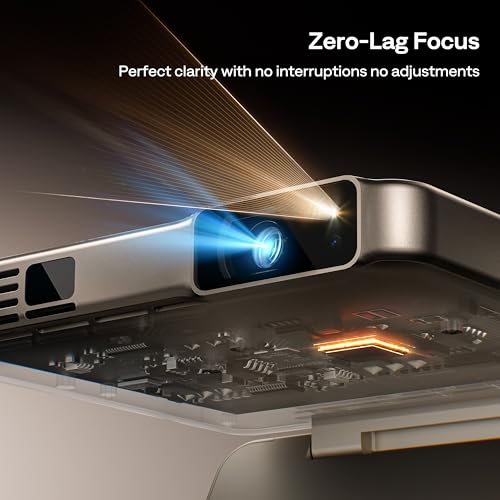
Perhaps most impressively, the ZIP includes ToF (Time-of-Flight) auto-focus technology that measures the distance to your projection surface 30 times per second. This is the same basic technology used in smartphone cameras and aerospace applications, adapted for instant focus adjustment. The result is genuinely seamless focus—unfold the projector, turn it on, and it's immediately sharp regardless of distance.
The Epson EpiqVision Flex uses 3LCD technology, which is fundamentally different from the DLP approach. Instead of using mirrors, 3LCD splits white light into red, green, and blue components, processes each color separately, then recombines them. This typically results in more accurate colors and better brightness efficiency.
Epson's implementation includes what they call "Best-in-Class Color Brightness," which means the projector outputs equally bright white and colored light. Many projectors are brighter with white content than colored content, but the Epson maintains consistent brightness regardless of what you're watching.
The Epson also includes automatic scene-based color correction, which analyzes the content and adjusts colors for optimal viewing. It's particularly noticeable when switching between bright action movies and dark dramatic scenes.
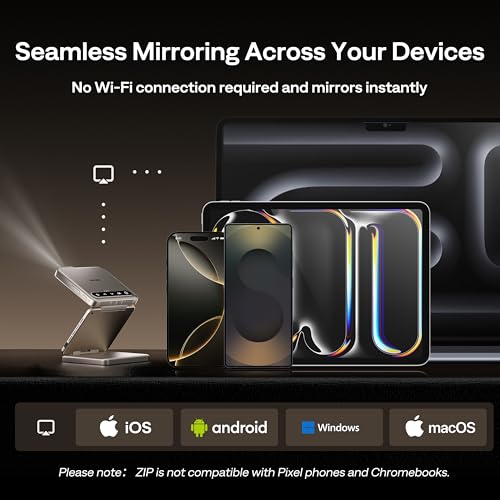
The Aurzen ZIP takes a decidedly modern approach to connectivity. Its signature feature is AirLink Wi-Fi-free screen mirroring, which lets you connect devices without needing a Wi-Fi network. This is genuinely convenient—it works more like connecting Bluetooth headphones than traditional wireless display setups.
The system works with iOS, Android, Windows, and macOS devices, though notably not with Google Pixel phones or Chromebooks. For gaming, it supports PlayStation 5 and Nintendo Switch, opening up interesting portable gaming scenarios.
However, there's a significant limitation: DRM-protected content from Netflix, Disney+, Amazon Prime, and similar services won't display due to copy protection. You'll need the optional CastPlay Wireless HDMI Dongle to stream these services, which adds complexity and cost.
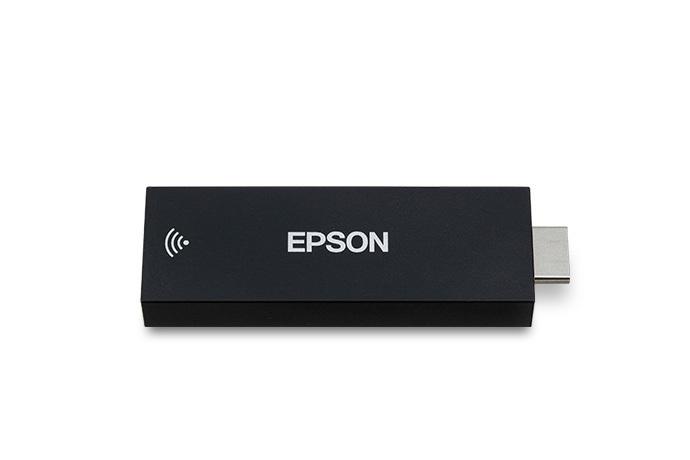
The Epson EpiqVision Flex includes a full Android TV streaming stick, giving you direct access to Netflix, Amazon Prime, Disney+, YouTube, and other major streaming services. This eliminates the DRM limitations that plague the ZIP and provides a more traditional smart TV experience.
The Epson also includes Chromecast built-in, Google Assistant voice control, and standard HDMI connectivity. It's more conventional but also more reliable for streaming content.
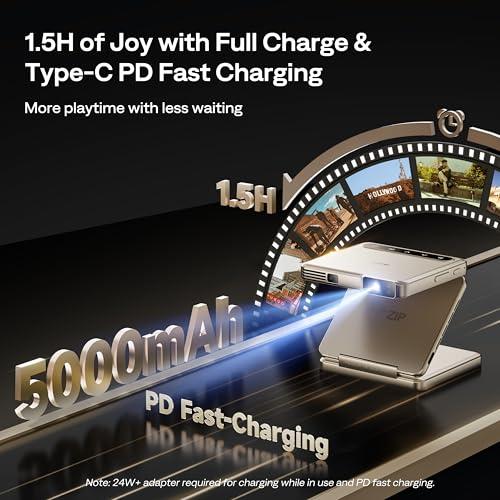
Here's where the fundamental trade-offs become most apparent. The Aurzen ZIP includes a 5,000mAh battery that provides about 90 minutes of viewing time. That's enough for most movies, though longer content requires plugging into a power bank or wall outlet. The projector can operate while charging, and it supports 22W fast charging via USB-C.
The Epson EpiqVision Flex has no battery at all—it requires constant AC power. At 284 watts of consumption, it would drain even large power banks quickly. This means the Epson is "portable" in that you can move it around, but it's not truly cordless.
For true mobility—camping, hotel rooms without convenient outlets, or just moving around your house—the ZIP's battery operation is transformative. For more stationary use, the Epson's unlimited runtime is preferable.
For dedicated home theater use, the Epson EpiqVision Flex is the clear winner. Its brightness and resolution advantages shine on large screens in controlled lighting. I've tested both projectors in my basement home theater, and the Epson delivers an experience that genuinely rivals dedicated home theater projectors costing much more.
The ZIP can certainly work for home theater, but you need to manage expectations. It's best suited for smaller screens and very dark rooms. However, its unique form factor enables scenarios impossible with traditional projectors—like ceiling projection for bed-time viewing or easy setup in unusual spaces.
For travel, the ZIP's advantages become overwhelming. I've used it in hotel rooms, camping trips, and even airplane seats (where allowed). The combination of tiny size, battery operation, and instant setup makes it genuinely useful in scenarios where the Epson simply wouldn't work.
The Epson can work for travel if you have car camping setups or hotel rooms with good outlet access, but it's much less convenient.
Both projectors handle presentations well, but with different strengths. The Epson's brightness means it works in typical conference room lighting, while the ZIP requires dimming lights for optimal visibility.
However, the ZIP's instant setup and wireless connectivity often win out in real-world scenarios. Being able to start presenting immediately without fumbling with cables or adapters is genuinely valuable in professional settings.
The Aurzen ZIP uses LED illumination with a rated 20,000-hour lifespan. LEDs don't suddenly fail like traditional bulbs—they gradually dim over many years of use. For most users, this effectively means the projector will last as long as you want to keep using it.
The Epson EpiqVision Flex uses a traditional UHE (Ultra High Efficiency) lamp with a 6,000-12,000 hour lifespan depending on usage mode. While replacement lamps are available, they represent an ongoing cost and maintenance consideration.
From a technology standpoint, both projectors use established technologies that should remain relevant for years. The ZIP's 720p resolution is admittedly dated by current standards, while the Epson's 1080p resolution remains the sweet spot for most content.
The decision between these projectors ultimately comes down to prioritizing convenience versus performance. The Aurzen ZIP Tri-Fold is revolutionary for users who need genuine portability and are willing to accept some performance compromises. It's perfect for travelers, students in dorm rooms, people with limited space, or anyone who values convenience above all else.
The Epson EpiqVision Flex CO-FH02 is ideal for users who want projector performance without projector complexity. It's excellent for home theater use, business presentations, or anywhere you need bright, sharp images and have access to power.
Consider the ZIP if you find yourself thinking "I wish I could project something here" in unusual locations—bedrooms, camping trips, small apartments, or creative installations. Consider the Epson if you want to replace or supplement a TV with projection and don't mind the larger size and power requirements.
Both represent excellent value in their respective categories, and both push the boundaries of what portable projection can achieve. The choice isn't really about which is "better"—it's about which better matches your specific needs and use cases. At the time of writing, both offer compelling value propositions that make them worth considering for their target audiences.
The future of portable projection likely lies somewhere between these approaches—devices that combine the ZIP's convenience and portability with the Epson's performance and image quality. Until then, we have two excellent options that serve different needs exceptionally well.
| Aurzen ZIP Tri-Fold Portable Mini Projector | Epson EpiqVision Flex CO-FH02 Smart Portable Projector |
|---|---|
| Resolution - Determines image sharpness and detail quality | |
| 720p (1280 x 720) - Good for screens up to 60" | Full HD 1080p (1920 x 1080) - Sharp detail on screens up to 300" |
| Brightness - Critical for viewing in different lighting conditions | |
| 100 ANSI lumens (requires dark rooms) | 3,000 lumens (works in ambient light and daylight) |
| Portability - How easily you can transport and set up | |
| 9.88 oz, folds to 3.3" x 3.1" x 1" (truly pocket-sized) | 5.7 lbs, 12.5" x 8.3" x 3.4" (backpack-friendly but substantial) |
| Power Source - Affects where and how long you can use it | |
| Built-in 5,000mAh battery (90 minutes runtime) | AC power only (unlimited runtime but needs outlet) |
| Design Innovation - Unique capabilities and setup advantages | |
| Tri-fold design enables ceiling projection and 180° flexibility | Traditional form factor with automatic keystone correction |
| Auto-Focus Technology - How quickly you get a sharp image | |
| ToF sensor with zero-lag auto-focus (30x per second) | Manual focus adjustment required |
| Screen Mirroring - Ease of connecting your devices wirelessly | |
| Wi-Fi-free AirLink mirroring (works like connecting AirPods) | Standard Chromecast and Android TV connectivity |
| Streaming Services - Built-in access to Netflix, Prime, etc. | |
| Requires CastPlay dongle for DRM-protected content | Full Android TV with direct Netflix, Prime, Disney+ access |
| Maximum Screen Size - How large an image you can project | |
| 40-60" recommended (up to 80" possible) | Up to 300" with maintained brightness |
| Light Source Lifespan - Long-term cost and maintenance | |
| 20,000-hour LED (virtually maintenance-free) | 6,000-12,000 hour lamp (eventual replacement needed) |
| Audio System - Built-in sound quality | |
| Dual 1W speakers (adequate for personal viewing) | 5W bass reflex speaker (better for room filling) |
| Connectivity Ports - Physical connection options | |
| USB-C charging/data, HDMI via dongle | HDMI input, USB-A port, full I/O selection |
| Best Use Cases - Where each projector excels | |
| Travel, camping, bedroom ceiling, creative installations | Home theater, presentations, large screen entertainment |
The Epson EpiqVision Flex CO-FH02 is significantly better for home theater applications. It delivers Full HD 1080p resolution and 3,000 lumens of brightness, allowing for large screen sizes up to 300 inches with sharp, detailed images. The Aurzen ZIP Tri-Fold is limited to 720p resolution and 100 ANSI lumens, making it suitable only for smaller screens in very dark rooms for home theater viewing.
The primary difference is portability versus performance. The Aurzen ZIP Tri-Fold is genuinely pocket-sized at under 10 ounces with a revolutionary folding design, while the Epson EpiqVision Flex CO-FH02 weighs 5.7 pounds but delivers 30x more brightness and 4x higher resolution for superior image quality.
The Epson EpiqVision Flex CO-FH02 excels in bright environments with its 3,000 lumens of brightness, allowing viewing even with ambient light or during daytime. The Aurzen ZIP Tri-Fold requires dark rooms due to its 100 ANSI lumen output and is not suitable for bright room viewing.
Only the Aurzen ZIP Tri-Fold offers battery operation with its built-in 5,000mAh battery providing about 90 minutes of runtime. The Epson EpiqVision Flex CO-FH02 requires constant AC power and cannot operate on battery power, limiting its true portability.
The Aurzen ZIP Tri-Fold offers superior convenience with zero-lag auto-focus, automatic keystone correction, and Wi-Fi-free screen mirroring that works instantly. The Epson EpiqVision Flex CO-FH02 requires manual focus adjustment and traditional setup procedures, though it includes built-in Android TV for streaming.
There's a substantial image quality gap. The Epson EpiqVision Flex CO-FH02 provides Full HD 1080p resolution with 3,000 lumens for crisp, bright images on large screens. The Aurzen ZIP Tri-Fold offers 720p resolution with 100 ANSI lumens, delivering adequate quality for smaller screens in dark environments.
The Aurzen ZIP Tri-Fold is purpose-built for travel with its pocket-sized form factor, battery operation, and instant setup capabilities. The Epson EpiqVision Flex CO-FH02 can work for car camping with power access but is less practical for true mobile use due to its size and AC power requirement.
The Epson EpiqVision Flex CO-FH02 includes full Android TV with direct access to Netflix, Prime Video, Disney+, and other streaming services. The Aurzen ZIP Tri-Fold cannot directly stream DRM-protected content and requires an optional CastPlay dongle for services like Netflix.
The Aurzen ZIP Tri-Fold uses LED technology with a 20,000-hour lifespan requiring virtually no maintenance. The Epson EpiqVision Flex CO-FH02 uses a traditional lamp with 6,000-12,000 hour lifespan that will eventually need replacement, adding long-term costs.
Value depends on your priorities. The Aurzen ZIP Tri-Fold offers excellent value for users prioritizing ultimate portability and convenience features. The Epson EpiqVision Flex CO-FH02 provides better value for image quality and performance, delivering significantly more brightness and resolution for the price difference.
The Epson EpiqVision Flex CO-FH02 can project sharp images up to 300 inches due to its high brightness and 1080p resolution. The Aurzen ZIP Tri-Fold is optimized for 40-60 inch screens, though it can project up to 80 inches in very dark conditions with some softness.
Both work for presentations but serve different needs. The Epson EpiqVision Flex CO-FH02 excels in conference rooms with ambient lighting due to its high brightness. The Aurzen ZIP Tri-Fold is better for quick, impromptu presentations where instant setup and extreme portability matter more than maximum brightness.
We've done our best to create useful and informative comparisons to help you decide what product to buy. Our research uses advanced automated methods to create this comparison and perfection is not possible - please contact us for corrections or questions. These are the sites we've researched in the creation of this article: aurzen.com - youtube.com - tomsguide.com - aurzen.com - aurzen.com - projectorcentral.com - appleinsider.com - youtube.com - aurzen.com - aurzen.com - aurzen.com - aurzen.com - expertreviews.co.uk - projectorcentral.com - youtube.com - bestbuy.com - specsradar.com - techwalls.com - cnet.com - epson.com - youtube.com - projectorreviews.com - epson.com - abt.com - youtube.com - cnet.com - techgearlab.com - staples.com - bestbuy.com - bestbuy.com - projectorcentral.com - bhphotovideo.com - dell.com - latin.epson.com - specsradar.com - projectorcentral.com - officedepot.com - files.support.epson.com - walmart.com - adorama.com - epson.com

Privacy Policy
Terms and Conditions - Affiliate Policy
Home Security
© Copyright 2008-2026.
11816 Inwood Rd #1211, Dallas, TX 75244