

Portable projectors have come a long way from the bulky, dim business presentation tools of the past. Today's models can genuinely replace your TV for many situations, delivering surprisingly good image quality in packages you can actually carry around. But with so many options available, choosing the right one can be overwhelming. Today, I'm comparing two very different approaches to portable projection: the cutting-edge XGIMI MoGo 4 released in 2025, and the brightness-focused Epson EpiqVision Flex CO-FH02 from 2022.
These projectors represent fundamentally different philosophies in portable projection technology, and understanding their strengths will help you make the right choice for your specific needs.
Before diving into the specifics, let's talk about what actually matters in a portable projector. The most important considerations are brightness (measured in lumens - essentially how much light the projector can output), image quality, true portability (including battery life), smart features, and audio performance.
Brightness is arguably the most critical factor because it determines where and when you can actually use your projector. A dim projector might work fine in a completely dark basement, but it'll be useless in a living room with windows or for backyard movie nights. However, brighter isn't always better - there's a balance between brightness, battery life, heat generation, and cost.
Image quality goes beyond just resolution. Color accuracy, contrast (the difference between the darkest blacks and brightest whites), and sharpness all matter. A projector that can display vibrant reds and deep blacks will make your movies much more enjoyable than one that looks washed out.
True portability means more than just being lightweight. Does it have a built-in battery? How long does that battery last? Can you easily position it on different surfaces? These factors determine whether you'll actually take it places or if it'll end up as an expensive paperweight.
Smart features have become increasingly important as streaming has taken over. Having Netflix, YouTube, and other apps built right into the projector eliminates the need for external devices and makes setup much simpler.
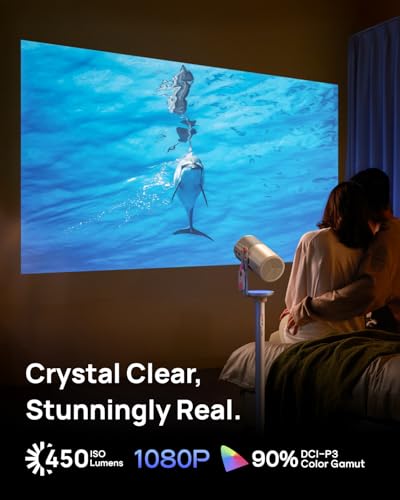
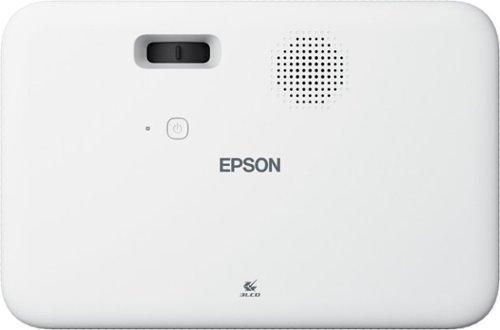
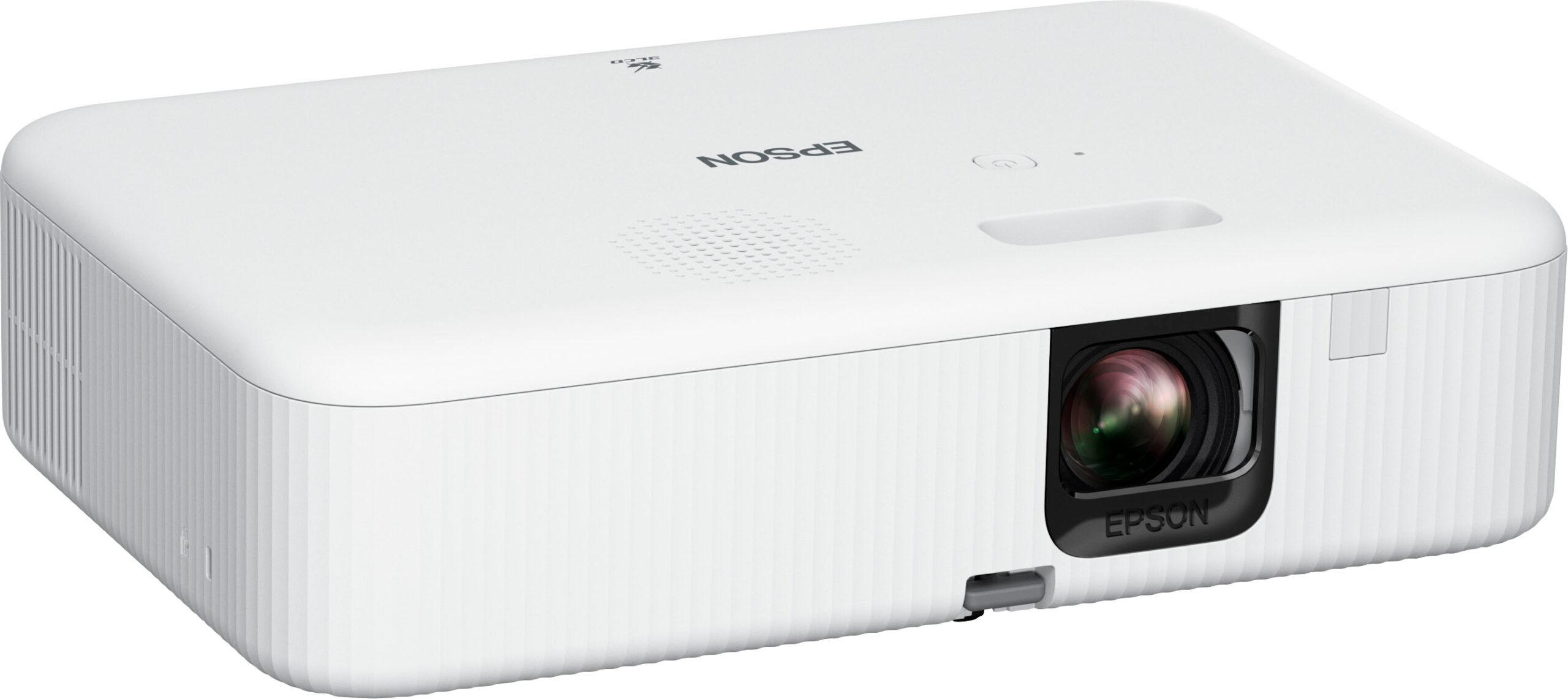
This is where these two projectors couldn't be more different. The Epson CO-FH02 delivers a massive 3,000 lumens of brightness using traditional 3LCD technology (a system that uses three separate LCD panels for red, green, and blue light), while the XGIMI MoGo 4 puts out 450 ISO lumens using modern LED technology.
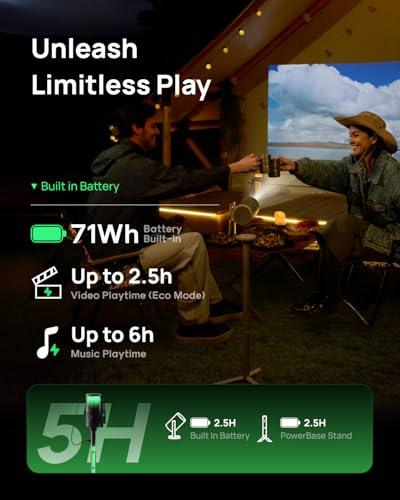
That might make it seem like the Epson is obviously better, but the reality is more nuanced. Those 3,000 lumens come with significant trade-offs. The Epson weighs 5.7 pounds and requires constant AC power, while the XGIMI MoGo 4 weighs just 2.9 pounds and runs on battery power for up to 2.5 hours (or 5 hours with the optional PowerBase Stand).
In practical terms, the Epson's brightness advantage is undeniable for certain situations. If you're giving presentations in bright conference rooms, teaching in classrooms with overhead lights, or want to watch movies outside during the day, those 3,000 lumens are genuinely necessary. I've used high-brightness projectors like this for outdoor events, and the difference is night and day - literally. You can actually see the image clearly even when there's ambient light.
However, for most home entertainment scenarios, the XGIMI MoGo 4's 450 lumens is perfectly adequate. This brightness level works well in dimmed rooms, bedrooms with curtains drawn, or evening outdoor use. The LED light source also provides instant-on capability (no waiting for a lamp to warm up) and better color accuracy than traditional lamp-based systems.
While brightness gets the headlines, image quality is where things get interesting. The XGIMI MoGo 4 uses DLP (Digital Light Processing) technology with an LED light source, covering 90% of the DCI-P3 color gamut. This technical specification means it can display 90% of the colors used in digital cinema, resulting in more vibrant and accurate colors than many traditional projectors.
The LED light source in the XGIMI MoGo 4 also provides better color consistency over time. Traditional lamp-based projectors like the Epson CO-FH02 gradually dim and shift color as their lamps age, requiring eventual replacement. LED systems maintain their performance throughout their lifespan.
The Epson CO-FH02 uses 3LCD technology, which has its own advantages. This system typically provides better color brightness (the amount of color information in bright scenes) and can produce more natural skin tones. Epson has been refining this technology for decades, and it shows in their color processing.
For home theater use, I'd actually lean toward the XGIMI MoGo 4 for pure image quality. The combination of accurate colors, good contrast, and consistent performance makes movies more enjoyable. However, if you're primarily using the projector for presentations with text and graphics, the Epson's higher brightness and sharp text rendering might be preferable.
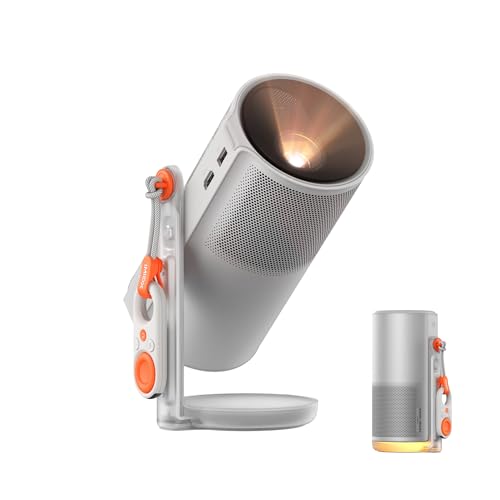
This is where the philosophical differences between these projectors become crystal clear. The XGIMI MoGo 4 is designed for true portability - it's roughly the size of a large water bottle and includes a built-in battery that provides 2.5 hours of video playback. You can literally throw it in a backpack and set up a movie night anywhere.
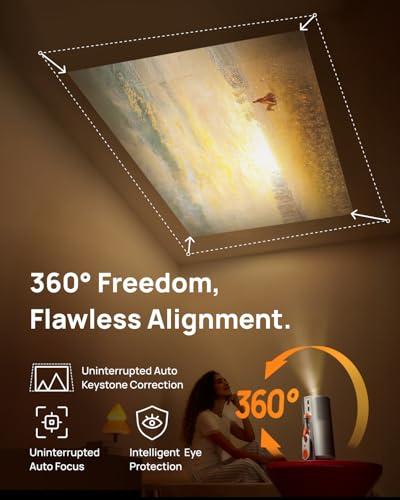
The 360-degree adjustable built-in stand is genuinely innovative. Most portable projectors require you to find a flat surface at the right height and angle, but the XGIMI MoGo 4 can project onto walls, ceilings, or any surface thanks to its flexible positioning and automatic keystone correction (which automatically adjusts the image to appear rectangular even when projecting at an angle).
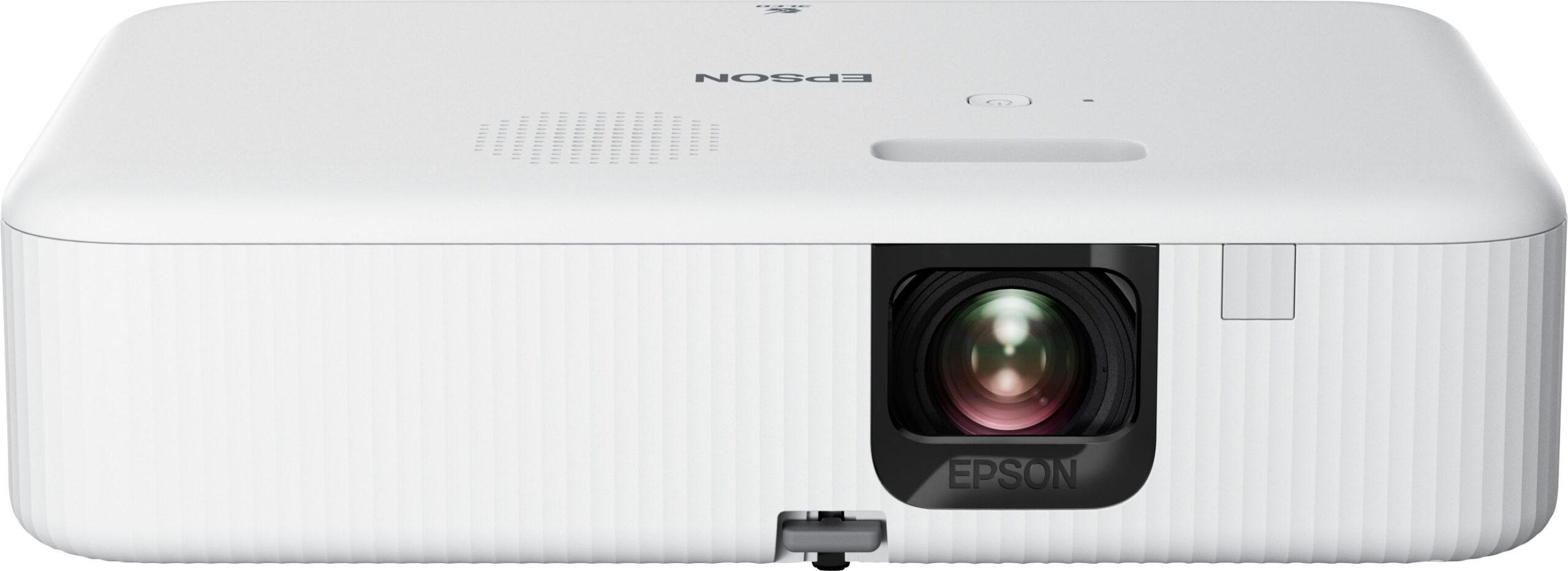
The Epson CO-FH02, while technically "portable," is more accurately described as "luggable." At 5.7 pounds and requiring AC power, it's something you might move between rooms or take to the office, but it's not coming with you on camping trips or to the park.
However, that weight comes with benefits. The Epson doesn't need to worry about battery life constraints, so it can run at full brightness indefinitely. For business users or anyone who primarily uses their projector in locations with power access, this isn't a limitation.
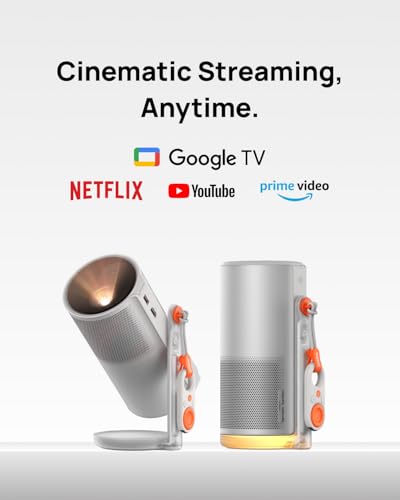
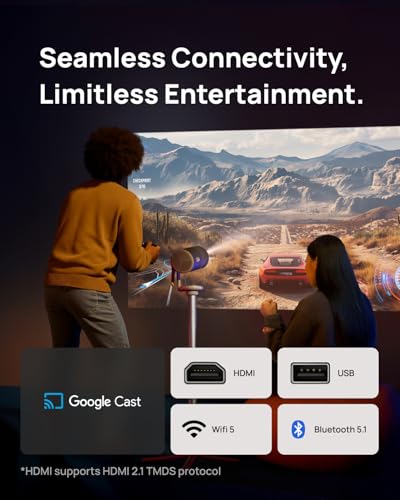
The streaming experience represents another fundamental difference in approach. The XGIMI MoGo 4 has Google TV built directly into the projector, including licensed Netflix access and over 10,000 apps. This means you can turn it on and immediately start watching content without any external devices.
This integration is genuinely convenient. Having used projectors with built-in streaming platforms, the simplicity is remarkable. No extra cables, no additional remotes, no worrying about HDMI compatibility issues. You literally just turn it on and start watching.
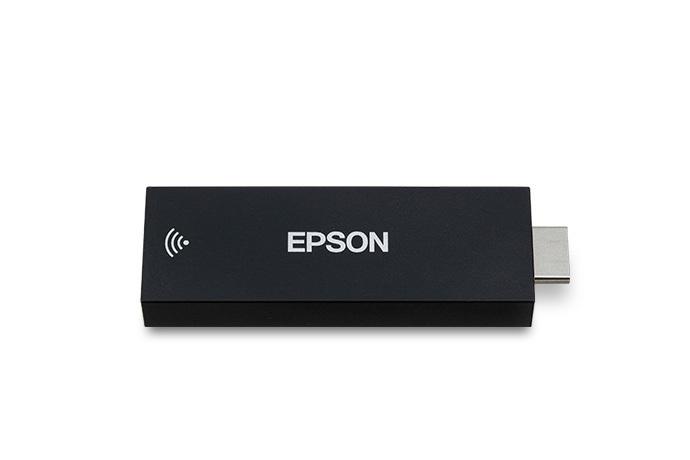
The Epson CO-FH02 takes a different approach, including a separate Android TV streaming stick. While this still provides access to streaming services, it adds complexity - another device to manage, additional cables, and potential compatibility issues.
For home theater setups, the XGIMI's integrated approach is clearly superior. For business use, where you might need to connect laptops or other devices regularly, the Epson's external approach might actually be preferable since you're not locked into one streaming platform.
Audio performance is often overlooked in projector comparisons, but it's crucial for the overall experience. The XGIMI MoGo 4 includes dual 6W Harman Kardon speakers, totaling 12W of audio power from a premium audio brand. The Epson CO-FH02 has a single 5W bass reflex speaker.
The difference is immediately noticeable. The XGIMI's speakers provide much richer sound with better bass response and clearer dialogue. For movie watching, this makes a significant difference in immersion. The projector can even function as a Bluetooth speaker when not projecting, adding versatility.
Both projectors support Bluetooth audio output, so you can connect external speakers if needed. However, having good built-in audio eliminates the need for additional devices in many situations.
Gaming on projectors has become increasingly popular, especially for casual gaming and streaming services like Xbox Game Pass. The XGIMI MoGo 4 includes a dedicated game mode with input latency as low as 56ms (some sources suggest even lower at ≤20ms with certain settings). This is acceptable for casual gaming but not quite fast enough for competitive gaming where every millisecond counts.
The Epson CO-FH02 doesn't specify gaming-optimized latency figures, suggesting it's not primarily designed with gaming in mind. For business presentations and movies, input lag isn't critical, but it becomes noticeable when gaming.
If gaming is important to you, the XGIMI MoGo 4 is clearly the better choice, though dedicated gaming projectors or TVs will still outperform both options.
Setting up a projector can be frustrating, but the XGIMI MoGo 4 makes it remarkably simple. The ISA (Intelligent Screen Adaptation) technology automatically handles focus and keystone correction, meaning you can literally just turn it on and point it at a wall. The 360-degree stand allows projection onto ceilings, walls, or any surface without manual adjustments.
The Epson CO-FH02 requires more manual setup. You'll need to position it properly, manually adjust keystone correction (up to ±30 degrees), and potentially deal with focus adjustments. This isn't necessarily bad - some users prefer manual control - but it's less convenient for quick setup.
For home theater use, the XGIMI's automatic features are genuinely helpful. You can mount it on a ceiling, place it on a coffee table, or even use it for unconventional setups without fighting with manual adjustments.
This is where the technology differences really matter long-term. The XGIMI MoGo 4's LED light source is rated for around 30,000 hours of use and doesn't require replacement. The Epson CO-FH02's lamp is rated for up to 12,000 hours in eco mode but will eventually need replacement at a cost of several hundred dollars.
LED systems also maintain consistent brightness and color accuracy throughout their lifespan, while lamps gradually dim and shift color as they age. For long-term ownership, LED projectors like the XGIMI have lower total cost of ownership despite potentially higher upfront costs.
The Epson CO-FH02 was released in 2022, representing the mature end of traditional lamp-based portable projector technology. It's a refined product that does what it does very well, but the fundamental technology hasn't changed dramatically in recent years.
The XGIMI MoGo 4, released in 2025, represents the current state-of-the-art in portable projection. It incorporates years of advancement in LED technology, battery efficiency, smart platform integration, and automated setup features. The three-year gap between these products is significant in technology terms.
This technological evolution is important to consider. While the Epson offers proven reliability, the XGIMI includes features that make it more future-proof and user-friendly.
For dedicated home theater use, both projectors have merits but serve different scenarios. The XGIMI MoGo 4 excels in secondary viewing spaces - bedrooms, basements, or anywhere you want flexibility. Its battery operation means you can use it outdoors for summer movie nights or in rooms without convenient power access.
The Epson CO-FH02 works better as a primary projector replacement in brighter rooms or for larger audiences. If your home theater space has ambient light issues or you regularly host movie nights for many people, the higher brightness becomes essential.
For most people setting up a casual home theater, I'd recommend the XGIMI MoGo 4. The combination of excellent image quality, convenient setup, and true portability makes it more versatile for different viewing scenarios.
Choose the XGIMI MoGo 4 if you want a truly portable entertainment device that can go anywhere. It's perfect for people who travel frequently, live in smaller spaces, or want the flexibility to watch movies in bed, outside, or wherever inspiration strikes. The superior audio, automatic setup, and built-in streaming make it ideal for casual home entertainment.
Choose the Epson CO-FH02 if maximum brightness is your priority. This projector excels in business environments, classrooms, or any situation where you need to overcome ambient light. It's also better for very large projection sizes or primary home theater setups in bright rooms.
At the time of writing, both projectors occupy different value positions in the market. The XGIMI MoGo 4 typically commands a premium price for its advanced features and latest technology, while the Epson CO-FH02 offers exceptional brightness at a more accessible price point.
The XGIMI provides better value for versatility and modern features, while the Epson offers better value for pure brightness per dollar. Your choice should depend on which aspects matter most for your intended use.
These projectors serve genuinely different needs, and both excel in their intended roles. The XGIMI MoGo 4 represents the future of portable projection - intelligent, versatile, and truly mobile. The Epson CO-FH02 delivers traditional projector strengths - maximum brightness and reliability - in a portable package.
For most consumers seeking a versatile portable projector for home entertainment, the XGIMI MoGo 4 is the better choice. Its combination of good image quality, true portability, excellent audio, and smart features makes it more useful in day-to-day scenarios. However, if your primary need is maximum brightness for challenging lighting conditions, the Epson CO-FH02 remains an excellent option that delivers exceptional performance in its specialized role.
The choice ultimately comes down to prioritizing versatility and modern convenience versus maximum brightness and traditional reliability.
| XGIMI MoGo 4 Portable Projector 2025 | Epson EpiqVision Flex CO-FH02 Smart Portable Projector |
|---|---|
| Brightness - Critical for usability in different lighting conditions | |
| 450 ISO lumens (good for dimmed rooms, evening use) | 3,000 lumens (excellent for bright rooms, daytime viewing) |
| Weight & Portability - Determines true mobility | |
| 2.9 lbs with built-in battery (truly portable) | 5.7 lbs, requires AC power (luggable but not mobile) |
| Battery Life - Essential for untethered use | |
| 2.5 hours video (up to 5 hours with PowerBase Stand) | No battery - requires constant AC power |
| Smart Features - Affects ease of use and content access | |
| Built-in Google TV with licensed Netflix, 10,000+ apps | Separate Android TV streaming stick included |
| Audio Quality - Important for complete entertainment experience | |
| Dual 6W Harman Kardon speakers (12W total) | Single 5W bass reflex speaker |
| Setup Convenience - How easy it is to get watching | |
| 360° adjustable stand with auto focus/keystone correction | Manual keystone correction (±30°), requires positioning |
| Light Source Technology - Affects longevity and maintenance | |
| LED (30,000+ hour lifespan, no lamp replacement) | Traditional lamp (12,000 hours, eventual replacement needed) |
| Gaming Performance - Matters for interactive entertainment | |
| Game mode with ≤56ms latency | No gaming-specific optimizations listed |
| Maximum Screen Size - How big you can go | |
| Up to 120" (optimal viewing experience) | Up to 300" (better for large audiences) |
| Color Performance - Affects image quality and vibrancy | |
| 90% DCI-P3 color gamut with LED accuracy | Good color with 3LCD technology, traditional lamp consistency |
| Best Use Cases - Who should choose each projector | |
| Home entertainment, travel, bedroom viewing, outdoor evenings | Business presentations, bright rooms, large audiences, daytime outdoor use |
The Epson EpiqVision Flex CO-FH02 is significantly brighter with 3,000 lumens compared to the XGIMI MoGo 4's 450 ISO lumens. This makes the Epson much better for bright rooms, conference rooms, and daytime outdoor use. The XGIMI MoGo 4 works well in dimmed rooms and evening settings but struggles with ambient light.
The XGIMI MoGo 4 is far more portable, weighing just 2.9 pounds with a built-in battery that lasts 2.5 hours. You can truly take it anywhere without needing power outlets. The Epson CO-FH02 weighs 5.7 pounds and requires constant AC power, making it more suitable for moving between fixed locations rather than true mobility.
Yes, both have streaming capabilities but with different approaches. The XGIMI MoGo 4 has Google TV built directly into the projector with licensed Netflix and over 10,000 apps. The Epson CO-FH02 includes a separate Android TV streaming stick that you connect via HDMI. The XGIMI offers a more seamless, integrated experience.
The XGIMI MoGo 4 has superior audio with dual 6W Harman Kardon speakers (12W total) compared to the Epson CO-FH02's single 5W speaker. The XGIMI delivers richer sound, better bass, and can even function as a Bluetooth speaker when not projecting.
The XGIMI MoGo 4 is much easier to set up thanks to its 360° adjustable built-in stand and automatic focus/keystone correction. You can literally point it at any surface and it adjusts automatically. The Epson CO-FH02 requires manual positioning and keystone correction, making setup more time-consuming.
Only the XGIMI MoGo 4 has battery power, providing 2.5 hours of video playback (up to 5 hours with the optional PowerBase Stand). The Epson CO-FH02 requires constant AC power and cannot operate on battery, limiting its portability for outdoor or remote use.
For most home theater scenarios, the XGIMI MoGo 4 is better due to its superior color accuracy, excellent audio, and convenient setup. It's perfect for bedrooms, basements, or flexible viewing spaces. However, if your home theater has significant ambient light or you need very large screen sizes, the Epson CO-FH02's higher brightness becomes essential.
The XGIMI MoGo 4 has a dedicated game mode with input latency as low as 56ms, making it suitable for casual gaming. The Epson CO-FH02 doesn't specify gaming optimizations, suggesting it's not designed primarily for gaming use. For serious gaming, the XGIMI is the better choice.
The XGIMI MoGo 4 will last longer with less maintenance due to its LED light source rated for 30,000+ hours with no lamp replacement needed. The Epson CO-FH02 uses a traditional lamp rated for 12,000 hours that will eventually need replacement, adding to long-term ownership costs.
The XGIMI MoGo 4 supports up to 120-inch screens for optimal viewing quality, while the Epson CO-FH02 can project up to 300 inches. However, the Epson's higher brightness makes it more practical for very large screens, especially in rooms with ambient light.
Value depends on your needs. The XGIMI MoGo 4 offers better value for versatile home entertainment with premium features like Harman Kardon audio, battery operation, and smart integration. The Epson CO-FH02 provides better value if you prioritize maximum brightness per dollar for business use or bright room viewing.
For evening outdoor movie nights, the XGIMI MoGo 4 is ideal due to its battery power, easy setup, and good image quality in darker conditions. For daytime outdoor viewing, the Epson CO-FH02's higher brightness is necessary, but you'll need access to AC power. The XGIMI is more practical for most outdoor entertainment scenarios.
We've done our best to create useful and informative comparisons to help you decide what product to buy. Our research uses advanced automated methods to create this comparison and perfection is not possible - please contact us for corrections or questions. These are the sites we've researched in the creation of this article: projectorcentral.com - whathifi.com - us.xgimi.com - whathifi.com - global.xgimi.com - youtube.com - us.xgimi.com - youtube.com - youtube.com - thesmarthomehookup.com - global.xgimi.com - hometechnologyreview.com - projectorcentral.com - youtube.com - us.xgimi.com - expertreviews.co.uk - projectorcentral.com - youtube.com - bestbuy.com - specsradar.com - techwalls.com - cnet.com - epson.com - youtube.com - projectorreviews.com - epson.com - abt.com - youtube.com - cnet.com - techgearlab.com - staples.com - bestbuy.com - bestbuy.com - projectorcentral.com - bhphotovideo.com - dell.com - latin.epson.com - specsradar.com - projectorcentral.com - officedepot.com - files.support.epson.com - walmart.com - adorama.com - epson.com

Privacy Policy
Terms and Conditions - Affiliate Policy
Home Security
© Copyright 2008-2026.
11816 Inwood Rd #1211, Dallas, TX 75244