

The world of portable projectors has transformed dramatically in recent years. What once meant lugging around a briefcase-sized device that barely worked in anything but complete darkness has evolved into sleek, smart-enabled devices that can stream Netflix directly and project massive images from something the size of a hardcover book.
But here's the thing about portable projectors—there's still a fundamental trade-off between brightness and portability that defines the entire category. The brighter the projector, the bigger and more power-hungry it becomes. This creates two distinct camps: ultra-portable models that prioritize convenience but require dark rooms, and larger "portable" projectors that can handle ambient light but sacrifice true portability.
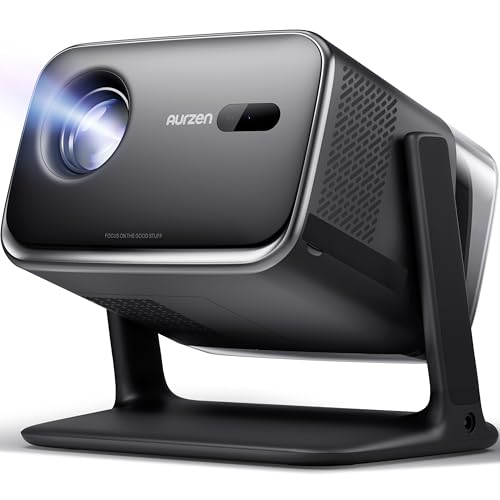
The Aurzen BOOM Mini Smart Projector Google TV and Epson EpiqVision Flex CO-FH02 represent these two philosophies perfectly. Released in 2023 and 2022 respectively, they showcase how projector technology has advanced to include built-in streaming platforms, automatic setup features, and significantly improved image quality—but they approach the brightness-versus-portability challenge in completely different ways.
When evaluating any projector, brightness is the most critical specification because it determines where and when you can actually use the device. Projector brightness is measured in lumens, which indicates how much light the device can output. But here's where it gets tricky—manufacturers often exaggerate brightness claims, so understanding the measurement standards matters.
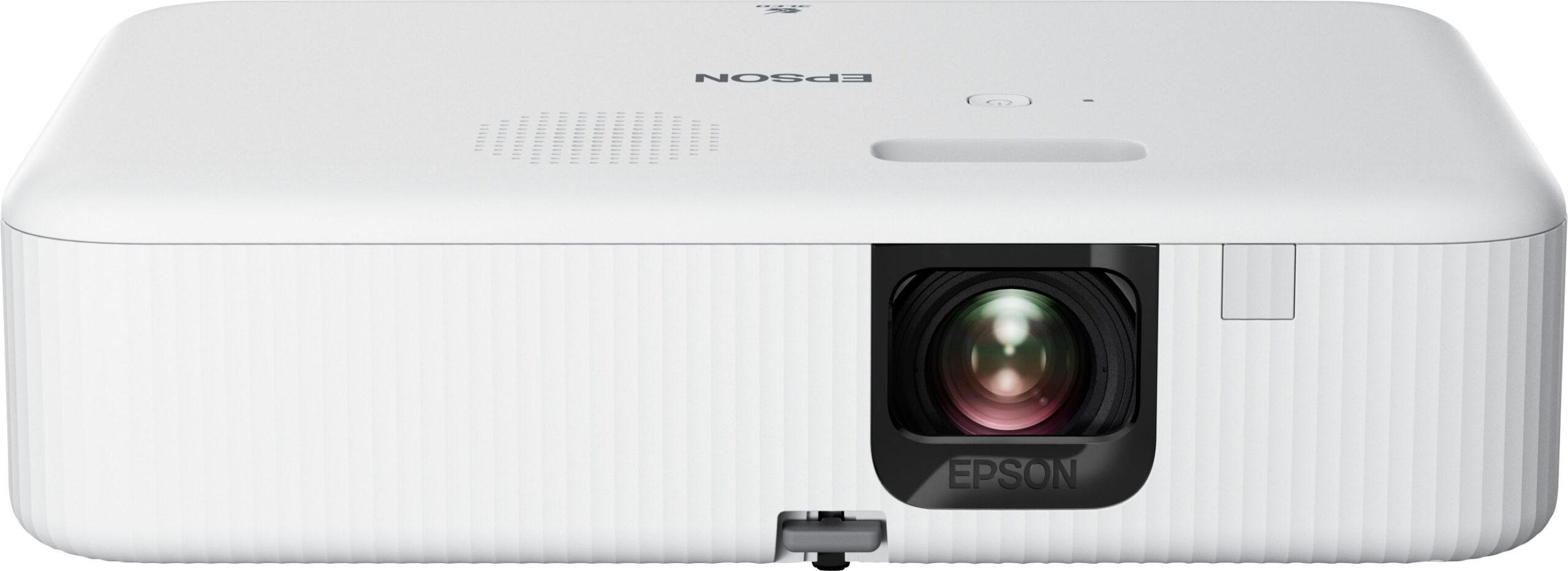
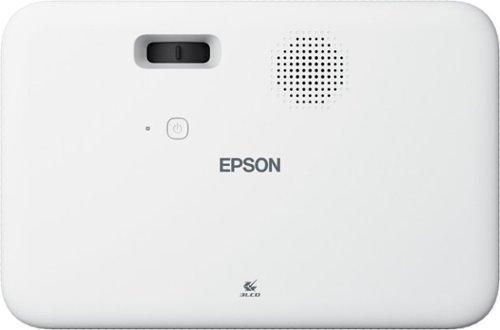
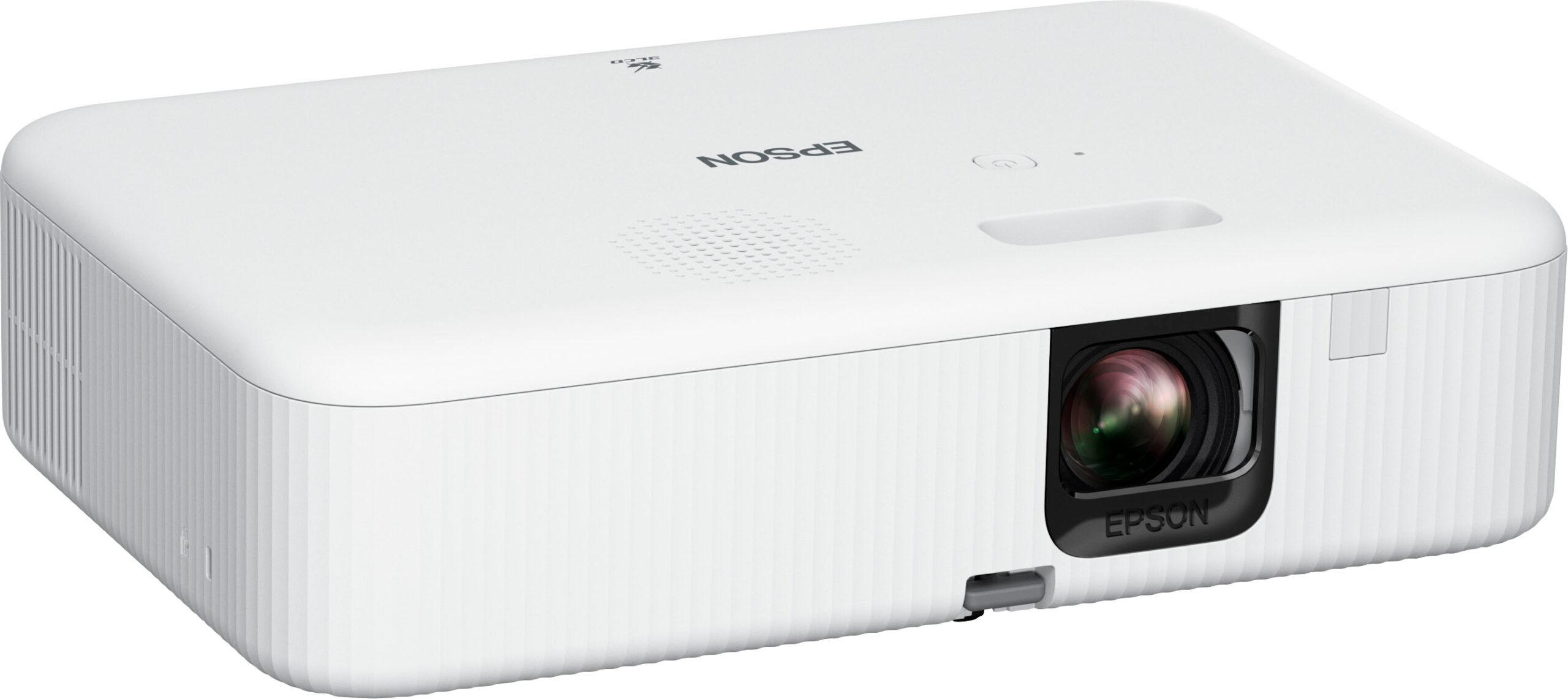
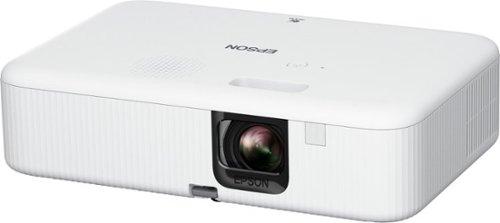
The Epson EpiqVision Flex CO-FH02 delivers an impressive 3,000 lumens of both color and white brightness. This isn't marketing fluff—Epson uses industry-standard measurements, and independent testing has confirmed actual output between 2,094 and 3,261 lumens depending on the picture mode. That's genuinely bright enough for conference rooms with overhead lighting or living rooms with windows open during the day.
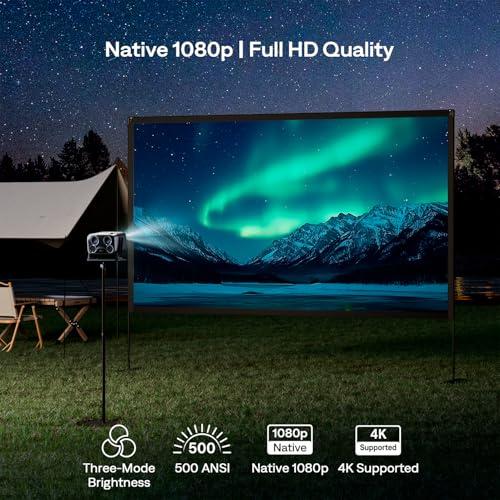
Compare that to the Aurzen BOOM Mini at 500 ANSI lumens (ANSI being the most reliable measurement standard). While 500 ANSI lumens represents good performance for an ultra-compact projector, it's still six times dimmer than the Epson. This means the Aurzen requires a dark or dim environment to produce a watchable image, while the Epson can power through significant ambient light.
To put this in perspective, a typical living room with lamps on might measure around 50-100 lux of ambient light. The Epson can easily overcome this, while the Aurzen would produce a washed-out, barely visible image. This brightness difference fundamentally changes how and when you can use each projector.
Both projectors deliver the same native 1080p resolution (1920x1080 pixels), which provides sharp, detailed images that look crisp on screens up to about 120 inches. However, resolution is just part of the image quality equation.
The Epson EpiqVision Flex CO-FH02 uses 3LCD technology, which is Epson's signature approach to projection. Unlike single-chip projectors that create colors sequentially (potentially causing rainbow artifacts), 3LCD uses three separate LCD panels—one each for red, green, and blue light. This creates more accurate colors and eliminates the rainbow effect some people notice with other projection technologies. The result is professional-grade color accuracy that's particularly noticeable in skin tones and natural scenes.
The contrast ratio tells another part of the story. The Epson's 12,000:1 contrast ratio means the difference between the brightest whites and darkest blacks is substantial, creating depth and punch in the image. The Aurzen BOOM Mini's 1,000:1 contrast ratio is more typical for LCD projectors in its price range, but it means less dramatic black levels and slightly flatter-looking images.
Both projectors support HDR (High Dynamic Range) content, which expands the range of colors and brightness levels beyond standard content. The Aurzen specifically supports HDR10 and HLG formats, while the Epson includes automatic scene-based color correction that adjusts the image based on content type.
For home theater use, the Epson clearly has the advantage in raw image quality. The 3LCD technology, higher contrast ratio, and superior brightness create a more cinema-like experience, especially on larger screens. However, the Aurzen holds its own in darker environments, and some users actually prefer its slightly warmer color tone for casual evening viewing.
Audio quality often gets overlooked when choosing projectors, but it's crucial since many people use the built-in speakers rather than setting up external audio systems. This is where the Aurzen BOOM Mini absolutely shines.
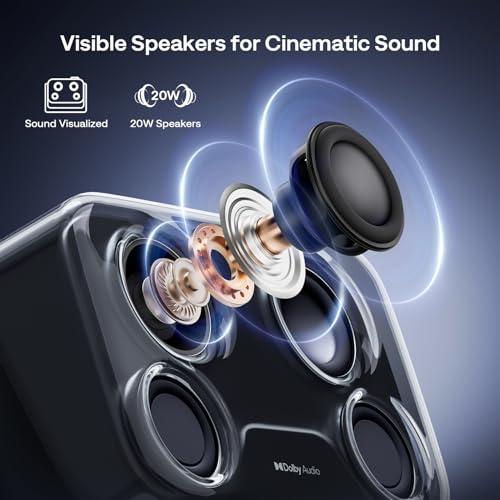
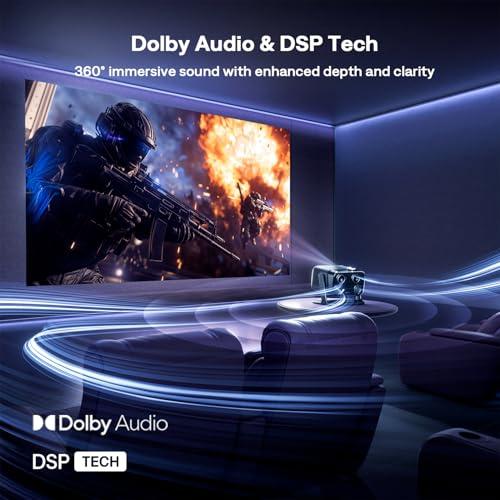
The Aurzen features dual 10-watt speakers (20 watts total) with Dolby Audio processing. These aren't just louder than typical projector speakers—they're positioned at the rear of the device, which helps disperse sound throughout the room rather than directing it toward the screen. The bass response is surprisingly robust for such a compact device, and the overall sound quality is good enough that you might not feel the need for external speakers in smaller rooms.
The rear-facing speaker design is particularly clever because it creates a more immersive audio experience. When you're sitting behind the projector (which is the typical setup), the sound comes toward you rather than away from you. This seems obvious, but many projectors get this wrong.
As a bonus feature, the Aurzen can function as a standalone Bluetooth speaker when not projecting, essentially giving you a high-quality wireless speaker for music listening. This adds genuine value and makes the device more versatile for different occasions.
The Epson EpiqVision Flex CO-FH02, by contrast, includes a single 5-watt mono speaker. It's adequate for presentations or casual viewing, but it lacks the depth and power for serious entertainment use. Most users will want to connect external speakers or a soundbar for the best experience, which adds to the overall system cost and complexity.
The integration of smart streaming platforms has revolutionized portable projectors, eliminating the need to connect laptops, streaming sticks, or other devices for most content. Both projectors offer smart functionality, but they take different approaches.
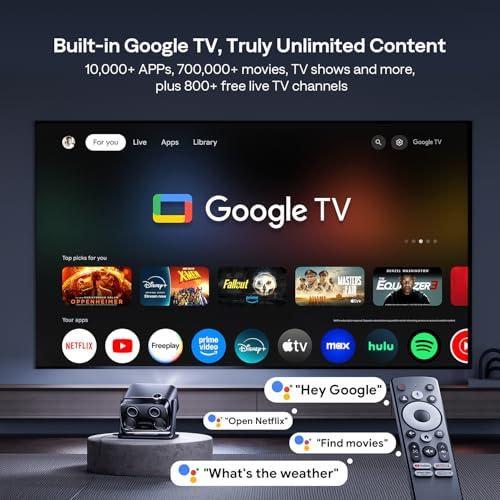
The Aurzen BOOM Mini includes official Google TV built directly into the projector, powered by 2GB of RAM and 16GB of internal storage. This isn't just Android TV with a different name—Google TV is Google's more advanced platform that provides personalized recommendations across all your streaming services. You get access to over 10,000 apps including official Netflix, Disney+, Hulu, YouTube, and others.
The integration feels seamless because everything runs on the projector itself. There's no external streaming stick to manage, no separate remote controls, and no additional power requirements. The Google Assistant integration allows hands-free voice control, and the Kids Mode provides parental controls and content filtering—features that show Aurzen is thinking about real-world family use.
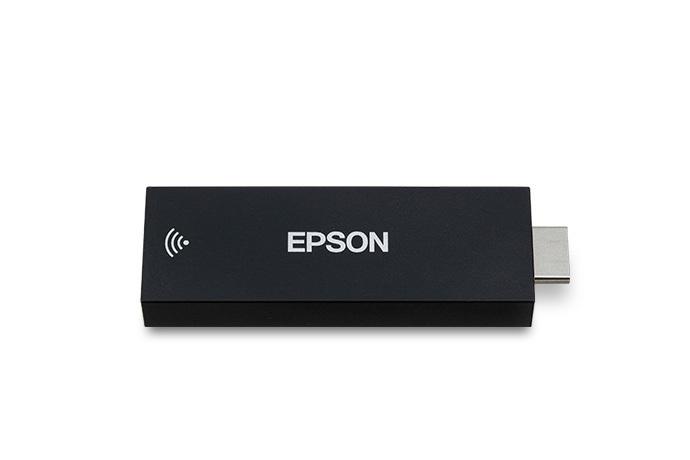
The Epson takes a different approach by including a separate Android TV streaming stick. While this adds complexity (another device to manage and power), it also provides flexibility. If streaming technology advances or the stick fails, you can replace just that component rather than the entire projector. The included stick supports Chromecast functionality and Google Assistant through the remote control.
From a practical standpoint, the Aurzen's integrated approach feels more modern and convenient for most users. You turn on the projector and immediately have access to all your streaming services without additional setup or devices. However, the Epson's modular approach might appeal to users who prefer more control over their streaming setup.
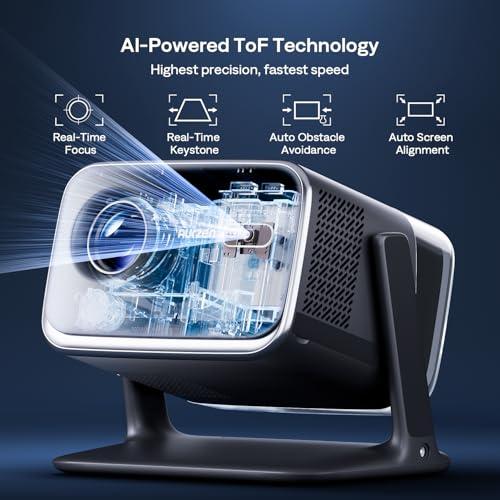
This is where the Aurzen BOOM Mini demonstrates some genuinely impressive technology that wasn't available in portable projectors just a few years ago. The real-time autofocus system uses ToF (Time-of-Flight) sensors to automatically adjust focus within about three seconds whenever the projector or screen moves. ToF sensors work by measuring how long light takes to bounce back from the projection surface, allowing the projector to calculate distance and adjust focus accordingly.
Similarly, the real-time keystone correction automatically fixes image distortion when the projector isn't perfectly aligned with the screen. Keystone distortion happens when you project at an angle, creating a trapezoid-shaped image instead of a rectangle. The Aurzen corrects both horizontal and vertical keystone distortion automatically, so you can place it almost anywhere and get a properly shaped image.
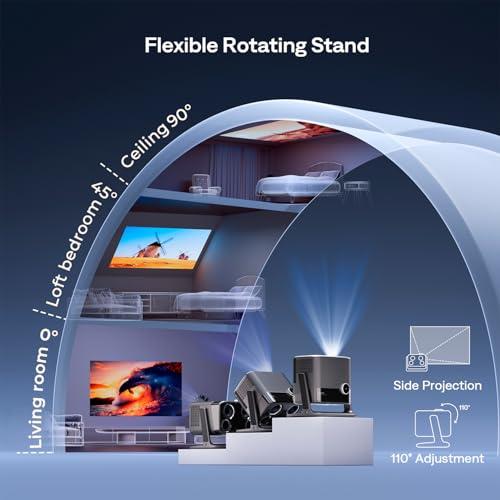
The 110-degree flexible stand is another thoughtful design element. Unlike tripods or fixed feet, this integrated stand allows projection onto walls, screens, or even ceilings without additional mounting hardware. The ceiling projection capability is particularly useful for bedroom viewing or small spaces where wall mounting isn't practical.
The Epson EpiqVision Flex CO-FH02 uses a more traditional approach with automatic vertical keystone correction (±30 degrees) but requires manual horizontal adjustment. There's no autofocus system, so you need to manually adjust the focus ring when moving the projector or changing distances. This isn't necessarily bad—manual controls can be more precise—but it requires more user intervention.
For daily use, the Aurzen clearly wins on convenience. You can literally grab it, place it somewhere new, turn it on, and have a properly focused, geometrically correct image within seconds. The Epson requires more traditional setup but offers the precision that some users prefer.
Both projectors offer comprehensive connectivity for 2023 standards, but with different strengths. The Aurzen BOOM Mini includes dual-band Wi-Fi (2.4GHz and 5GHz) for stable streaming, Bluetooth 5.1 for connecting wireless headphones or speakers, one HDMI input, two USB ports, and a 3.5mm audio output. The newer Bluetooth 5.1 standard provides better range and stability compared to older versions.
The Epson offers similar connectivity with dual-band Wi-Fi, Bluetooth 5.0, one HDMI input, and USB connectivity. Both projectors support wireless casting from smartphones and tablets, though the Aurzen uses Google Cast while the Epson includes Chromecast functionality through its streaming stick.
For most users, these connectivity options are sufficient. The single HDMI input on both devices might be limiting if you want to connect multiple devices permanently (like a gaming console and Apple TV), but the strong wireless capabilities and built-in streaming largely mitigate this limitation.
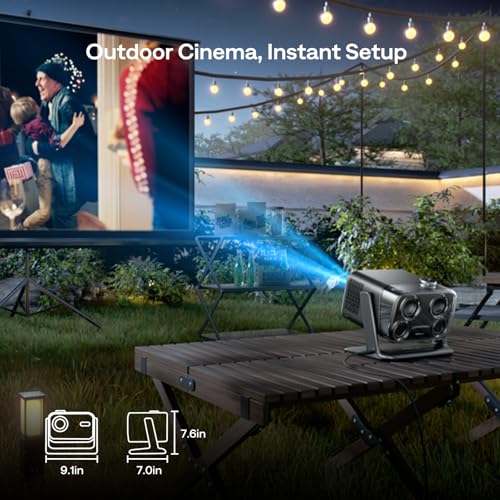
Here's where the philosophical differences become most apparent. The Aurzen BOOM Mini measures 9.1 × 7 × 7.6 inches and weighs about 4.7 pounds, making it genuinely portable. The cube-like design fits easily in backpacks or large bags, and the integrated stand means no additional accessories to carry.
The Epson at 12.5 × 8.3 × 3.4 inches and 5.7 pounds is still "portable" compared to traditional projectors, but it's noticeably larger and requires more planning for transport. The flatter profile might actually be more bag-friendly for some users, but you'll likely need additional mounting or positioning accessories.
Both projectors are quiet enough for home use, but the Aurzen operates at ≤36dB, which is genuinely whisper-quiet. You'll barely notice the fan noise even in quiet rooms. The Epson runs at 37dB in normal mode, which is still relatively quiet but more noticeable during quiet movie scenes.
The choice between these projectors ultimately depends on your primary use cases and environmental requirements.
Choose the Aurzen BOOM Mini Smart Projector Google TV if you want the closest thing to "grab and go" projection. It's ideal for bedroom entertainment, outdoor movie nights in dark conditions, apartment living where noise matters, frequent travel, or casual streaming where convenience trumps maximum image quality. The superior audio means you can enjoy movies without external speakers, and the ultra-quiet operation makes it suitable for late-night viewing.
The Aurzen is also perfect for families with children, thanks to the Kids Mode and genuinely simple setup. If someone in your house wants to watch something in a different room, they can literally pick up the projector, place it on a dresser or nightstand, and have entertainment ready in under a minute.
Choose the Epson EpiqVision Flex CO-FH02 if brightness and image quality are your primary concerns. It's the clear winner for business presentations, daytime viewing, large screen entertainment (200+ inches), educational settings, or any situation where ambient light can't be controlled. The professional-grade color accuracy and 3LCD technology create a more cinema-like experience for serious movie watching.
The Epson is also more versatile for different room sizes and lighting conditions. If you're planning to use the projector in various locations with different ambient light levels, the extra brightness provides crucial flexibility.
At the time of writing, both projectors represent good value in their respective categories, though they target different priorities. The Aurzen typically costs less than the Epson while offering more convenience features and superior audio. When you factor in not needing external speakers or mounting hardware, the total cost of ownership can be quite reasonable.
The Epson costs more upfront but delivers significantly more brightness and image quality per dollar. For users who need the brightness, there simply aren't many alternatives at this price point.
From a longevity perspective, the Aurzen's LED light source should last much longer than the Epson's traditional lamp, potentially 30,000 hours versus 6,000-12,000 hours. However, the Epson's modular streaming approach means you can upgrade the smart functionality without replacing the entire projector.
These two projectors represent different solutions to the portable projection challenge, and both succeed in their intended roles. The Aurzen BOOM Mini prioritizes convenience, modern features, and true portability, making it ideal for personal entertainment and situations where ease of use matters most. The Epson EpiqVision Flex CO-FH02 focuses on brightness and image quality, making it suitable for more demanding viewing conditions and larger audiences.
Neither projector is objectively "better"—they're optimized for different priorities. If you value convenience, quiet operation, and don't mind darker viewing environments, the Aurzen delivers an impressively modern and user-friendly experience. If you need brightness flexibility and professional-grade image quality, the Epson provides performance that was unthinkable in portable projectors just a few years ago.
The good news is that both projectors represent the current state of smart portable projection technology, with features and performance that would have been remarkable in larger, more expensive projectors not long ago. Whichever direction you choose, you're getting access to a genuinely useful and enjoyable entertainment device that can transform any space into a personal theater.
| Aurzen BOOM Mini Smart Projector Google TV | Epson EpiqVision Flex CO-FH02 Smart Portable Projector |
|---|---|
| Brightness - Most critical spec determining where you can use the projector | |
| 500 ANSI lumens (requires dark/dim rooms for good image quality) | 3,000 lumens (excellent for bright rooms, daytime use, and large screens) |
| Display Technology - Affects color accuracy and image quality | |
| LCD with LED light source (good colors, long-lasting LED) | 3LCD technology (professional-grade color accuracy, superior image quality) |
| Native Resolution - Image sharpness and detail | |
| 1920x1080 Full HD (crisp detail up to 120" screens) | 1920x1080 Full HD (crisp detail up to 120" screens) |
| Contrast Ratio - How deep blacks appear and overall image depth | |
| 1,000:1 (adequate contrast for the price point) | 12,000:1 (excellent blacks and image depth for cinematic viewing) |
| Audio System - Built-in sound quality and power | |
| Dual 10W speakers, 20W total with Dolby Audio (excellent sound, no external speakers needed) | Single 5W mono speaker (basic audio, external speakers recommended) |
| Smart Platform - Streaming capabilities and app access | |
| Built-in Google TV with 2GB RAM, 16GB storage (seamless Netflix, Disney+, 10,000+ apps) | Android TV via included streaming stick (good app selection, modular design) |
| Autofocus & Setup - Convenience for daily use | |
| Real-time autofocus with ToF sensors, auto keystone correction (completely automatic setup) | Manual focus, auto vertical keystone only (traditional projector setup required) |
| Portability - Size and weight for transport | |
| 9.1 × 7 × 7.6 inches, ~4.7 lbs (truly portable, fits in backpacks easily) | 12.5 × 8.3 × 3.4 inches, 5.7 lbs (portable but larger, requires planning for transport) |
| Noise Level - Important for bedroom and quiet room use | |
| ≤36dB ultra-quiet operation (whisper quiet, ideal for close viewing) | 37dB normal mode, 29dB eco mode (quiet but more noticeable) |
| Projection Size Range - Maximum screen size capabilities | |
| 40-200 inches (good for personal to medium group viewing) | Up to 300 inches (excellent for large audiences and big screen entertainment) |
| Connectivity - Ports and wireless capabilities | |
| HDMI x1, USB x2, dual-band Wi-Fi, Bluetooth 5.1 (modern connectivity) | HDMI x1, USB ports, dual-band Wi-Fi, Bluetooth 5.0 (standard connectivity) |
| Light Source Lifespan - Long-term ownership costs | |
| LED rated for 30,000+ hours (virtually maintenance-free) | UHE lamp 6,000-12,000 hours (eventual replacement needed) |
The Epson EpiqVision Flex CO-FH02 is significantly brighter at 3,000 lumens compared to the Aurzen BOOM Mini Smart Projector Google TV at 500 ANSI lumens. This makes the Epson much better for rooms with ambient light, while the Aurzen BOOM Mini requires darker environments for optimal viewing.
The Aurzen BOOM Mini Smart Projector Google TV has superior audio with dual 10W speakers (20W total) and Dolby Audio support, compared to the Epson EpiqVision Flex CO-FH02's single 5W mono speaker. The Aurzen provides much better sound quality without needing external speakers.
Yes, both projectors offer streaming capabilities. The Aurzen BOOM Mini has Google TV built directly into the projector with access to Netflix, Disney+, and 10,000+ apps. The Epson EpiqVision Flex CO-FH02 includes an Android TV streaming stick for accessing streaming services.
The Aurzen BOOM Mini Smart Projector Google TV is more portable at 9.1 × 7 × 7.6 inches and fits easily in backpacks. The Epson EpiqVision Flex CO-FH02 is larger at 12.5 × 8.3 × 3.4 inches and requires more planning for transport, though both are considered portable projectors.
The Aurzen BOOM Mini offers superior automatic setup with real-time autofocus, automatic keystone correction, and obstacle avoidance. The Epson has automatic vertical keystone correction but requires manual focus adjustment and horizontal keystone correction.
Both can work for home theater, but in different scenarios. The Epson EpiqVision Flex CO-FH02 is better for dedicated home theater rooms due to its higher brightness and superior contrast ratio. The Aurzen BOOM Mini works well for casual home theater in darker rooms with its excellent built-in audio.
The Aurzen BOOM Mini Smart Projector Google TV operates at ≤36dB, making it whisper-quiet for bedroom use. The Epson EpiqVision Flex CO-FH02 runs at 37dB in normal mode, which is still relatively quiet but more noticeable during quiet movie scenes.
The Epson can project up to 300 inches, making it excellent for large audiences and big screen entertainment. The Aurzen BOOM Mini supports 40-200 inch projection, which is ideal for personal to medium group viewing scenarios.
The Epson EpiqVision Flex CO-FH02 has superior image quality with 3LCD technology, 12,000:1 contrast ratio, and professional-grade color accuracy. The Aurzen BOOM Mini offers good 1080p image quality but with a lower 1,000:1 contrast ratio and less advanced color processing.
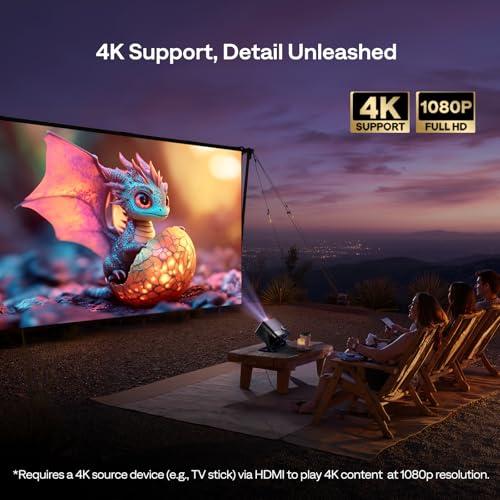
Both the Aurzen BOOM Mini Smart Projector Google TV and Epson EpiqVision Flex CO-FH02 accept 4K input but display at their native 1080p resolution. Both support HDR content for enhanced color and contrast when available.
The Epson EpiqVision Flex CO-FH02 is much better for business presentations due to its 3,000-lumen brightness that works well in conference rooms with overhead lighting. The Aurzen BOOM Mini would require dimming room lights for professional presentation use.
Value depends on your needs. The Aurzen BOOM Mini Smart Projector Google TV offers excellent value for convenience-focused users who want automatic setup, great audio, and ultra-portability. The Epson EpiqVision Flex CO-FH02 provides better value for users who need brightness flexibility and professional image quality in various lighting conditions.
We've done our best to create useful and informative comparisons to help you decide what product to buy. Our research uses advanced automated methods to create this comparison and perfection is not possible - please contact us for corrections or questions. These are the sites we've researched in the creation of this article: aurzen.com - aurzen.com - the-gadgeteer.com - projectorcentral.com - aurzen.com - aurzen.com - youtube.com - bestbuy.com - bestbuy.com - youtube.com - aurzen.com - youtube.com - hometechnologyreview.com - youtube.com - aurzen.com - expertreviews.co.uk - projectorcentral.com - youtube.com - bestbuy.com - specsradar.com - techwalls.com - cnet.com - epson.com - youtube.com - projectorreviews.com - epson.com - abt.com - youtube.com - cnet.com - techgearlab.com - staples.com - bestbuy.com - bestbuy.com - projectorcentral.com - bhphotovideo.com - dell.com - latin.epson.com - specsradar.com - projectorcentral.com - officedepot.com - files.support.epson.com - walmart.com - adorama.com - epson.com

Privacy Policy
Terms and Conditions - Affiliate Policy
Home Security
© Copyright 2008-2026.
11816 Inwood Rd #1211, Dallas, TX 75244