

The portable projector market has transformed dramatically over the past few years. What started as basic business presentation tools have evolved into sophisticated entertainment devices that can turn any wall into a massive screen. Today's portable projectors range from budget-friendly models under $600 to premium units costing over $1,500, each targeting different needs and use cases.
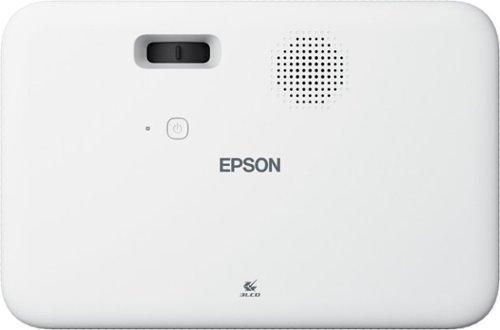
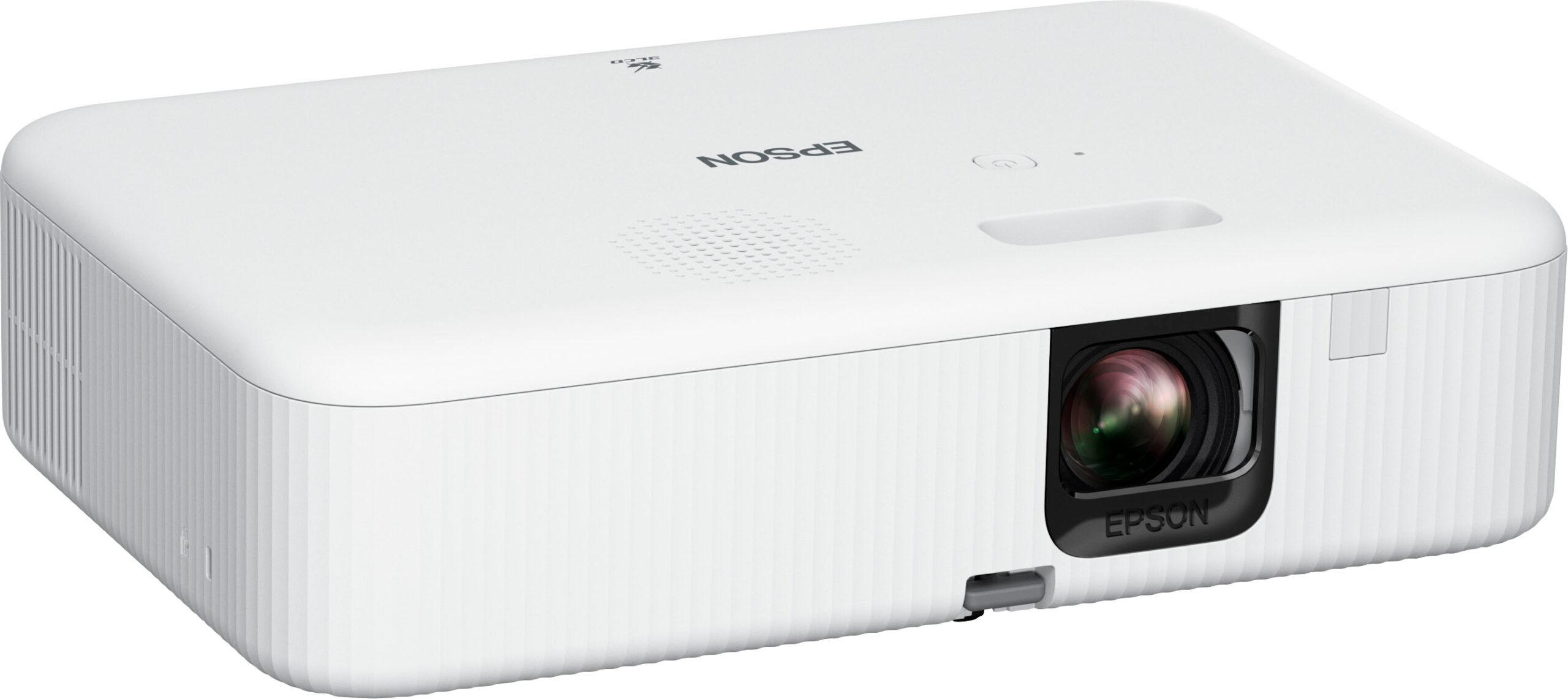
The two projectors we're examining represent opposite ends of this spectrum. The JMGO N1S Pro 4K, released in 2024, embodies the latest in premium projection technology with true 4K resolution and advanced laser optics. The Epson EpiqVision Flex CO-FH02, launched in 2022, focuses on practical versatility and exceptional value at roughly one-third the price of the JMGO (at the time of writing).
Understanding which approach suits your needs requires diving into what matters most in portable projection: image quality, environmental flexibility, smart features, and long-term value.
Modern portable projectors must balance several competing priorities. Unlike fixed home theater projectors that live in controlled environments, portable units need to perform well in various lighting conditions, room sizes, and setup scenarios. This creates fundamental trade-offs between brightness, image quality, size, and cost.
The key considerations when evaluating any portable projector include resolution (how sharp the image looks), brightness (how well it performs in lit rooms), color accuracy (how natural images appear), setup convenience, audio quality, and smart features. Each of these factors can significantly impact your viewing experience, and manufacturers typically optimize for different combinations based on their target market.
The most significant difference between the JMGO N1S Pro 4K and Epson EpiqVision Flex CO-FH02 lies in their fundamental approach to image quality. The JMGO prioritizes resolution and color accuracy, while the Epson emphasizes brightness and environmental adaptability.
Resolution and Detail
The JMGO N1S Pro 4K delivers true 4K resolution at 3840×2160 pixels—that's four times the detail of the Epson's 1080p output. This difference becomes immediately apparent when viewing detailed content like nature documentaries, sports with fine graphics, or 4K streaming content from Netflix or Disney+. Text appears crisp and readable even on very large screens, and you can sit closer to the projected image without seeing individual pixels.
However, resolution only matters if you have 4K content to feed it. If you're primarily watching standard HD cable TV or older streaming content, the difference becomes less dramatic. The Epson CO-FH02 handles 1080p content admirably, and at typical viewing distances for screens under 120 inches, many viewers won't notice the resolution difference during casual viewing.
Brightness: The Environmental Game-Changer
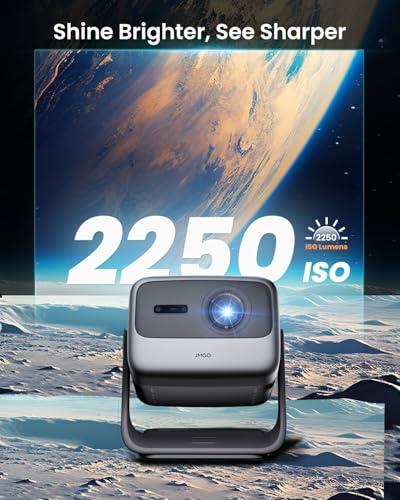
Here's where the Epson CO-FH02 shines—literally. Its 3,000-lumen output significantly outpaces the JMGO N1S Pro 4K's 2,400 lumens. More importantly, real-world testing by reviewers found the Epson achieving over 3,200 lumens in its brightest mode, making it one of the brightest portable projectors available.
This brightness advantage translates to real-world flexibility. The Epson CO-FH02 can produce watchable images in moderately lit rooms where the JMGO N1S Pro 4K would struggle. If you plan to use your projector for daytime viewing, presentations in conference rooms, or backyard movie nights with ambient lighting, the Epson's brightness becomes the more important specification.
Color Technology: Laser vs. Lamp
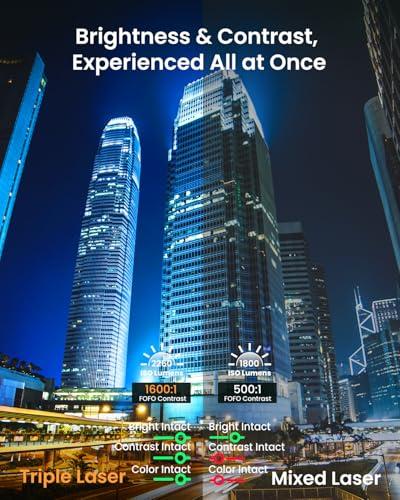
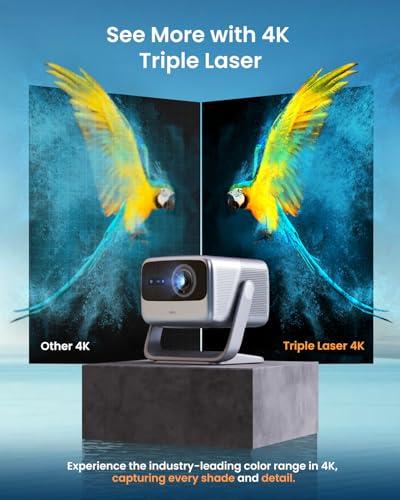
The technology behind how these projectors create light reveals another fundamental difference. The JMGO N1S Pro 4K uses MALC 2.0 triple RGB laser technology—essentially three separate lasers (red, green, blue) that combine to create the projected image. This approach eliminates the "rainbow effect" (brief flashes of separated colors) that some people see with traditional DLP projectors and enables wider color coverage.
The Epson CO-FH02 uses traditional 3LCD technology with a UHE (Ultra High Efficiency) lamp. While less advanced than laser technology, 3LCD has proven reliability and typically produces more natural-looking skin tones. The trade-off is shorter lamp life and eventual replacement costs.
In terms of color performance, the JMGO N1S Pro 4K covers 110% of the BT.2020 color space, meaning it can display colors that go beyond what most current content contains. This results in very vibrant, saturated images that look impressive but aren't always accurate to the original source material. The Epson CO-FH02 produces more conservative but often more natural-looking colors.
Built-in audio quality often gets overlooked in projector discussions, but it can significantly impact your viewing experience. The JMGO N1S Pro 4K includes 20-watt stereo speakers with Dolby Digital Plus processing that consistently receive praise in reviews. Users report "punchy bass, clear dialogue, and impressive directional sound" that makes external speakers optional for casual viewing.
The Epson CO-FH02 includes a more basic 5-watt bass reflex speaker system. While adequate for presentations or casual viewing, it lacks the depth and clarity needed for movie watching. Most users will want to connect external speakers or headphones for optimal audio.
This audio difference matters more than you might expect. If you're planning movie nights or want a complete entertainment experience without additional equipment, the JMGO N1S Pro 4K's superior audio becomes a significant advantage.
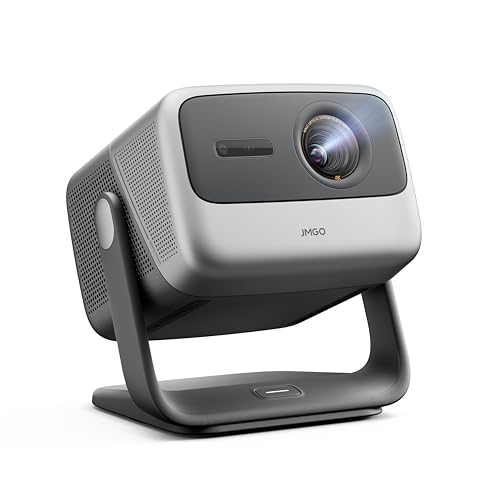
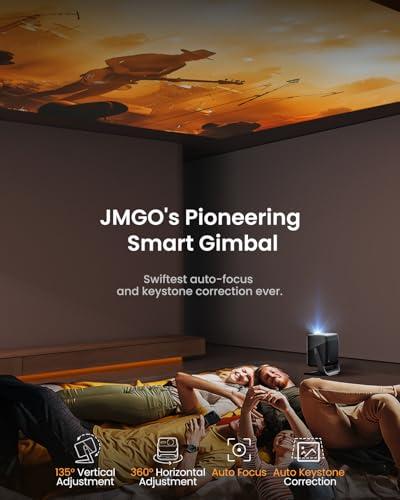
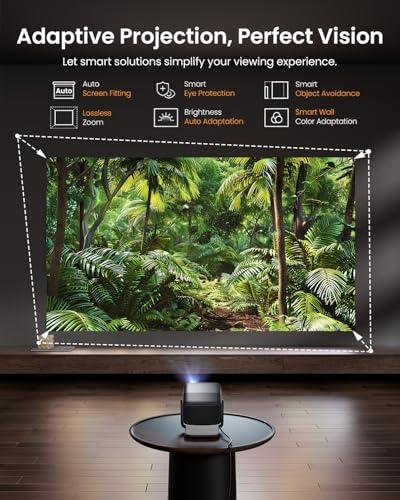
Both projectors emphasize easy setup, but they achieve this through different approaches. The JMGO N1S Pro 4K features an innovative gimbal mount system that allows 135-degree vertical and 360-degree horizontal adjustment without moving the projector base. Combined with automatic focus, keystone correction (geometric adjustment to square up the image), and smart object avoidance, this creates unprecedented setup flexibility.
The gimbal system particularly shines in unconventional spaces. You can project onto a ceiling for bed viewing, adjust to angled walls, or compensate for off-center placement without the image distortion typical of extreme keystone correction. The auto-focus and screen alignment happen in seconds, making it genuinely plug-and-play.
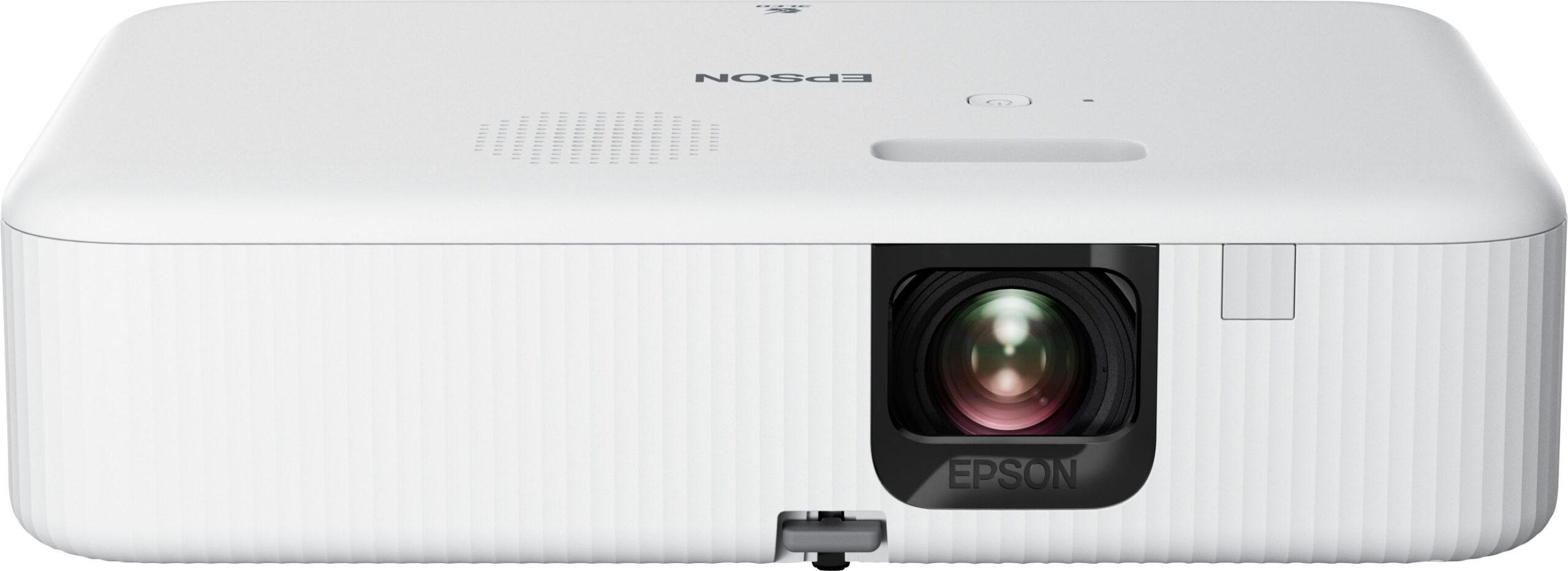
The Epson CO-FH02 takes a more traditional but practical approach. Its throw ratio range (the relationship between projector distance and image size) is more flexible, supporting projection distances from 3 feet to nearly 34 feet. This means you can create a 100-inch image from just over 8 feet away or go up to 300 inches in larger spaces—something the JMGO N1S Pro 4K cannot match due to its fixed throw ratio.
For most home theater setups, the JMGO N1S Pro 4K's gimbal provides more practical flexibility. For users who need maximum screen size options or frequently change room configurations, the Epson CO-FH02's throw flexibility becomes more valuable.
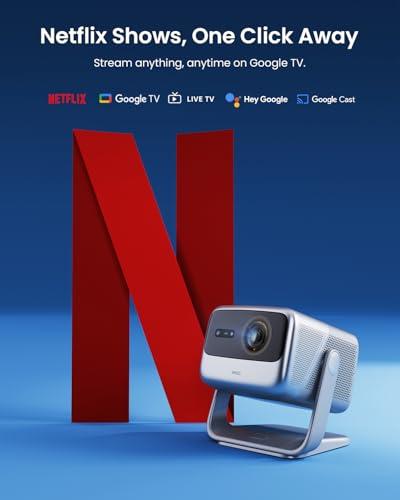
Both projectors embrace smart features, but again with different philosophies. The JMGO N1S Pro 4K runs Google TV natively with official Netflix certification—a significant advantage since many projectors still can't run Netflix directly. The interface is smooth, and having everything integrated eliminates the need for external streaming devices.
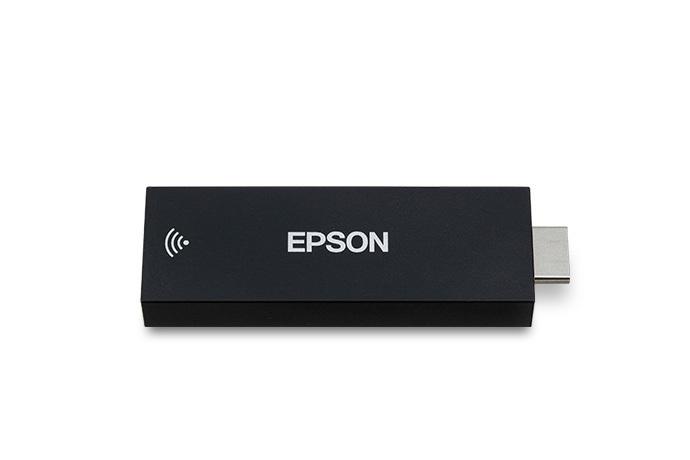
The Epson CO-FH02 includes an Android TV streaming stick rather than built-in smart functionality. While this adds another component to manage, it also means easier upgrades when streaming standards change. The included stick provides access to major streaming platforms, though Netflix requires casting from a phone rather than direct access.
Connectivity options favor the JMGO N1S Pro 4K with two HDMI 2.1 ports (including one with eARC for soundbar connection), Wi-Fi 6, and Bluetooth 5.2. The Epson CO-FH02 provides more basic connectivity with one HDMI port, older Wi-Fi standards, and Bluetooth audio support.
For gaming, the JMGO N1S Pro 4K supports higher refresh rates and has lower input lag, though neither projector targets serious gamers. Both handle casual console gaming adequately.
The technology difference between laser and lamp extends beyond image quality to long-term ownership costs. The JMGO N1S Pro 4K's laser light source is rated for 30,000 hours—roughly 27 years of moderate use—with no maintenance required. The Epson CO-FH02's lamp lasts 6,000 to 12,000 hours depending on usage mode, after which you'll need a replacement bulb costing $100-200.
This creates an interesting value calculation. While the JMGO N1S Pro 4K costs significantly more upfront (at the time of writing), its zero-maintenance operation could make it more economical over a decade of use, especially if you watch frequently.
The JMGO N1S Pro 4K also operates much quieter at 26dB compared to the Epson CO-FH02's 37dB fan noise. For bedroom viewing or quiet environments, this difference becomes noticeable.
For dedicated home theater use, several factors favor one projector over the other. The JMGO N1S Pro 4K excels in controlled lighting environments where its 4K resolution, superior audio, and quiet operation create a more cinematic experience. The gimbal adjustment proves invaluable for achieving perfect image placement in rooms where traditional projector positioning might be challenging.
However, the JMGO N1S Pro 4K has notable limitations for serious home theater use. Its contrast ratio, while decent, doesn't approach the deep blacks possible with higher-end projectors. Motion handling also shows weaknesses with sports and action content, displaying some judder even with motion smoothing enabled.
The Epson CO-FH02 might seem less suitable for home theater due to its 1080p resolution, but its superior brightness allows for larger screen sizes in rooms with some ambient light. If your "home theater" is really a family room that serves multiple purposes, the Epson's environmental flexibility becomes more important than the JMGO's 4K resolution.
Choose the JMGO N1S Pro 4K if:
Choose the Epson CO-FH02 if:
These projectors represent fundamentally different approaches to portable projection, and both succeed at their intended goals. The JMGO N1S Pro 4K pushes technological boundaries with its 4K laser engine, innovative gimbal design, and premium feature set. It's a glimpse of where portable projection is heading and delivers genuinely impressive performance for the size and convenience.
The Epson CO-FH02 proves that practical excellence doesn't require cutting-edge technology. Its combination of exceptional brightness, proven reliability, and accessible pricing makes it suitable for a broader range of users and situations.
For most buyers, the decision comes down to priorities and budget. If you want the best possible image quality and have the budget for premium features, the JMGO N1S Pro 4K delivers technology that wasn't available in portable form just a few years ago. If you need maximum versatility and value, the Epson CO-FH02 provides excellent performance at a price point that makes big-screen entertainment accessible to more households.
Neither projector is perfect—the JMGO's premium pricing limits its appeal, while the Epson's 1080p resolution feels increasingly dated as 4K content becomes standard. But both represent strong examples of their respective approaches, giving buyers clear options whether they prioritize cutting-edge performance or practical value.
| JMGO N1S Pro 4K | Epson EpiqVision Flex CO-FH02 |
|---|---|
| Resolution - 4K provides 4x the detail of 1080p, crucial for large screens | |
| True 4K UHD (3840×2160) - Sharp text and fine detail | Full HD 1080p (1920×1080) - Good for casual viewing |
| Brightness - Higher lumens allow viewing in brighter rooms | |
| 2,400 ANSI lumens (needs controlled lighting) | 3,000 lumens (excellent for well-lit environments) |
| Light Source Technology - Affects color quality and maintenance | |
| Triple RGB laser (30,000 hour life, no maintenance) | Traditional UHE lamp (6,000-12,000 hours, requires replacement) |
| Audio Quality - Built-in speakers eliminate need for external audio | |
| 20W stereo with Dolby Digital Plus (cinema-quality sound) | 5W bass reflex (basic audio, external speakers recommended) |
| Setup Flexibility - How easily you can position and adjust the image | |
| Gimbal mount (135°/360° adjustment, auto-focus, keystone) | Fixed design (manual keystone, wider throw distance range) |
| Screen Size Range - Maximum image size capabilities | |
| 85" to 180" diagonal | Up to 300" diagonal (more flexible for large spaces) |
| Smart Features - Streaming and connectivity options | |
| Google TV with native Netflix, 2x HDMI 2.1, Wi-Fi 6 | Android TV stick included, 1x HDMI, standard Wi-Fi |
| Operating Noise - Important for quiet viewing environments | |
| 26dB (whisper quiet, ideal for bedrooms) | 37dB/29dB (noticeable fan noise during operation) |
| Color Performance - Affects image vibrancy and accuracy | |
| 110% BT.2020 color gamut (very vibrant, sometimes oversaturated) | 3LCD technology (natural colors, good accuracy) |
| Portability - Weight and size for transport | |
| 9.9 lbs, compact design with gimbal | 5.7 lbs, traditional rectangular form factor |
| Value Proposition - Performance per dollar at time of writing | |
| Premium pricing for cutting-edge 4K laser technology | Exceptional brightness and features at budget-friendly price |
The JMGO N1S Pro 4K is better suited for dedicated home theater setups due to its true 4K resolution, superior 20W audio system, and whisper-quiet 26dB operation. The 4K resolution provides four times the detail of 1080p, making it ideal for large screens in dark rooms. However, if your home theater has ambient lighting, the Epson EpiqVision Flex CO-FH02 offers significantly higher brightness at 3,000 lumens.
The primary difference is resolution and technology approach. The JMGO N1S Pro 4K features true 4K resolution with advanced triple RGB laser technology, while the Epson EpiqVision Flex CO-FH02 offers Full HD 1080p resolution with traditional lamp technology but superior brightness for well-lit environments.
The Epson EpiqVision Flex CO-FH02 performs significantly better in bright rooms with its 3,000-lumen output compared to the JMGO N1S Pro 4K's 2,400 lumens. The Epson can produce watchable images in moderately lit rooms where the JMGO would struggle, making it better for daytime viewing or rooms with ambient lighting.
The JMGO N1S Pro 4K includes excellent 20W stereo speakers with Dolby Digital Plus that provide cinema-quality audio, eliminating the need for external speakers in most cases. The Epson EpiqVision Flex CO-FH02 has basic 5W speakers that work for casual viewing but will likely require external audio for an optimal movie experience.
Both projectors offer easy setup, but through different approaches. The JMGO N1S Pro 4K features an innovative gimbal system with auto-focus and keystone correction that makes positioning incredibly flexible. The Epson EpiqVision Flex CO-FH02 offers more traditional setup with manual keystone correction but provides greater throw distance flexibility for various room sizes.
The JMGO N1S Pro 4K uses laser technology rated for 30,000 hours with no maintenance required, essentially lasting decades of normal use. The Epson EpiqVision Flex CO-FH02 uses a traditional lamp lasting 6,000-12,000 hours, after which you'll need to replace the bulb at additional cost.
The JMGO N1S Pro 4K offers better gaming performance with lower input lag and support for higher refresh rates up to 240Hz in certain modes. However, both projectors handle casual console gaming adequately, and neither is specifically designed for competitive gaming where every millisecond matters.
The JMGO N1S Pro 4K runs Google TV with official Netflix certification, allowing direct streaming without additional devices. The Epson EpiqVision Flex CO-FH02 includes an Android TV streaming stick that provides access to most platforms, though Netflix typically requires casting from a mobile device rather than direct app access.
The Epson EpiqVision Flex CO-FH02 is lighter at 5.7 pounds compared to the JMGO N1S Pro 4K's 9.9 pounds, making it more portable for frequent transport. However, the JMGO N1S Pro 4K offers more flexible positioning once set up thanks to its gimbal mount system.
The Epson EpiqVision Flex CO-FH02 can project up to 300 inches, significantly larger than the JMGO N1S Pro 4K's maximum of 180 inches. However, the JMGO's 4K resolution will look much sharper at large screen sizes, while the Epson's 1080p resolution may appear pixelated on very large screens.
Value depends on your priorities and budget. The Epson EpiqVision Flex CO-FH02 offers exceptional brightness and features at a budget-friendly price point, providing tremendous value for versatile use. The JMGO N1S Pro 4K costs significantly more but delivers premium 4K quality, advanced laser technology, and superior audio that may justify the price for serious home theater enthusiasts.
The JMGO N1S Pro 4K operates extremely quietly at just 26dB, making it virtually silent during movie watching. The Epson EpiqVision Flex CO-FH02 produces more noticeable fan noise at 37dB in normal mode, which may be distracting in quiet viewing environments but is typical for lamp-based projectors.
We've done our best to create useful and informative comparisons to help you decide what product to buy. Our research uses advanced automated methods to create this comparison and perfection is not possible - please contact us for corrections or questions. These are the sites we've researched in the creation of this article: techradar.com - projectorcentral.com - gray9.in - projectorreviews.com - howtogeek.com - the-gadgeteer.com - projectorcentral.com - global.jmgo.com - global.jmgo.com - cnet.com - cnet.com - youtube.com - global.jmgo.com - avsforum.com - youtube.com - youtube.com - expertreviews.co.uk - projectorcentral.com - youtube.com - bestbuy.com - specsradar.com - techwalls.com - cnet.com - epson.com - youtube.com - projectorreviews.com - epson.com - abt.com - youtube.com - cnet.com - techgearlab.com - staples.com - bestbuy.com - bestbuy.com - projectorcentral.com - bhphotovideo.com - dell.com - latin.epson.com - specsradar.com - projectorcentral.com - officedepot.com - files.support.epson.com - walmart.com - adorama.com - epson.com

Privacy Policy
Terms and Conditions - Affiliate Policy
Home Security
© Copyright 2008-2026.
11816 Inwood Rd #1211, Dallas, TX 75244