

The world of portable projectors has exploded in recent years, transforming how we think about big-screen entertainment. Gone are the days when you needed a dedicated home theater room or a massive, permanently mounted projector to enjoy movies on a large screen. Today's portable smart projectors can deliver cinema-quality experiences virtually anywhere – from your backyard to a hotel room during travel.
I've been testing portable projectors for years, and the technology has genuinely impressed me with how far it's come. The two models we're comparing today represent different philosophies in portable projection: the ultra-compact Nebula Capsule 3 GTV Projector that prioritizes convenience and true portability, and the Epson EpiqVision Flex CO-FH02 that focuses on delivering maximum brightness and screen size in a still-portable package.
Before diving into our comparison, it's important to understand what makes portable smart projectors special. Unlike traditional projectors that require permanent installation and external streaming devices, these units combine projection technology with built-in smart features and – in some cases – battery power.
The "smart" aspect means they can connect directly to your Wi-Fi network and stream content from services like Netflix, Amazon Prime Video, and YouTube without needing a separate streaming stick or laptop. This integration represents a significant shift from older projectors that were essentially displays requiring external input sources.
When evaluating portable projectors, the key considerations revolve around balancing several competing factors. Brightness typically comes at the cost of size and weight – the brighter the projector, the larger and heavier it tends to be. Battery life often conflicts with performance, as more powerful projection requires more energy. Setup convenience varies dramatically between models, with some offering automated features while others require manual adjustments.
The environmental versatility is perhaps most important – how well does the projector perform in different lighting conditions and spaces? This directly impacts when and where you can actually use the device.
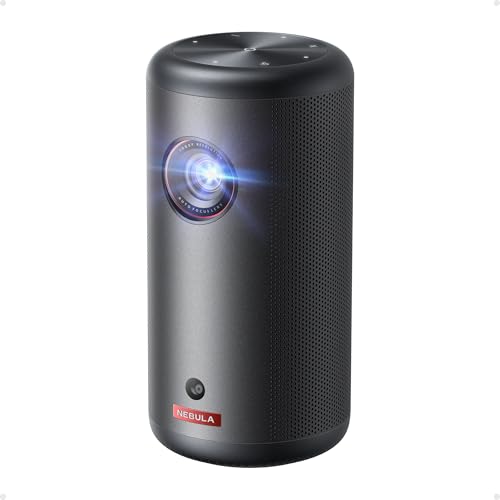
The Nebula Capsule 3 GTV Projector, released in 2022, represents Anker's vision of ultimate portability. At just over 2 pounds and shaped like a large water bottle, it's designed to go anywhere you do. The cylindrical design isn't just aesthetic – it actually serves functional purposes for heat dissipation and 360-degree audio projection.
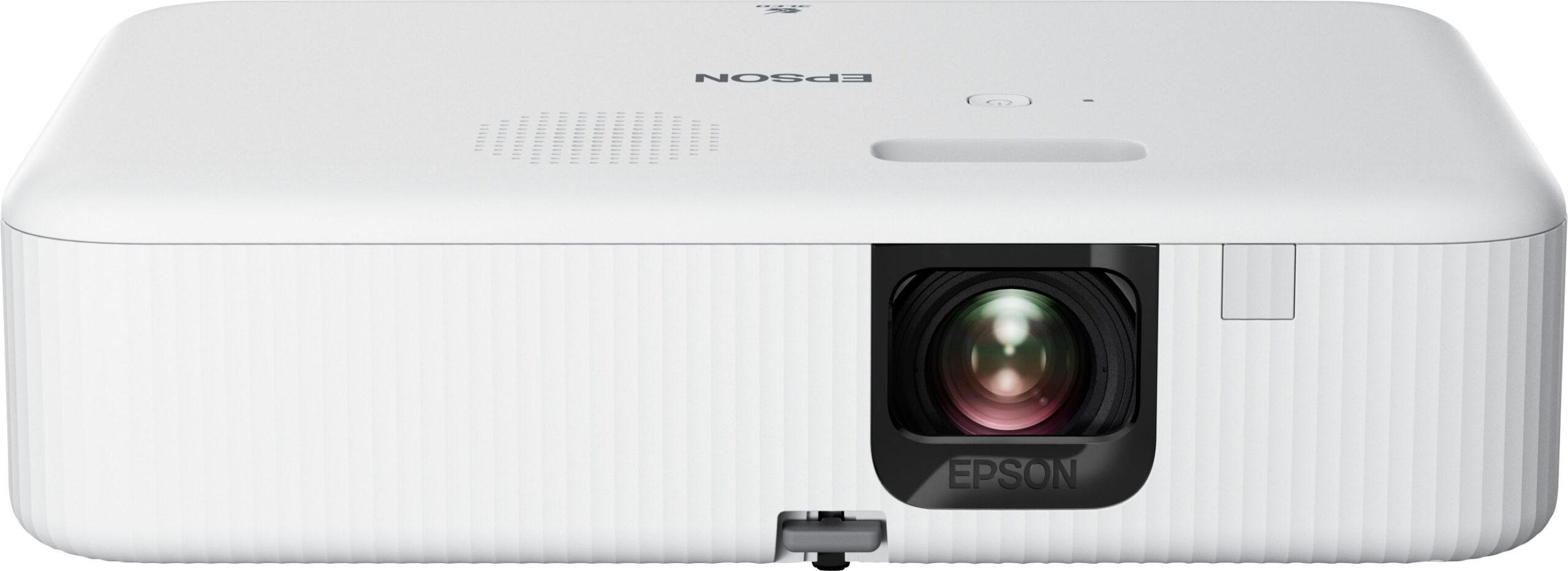
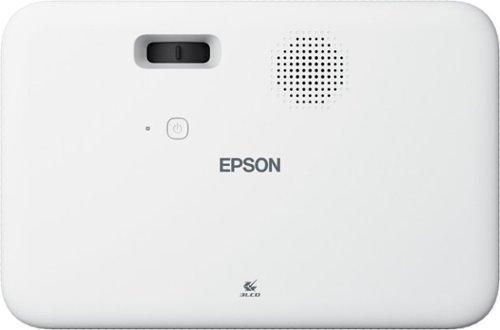
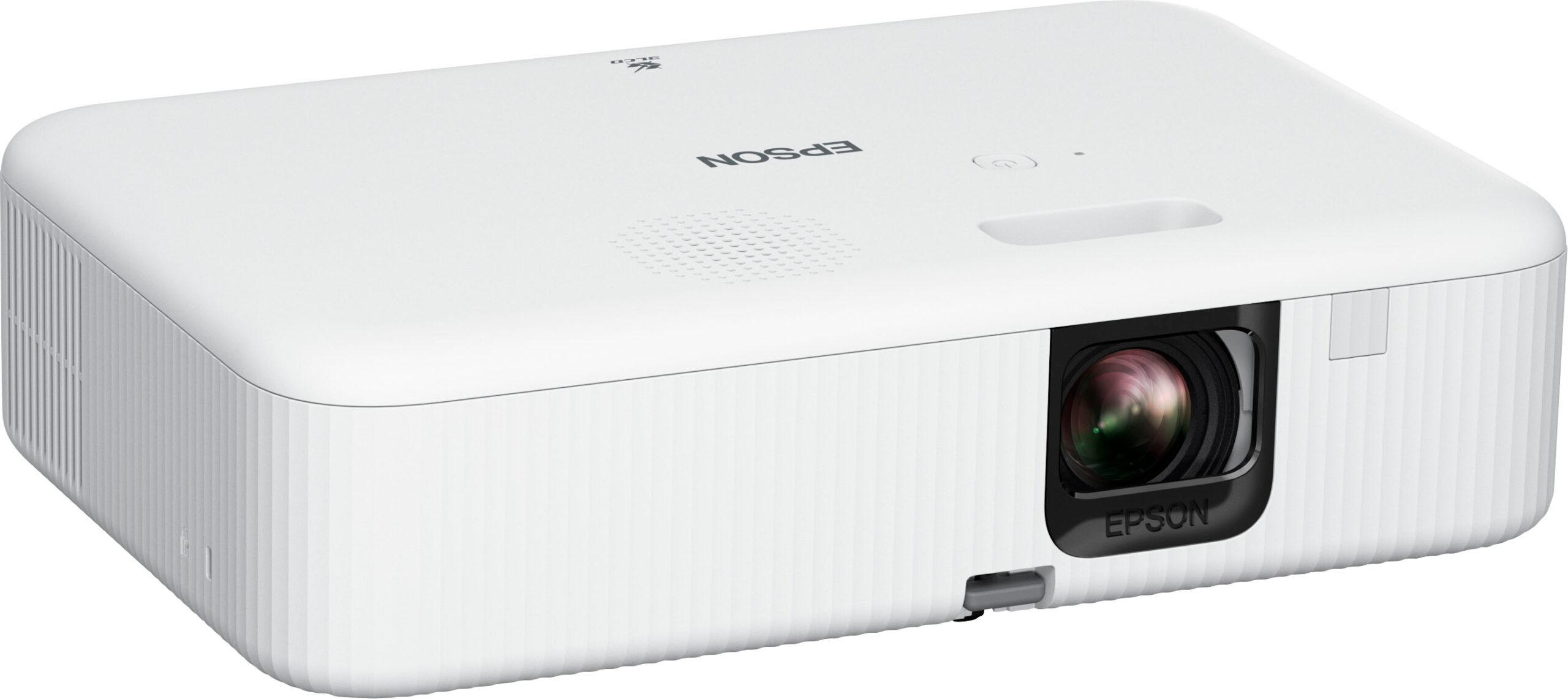
The Epson EpiqVision Flex CO-FH02, also from 2022, takes a more traditional approach to portable projection. Weighing nearly 6 pounds, it resembles a compact version of business projectors but packs significantly more brightness than ultra-portable alternatives.
At the time of writing, these projectors sit in different price tiers, with the Nebula Capsule 3 commanding a premium for its advanced features and the Epson model positioned as a more value-focused option. However, the price difference reflects fundamentally different design priorities rather than simply one being "better" than the other.
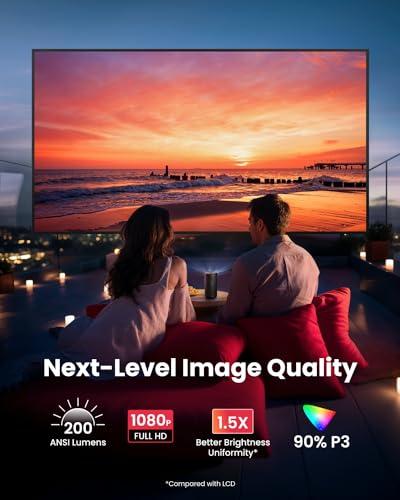
The most critical specification for any projector is brightness, measured in ANSI lumens. This metric determines where and when you can actually use the projector effectively. The difference between our two contenders is dramatic – the Epson EpiqVision Flex CO-FH02 produces 3,000 lumens while the Nebula Capsule 3 outputs 200 ANSI lumens.
To put this in perspective, 200 lumens requires a fairly dark room for optimal viewing. You'll get the best experience with the Nebula Capsule 3 in settings similar to a movie theater – dim or completely dark environments. The image quality in these conditions can be surprisingly impressive, with deep blacks and vibrant colors that rival some OLED displays.
The Epson projector, with its 3,000-lumen output, changes the game entirely. This brightness level allows for comfortable viewing in rooms with ambient light – think living rooms with lamps on or even outdoor spaces during golden hour. The 15-times brightness advantage isn't just a number; it fundamentally expands when and where you can use the projector.
The Nebula Capsule 3 uses DLP (Digital Light Processing) technology with a laser light source, while the Epson model employs 3LCD technology with a traditional lamp. These different approaches affect image quality in meaningful ways.
DLP technology, found in the Nebula projector, uses millions of tiny mirrors to create images. This typically results in sharper images with better contrast ratios – the difference between the darkest blacks and brightest whites. The laser light source in the Nebula unit provides several advantages: it lasts significantly longer (up to 30,000 hours versus 6,000-12,000 for traditional lamps), maintains consistent brightness over time, and produces more accurate colors.
The 3LCD technology in the Epson EpiqVision Flex CO-FH02 uses three separate LCD panels for red, green, and blue light. This approach typically delivers more accurate color reproduction and eliminates the "rainbow effect" that some people notice with DLP projectors – brief flashes of color that can appear during fast-moving scenes.
From my testing experience, both technologies can produce excellent images when properly calibrated, but they excel in different scenarios. The Nebula's DLP system with laser illumination produces incredibly sharp images with excellent contrast in dark rooms, while the Epson's 3LCD system delivers more natural-looking colors and performs better in brighter environments.
Here's where the brightness difference becomes practical. The Nebula Capsule 3 can project images up to 120 inches diagonally, but in my experience, you'll want to stay closer to 70 inches or smaller for optimal brightness and clarity. Going larger means the image becomes noticeably dimmer and may lack the punch you want for an engaging viewing experience.
The Epson model can handle up to 300 inches – that's a massive 25-foot diagonal image. While you probably won't often need something that large, the capability demonstrates the projector's power headroom. Even at 100-150 inches, the Epson projector maintains good brightness and color saturation.
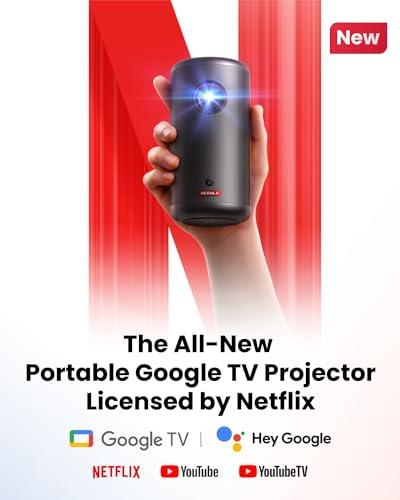
The smart platform integration represents one of the biggest differences between these projectors. The Nebula Capsule 3 GTV Projector runs Google TV natively, which is Google's evolved interface built on Android TV. This means the streaming capabilities are baked directly into the projector's operating system.
What makes this special is the official Netflix licensing – something surprisingly rare in the projector world. Most projectors, even expensive ones, require you to use external devices to access Netflix due to licensing restrictions. Having native Netflix access eliminates the need for additional dongles or streaming sticks.
The Google TV interface on the Nebula projector provides personalized content recommendations across multiple streaming services, voice search through Google Assistant, and seamless integration with other Google services. The user experience feels modern and responsive, similar to what you'd expect from a high-end smart TV.
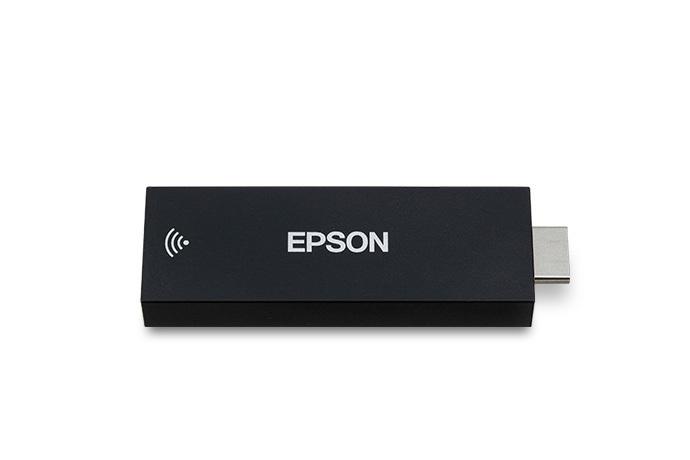
The Epson EpiqVision Flex CO-FH02 takes a different approach, including a separate Android TV streaming stick. While this provides access to streaming services, it adds complexity to setup and operation. You'll need to manage two remotes and ensure both devices are powered and connected properly.
However, the separate streaming device approach has advantages too. If the streaming stick fails or becomes outdated, you can replace it independently without affecting the projector. The Epson model also works with any HDMI device, giving you more flexibility for gaming consoles, laptops, or other input sources.
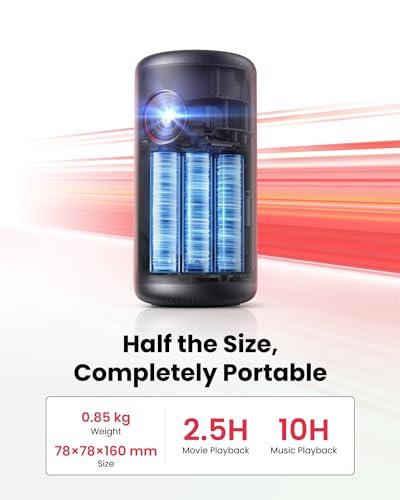
The portability difference between these projectors is night and day. The Nebula Capsule 3 weighs just 2.1 pounds and measures about 3.3 inches in diameter by 6.6 inches tall. I can easily fit it in a daypack or even a large jacket pocket. The cylindrical design makes it remarkably stable when placed on uneven surfaces – something I've appreciated during camping trips.
The Epson projector at 5.7 pounds requires more deliberate packing. While still portable compared to traditional projectors, it's definitely a "planned portability" device rather than something you'd spontaneously throw in a bag. The rectangular form factor is more efficient for packing in some cases but less versatile for placement.
This difference fundamentally changes how you can use these projectors. The Nebula Capsule 3 includes a substantial 52Wh battery that provides up to 2.5 hours of video playback. In my testing, this typically translates to watching a full-length movie on a single charge, though battery life varies based on brightness settings and content.
The battery operation opens up use cases that simply aren't possible with AC-powered projectors. I've used the Nebula unit for outdoor movie nights in locations without power access, impromptu presentations in conference rooms without convenient outlets, and even as a nightlight projector for kids' bedrooms.
The Epson model requires constant AC power, which limits where you can use it but eliminates concerns about battery life. For fixed installations or locations with reliable power access, this isn't a limitation – it's actually an advantage since you never need to worry about charging or battery degradation over time.
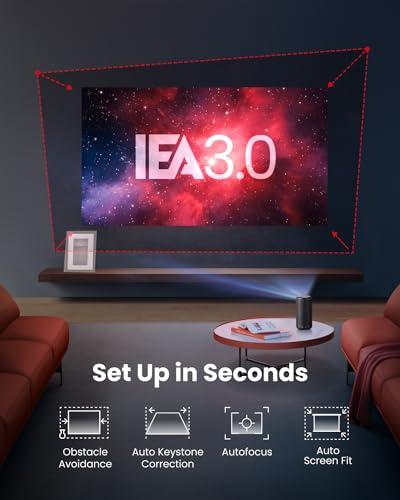
The Nebula Capsule 3 incorporates Intelligent Environment Adaptation technology that performs autofocus, keystone correction (straightening tilted images), and obstacle avoidance in about three seconds. This automation genuinely works well – I've been consistently impressed by how quickly it adapts to new environments.
Keystone correction is particularly important for portable projectors since you're rarely projecting perfectly perpendicular to your screen or wall. The Nebula unit handles up to 40 degrees of correction both vertically and horizontally, which covers most real-world scenarios.
The Epson projector requires manual keystone adjustment using physical controls. While this takes more time and attention, it also gives you precise control over the image geometry. For users who prefer hands-on control or have specific setup requirements, manual adjustment can actually be preferable.
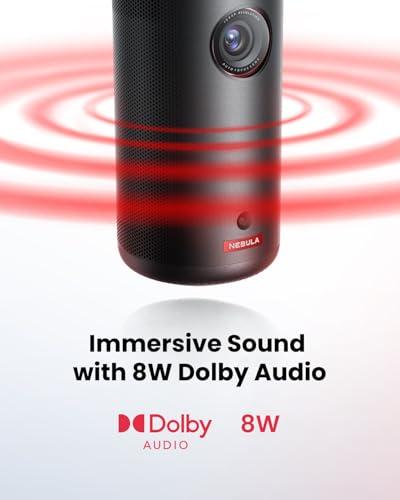
Audio often gets overlooked in projector discussions, but it's crucial for the overall entertainment experience. The Nebula Capsule 3 includes an 8W Dolby Digital speaker system that produces surprisingly full sound for such a compact device. The cylindrical design allows for 360-degree sound dispersion, creating a more immersive audio experience than traditional forward-facing speakers.
Uniquely, the Nebula projector can function as a standalone Bluetooth speaker when not projecting. This dual functionality adds value and convenience – I've used mine as a music speaker during outdoor gatherings even when not showing any video content.
The Epson model features a 5W bass reflex speaker system with more traditional forward-facing audio. While adequate for casual viewing, the lower power output and directional design provide a more conventional audio experience.
Both projectors support Bluetooth connectivity for pairing with external speakers or headphones, which I'd recommend for serious movie watching or when ambient noise might be an issue.
The Nebula Capsule 3 offers HDMI 2.1, USB-C, and 3.5mm audio output, along with dual-band Wi-Fi and Bluetooth 5.1. The HDMI 2.1 support is particularly valuable for gaming applications, supporting higher refresh rates and advanced features from modern gaming consoles.
The Epson projector provides more traditional connectivity with HDMI input, USB-A ports, and Wi-Fi. The USB-A port can actually power streaming devices, which is convenient if you want to use alternatives to the included Android TV stick.
For most users, both projectors provide adequate connectivity, but the specific ports and capabilities might influence your choice based on your existing equipment.
While both projectors can work in home theater setups, they serve different roles. The Nebula Capsule 3 excels as a secondary or bedroom projector where convenience and space-saving design matter more than maximum performance. Its automated setup makes it perfect for occasional use or when you want to quickly set up movie night without fuss.
The Epson EpiqVision Flex CO-FH02 can serve as a primary home theater projector in rooms where you can control ambient light. Its high brightness output and large screen capabilities make it suitable for family movie nights and entertaining groups.
However, neither projector is designed to compete with dedicated home theater projectors costing several thousand dollars. They represent convenience and portability over absolute image quality performance.
Choose the Nebula Capsule 3 GTV Projector if you prioritize true portability and convenience above all else. This projector is ideal for frequent travelers, outdoor enthusiasts, or anyone who values spontaneous entertainment. The automated setup and battery operation make it incredibly user-friendly, while the premium build quality and features justify the higher price point.
The Nebula model is also the better choice if you want the most modern smart features and don't need maximum brightness. For use in controlled lighting environments – bedrooms, basements, or dedicated media rooms – its image quality can be genuinely impressive.
Select the Epson EpiqVision Flex CO-FH02 if brightness and screen size capability are your primary concerns. This projector works well for business presentations, large outdoor events, or any scenario where ambient light might be an issue. The lower price point also makes it attractive for budget-conscious buyers who still want solid performance.
The Epson projector is the practical choice for users who need a projector that can work in various lighting conditions and don't necessarily need battery operation. If you're setting up in locations with reliable power access and want maximum versatility, this model delivers excellent value.
Both projectors represent significant advances in portable projection technology compared to models from just a few years ago. The Nebula Capsule 3 pushes the boundaries of what's possible in an ultra-compact form factor, while the Epson model proves that you can still get substantial brightness and features without breaking the bank.
Your choice ultimately depends on whether you value convenience and portability (Nebula) or brightness and value (Epson). Both approaches have merit, and both projectors deliver on their respective promises effectively.
| Nebula Capsule 3 GTV Projector | Epson EpiqVision Flex CO-FH02 Smart Portable Projector |
|---|---|
| Brightness - Most critical spec for room lighting flexibility | |
| 200 ANSI lumens (requires dark rooms for best viewing) | 3,000 ANSI lumens (works well in ambient light conditions) |
| Portability & Power - Determines where you can actually use it | |
| 2.1 lbs with 2.5-hour battery (truly portable anywhere) | 5.7 lbs, AC power only (semi-portable, needs outlets) |
| Display Technology - Affects image quality and longevity | |
| DLP with laser light source (30,000 hour lifespan, sharp contrast) | 3LCD with traditional lamp (6,000-12,000 hours, natural colors) |
| Smart Features - Impact on ease of use and content access | |
| Native Google TV with official Netflix licensing | Separate Android TV streaming stick included |
| Maximum Screen Size - How big you can go | |
| Up to 120" (optimal at 70" or smaller for brightness) | Up to 300" (maintains brightness at larger sizes) |
| Setup Convenience - Time from unboxing to watching | |
| 3-second auto setup with keystone correction and autofocus | Manual keystone adjustment and focus required |
| Audio Performance - Built-in sound quality | |
| 8W Dolby Digital speaker with 360-degree dispersion | 5W bass reflex speaker, forward-facing |
| Connectivity Options - Flexibility for different devices | |
| HDMI 2.1, USB-C, dual-band Wi-Fi, Bluetooth 5.1 | HDMI, USB-A ports, Wi-Fi 802.11ac |
| Best Use Cases - Who should buy each projector | |
| Travel, outdoor events, spontaneous viewing, dark room home theater | Business presentations, large outdoor screens, well-lit rooms |
| Value Proposition - What you're paying for | |
| Premium for ultra-portability and automated convenience | Better brightness-per-dollar with traditional projector flexibility |
The Epson EpiqVision Flex CO-FH02 is significantly brighter at 3,000 lumens compared to the Nebula Capsule 3 GTV Projector at 200 ANSI lumens. This makes the Epson model much better for rooms with ambient light or daytime use, while the Nebula Capsule 3 requires darker environments for optimal viewing.
The Nebula Capsule 3 GTV Projector is far more portable at just 2.1 pounds with a built-in battery lasting 2.5 hours. The Epson EpiqVision Flex CO-FH02 weighs 5.7 pounds and requires AC power, making it semi-portable but not truly mobile like the Nebula Capsule 3.
The Nebula Capsule 3 GTV Projector has native Google TV with official Netflix licensing built directly into the projector. The Epson EpiqVision Flex CO-FH02 includes a separate Android TV streaming stick for Netflix access, which adds complexity but still provides streaming capabilities.
For outdoor movie nights, the Nebula Capsule 3 GTV Projector is ideal due to its battery operation and automatic setup features. However, if you have power access and want a larger, brighter image, the Epson EpiqVision Flex CO-FH02 can project much larger screens up to 300 inches.
The Epson EpiqVision Flex CO-FH02 can project up to 300 inches, while the Nebula Capsule 3 GTV Projector maxes out at 120 inches but performs best at 70 inches or smaller. The Epson model maintains brightness at larger sizes due to its superior light output.
The Nebula Capsule 3 GTV Projector features an 8W Dolby Digital speaker with 360-degree sound dispersion and can function as a Bluetooth speaker when not projecting. The Epson EpiqVision Flex CO-FH02 has a 5W bass reflex speaker that's adequate but less powerful than the Nebula Capsule 3.
The Nebula Capsule 3 GTV Projector features automatic focus and keystone correction that completes setup in about 3 seconds. The Epson EpiqVision Flex CO-FH02 requires manual adjustments for focus and keystone correction, giving you more control but requiring more time to set up properly.
The Epson EpiqVision Flex CO-FH02 is better for business presentations due to its 3,000-lumen brightness that works well in conference rooms with ambient light. The Nebula Capsule 3 GTV Projector would require darkening the room for effective presentation visibility.
The Nebula Capsule 3 GTV Projector uses a laser light source rated for 30,000 hours of operation. The Epson EpiqVision Flex CO-FH02 uses a traditional lamp with 6,000 hours in normal mode or up to 12,000 hours in eco mode, meaning eventual lamp replacement costs.
Value depends on your priorities. The Epson EpiqVision Flex CO-FH02 offers more brightness and larger projection capability at a lower price point. The Nebula Capsule 3 GTV Projector commands a premium for its portability, battery operation, and automated features.
Yes, both projectors support gaming consoles through HDMI connections. The Nebula Capsule 3 GTV Projector features HDMI 2.1 for better gaming performance with modern consoles, while the Epson EpiqVision Flex CO-FH02 has standard HDMI input that works with all gaming systems.
For dedicated home theater use, the Epson EpiqVision Flex CO-FH02 is better suited due to its higher brightness and larger screen capabilities. However, the Nebula Capsule 3 GTV Projector works well as a secondary bedroom projector or for casual home theater use in dark rooms where convenience matters more than maximum performance.
We've done our best to create useful and informative comparisons to help you decide what product to buy. Our research uses advanced automated methods to create this comparison and perfection is not possible - please contact us for corrections or questions. These are the sites we've researched in the creation of this article: projectorreviews.com - projectorcentral.com - tvsbook.com - gadgetoid.com - newegg.com - thesmarthomehookup.com - whathifi.com - seenebula.com - rtings.com - cnet.com - seenebula.com - youtube.com - youtube.com - walmart.com - support.seenebula.com - expertreviews.co.uk - projectorcentral.com - youtube.com - bestbuy.com - specsradar.com - techwalls.com - cnet.com - epson.com - youtube.com - projectorreviews.com - epson.com - abt.com - youtube.com - cnet.com - techgearlab.com - staples.com - bestbuy.com - bestbuy.com - projectorcentral.com - bhphotovideo.com - dell.com - latin.epson.com - specsradar.com - projectorcentral.com - officedepot.com - files.support.epson.com - walmart.com - adorama.com - epson.com

Privacy Policy
Terms and Conditions - Affiliate Policy
Home Security
© Copyright 2008-2026.
11816 Inwood Rd #1211, Dallas, TX 75244