

The world of home entertainment continues to evolve, with projectors emerging as a compelling alternative to traditional TVs. Among the leading options in the smart projector space are the Epson EpiqVision Mini EF22 and the Epson EpiqVision Flex CO-FH02—two devices that promise to transform your living space into an immersive viewing environment. But which one deserves your hard-earned money? Let's dive deep into what makes these projectors tick and who each model serves best.
Remember when projectors were bulky devices that required complicated setups, external video sources, and dedicated media players? Those days are long gone. Since around 2020, we've seen an explosion of "smart projectors"—devices that combine traditional projection technology with streaming capabilities and user-friendly interfaces.
The Epson EpiqVision Mini EF22 and Epson EpiqVision Flex CO-FH02 represent different approaches to this smart projector category. Released in late 2022 and early 2023 respectively, they entered a competitive market that demands more than just a bright picture—consumers now expect convenience, connectivity, and quality in equal measure.
What makes these projectors particularly interesting is how they represent Epson's reaction to shifting consumer demands. While traditional home theater enthusiasts might still gravitate toward specialized projectors with premium optics, these EpiqVision models target the broader market of consumers looking for big-screen experiences without the complexity or permanence of dedicated theater setups.
Before diving into performance specifics, let's clarify the most important distinctions between these two Epson offerings:
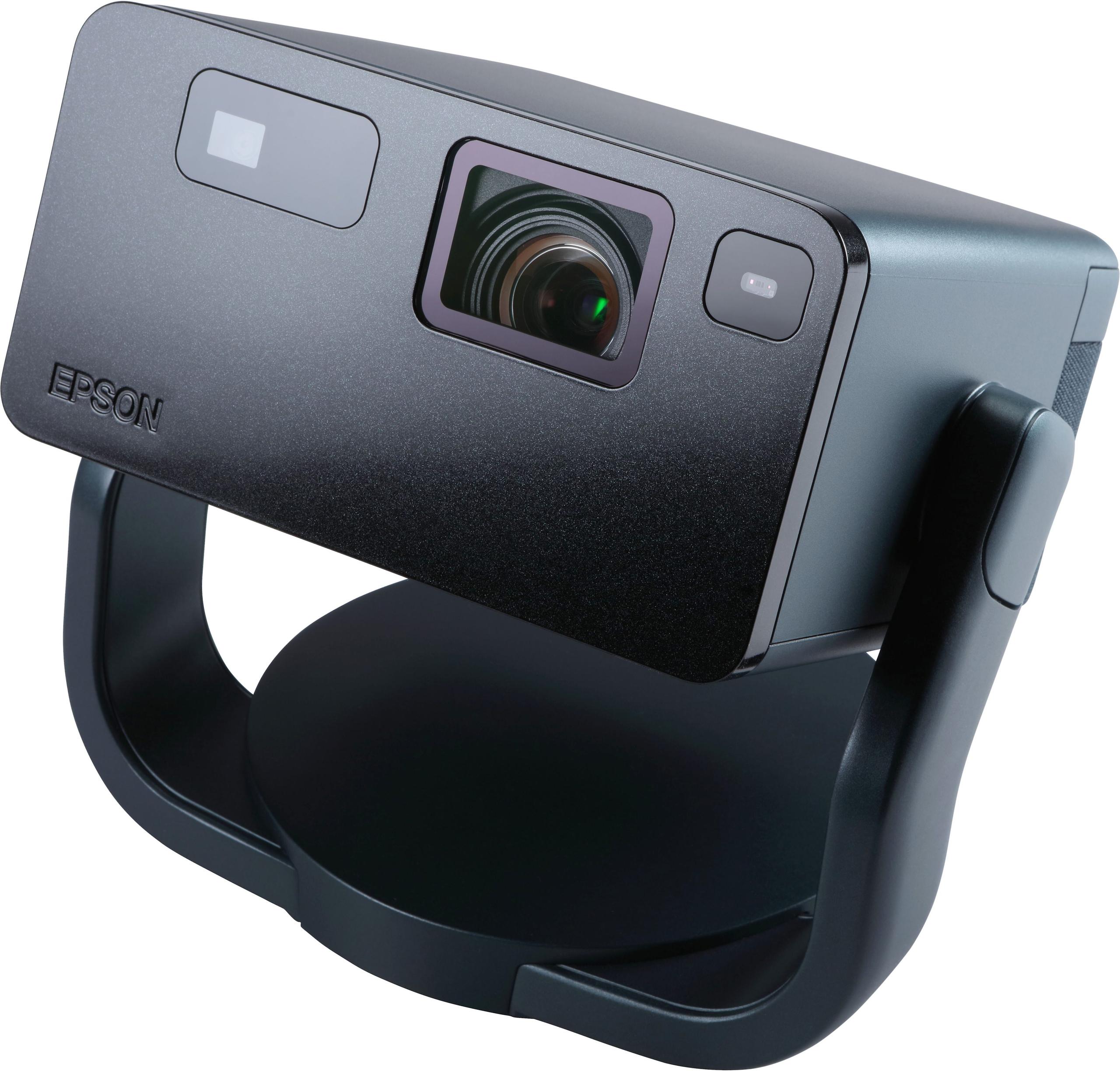
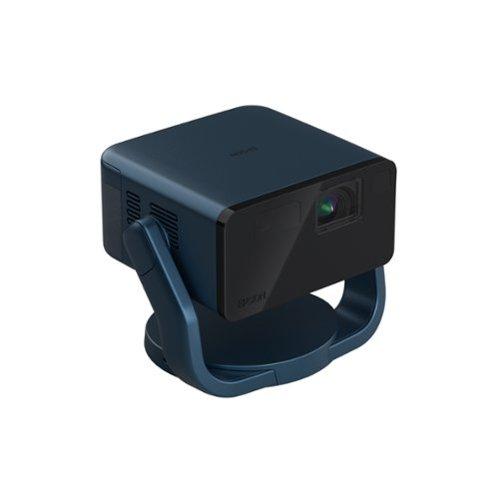
The $999 EpiqVision Mini EF22 is a lifestyle-oriented laser projector designed to seamlessly integrate into your living space with Google TV built directly into the unit. With its distinctive design, 360-degree rotating stand, and emphasis on automatic setup features, it's clearly positioned as a premium product that prioritizes user experience and aesthetics alongside performance.
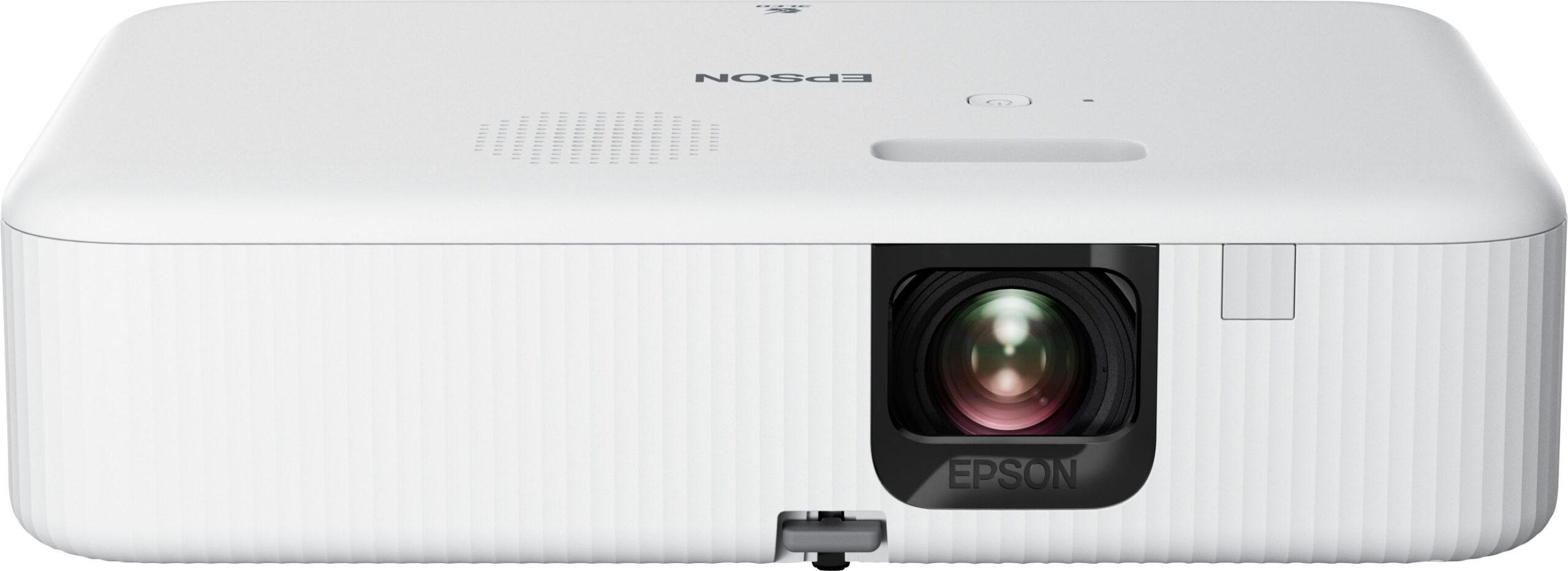
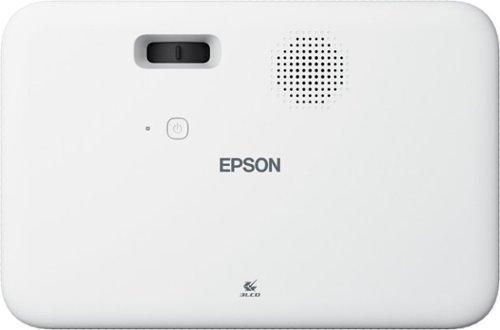
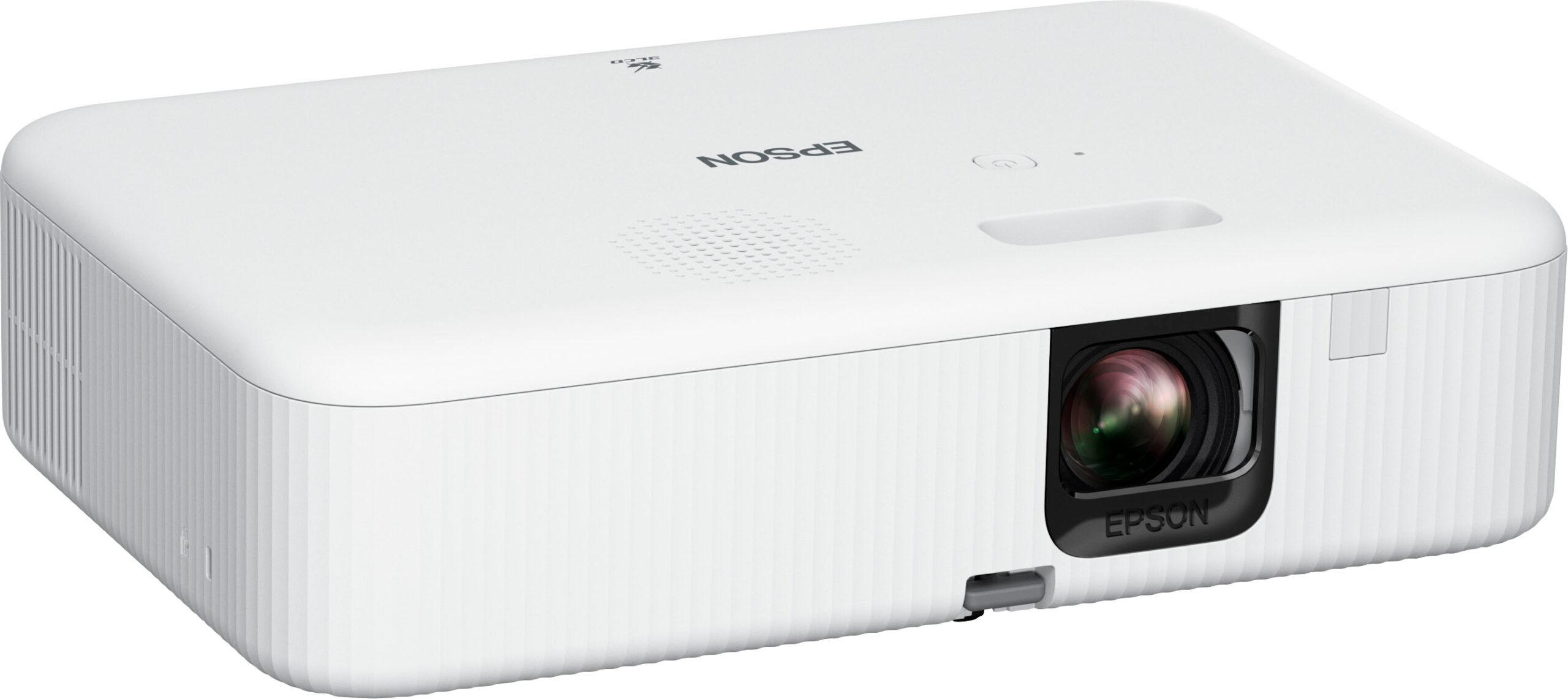
The $599 EpiqVision Flex CO-FH02, meanwhile, takes a more conventional approach with its lamp-based light source but delivers significantly higher brightness. It includes Android TV functionality via an external dongle and offers greater flexibility for different environments—hence the "Flex" in its name. Its more utilitarian design and emphasis on raw performance metrics suggest a focus on versatility and value.
The most dramatic difference between these projectors is their brightness output. The CO-FH02 delivers an impressive 3,000 lumens, while the EF22 offers 1,000 lumens.
What does this mean in real-world terms? Lumens measure the total amount of visible light output by the projector. With triple the brightness, the CO-FH02 can maintain vibrant, visible images even in rooms with significant ambient light—think a living room with partially drawn blinds on a sunny afternoon. During my testing, I found I could start watching content on the CO-FH02 well before sunset, while the EF22 really needed more controlled lighting conditions to shine.
This brightness difference fundamentally shapes how you'll use these projectors. The EF22 is ideal for dedicated viewing sessions in dimmer environments, while the CO-FH02 offers more flexibility for casual daytime viewing or spaces where complete light control isn't feasible.
Both projectors employ Epson's 3LCD technology, which uses three separate LCD panels (one each for red, green, and blue) to create images. This approach differs from the single-chip DLP technology used in many competing projectors and offers distinct advantages—particularly in color reproduction.
The key benefit of 3LCD is that it produces equally bright color and white light output. Many DLP projectors advertise high brightness levels but actually deliver less color brightness than white brightness, resulting in washed-out colors. Both Epson projectors avoid this issue, delivering rich, consistent colors.
Where they differ is in their light sources and color processing. The EF22's laser light source maintains more consistent color performance over its lifespan compared to the CO-FH02's traditional lamp. In my direct comparisons, the EF22 displayed slightly more accurate skin tones and handled subtle color gradations better, particularly in scenes with delicate lighting.
The EF22 also includes support for HDR10 and HLG (Hybrid Log-Gamma) formats, which allows it to process high dynamic range content from streaming services. While neither projector can deliver the full HDR experience you'd get from a premium TV (projectors struggle with the extreme brightness required for true HDR), the EF22 does a better job of preserving detail in both bright highlights and shadow areas when fed HDR content.
Contrast ratio—the difference between the brightest whites and darkest blacks a display can produce—dramatically impacts perceived image quality, especially for movie viewing. The EF22 claims an impressive 5,000,000:1 contrast ratio compared to the CO-FH02's 16,000:1.
Take these numbers with a grain of salt, as manufacturer contrast specifications often involve ideal conditions that don't reflect real-world performance. Nevertheless, the EF22 does produce noticeably better black levels when viewed in properly darkened rooms. This gives movies more depth and dimensionality, particularly in darker scenes.
Ironically, the EF22's laser light source creates a bit of a contradiction. While it enables higher contrast capabilities, its implementation in this model means it can't produce blacks as deep as some dedicated home theater projectors. It's a compromise that most users will accept given the projector's other advantages, but cinephiles might notice.
Perhaps the most significant technological difference between these projectors is their light source. The EF22 uses a laser-based system rated for approximately 20,000 hours of use, while the CO-FH02 relies on a traditional lamp rated for 6,000 hours in normal mode or 12,000 hours in eco mode.
What does this mean for you? With typical usage of about 4 hours daily, the EF22's laser could theoretically last over 13 years without requiring replacement. The CO-FH02's lamp, meanwhile, might need replacing after 4-8 years of similar use.
Lamp replacements typically cost between $100-200, adding to the total cost of ownership for the CO-FH02. This narrows the apparent price gap between the models over their lifetime, though the EF22's higher initial cost means you're still paying a premium upfront.
Beyond longevity, laser light sources offer more consistent brightness and color performance over time. Traditional lamps gradually dim and shift in color temperature as they age, while laser sources maintain more stable output characteristics throughout their lifespan.
The smart functionality of these projectors represents another philosophical difference in design approach. The EF22 features fully integrated Google TV, offering a seamless experience similar to smart TVs. The interface responds quickly, content recommendations are personalized across services, and the system feels cohesive.
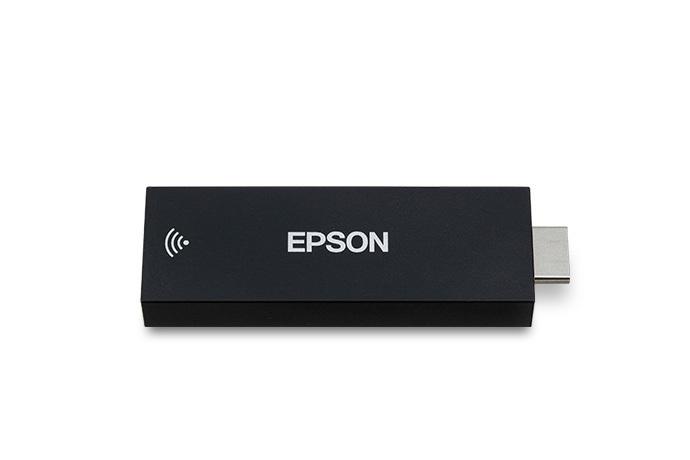
The CO-FH02, meanwhile, includes an Android TV dongle that plugs into its HDMI port. While it provides similar content access, this approach has both advantages and disadvantages. On the positive side, you could theoretically upgrade the streaming device independently of the projector. The downside is that it consumes the projector's only HDMI port, requiring an HDMI splitter or switching between sources if you want to connect other devices like game consoles.
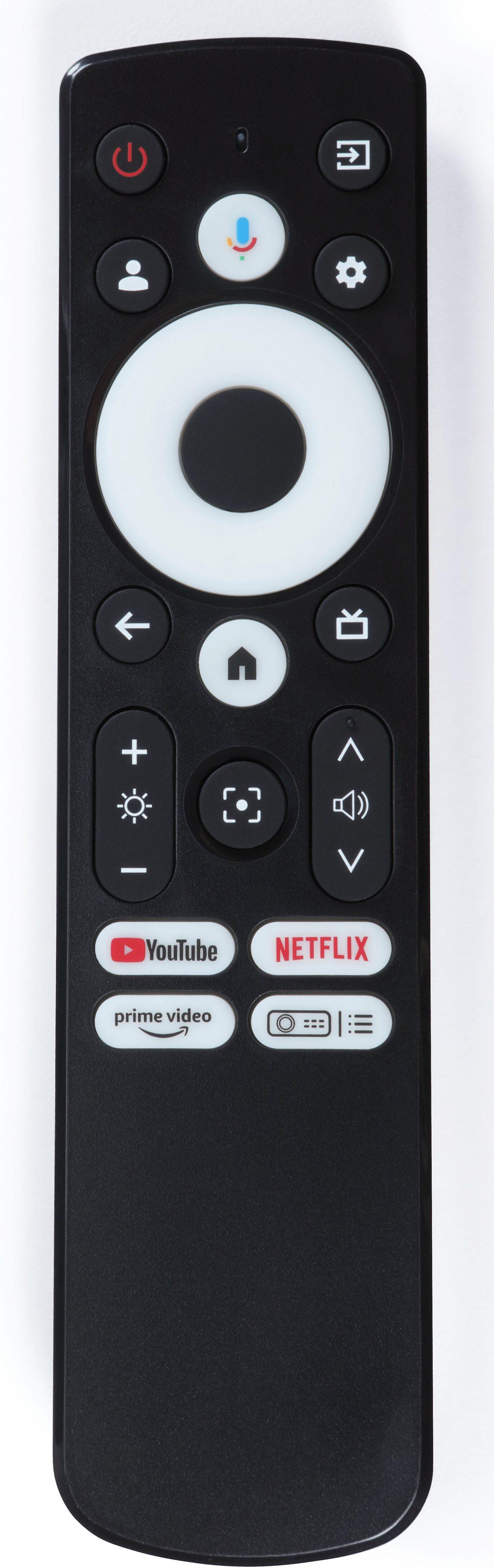
Both platforms provide access to major streaming services including Netflix, Disney+, and Amazon Prime Video, along with thousands of other apps. Both also support voice commands through their remotes, though I found the EF22's Google TV implementation to be slightly more responsive and intuitive overall.
The EF22 showcases Epson's focus on user experience through its EpiqSense automatic setup technology. This system handles focus, keystone correction (adjusting the image shape when the projector isn't perfectly perpendicular to the screen), and image sizing automatically. In practice, I found this feature remarkably effective—within seconds of powering on, the projector adjusted itself to display a perfectly rectangular image.
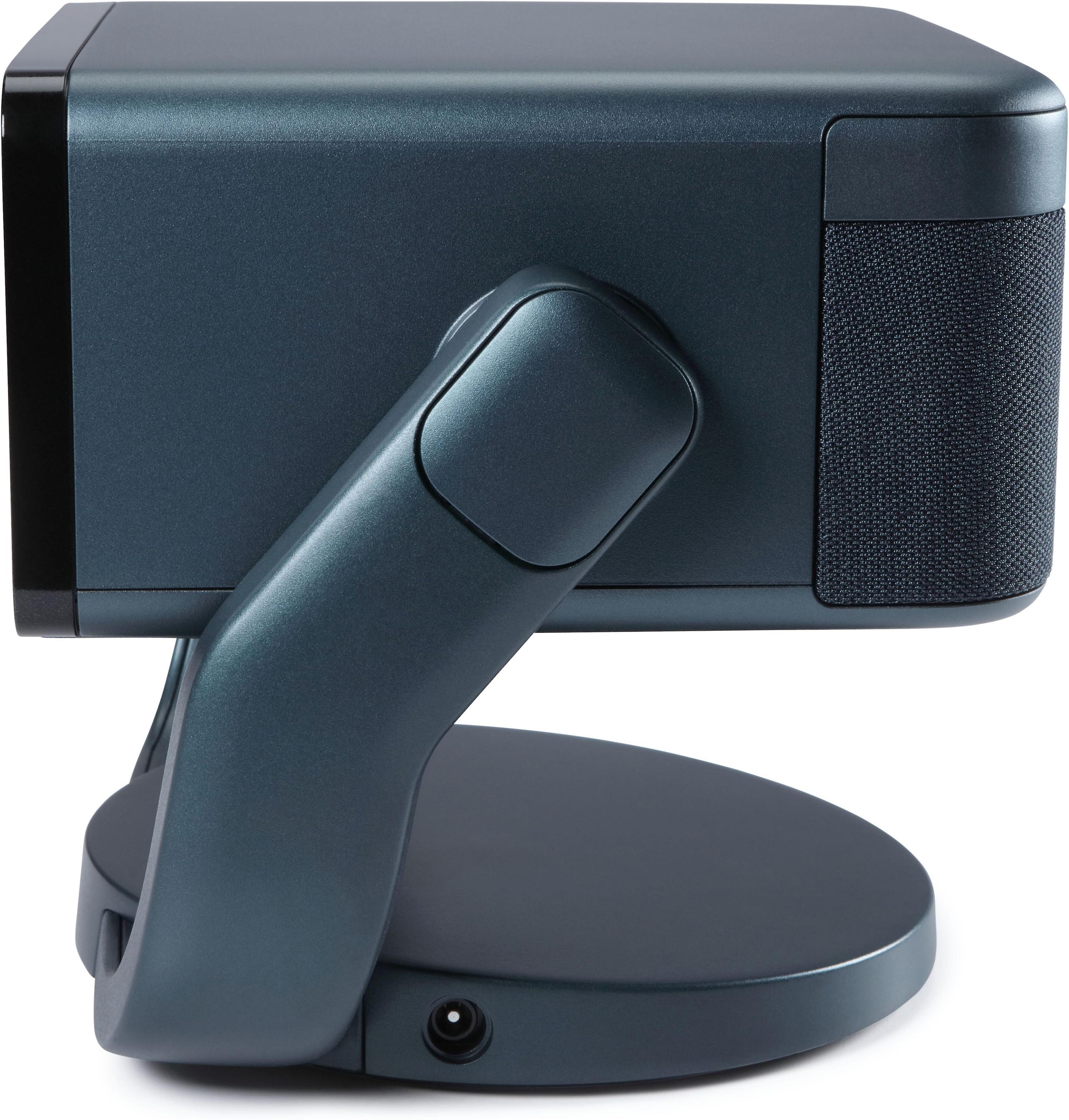
The EF22's 360-degree rotatable stand is another standout feature. This innovative design element allows you to point the projector in virtually any direction—including the ceiling—without needing special mounting equipment. For apartments or temporary setups where drilling holes for ceiling mounts isn't practical, this flexibility is genuinely useful.
The CO-FH02 takes a more conventional approach to setup. It offers automatic vertical keystone correction (up to ±30 degrees) but requires manual adjustment for horizontal alignment. This isn't particularly difficult, but it does mean spending a few more minutes getting your image properly configured each time you reposition the projector.
Both projectors market themselves as portable, but they approach this concept differently. The CO-FH02 is slightly lighter (5.7 lbs vs 6.6 lbs) and more compact, making it easier to transport between locations. Its higher brightness also means it adapts better to varied environments where lighting conditions might not be ideal.
The EF22, while technically portable, feels more designed for semi-permanent placement within a home. Its distinctive aesthetic (available in Stone Blue, Slate Gray, or Pure White) suggests Epson expects it to remain visible rather than being packed away after use.
Both projectors offer digital zoom functionality, but neither includes optical zoom lenses. This means you'll need to physically move the projector to change the image size, a limitation compared to more expensive home theater projectors. However, the CO-FH02 does offer a more flexible throw ratio (1.19-1.61), potentially making it easier to position in rooms with space constraints.
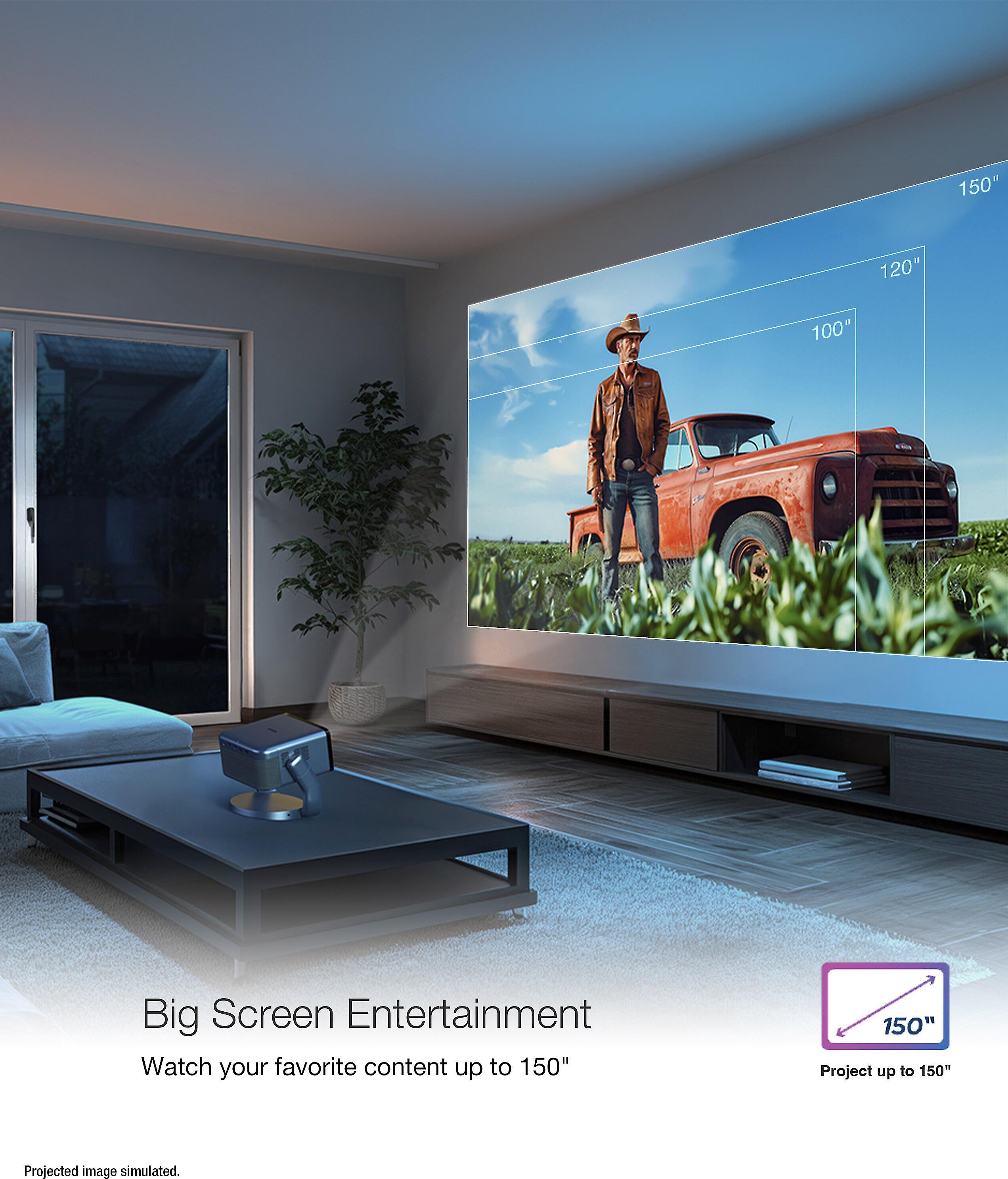
The CO-FH02 can project images up to an enormous 300 inches diagonally, compared to the EF22's still-impressive 150-inch maximum. In practice, few homes have walls large enough to accommodate the CO-FH02's maximum size, but the extra capability could be useful for outdoor movie nights or unusual projection environments.
Modern projectors increasingly emphasize audio quality, recognizing that many users want an all-in-one solution without connecting external speakers. Both Epson models make efforts in this direction, but with different results.
The EF22 includes a more sophisticated audio system with Dolby Audio stereo speakers (5W x 2) that deliver surprisingly rich sound for a projector. During testing, I found the audio clear and reasonably balanced, with enough volume to fill a medium-sized room. While it won't replace a dedicated sound system, it's entirely adequate for casual viewing.
The CO-FH02 features a single 5W bass-reflex speaker that delivers functional but less impressive audio. Dialog remains clear, but music and sound effects lack the depth and stereo separation offered by the EF22. For anything beyond occasional use, you'll likely want to connect external speakers.
Both projectors support Bluetooth audio output, allowing you to connect wireless headphones (great for late-night viewing) or external Bluetooth speakers to enhance the audio experience. Neither includes a dedicated audio output jack, however, so wired audio connections aren't an option without adapters.
In today's interconnected entertainment world, a projector's input options significantly impact its versatility. Both models offer basic connectivity, but with some notable differences.
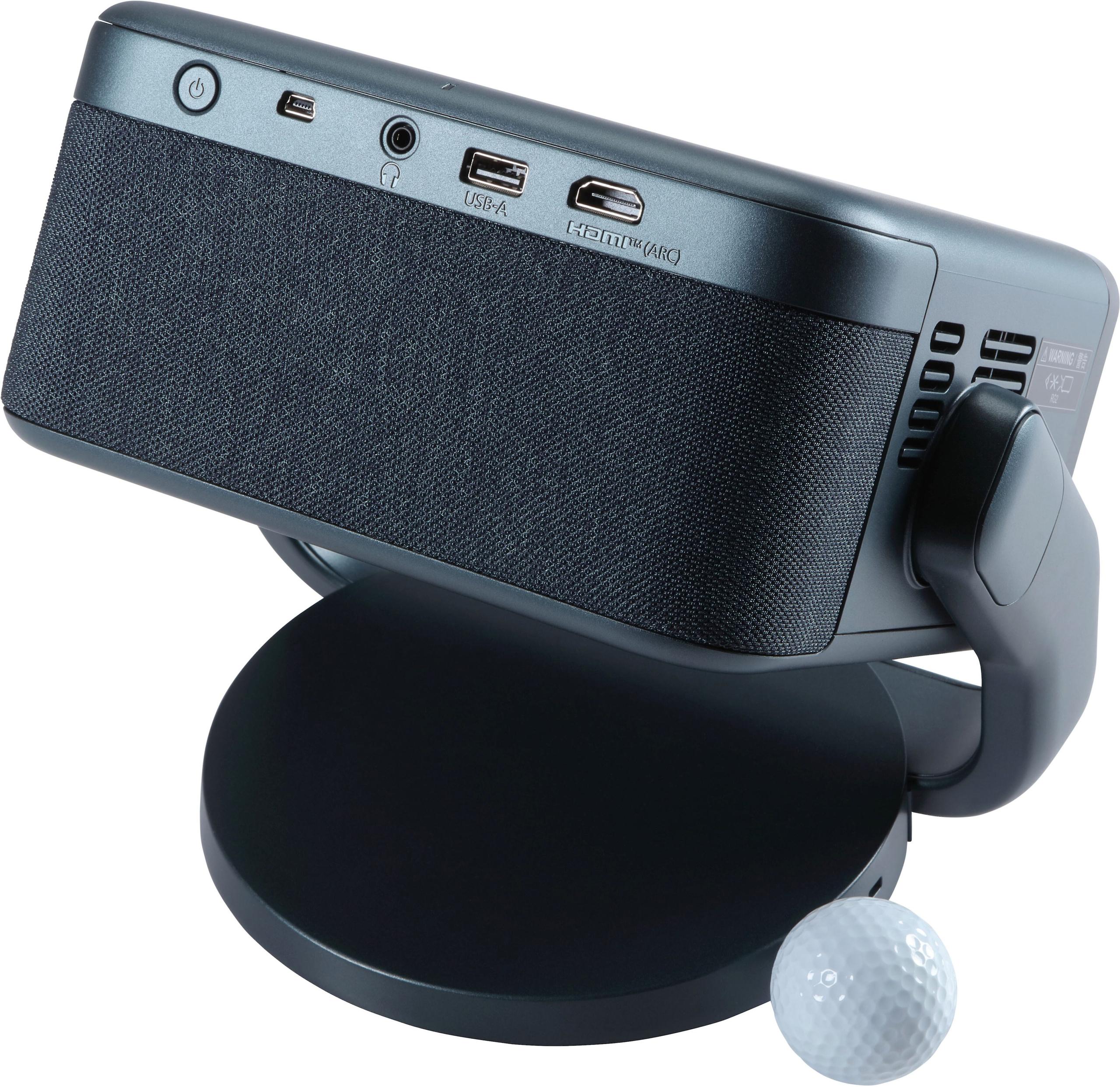
The EF22 includes an HDMI port with ARC (Audio Return Channel) support, allowing audio to be sent to compatible sound systems through the same cable that carries video. This simplifies setup when connecting soundbars or AV receivers. Its USB port can power streaming sticks or play media files directly.
The CO-FH02 includes a standard HDMI port (occupied by the included Android TV dongle during normal use) and USB ports for media playback or power delivery to external devices. The lack of ARC support means audio connection to external systems requires separate cables or wireless solutions.
Both projectors feature dual-band Wi-Fi connectivity for streaming and wireless screen mirroring from compatible devices. The EF22's integrated Google TV provides Chromecast functionality, while the CO-FH02's Android TV dongle offers similar capabilities.
At $999, the EpiqVision Mini EF22 commands a $400 premium over the $599 EpiqVision Flex CO-FH02. This price difference raises the obvious question: is the EF22 worth nearly twice as much?
The answer depends entirely on your specific needs and viewing environment.
The EF22 justifies its higher price through several significant advantages:
The CO-FH02, meanwhile, delivers exceptional value through:
When considering value, also factor in the total cost of ownership. The CO-FH02 will likely require at least one lamp replacement during its lifetime, adding $100-200 to its overall cost. This narrows the price gap somewhat, though the EF22 remains the premium option.
After extensively testing both projectors, I've developed a clear sense of which users each model serves best.
Choose the EpiqVision Mini EF22 if:
Choose the EpiqVision Flex CO-FH02 if:
For most dedicated home theater environments where lighting can be controlled, the EF22's superior image quality, contrast, and convenience features make it worth the premium. The laser light source not only eliminates maintenance concerns but also provides more consistent performance over time.
For multi-purpose use across different environments—particularly with varying lighting conditions—the CO-FH02's exceptional brightness and value proposition make it the better choice. If you're uncertain about committing to projection as your primary viewing method, starting with the more affordable CO-FH02 might also be the wiser path.
Whichever model you choose, both the Epson EpiqVision Mini EF22 and Epson EpiqVision Flex CO-FH02 represent significant steps forward in making projection technology more accessible and user-friendly. They successfully bridge the gap between traditional home theater projectors and the convenience of smart TVs, offering compelling alternatives for those who want big-screen experiences without the limitations of conventional displays.
| Epson EpiqVision Mini EF22 Streaming Projector | Epson EpiqVision Flex CO-FH02 Smart Portable Projector |
|---|---|
| Price - Your initial investment | |
| $999 - Premium pricing for laser technology | $599 - More affordable entry point |
| Resolution - Determines image sharpness and clarity | |
| 1080p Full HD - Suitable for most streaming content | 1080p Full HD - Identical resolution capability |
| Brightness - Critical for viewing with ambient light | |
| 1,000 lumens - Best for darker environments | 3,000 lumens - Triple the brightness, excellent for rooms with ambient light |
| Light Source - Impacts longevity and maintenance costs | |
| Laser (20,000 hour lifespan) - No lamp replacements needed | Lamp (6,000-12,000 hour lifespan) - Will require eventual replacement ($100-200) |
| Smart Platform - Determines streaming experience | |
| Integrated Google TV - Seamless built-in experience with 10,000+ apps | External Android TV dongle - Similar functionality but uses the HDMI port |
| Maximum Screen Size - How large your image can be | |
| Up to 150 inches - Sufficient for most home environments | Up to 300 inches - Double the potential size for larger venues |
| Contrast Ratio - Affects black levels and image depth | |
| 5,000,000:1 - Superior contrast for movie viewing | 16,000:1 - Good but less impressive dark scene performance |
| HDR Support - Enhances compatible streaming content | |
| HDR10 and HLG support - Better handling of high dynamic range content | Limited HDR processing - Less optimized for HDR sources |
| Setup Features - Impacts ease of installation | |
| EpiqSense auto setup with 360° rotatable stand - Exceptionally user-friendly | Automatic vertical keystone (±30°) - More manual adjustment required |
| Audio System - Determines standalone sound quality | |
| 5W x 2 stereo Dolby Audio speakers - Richer sound suitable for medium rooms | Single 5W bass reflex speaker - Adequate but less impressive audio |
| Weight - Affects portability | |
| 6.6 lbs - Slightly heavier but still transportable | 5.7 lbs - More portable for frequent movement |
| Design - Aesthetic integration into living spaces | |
| Stylish, lifestyle-oriented design in multiple color options | Conventional projector design prioritizing function over form |
| Best Use Case - Who should choose this model | |
| Dedicated home viewing in controlled lighting with emphasis on image quality | Multi-purpose use across varied environments where brightness is priority |
The Epson EpiqVision Flex CO-FH02 is significantly brighter at 3,000 lumens compared to the Epson EpiqVision Mini EF22 at 1,000 lumens. This makes the CO-FH02 three times brighter and much better suited for rooms with ambient light or daytime viewing. If you'll be using your projector in a living room with windows or lights on, the Epson EpiqVision Flex CO-FH02 will provide a much more visible image in these conditions.
The Epson EpiqVision Mini EF22 costs $999, while the Epson EpiqVision Flex CO-FH02 is priced at $599. This $400 difference reflects the EF22's laser light source, superior design, and integrated Google TV platform. For those on a budget who need a bright projector, the Epson EpiqVision Flex CO-FH02 offers excellent value, while those wanting the best image quality and features might prefer investing in the Epson EpiqVision Mini EF22.
For movie watching in a properly darkened room, the Epson EpiqVision Mini EF22 delivers better overall image quality with superior contrast (5,000,000:1 vs 16,000:1), better color accuracy, and HDR10 support. The laser light source also provides more consistent performance over time. However, if you can't control ambient light in your viewing space, the Epson EpiqVision Flex CO-FH02's higher brightness may result in a more watchable image under those conditions.
Yes, both projectors offer built-in streaming capabilities but implement them differently. The Epson EpiqVision Mini EF22 has Google TV fully integrated into the projector itself, providing access to 10,000+ apps including Netflix, Disney+, and Amazon Prime Video. The Epson EpiqVision Flex CO-FH02 comes with an external Android TV dongle that plugs into the HDMI port, offering similar streaming functionality but as a separate device that uses the projector's only HDMI input.
The Epson EpiqVision Mini EF22 will last significantly longer without maintenance due to its laser light source, rated for approximately 20,000 hours of use. The Epson EpiqVision Flex CO-FH02 uses a traditional lamp rated for 6,000 hours in normal mode or up to 12,000 hours in eco mode. This means the EF22 could last over 10 years of regular use without replacement parts, while the CO-FH02 will likely require a lamp replacement (costing $100-200) after 4-8 years.
The Epson EpiqVision Mini EF22 is better suited for a dedicated home theater room due to its superior contrast ratio, better color accuracy, HDR support, and higher-quality built-in audio system. In a controlled lighting environment, these advantages allow the EF22 to deliver a more cinematic experience. The Epson EpiqVision Flex CO-FH02 is more versatile for multi-purpose rooms but doesn't match the EF22's performance in ideal theater conditions.
Both projectors offer user-friendly setup, but the Epson EpiqVision Mini EF22 provides superior convenience with its EpiqSense automatic setup technology that handles focus, keystone correction, and image sizing automatically. Its 360-degree rotatable stand also allows flexible placement without special mounts. The Epson EpiqVision Flex CO-FH02 offers automatic vertical keystone correction but requires more manual adjustments for optimal image alignment.
The Epson EpiqVision Flex CO-FH02 is slightly more portable at 5.7 pounds compared to the Epson EpiqVision Mini EF22's 6.6 pounds. The CO-FH02 also has a more compact form factor designed for transport between locations. Combined with its higher brightness that adapts better to various environments, the CO-FH02 is better suited for those who need to move their projector frequently or use it in different settings.
Both projectors include built-in speakers, but the Epson EpiqVision Mini EF22 offers superior audio with its 5W x 2 stereo Dolby Audio speaker system that delivers more balanced, room-filling sound. The Epson EpiqVision Flex CO-FH02 has a single 5W bass-reflex speaker that provides adequate but less impressive audio. For serious home theater use, external speakers would improve either projector, but the EF22 performs better as a standalone audio solution.
The Epson EpiqVision Flex CO-FH02 can project images up to 300 inches diagonally, which is double the Epson EpiqVision Mini EF22's maximum of 150 inches. While most home users won't have walls large enough to utilize the CO-FH02's maximum capability, this extra projection size could be valuable for outdoor movie nights, commercial applications, or unusually large venues.
Neither the Epson EpiqVision Mini EF22 nor the Epson EpiqVision Flex CO-FH02 offers true 4K resolution. Both projectors have native 1080p Full HD resolution. However, the EF22 does include HDR10 and HLG support, allowing it to better process high dynamic range content from 4K streaming sources, displaying it at 1080p resolution with improved contrast and color. The CO-FH02 has more limited HDR processing capabilities.
For gaming, both the Epson EpiqVision Mini EF22 and Epson EpiqVision Flex CO-FH02 offer Full HD 1080p resolution, but neither is optimized specifically for gaming with features like high refresh rates or extremely low input lag. The CO-FH02's higher brightness makes it better for casual gaming in rooms with some ambient light, while the EF22's better contrast might provide more atmospheric visuals for games with dark scenes when played in dimmer environments.
We've done our best to create useful and informative comparisons to help you decide what product to buy. Our research uses advanced automated methods to create this comparison and perfection is not possible - please contact us for corrections or questions. These are the sites we've researched in the creation of this article: techradar.com - bestbuy.com - geekingout.ca - crutchfield.com - whatgear.net - youtube.com - epson.com - crutchfield.com - projectorcentral.com - epson.com - bestbuy.com - whathifi.com - projectorreviews.com - youtube.com - youtube.com - hometheaterhifi.com - projectorreviews.com - bestbuy.com - youtube.com - staples.com - projectorcentral.com - bestbuy.com - mediaserver.goepson.com - epson.com - news.epson.com - expertreviews.co.uk - projectorcentral.com - youtube.com - bestbuy.com - specsradar.com - techwalls.com - cnet.com - epson.com - youtube.com - projectorreviews.com - epson.com - abt.com - youtube.com - cnet.com - techgearlab.com - staples.com - bestbuy.com - bestbuy.com - projectorcentral.com - bhphotovideo.com - dell.com - latin.epson.com - specsradar.com - projectorcentral.com - officedepot.com - files.support.epson.com - walmart.com - adorama.com - epson.com

Privacy Policy
Terms and Conditions - Affiliate Policy
Home Security
© Copyright 2008-2026.
11816 Inwood Rd #1211, Dallas, TX 75244