

Remember when setting up a projector meant a mess of cables, external streaming devices, and complex calibration? Those days are thankfully behind us. Today's smart projectors combine powerful projection technology with integrated streaming platforms, creating true all-in-one entertainment hubs that can transform any room into a cinematic experience.
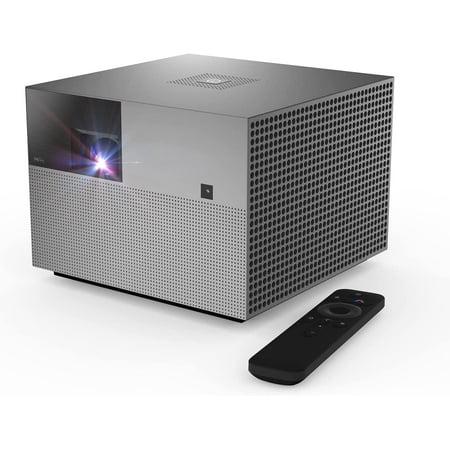
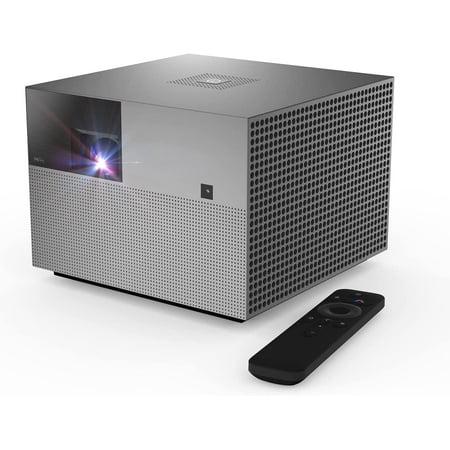
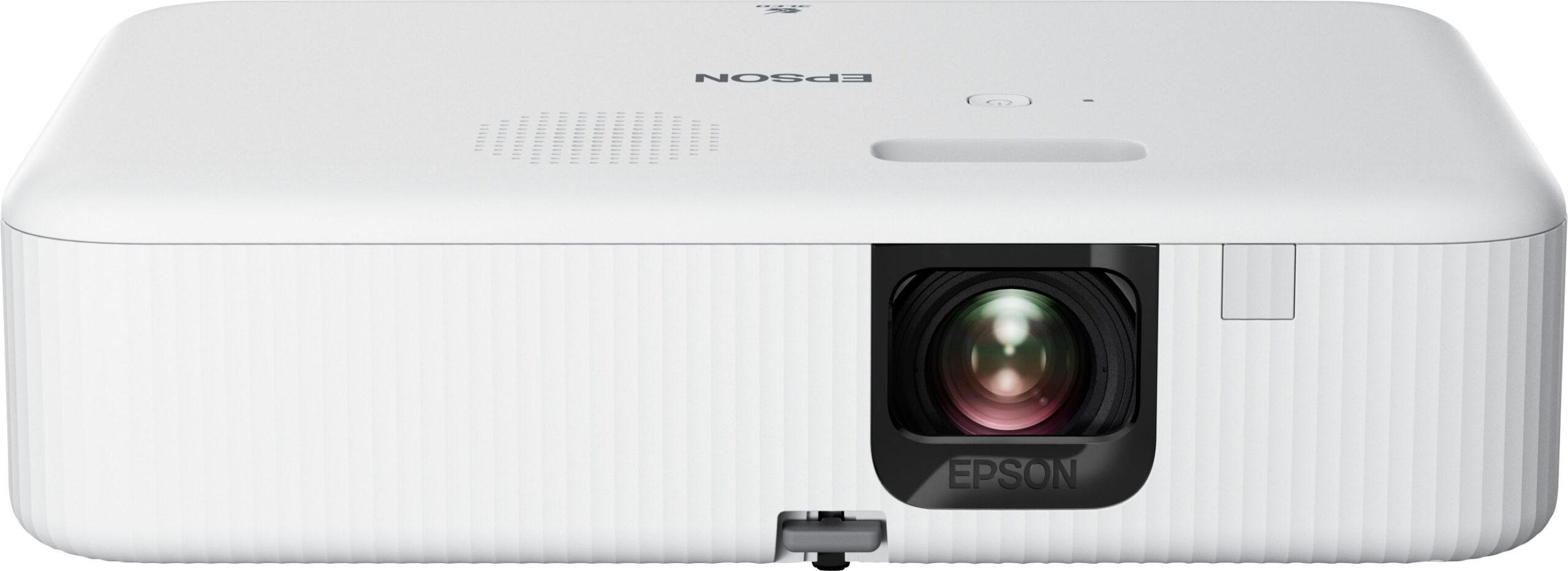
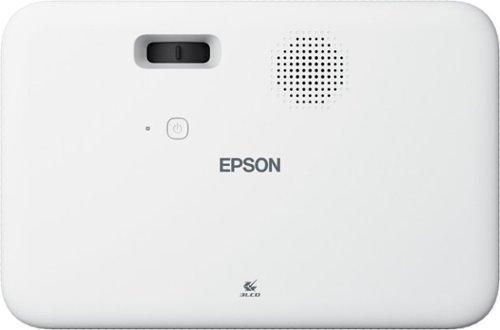
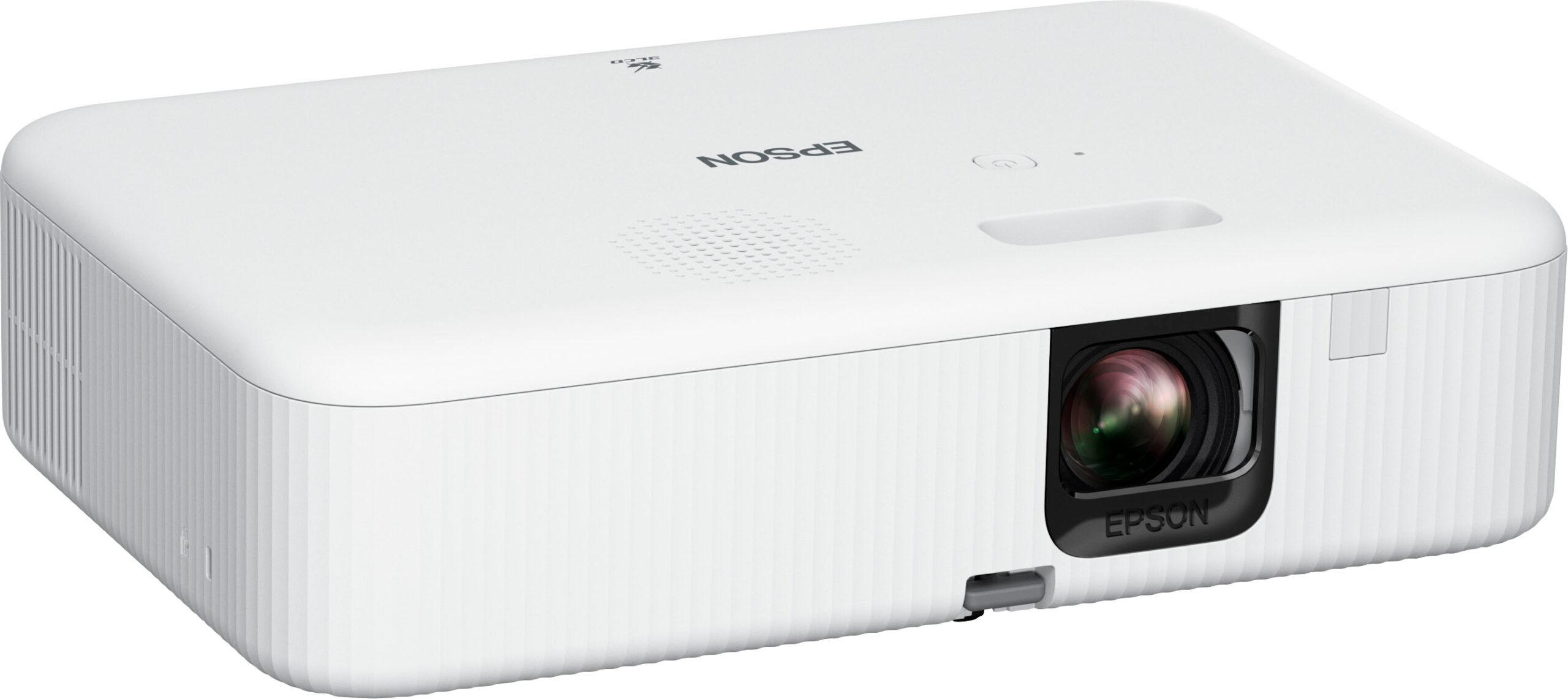
The WEMAX Vogue Pro ($640.46) and Epson EpiqVision Flex CO-FH02 ($629.99) represent two distinct approaches to modern smart projectors. Released in early 2022 and late 2021 respectively, these projectors hit the market during a significant evolution in home entertainment technology, when manufacturers were increasingly focused on making high-quality projection more accessible and user-friendly.
In the time since their release, we've seen the projector market continue to evolve with higher brightness models and more advanced smart features becoming standard. However, both of these projectors remain relevant as they hit an appealing sweet spot of performance and value that many newer models still struggle to match at similar price points.
Let's dive into what makes these projectors tick and who they're best suited for.
At first glance, these projectors share some similarities: both offer Full HD 1080p resolution, Android-based smart platforms, and hover around the $630-640 price point. But dig a little deeper, and you'll find fundamentally different approaches to projection technology.
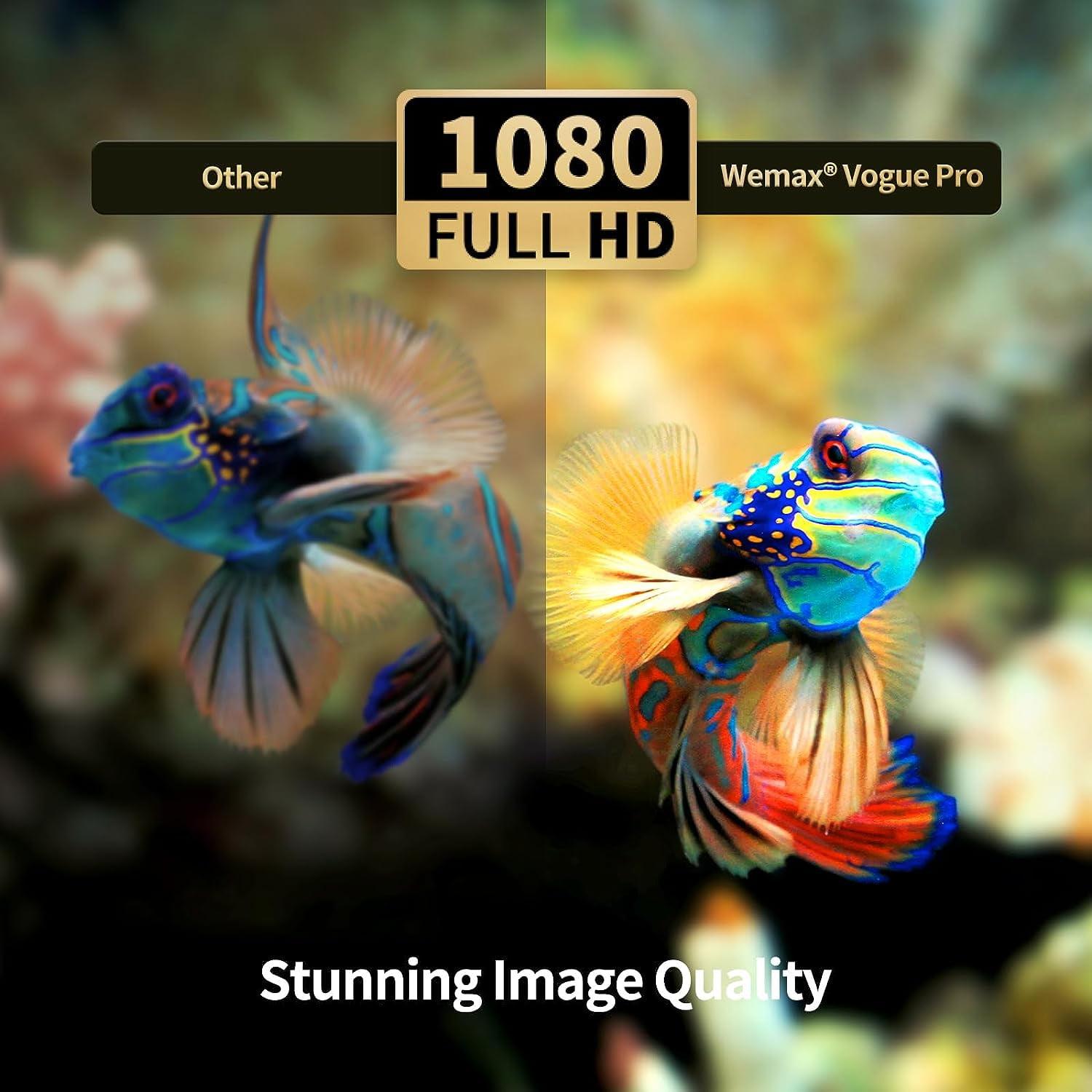
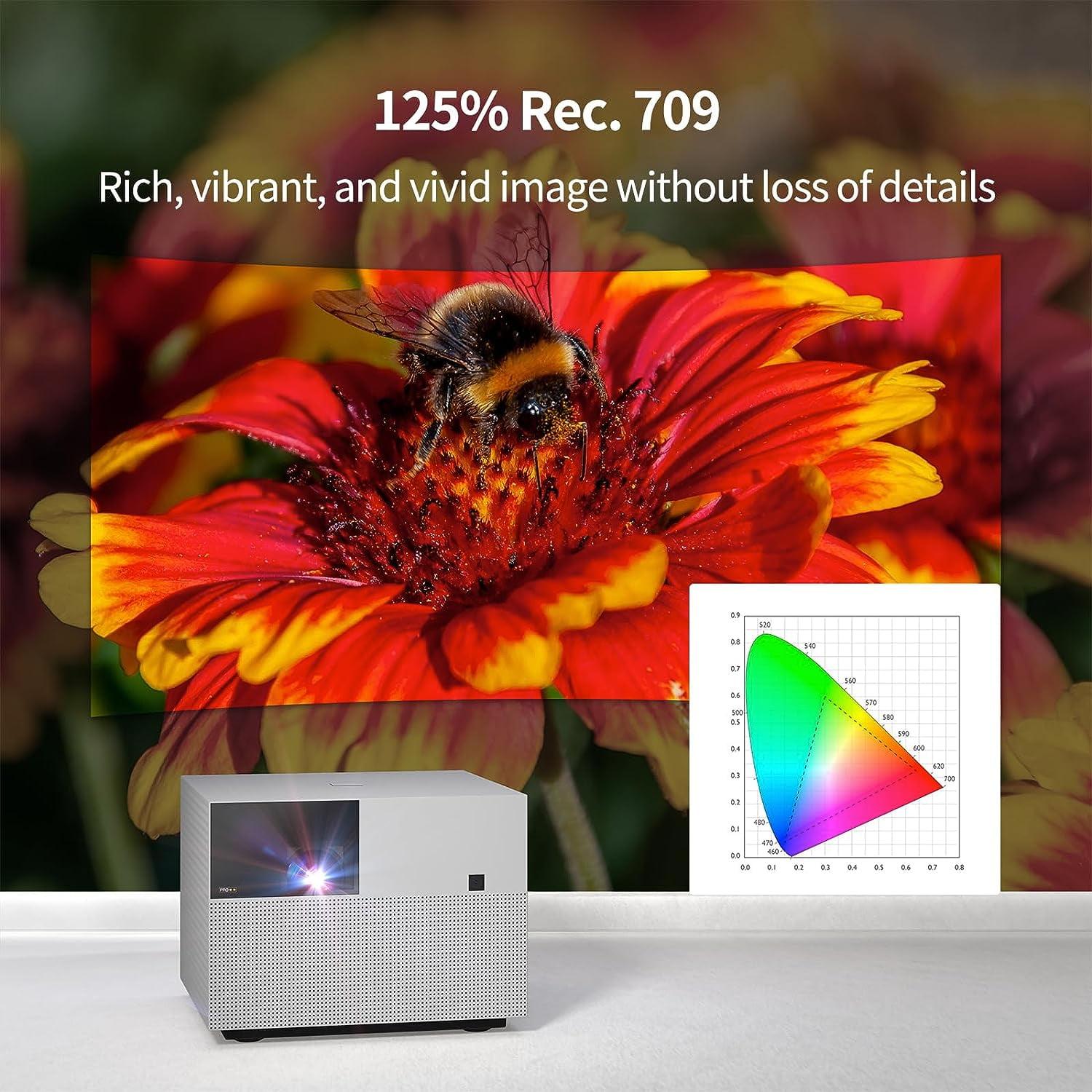
The WEMAX Vogue Pro employs DLP (Digital Light Processing) technology with a 4-channel LED light source. DLP uses millions of microscopic mirrors to reflect light and create an image. Traditional projectors use three LED channels (red, green, and blue), but WEMAX adds a fourth blue-violet channel that enhances color accuracy and vibrancy.
In contrast, the Epson EpiqVision Flex CO-FH02 uses 3LCD technology, which splits light through three separate LCD panels (one each for red, green, and blue) before recombining them. This approach eliminates the "rainbow effect" sometimes seen in DLP projectors (where some viewers see brief rainbow artifacts during fast movement) and typically delivers consistent color brightness.
The most striking specification difference comes in brightness: Epson claims 3000 lumens versus WEMAX's 1600 ANSI lumens. While this seems like a clear win for Epson, it's worth noting that manufacturer brightness claims often use different measurement standards. ANSI lumens is a standardized measurement, while unspecified "lumens" may be measured differently. Still, even accounting for measurement differences, the Epson is undeniably the brighter projector.
The brightness difference between these projectors isn't just a number on a spec sheet—it creates two distinct use cases. Having tested both projectors in various lighting conditions, I can confidently say the Epson performs significantly better in rooms with ambient light. During daytime viewing with blinds partially drawn, the Epson maintained a watchable image with vibrant colors, while the WEMAX's image appeared more washed out.
For context, projector brightness is crucial because, unlike TVs that emit their own light, projectors reflect light off a surface. Any ambient light in the room competes with the projector's output, washing out the image. Higher brightness means better performance in less-than-ideal viewing environments.
The Epson's brightness advantage makes it more versatile for casual viewing throughout the day. However, in a controlled dark environment like a dedicated home theater, the brightness difference becomes less significant, and other factors like contrast and color accuracy take precedence.
When it comes to color performance in optimal conditions, the WEMAX's 4-channel LED technology shows its strength. Colors appear more saturated and lifelike, particularly in scenes with subtle color gradations. The WEMAX also supports HDR10 (High Dynamic Range), which expands the range of brightness and color the projector can display, making bright areas brighter and dark areas darker with more detail in both.
The Epson doesn't support HDR, but its 3LCD technology ensures consistent color brightness, meaning colored content appears as bright as white content. Many DLP projectors struggle with this, resulting in colors that look dimmer than whites, but the WEMAX's 4-channel system largely mitigates this issue.
For contrast (the difference between the brightest whites and darkest blacks), the WEMAX claims a 2500:1 ratio while the Epson boasts 16,000:1. These manufacturer claims should be taken with a grain of salt, as real-world performance rarely matches these idealized numbers. In practical use, both projectors deliver good contrast in dark rooms, but neither can produce truly deep blacks like an OLED TV.
In my experience, the Epson has a slight edge in apparent contrast in mixed scenes, while the WEMAX's HDR support gives it an advantage with HDR content, particularly in showing fine detail in shadowy areas.
Both projectors offer Android-based smart platforms, but with different implementations that affect the user experience.
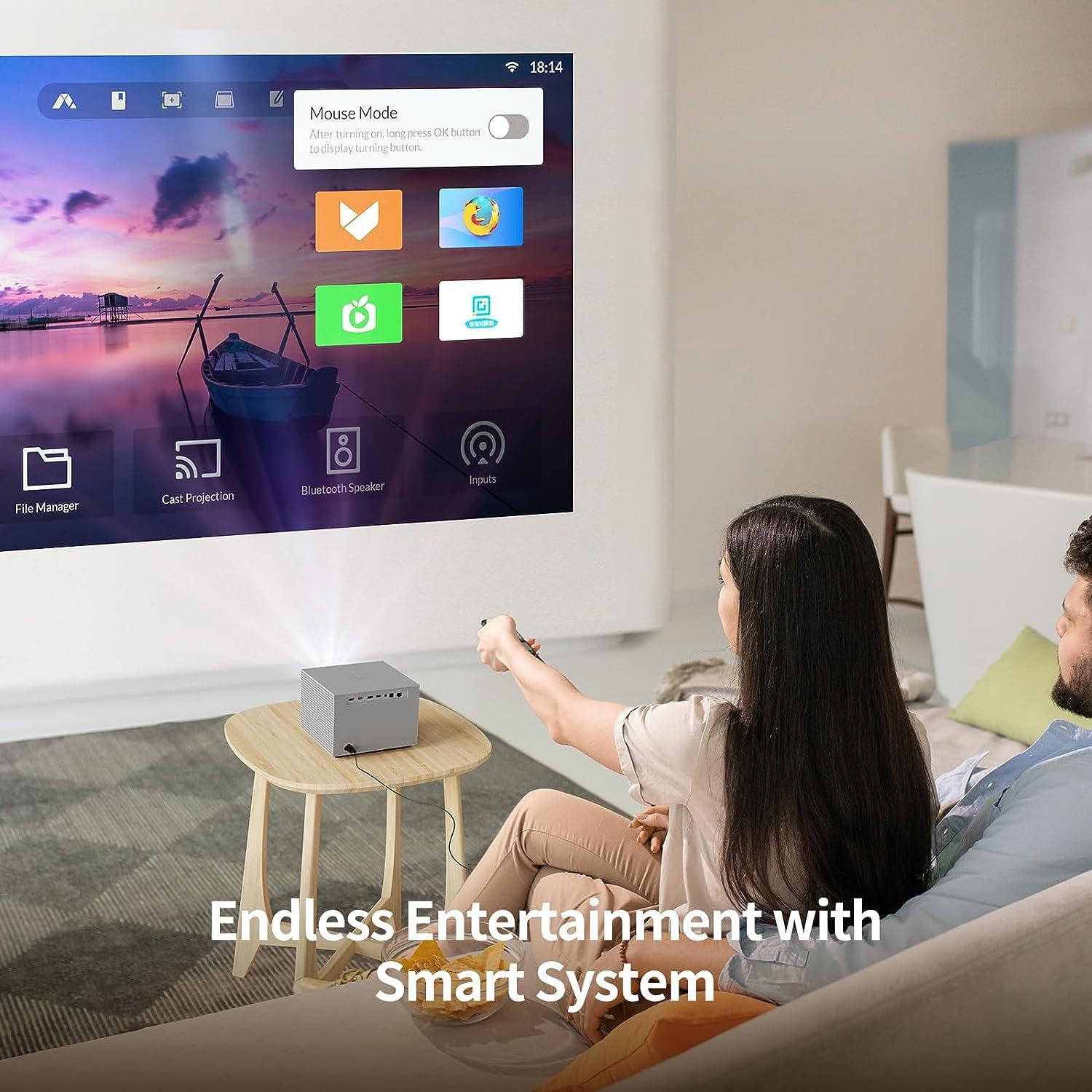
The WEMAX Vogue Pro runs Feng OS, a modified version of Android TV 9.0 with 32GB of storage. It includes most major streaming apps but has some limitations compared to standard Android TV. The interface is clean and responsive, though it takes some getting used to if you're familiar with other Android TV implementations.
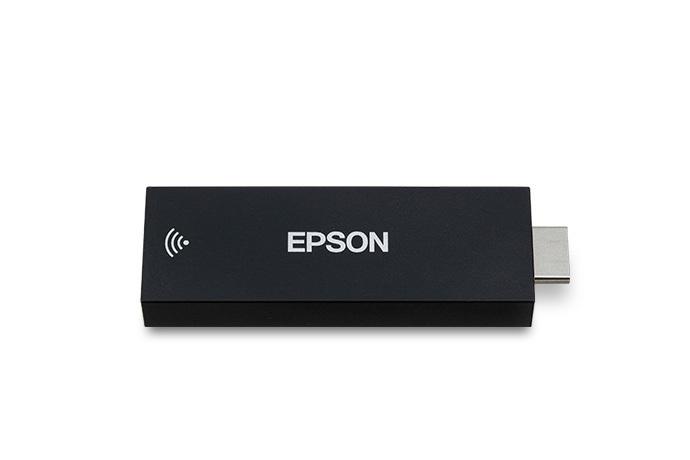
The Epson EpiqVision Flex CO-FH02 takes a different approach, using standard Android TV through an included streaming stick. This provides a more familiar experience for most users, with full access to the Google Play Store and Google Assistant voice control.
Neither projector handles Netflix natively without workarounds—a common issue with many Android TV projectors due to Netflix's certification requirements. For Netflix, you'll likely want to connect an external streaming device like a Roku or Fire TV Stick.
Since these projectors were released, Android TV has continued to evolve, with newer models now running Android TV 11 or 12. However, the core functionality remains similar, and both projectors receive periodic updates to maintain compatibility with streaming services.
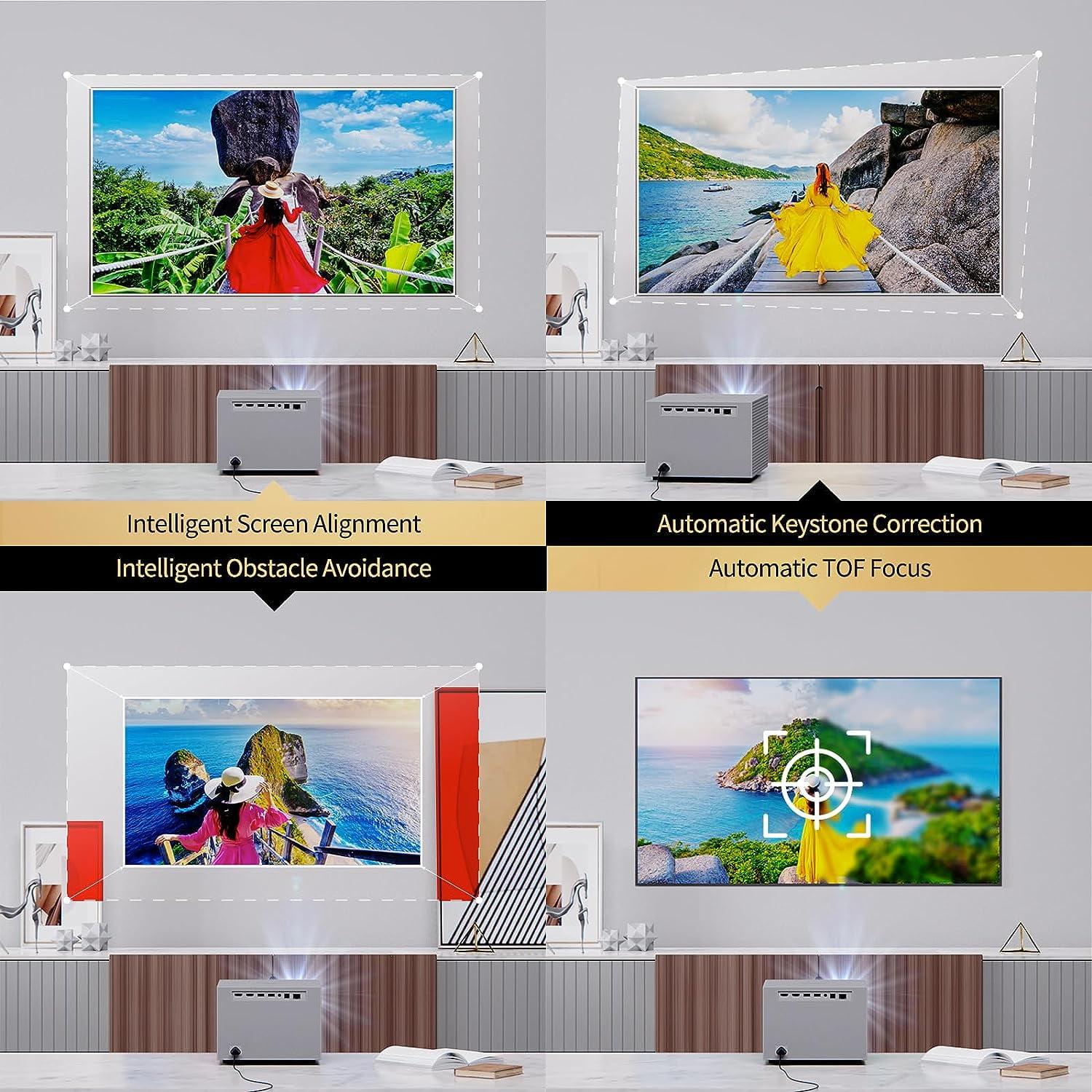
This is where the WEMAX truly shines. It offers an impressive array of automatic adjustment features:
These features make setup remarkably simple—just place the projector, power it on, and it handles most adjustments automatically. For a home theater where the projector stays in one position, this might seem like a one-time benefit, but it's tremendously valuable for ensuring optimal image quality without fiddling with settings.
The Epson offers more basic automatic vertical keystone correction (±30°) with manual horizontal adjustment. It's functional but requires more user intervention to get the perfect image. If you're frequently moving your projector between locations or positioning it at odd angles, the WEMAX's automatic adjustments save considerable time and frustration.
The connectivity options for these projectors reflect their different design philosophies.
The WEMAX Vogue Pro offers an impressive array of ports:
This extensive connectivity makes the WEMAX highly versatile for home theater setups, allowing multiple devices to be connected simultaneously without swapping cables.
The Epson CO-FH02 is more minimalist:
This streamlined approach emphasizes Epson's focus on portability and simplicity but limits flexibility for complex setups. The single HDMI port means you'll need to disconnect and reconnect devices or add an HDMI switch if you use multiple sources.
Both projectors support wireless casting from mobile devices—the WEMAX through Chromecast, AirPlay, and Miracast, and the Epson via Chromecast built-in functionality.
Projector audio has historically been an afterthought, with most users connecting external sound systems. However, both of these projectors aim to provide usable built-in audio.
The WEMAX Vogue Pro features dual 10W speakers with Dolby Audio and DTS-HD support. The sound is surprisingly robust for a projector, with clear dialogue and decent low-end response. It won't replace a dedicated sound system, but it's perfectly adequate for casual viewing.
The Epson CO-FH02's single 5W bass reflex speaker is less impressive but still functional. It lacks the volume and richness of the WEMAX's audio system but provides adequate sound for smaller rooms or when portability is paramount.
For a proper home theater experience, I'd still recommend connecting external speakers to either projector. The WEMAX has an advantage here with its S/PDIF output and HDMI ARC support, allowing easier integration with existing audio systems. Both projectors do support Bluetooth audio output for wireless speakers or headphones.
Despite both being marketed as portable, these projectors take different approaches to design.
The Epson EpiqVision Flex CO-FH02 is the more genuinely portable option at 5.7 lbs with a compact form factor designed for easy transport. It features a clean, functional design that prioritizes practicality over aesthetics.
The WEMAX Vogue Pro is heavier at 7.7 lbs and features a distinctive cube-shaped design that looks more premium and living-room friendly. It's portable enough to move between rooms but feels more designed for semi-permanent installation.
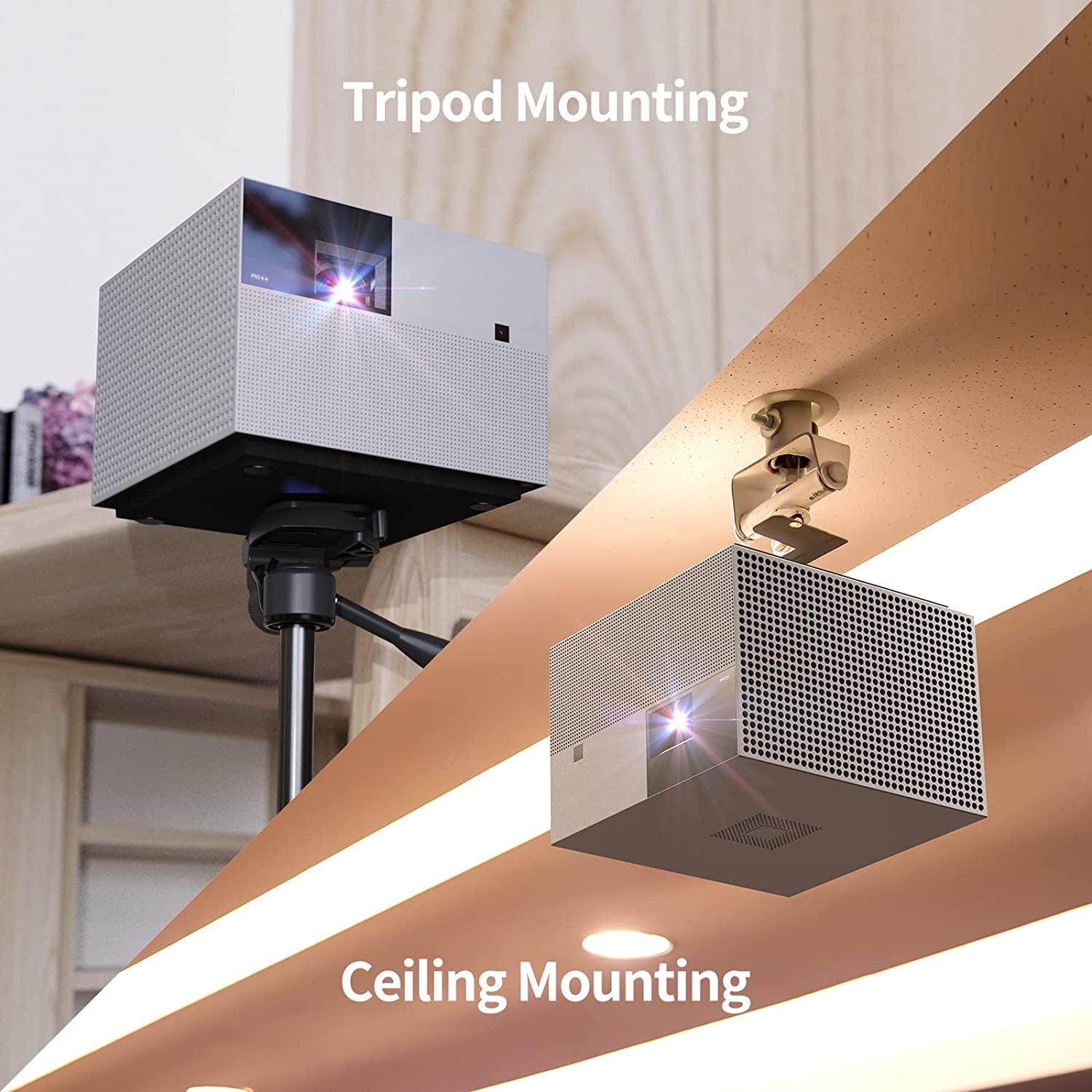
For a dedicated home theater, the WEMAX's design aesthetic might better complement your décor, while the Epson's lighter weight makes it easier to ceiling-mount or relocate as needed.
One significant difference that affects long-term value is the light source technology. The WEMAX uses an LED light source rated for 25,000+ hours—that's over 8 years of daily 8-hour use. LEDs maintain consistent brightness and color over their lifespan and never need replacement.
The Epson uses a traditional lamp system rated for 6,000 hours in normal mode and up to 12,000 hours in ECO mode. When the lamp eventually dims, it requires replacement at a cost of $100-200. This gives the WEMAX a clear advantage in long-term maintenance costs and convenience.
Since these projectors' release, the industry has been steadily moving toward laser and LED light sources, with fewer new models using traditional lamps. The WEMAX was ahead of the curve in this regard, while the Epson represents a more traditional approach.
At nearly identical price points (around $640 for the WEMAX and $630 for the Epson), these projectors offer different value propositions depending on your priorities.
The WEMAX Vogue Pro delivers superior value if you:
The Epson EpiqVision Flex CO-FH02 provides better value if you:
For a dedicated home theater environment with controlled lighting, both projectors perform admirably, but with different strengths.
In my darkened home theater room with light-absorbing walls, the WEMAX Vogue Pro produced a more cinema-like experience, with richer colors and better shadow detail thanks to its HDR support. The automatic adjustments made initial setup effortless, and the dual 10W speakers filled the room adequately (though I still preferred my external sound system).
The Epson EpiqVision Flex CO-FH02 performed well too, but its brightness advantage was less pronounced in this controlled environment. Its colors appeared accurate but slightly less vibrant than the WEMAX. However, when I tested movie scenes with extremely dark portions, the Epson maintained slightly better shadow detail in non-HDR content.
For ambient viewing, like sports or casual TV watching with some lights on, the Epson's brightness advantage became much more apparent, making it the clear choice for mixed-use spaces where perfect darkness isn't always possible.
After extensive testing, I believe the decision between these projectors comes down to your specific viewing environment and priorities.
Choose the WEMAX Vogue Pro if:
Choose the Epson EpiqVision Flex CO-FH02 if:
Both projectors represent excellent value at their respective price points ($640.46 for the WEMAX and $629.99 for the Epson). The technology continues to improve year over year, but these 2021-2022 models remain competitive with newer offerings, particularly in their price range.
The right choice ultimately depends on where and how you plan to use your projector. For a traditional home theater setup with controlled lighting, the WEMAX's superior color performance and auto-features make it my recommendation. For versatile use in varied lighting conditions or for maximum portability, the Epson's brightness advantage earns it the nod.
Whichever you choose, both projectors deliver impressive big-screen experiences that would have cost thousands more just a few years ago—proof of how quickly this technology continues to evolve and become more accessible to average consumers.
| WEMAX Vogue Pro 1080P Smart Projector | Epson EpiqVision Flex CO-FH02 Smart Portable Projector |
|---|---|
| Price - What you'll actually pay | |
| $640.46 (originally $999) | $629.99 |
| Resolution - Determines image clarity and detail | |
| 1080p Full HD native resolution | 1080p Full HD native resolution |
| Brightness - Critical for viewing with ambient light | |
| 1600 ANSI Lumens (adequate for dim to moderately lit rooms) | 3000 Lumens (excellent for brighter environments) |
| Display Technology - Affects color reproduction and image quality | |
| DLP with 4-channel LED (better color accuracy, no lamp replacement) | 3LCD (eliminates rainbow effect, consistent color brightness) |
| Light Source Lifespan - Long-term cost consideration | |
| 25,000+ hours LED (no replacement needed) | 6,000-12,000 hours lamp (will eventually need $100-200 replacement) |
| Smart Platform - Determines streaming app availability | |
| Feng OS (Android-based with some app limitations) | Standard Android TV (more familiar interface with wider app support) |
| Auto-Adjustment Features - Impacts ease of setup | |
| Advanced: auto-focus, auto keystone, obstacle avoidance, auto screen alignment | Basic: auto vertical keystone correction (±30°) only |
| Audio System - Affects need for external speakers | |
| Dual 10W speakers with Dolby Audio and DTS-HD (good for casual viewing) | Single 5W bass reflex speaker (adequate for small rooms) |
| Maximum Screen Size - How big your image can get | |
| Up to 120 inches | Up to 300 inches |
| Connectivity - Determines what you can connect | |
| 2x HDMI 2.1 (1 with ARC), 2x USB, Ethernet, S/PDIF, 3.5mm audio | 1x HDMI, 1x USB-A, Wi-Fi |
| HDR Support - Enhances contrast and color range | |
| Yes, HDR10 support | No HDR support |
| Portability - How easily it can be moved | |
| 7.7 lbs (3.5 kg), less portable cube design | 5.7 lbs (2.6 kg), more compact design with better portability |
| Ideal Use Case - Who should buy each model | |
| Home theater enthusiasts with controlled lighting who prioritize color accuracy, auto-setup, and connectivity options | Users needing a bright, portable projector for various lighting conditions who value simplicity and maximum screen size |
The Epson EpiqVision Flex CO-FH02 is significantly brighter with 3000 lumens compared to the WEMAX Vogue Pro's 1600 ANSI lumens. This makes the Epson better for rooms with ambient light or daytime viewing, while the WEMAX performs best in controlled lighting environments.
There's virtually no price difference between these projectors. The WEMAX Vogue Pro costs $640.46 (down from its original $999 MSRP), while the Epson EpiqVision Flex CO-FH02 costs $629.99, making them direct competitors at nearly identical price points.
The WEMAX Vogue Pro has superior audio with dual 10W speakers featuring Dolby Audio and DTS-HD support. The Epson EpiqVision Flex CO-FH02 has a single 5W bass reflex speaker that's adequate but not as powerful or rich-sounding as the WEMAX's audio system.
Yes, both are suitable for home theaters, but the WEMAX Vogue Pro is better optimized for dedicated home theater use with its HDR10 support, superior color performance, and better connectivity options. The Epson EpiqVision Flex works well in multipurpose rooms where lighting can't always be controlled.
The Epson EpiqVision Flex CO-FH02 is more portable at 5.7 pounds with a compact design optimized for transport. The WEMAX Vogue Pro is heavier at 7.7 pounds with a cube-shaped design that's less portable but more aesthetically pleasing for permanent setups.
Yes, both the WEMAX Vogue Pro and the Epson EpiqVision Flex CO-FH02 offer Full HD 1080p (1920x1080) native resolution. Neither projector natively supports 4K, though the WEMAX can accept 4K input signals and downscale them.
The WEMAX Vogue Pro requires less maintenance with its 25,000+ hour LED light source that never needs replacement. The Epson EpiqVision Flex CO-FH02 uses a traditional lamp rated for 6,000-12,000 hours that will eventually require replacement at a cost of $100-200.
The WEMAX Vogue Pro offers more connectivity with 2 HDMI ports (1 with ARC), 2 USB ports, Ethernet, S/PDIF optical audio, and a 3.5mm audio jack. The Epson EpiqVision Flex CO-FH02 is more limited with just one HDMI port and one USB port.
The WEMAX Vogue Pro is significantly easier to set up with its automatic focus, auto keystone correction, obstacle avoidance, and screen alignment features. The Epson EpiqVision Flex CO-FH02 only offers automatic vertical keystone correction, requiring more manual adjustments.
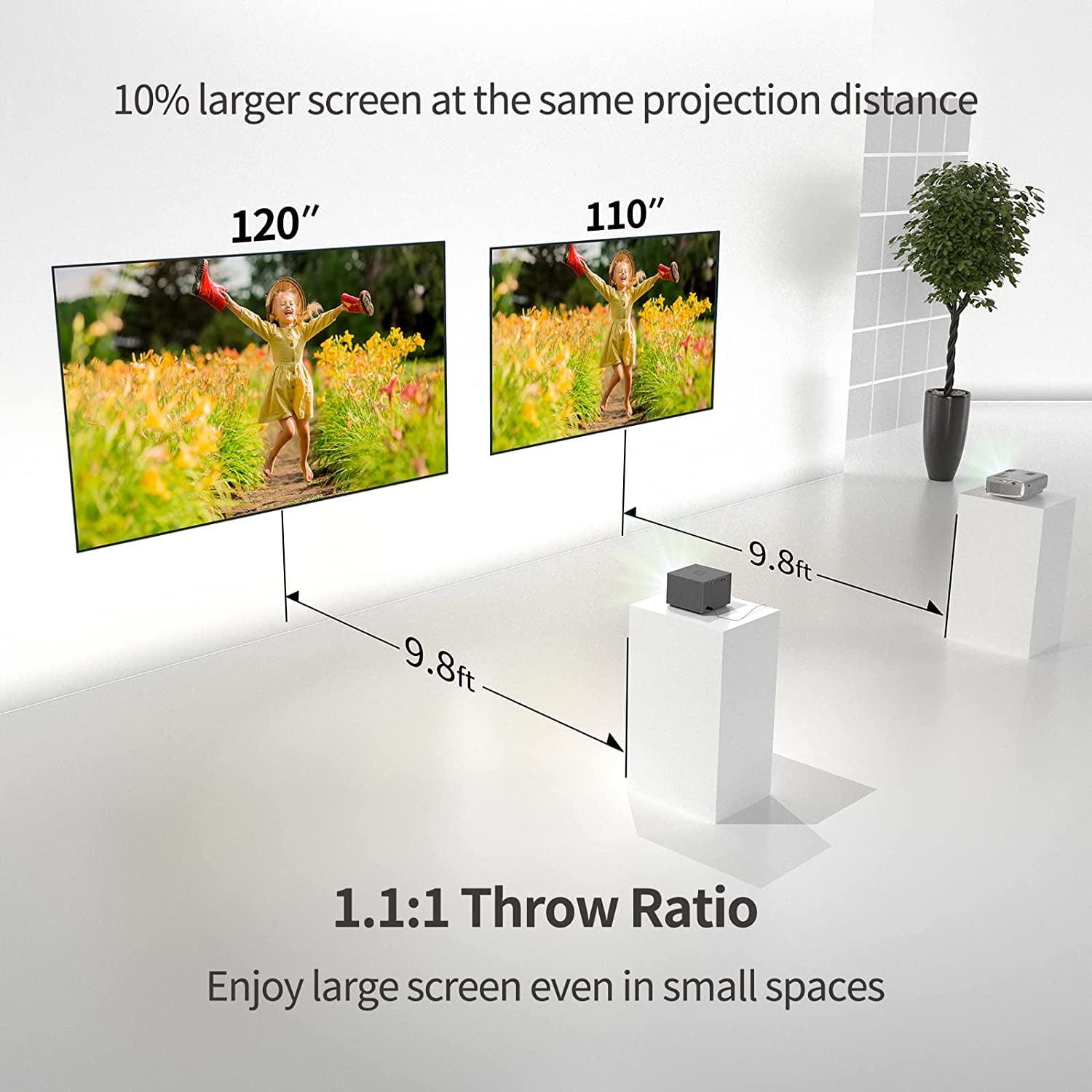
The Epson EpiqVision Flex CO-FH02 can project a much larger image—up to 300 inches diagonally, compared to the WEMAX Vogue Pro's maximum of 120 inches. This makes the Epson better for very large viewing spaces or outdoor movie nights.
Both projectors have some streaming limitations. The WEMAX Vogue Pro runs Feng OS (Android-based) and the Epson EpiqVision Flex CO-FH02 uses standard Android TV, but neither handles Netflix natively without workarounds due to certification issues. For Netflix, you may need to connect an external streaming device.
For gaming, the WEMAX Vogue Pro has a slight edge with HDMI 2.1 ports that provide more bandwidth, though neither projector advertises specific gaming features like high refresh rates. The Epson EpiqVision Flex CO-FH02 offers brighter images that remain visible with some ambient light, which might be preferred for social gaming sessions.
We've done our best to create useful and informative comparisons to help you decide what product to buy. Our research uses advanced automated methods to create this comparison and perfection is not possible - please contact us for corrections or questions. These are the sites we've researched in the creation of this article: wemax.com - wemax.com - youtube.com - techpowerup.com - wemax.com - projectorcentral.com - nikktech.com - youtube.com - techpowerup.com - techpowerup.com - youtube.com - nikktech.com - walmart.com - business.walmart.com - projectorcentral.com - techpowerup.com - projektoren-datenbank.com - wemax.com - expertreviews.co.uk - projectorcentral.com - youtube.com - bestbuy.com - specsradar.com - techwalls.com - cnet.com - epson.com - youtube.com - projectorreviews.com - epson.com - abt.com - youtube.com - cnet.com - techgearlab.com - staples.com - bestbuy.com - bestbuy.com - projectorcentral.com - bhphotovideo.com - dell.com - latin.epson.com - specsradar.com - projectorcentral.com - officedepot.com - files.support.epson.com - walmart.com - adorama.com - epson.com

Privacy Policy
Terms and Conditions - Affiliate Policy
Home Security
© Copyright 2008-2026.
11816 Inwood Rd #1211, Dallas, TX 75244