

Portable projectors have come a long way from the heavy, complicated business machines of just a few years ago. Today's models are lighter, smarter, and packed with features that would have seemed like science fiction in 2020. Two standout options that represent different philosophies in this space are the XGIMI Elfin Flip and the Epson EpiqVision Flex CO-FH02. Both promise to deliver big-screen entertainment anywhere you need it, but they take remarkably different approaches to get there.
Before diving into these specific models, it's worth understanding what makes a portable projector truly useful in 2024. The category has evolved beyond simple portability – today's best models integrate streaming platforms, automatic setup features, and surprisingly good image quality into packages you can actually carry without thinking twice.
The most important considerations when choosing a portable projector boil down to a few key areas: how bright the image is (measured in lumens – think of it as how well the projector can fight against room lighting), image quality and sharpness, how easy it is to set up and use, what smart features are built-in, and whether it's truly portable or just "less heavy than a traditional projector."
These considerations matter because portable projectors often involve compromises. Physics hasn't been repealed – making something small, bright, and feature-rich while keeping costs reasonable requires careful engineering choices. Understanding these trade-offs helps you pick the right tool for your specific needs.
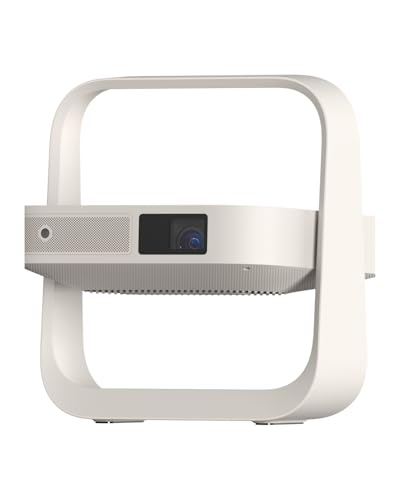
The XGIMI Elfin Flip, released in 2024, represents what I'd call the "convenience-first" approach to portable projection. At around the $300 price point at the time of writing, it's designed for users who want the simplest possible experience – flip it open, turn it on, and start watching. XGIMI has packed it with automated setup features that would have required expensive professional projectors just a few years ago.
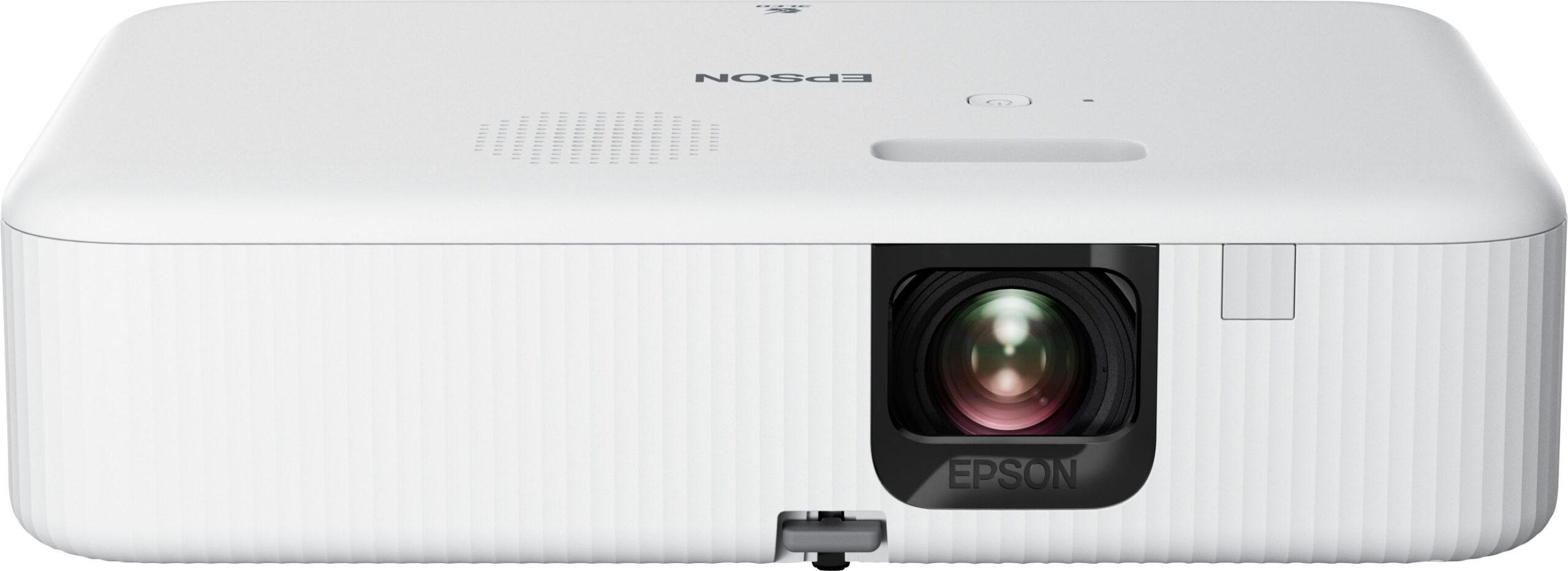
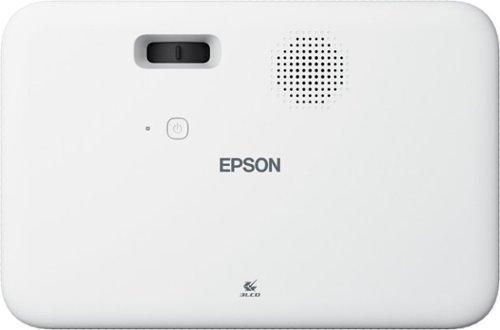
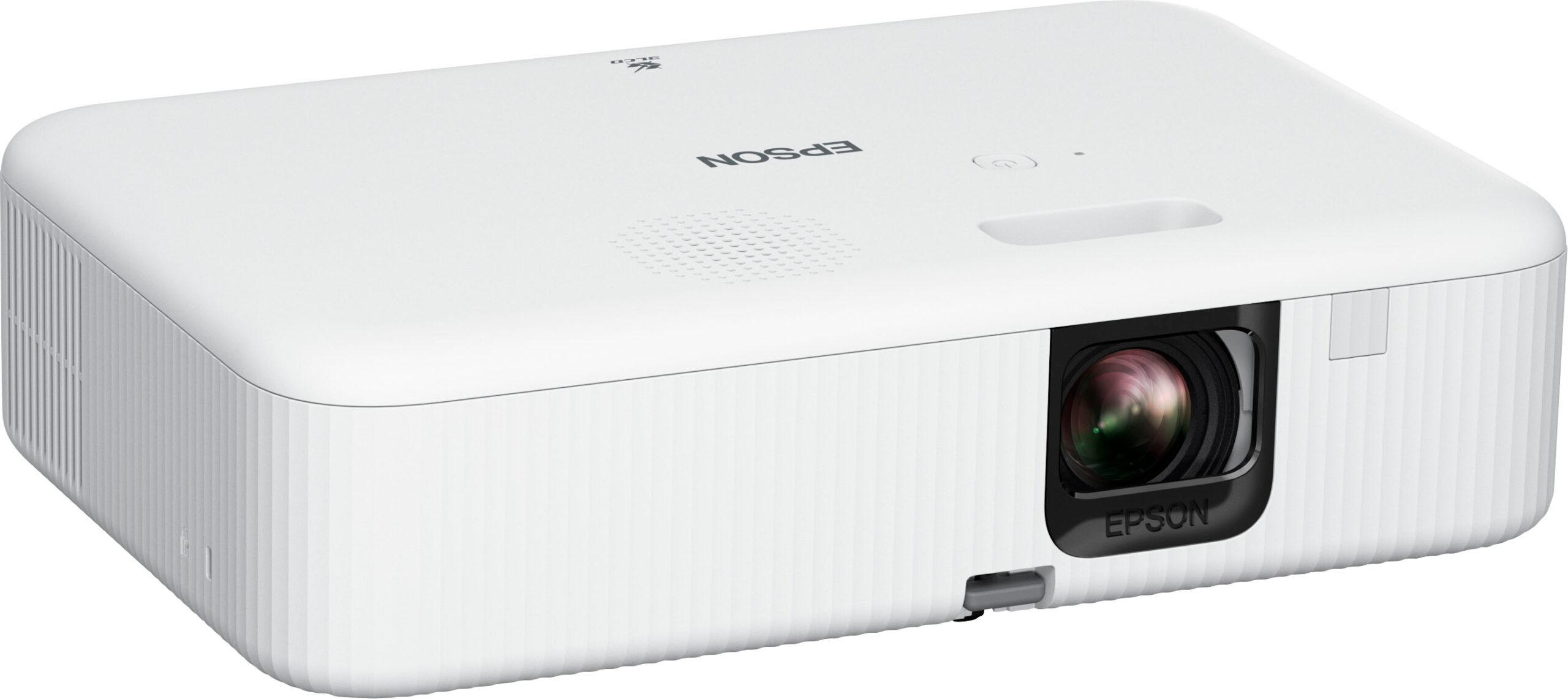
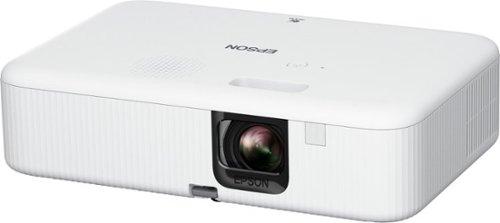
On the other side, the Epson EpiqVision Flex CO-FH02 follows a more traditional "performance-first" philosophy. Priced roughly $50 higher at the time of writing, it prioritizes image brightness and size capabilities while maintaining portability. Epson has decades of projector experience, and this model reflects their understanding of what makes images look good in various environments.
These different approaches create distinctly different user experiences, and understanding which philosophy matches your needs is crucial to making the right choice.
When evaluating any projector, brightness is often the most critical specification because it determines where and when you can actually use the device. This is measured in lumens – essentially how much light the projector can output. More lumens mean you can use the projector in brighter environments.
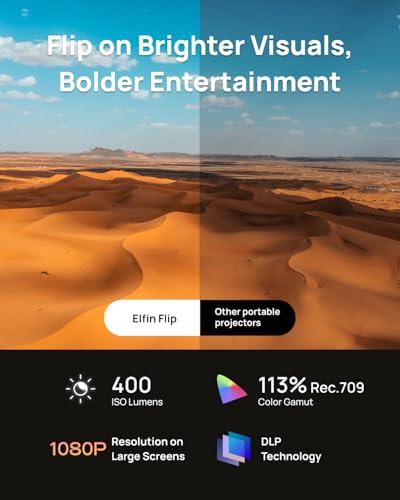
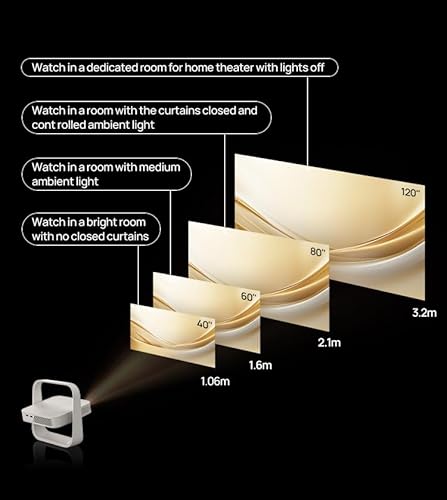
The difference between these two models in brightness is dramatic. The XGIMI Elfin Flip outputs 400 ISO lumens (ISO lumens are a standardized measurement that gives you consistent comparison numbers between brands). This puts it in the "dim room required" category – you'll want curtains closed and lights off for the best experience.
In contrast, the Epson EpiqVision Flex CO-FH02 pumps out an impressive 3,000 lumens of both color and white brightness. This is nearly seven and a half times brighter than the XGIMI. To put this in perspective, 3,000 lumens puts the Epson in professional presentation territory – you can use it in normally lit rooms, conference rooms with fluorescent lighting, or even outdoors in the evening with some ambient light.
This brightness difference fundamentally changes how you'll use each projector. With the XGIMI, you're planning movie nights around room lighting. With the Epson, you're projecting presentations during lunch meetings or hosting backyard movie nights without waiting for complete darkness.
The trade-off? The Epson's higher brightness comes with significantly higher power consumption – we're talking about 284 watts versus the XGIMI's efficient 65 watts. That's the difference between plugging into any standard outlet versus needing to consider your power source more carefully.
Both projectors deliver 1080p resolution (1920×1080 pixels), which provides sharp, detailed images suitable for movies, TV shows, and presentations. However, they use different display technologies that create distinct image characteristics.
The XGIMI Elfin Flip uses DLP (Digital Light Processing) technology with a 0.23-inch DMD chip (think of this as a tiny mirror array that creates the image). DLP projectors are known for sharp images, good contrast in dark rooms, and accurate colors. The XGIMI covers 113% of the Rec.709 color space – this is technical speak for "it can display more colors than standard HD content requires," which translates to vivid, saturated images that really pop.
What makes the XGIMI particularly interesting for home theater use is its HDR10 support. HDR (High Dynamic Range) expands the range between the brightest whites and darkest blacks, creating more realistic images with better detail in shadows and highlights. When you're watching HDR content from Netflix or Disney+ in a dark room, the difference is immediately noticeable.
The Epson EpiqVision Flex CO-FH02 uses 3LCD technology, which splits white light into red, green, and blue components using three separate LCD panels. This approach typically produces more accurate colors and better color brightness – meaning colors don't fade as much when the projector is fighting room lighting. Epson claims a contrast ratio up to 16,000:1, which should provide good detail in both bright and dark areas of images.
However, the Epson doesn't support HDR, which is becoming increasingly important as streaming services expand their HDR content libraries. This is one area where the newer XGIMI shows its 2024 vintage – HDR support is expected in modern displays.
For home theater use specifically, this creates an interesting choice. In a dedicated dark room, the XGIMI's HDR support and DLP contrast advantages might give it the edge for movie watching. In a family room or basement where you can't control lighting perfectly, the Epson's brightness and 3LCD color accuracy become more valuable.
The smart platform integration represents one of the clearest philosophical differences between these projectors. The XGIMI Elfin Flip treats streaming as a core feature, building Android TV directly into the projector. This means you get Netflix, YouTube, Disney+, and Prime Video pre-installed, plus access to the Google Play Store for additional apps.
More importantly, the XGIMI includes Chromecast built-in, which means any Android device can cast to it seamlessly, and it supports Miracast for wireless screen sharing from various devices. This integration feels natural and immediate – there's no hunting for dongles or managing multiple remotes.
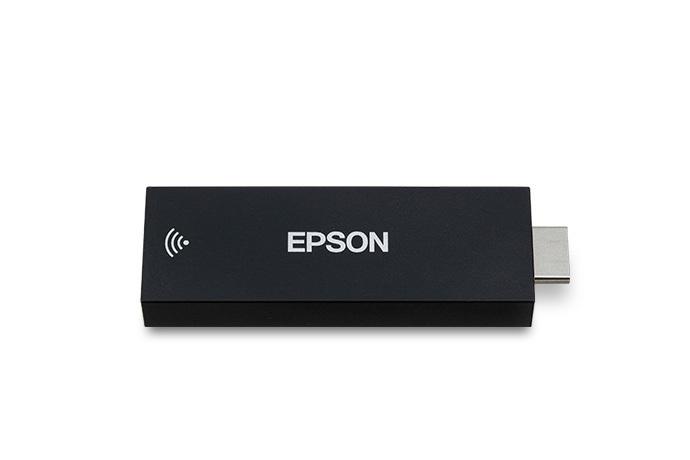
The Epson EpiqVision Flex CO-FH02 takes a more traditional approach, including a separate Android TV streaming stick. While this provides access to the same content, it means managing two devices, two power sources, and potentially two remotes. The separate approach does have one advantage – if the streaming stick becomes outdated, you can replace it independently of the projector.
From a user experience standpoint, I find integrated smart features significantly more convenient for portable use. When you're setting up in different locations – whether that's a friend's house, a hotel room, or an outdoor space – having everything integrated into one device reduces complexity and potential points of failure.
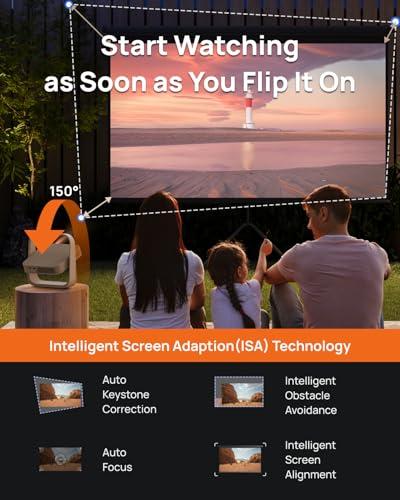
Perhaps the most dramatic difference between these projectors lies in their setup experience. The XGIMI Elfin Flip incorporates what XGIMI calls Intelligent Screen Adaptation (ISA) – a suite of automated features that handle image alignment without user intervention.
This includes auto-focus (the image automatically sharpens when you turn on the projector or move it), auto keystone correction (the projector detects if it's projecting at an angle and automatically adjusts the image to appear rectangular), intelligent obstacle avoidance (if there's furniture or a picture frame in the projection area, it adjusts the image to avoid it), and intelligent screen alignment (it detects if you have a projection screen and fits the image to it automatically).
These features represent a significant technological advancement. Traditional projectors require manual adjustment of focus rings, keystone correction sliders, and careful positioning to get a rectangular image. The XGIMI handles all of this automatically, usually within seconds of being turned on.
The Epson EpiqVision Flex CO-FH02 follows traditional projector conventions, requiring manual keystone correction (±30 degrees vertical adjustment) and manual focus. While this provides more precise control for users who want it, it also means more setup time and more things to adjust when you move the projector.
For portable use, this automation makes a huge difference. When you're setting up quickly for an impromptu movie night or presentation, the XGIMI's plug-and-play experience eliminates the fumbling with settings that can kill the mood or momentum.
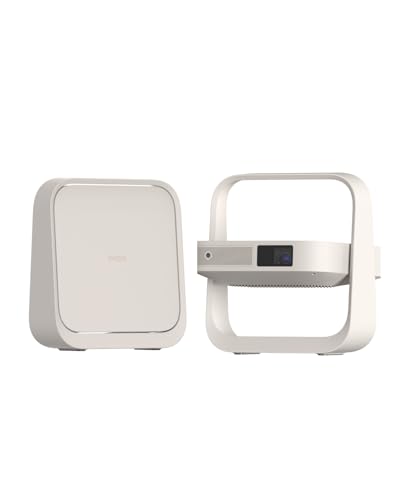
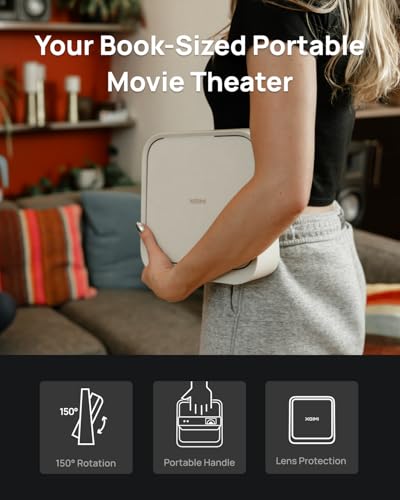
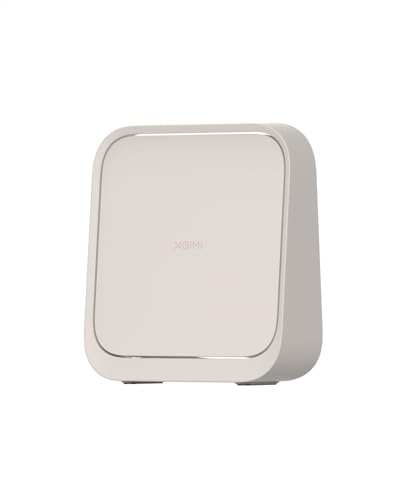
The XGIMI Elfin Flip lives up to its "flip" name with an innovative design that serves multiple purposes. The projector measures just 9.25" × 8.58" × 2.52" and weighs 2.6 pounds – genuinely backpack-friendly dimensions. The flip-up design serves as both an adjustable stand (up to 150 degrees of tilt) and lens protection during transport.
This integrated stand is more significant than it might seem initially. Traditional portable projectors require carrying separate tripods, finding suitable surfaces, or making do with improvised positioning. The XGIMI's stand eliminates these concerns while enabling ceiling projection and unusual angles that would be difficult with conventional setups.
The Epson EpiqVision Flex CO-FH02 is larger and heavier at 5.7 pounds and 12.5" × 8.3" × 3.4". While still portable by projector standards, it's moving into the "planned transport" category rather than "grab and go." You'll want a proper bag and won't casually toss it in a backpack.
For true mobility – camping trips, hotel presentations, moving between rooms regularly – the XGIMI's size and weight advantage is substantial. For occasional movement between more permanent setups, the Epson's size is manageable and comes with the benefit of more internal space for brighter projection components.
Neither projector will replace a proper sound system, but both include built-in speakers for convenience. The XGIMI Elfin Flip features dual 3-watt speakers with Dolby Audio support, while the Epson EpiqVision Flex CO-FH02 includes a single 5-watt bass reflex speaker.
In practice, both provide adequate audio for casual viewing or presentations, but neither delivers the dynamic range or bass response you'd want for serious movie watching. The XGIMI's stereo configuration provides slightly better imaging and separation, while the Epson's bass reflex design offers a bit more low-end response.
For home theater applications, plan on connecting external speakers via Bluetooth (both support this) or using the audio output from your HDMI source device. The built-in speakers are best considered convenient backup options rather than primary audio solutions.
At the time of writing, the XGIMI Elfin Flip represents exceptional value in the sub-$350 portable projector category. You're getting modern smart features, sophisticated automation, and innovative design at an entry-level price point. The brightness limitation is real, but for users who can control their viewing environment, the convenience and feature set are impressive.
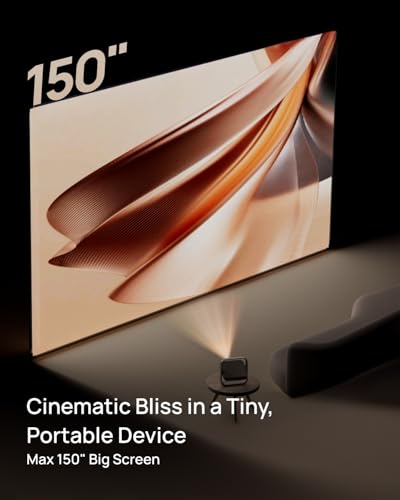
The Epson EpiqVision Flex CO-FH02 justifies its higher price with professional-grade brightness and the reliability of Epson's established projector technology. If you need to project in ambient light or create truly large images (up to 300 inches versus the XGIMI's 150-inch maximum), the extra cost delivers measurable performance benefits.
Choose the XGIMI Elfin Flip if you prioritize convenience, modern smart features, and true portability. It's ideal for apartment dwellers, frequent travelers, students, or anyone who values simplicity over maximum brightness. The automated setup features make it particularly appealing for users who might be intimidated by traditional projector complexity.
The XGIMI is also the better choice for bedroom ceiling projection, camping or outdoor use where you can control lighting, and situations where you'll be setting up and taking down frequently. Its HDR support makes it more future-proof for streaming content.
Choose the Epson EpiqVision Flex CO-FH02 if brightness and large image size are your priorities. It's the clear winner for business presentations, family rooms where you can't always control lighting, basement home theaters with some ambient light, or outdoor use where you need to compete with evening light.
The Epson is also better for users who prefer traditional manual controls and don't mind managing separate streaming devices. If you're replacing an older projector and want familiar operation with improved portability, this maintains that traditional projector feel while adding modern connectivity.
Both projectors succeed in their respective approaches, making the "better" choice entirely dependent on your specific needs and priorities. The XGIMI Elfin Flip represents the future of portable projection – automated, integrated, and optimized for convenience. The Epson EpiqVision Flex CO-FH02 represents proven projection technology made more accessible and portable.
If you can only use one projector in one location with controlled lighting, the XGIMI provides a more elegant, modern experience. If you need flexibility to use your projector in various lighting conditions and want maximum image size capability, the Epson delivers superior versatility.
The good news is that both represent significant advances over portable projectors from just a few years ago. Whether you choose convenience or brightness as your priority, you'll get a capable device that would have been unimaginable at these price points in 2020. The portable projector category has truly come of age, and these two models demonstrate just how far the technology has progressed.
| XGIMI Elfin Flip Portable Projector | Epson EpiqVision Flex CO-FH02 Smart Portable Projector |
|---|---|
| Brightness - Most critical factor for room lighting flexibility | |
| 400 ISO lumens (requires dim/dark rooms) | 3,000 lumens (excellent for well-lit rooms and presentations) |
| Resolution & HDR - Impact on image sharpness and color depth | |
| 1080p with HDR10 support (future-proof for streaming) | 1080p without HDR (standard HD quality) |
| Display Technology - Affects color accuracy and contrast | |
| DLP with 0.23" DMD chip (sharp contrast, 113% Rec.709) | 3LCD with up to 16,000:1 contrast (accurate colors) |
| Maximum Screen Size - Determines viewing scale possibilities | |
| Up to 150 inches diagonal | Up to 300 inches diagonal |
| Smart Features - Built-in streaming and connectivity | |
| Android TV built-in, Netflix pre-installed, Chromecast | Separate Android TV stick included |
| Setup Automation - Time and effort to get perfect image | |
| Intelligent Screen Adaptation: auto-focus, keystone, alignment | Manual focus and keystone correction required |
| Physical Design - True portability and setup flexibility | |
| 2.6 lbs, flip-up stand with 150° adjustment, lens protection | 5.7 lbs, traditional form factor, requires separate mounting |
| Power Consumption - Operating cost and outlet requirements | |
| 65W (energy efficient, any standard outlet) | ~284W (higher power draw, more heat generation) |
| Audio System - Built-in sound quality | |
| Dual 3W speakers with Dolby Audio (stereo separation) | Single 5W bass reflex speaker (more bass response) |
| Lamp Life - Long-term reliability and replacement costs | |
| 25,000 hours LED (virtually maintenance-free) | Up to 12,000 hours in ECO mode (traditional lamp) |
| Best Use Cases - Where each projector excels | |
| Dark room entertainment, travel, bedroom ceiling projection | Business presentations, large rooms, ambient light viewing |
The Epson EpiqVision Flex CO-FH02 is significantly brighter at 3,000 lumens compared to the XGIMI Elfin Flip's 400 lumens. This makes the Epson much better for well-lit rooms, presentations, and daytime use, while the XGIMI requires darker environments for optimal viewing.
Both offer 1080p resolution, but with different strengths. The XGIMI Elfin Flip supports HDR10 for better contrast and uses DLP technology for sharp images in dark rooms. The Epson EpiqVision Flex CO-FH02 uses 3LCD technology for more accurate colors and better performance in ambient light, though it lacks HDR support.
The XGIMI Elfin Flip is much easier to set up with automatic focus, keystone correction, and screen alignment. The Epson EpiqVision Flex CO-FH02 requires manual adjustments for focus and image correction, making setup more time-consuming but offering more precise control.
The XGIMI Elfin Flip has Android TV built-in with Netflix pre-installed and Chromecast support for seamless streaming. The Epson EpiqVision Flex CO-FH02 includes a separate Android TV streaming stick, which means managing two devices but allows for independent upgrades.
The XGIMI Elfin Flip is much more portable at 2.6 pounds with a compact flip design and built-in stand. The Epson EpiqVision Flex CO-FH02 weighs 5.7 pounds and requires separate mounting, making it less convenient for frequent transport.
The Epson EpiqVision Flex CO-FH02 can project up to 300 inches, while the XGIMI Elfin Flip maxes out at 150 inches. For large-scale projection needs, the Epson provides significantly more flexibility.
The XGIMI Elfin Flip is much more energy-efficient at 65W, while the Epson EpiqVision Flex CO-FH02 consumes approximately 284W. This affects both electricity costs and heat generation during operation.
Both have adequate but limited audio. The XGIMI Elfin Flip features dual 3W speakers with stereo separation and Dolby Audio support, while the Epson EpiqVision Flex CO-FH02 has a single 5W bass reflex speaker with slightly better bass response. External speakers are recommended for both.
For dedicated dark home theaters, the XGIMI Elfin Flip excels with HDR support and good contrast. For family rooms or spaces with ambient light, the Epson EpiqVision Flex CO-FH02 performs better due to its higher brightness and larger projection capabilities.
The XGIMI Elfin Flip uses LED technology rated for 25,000 hours of virtually maintenance-free operation. The Epson EpiqVision Flex CO-FH02 offers up to 12,000 hours in ECO mode with traditional lamp technology that may eventually require replacement.
The XGIMI Elfin Flip provides excellent value with modern features, automation, and convenience at a lower price point. The Epson EpiqVision Flex CO-FH02 costs more but delivers professional-grade brightness and larger projection capabilities that justify the premium for specific use cases.
Choose the XGIMI Elfin Flip if you prioritize portability, convenience, modern smart features, and primarily use it in controlled lighting. Choose the Epson EpiqVision Flex CO-FH02 if you need maximum brightness, large screen sizes, professional presentations, or viewing in well-lit environments.
We've done our best to create useful and informative comparisons to help you decide what product to buy. Our research uses advanced automated methods to create this comparison and perfection is not possible - please contact us for corrections or questions. These are the sites we've researched in the creation of this article: us.xgimi.com - projectorcentral.com - tvsbook.com - us.xgimi.com - bikmantech.com - projectorreviews.com - tvsbook.com - us.xgimi.com - youtube.com - youtube.com - richersounds.com - us.xgimi.com - youtube.com - walmart.com - global.xgimi.com - youtube.com - global.xgimi.com - us.xgimi.com - expertreviews.co.uk - projectorcentral.com - youtube.com - bestbuy.com - specsradar.com - techwalls.com - cnet.com - epson.com - youtube.com - projectorreviews.com - epson.com - abt.com - youtube.com - cnet.com - techgearlab.com - staples.com - bestbuy.com - bestbuy.com - projectorcentral.com - bhphotovideo.com - dell.com - latin.epson.com - specsradar.com - projectorcentral.com - officedepot.com - files.support.epson.com - walmart.com - adorama.com - epson.com

Privacy Policy
Terms and Conditions - Affiliate Policy
Home Security
© Copyright 2008-2026.
11816 Inwood Rd #1211, Dallas, TX 75244