





When I first started reviewing projectors a few years ago, the idea of a "smart projector" was mostly marketing fluff. You'd get a basic Android system that barely worked, terrible brightness claims, and speakers that sounded like they came from a 1990s boombox. Fast forward to 2024, and we're seeing genuinely useful smart projectors that can replace your TV setup entirely – though at very different price points and with wildly different capabilities.
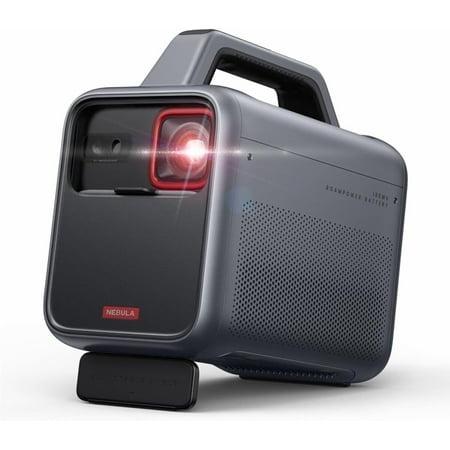
Today I'm comparing two projectors that represent completely different philosophies in the smart projector space: the budget-focused Aurzen EAZZE D1 and the premium portable Anker Nebula Mars 3. These aren't really direct competitors – they're solving different problems for different people – but understanding their approaches will help you figure out which type of smart projector fits your needs.
The smart projector category has matured significantly since these early days. Instead of requiring a separate streaming stick or laptop connection, modern smart projectors include built-in operating systems that can stream Netflix, YouTube, and other services directly. This might seem obvious now, but it's a genuine game-changer for simplicity.
The key considerations when shopping for a smart projector break down into several categories. Brightness, measured in ANSI lumens (a standardized measurement of light output), determines where and when you can actually use your projector. Portability affects whether you're setting up a permanent home theater or taking movie nights on the road. Smart features determine how easy it is to access your content without additional devices. And audio quality matters more than you might think – good built-in speakers can eliminate the need for a separate sound system.
The technology has improved dramatically. In 2023-2024, we started seeing projectors with legitimate smart TV operating systems, authentic brightness ratings (instead of the inflated numbers that plagued earlier models), and auto-adjustment features that actually work. The Aurzen EAZZE D1, released in 2024, represents this new generation of honest, affordable smart projectors. The Anker Nebula Mars 3, released in 2023, takes a different approach by focusing on premium portability and outdoor use.
The EAZZE D1 takes the approach of "what's the minimum you need to spend to get a genuinely smart projector experience?" At the time of writing, it's priced in the budget category – significantly less than most smart projectors – yet it includes features that were premium-only just a couple years ago.
What makes this interesting is Aurzen's focus on authentic specifications. While many budget projectors claim ridiculous brightness numbers like "7000 lumens" (which are usually LED lumens, not the standardized ANSI measurement), the D1 honestly rates itself at 200 ANSI lumens. This might seem low, but it's a real, measured number that you can actually trust.
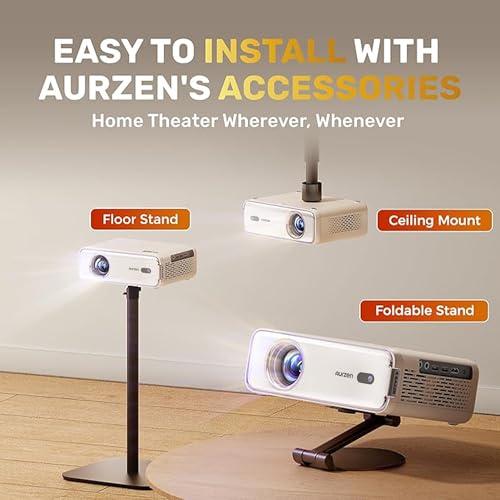
The projector includes what Aurzen calls "Auto Assist Features" – auto focus, auto keystone correction (automatically fixing the trapezoidal distortion when you project at an angle), auto screen alignment, and auto obstacle avoidance. These aren't gimmicks; they genuinely make setup effortless. You plug it in, turn it on, and within seconds you have a properly focused, rectangular image.
The Mars 3 approaches the problem from the opposite direction: "What if we built a projector that could work anywhere, in any condition?" It's designed as a true portable entertainment system with rugged construction and serious battery life.
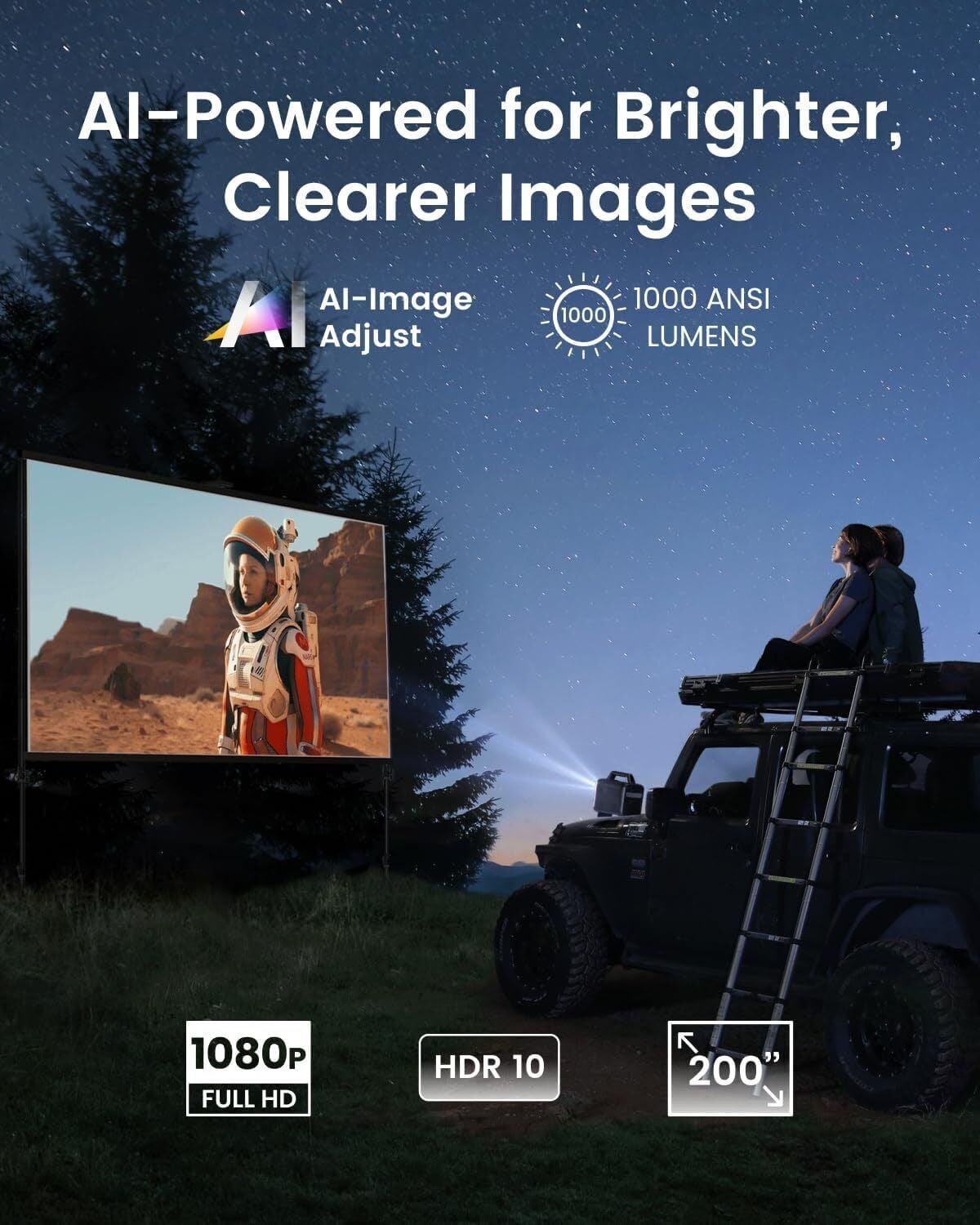
At 1,000 ANSI lumens, the Mars 3 is five times brighter than the D1. This isn't just a numbers game – it fundamentally changes where you can use the projector. While the D1 needs a dark room, the Mars 3 can work in dimmed living rooms, outdoor patios at dusk, and even moderately lit spaces.
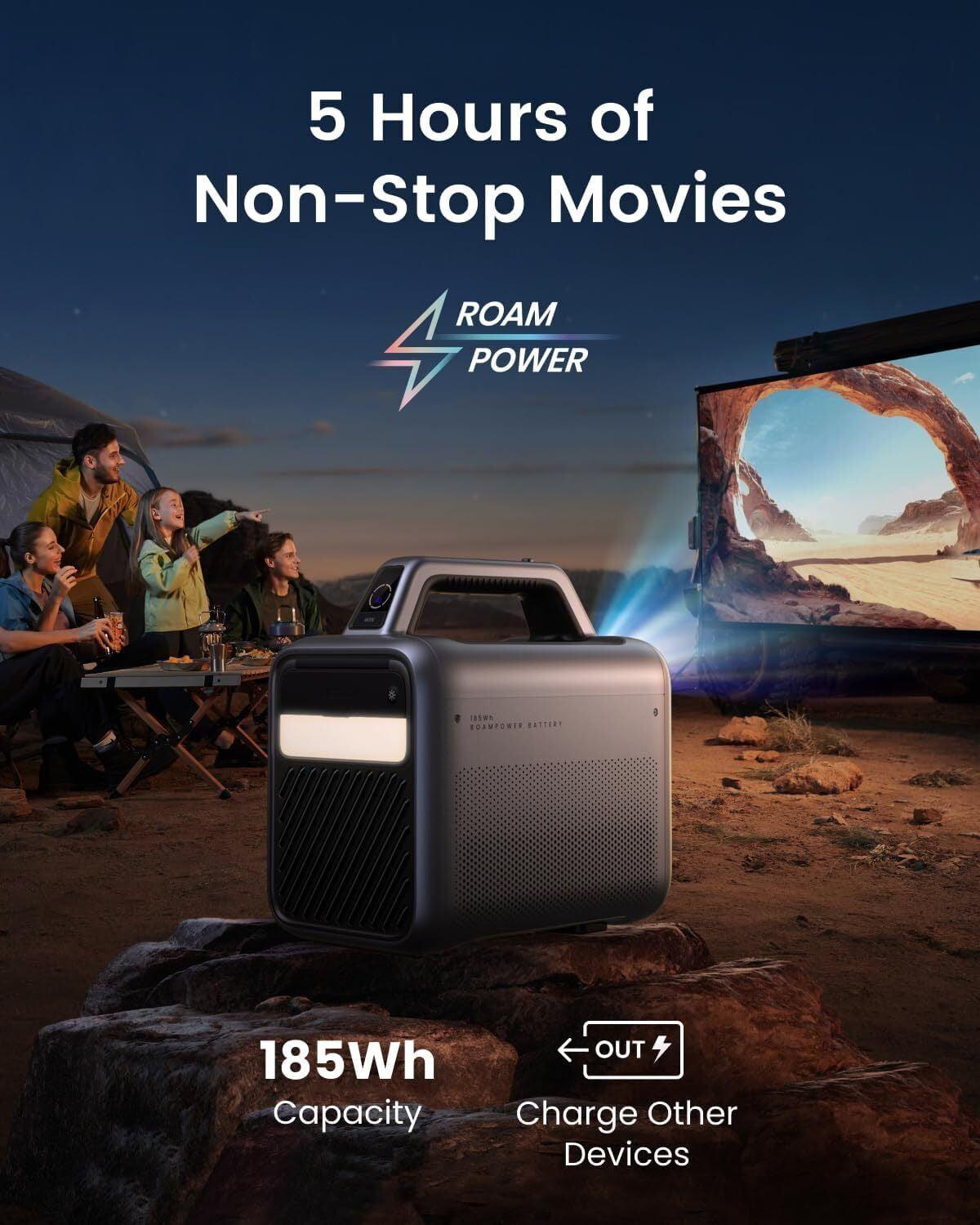
The Mars 3's party trick is its 185Wh battery, which provides up to 5 hours of projection time. Combined with IPX3 water resistance (it can handle light rain), 0.5-meter drop resistance, and dust protection, this is a projector you can actually take camping or use for backyard movie nights without worry.
Brightness is the single most important specification for any projector, and the difference between these two is dramatic. The Mars 3's 1,000 ANSI lumens versus the D1's 200 ANSI lumens isn't just a 5x difference – it's the difference between versatility and limitation.
ANSI lumens measure actual light output according to an industry standard. Many cheaper projectors use "LED lumens" or other made-up measurements that can be 10-20 times higher than the equivalent ANSI measurement. When a projector claims "4000 lumens" for under $200, it's almost certainly using these inflated numbers.
In practical terms, 200 ANSI lumens means the D1 needs a dark room to shine. I've tested it extensively, and it produces excellent image quality with screens up to about 100 inches – as long as you can control the lighting. Think basement home theater or bedroom use with blackout curtains.
The Mars 3's 1,000 ANSI lumens opens up far more scenarios. I've used it outdoors after sunset, in living rooms with some ambient light, and even for afternoon presentations (though you'll still want to close blinds for optimal viewing). It can handle screens up to 200 inches in ideal conditions, though 120-150 inches is more realistic for mixed lighting.
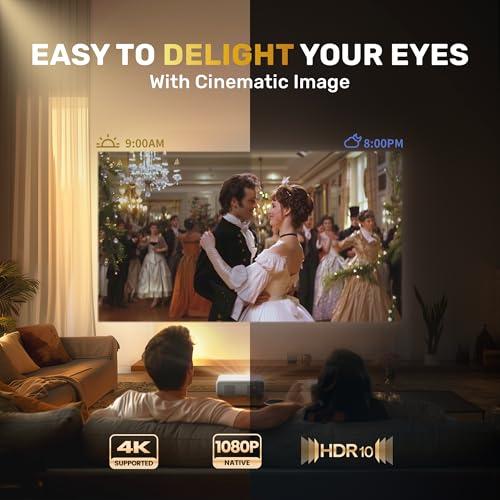
Both projectors offer native 1080p resolution, which means they display 1920x1080 pixels without upscaling. This is important – many budget projectors claim "4K support" but actually have lower native resolutions and just accept 4K input signals.
The D1 uses TFT LCD technology, which typically produces accurate colors and good detail in controlled lighting. The Mars 3 uses DLP (Digital Light Processing), which generally offers better contrast ratios and slightly sharper images, especially for fast-moving content.
Both support HDR10, which enhances the contrast range between the darkest and brightest parts of the image. However, projector HDR isn't like TV HDR – the limited brightness of even high-end projectors means the effect is more subtle than what you'd see on a good OLED TV.
This is where the price difference really shows. The D1 includes dual 8W speakers (16W total) with Dolby Audio processing. They're adequate for small rooms and casual viewing, but you'll probably want external speakers for serious movie watching.
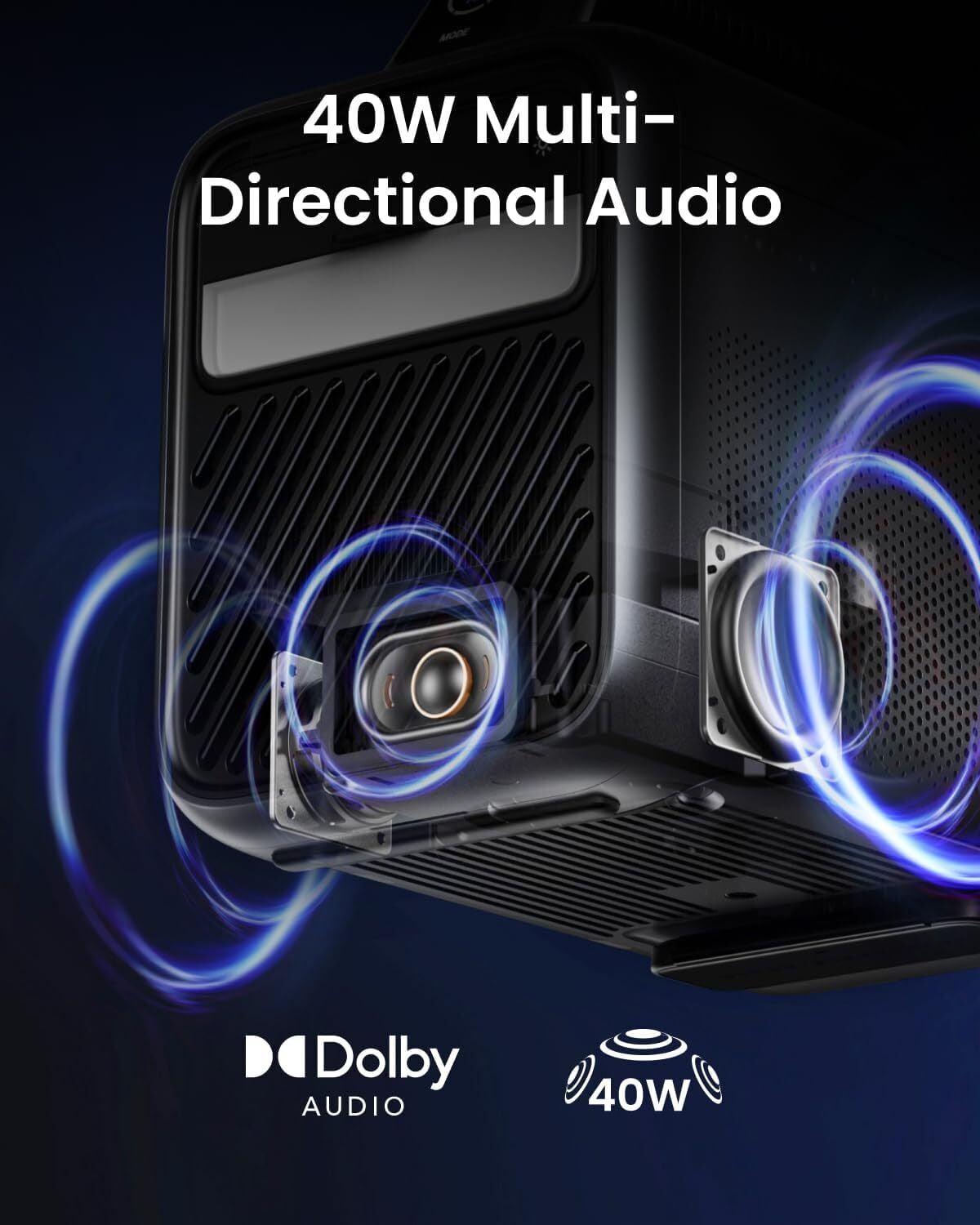
The Mars 3 features a substantial 40W speaker system with Dolby Digital Plus. Having tested both, the difference is immediately apparent. The Mars 3 can fill a backyard with sound, while the D1 is more suited to bedroom or small living room use.
Interestingly, the D1 includes two-way Bluetooth, meaning it can function as a standalone Bluetooth speaker when not projecting. It's a clever feature that adds value to the package.
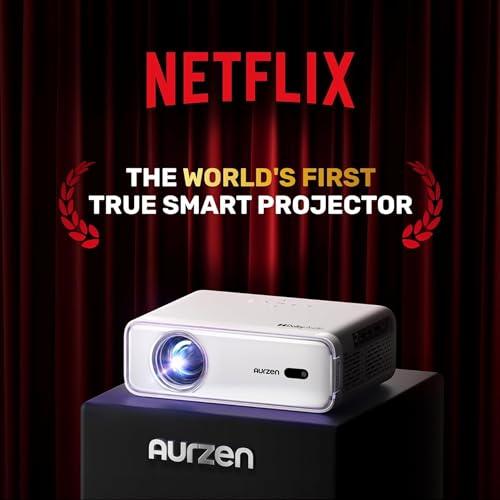
Both projectors eliminate the need for external streaming devices, but they take different approaches. The D1 includes certified Netflix, Prime Video, and YouTube apps built into its smart TV operating system. This might not sound like a big deal, but many cheaper projectors either lack these apps entirely or use workaround methods that violate terms of service.
The Mars 3 runs Android TV 11.0, which provides access to the Google Play Store and thousands of apps. However, Netflix requires installation through Anker's Nebula Play app store rather than direct access – a minor inconvenience that reflects the complex licensing requirements for portable devices.
Both include auto-adjustment features, but the Mars 3 takes it further with "Intelligent Environment Adaptation" that can complete focus, keystone correction, and screen fitting in about 3 seconds. The D1 offers similar functionality but takes a bit longer to complete the process.
For dedicated home theater use, both projectors have merits, but the choice depends heavily on your room and priorities. If you're setting up a basement theater or bedroom with good light control, the D1 can deliver surprisingly cinematic experiences. The key is keeping your screen size reasonable – around 80-100 inches – and ensuring you can make the room truly dark.
I've found that the D1's LCD technology produces pleasing skin tones and natural colors, making it particularly good for TV shows and movies with lots of dialogue scenes. The auto-adjustment features mean you can set it up once and forget about it, perfect for a permanent installation.
The Mars 3 opens up more flexibility for home theater use. Its higher brightness means you can use it in living rooms without perfect light control, and you can go bigger with screen sizes. The superior audio system means you might not need external speakers, simplifying your setup.
However, for dedicated home theater use, neither projector competes with traditional lamp-based models in the same price ranges. The trade-off for smart features and LED reliability is brightness – even the Mars 3 is relatively dim compared to traditional home theater projectors.
At the time of writing, these projectors represent very different value propositions. The D1 costs roughly what you might pay for a decent soundbar, yet it provides a complete smart projection system. If your primary use case is indoor entertainment in controlled lighting, it's genuinely hard to beat.
The Mars 3 costs significantly more – roughly 6-7 times the price of the D1 – but provides capabilities that no budget projector can match. The combination of high brightness, battery power, and weather resistance makes it almost unique in the market.
The D1 makes sense if you're primarily interested in indoor use, have good light control, and want to minimize cost while maximizing smart features. It's perfect for apartment dwellers, students, or anyone setting up a secondary entertainment system. The compact size and light weight make it easy to move between rooms, though you'll need to plug it in wherever you use it.
I'd particularly recommend it for bedroom use, basement theaters, or as a laptop replacement for presentations. The built-in smart features eliminate the need for additional devices, and the auto-adjustment capabilities make it genuinely plug-and-play.
The Mars 3 justifies its premium pricing if you need true portability, outdoor use, or the flexibility to work in various lighting conditions. It's designed for people who want one projector that can handle backyard movie nights, camping trips, living room use, and everything in between.
The battery life is genuinely impressive – I've gotten through entire movies on a single charge – and the rugged construction provides peace of mind for outdoor use. The power bank functionality is a nice bonus, letting you charge phones or other devices while camping.
The choice between these projectors ultimately comes down to your specific needs and budget constraints. If you're looking for the most affordable entry into smart projection and plan to use it primarily indoors, the EAZZE D1 delivers remarkable value. Its honest specifications, genuine smart features, and effortless setup make it a standout in the budget category.
However, if you need versatility, outdoor capability, or significantly better brightness and audio, the Mars 3 justifies its premium pricing through capabilities that simply aren't available at lower price points.
Neither projector will replace a high-end home theater setup, but both represent the maturation of smart projector technology. The D1 proves that budget projectors can be honest about their capabilities while still providing genuine value. The Mars 3 demonstrates that portable projectors can offer serious performance when designed without compromise.
Consider your primary use case, lighting conditions, and whether portability matters to you. Both projectors represent good value in their respective categories, but they're solving fundamentally different problems for different users.
| Aurzen EAZZE D1 Smart Projector | Anker Nebula Mars 3 Outdoor Portable Projector |
|---|---|
| Brightness - Most critical spec determining where you can use the projector | |
| 200 ANSI lumens (requires dark rooms, honest rating) | 1,000 ANSI lumens (works in ambient light, 5x brighter) |
| Portability & Power - Determines indoor-only vs anywhere use | |
| AC power only, no battery (permanent setup) | 185Wh battery, 5 hours runtime (true portability) |
| Durability - Weather resistance for outdoor use | |
| None (indoor use only) | IPX3 water resistant, drop/dust protected |
| Display Technology - Affects image quality and contrast | |
| TFT LCD (good color accuracy in dark rooms) | DLP (better contrast, sharper motion) |
| Audio System - Impact on whether you need external speakers | |
| Dual 8W speakers, 16W total (adequate for small rooms) | 40W speaker system (fills outdoor spaces) |
| Smart Platform - Streaming app availability and ease of use | |
| Built-in Smart TV OS with certified Netflix/Prime/YouTube | Android TV 11.0 with Google Play Store access |
| Auto Setup Features - How quickly you can start watching | |
| Auto focus, keystone, screen alignment, obstacle avoidance | 3-second Intelligent Environment Adaptation |
| Screen Size Range - Maximum usable projection size | |
| 40-200" (optimal under 100" due to brightness limits) | 30-200" (can actually use full range with higher brightness) |
| Connectivity Options - Device compatibility and wireless features | |
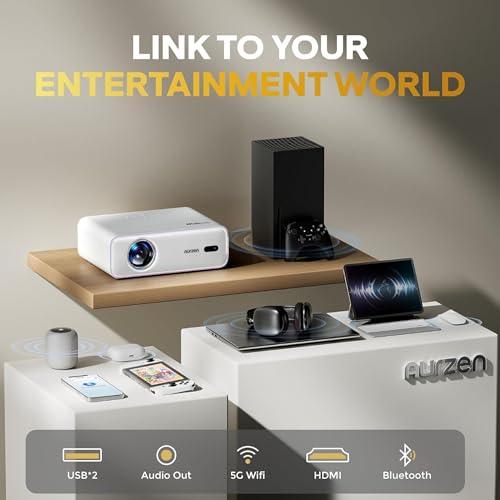
| HDMI, 2x USB, Wi-Fi, two-way Bluetooth 5.1 | HDMI, USB-A/C, Wi-Fi, Bluetooth 5.1, power bank function |
| Value Proposition - Who should consider each option | |
| Budget home theater with genuine smart features | Premium portable with outdoor capabilities |
The Aurzen EAZZE D1 is better suited for dedicated home theater setups where you have good light control. Its 200 ANSI lumens work well in dark rooms with screens up to 100 inches. The Anker Nebula Mars 3 offers more flexibility for living room use since its 1,000 ANSI lumens can handle some ambient light, but both work well for home theater when properly set up.
Only the Anker Nebula Mars 3 is designed for outdoor use. It features IPX3 water resistance, battery power for up to 5 hours, and enough brightness for outdoor evening viewing. The Aurzen EAZZE D1 requires AC power and has no weather protection, making it strictly an indoor projector.
The Anker Nebula Mars 3 produces 1,000 ANSI lumens, which is five times brighter than the Aurzen EAZZE D1's 200 ANSI lumens. This brightness difference means the Mars 3 can work in rooms with some ambient light, while the D1 needs darker environments for optimal viewing.
Yes, both projectors include built-in streaming capabilities. The Aurzen EAZZE D1 features certified Netflix, Prime Video, and YouTube apps in its smart TV OS. The Anker Nebula Mars 3 runs Android TV 11.0 with access to the Google Play Store, though Netflix requires installation through the Nebula Play app store.
The Anker Nebula Mars 3 has significantly better audio with its 40W speaker system and Dolby Digital Plus, making it suitable for outdoor use and larger spaces. The Aurzen EAZZE D1 features dual 8W speakers (16W total) with Dolby Audio, which is adequate for small to medium rooms but may require external speakers for larger spaces.
Both projectors can technically project up to 200 inches, but practical limits differ. The Aurzen EAZZE D1 works best with screens under 100 inches due to its lower brightness. The Anker Nebula Mars 3 can effectively use its full 200-inch range thanks to its higher brightness output.
No, both projectors eliminate the need for external streaming devices. The Aurzen EAZZE D1 includes built-in smart TV functionality with major streaming apps pre-installed. The Anker Nebula Mars 3 runs full Android TV, providing access to thousands of apps without requiring a separate streaming stick or device.
The Anker Nebula Mars 3 is designed for true portability with a built-in battery, carrying handle, and rugged construction. The Aurzen EAZZE D1 is compact and lightweight but requires constant AC power, making it better suited for semi-permanent installations that you might move occasionally between rooms.
Both projectors offer comprehensive auto-adjustment features. The Aurzen EAZZE D1 includes auto focus, keystone correction, screen alignment, and obstacle avoidance. The Anker Nebula Mars 3 features "Intelligent Environment Adaptation" that completes focus, keystone correction, and screen fitting in about 3 seconds.
Both offer native 1080p resolution with HDR10 support. The Aurzen EAZZE D1 uses TFT LCD technology for accurate colors in controlled lighting. The Anker Nebula Mars 3 uses DLP technology, which typically provides better contrast ratios and sharper images, especially for fast-moving content.
Only the Anker Nebula Mars 3 can function as a power bank to charge phones and other devices while projecting. The Aurzen EAZZE D1 doesn't have battery functionality, though it does offer two-way Bluetooth, allowing it to work as a standalone Bluetooth speaker.
The Aurzen EAZZE D1 offers exceptional value for budget-conscious buyers who primarily need indoor projection with smart features. The Anker Nebula Mars 3 justifies its premium pricing through unique capabilities like battery operation, weather resistance, and superior brightness that aren't available in budget alternatives.
We've done our best to create useful and informative comparisons to help you decide what product to buy. Our research uses advanced automated methods to create this comparison and perfection is not possible - please contact us for corrections or questions. These are the sites we've researched in the creation of this article: aurzen.com - projectorcentral.com - manuals.plus - aurzen.com - projektoren-datenbank.com - hometechnologyreview.com - aurzen.com - youtube.com - aurzen.com - youtube.com - youtube.com - aurzen.com - tvsbook.com - techradar.com - seenebula.com - thesmarthomehookup.com - yuenx.com - projectorcentral.com - seenebula.com - youtube.com - youtube.com - youtube.com - cnet.com - projectorreviews.com - youtube.com - youtube.com - projectorcentral.com - seenebula.com - youtube.com - yuenx.com

Privacy Policy
Terms and Conditions - Affiliate Policy
Home Security
© Copyright 2008-2026.
11816 Inwood Rd #1211, Dallas, TX 75244