

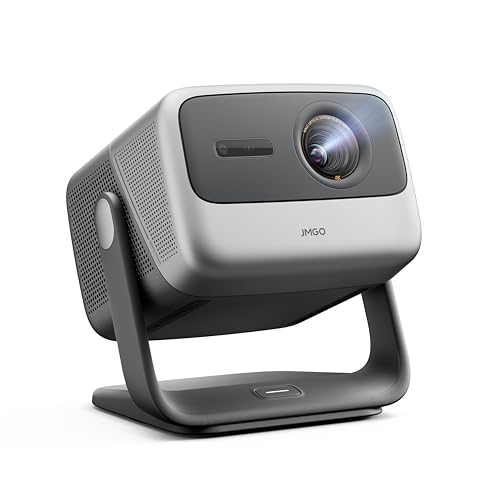

The projector market has transformed dramatically in recent years, moving far beyond the bulky, expensive units that once dominated boardrooms and home theaters. Today's portable projectors offer genuine alternatives to traditional TVs, but they've also split into distinct categories that serve very different needs. Understanding these differences is crucial when choosing between models like the JMGO N1S Pro 4K and the Anker Nebula Mars 3.
At the time of writing, these two projectors represent fundamentally different approaches to portable projection. The JMGO N1S Pro 4K, released in 2024, positions itself as a premium home theater solution that happens to be portable, while the Anker Nebula Mars 3, which has been on the market for a couple of years, focuses squarely on true mobility and outdoor entertainment. This distinction matters more than you might think.
Before diving into specifics, it's worth understanding what separates today's projectors. The key dividing line isn't just about brightness or resolution—it's about power requirements and intended use cases. Traditional portable projectors required AC power and were "portable" in the sense that you could move them between rooms, not that you could take them camping.
The battery-powered projector category, exemplified by the Anker Nebula Mars 3, changed this equation entirely. These units sacrifice some image quality for complete independence from power outlets. Meanwhile, premium portable projectors like the JMGO N1S Pro 4K maintain AC power requirements while pushing image quality toward what you'd expect from much larger, more expensive home theater projectors.
The most important factors to consider are brightness (measured in ANSI lumens—basically how powerful the light source is), resolution, color accuracy, audio quality, and smart features. But the weight you give each factor depends entirely on how you plan to use your projector.
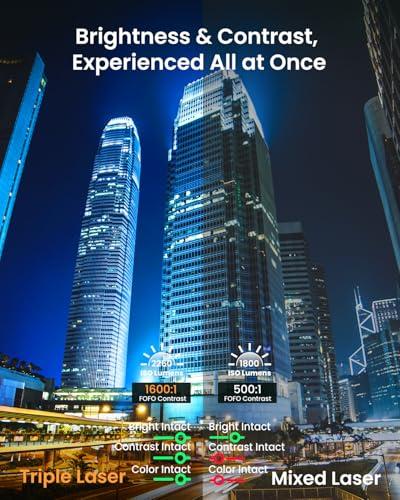
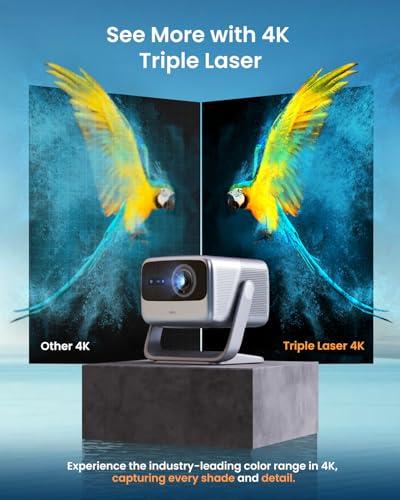
The JMGO N1S Pro 4K represents what happens when engineers prioritize image quality while maintaining reasonable portability. Its MALC 2.0 triple RGB laser system is genuinely impressive technology—instead of using a single white laser or LED like most projectors, it uses three separate red, green, and blue lasers. This approach delivers significantly more accurate colors and eliminates the "rainbow effect" that some people see with single-chip DLP projectors (those brief flashes of red, green, and blue that can appear in your peripheral vision).
The triple laser system also enables the projector to cover 110% of the BT.2020 color standard, which is the expanded color gamut used for 4K HDR content. In practical terms, this means colors look more vibrant and lifelike than what you'd get from most LED-based projectors. The 30,000-hour laser life also means you'll likely never need to replace the light source—a major advantage over traditional lamp-based projectors that required expensive bulb replacements every few thousand hours.
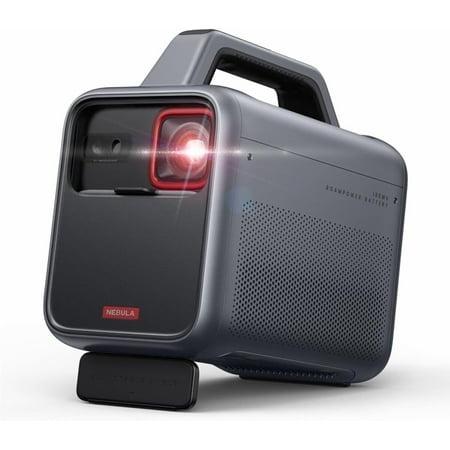
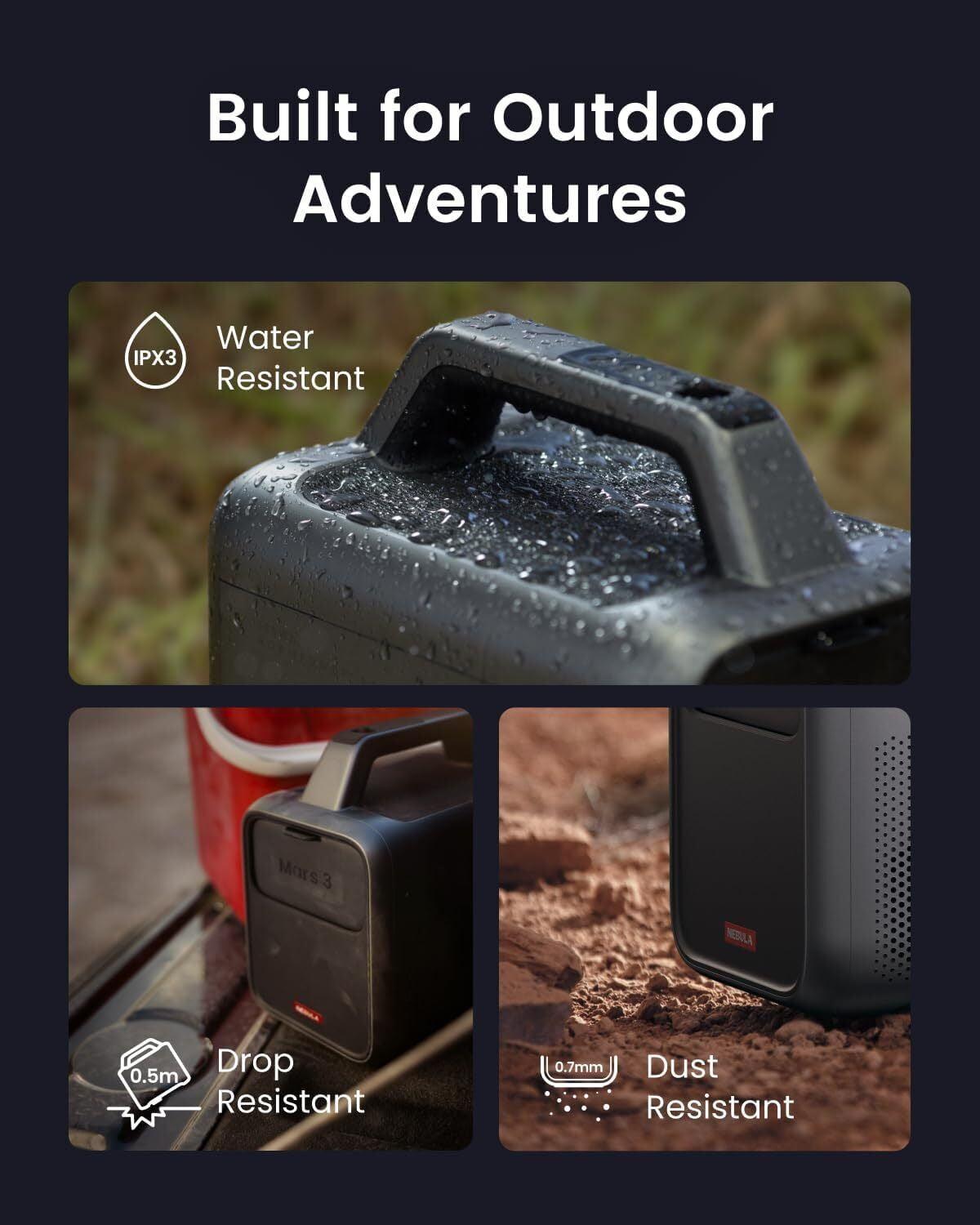
The Anker Nebula Mars 3 takes a completely different approach. Its LED-based light source won't match the color vibrancy of triple laser technology, but LEDs are much more power-efficient, making battery operation feasible. The weatherproofing and rugged construction address real-world concerns about outdoor use that the JMGO N1S Pro 4K simply doesn't consider.
This is where the philosophical differences become most apparent. The JMGO N1S Pro 4K delivers true 4K resolution (3840×2160 pixels), while the Anker Mars 3 maxes out at 1080p (1920×1080 pixels). That's four times more pixels, which translates to noticeably sharper detail, especially on larger screen sizes or when sitting closer to the projected image.
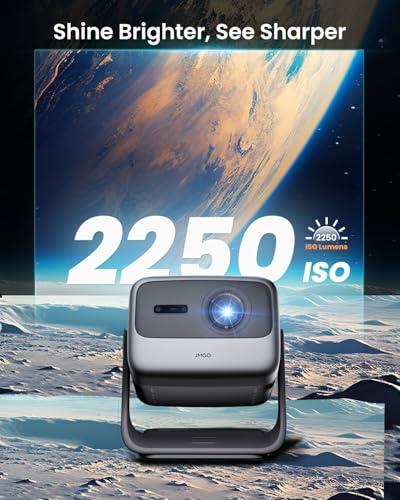
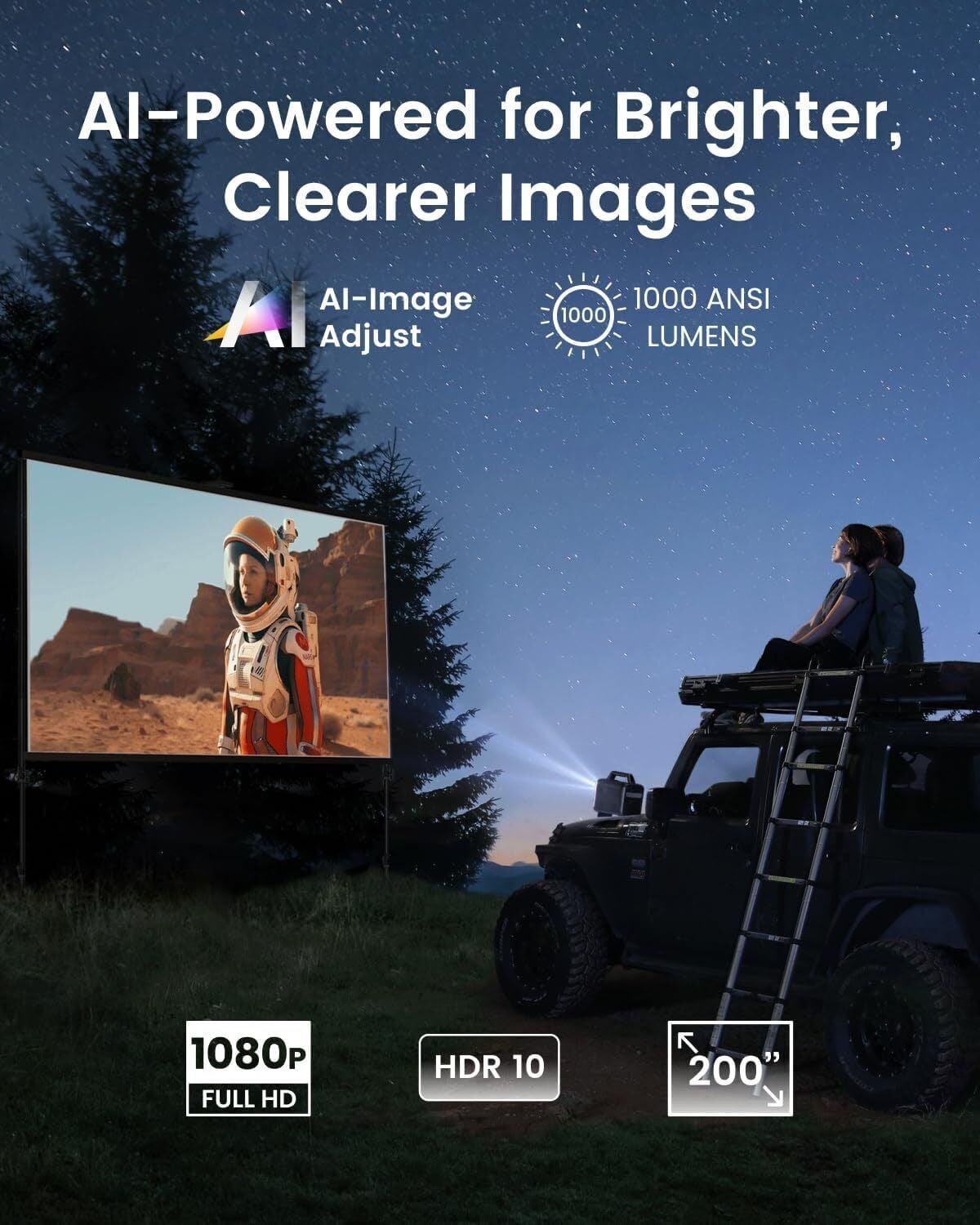
But resolution is just part of the story. The JMGO N1S Pro 4K produces around 2,400 ANSI lumens of brightness—though real-world testing often measures closer to 1,500-1,600 lumens in accurate color modes. The Anker Mars 3 delivers 1,000 ANSI lumens, which sounds like a significant disadvantage until you consider the use cases.
For outdoor viewing, brightness matters enormously. Even 1,000 lumens can work well once the sun goes down, but you'll want every lumen you can get if there's any ambient light. The JMGO N1S Pro 4K's higher brightness gives it more flexibility in partially lit rooms, while the Anker Mars 3 really needs darker environments to shine.
Color accuracy is another area where the technologies diverge significantly. Based on our research into user reviews and professional evaluations, the JMGO N1S Pro 4K delivers vibrant, saturated colors that look impressive but may not always be perfectly accurate to the source material. The triple laser system tends to oversaturate colors somewhat, which can make movies look more "cinematic" but might disappoint users who want reference-level accuracy.
The Anker Mars 3, with its LED light source, produces more conservative colors that tend to be reasonably accurate but less vibrant. For outdoor movie nights where you're prioritizing the experience over critical viewing, this is perfectly adequate.
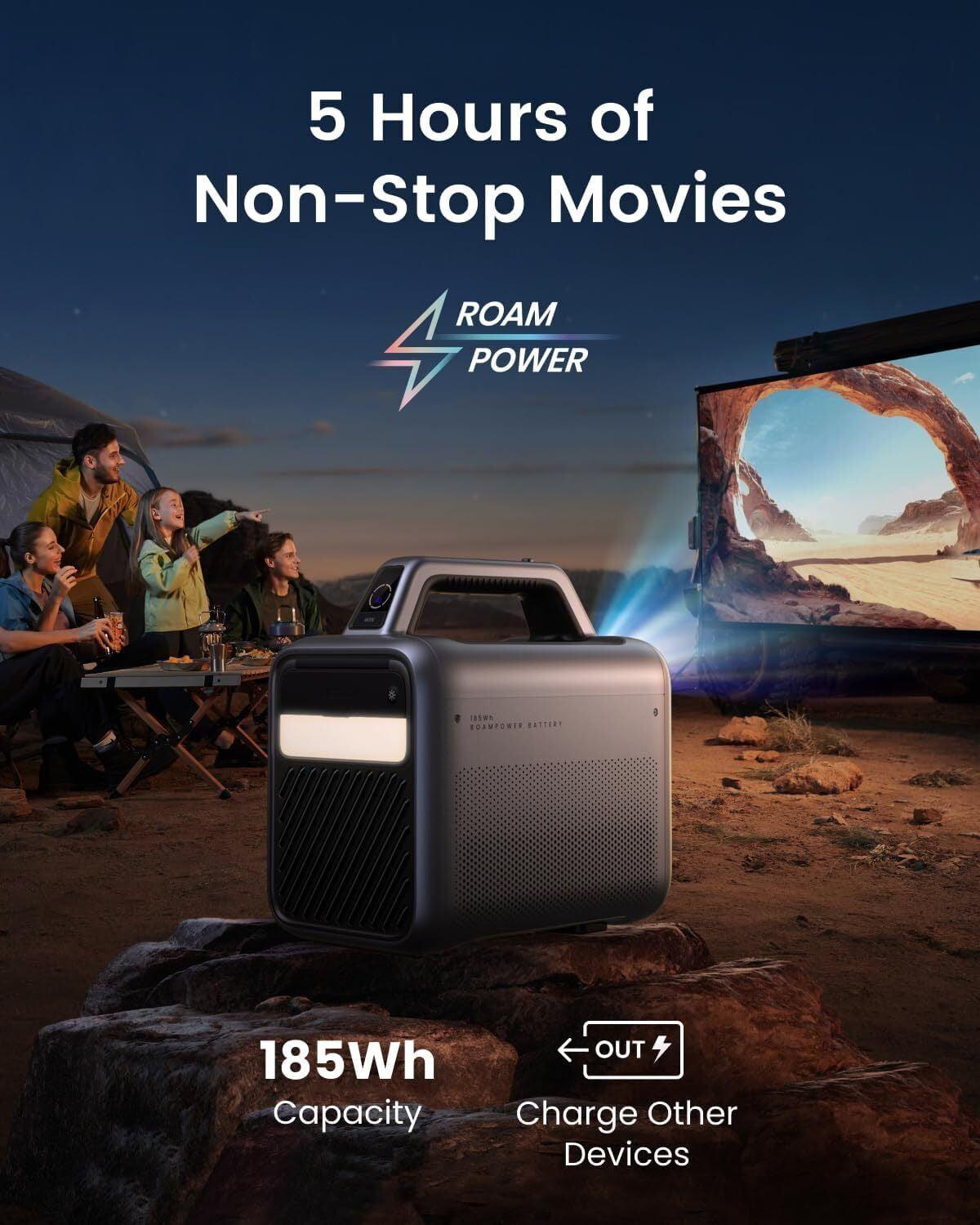
This might be the most important distinction between these two projectors. The Anker Mars 3 includes a substantial 185Wh battery that provides up to five hours of viewing in eco mode, or about two hours in standard brightness mode. This completely changes how you can use the projector.
Want to set up a movie night in your backyard? No problem—no extension cords needed. Going camping and want entertainment for the kids? The Mars 3 can run off its internal battery and even charge your phone if needed. The freedom this provides is genuinely liberating if you've ever struggled with power cables and outdoor setups.
The JMGO N1S Pro 4K requires AC power, which immediately limits where you can use it. However, this limitation enables its superior performance. Laser projectors are inherently power-hungry, and the processing required for 4K imagery and advanced features like automatic keystone correction and object avoidance requires more computational power.
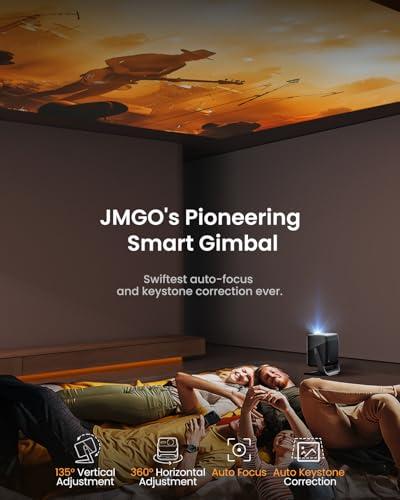
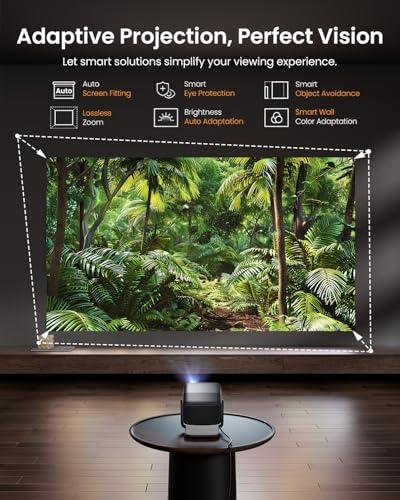
The JMGO's gimbal mounting system is particularly clever—it allows 360-degree horizontal rotation and 135-degree vertical adjustment, meaning you can project onto walls, ceilings, or angled surfaces without physically moving the projector base. Combined with automatic focus and keystone correction, this makes setup remarkably flexible despite the power cord requirement.
Built-in projector audio has historically been terrible, but both of these units take sound seriously. The JMGO N1S Pro 4K includes 20W stereo speakers with Dolby Digital Plus support, and based on user reviews, the audio quality is genuinely impressive for a projector. The speakers are positioned to fire out to the sides rather than directly forward, which helps create a more immersive soundstage.
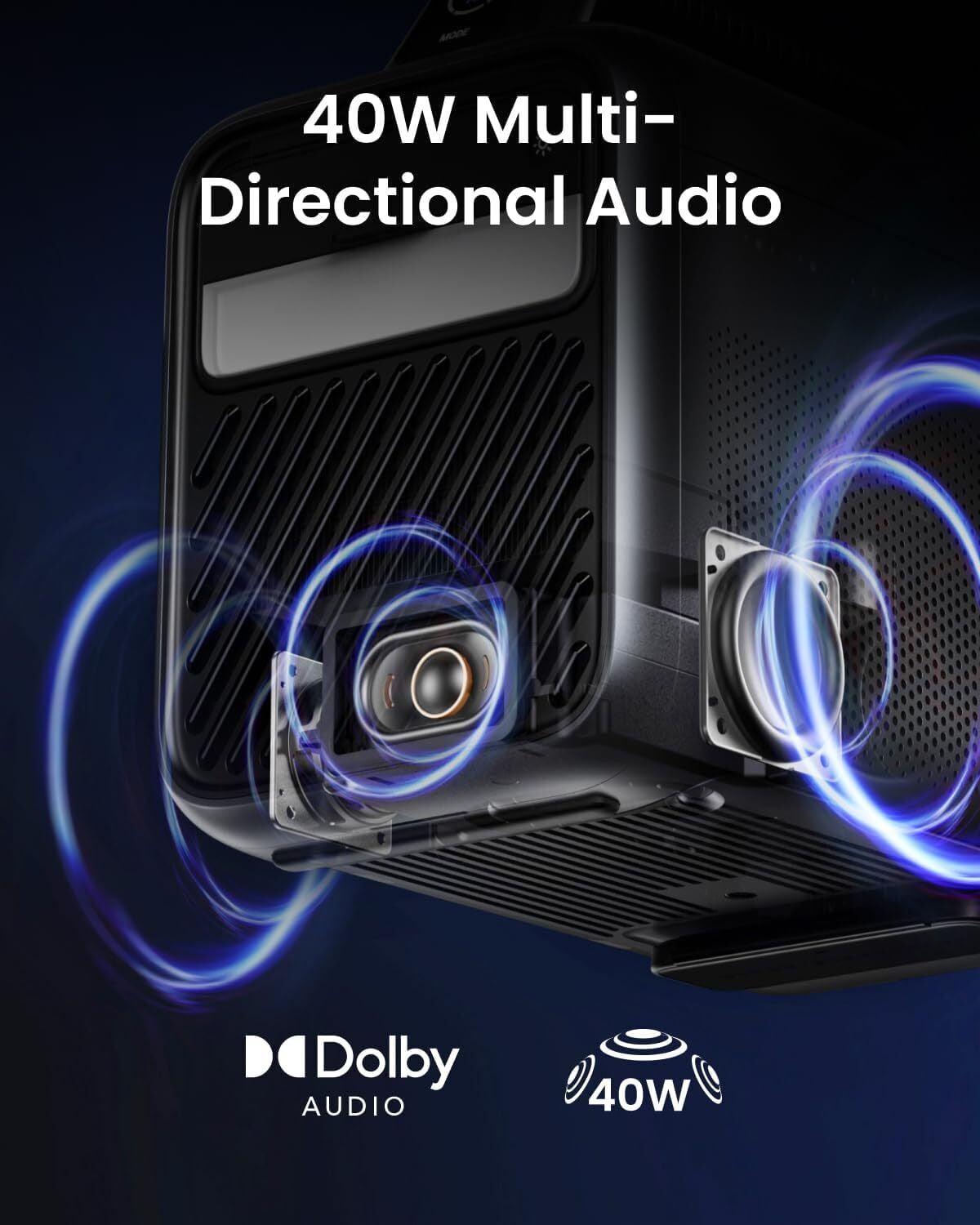
The Anker Mars 3 goes even further with a 40W three-way speaker system. The higher power output makes sense for outdoor use, where you need to overcome ambient noise and the lack of walls to reflect sound. User feedback suggests the Mars 3 can fill outdoor spaces with surprisingly good sound quality.
For indoor use, either projector can work without external speakers for casual viewing, though serious home theater enthusiasts will likely want to connect a soundbar or surround system. The JMGO N1S Pro 4K includes HDMI eARC support specifically for this purpose.
Modern projectors are essentially Android devices with powerful light engines attached, and the software experience matters enormously for daily use. The JMGO N1S Pro 4K runs Google TV with official Netflix licensing—a significant advantage since many projectors struggle with Netflix's content protection requirements.
The smart features extend beyond just streaming apps. The JMGO includes what the company calls "intelligent environment adaptation," which automatically adjusts focus, keystone correction, and even brightness based on the projection surface and ambient lighting. There's also "smart object avoidance" that detects when someone walks in front of the projector and temporarily dims the output to protect their eyes.
The Anker Mars 3 runs Android TV 11, which provides access to most streaming services (though Netflix compatibility can be inconsistent on some projectors). The focus here is more on outdoor optimization, with features like automatic brightness adjustment based on ambient light conditions.
When evaluating projectors, certain performance metrics matter more than others depending on your priorities. For home theater use, black level performance (how dark the darkest parts of the image can get) and motion handling (how well the projector displays fast-moving content without blur or artifacts) become crucial.
Based on professional reviews, the JMGO N1S Pro 4K struggles somewhat with deep blacks—a common limitation of DLP projectors compared to OLED TVs. The 1,600:1 contrast ratio specification looks good on paper, but real-world measurements often show lower contrast. Motion handling also receives mixed reviews, with some users noting stutter or artifacts in fast-moving scenes.
The Anker Mars 3, with its lower resolution and brightness, faces different challenges. The 1080p resolution becomes more apparent on larger screen sizes, and the lower brightness means image quality degrades more quickly in ambient light. However, for its intended use cases—outdoor movies, camping, casual indoor viewing—these limitations are often acceptable trade-offs for the battery operation and rugged design.
At the time of writing, these projectors occupy different price segments that reflect their different priorities. The JMGO N1S Pro 4K commands a premium price that puts it in competition with some entry-level home theater projectors, while the Anker Mars 3 is priced more affordably but still carries a premium for its battery and weatherproofing features.
The value equation depends entirely on which features matter most to you. If you're looking to replace a TV or build a home theater, the JMGO N1S Pro 4K's image quality advantages justify its higher cost. The 4K resolution alone provides future-proofing as more content shifts to 4K, and the laser light source eliminates long-term bulb replacement costs.
For users prioritizing mobility and outdoor use, the Anker Mars 3 offers unique capabilities that no AC-powered projector can match. The ability to set up anywhere without worrying about power sources is genuinely valuable for many users.
The decision between these projectors should start with an honest assessment of your primary use case. If you're setting up a home theater or replacing a TV in a living room, the JMGO N1S Pro 4K is clearly the better choice. The image quality differences are significant enough to justify the higher cost and power requirements.
For families who prioritize outdoor entertainment, camping, or truly portable use, the Anker Mars 3 offers capabilities that the JMGO simply can't match. The weatherproofing and battery operation open up use cases that make the resolution and brightness trade-offs worthwhile.
There's also a middle ground to consider: some users might benefit from owning both types of projectors for different situations. The Anker Mars 3 for outdoor adventures and travel, the JMGO N1S Pro 4K for serious home viewing. While this isn't practical for most budgets, it illustrates how different these products really are.
The projector market continues evolving rapidly, with manufacturers constantly improving brightness, resolution, and battery life. Both JMGO and Anker have demonstrated commitment to advancing their respective approaches, so whichever direction you choose, you're likely to see continued improvements in future models.
Ultimately, the "best" projector is the one that best matches your specific needs and viewing habits. These two excellent projectors represent very different solutions to the challenge of big-screen entertainment, and understanding their differences is key to making the right choice for your situation.
| JMGO N1S Pro 4K Projector | Anker Nebula Mars 3 Outdoor Portable Projector |
|---|---|
| Resolution - Higher resolution means sharper detail, especially on larger screens | |
| True 4K (3840×2160) - Future-proof for streaming content | 1080p (1920×1080) - Adequate for most viewing distances |
| Brightness - Critical for image visibility in ambient light | |
| 2,400 ANSI lumens - Excellent for bright rooms | 1,000 ANSI lumens - Good for dark environments only |
| Light Source Technology - Affects color quality and lifespan | |
| Triple RGB laser (MALC 2.0) - Vibrant colors, 30,000 hr life | LED - Efficient for battery use, 25,000 hr life |
| Power Requirements - Determines where you can use the projector | |
| AC power required - Limits to locations with outlets | Built-in battery (5 hours) - Complete portability |
| Durability - Important for outdoor or travel use | |
| Indoor-focused design - No weather protection | IPX3 water resistant, drop resistant, dust proof |
| Audio System - Built-in speakers reduce need for external audio | |
| 20W stereo with Dolby Digital Plus - Good for indoor use | 40W 3-way speakers with Dolby Audio - Optimized for outdoors |
| Smart Features - Affects ease of use and content access | |
| Google TV with native Netflix, auto-focus, gimbal adjustment | Android TV 11, auto-brightness, outdoor optimization |
| Throw Distance - How far back you need to position the projector | |
| 1.2:1 ratio (7.4' - 15.7' for 85" - 180" image) | 1.2:1 ratio (similar positioning requirements) |
| Color Coverage - More colors mean more realistic images | |
| 110% BT.2020 - Exceptionally wide color gamut | Standard LED color range - Adequate but less vibrant |
| Connectivity - Determines what devices you can connect | |
| 2x HDMI 2.1 (eARC), USB-A, Wi-Fi 6, Bluetooth 5.2 | HDMI, USB-A, USB-C, Wi-Fi, Bluetooth 5.1 |
| Best Use Cases - Who should choose this projector | |
| Home theater replacement, multi-room flexibility, image quality priority | Outdoor movies, camping, travel, rugged environments |
The JMGO N1S Pro 4K Projector is significantly better for home theater applications. It delivers true 4K resolution with 2,400 ANSI lumens brightness and triple RGB laser technology for superior image quality. The Anker Nebula Mars 3 is limited to 1080p resolution and designed primarily for outdoor or portable use rather than dedicated home theater setups.
The Anker Nebula Mars 3 Outdoor Portable Projector is specifically designed for outdoor use with IPX3 water resistance, drop protection, and a built-in battery for cord-free operation. The JMGO N1S Pro 4K requires AC power and lacks weatherproofing, making it unsuitable for outdoor environments.
The JMGO N1S Pro 4K Projector offers superior image quality with 4K resolution, triple laser technology covering 110% BT.2020 color gamut, and higher brightness at 2,400 ANSI lumens. The Anker Mars 3 provides adequate 1080p quality but cannot match the sharpness and color vibrancy of the JMGO N1S Pro 4K.
The JMGO N1S Pro 4K Projector requires AC power and must be plugged into a wall outlet. The Anker Nebula Mars 3 has a built-in battery providing up to 5 hours of operation without any power connection, making it truly portable for camping, travel, or outdoor events.
The JMGO N1S Pro 4K is significantly brighter at 2,400 ANSI lumens compared to the Anker Mars 3's 1,000 ANSI lumens. This makes the JMGO projector much better for rooms with ambient light, while the Mars 3 requires darker environments for optimal viewing.
Both the JMGO N1S Pro 4K Projector and Anker Mars 3 can project images from approximately 30 inches up to 200 inches. However, the JMGO N1S Pro 4K's higher resolution and brightness maintain better image quality at larger sizes compared to the Mars 3.
The Anker Nebula Mars 3 features more powerful 40W 3-way speakers designed for outdoor use, while the JMGO N1S Pro 4K has 20W stereo speakers optimized for indoor environments. Both offer surprisingly good audio quality for built-in projector speakers, but the Mars 3 has the edge in raw power output.
The JMGO N1S Pro 4K Projector includes Google TV with official Netflix licensing for seamless streaming. The Anker Mars 3 runs Android TV 11 but may have compatibility issues with some streaming services including Netflix due to content protection requirements.
The Anker Nebula Mars 3 Outdoor Portable Projector is more truly portable due to its built-in battery, weatherproof design, and outdoor optimization. While the JMGO N1S Pro 4K is physically portable, it requires AC power which limits placement flexibility compared to the completely cord-free Mars 3.
The JMGO N1S Pro 4K Projector uses laser technology rated for 30,000 hours, while the Anker Mars 3 uses LED technology rated for 25,000 hours. Both offer essentially maintenance-free operation with no bulb replacements needed during typical usage lifespans.
Value depends on your priorities. The JMGO N1S Pro 4K offers better value for home theater use with superior image quality and smart features. The Anker Mars 3 provides better value for users prioritizing portability, outdoor use, and battery operation over maximum image quality.
The JMGO N1S Pro 4K Projector features automatic focus, keystone correction, and a gimbal system for flexible positioning, but requires AC power and indoor setup. The Anker Mars 3 offers simpler setup anywhere with its battery power and rugged design, making it ideal for quick outdoor movie nights or travel use.
We've done our best to create useful and informative comparisons to help you decide what product to buy. Our research uses advanced automated methods to create this comparison and perfection is not possible - please contact us for corrections or questions. These are the sites we've researched in the creation of this article: techradar.com - projectorcentral.com - gray9.in - projectorreviews.com - howtogeek.com - the-gadgeteer.com - projectorcentral.com - global.jmgo.com - global.jmgo.com - cnet.com - cnet.com - youtube.com - global.jmgo.com - avsforum.com - youtube.com - youtube.com - techradar.com - seenebula.com - thesmarthomehookup.com - yuenx.com - projectorcentral.com - seenebula.com - youtube.com - youtube.com - youtube.com - cnet.com - projectorreviews.com - youtube.com - youtube.com - projectorcentral.com - seenebula.com - youtube.com - yuenx.com

Privacy Policy
Terms and Conditions - Affiliate Policy
Home Security
© Copyright 2008-2026.
11816 Inwood Rd #1211, Dallas, TX 75244