

Remember when portable projectors were dim, pixelated affairs that barely worked in a pitch-black room? Those days are thankfully behind us. Today's portable projectors have transformed into versatile entertainment hubs that can turn virtually any surface into a big-screen experience.
The portable projector market has exploded in recent years, with manufacturers pushing the boundaries of what's possible in compact form factors. Released in late 2023, the Anker Nebula Mars 3 represents the latest iteration of Anker's premium outdoor-focused projector line. Meanwhile, the BenQ GV50, which hit the market in early 2022, takes a different approach with its ceiling projection specialization.
What makes these modern portable projectors so impressive is how they've overcome traditional limitations. They now pack smart TV interfaces, respectable brightness, and battery power into increasingly compact packages. But with prices ranging from $750 to over $1,000, choosing the right one requires careful consideration of your specific needs.
Before diving into our comparison, let's discuss what matters most when selecting a portable projector:
Brightness is perhaps the most crucial factor, measured in ANSI lumens (a standardized brightness measurement). Higher brightness means better visibility in ambient light, but it typically comes at the cost of battery life and higher prices.
Resolution determines image sharpness, with 1080p (1920×1080 pixels) now the standard for quality portable projectors. While 4K projectors exist, they're rare in the portable category due to cost and power constraints.
Battery life determines how long you can use the projector without plugging in—critical for outdoor use or situations where power outlets aren't readily available.
Light source technology affects image quality, lifespan, and power consumption. LED light sources are common in portables, while laser technology offers superior color accuracy and longevity but at a higher cost.
Portability factors include weight, size, and durability features that determine where and how you can realistically use the projector.
Smart features and connectivity options influence how easily you can access content and connect devices, increasingly important as streaming becomes dominant.
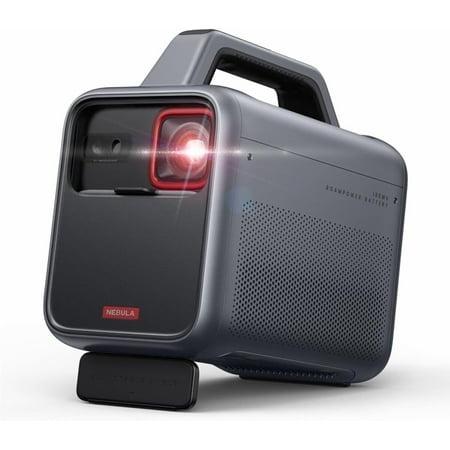
The Anker Nebula Mars 3 ($1,099) represents Anker's flagship portable projector, designed primarily for outdoor entertainment. Released in November 2023, it builds upon Anker's experience with previous Mars models, significantly improving brightness and smart features.
With its carrying handle and rugged design, the Mars 3 looks like it means business. It's built like a portable boom box, weighing in at a substantial 9.9 pounds—definitely portable, but not something you'll casually toss in a backpack.
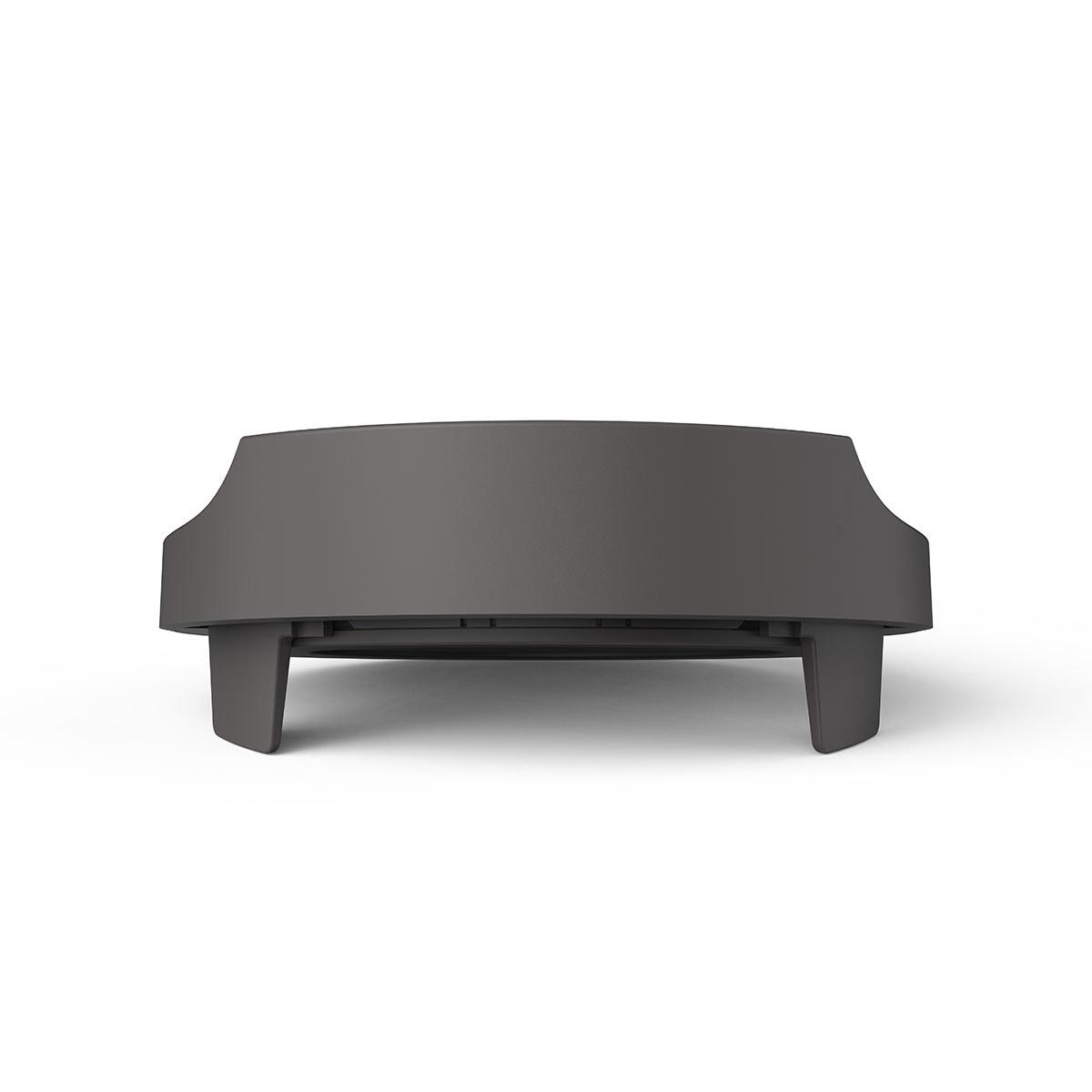
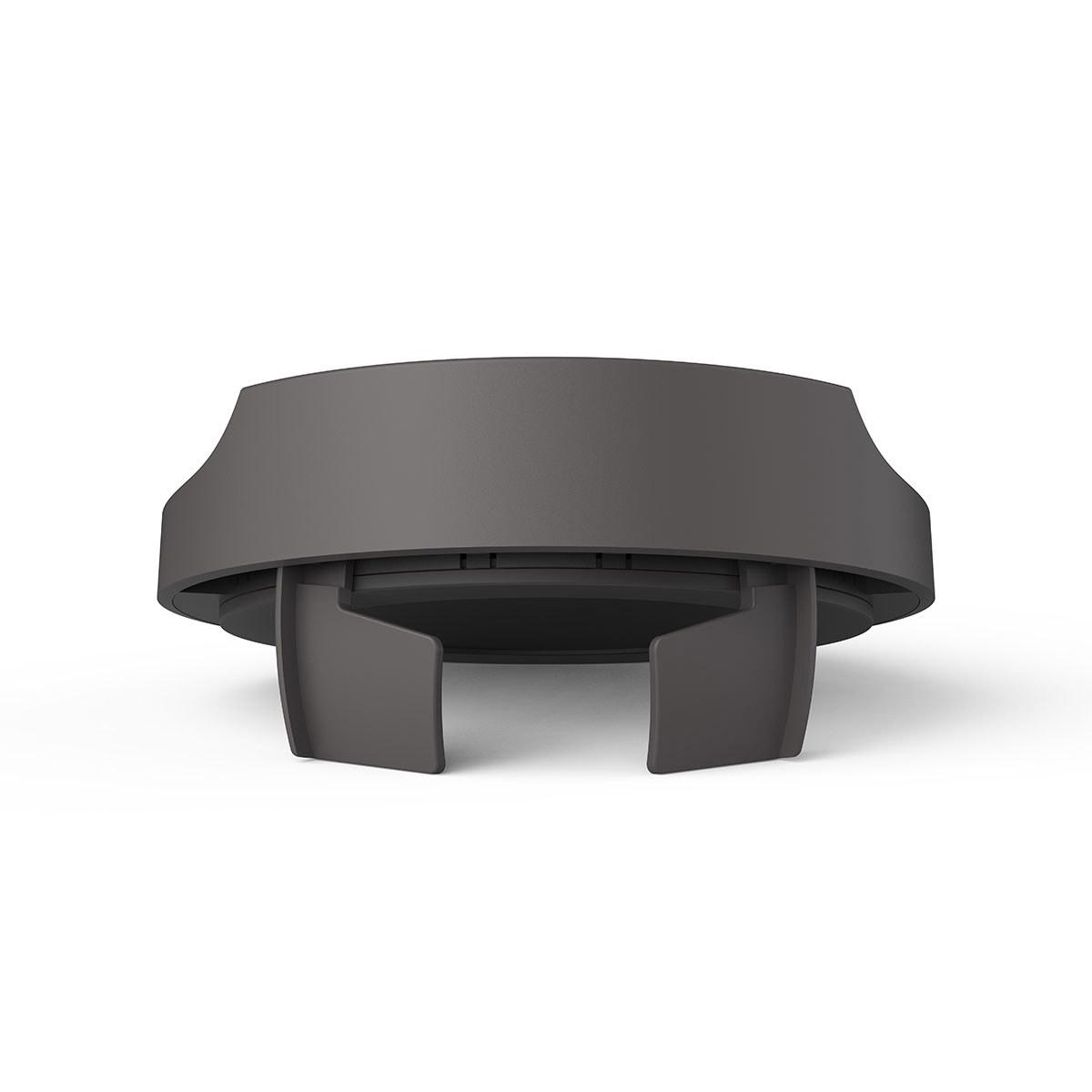
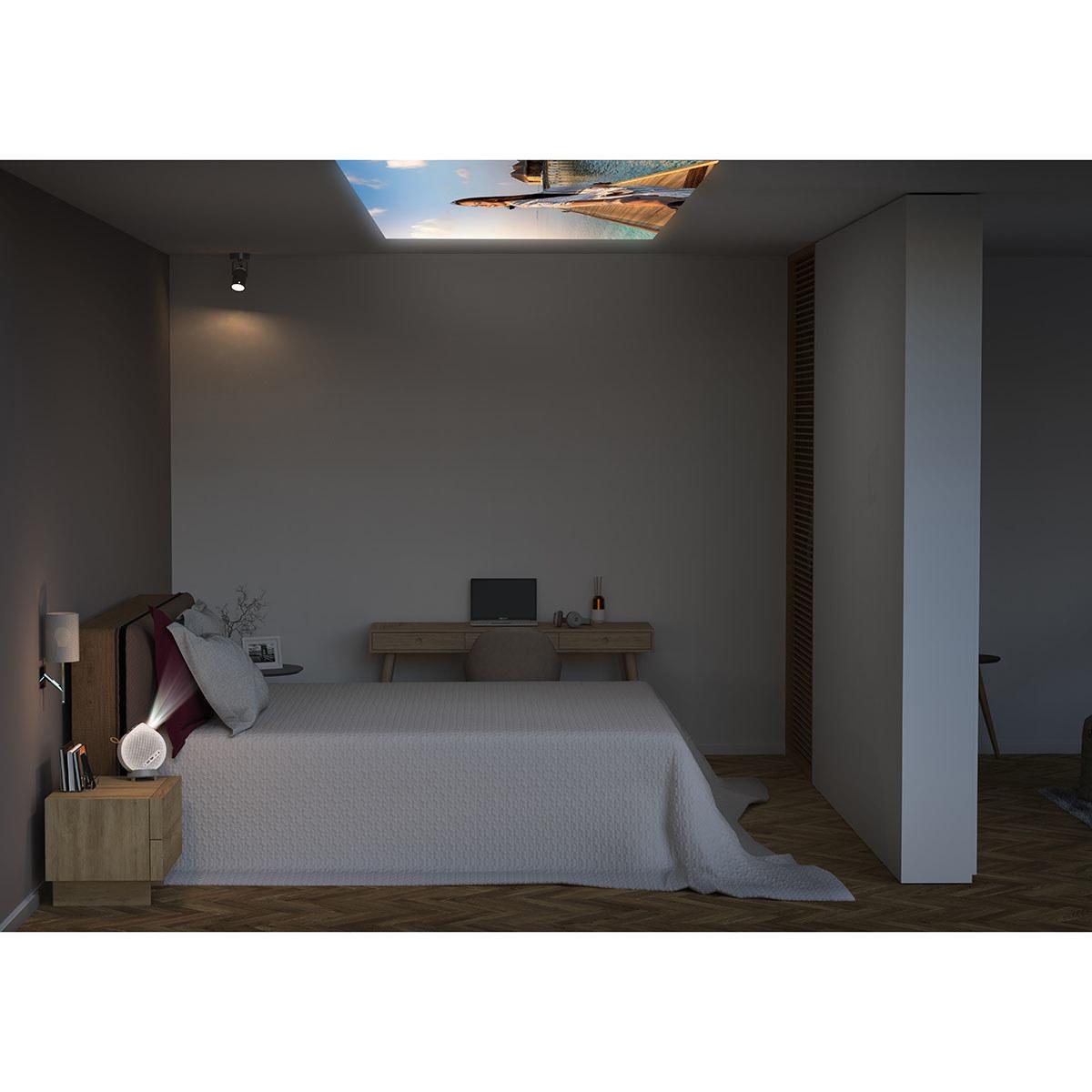
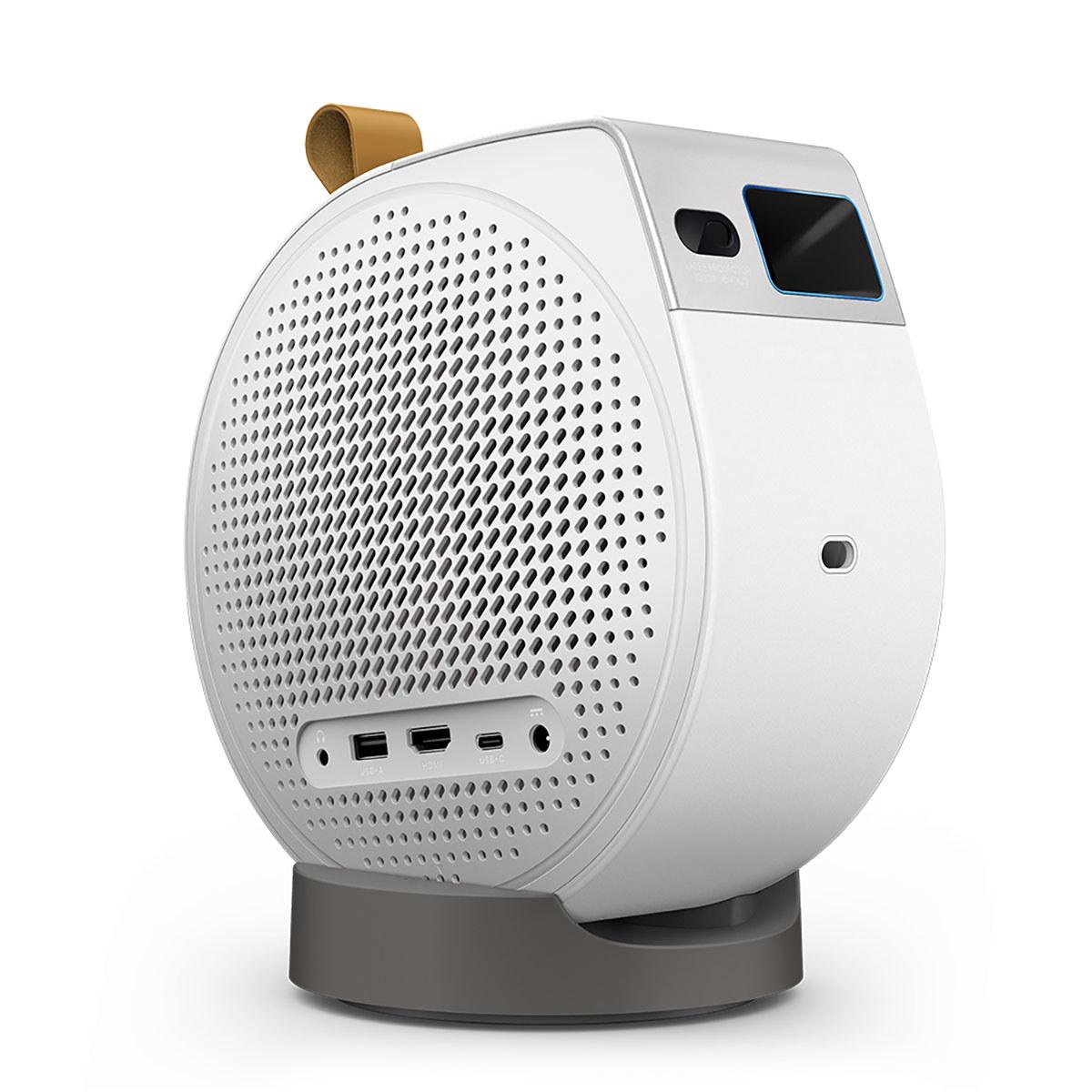
The BenQ GV50 ($799) takes a different approach, emphasizing flexible indoor projection with its unique spherical design and adjustable base. Launched in early 2022, it pioneered the concept of a projector specifically optimized for ceiling projection.
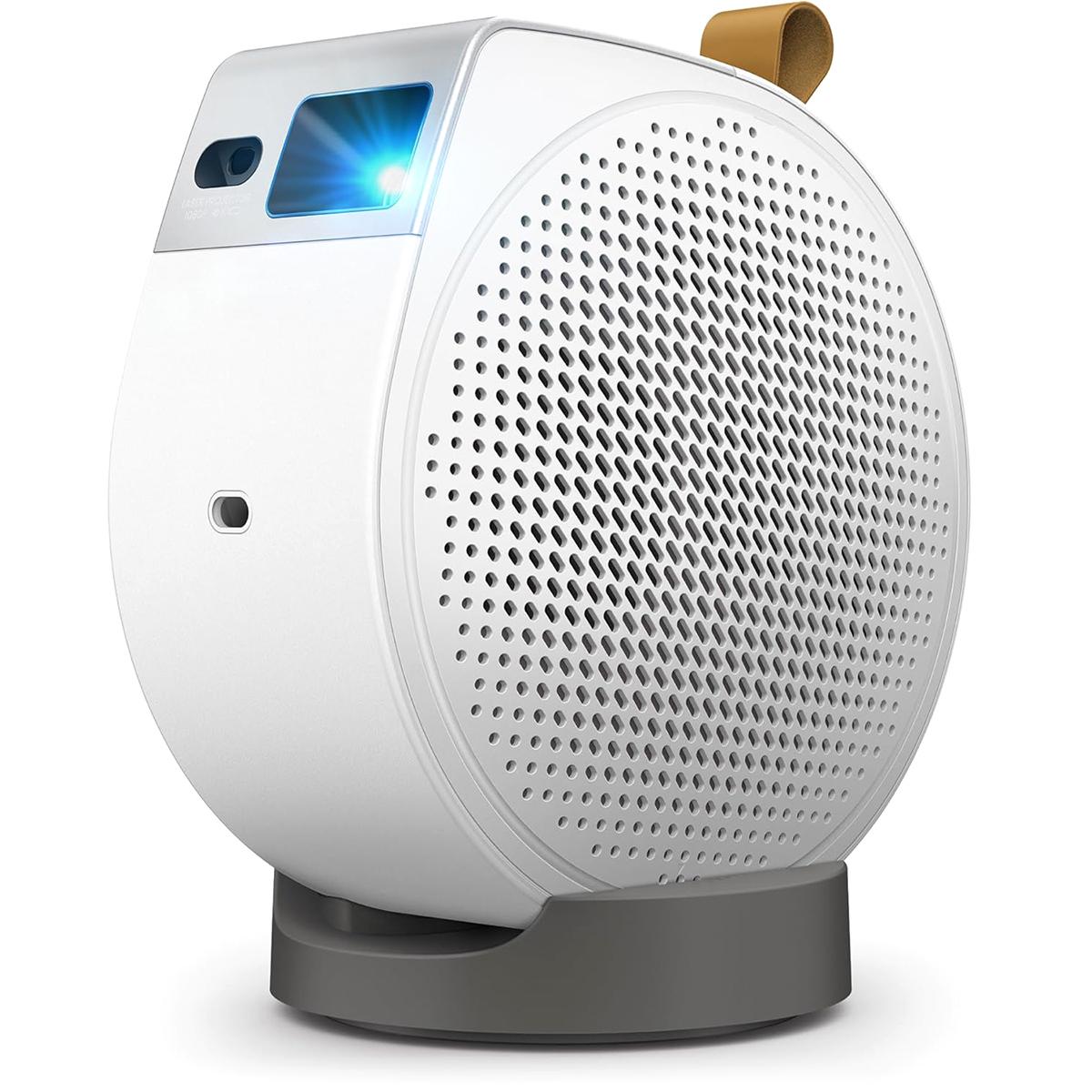
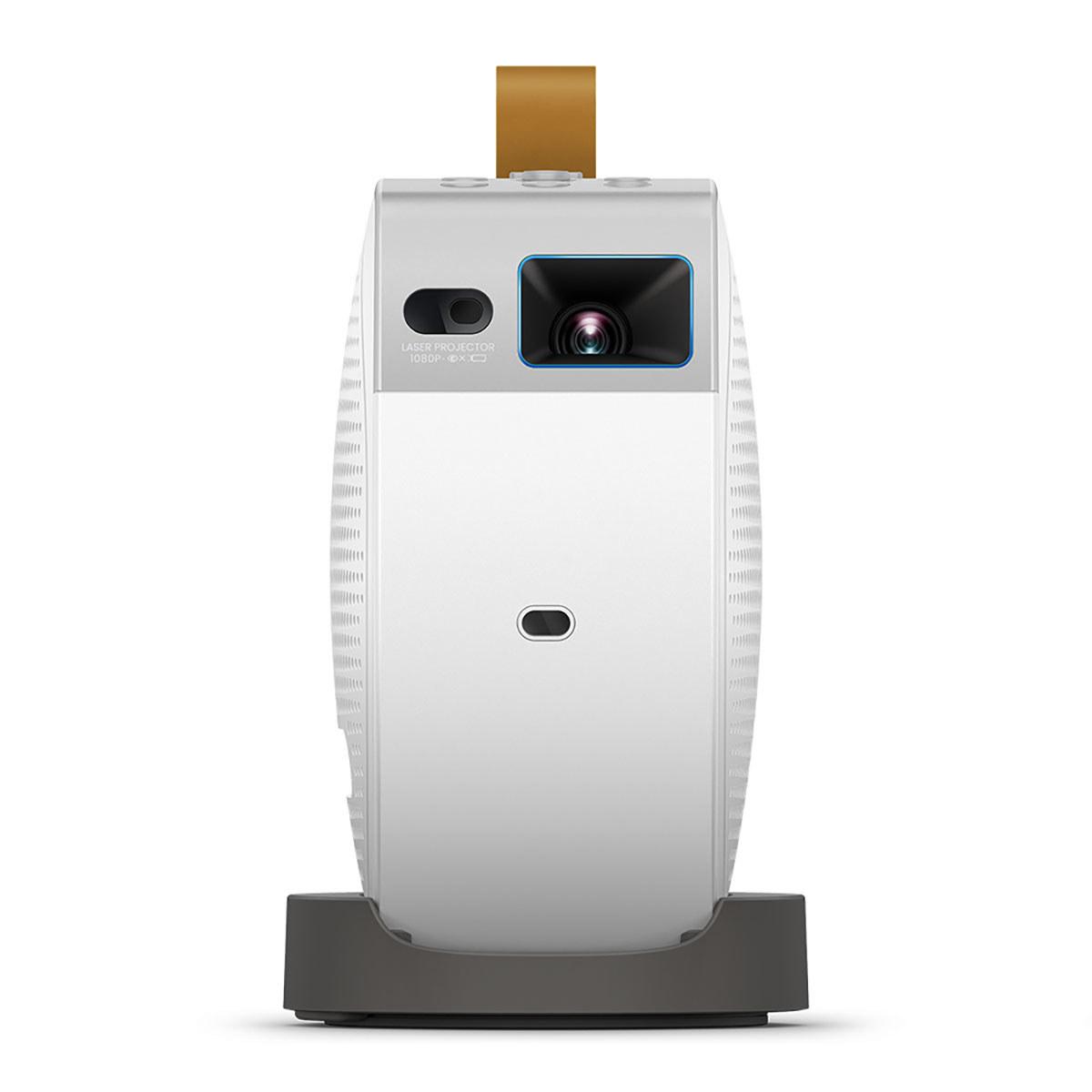
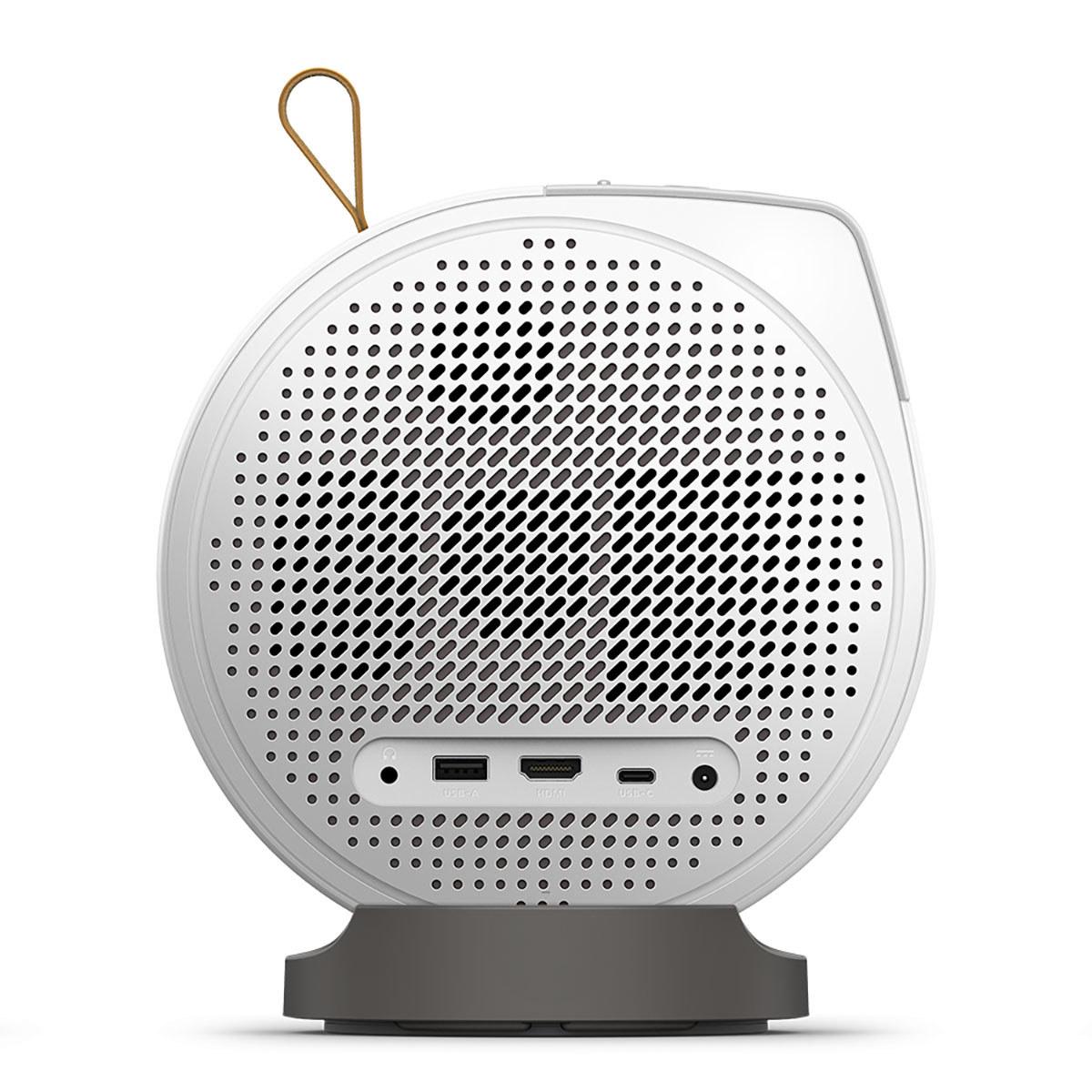
At 4.6 pounds, the GV50 is significantly lighter than the Mars 3. Its distinctive round design with an adjustable base makes it look more like a modern smart speaker than a traditional projector, reflecting its home-focused purpose.
The difference in brightness between these projectors highlights their intended use cases better than perhaps any other specification.
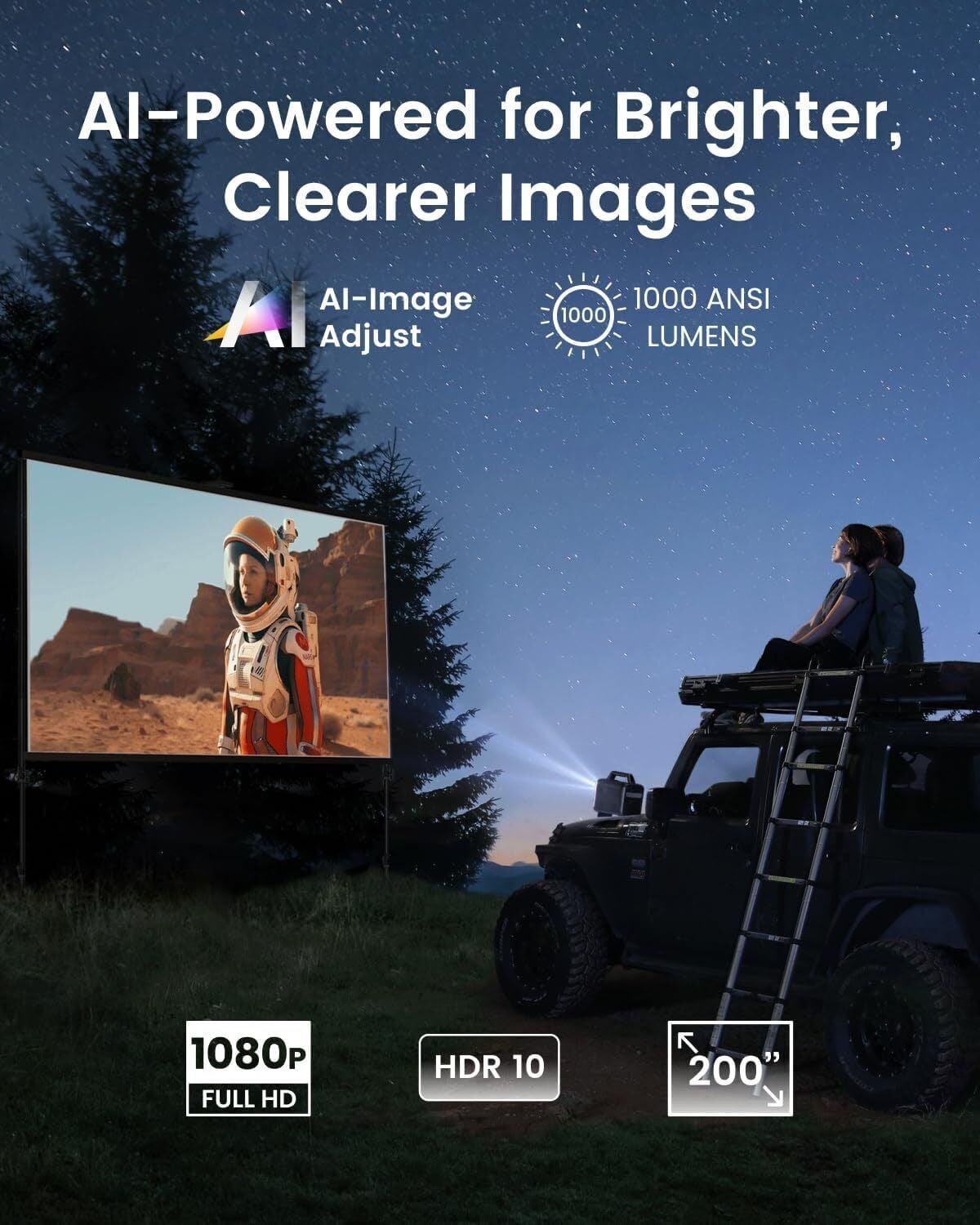
The Anker Nebula Mars 3 outputs an impressive 1,000 ANSI lumens, which is exceptional for a battery-powered projector. To put this in context, most portable projectors struggle to reach even 500 ANSI lumens. This brightness level allows the Mars 3 to produce a visible image at dusk or in environments with some ambient light—critical for outdoor viewing where perfect darkness is rarely achievable.
The Mars 3 also features Autobright AI Technology, which uses sensors to detect ambient light levels and automatically adjusts brightness accordingly. This not only optimizes image visibility but also helps preserve battery life when full brightness isn't needed.
Having tested projectors in various lighting conditions, I can confirm that the difference between 500 and 1,000 ANSI lumens is dramatic. The Mars 3's brightness makes it usable in far more scenarios, though you'll still want relative darkness for the best experience.
The BenQ GV50 offers 500 ANSI lumens—half the brightness of the Mars 3. This lower brightness level is perfectly adequate for its intended use: projecting in dark or dimly lit indoor environments, particularly bedrooms for ceiling projection.
When projecting in a properly darkened room, 500 lumens produces a vibrant, pleasing image up to about 80-100 inches diagonal. The GV50's brightness limitations become apparent only when ambient light is present, making it less suitable for daytime viewing or outdoor use.
For bedroom ceiling projection, the lower brightness is actually beneficial, as too much brightness can be uncomfortable when you're lying in bed looking directly at the projected image.
While both projectors offer 1080p Full HD resolution, their approaches to image quality differ in several important ways.
The Anker Nebula Mars 3 uses an LED light source rated for approximately 25,000 hours of use—essentially a lifetime of viewing for most users. LED technology offers instant on/off capability without warm-up time and maintains consistent brightness throughout its lifespan.
The Mars 3 supports HDR10 content, which expands the range of colors and contrast the projector can display when viewing compatible content. In practice, this translates to more vibrant colors and better handling of bright and dark areas within the same scene. The color reproduction is notably vibrant, with the high brightness helping colors pop even in less-than-ideal viewing conditions.
The Mars 3's Intelligent Environment Adaptation 3.0 feature automatically focuses the image and corrects for keystone distortion (the trapezoidal shape that occurs when projecting at an angle). This feature works remarkably well, making setup substantially easier, especially in varied outdoor environments.
The BenQ GV50 employs a laser phosphor light source, which represents a significant technological advantage over traditional LED. Rated for 30,000 hours in normal mode and up to 30,000 hours in eco mode, the laser light source will likely outlast the projector's relevant lifespan.
Laser technology offers several image quality advantages: more accurate colors, better color stability over time, and superior contrast. The GV50 boasts a contrast ratio of 100,000:1, which helps produce deeper blacks and more detailed shadow areas than typical LED projectors.
The GV50 supports both HDR10 and HLG (Hybrid Log-Gamma) formats, with the latter being increasingly important for broadcast content. Its Smart Screen Adaption technology goes beyond basic auto-focus and keystone correction to include obstacle avoidance—it can detect and adjust the projection to avoid objects on the wall or ceiling.
In my experience with laser projectors, the color accuracy advantage is noticeable, especially with content that features subtle color gradations. For home theater enthusiasts, the GV50's laser source provides a more refined image that better approximates the experience of higher-end home theater projectors.
The tradeoff between battery capacity and physical portability creates distinct use cases for these projectors.
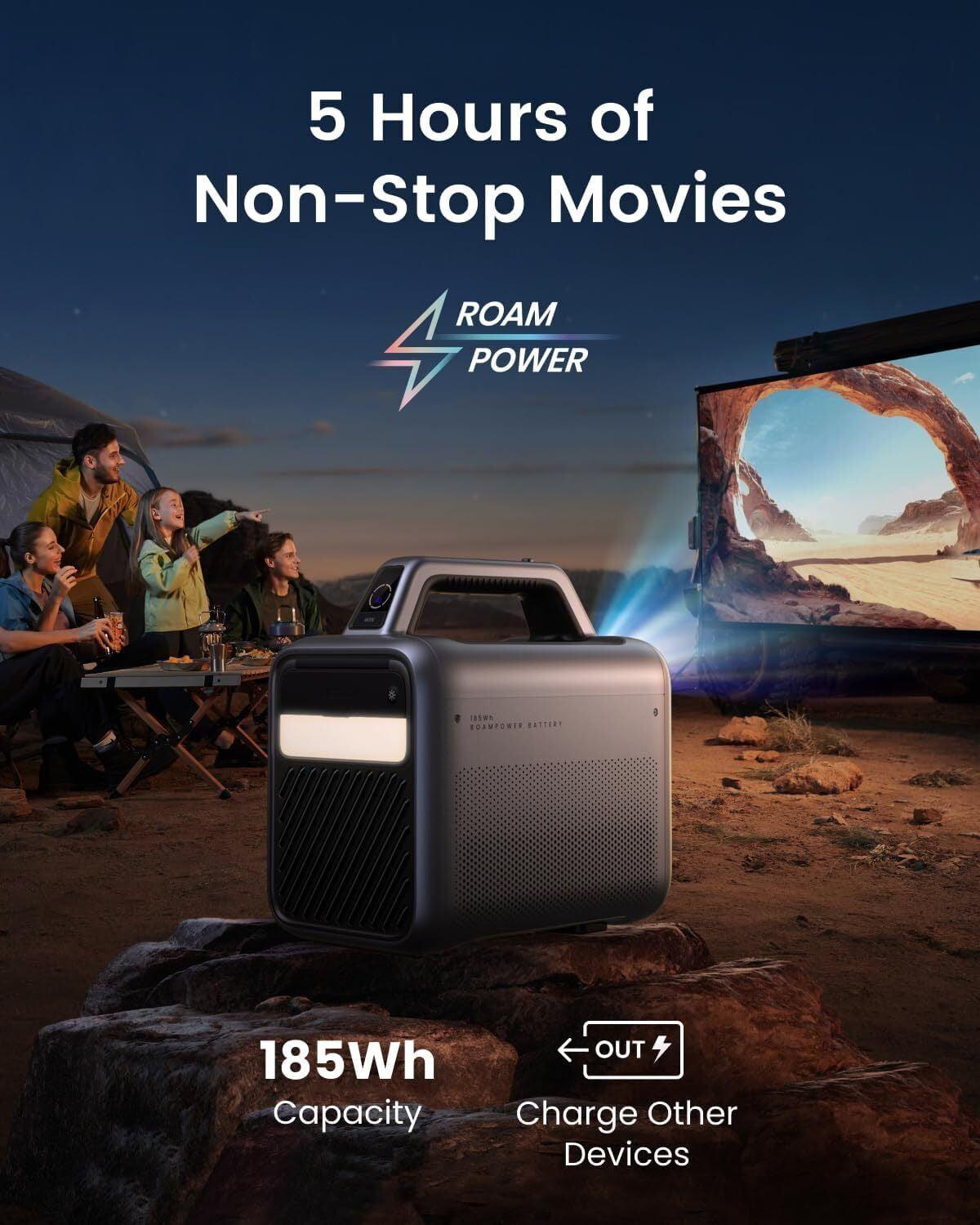
The Anker Nebula Mars 3 provides up to 5 hours of playback in its Eco mode (reduced brightness) or about 2 hours at full 1,000-lumen brightness. This impressive battery performance comes from prioritizing capacity over weight consideration.
At 9.9 pounds, the Mars 3 is portable but substantial. Its dimensions (6.3" x 10.2" x 9.8") make it comparable to a small cooler or large boom box. The integrated handle makes carrying more comfortable, but this isn't a device you'll casually throw in a bag. The heft reflects its outdoor-focused design philosophy: it's meant to be carried to a destination and set up, rather than constantly moved around.
For outdoor movie nights, camping trips, or backyard entertainment, the extended battery life is invaluable. Being able to watch an entire feature film (or even two) without worrying about power is liberating.
The BenQ GV50 offers approximately 2.5 hours of video playback on battery power—sufficient for most movies but less than half the maximum runtime of the Mars 3. This reflects its design priorities: the GV50 emphasizes portability and flexible positioning over marathon battery life.
At 4.6 pounds and with more compact dimensions (5.1" x 8.3" x 7.5"), the GV50 is genuinely portable. You can easily move it from room to room, pack it for travel, or reposition it with minimal effort. Its lower weight also enables its unique adjustable base to work effectively, supporting various angles without becoming unstable.
The spherical design with 360° rotation capability and 135° vertical tilt makes the GV50 exceptionally versatile for indoor use. You can quickly adjust it to project on a wall, ceiling, or angled surface without complex mounting solutions.
The physical design of these projectors clearly communicates their intended use cases and environments.
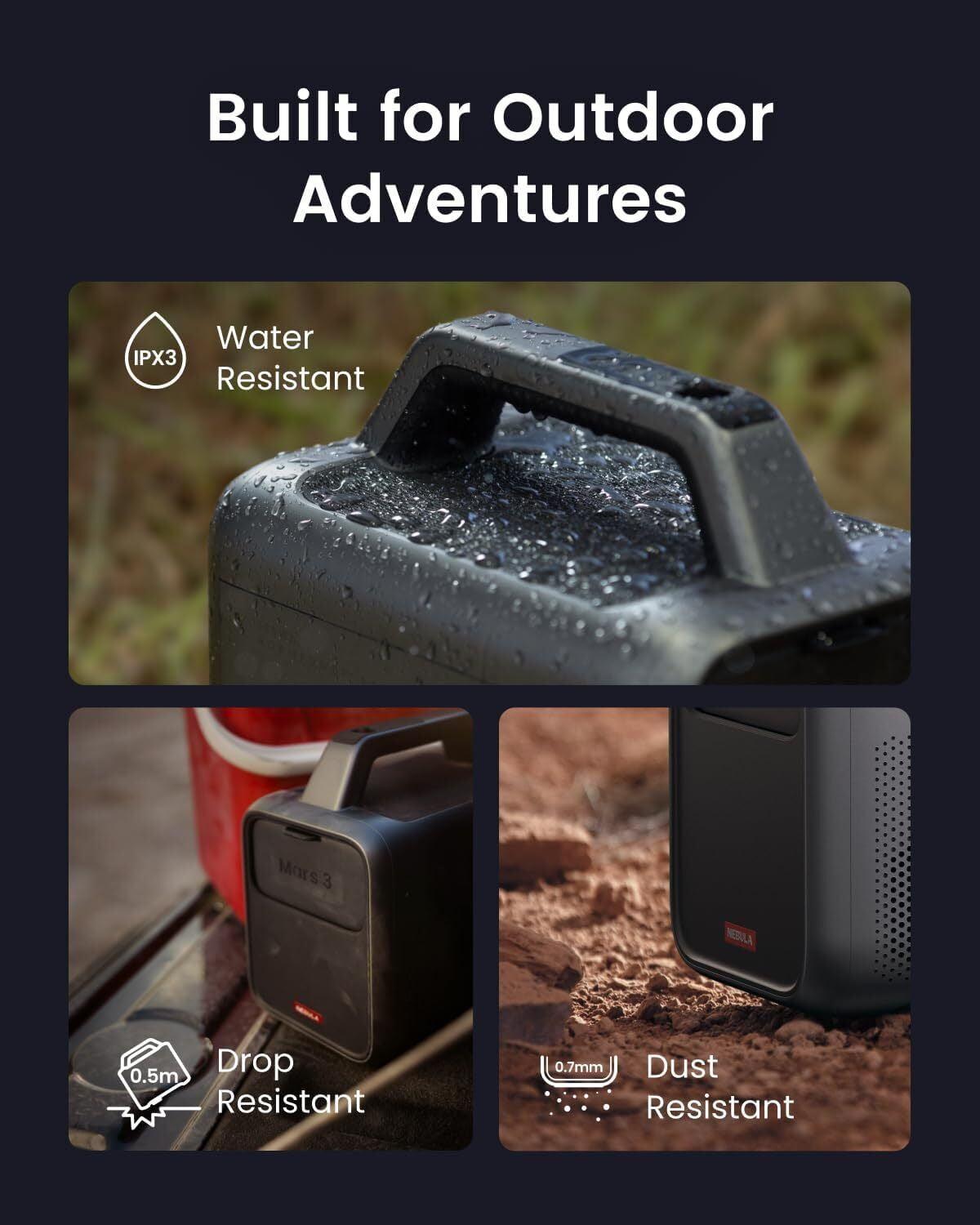
The Anker Nebula Mars 3 features IPX3 water resistance, meaning it can withstand water sprays up to 60° from vertical. In practical terms, it can handle light rain or the occasional splash without damage. It's also rated for 0.5m drop resistance and 0.7mm dust resistance.
These durability features address real-world outdoor concerns. While you wouldn't want to leave it out in a downpour, the Mars 3 can survive if you're caught in unexpected light rain during an outdoor movie night. The dust resistance is particularly valuable for beach outings or desert camping.
The design prioritizes practical outdoor use, with a stable base, effective heat dissipation, and a carrying handle that makes transportation easier. The projector's controls are accessible and usable even in low light, with a logical layout that doesn't require the user manual after initial setup.
The BenQ GV50 lacks specific weather resistance ratings, clearly positioning it as an indoor device. Instead, it excels with its flexible positioning system. The base features a unique adjustable design that enables projection from virtually any angle, including directly upward for ceiling viewing.
This flexibility is particularly valuable for bedroom use, where you might want to project onto the ceiling while lying in bed. The 135° vertical adjustment allows precise positioning without awkward props or makeshift solutions. The spherical design isn't just aesthetic—it facilitates the cooling system while allowing for the wide range of projection angles.
The GV50's design elegance extends to its controls, with an intuitive interface that complements its physical flexibility. The projector feels at home on a bedside table, living room shelf, or coffee table, with a modern appearance that blends into contemporary home decor.
Both projectors offer robust smart platforms and connectivity options, though with some notable differences in implementation.
The Anker Nebula Mars 3 runs Android TV 11.0, providing access to thousands of apps through the Google Play Store. The interface will be familiar to anyone who has used a modern smart TV, with customizable home screens and content recommendations.
Chromecast functionality is built in, allowing direct streaming from compatible devices without additional hardware. Google Assistant integration provides voice control capabilities, though you'll need to use the included remote (there's no always-on microphone in the projector itself).
Connectivity options include HDMI, USB-A, and USB-C ports, along with dual-band Wi-Fi and Bluetooth 5.1. The USB-C port supports power delivery, allowing the Mars 3 to function as a power bank for charging other devices—a thoughtful feature for outdoor use where power access may be limited.
The BenQ GV50 uses Google TV (also based on Android 11), which offers a content-first interface that aggregates shows and movies from your subscribed services. This approach prioritizes finding content over navigating specific apps, which many users find more intuitive.
The GV50 supports both AirPlay and Google Cast for wireless projection from iOS, Android, macOS, and Windows devices. This cross-platform flexibility is particularly valuable in households with mixed device ecosystems.
Its port selection mirrors the Mars 3, with HDMI 2.0b, USB-A, and USB-C connections, though the USB-C port doesn't offer the power bank functionality of the Anker projector. Wi-Fi and Bluetooth performance are comparable between the two devices.
In practical use, both smart systems are competent, though neither matches the refinement of premium smart TVs. Occasional lag when navigating menus is noticeable on both projectors—a common characteristic of projectors running Android-based operating systems.
Audio capabilities significantly impact the overall experience, especially when external speakers aren't practical.
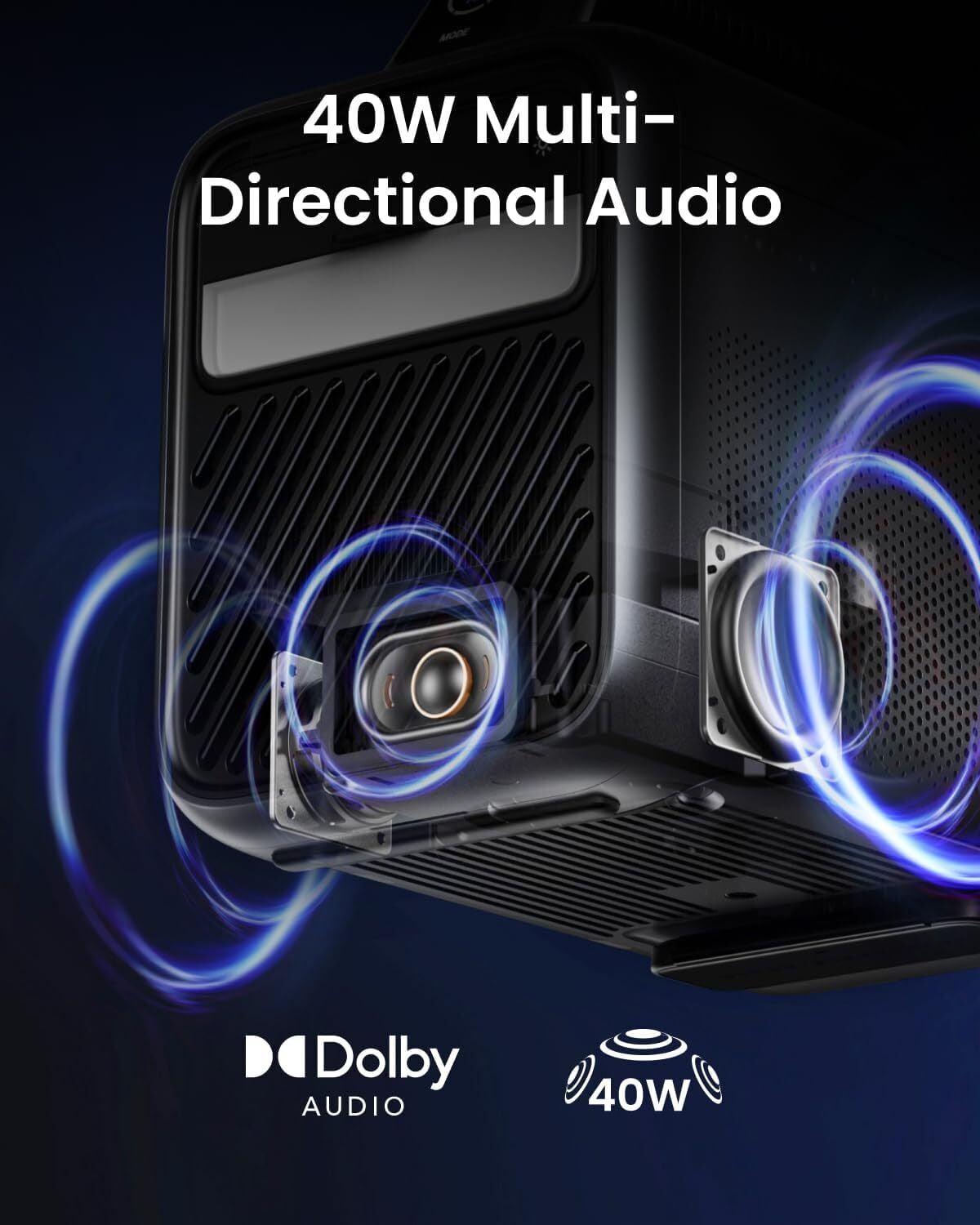
The Anker Nebula Mars 3 features an impressive 40W 3-way speaker system with Dolby Audio support. This powerful audio system produces remarkable volume for a portable device, capable of filling outdoor spaces with clear, balanced sound.
The speaker configuration includes dedicated drivers for different frequency ranges, providing more balanced audio than typical portable projector speakers. Bass response is surprisingly robust, though naturally not comparable to dedicated external subwoofers.
For outdoor movie viewing, the Mars 3's audio quality means you can often skip bringing separate speakers—a significant convenience that enhances its portability proposition despite the heavier weight.
The BenQ GV50 offers an 18W 2.1 channel speaker system, including dual 4W speakers and a dedicated 10W woofer. While less powerful than the Mars 3's system, it's tuned specifically for indoor environments where extreme volume isn't necessary.
The GV50's standout audio feature is its Ceiling Cinema Sound Mode, which optimizes audio projection when the unit is pointed upward for ceiling viewing. This specialized tuning prevents the muffled sound that often occurs when projector speakers face away from the listener.
For bedroom or small living room use, the GV50's audio is more than adequate, providing clear dialogue and reasonable bass response for immersive viewing. In larger spaces, however, it doesn't match the room-filling capability of the Mars 3.
With a significant price difference between these projectors, value considerations depend heavily on your specific use case and priorities.
At approximately $1,099, the Anker Nebula Mars 3 represents a significant investment. Its premium pricing reflects its category-leading brightness, extended battery life, and outdoor-ready design.
For users who primarily plan outdoor viewing, the Mars 3 offers genuine value despite its higher price. The combination of brightness sufficient for twilight viewing, battery life that covers multiple movies, and weather resistance features creates a complete outdoor entertainment solution that would otherwise require multiple separate devices.
However, if outdoor use isn't a priority, the Mars 3's premium features may represent unnecessary expense. Indoor-only users might find better value in either the GV50 or non-portable home projectors with even better performance characteristics.
At around $799, the BenQ GV50 offers a more accessible price point while still delivering premium features like its laser light source and flexible positioning system.
For bedroom ceiling projection or general indoor use, the GV50 represents excellent value. The laser light source alone justifies much of the price premium over cheaper LED alternatives, offering better color accuracy and longer lifespan.
The $300 saved compared to the Mars 3 could be invested in external speakers or streaming device upgrades if needed, though the GV50's built-in capabilities are sufficient for most users.
After examining all aspects of these projectors, the decision comes down to your primary use case and viewing environment.
The Mars 3 excels as a self-contained outdoor entertainment system. Its brightness, battery life, and audio quality make it uniquely capable for backyard movie nights, camping trips, or any outdoor viewing scenario. If you're primarily planning to use your projector outdoors, the premium price is justified by the comprehensive feature set that addresses the specific challenges of outdoor projection.
The GV50 shines as a specialized indoor projector with its unique ceiling projection capabilities and laser-based image quality. Its more affordable price point delivers exceptional value for bedroom viewing, home theater applications in properly darkened rooms, or any scenario where flexible positioning is more important than extreme brightness.
Both the Anker Nebula Mars 3 and BenQ GV50 represent the impressive evolution of portable projectors, each excelling in their intended use cases. Rather than direct competitors, they're best understood as specialized tools designed for different viewing environments.
The Mars 3's outdoor focus makes it the clear choice for users prioritizing brightness and durability, while the GV50's ceiling projection specialization and laser image quality make it ideal for indoor flexibility and refined viewing.
Your decision should ultimately be guided by where and how you'll most frequently use your projector. By matching the projector's capabilities to your specific viewing environment, either option can provide years of big-screen entertainment in scenarios where traditional TVs simply aren't practical.
Whether you're creating cinema under the stars with the Mars 3 or enjoying movies projected on your bedroom ceiling with the GV50, these advanced portable projectors demonstrate just how far this technology has come—and how it continues to create new possibilities for flexible entertainment.
| Anker Nebula Mars 3 | BenQ GV50 |
|---|---|
| Price - Base investment required | |
| $1,099 | $799 |
| Brightness - Determines visibility in ambient light | |
| 1,000 ANSI lumens (usable in low ambient light) | 500 ANSI lumens (requires darker environments) |
| Resolution - Affects image clarity and detail | |
| 1920 x 1080 (Full HD) | 1920 x 1080 (Full HD) |
| Light Source - Impacts longevity and image quality | |
| LED with 25,000 hour lifespan | Laser with 30,000 hour lifespan (better color accuracy) |
| Battery Life - Determines unplugged usage time | |
| Up to 5 hours (Eco mode), 2 hours (Standard mode) | Up to 2.5 hours of video playback |
| Weight - Affects portability and ease of movement | |
| 9.9 lbs (bulkier but includes handle) | 4.6 lbs (significantly more portable) |
| Durability - Important for outdoor and travel use | |
| IPX3 water resistance, 0.5m drop resistance, dust resistance | No specific weatherproofing ratings (indoor-focused) |
| Audio System - Determines if external speakers are needed | |
| 40W 3-way speaker system with Dolby Audio | 18W 2.1 channel system (dual 4W speakers, 10W woofer) |
| Special Features - Unique capabilities | |
| Outdoor-optimized design, Autobright AI Technology | 360° rotation, 135° vertical tilt, ceiling projection optimization |
| Operating System - Affects content access and usability | |
| Android TV 11.0 with Google Assistant | Google TV (Android 11) with Google Assistant |
| Connectivity - Options for connecting devices | |
| HDMI, USB-A, USB-C (can charge devices), Wi-Fi, Bluetooth 5.1 | HDMI 2.0b, USB-A, USB-C, Wi-Fi, Bluetooth 5.0, AirPlay |
| Primary Use Case - Best scenario for each projector | |
| Outdoor movie nights, versatile environments with some ambient light | Indoor and ceiling projection in dark rooms, bedroom viewing |
| Best For - Ideal buyer profile | |
| Outdoor enthusiasts willing to pay premium for brightness and durability | Indoor users seeking flexible positioning and value-oriented laser technology |
The Anker Nebula Mars 3 is significantly brighter with 1,000 ANSI lumens compared to the BenQ GV50's 500 ANSI lumens. This makes the Mars 3 better for environments with some ambient light, while the GV50 performs best in darker rooms.
Yes, the Anker Nebula Mars 3 is specifically designed for outdoor use with IPX3 water resistance, drop protection, and dust resistance. The BenQ GV50 lacks weather protection and is primarily designed for indoor use, making it less suitable for outdoor environments.
The Anker Nebula Mars 3 offers superior battery life with up to 5 hours in Eco mode or 2 hours at full brightness. The BenQ GV50 provides approximately 2.5 hours of playback time, making the Mars 3 better for extended viewing without power.
The BenQ GV50 is more portable, weighing 4.6 pounds compared to the Anker Nebula Mars 3's 9.9 pounds. The GV50's smaller size makes it easier to carry and transport, though the Mars 3 includes a carrying handle to help manage its larger size.
Both the Anker Nebula Mars 3 with Android TV and the BenQ GV50 with Google TV can access Netflix, though they may require sideloading the app or using workaround methods as Netflix certification varies on projector devices. Both support HDMI connections to external streaming devices as an alternative.
While both the Anker Nebula Mars 3 and BenQ GV50 offer 1080p resolution, the GV50's laser light source provides better color accuracy and contrast (100,000:1 ratio). However, the Mars 3's higher brightness can make images appear more vibrant in environments that aren't completely dark.
For a dedicated home theater in a dark room, the BenQ GV50's laser projection technology offers better color accuracy and contrast than the Anker Nebula Mars 3. However, if your home theater has ambient light issues, the Mars 3's higher brightness may provide a better overall experience.
The Anker Nebula Mars 3 features a powerful 40W speaker system that's sufficient for most situations, including outdoor viewing. The BenQ GV50's 18W 2.1 channel audio system is adequate for smaller rooms but may benefit from external speakers in larger spaces or for more immersive sound.
The BenQ GV50 is more affordable at approximately $799, while the Anker Nebula Mars 3 costs around $1,099. This $300 difference makes the GV50 the more budget-friendly option if outdoor capabilities aren't essential to your needs.
Both can project on ceilings, but the BenQ GV50 is specifically designed for ceiling projection with its 360° rotation capability and 135° vertical tilt adjustment. The Anker Nebula Mars 3 can project upward but isn't optimized for this use case and lacks the specialized ceiling audio mode found in the GV50.
The BenQ GV50's laser light source lasts up to 30,000 hours, while the Anker Nebula Mars 3's LED light source is rated for 25,000 hours. Both provide many years of normal use, but the GV50's laser technology maintains better brightness and color accuracy over its lifetime.
The Anker Nebula Mars 3 uses Android TV 11.0 while the BenQ GV50 uses Google TV (also based on Android 11). Both offer similar app selection, but Google TV on the GV50 provides a more content-focused interface that aggregates shows and movies across services, which many users find more intuitive.
We've done our best to create useful and informative comparisons to help you decide what product to buy. Our research uses advanced automated methods to create this comparison and perfection is not possible - please contact us for corrections or questions. These are the sites we've researched in the creation of this article: techradar.com - seenebula.com - thesmarthomehookup.com - yuenx.com - projectorcentral.com - seenebula.com - youtube.com - youtube.com - youtube.com - cnet.com - projectorreviews.com - youtube.com - youtube.com - projectorcentral.com - seenebula.com - youtube.com - yuenx.com - thewellnessinsider.asia - bhphotovideo.com - thetechnovore.com - howtogeek.com - projectorcentral.com - projectorcentral.com - techradar.com - adorama.com - projectorcentral.com - thesmarthomehookup.com - youtube.com - youtube.com - whathifi.com - youtube.com - cdw.com - projectorcentral.com - youtube.com

Privacy Policy
Terms and Conditions - Affiliate Policy
Home Security
© Copyright 2008-2026.
11816 Inwood Rd #1211, Dallas, TX 75244