

In a world where our entertainment isn't confined to living room walls, portable projectors have emerged as game-changers for movie lovers, gamers, and presenters alike. Two standout contenders in this space—the Samsung Freestyle 2nd Gen (/product1) and the Anker Nebula Mars 3 (/product2)—offer compelling yet distinctly different approaches to portable projection. Whether you're planning backyard movie nights, impromptu gaming sessions, or need presentation flexibility on the go, choosing between these two projectors requires understanding their unique strengths and limitations.
Let's dive deep into what makes each of these projectors special, and more importantly, which one might be right for you.
Portable projectors have come a long way from the dim, bulky, low-resolution devices of the past. Today's models pack impressive brightness, smart features, and increasingly versatile designs into increasingly compact packages.
The portable projector market has been thriving with innovation over the past five years, moving beyond traditional constraints to deliver experiences that rival permanent home theater setups. The line between "portable" and "powerful" has blurred significantly, with manufacturers finding clever ways to pack more features into smaller form factors while addressing historical limitations like brightness and battery life.
Released in August 2023, the Freestyle 2nd Gen represents Samsung's second iteration of their lifestyle-focused portable projector. Building on the foundation of the original Freestyle (launched in 2022), this updated model maintains the distinctive cylindrical design while adding new capabilities like the PC-on-Screen feature and Gaming Hub compatibility.
Samsung positions the Freestyle 2nd Gen as more than just a projector—it's a flexible entertainment device that adapts to your lifestyle. Its swiveling design and auto-adjustment features showcase Samsung's focus on creating a device that requires minimal setup regardless of where you're using it.
Launched in early 2023, the Mars 3 continues Anker's dedicated line of outdoor-focused projectors. As the successor to the popular Mars 2, the Mars 3 brings significant upgrades in brightness, battery capacity, and smart features. Anker has clearly designed this projector with practical outdoor use in mind, prioritizing durability, brightness, and audio performance.
The Mars 3 represents Anker's philosophy of delivering robust functionality at competitive price points, catering to users who value reliability and real-world performance over design aesthetics.
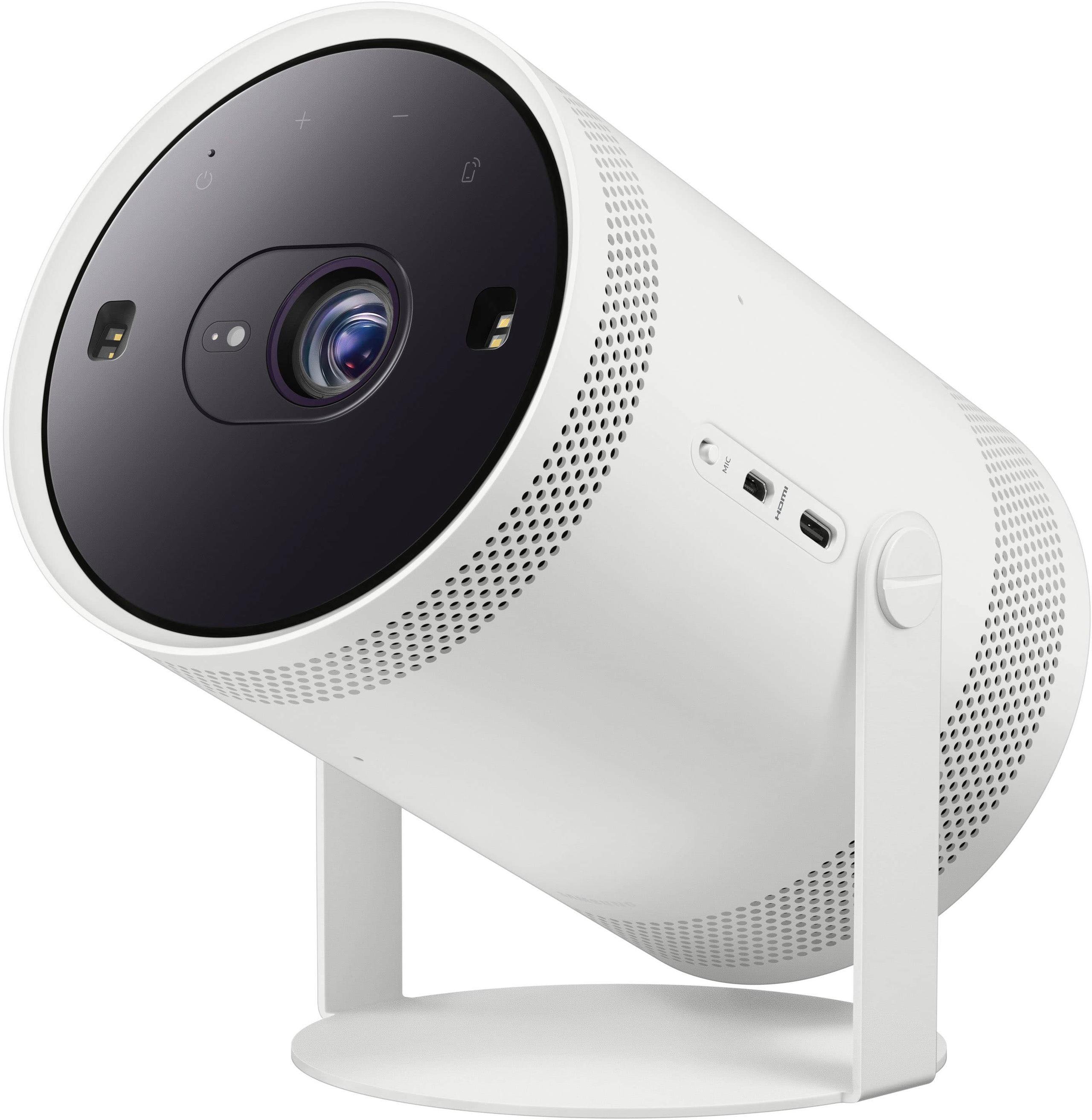
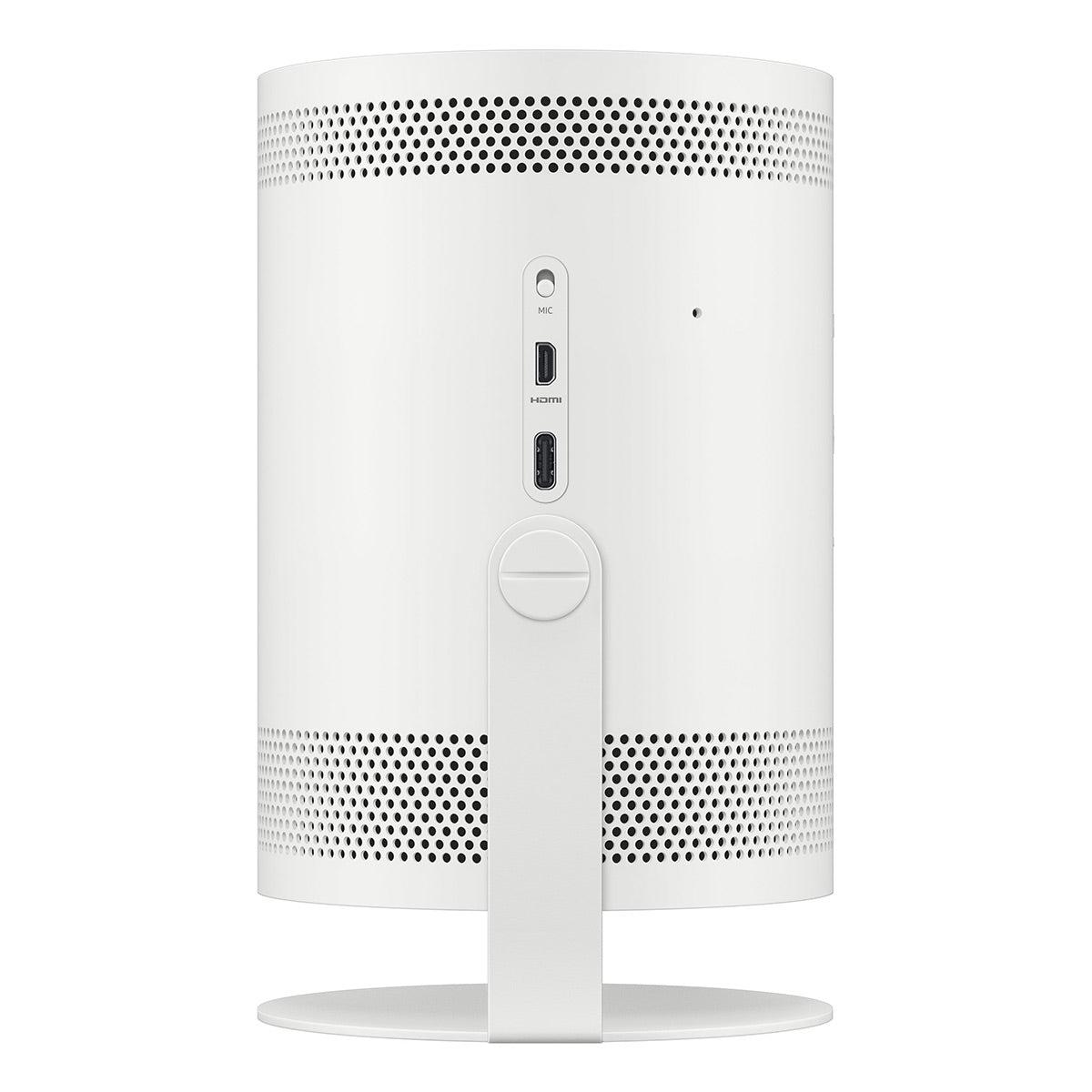
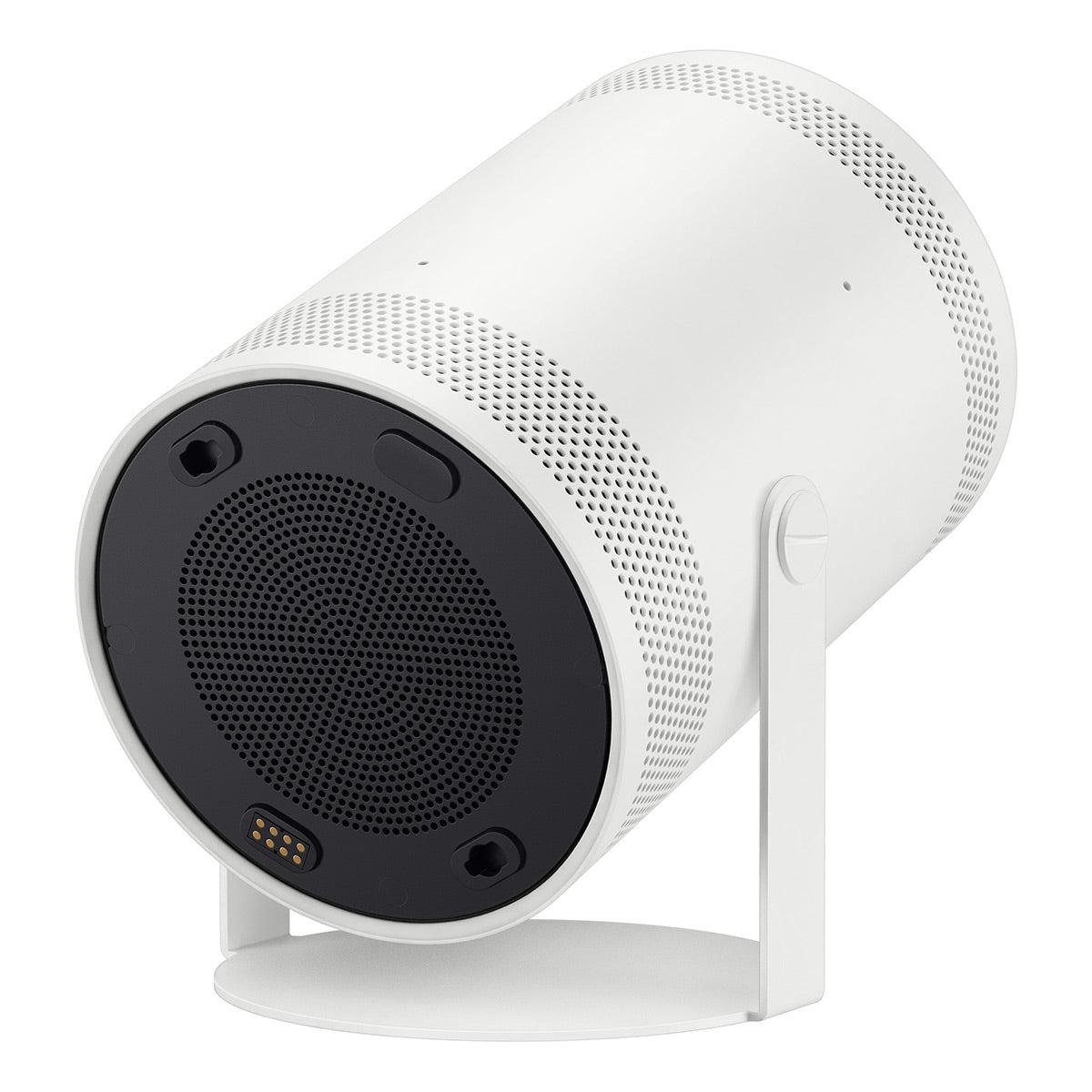
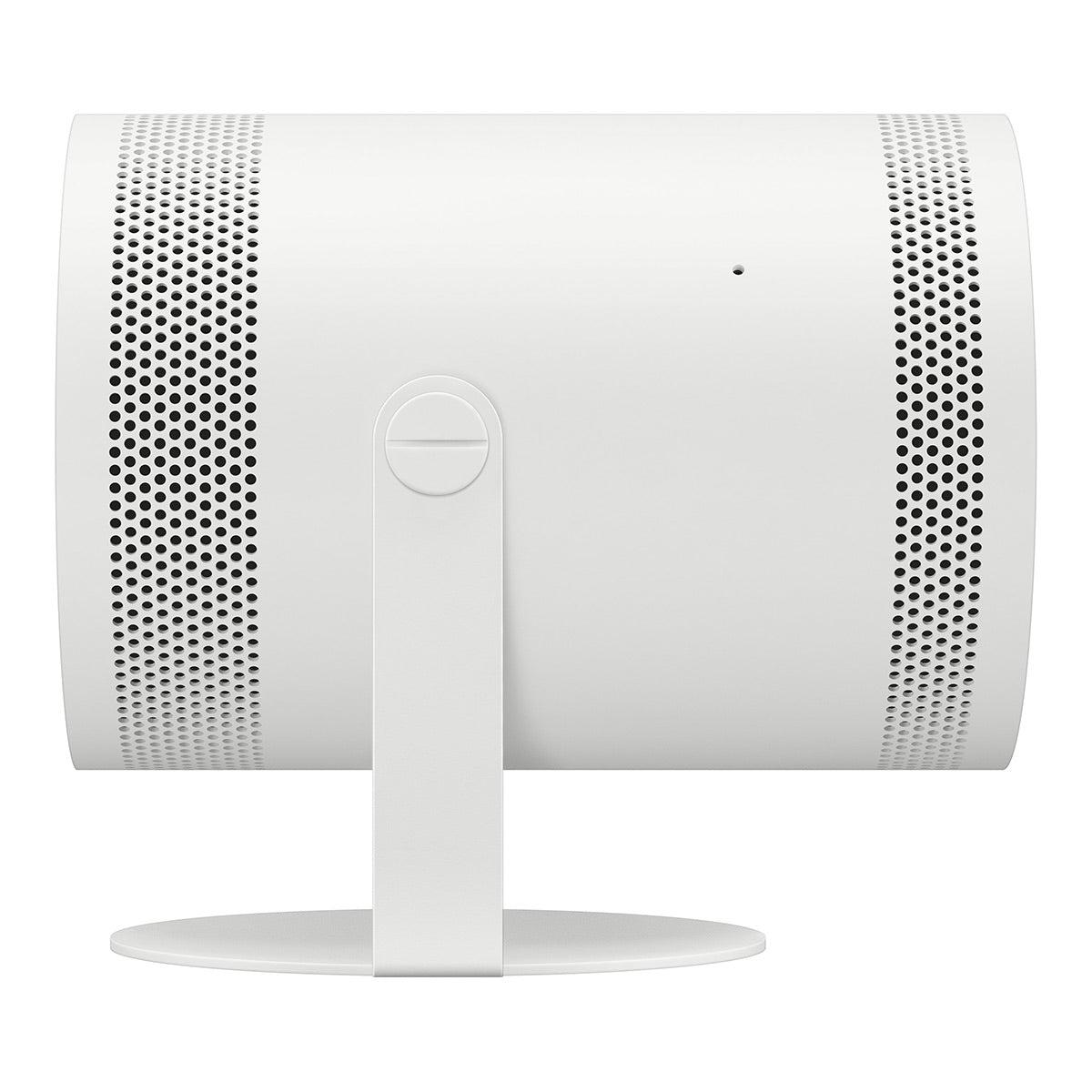
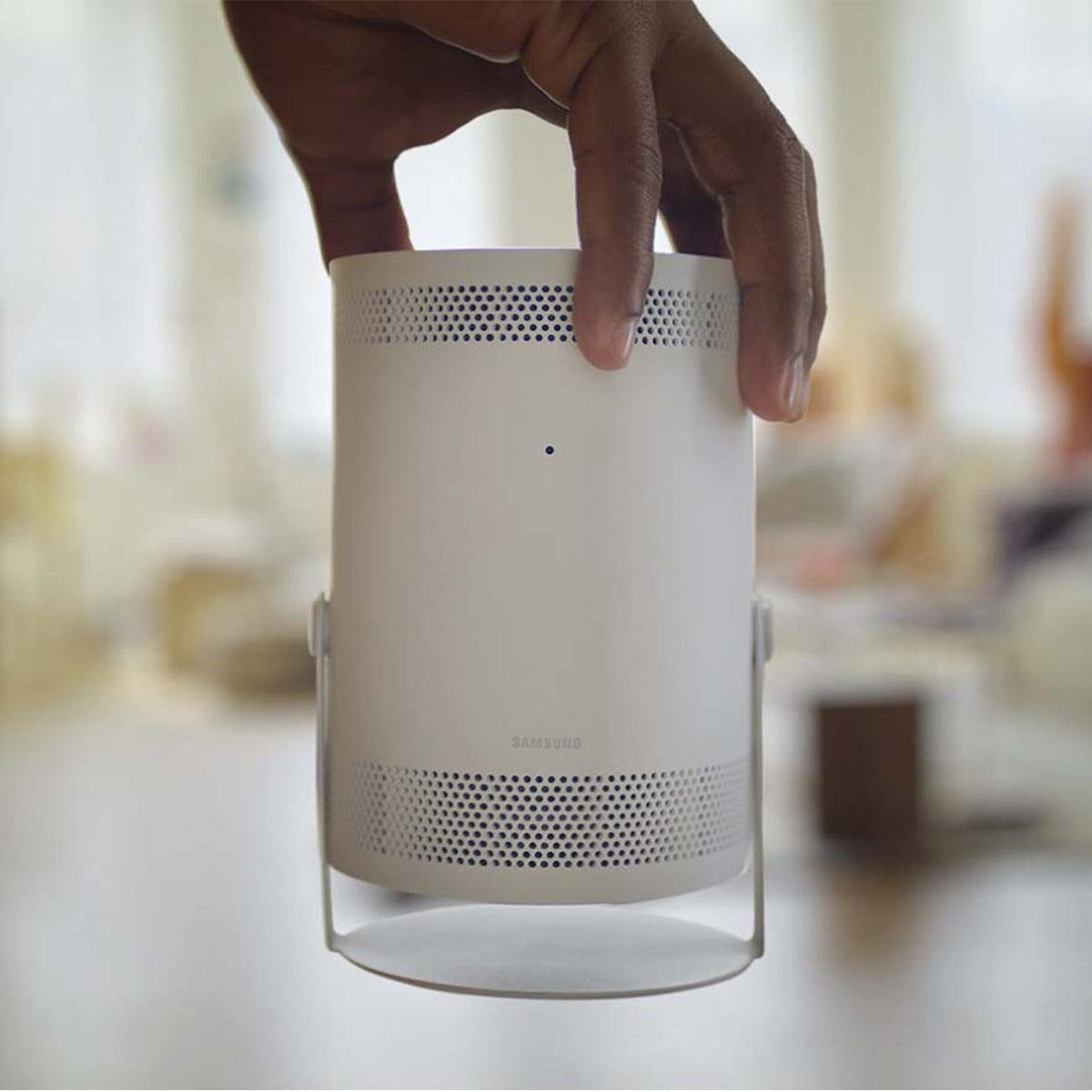
The Samsung Freestyle 2nd Gen (/product1) makes an immediate impression with its distinctive cylindrical form factor. Weighing just 1.8 pounds and standing about 6.5 inches tall, it's remarkably compact for the technology it contains. The white exterior gives it a premium, modern appearance that fits seamlessly into contemporary homes.
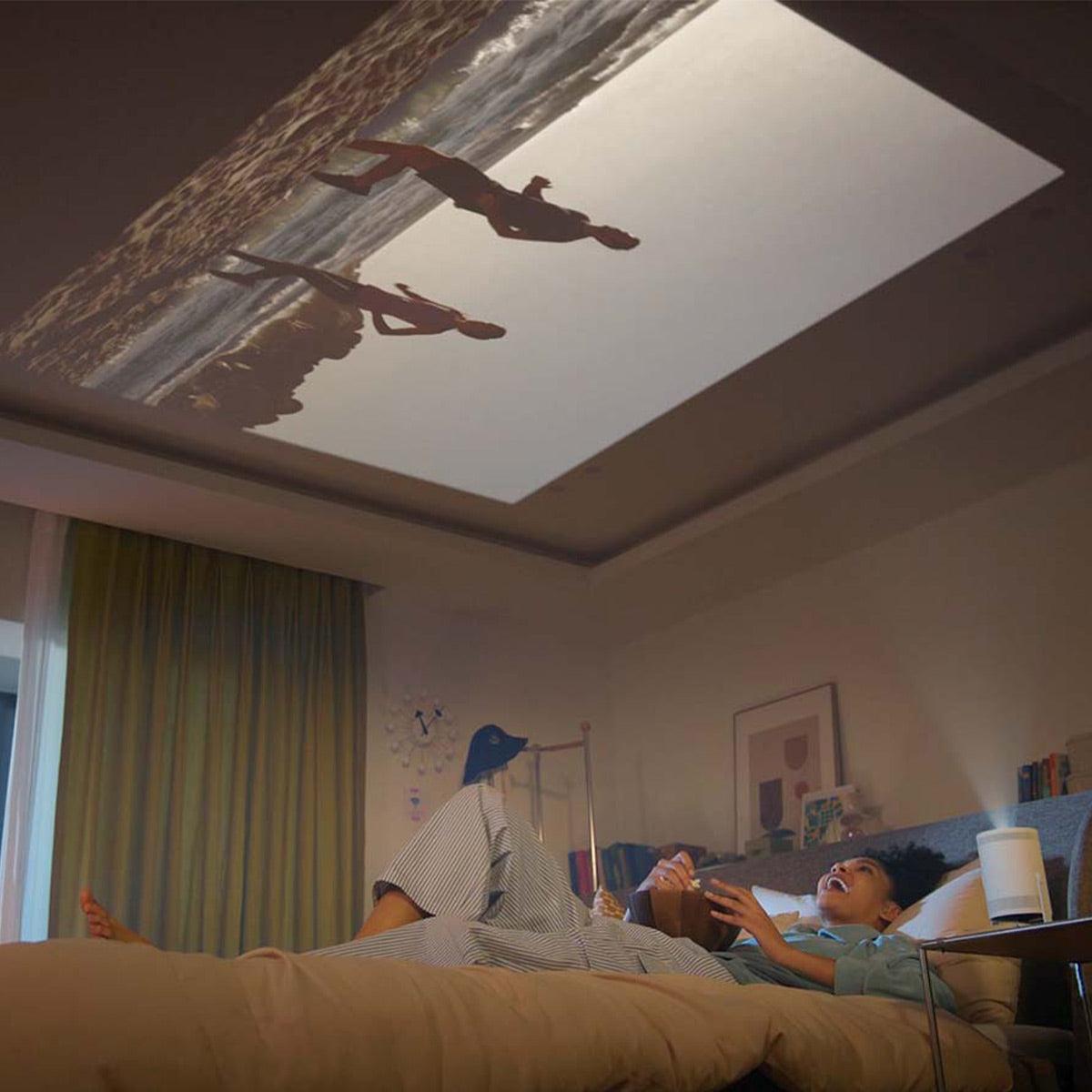
What truly sets the Freestyle apart is its 180-degree swivel design, allowing you to point the projection at walls, ceilings, or even floors without moving the base. This makes it incredibly versatile for different viewing scenarios—watching movies in bed with ceiling projection, displaying recipes on kitchen countertops, or creating ambient lighting effects on any surface.
The lightweight design comes with tradeoffs, however. The Freestyle requires external power by default, and the lack of an integrated battery means you'll need to purchase Samsung's battery base separately if you want true portability. There's also less room for robust speakers or extensive cooling systems within its slender frame.
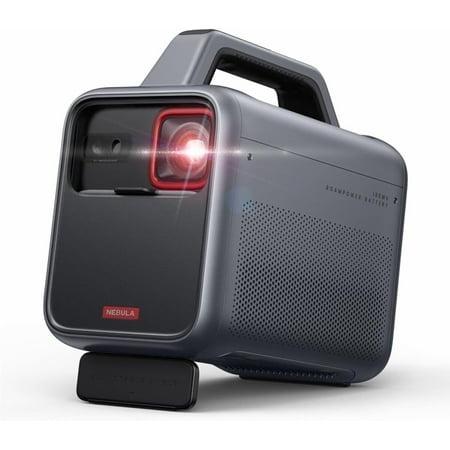
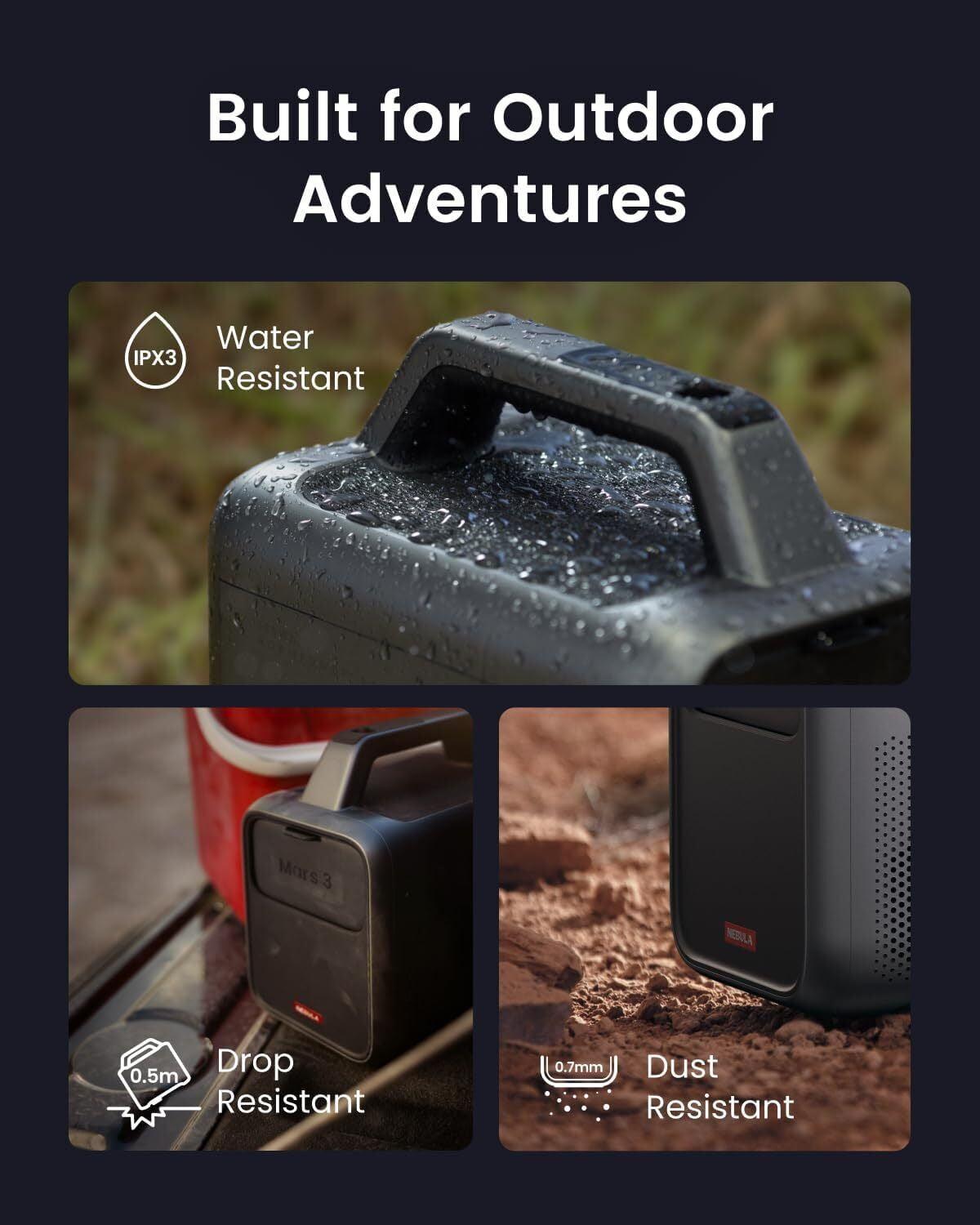
In stark contrast, the Anker Nebula Mars 3 (/product2) embraces a more utilitarian design philosophy. At 5.9 pounds, it's significantly heavier than the Freestyle, but the added weight serves a purpose. The Mars 3's boxy design with an integrated carrying handle speaks to its outdoor-friendly intentions, with a more rugged construction that can withstand being transported to backyard gatherings, camping trips, or outdoor events.
The additional weight houses a substantial battery, more powerful speakers, and enhanced cooling systems that support its higher brightness output. While it lacks the Freestyle's elegant swivel functionality, the Mars 3 includes a standard tripod mount for positioning flexibility, plus a sturdy built-in stand that keeps it stable on uneven surfaces—a practical consideration for outdoor use.
Anker includes a carrying case with the Mars 3, further emphasizing its grab-and-go nature. The projector feels designed to survive real-world use rather than to make a design statement.
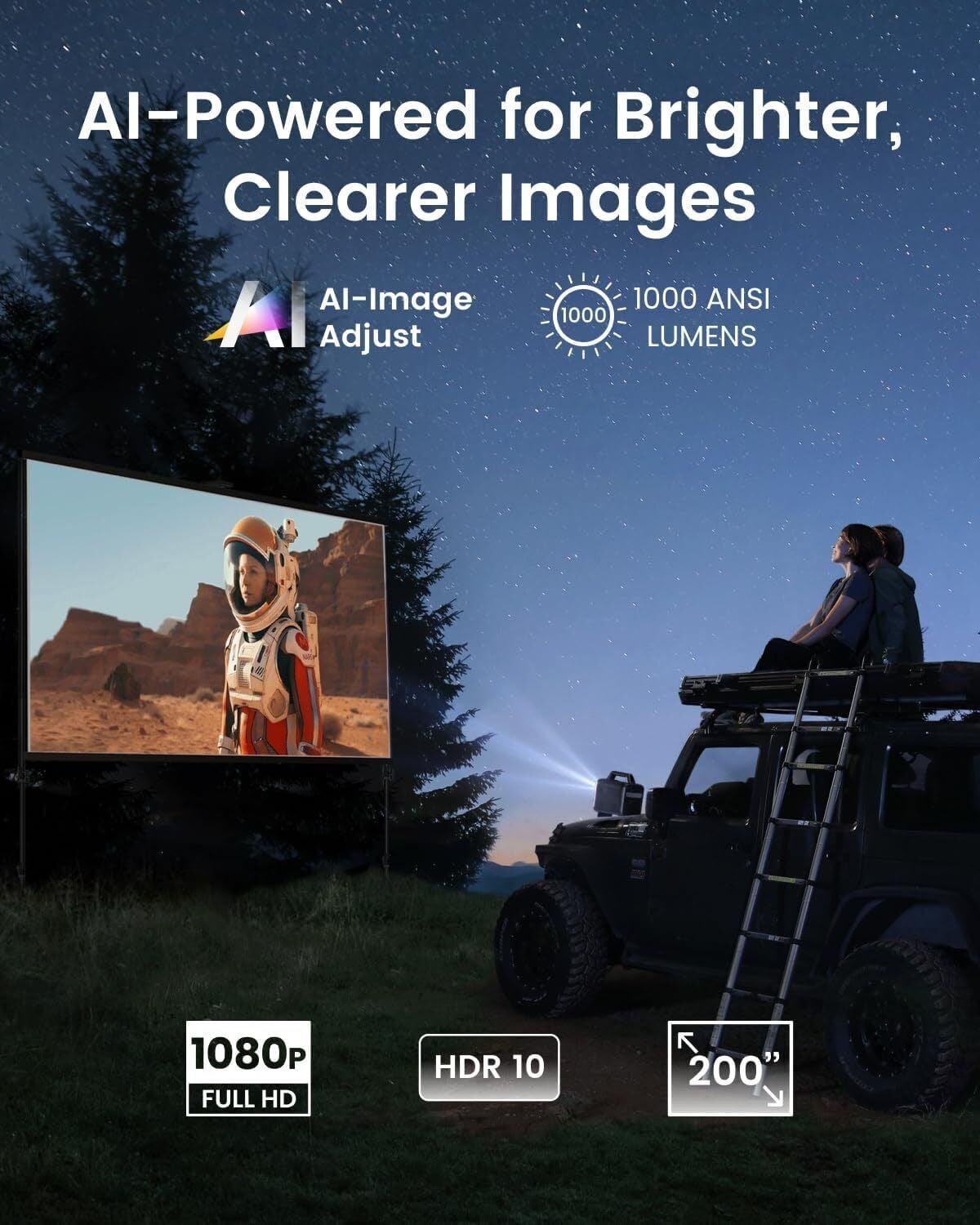
Perhaps the most significant performance difference between these projectors lies in their brightness ratings. The Freestyle 2nd Gen (/product1) offers 550 ANSI lumens, while the Mars 3 (/product2) nearly doubles that with 1,000 ANSI lumens.
What does this mean practically? ANSI lumens are a standardized measurement of light output that directly impacts how visible your projected image will be, especially in environments with ambient light. The difference between these two projectors is substantial—in rooms with moderate lighting or outdoor settings at dusk, the Freestyle will produce a noticeably dimmer image than the Mars 3.
In completely darkened rooms, both projectors perform well, but step outside or open a few blinds, and the Mars 3's advantage becomes immediately apparent. This brightness difference is perhaps the single most important factor to consider if you plan to use your projector in varied lighting conditions.
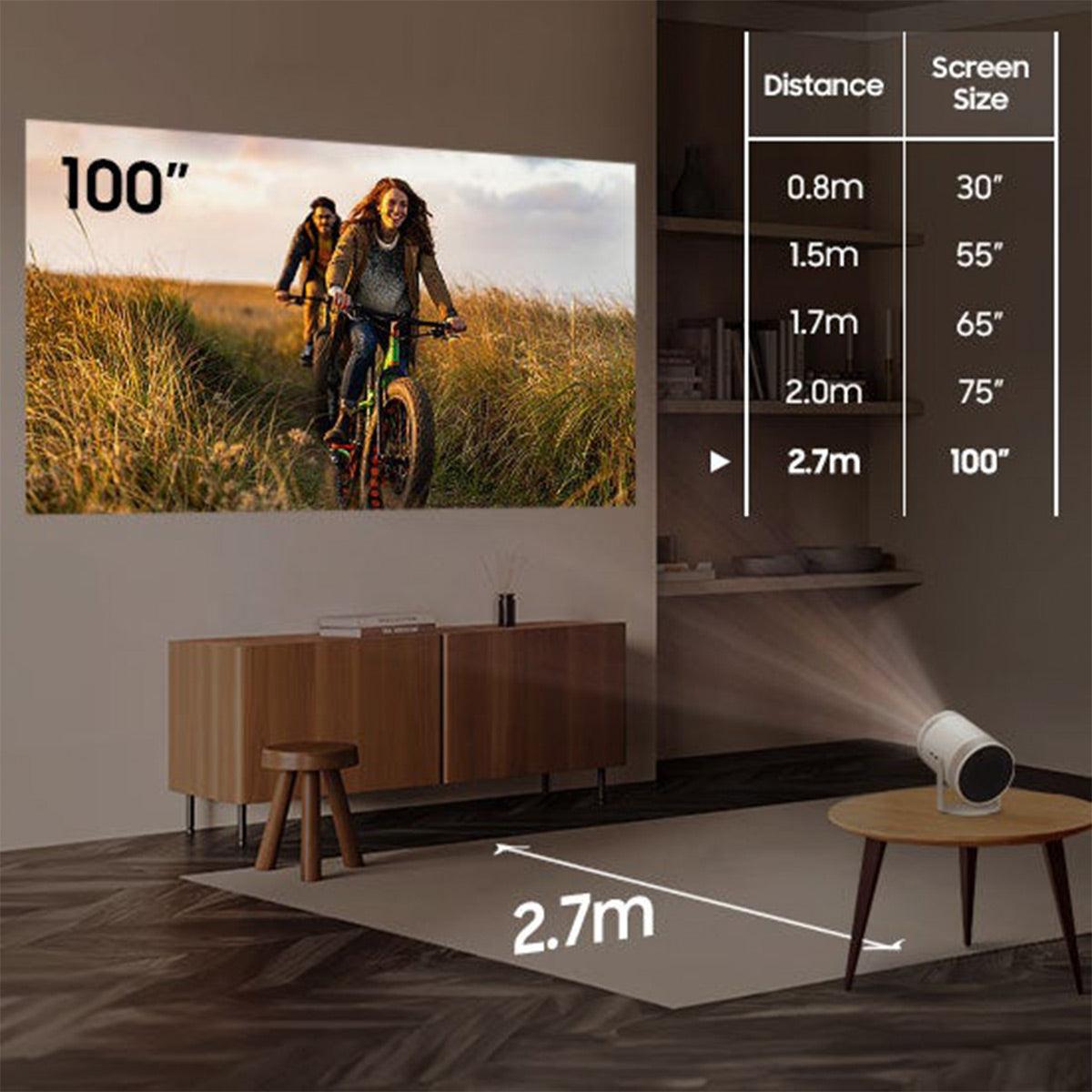
Both projectors feature native 1080p (1920×1080) resolution, delivering Full HD images that look sharp on screens up to 100 inches. The Mars 3 can project even larger images—up to 150 inches diagonally—though at those extreme sizes, you'll need more distance and a very dark environment for optimal viewing.
Samsung leverages its extensive display expertise in the Freestyle, incorporating HDR10 support and advanced color processing that produces vibrant, accurate colors. The Freestyle's image has a more "Samsung TV-like" quality, with the company's characteristic color tuning that tends to emphasize vivid colors and contrast.
The Mars 3 counters with what Anker calls "Hyper Accurate IQ" technology, which automatically adjusts brightness, contrast, and color settings based on the projected surface and content. In practice, the Mars 3's image appears more contrasty and punchy, particularly in darker environments, though it may not match the Freestyle's color accuracy in ideal conditions.
The Freestyle shines with its comprehensive auto-adjustment features. When you set it down and power it on, it automatically handles keystone correction (adjusting for angled projection), focus, and even screen leveling without requiring manual intervention. This "set and forget" functionality makes it exceptionally user-friendly, especially for users who frequently reposition their projector.
While the Mars 3 includes auto-keystone and auto-focus capabilities, they're not quite as sophisticated as Samsung's implementation. You may occasionally need to make manual adjustments, particularly in challenging projection environments. However, once dialed in, the Mars 3 maintains its settings reliably.
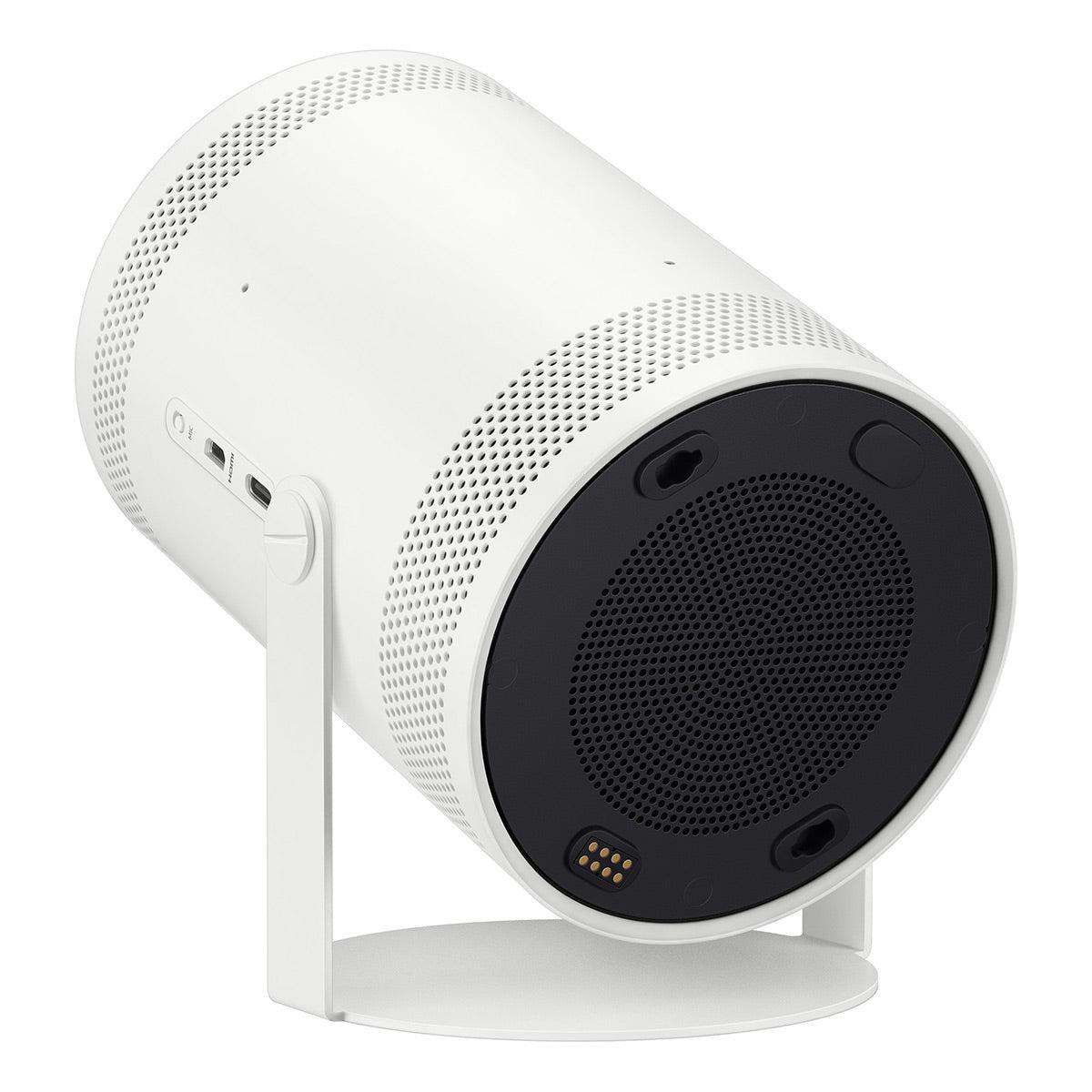
The Freestyle incorporates a 360-degree 5W speaker with a passive radiator design that helps it produce surprisingly full sound for its size. The omnidirectional sound distribution works well in smaller rooms, creating an immersive audio experience without the need for external speakers.
Samsung's audio tuning emphasizes dialogue clarity and includes Dolby Digital Plus support, which helps maximize the sound quality from streaming content. While it won't replace a dedicated sound system, the audio quality is impressive given the projector's compact dimensions.
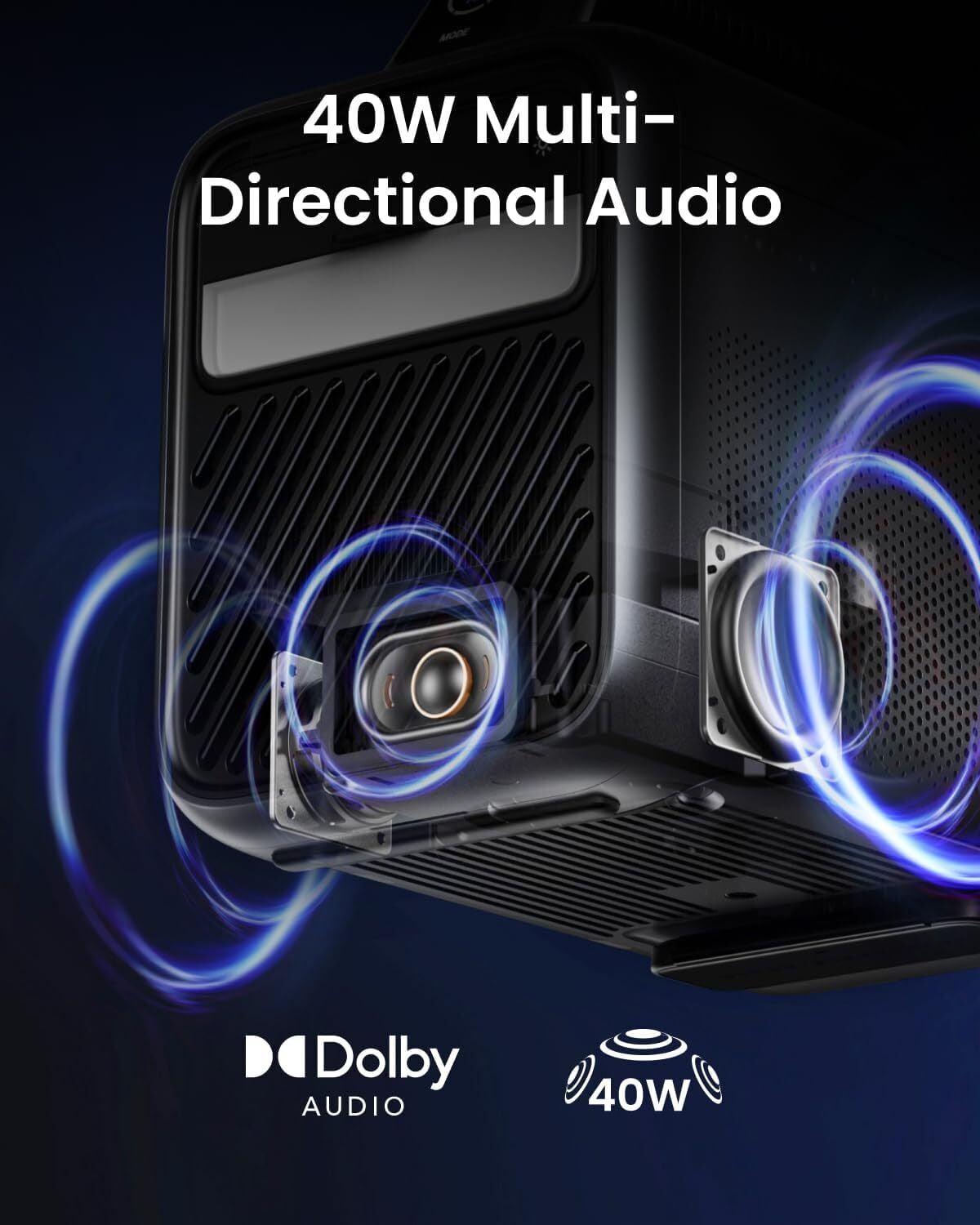
Anker takes a more traditional but powerful approach with the Mars 3, equipping it with dual 8W speakers (16W total) that deliver significantly louder, more robust sound. These forward-firing speakers project audio directly toward the audience, making them particularly effective for outdoor movie nights where sound needs to carry across larger spaces.
The Mars 3's audio has noticeably stronger bass response than the Freestyle, creating a more cinematic feel for action movies and music-heavy content. It also includes several audio presets optimized for different content types (movies, music, etc.), allowing you to tailor the sound profile to what you're watching.
For both projectors, Bluetooth connectivity allows them to function as standalone speakers when you're not projecting video, though the Mars 3's more powerful speaker system makes it notably more useful in this capacity.
The most significant limitation of the Samsung Freestyle 2nd Gen (/product1) is the lack of an integrated battery. Out of the box, it requires a constant power connection via its USB-C port. Samsung offers a battery base accessory that provides approximately 3 hours of runtime, but this comes at an additional cost of around $190, pushing the total investment well above $900.
This power dependency limits the Freestyle's spontaneity. While its lightweight design makes it physically easy to move, the need for either power outlets or the additional battery accessory constrains its true portability.
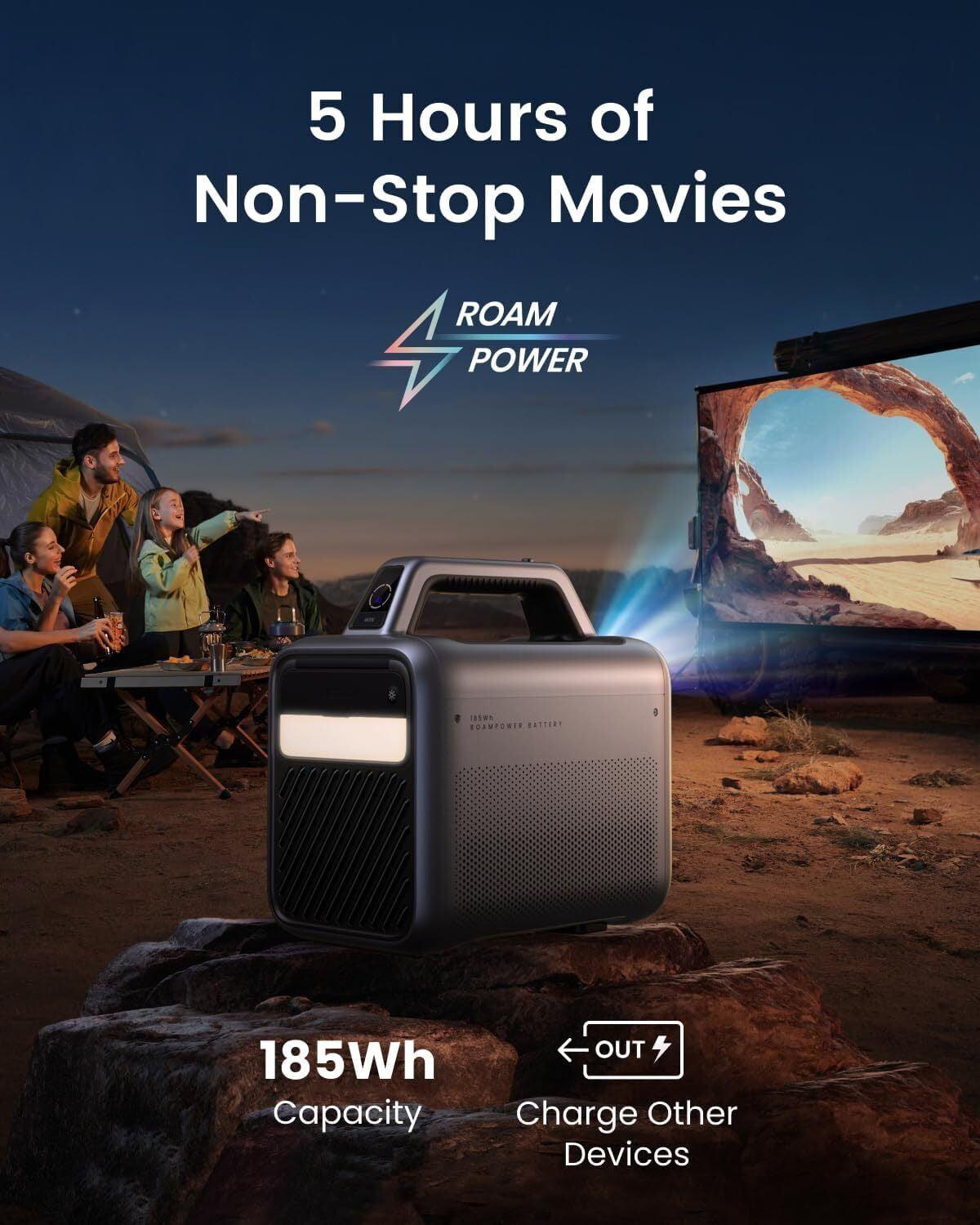
In contrast, the Anker Nebula Mars 3 (/product2) comes ready for untethered use with its substantial built-in 64.8Wh battery. This integrated power source delivers up to 5 hours of playback time in battery mode (which slightly reduces brightness to extend runtime) or about 2.5 hours at full 1,000-lumen brightness.
This self-contained design embodies true grab-and-go functionality. You can spontaneously decide to host an outdoor movie night without worrying about power sources or additional purchases. The Mars 3 also doubles as a power bank in a pinch, allowing you to charge mobile devices from its USB port—a thoughtful feature for outdoor excursions.
Running on Samsung's Tizen operating system with the Samsung TV Smart Hub interface, the Freestyle 2nd Gen offers a familiar experience to Samsung TV owners. The interface is polished and responsive, providing access to major streaming services including Netflix, Disney+, Amazon Prime Video, and others.
The second-generation Freestyle introduces two significant new features over its predecessor. First, the PC-on-Screen capability lets you wirelessly connect to a Windows or Mac computer, essentially turning any surface into a monitor without cables. Second, the Samsung Gaming Hub integration enables cloud gaming services like Xbox Game Pass, GeForce NOW, and more directly from the projector without a console.
Bixby voice assistant comes built-in, and the projector works with Amazon Alexa for voice control of basic functions and content search. For Samsung device owners, the integration goes deeper with SmartThings compatibility, allowing the Freestyle to function as part of broader home automation routines.
The Mars 3 runs Android TV 11.0, providing access to the Google Play Store with thousands of apps, including all major streaming services. The interface will feel familiar to Android phone users and offers straightforward navigation and content discovery.
Google Assistant integration provides voice control capabilities that many users might find more versatile than Samsung's Bixby. Chromecast built-in functionality allows for easy screen mirroring from Android devices, though iOS devices have more limited casting options compared to the Freestyle's AirPlay 2 support.
While lacking the Freestyle's PC-on-Screen feature, the Mars 3 compensates with more robust physical connectivity, making it easier to connect gaming consoles, Blu-ray players, or other HDMI devices directly. Its Bluetooth speaker mode also allows it to function as a standalone audio device when you don't need video projection.
Samsung keeps physical ports minimal on the Freestyle, offering just a Micro-HDMI input and a USB-C port for power. This streamlined approach maintains the projector's clean aesthetic but limits hardwired connectivity options.
The Freestyle compensates with comprehensive wireless capabilities, including AirPlay 2 support (a significant advantage for Apple users), SmartThings integration, and Samsung-specific features like phone mirroring that work particularly well with Galaxy devices.
Anker takes a more conventional approach with the Mars 3, including a full-size HDMI port, USB-A port for media playback or power output, and a 3.5mm audio output for connecting external speakers or headphones. These physical connections offer greater flexibility for connecting legacy devices or situations where wireless connectivity isn't ideal.
The Mars 3's Chromecast functionality provides wireless casting capabilities, though it's not as comprehensive as the Freestyle's AirPlay 2 and Samsung-specific features, particularly for iPhone users.
At approximately $800, the Samsung Freestyle 2nd Gen (/product1) represents a significant investment in a portable projection solution. This price point positions it as a premium lifestyle device rather than just a basic projector. However, to unlock its full potential, most users will want the battery base ($190) and possibly other accessories like the Gaming Cradle ($80) for console gaming, potentially pushing the total investment well above $1,000.
Samsung backs the Freestyle with a standard one-year limited warranty, which is adequate but not exceptional for a premium device.
The Anker Nebula Mars 3 (/product2) carries a similar base price of approximately $800, but includes everything needed for portable projection right out of the box—including the built-in battery and carrying case. This complete package approach means you're less likely to need additional accessories, making the listed price closer to the actual total investment.
Anker offers an 18-month warranty on the Mars 3, providing an additional six months of coverage compared to the Freestyle—a small but noteworthy advantage that reflects Anker's confidence in their product's durability.
For dedicated home theater use, both projectors have strengths and limitations to consider.
The Freestyle's elegant design and auto-adjustment features make it appealing for rooms where you might want to quickly set up and then put away the projector rather than mounting it permanently. Its lower brightness is less of an issue in controlled lighting environments typical of home theaters. The swivel design also offers unique placement options that traditional projectors can't match.
The Mars 3's higher brightness and more powerful speakers give it an edge for larger home theater spaces or rooms where complete light control isn't possible. Its physical connectivity options also make it easier to integrate with existing A/V equipment like soundbars, receivers, or gaming consoles.
Neither projector offers the 4K resolution or extreme brightness levels of dedicated home theater projectors in the $1,500+ range, but both deliver satisfying casual home theater experiences with the added benefit of portability.
After comparing these projectors across all major dimensions, clear use cases emerge for each model.
Choose the Samsung Freestyle 2nd Gen (/product1) if:
Choose the Anker Nebula Mars 3 (/product2) if:
The Samsung Freestyle 2nd Gen (/product1) and Anker Nebula Mars 3 (/product2) represent two different philosophies in portable projection. Samsung delivers a stylish, flexible device that prioritizes ease of use and ecosystem integration, while Anker focuses on practical performance with brightness, battery life, and audio quality that excel in real-world conditions.
Your ideal choice ultimately depends on how and where you'll use your projector most frequently. For controlled indoor environments and users who value design and Samsung integration, the Freestyle offers unique advantages. For versatile use across varied environments, especially outdoors, the Mars 3's practical approach delivers more consistent performance without additional investments.
Both projectors demonstrate how far portable projection technology has come, bringing big-screen experiences to spaces where traditional TVs would be impractical or impossible. Whether you choose Samsung's artistic approach or Anker's pragmatic one, either projector can transform ordinary spaces into extraordinary entertainment environments—just in notably different ways.
| Samsung Freestyle 2nd Gen Smart Projector | Anker Nebula Mars 3 Outdoor Portable Projector |
|---|---|
| Price - Initial investment consideration | |
| $800 (additional $190 for battery base) | $799 (includes battery and carrying case) |
| Brightness - Critical for ambient light performance | |
| 550 ANSI lumens (best for dark rooms) | 1,000 ANSI lumens (performs well with some ambient light) |
| Form Factor - Impacts placement flexibility | |
| Cylindrical design with 180° swivel (1.8 lbs) | Boxy design with handle (5.9 lbs) |
| Battery - Determines true portability | |
| No built-in battery; requires optional battery base | Built-in 64.8Wh battery with up to 5-hour runtime |
| Maximum Screen Size - Affects viewing experience | |
| Up to 100 inches | Up to 150 inches |
| Audio System - Important for standalone use | |
| 5W 360° speaker with passive radiator | Dual 8W speakers (16W total) with stronger bass |
| Operating System - Determines app availability | |
| Samsung Tizen with TV Smart Hub | Android TV 11.0 with Google Play Store |
| Special Features - Added functionality | |
| PC-on-Screen, Gaming Hub, SmartThings integration | Bluetooth speaker mode, can function as power bank |
| Connectivity - Device compatibility | |
| Micro-HDMI, USB-C (power), Wi-Fi, Bluetooth, AirPlay 2 | HDMI, USB-A, 3.5mm audio out, Wi-Fi, Bluetooth, Chromecast |
| Auto-Adjustment - Ease of setup | |
| Advanced auto-keystone, auto-leveling, auto-focus | Basic auto-keystone and auto-focus |
| Warranty - Long-term protection | |
| 1-year limited warranty | 18-month warranty |
| Best Use Case - Primary consideration for buyers | |
| Indoor use in controlled lighting, flexibility in projection angles, Samsung ecosystem integration | Outdoor movie nights, environments with ambient light, situations requiring true portability |
The Anker Nebula Mars 3 Outdoor Portable Projector is significantly brighter with 1,000 ANSI lumens compared to the Samsung Freestyle 2nd Gen Smart Projector's 550 ANSI lumens. This makes the Mars 3 nearly twice as bright, allowing it to perform better in rooms with ambient light or outdoor settings where controlling light is difficult. If you plan to use your projector during the day or in well-lit rooms, the Anker Nebula Mars 3 offers a clear advantage.
Only the Anker Nebula Mars 3 comes with a built-in battery that offers up to 5 hours of runtime. The Samsung Freestyle 2nd Gen requires a separate battery base that costs approximately $190 additional. This means the Anker is truly portable out of the box, while the Samsung requires an extra purchase to use it without being plugged into a power outlet. For grab-and-go convenience, the Anker Nebula Mars 3 has a clear advantage.
The Anker Nebula Mars 3 delivers superior audio with dual 8W speakers (16W total) compared to the Samsung Freestyle 2nd Gen's single 5W speaker. The Mars 3's more powerful speakers produce louder, fuller sound with better bass response, making it better suited for outdoor movie nights or larger rooms. While the Samsung's 360° speaker design distributes sound evenly in smaller spaces, the Anker Nebula Mars 3 provides a more cinematic audio experience overall.
Yes, both projectors support major streaming services including Netflix. The Samsung Freestyle 2nd Gen uses Samsung's Tizen operating system with TV Smart Hub, while the Anker Nebula Mars 3 runs Android TV 11.0. Both provide access to Netflix, Disney+, Amazon Prime Video, and other popular streaming platforms. The user interface differs between the two, with Samsung's being similar to their smart TVs and Anker's following the standard Android TV layout found on many streaming devices.
The Anker Nebula Mars 3 is specifically designed for outdoor use with its higher 1,000 ANSI lumens brightness, built-in battery with up to 5 hours of runtime, powerful 16W speakers, and durable design with carrying handle. The Samsung Freestyle 2nd Gen can work outdoors but is limited by its lower brightness, lack of built-in battery, and less powerful speakers. For dedicated outdoor entertainment, the Anker Nebula Mars 3 is the more practical choice.
The Anker Nebula Mars 3 can project a larger image, up to 150 inches diagonally, while the Samsung Freestyle 2nd Gen maxes out at 100 inches. This 50% larger maximum size gives the Mars 3 an advantage for creating more immersive viewing experiences, especially in larger spaces. However, remember that at maximum screen sizes, you'll need sufficient distance and darkness for optimal image quality with either projector.
Both projectors offer auto-adjustment features, but the Samsung Freestyle 2nd Gen provides more comprehensive automatic corrections. It features advanced auto-keystone, auto-leveling, and auto-focus capabilities that work together seamlessly. The Anker Nebula Mars 3 includes basic auto-keystone and auto-focus but doesn't match the Samsung's "set and forget" convenience. If you frequently move your projector to different locations and want minimal setup hassle, the Samsung Freestyle 2nd Gen has the edge.
For gaming, the Samsung Freestyle 2nd Gen offers advantages with its Gaming Hub that supports cloud gaming services like Xbox Game Pass without additional hardware. It also has an optional Gaming Cradle accessory designed specifically for console gaming. The Anker Nebula Mars 3 provides a standard HDMI port for connecting consoles but lacks dedicated gaming features. However, the Mars 3's higher brightness and more powerful speakers may provide a more immersive experience for certain games. Consider whether specialized gaming features or better overall performance is more important to your gaming needs.
The base price for both projectors is similar, with the Samsung Freestyle 2nd Gen at approximately $800 and the Anker Nebula Mars 3 at about $799. However, to achieve true portability with the Samsung, you'll need to purchase the separate battery base for around $190, bringing the total to nearly $1,000. The Anker includes a built-in battery and carrying case in its standard package, making it more value-oriented when considering the total investment needed for portable use.
Yes, both projectors support external device connections, but with different approaches. The Samsung Freestyle 2nd Gen features a Micro-HDMI port and wireless PC-on-Screen functionality for connecting computers without cables. The Anker Nebula Mars 3 offers a standard HDMI port, USB-A port for media playback, and a 3.5mm audio output for external speakers. If you frequently connect external devices via physical cables, the Mars 3's more comprehensive port selection may be more convenient, while the Samsung excels at wireless connectivity.
The Anker Nebula Mars 3 comes with a longer warranty period of 18 months compared to the Samsung Freestyle 2nd Gen's standard 1-year (12-month) limited warranty. This additional six months of coverage from Anker provides greater peace of mind and reflects the manufacturer's confidence in their product's durability. For customers concerned about long-term protection of their investment, the Anker Nebula Mars 3 offers better warranty coverage.
Both can work in home theater settings, but with different strengths. The Samsung Freestyle 2nd Gen excels in rooms with good light control due to its elegant design, flexible positioning with 180-degree swivel, and auto-adjustment features. The Anker Nebula Mars 3 performs better in less-than-ideal home theater environments thanks to its higher brightness, more powerful speakers, and better connectivity options for external audio equipment. Neither offers 4K resolution found in dedicated home theater projectors, but for casual living room movie nights, both provide satisfying experiences with the added benefit of portability.
We've done our best to create useful and informative comparisons to help you decide what product to buy. Our research uses advanced automated methods to create this comparison and perfection is not possible - please contact us for corrections or questions. These are the sites we've researched in the creation of this article: techradar.com - tech.slashdot.org - youtube.com - bestbuy.com - youtube.com - youtube.com - rtings.com - samsung.com - samsung.com - samsung.com - thesmarthomehookup.com - nfm.com - samsung.com - abt.com - projectorcentral.com - valueelectronics.com - target.com - samsung.com - samsung.com - images.samsung.com - abt.com - youtube.com - walts.com - samsung.com - bhphotovideo.com - expertstores.co.za - shi.com - youtube.com - publicsector.shidirect.com - samsung.com - provantage.com - abcwarehouse.com - techradar.com - seenebula.com - thesmarthomehookup.com - yuenx.com - projectorcentral.com - seenebula.com - youtube.com - youtube.com - youtube.com - cnet.com - projectorreviews.com - youtube.com - youtube.com - projectorcentral.com - seenebula.com - youtube.com - yuenx.com

Privacy Policy
Terms and Conditions - Affiliate Policy
Home Security
© Copyright 2008-2026.
11816 Inwood Rd #1211, Dallas, TX 75244