

The portable projector landscape has transformed dramatically over the past few years, splitting into two distinct camps that serve very different needs. On one side, you have compact smart projectors designed to bring streaming convenience to any room with a power outlet. On the other, truly portable battery-powered projectors built to create movie nights wherever adventure takes you.
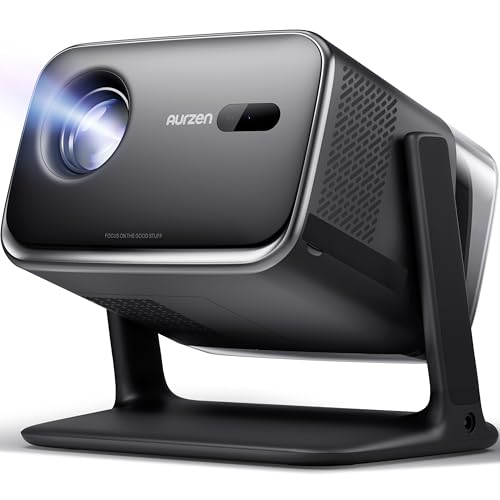
This fundamental split creates an interesting dilemma for buyers. Do you prioritize the convenience of built-in streaming and automated setup, or do you need genuine portability with weather resistance? The Aurzen BOOM Mini Smart Projector Google TV and Anker Nebula Mars 3 Outdoor Portable Projector represent these two approaches perfectly, each excelling in their intended domain while making distinct trade-offs.
Before diving into specifics, it's worth understanding what separates good portable projectors from mediocre ones. The most critical factor is brightness, measured in ANSI lumens—a standardized way to measure how much light a projector actually puts out. Unlike the inflated "lumens" numbers you might see marketed, ANSI lumens give you the real story about whether you'll be squinting at a dim image or enjoying vibrant colors.
For context, a typical home theater projector might output 2,000-3,000 ANSI lumens, while portable models usually range from 300-1,000 ANSI lumens due to power and size constraints. Anything below 400 ANSI lumens really needs a completely dark room to look good, while 800+ lumens can handle some ambient light.
Throw ratio is another key spec that determines how far back you need to place the projector. A throw ratio of 1.2:1 means you need to be 1.2 feet away for every foot of screen width—so for a 100-inch screen, you'd need about 10 feet of distance. Lower throw ratios are better for small rooms.
The contrast ratio tells you how well the projector can display deep blacks versus bright whites. Higher numbers mean better depth and more cinematic images, though the way manufacturers measure this varies significantly.
Released in 2025, the BOOM Mini represents the latest evolution in smart home projectors. At the time of writing, it's positioned as a budget-friendly option that doesn't compromise on smart features—a significant achievement considering how expensive projectors with built-in streaming used to be.
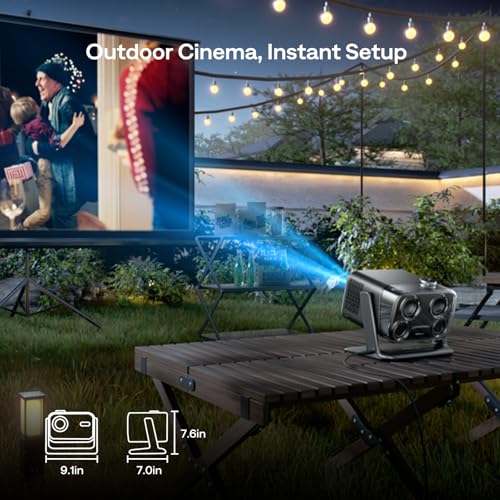
The BOOM Mini uses LCD technology with an LED light source, delivering 500 ANSI lumens of brightness in a compact 9.1 × 7 × 7.6 inch package. What makes it special isn't just the size, but the integration: this is essentially a smart TV that happens to project onto walls instead of displaying on a built-in screen.
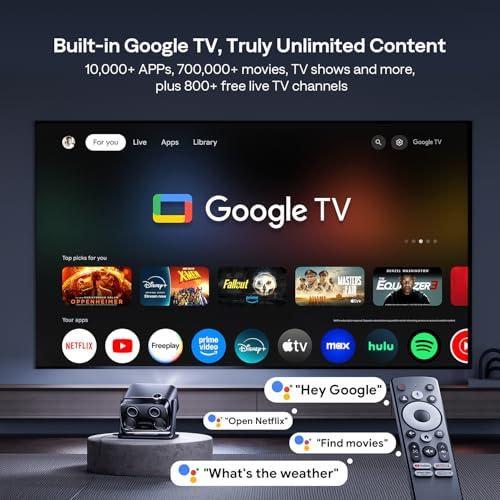
The Google TV integration here is the real deal—not some stripped-down Android fork, but the full Google TV experience with access to Netflix, Disney+, Hulu, YouTube, and thousands of other apps. This matters because many projectors either lack smart features entirely or use limited operating systems that can't access major streaming services directly.
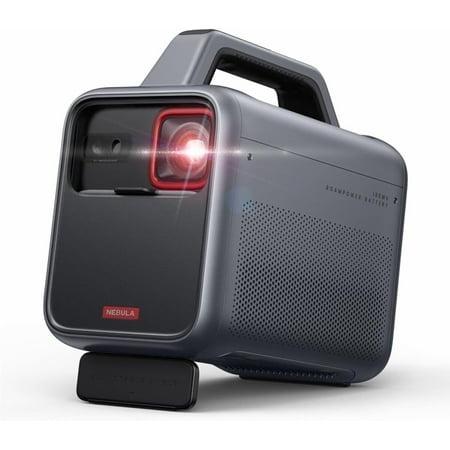
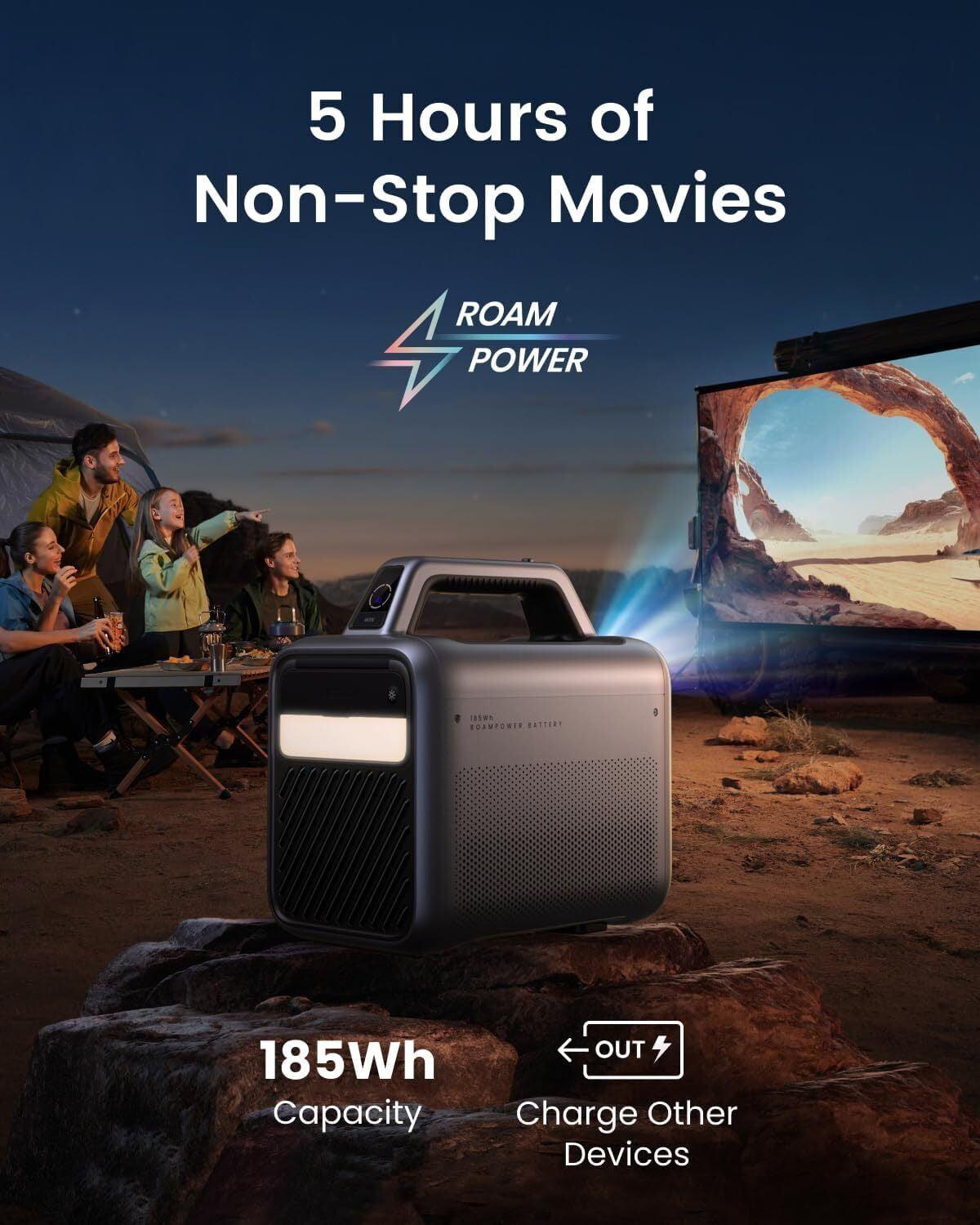
The Mars 3 launched in 2023 and takes a completely different approach. Where the BOOM Mini prioritizes smart features, the Mars 3 focuses on true portability with a massive 185Wh battery that can run for up to 5 hours without plugging into anything.
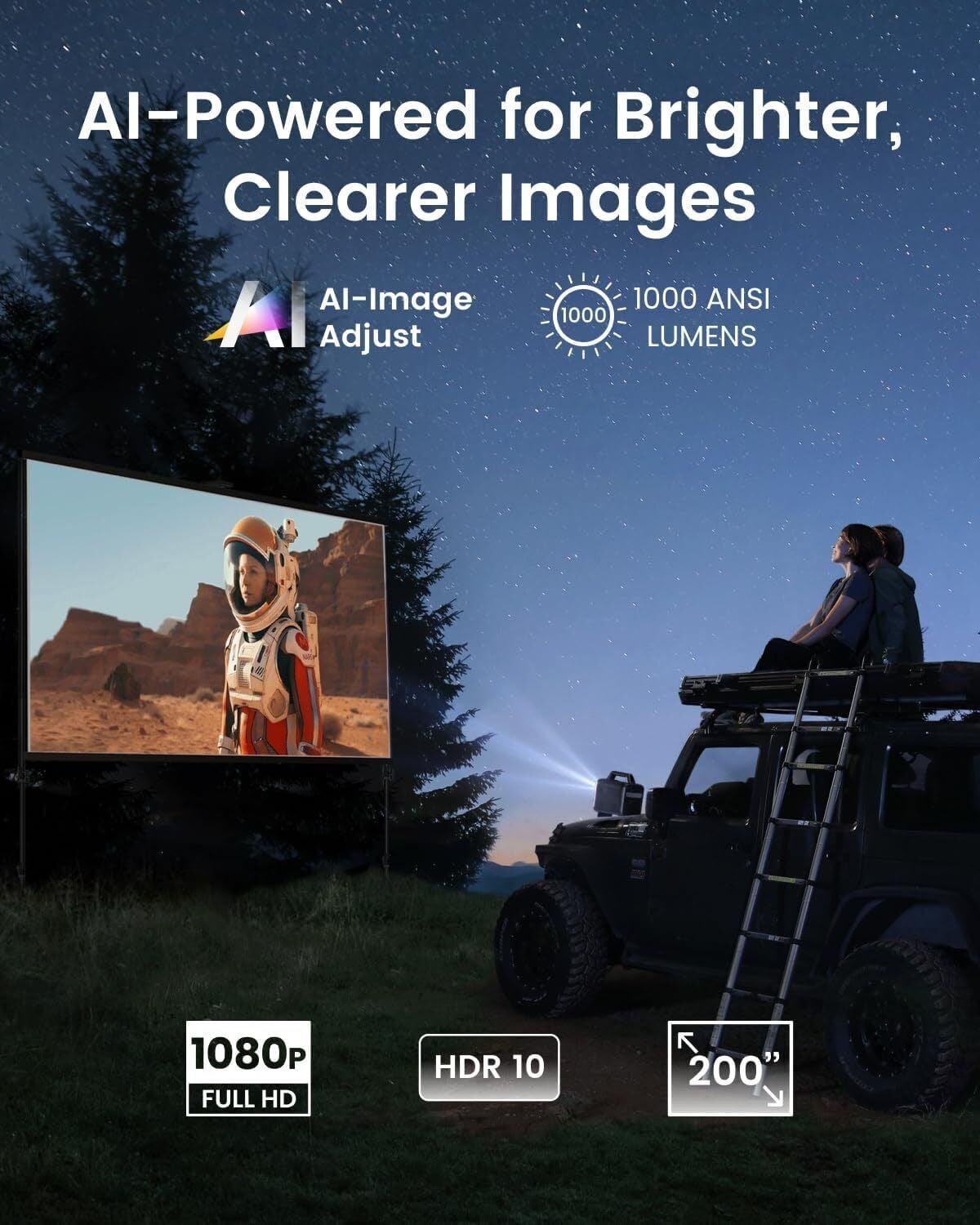
This projector uses DLP (Digital Light Processing) technology, which tends to produce sharper images and better color accuracy than LCD, especially for video content. At 1,000 ANSI lumens, it's twice as bright as the BOOM Mini, making it much more versatile for different lighting conditions.
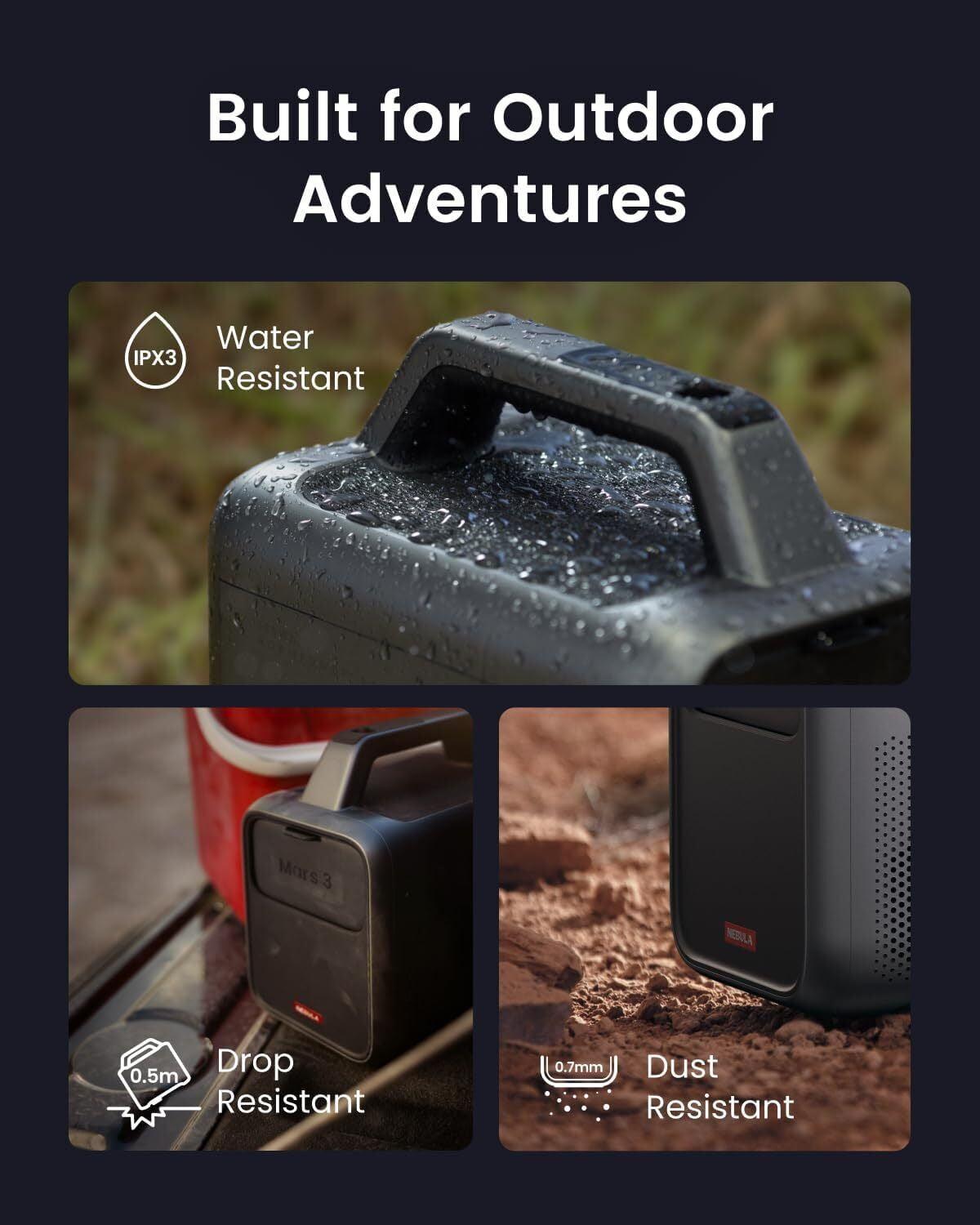
The Mars 3 is also built like a piece of outdoor gear rather than a consumer electronics device. It has IPX3 water resistance (meaning it can handle light rain), can survive drops from half a meter, and resists dust particles down to 0.7mm—specs you'd expect from camping equipment, not projection gear.
The brightness difference between these projectors is substantial and affects everything about how you'll use them. The Mars 3's 1,000 ANSI lumens means you can actually watch movies during twilight hours outdoors or in rooms with some ambient light. Our research into user experiences consistently shows that the Mars 3 produces watchable images even when there's residual daylight, something the BOOM Mini simply cannot match.
The BOOM Mini's 500 ANSI lumens isn't inadequate—it's just specialized for darker environments. In a properly darkened room, both projectors can produce excellent images with good color reproduction and acceptable contrast. However, if you're planning to use your projector anywhere that isn't completely dark, the Mars 3 is the clear winner.
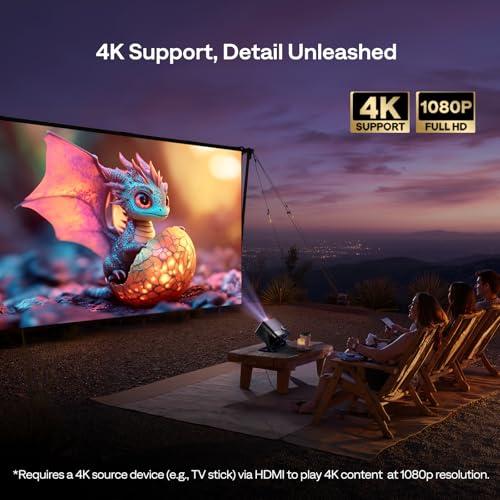
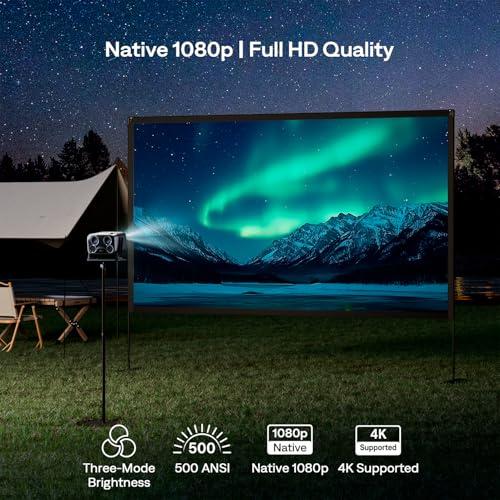
Both projectors support 4K input signals, though they display everything at their native 1080p resolution. This means you can connect a 4K streaming device or game console, and the projector will downscale the image appropriately. The processing quality here matters, and based on user feedback, both handle this downscaling competently without obvious artifacts or quality loss.
This is where the BOOM Mini absolutely shines. The full Google TV implementation means you get personalized recommendations, voice control through Google Assistant, and seamless integration with your other Google devices. You can literally ask it to play specific shows or adjust volume without touching a remote.
The Mars 3 runs Android TV 11.0, which is certainly capable, but user reports suggest it's not quite as polished as the BOOM Mini's Google TV experience. More importantly, some streaming services have compatibility issues with portable projectors, and the BOOM Mini seems to have fewer of these problems.
Both projectors support wireless casting from phones and tablets, but the BOOM Mini's Google Cast integration works more reliably across different devices and apps. If you're someone who frequently streams content from your phone to a big screen, this difference matters daily.
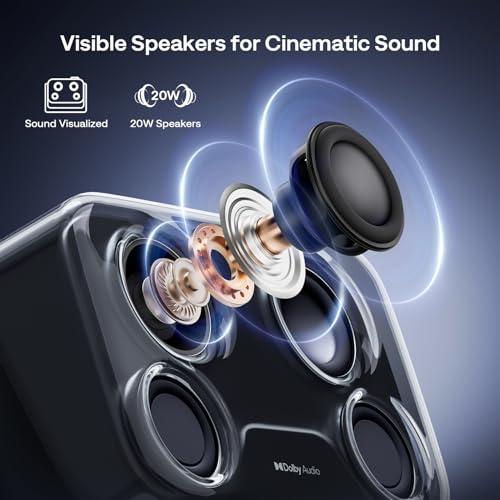
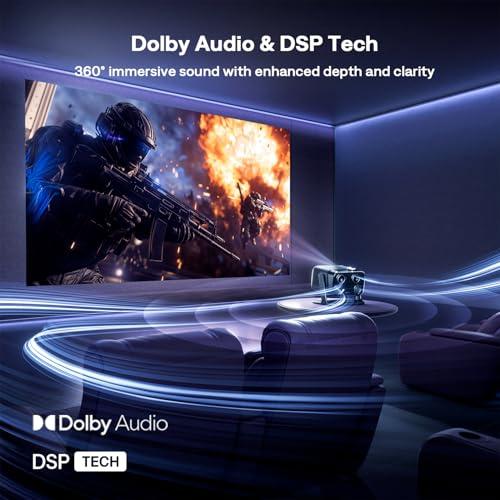
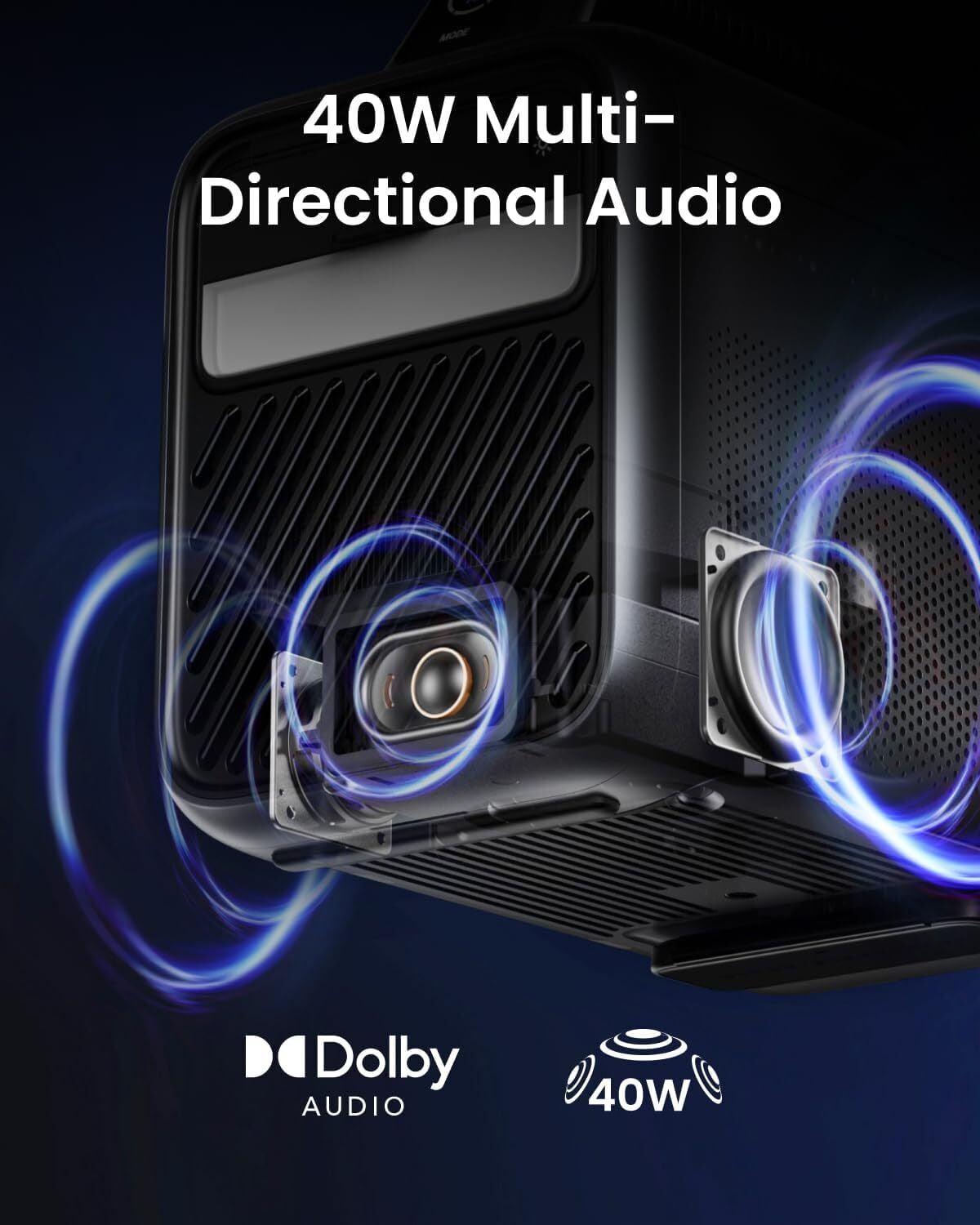
The Mars 3's 40W speaker system with Dolby Digital Plus isn't just more powerful than the BOOM Mini's 20W setup—it's designed for completely different environments. Outdoor spaces absorb and dissipate sound in ways that indoor rooms don't, so the extra power and enhanced processing aren't just nice-to-have features; they're necessities.
User reviews consistently praise the Mars 3's audio as surprisingly robust for a portable projector, with enough volume and clarity to work well even in open outdoor spaces. The BOOM Mini's speakers are perfectly adequate for indoor use but would struggle to fill a backyard with sound.
Both projectors can connect to external speakers via Bluetooth or wired connections, but the BOOM Mini adds an interesting twist: it can function as a Bluetooth speaker itself when not projecting, essentially giving you a smart speaker for music playback.
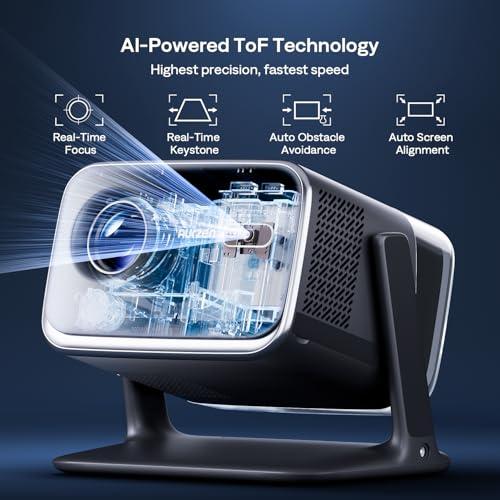
Modern portable projectors have gotten remarkably good at automatic setup, and both of these models showcase this trend well. The BOOM Mini uses ToF (Time-of-Flight) sensors to measure distance and automatically focus while also correcting keystone distortion—the trapezoidal effect you get when projecting at an angle to the screen.
The Mars 3 accomplishes similar results with its Intelligent Environment Adaptation 3.0 system, which can focus, correct keystone, and optimize screen fit in about three seconds. In practice, both systems work well enough that you can move the projector and have it ready to watch within seconds rather than minutes.
Where they differ is in ongoing adjustments. The BOOM Mini's real-time corrections mean it continuously adjusts as conditions change, while the Mars 3 requires manual re-adjustment if you move it significantly during use.
This is where choosing between these projectors becomes straightforward. The Mars 3's battery power enables use cases that are simply impossible with the BOOM Mini's AC-only design.
The 185Wh battery in the Mars 3 is genuinely substantial—equivalent to what you might find in a large laptop. Five hours of movie playback means you can watch two full-length films before needing to recharge, and the projector can even function as a power bank to charge phones or tablets. For camping trips, backyard gatherings, or anywhere power outlets aren't available, this capability is transformative.
However, battery power comes with trade-offs beyond just the higher price. The Mars 3 is noticeably larger and heavier, and you need to plan around charging cycles. If you forget to charge it before a planned movie night, you're out of luck until it's plugged in for several hours.
The BOOM Mini's AC power requirement limits spontaneity but enables some advantages. It never needs charging, runs indefinitely, and can dedicate its compact size entirely to projection components rather than battery cells.
For dedicated home theater setups, both projectors present interesting possibilities, though neither is really designed to replace a traditional large home theater projector. The brightness levels, while good for portable units, are significantly lower than what you'd want for a room designed around projection.
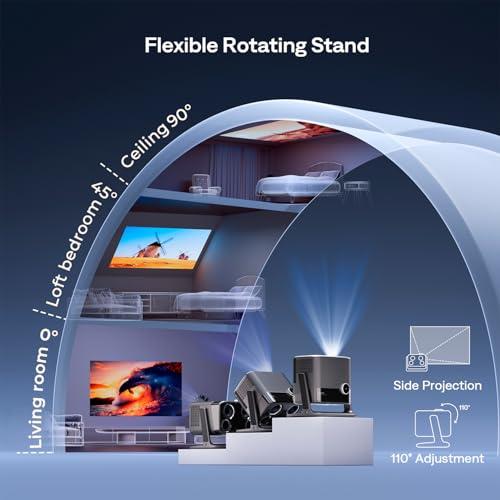
That said, the BOOM Mini makes an excellent bedroom or secondary room projector. Its quiet 36dB operation won't disturb sleep, and the Google TV integration means you can easily access all your streaming services without additional devices. The compact size and included adjustable stand mean it can sit on a nightstand and project onto the ceiling for comfortable viewing while lying down.
The Mars 3 is less suited to permanent home theater installations due to its battery-focused design, but it could work well as a basement or rec room projector where the durability and portability are still assets.
At the time of writing, these projectors occupy very different price segments, with the BOOM Mini positioned as a budget-friendly option and the Mars 3 commanding a significant premium for its portability features.
The BOOM Mini represents exceptional value for users who primarily need indoor projection with smart features. You're getting genuine Google TV functionality, automated setup, and solid image quality at a price point that was unthinkable for smart projectors just a few years ago.
The Mars 3's higher price reflects its specialized engineering and unique capabilities. Battery power, weatherproofing, and enhanced brightness don't come cheap, and there are few alternatives if you need these specific features.
The BOOM Mini is ideal for apartment dwellers, students, or anyone who wants big-screen entertainment without the commitment of mounting a TV. It's perfect for movie nights in bedrooms, temporary setups for parties, or as a secondary display in homes where a traditional TV isn't practical. The Google TV integration makes it particularly appealing for cord-cutters who rely primarily on streaming services.
Choose the BOOM Mini if you primarily watch indoors, value smart features and streaming integration, and want excellent performance per dollar spent. It's also the better choice if noise levels matter, as its quieter operation makes it suitable for bedrooms or small apartments.
The Mars 3 serves outdoor enthusiasts, frequent travelers, and anyone who needs projection capabilities away from power outlets. It's the obvious choice for camping trips, backyard movie nights, or deck parties. The weather resistance and powerful audio make it genuinely suitable for outdoor use in ways that most projectors simply aren't.
Choose the Mars 3 if you need true portability, plan to use it outdoors regularly, or live somewhere with unreliable power. It's also better for larger spaces or situations where maximum brightness is important for image visibility.
These projectors succeed because they don't try to be everything to everyone. The BOOM Mini focuses on delivering premium smart TV functionality in a compact, affordable package. The Mars 3 prioritizes genuine portability and outdoor capability above all else.
Your choice comes down to understanding your primary use case. If you want to turn any room into an entertainment space with minimal fuss and maximum convenience, the BOOM Mini delivers exactly that experience. If you need a projector that can create movie magic anywhere—literally anywhere—the Mars 3 is worth its premium price.
Both represent the current state of the art in their respective categories, and both will likely serve their intended users well for years. The technology improvements since 2023 have been incremental rather than revolutionary, focusing on refinement of features like automatic setup, smart integration, and battery efficiency rather than dramatic capability leaps.
The portable projector market continues evolving rapidly, but these two models establish clear benchmarks for what's possible when manufacturers focus on specific use cases rather than trying to compromise their way to universal appeal.
| Aurzen BOOM Mini Smart Projector Google TV | Anker Nebula Mars 3 Outdoor Portable Projector |
|---|---|
| Brightness - Critical for ambient light performance and outdoor use | |
| 500 ANSI lumens (requires dark room for best experience) | 1,000 ANSI lumens (works in twilight and some ambient light) |
| Power Source - Determines where and how you can use the projector | |
| AC power only (requires wall outlet, unlimited runtime) | Built-in 185Wh battery (5 hours playback, works anywhere) |
| Weather Resistance - Essential for outdoor entertainment | |
| None (indoor use only) | IPX3 water resistant, drop resistant, dust protection |
| Smart Features - Access to streaming without external devices | |
| Full Google TV with 10,000+ apps, Netflix/Disney+/Hulu support | Android TV 11.0 with 7,000+ apps, some streaming limitations |
| Audio Power - Important for room filling sound | |
| Dual 10W speakers (20W total) with Dolby Audio | 40W 3-way speaker system with Dolby Digital Plus |
| Display Technology - Affects image sharpness and color accuracy | |
| LCD with LED light source | DLP with LED light source |
| Size & Weight - Impacts true portability | |
| 9.1 × 7 × 7.6 inches, 4.7 lbs (compact but needs power) | 10.2 × 6.3 × 9.8 inches, 9.9 lbs (larger but truly portable) |
| Auto Setup Features - Convenience for quick movie nights | |
| Real-time autofocus and keystone with ToF sensors | Intelligent Environment Adaptation 3.0 (3-second setup) |
| Projection Size Range - Flexibility for different spaces | |
| 40-200 inches (1.2-6m throw distance) | 30-200 inches (2.6-17.4 feet throw distance) |
| Connectivity Options - Compatibility with external devices | |
| HDMI, 2× USB, Wi-Fi 5GHz, Bluetooth 5.1, 3.5mm audio out | HDMI, USB-A, USB-C, Wi-Fi, Bluetooth 5.1, 3.5mm audio out |
| Noise Level - Important for bedroom and quiet spaces | |
| ≤36dB (whisper quiet for indoor use) | 28dB (even quieter despite higher performance) |
| Target Use Case - Who this projector serves best | |
| Indoor streaming enthusiasts wanting smart TV convenience | Outdoor adventurers and off-grid entertainment seekers |
The Anker Nebula Mars 3 is significantly brighter at 1,000 ANSI lumens compared to the Aurzen BOOM Mini's 500 ANSI lumens. This makes the Mars 3 much better for outdoor viewing, twilight conditions, and rooms with ambient light, while the BOOM Mini requires darker environments for optimal viewing.
The Aurzen BOOM Mini requires constant AC power and must be plugged into a wall outlet. The Anker Nebula Mars 3 has a built-in battery that provides up to 5 hours of movie playback without any power source, making it truly portable for camping, backyard movies, or anywhere without electricity.
The Aurzen BOOM Mini offers superior smart features with full Google TV integration, providing access to over 10,000 apps including Netflix, Disney+, and Hulu directly without external devices. The Mars 3 runs Android TV 11.0 with fewer apps and some streaming service limitations.
Only the Anker Nebula Mars 3 is built for outdoor use with IPX3 water resistance, drop protection, and dust resistance. The Aurzen BOOM Mini has no weather protection and is designed strictly for indoor use.
The Anker Nebula Mars 3 delivers superior audio with its 40W 3-way speaker system and Dolby Digital Plus, designed for outdoor environments. The BOOM Mini has dual 10W speakers (20W total) that work well indoors but lack the power for outdoor spaces.
Both projectors offer similar projection capabilities: the Aurzen BOOM Mini projects 40-200 inches with a 1.2-6 meter throw distance, while the Mars 3 projects 30-200 inches with a 2.6-17.4 foot throw distance. Both are suitable for small to large viewing experiences.
The Aurzen BOOM Mini is better suited for home theater use due to its quieter operation (≤36dB), unlimited runtime via AC power, comprehensive Google TV integration, and compact design that fits well on shelves or tables in dedicated viewing rooms.
The Aurzen BOOM Mini provides exceptional value for indoor use with premium Google TV features at a budget-friendly price point. The Mars 3 commands a premium but justifies it with unique battery power, weather resistance, and higher brightness for specialized outdoor applications.
While the Aurzen BOOM Mini is more compact and lighter, true portability goes to the Anker Nebula Mars 3 due to its battery power. The BOOM Mini is only "portable" between power outlets, while the Mars 3 works anywhere without electricity.
Both projectors use LED light sources rated for approximately 25,000-30,000 hours of use, which translates to decades of normal viewing. The Aurzen BOOM Mini and Anker Nebula Mars 3 are built for long-term reliability, with the main difference being the Mars 3's battery will eventually need replacement after several years of regular use.
We've done our best to create useful and informative comparisons to help you decide what product to buy. Our research uses advanced automated methods to create this comparison and perfection is not possible - please contact us for corrections or questions. These are the sites we've researched in the creation of this article: aurzen.com - aurzen.com - the-gadgeteer.com - projectorcentral.com - aurzen.com - aurzen.com - youtube.com - bestbuy.com - bestbuy.com - youtube.com - aurzen.com - youtube.com - hometechnologyreview.com - youtube.com - aurzen.com - techradar.com - seenebula.com - thesmarthomehookup.com - yuenx.com - projectorcentral.com - seenebula.com - youtube.com - youtube.com - youtube.com - cnet.com - projectorreviews.com - youtube.com - youtube.com - projectorcentral.com - seenebula.com - youtube.com - yuenx.com

Privacy Policy
Terms and Conditions - Affiliate Policy
Home Security
© Copyright 2008-2026.
11816 Inwood Rd #1211, Dallas, TX 75244