

The projector market has evolved dramatically over the past few years, splitting into distinct categories that serve different needs. On one side, we have budget-friendly smart projectors that bring streaming capabilities directly into affordable packages. On the other, premium portable projectors offer true mobility with weather resistance and powerful batteries. These represent fundamentally different philosophies about how and where people want to watch content.
Today we're comparing two projectors that perfectly illustrate this divide: the HAPPRUN Google TV Smart Projector and the Anker Nebula Mars 3 Outdoor Portable Projector. While both can project movies onto your wall, they're designed for completely different scenarios and budgets. Understanding these differences is crucial for making the right choice.
Modern projectors fall into several categories, but these two represent the most popular consumer approaches. Smart projectors integrate streaming platforms like Android TV or Google TV directly into the device, eliminating the need for external streaming sticks or boxes. This integration makes setup simpler and reduces cable clutter, which explains why smart projectors have become increasingly popular since around 2022.
The key considerations when shopping for any projector include brightness (measured in ANSI lumens), resolution quality, audio capability, and smart features. However, the most fundamental question is whether you need true portability with battery power, or if you're primarily setting up in one location with reliable power access.
Brightness determines where you can realistically use your projector. Lower brightness units require darker environments, while higher brightness projectors can handle ambient light. Resolution affects image sharpness, with 1080p being the current sweet spot for most consumers. Audio matters because many people want to avoid the complexity of external speaker setups.
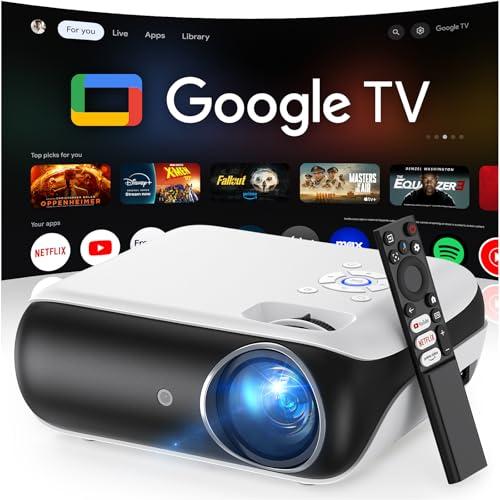
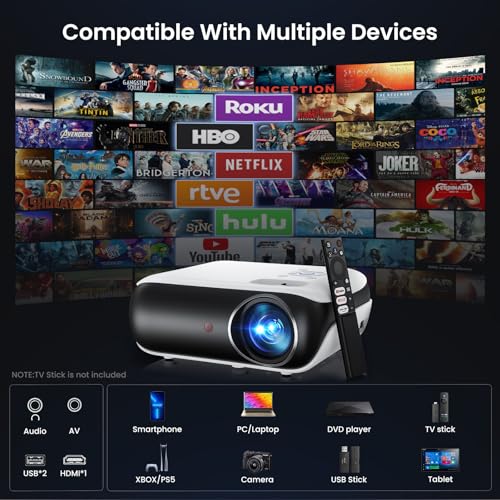
The HAPPRUN Google TV Smart Projector represents the budget smart projector category that emerged strongly in 2023 and 2024. This approach prioritizes streaming convenience and affordability over premium features like battery operation or extreme brightness.
At its core, the HAPPRUN delivers native 1080p resolution with 350 ANSI lumens of brightness. To put this in perspective, 350 ANSI lumens is adequate for darkened rooms but struggles in environments with ambient light. Think of it like trying to see your phone screen outdoors on a sunny day – the image is there, but it becomes washed out and difficult to see clearly.
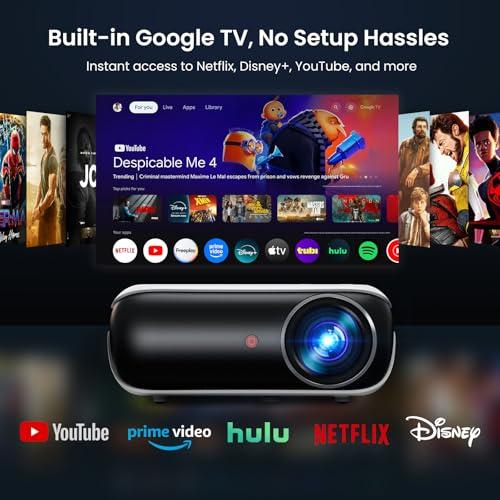
The standout feature is the integrated Google TV 11.0 platform with official Netflix licensing. This might sound like a minor detail, but it's actually significant. Many projectors in this price range either lack smart features entirely or use unofficial app stores that don't include major streaming services. Having direct access to Netflix, YouTube, Prime Video, and Disney+ without workarounds is genuinely convenient.
The HAPPRUN also includes HDR10+ support, which enhances contrast and color depth beyond standard video. HDR (High Dynamic Range) technology allows for brighter highlights and darker shadows simultaneously, creating more realistic images. Combined with its 20,000:1 contrast ratio – meaning the brightest whites are 20,000 times brighter than the darkest blacks – this projector can produce surprisingly engaging visuals for its price point.
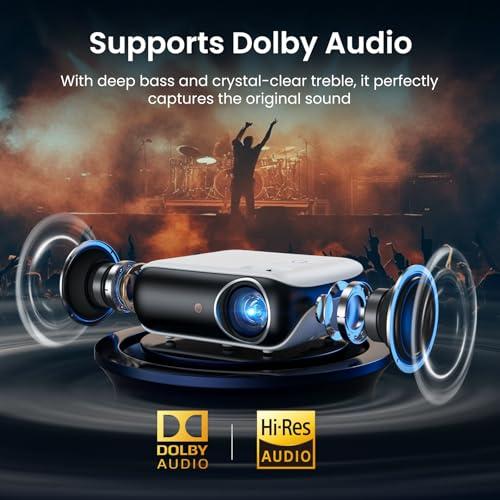
Audio comes from an 8W digital speaker with Dolby 3D stereo processing. While this provides clear dialogue and basic stereo separation, it's not particularly powerful. Most users in our research found the built-in audio adequate for casual viewing but recommended external speakers for truly immersive experiences.
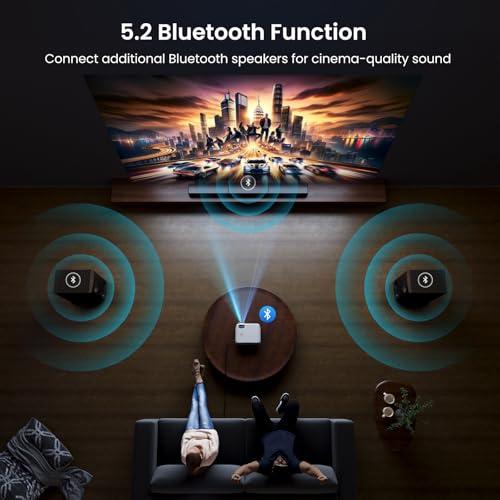
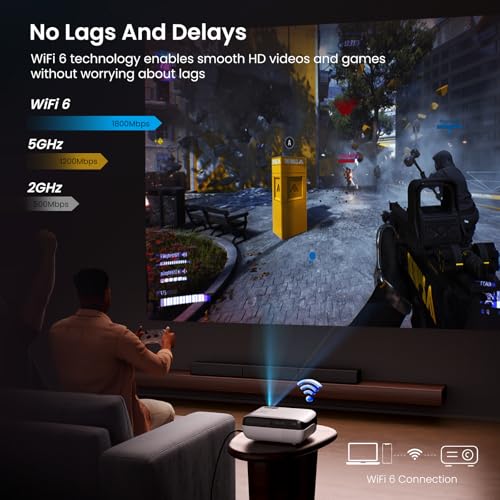
Connectivity includes Wi-Fi 6 technology, which offers faster and more stable streaming compared to older Wi-Fi standards. Bluetooth 5.2 allows wireless connection to headphones or speakers, though some users report slight audio delay when using Bluetooth connections with video content.
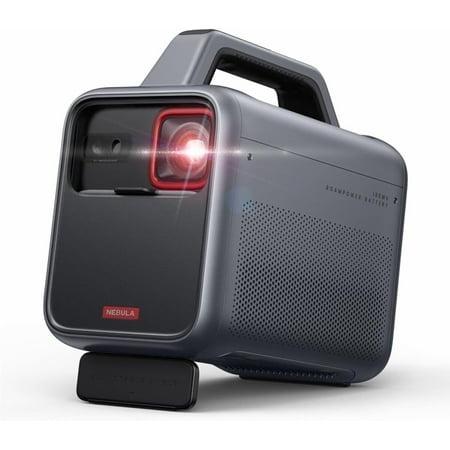
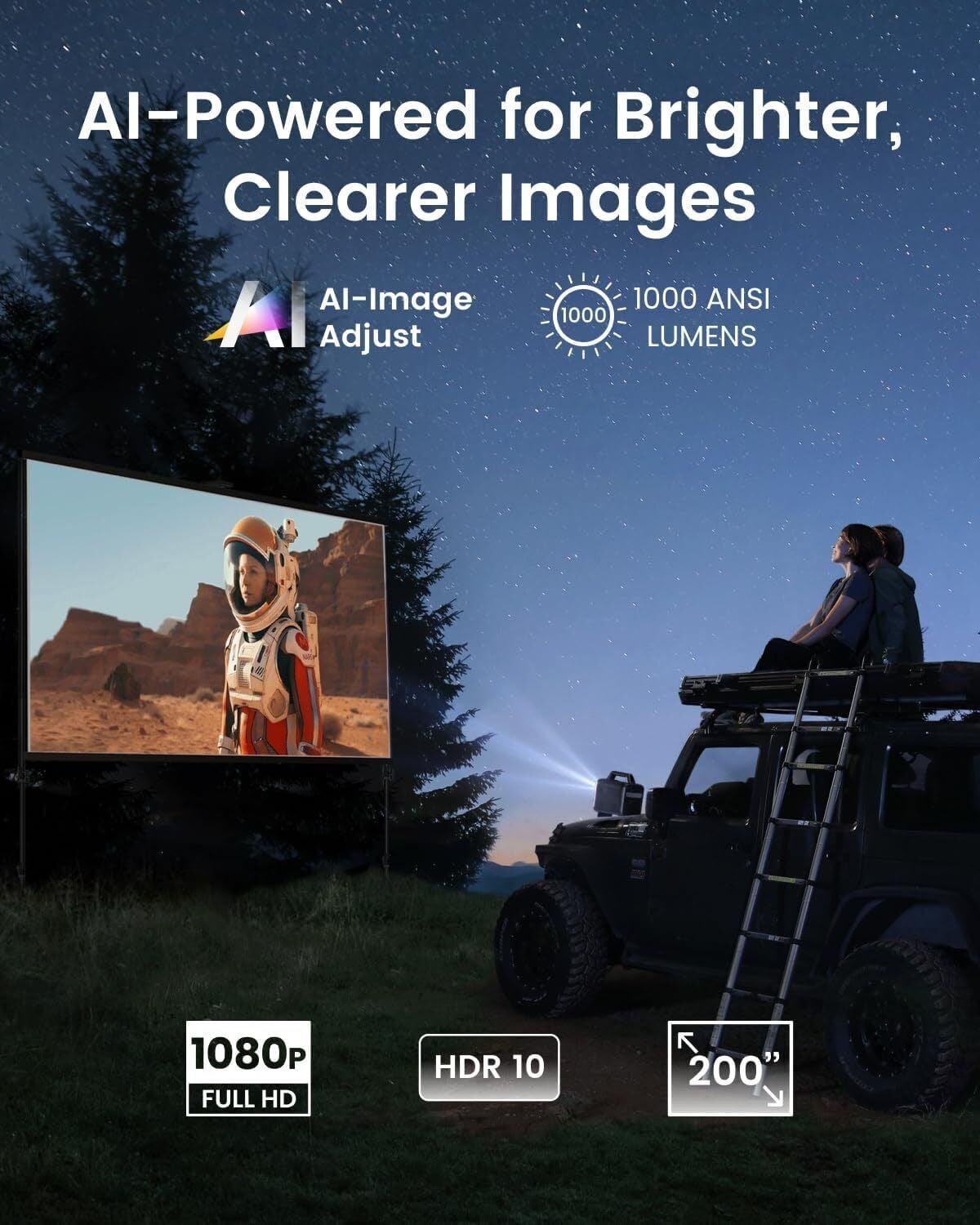
Released in 2023, the Anker Nebula Mars 3 takes an entirely different approach, prioritizing true portability and outdoor capability. At nearly three times the brightness of the HAPPRUN, its 1,000 ANSI lumens make it usable in environments where budget projectors simply can't function.
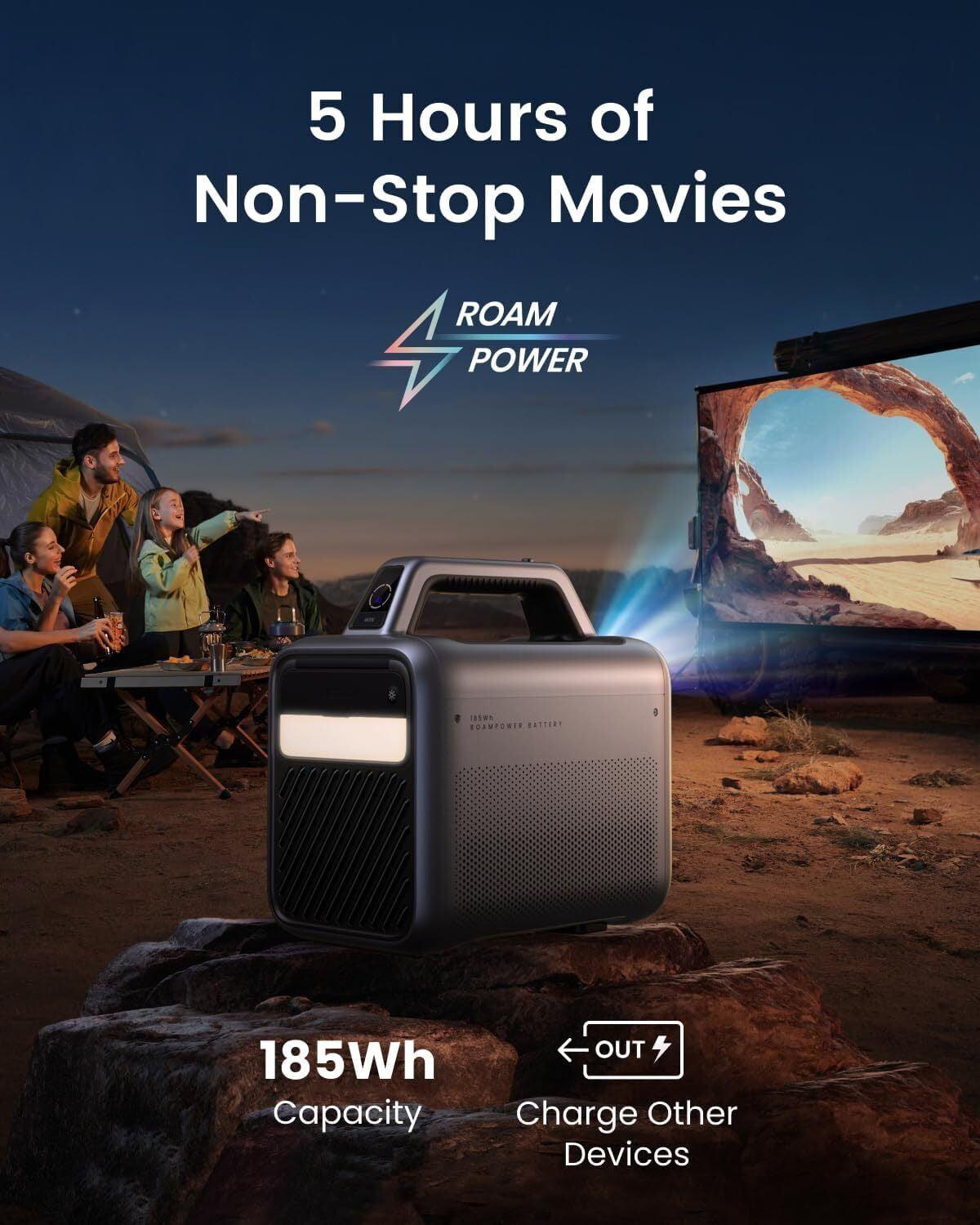
The defining feature is the massive 185Wh battery that provides up to 5 hours of video playback. To understand the significance, most portable electronics use much smaller batteries – your laptop probably has a 50-70Wh battery, while smartphones typically use 15-20Wh batteries. This substantial power capacity enables genuine cord-free operation for extended periods.
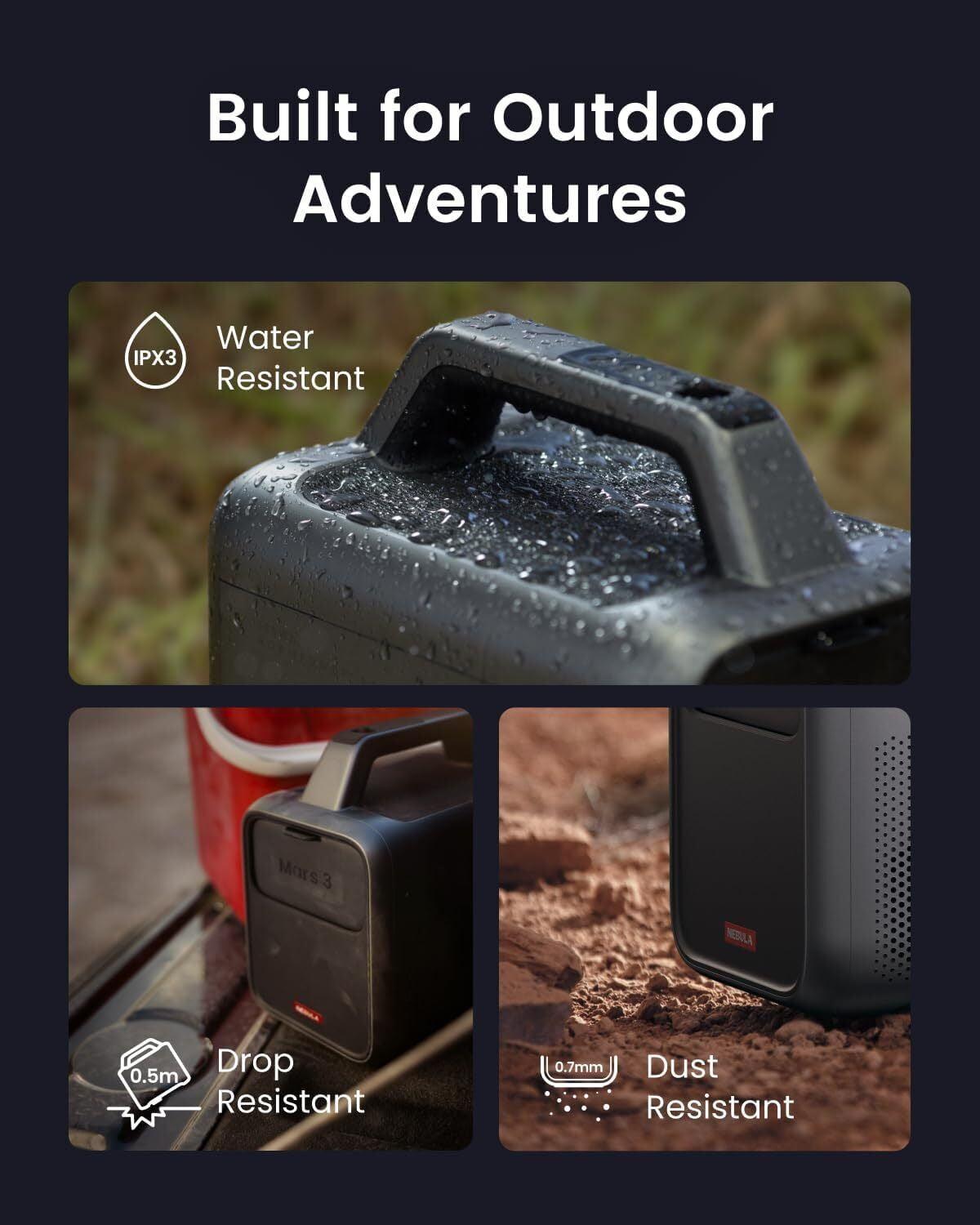
The Mars 3 includes IPX3 water resistance, meaning it can handle light rain or splashing water. Combined with 0.5-meter drop resistance and dust protection, this projector is built for outdoor conditions that would damage typical electronics. The rugged construction includes a sliding lens cover that doubles as the power switch and protection for the lens when moving between locations.
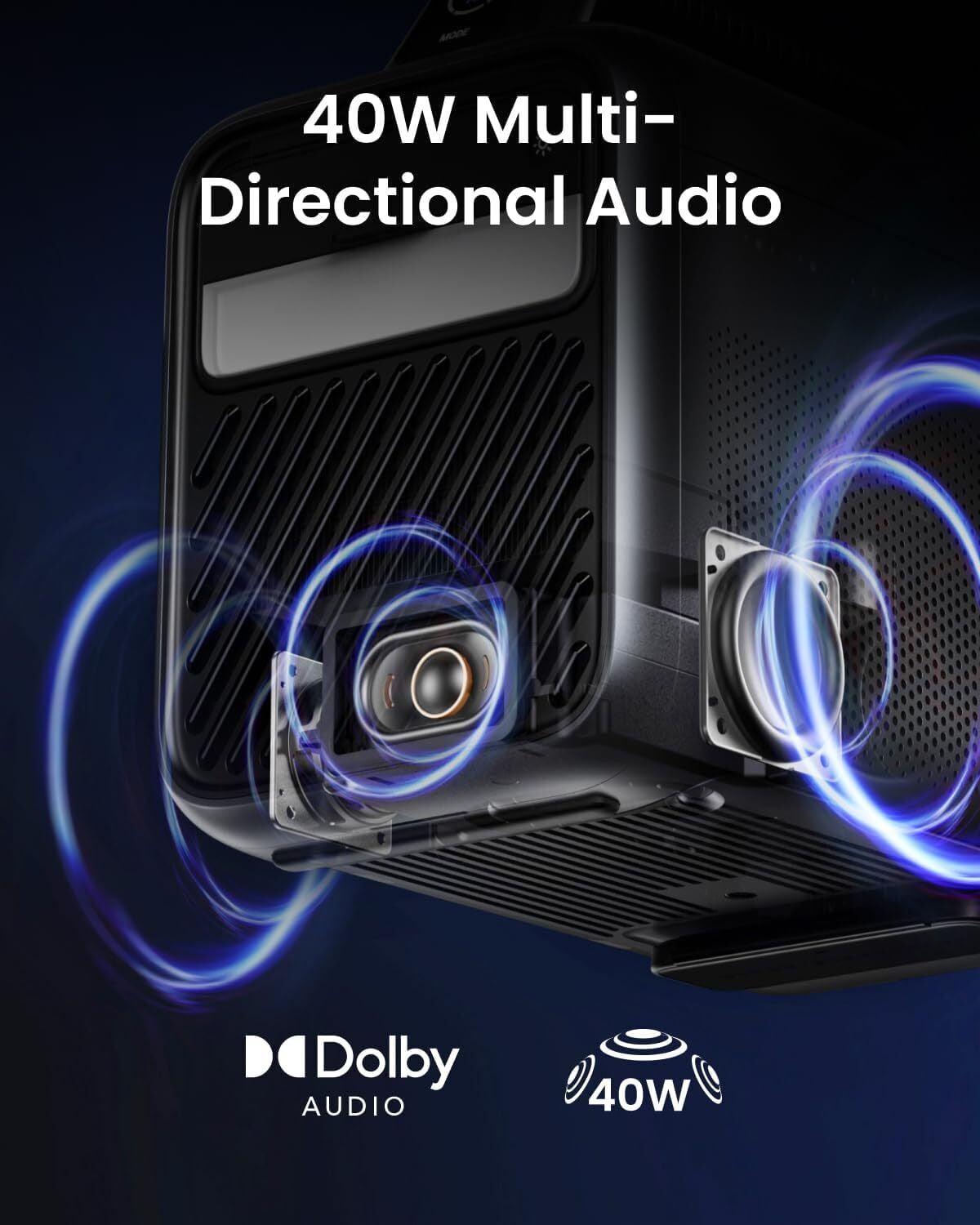
Audio represents perhaps the biggest performance gap between these projectors. The Mars 3's 40W speaker system delivers five times more power than the HAPPRUN's 8W speaker. This isn't just about volume – more powerful speakers can reproduce lower frequencies and maintain clarity at higher volumes, creating a more theater-like experience without external audio equipment.
The Intelligent Environment Adaptation feature automatically handles focus and keystone correction within three seconds. Keystone correction fixes the trapezoidal distortion that occurs when projecting at an angle, while autofocus ensures sharp images regardless of projection distance. These automated adjustments are particularly valuable for portable use where setup conditions vary.
However, the Mars 3 has one significant limitation: it lacks official Netflix licensing. Users must install Netflix through Anker's Nebula Play app store, which some find less convenient than direct app access. This licensing issue stems from Netflix's strict requirements for official certification, which many smaller projector manufacturers haven't pursued.
Brightness is arguably the most important performance characteristic because it determines where and when you can use your projector. The Mars 3's 1,000 ANSI lumens versus the HAPPRUN's 350 ANSI lumens represents a fundamental capability difference.
In our research of user experiences, the HAPPRUN requires careful light control for optimal viewing. Users report excellent image quality in darkened basements, dedicated theater rooms, or outdoor settings after sunset. However, the same users note that even modest ambient light – like a single table lamp or late afternoon sunlight filtering through curtains – significantly degrades the viewing experience.
The Mars 3, with its higher brightness, maintains image quality in conditions where the HAPPRUN becomes unwatchable. Users successfully watch content in living rooms with some ambient light, covered patios during twilight hours, and even outdoor settings with nearby lighting. This flexibility is crucial for families who want to use their projector in various situations without complete darkness.
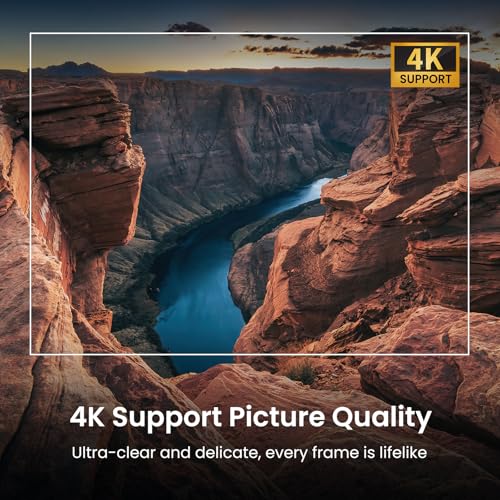
Both projectors offer native 1080p resolution, which provides sharp, detailed images at reasonable viewing distances. The HAPPRUN adds 4K content decoding, meaning it can accept 4K video signals and downscale them to its native 1080p display. While not true 4K projection, this ensures compatibility with modern 4K streaming content and gaming consoles.
The audio performance gap between these projectors is substantial and affects the overall user experience significantly. The HAPPRUN's 8W speaker produces clear dialogue and basic stereo effects, suitable for casual viewing in small to medium rooms. However, users consistently report that action movies, music videos, and cinematic content feel underwhelming without external speakers.
The Mars 3's 40W audio system changes this equation entirely. Users describe bass response that actually adds impact to explosions and music, plus volume levels sufficient for outdoor gatherings of 10-15 people. The Dolby Digital Plus processing enhances the spatial audio effects, creating a more immersive soundscape that rivals dedicated soundbars in the same price range.
For home theater applications, audio capability often determines whether you need additional equipment. With the HAPPRUN, plan on eventual speaker upgrades for the full cinematic experience. The Mars 3 might satisfy your audio needs entirely, depending on room size and content preferences.
The power difference between these projectors affects far more than just mobility. The HAPPRUN requires permanent access to AC power, which limits installation options and rules out many outdoor scenarios. However, this AC-only design allows for consistent performance without battery degradation concerns over time.
The Mars 3's battery operation enables use anywhere – camping trips, beach houses without convenient outlets, backyard movie nights without extension cords running across walkways. The projector also functions as a power bank, capable of charging smartphones and tablets through its USB ports during extended outdoor sessions.
Battery life varies significantly based on usage. In Eco mode, which reduces brightness to extend runtime, the Mars 3 achieves approximately 5 hours of video playback. Standard brightness mode reduces this to around 2-3 hours. For music-only playback with the screen off, users report up to 15 hours of operation, making it viable as a portable speaker system.
Both projectors run recent versions of Google's TV platform, but with important differences in execution and licensing. The HAPPRUN includes official Google TV 11.0 with full Netflix certification, meaning the Netflix app installs and functions exactly like on certified smart TVs. This seamless integration extends to other major streaming platforms and ensures regular security updates.
The Mars 3 uses Android TV 11.0 but without Netflix certification. Users must download Netflix through Anker's Nebula Play store, which functions but requires additional setup steps and occasionally experiences compatibility issues with certain content or features. While not a dealbreaker, it represents a friction point in the user experience.
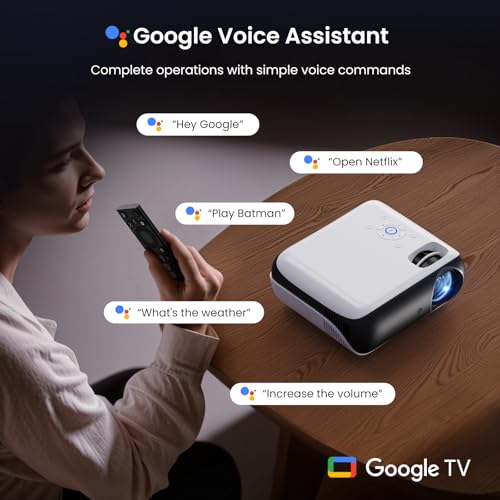
Google Assistant integration works well on both projectors, allowing voice control for basic functions like volume adjustment, content search, and smart home integration. However, outdoor use limits the practical utility of voice commands due to ambient noise and wind interference.
Chromecast and AirPlay support enable content casting from smartphones and tablets. Users report reliable performance for streaming from mobile devices, though battery-powered operation on the Mars 3 means casting drains the projector's battery faster than direct app usage.
At the time of writing, these projectors occupy very different price segments, with the HAPPRUN positioned in the budget category and the Mars 3 in the premium portable segment. The price difference reflects genuine capability differences rather than just brand positioning.
The HAPPRUN offers exceptional value for users with specific requirements: indoor use, dark room viewing, and budget constraints. For dedicated home theater setups where portability isn't needed, it delivers smart TV functionality and acceptable image quality at a fraction of premium projector costs.
The Mars 3 justifies its premium positioning through unique capabilities that no budget projector can match. True portability with substantial battery life, weather resistance, and powerful audio create value for outdoor enthusiasts and mobile entertainment scenarios. However, this premium comes with a significant cost multiplier that may not make sense for users who primarily watch indoors.
For dedicated home theater installations, the choice between these projectors depends heavily on your room characteristics and upgrade path. Dark rooms with controlled lighting favor the HAPPRUN, where its lower brightness becomes irrelevant and its budget positioning allows more money for audio equipment, seating, or screen upgrades.
The HAPPRUN's mounting flexibility supports ceiling installation, wall mounting, or shelf placement, making it suitable for permanent installations. Its AC power requirement isn't a limitation in dedicated theater rooms with planned electrical access.
However, many families use their "home theater" space for multiple purposes, with ambient light from windows or adjacent rooms. In these scenarios, the Mars 3's brightness advantage becomes valuable, even for primarily indoor use. The ability to watch content without complete darkness makes the projector more family-friendly and versatile for different types of entertainment.
The audio consideration becomes crucial in home theater applications. While the HAPPRUN might seem adequate initially, most users eventually desire more immersive audio, requiring additional speaker investment. The Mars 3's 40W system might satisfy your audio needs longer, potentially offsetting some of the initial cost premium.
Choose the HAPPRUN Google TV Smart Projector if you're primarily setting up indoor entertainment in controlled lighting conditions. This projector excels in basements, dedicated media rooms, or bedrooms where ambient light isn't a concern. Its budget-friendly positioning makes it ideal for first-time projector buyers or anyone prioritizing streaming convenience over premium features.
The HAPPRUN also makes sense if you already own or plan to invest in external audio equipment. Its modest built-in speakers won't compete with dedicated soundbars or speaker systems, so the audio limitation becomes less relevant in well-equipped setups.
Choose the Anker Nebula Mars 3 if portability, outdoor use, or ambient light flexibility matter for your entertainment plans. This projector suits outdoor enthusiasts, RV travelers, or anyone who wants projection capability in multiple locations without power constraints.
The Mars 3 also appeals to users who value premium audio without additional equipment complexity. Its 40W speaker system provides genuinely impressive sound quality that enhances the viewing experience significantly compared to budget alternatives.
For most people, the decision comes down to specific use cases rather than general "better" or "worse" comparisons. The HAPPRUN excels in its intended budget smart projector role, while the Mars 3 dominates the premium portable category. Understanding your primary viewing scenarios, lighting conditions, and budget constraints will guide you toward the right choice for your entertainment needs.
Both projectors represent solid engineering focused on their respective target markets. The key is matching their capabilities to your actual usage patterns rather than aspirational scenarios that might not reflect your real viewing habits.
| HAPPRUN Google TV Smart Projector | Anker Nebula Mars 3 Outdoor Portable Projector |
|---|---|
| Brightness - Critical for determining where you can watch comfortably | |
| 350 ANSI lumens (requires dark rooms for best viewing) | 1,000 ANSI lumens (usable with ambient light, nearly 3x brighter) |
| Power Source - Determines true portability and setup flexibility | |
| AC power only (requires wall outlet access) | Built-in 185Wh battery (5 hours video, 15 hours music playback) |
| Audio Power - Affects whether you need external speakers | |
| 8W digital speaker with Dolby 3D (adequate for casual viewing) | 40W speaker system with Dolby Digital Plus (cinema-quality sound) |
| Weather Resistance - Important for outdoor use and durability | |
| None specified (indoor use only) | IPX3 water, 0.5m drop, dust resistant (designed for outdoor conditions) |
| Netflix Access - Streaming convenience for most popular platform | |
| Official Netflix licensing (direct app installation) | Requires Nebula Play workaround (not officially certified) |
| Resolution & Display Tech - Image quality and future compatibility | |
| Native 1080p, HDR10+, 4K decoding, 20,000:1 contrast | Native 1080p with auto-focus and keystone correction |
| Connectivity - Modern wireless standards and device compatibility | |
| WiFi 6, Bluetooth 5.2, HDMI, AV, 2x USB, headphone jack | Dual-band WiFi, Bluetooth 5.1, HDMI with eARC, USB-A, USB-C |
| Setup Automation - How quickly you can start watching | |
| Manual keystone correction and focus adjustments | Intelligent Environment Adaptation (3-second auto-setup) |
| Weight & Portability - Real-world mobility considerations | |
| Lightweight but requires power outlet (mounting options available) | 9.9 lbs with integrated carry handle (true grab-and-go design) |
| Smart Platform - Operating system and app ecosystem | |
| Google TV 11.0 with Google Assistant and Chromecast | Android TV 11.0 with Google Assistant and Chromecast built-in |
| Additional Features - Unique capabilities that add value | |
| Multiple mounting options, AV port for older devices | Functions as power bank, camping light, sliding lens cover protection |
The Anker Nebula Mars 3 is significantly brighter at 1,000 ANSI lumens compared to the HAPPRUN Google TV Smart Projector's 350 ANSI lumens. This means the Mars 3 can handle rooms with ambient light, while the HAPPRUN requires darker environments for optimal viewing. For most living room scenarios, the brightness difference is substantial enough to affect your viewing experience.
The Anker Nebula Mars 3 is specifically designed for outdoor use with IPX3 water resistance, dust protection, and a built-in battery that runs for up to 5 hours. The HAPPRUN Google TV Smart Projector requires AC power and lacks weather resistance, making it suitable only for indoor use or covered outdoor areas with power access.
The Anker Nebula Mars 3 has significantly better audio with its 40W speaker system compared to the HAPPRUN's 8W speaker. The Mars 3 provides cinema-quality sound that's suitable for outdoor gatherings, while the HAPPRUN offers basic audio that most users supplement with external speakers for the full experience.
The HAPPRUN Google TV Smart Projector has official Netflix licensing with direct app access, making it more convenient for streaming. The Anker Nebula Mars 3 requires installing Netflix through Anker's Nebula Play store as a workaround, which functions but involves extra setup steps.
For dedicated home theater rooms with controlled lighting, the HAPPRUN Google TV Smart Projector offers excellent value with its HDR10+ support and official streaming apps. However, if your home theater space has any ambient light or serves multiple purposes, the Mars 3's higher brightness provides more flexibility for family use.
Only the Anker Nebula Mars 3 operates on battery power, providing up to 5 hours of video playback without being plugged in. The HAPPRUN Google TV Smart Projector requires constant AC power, which limits where you can set it up but ensures consistent performance without battery degradation concerns.
Both projectors offer native 1080p resolution, but the HAPPRUN Google TV Smart Projector includes HDR10+ and 4K content decoding for enhanced contrast and color. The Anker Nebula Mars 3 focuses on brightness and auto-focus features. In dark rooms, the HAPPRUN may produce slightly more vibrant images, while the Mars 3 maintains better visibility in brighter conditions.
The Anker Nebula Mars 3 features Intelligent Environment Adaptation that automatically handles focus and keystone correction in about 3 seconds. The HAPPRUN Google TV Smart Projector requires manual adjustments but offers more mounting options for permanent installations. For quick, temporary setups, the Mars 3 is more convenient.
Both projectors support gaming through HDMI connections, but the HAPPRUN Google TV Smart Projector may have slightly lower input lag for responsive gaming. The Anker Nebula Mars 3 offers the unique advantage of battery-powered gaming sessions outdoors or in locations without power access, making it ideal for portable gaming setups.
The HAPPRUN Google TV Smart Projector provides exceptional value for budget-conscious buyers who primarily watch indoors with official streaming app access. The Anker Nebula Mars 3 justifies its premium positioning with unique portable capabilities, weather resistance, and powerful audio that no budget projector can match.
The HAPPRUN Google TV Smart Projector supports various mounting options including ceiling installation, making it suitable for permanent home theater setups. The Anker Nebula Mars 3 is designed for portable use with a carry handle, though it can be mounted temporarily. For permanent ceiling installation, the HAPPRUN is the better choice.
Choose the HAPPRUN Google TV Smart Projector if you want an affordable smart projector for indoor use with official Netflix access and don't need portability. Choose the Anker Nebula Mars 3 if you value outdoor capability, battery operation, powerful built-in audio, or need flexibility to watch in various lighting conditions. The decision ultimately depends on whether portability and brightness flexibility are worth the significant price premium.
We've done our best to create useful and informative comparisons to help you decide what product to buy. Our research uses advanced automated methods to create this comparison and perfection is not possible - please contact us for corrections or questions. These are the sites we've researched in the creation of this article: youtube.com - topvisiontec.com - youtube.com - happrunprojector.com - youtube.com - happrunprojector.com - youtube.com - business.walmart.com - youtube.com - walmart.com - cordcuttersnews.com - nexpow.com - techradar.com - seenebula.com - thesmarthomehookup.com - yuenx.com - projectorcentral.com - seenebula.com - youtube.com - youtube.com - youtube.com - cnet.com - projectorreviews.com - youtube.com - youtube.com - projectorcentral.com - seenebula.com - youtube.com - yuenx.com

Privacy Policy
Terms and Conditions - Affiliate Policy
Home Security
© Copyright 2008-2026.
11816 Inwood Rd #1211, Dallas, TX 75244