

Remember when projectors were bulky machines that required dark rooms, complex setup, and a permanent installation? Those days are long gone. The portable projector market has exploded in recent years, offering increasingly impressive performance in ever-smaller packages. Today's portable projectors aim to deliver cinema-like experiences virtually anywhere—from living room walls to backyard screens and even camping trips.
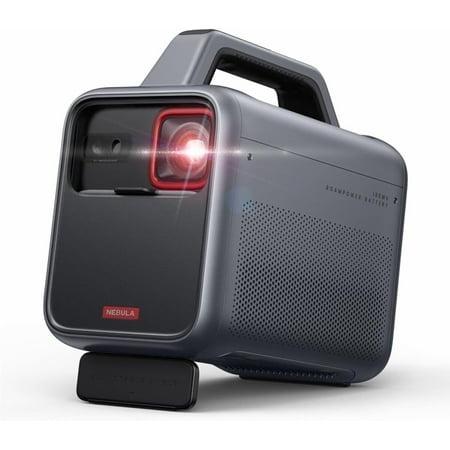
In this detailed comparison, we'll examine two notable contenders in the portable projector space: the budget-friendly TCL A1 Portable 1080p Smart Projector ($499) and the premium Anker Nebula Mars 3 Outdoor Portable Projector ($1,000-$1,100). While both devices can project your favorite content onto large screens, they take notably different approaches that affect everything from image quality to where and how you can use them.
Before diving into our comparison, let's establish what matters most when evaluating portable projectors:
Brightness is perhaps the most critical specification and is typically measured in lumens—essentially how much light the projector can output. Higher brightness means better visibility in environments with ambient light. Think of it as similar to screen brightness on your phone—just as you need to crank up your phone's brightness outside on a sunny day, projectors need substantial brightness to overcome ambient light.
Resolution determines image sharpness and detail. Just like TVs, 1080p (1920×1080 pixels) has become the standard minimum for good image quality, while 4K offers premium clarity but at a higher price point.
True portability involves several factors: physical size and weight, battery capability, and ease of setup. A truly portable projector should be light enough to carry comfortably, offer battery-powered operation, and provide quick, hassle-free setup.
Smart features can eliminate the need for additional streaming devices, while audio quality determines whether you'll need external speakers or can rely on built-in sound. Finally, for outdoor use, durability features like water and dust resistance become important considerations.
Released in late 2022, the TCL A1 represents the company's entry into the portable projector market. TCL has long been known for delivering good value in the TV space, and they've applied that same philosophy here. Priced at $499, the A1 attempts to bring smart projector capabilities to a more accessible price point.
Since its release, the A1 has received software updates to improve its Google TV interface, though the hardware has remained consistent. When it launched, the 360 lumen brightness was considered adequate for fully darkened rooms, but as competing products have evolved, this specification now sits decidedly on the lower end of the brightness spectrum.
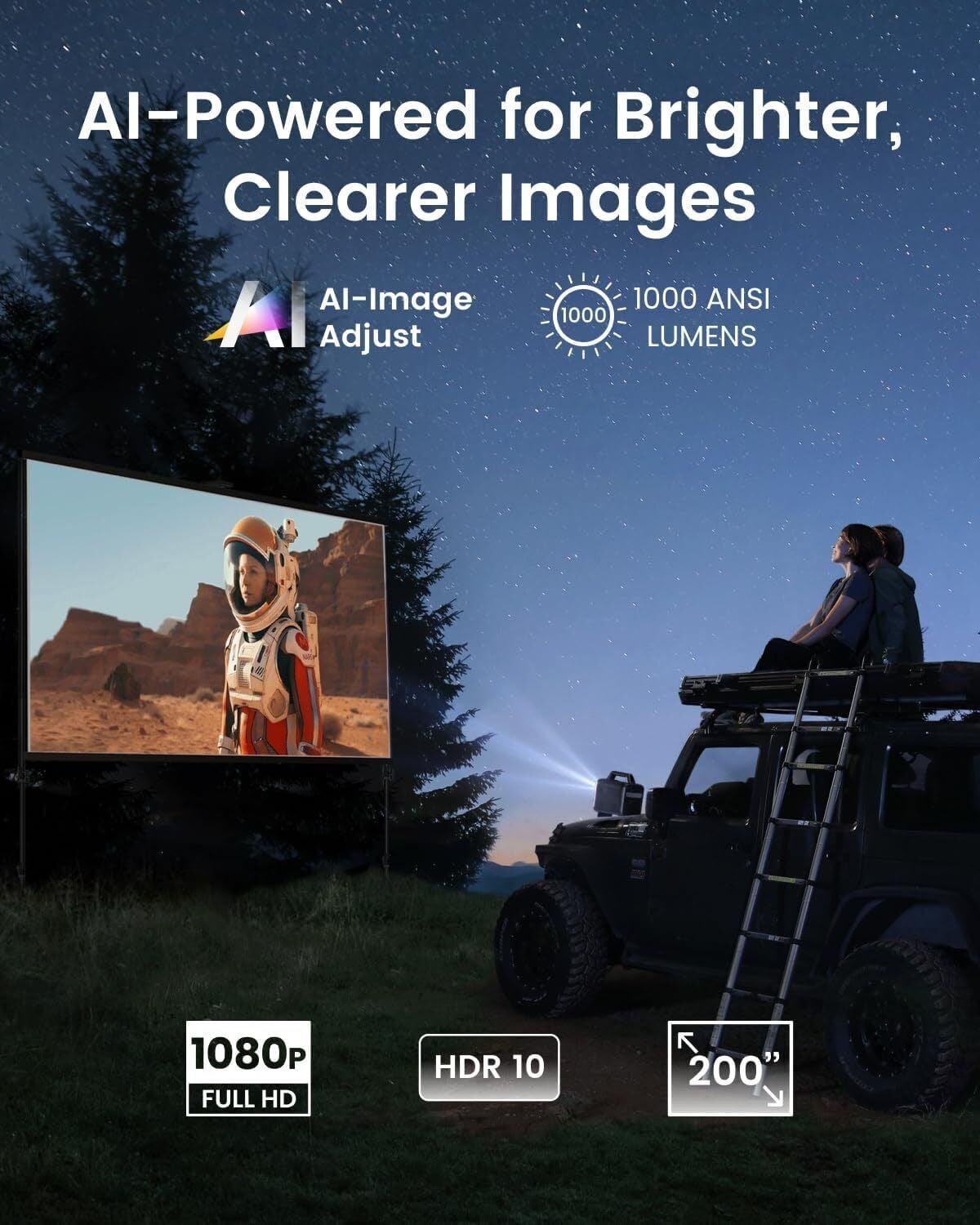
Released in mid-2023, the Nebula Mars 3 builds upon Anker's established reputation in the portable projector market. This third-generation Mars projector represents a significant evolution from previous models, with substantial improvements in brightness (now 1000 ANSI lumens, up from 700 in the previous generation), battery life, and durability features.
The Mars 3 introduced new weather-resistant capabilities that weren't present in earlier models, positioning it specifically for outdoor use—a growing subset of the portable projector market. While the $1,000+ price point places it firmly in the premium category, it represents Anker's most capable portable projector to date.
The most immediately apparent difference between these projectors is their brightness levels, and this creates a substantial performance gap in real-world usage.
The TCL A1 offers 360 ISO lumens—a moderate brightness level that essentially limits it to use in very dark or dimly lit environments. What does this mean practically? You'll need to wait until after sunset for outdoor viewing, draw the blinds tightly for daytime indoor use, and even then, the image will appear somewhat washed out if there's any significant ambient light.
By contrast, the Nebula Mars 3 provides 1000 ANSI lumens, which represents nearly three times the practical brightness. This substantial difference means the Mars 3 can start outdoor movie nights during twilight rather than requiring complete darkness. In indoor settings, it can overcome modest ambient light without completely washing out the image.
It's worth noting that ISO lumens and ANSI lumens measure brightness differently (ANSI being the more standardized method), but even accounting for measurement differences, the Mars 3 delivers significantly more light output.
Both projectors offer 1080p Full HD resolution (1920×1080 pixels), which provides good detail for most content at typical viewing distances. However, resolution tells only part of the story.
The Mars 3 includes HDR10 compatibility, which allows it to display a wider range of brightness levels and colors when playing compatible content. This results in more vibrant images with better contrast between light and dark areas. The TCL A1 lacks HDR support, resulting in more limited color range and contrast.
In practical terms, the Mars 3 produces noticeably more vivid and realistic images, particularly in scenes with both bright and dark elements. When watching nature documentaries or action movies with varied lighting, this difference becomes quite apparent.
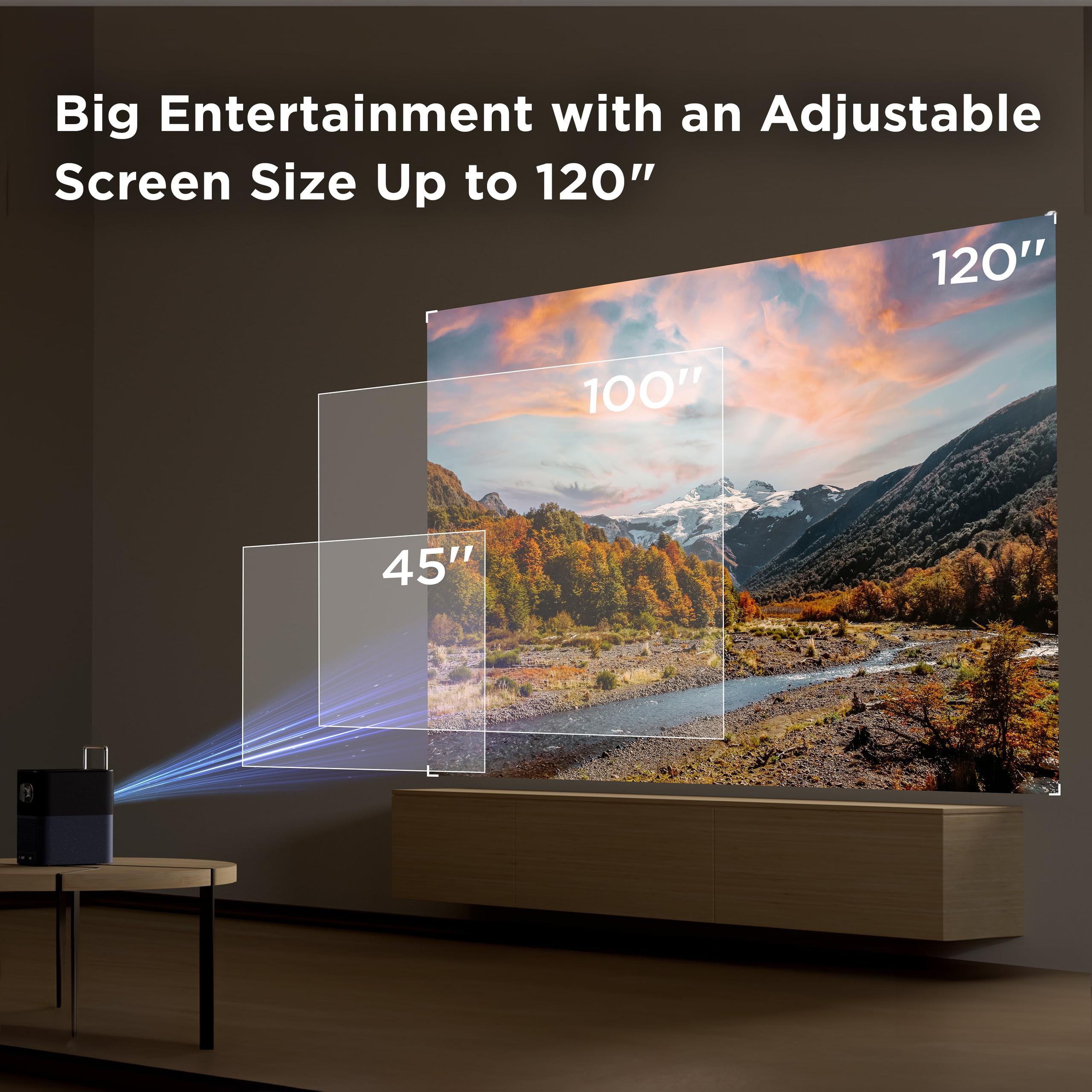
The TCL A1 offers a projection size range of 45-120 inches diagonal, while the Mars 3 can go from 30 inches up to a massive 200 inches. This gives the Mars 3 more flexibility for both smaller and larger spaces.
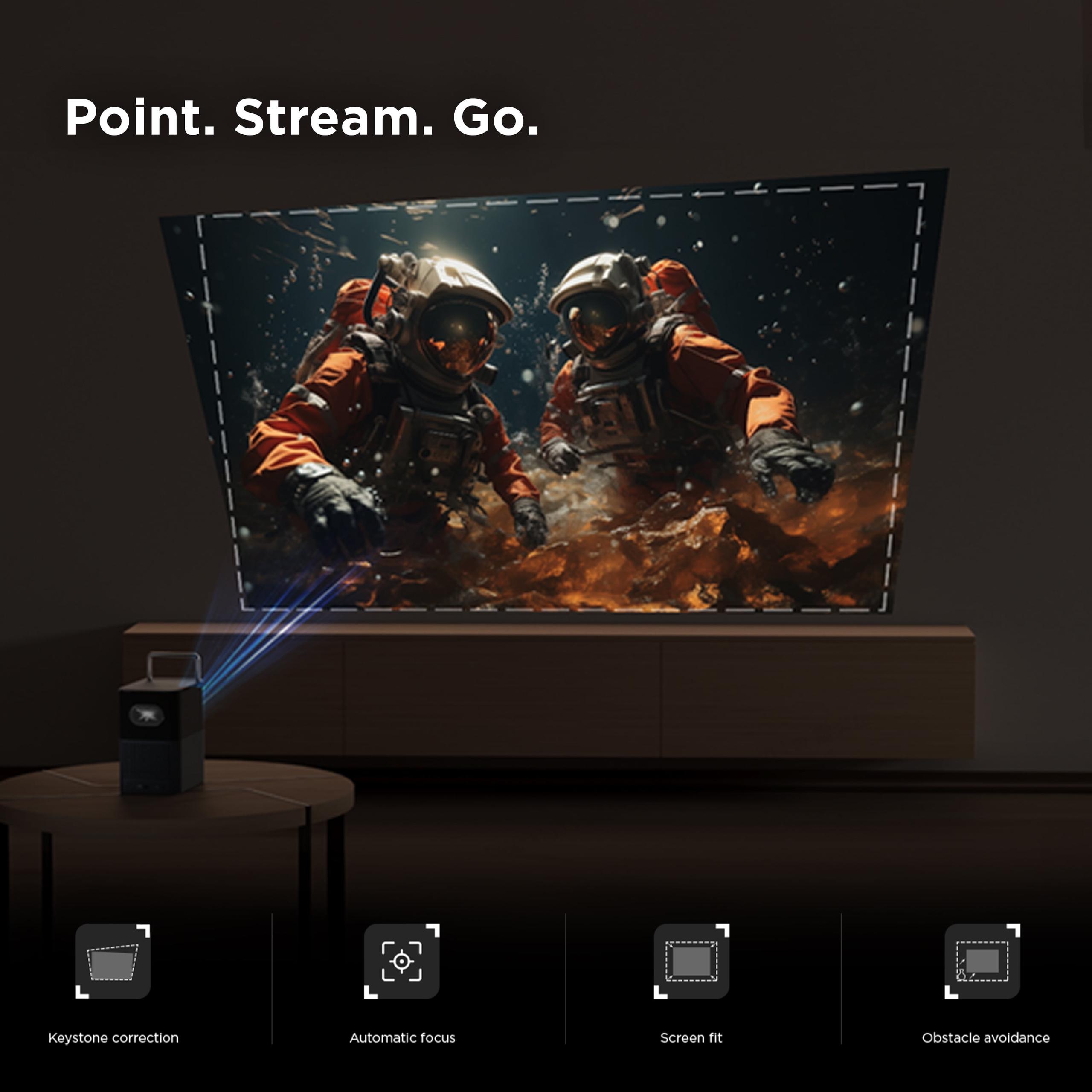
Both projectors feature auto-focus and auto keystone correction—technologies that automatically adjust the image to ensure it's sharp and rectangular even when the projector isn't perfectly aligned with the screen. In testing, both perform these adjustments quickly, though the Mars 3's "Intelligent Environment Adaptation 3.0" technology tends to be slightly more accurate in challenging projection scenarios.
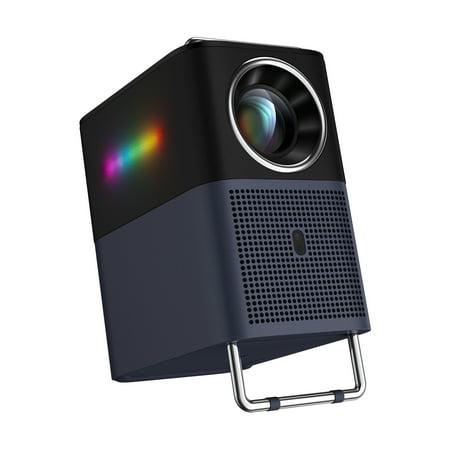
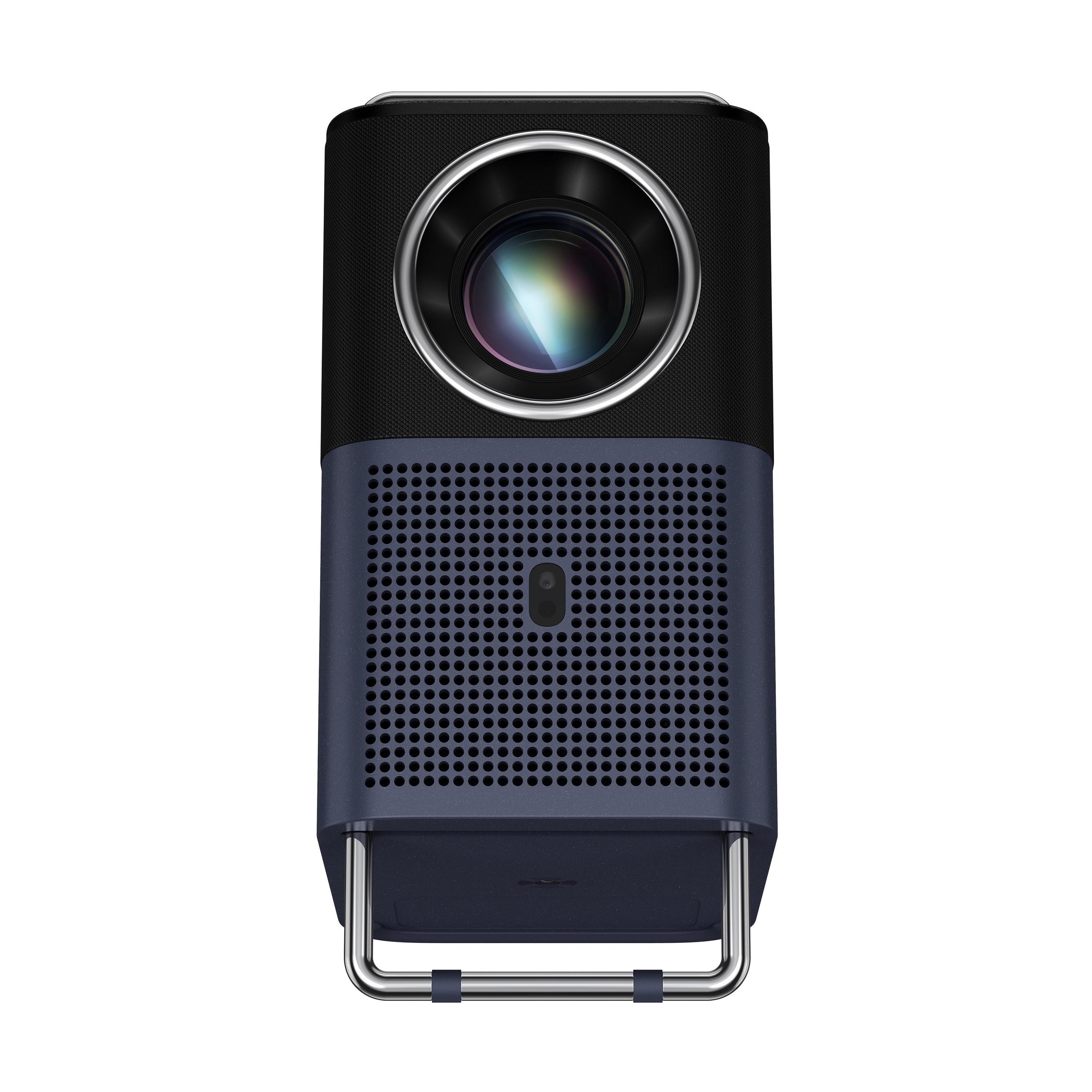
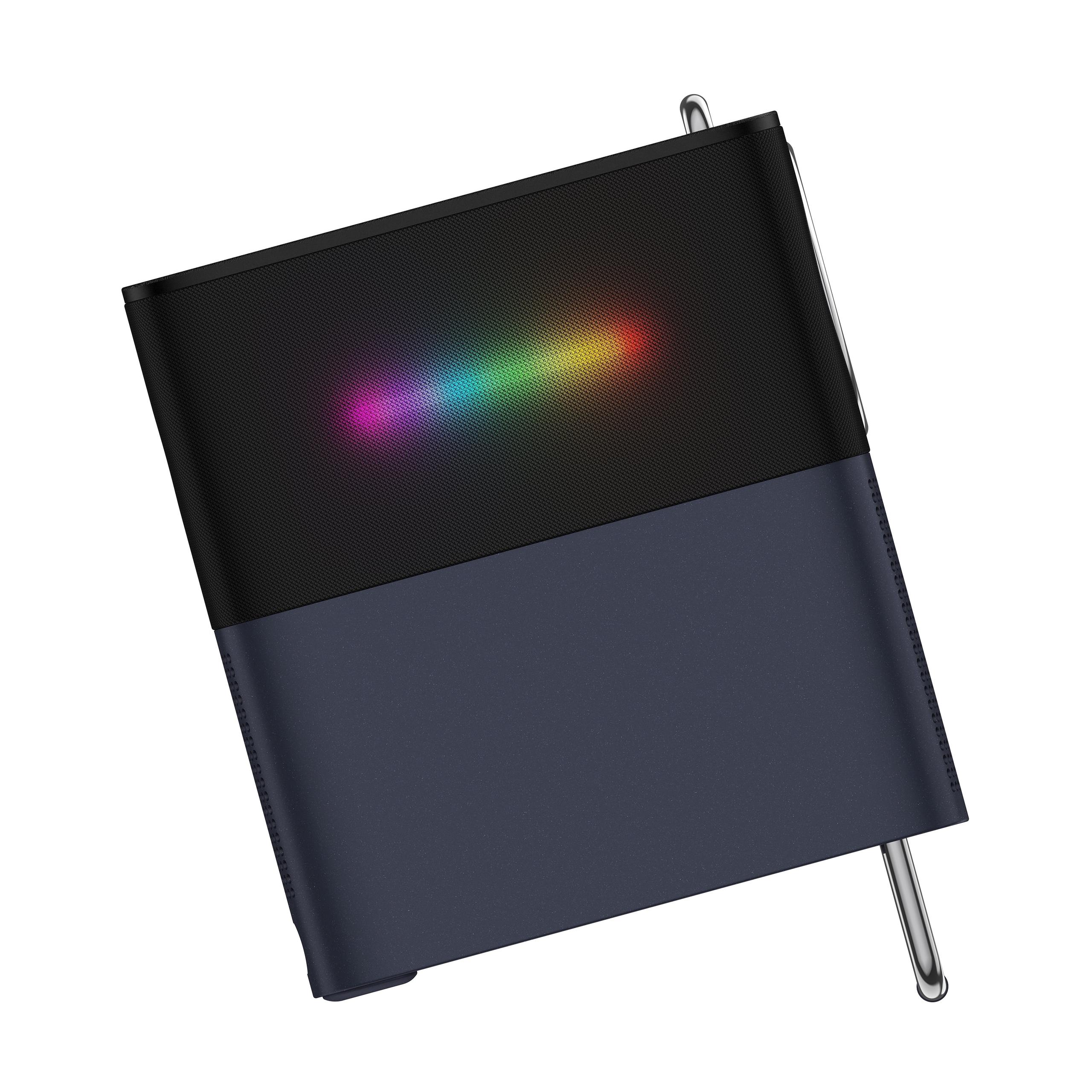
The TCL A1 has a clear advantage in pure portability metrics, weighing just 5.5 pounds and measuring 5.0" × 7.6" × 10.4". Its innovative VersaGrip handle makes it easy to carry and doubles as an adjustable stand, allowing you to tilt the projector up to 15 degrees.
The Nebula Mars 3 is significantly heavier at 9.9 pounds and larger at 6.3" × 10.2" × 9.8". While still technically portable, this additional weight and bulk make it less convenient for frequent moving or travel.
The most significant portability difference is that the TCL A1 lacks a built-in battery, requiring constant connection to a power outlet. This fundamentally limits its "portability" to locations with accessible power.
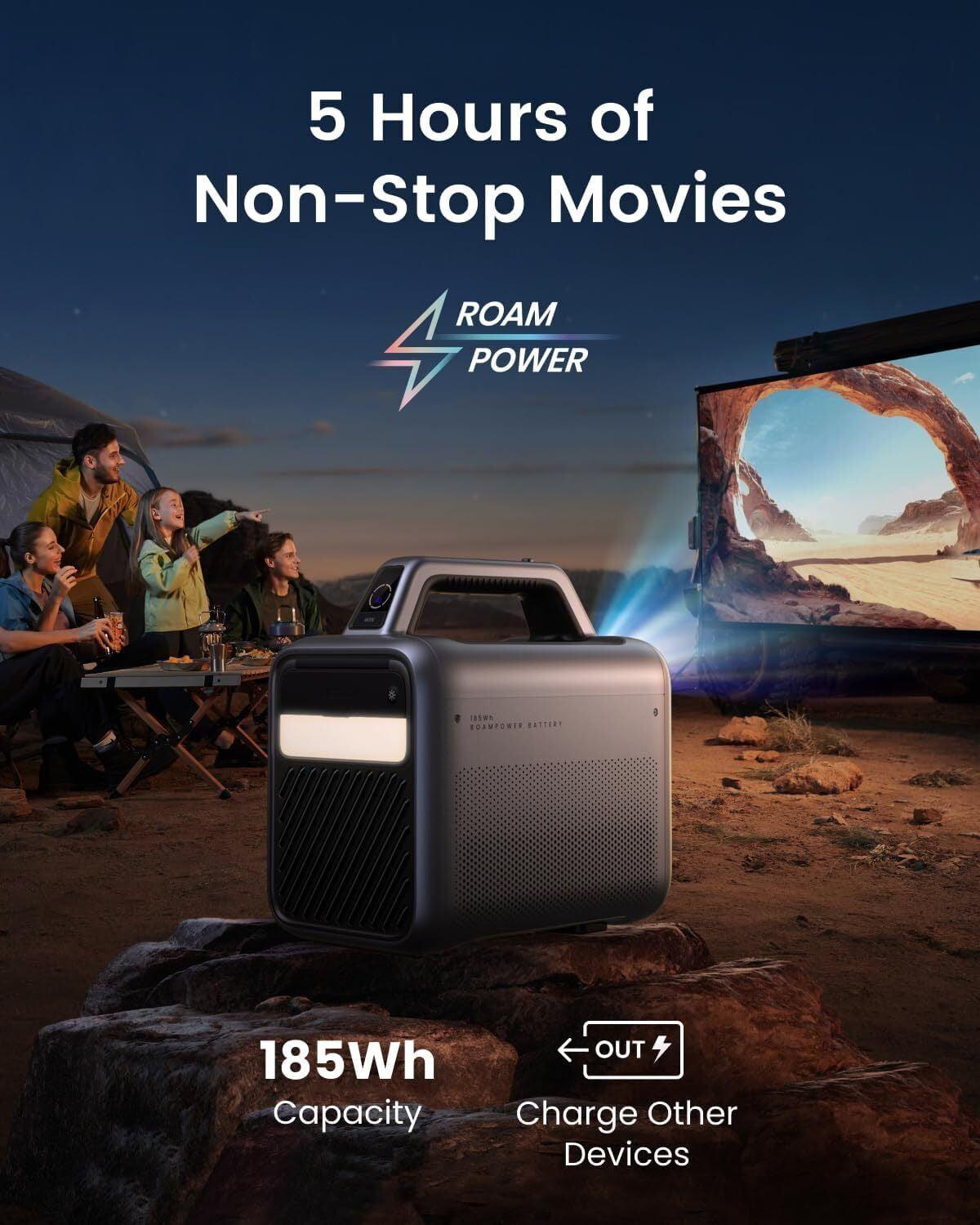
The Nebula Mars 3, conversely, includes a substantial 185Wh battery providing up to 5 hours of playback in power-saving Eco mode or about 2 hours at full brightness. This true cord-free operation enables genuine portability for outdoor movie nights, camping trips, or presentations in locations without convenient power access.
The Mars 3 takes the power flexibility further by functioning as a power bank—you can charge your phone or other devices from its USB ports, making it a dual-purpose device for outdoor adventures.
For outdoor use, durability becomes crucial. The TCL A1 offers no specific weather resistance ratings, making it primarily suited for indoor use or very carefully managed outdoor settings.
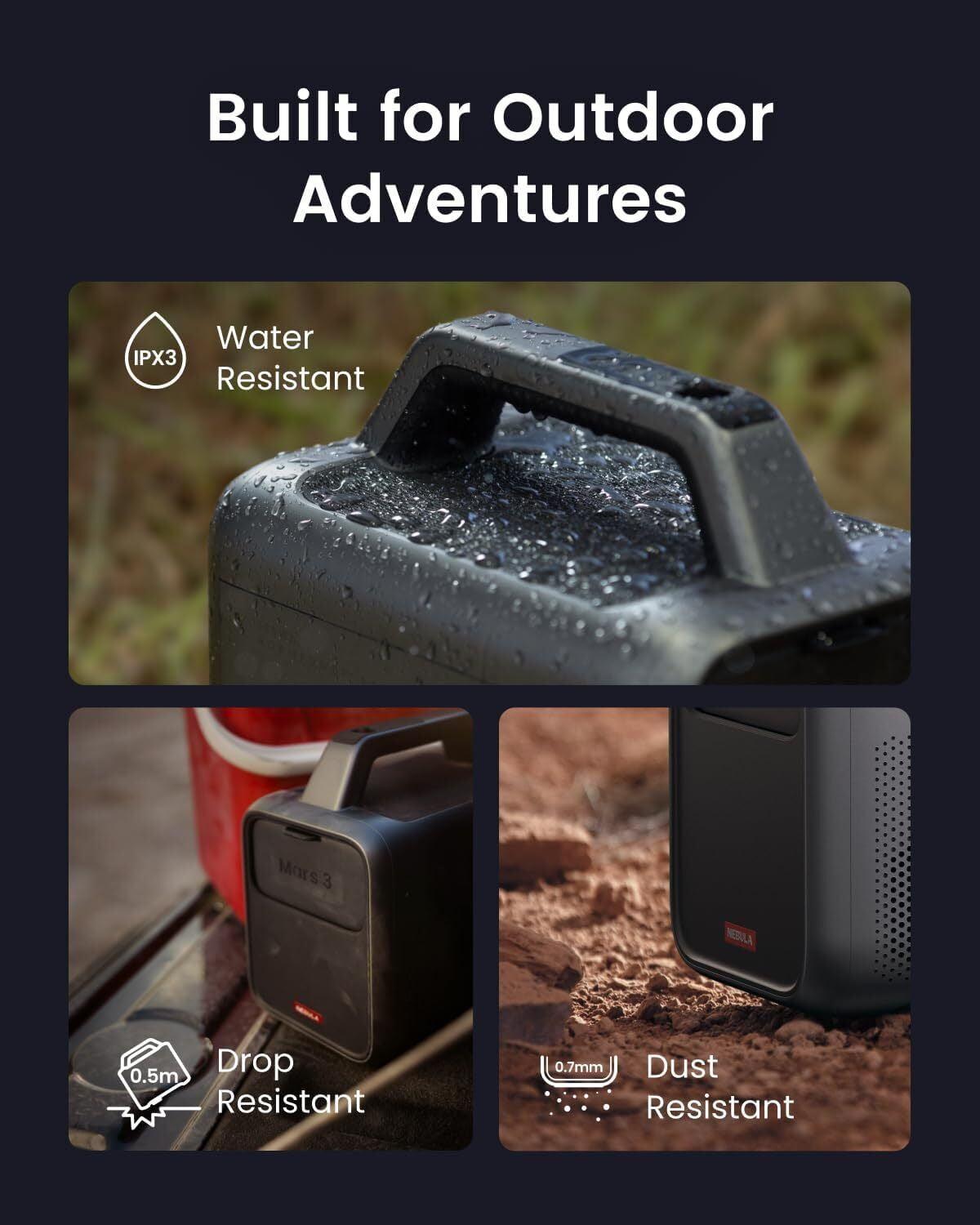
The Mars 3 features IPX3 water resistance (protected against spraying water), 0.5-meter drop resistance, and 0.7mm dust resistance. These specifications mean it can handle light rain, accidental drops, and dusty environments without damage—making it genuinely suited for outdoor adventures.
Audio quality often gets overlooked when shopping for projectors, but it's crucial for the overall experience—especially for portable units where setting up separate speakers may defeat the convenience factor.
The TCL A1 includes dual 8W speakers with Dolby Digital+ processing, providing decent sound for its size. While adequate for dialogue-heavy content in quiet environments, these speakers lack substantial bass response and can sound strained at higher volumes.
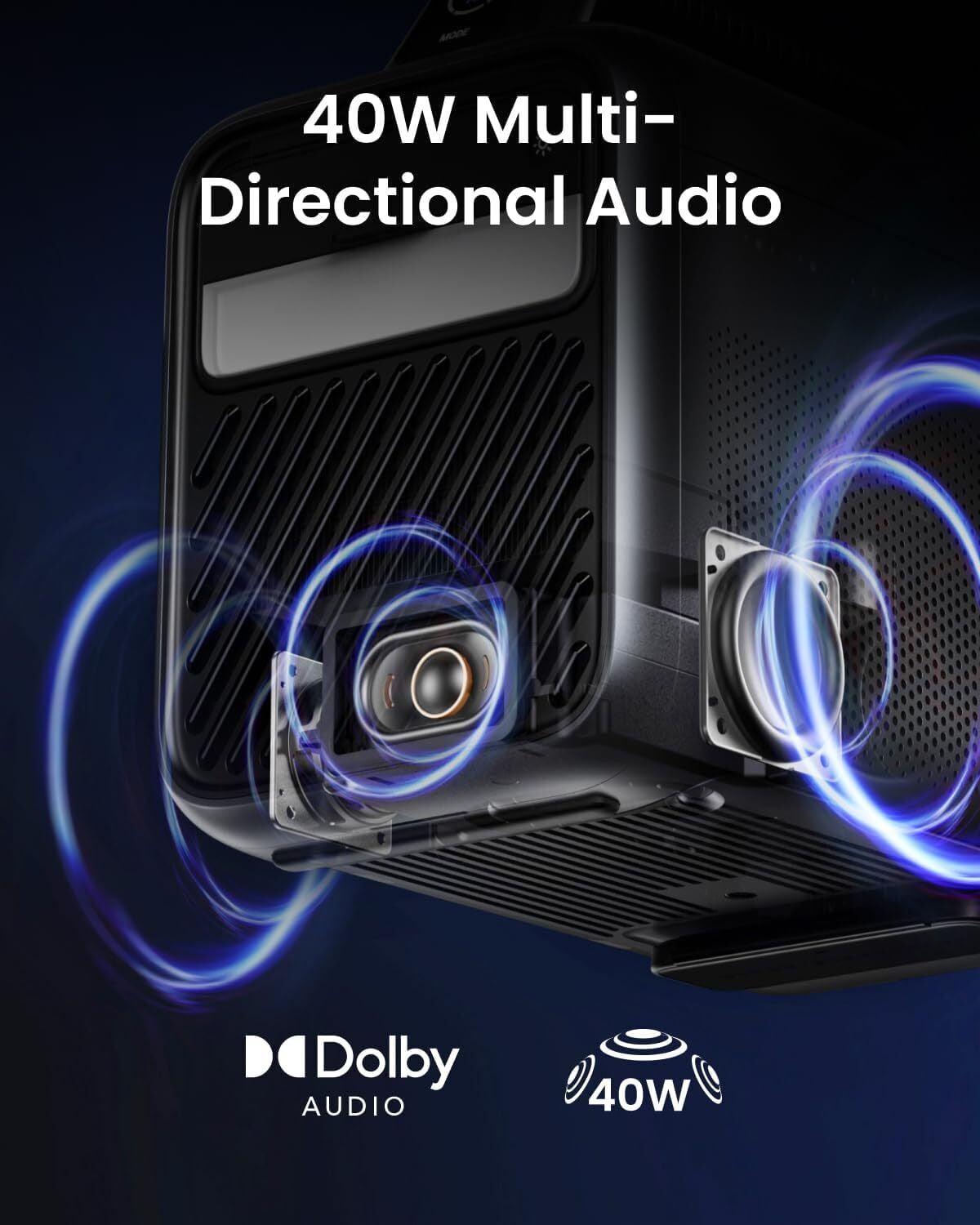
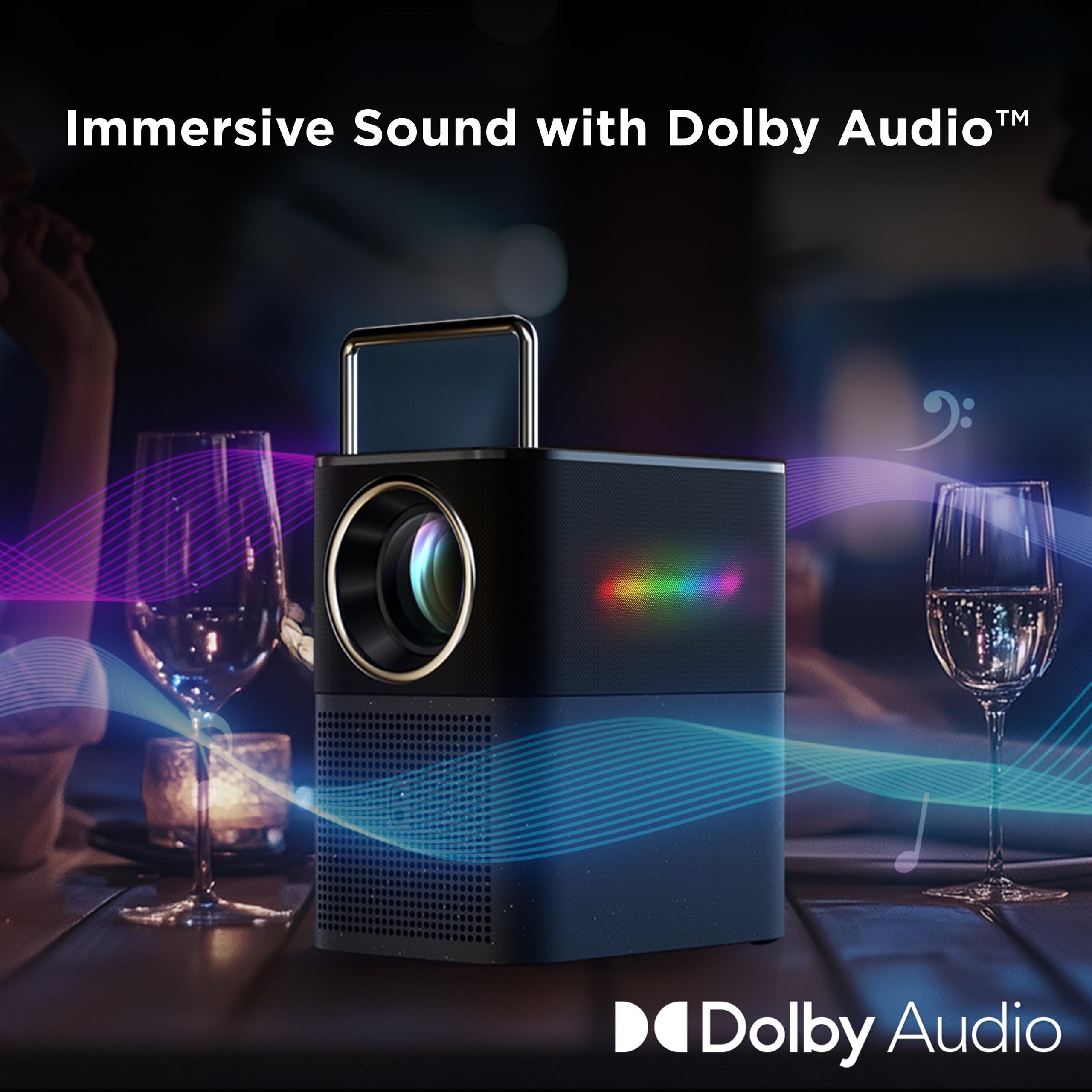
The Nebula Mars 3 delivers a significant audio upgrade with its 40W 3-way speaker system (featuring dedicated woofers, mid-range, and tweeters) with Dolby Audio support. This system provides remarkably powerful and well-balanced sound that can fill even outdoor spaces. The bass response is particularly impressive for a portable device, adding impact to action scenes and music.
In practice, the TCL A1 will often leave you wanting external speakers for a complete movie experience, while the Mars 3's audio system is genuinely good enough to stand alone for most casual viewing scenarios. For a proper home theater setup, you'd still want dedicated speakers with either projector, but the Mars 3 requires this far less urgently.
Both projectors run Android-based operating systems that provide direct access to streaming services without requiring additional devices.
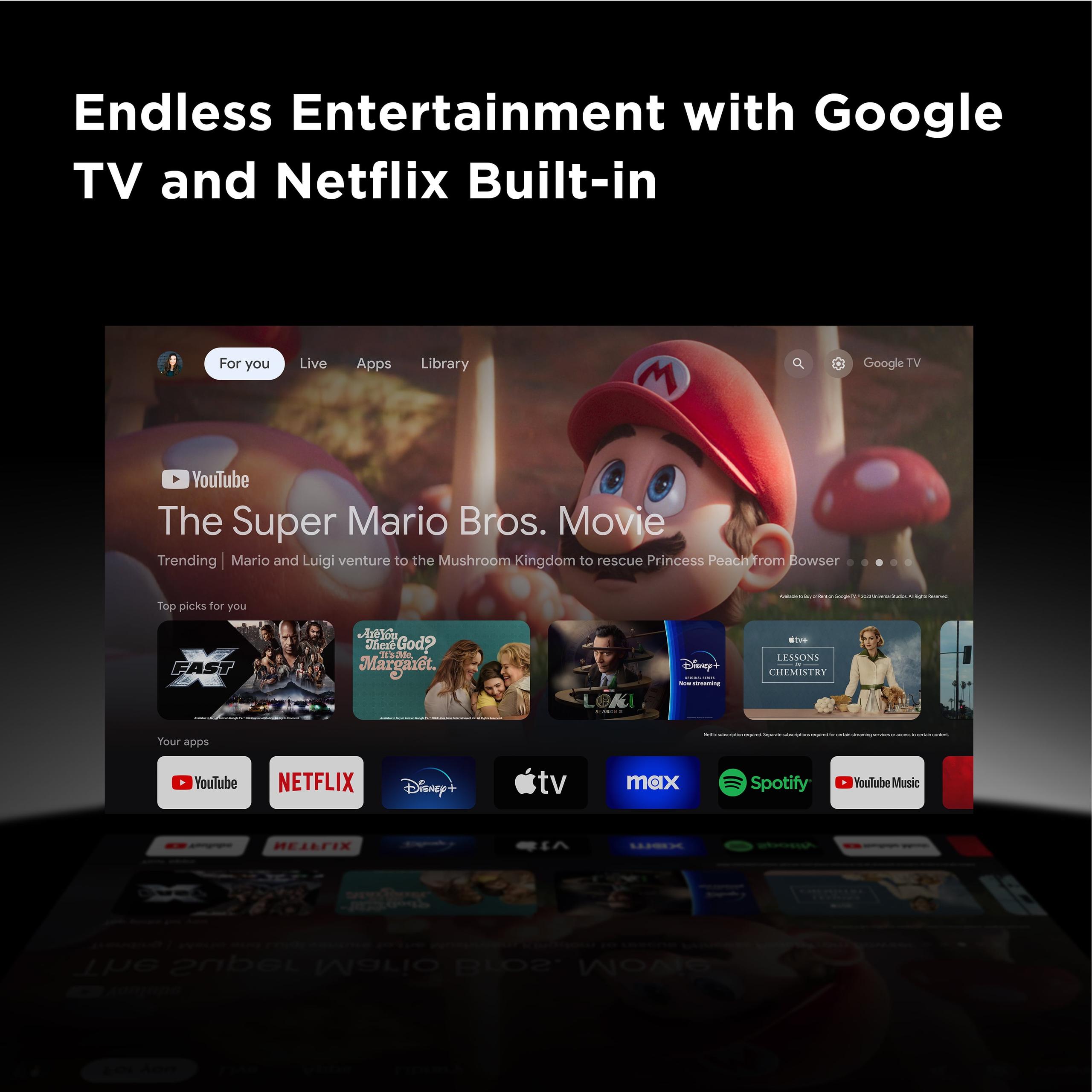
The TCL A1 uses Google TV (the successor to Android TV), offering a content-focused interface that aggregates recommendations across services. While comprehensive in app support, reviewers have noted that the A1's implementation can be sluggish, with noticeable lag when navigating menus or searching for content.
The Nebula Mars 3 runs Android TV 11.0, which provides a slightly different but equally comprehensive streaming experience. The interface generally runs more smoothly on the Mars 3, though some users have reported issues with Netflix compatibility (often requiring side-loading or using workarounds).
Both projectors support Chromecast functionality, allowing you to cast content directly from compatible apps on your phone or tablet. The Mars 3 adds Google Assistant compatibility for voice control of content and smart home features.
Initial setup and ongoing ease of use significantly impact satisfaction with portable projectors.
The TCL A1's auto-focus and keystone correction work reasonably well, though they occasionally require manual adjustment in challenging projection scenarios. The projector's startup time is somewhat lengthy, taking up to 30 seconds before you can begin using it.
The Mars 3's "Intelligent Environment Adaptation 3.0" provides more refined automatic adjustments, typically requiring less manual correction. It also features "Autobright AI Technology" that automatically adjusts brightness based on ambient light conditions—a particularly useful feature for outdoor use as lighting changes throughout the evening.
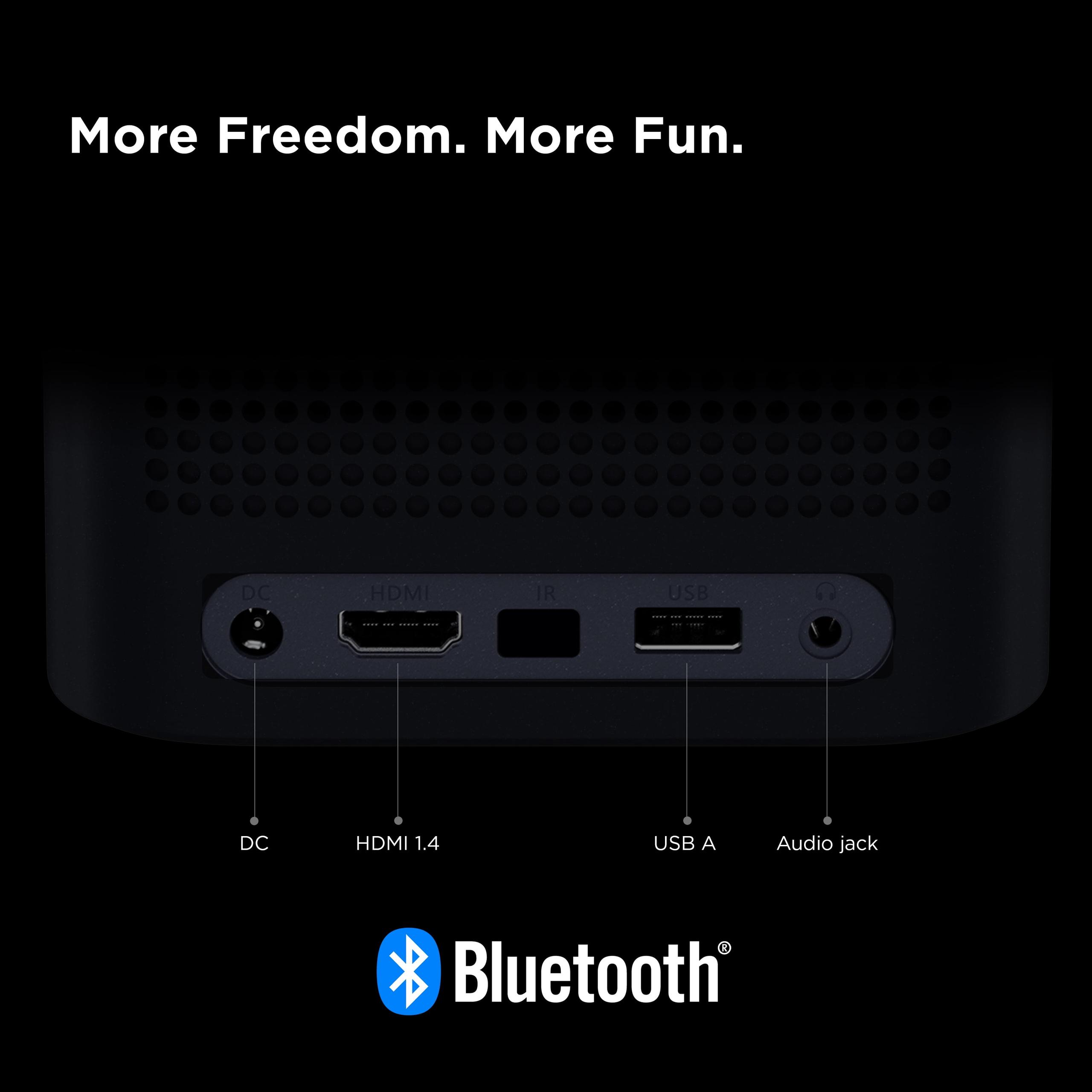
Both projectors offer standard connectivity options, but with some notable differences:
The TCL A1 includes:
The Nebula Mars 3 offers:
The USB-C port on the Mars 3 provides additional flexibility for connecting modern devices directly. The dual-band Wi-Fi also allows for faster, more reliable streaming on 5GHz networks when available.
With the TCL A1 priced at $499 and the Nebula Mars 3 commanding $1,000-$1,100, the question becomes whether the Mars 3 delivers enough additional value to justify costing twice as much.
The TCL A1 represents a reasonable entry point for portable projection, offering adequate performance for basic indoor use. However, its limitations in brightness and lack of battery power constrain its versatility. For occasional use in consistently dark environments where power is available, it delivers acceptable value.
The Nebula Mars 3's premium price reflects substantially better specifications across the board. The combination of three times the brightness, weather resistance, powerful audio, and true battery-powered portability creates a fundamentally different and more versatile product. For frequent outdoor use or environments with challenging lighting, the performance difference is substantial enough to justify the higher price for many users.
When evaluating value, consider not just initial price but long-term satisfaction:
Both projectors use LED light sources rated for extremely long life (the Mars 3 specifically lists 25,000 hours), so replacement lamps won't be a concern as they are with traditional projectors.
The Mars 3's weather resistance and more robust build quality suggest better durability for frequent transportation and outdoor use, potentially offering a longer useful life for active users.
Software support longevity remains a question for both devices. While Android-based systems typically receive updates for 2-3 years, neither manufacturer has made specific commitments to long-term software support.
If you're considering either projector as part of a dedicated home theater setup, several additional factors come into play:
For a proper home theater, the TCL A1's 360 lumens will be adequate only in a completely light-controlled room with dark walls. Even then, the image will lack the punch and vibrancy that make projected images impressive. The Mars 3's 1000 lumens, while still modest compared to dedicated home theater projectors (which often exceed 2000 lumens), provides a more satisfying image even in imperfect conditions.
Neither projector offers advanced home theater features like lens shift or extensive calibration options. For a dedicated home theater space, you might want to consider non-portable options that offer better performance for the price—particularly if battery operation isn't necessary.
However, if your "home theater" needs to serve multiple purposes or be occasionally relocated, the Mars 3 provides a reasonable compromise between portability and performance. The TCL A1 falls short for dedicated home theater use unless budget constraints are the primary consideration.
The TCL A1 makes the most sense for:
The Nebula Mars 3 excels for:
Choosing between these projectors ultimately comes down to your specific needs, priorities, and budget. Here's a framework to help you decide:
Both the TCL A1 and Anker Nebula Mars 3 represent different approaches to portable projection at different price points. The TCL A1 delivers basic projection capabilities at an accessible price, while the Mars 3 offers a premium portable projection experience with few compromises.
For many users, the decision ultimately comes down to how and where they'll use the projector most frequently. If you're primarily using it indoors with controlled lighting and available power, the TCL A1 offers reasonable value despite its limitations. If you genuinely need outdoor capability, battery power, or better performance in varied lighting conditions, the Mars 3 justifies its premium price with substantially better real-world performance.
In the evolving portable projector market, these two models highlight how the category continues to mature—offering increasingly capable options for different user needs and budgets. Whether you opt for the budget-friendly A1 or premium Mars 3, today's portable projectors deliver experiences that would have seemed impossible just a few years ago.
| TCL A1 Portable 1080p Smart Projector | Anker Nebula Mars 3 Outdoor Portable Projector |
|---|---|
| Price - Your budget consideration | |
| $499 (budget-friendly entry point) | $1,000-$1,100 (premium positioning) |
| Brightness - Critical for visibility in ambient light | |
| 360 ISO Lumens (requires dark room) | 1000 ANSI Lumens (works in twilight conditions) |
| Resolution - Determines image clarity | |
| 1080p Full HD (1920x1080) | 1080p Full HD (1920x1080) with HDR10 support |
| Battery - Enables true portability | |
| No built-in battery (requires constant power) | Up to 5 hours in Eco mode, 2 hours standard (true cordless use) |
| Projection Size - Affects immersion and flexibility | |
| 45"-120" diagonal | 30"-200" diagonal (greater size range) |
| Audio System - Determines need for external speakers | |
| Dual 8W speakers with Dolby Digital+ | 40W 3-way speaker system with Dolby Audio (significantly better) |
| Weight - Impacts ease of transport | |
| 5.5 lbs (more manageable for frequent moving) | 9.9 lbs (heavier but still portable) |
| Weather Resistance - Critical for outdoor use | |
| None (indoor use only) | IPX3 water, 0.5m drop, 0.7mm dust resistance (outdoor-ready) |
| Smart Platform - Provides content access | |
| Google TV (reported to be somewhat sluggish) | Android TV 11.0 (more responsive, some Netflix compatibility issues) |
| Ports - Connectivity options | |
| 1x HDMI, 1x USB-A, 3.5mm audio out | 1x HDMI, 1x USB-A, 1x USB-C, 3.5mm audio out |
| Wi-Fi & Bluetooth - Wireless connectivity | |
| Wi-Fi 4 (802.11a/b/g/n), Bluetooth 5.1 | Dual-band Wi-Fi (2.4/5GHz), Bluetooth 5.1 (faster streaming) |
| Special Features - Additional value-adds | |
| VersaGrip handle doubles as adjustable stand | Autobright AI (adjusts to ambient light), can charge other devices |
| Best Use Case - Who should buy each | |
| Budget indoor use with controlled lighting | Outdoor enthusiasts, campers, and premium portable use cases |
The Anker Nebula Mars 3 Outdoor Portable Projector is significantly brighter with 1000 ANSI lumens compared to the TCL A1 Portable 1080p Smart Projector which offers only 360 ISO lumens. This means the Nebula Mars 3 performs much better in rooms with ambient light and can even be used during twilight hours outdoors, while the TCL A1 requires a very dark environment to deliver a clear image. The brightness difference is one of the most important factors when choosing between the TCL A1 and the Nebula Mars 3.
Yes, but with important differences. The Anker Nebula Mars 3 is specifically designed for outdoor use with IPX3 water resistance, dust resistance, and drop protection up to 0.5m. It also has a built-in battery lasting up to 5 hours, making it ideal for backyard movie nights or camping. The TCL A1 lacks weather resistance and requires continuous power, so outdoor use is limited to locations with a power outlet and good weather conditions. For regular outdoor viewing, the Nebula Mars 3 is the better choice.
Only the Anker Nebula Mars 3 has a built-in battery, which lasts up to 5 hours in power-saving mode or about 2 hours at full brightness. The TCL A1 Portable 1080p Smart Projector does not have a battery and requires a constant connection to a power outlet. This makes the Nebula Mars 3 truly portable while the TCL A1 is limited to locations with available power.
The Anker Nebula Mars 3 offers superior audio with its 40W 3-way speaker system with Dolby Audio support. This provides rich, room-filling sound even in outdoor environments. The TCL A1 includes dual 8W speakers with Dolby Digital+, which delivers adequate but less impressive sound. For many users, the Nebula Mars 3 may eliminate the need for external speakers, while the TCL A1 might require them for a truly immersive audio experience.
The TCL A1 Portable 1080p Smart Projector costs $499, making it a budget-friendly option. The Anker Nebula Mars 3 Outdoor Portable Projector is priced significantly higher at $1,000-$1,100. This price difference reflects the Mars 3's additional features like higher brightness, battery power, weather resistance, and superior sound. Whether the premium price of the Nebula Mars 3 is worth it depends on your specific needs compared to the more affordable TCL A1.
Both projectors offer built-in streaming capabilities. The TCL A1 uses Google TV, providing access to most major streaming services including Netflix. The Anker Nebula Mars 3 runs Android TV 11.0, which supports most streaming apps, though some users report Netflix compatibility issues that may require workarounds. Both projectors support Chromecast functionality for casting content from your phone or tablet. For the most seamless streaming experience, the TCL A1 might have an edge despite its interface being reportedly slower than the Nebula Mars 3.
For dedicated home theater use, the Anker Nebula Mars 3 performs better with its 1000 ANSI lumens brightness, HDR10 support, and powerful 40W speaker system. The TCL A1 with 360 ISO lumens is sufficient only in completely dark rooms with controlled lighting. However, both are limited compared to dedicated home theater projectors. If you're creating a permanent home theater setup, the Nebula Mars 3 is more capable, but for optimal performance, you might want to consider non-portable options unless the versatility of the Mars 3 is important to you.
The Anker Nebula Mars 3 can project images from 30 inches up to 200 inches diagonally, offering exceptional flexibility for different spaces. The TCL A1 has a more limited range of 45 inches to 120 inches diagonal. This means the Nebula Mars 3 can create larger, more immersive viewing experiences in suitable spaces, while also being able to project smaller images when needed compared to the TCL A1.
Yes, both the TCL A1 Portable 1080p Smart Projector and Anker Nebula Mars 3 Outdoor Portable Projector feature auto-focus and auto keystone correction technologies. These features automatically adjust the image to ensure it's sharp and properly shaped even when the projector isn't perfectly aligned with the screen. The Mars 3's "Intelligent Environment Adaptation 3.0" technology is generally reported to be more accurate and responsive than the TCL A1's system, especially in challenging projection scenarios.
The TCL A1 is more portable in terms of physical size and weight at 5.5 pounds with dimensions of 5.0" × 7.6" × 10.4". It features a VersaGrip handle that makes it easy to carry and doubles as an adjustable stand. The Anker Nebula Mars 3 is heavier at 9.9 pounds and larger at 6.3" × 10.2" × 9.8". However, true portability also involves battery power, which only the Nebula Mars 3 offers. While the A1 is lighter, the Mars 3 is more functionally portable due to its cord-free operation.
Both projectors provide standard connectivity options. The TCL A1 includes 1 HDMI port, 1 USB-A port, a 3.5mm audio output, Wi-Fi 4, and Bluetooth 5.1. The Anker Nebula Mars 3 offers 1 HDMI port, 1 USB-A port, 1 USB-C port, a 3.5mm audio output, dual-band Wi-Fi (2.4/5GHz), and Bluetooth 5.1. The Mars 3's additional USB-C port and faster dual-band Wi-Fi provide more flexibility for connecting modern devices and faster, more reliable streaming compared to the TCL A1.
The Anker Nebula Mars 3 Outdoor Portable Projector is significantly better for camping and outdoor events for several reasons: it has a built-in battery lasting up to 5 hours, features IPX3 water resistance and dust protection, offers three times the brightness (1000 ANSI lumens) for better visibility in varied lighting, and includes powerful 40W speakers that can fill an outdoor space. The TCL A1 requires constant power, has no weather protection, lower brightness, and less powerful speakers, making it poorly suited for camping or outdoor events compared to the purpose-built outdoor design of the Nebula Mars 3.
We've done our best to create useful and informative comparisons to help you decide what product to buy. Our research uses advanced automated methods to create this comparison and perfection is not possible - please contact us for corrections or questions. These are the sites we've researched in the creation of this article: youtube.com - hometheaterforum.com - hifivision.com - tcl.com - gstylemag.com - youtube.com - youtube.com - soundandvision.com - tcl.com - androidheadlines.com - valueelectronics.com - tcl.com - walmart.com - esquire.com - hometheaterview.com - androidpolice.com - projectorcentral.com - howtogeek.com - nfm.com - tcl.com - valueelectronics.com - extapps.dec.ny.gov - cna-aiic.ca - projectorcentral.com - tcl.com - tcl.com - tcl.com - techradar.com - seenebula.com - thesmarthomehookup.com - yuenx.com - projectorcentral.com - seenebula.com - youtube.com - youtube.com - youtube.com - cnet.com - projectorreviews.com - youtube.com - youtube.com - projectorcentral.com - seenebula.com - youtube.com - yuenx.com

Privacy Policy
Terms and Conditions - Affiliate Policy
Home Security
© Copyright 2008-2026.
11816 Inwood Rd #1211, Dallas, TX 75244