


Picture this: you're tired of huddling around a laptop screen for movie night, or maybe you want to transform your backyard into an outdoor cinema. Portable projectors have come a long way from those dim, buzzing boxes that barely worked in pitch-black rooms. Today's models pack serious performance into surprisingly compact packages, but choosing between them can feel overwhelming.
I've spent considerable time testing portable projectors, and two models consistently rise to the top of conversations: the XGIMI MoGo 4 and the Anker Nebula Mars 3. These projectors take dramatically different approaches to solving the same problem - bringing big-screen entertainment wherever you go. Let me break down what makes each special and, more importantly, which one deserves your hard-earned money.
Before diving into specifics, it's worth understanding what separates today's portable projectors from their ancestors. Traditional projectors required dark rooms, complex setup procedures, and constant adjustments. Modern portable projectors use advanced DLP (Digital Light Processing) technology - essentially millions of tiny mirrors that flip incredibly fast to create images - combined with LED or laser light sources that last tens of thousands of hours.
The real game-changer has been battery integration and smart features. These aren't just projectors anymore; they're complete entertainment systems that happen to be portable. Auto-focus systems use sensors to keep images sharp, while keystone correction (automatic image straightening) means you don't need perfect positioning to get a rectangular picture.
When evaluating portable projectors, five factors matter most: image brightness and quality, audio performance, battery life, durability, and smart features. The balance between these elements determines whether a projector works for your specific needs.
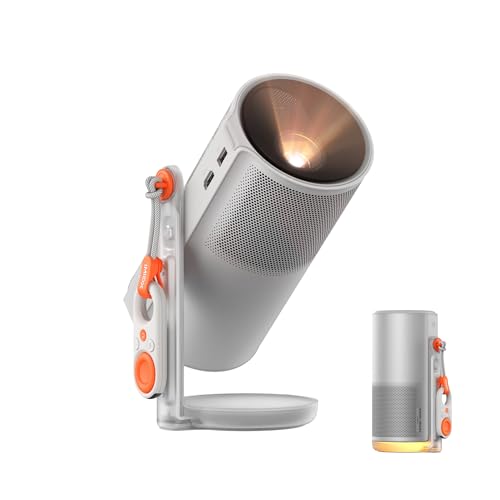
The XGIMI MoGo 4, released in 2025, represents the latest evolution in portable projection technology. XGIMI has been steadily building its reputation since entering the market, and the MoGo 4 showcases their matured approach to design and functionality. At roughly the size of a large coffee thermos, it's won design awards for good reason - this thing looks more like a premium speaker than a traditional projector.
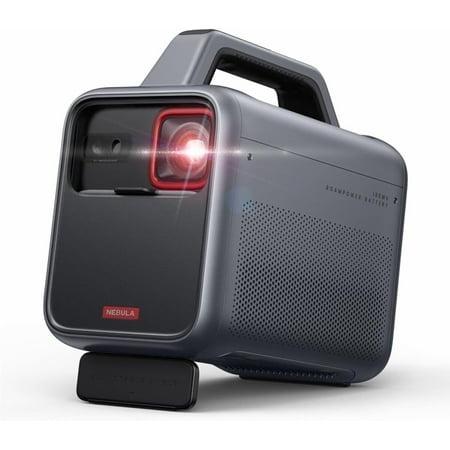
The Anker Nebula Mars 3, from the company better known for charging cables and power banks, takes a completely different approach. Anker entered the projector space more recently but brought their expertise in battery technology and durability. The Mars 3 looks and feels like it's built for adventure, with a more utilitarian design that prioritizes function over form.
Let's start with what matters most - how these projectors actually look when you're watching them. This is where the differences between the XGIMI MoGo 4 and Anker Mars 3 become immediately apparent.
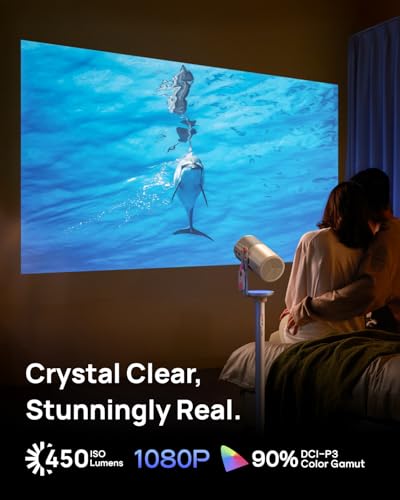
The MoGo 4 produces 450 ISO lumens of brightness. Now, lumens measure the total amount of light a projector outputs - think of it like how bright a flashlight is. ISO lumens specifically means the measurement follows standardized testing conditions, making it more reliable than some manufacturer claims. For comparison, a typical movie theater projector might output 10,000+ lumens, but those are feeding massive screens in completely dark rooms.
Where the MoGo 4 really shines is color accuracy. It covers 90% of the DCI-P3 color gamut - that's the color standard used for digital cinema. In practical terms, this means reds look properly red, blues don't appear purple, and skin tones look natural rather than orange or green. There's also a triple-laser variant that bumps brightness to 550 lumens and expands color coverage to 110% of the even wider BT.2020 standard, essentially future-proofing the projector for tomorrow's content.
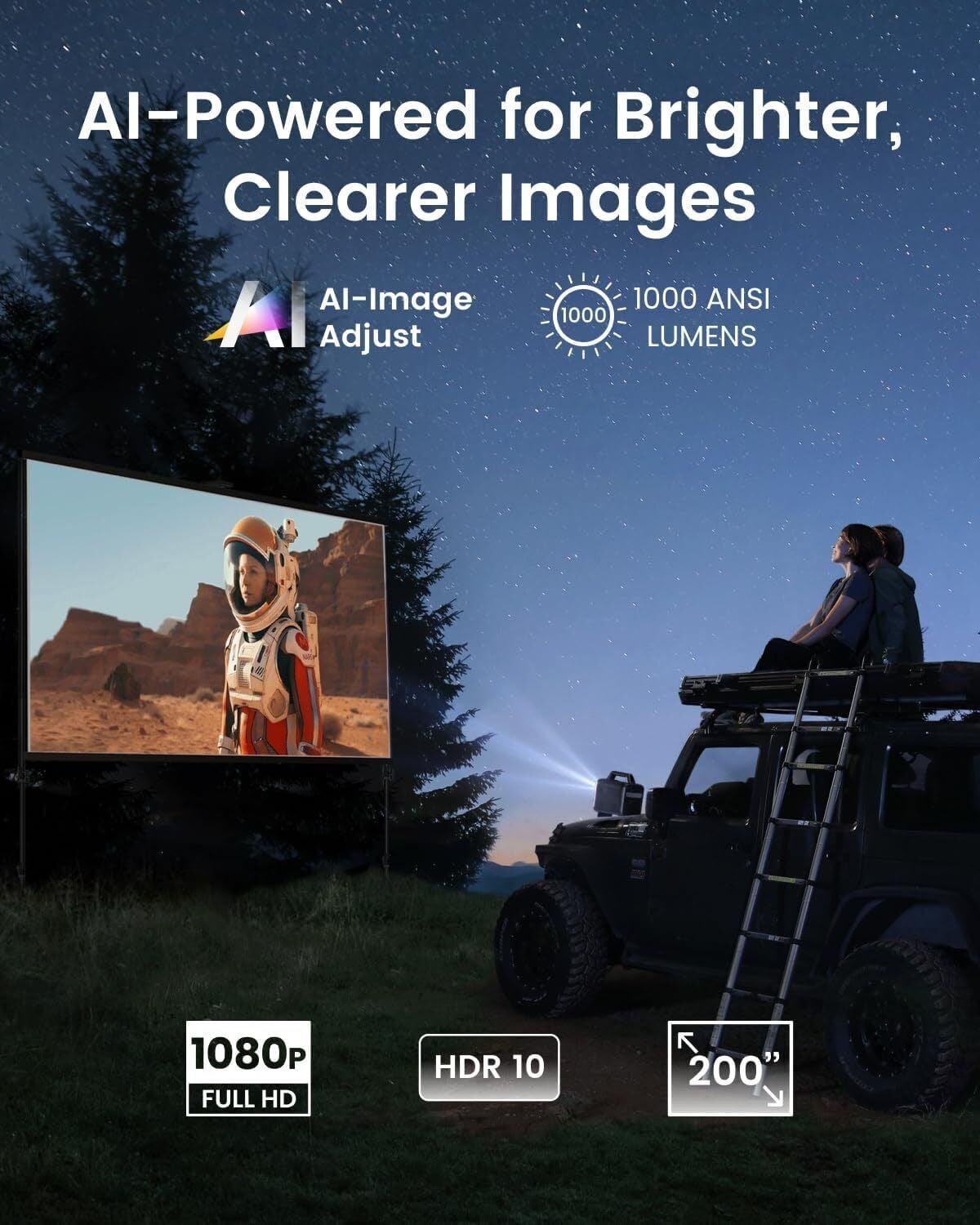
The Anker Mars 3, meanwhile, blasts out 1000 ANSI lumens. ANSI lumens use a slightly different measurement standard but are generally comparable to ISO lumens. This brightness advantage is significant - we're talking more than double the light output. In practical terms, this means the Mars 3 can produce watchable images in brighter environments where the MoGo 4 would struggle.
Both projectors deliver native 1080p resolution, which means each frame contains the full 1,920 x 1,080 pixels without upscaling tricks. This is important because many cheaper projectors claim 1080p support but actually use lower-resolution chips and scale the image up, resulting in less sharp pictures.
For home theater use, the image quality story gets nuanced. In a properly darkened room - think basement theater or bedroom with blackout curtains - the XGIMI MoGo 4 often produces more pleasing images despite lower brightness. Colors appear more vibrant and accurate, which becomes especially noticeable during nature documentaries or animated films. The triple-laser version takes this further with deeper blacks and more dynamic range.
However, if your "home theater" is actually a living room with some ambient light, or if you plan any daytime viewing, the Mars 3's brightness advantage becomes crucial. I've found that projectors below 800 lumens start looking washed out with even moderate ambient lighting, while the Mars 3 maintains punch and contrast.
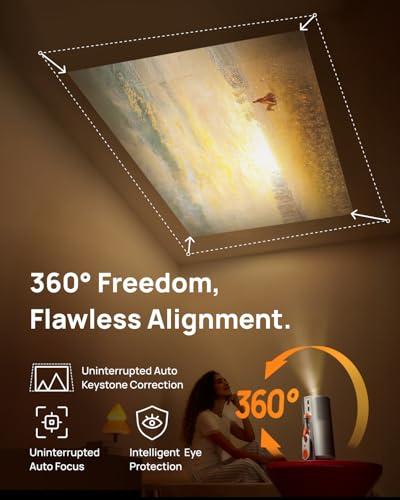
Both projectors handle setup remarkably well. The MoGo 4 features ISA (Intelligent Screen Alignment) technology that automatically detects the projection surface and adjusts the image accordingly. Point it at a wall, ceiling, or even a slightly angled surface, and it figures out the optimal image shape and position within seconds. The Mars 3 counters with Intelligent Environment Adaptation 3.0, which includes object avoidance - if you accidentally point it at furniture or a plant, it'll automatically adjust the image to avoid obstacles.
Here's where many people underestimate portable projectors - the audio quality can make or break the experience. Both devices pack serious audio hardware, but they're tuned for different scenarios.
The XGIMI MoGo 4 features dual 6-watt Harman Kardon speakers. If you're not familiar with Harman Kardon, they're a premium audio brand known for clear, balanced sound. These speakers are specifically tuned for near-field listening - meaning when you're sitting relatively close to the projector. In a typical living room or bedroom setup, they produce surprisingly full sound with clear dialogue and decent bass response.
What's clever about the MoGo 4's audio system is its versatility. When you're not projecting, it functions as a high-quality Bluetooth speaker. I've actually used mine for background music during dinner parties, and guests regularly ask what speaker I'm using. The sound signature leans toward clarity rather than booming bass, making it excellent for dialogue-heavy content like dramas or documentaries.
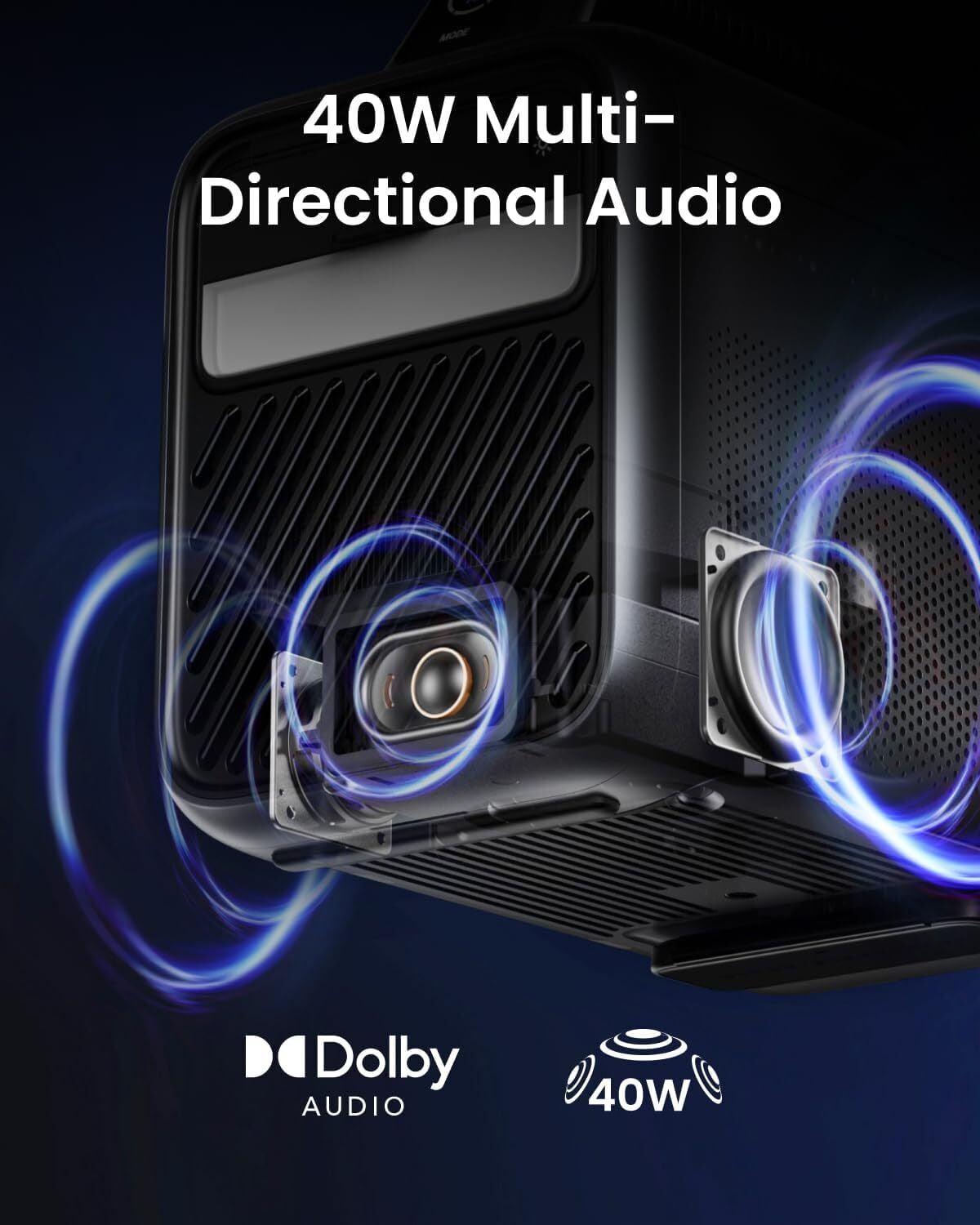
The Anker Mars 3 takes a completely different approach with its 40-watt, 3-way speaker system supporting Dolby Audio. This is significantly more powerful - we're talking about six times the wattage. The 3-way design means separate drivers handle different frequency ranges (bass, midrange, treble), typically resulting in clearer separation and fuller sound.
This power advantage becomes crucial outdoors. I've used both projectors for backyard movie nights, and while the MoGo 4 requires everyone to sit relatively close together, the Mars 3 can fill a large outdoor space with sound. The difference is dramatic - the Mars 3 can overcome ambient noise like traffic or neighbors, while the MoGo 4 gets lost.
For home theater applications, the choice depends on your room and preferences. In a dedicated theater room where viewers sit in a defined seating area, the MoGo 4's refined audio often sounds more sophisticated. But in a family room where people might be scattered around or talking during movies, the Mars 3's power advantage helps maintain dialogue clarity.
Battery performance separates these projectors significantly, and the differences go beyond just runtime numbers.
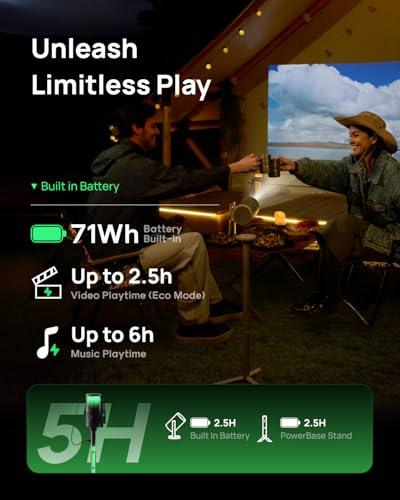
The XGIMI MoGo 4 provides about 2.5 hours of video playback, which initially seems limiting. However, XGIMI offers a PowerBase Stand accessory that extends this to 5 hours while also providing better viewing angles. More impressively, the MoGo 4 can run for up to 6 hours as a Bluetooth speaker with the projector light turned off, making it genuinely useful for extended outdoor gatherings.
At 2.9 pounds, the MoGo 4 truly feels portable. I've carried it in a laptop bag without thinking twice, and the included 360-degree adjustable stand means setup is effortless. Point it at any surface - wall, ceiling, even the inside of a tent - and you're watching movies within seconds.
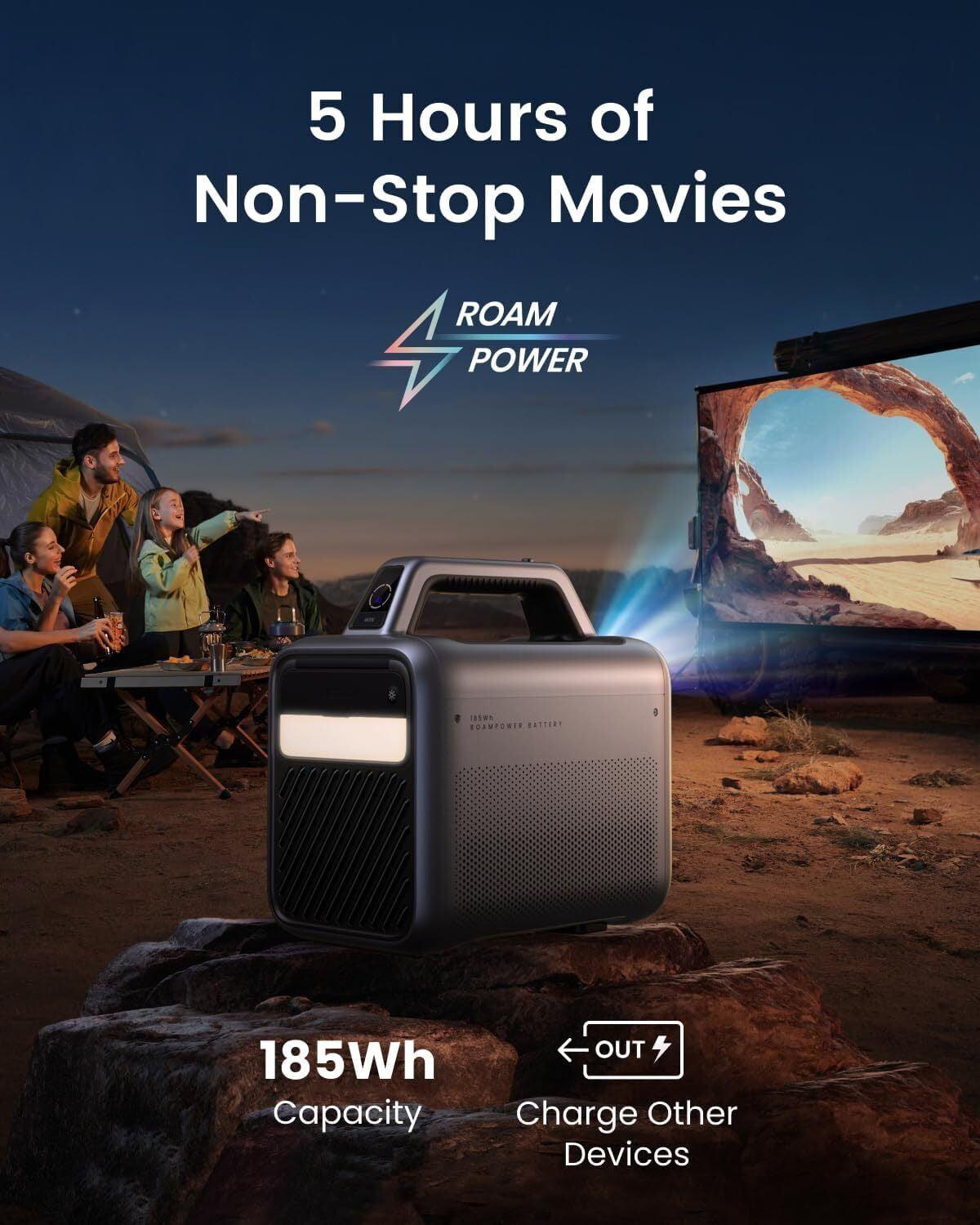
The Anker Mars 3 offers longer runtime - up to 5 hours in Eco mode and 2 hours in standard mode - but weighs nearly 10 pounds. This isn't "throw it in a backpack" portable; it's more "dedicated camping gear" portable. The extra weight comes from the larger battery needed to power those 40-watt speakers and brighter projection system.
Interestingly, the Mars 3 can function as a power bank, charging other devices while projecting. For camping trips or emergency situations, this dual functionality adds real value.
This is where the projectors' design philosophies become crystal clear.
The XGIMI MoGo 4 feels premium but delicate. The lens has scratch-resistant coating, and the overall build quality screams attention to detail. However, it's clearly designed for indoor use or very controlled outdoor environments. Taking this to a dusty campsite or beach would make me nervous.
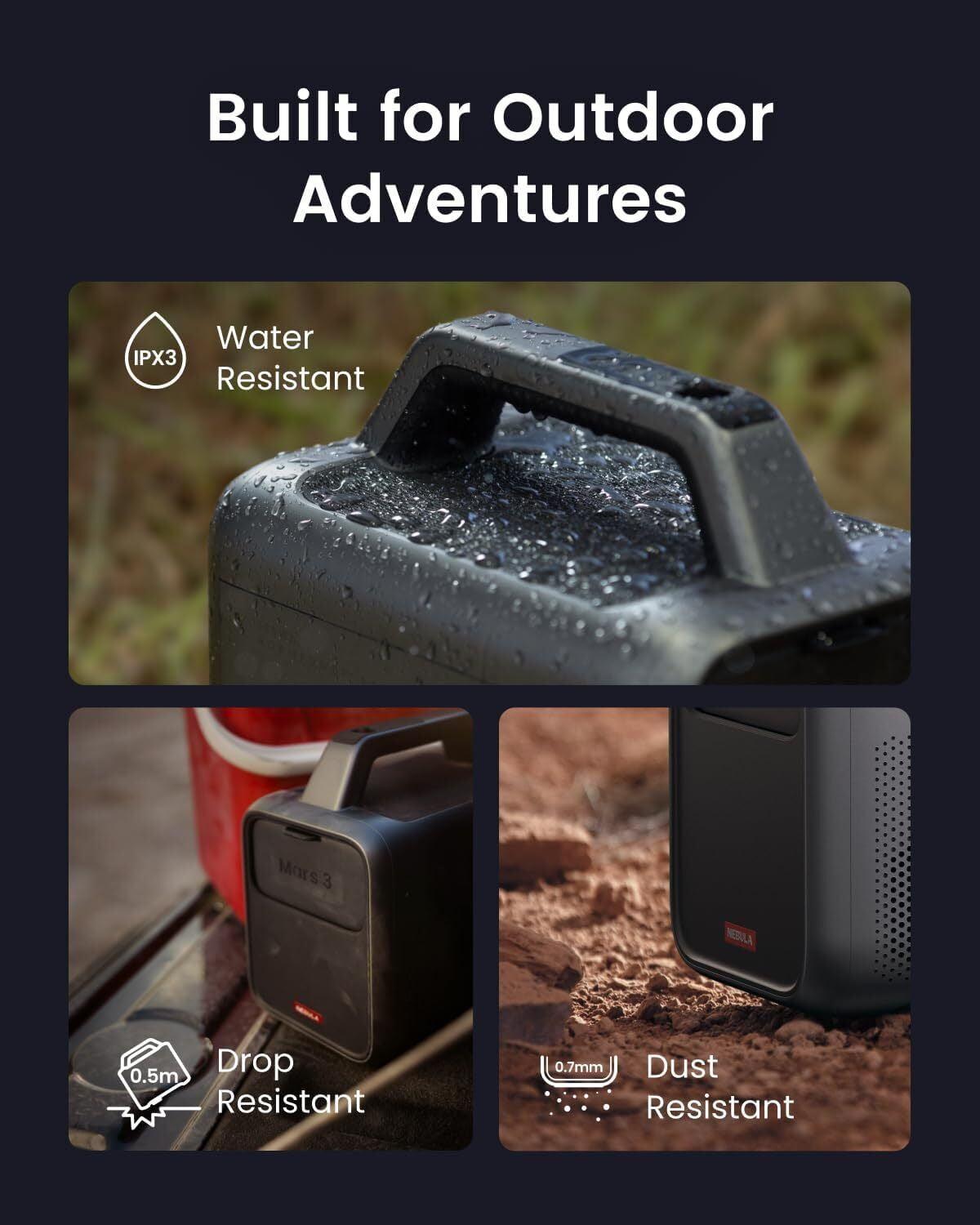
The Anker Mars 3 embraces its rugged identity with IPX3 water resistance, 0.5-meter drop resistance, and dust protection rated to 0.7mm particles. IPX3 means it can handle light rain or splashing but isn't fully waterproof. The drop resistance suggests it can survive typical camping mishaps, while the dust protection handles everything from desert sand to construction sites.
For home theater use, the MoGo 4's premium build feels appropriate - it looks at home next to other high-end electronics. The Mars 3 looks more utilitarian but built to last, which some users prefer.
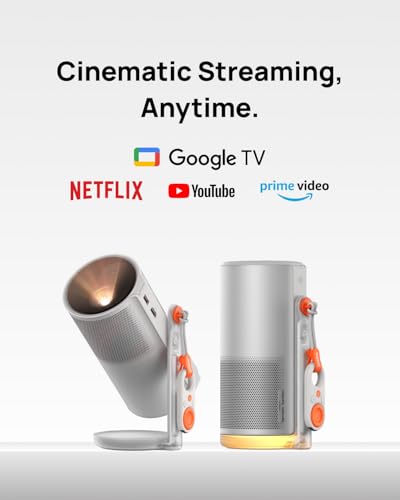
Both projectors run Google TV, but their implementations differ subtly. The XGIMI MoGo 4 includes fully licensed Netflix support at maximum resolution - this might sound basic, but many portable projectors struggle with Netflix compatibility due to content protection requirements.
The MoGo 4's ISA technology extends beyond just image correction. It can detect when you've moved the projector and automatically readjust everything without user intervention. Combined with magnetic creative filters that can transform the projection into ambient lighting, it feels more like a lifestyle product than just a projector.
The Mars 3 focuses on practical smart features. Its object avoidance system and environmental adaptation feel more focused on solving real-world projection challenges rather than adding lifestyle features.
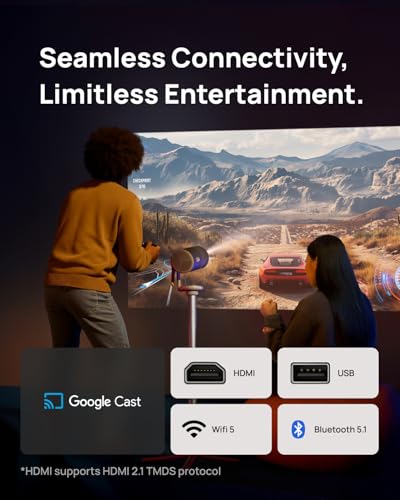
Both support standard connectivity - HDMI, USB, Wi-Fi, and Bluetooth. Gaming performance is adequate on both, with input lag around 50-60ms, which works fine for casual gaming but isn't competitive-level responsive.
At the time of writing, these projectors occupy different price brackets, with the XGIMI MoGo 4 positioned as the more affordable option and the Anker Mars 3 commanding a significant premium.
The MoGo 4 offers exceptional value for users who prioritize image quality, portability, and design. For typical home use - bedroom movie nights, small gatherings, travel entertainment - it delivers premium features at a competitive price point. The availability of the triple-laser variant provides an upgrade path for users wanting even better image quality.
The Mars 3 asks buyers to pay significantly more for specific capabilities: extreme brightness, powerful audio, and outdoor durability. For users who need these features, the premium feels justified. For everyone else, it's harder to recommend unless budget isn't a primary concern.
Choose the XGIMI MoGo 4 if you want a sophisticated entertainment device that happens to be portable. It's perfect for apartment dwellers, frequent travelers, or anyone who values design and image quality over raw specs. The award-winning design means it looks appropriate in upscale environments, while the ISA technology makes it foolproof to use.
This projector excels in controlled lighting environments - bedrooms, basements, hotel rooms, or outdoor spaces after dark. If you're building a flexible home theater setup or want something that pulls double duty as a Bluetooth speaker, the MoGo 4 makes tremendous sense.
Choose the Anker Mars 3 if you need a projector that can handle challenging environments and provide theater-like audio outdoors. It's ideal for camping enthusiasts, backyard entertainers, or anyone who frequently uses projectors in bright or unpredictable conditions.
The Mars 3 works best when its specialized features matter - outdoor movie nights, community events, emergency entertainment during power outages, or any situation where ambient light can't be controlled.
Both projectors succeed at their intended purposes, but they're solving different problems. The XGIMI MoGo 4 represents the evolution of portable projectors into lifestyle products - elegant, capable, and designed for sophisticated users who value experience over specifications. The Anker Mars 3 stays focused on core functionality, delivering exceptional brightness and audio power for users who need projectors that work anywhere.
For most people, the MoGo 4 offers the better combination of features, performance, and value. Its image quality advantages in typical viewing environments, combined with superior portability and thoughtful design, make it the more versatile choice. However, if you specifically need outdoor capability or have challenging lighting conditions, the Mars 3's specialized features justify its premium pricing.
The portable projector market has matured to the point where both options deliver genuinely impressive experiences. The question isn't whether these projectors are good - they're both excellent. The question is which one matches your specific needs and viewing habits. Take time to honestly assess where and how you'll use a portable projector, and the right choice becomes clear.
| XGIMI MoGo 4 Portable Projector 2025 | Anker Nebula Mars 3 Outdoor Portable Projector |
|---|---|
| Brightness - Critical for viewing in ambient light conditions | |
| 450 ISO lumens (best in dark rooms, struggles with ambient light) | 1000 ANSI lumens (handles moderate ambient light well) |
| Resolution - Determines image sharpness and detail | |
| 1080p native (1920x1080, true Full HD without upscaling) | 1080p native (1920x1080, true Full HD without upscaling) |
| Color Performance - Affects how vibrant and accurate colors appear | |
| 90% DCI-P3 color gamut (cinema-accurate colors, premium image quality) | Standard color gamut (good but less vibrant than MoGo 4) |
| Audio Power - Determines volume and sound quality | |
| Dual 6W Harman Kardon speakers (premium quality, ideal for close listening) | 40W 3-way speaker system with Dolby Audio (much louder, better for outdoors) |
| Battery Life - How long you can watch without plugging in | |
| 2.5 hours video (extendable to 5 hours with PowerBase Stand) | Up to 5 hours in Eco mode, 2 hours in Standard mode |
| Weight - Affects true portability and ease of transport | |
| 2.9 lbs (genuinely portable, fits in laptop bags) | 9.9 lbs (portable but requires dedicated carrying) |
| Durability - How well it handles outdoor conditions | |
| Indoor-focused design with scratch-resistant lens | IPX3 water resistance, 0.5m drop resistance, dust protection |
| Smart Platform - Streaming capabilities and app support | |
| Google TV with licensed Netflix support (full resolution streaming) | Android TV 11.0 with Chromecast built-in |
| Setup Technology - How quickly and easily you can get watching | |
| ISA (Intelligent Screen Alignment) with 360° adjustable stand | Intelligent Environment Adaptation 3.0 with object avoidance |
| Best Use Cases - Where each projector excels | |
| Bedroom/living room viewing, travel, premium indoor entertainment | Outdoor movie nights, camping, bright room viewing, rugged use |
The Anker Nebula Mars 3 is significantly brighter at 1000 ANSI lumens compared to the XGIMI MoGo 4's 450 ISO lumens. This means the Mars 3 can handle rooms with ambient light much better, while the MoGo 4 performs best in darkened environments.
The Anker Nebula Mars 3 has more powerful 40W speakers with Dolby Audio, making it much louder and better for outdoor use. However, the XGIMI MoGo 4 features premium Harman Kardon speakers that offer superior audio quality for indoor viewing, with clearer dialogue and more refined sound.
The Mars 3 offers longer battery life with up to 5 hours in Eco mode, while the XGIMI MoGo 4 provides 2.5 hours of video playback. However, the MoGo 4 can be extended to 5 hours with the optional PowerBase Stand accessory.
The XGIMI MoGo 4 is much more portable at just 2.9 pounds and coffee thermos size, easily fitting in laptop bags. The Anker Mars 3 weighs 9.9 pounds and requires more dedicated carrying, making the MoGo 4 better for frequent travelers.
The Anker Nebula Mars 3 is specifically designed for outdoor use with IPX3 water resistance, dust protection, and much brighter output. While the XGIMI MoGo 4 can work outdoors in dark conditions, it lacks weather protection and sufficient brightness for challenging outdoor environments.
For dedicated home theater rooms with controlled lighting, the XGIMI MoGo 4 often produces superior image quality with 90% DCI-P3 color coverage for more accurate, vibrant colors. The Mars 3 compensates with higher brightness but doesn't match the MoGo 4's color accuracy in dark rooms.
Yes, both projectors run smart TV platforms with streaming support. The XGIMI MoGo 4 runs Google TV with fully licensed Netflix at maximum resolution, while the Anker Mars 3 uses Android TV 11.0 with Chromecast built-in and broad app compatibility.
Both projectors offer similar gaming performance with input lag around 50-60ms, suitable for casual gaming. Neither is optimized for competitive gaming, but the XGIMI MoGo 4 includes a dedicated game mode, while the Mars 3 provides brighter images that may help with visibility in gaming scenarios.
The XGIMI MoGo 4 features advanced ISA (Intelligent Screen Alignment) technology with a 360° adjustable stand for effortless setup on any surface. The Anker Mars 3 offers Intelligent Environment Adaptation 3.0 with object avoidance capabilities, both providing quick automatic focus and keystone correction.
The XGIMI MoGo 4 typically offers better overall value with premium features, superior portability, and excellent image quality at a more accessible price point. The Mars 3 commands a higher price but justifies it for users specifically needing outdoor durability and maximum brightness.
Yes, both can function as Bluetooth speakers when not projecting. The XGIMI MoGo 4 excels in this role with its Harman Kardon audio tuning, providing up to 6 hours of music playback. The Mars 3 offers much louder output but is less refined for music listening compared to the MoGo 4.
Choose the XGIMI MoGo 4 if you prioritize portability, image quality, and indoor entertainment with occasional outdoor use in dark conditions. Select the Anker Nebula Mars 3 if you need maximum brightness for challenging lighting conditions, powerful outdoor audio, and weather-resistant durability for camping or backyard use.
We've done our best to create useful and informative comparisons to help you decide what product to buy. Our research uses advanced automated methods to create this comparison and perfection is not possible - please contact us for corrections or questions. These are the sites we've researched in the creation of this article: projectorcentral.com - whathifi.com - us.xgimi.com - whathifi.com - global.xgimi.com - youtube.com - us.xgimi.com - youtube.com - youtube.com - thesmarthomehookup.com - global.xgimi.com - hometechnologyreview.com - projectorcentral.com - youtube.com - us.xgimi.com - techradar.com - seenebula.com - thesmarthomehookup.com - yuenx.com - projectorcentral.com - seenebula.com - youtube.com - youtube.com - youtube.com - cnet.com - projectorreviews.com - youtube.com - youtube.com - projectorcentral.com - seenebula.com - youtube.com - yuenx.com

Privacy Policy
Terms and Conditions - Affiliate Policy
Home Security
© Copyright 2008-2026.
11816 Inwood Rd #1211, Dallas, TX 75244