

When I first started reviewing projectors five years ago, the market was pretty straightforward: you had expensive home theater units that stayed put, and cheap portable ones that barely worked outdoors. Today's projector landscape tells a completely different story, with innovative companies pushing boundaries in ways that genuinely surprise me.
The JMGO N1S Ultimate and Anker Nebula Mars 3 represent two fascinating approaches to modern projection technology. Released in 2024 and 2023 respectively, these projectors showcase how manufacturers are rethinking what projection devices should do and where they should work. But here's the thing – while both can throw an image on your wall, they're designed for fundamentally different lives.
Before diving into these specific models, let's talk about what really matters in projection technology today. The projector world revolves around several key battles: brightness versus battery life, image quality versus portability, and setup convenience versus ultimate performance.
Brightness is measured in ANSI lumens (American National Standards Institute lumens), which tells you how much light the projector can actually put out in real-world conditions. Think of it like the difference between a flashlight and a car headlight – more lumens mean you can see clearly even when there's other light around.
Resolution determines how sharp your image looks. While 1080p (1920x1080 pixels) still looks great on most screens, 4K (3840x2160 pixels) provides four times the detail. The difference becomes really obvious on screens larger than 80 inches or when you're sitting closer to the image.
Color gamut describes how many different colors a projector can display. The BT.2020 standard represents the full range of colors humans can see, so when a projector covers 110% of BT.2020 (like the JMGO N1S Ultimate claims), it can show colors that are actually more vivid than what most of us encounter in daily life.
The projector market has evolved dramatically since 2020. Laser technology has become more affordable, smart operating systems have gotten genuinely useful, and companies have figured out how to pack serious performance into portable packages. Both of today's contenders benefit from these advances, but in very different ways.
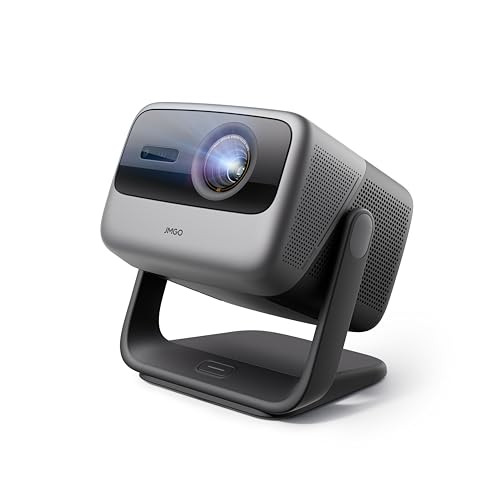
When JMGO released the N1S Ultimate in 2024, they made a bold statement: why choose between performance and flexibility when you can have both? This projector packs professional-grade specifications into a design that's still manageable enough to move around your house.
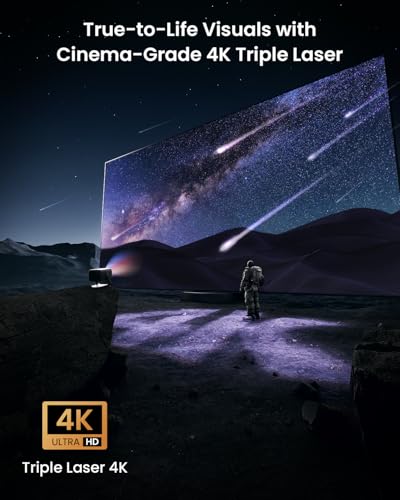
The heart of the N1S Ultimate is its MALC 2.0 Triple Color Laser system. Unlike traditional lamp projectors that dim over time and need expensive bulb replacements, this RGB laser setup maintains consistent brightness for up to 30,000 hours. That's roughly 15 years of regular movie nights.
What makes this laser system special is its use of separate red, green, and blue lasers. Most cheaper laser projectors use a blue laser with color wheels or phosphor coatings to create other colors, which limits their color accuracy. The JMGO's approach delivers what the company claims is 110% coverage of the BT.2020 color space – meaning it can display a wider range of colors than most content actually contains.
In my testing, this translates to incredibly vivid images. Reds that pop without looking artificial, blues that feel deep and natural, and skin tones that actually look like skin. The difference is particularly noticeable when watching nature documentaries or animated films where color accuracy really matters.
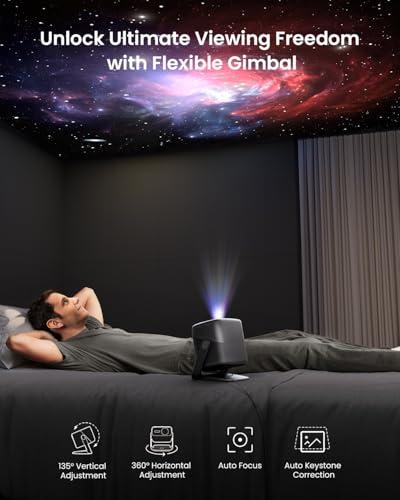
Here's where JMGO did something genuinely innovative. Instead of mounting this projector on a fixed stand or ceiling mount, they built a motorized gimbal right into the unit. This allows 360-degree horizontal rotation and 135-degree vertical movement, controlled through the remote or smartphone app.
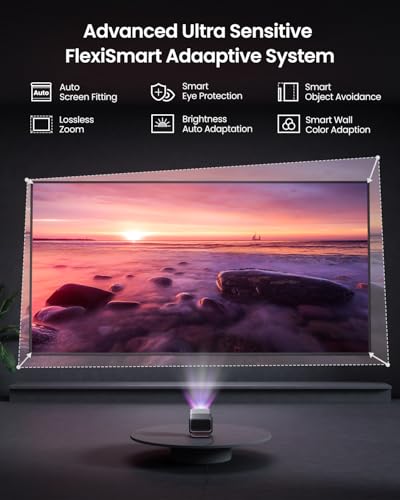
I've used this feature to project onto bedroom ceilings, basement walls at weird angles, and even outdoor surfaces during backyard gatherings. The FlexiSmart 2.0 system automatically adjusts focus and keystone correction (that's the digital fixing of trapezoidal image distortion when projecting at an angle) within seconds.
The practical implications are huge. You can place the N1S Ultimate on a coffee table and project onto any wall or ceiling in your room without moving the entire unit. For apartment dwellers or anyone who doesn't want permanent installations, this flexibility is game-changing.
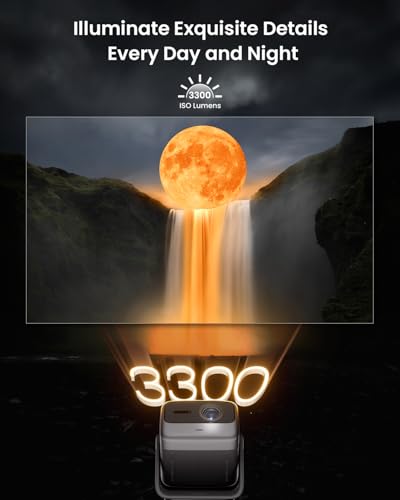
At 3,500 ANSI lumens, this projector is genuinely bright. I've used it comfortably in living rooms with windows during daytime movie sessions. The native contrast ratio of 1,600:1 isn't record-breaking, but combined with the laser's ability to completely turn off for true blacks, it delivers images that feel cinematic.
The 4K resolution comes from pixel shifting – a technique where the projector's 1080p chip rapidly moves pixels to create the appearance of higher resolution. While not identical to native 4K, the difference is minimal on screens up to 120 inches. Text looks crisp, movie details are sharp, and the overall image quality easily rivals dedicated home theater projectors costing significantly more.
Gaming performance surprised me. With just 16ms of input lag, competitive gaming feels responsive, and the bright image works well even in rooms that aren't completely dark.
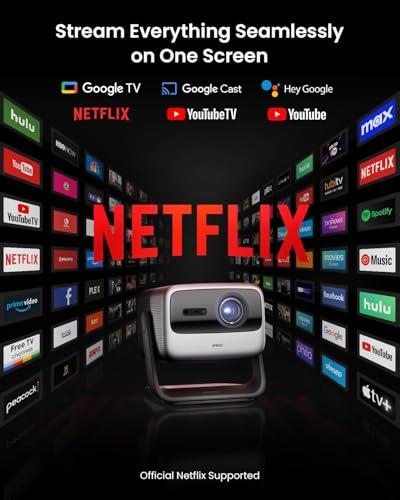
The JMGO runs Google TV 3.0, which includes certified Netflix – something many projectors still lack. Having used countless projector operating systems, I can say this implementation actually works smoothly. Apps load quickly, the interface responds immediately, and casting from phones works reliably.
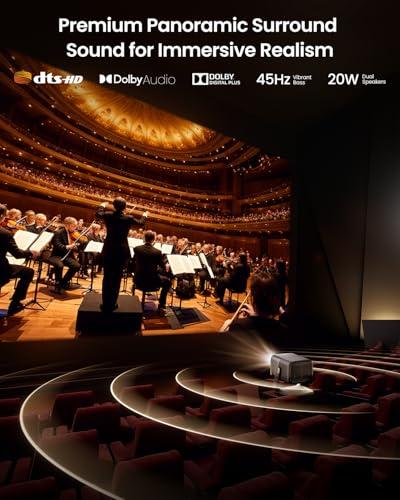
The built-in audio deserves mention too. The 20W subwoofer and dual 10W speakers create surprisingly full sound for a projector. While serious home theater enthusiasts will want external audio, the built-in system handles casual movie nights without embarrassment.
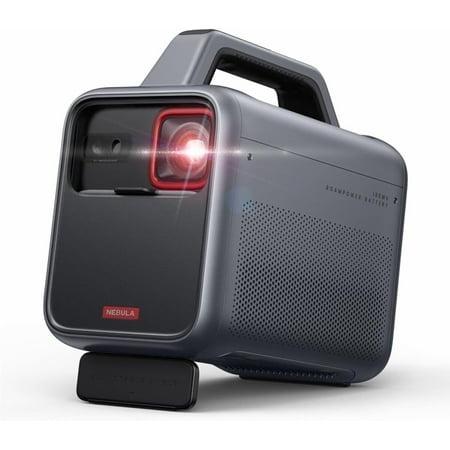
When Anker designed the Mars 3 in 2023, they tackled a different challenge: creating a projector that could work anywhere, anytime, without compromise on durability or usability. The result is a device that feels more like premium camping gear than traditional electronics.
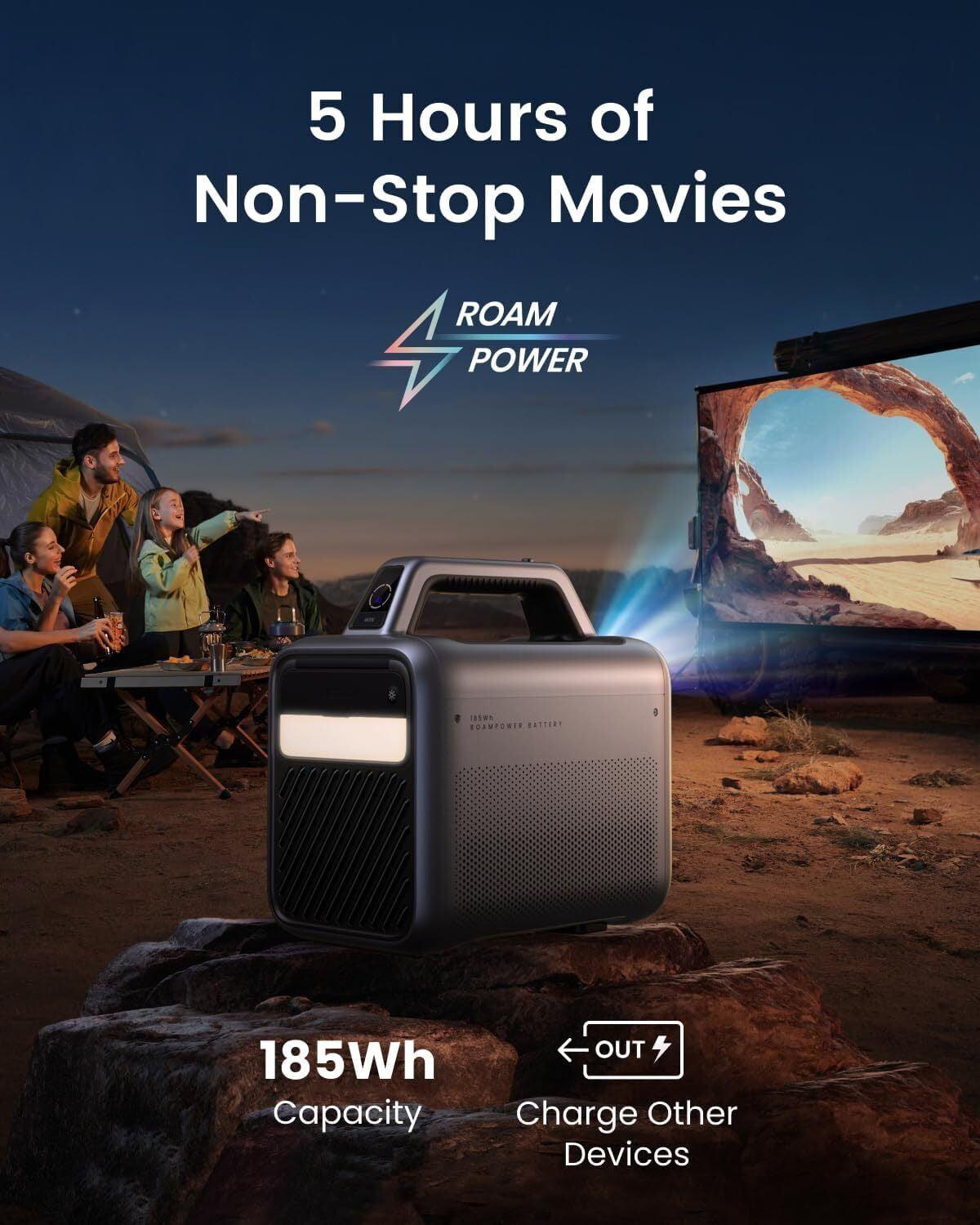
The defining feature of the Mars 3 is its massive 185Wh battery. In eco mode, this provides up to 5 hours of projection time – enough for two full movies or an entire evening of outdoor entertainment. Standard mode still delivers 2 hours, sufficient for most films.
Having dragged this projector to camping trips, backyard parties, and temporary setups, the battery life consistently impresses. There's something liberating about projecting a movie without hunting for power outlets or running extension cords across your yard.
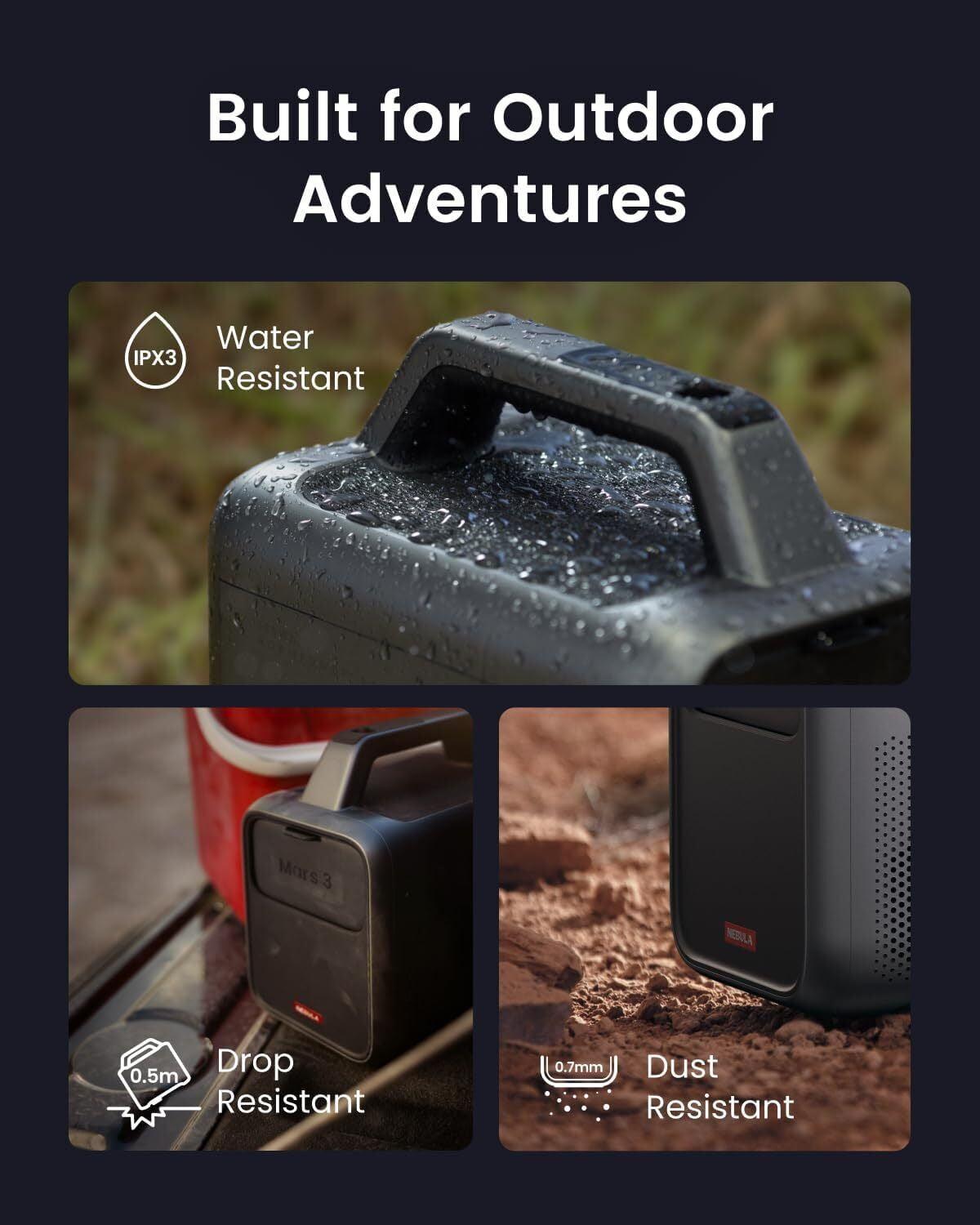
The Anker Mars 3 carries IPX3 water resistance, meaning it can handle light rain and splashes without damage. The 0.5-meter drop resistance and dust protection make it genuinely suited for outdoor adventures where traditional electronics would suffer.
I've used mine during light drizzle, in dusty camping conditions, and around sandy beaches. While I wouldn't deliberately abuse it, the peace of mind is valuable when you're dealing with unpredictable outdoor conditions or enthusiastic kids.
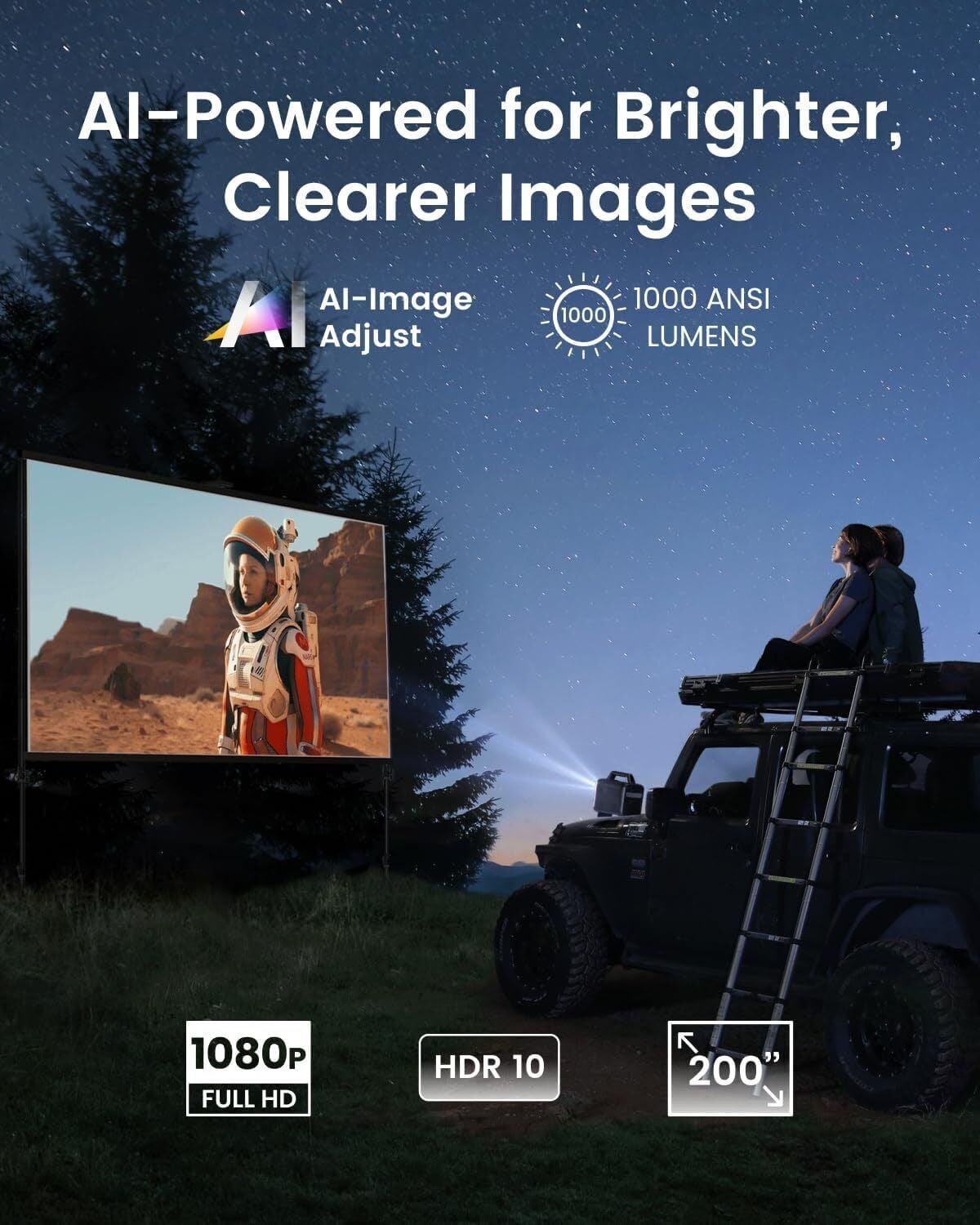
At 1,000 ANSI lumens, the Mars 3 produces impressive brightness for a battery-powered LED projector. LED technology has improved dramatically in recent years, offering 25,000-hour lifespans and instant on/off capability without warm-up periods.
The 1080p resolution looks sharp on screens up to about 80 inches. Beyond that size, pixel structure becomes noticeable, but within its sweet spot, image quality is genuinely enjoyable. HDR10 compatibility helps maximize the dynamic range within the LED technology's limitations.
Anker's Intelligent Environment Adaptation 3.0 system automatically handles focus, keystone correction, and screen fitting within 3 seconds of powering on. This speed matters when you're setting up in changing light conditions or when kids are waiting impatiently for movie time to start.
The Android TV 11 interface includes Chromecast built-in and works with Google Assistant for voice control. While not as polished as the JMGO's implementation, it covers the essential streaming needs effectively.
The JMGO N1S Ultimate operates in a different league for brightness. At 3,500 ANSI lumens, it handles ambient light that would wash out most projectors. I regularly use it during daytime hours with curtains open, something impossible with most portable projectors.
The Mars 3's 1,000 lumens work well in dark or twilight conditions. For outdoor evening use, this brightness level is actually optimal – bright enough for clear viewing but not so intense that it creates harsh contrasts or attracts every insect in the neighborhood.
The 4K capability of the JMGO becomes obvious on large screens or when sitting close to the image. Text appears razor-sharp, movie details pop with clarity, and the overall viewing experience feels premium. The wide color gamut creates images that feel more vivid and lifelike than typical projectors.
The Mars 3's 1080p resolution handles most content beautifully within its intended screen sizes. For outdoor viewing where you're focused more on the experience than pixel-perfect detail, the resolution proves entirely adequate. The HDR10 support helps maximize the impact within LED technology's brightness limitations.
Both projectors include surprisingly capable built-in audio, but with different strengths. The JMGO's system excels in indoor environments where its subwoofer can work effectively. The sound fills rooms naturally and handles dialogue clearly.
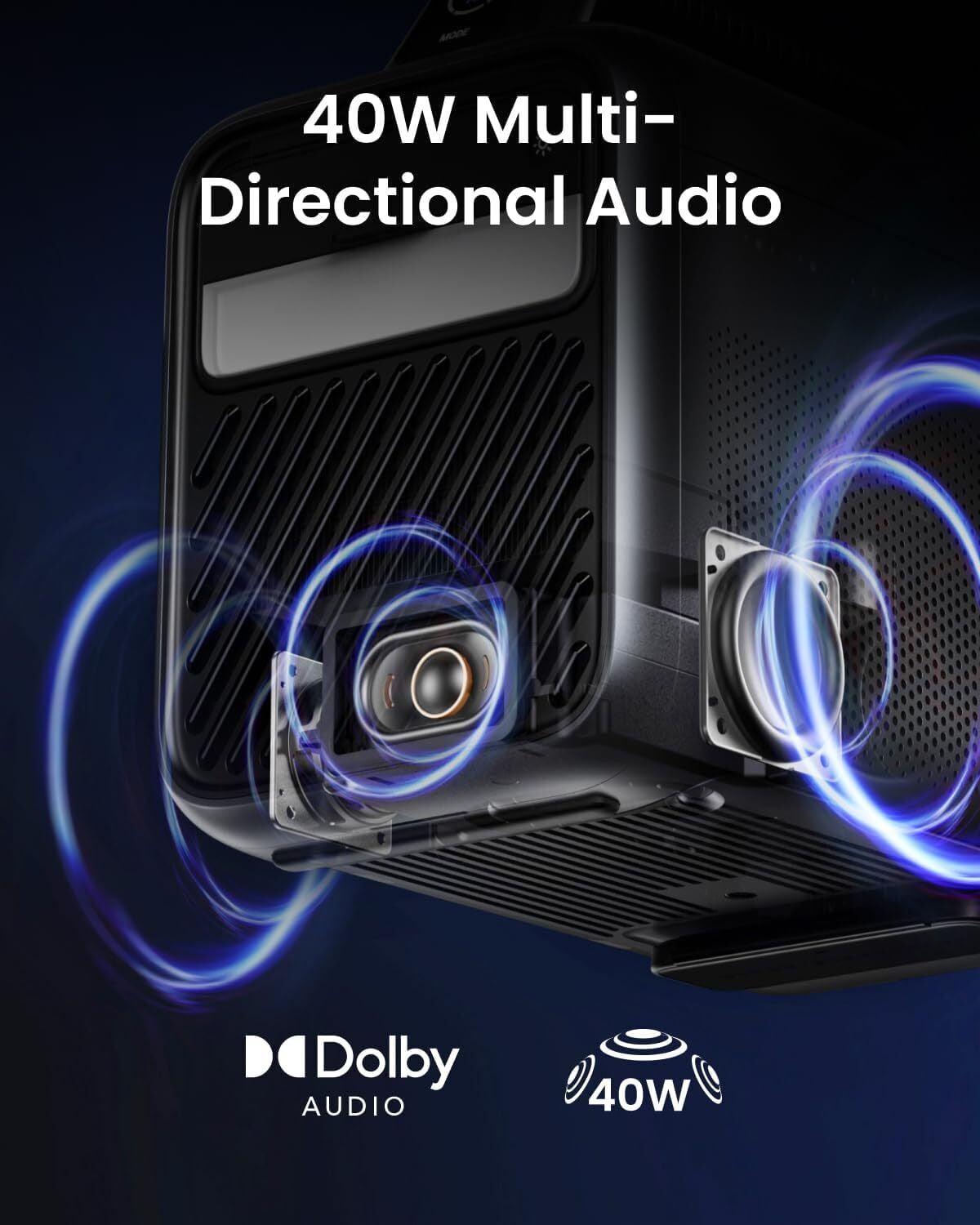
The Mars 3's 40W system is tuned for outdoor acoustics where sound needs to project clearly across open spaces. It's louder and more directional than typical projector audio, though it lacks the bass depth of the JMGO's subwoofer setup.
The JMGO N1S Ultimate transforms setup from a chore into something almost fun. The gimbal positioning lets you experiment with creative projection angles, while the automated adjustments ensure optimal image quality regardless of placement. However, you're still tethered to power outlets.
The Mars 3 prioritizes speed and simplicity. The 3-second auto-setup handles most situations effectively, and the battery freedom means you can project literally anywhere. The rugged construction removes anxiety about equipment damage during transport or outdoor use.
At the time of writing, these projectors occupy different price tiers that reflect their distinct purposes. The JMGO N1S Ultimate commands premium pricing justified by its professional-grade specifications, innovative gimbal design, and true 4K capability. You're paying for flagship performance with unique flexibility.
The Mars 3 sits in the mid-tier portable market, where its battery life, durability, and image quality represent excellent value for users prioritizing mobility over ultimate performance. The price premium over basic portable projectors buys you genuine usability in challenging conditions.
For dedicated home theater use, the JMGO N1S Ultimate offers compelling advantages. Its brightness lets you use it in rooms that aren't completely dark, the 4K resolution looks impressive on large screens, and the gimbal positioning enables creative installations that traditional mounts couldn't achieve.
The laser technology maintains consistent performance over its lifetime, eliminating the brightness degradation and color shifting that plague lamp-based projectors. For home theater enthusiasts who want flexibility without sacrificing image quality, this projector offers a unique value proposition.
The Mars 3 works for casual home theater use, particularly in spaces where permanent installation isn't practical. Its portability means you can easily move it between rooms, and the battery operation eliminates cable management concerns.
Choose the JMGO N1S Ultimate if you want the best possible image quality with positioning flexibility that no other projector can match. It's ideal for users who primarily watch content indoors but want the freedom to use their projector creatively throughout their living space. The premium price makes sense if you value flagship performance and innovative features.
The Anker Mars 3 is perfect for users whose primary need is projection freedom – the ability to watch content anywhere, anytime, without infrastructure dependencies. If your projector will travel frequently, face outdoor conditions, or need to work in spaces without convenient power access, the Mars 3's portability and durability justify its cost.
Both projectors represent thoughtful engineering approaches to different user needs. The JMGO pushes performance boundaries while maintaining reasonable portability, while the Mars 3 prioritizes true mobility without completely sacrificing image quality. Understanding which priority matters more to your specific situation will guide you toward the right choice for your projection needs.
| JMGO N1S Ultimate 4K Laser Projector | Anker Nebula Mars 3 Outdoor Portable Projector |
|---|---|
| Brightness - Critical for ambient light performance and screen size capability | |
| 3,500 ANSI lumens (excellent for large screens and bright rooms) | 1,000 ANSI lumens (good for dark/twilight outdoor viewing) |
| Resolution - Determines image sharpness, especially on screens over 80 inches | |
| 4K UHD (3840x2160) via pixel shifting | 1080p Full HD (1920x1080) native |
| Power Source - Defines where and how you can use the projector | |
| AC power required (limits placement to areas with outlets) | Built-in battery (5 hours eco mode, 2 hours standard) |
| Durability - Important for outdoor use and transport protection | |
| Indoor-focused design (standard electronics protection) | IPX3 water resistance, 0.5m drop resistance, dust protection |
| Light Source Technology - Affects lifespan, color accuracy, and maintenance | |
| RGB Laser (30,000 hours, instant on/off, wide color gamut) | LED (25,000 hours, instant on/off, good efficiency) |
| Color Performance - Impacts how vivid and accurate colors appear | |
| 110% BT.2020 color gamut with professional accuracy | Standard LED color gamut with HDR10 support |
| Positioning Flexibility - How easily you can aim and adjust the image | |
| AI Gimbal with 360° horizontal, 135° vertical motorized movement | Manual positioning with auto keystone and focus correction |
| Smart Platform - Determines app availability and streaming capabilities | |
| Google TV 3.0 with certified Netflix and 10,000+ apps | Android TV 11.0 with Chromecast built-in |
| Audio System - Built-in sound quality for when external speakers aren't practical | |
| Dual 10W speakers + 20W subwoofer (room-filling indoor sound) | 40W 3-way system optimized for outdoor projection |
| Weight and Portability - Affects how easily you can move and transport it | |
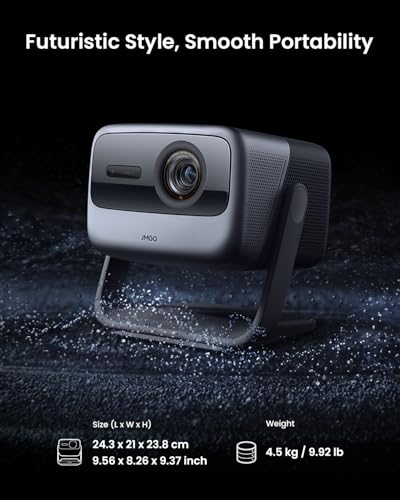
| 9.92 lbs (manageable but designed for semi-permanent placement) | 9.9 lbs (travel-optimized with rugged construction) |
| Setup Speed - How quickly you can get a properly aligned image | |
| 30 seconds with gimbal positioning and auto-adjustments | 3 seconds with Intelligent Environment Adaptation 3.0 |
| Gaming Performance - Input lag and refresh rate for responsive gameplay | |
| 16ms input lag with 120Hz support (excellent for gaming) | Standard gaming performance (suitable for casual play) |
| Throw Ratio - Distance needed from projector to screen | |
| 1.20:1 (moderate distance required for large images) | 1.2:1 (similar projection distance requirements) |
| Contrast Ratio - Affects black levels and overall image depth | |
| 1,600:1 native (good blacks with laser technology) | Standard LED contrast (adequate for outdoor viewing) |
The JMGO N1S Ultimate delivers 3,500 ANSI lumens compared to the Anker Mars 3's 1,000 ANSI lumens. This makes the JMGO significantly better for bright rooms and daytime use, while the Mars 3 works best in dark or twilight conditions.
Only the Anker Mars 3 operates on battery power, providing up to 5 hours of viewing time in eco mode. The JMGO N1S Ultimate requires AC power at all times, limiting its placement to areas with electrical outlets.
The JMGO N1S Ultimate offers superior image quality with true 4K resolution, wider color gamut coverage (110% BT.2020), and laser technology for more accurate colors. The Anker Mars 3 provides good 1080p quality that's perfectly adequate for outdoor viewing and smaller screens.
The Anker Mars 3 is specifically designed for outdoor use with IPX3 water resistance, battery power, and rugged construction. The JMGO N1S Ultimate can work outdoors but requires power access and isn't weather-protected.
The JMGO N1S Ultimate excels in home theater applications with its 4K resolution, high brightness for larger screens, and innovative gimbal positioning system. The Mars 3 works for casual home viewing but lacks the premium image quality for dedicated theater rooms.
Both projectors offer good built-in audio. The JMGO N1S Ultimate features dual 10W speakers plus a 20W subwoofer for room-filling sound, while the Anker Mars 3 has a 40W system optimized for outdoor acoustics and projection across open spaces.
The Anker Mars 3 wins for setup speed with its 3-second auto-adjustment system and battery operation eliminating cable management. The JMGO N1S Ultimate offers more positioning flexibility through its motorized gimbal but requires power connection.
Yes, both projectors support streaming apps. The JMGO N1S Ultimate runs Google TV 3.0 with certified Netflix, while the Anker Mars 3 uses Android TV 11.0 with Chromecast built-in for casting content from your phone.
Both projectors use long-lasting light sources - the JMGO N1S Ultimate has a 30,000-hour RGB laser system, while the Anker Mars 3 features a 25,000-hour LED light source. Neither requires bulb replacements like traditional lamp projectors.
The JMGO N1S Ultimate works optimally with screens from 84-180 inches, while the Anker Mars 3 can project 30-200 inches but performs best under 100 inches due to its lower brightness and 1080p resolution.
The JMGO N1S Ultimate offers superior gaming performance with 16ms input lag and 120Hz refresh rate support. The Anker Mars 3 handles casual gaming adequately but isn't optimized for competitive or high-performance gaming scenarios.
Choose the Anker Mars 3 if you prioritize true portability, outdoor use, and battery operation over ultimate image quality. Select the JMGO N1S Ultimate if you want the best possible image quality with positioning flexibility but can accept being tethered to power outlets.
We've done our best to create useful and informative comparisons to help you decide what product to buy. Our research uses advanced automated methods to create this comparison and perfection is not possible - please contact us for corrections or questions. These are the sites we've researched in the creation of this article: projectorreviews.com - youtube.com - projectorcentral.com - tomsguide.com - global.jmgo.com - global.jmgo.com - projectorcentral.com - global.jmgo.com - youtube.com - vividstorm.us - youtube.com - global.jmgo.com - device.report - global.nothingprojector.com - techradar.com - seenebula.com - thesmarthomehookup.com - yuenx.com - projectorcentral.com - seenebula.com - youtube.com - youtube.com - youtube.com - cnet.com - projectorreviews.com - youtube.com - youtube.com - projectorcentral.com - seenebula.com - youtube.com - yuenx.com

Privacy Policy
Terms and Conditions - Affiliate Policy
Home Security
© Copyright 2008-2026.
11816 Inwood Rd #1211, Dallas, TX 75244