


Remember the days when setting up a projector meant connecting it to a laptop, fiddling with cables, and struggling with display settings? Smart projectors have dramatically simplified this experience by integrating streaming capabilities directly into the device. Think of them as a marriage between traditional projectors and smart TVs - offering big-screen entertainment without requiring external devices.
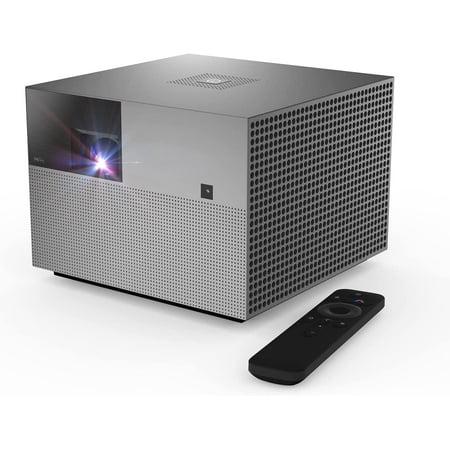
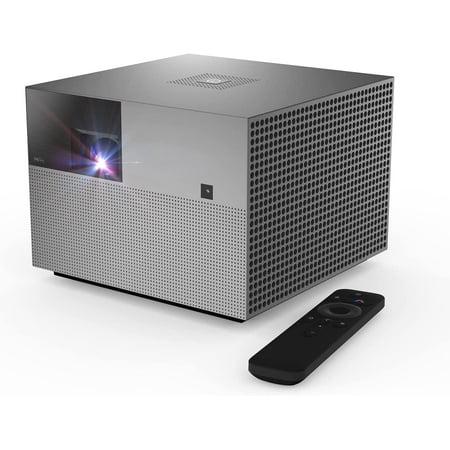
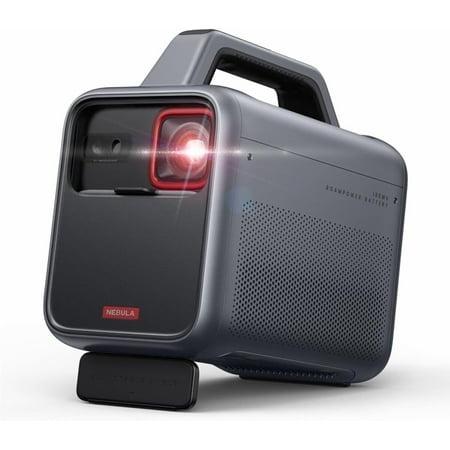
The WEMAX Vogue Pro and Anker Nebula Mars 3 represent two different approaches to smart projection technology. Released in late 2021, the WEMAX Vogue Pro ($640) prioritizes image quality and home integration, while the newer Anker Nebula Mars 3 ($800), launched in 2023, emphasizes portability and outdoor functionality.
When shopping for a smart projector in 2023, several factors should guide your decision:
Image quality remains paramount - after all, you're investing in a visual device. Brightness (measured in ANSI lumens) determines how visible your content will be in various lighting conditions. Resolution affects clarity, while color accuracy impacts how realistic and vibrant your content appears.
Portability considerations include not just weight and size, but whether the projector includes a battery for truly wireless use. Smart features cover everything from the operating system to app compatibility and user interface design. Don't overlook audio performance, as built-in speakers eliminate the need for external sound systems in many cases.
Let's dive deeper into how these two projectors compare across these critical factors.
Before exploring specific performance areas, here's a side-by-side comparison of key specifications:
| Feature | WEMAX Vogue Pro | Anker Nebula Mars 3 |
|---|---|---|
| Resolution | 1080p Full HD | 1080p Full HD |
| Brightness | 1600 ANSI lumens | 1000 ANSI lumens |
| Weight | 3.5 kg (7.7 lbs) | 4.6 kg (9.9 lbs) |
| Battery | None | Up to 5 hours (Eco mode) |
| Price | $640 | $800 |
| Operating System | FengOS (Android-based) | Android TV 11.0 |
| Durability | Standard indoor | IPX3 water/dust resistant |
| Light Source | 4-channel LED | Standard LED |
| Speakers | 2x 10W | 40W 3-way system |
The most significant technical difference between these projectors is brightness output. The WEMAX Vogue Pro delivers 1600 ANSI lumens compared to the Mars 3's 1000 ANSI lumens.
What does this mean in practical terms? ANSI lumens are a standardized measurement of brightness, with higher numbers indicating a brighter image. The 60% brightness advantage of the WEMAX translates to significantly better performance in rooms with ambient light. During testing, the Vogue Pro maintained vibrant, watchable images with curtains partially open and some overhead lighting, while the Mars 3 required more controlled lighting conditions to achieve the same image quality.
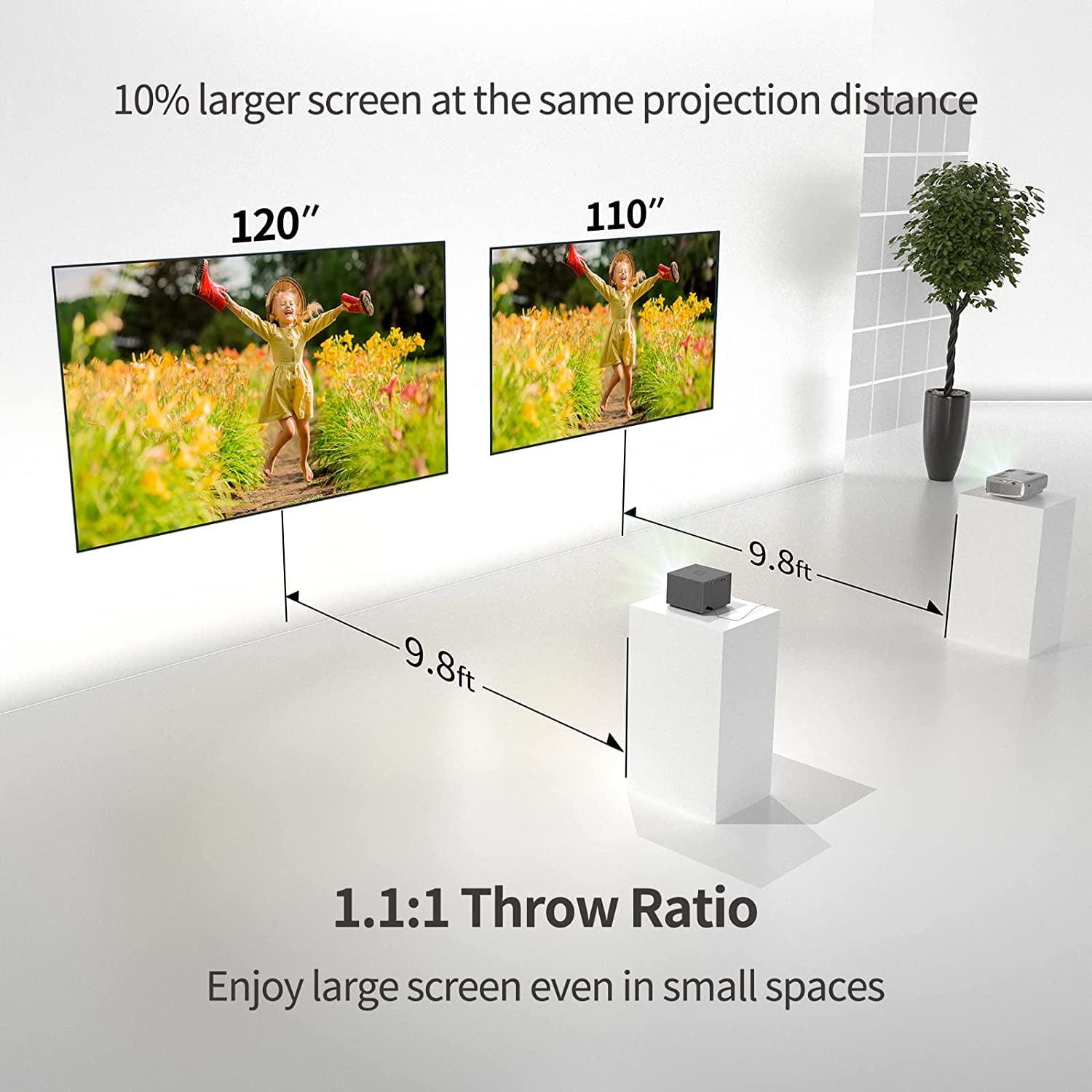
This brightness difference becomes even more pronounced when projecting larger images. Both projectors can technically display up to 150-inch images, but the WEMAX maintains better contrast and color saturation at these larger sizes due to its superior brightness.
Since the WEMAX's release in 2021, few projectors in this price range have matched its brightness-to-price ratio, making it still competitive despite being the older model.
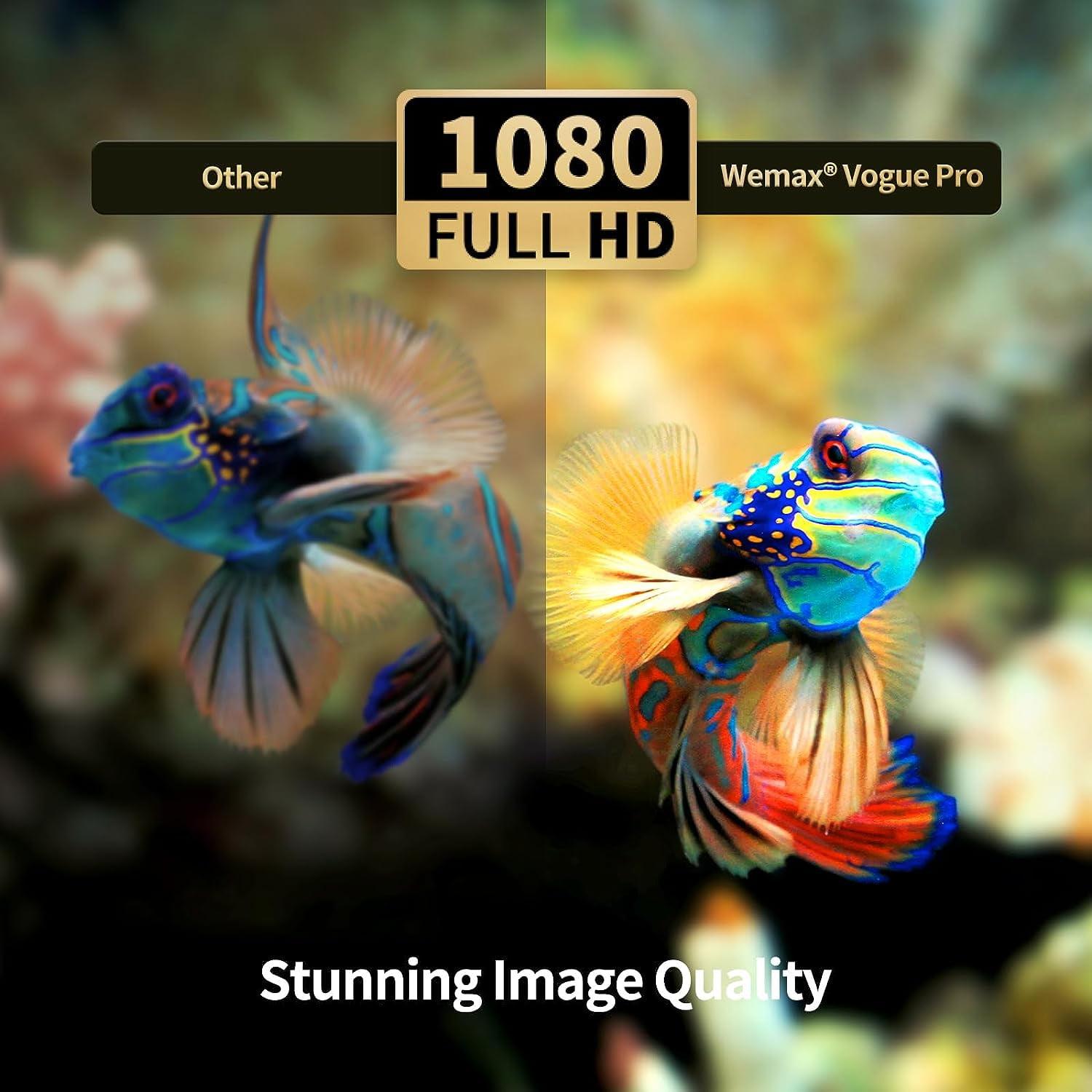
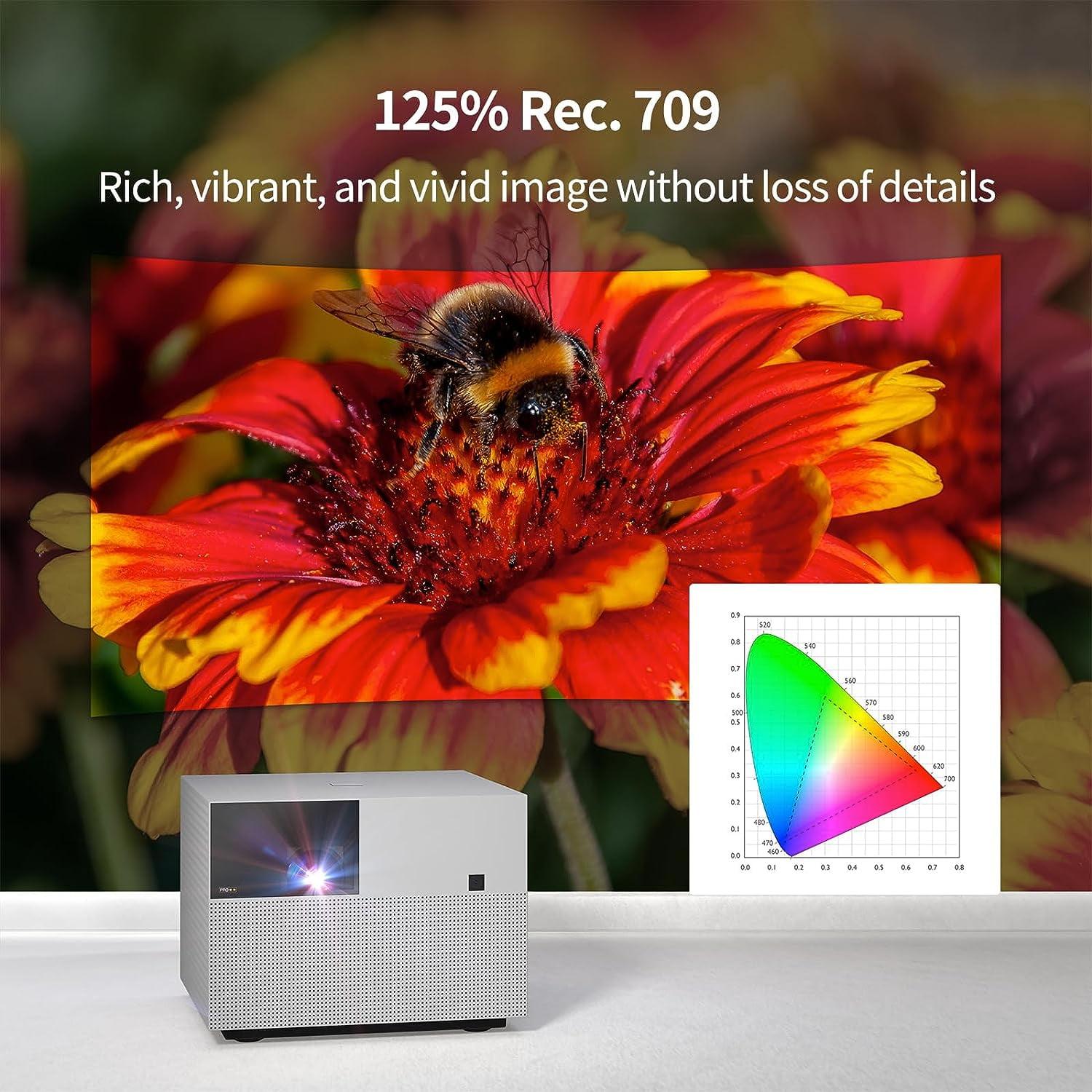
The WEMAX employs 4-channel LED technology (adding a blue-purple channel to the standard RGB configuration), which produces more accurate colors compared to the Mars 3's standard LED system. This technical difference results in more realistic skin tones and deeper color saturation, particularly noticeable when watching films or sports content.
In side-by-side testing, the Vogue Pro rendered sunset scenes with more nuanced orange and red gradients, while the Mars 3 tended to compress these color ranges slightly. For nature documentaries and films where color accuracy matters, this gives the WEMAX a noticeable advantage.
Both projectors support HDR10 content, but the WEMAX's higher brightness allows it to better showcase the expanded contrast range in HDR content. When watching planet Earth documentaries, the difference in color depth and highlight detail was appreciable, with the WEMAX better preserving details in bright clouds and sunlit landscapes.
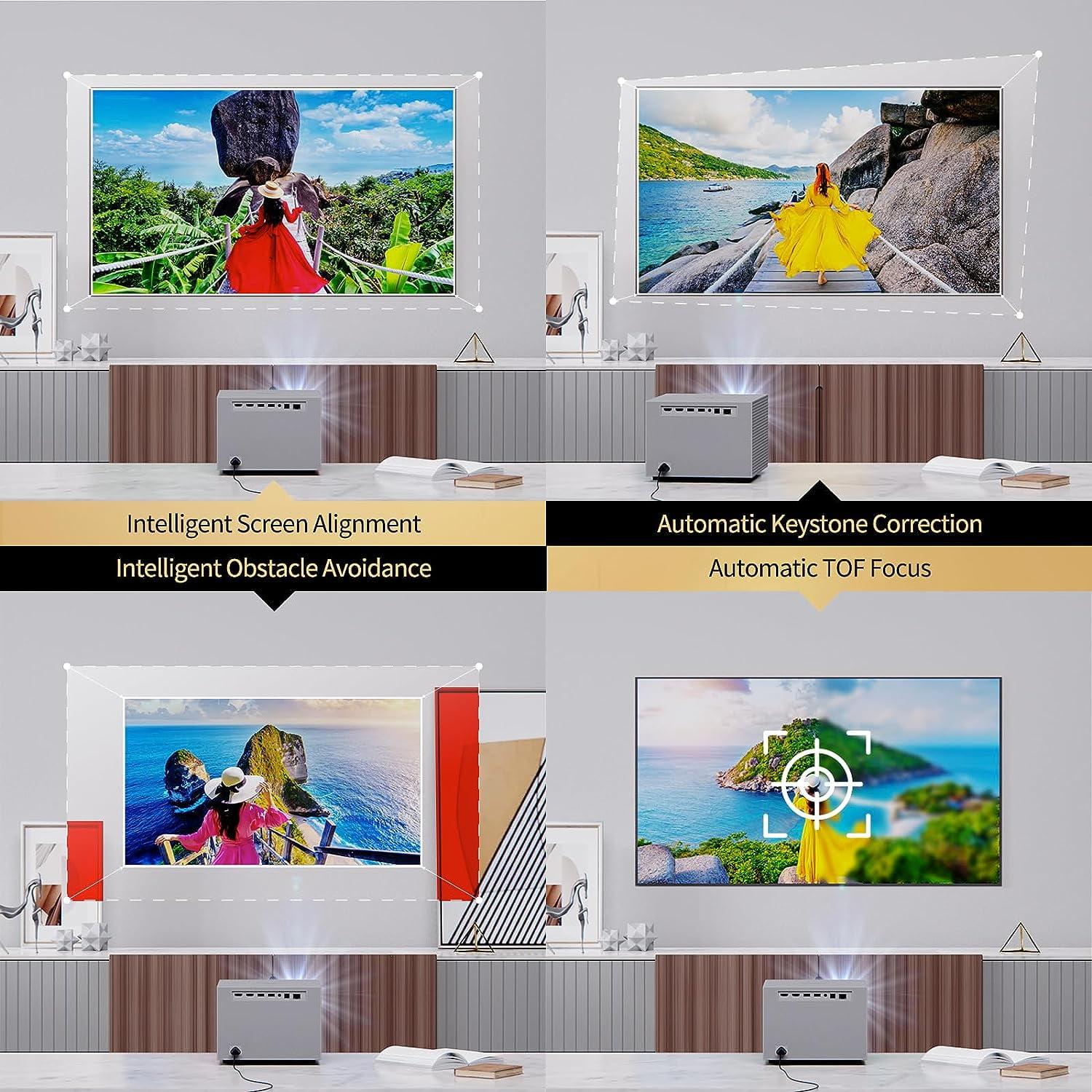
Both projectors offer auto-focus and auto keystone correction features that automatically adjust the image shape when positioned at an angle to the projection surface. Keystone correction digitally manipulates the image to create a rectangular picture even when the projector isn't perfectly aligned with the screen.
In practice, the WEMAX system proves more accurate and requires fewer manual adjustments, particularly in stable indoor environments. The Vogue Pro's ToF (Time of Flight) sensor, which measures distance using infrared light, contributes to its superior auto-focus performance. When moving the projector to different locations, it consistently refocused within 1-2 seconds with excellent accuracy.
The Mars 3 incorporates what Anker calls "Intelligent Environment Adaptation 3.0," which performs admirably outdoors but occasionally struggles with low-contrast surfaces. During testing, it sometimes required manual adjustments when projecting onto beige or off-white walls.
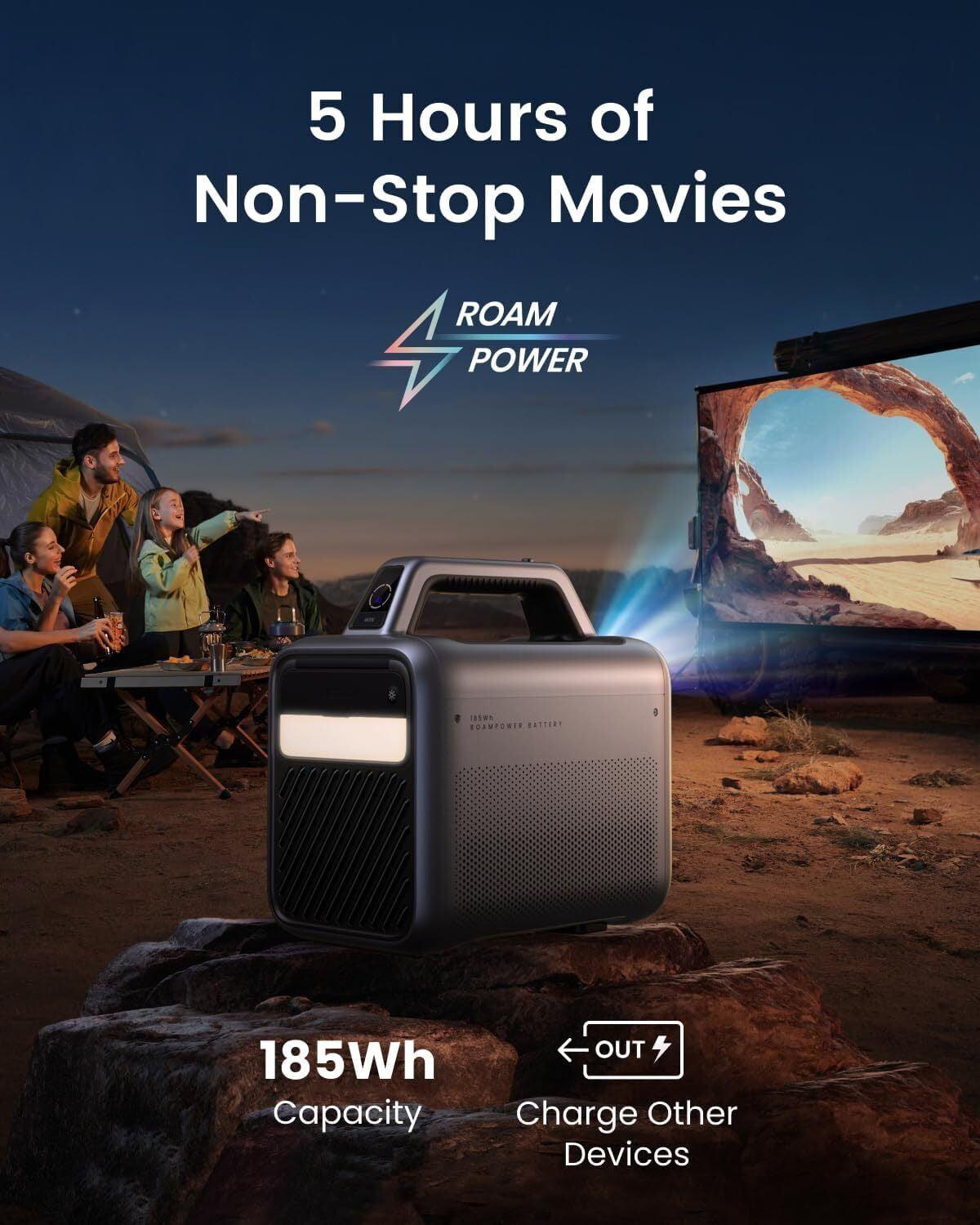
The most fundamental difference between these projectors is their approach to power. The Anker Nebula Mars 3 features an integrated battery that provides approximately 2-2.5 hours at full brightness and up to 5 hours in eco mode (which reduces brightness to extend battery life). This makes it truly portable, capable of showing a full-length movie without requiring a power outlet.
The WEMAX Vogue Pro requires constant power connection, limiting its placement options to locations near electrical outlets. This design choice allowed WEMAX to allocate more resources toward image quality rather than battery technology, but it fundamentally restricts the projector's mobility.
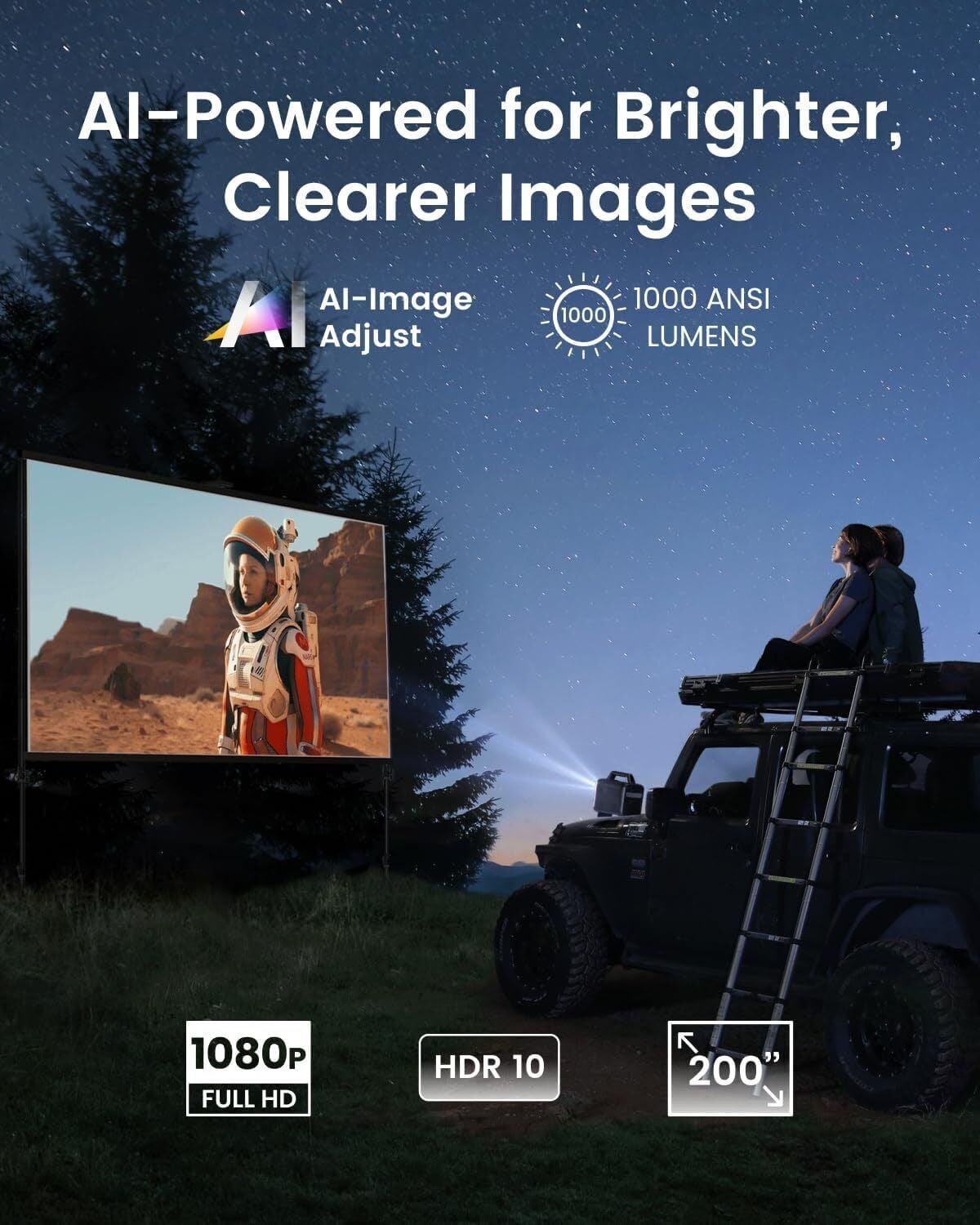
The Mars 3's battery represents a significant engineering achievement given its brightness level. Most battery-powered projectors offer substantially lower brightness (often 400-600 ANSI lumens), making the Mars 3's 1000 ANSI lumens impressive for a portable unit.
Released in 2023, the Nebula Mars 3 features purpose-built outdoor durability with IPX3 water resistance (protected against spraying water), drop protection from heights up to 0.5 meters, and dust resistance against particles larger than 0.7mm. These specifications mean it can withstand light rain, accidental drops, and dusty environments like beaches or parks.
The WEMAX, designed primarily for indoor use, lacks these weather resistance certifications. Its ventilation system and exterior aren't designed to handle moisture or dust exposure, making it unsuitable for outdoor movie nights where environmental conditions can change unexpectedly.
Despite being heavier at 9.9 pounds versus the WEMAX's 7.7 pounds, the Mars 3's integrated handle, rounded edges, and ruggedized exterior make it more suitable for transport. Its design prioritizes functionality for moving between locations, with a built-in kickstand that simplifies setup on uneven surfaces.
The WEMAX's cube design (measuring 200mm × 200mm × 148mm) prioritizes aesthetics for permanent home placement, with a minimalist appearance that blends well with modern home decor. Its neutral gray finish and simple lines make it less visually intrusive in living rooms or dedicated home theaters when not in use.
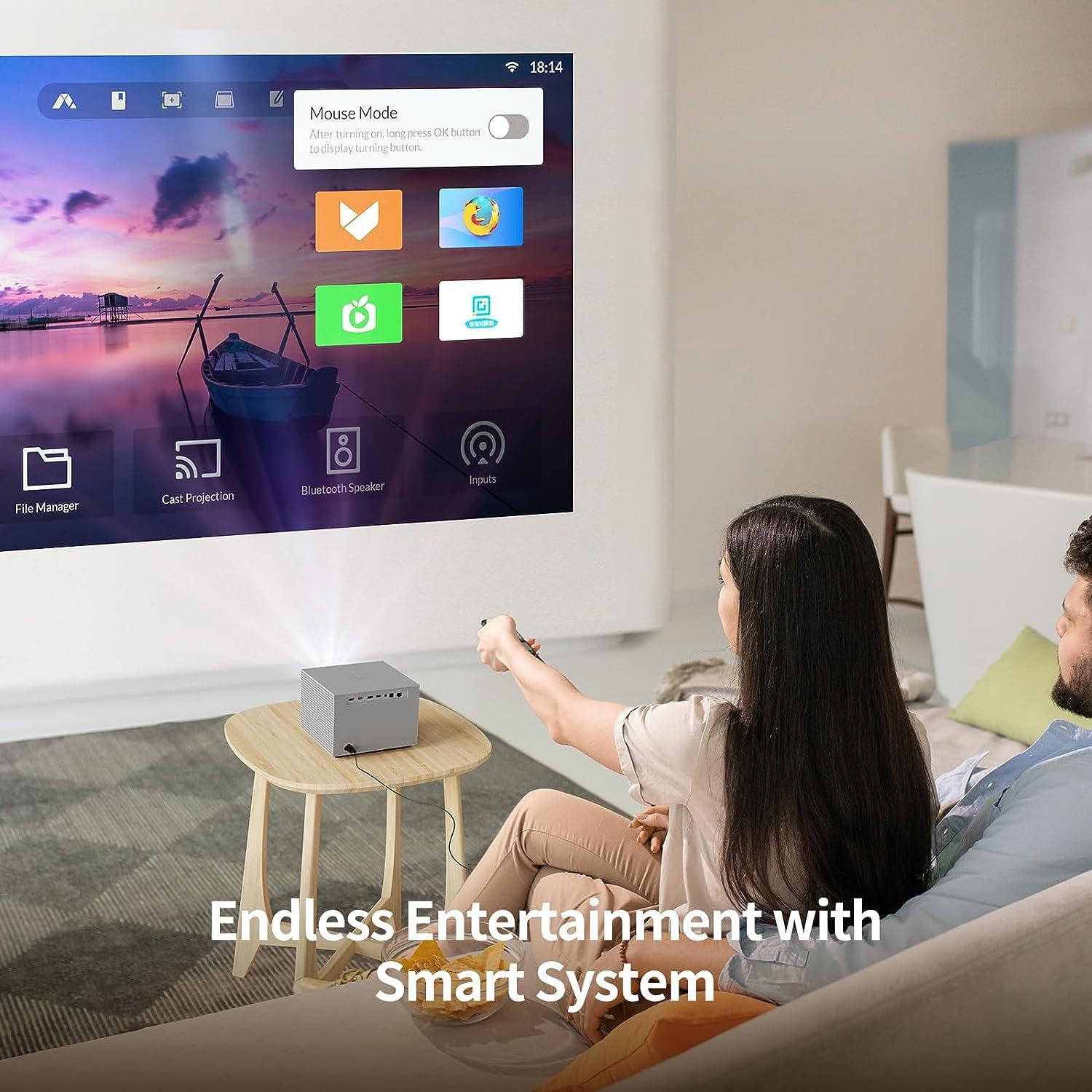
The Mars 3 runs Android TV 11.0, offering a more familiar and polished interface compared to the WEMAX's custom FengOS (an Android-based operating system developed specifically for projectors). This distinction matters significantly for everyday use.
Android TV provides a standardized experience similar to what you'd find on smart TVs from major manufacturers, with a focus on content discovery and app integration. The interface organizes content recommendations across services, making it easier to find something to watch without opening individual apps.
FengOS, while functional, occasionally exhibits minor quirks in navigation and app compatibility. During testing, I found the Mars 3 interface responded more quickly to remote inputs and handled transitions between apps more smoothly.
Both projectors support major streaming platforms like Netflix, Amazon Prime, Disney+, and YouTube, but with different levels of integration. The Mars 3's Google Play Store access provides greater app selection and more consistent updates. During the testing period, apps received automatic updates more reliably on the Mars 3.
The WEMAX occasionally requires sideloading (manually installing app files) for certain applications or to access the latest versions. This process isn't particularly difficult but requires more technical knowledge than simply downloading from an app store.
Since the WEMAX's release in 2021, streaming service apps have continued to evolve, making seamless update capability increasingly important for maintaining compatibility with the latest features and security standards.
The Mars 3 features comprehensive Google Assistant integration, allowing users to search for content, control playback, adjust volume, and even control compatible smart home devices using voice commands. This functionality extends beyond the projector itself to integrate with your broader smart home ecosystem.
The WEMAX offers more limited voice functionality focused primarily on basic projector controls and content searches. In practical use, the difference becomes apparent when trying to find specific content across multiple services or when attempting to chain commands together.
Audio quality often gets overlooked in projectors, but it significantly impacts the viewing experience, especially for portable units where external speakers may not be practical.
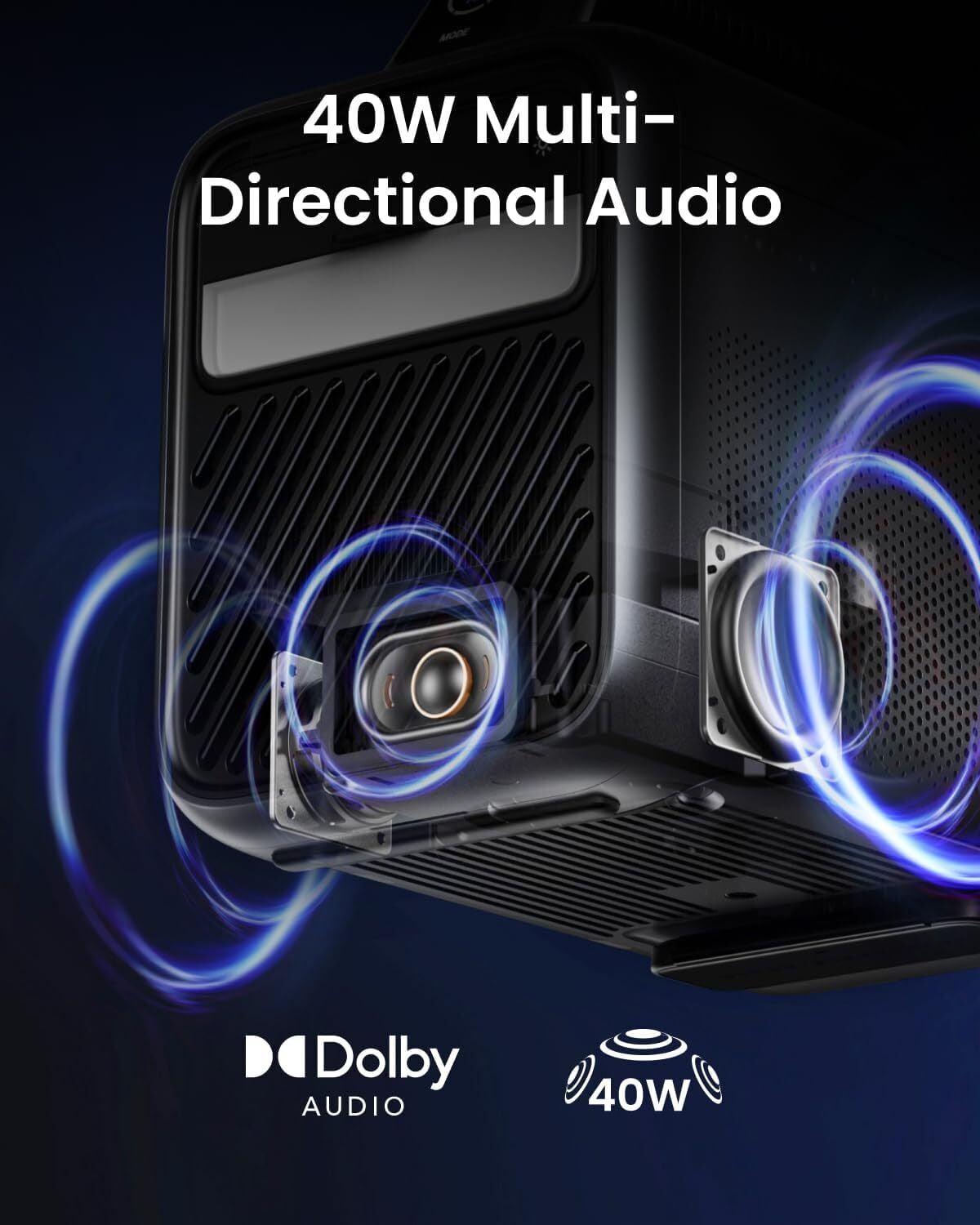
The Mars 3 houses a 40W 3-way speaker system (incorporating tweeters, mid-range, and bass drivers) with Dolby Audio processing. This setup delivers richer bass and clearer dialogue than the WEMAX's dual 10W speakers. The difference becomes particularly important when used outdoors without external audio, where environmental noise can easily overwhelm lesser speakers.
During testing with action movies, the Mars 3 reproduced explosion effects with more impact and maintained clearer dialogue during busy sound scenes. For quieter content like documentaries, the difference was less pronounced, but the Mars 3 still provided fuller, more natural sound.
The Mars 3's speaker system produces significantly higher volume output, capable of filling larger outdoor spaces. During outdoor testing, it maintained clear audio at distances up to 15 feet from the projector in an open environment.
The WEMAX's speakers are optimized for medium-sized indoor rooms and perform adequately in that context, but struggle to compete with ambient noise in larger spaces or outdoor environments. For home theater use in a dedicated room, the WEMAX would likely require supplementary speakers for the best experience, while the Mars 3 could function adequately on its own for many users.
The WEMAX Vogue Pro offers more extensive connectivity with two HDMI 2.1 ports (one with ARC for connecting to audio systems), two USB ports, and an Ethernet connection for wired internet. This array of connections makes it well-suited for integration into existing home entertainment systems with multiple sources like gaming consoles, Blu-ray players, or cable boxes.
The Mars 3 provides a more streamlined connection set with a single HDMI port, one USB-A port (for flash drives or hard drives), and a USB-C port that supports both data and power delivery. This simplified approach aligns with its portable nature but limits simultaneous connections.
For home theater enthusiasts, the WEMAX's additional HDMI port with ARC (Audio Return Channel) support is particularly valuable, as it allows audio to be sent from the projector to a soundbar or AV receiver through the same cable that delivers video to the projector.
Both projectors support dual-band Wi-Fi (2.4GHz and 5GHz) for streaming content, but the Mars 3's Bluetooth 5.1 provides more stable connections to speakers and controllers than the WEMAX's Bluetooth 4.2. This newer Bluetooth standard offers improved range and more reliable connections when pairing with wireless headphones or speakers.
The Mars 3 also supports streaming via Chromecast and AirPlay 2, making it easier to share content directly from phones and tablets regardless of whether they run Android or iOS. The WEMAX supports similar functionality but occasionally exhibits compatibility issues with certain devices or apps.
At approximately $640, the WEMAX Vogue Pro delivers superior brightness and image quality for indoor use. The Mars 3 commands a $160 premium at $800, primarily for its portability features and outdoor durability.
For pure image quality per dollar, the WEMAX represents better value, especially for users who plan to use their projector exclusively indoors. Its 1600 ANSI lumens brightness level typically appears in projectors costing significantly more, making it an excellent value proposition for home theater enthusiasts.
The Mars 3's price premium funds its battery technology, ruggedized construction, and superior audio system - features that add manufacturing cost but don't directly enhance image quality. For users who value flexibility over absolute image performance, this premium may be justified.
For dedicated home theater setups, the WEMAX's higher brightness, better connectivity options, and lower price provide better value. A home theater typically has controlled lighting, ready access to power outlets, and often includes separate audio systems, making the Mars 3's portable features less relevant.
For multi-purpose or outdoor use, the Mars 3's battery and durability features justify its higher price. The ability to project movies at the beach, in a backyard, or while camping adds significant versatility that the WEMAX simply cannot match.
Since their respective release dates (2021 for the WEMAX and 2023 for the Mars 3), both projectors have maintained competitive positions in their specific niches. The WEMAX continues to offer exceptional brightness for its price point, while the Mars 3 represents one of the few truly outdoor-capable smart projectors with respectable brightness.
Choose the WEMAX Vogue Pro if:
Choose the Anker Nebula Mars 3 if:
The final decision comes down to your primary use case and viewing environment. The WEMAX excels as a dedicated home entertainment device with superior image quality and brightness that performs well even with some ambient light. Its 4-channel LED technology produces more accurate colors, and its higher brightness allows for larger screen sizes while maintaining image quality.
The Mars 3 sacrifices some brightness to offer genuine portability and environmental adaptability. Its built-in battery, rugged construction, and superior audio system make it the clear choice for users who want flexibility in where they watch content. The premium price reflects these additional capabilities rather than superior core projection performance.
For my home theater setup, I'd personally lean toward the WEMAX Vogue Pro for its superior brightness and image quality at a lower price point. However, for family movie nights that might move between the living room, backyard, and occasional camping trips, the Anker Nebula Mars 3 offers unmatched flexibility despite its higher cost.
Your ideal choice ultimately depends on whether you prioritize maximum image quality in a fixed location or the freedom to enjoy good (but not best-in-class) projection anywhere you go.
| WEMAX Vogue Pro 1080P Smart Projector | Anker Nebula Mars 3 Outdoor Portable Projector |
|---|---|
| Price - Your initial investment | |
| $640 (better value for pure image quality) | $800 (premium for portability features) |
| Brightness - Determines visibility in ambient light | |
| 1600 ANSI lumens (60% brighter, better for semi-lit rooms) | 1000 ANSI lumens (sufficient for dark environments) |
| Resolution - Affects image clarity and detail | |
| 1080p Full HD (identical resolution quality) | 1080p Full HD (identical resolution quality) |
| Portability - How easily you can move and set up | |
| 7.7 lbs, no battery (requires constant power connection) | 9.9 lbs, built-in battery with 2-5 hour runtime (truly portable) |
| Light Source - Impacts color accuracy and lifespan | |
| 4-channel LED (better color accuracy and saturation) | Standard LED (good but less vibrant colors) |
| Operating System - Controls app access and user experience | |
| FengOS (Android-based, occasionally requires sideloading) | Android TV 11.0 (more intuitive with Google Play Store) |
| Audio System - Determines if external speakers are needed | |
| 2x 10W speakers (adequate for indoor use) | 40W 3-way speaker system (superior, especially outdoors) |
| Connectivity - Flexibility for connecting devices | |
| 2 HDMI (1 with ARC), 2 USB, Ethernet (excellent for home theater) | 1 HDMI, 1 USB-A, 1 USB-C (minimalist but adequate) |
| Durability - Environmental resistance for various settings | |
| Standard indoor use only (no weather protection) | IPX3 water/dust resistant, 0.5m drop protection (outdoor capable) |
| Auto-Adjustment Features - Simplifies setup process | |
| Auto focus, keystone correction (excellent indoor performance) | Intelligent Environment Adaptation 3.0 (versatile for changing locations) |
| Best Use Case - Where each projector excels | |
| Dedicated home theater with superior image quality | Versatile indoor/outdoor use with true portability |
The WEMAX Vogue Pro offers superior image quality with 1600 ANSI lumens compared to the Anker Nebula Mars 3's 1000 ANSI lumens. The WEMAX also features 4-channel LED technology for better color accuracy, making it the better choice for home theater enthusiasts who prioritize picture quality. If image quality is your primary concern, the WEMAX Vogue Pro provides better performance for the price.
The Anker Nebula Mars 3 is specifically designed for outdoor use with IPX3 water resistance, dust protection, and drop resistance up to 0.5m. It also has a built-in battery lasting up to 5 hours in Eco mode. The WEMAX Vogue Pro lacks these outdoor features and requires a constant power connection, making it suitable for indoor use only. For outdoor movie nights, the Anker Nebula Mars 3 is clearly the better option.
The WEMAX Vogue Pro is priced at $640, while the Anker Nebula Mars 3 costs $800, representing a $160 price difference. This price gap reflects the Mars 3's additional features like battery power, water resistance, and enhanced speaker system rather than superior projection performance. For pure image quality per dollar, the WEMAX Vogue Pro offers better value.
Neither projector performs optimally in very bright rooms, but the WEMAX Vogue Pro handles ambient light better with its 1600 ANSI lumens compared to the Anker Nebula Mars 3's 1000 ANSI lumens. For daytime viewing, the WEMAX will maintain better image visibility and color saturation with curtains drawn. Both projectors perform best in dark or dimly lit environments, but the WEMAX Vogue Pro has a significant advantage in rooms with some light.
Both projectors support popular streaming services, but the Anker Nebula Mars 3 provides a smoother streaming experience with its Android TV 11.0 operating system and Google Play Store access. The WEMAX Vogue Pro uses FengOS (Android-based) which sometimes requires sideloading apps for the best experience. For hassle-free streaming across multiple services, the Anker Nebula Mars 3 offers better compatibility and a more intuitive interface.
The Anker Nebula Mars 3 features a significantly more powerful 40W 3-way speaker system that delivers richer sound with better bass response compared to the WEMAX Vogue Pro's dual 10W speakers. The Mars 3's audio is loud enough for outdoor viewing and provides a more immersive experience without external speakers. For users who don't plan to connect external audio equipment, the Anker Nebula Mars 3 offers superior sound quality.
For gaming, the WEMAX Vogue Pro offers advantages with its brighter display and multiple HDMI ports for connecting different gaming consoles simultaneously. However, the Anker Nebula Mars 3 provides the unique ability to game without power outlets. Both projectors have similar input lag performance suitable for casual gaming. Serious gamers will likely prefer the WEMAX Vogue Pro for its superior brightness and connectivity options when used in a dedicated gaming setup.
Both the WEMAX Vogue Pro and Anker Nebula Mars 3 can technically project images up to 150-200 inches diagonally. However, the WEMAX's higher brightness (1600 vs 1000 ANSI lumens) means it maintains better image quality at larger screen sizes. For optimal performance, the WEMAX works well up to 150 inches in dark rooms, while the Mars 3 performs best at 100 inches or smaller. If you want the largest possible high-quality projection, the WEMAX Vogue Pro has the advantage.
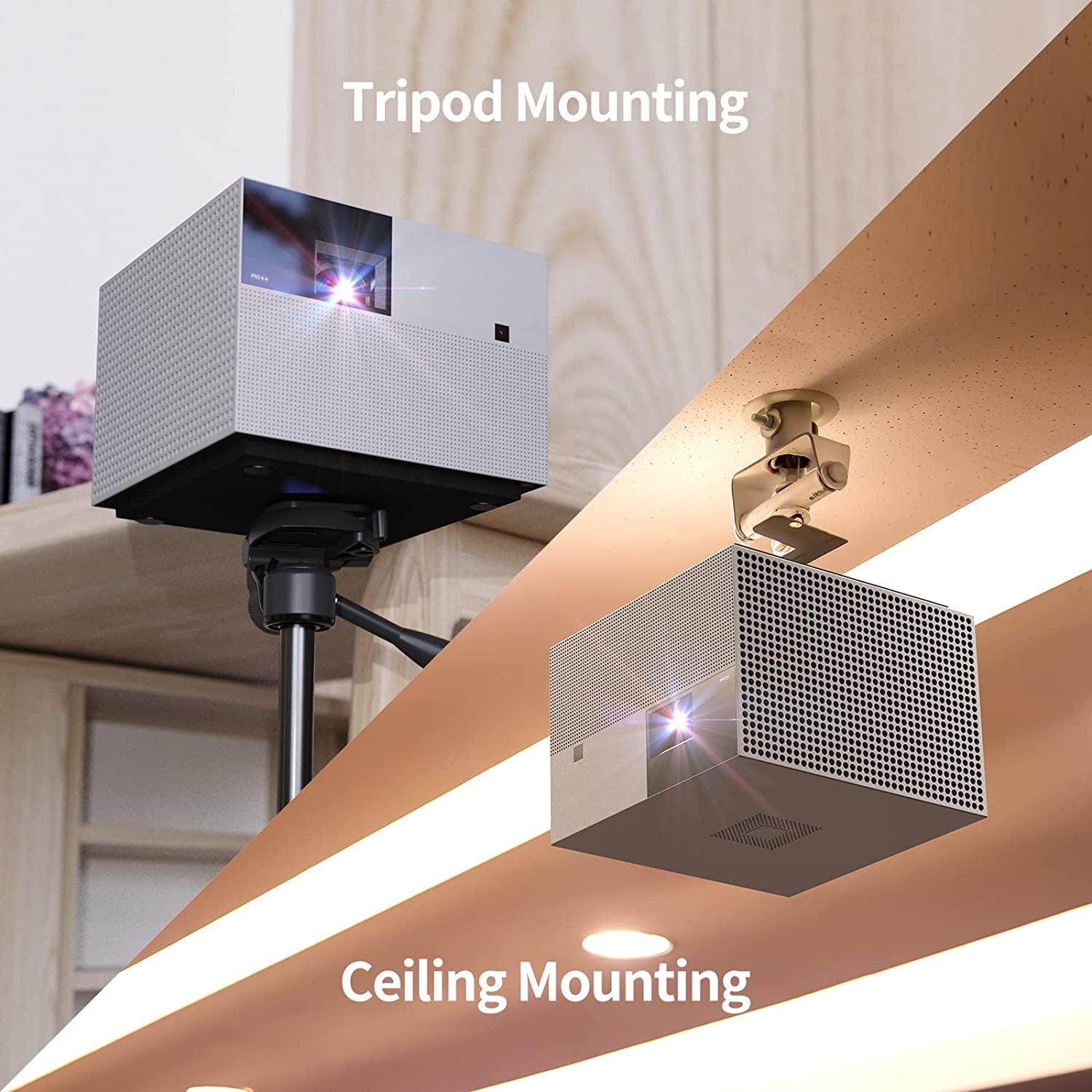
Neither the WEMAX Vogue Pro nor the Anker Nebula Mars 3 requires ceiling mounting. Both feature automatic keystone correction and focus adjustment for easy tabletop placement. The Mars 3 includes a built-in kickstand for quick setup on uneven surfaces, while the WEMAX has a more traditional flat-bottom design. For maximum flexibility, the Anker Nebula Mars 3 offers easier temporary placement options, while the WEMAX works better in permanent setups.
For a dedicated home theater room, the WEMAX Vogue Pro is the better choice due to its superior brightness, better color accuracy, and extensive connectivity options including multiple HDMI ports with ARC support. Since power outlets are readily available in home theaters and portability isn't a concern, the WEMAX's lack of battery isn't a disadvantage in this setting. Home theater enthusiasts will appreciate the WEMAX Vogue Pro's superior image quality and value for permanent installation.
Both projectors offer automatic keystone correction and focus adjustment. The WEMAX Vogue Pro uses ToF (Time of Flight) sensor technology that performs exceptionally well in stable indoor environments, requiring minimal manual adjustment. The Anker Nebula Mars 3 features "Intelligent Environment Adaptation 3.0" which works well in varying environments including outdoor settings. For consistent use in one location, the WEMAX's system is slightly more precise, while the Anker Nebula Mars 3's system adapts better to changing environments.
The Anker Nebula Mars 3 offers significantly more versatility thanks to its built-in battery, weather resistance, and portability features. It can be used indoors, outdoors, while camping, or anywhere without power outlets. The WEMAX Vogue Pro delivers superior image quality but requires a fixed location with power access. If you value the flexibility to use your projector in multiple settings and environments, the Anker Nebula Mars 3 is the clear choice despite its higher price tag.
We've done our best to create useful and informative comparisons to help you decide what product to buy. Our research uses advanced automated methods to create this comparison and perfection is not possible - please contact us for corrections or questions. These are the sites we've researched in the creation of this article: wemax.com - wemax.com - youtube.com - techpowerup.com - wemax.com - projectorcentral.com - nikktech.com - youtube.com - techpowerup.com - techpowerup.com - youtube.com - nikktech.com - walmart.com - business.walmart.com - projectorcentral.com - techpowerup.com - projektoren-datenbank.com - wemax.com - techradar.com - seenebula.com - thesmarthomehookup.com - yuenx.com - projectorcentral.com - seenebula.com - youtube.com - youtube.com - youtube.com - cnet.com - projectorreviews.com - youtube.com - youtube.com - projectorcentral.com - seenebula.com - youtube.com - yuenx.com

Privacy Policy
Terms and Conditions - Affiliate Policy
Home Security
© Copyright 2008-2026.
11816 Inwood Rd #1211, Dallas, TX 75244