


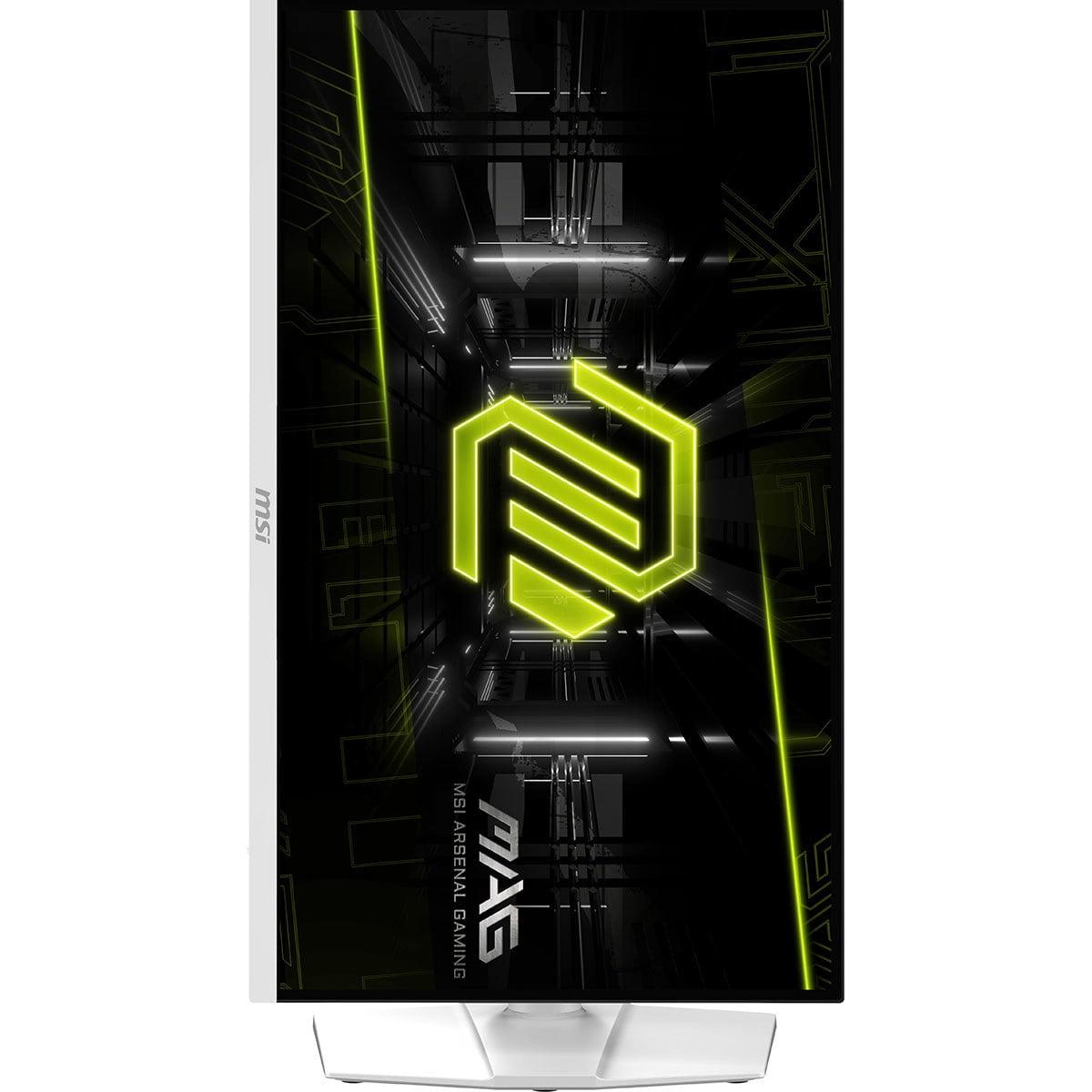
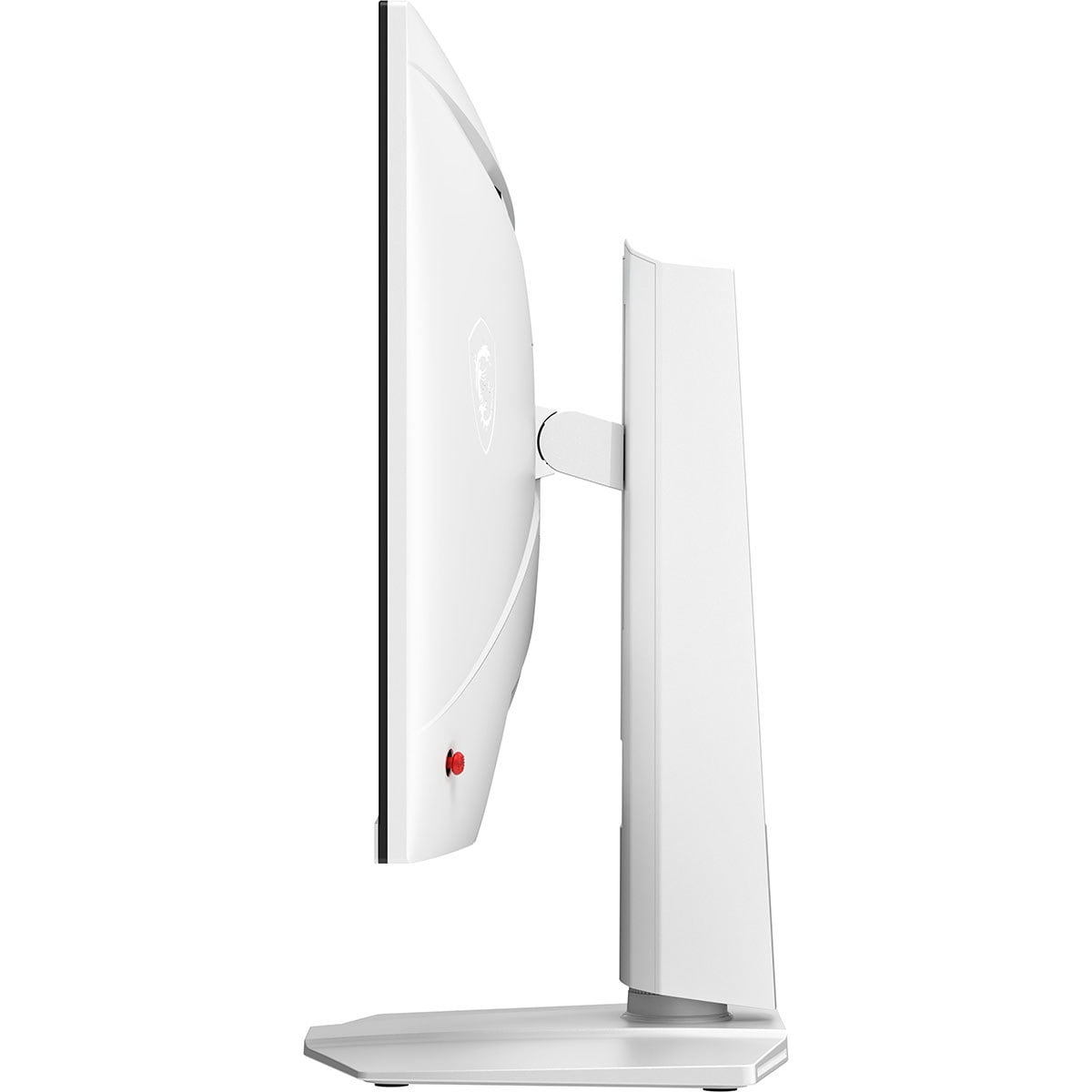
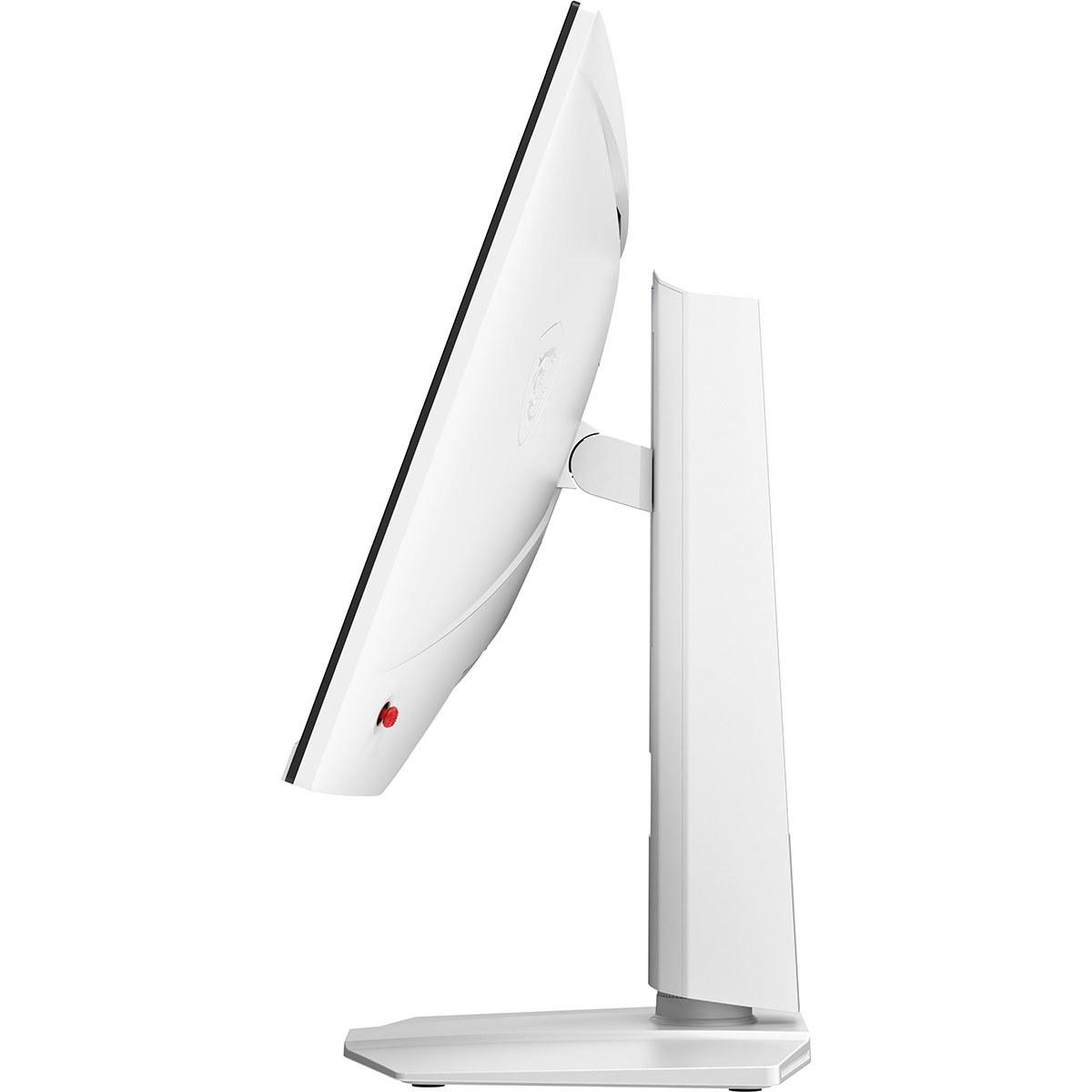
When building a gaming setup, your monitor choice can make or break the entire experience. Today's gaming monitors have evolved far beyond basic displays, packing advanced technologies that directly impact how smooth, sharp, and responsive your games feel. Two compelling options represent different philosophies in modern gaming display design: the Alienware 27 QHD 180Hz Gaming Monitor and the MSI MAG 274URFW 27" 4K 160Hz Gaming Monitor.
These monitors, both released in 2024, showcase the current state of gaming display technology where manufacturers have refined panel quality, response times, and color accuracy to levels that were considered premium just a few years ago. The question isn't whether these are good monitors—they both excel—but rather which approach better serves your specific gaming needs and setup.
Before diving into specifics, it's crucial to understand what makes a gaming monitor different from a regular display. Gaming monitors prioritize three key performance metrics: refresh rate (how many times per second the screen updates), response time (how quickly pixels change colors), and input lag (the delay between your action and seeing it on screen).
Refresh rate, measured in Hertz (Hz), determines how smooth motion appears. Higher refresh rates mean less motion blur and more fluid gameplay, particularly important in fast-paced games like first-person shooters. Standard monitors typically run at 60Hz, while gaming monitors now commonly offer 144Hz, with premium models pushing 180Hz or higher.
Response time, measured in milliseconds (ms), refers to how quickly a pixel can change from one color to another. Faster response times reduce ghosting—the blurry trail effect you see behind moving objects. Modern gaming monitors achieve response times as low as 0.5ms to 1ms, compared to 15-20ms on typical office monitors.
The fundamental tension in gaming monitor design centers around resolution versus refresh rate. Higher resolutions like 4K (3840×2160) provide incredibly sharp, detailed visuals but require more graphics processing power and typically come with lower maximum refresh rates. Meanwhile, 1440p resolution paired with ultra-high refresh rates offers a different sweet spot, prioritizing motion smoothness over raw pixel density.
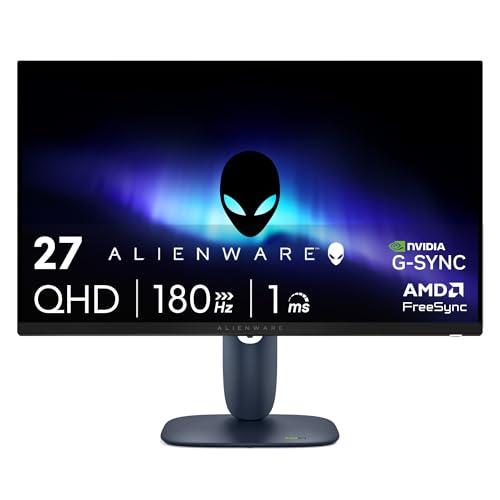
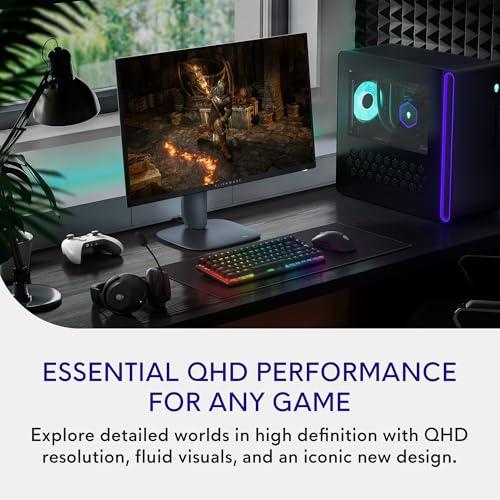
The Alienware 27 QHD 180Hz Gaming Monitor represents what happens when a manufacturer focuses intensely on competitive gaming performance while delivering premium color quality. This monitor runs at 2560×1440 resolution—known as QHD or 1440p—which provides a significant step up from 1080p without the extreme hardware demands of 4K.
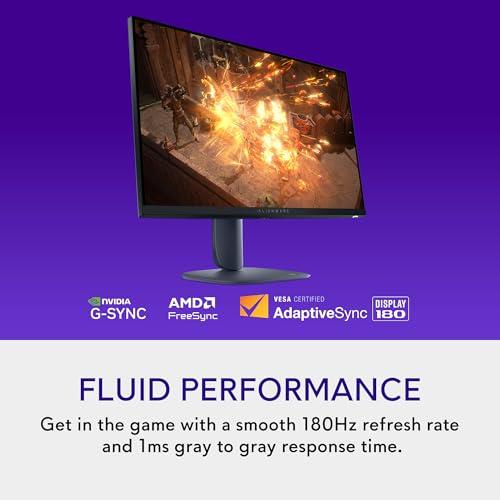
At 180Hz refresh rate, the Alienware monitor delivers exceptionally smooth motion that becomes immediately apparent when switching from standard 60Hz or even 144Hz displays. Those extra frames per second translate to more responsive controls and clearer tracking of fast-moving objects in competitive games. The difference between 144Hz and 180Hz might seem marginal on paper, but experienced gamers often notice improved target tracking and reduced motion blur during intense gameplay sessions.
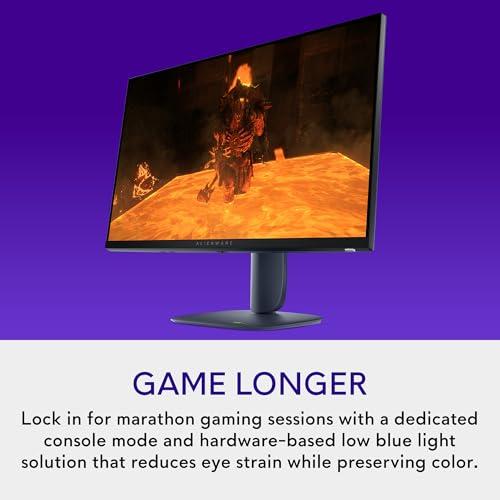
What sets the Alienware apart is its Fast IPS panel technology combined with premium color calibration. Fast IPS represents an evolution of traditional IPS (In-Plane Switching) panels, offering the wide viewing angles and accurate colors IPS is known for while achieving much faster response times that previously required TN (Twisted Nematic) panels. The result is a monitor that doesn't force you to choose between competitive performance and visual quality.
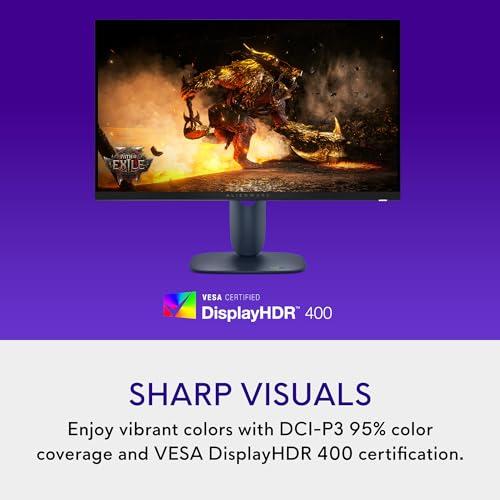
The color performance deserves special attention. The Alienware covers 95% of the DCI-P3 color space—the standard used in digital cinema—with factory calibration achieving Delta E values under 2. Delta E measures color accuracy, with values under 2 considered imperceptible to the human eye and suitable for professional work. This level of color precision, typically found in monitors costing significantly more, makes the Alienware suitable for content creation alongside gaming.
HDR support through VESA DisplayHDR 600 certification provides genuine high dynamic range performance with 600 nits peak brightness. HDR (High Dynamic Range) enhances contrast by making bright areas much brighter and dark areas deeper, creating more realistic and immersive visuals. Many monitors claim HDR support but only meet the basic DisplayHDR 400 standard, which doesn't provide dramatic visual improvements. The Alienware's DisplayHDR 600 rating ensures you'll actually notice HDR effects in supported games and movies.
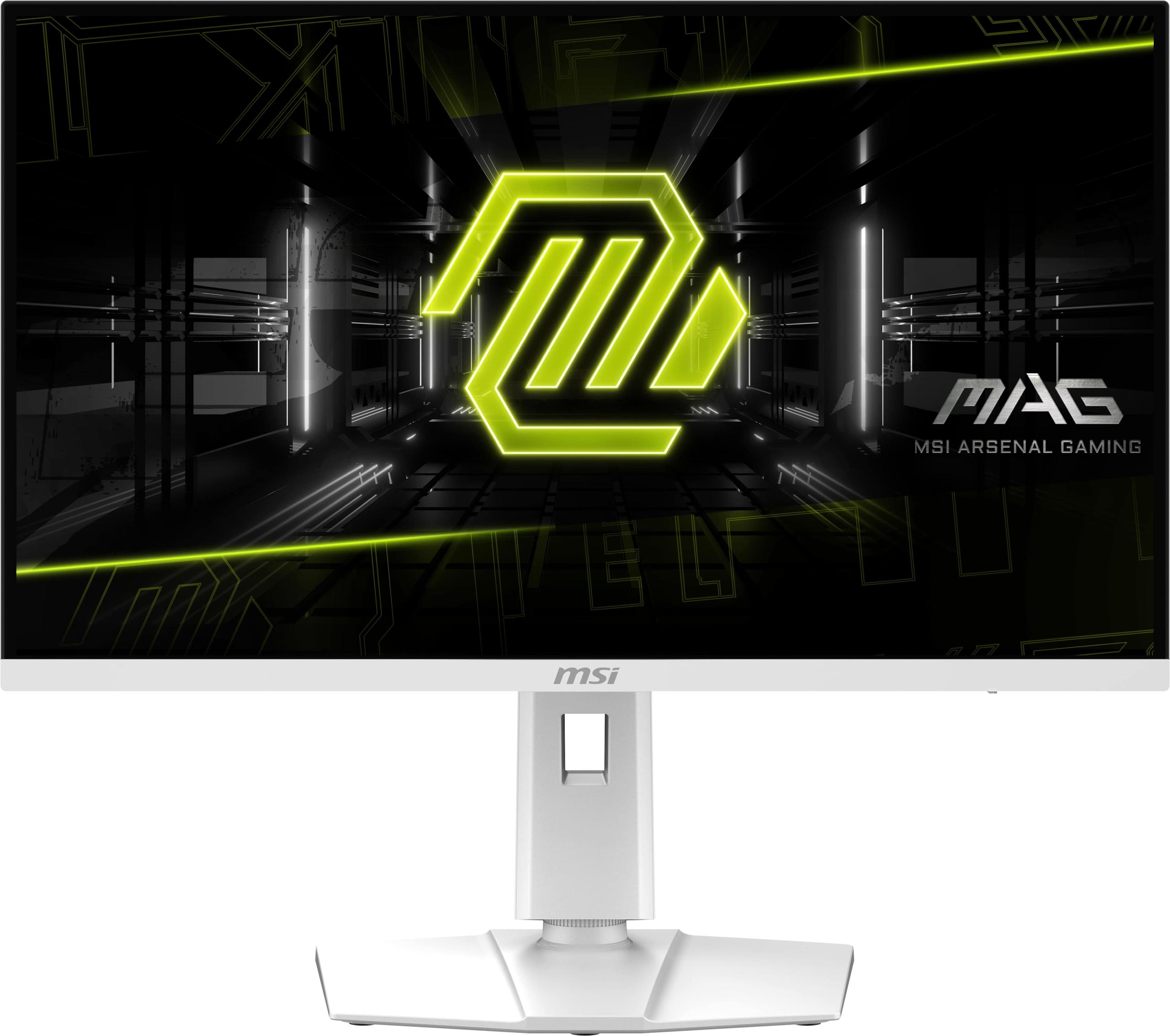
The MSI MAG 274URFW 27" 4K 160Hz Gaming Monitor takes a different approach, prioritizing pixel density and connectivity versatility while maintaining strong gaming performance. At 3840×2160 resolution on a 27-inch panel, this monitor delivers 163 pixels per inch compared to 109 PPI on the Alienware's 1440p resolution. This 49% increase in pixel density creates noticeably sharper text, crisper game textures, and more detailed images overall.
The benefits of 4K resolution become most apparent in games with rich environmental detail, complex UI elements, or when viewing the monitor from close distances. Text clarity alone makes 4K compelling for users who alternate between gaming and productivity work, eliminating the pixelated appearance that becomes noticeable when working with documents or detailed graphics at 1440p.
However, 4K gaming demands serious graphics processing power. At the time of writing, you'll want at least an RTX 4070 Super or RX 7800 XT to maintain comfortable frame rates in demanding games at 4K resolution. Less powerful GPUs can still benefit from 4K monitors by running games at 1440p (which scales evenly to 4K) while enjoying 4K clarity for desktop use and less demanding titles.
The MSI monitor's 160Hz refresh rate, while 20Hz lower than the Alienware, still provides excellent motion clarity that surpasses the 144Hz standard many gamers consider the sweet spot for high refresh rate gaming. The 0.5ms response time actually edges out the Alienware's 1ms specification, though both achieve response times fast enough that ghosting and blur are effectively eliminated in practical use.
Where the MSI particularly shines is connectivity and versatility. The inclusion of HDMI 2.1 ports enables full 4K 120Hz gaming with PlayStation 5 and Xbox Series X consoles, while USB-C connectivity with power delivery allows single-cable connection to laptops. This makes the MSI genuinely useful as a multi-device hub rather than a dedicated gaming display.
For competitive gaming, motion clarity reigns supreme. The Alienware's 180Hz advantage becomes most noticeable in fast-paced competitive titles where smooth tracking of opponents and reduced motion blur provide tangible advantages. In games like Counter-Strike, Valorant, or Overwatch, those extra 20Hz over the MSI's 160Hz can improve target acquisition and reduce the disorienting effects of rapid camera movements.
However, both monitors achieve response times fast enough for competitive gaming. The MSI's 0.5ms response time versus the Alienware's 1ms difference is imperceptible in real-world use—both eliminate the ghosting and trailing effects that plagued gaming monitors even a few years ago. More important is that both support adaptive sync technologies (AMD FreeSync and NVIDIA G-SYNC compatibility) that eliminate screen tearing and stuttering when frame rates vary.
For single-player gaming and visual immersion, the equation shifts dramatically. The MSI's 4K resolution provides substantially more detail in game environments, character models, and UI elements. This becomes particularly impactful in games like Cyberpunk 2077, Red Dead Redemption 2, or Microsoft Flight Simulator, where environmental detail and texture quality significantly contribute to immersion.
The sharpness difference is immediately noticeable when switching between 1440p and 4K on a 27-inch display. Fine details like text in RPG menus, distant scenery in open-world games, and texture patterns in close-up objects all appear significantly crisper at 4K resolution. This creates a more immersive experience that can make returning to 1440p feel noticeably less sharp.
However, the Alienware's superior color accuracy and HDR performance provide their own immersion benefits. The wider color gamut and better calibration create more vibrant, lifelike colors, while the DisplayHDR 600 certification delivers more impactful contrast and brightness in HDR-enabled games.
The performance requirements differ significantly between these monitors. The Alienware's 1440p resolution allows mid-range graphics cards like the RTX 4060 Ti or RX 7700 XT to achieve high frame rates that take advantage of the 180Hz refresh rate. You can reasonably expect to hit 120-180 fps in most competitive games and 80-120 fps in demanding single-player titles with these GPUs.
The MSI's 4K resolution demands more graphics horsepower. High-end cards like the RTX 4070 Super, RTX 4080, or RX 7800 XT become necessary to maintain frame rates that justify the 160Hz refresh rate. With lesser hardware, you might find yourself running games at 1440p resolution to achieve playable frame rates, somewhat negating the 4K advantage.
This creates an interesting value consideration: pairing the MSI with a mid-range GPU might leave performance on the table, while the Alienware allows more budget to be allocated toward other system components.
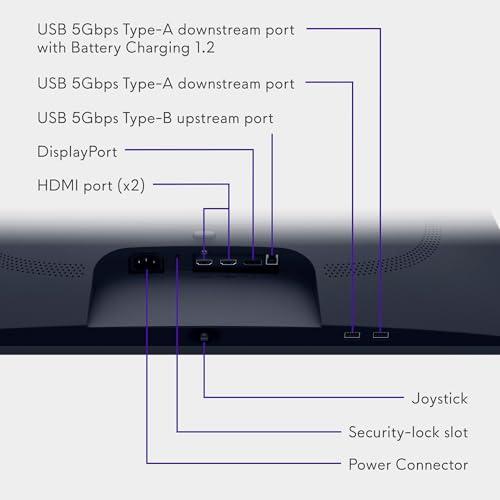
Modern gaming setups rarely involve just one device, and monitor connectivity significantly impacts daily usability. The MSI excels here with comprehensive port selection including dual HDMI 2.1 inputs, DisplayPort 1.4a, and USB-C with power delivery. This configuration supports optimal performance from gaming consoles, PCs, and laptops simultaneously.
The HDMI 2.1 support particularly benefits console gamers, enabling 4K 120Hz gaming with PlayStation 5 and Xbox Series X. Auto Low Latency Mode (ALLM) automatically optimizes display settings when console gaming, reducing input lag without manual adjustment. The Alienware supports console gaming but limits performance to 4K 60Hz due to HDMI 2.0 ports.
USB-C connectivity on the MSI enables single-cable laptop connections for users who alternate between desktop gaming and laptop productivity. This eliminates cable swapping and provides power delivery to keep laptops charged during use.
Both monitors lack built-in speakers, which is common among gaming monitors where manufacturers assume users prefer dedicated audio solutions. Both include headphone outputs for convenient audio connectivity.
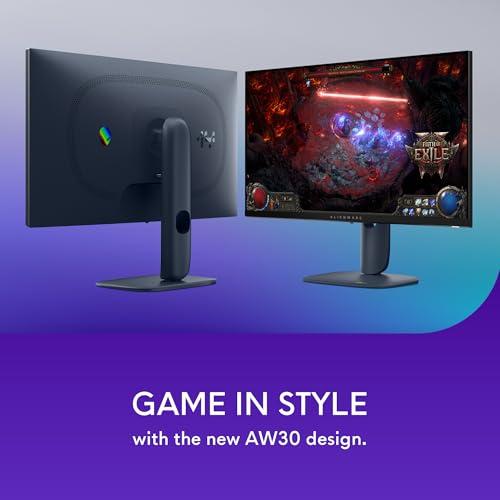
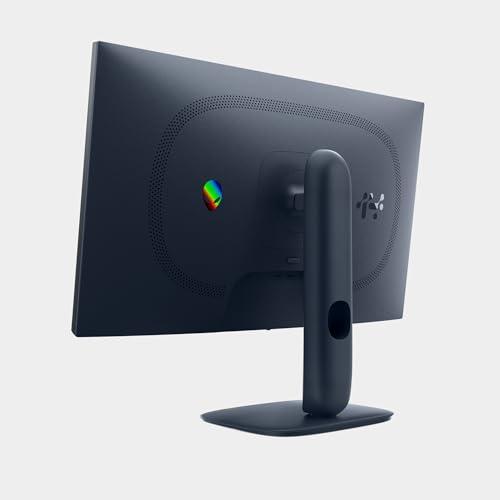
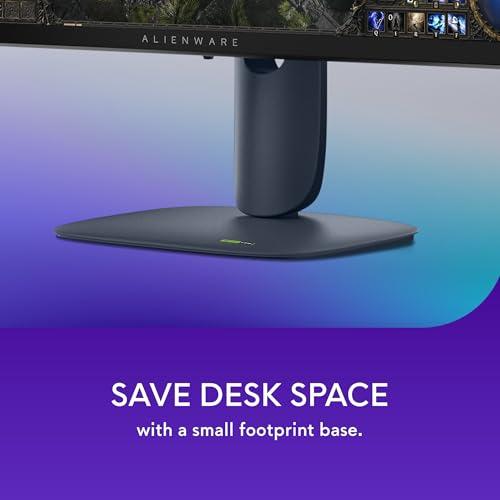
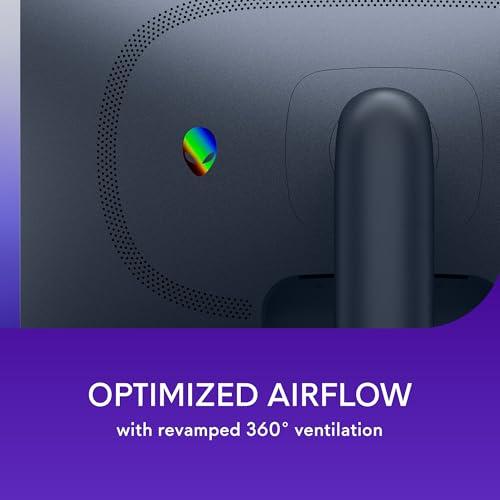
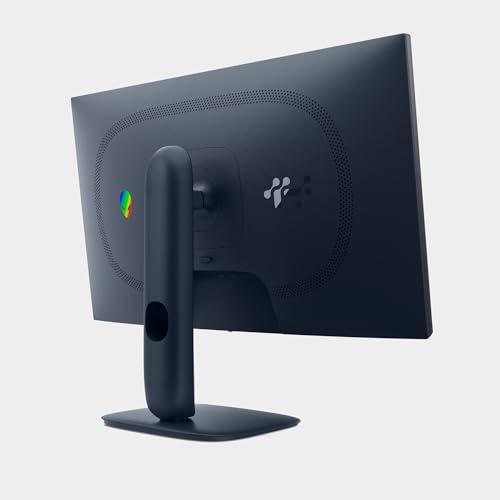
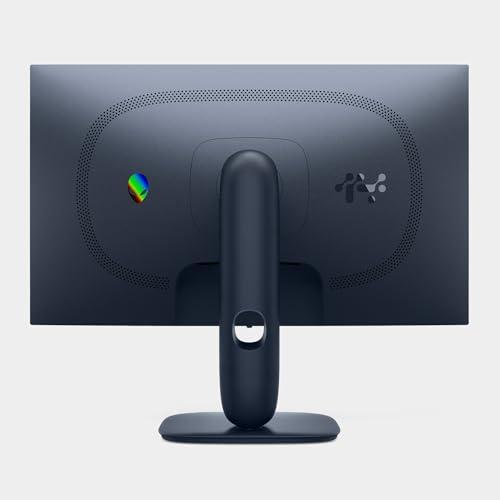
The aesthetic approach differs between these monitors, with the Alienware embracing gaming-focused design through its Interstella Indigo color scheme and AlienFX RGB lighting system. The Legend 2.0 design language features angular elements and premium materials that clearly identify it as a gaming product. The stand provides comprehensive adjustability including height, tilt, swivel, and pivot adjustments.
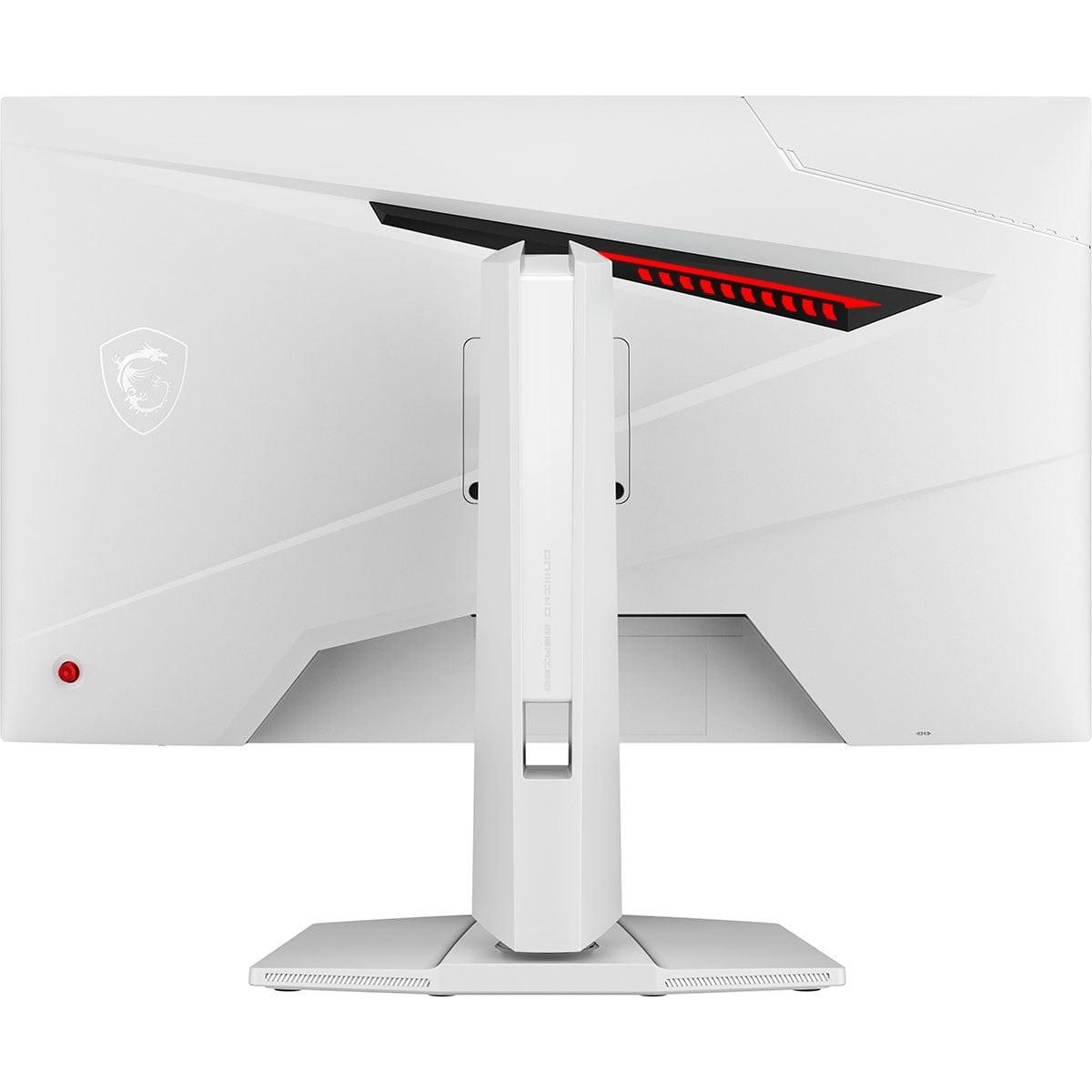
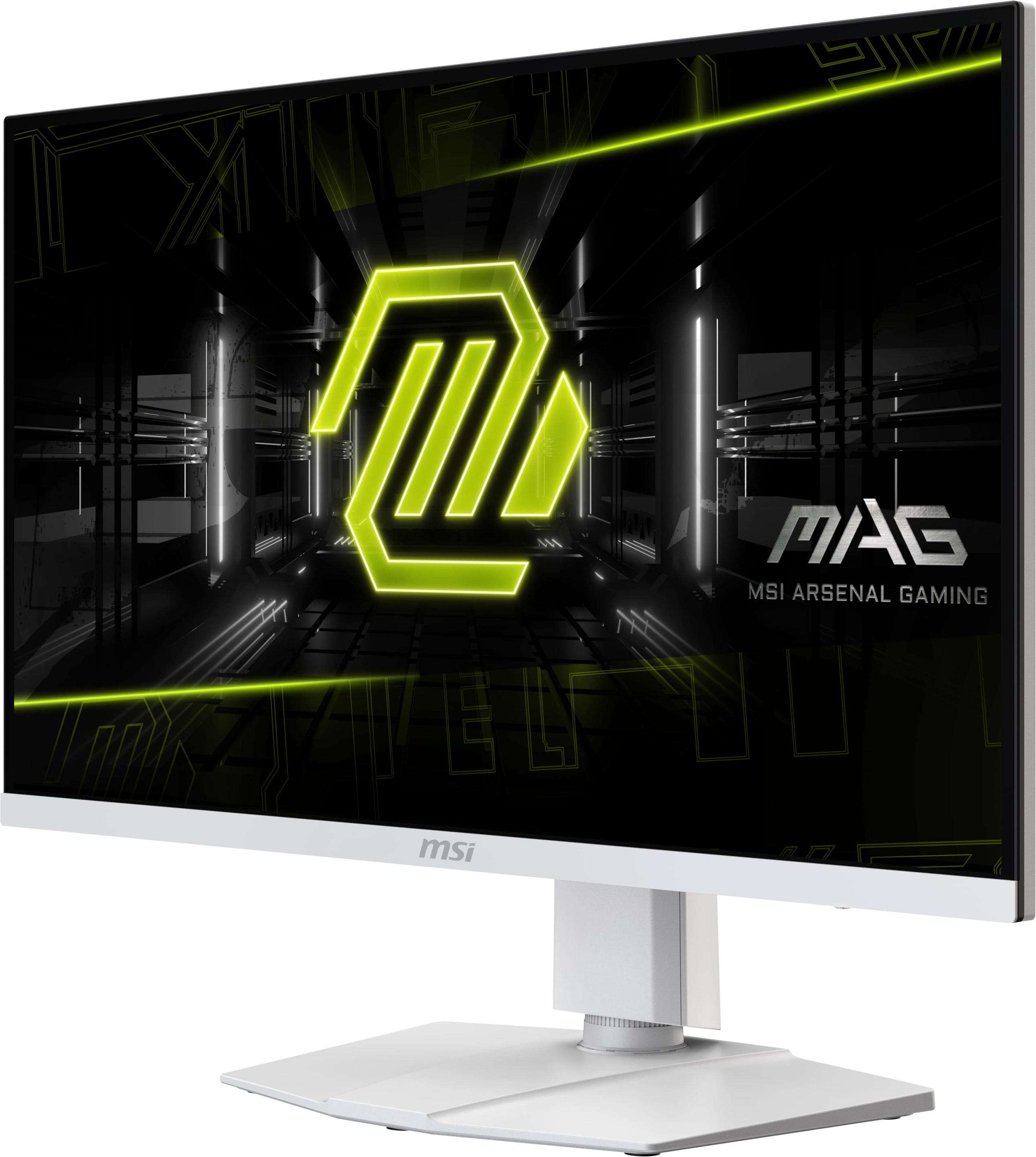
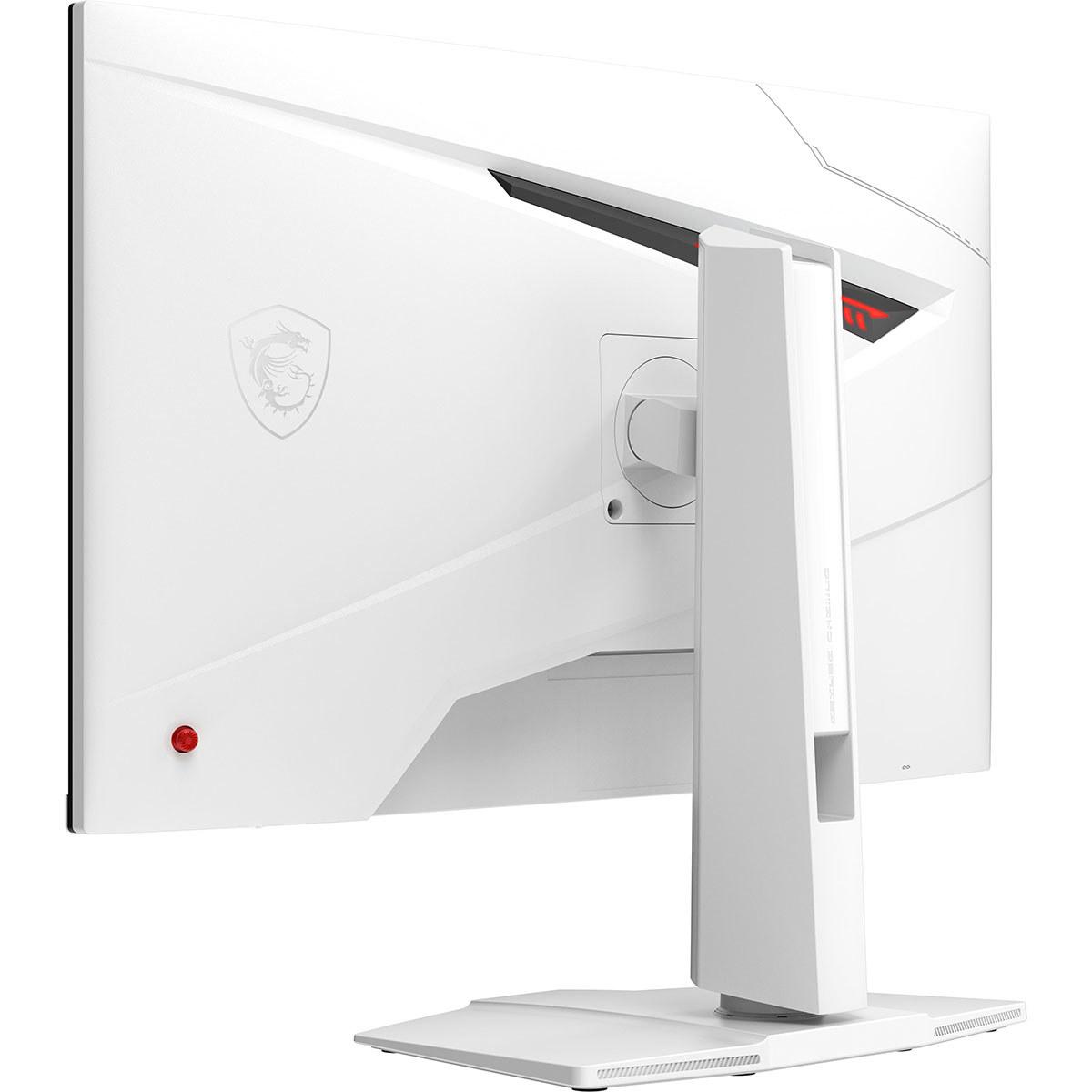
The MSI takes a more understated approach with clean white aesthetics and subtle RGB accents. This design works well in mixed-use environments where overt gaming styling might feel out of place. The ergonomic adjustments match the Alienware with full height, tilt, swivel, and pivot capabilities.
Both monitors support VESA mounting for arm or wall installation, though they use different mounting patterns (100×100mm for the Alienware, 75×75mm for the MSI).
While both monitors excel for gaming, their entertainment capabilities differ significantly. The MSI's 4K resolution provides native compatibility with 4K streaming content from Netflix, Disney+, and other platforms, delivering sharp detail that matches modern TV standards.
The Alienware's offers superior HDR performance for movies and shows, with DisplayHDR 600 providing more impactful contrast and brightness than the MSI's DisplayHDR 400 certification. Color accuracy also benefits film viewing, with the wide DCI-P3 color gamut matching digital cinema standards.
However, both monitors use IPS panels with typical 1000:1 contrast ratios, which limit deep black performance compared to VA panels or OLED displays commonly used in dedicated home theater setups. They work well as entertainment displays but won't match the contrast performance of purpose-built TV technologies.
At the time of writing, these monitors occupy different value positions in the gaming display market. The Alienware delivers premium features typically found in more expensive monitors—including factory color calibration, DisplayHDR 600, and 180Hz refresh rates—at a competitive price point. This makes it exceptional value for gamers prioritizing performance and color quality without paying premium monitor prices.
The MSI commands a higher price but justifies this through 4K resolution and comprehensive connectivity. For users needing a versatile display that handles gaming, productivity, and entertainment equally well, the additional cost provides meaningful benefits. The 4K resolution future-proofs the display for graphics card upgrades and provides immediate benefits for multi-purpose use.
Both monitors represent strong value within their respective market segments, offering performance and features that were premium-tier just a few years ago.
The decision between these monitors ultimately depends on your priorities and system capabilities. Choose the Alienware 27 QHD 180Hz Gaming Monitor if competitive gaming performance and color accuracy matter most. The 180Hz refresh rate provides tangible advantages in fast-paced games, while the superior color calibration and HDR performance enhance both gaming and content viewing. The lower resolution requirements also allow budget allocation toward other system components or work well with mid-range graphics cards.
Select the MSI MAG 274URFW 27" 4K 160Hz Gaming Monitor if visual clarity and versatility take priority. The 4K resolution provides noticeably sharper visuals that benefit both gaming and productivity work, while comprehensive connectivity supports multiple devices seamlessly. This choice makes most sense with high-end graphics cards capable of driving 4K gaming at high frame rates.
Both monitors excel at their intended purposes, representing the current state of gaming display technology where you're choosing between different types of excellence rather than accepting compromises. Your graphics card capabilities, primary use cases, and value priorities should guide the decision between motion-focused performance and pixel-dense clarity.
| Alienware 27 QHD 180Hz Gaming Monitor | MSI MAG 274URFW 27" 4K 160Hz Gaming Monitor |
|---|---|
| Resolution - Determines visual sharpness and GPU requirements | |
| 2560 x 1440 (QHD) - Excellent balance of clarity and performance | 3840 x 2160 (4K) - Maximum sharpness but demands high-end GPU |
| Refresh Rate - Critical for competitive gaming smoothness | |
| 180Hz - Superior motion clarity for esports and fast-paced games | 160Hz - Excellent gaming performance, slightly less smooth than 180Hz |
| Response Time - Affects ghosting and motion blur | |
| 1ms (multiple overdrive modes available) | 0.5ms (marginally faster, both eliminate ghosting effectively) |
| Panel Technology - Impacts color quality and viewing angles | |
| Fast IPS with factory calibration | Rapid IPS (good colors but no premium calibration) |
| Color Accuracy - Important for content creation and visual fidelity | |
| 95% DCI-P3, Delta E <2 factory calibrated | 98% DCI-P3, 133% sRGB (uncalibrated out of box) |
| HDR Performance - Enhances contrast and brightness in supported content | |
| DisplayHDR 600 (600 nits, meaningful HDR impact) | DisplayHDR 400 (400 nits, basic HDR tier) |
| Console Gaming Support - Compatibility with PS5/Xbox Series X | |
| HDMI 2.0 (4K 60Hz or 1440p 120Hz with consoles) | HDMI 2.1 (full 4K 120Hz console gaming) |
| Connectivity Options - Affects multi-device usage | |
| 2x HDMI 2.1, 1x DisplayPort 1.4, USB hub | 2x HDMI 2.1, 1x DisplayPort 1.4a, USB-C with power delivery |
| Ergonomics - Build quality and adjustability | |
| Premium adjustable stand, AlienFX RGB lighting | Fully adjustable stand, clean white aesthetic with subtle RGB |
| Adaptive Sync - Eliminates screen tearing | |
| G-SYNC Compatible, FreeSync Premium Pro, VESA AdaptiveSync | FreeSync Premium, Variable Refresh Rate support |
| Target GPU Requirements - Hardware needed for optimal performance | |
| Mid-range GPUs (RTX 4060 Ti+) can utilize full potential | High-end GPUs (RTX 4070 Super+) needed for 4K gaming |
The Alienware 27 QHD 180Hz Gaming Monitor is superior for competitive gaming due to its higher 180Hz refresh rate compared to the MSI MAG 274URFW 27" 4K 160Hz Gaming Monitor's 160Hz. The extra 20Hz provides smoother motion tracking and reduced motion blur in fast-paced esports titles like Counter-Strike and Valorant. The Alienware monitor also works better with mid-range GPUs that can actually reach those high frame rates at 1440p resolution.
The MSI MAG 274URFW offers 4K resolution (3840×2160) which provides 78% more pixels than the Alienware's 1440p resolution (2560×1440). This translates to significantly sharper text, crisper game textures, and more detailed visuals. However, 4K requires much more GPU power to maintain high frame rates, while 1440p offers an excellent balance of clarity and performance for most gaming setups.
The Alienware 27 QHD 180Hz Gaming Monitor offers superior color accuracy with factory calibration achieving Delta E values under 2 and 95% DCI-P3 coverage. This makes it suitable for both gaming and content creation. The MSI monitor has good color coverage but lacks the premium factory calibration, requiring manual adjustment for color-critical work.
The MSI MAG 274URFW is better for console gaming with its HDMI 2.1 ports supporting full 4K 120Hz gaming on PS5 and Xbox Series X. The Alienware monitor has HDMI 2.0 ports that limit console performance to 4K 60Hz or 1440p 120Hz, making the MSI the clear choice for console gamers who want maximum performance.
The MSI MAG 274URFW 27" 4K 160Hz Gaming Monitor demands significantly more GPU power due to its 4K resolution. You'll need at least an RTX 4070 Super or RX 7800 XT for comfortable 4K gaming. The Alienware monitor works well with mid-range cards like RTX 4060 Ti or RX 7700 XT, allowing more budget for other system components.
Both monitors support HDR, but the Alienware 27 QHD 180Hz Gaming Monitor offers better HDR performance with DisplayHDR 600 certification (600 nits brightness) compared to the MSI's DisplayHDR 400 (400 nits). The Alienware provides more impactful contrast and brightness in HDR games and movies, while the MSI offers basic HDR support.
The MSI MAG 274URFW excels for productivity with its 4K resolution providing incredibly sharp text and detailed graphics. The USB-C port with power delivery also enables single-cable laptop connections. While the Alienware monitor offers excellent color accuracy for creative work, the MSI's higher pixel density and connectivity make it more versatile for mixed gaming and work use.
The MSI MAG 274URFW has a slightly faster 0.5ms response time compared to the Alienware's 1ms response time. However, this difference is imperceptible in real-world gaming, and both monitors effectively eliminate ghosting and motion blur. The Alienware offers multiple overdrive modes for fine-tuning response performance based on game type.
The MSI MAG 274URFW 27" 4K 160Hz Gaming Monitor provides superior connectivity with USB-C power delivery, dual HDMI 2.1 ports, and DisplayPort. This makes it excellent for multi-device setups including laptops, consoles, and gaming PCs. The Alienware monitor offers standard gaming connectivity but lacks the USB-C convenience and console optimization of the MSI.
Neither the Alienware 27 QHD 180Hz Gaming Monitor nor the MSI MAG 274URFW includes built-in speakers. Both monitors focus on display performance and assume users will use dedicated headphones or external speakers for audio. Both provide headphone output jacks for convenient audio connectivity.
The Alienware 27 QHD 180Hz Gaming Monitor typically offers exceptional value with premium features like factory color calibration, DisplayHDR 600, and 180Hz refresh rate at a competitive price point. The MSI monitor costs more but justifies this through 4K resolution and comprehensive connectivity. Value depends on whether you prioritize gaming performance or visual clarity and versatility.
The MSI MAG 274URFW is better suited for home entertainment with its 4K resolution matching modern streaming content and HDMI 2.1 for optimal console media playback. However, the Alienware monitor offers superior HDR performance and color accuracy for movies. Both use IPS panels with limited contrast compared to dedicated TV technologies, making them good but not exceptional for home theater use compared to OLED or high-end VA panel displays.
We've done our best to create useful and informative comparisons to help you decide what product to buy. Our research uses advanced automated methods to create this comparison and perfection is not possible - please contact us for corrections or questions. These are the sites we've researched in the creation of this article: bestbuy.com - bestbuy.com - youtube.com - dell.com - tweaktown.com - dell.com - rtings.com - manuals.plus - tomshardware.com - displayspecifications.com - youtube.com - youtube.com - displayspecifications.com - dell.com - dellstore.com - ebay.com - youtube.com - bestbuy.com - rtings.com - youtube.com - guru3d.com - youtube.com - newegg.com - bhphotovideo.com - bestbuy.com - storage-asset.msi.com - shi.com - neweggbusiness.com - files.bbystatic.com - us-store.msi.com - msi.com - storage-asset.msi.com - storage-asset.msi.com

Privacy Policy
Terms and Conditions - Affiliate Policy
Home Security
© Copyright 2008-2026.
11816 Inwood Rd #1211, Dallas, TX 75244