

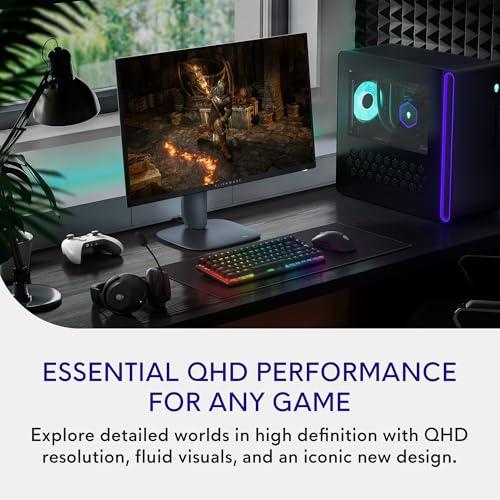
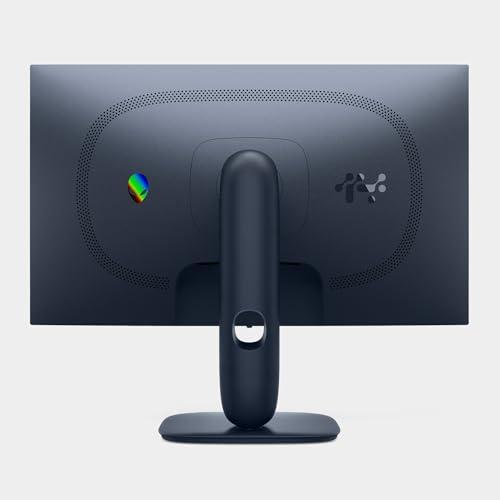
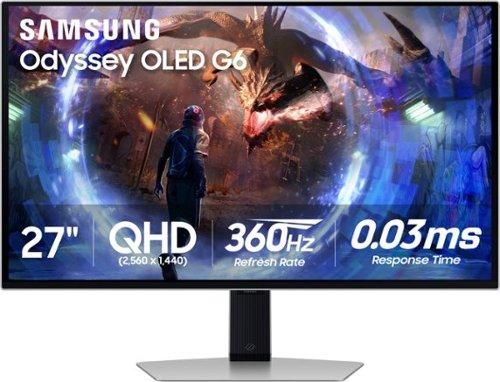
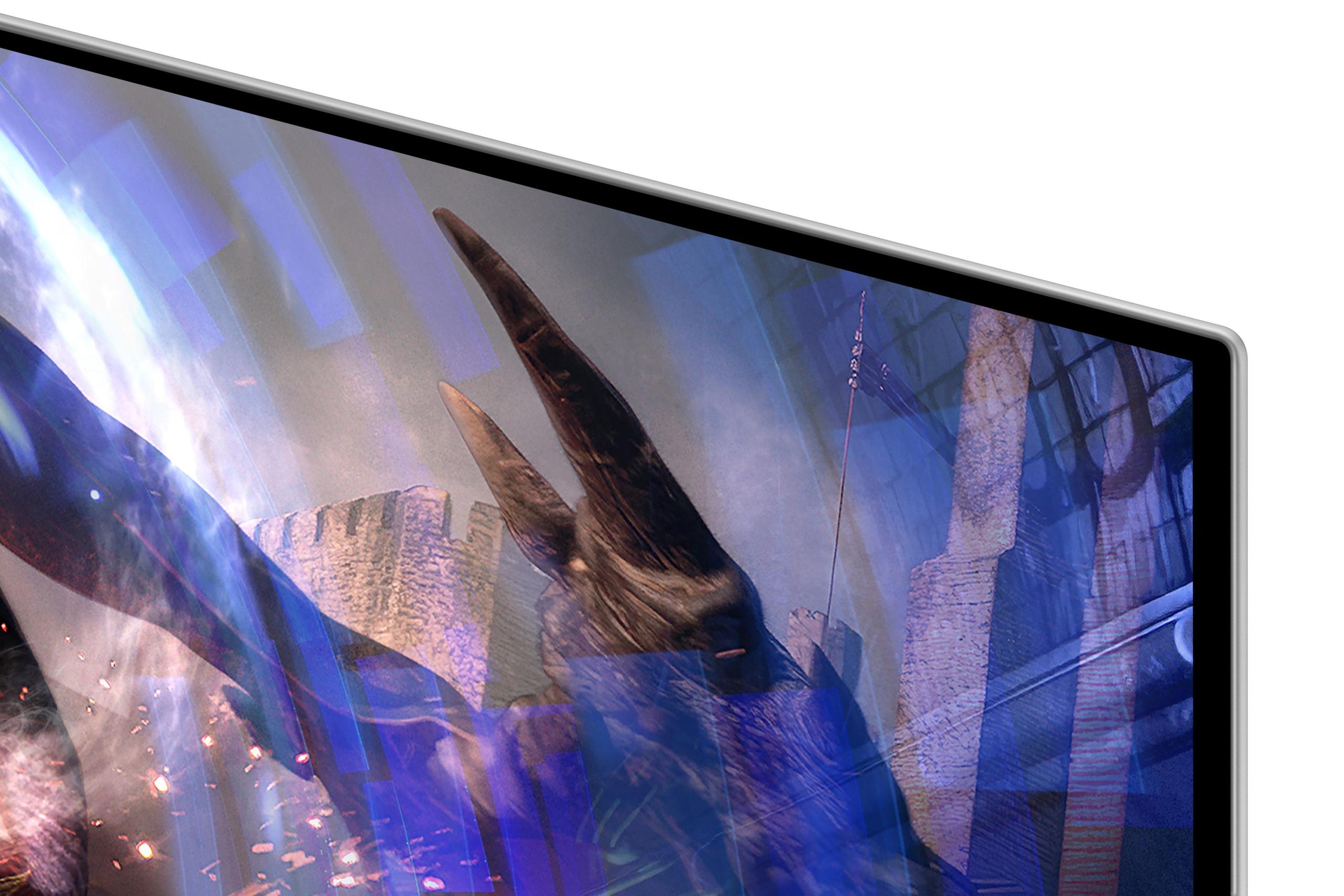
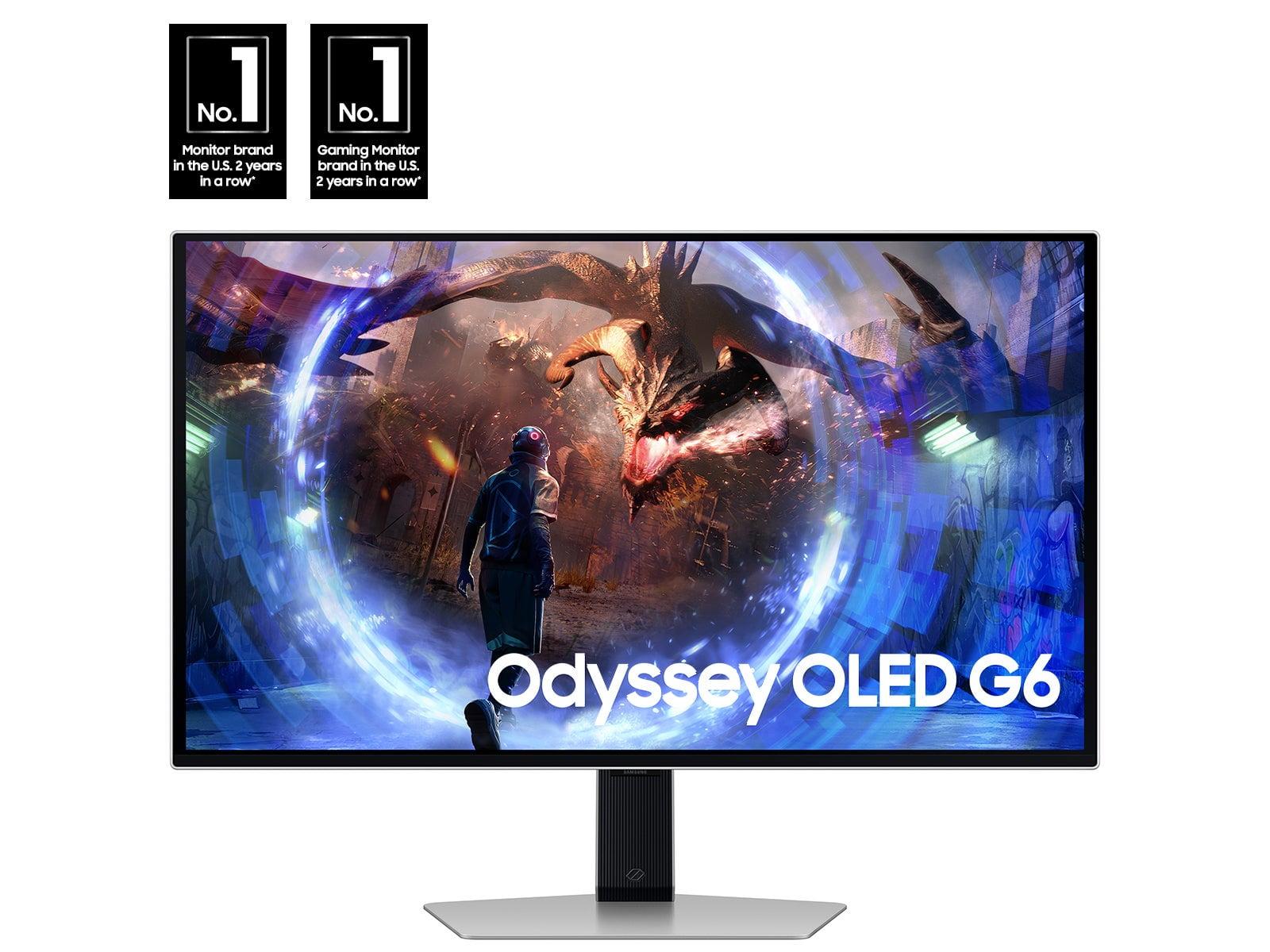

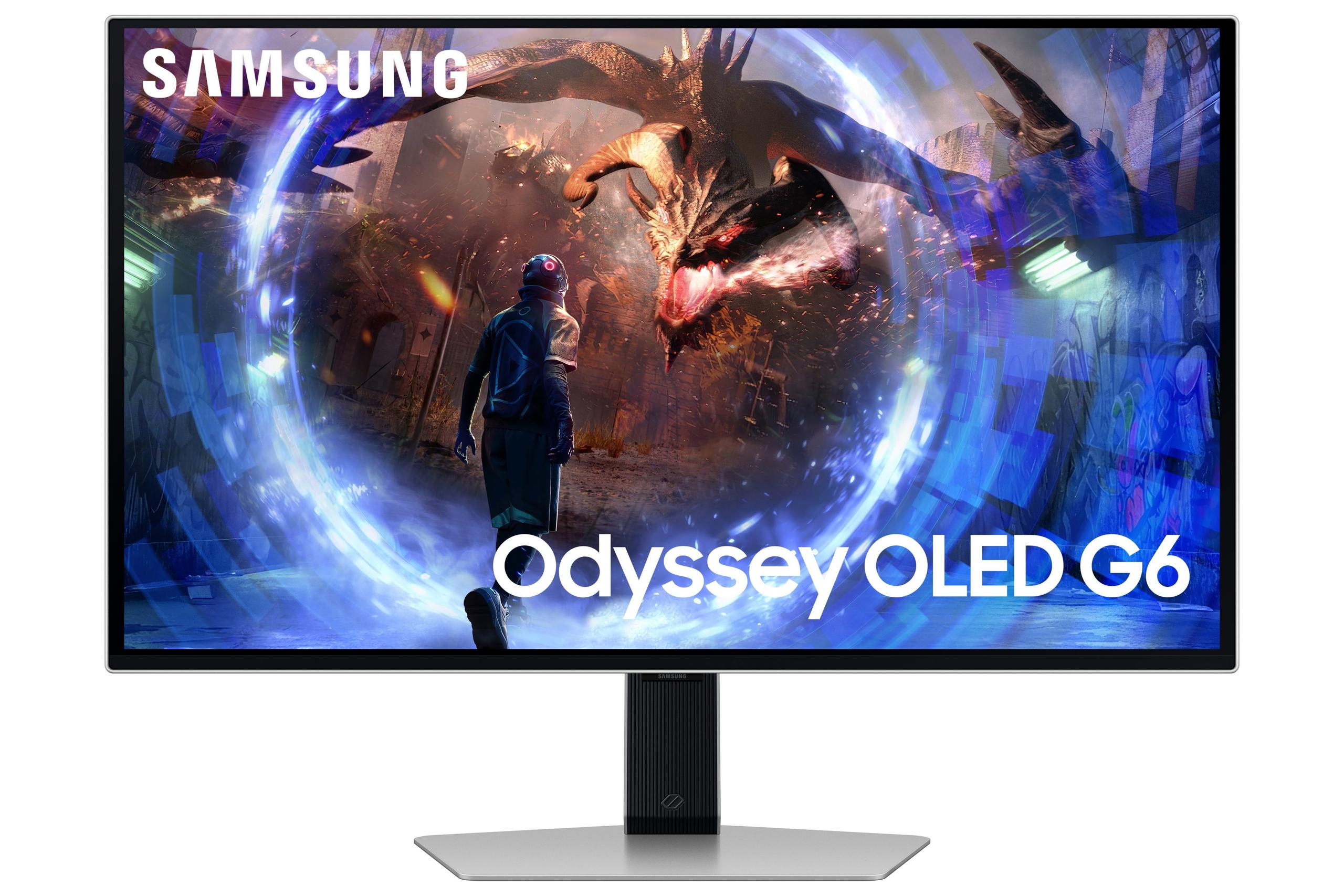
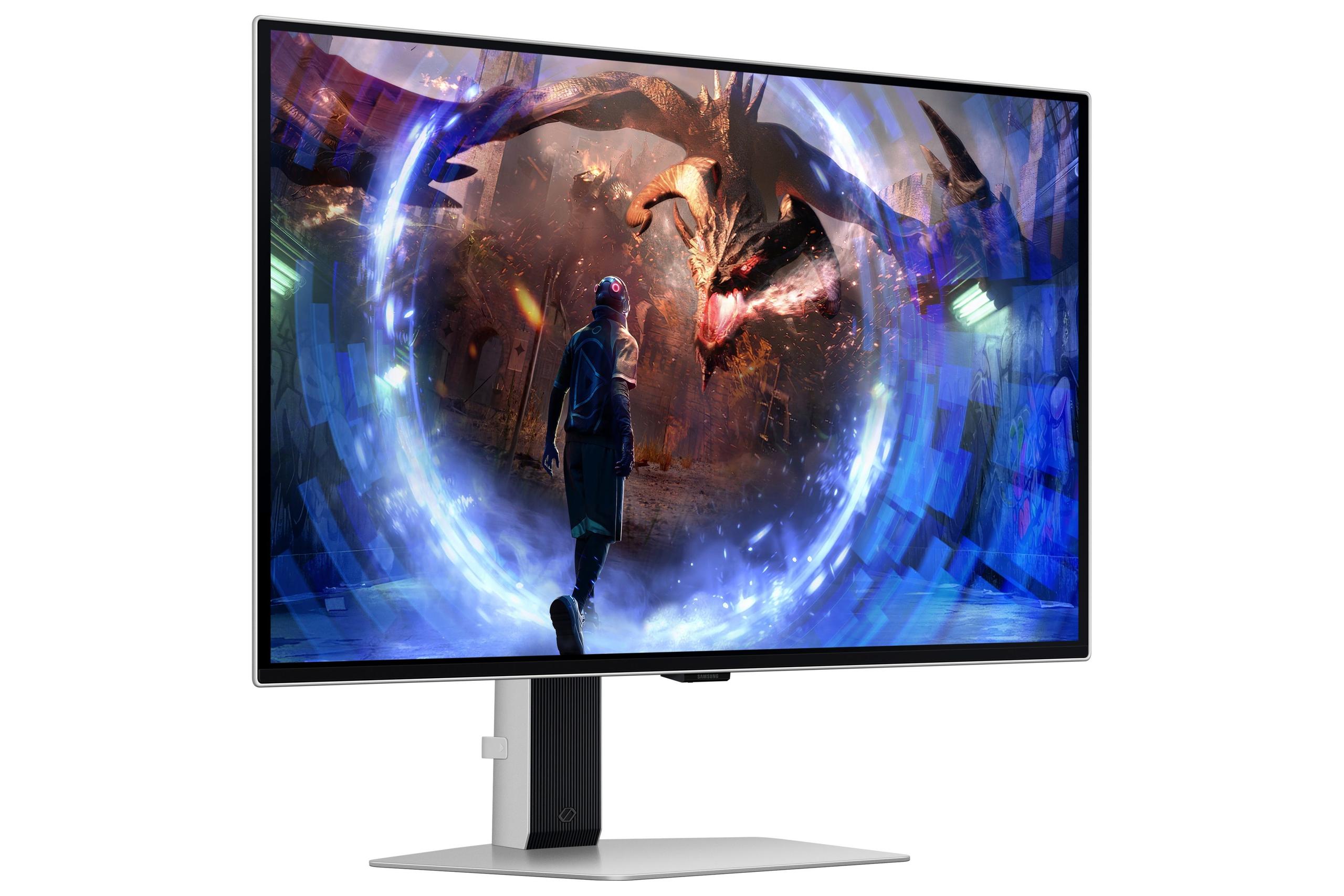
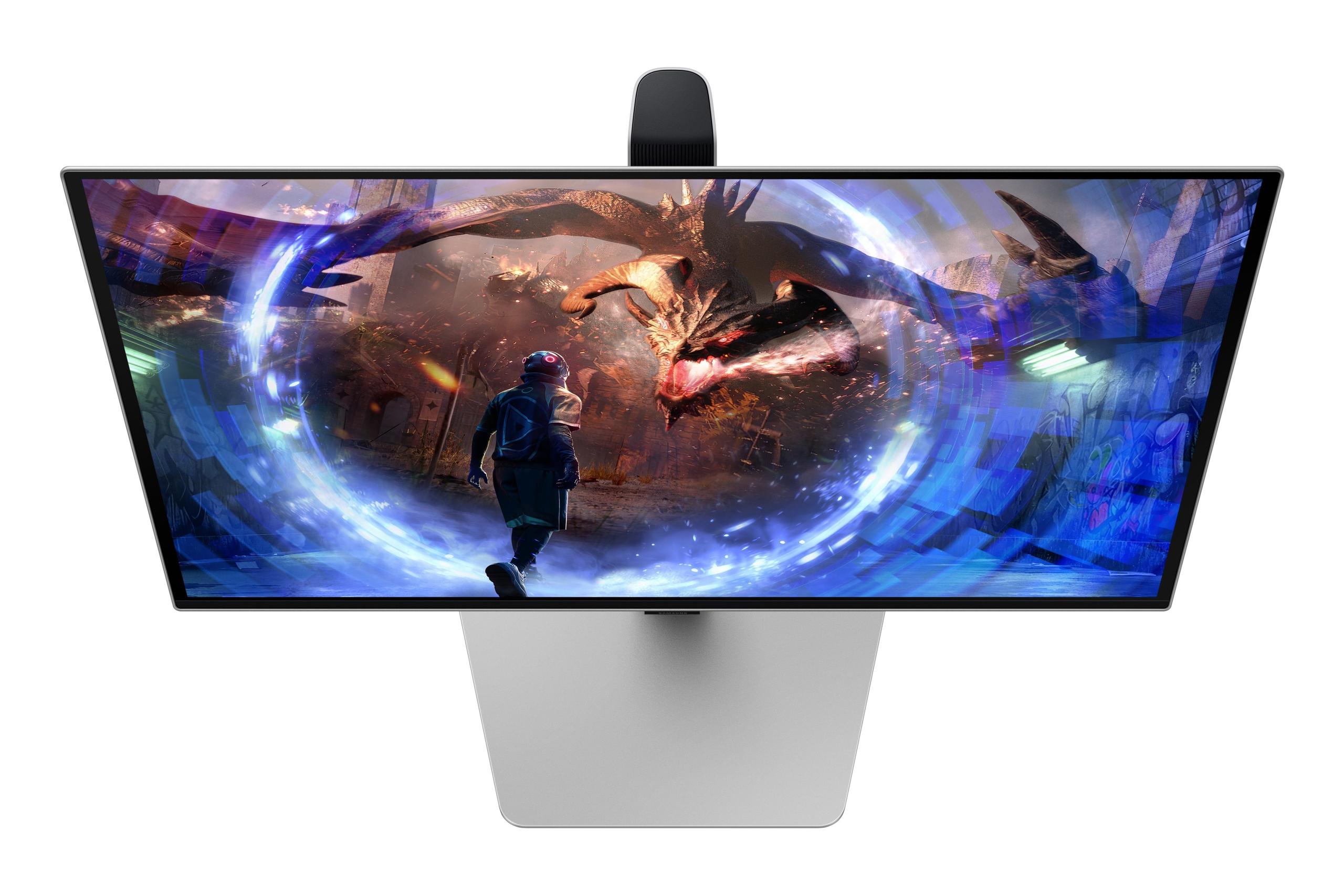
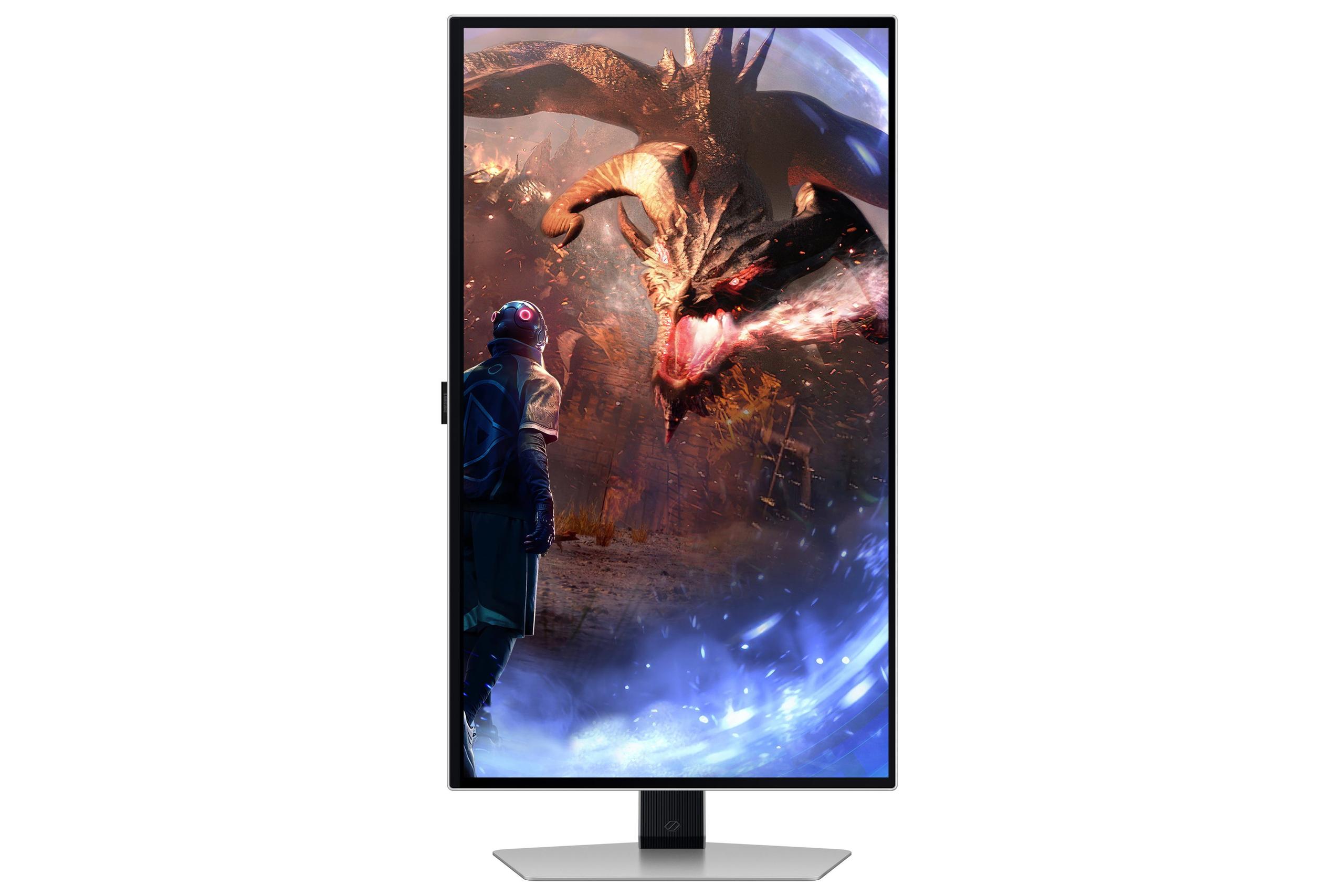

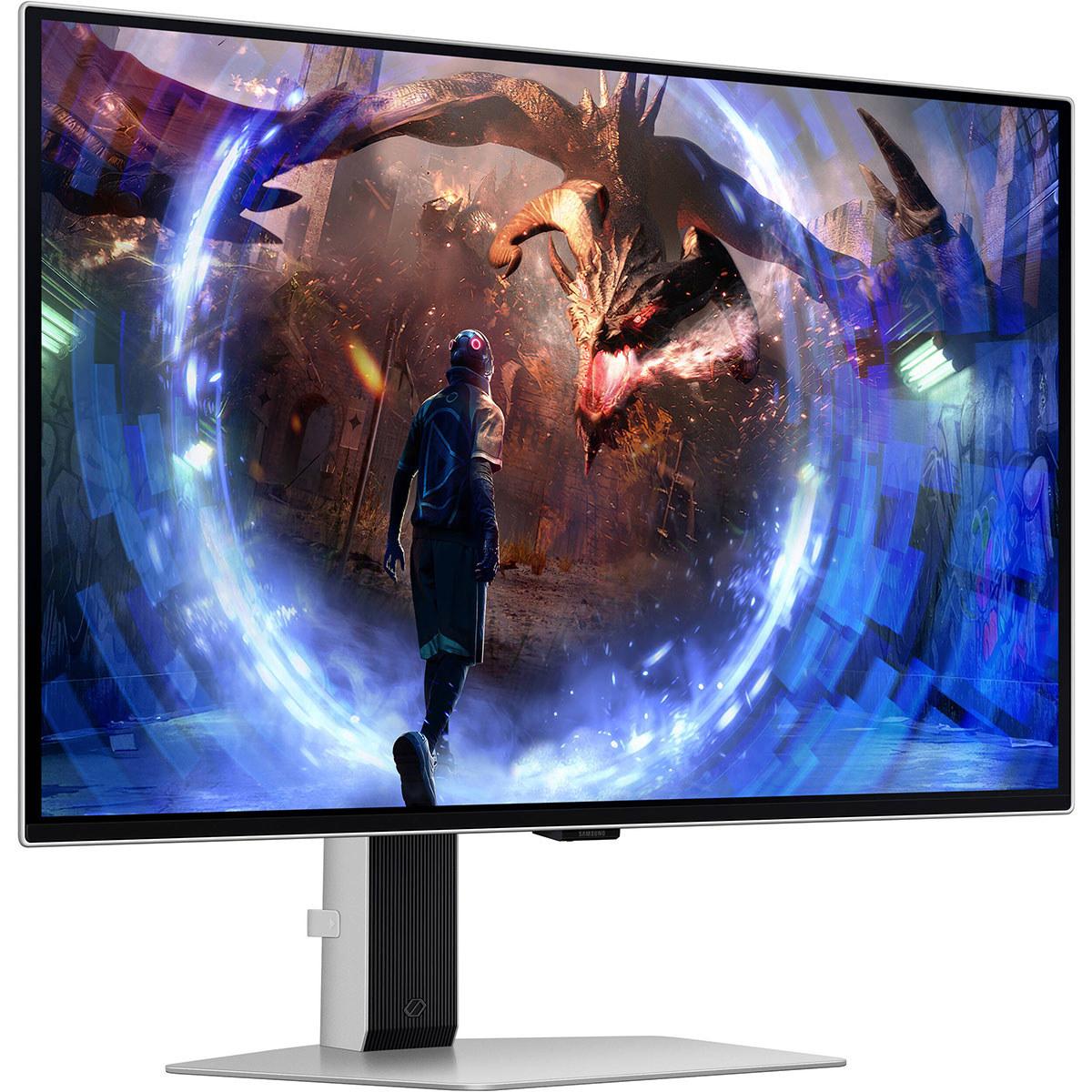
If you're shopping for a serious gaming monitor, you've probably noticed two distinct camps: affordable high-performance displays and premium cutting-edge panels. The Alienware 27 QHD 180Hz Gaming Monitor and Samsung 27" Odyssey OLED G6 QHD 360Hz Gaming Monitor perfectly represent this divide, offering dramatically different approaches to delivering smooth, competitive gaming experiences.
Gaming monitors differ from regular displays in several critical ways. While your typical office monitor prioritizes color accuracy and energy efficiency, gaming displays focus on speed above all else. The key metrics that separate gaming monitors from standard displays include refresh rate (how many times per second the screen updates), response time (how quickly pixels can change colors), and input lag (the delay between your mouse click and the action appearing on screen).
These specifications directly impact your gaming performance. A slow monitor can make fast-moving objects appear blurry, cause screen tearing when your graphics card and display fall out of sync, or create a noticeable delay between your inputs and what you see happening in-game. For competitive players, these milliseconds can mean the difference between landing that crucial headshot or watching your opponent eliminate you first.
Both the Alienware AW2725DM and Samsung Odyssey OLED G6 target serious gamers, but they take fundamentally different approaches to achieving peak performance.
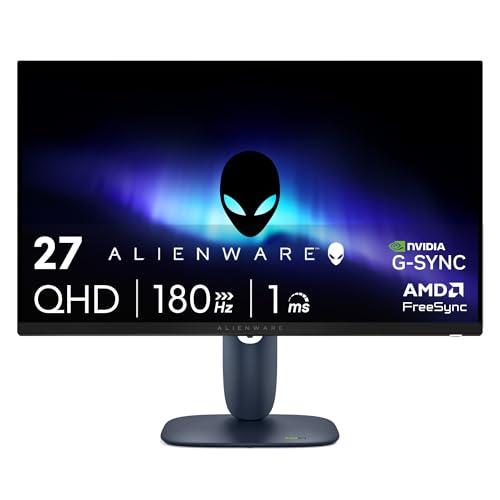
The Alienware 27 QHD 180Hz Gaming Monitor, released in 2023, represents the "smart value" approach to gaming monitors. At the time of writing, it's priced significantly lower than premium competitors while delivering impressive specifications that satisfy most gaming scenarios. Alienware built this monitor around a Fast IPS panel—a newer LCD technology that bridges the gap between traditional IPS displays (known for excellent colors and viewing angles) and TN panels (known for speed).
The Samsung Odyssey OLED G6, launched in 2024, takes the opposite approach: spare no expense in pursuit of ultimate performance. Samsung leveraged their latest QD-OLED (Quantum Dot Organic Light Emitting Diode) technology to create what many consider the fastest gaming monitor available. The price reflects this premium positioning, costing roughly four times more than the Alienware at the time of writing.
The most fundamental difference between these monitors lies in their panel technology, which affects everything from color reproduction to response times.
The Alienware AW2725DM uses Fast IPS technology, an evolution of traditional IPS panels optimized for gaming. IPS (In-Plane Switching) panels work by rotating liquid crystals between polarizing filters, controlled by thin-film transistors. The "Fast" designation indicates improved crystal response times compared to standard IPS displays, reducing the blur that plagued older IPS gaming monitors.
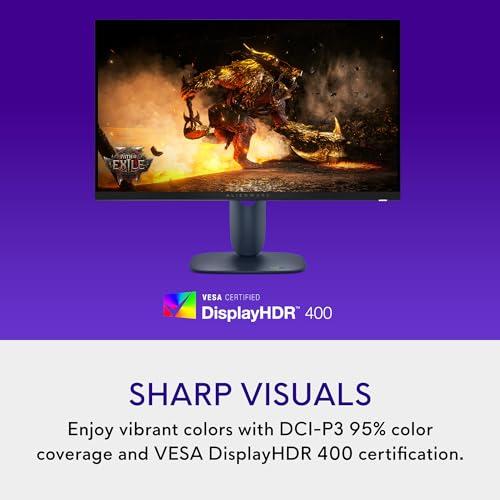
This Fast IPS panel delivers 95% DCI-P3 color coverage—a professional color standard that ensures vibrant, accurate colors across most content. The panel achieves a respectable 1000:1 contrast ratio and peaks at 400 nits brightness, making it versatile across different lighting conditions. Most importantly for mixed-use scenarios, it maintains these specifications consistently across the entire screen.
The Samsung Odyssey OLED G6 uses QD-OLED technology, which represents a significant leap forward in display technology. Unlike LCD panels that require a backlight, OLED pixels generate their own light. When displaying black, OLED pixels simply turn off completely, creating true blacks and an essentially infinite contrast ratio of 1,000,000:1.
The "QD" (Quantum Dot) component enhances traditional OLED technology by using quantum dots to improve color purity and brightness. This hybrid approach addresses some traditional OLED weaknesses while maintaining the technology's core advantages: perfect blacks, pixel-level brightness control, and incredibly fast response times.
Here's where the technologies show their most significant trade-off. The Alienware monitor outputs 400 nits of brightness consistently across the entire screen, making it suitable for bright rooms, office environments, or any scenario where ambient light might compete with the display.
The Samsung OLED G6 peaks at around 250 nits for full-screen content, though it can achieve much higher brightness for small highlights in HDR content. This brightness limitation isn't a flaw—it's an inherent characteristic of current OLED technology. For gaming in controlled lighting environments or dedicated gaming rooms, this brightness proves perfectly adequate while enabling the OLED's superior contrast performance.
Response time measures how quickly pixels can transition from one color to another, typically measured in gray-to-gray (GtG) transitions. Slow response times create ghosting—faint trails behind moving objects that can obscure targets in competitive games.
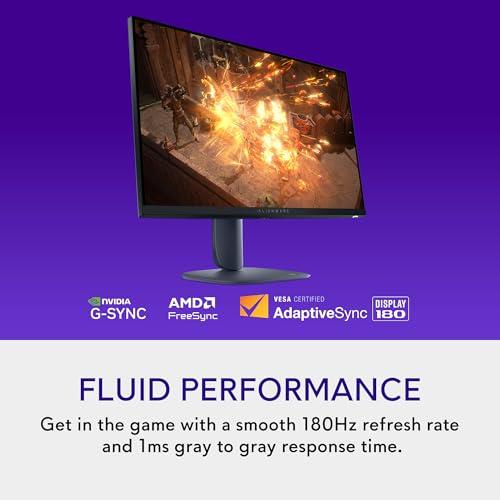
The Alienware AW2725DM offers multiple response time modes: 4ms (Fast) for optimal image quality, 2ms (Super Fast) for balanced performance, and 1ms (Extreme) for maximum speed with potential overshoot artifacts. This flexibility lets users prioritize either image quality or speed depending on their gaming preferences and competitive requirements.
The Samsung Odyssey OLED G6 achieves an astounding 0.03ms response time thanks to OLED's pixel-level control. Unlike LCD pixels that must physically rotate crystals and wait for backlight changes, OLED pixels switch on and off instantaneously. This creates virtually zero ghosting even in the fastest-moving scenes, providing a clear advantage for competitive gaming.
Refresh rate determines how many times per second your monitor can display new images. Higher refresh rates create smoother motion, reduce perceived input lag, and allow your graphics card to display more frames per second when performance permits.
The Alienware monitor supports up to 180Hz, which represents excellent performance for most gaming scenarios. Moving from standard 60Hz to 180Hz creates a dramatic improvement in motion smoothness, particularly noticeable in fast-paced games like first-person shooters or racing titles.
The Samsung OLED G6 pushes this to 360Hz—double the Alienware's refresh rate. While the difference between 180Hz and 360Hz is less dramatic than jumping from 60Hz to 180Hz, competitive esports players often notice the improvement in tracking fast-moving targets and maintaining smooth aim during rapid camera movements.
Input lag measures the time between your mouse click or key press and the corresponding action appearing on screen. Both monitors excel in this area, with input lag measurements well below the threshold where most players would notice delays. The Samsung OLED G6 has a slight advantage due to OLED's instantaneous pixel response, but both monitors perform excellently for competitive gaming.
Both monitors support variable refresh rate technologies that synchronize your graphics card's output with the display's refresh rate. This eliminates screen tearing (where different parts of the image update at different times) and reduces stuttering when frame rates fluctuate.
The Alienware AW2725DM and Samsung Odyssey OLED G6 both support AMD FreeSync and NVIDIA G-SYNC Compatible technologies, ensuring smooth gameplay regardless of your graphics card manufacturer. The implementation performs similarly on both displays, providing tear-free gaming across a wide range of frame rates.
High Dynamic Range (HDR) expands the contrast and color range displays can reproduce, creating more realistic lighting in supported games and content. Both monitors support HDR, but with different approaches and results.
The Alienware monitor carries VESA DisplayHDR 400 certification, indicating it can display HDR content with peak brightness of 400 nits. While this represents an improvement over standard displays, many HDR experts consider 400 nits the minimum threshold for meaningful HDR benefits. The IPS panel provides good HDR performance for gaming, though not exceptional compared to higher-tier HDR displays.
The Samsung OLED G6 supports DisplayHDR True Black 400, a more stringent standard that requires perfect black levels alongside the brightness requirements. OLED's ability to turn off individual pixels creates the infinite contrast ratio that makes HDR content truly shine. Dark scenes maintain perfect blacks while bright highlights pop with realistic intensity, creating a more immersive gaming experience.
Both displays deliver excellent color reproduction, though with different strengths. The Alienware monitor provides consistent, accurate colors across the entire screen with wide viewing angles—important for productivity work or content creation alongside gaming.
The Samsung OLED G6 offers superior color depth and accuracy in dark scenes thanks to its perfect black levels, but some users report slight color shifts in very bright environments due to OLED's reflective properties, despite Samsung's anti-glare coating.
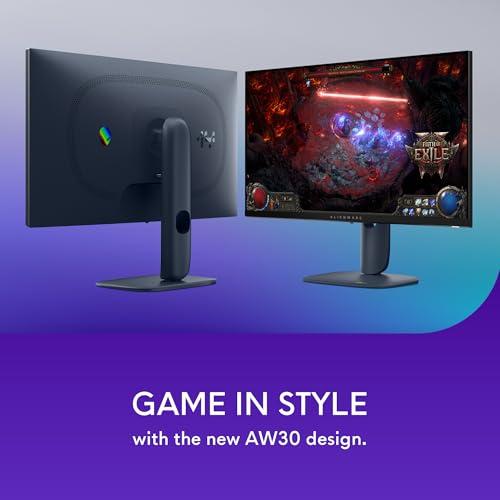
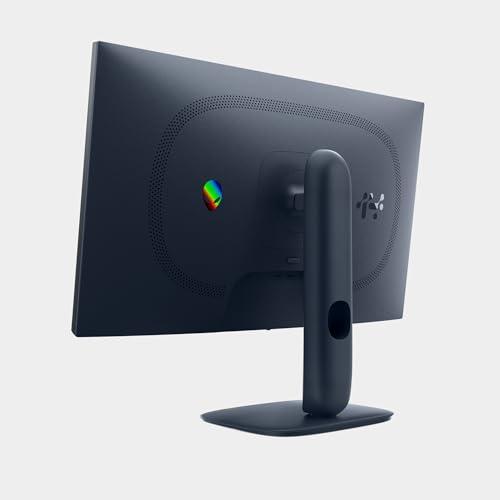
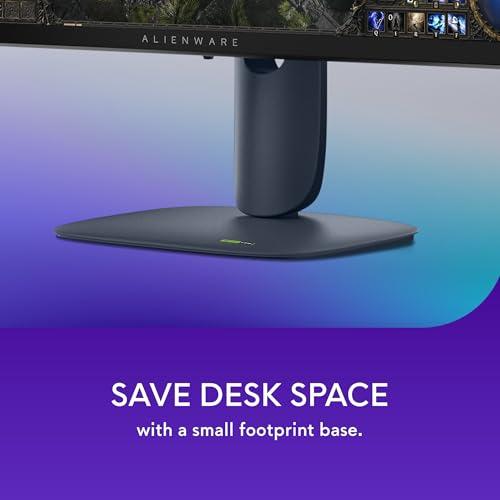
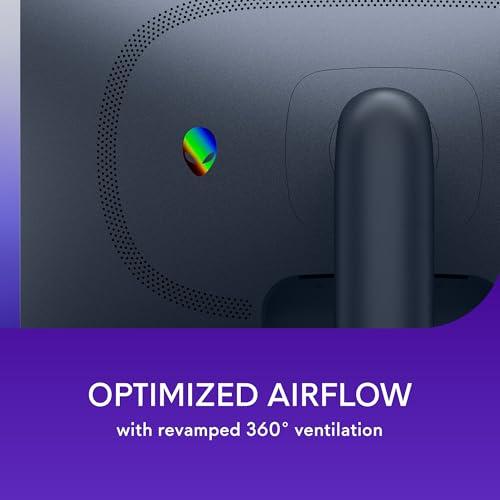
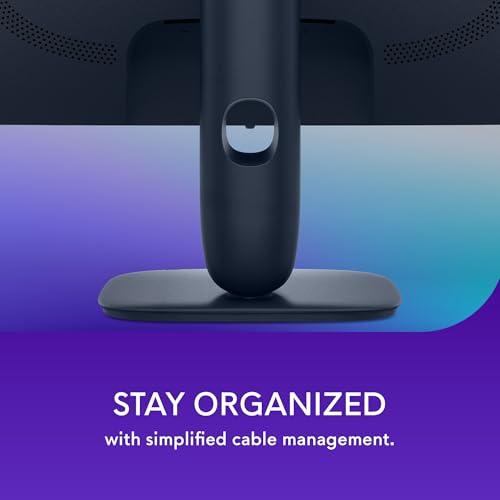
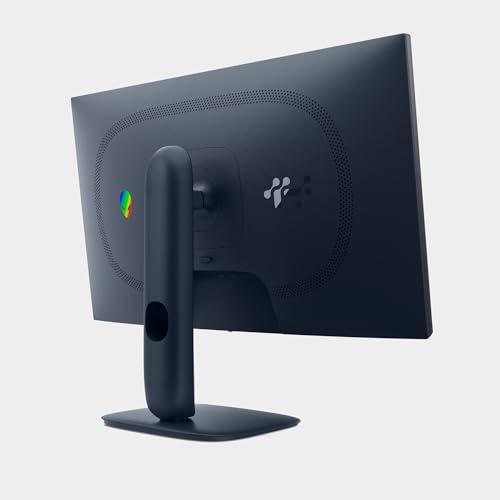
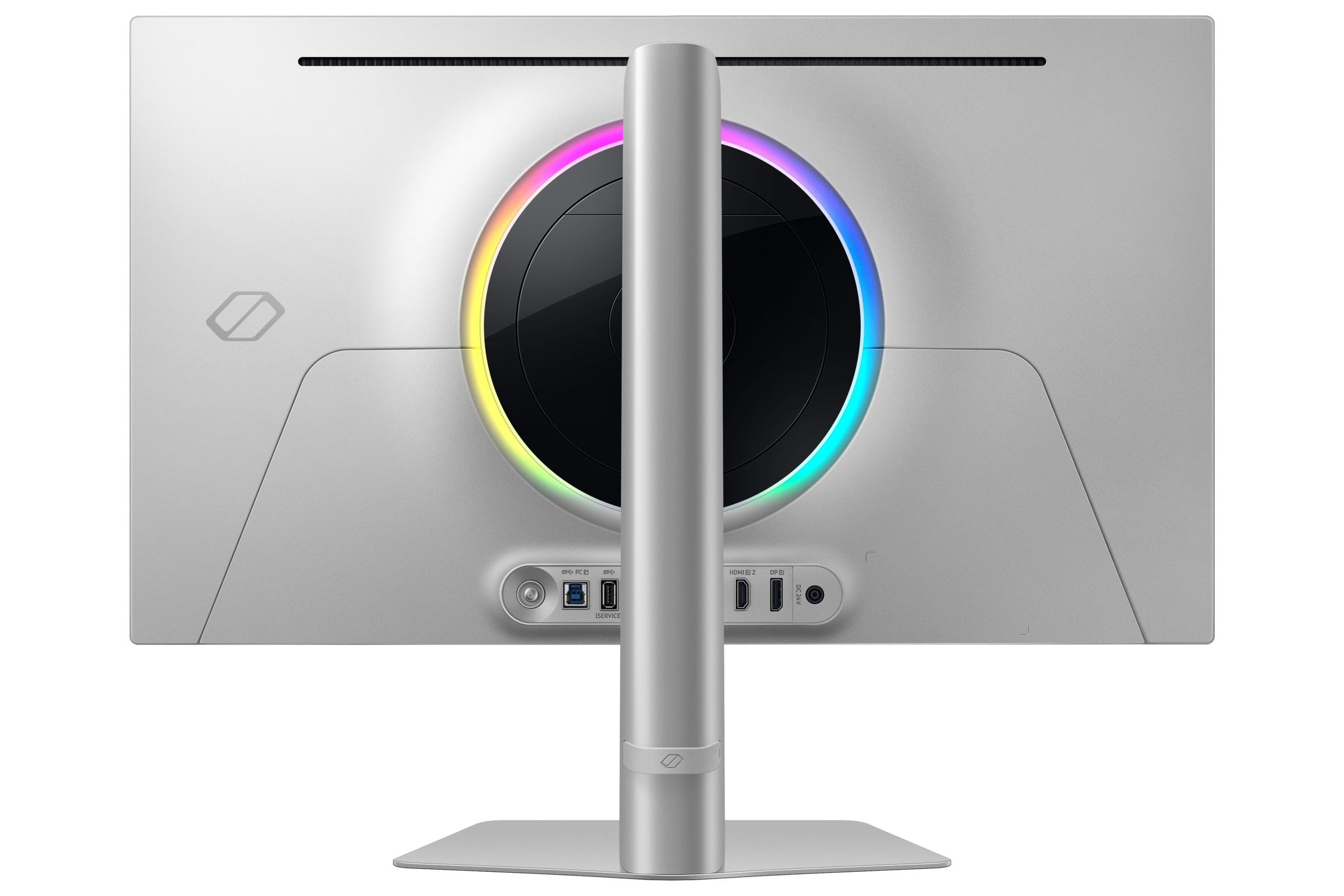
Both manufacturers prioritize user comfort with highly adjustable stands supporting height, tilt, swivel, and pivot adjustments. The Alienware AW2725DM features a sturdy, utilitarian design focused on functionality, while the Samsung Odyssey OLED G6 adds aesthetic flourishes like customizable RGB lighting and a sleeker metal construction.
Both monitors support VESA mounting for users who prefer aftermarket stands or wall mounting. The build quality feels premium on both displays, reflecting their positioning as serious gaming equipment rather than basic monitors.
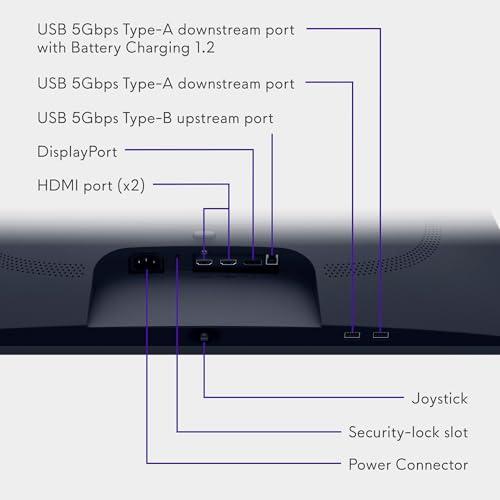
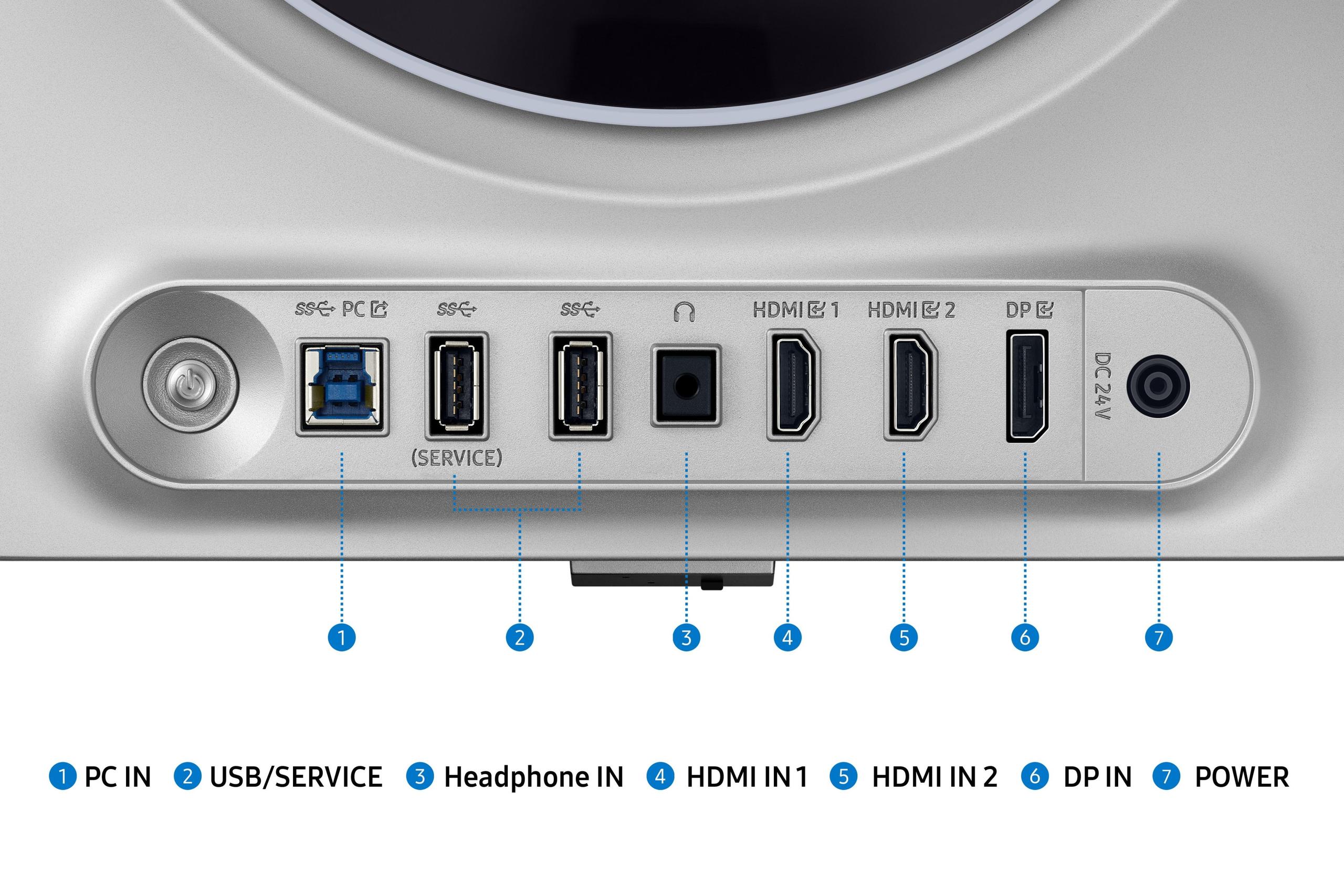
Modern connectivity proves crucial for supporting multiple devices and future-proofing your setup. Both monitors include dual HDMI 2.1 ports and DisplayPort 1.4, ensuring compatibility with current and next-generation gaming consoles alongside PC gaming.
The Samsung OLED G6 includes a more comprehensive USB hub for peripheral connectivity, while the Alienware monitor focuses on essential connections without extra features that might increase cost.
For serious competitive players in games like Counter-Strike, Valorant, or Apex Legends, the Samsung Odyssey OLED G6 provides measurable advantages. The 0.03ms response time and 360Hz refresh rate create the smoothest, most responsive gaming experience available. Professional and aspiring professional players often consider these specifications essential for maintaining competitive edge.
However, the Alienware AW2725DM shouldn't be dismissed for competitive gaming. Its 180Hz refresh rate and 1ms response time (in Extreme mode) provide excellent performance that satisfies most competitive scenarios while offering significantly better value.
For players who enjoy various game genres—from competitive shooters to story-driven RPGs to strategy games—the Alienware monitor often makes more sense. Its superior brightness makes it more versatile across different room lighting conditions, while the excellent color reproduction enhances both competitive and cinematic gaming experiences.
The Fast IPS panel also excels for mixed-use scenarios where you might switch between gaming, productivity work, and media consumption throughout the day.
Neither monitor positions itself primarily as a home theater display, but both can serve this role in smaller spaces or dedicated gaming areas. The Samsung OLED G6 provides superior performance for dark room movie watching thanks to its perfect blacks and excellent HDR implementation.
The Alienware AW2725DM works better in brighter family rooms or spaces where ambient light control isn't possible, thanks to its higher peak brightness and anti-glare properties.
While both monitors target gaming primarily, creators should consider their different strengths. The Alienware monitor offers superior brightness for photo editing and consistent color reproduction across the entire screen. Its IPS panel provides the wide viewing angles important for collaborative work.
The Samsung OLED G6 excels for video editing and color grading work where perfect blacks and infinite contrast prove valuable, though its lower peak brightness might limit use in bright editing environments.
At the time of writing, these monitors represent dramatically different value propositions. The Alienware AW2725DM delivers roughly 85-90% of the gaming performance of premium monitors at approximately 25% of the cost. This exceptional price-to-performance ratio makes it attractive for budget-conscious gamers who want serious performance without premium pricing.
The Samsung Odyssey OLED G6 justifies its premium pricing through cutting-edge technology that delivers measurably superior performance. For users who can afford the investment and prioritize peak gaming performance, it represents the current pinnacle of gaming monitor technology.
Choose the Alienware 27 QHD 180Hz Gaming Monitor if you want excellent gaming performance with outstanding value, need a versatile display for mixed gaming and productivity use, game in bright environments where higher brightness matters, or are upgrading from a standard 60Hz display and want a dramatic improvement without premium pricing.
Choose the Samsung 27" Odyssey OLED G6 QHD 360Hz Gaming Monitor if you're a competitive esports player where milliseconds matter, can justify premium pricing for cutting-edge technology, primarily game in controlled lighting environments, want the absolute smoothest motion and fastest response times available, or have a high-end graphics card capable of driving high frame rates at 1440p resolution.
Both monitors represent excellent choices within their respective market segments. The Alienware monitor democratizes high-performance gaming displays, while the Samsung OLED G6 pushes the boundaries of what's currently possible in gaming monitor technology. Your choice should align with your gaming priorities, budget constraints, and use case requirements rather than following any universal "best" recommendation.
| Alienware 27 QHD 180Hz Gaming Monitor | Samsung 27" Odyssey OLED G6 QHD 360Hz Gaming Monitor |
|---|---|
| Panel Technology - Foundation that affects all visual performance | |
| Fast IPS LCD with backlight | QD-OLED with self-emitting pixels |
| Resolution - Determines image sharpness and GPU requirements | |
| 2560 x 1440 (QHD) | 2560 x 1440 (QHD) |
| Refresh Rate - Higher rates create smoother motion in fast games | |
| 180Hz (excellent for most gaming) | 360Hz (overkill for casual, essential for esports) |
| Response Time - Lower times reduce ghosting in fast movement | |
| 1-4ms depending on overdrive setting | 0.03ms (virtually instantaneous) |
| Peak Brightness - Critical for bright rooms and HDR performance | |
| 400 nits (good for mixed lighting) | 250 nits (requires controlled lighting) |
| Contrast Ratio - Affects depth and realism in dark scenes | |
| 1,000:1 (typical LCD performance) | 1,000,000:1 (perfect blacks, infinite contrast) |
| Color Coverage - Important for accurate and vibrant visuals | |
| 95% DCI-P3 (excellent color reproduction) | 99% DCI-P3 (superior color accuracy) |
| HDR Support - Enhances brightness range in compatible content | |
| DisplayHDR 400 (good HDR performance) | DisplayHDR True Black 400 (exceptional HDR) |
| Adaptive Sync - Eliminates screen tearing and stuttering | |
| AMD FreeSync Premium Pro, G-SYNC Compatible | AMD FreeSync Premium Pro, G-SYNC Compatible |
| Connectivity - Affects compatibility with multiple devices | |
| 2x HDMI 2.1, 1x DisplayPort 1.4 | 2x HDMI 2.1, 1x DisplayPort 1.4, USB hub |
| Anti-Glare Coating - Reduces reflections from room lighting | |
| Standard anti-glare coating | OLED Glare Free technology (superior) |
| Burn-in Protection - OLED-specific technology to prevent image retention | |
| Not applicable (LCD technology) | OLED Safeguard+ with dynamic cooling system |
| Target Use Case - Who benefits most from each approach | |
| Mixed gaming/productivity, budget-conscious performance | Competitive esports, premium visual experience |
| Value Proposition - Performance relative to investment required | |
| Exceptional performance-per-dollar | Premium pricing for cutting-edge technology |
The Samsung 27" Odyssey OLED G6 QHD 360Hz Gaming Monitor is superior for competitive gaming due to its 360Hz refresh rate and 0.03ms response time. These specifications provide the smoothest motion and fastest pixel response available, giving competitive players a measurable advantage in esports titles. The Alienware 27 QHD 180Hz Gaming Monitor still offers excellent competitive performance at 180Hz with 1ms response time, but the Samsung provides the ultimate edge for serious competitive players.
The primary difference is panel technology: the Alienware 27 QHD 180Hz Gaming Monitor uses Fast IPS LCD technology, while the Samsung 27" Odyssey OLED G6 QHD 360Hz Gaming Monitor uses QD-OLED technology. This affects everything from response times (1ms vs 0.03ms) to contrast ratios (1,000:1 vs 1,000,000:1) and refresh rates (180Hz vs 360Hz). The OLED provides superior visual quality and speed, while the IPS offers better brightness and value.
The Alienware 27 QHD 180Hz Gaming Monitor offers significantly better value for money, delivering approximately 85-90% of premium gaming performance at roughly one-quarter the cost of the Samsung 27" Odyssey OLED G6 QHD 360Hz Gaming Monitor. Unless you're a competitive esports player who needs every millisecond advantage, the Alienware provides exceptional performance-per-dollar for most gaming scenarios.
Yes, but the Alienware 27 QHD 180Hz Gaming Monitor is better suited for mixed productivity and gaming use. Its 400 nits brightness makes it more versatile in various lighting conditions, and IPS panels traditionally offer excellent color accuracy for work tasks. The Samsung 27" Odyssey OLED G6 QHD 360Hz Gaming Monitor can handle productivity work but its 250 nits brightness may be limiting in bright office environments.
The Alienware 27 QHD 180Hz Gaming Monitor performs much better in bright rooms due to its 400 nits peak brightness compared to the Samsung 27" Odyssey OLED G6 QHD 360Hz Gaming Monitor's 250 nits. If your gaming setup is in a bright room with windows or overhead lighting, the Alienware will maintain better visibility and contrast, while the Samsung OLED performs best in controlled lighting environments.
Both monitors support HDR, but with different capabilities. The Alienware 27 QHD 180Hz Gaming Monitor features DisplayHDR 400 certification, providing good HDR performance for gaming. The Samsung 27" Odyssey OLED G6 QHD 360Hz Gaming Monitor supports DisplayHDR True Black 400, which delivers superior HDR experience due to OLED's perfect blacks and infinite contrast ratio, creating more realistic lighting effects in HDR games.
The Samsung 27" Odyssey OLED G6 QHD 360Hz Gaming Monitor offers superior color accuracy with 99% DCI-P3 coverage and perfect black levels that enhance color depth and vibrancy. The Alienware 27 QHD 180Hz Gaming Monitor provides excellent color accuracy at 95% DCI-P3 coverage with consistent performance across the entire screen. Both deliver great colors, but the OLED technology gives Samsung the edge in overall color reproduction.
Burn-in is only a concern with the Samsung 27" Odyssey OLED G6 QHD 360Hz Gaming Monitor since it uses OLED technology. However, Samsung includes OLED Safeguard+ technology with dynamic cooling systems and automatic burn-in prevention features to minimize this risk. The Alienware 27 QHD 180Hz Gaming Monitor uses LCD technology, so burn-in is not a concern, making it more worry-free for users who display static content for extended periods.
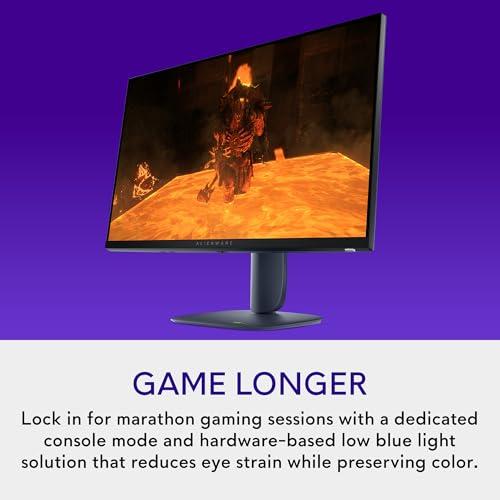
Both monitors work well with gaming consoles, but the Samsung 27" Odyssey OLED G6 QHD 360Hz Gaming Monitor provides a more premium console gaming experience with its superior contrast and HDR performance. However, consoles typically don't output at 360Hz, so you won't fully utilize the Samsung's speed advantage. The Alienware 27 QHD 180Hz Gaming Monitor offers excellent console gaming performance while being more budget-friendly for this use case.
The Samsung 27" Odyssey OLED G6 QHD 360Hz Gaming Monitor excels at movie watching due to its perfect blacks, infinite contrast, and superior HDR performance, creating a cinematic experience especially in dark room viewing. The Alienware 27 QHD 180Hz Gaming Monitor also handles movies well with good color reproduction and brightness, but lacks the dramatic contrast that makes the OLED ideal for film content.
Casual gamers should typically choose the Alienware 27 QHD 180Hz Gaming Monitor due to its excellent performance-to-value ratio and versatility for mixed use. The 180Hz refresh rate and Fast IPS panel provide a significant upgrade from standard monitors without the premium cost. The Samsung 27" Odyssey OLED G6 QHD 360Hz Gaming Monitor offers superior performance but at a much higher cost that casual gamers may not fully utilize.
For the Alienware 27 QHD 180Hz Gaming Monitor, a mid-to-high-end graphics card like RTX 4060 Ti or better can drive 180Hz at 1440p in many games. The Samsung 27" Odyssey OLED G6 QHD 360Hz Gaming Monitor requires a high-end graphics card like RTX 4070 or better to approach 360fps at 1440p resolution. Both monitors will benefit from powerful GPUs, but the Samsung demands more graphics processing power to fully utilize its capabilities.
We've done our best to create useful and informative comparisons to help you decide what product to buy. Our research uses advanced automated methods to create this comparison and perfection is not possible - please contact us for corrections or questions. These are the sites we've researched in the creation of this article: bestbuy.com - bestbuy.com - youtube.com - dell.com - tweaktown.com - dell.com - rtings.com - manuals.plus - tomshardware.com - displayspecifications.com - youtube.com - youtube.com - displayspecifications.com - dell.com - dellstore.com - ebay.com - bestbuy.com - gamesradar.com - gamesradar.com - versus.com - youtube.com - versus.com - player2.net.au - youtube.com - rtings.com - youtube.com - samsung.com - files.bbystatic.com - techpowerup.com - samsung.com - bestbuy.com - samsung.com - bhphotovideo.com - bestbuy.com - youtube.com - de.shi.com - pangoly.com

Privacy Policy
Terms and Conditions - Affiliate Policy
Home Security
© Copyright 2008-2026.
11816 Inwood Rd #1211, Dallas, TX 75244