

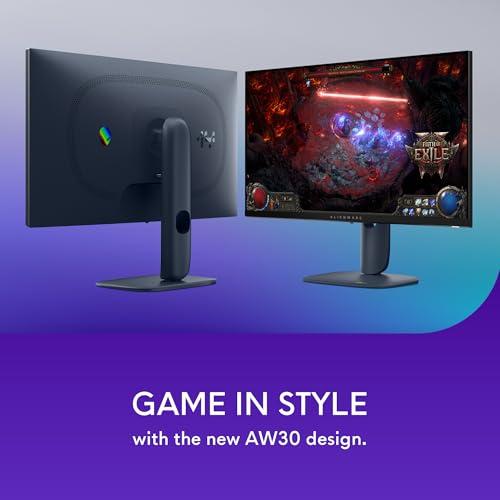
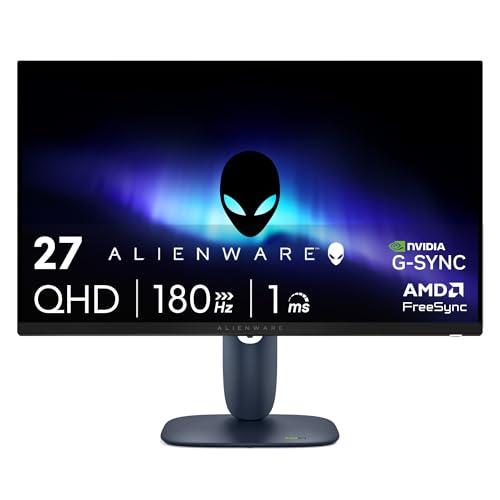
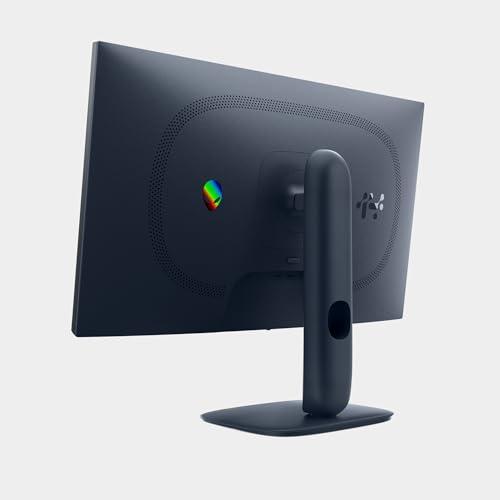
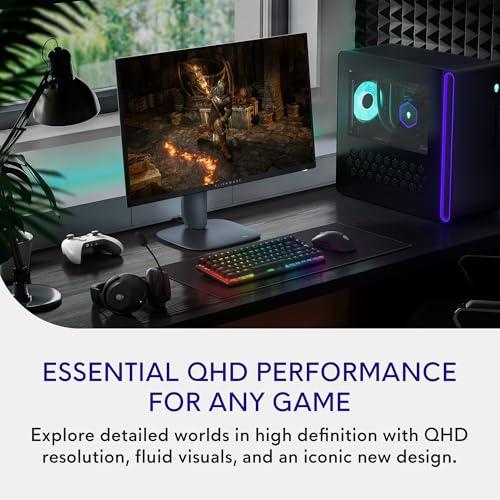


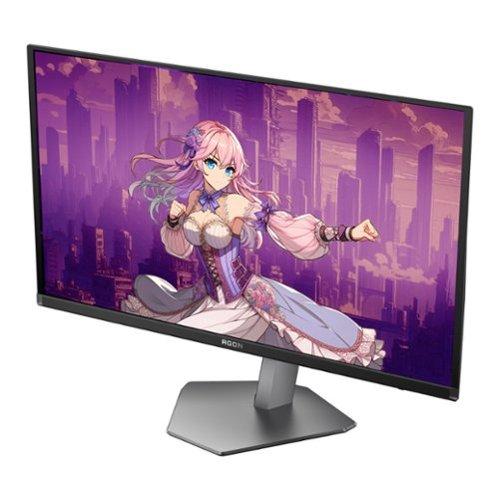
The gaming monitor market in 2024 presents an interesting paradox. On one hand, you can get excellent gaming performance for less money than ever before. On the other, breakthrough technologies like OLED panels are finally becoming accessible to mainstream gamers. This creates a perfect case study when comparing two fundamentally different approaches to 27-inch QHD gaming.
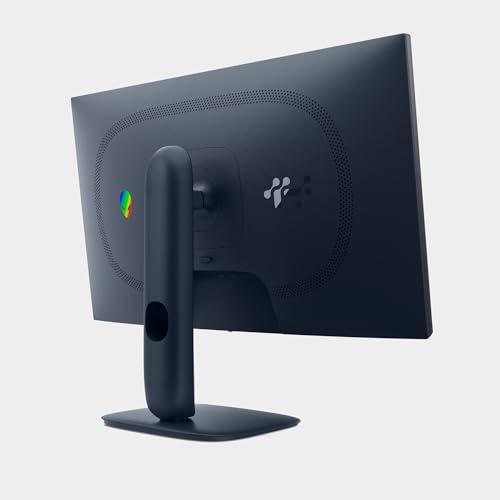
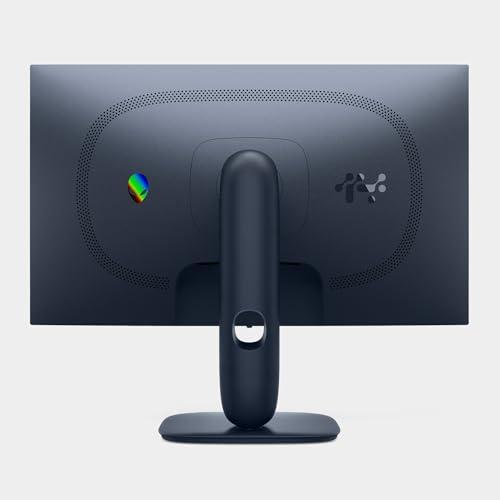
The Alienware 27 QHD 180Hz Gaming Monitor and AOC Agon Pro 27" QD-OLED 240Hz Gaming Monitor represent this divide perfectly. At the time of writing, these monitors sit roughly $300 apart in pricing, but the gap in technology and performance tells a much more complex story about what gamers actually need versus what they might want.
Before diving into specifics, it's crucial to understand what separates different panel technologies. The Alienware monitor uses Fast IPS (In-Plane Switching) technology with LED backlighting—essentially an evolved version of LCD technology that's dominated monitors for decades. IPS panels work by twisting liquid crystals between glass layers, with an LED backlight providing illumination. This creates the familiar bright, colorful displays most people associate with modern monitors.
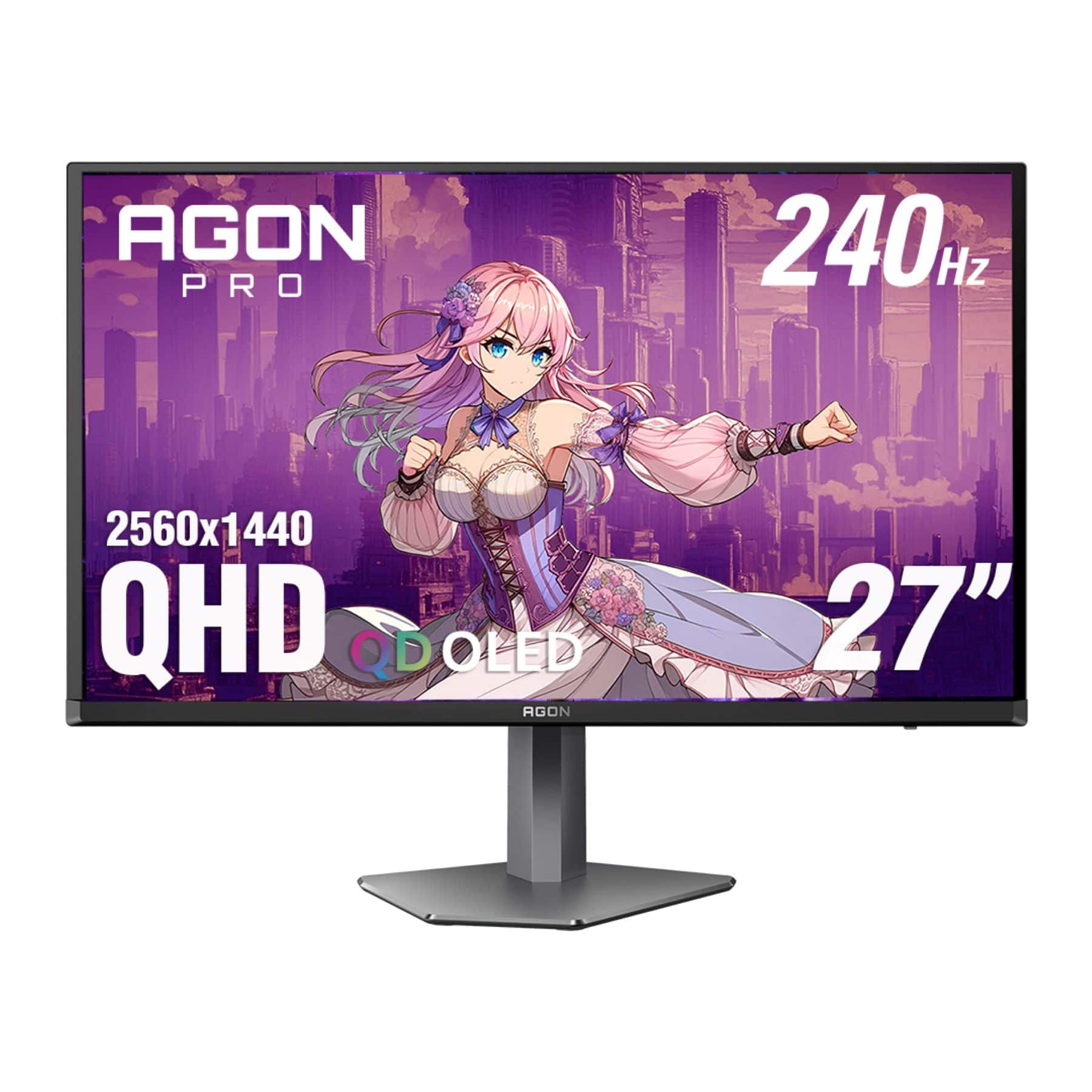
The AOC Agon Pro, released in 2024, represents something entirely different. QD-OLED (Quantum Dot Organic Light Emitting Diode) technology eliminates the backlight entirely. Instead, each pixel generates its own light using organic compounds that glow when electricity passes through them. The "QD" part adds a quantum dot layer that enhances color accuracy beyond standard OLED panels.
This fundamental difference affects everything from how fast the display can change images to how deep the blacks appear. It's like comparing a flashlight shining through colored glass (IPS) to thousands of tiny colored lightbulbs that can turn on and off instantly (QD-OLED).
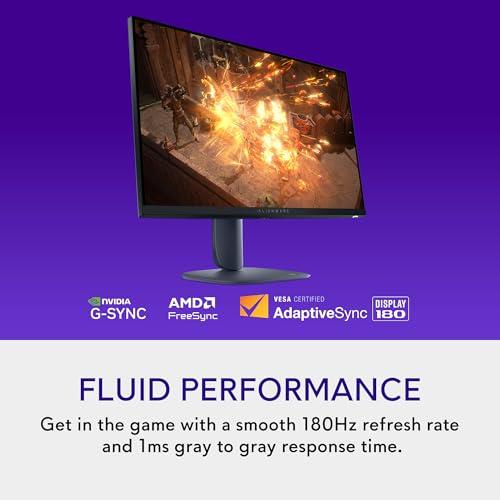
Response time measures how quickly individual pixels can change from one color to another, typically measured in milliseconds (ms). Here's where the technology gap becomes immediately apparent. The Alienware achieves a respectable 2ms actual response time in its optimal setting, though marketing materials claim 1ms under specific conditions that affect image quality.
The AOC delivers 0.03ms response time—that's roughly 67 times faster. To put this in perspective, if the Alienware's pixels were runners completing a 100-meter dash, the AOC's pixels would finish before the Alienware's even heard the starting gun.
This difference matters tremendously in fast-paced games. Motion blur, that subtle smearing you might notice when tracking enemies in shooters like Valorant or CS2, virtually disappears with OLED technology. Based on extensive user feedback and professional reviews, competitive gamers consistently report improved tracking accuracy and reduced eye strain during long gaming sessions with ultra-fast response times.
Refresh rate, measured in Hertz (Hz), indicates how many new images the monitor can display per second. The Alienware maxes out at 180Hz, while the AOC reaches 240Hz. Both represent significant upgrades from the 60Hz standard displays many users are upgrading from.
The practical difference between 180Hz and 240Hz is more subtle than the response time gap. Most games and most gaming hardware struggle to consistently exceed 180 frames per second at 1440p resolution anyway. However, that extra 60Hz headroom becomes valuable for competitive esports titles that are less graphically demanding but benefit from every possible frame.
Think of refresh rate like the frame rate of a movie. Traditional cinema uses 24 frames per second, which can look choppy during action scenes. Higher refresh rates create smoother motion that's particularly noticeable when panning the camera quickly or tracking fast-moving objects.
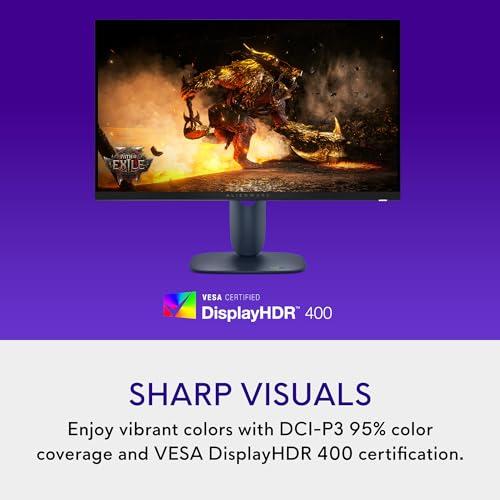
Here's where choosing between these monitors becomes genuinely difficult. The Alienware delivers 400 nits of brightness—a measurement of how much light the display can produce. This higher brightness enables better HDR (High Dynamic Range) performance, making bright explosions and sunny outdoor scenes more realistic. HDR essentially expands the range between the brightest whites and darkest blacks your monitor can display.
The AOC's QD-OLED panel takes a different approach. Instead of raw brightness, it achieves perfect blacks by completely turning off pixels when they should be black. Traditional LCD panels can never achieve true black because the backlight always shines through, creating a grayish appearance in dark scenes. OLED pixels that are "off" produce absolutely no light, creating contrast ratios that are technically infinite.
Professional reviews consistently highlight this advantage during dark game scenes. Horror games, space simulations, and nighttime sequences in open-world games look dramatically more immersive on OLED panels. You can actually see stars in a night sky or make out details in shadows that LCD monitors simply can't reproduce.
At the time of writing, the Alienware costs roughly 60% less than the AOC, making it one of the best performance-per-dollar gaming monitors available. This pricing reflects Alienware's 2023 release strategy of bringing premium gaming features to mainstream budgets.
The value equation changes significantly based on your specific needs. For most gamers, especially those upgrading from 1080p 60Hz displays, the Alienware represents a transformative upgrade. The jump to 1440p resolution provides noticeably sharper images and text, while 180Hz refresh makes even casual gaming feel more responsive and smooth.
The AOC targets enthusiasts willing to pay premium prices for cutting-edge technology. OLED gaming monitors typically cost significantly more, making the AOC's pricing relatively competitive within its category. However, you're paying for technological superiority that may exceed what many games can fully utilize.
For serious competitive gaming in titles like Valorant, CS2, or Rocket League, the AOC's advantages become clear. The 0.03ms response time eliminates virtually all motion blur, making it easier to track opponents during rapid movements. Professional gamers and high-level streamers consistently report improved accuracy and reduced eye fatigue during extended practice sessions.
The higher 240Hz refresh rate also matters more in competitive contexts where players often adjust graphics settings to achieve frame rates exceeding 200fps. Every additional frame of information can theoretically improve reaction times and decision-making.
However, the Alienware still provides excellent competitive performance at 180Hz. Unless you're playing at semi-professional levels or have particularly sensitive eyes for motion artifacts, the difference may not justify the premium cost.
This is where the choice becomes more personal. The AOC's OLED technology transforms visually stunning games like Cyberpunk 2077, Red Dead Redemption 2, or the latest Assassin's Creed titles. The perfect blacks and infinite contrast create a more cinematic, immersive experience that's particularly noticeable during dark scenes or dramatic lighting effects.
The Alienware counters with superior brightness, making HDR content more impactful during bright outdoor scenes or explosive action sequences. Its 400-nit peak brightness also performs better in rooms with ambient lighting, where OLED panels can appear washed out.
Console gamers face an interesting decision point. The Alienware includes HDMI 2.1 connectivity, enabling full 4K 60Hz or 1440p 120Hz gaming from Xbox Series X and PlayStation 5 consoles. Its brighter display also complements typical living room lighting better than the dimmer OLED panel.
The AOC uses HDMI 2.0, which limits console capabilities. While it still supports 1440p 120Hz gaming, you lose some next-generation console features. The superior motion clarity partially compensates, but console gamers might find better overall value with the Alienware option.
For gamers who also use their monitors for movie watching or content consumption, both monitors offer compelling but different advantages. The Alienware's higher brightness and HDR capabilities make it better suited for varied lighting conditions and HDR movie content from streaming services.
The AOC's OLED technology provides a more cinema-like experience with its perfect blacks and infinite contrast. Movie buffs often prefer OLED displays for their ability to reproduce the director's intended vision, particularly in dark, atmospheric films. The built-in speakers also eliminate the need for separate audio equipment in simple setups.
Both monitors include comprehensive warranties, but they face different long-term challenges. The Alienware uses proven LED-backlit IPS technology with excellent longevity expectations. IPS panels can theoretically operate for decades with minimal degradation.
OLED technology raises burn-in concerns—permanent image retention that occurs when static elements remain on screen for extended periods. Modern OLED panels include numerous protective features, and the AOC comes with burn-in coverage, but it requires more careful usage patterns than traditional LCD displays.
The brightness difference also creates practical limitations. The AOC performs best in controlled lighting environments, while the Alienware maintains visibility in brighter rooms thanks to its superior peak brightness.
Your choice ultimately depends on budget constraints and performance priorities. The Alienware offers outstanding mainstream gaming performance with proven reliability and excellent value. It's the logical choice for gamers who want significant performance improvements without premium pricing.
Choose the Alienware if you:
The AOC justifies its premium pricing through genuinely superior technology that creates measurably better gaming experiences. It's ideal for enthusiasts who recognize and value the advantages of cutting-edge display technology.
Choose the AOC if you:
Both monitors represent excellent choices within their respective market segments. The decision comes down to whether you prioritize proven value and versatility or cutting-edge performance and visual quality. Either way, you'll be getting a significant upgrade over older gaming displays and a solid foundation for years of gaming enjoyment.
| Alienware 27 QHD 180Hz Gaming Monitor | AOC Agon Pro 27" QD-OLED 240Hz Gaming Monitor |
|---|---|
| Panel Technology - Determines image quality, response time, and price | |
| Fast IPS with LED backlight (proven reliability) | QD-OLED (cutting-edge with perfect blacks) |
| Response Time - Critical for motion clarity in fast games | |
| 2ms actual (1ms in extreme mode with quality loss) | 0.03ms (67x faster, virtually eliminates motion blur) |
| Refresh Rate - Higher numbers mean smoother motion | |
| 180Hz (excellent for most gaming scenarios) | 240Hz (ideal for competitive esports) |
| Brightness - Affects HDR performance and bright room visibility | |
| 400 nits (better for HDR and bright environments) | 250 nits (requires controlled lighting for best experience) |
| Contrast Ratio - Determines depth of blacks and image pop | |
| 1000:1 typical for IPS panels | Infinite (OLED pixels turn completely off) |
| Color Coverage - Important for content creation and visual accuracy | |
| 95% DCI-P3, 99% sRGB (excellent for gaming) | Adobe RGB with 10-bit depth (professional-grade colors) |
| Built-in Audio - Convenience factor for simple setups | |
| None (requires external speakers or headphones) | 2x 5W speakers included |
| HDMI Connectivity - Critical for console gaming compatibility | |
| 2x HDMI 2.1 (full next-gen console support) | 2x HDMI 2.0 (limited console features) |
| Value Proposition - Performance per dollar spent | |
| Exceptional mainstream gaming value | Premium OLED technology at competitive OLED pricing |
| Long-term Reliability - Durability and maintenance concerns | |
| Proven IPS technology with decades of longevity | OLED with burn-in warranty but requires careful usage |
| Best Use Cases - Who should choose each monitor | |
| Budget-conscious gamers, console players, bright rooms | Competitive esports, visual enthusiasts, controlled environments |
The AOC Agon Pro 27" QD-OLED 240Hz Gaming Monitor excels for competitive gaming with its 0.03ms response time and 240Hz refresh rate. This eliminates motion blur and provides smoother tracking in fast-paced esports titles like Valorant and CS2. While the Alienware 27 QHD 180Hz Gaming Monitor offers solid competitive performance at 180Hz, serious esports players will benefit from the AOC's superior motion clarity.
The Alienware monitor uses Fast IPS technology with LED backlighting, providing bright, colorful images with good reliability. The AOC Agon Pro features QD-OLED technology where each pixel generates its own light, creating perfect blacks and infinite contrast. OLED offers superior image quality but costs more and requires careful usage to prevent burn-in.
The Alienware 27 QHD 180Hz Gaming Monitor provides exceptional value, delivering excellent gaming performance at a significantly lower cost. The AOC Agon Pro offers premium OLED technology at competitive pricing within the OLED category, but represents a substantial price increase over traditional gaming monitors.
The Alienware monitor is better suited for console gaming with its HDMI 2.1 ports supporting full Xbox Series X and PS5 features. The AOC Agon Pro uses HDMI 2.0, which limits some next-generation console capabilities but still provides excellent motion clarity for 1440p 120Hz gaming.
The Alienware 27 QHD 180Hz Gaming Monitor produces 400 nits of brightness, making it better for HDR content and bright room usage. The AOC Agon Pro offers 250 nits but compensates with perfect blacks and infinite contrast, creating more dramatic dark scenes in movies and games.
The Alienware monitor performs better in bright environments due to its higher brightness output and IPS panel characteristics. The AOC Agon Pro works best in controlled lighting conditions where its OLED technology can showcase perfect blacks without ambient light interference.
The AOC Agon Pro 27" QD-OLED 240Hz Gaming Monitor delivers superior motion clarity with its 0.03ms response time, virtually eliminating motion blur in fast-moving scenes. The Alienware monitor provides good motion performance at 2ms response time, suitable for most gaming scenarios.
The AOC Agon Pro includes built-in 5W speakers for convenient audio without external equipment. The Alienware 27 QHD 180Hz Gaming Monitor lacks built-in speakers, requiring separate audio solutions like headphones or external speakers.
The AOC Agon Pro 27" QD-OLED 240Hz Gaming Monitor excels for cinematic single-player games with its perfect blacks, infinite contrast, and superior color accuracy. The Alienware monitor provides excellent visuals with better brightness for HDR scenes, making both suitable depending on your room lighting and visual preferences.
The AOC Agon Pro offers 240Hz refresh rate versus the Alienware monitor's 180Hz. While both provide smooth gaming, the extra 60Hz benefits competitive players who can achieve high frame rates in esports titles. Most casual gamers won't notice significant differences between 180Hz and 240Hz.
The Alienware 27 QHD 180Hz Gaming Monitor uses proven IPS technology with excellent longevity expectations and minimal maintenance requirements. The AOC Agon Pro includes burn-in warranty coverage but requires more careful usage patterns due to OLED technology's susceptibility to permanent image retention.
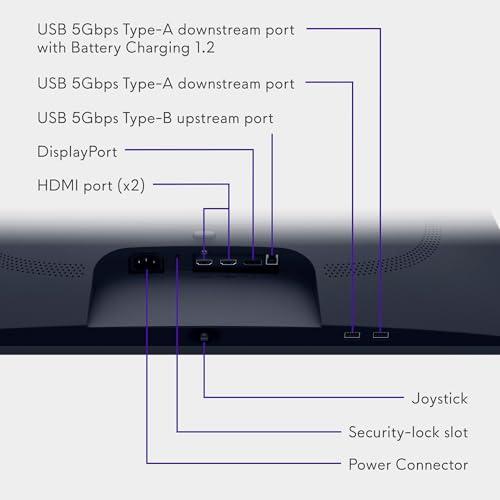
The Alienware monitor features 2x HDMI 2.1 ports and 1x DisplayPort 1.4, ideal for next-generation consoles and high-end PCs. The AOC Agon Pro 27" QD-OLED 240Hz Gaming Monitor includes 2x HDMI 2.0 ports and 1x DisplayPort 1.4, with both monitors offering USB hub functionality for peripheral connectivity.
We've done our best to create useful and informative comparisons to help you decide what product to buy. Our research uses advanced automated methods to create this comparison and perfection is not possible - please contact us for corrections or questions. These are the sites we've researched in the creation of this article: bestbuy.com - bestbuy.com - youtube.com - dell.com - tweaktown.com - dell.com - rtings.com - manuals.plus - tomshardware.com - displayspecifications.com - youtube.com - youtube.com - displayspecifications.com - dell.com - dellstore.com - ebay.com - tomshardware.com - techpowerup.com - tomshardware.com - aoc.com - tftcentral.co.uk - aoc.com - rtings.com - bestbuy.com - youtube.com - displayspecifications.com - aoc.com - microcenter.com - guru3d.com

Privacy Policy
Terms and Conditions - Affiliate Policy
Home Security
© Copyright 2008-2026.
11816 Inwood Rd #1211, Dallas, TX 75244