

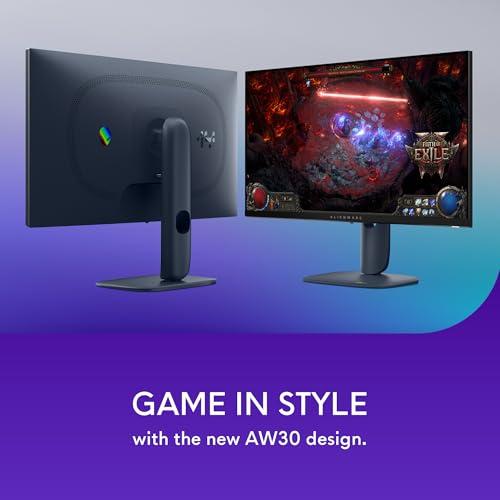
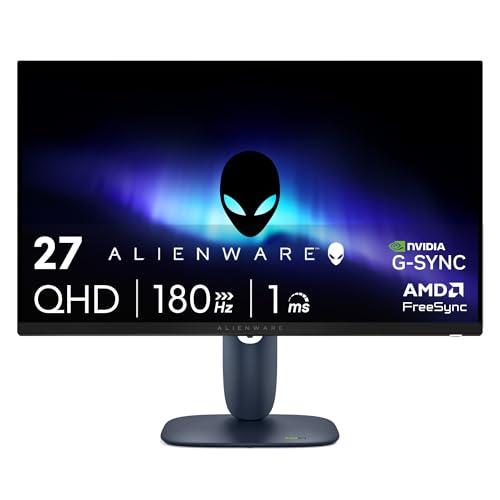
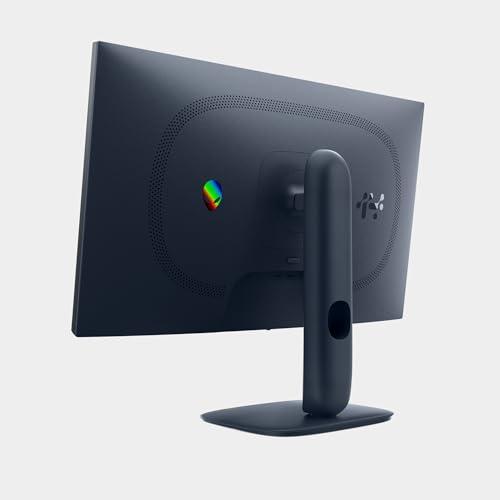
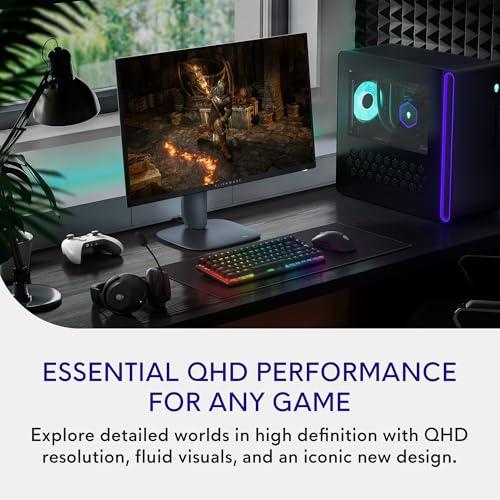
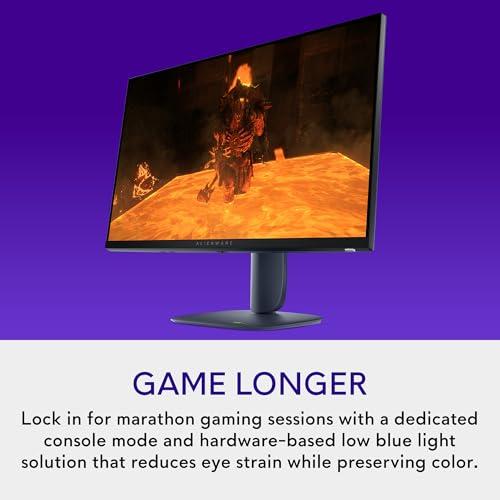
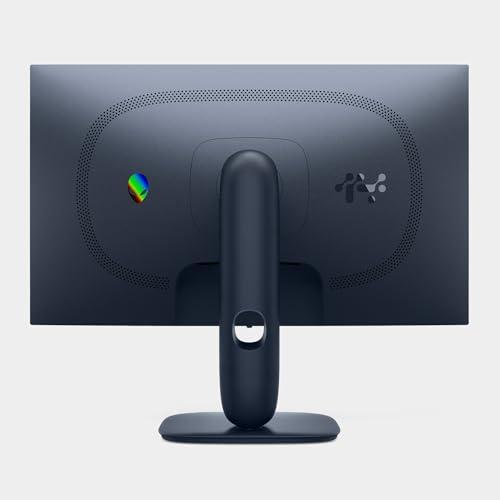
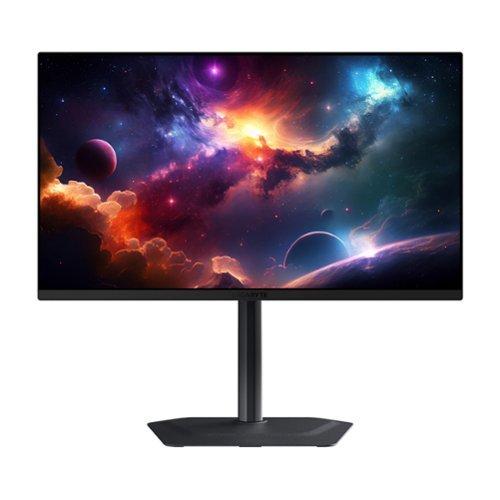
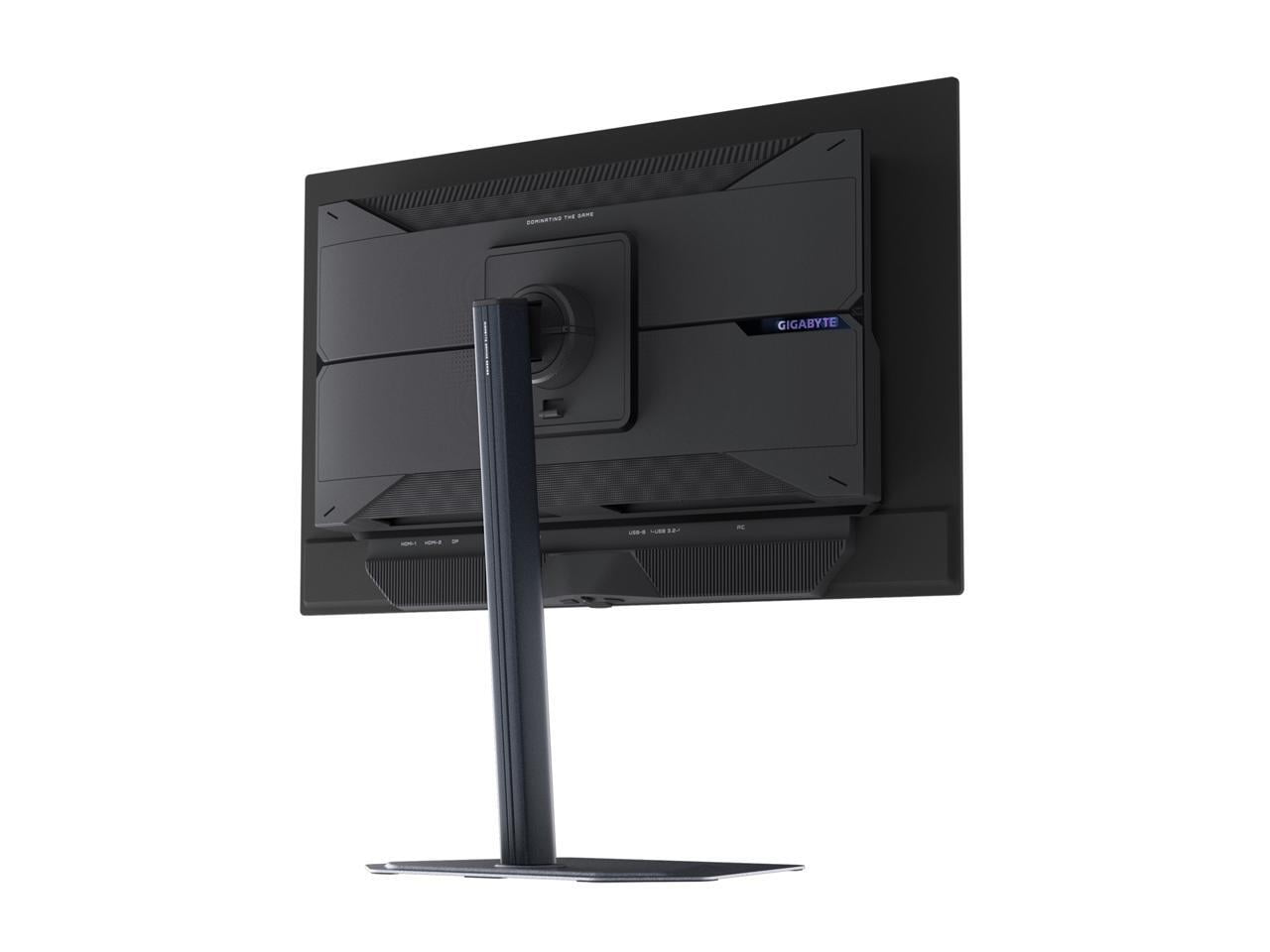
Choosing the right gaming monitor feels overwhelming when you're staring at spec sheets filled with acronyms and technical jargon. The display market has exploded with options, but two monitors perfectly illustrate the current divide between proven, reliable technology and cutting-edge innovation: the Alienware 27 QHD 180Hz Gaming Monitor and the GIGABYTE MO27Q2.
These aren't just random picks from a catalog. They represent two fundamentally different approaches to gaming displays, each with distinct strengths that appeal to different types of users. Understanding their differences will help you make a smarter decision, whether you're building your first serious gaming setup or upgrading from an older monitor.
Before diving into specifics, let's establish what makes a gaming monitor different from your average office display. Gaming monitors prioritize three critical elements: refresh rate (how many times per second the screen updates), response time (how quickly pixels can change colors), and input lag (the delay between your mouse click and seeing the result on screen).
The Alienware monitor uses Fast IPS (In-Plane Switching) technology, which improves on traditional IPS panels by reducing response times while maintaining the wide viewing angles and accurate colors IPS is known for. It's like getting the reliability of a well-tested car engine with some performance tweaks.
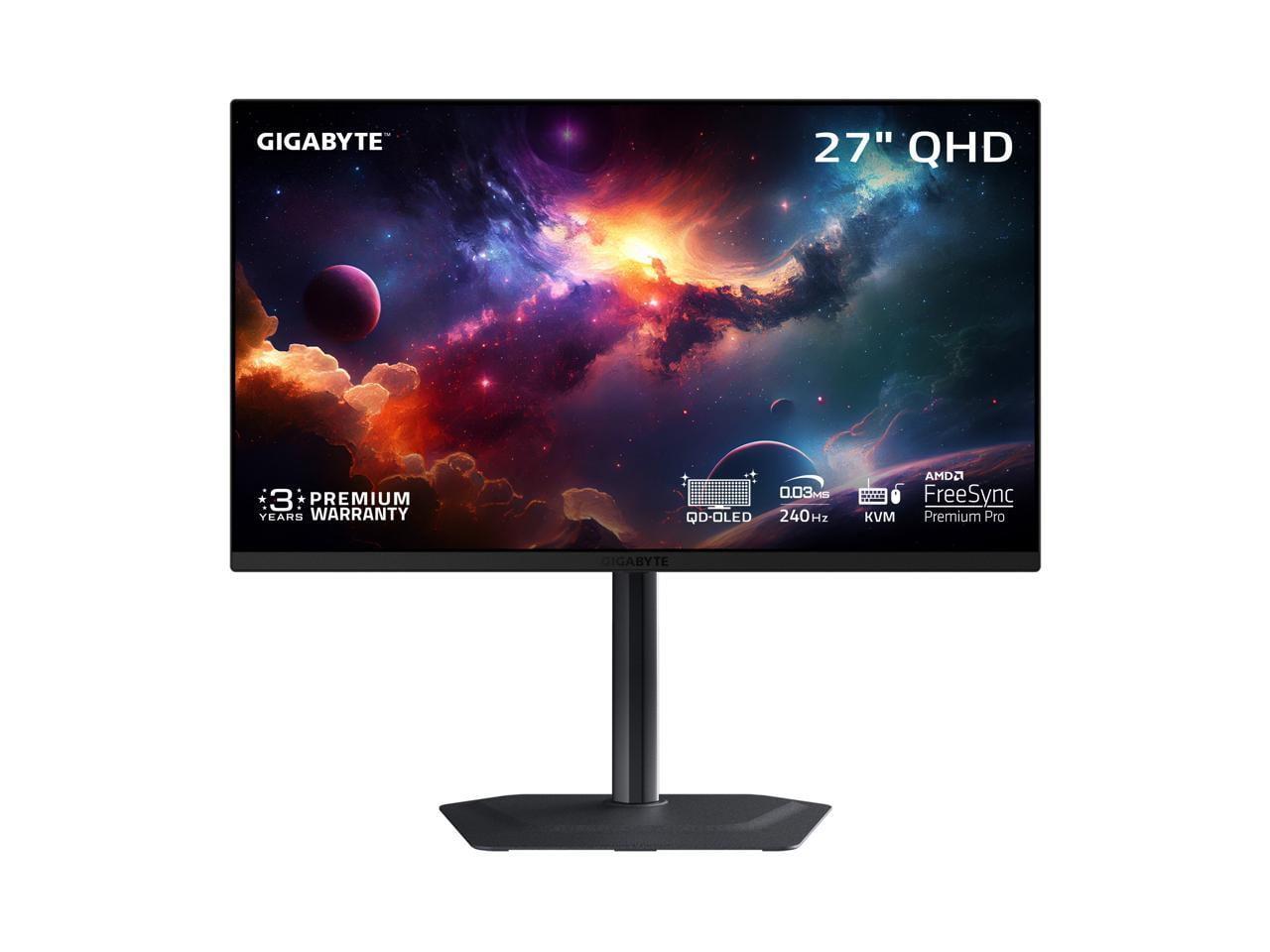
The GIGABYTE MO27Q2, on the other hand, uses QD-OLED technology—a hybrid approach combining quantum dots with OLED (Organic Light-Emitting Diode) pixels. Instead of requiring a backlight like traditional LCD monitors, each pixel produces its own light. This creates perfect blacks because pixels can turn completely off, something impossible with backlit displays.
Think of it this way: traditional monitors are like flashlights shining through colored filters, while OLED monitors are like having millions of tiny colored lights that can turn on and off individually. The difference in contrast is dramatic.
When it comes to pure image quality, the GIGABYTE MO27Q2 dominates with its QD-OLED panel. The contrast ratio tells the story—1.5 million to 1 compared to the Alienware's 1,000 to 1. This isn't marketing fluff; it translates to visuals that pop off the screen with depth that makes games feel more immersive.
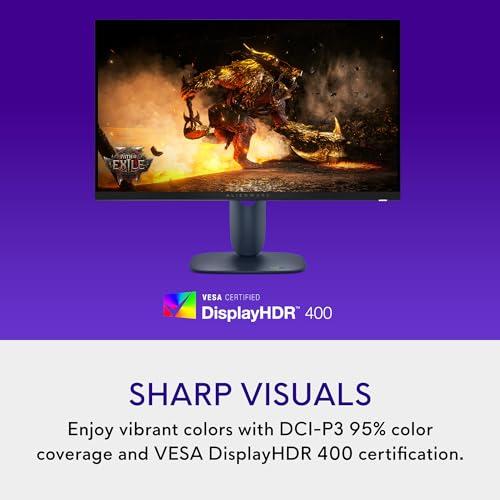
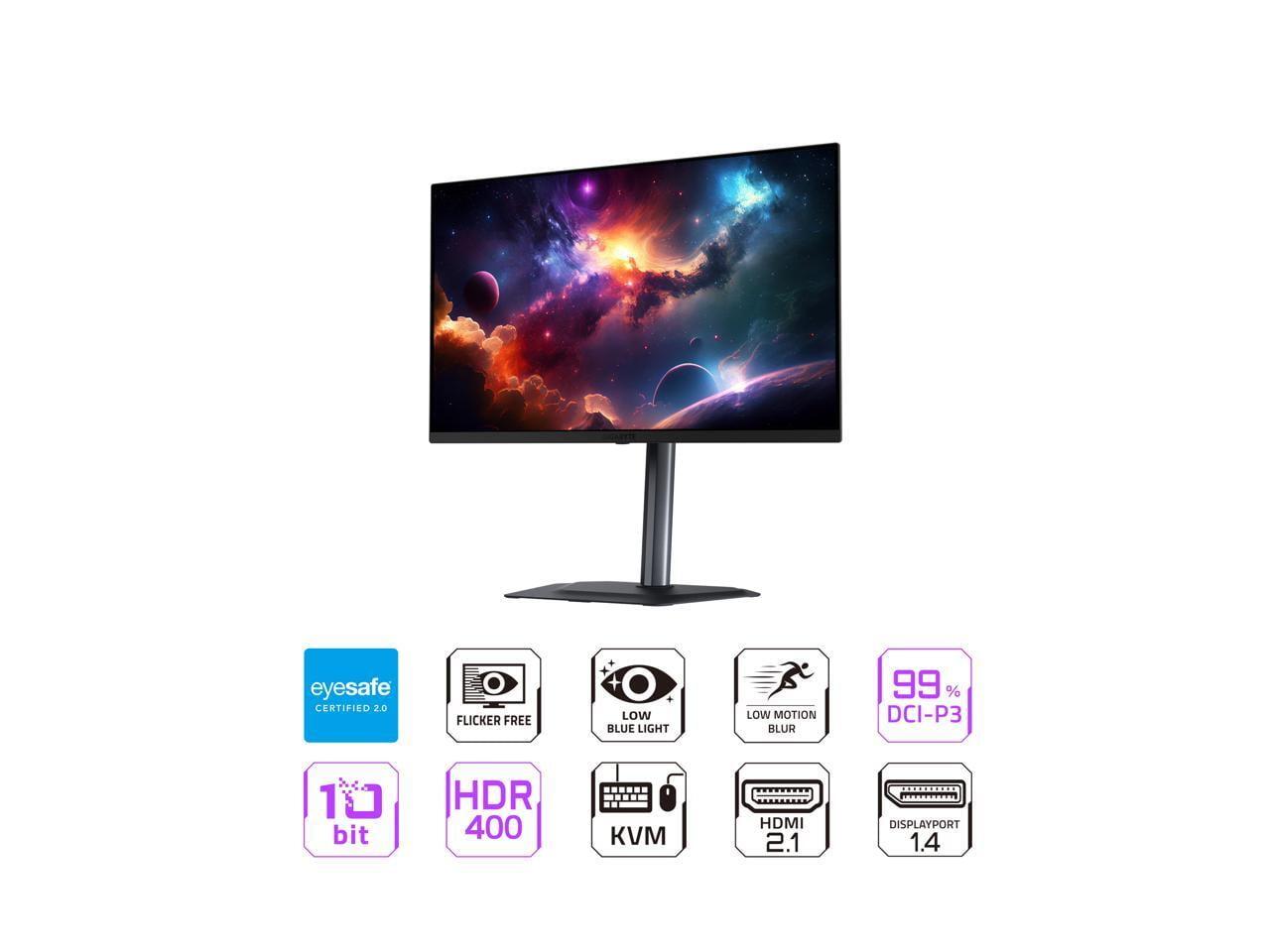
The quantum dot layer in the GIGABYTE monitor enhances color reproduction, covering 99% of the DCI-P3 color space compared to 95% on the Alienware. DCI-P3 is the color standard used in digital cinema, so better coverage means colors look more like what content creators intended. In practice, this means more vibrant reds, deeper blues, and overall more lifelike visuals.
However, the Alienware monitor fights back with higher typical brightness at 400 nits versus 250 nits on the GIGABYTE. This brightness advantage becomes crucial in well-lit rooms or if you prefer gaming during the day with windows open. The GIGABYTE can hit 1,000 nits peak brightness for HDR content, but only in small areas of the screen—most of your gaming happens at that lower 250-nit level.
The glossy coating on the GIGABYTE monitor enhances the perceived depth and color saturation, making everything look more vibrant. However, glossy screens reflect more light, which can be distracting if you have lights or windows behind you. The Alienware uses a more traditional anti-glare coating that reduces reflections but slightly dulls the image quality.
For text clarity—important if you do any productivity work—the Alienware has an edge. QD-OLED displays use a unique subpixel arrangement that can make text look slightly fuzzy, particularly smaller fonts. It's not a deal-breaker for gaming, but it's noticeable when reading emails or browsing the web.
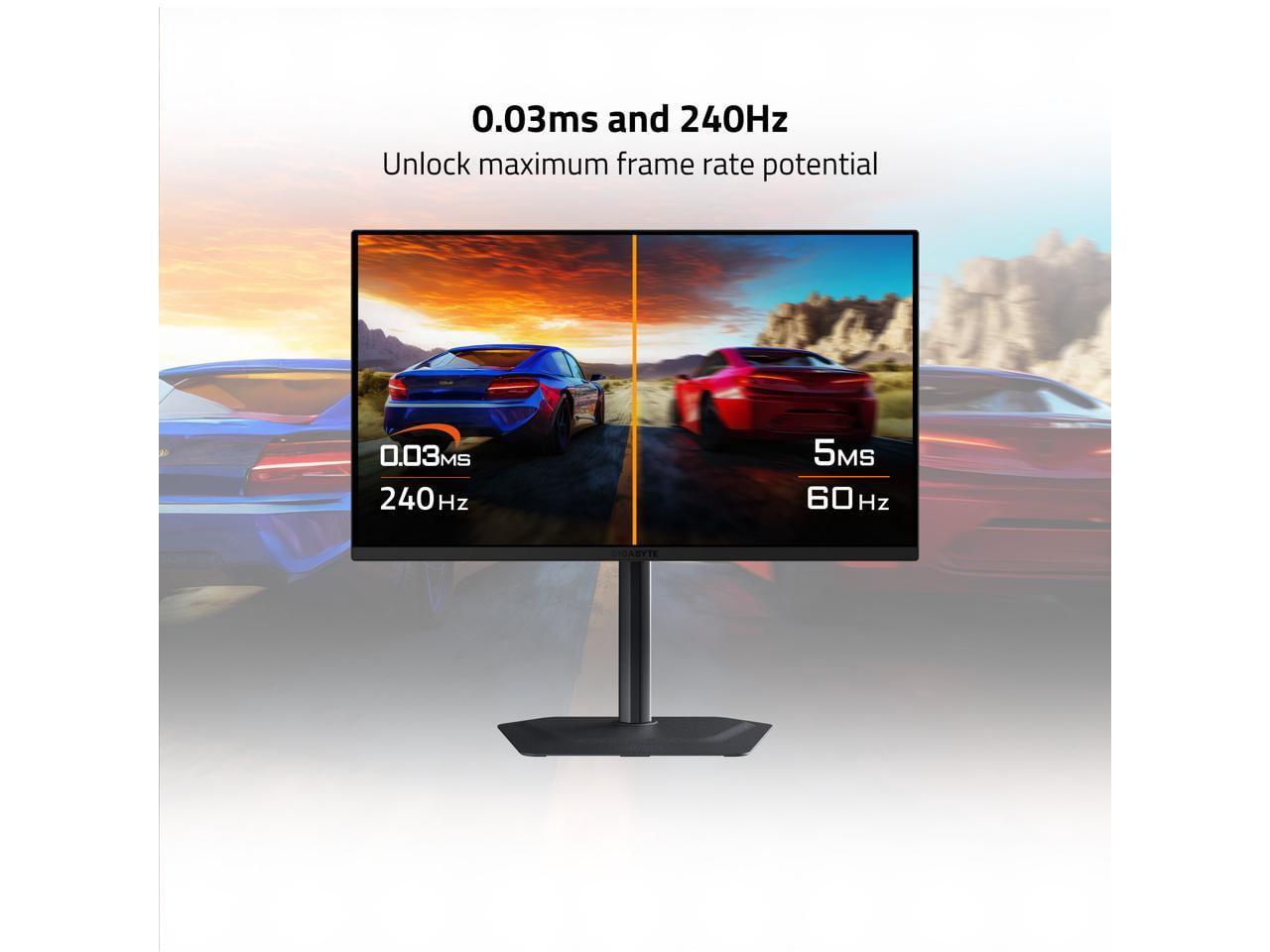
Here's where the numbers really matter for competitive gaming. The GIGABYTE MO27Q2 runs at 240Hz refresh rate compared to 180Hz on the Alienware. Every hertz represents one screen update per second, so 240Hz means the screen refreshes 240 times every second.
But does this difference matter? In fast-paced games like first-person shooters or racing games, that extra 60Hz provides noticeably smoother motion. It's particularly beneficial if you can maintain high frame rates—if your graphics card only outputs 120 frames per second, you won't see the full benefit of either monitor's maximum refresh rate.
Response time is where the GIGABYTE absolutely dominates with its 0.03ms gray-to-gray measurement versus 1ms on the Alienware. Gray-to-gray response time measures how quickly a pixel can change from one shade to another. Faster response times reduce ghosting and motion blur, crucial for tracking fast-moving objects in competitive games.
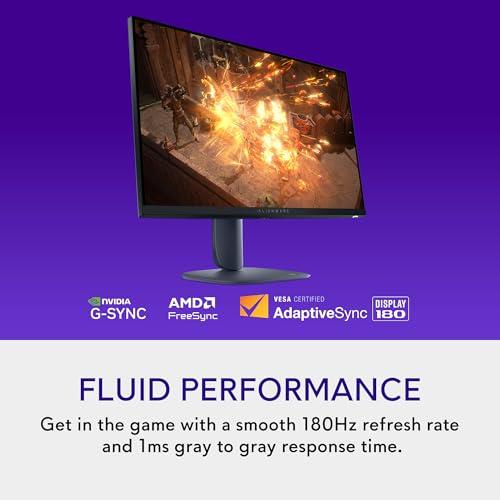
The Alienware monitor offers multiple response time modes: 4ms for best image quality, 2ms for balanced performance, and 1ms for maximum speed. This flexibility lets you choose based on what you're playing. The fastest mode might introduce slight overshoot artifacts but eliminates motion blur almost entirely.
Both monitors support adaptive sync technologies—AMD FreeSync and NVIDIA G-SYNC Compatible—which synchronize your graphics card's output with the monitor's refresh rate. This eliminates screen tearing (when parts of different frames appear simultaneously) and reduces stuttering for smoother gameplay.
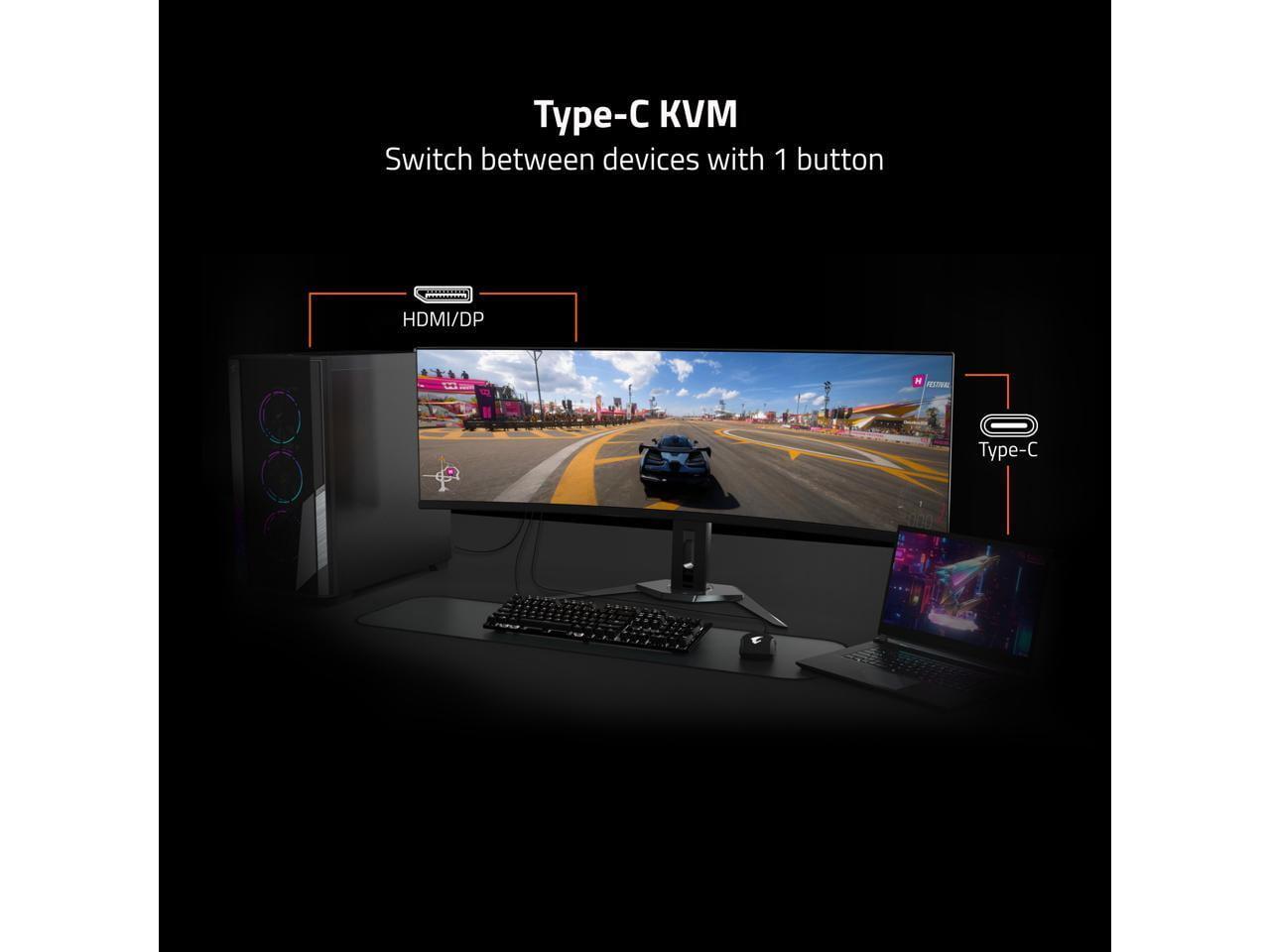
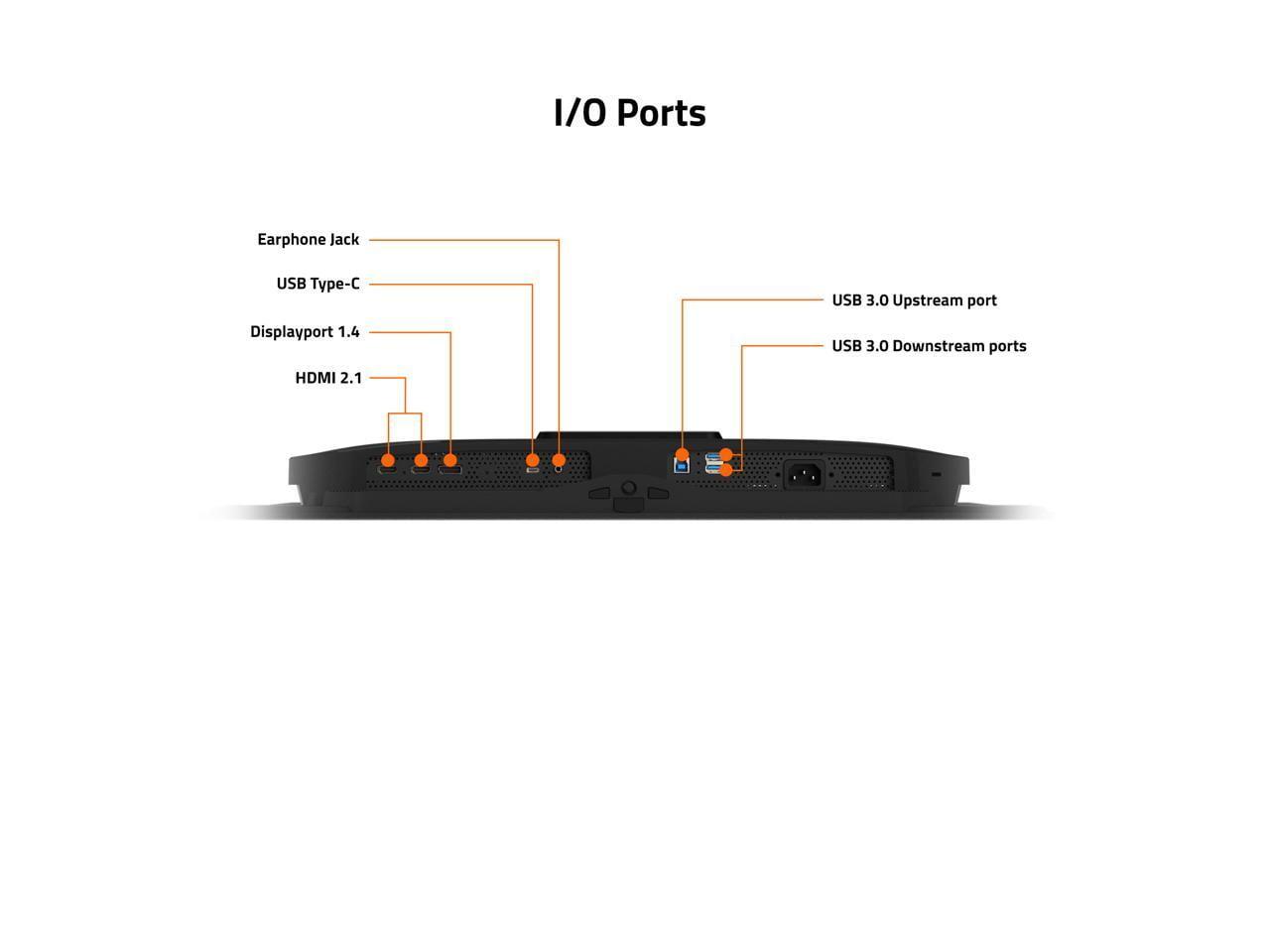
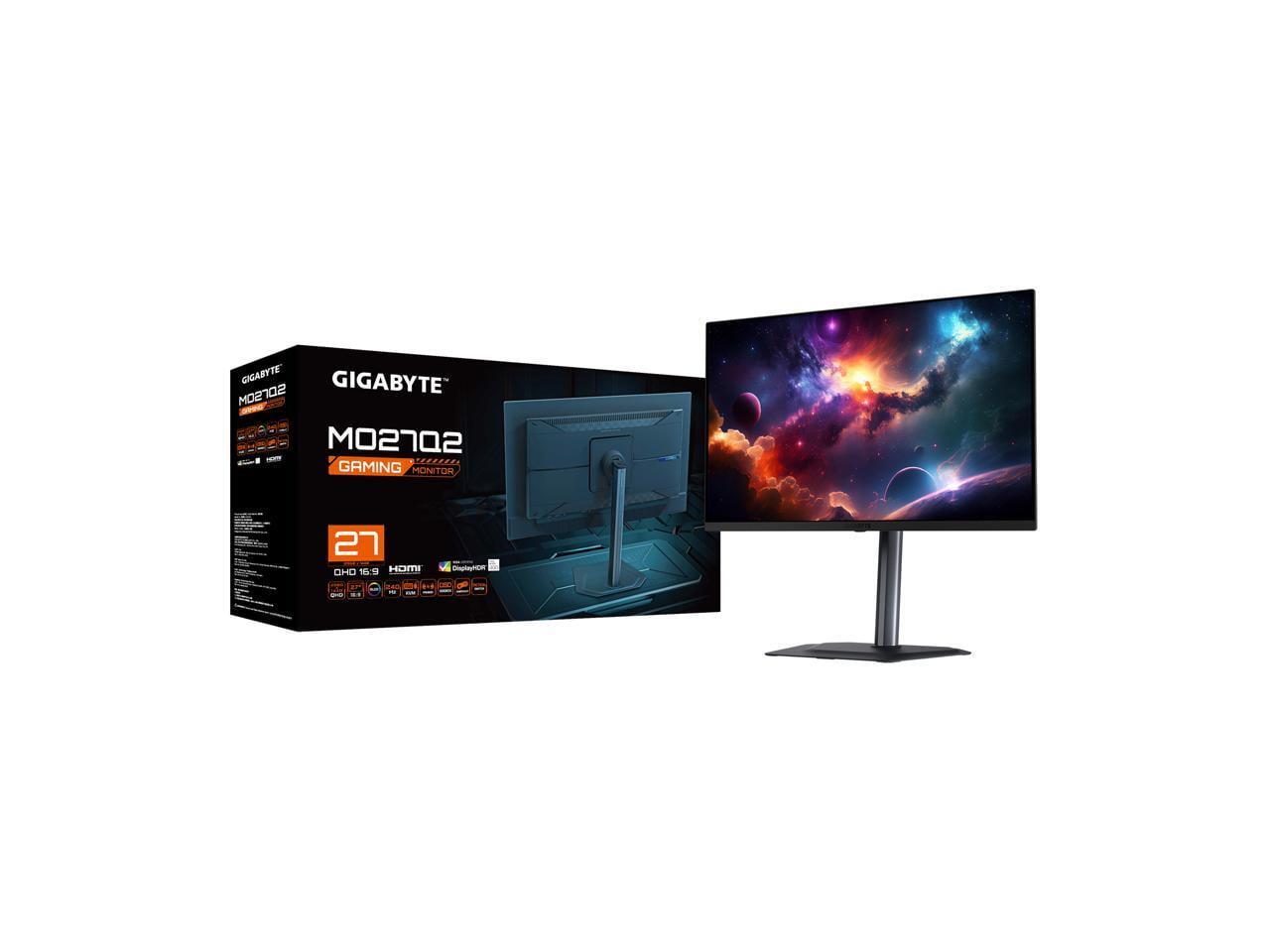
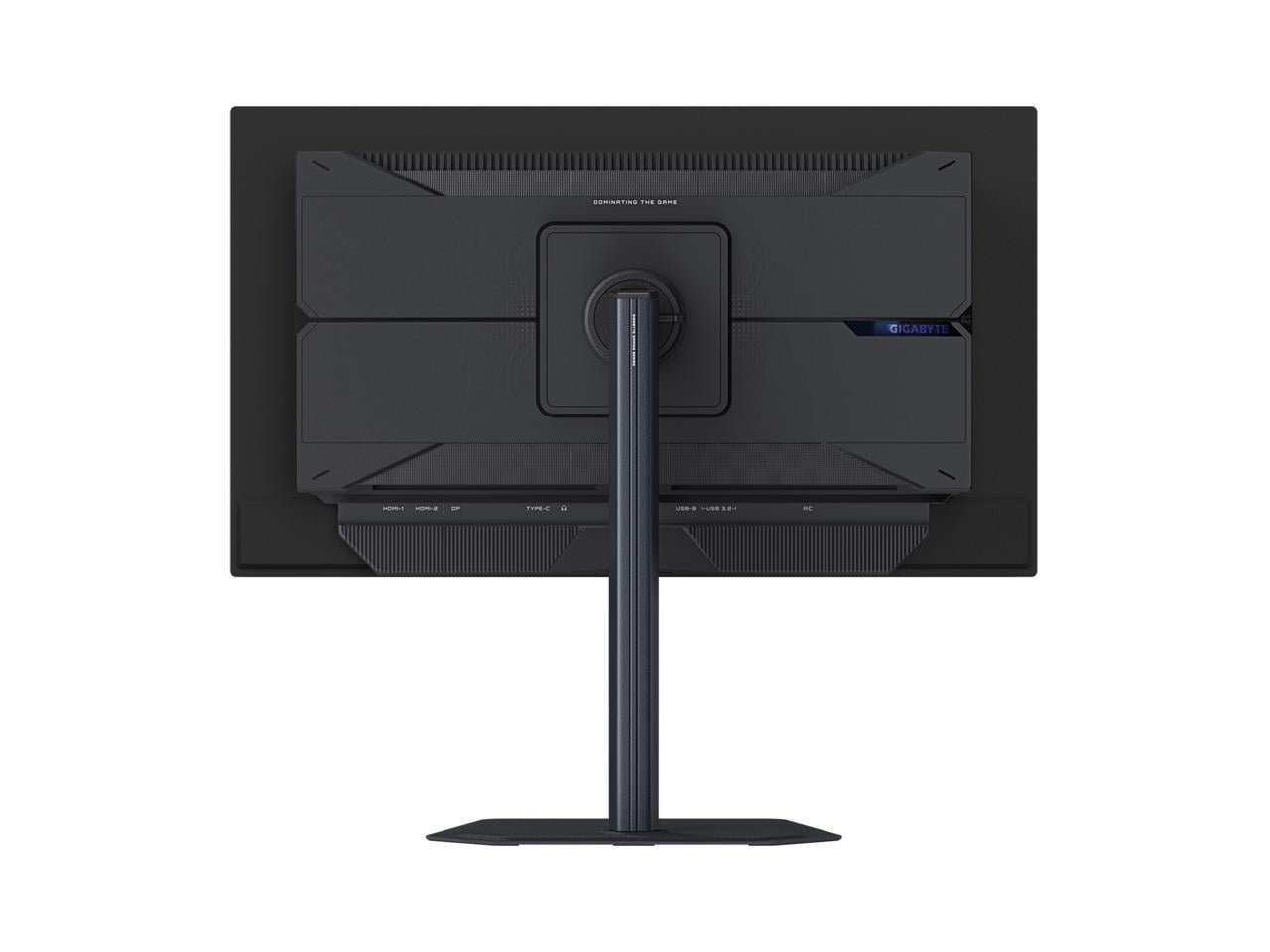
The GIGABYTE MO27Q2 takes a more comprehensive approach to connectivity. Its KVM (Keyboard, Video, Mouse) switch lets you control multiple devices with one set of peripherals—imagine seamlessly switching between your gaming PC and work laptop with a single button press. The USB-C port with 18W power delivery can charge your phone or power small devices, though it's not enough for laptops.
The tactical switch feature on the GIGABYTE monitor is genuinely useful for competitive gaming. It instantly switches between the full 27-inch display and a 24-inch centered area running at 1080p resolution. Many professional esports players prefer 24-inch monitors because the smaller screen lets them see everything without moving their eyes as much. This feature gives you both options without buying two monitors.
The Alienware monitor focuses more on display performance than extra features. It includes USB-A ports for peripherals but lacks the advanced switching capabilities. For many users, this simpler approach is preferable—fewer things to break, and the cost savings can be significant.
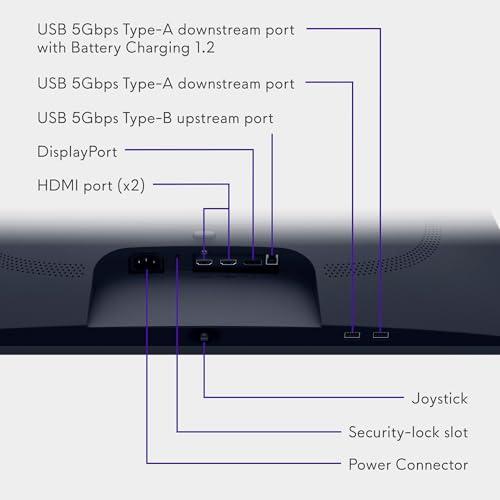
Both monitors include two HDMI 2.1 ports, crucial for next-generation gaming consoles like PlayStation 5 and Xbox Series X. These consoles can output 1440p resolution at 120Hz, and both monitors handle this perfectly.
OLED technology's biggest weakness is burn-in—permanent image retention that occurs when static elements remain on screen for extended periods. Think of the health bar in your favorite RPG or the taskbar on your desktop permanently etched into the display.
Modern OLED panels, including the one in the GIGABYTE MO27Q2, include several protection mechanisms. AI-based OLED care automatically adjusts brightness and shifts pixels slightly to prevent burn-in. The monitor also includes features like automatic logo detection and dimming for static elements.
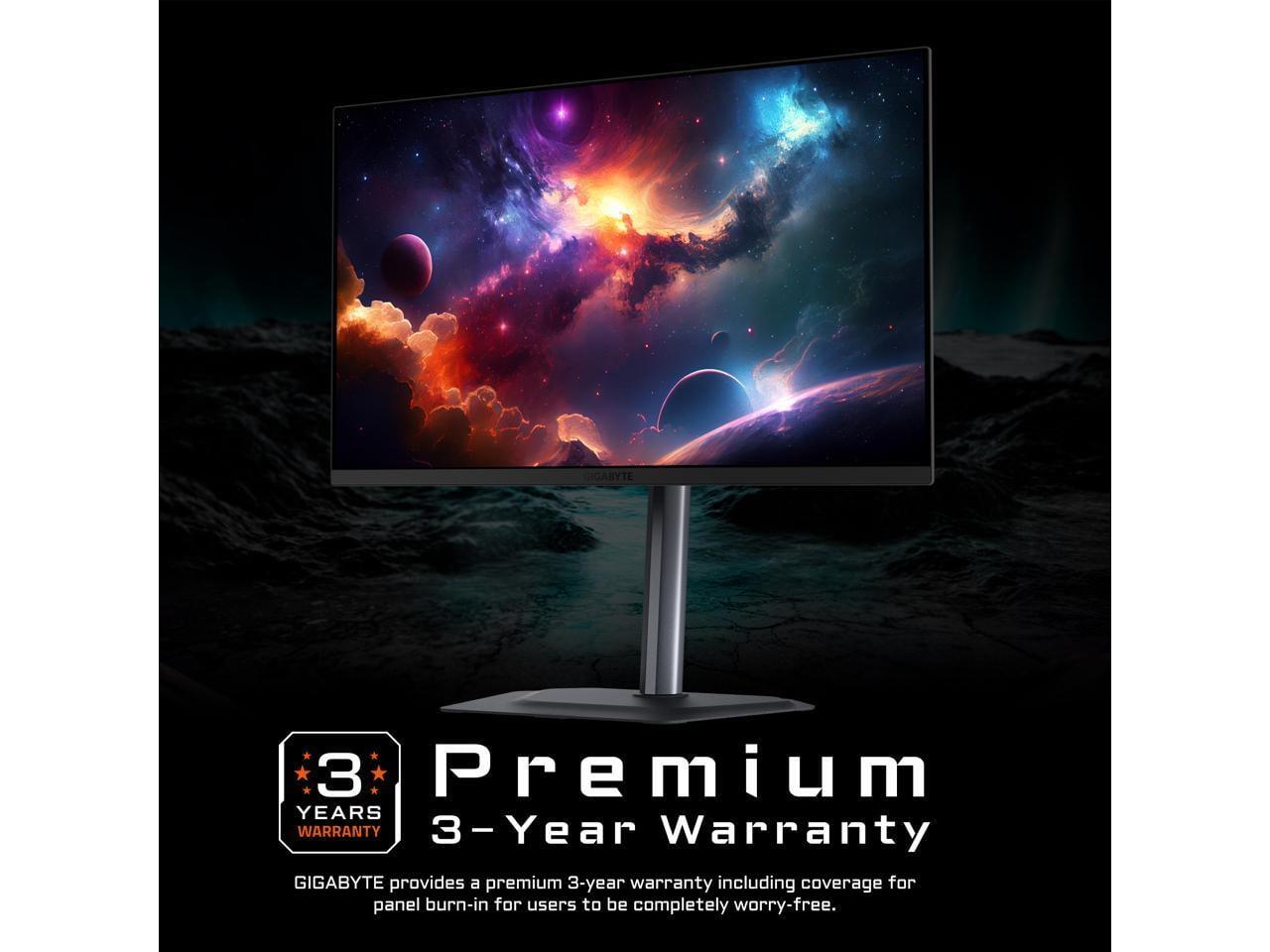
GIGABYTE backs their confidence with a three-year warranty that specifically covers burn-in, unusual in the monitor industry. However, this protection requires following certain usage guidelines—avoiding static images for hours at a time and using screensavers when away from the computer.
The Alienware monitor doesn't face this concern at all. Fast IPS panels can run static content indefinitely without permanent damage, making them more suitable for mixed use scenarios where you might leave spreadsheets or code editors open for hours.
Both monitors represent relatively recent technology developments. The Alienware AW2725DM arrived in 2023 as part of Dell's push to improve IPS gaming performance, addressing previous criticisms about slow response times in their gaming monitors.
The GIGABYTE MO27Q2 launched in 2024, capitalizing on Samsung's second-generation QD-OLED panels that improved brightness and longevity compared to the first generation. Early QD-OLED monitors from 2022 had brightness limitations and concerns about durability, but the technology has matured significantly.
Since their release, both monitors have received firmware updates improving compatibility and adding features. The GIGABYTE particularly benefited from updates enhancing the OLED care algorithms and improving HDR tone mapping.
If you're considering either monitor for a bedroom or living room setup, the differences become more pronounced. The GIGABYTE MO27Q2's superior contrast and HDR performance make movies and streaming content look significantly better, particularly in dark rooms where the perfect blacks really shine.
The built-in 5W speakers on the GIGABYTE monitor are adequate for casual viewing, though serious movie watching demands external audio. The Alienware monitor lacks speakers entirely, requiring external solutions.
For daytime viewing or rooms with lots of ambient light, the Alienware monitor's higher brightness and anti-glare coating provide better visibility. The OLED technology in the GIGABYTE can struggle with reflections and brightness in bright environments.
At the time of writing, the GIGABYTE MO27Q2 commands a significant premium over the Alienware monitor, reflecting its cutting-edge technology and additional features. This price difference often represents the cost of being an early adopter of new display technology.
The Alienware offers exceptional value for most gamers, providing 180Hz gaming performance with proven reliability at a more accessible price point. It's the sensible choice that delivers solid performance without the premium associated with the latest technology.
The GIGABYTE justifies its higher cost through superior image quality, faster gaming performance, and future-proof features like advanced HDR and extensive connectivity. For enthusiasts willing to pay for the best possible experience, the additional cost often feels justified.
Choose the Alienware 27 QHD 180Hz Gaming Monitor if you value reliability and proven performance. It's ideal for competitive gamers who need consistent, fast performance without worrying about burn-in. The higher brightness makes it suitable for varied lighting conditions, and the simpler feature set means fewer potential issues.
This monitor excels for users who split time between gaming and productivity work, particularly programming or content creation involving lots of text. The Fast IPS technology provides accurate colors for professional work while delivering gaming performance that satisfies most players.
Select the GIGABYTE MO27Q2 if you prioritize cutting-edge visual quality and don't mind the premium cost. It's perfect for enthusiasts who want the absolute best gaming and media experience, particularly in controlled lighting environments.
The GIGABYTE monitor suits users who appreciate advanced features like KVM switching and tactical modes. If you frequently switch between devices or want a monitor that doubles as an excellent display for movies and streaming content, the superior contrast and HDR performance justify the investment.
For competitive gaming specifically, the GIGABYTE's 240Hz refresh rate and 0.03ms response time provide measurable advantages, though the difference becomes academic unless you're playing at a very high level.
The choice ultimately comes down to your priorities: proven reliability and value with the Alienware, or cutting-edge technology and premium features with the GIGABYTE. Both represent excellent options in their respective categories, and either will significantly upgrade your gaming experience compared to older monitors.
Consider your lighting environment, usage patterns, and budget carefully. The Alienware monitor delivers outstanding gaming performance at a reasonable price, while the GIGABYTE MO27Q2 pushes the boundaries of what's possible with current display technology, albeit at a premium cost that reflects its advanced capabilities.
| Alienware 27 QHD 180Hz Gaming Monitor | GIGABYTE MO27Q2 27" QD-OLED QHD 240Hz Gaming Monitor |
|---|---|
| Panel Technology - Determines image quality, contrast, and long-term reliability | |
| Fast IPS (proven reliability, no burn-in risk) | QD-OLED (cutting-edge technology, superior visuals) |
| Refresh Rate - Higher numbers mean smoother motion in fast games | |
| 180Hz (excellent for most gaming scenarios) | 240Hz (competitive advantage for esports) |
| Response Time - Lower is better for eliminating motion blur | |
| 1ms GTG (multiple overdrive modes available) | 0.03ms GTG (virtually instantaneous pixel response) |
| Contrast Ratio - Affects depth and realism of dark scenes | |
| 1,000:1 (standard for LCD panels) | 1,500,000:1 (perfect blacks, cinematic depth) |
| Peak Brightness - Important for HDR content and bright room visibility | |
| 400 nits typical (better for daytime use) | 250 nits typical, 1000 nits peak HDR (optimized for dark rooms) |
| Color Coverage - Wider gamut means more vibrant, accurate colors | |
| 95% DCI-P3 (excellent color accuracy) | 99% DCI-P3 (cinema-grade color reproduction) |
| HDR Support - Enhanced dynamic range for more realistic visuals | |
| VESA DisplayHDR 400 (good HDR experience) | VESA DisplayHDR True Black 400 (superior HDR with perfect blacks) |
| Connectivity - Determines device compatibility and future-proofing | |
| 2x HDMI 2.1, 1x DisplayPort 1.4, USB-A ports | 2x HDMI 2.1, 1x DisplayPort 1.4, USB-C with KVM switch |
| Adaptive Sync - Eliminates screen tearing and stuttering | |
| G-SYNC Compatible, FreeSync | G-SYNC Compatible, FreeSync Premium Pro |
| Build Quality & Ergonomics - Affects comfort during long gaming sessions | |
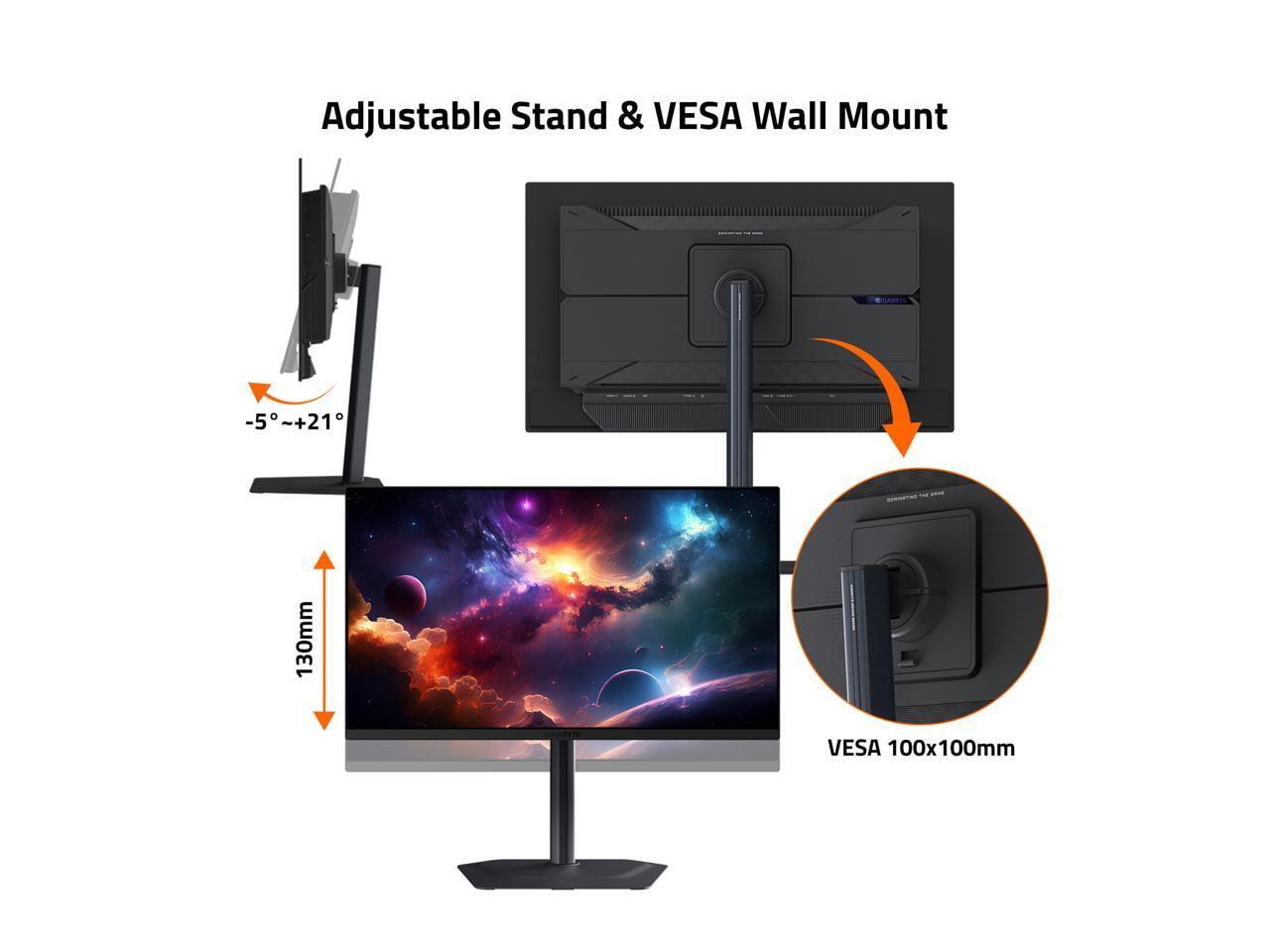
| Fully adjustable stand, VESA compatible | Fully adjustable stand, VESA compatible, premium materials |
| Special Features - Additional functionality beyond basic display | |
| Multiple response time modes, gaming presets | KVM switch, Tactical Switch (27" to 24" mode), built-in speakers |
| Burn-in Risk - Long-term durability consideration | |
| No burn-in risk (LCD technology) | Potential burn-in with AI protection, 3-year burn-in warranty |
| Text Clarity - Important for productivity and mixed use | |
| Excellent (standard RGB subpixels) | Good but slight color fringing (QD-OLED subpixel layout) |
| Best Use Case - Who should choose this monitor | |
| Reliable all-around gaming, mixed gaming/productivity use | Premium gaming experience, immersive single-player games, content consumption |
The GIGABYTE MO27Q2 has the edge for competitive gaming with its 240Hz refresh rate and 0.03ms response time compared to the Alienware 27 QHD 180Hz Gaming Monitor's 180Hz and 1ms response time. The faster refresh rate provides smoother motion tracking, while the ultra-low response time eliminates ghosting. However, the Alienware monitor still delivers excellent competitive performance at 180Hz, which is more than sufficient for most gamers and offers better value.
The Alienware monitor uses Fast IPS technology, which provides reliable performance, accurate colors, and no burn-in risk. The GIGABYTE MO27Q2 uses QD-OLED technology, offering superior contrast (1.5 million:1 vs 1,000:1), perfect blacks, and more vibrant colors. QD-OLED delivers better visual quality but comes with potential burn-in concerns and higher cost, while Fast IPS offers proven reliability and consistent performance.
The Alienware 27 QHD 180Hz Gaming Monitor is significantly brighter with 400 nits typical brightness compared to the GIGABYTE MO27Q2's 250 nits. This makes the Alienware monitor better suited for bright rooms or daytime gaming with windows open. The GIGABYTE can reach 1000 nits peak for HDR content but maintains lower overall brightness during regular use.
Yes, both the Alienware monitor and GIGABYTE MO27Q2 support HDMI 2.1, making them excellent for PlayStation 5 and Xbox Series X gaming at 1440p resolution and 120Hz refresh rate. The GIGABYTE monitor offers slightly better console gaming experience due to superior HDR performance and built-in speakers, while the Alienware provides reliable performance with higher brightness for varied lighting conditions.
The GIGABYTE MO27Q2 delivers significantly better HDR with VESA DisplayHDR True Black 400 certification, perfect blacks, and superior contrast. The Alienware monitor supports VESA DisplayHDR 400 but cannot match the deep blacks and dynamic range of OLED technology. For watching movies or playing HDR games, the GIGABYTE provides a more cinematic experience, especially in dark environments.
The Alienware 27 QHD 180Hz Gaming Monitor has no burn-in risk due to its LCD Fast IPS technology. The GIGABYTE MO27Q2 has potential burn-in risk as with all OLED displays, but includes AI-based OLED care features and comes with a 3-year warranty covering burn-in. Modern OLED panels are much more resistant to burn-in than older generations, making it less of a concern for typical gaming use.
The Alienware monitor is better for productivity work due to superior text clarity and no burn-in risk when displaying static content for hours. The QD-OLED panel in the GIGABYTE MO27Q2 can show slight color fringing around text due to its unique subpixel arrangement. However, both monitors offer excellent color accuracy for creative work, with the GIGABYTE providing wider color coverage.
Both monitors include 2x HDMI 2.1 ports and 1x DisplayPort 1.4. The GIGABYTE MO27Q2 adds USB-C connectivity with KVM switch functionality, allowing seamless switching between devices with one keyboard and mouse. The Alienware monitor offers standard USB-A ports for peripherals. The GIGABYTE provides more versatile connectivity for multi-device setups.
The Alienware 27 QHD 180Hz Gaming Monitor typically offers better value, providing excellent 180Hz gaming performance with proven reliability at a lower cost. The GIGABYTE MO27Q2 commands a premium for its cutting-edge QD-OLED technology and advanced features. Choose the Alienware for solid performance per dollar, or the GIGABYTE if you want the latest technology and superior visual quality.
Only the GIGABYTE MO27Q2 includes built-in speakers (2x 5W), which are adequate for casual gaming and media consumption. The Alienware monitor has no built-in speakers, requiring external audio solutions. While neither monitor's speakers replace a good gaming headset or external speakers, the GIGABYTE's built-in audio adds convenience for quick gaming sessions.
The GIGABYTE MO27Q2 excels for immersive single-player games due to its superior contrast, perfect blacks, and vibrant colors that make game worlds look more realistic and cinematic. The enhanced HDR performance particularly benefits story-driven games with dramatic lighting. The Alienware monitor still provides excellent visuals but cannot match the depth and immersion of OLED technology for atmospheric gaming experiences.
The GIGABYTE MO27Q2's 240Hz refresh rate provides the smoothest experience for fast-paced competitive games like first-person shooters and racing games. The Alienware 27 QHD 180Hz Gaming Monitor's 180Hz is still excellent for all game types and sufficient for most competitive gaming. The 60Hz difference is most noticeable in esports titles where every frame matters, while both monitors handle RPGs, strategy games, and adventure titles exceptionally well.
We've done our best to create useful and informative comparisons to help you decide what product to buy. Our research uses advanced automated methods to create this comparison and perfection is not possible - please contact us for corrections or questions. These are the sites we've researched in the creation of this article: bestbuy.com - bestbuy.com - youtube.com - dell.com - tweaktown.com - dell.com - rtings.com - manuals.plus - tomshardware.com - displayspecifications.com - youtube.com - youtube.com - displayspecifications.com - dell.com - dellstore.com - ebay.com - gigabyte.com - youtube.com - newegg.com - mezha.media - tech-critter.com - gigabyte.com - forum.pcmonitors.info - techspot.com - aorus.com - saltynewsnetwork.com - infiniarc.com - gigabyte.com - bestbuy.com - youtube.com - gigabyte.com - gigabyte.com - displayspecifications.com - aorus.com - gigabyte.com - gigabyte.com

Privacy Policy
Terms and Conditions - Affiliate Policy
Home Security
© Copyright 2008-2026.
11816 Inwood Rd #1211, Dallas, TX 75244