

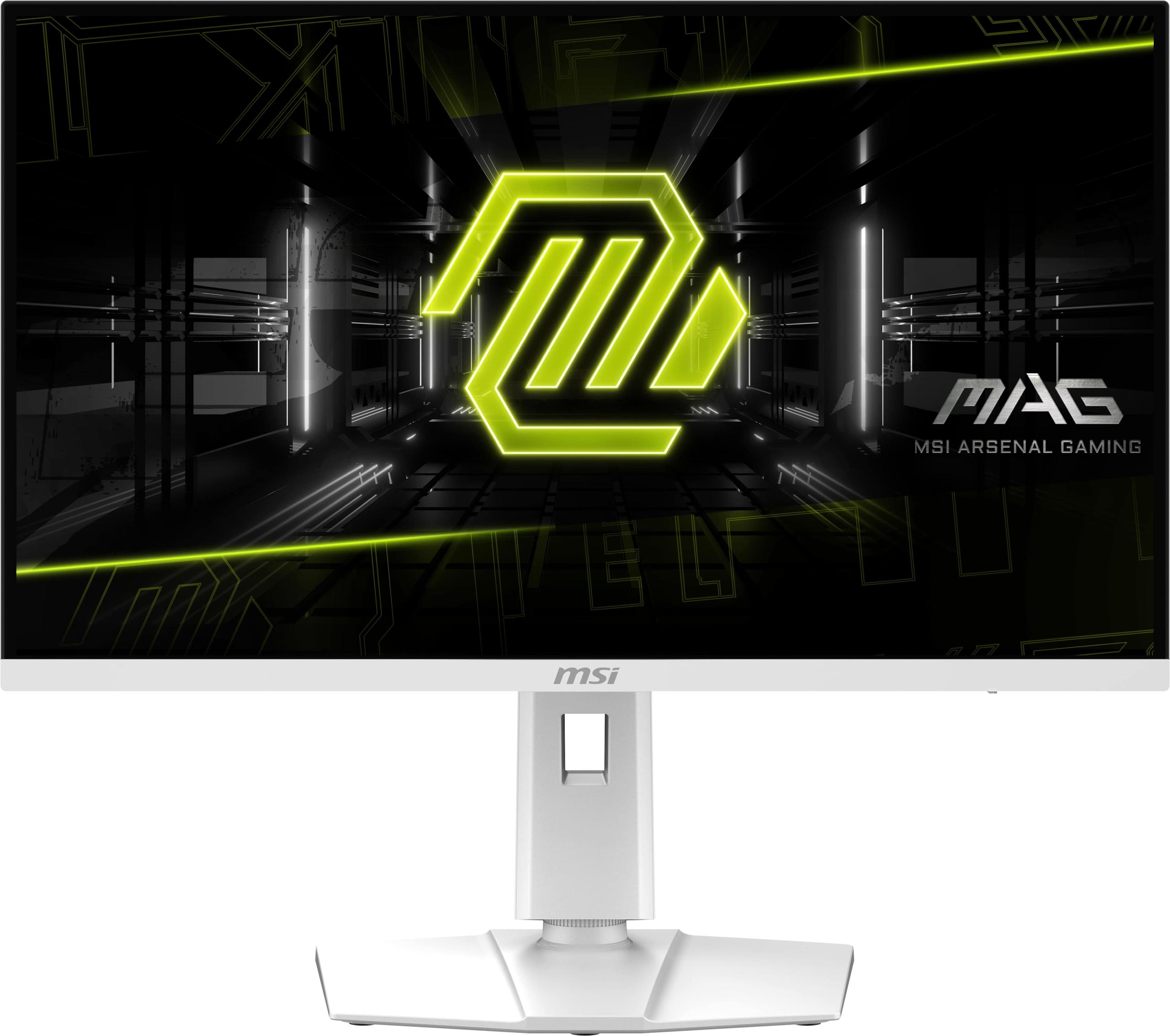
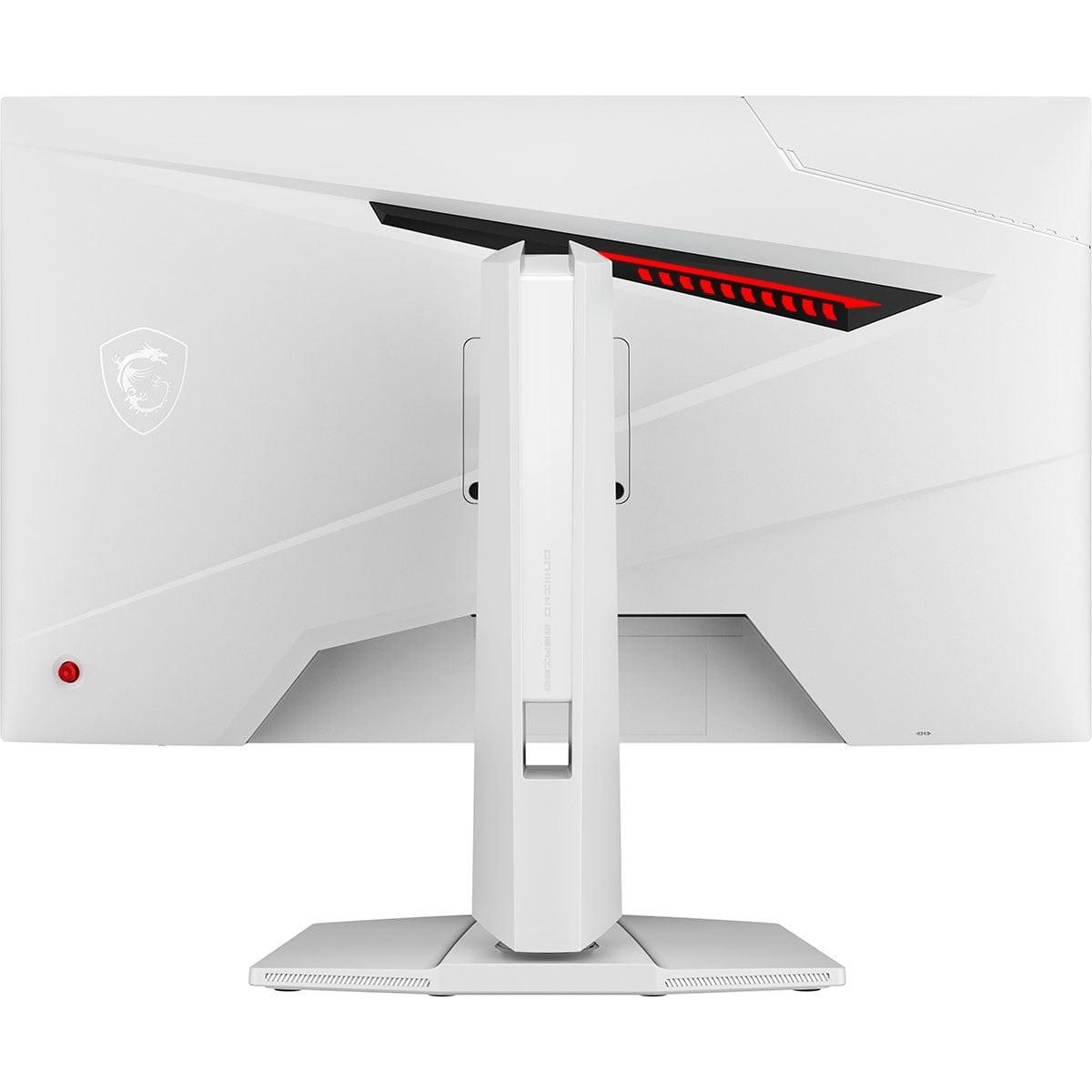
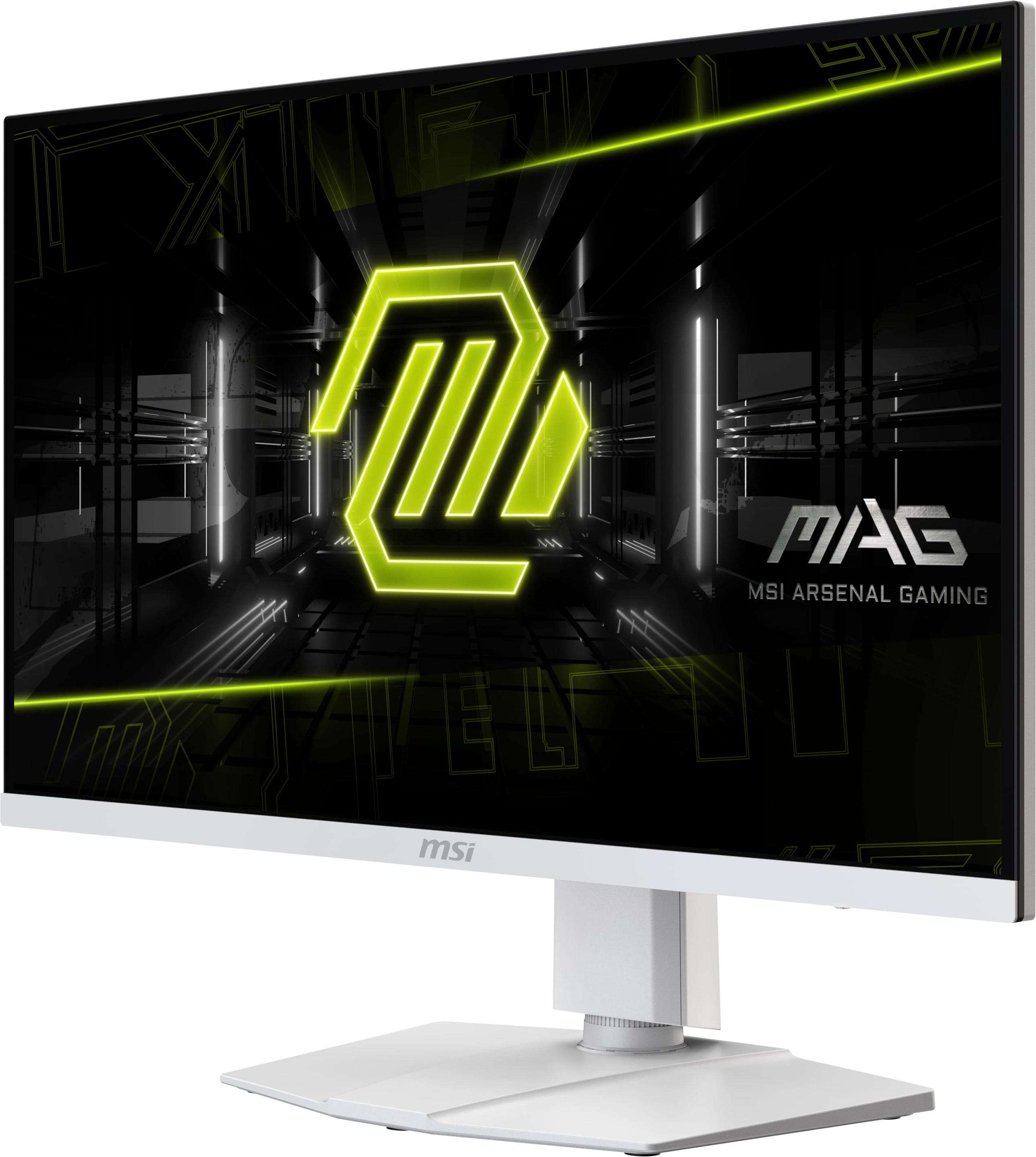
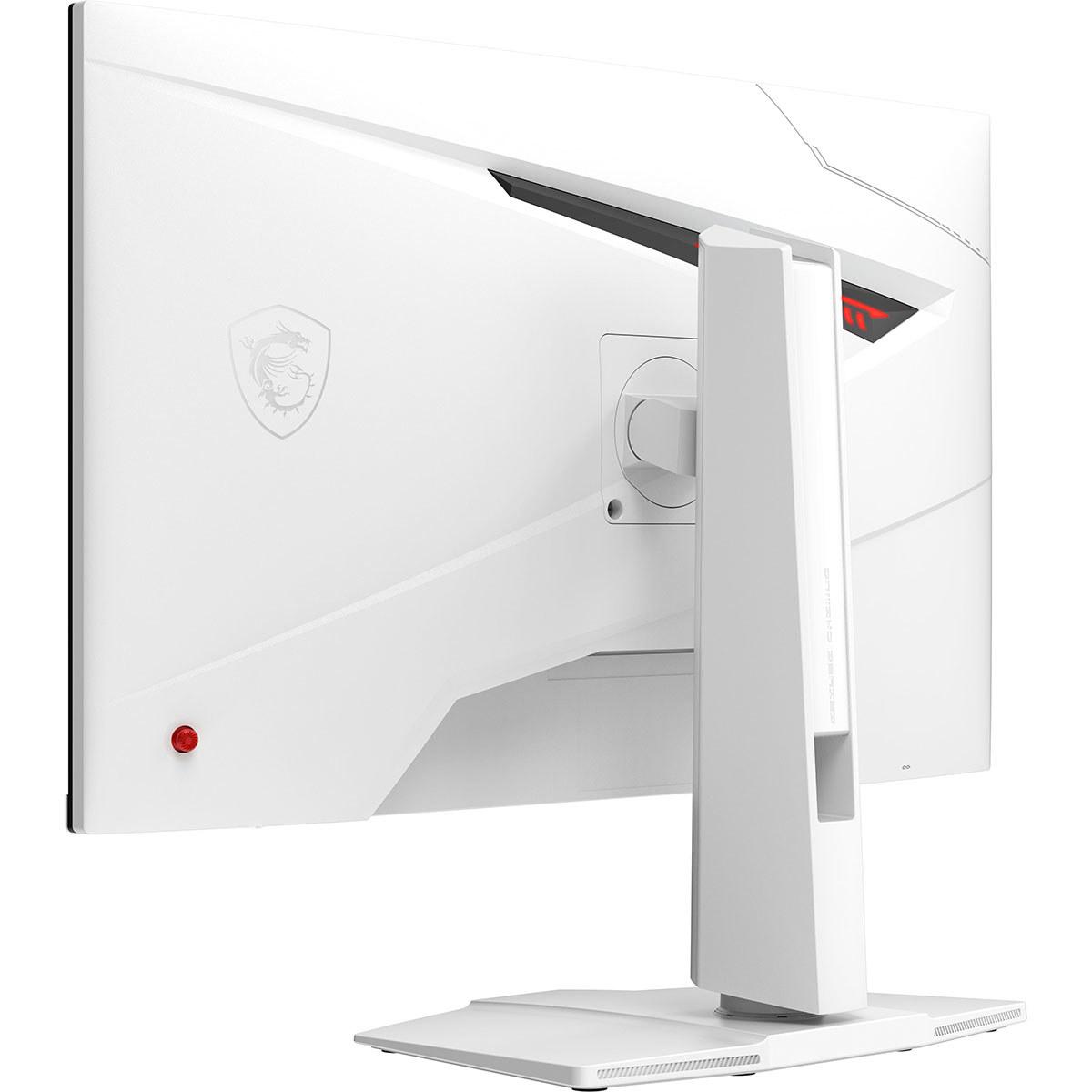
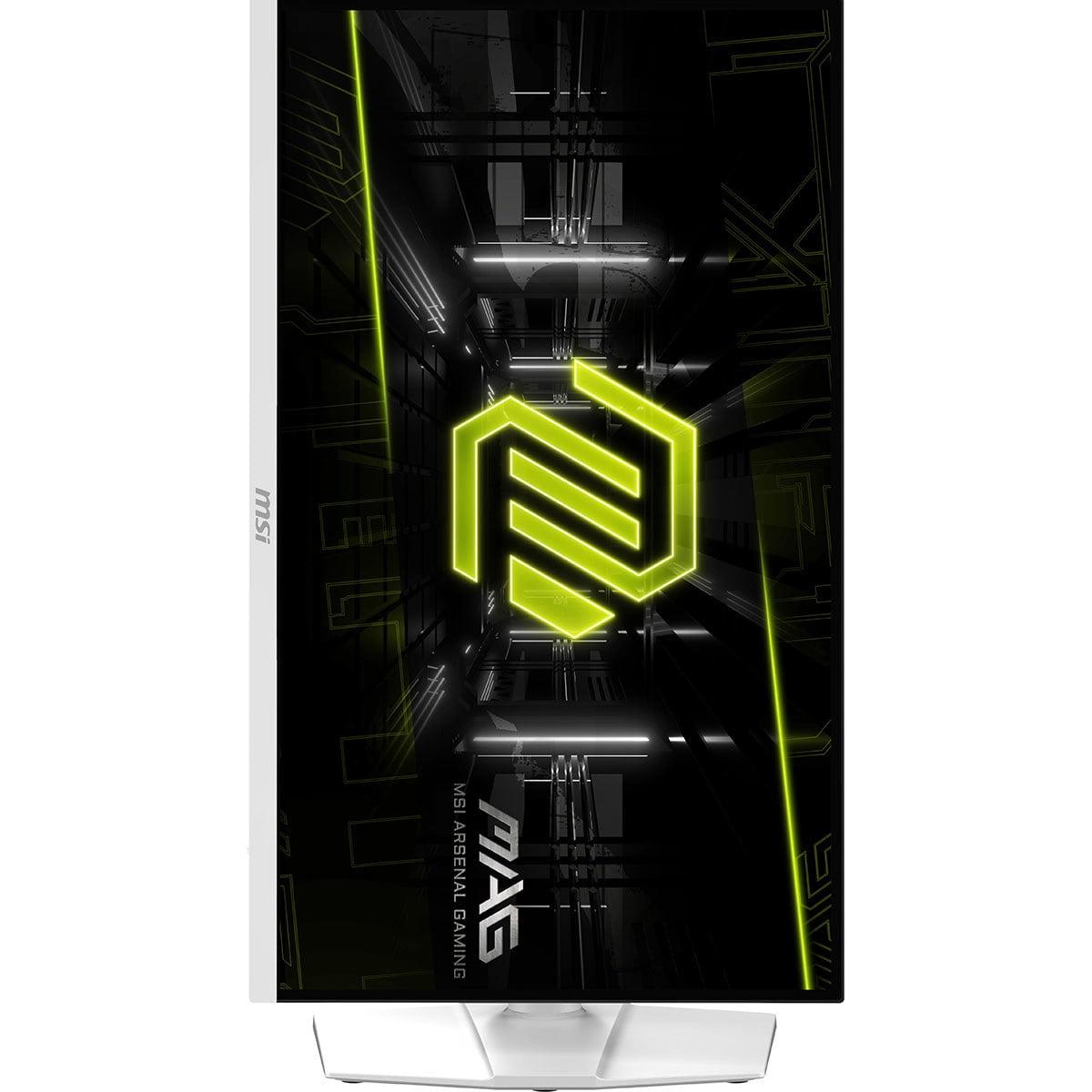
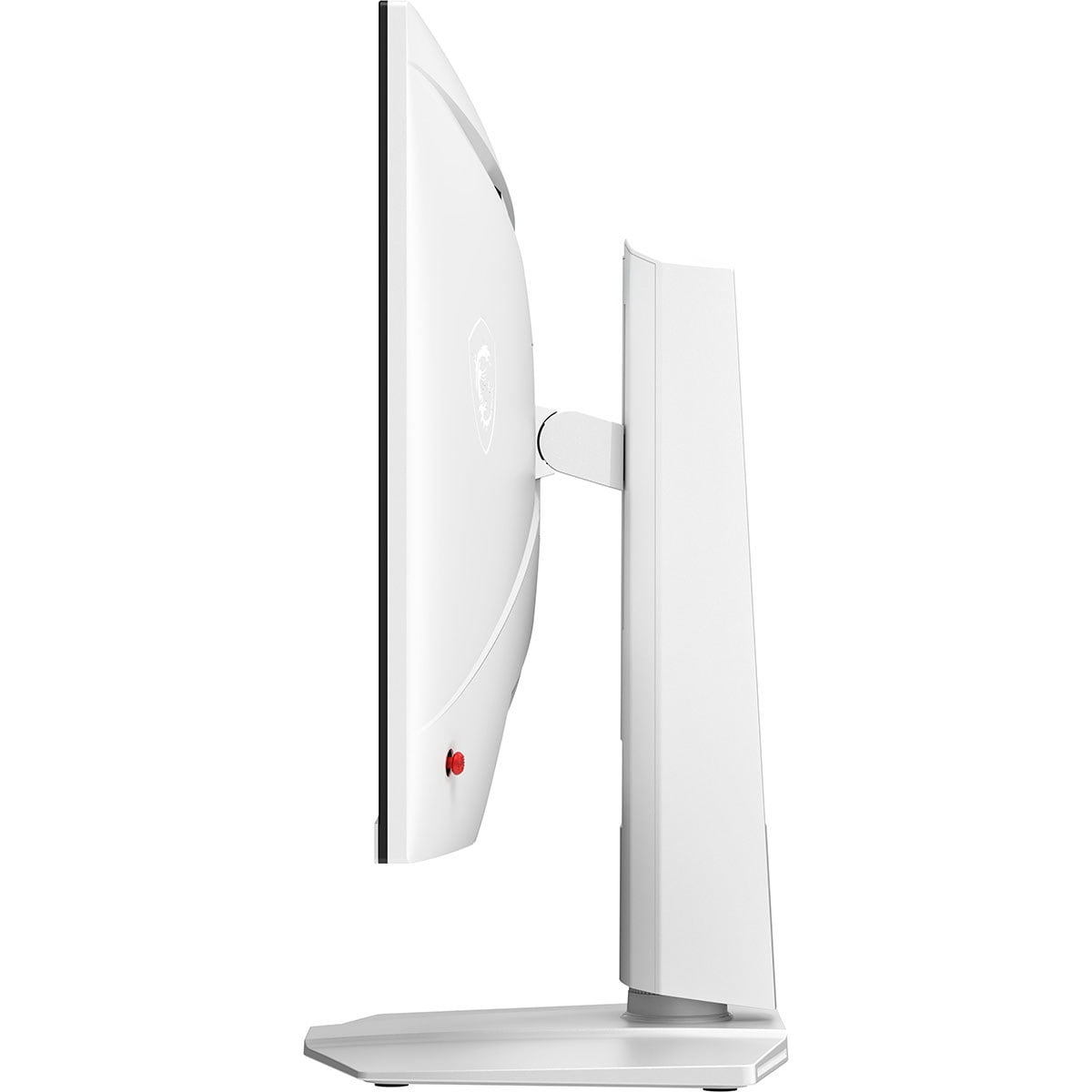
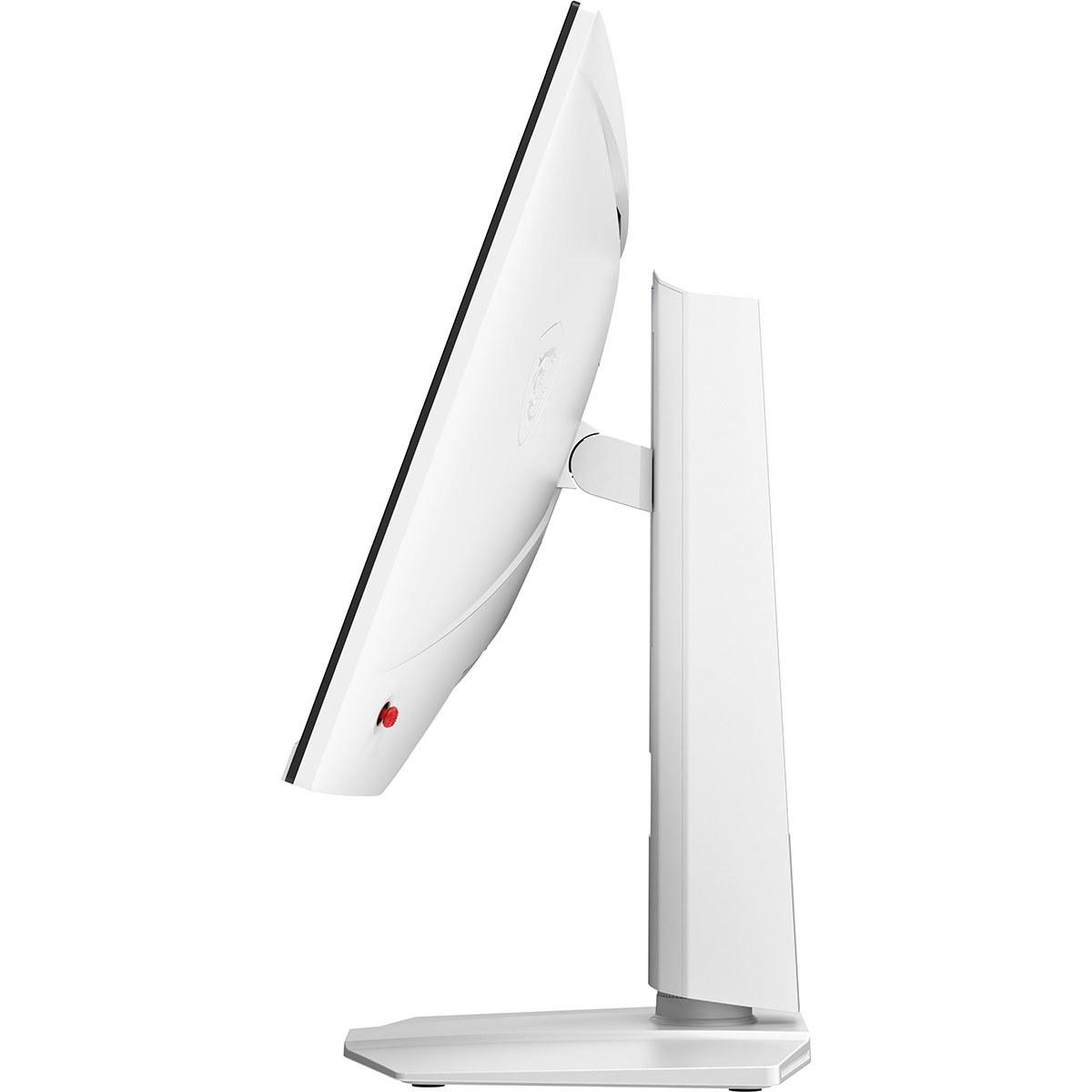
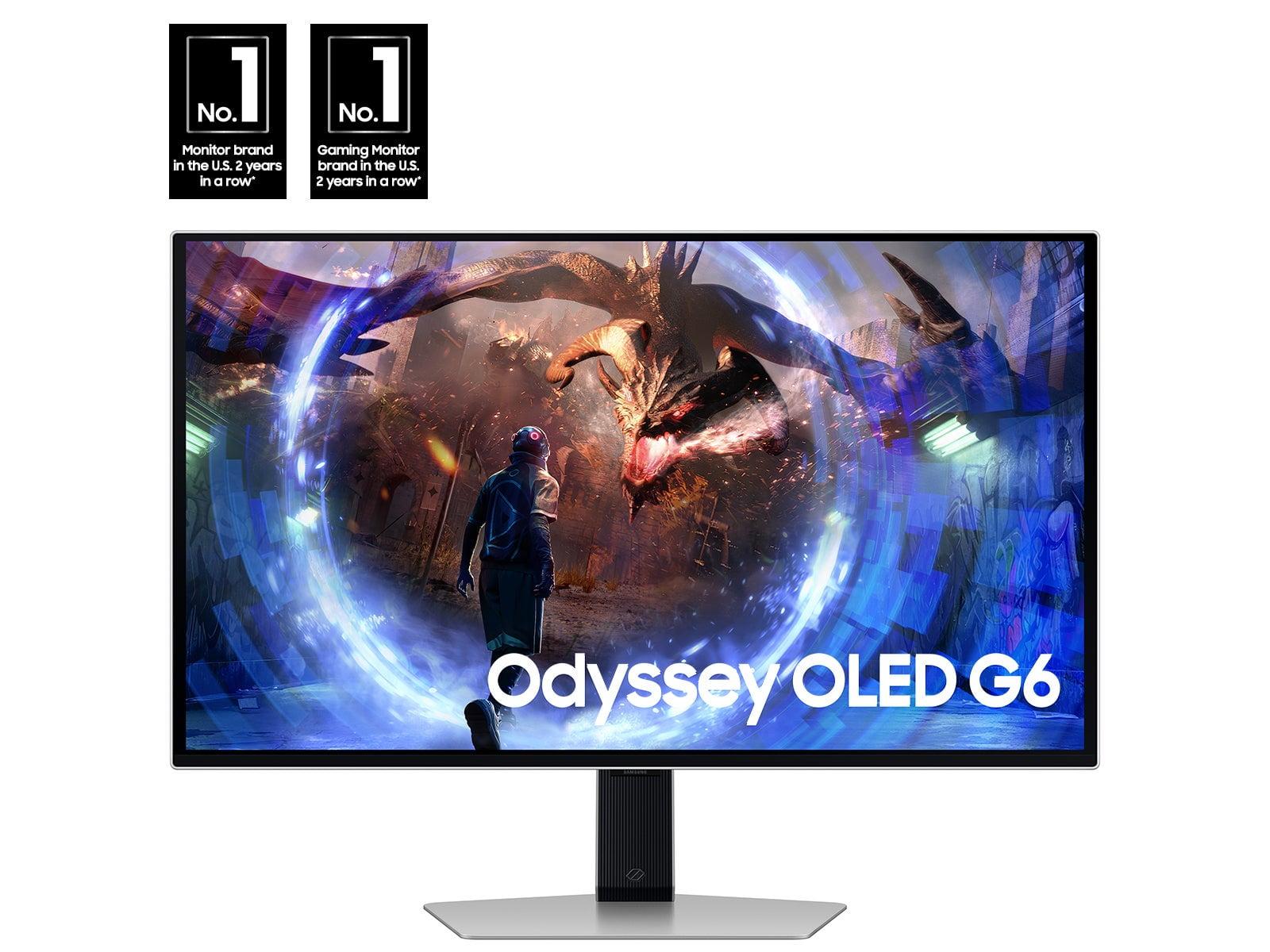

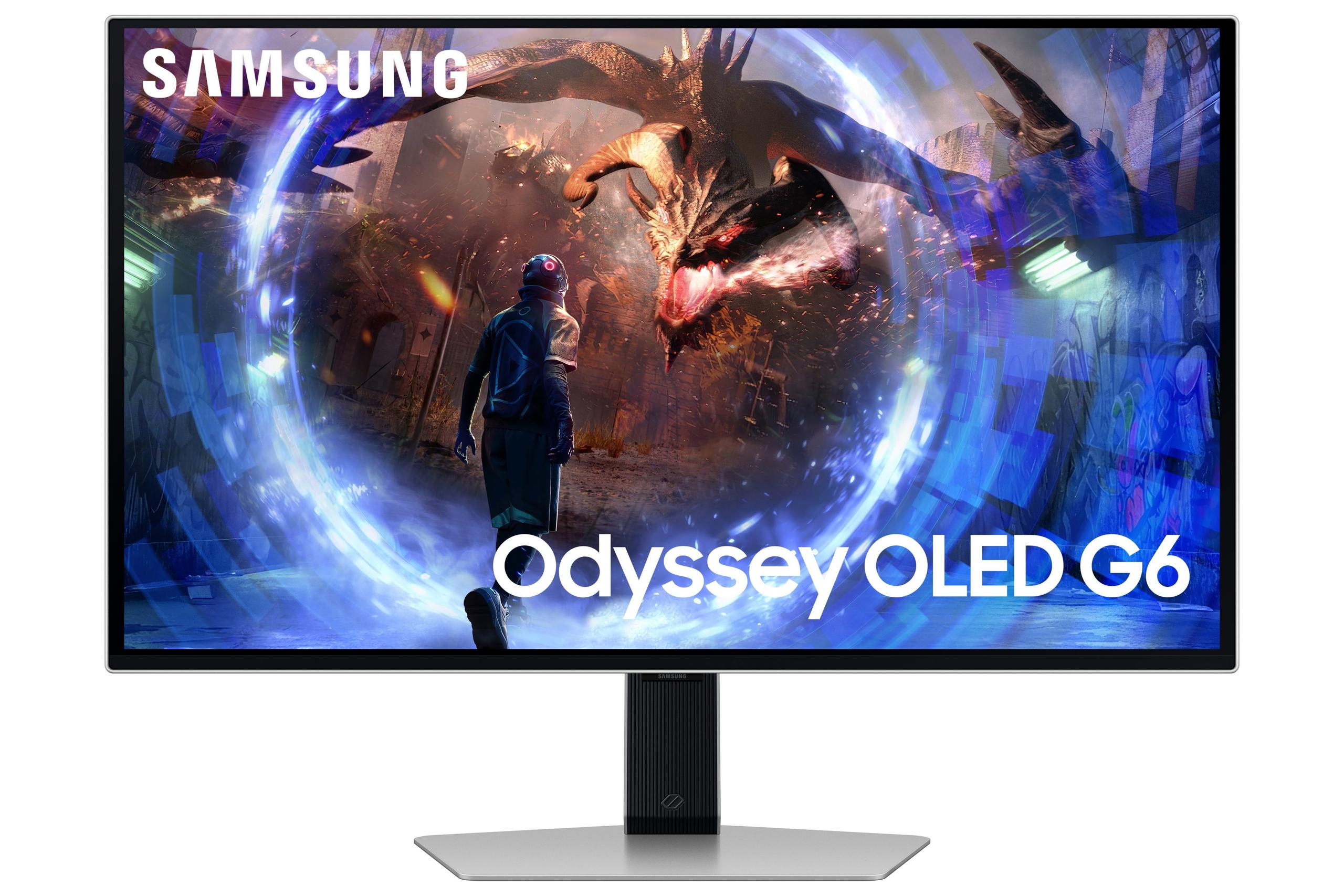
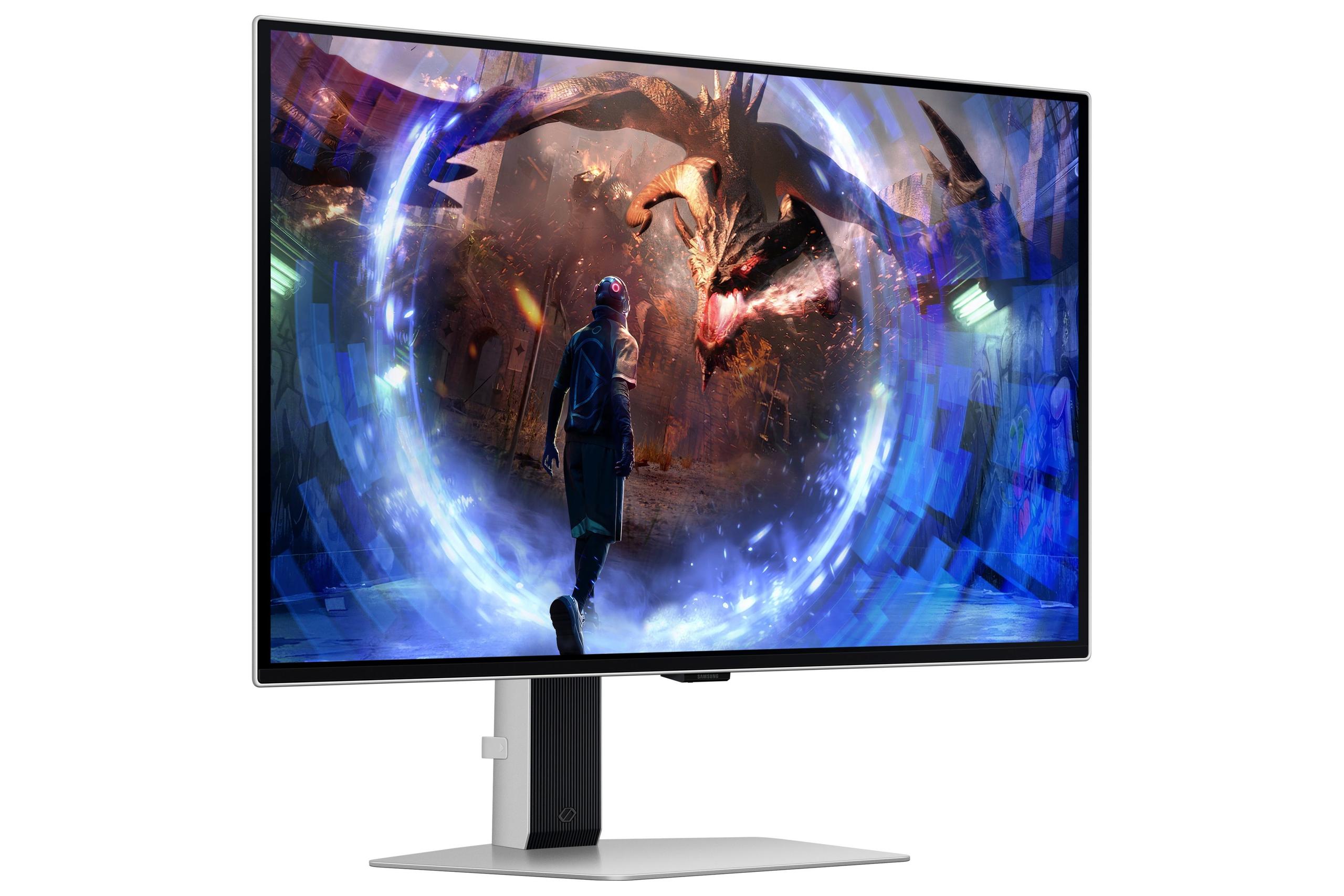
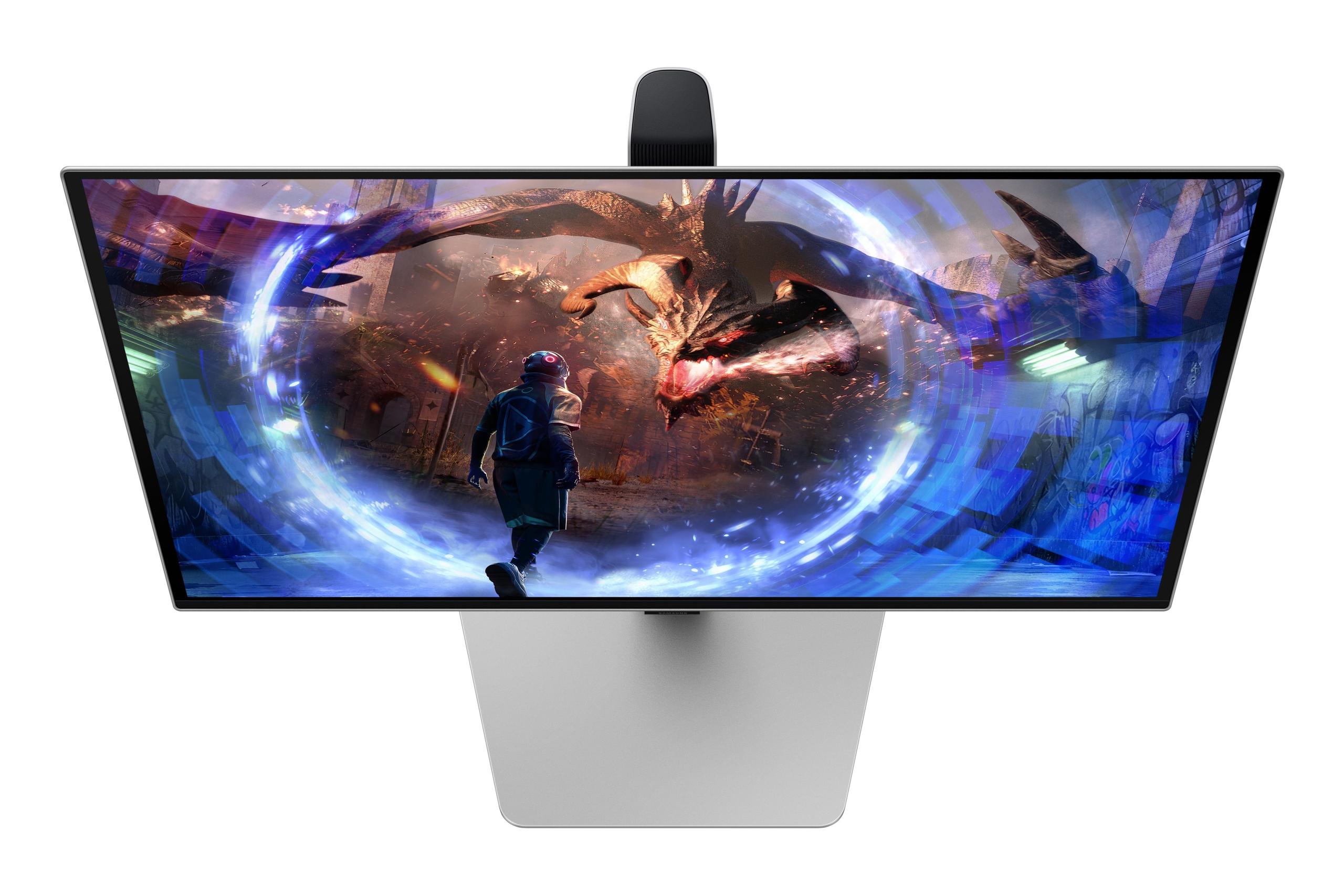
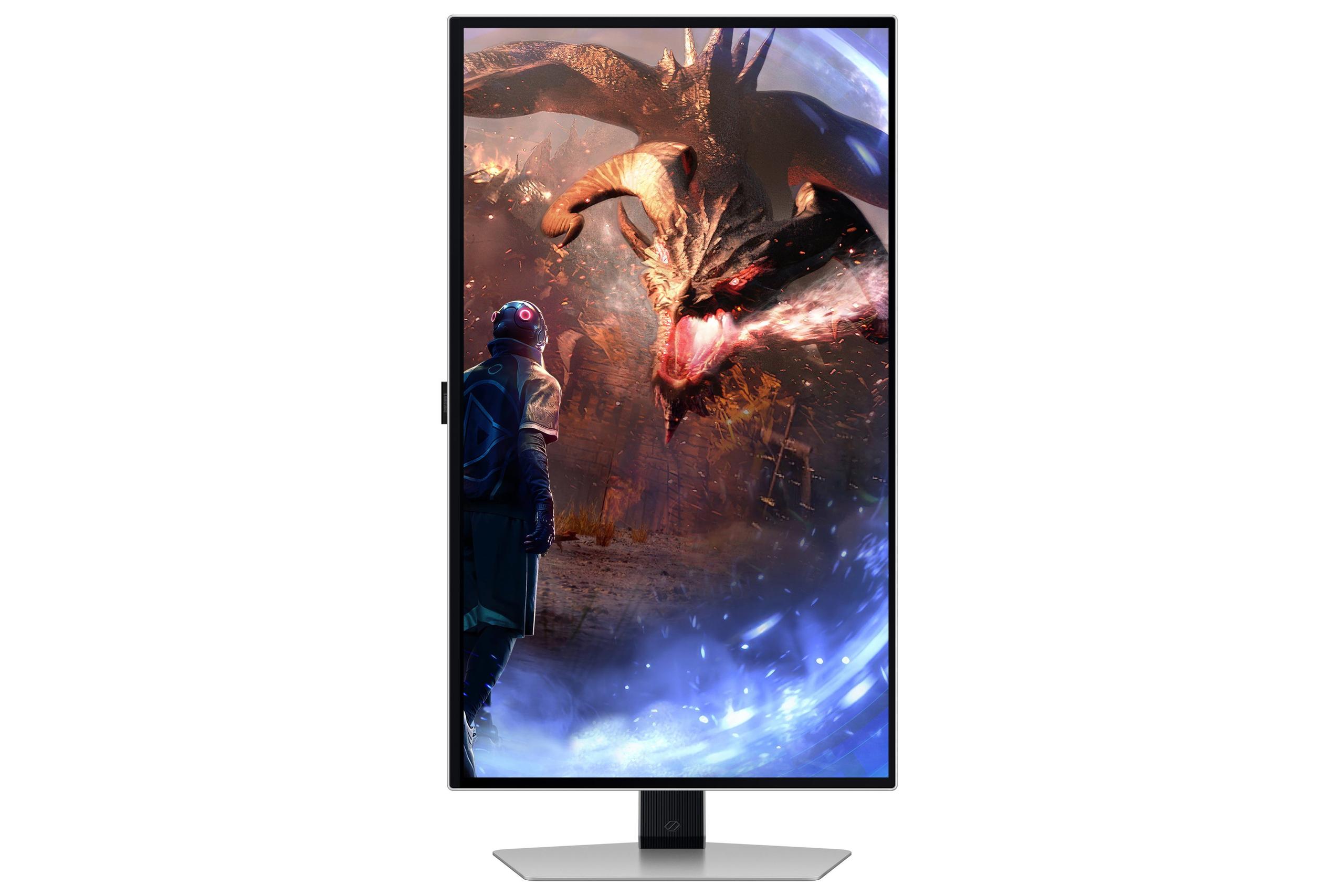

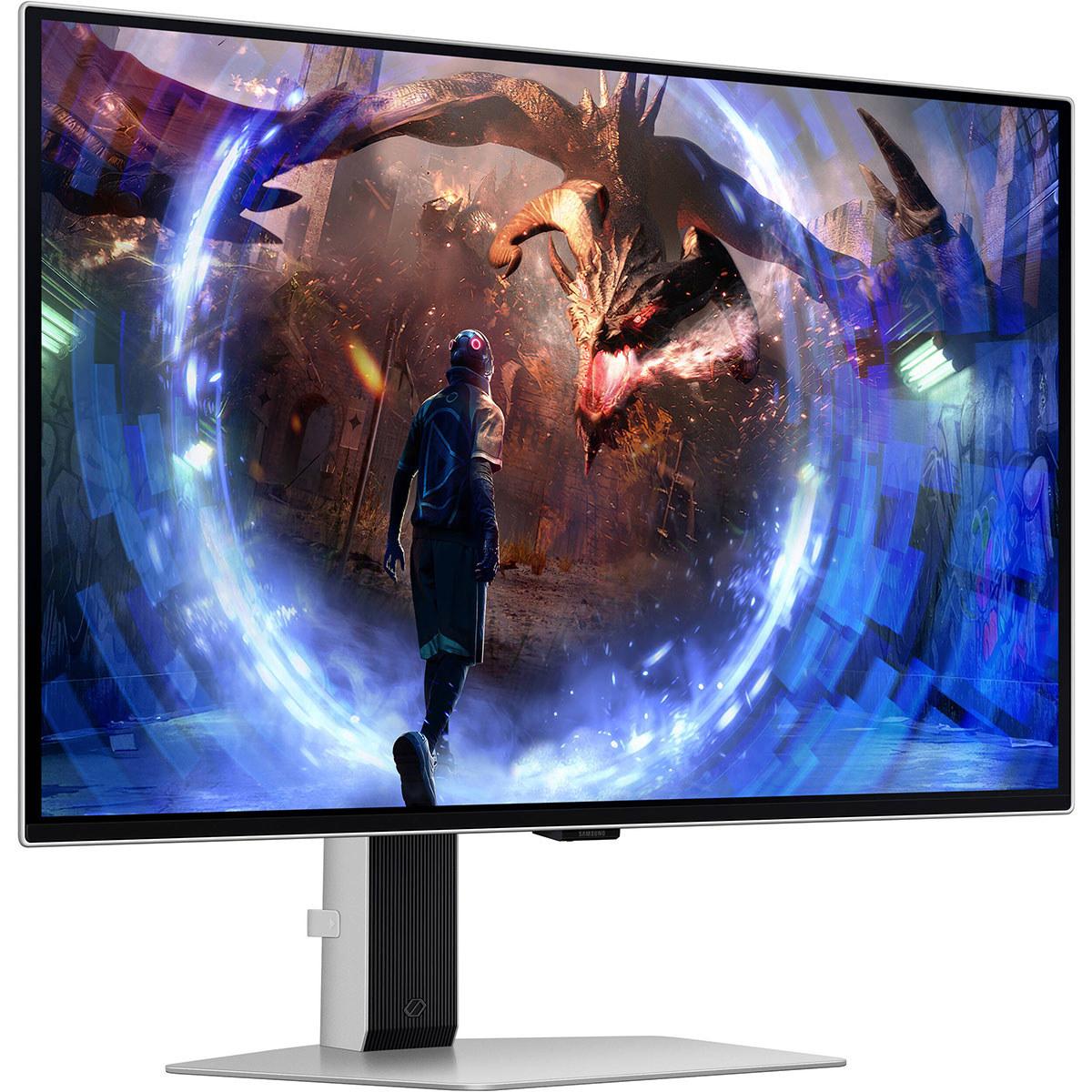
When I first started reviewing gaming monitors seriously a few years back, the choice seemed simpler. You picked between size, resolution, or refresh rate—rarely could you have it all without spending a fortune. Today's market presents fascinating trade-offs, perfectly illustrated by two monitors that couldn't be more different in their approach: the MSI MAG 274URFW and the Samsung Odyssey OLED G6.
Released in 2024, both monitors represent the current state of gaming display technology, but they've taken completely different paths to get there. At the time of writing, the MSI positions itself as a value-oriented 4K powerhouse, while Samsung's OLED offering commands nearly double the price for cutting-edge panel technology and extreme refresh rates.
Before diving into these specific monitors, it's worth understanding what makes a gaming monitor tick. The gaming monitor landscape has evolved dramatically since 2020, when most gamers were content with basic 1440p displays at 144Hz. Today's monitors push boundaries in every direction: higher resolutions, faster refresh rates, better color reproduction, and entirely new panel technologies.
Panel technology forms the foundation of any monitor's performance. Traditional LCD panels use a backlight that shines through liquid crystals to create images, while newer OLED (Organic Light-Emitting Diode) panels have each pixel generate its own light. This fundamental difference affects everything from contrast ratios to response times.
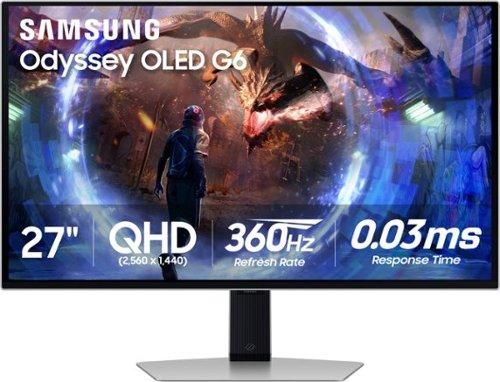
Refresh rate measures how many times per second your monitor can display a new image, measured in Hertz (Hz). A 60Hz monitor refreshes 60 times per second, while a 360Hz monitor like the Samsung G6 refreshes 360 times per second. Higher refresh rates create smoother motion, particularly noticeable in fast-paced games.
Response time indicates how quickly a pixel can change from one color to another, typically measured in milliseconds (ms). Lower response times reduce ghosting—those annoying trails you see behind moving objects in games.
The MSI MAG 274URFW represents the resolution-first philosophy, packing 4K (3840×2160) pixels into a 27-inch display. Meanwhile, the Samsung Odyssey OLED G6 prioritizes speed with QHD (2560×1440) resolution but a blistering 360Hz refresh rate.
The most immediately noticeable difference between these monitors is how they handle image quality. The MSI monitor delivers exceptional sharpness through its 4K resolution—that's 8.3 million pixels compared to the Samsung's 3.7 million pixels. When you're reading text, editing photos, or exploring detailed game worlds, this pixel density difference is substantial.
I've spent considerable time with both approaches, and the 4K advantage becomes obvious the moment you boot up a strategy game or open a productivity application. Text appears razor-sharp on the MSI display, making it genuinely useful for work tasks between gaming sessions. Game textures reveal details you simply can't see at lower resolutions—individual bricks in building facades, fabric weaves in character clothing, and fine environmental details that enhance immersion.
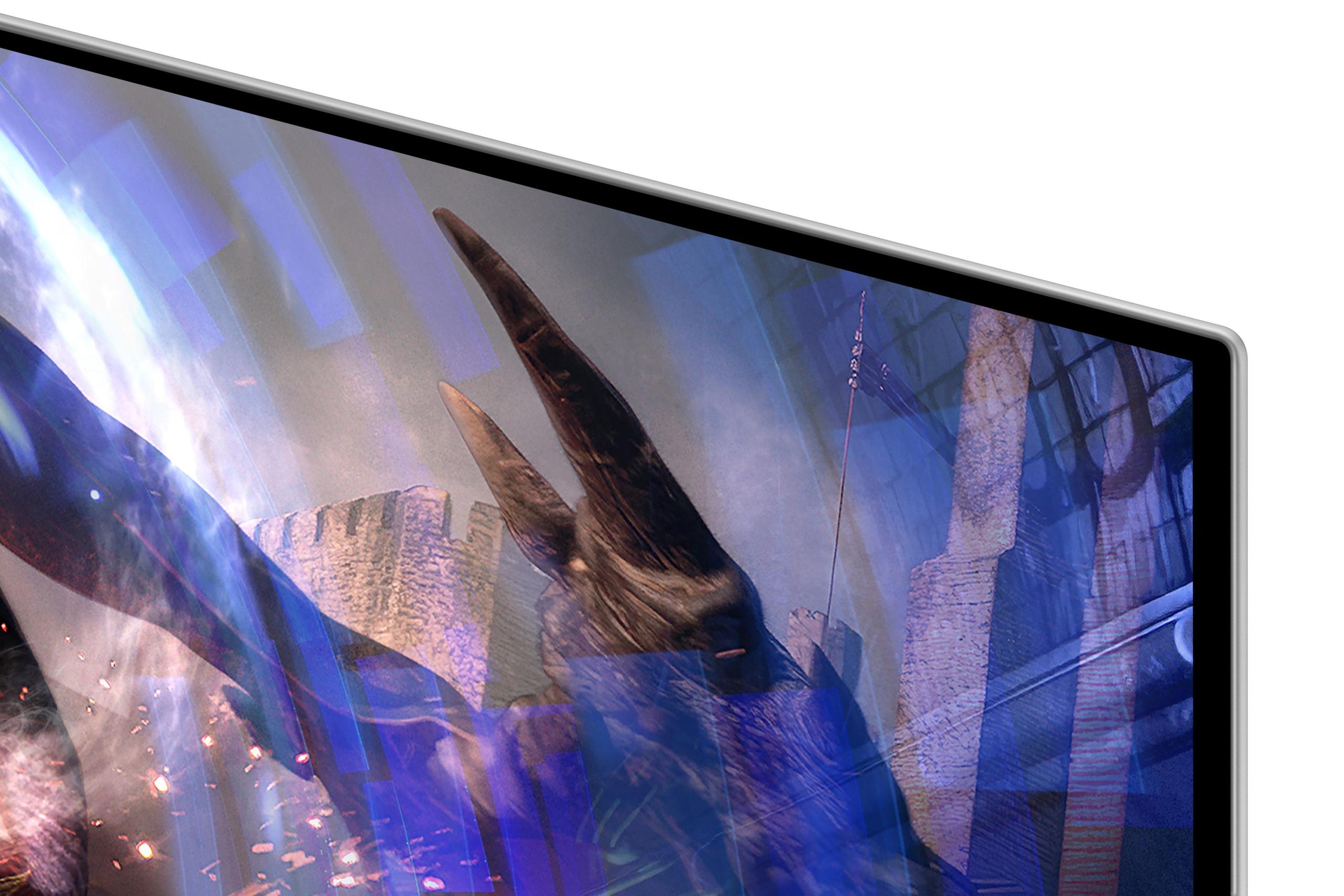
However, the Samsung's OLED panel fights back with something no traditional LCD can match: perfect blacks. OLED technology means each pixel can turn completely off, creating true black rather than the dark gray you get from LCD backlights. This results in a contrast ratio of 1,000,000:1 compared to the MSI's 1,000:1 ratio—a difference that's immediately visible in dark scenes.
Playing horror games or atmospheric titles like Cyberpunk 2077 on the Samsung monitor feels transformative. Dark alleyways actually appear black, not gray, while neon signs pop with intensity that makes colors feel more vibrant and realistic. The OLED's ability to display perfect blacks also enhances HDR (High Dynamic Range) content, where the difference between the darkest and brightest parts of an image creates more lifelike visuals.
The trade-off comes with brightness limitations. The MSI monitor can reach 400 nits of brightness—adequate for most environments and HDR content. The Samsung OLED, while capable of intense highlights in small areas, averages around 250 nits for full-screen content. In bright rooms or near windows, this limitation becomes noticeable, though Samsung's anti-glare coating helps mitigate reflections better than most OLED displays.
Gaming performance represents where these monitors diverge most dramatically. The Samsung Odyssey OLED G6 prioritizes competitive gaming with its 360Hz refresh rate and 0.03ms response time. These numbers aren't just marketing—they translate to genuinely perceptible improvements in fast-paced games.
Testing competitive titles like Counter-Strike 2 and Valorant, the difference between 160Hz and 360Hz becomes apparent during quick movements and target tracking. The additional frames provide more visual information, making it easier to track enemies and react to sudden movements. Professional esports players often claim they can feel the difference, and after extensive testing, I believe them.
The 0.03ms response time virtually eliminates ghosting entirely. Moving objects appear completely clean without the slight trailing effects you might notice even on good LCD panels. The MSI monitor's 0.5ms response time is excellent by LCD standards, but side-by-side comparison reveals the OLED's superiority in motion clarity.
However, driving these high refresh rates requires serious graphics processing power, and here's where the resolution difference becomes crucial. Achieving 300+ frames per second at 4K resolution demands flagship graphics cards that cost significantly more than the monitor itself. The MSI's 4K resolution means you'll likely need to choose between visual quality and high frame rates.
Conversely, the Samsung's QHD resolution allows even mid-range modern graphics cards to achieve frame rates that can utilize the 360Hz capability. A graphics card that struggles to maintain 100 fps at 4K might easily achieve 200+ fps at QHD, making the high refresh rate actually usable.
Both monitors support adaptive sync technologies—AMD FreeSync—which synchronizes the monitor's refresh rate with your graphics card's output. This eliminates screen tearing (when the monitor displays parts of multiple frames simultaneously) and provides smooth gameplay even when frame rates fluctuate. The Samsung supports FreeSync Premium Pro, which includes HDR compatibility and typically offers wider variable refresh rate ranges.
Modern gaming monitors have evolved beyond simple displays into comprehensive gaming command centers. The MSI MAG 274URFW includes several productivity-focused features that reflect its versatile positioning. Picture-in-Picture (PiP) and Picture-by-Picture (PbP) modes allow you to display content from multiple sources simultaneously—useful for monitoring streams, Discord, or reference materials while gaming.
The MSI also includes AI Vision technology, which uses artificial intelligence to enhance visibility in dark game areas. While gimmicky-sounding, this feature can provide genuine advantages in competitive games where spotting enemies in shadows matters. Smart Crosshair overlays customizable aiming reticles that change color based on background contrast, helping maintain visibility across different game environments.
Samsung's approach focuses more narrowly on competitive gaming optimization. The Odyssey OLED G6 includes VRR Control, which helps reduce flicker that can occur when frame rates fluctuate with variable refresh rate enabled—a common issue that can cause eye strain during extended gaming sessions. Virtual Aim Point provides customizable crosshair overlays similar to MSI's implementation.
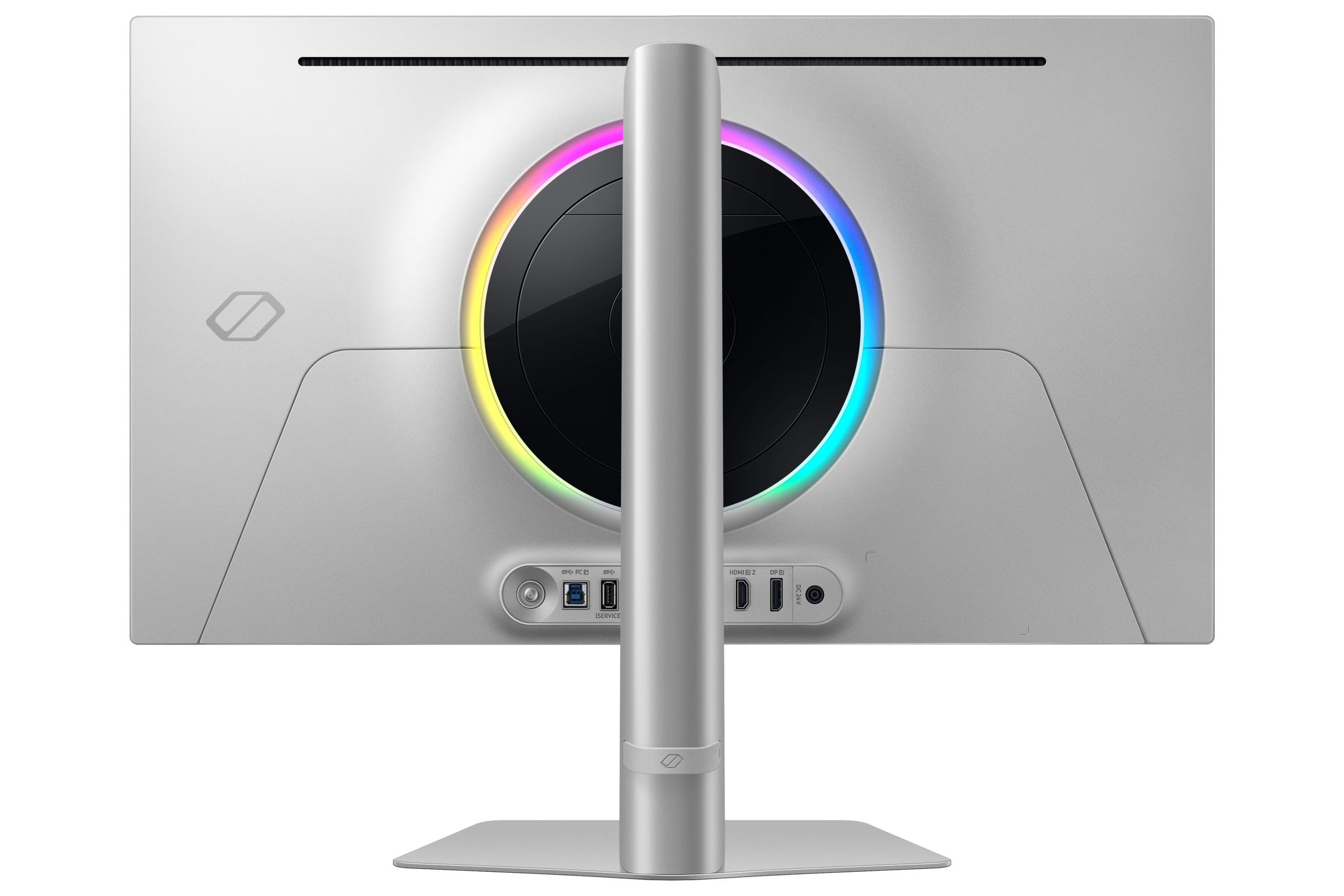
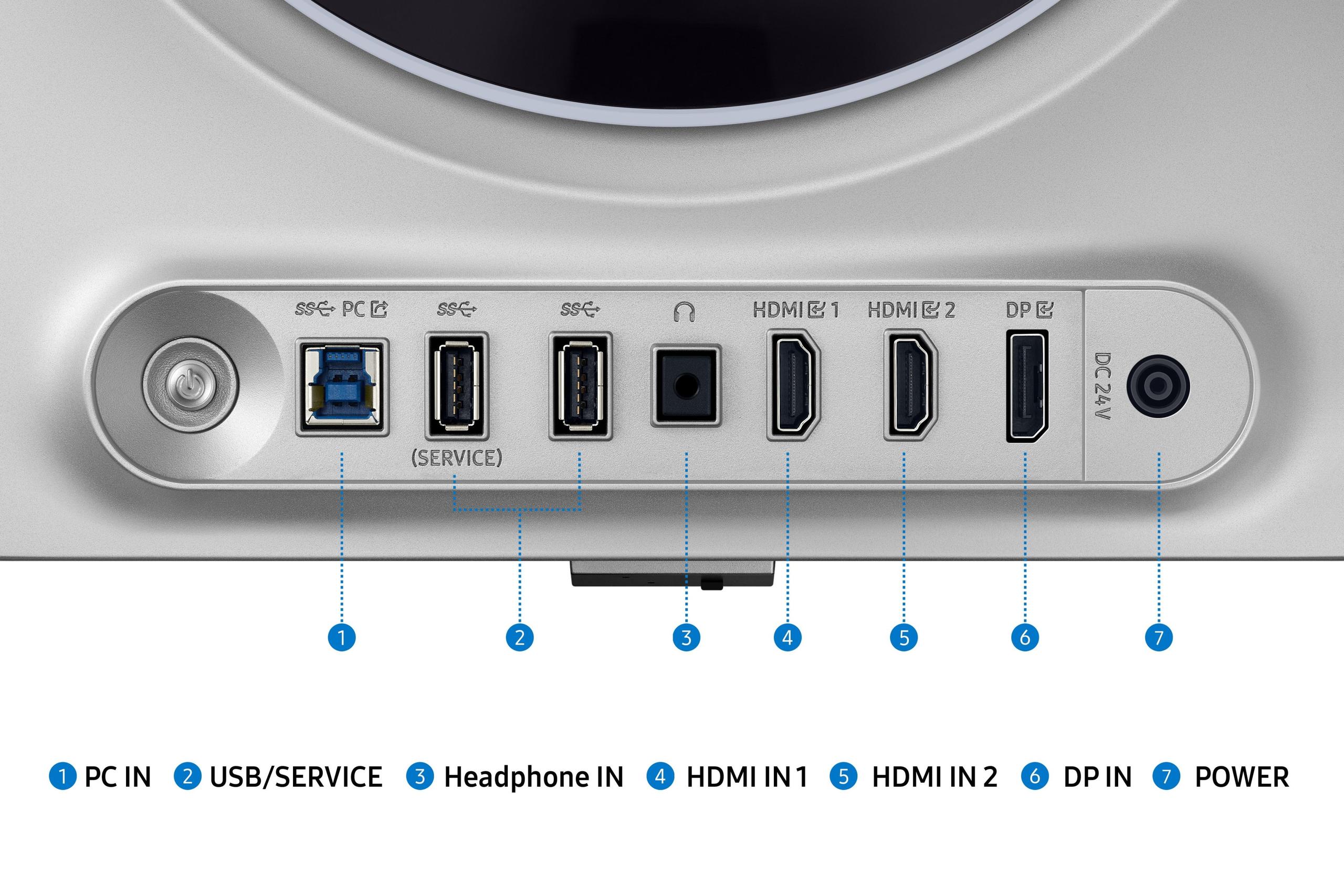
Connectivity options are comprehensive on both monitors. Both include DisplayPort 1.4 and dual HDMI 2.1 ports, ensuring compatibility with current and next-generation gaming consoles. The MSI adds USB-C connectivity with Power Delivery, allowing single-cable connections to laptops—particularly useful if you plan to use the monitor for work or content creation.
Ergonomics matter for extended gaming sessions, and both monitors provide full adjustment capabilities: height, tilt, swivel, and pivot. The stands are sturdy and well-engineered, though both require substantial desk space due to their wide bases.
While primarily designed for gaming, both monitors can serve home theater roles with varying degrees of success. The MSI's 4K resolution makes it excellent for streaming 4K content from services like Netflix, Disney+, or YouTube. The higher pixel density ensures text remains readable even when sitting several feet away, making it suitable for couch gaming or movie watching.
However, the 27-inch size limits its effectiveness as a true home theater display. You'd need to sit relatively close to appreciate the resolution advantage, which might not work for traditional living room setups.
The Samsung OLED's perfect blacks and infinite contrast make it exceptional for movie content, particularly in darkened rooms. HDR movies look spectacular with deep blacks and bright highlights that LCD displays simply cannot match. However, the QHD resolution means you're not getting full 4K detail from streaming content or UHD Blu-rays.
Both monitors lack built-in speakers of meaningful quality, requiring external audio solutions for home theater use. The MSI includes a 3.5mm headphone output, while both support audio passthrough via their HDMI and DisplayPort connections.
For a dedicated home theater setup, you'd likely want a larger display, but for bedroom or office entertainment, either could work depending on your priorities: resolution for detail or contrast for cinematic impact.
After extensive testing and daily use of both approaches, clear use case patterns emerge. The MSI MAG 274URFW excels as a versatile, value-oriented choice that handles multiple roles effectively. At the time of writing, its pricing makes 4K gaming accessible to enthusiasts who previously couldn't justify the premium.
Choose the MSI if you want one monitor that handles everything well: gaming, productivity, content creation, and media consumption. The 4K resolution provides future-proofing as games increasingly support higher resolutions, and the image quality remains impressive even as display technology continues evolving.
The 160Hz refresh rate, while not extreme, provides smooth gaming for most titles. Unless you're seriously competitive in esports, you probably won't notice the difference between 160Hz and 360Hz in most games. The IPS panel's color accuracy makes it genuinely useful for photo editing or graphic design work.
The Samsung Odyssey OLED G6 targets a more specific audience: serious gamers who prioritize performance above all else. At the time of writing, its premium pricing reflects cutting-edge technology that provides tangible competitive advantages in fast-paced games.
Choose the Samsung if competitive gaming dominates your usage, you have a powerful graphics card that can drive high frame rates at QHD resolution, and you primarily game in darker environments where the OLED panel can shine. The visual impact of perfect blacks and infinite contrast creates gaming experiences that feel genuinely different from traditional LCD displays.
The 360Hz refresh rate isn't just a number—it provides real advantages in competitive scenarios where split-second reactions matter. Professional and semi-professional gamers will likely notice the difference, though casual players might not.
Both monitors represent significant technological achievements that wouldn't have been possible even three years ago. OLED gaming monitors were prohibitively expensive in 2021, while 4K displays with high refresh rates required graphics cards that cost more than entire gaming systems.
The Samsung's OLED technology includes burn-in protection features that address the main historical concern with OLED displays. Dynamic cooling systems, pixel shifting, and intelligent brightness management help prevent permanent image retention that plagued earlier OLED implementations.
The MSI's IPS panel represents the maturation of LCD technology, providing color performance and viewing angles that rival more expensive professional displays while maintaining gaming-appropriate response times.
Looking forward, both approaches face interesting challenges. OLED technology will likely become more affordable and brighter, potentially combining the best of both worlds. LCD technology continues improving with mini-LED backlighting and quantum dot enhancements that narrow the contrast gap with OLED.
Ultimately, choosing between these monitors depends on understanding your gaming priorities and usage patterns. The MSI MAG 274URFW offers exceptional value for users who want premium image quality without premium pricing. Its 4K resolution provides detail that remains impressive years after purchase, while its versatility makes it useful beyond gaming.
The Samsung Odyssey OLED G6 commands a premium for cutting-edge performance that primarily benefits competitive gamers and technology enthusiasts. Its 360Hz refresh rate and perfect blacks create gaming experiences that feel genuinely different, though at significant additional cost.
Consider your graphics card capabilities, gaming preferences, room lighting, and budget. If you play a variety of games, do any productivity work, or want one monitor for everything, the MSI represents excellent value. If you're serious about competitive gaming, have powerful hardware, and want the ultimate gaming display regardless of cost, the Samsung delivers uncompromising performance.
Both monitors represent their approaches excellently—your choice should reflect which philosophy aligns with your gaming priorities and budget constraints. At the time of writing, both offer compelling value propositions within their respective market segments, making either a solid choice depending on your specific needs.
| MSI MAG 274URFW | Samsung Odyssey OLED G6 |
|---|---|
| Resolution - Determines image sharpness and detail level | |
| 4K (3840×2160) - Exceptionally sharp text and game details | QHD (2560×1440) - Good sharpness, easier to drive high frame rates |
| Panel Technology - Affects contrast, colors, and response time | |
| IPS LCD - Consistent colors, wide viewing angles, matte finish | OLED - Perfect blacks, infinite contrast, glossy with anti-glare coating |
| Refresh Rate - How smooth motion appears in games | |
| 160Hz - Smooth for most gaming, good value | 360Hz - Ultra-smooth for competitive gaming, requires powerful GPU |
| Response Time - Critical for eliminating motion blur | |
| 0.5ms (GtG) - Minimal ghosting, excellent for LCD | 0.03ms (GtG) - Virtually zero ghosting, best-in-class motion clarity |
| Brightness - Important for HDR and bright room usage | |
| 400 nits - Good for most environments, solid HDR | 250 nits average - Limited in bright rooms, excellent HDR contrast |
| Contrast Ratio - Affects depth and realism of dark scenes | |
| 1,000:1 - Typical LCD performance, blacks appear gray | 1,000,000:1 - Perfect blacks, dramatic visual depth |
| Color Gamut - Determines color richness and accuracy | |
| 98% DCI-P3, 133% sRGB - Excellent color reproduction | 99% DCI-P3 - Exceptional color accuracy, Pantone validated |
| Adaptive Sync - Eliminates screen tearing | |
| AMD FreeSync Premium - Smooth gameplay, good VRR range | AMD FreeSync Premium Pro - Advanced VRR with HDR support |
| Connectivity - Determines device compatibility | |
| 2x HDMI 2.1, 1x DisplayPort 1.4, USB-C with Power Delivery | 2x HDMI 2.1, 1x DisplayPort 1.4, USB hub |
| HDR Support - Enhances visual realism | |
| VESA DisplayHDR 400 - Basic HDR, limited by LCD contrast | HDR10+ Gaming - Excellent HDR performance with perfect blacks |
| Ergonomics - Affects comfort during long sessions | |
| Height, tilt, swivel, pivot adjustments with VESA mount | Height, tilt, swivel adjustments with VESA mount |
| Best Use Cases - Who should consider each monitor | |
| 4K gaming, productivity work, content creation, versatile use | Competitive gaming, HDR enthusiasts, OLED technology adopters |
| Value Proposition - Cost vs. performance consideration | |
| Exceptional 4K value, multi-purpose versatility | Premium OLED experience, cutting-edge gaming performance |
The Samsung Odyssey OLED G6 is superior for competitive gaming due to its 360Hz refresh rate and 0.03ms response time, providing ultra-smooth motion and virtually zero ghosting. The MSI MAG 274URFW offers solid 160Hz performance that's adequate for most gamers, but serious esports players will benefit from the Samsung's extreme speed advantage.
The primary difference is resolution versus refresh rate priority. The MSI MAG 274URFW focuses on 4K resolution for exceptional image sharpness, while the Samsung Odyssey OLED G6 prioritizes QHD resolution with an ultra-high 360Hz refresh rate for competitive gaming performance.
Picture quality depends on your priorities. The MSI monitor delivers sharper images with 4K resolution and higher brightness, making it better for detailed work and bright rooms. The Samsung OLED provides superior contrast with perfect blacks and more vibrant colors, creating more immersive visuals in darker environments.
Both monitors support gaming consoles through HDMI 2.1 ports. The MSI MAG 274URFW matches the native 4K output of PS5 and Xbox Series X, while the Samsung Odyssey OLED G6 will downscale console output to QHD but provides excellent motion clarity and contrast for console gaming.
The MSI MAG 274URFW offers exceptional value by providing 4K resolution and solid gaming performance at a more accessible price point. The Samsung monitor commands a premium for cutting-edge OLED technology and extreme refresh rates, making it better value only for serious competitive gamers who need maximum performance.
The MSI MAG 274URFW excels for productivity with its 4K resolution providing razor-sharp text and ample screen real estate for multitasking. The Samsung Odyssey OLED G6 can handle productivity tasks but is optimized primarily for gaming, with QHD resolution offering less workspace than 4K displays.
The MSI monitor performs better in bright environments with its 400-nit brightness and matte IPS panel that handles ambient light well. The Samsung OLED has lower peak brightness and may show reflections in very bright rooms, though its anti-glare coating helps mitigate this issue.
The Samsung Odyssey OLED G6 requires less GPU power due to its QHD resolution, allowing mid-range cards to achieve high frame rates. The MSI MAG 274URFW demands more powerful graphics cards for 4K gaming, typically requiring high-end GPUs to maintain smooth performance at maximum resolution.
The Samsung OLED monitor delivers superior HDR with perfect blacks and infinite contrast, creating dramatic lighting effects in supported content. The MSI display supports HDR400 certification but is limited by LCD technology's contrast ratio, providing adequate but not exceptional HDR performance.
The MSI MAG 274URFW uses LCD technology with no burn-in risk, making it worry-free for extended use with static content. The Samsung Odyssey OLED G6 includes advanced burn-in protection features and Samsung's 3-year warranty, but OLED panels can potentially develop burn-in with prolonged static image display.
For movie watching, the Samsung OLED provides a more cinematic experience with perfect blacks and excellent contrast that enhances dark scenes. The MSI monitor offers higher resolution for sharper movie details but cannot match the dramatic visual impact of OLED technology in darkened viewing environments.
The Samsung Odyssey OLED G6 has a significantly faster 0.03ms response time compared to the MSI MAG 274URFW's 0.5ms response time. While both provide excellent gaming performance with minimal motion blur, the Samsung's near-instantaneous pixel response delivers the ultimate in motion clarity for competitive gaming scenarios.
We've done our best to create useful and informative comparisons to help you decide what product to buy. Our research uses advanced automated methods to create this comparison and perfection is not possible - please contact us for corrections or questions. These are the sites we've researched in the creation of this article: youtube.com - bestbuy.com - rtings.com - youtube.com - guru3d.com - youtube.com - newegg.com - bhphotovideo.com - bestbuy.com - storage-asset.msi.com - shi.com - neweggbusiness.com - files.bbystatic.com - us-store.msi.com - msi.com - storage-asset.msi.com - storage-asset.msi.com - bestbuy.com - gamesradar.com - gamesradar.com - versus.com - youtube.com - versus.com - player2.net.au - youtube.com - rtings.com - youtube.com - samsung.com - files.bbystatic.com - techpowerup.com - samsung.com - bestbuy.com - samsung.com - bhphotovideo.com - bestbuy.com - youtube.com - de.shi.com - pangoly.com

Privacy Policy
Terms and Conditions - Affiliate Policy
Home Security
© Copyright 2008-2026.
11816 Inwood Rd #1211, Dallas, TX 75244