

When you're shopping for a gaming monitor, the sheer number of options can feel overwhelming. Do you need 4K resolution? How important is refresh rate? What's the difference between VA and IPS panels? These questions become even more complex when you're comparing monitors from completely different price brackets.
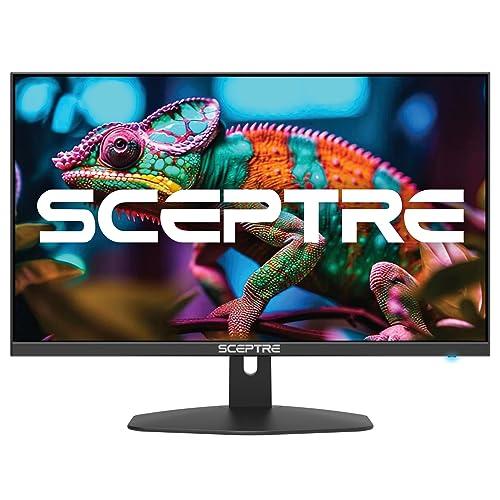
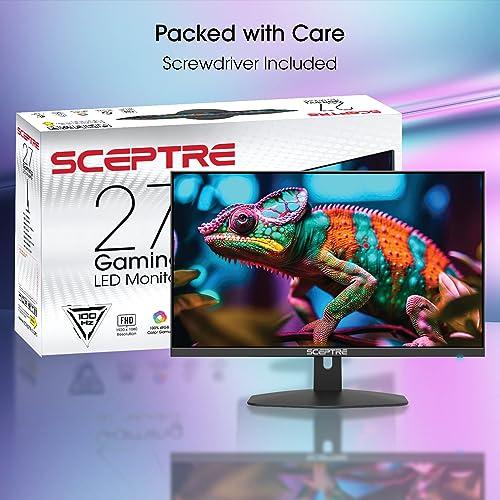
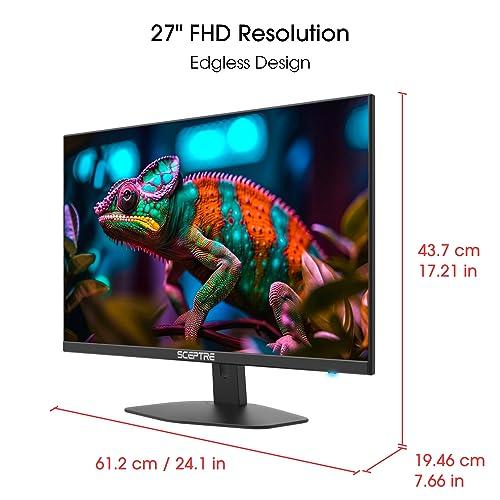
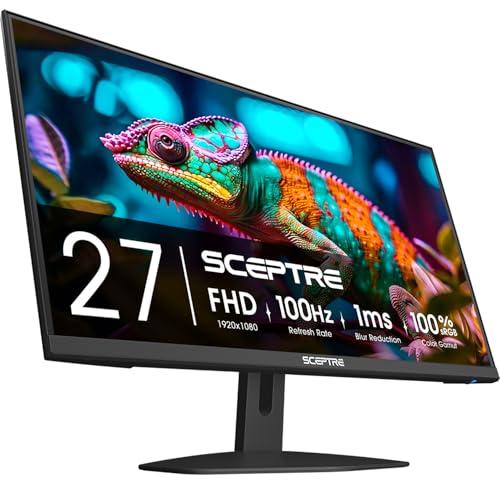
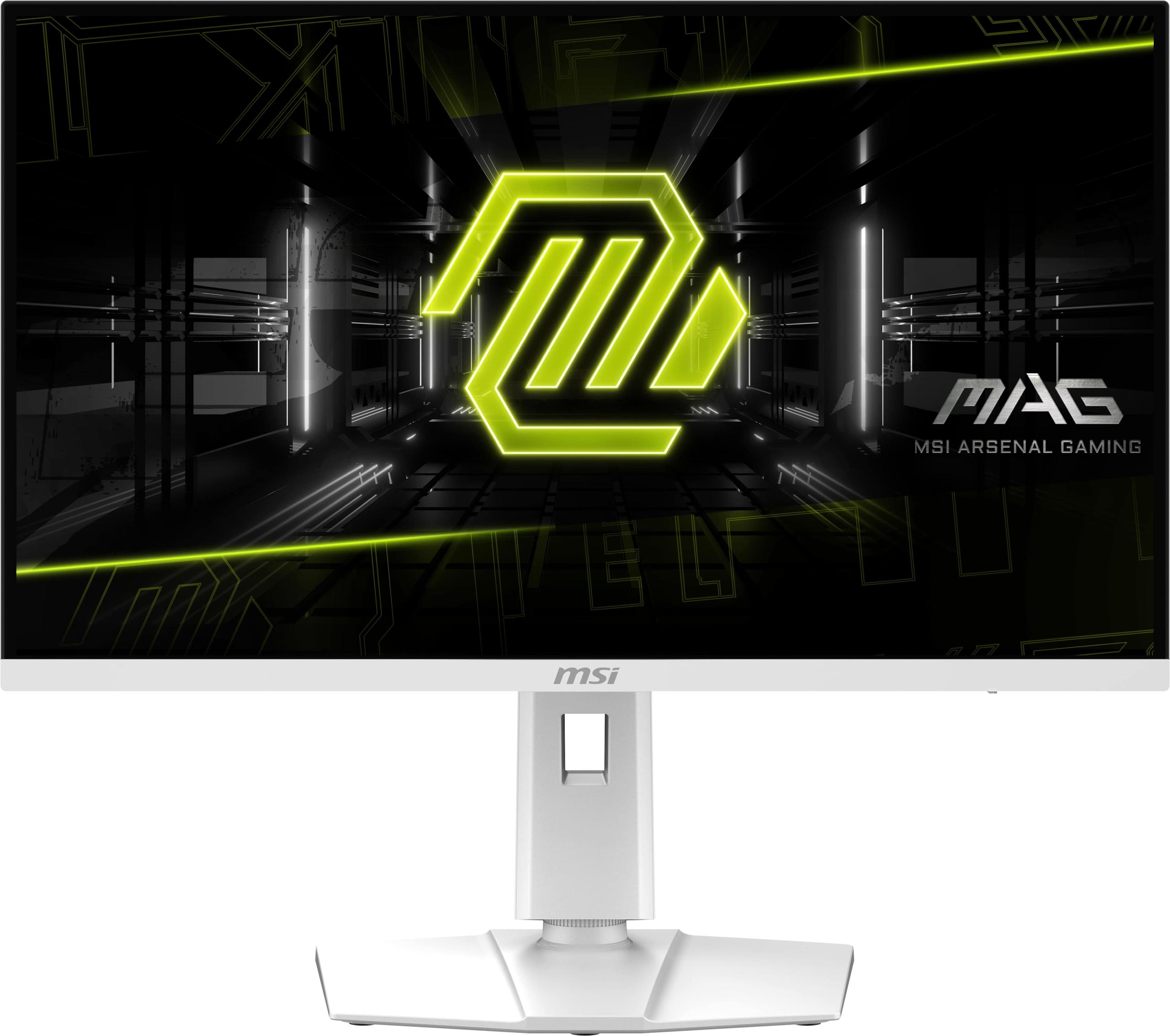
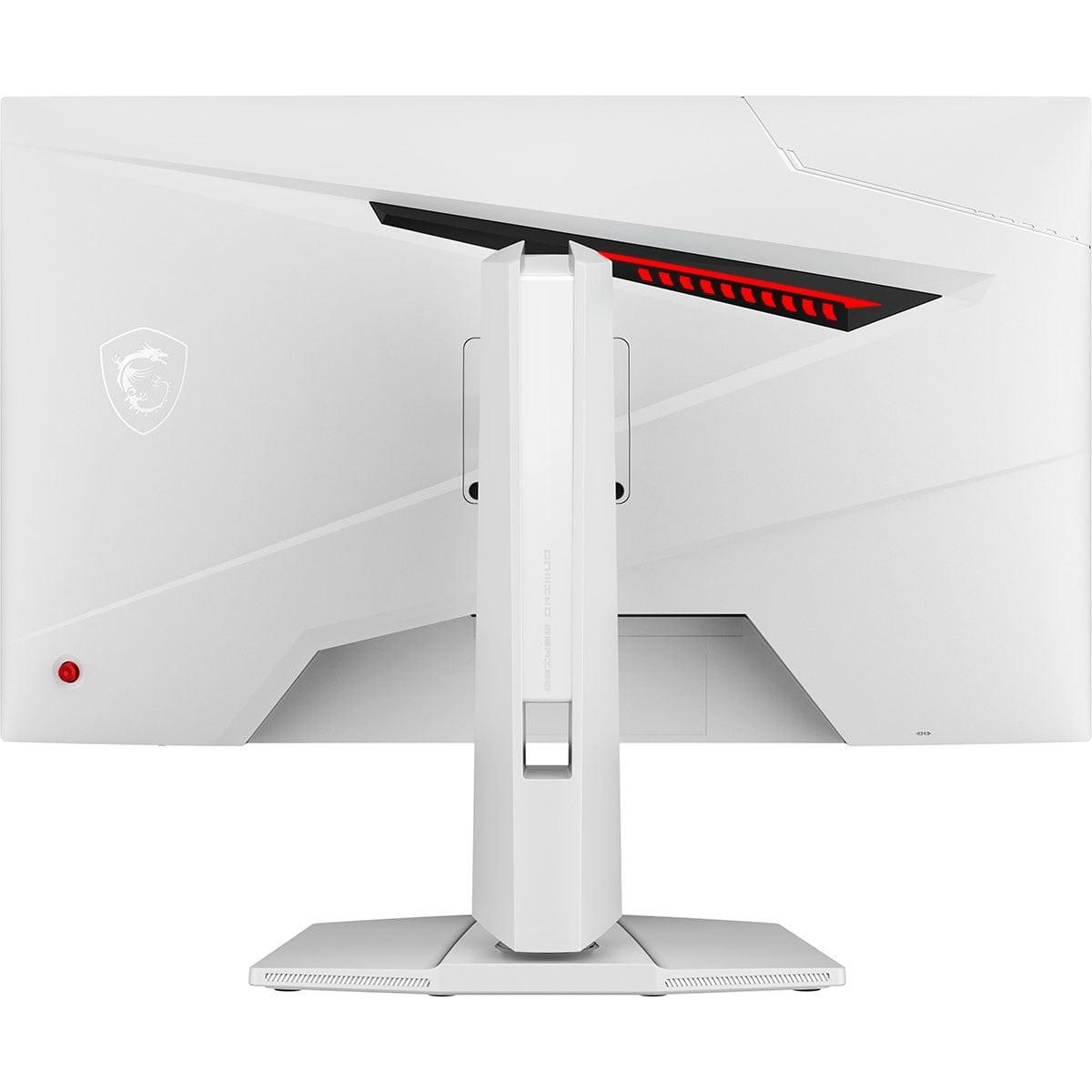
Today we're examining two 27-inch gaming monitors that represent vastly different approaches to the same basic need: the budget-friendly Sceptre E275W-FW100T and the premium MSI MAG 274URFW. At the time of writing, these monitors sit roughly $200 apart in price, which might seem like a lot—but the performance gap between them is even wider than that dollar difference suggests.
Before diving into our comparison, it's worth understanding what makes a monitor good for gaming. The most critical factors are resolution (how sharp the image looks), refresh rate (how many times per second the screen updates), response time (how quickly pixels can change color), and input lag (the delay between your mouse click and seeing the result on screen).
Think of refresh rate like the frame rate of a movie. Most movies run at 24 frames per second, which looks smooth for film but can appear choppy for fast-paced gaming. A 60Hz monitor refreshes 60 times per second, while a 144Hz or 160Hz monitor can display much smoother motion. Response time, measured in milliseconds, determines how much "ghosting" or blur you see behind moving objects. Input lag is crucial for competitive gaming—even a few extra milliseconds can mean the difference between landing that headshot or missing it entirely.
The Sceptre E275W-FW100T launched in the early 2020s as part of Sceptre's push to offer 100Hz gaming at budget prices. This was significant timing—100Hz monitors were still relatively new in the budget segment, and most affordable displays topped out at 75Hz.
This monitor uses a VA (Vertical Alignment) panel, which offers a key advantage over cheaper TN (Twisted Nematic) panels: much better contrast ratios. The Sceptre's 3,000:1 contrast ratio means blacks appear truly black rather than the washed-out gray you get with most budget IPS panels. If you've ever watched a movie on a cheap laptop and noticed the "black" scenes look more like dark gray, you'll appreciate this improvement.
The 1920×1080 resolution provides about 82 pixels per inch on this 27-inch screen. While that might sound technical, what it means in practice is that text won't look quite as sharp as on smaller 1080p monitors or higher-resolution displays. You'll notice this most when reading small text or working with detailed spreadsheets, but for gaming and video content, the pixel density is perfectly adequate.
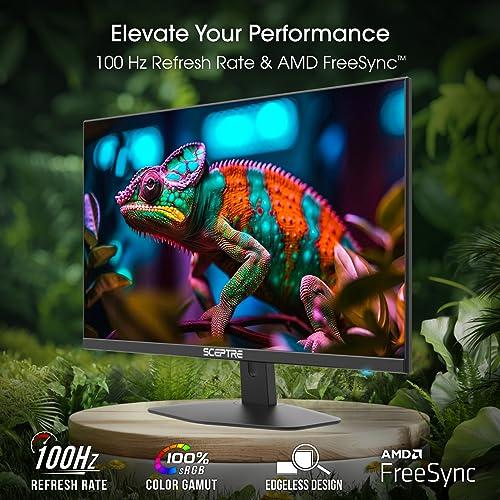
What makes the Sceptre E275W-FW100T interesting is its 100Hz refresh rate combined with AMD FreeSync support. FreeSync is adaptive sync technology that eliminates screen tearing—those horizontal lines that appear when your graphics card and monitor fall out of sync during fast motion. The monitor's FreeSync range of 48-100Hz means it can smoothly handle varying frame rates, and it includes Low Framerate Compensation to keep things smooth even when your frame rate dips below 48 fps.
However, the monitor's 5ms gray-to-gray response time reveals its budget nature. Our research into user experiences shows noticeable ghosting behind fast-moving objects, particularly in first-person shooters. This ghosting appears as trailing shadows that follow moving elements on screen. While the Sceptre includes a Motion Blur Reduction feature, the slow pixel response time limits its effectiveness.
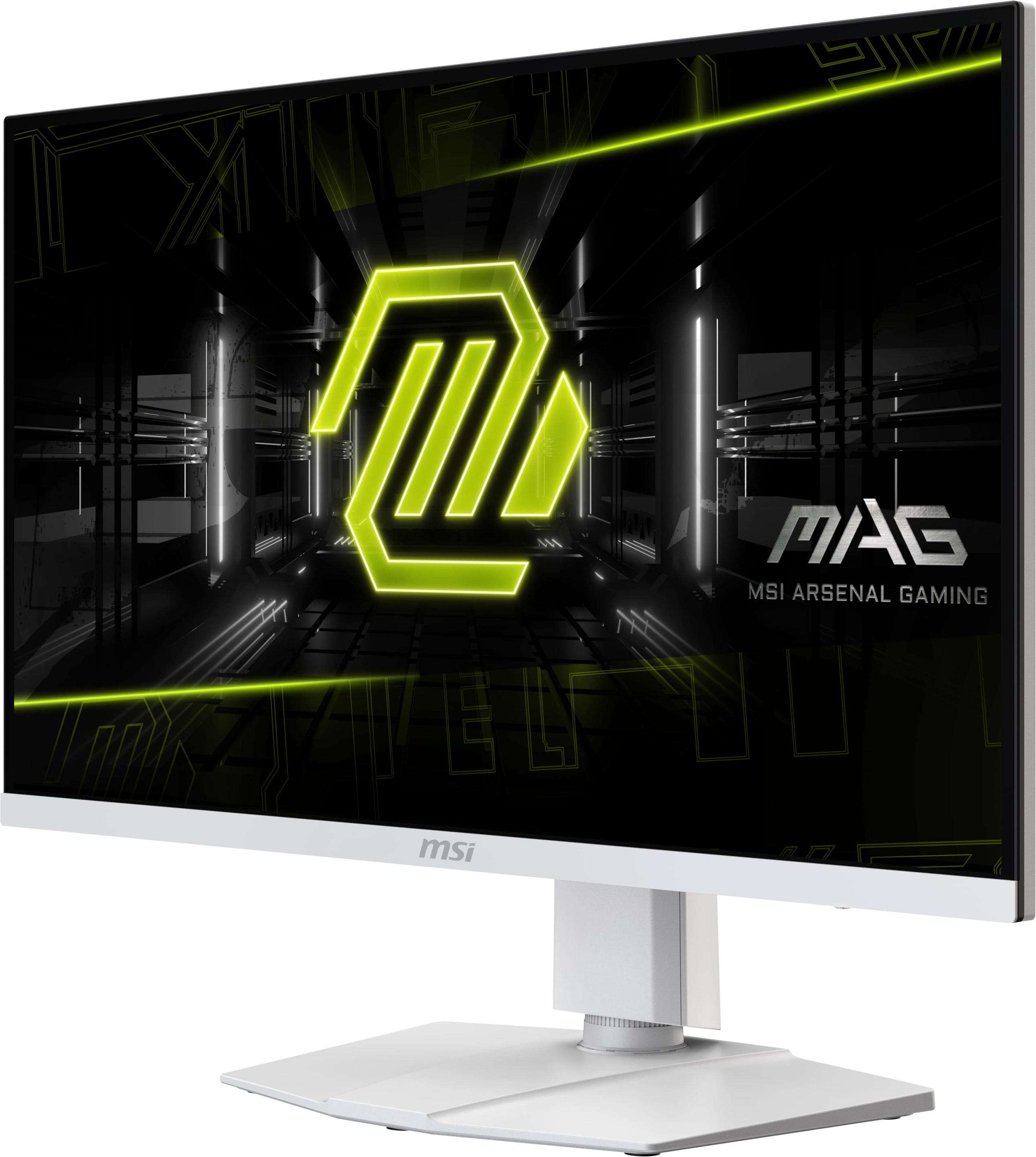
Released in 2024, the MSI MAG 274URFW represents current-generation gaming monitor technology. This timing is significant because 2024 marked a maturation point for 4K gaming monitors—HDMI 2.1 had become standard, graphics cards powerful enough to drive 4K at high refresh rates were more accessible, and manufacturing costs for high-resolution IPS panels had dropped considerably.
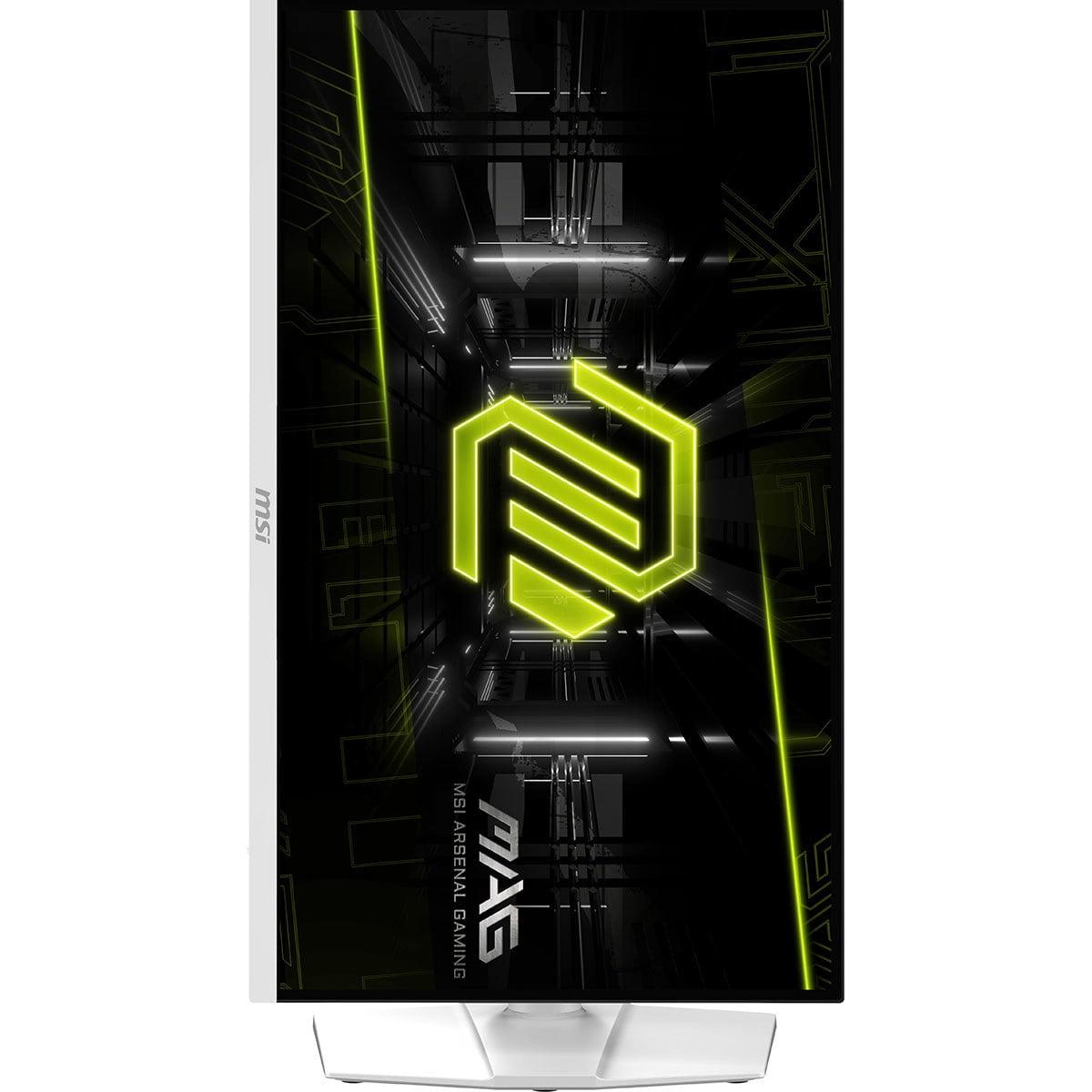
The headline feature is obviously the 4K (3840×2160) resolution, which provides roughly 163 pixels per inch—exactly double the pixel density of the Sceptre. This dramatic improvement in sharpness becomes immediately apparent when viewing text, fine details in games, or any content where clarity matters. If you've ever seen a Retina display on a high-end laptop, the difference is similar.
The MSI uses a Rapid IPS panel, which addresses traditional IPS weaknesses through improved manufacturing techniques. While IPS panels typically suffer from slower response times than TN panels, Rapid IPS technology has pushed response times down significantly. The monitor achieves a 0.5ms minimum gray-to-gray response time, though real-world performance varies depending on overdrive settings.
Perhaps more importantly for competitive gaming, the MSI MAG 274URFW achieves effectively zero input lag—the time between your mouse movement and the corresponding screen update. Our research into professional reviews consistently shows input lag measurements at or below 1ms, which puts it in the same category as CRT monitors that competitive gamers still praise for their instantaneous response.
The 160Hz refresh rate pushes beyond the more common 144Hz standard, and while the difference between 144Hz and 160Hz isn't dramatic, every bit of smoothness helps in competitive scenarios. More significantly, the monitor's HDMI 2.1 ports can actually utilize this refresh rate at 4K resolution—something that wasn't possible with older HDMI standards.
The resolution difference between these monitors cannot be overstated. The Sceptre's 1080p resolution contains about 2.1 million pixels, while the MSI's 4K resolution packs in 8.3 million pixels—nearly four times as many.
For gaming, this translates to dramatically sharper textures, clearer distant objects, and more detailed environments. In competitive shooters, you might spot enemies at longer distances more easily with 4K resolution. In open-world games, the increased detail creates a more immersive experience. Text clarity for productivity work isn't even close—the MSI makes spreadsheets, code, and documents significantly easier to read.
However, this resolution advantage comes with a substantial cost in graphics processing power. To maintain high frame rates at 4K, you'll need a high-end graphics card like an RTX 4070 or better. With the Sceptre's 1080p resolution, even mid-range cards like an RTX 4060 or RX 6600 XT can achieve high frame rates in most games.
This is where the technical differences become most apparent in actual gaming scenarios. The Sceptre E275W-FW100T's 5ms response time might seem reasonable on paper, but user reports consistently mention visible ghosting trails behind moving objects. In fast-paced competitive games like Counter-Strike or Valorant, these trails can be distracting and potentially impact performance.
The MSI MAG 274URFW operates in a different league entirely. Professional reviews consistently measure input lag at essentially zero, meaning your actions translate to screen updates as quickly as physically possible. The faster pixel response times, combined with proper overdrive tuning, eliminate the ghosting that plagues budget monitors.
For competitive gaming, input lag matters more than almost any other specification. Even a difference of 5-10ms can be noticeable to experienced gamers. The MSI's near-zero input lag gives it a substantial advantage for anyone playing competitive multiplayer games seriously.
The Sceptre E275W-FW100T covers 100% of the sRGB color space with true 8-bit color depth, which means it can display all the colors used in standard web content and most games accurately. Its 280 nits of brightness works fine in typical home lighting conditions, though it might struggle in very bright rooms.
The MSI MAG 274URFW pushes significantly further with 400 nits of brightness and VESA DisplayHDR 400 certification. HDR (High Dynamic Range) allows for brighter highlights and deeper shadows, creating more realistic lighting in supported games and content. While DisplayHDR 400 represents the entry level of HDR certification, it still provides a noticeable improvement over standard dynamic range content.
The IPS panel in the MSI also typically offers wider color gamut coverage beyond sRGB, though this varies by specific model. For content creation work—photo editing, video work, or design—the MSI provides significantly better color accuracy and consistency.
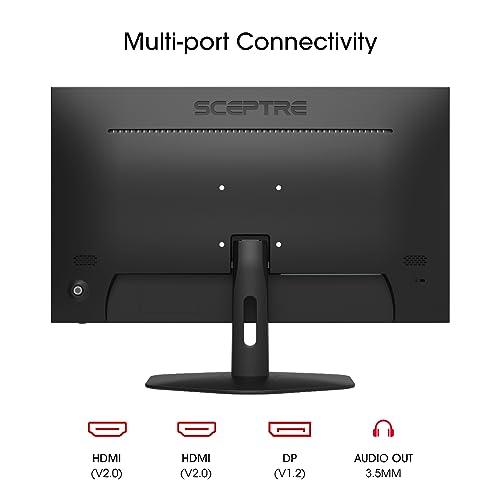
Here's where the generational difference between these monitors becomes most apparent. The Sceptre E275W-FW100T includes standard HDMI 2.0 and DisplayPort 1.2 connections, which handle 1080p gaming perfectly well but lack the bandwidth for higher resolutions or newer gaming features.
The MSI MAG 274URFW's HDMI 2.1 ports represent a significant leap forward. These connections can handle 4K at 120Hz or higher, making the monitor fully compatible with PlayStation 5 and Xbox Series X/S consoles. If you're a console gamer, this connectivity difference alone might justify the price premium.
The MSI also includes USB-C with DisplayPort Alt Mode and 15W power delivery. This means you can connect a laptop with a single cable for video, audio, and charging—a convenience feature that's becoming increasingly important as more people work from home with laptops.
For casual single-player gaming, both monitors perform their intended roles well. The Sceptre E275W-FW100T handles games like Civilization VI, Stardew Valley, or even action RPGs like The Witcher 3 perfectly adequately. The deeper blacks from its VA panel actually enhance the atmosphere in darker games.
Where the differences become stark is in competitive multiplayer gaming. The MSI MAG 274URFW's superior motion clarity and zero input lag provide tangible advantages in fast-paced shooters. Professional esports players consistently choose monitors with similar specifications to the MSI for good reason—the performance difference is measurable and meaningful.
For console gaming, the MSI becomes almost essential if you own a PlayStation 5 or Xbox Series X. These consoles can output 4K at 120Hz in supported games, but you need HDMI 2.1 to actually display it. The Sceptre would force console games into 1080p mode, wasting much of your console's capability.
If you're considering either monitor for living room gaming or as part of a home theater setup, several factors come into play. The MSI MAG 274URFW's 4K resolution makes it suitable for watching 4K streaming content from Netflix, Disney+, or other services. Its HDR support, while not as impressive as dedicated TVs, still provides better movie-watching experience than the Sceptre.
However, 27 inches is quite small for living room viewing. You'd typically sit much closer to a monitor than to a TV, which works fine for gaming but might not be ideal for movie nights. Both monitors lack the smart TV features and extensive HDR formats you'd find in dedicated home theater displays.
The Sceptre's deeper blacks from its VA panel actually work well for movie watching in dark rooms, though the lower resolution becomes more noticeable when viewing high-quality film content.
Perhaps the most important consideration in choosing between these monitors isn't the monitors themselves—it's your graphics card. The MSI MAG 274URFW requires substantial graphics processing power to shine. At 4K resolution, even powerful cards like the RTX 4070 might require graphics quality compromises to achieve high frame rates in demanding games.
With a mid-range graphics card (RTX 4060, RX 6600 XT level), you might find yourself running games at 1440p or lower on the MSI, partially negating its 4K advantage. The Sceptre E275W-FW100T, by contrast, allows these same cards to run games at maximum quality settings while maintaining high frame rates.
This creates an interesting value proposition: if you have a budget graphics card, the Sceptre might actually provide a better gaming experience despite its technical limitations. If you have or plan to purchase a high-end graphics card, the MSI becomes compelling.
Based on our research and analysis of expert and user reviews, the choice comes down to your specific use case and budget allocation.
Choose the Sceptre E275W-FW100T if you're primarily using it for office work with occasional casual gaming, if you have a mid-range or older graphics card, or if budget is your primary concern. The monitor performs adequately for its intended market segment, and the high contrast VA panel actually provides advantages for dark room viewing.
The MSI MAG 274URFW makes sense if you're a serious gamer with high-end hardware, if you own current-generation consoles, or if you value sharp text and image quality for productivity work. The performance advantages are substantial and measurable, particularly for competitive gaming scenarios.
At the time of writing, the price difference between these monitors reflects their fundamental positioning in different market segments. The Sceptre targets users who need functional gaming capability at budget prices, while the MSI targets enthusiasts willing to pay for premium performance.
For most people, the decision ultimately comes down to their graphics hardware and how seriously they take gaming. If you're running a GTX 1660 or similar mid-range card, the Sceptre makes more sense. If you're running an RTX 4070 or better, the MSI allows you to actually utilize your graphics card's capabilities.
The technology improvements since these monitors' respective launches have generally favored the premium segment. 4K gaming has become more accessible, HDMI 2.1 has become standard on new graphics cards, and the price premium for high-refresh 4K displays has decreased. This trend suggests that monitors like the MSI MAG 274URFW represent the direction the gaming monitor market is heading, even as budget options like the Sceptre continue serving their intended market.
In the end, both monitors succeed at their intended purposes. The key is honestly assessing your needs, your hardware capabilities, and your budget priorities to choose the option that best matches your specific situation.
| Sceptre E275W-FW100T | MSI MAG 274URFW |
|---|---|
| Resolution - Determines image sharpness and graphics card requirements | |
| 1920×1080 (Full HD) - Works with budget GPUs | 3840×2160 (4K UHD) - Requires high-end GPU for gaming |
| Refresh Rate - Higher numbers mean smoother motion in games | |
| 100Hz - Noticeable improvement over 60Hz | 160Hz - Premium gaming smoothness |
| Response Time - Lower is better for reducing ghosting in fast games | |
| 5ms GtG - Visible ghosting in competitive games | 0.5ms GtG - Minimal ghosting, excellent for esports |
| Input Lag - Critical for competitive gaming responsiveness | |
| ~6ms - Acceptable for casual gaming | 0ms - CRT-like responsiveness for serious gamers |
| Panel Type - Affects contrast, viewing angles, and color accuracy | |
| VA Panel - Superior 3,000:1 contrast, deeper blacks | IPS Panel - Better viewing angles, more consistent colors |
| HDR Support - Enhanced contrast and brightness for compatible content | |
| None - Standard dynamic range only | VESA DisplayHDR 400 - Entry-level HDR support |
| Brightness - Higher values better for bright rooms | |
| 280 nits - Adequate for normal lighting | 400 nits - Good for well-lit environments |
| HDMI Version - Determines console compatibility and bandwidth | |
| HDMI 2.0 - Limited to 1080p on consoles | HDMI 2.1 - Full 4K 120Hz+ console gaming |
| Adaptive Sync - Eliminates screen tearing | |
| AMD FreeSync (48-100Hz range) | AMD FreeSync Premium/VRR - Wider compatibility |
| Ergonomics - Stand adjustment options | |
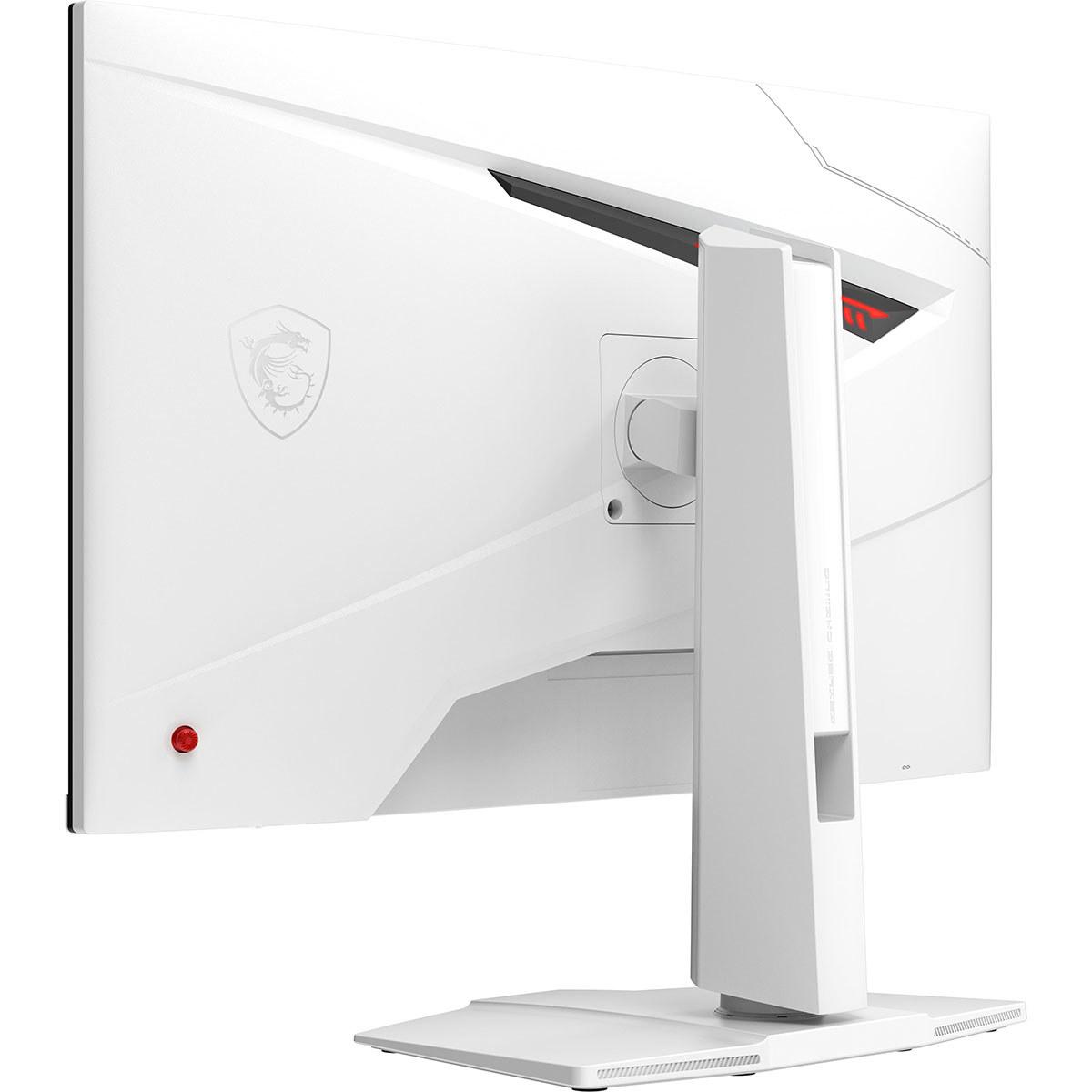
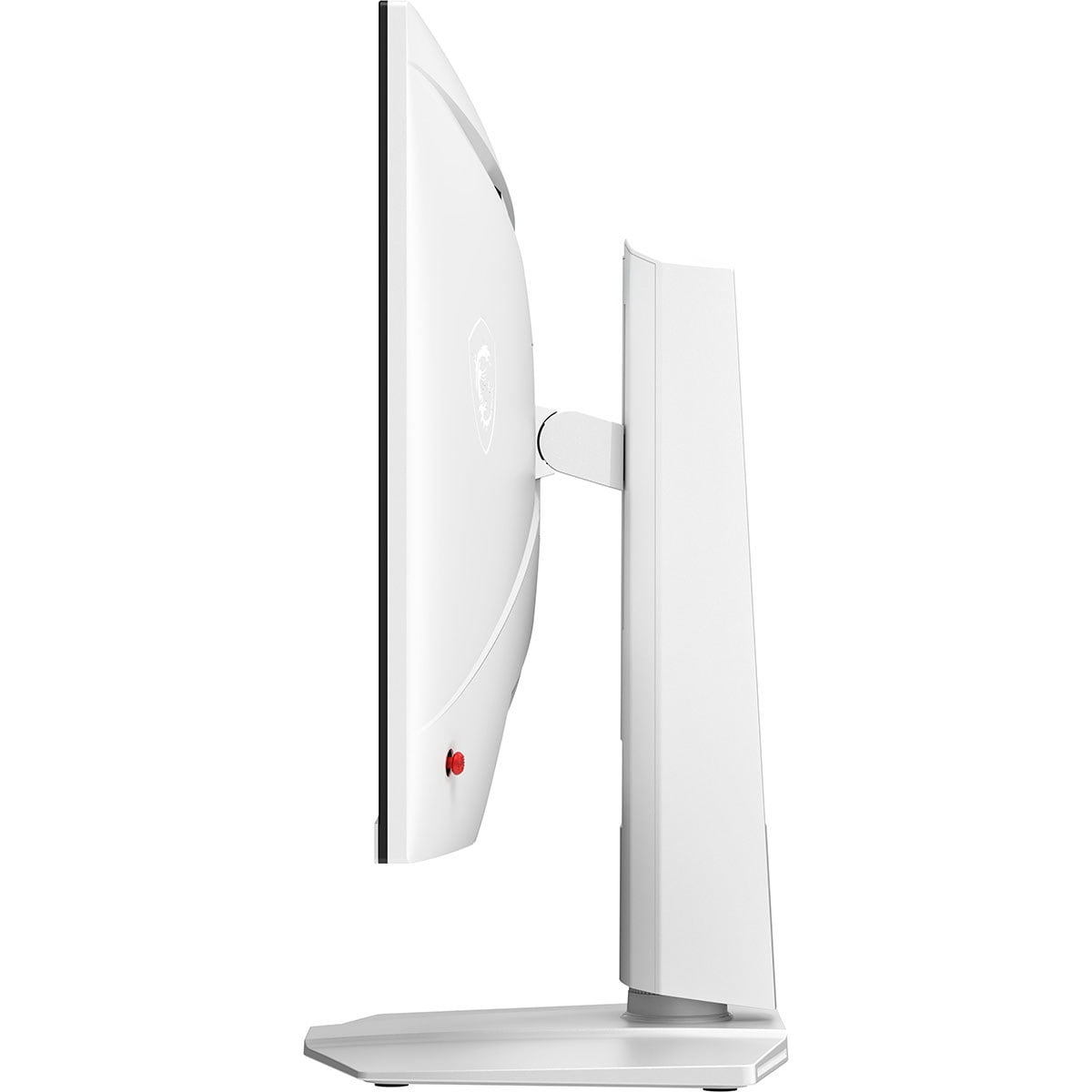
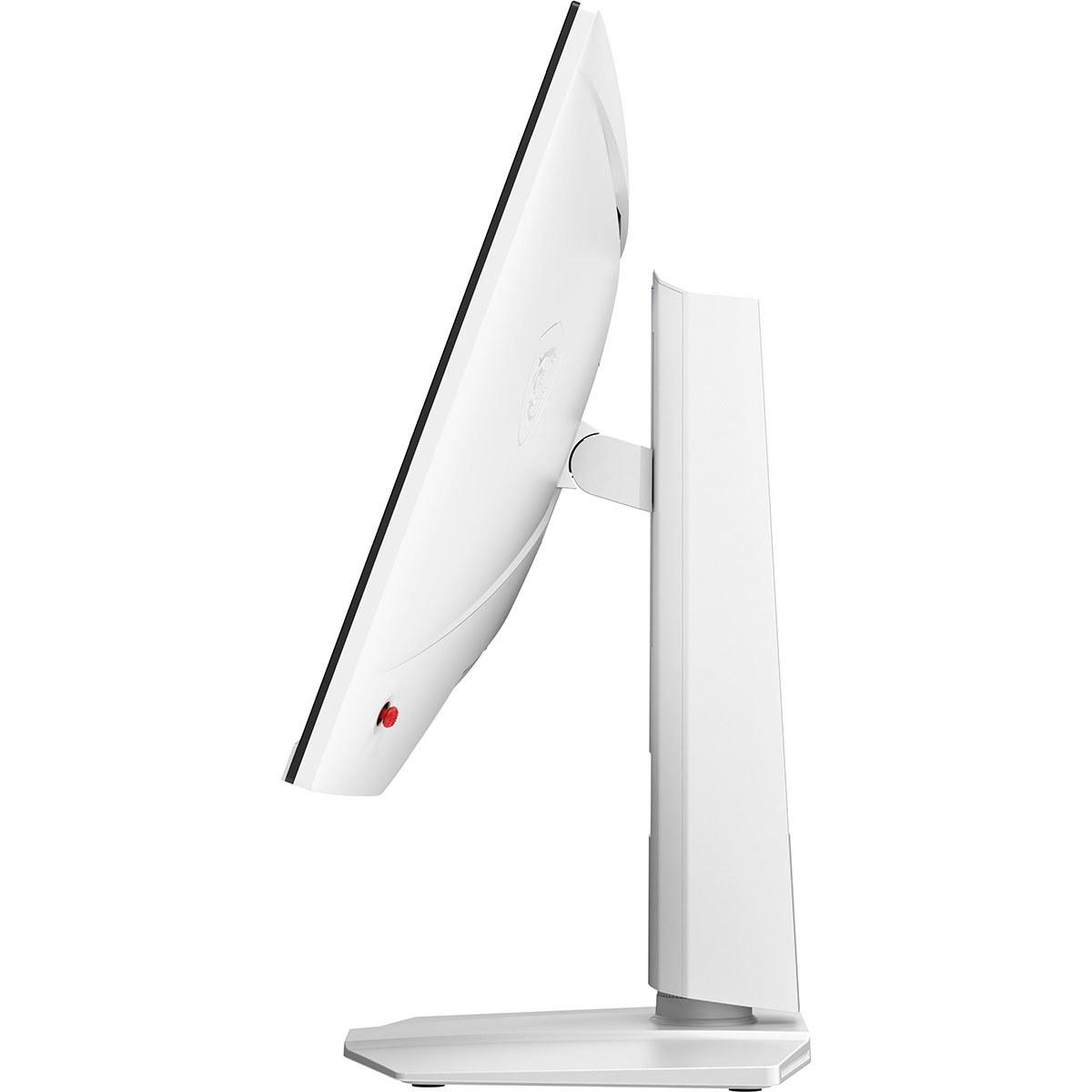
| Tilt only (-5° to 15°) - Basic positioning | Full adjustment (height, tilt, swivel, pivot) |
| Color Gamut - Wider coverage means more accurate colors | |
| 100% sRGB - Good for gaming and basic work | 98% DCI-P3 - Better for content creation |
| Target Use Case - Who each monitor serves best | |
| Budget gaming and office work with older GPUs | Premium gaming and productivity with high-end hardware |
The MSI MAG 274URFW is significantly better for serious gaming with its 4K resolution, 160Hz refresh rate, and 0ms input lag. However, the Sceptre E275W-FW100T works well for casual gaming and is much easier on your graphics card due to its 1080p resolution.
The biggest difference is resolution: the Sceptre E275W-FW100T displays 1080p while the MSI MAG 274URFW offers 4K resolution with four times more pixels. This means much sharper images on the MSI but also requires a much more powerful graphics card.
The MSI MAG 274URFW has superior overall image quality with its 4K resolution, HDR support, and wider color gamut. However, the Sceptre E275W-FW100T actually has deeper blacks and better contrast due to its VA panel technology.
The Sceptre E275W-FW100T works great with budget and mid-range graphics cards since it's only 1080p. The MSI MAG 274URFW requires a high-end GPU like RTX 4070 or better to take full advantage of its 4K 160Hz capabilities.
The MSI MAG 274URFW is much better for PlayStation 5 and Xbox Series X gaming thanks to its HDMI 2.1 ports that support 4K at 120Hz. The Sceptre E275W-FW100T would limit these consoles to 1080p output.
Both work for office tasks, but the MSI MAG 274URFW is significantly better due to its sharp 4K text and full ergonomic adjustments. The Sceptre E275W-FW100T has softer text at 27 inches but is adequate for basic productivity work.
The MSI MAG 274URFW has virtually zero input lag, making it excellent for competitive esports. The Sceptre E275W-FW100T has acceptable input lag for casual gaming but isn't ideal for serious competitive play.
Only the MSI MAG 274URFW supports HDR with VESA DisplayHDR 400 certification, providing better contrast and brightness in supported games and movies. The Sceptre E275W-FW100T doesn't have HDR support.
It depends on your needs: the Sceptre E275W-FW100T offers excellent value for budget-conscious buyers who want basic gaming features. The MSI MAG 274URFW provides strong value for serious gamers willing to invest in premium 4K performance.
Both work for movies, but the MSI MAG 274URFW is better with its 4K resolution and HDR support for streaming services. The Sceptre E275W-FW100T actually has better contrast for dark movie scenes but lower overall resolution.
The MSI MAG 274URFW has superior build quality with full ergonomic adjustments, premium materials, and gaming-specific features like AI Vision. The Sceptre E275W-FW100T has basic build quality with tilt-only adjustment but includes built-in speakers.
For 27 inches, 4K resolution like the MSI MAG 274URFW provides noticeably sharper text and images, especially for productivity work. However, 1080p on the Sceptre E275W-FW100T is perfectly acceptable for gaming and much less demanding on your graphics hardware.
We've done our best to create useful and informative comparisons to help you decide what product to buy. Our research uses advanced automated methods to create this comparison and perfection is not possible - please contact us for corrections or questions. These are the sites we've researched in the creation of this article: pcvarge.com - walmart.com - cubed.run - productchart.com - displayninja.com - target.com - youtube.com - versus.com - youtube.com - youtube.com - sceptre.com - sceptre.com - youtube.com - bestbuy.com - rtings.com - youtube.com - guru3d.com - youtube.com - newegg.com - bhphotovideo.com - bestbuy.com - storage-asset.msi.com - shi.com - neweggbusiness.com - files.bbystatic.com - us-store.msi.com - msi.com - storage-asset.msi.com - storage-asset.msi.com

Privacy Policy
Terms and Conditions - Affiliate Policy
Home Security
© Copyright 2008-2026.
11816 Inwood Rd #1211, Dallas, TX 75244