


Gaming monitors have evolved dramatically since the early days of 60Hz displays with sluggish response times. Today's market offers everything from budget-friendly upgrades to premium displays that rival professional equipment. The gap between entry-level and high-end gaming monitors has never been wider, making the choice more complex than simply picking the cheapest option.
When evaluating gaming monitors, several key factors determine your experience: resolution (how sharp the image looks), refresh rate (how smooth motion appears), response time (how quickly pixels change colors), and panel technology (the underlying display tech that affects color and contrast). Understanding these elements helps you match a monitor to your gaming style, hardware, and budget.
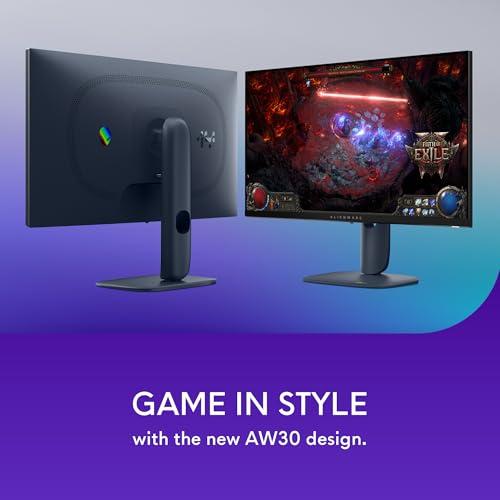
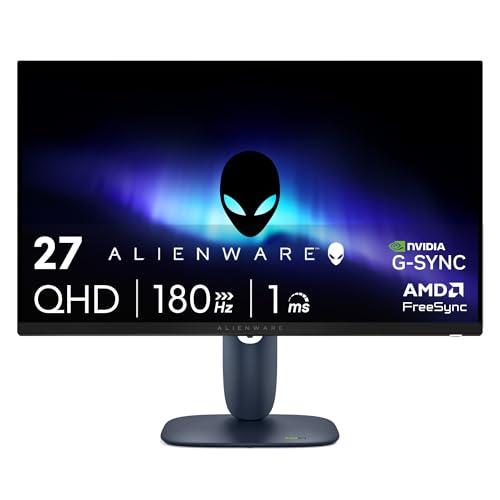
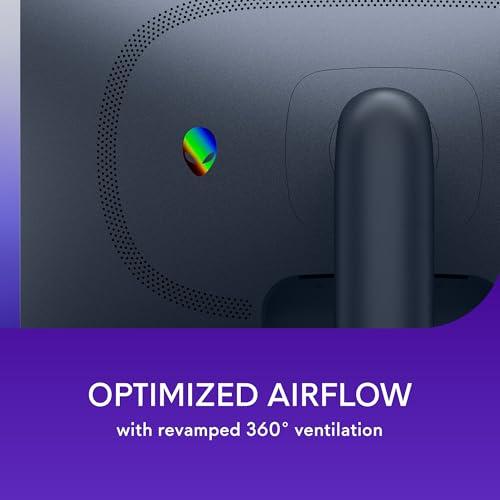
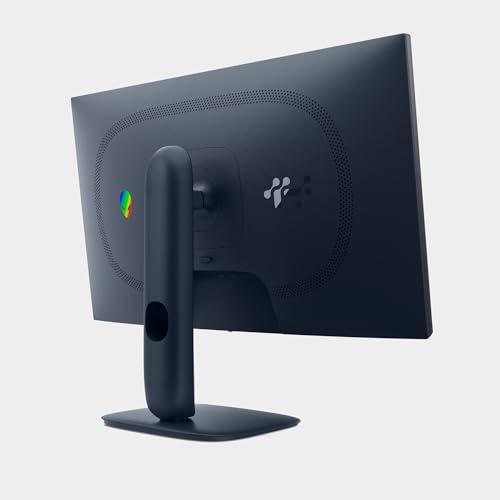
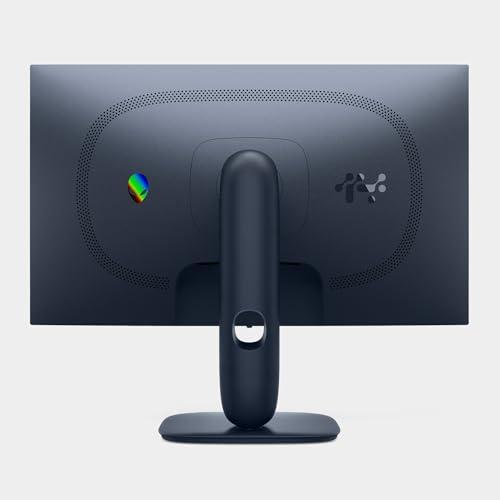
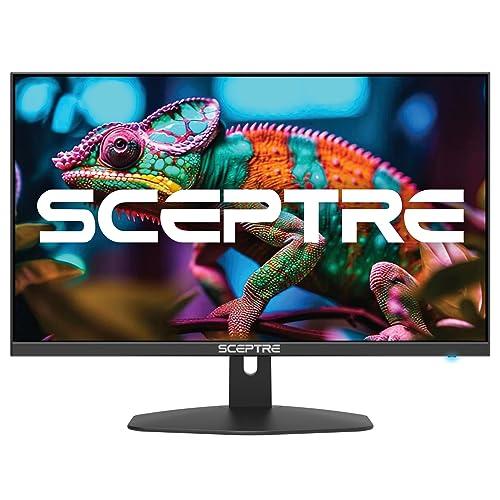
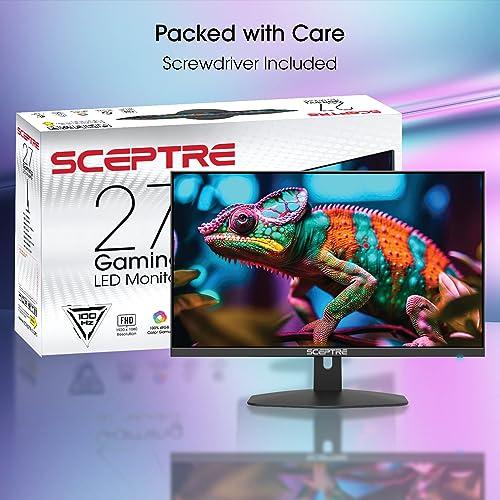
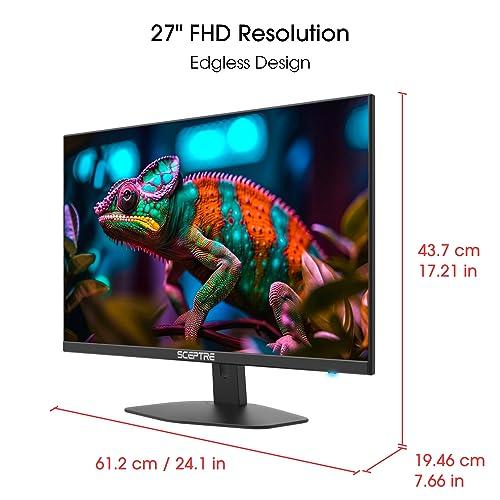
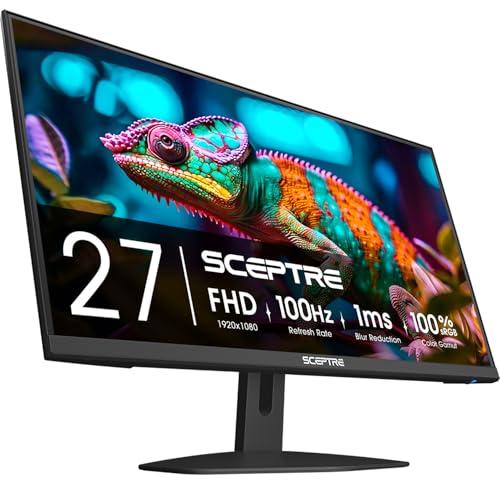
The two monitors we're examining represent opposite ends of the gaming monitor spectrum. The Alienware 27 QHD 180Hz Gaming Monitor, released in 2024, showcases Dell's premium gaming technology with cutting-edge features. Meanwhile, the Sceptre 27-inch Gaming Monitor E275W-FW100T focuses on delivering essential gaming upgrades at an accessible price point.
Before diving into specifics, let's establish what makes a monitor "gaming-focused." Traditional office monitors prioritize color accuracy and cost-effectiveness, typically running at 60Hz refresh rates. Gaming monitors emphasize speed and responsiveness, often sacrificing some color accuracy or adding cost to achieve smoother motion and lower input lag.
Refresh rate measures how many times per second your monitor updates the image, expressed in Hertz (Hz). A 60Hz monitor shows 60 new frames each second, while a 180Hz display shows 180 frames. Higher refresh rates create smoother motion, especially noticeable when panning the camera or tracking fast-moving objects in games.
Response time indicates how quickly individual pixels can change from one color to another, measured in milliseconds (ms). Faster response times reduce "ghosting" – those annoying trails that follow moving objects on slower displays. However, manufacturers often use different measurement methods, making direct comparisons tricky.
Panel technology represents the underlying display method. IPS (In-Plane Switching) panels offer wide viewing angles and accurate colors but traditionally had slower response times. VA (Vertical Alignment) panels provide excellent contrast ratios with deeper blacks but can suffer from motion blur. TN (Twisted Nematic) panels are the fastest but have poor viewing angles and color reproduction.
The Alienware AW2725DM arrived in 2024 as part of Dell's push into high-refresh QHD gaming. At the time of writing, it commands a premium price point, typically costing three to four times more than budget alternatives. This positioning targets serious gamers, content creators, and enthusiasts willing to invest in top-tier performance.
Dell equipped the Alienware monitor with a Fast IPS panel, representing newer IPS technology that addresses traditional speed limitations. The 2560 x 1440 resolution provides 78% more pixels than standard 1080p displays, delivering noticeably sharper text and game details. The 180Hz refresh rate pushes beyond the common 144Hz standard, targeting competitive gamers who want every possible advantage.
The Sceptre E275W-FW100T takes a different approach, prioritizing value over cutting-edge specs. Released as an entry-level gaming upgrade, it costs significantly less while still offering meaningful improvements over basic office monitors. Sceptre's strategy focuses on bringing 100Hz refresh rates and gaming features to price-conscious buyers who might otherwise stick with 60Hz displays.
This monitor uses a VA panel, capitalizing on that technology's natural advantage in contrast ratio. With a 3000:1 contrast ratio compared to the Alienware's 1000:1, the Sceptre delivers deeper blacks and more dramatic lighting in dark game scenes, though it sacrifices some color accuracy and viewing angle performance.
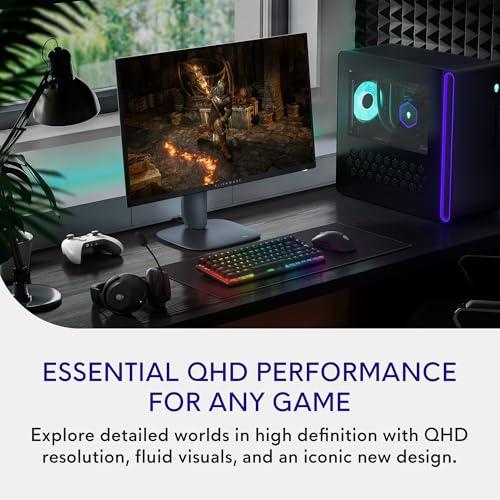
Resolution represents one of the most immediately noticeable differences between these monitors. The Alienware's QHD (2560 x 1440) resolution provides substantially more screen real estate than the Sceptre's Full HD (1920 x 1080) display. This translates to sharper text in Windows, more detailed game textures, and the ability to see further distances in games with adjustable view distances.
However, higher resolution demands significantly more graphics processing power. A graphics card that comfortably runs games at 1080p high settings might struggle to maintain similar frame rates at 1440p. This creates an important consideration: the Sceptre monitor pairs well with mid-range graphics cards, while the Alienware display really shines with high-end GPUs capable of driving demanding games at QHD resolution.
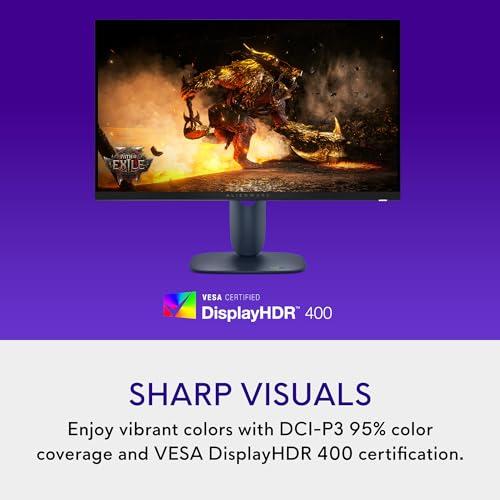
The Alienware's Fast IPS panel covers 95% of the DCI-P3 color gamut, a professional standard used in movie production. This wide color coverage produces more vibrant and accurate colors, particularly noticeable in games with rich, colorful environments. The monitor's DisplayHDR 400 certification means it can display basic HDR content, though true HDR benefits require higher brightness levels than this monitor provides.
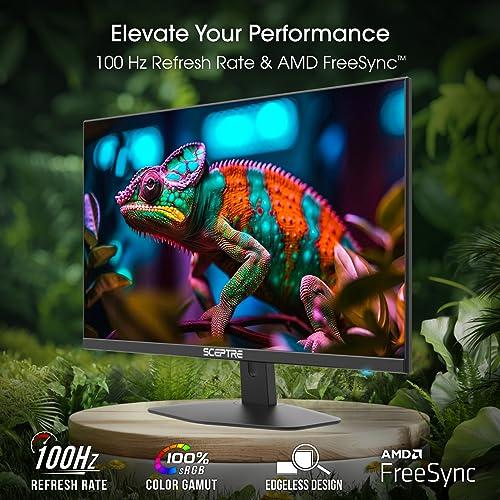
In contrast, the Sceptre's VA panel covers 100% of the smaller sRGB color space, which remains the standard for most PC content. While its color gamut isn't as wide as the Alienware, the VA technology delivers superior contrast ratios. In practice, this means deeper blacks and more dramatic lighting effects, particularly beneficial in horror games or dark sci-fi environments where atmospheric lighting matters more than color accuracy.
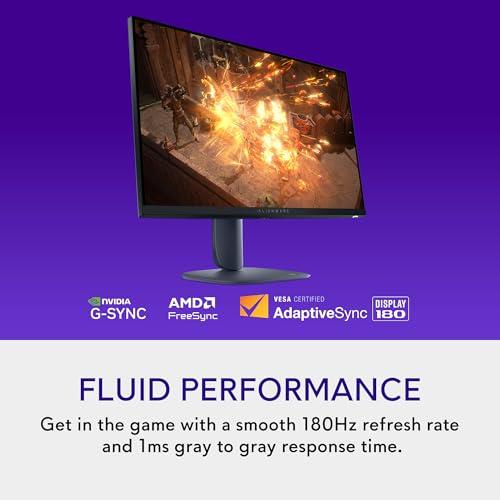
Refresh rate differences create the most significant performance gap between these monitors. The Alienware's 180Hz capability provides exceptionally smooth motion, particularly beneficial in fast-paced competitive games like first-person shooters or racing simulations. Each frame displays for only 5.6 milliseconds, compared to 10 milliseconds on the Sceptre's 100Hz display.
This difference becomes most apparent when rapidly panning the camera or tracking moving targets. In competitive gaming scenarios, the additional smoothness can provide a genuine advantage, making it easier to track opponents and aim precisely during quick movements. However, to fully benefit from 180Hz, your graphics card must consistently produce frame rates above 100 FPS.
The Sceptre monitor, while not matching the Alienware's ultimate performance, still delivers meaningful improvements over standard 60Hz displays. The 100Hz refresh rate provides noticeably smoother motion than traditional monitors, representing an excellent entry point into higher refresh rate gaming without the premium cost.
Response time specifications require careful interpretation since manufacturers use different measurement methods. The Alienware offers multiple overdrive settings: 4ms in Fast mode for optimal image quality, 2ms in Super Fast mode for balanced performance, and 1ms in Extreme mode for maximum speed with potential visual artifacts. This flexibility lets users prioritize either image quality or raw speed based on their gaming preferences.
The Sceptre's response time ratings of 1ms MPRT (Moving Picture Response Time) and 5ms GtG (Gray to Gray) represent different measurement methods. The VA panel's inherent characteristics mean some minor ghosting may occur in extremely fast-paced content, but performance remains acceptable for casual and moderately competitive gaming.
Both monitors support adaptive sync technologies, which synchronize the display's refresh rate with your graphics card's frame output. This eliminates screen tearing (horizontal lines across the image) and reduces stuttering when frame rates fluctuate.
The Alienware monitor supports multiple adaptive sync standards: NVIDIA G-SYNC Compatible, AMD FreeSync Premium Pro, and VESA AdaptiveSync. This broad compatibility ensures smooth gaming regardless of your graphics card manufacturer. The monitor's wide variable refresh rate range works effectively from low frame rates up to the full 180Hz, providing consistent performance across different games and settings.
FreeSync Premium Pro certification indicates the Alienware display meets AMD's strict standards for HDR gaming, low input lag, and wide variable refresh rate ranges. Even NVIDIA GPU users benefit from this certification since G-SYNC Compatible mode leverages the same underlying technology.
The Sceptre monitor includes standard AMD FreeSync support with a 48-100Hz range. While not as premium as the Alienware's implementation, this still eliminates tearing and stuttering within the supported range. NVIDIA users can often enable adaptive sync on FreeSync monitors, though compatibility isn't guaranteed and may require manual setup.
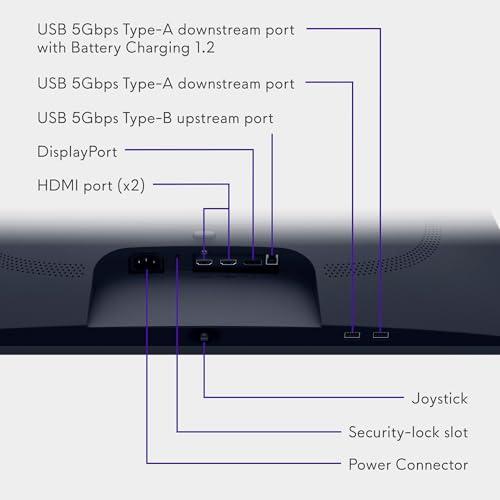
Modern gaming monitors must accommodate various devices beyond just desktop PCs. The Alienware's dual HDMI 2.1 ports support the latest gaming consoles, PlayStation 5 and Xbox Series X, at their full capabilities. HDMI 2.1's higher bandwidth enables 1440p gaming at high refresh rates with variable refresh rate support on consoles.
The inclusion of DisplayPort 1.4 on the Alienware ensures compatibility with high-end graphics cards while supporting the monitor's full 180Hz capabilities. USB 3.2 ports add convenience for connecting peripherals directly to the monitor, reducing cable clutter on your desk.
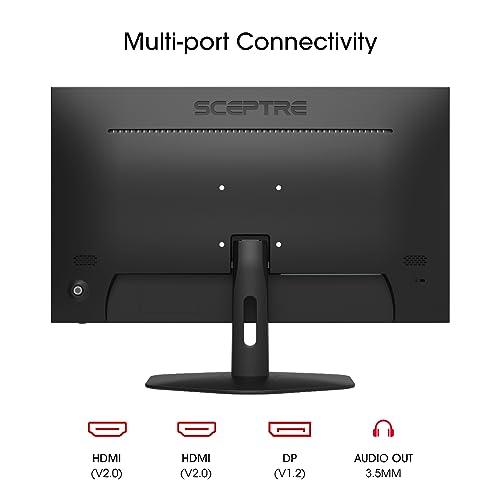
The Sceptre monitor provides solid but more basic connectivity with HDMI 2.0 and DisplayPort 1.2 inputs. These standards support the monitor's 100Hz refresh rate adequately, though HDMI 2.0's bandwidth limitations mean some advanced features may not work simultaneously. For current gaming needs, this connectivity proves sufficient, but it may show limitations as gaming technology advances.
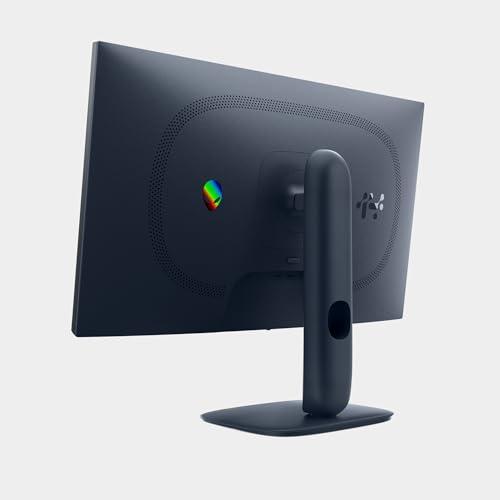
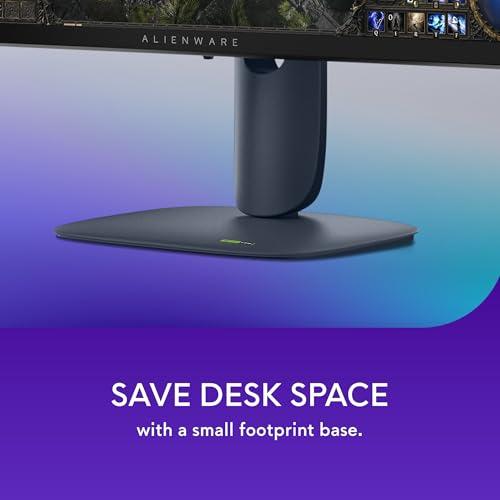
Physical design significantly impacts long-term comfort during extended gaming sessions. The Alienware monitor includes a fully adjustable stand supporting height, tilt, swivel, and pivot adjustments. This flexibility helps users achieve optimal viewing angles, reducing neck strain and eye fatigue during marathon gaming sessions.
Premium build quality extends to the Alienware's overall construction, with solid materials and precise assembly typical of Dell's high-end products. The three-side borderless design creates an immersive viewing experience and would work well in multi-monitor setups.
The Sceptre display takes a more utilitarian approach with a tilt-only stand adjustment. While this limits positioning flexibility, VESA mounting compatibility allows users to add aftermarket monitor arms if needed. The build quality meets expectations for the price point, focusing on functionality over premium materials or aesthetics.
An interesting philosophical difference emerges in audio implementation. The Alienware monitor completely omits built-in speakers, focusing entirely on display performance. This decision reflects the target audience's likely preference for dedicated gaming headsets or external speakers that provide superior audio quality.
Conversely, the Sceptre monitor includes basic 2W speakers, acknowledging that budget-conscious users might not have dedicated audio solutions. While these speakers won't satisfy audiophiles, they provide convenience for casual gaming, video calls, or basic media consumption.
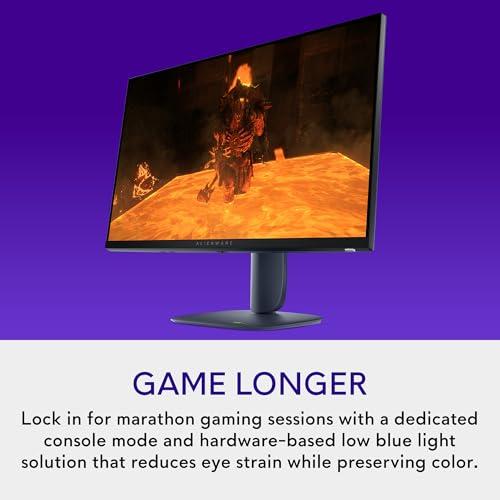
Both monitors incorporate eye care technologies, increasingly important as screen time extends. Blue light filtering and flicker-free backlights reduce eye strain during long gaming sessions. The Alienware's ComfortView Plus represents a hardware-based solution that maintains color accuracy better than software-based alternatives.
For competitive esports gaming, the Alienware monitor's advantages become most pronounced. Games like Counter-Strike, Valorant, or Rocket League benefit enormously from high refresh rates and low input lag. The 180Hz capability provides smooth tracking of fast-moving opponents, while the 1ms response time in Extreme mode minimizes ghosting that could obscure targets.
However, competitive gaming often involves lowering visual settings to maximize frame rates, potentially negating some of the Alienware's visual quality advantages. The higher resolution can actually be detrimental in some competitive scenarios, as many professional players prefer 1080p for larger UI elements and higher frame rates.
For single-player AAA games focused on visual spectacle, the comparison becomes more nuanced. The Alienware's QHD resolution and superior color accuracy showcase detailed environments and artistic design more effectively. Games like Cyberpunk 2077, Red Dead Redemption 2, or recent Assassin's Creed titles benefit from the additional pixel density and color range.
The Sceptre monitor's VA panel advantage emerges in atmospheric games with dramatic lighting. Horror titles, space simulators, or any game with significant dark areas benefit from the superior contrast ratio. The deeper blacks create more immersive environments in games like Alien: Isolation or Elite Dangerous.
Modern gaming consoles add another layer to monitor selection. The Alienware monitor fully supports PlayStation 5 and Xbox Series X capabilities through HDMI 2.1, including variable refresh rate gaming and high refresh rate modes where available. Some games support 1440p output at 120Hz, taking advantage of the monitor's capabilities.
The Sceptre display works well with current consoles but may not support all advanced features due to HDMI 2.0 limitations. Console gaming at 1080p remains perfectly viable, and the 100Hz refresh rate provides smooth performance in supported titles. For users primarily gaming on consoles with occasional PC use, the Sceptre offers good value.
Technology advancement patterns suggest both monitors will serve different upgrade timelines. The Alienware's premium specifications provide longer relevance as games become more demanding and graphics cards more powerful. The QHD resolution and 180Hz refresh rate should remain competitive for several years, justifying the higher initial investment.
The Sceptre monitor serves as an excellent stepping stone, providing immediate improvements over basic displays while leaving room for future upgrades. Users might outgrow its specifications sooner, but the lower initial cost makes upgrading less financially painful when needs change.
Graphics card upgrade cycles also influence long-term value. If you currently own a mid-range GPU, the Sceptre might be the better choice initially, with plans to upgrade the monitor when you eventually upgrade to a high-end graphics card capable of fully utilizing the Alienware's capabilities.
The decision ultimately depends on your gaming priorities, hardware capabilities, and budget flexibility. The Alienware 27 QHD 180Hz Gaming Monitor represents the better choice for serious gamers with powerful hardware who prioritize cutting-edge performance and don't mind paying premium prices for the latest technology.
Choose the Alienware if you play competitive games regularly, create content requiring color accuracy, own high-end graphics hardware, or want a monitor that will remain relevant for many years. Its premium features justify the cost for users who will fully utilize its capabilities.
The Sceptre 27-inch Gaming Monitor E275W-FW100T makes more sense for budget-conscious buyers, casual gamers, or those building their first gaming setup. It provides meaningful improvements over basic monitors without the premium cost, making it an excellent entry point into higher refresh rate gaming.
Consider the Sceptre if you have budget constraints, own mid-range graphics hardware, primarily game casually, or want to test higher refresh rate gaming before committing to premium displays. Its value proposition remains strong for users seeking practical upgrades over absolute performance.
The monitor market continues evolving rapidly, with new technologies like OLED gaming displays and even higher refresh rates emerging regularly. Both monitors serve their intended audiences well, but understanding your priorities and hardware capabilities ensures you choose the display that enhances your gaming experience most effectively for years to come.
| Alienware 27 QHD 180Hz Gaming Monitor | Sceptre 27-inch Gaming Monitor E275W-FW100T Display |
|---|---|
| Resolution - Higher resolution means sharper visuals but requires more GPU power | |
| 2560 x 1440 (QHD) - 78% more pixels than 1080p | 1920 x 1080 (Full HD) - Standard gaming resolution |
| Panel Technology - Affects color accuracy, contrast, and viewing angles | |
| Fast IPS - Excellent colors and viewing angles | VA - Superior contrast ratio but narrower viewing angles |
| Refresh Rate - Higher rates provide smoother motion in fast games | |
| 180Hz - Ultra-smooth for competitive gaming | 100Hz - Significant upgrade from standard 60Hz |
| Response Time - Lower times reduce ghosting in fast-moving scenes | |
| 1ms-4ms (adjustable modes) - Minimal ghosting | 1ms MPRT / 5ms GtG - Some minor ghosting possible |
| Color Coverage - Wider gamuts display more vibrant and accurate colors | |
| 95% DCI-P3 - Professional-grade color range | 100% sRGB - Standard but accurate color reproduction |
| Contrast Ratio - Higher ratios create deeper blacks and better dark scene detail | |
| 1000:1 (typical for IPS) - Good overall balance | 3000:1 (VA advantage) - Excellent blacks and contrast |
| Brightness - Higher values better for bright rooms and HDR content | |
| 400 nits with DisplayHDR 400 - Decent brightness | 280 nits - Adequate for most lighting conditions |
| Adaptive Sync - Eliminates screen tearing for smoother gameplay | |
| G-SYNC Compatible, FreeSync Premium Pro - Premium implementation | AMD FreeSync (48-100Hz) - Standard tear-free gaming |
| Connectivity - Modern ports support latest consoles and high refresh rates | |
| 2x HDMI 2.1, 1x DisplayPort 1.4, USB ports | 2x HDMI 2.0, 1x DisplayPort 1.2 - Basic but sufficient |
| Ergonomics - Better adjustability reduces neck strain during long sessions | |
| Full adjustment (height, tilt, swivel, pivot) | Tilt only - Limited but VESA mount compatible |
| Audio - Built-in speakers add convenience but quality varies | |
| No speakers (focus on display performance) | 2W built-in speakers - Basic audio included |
| Price Category - Important factor in overall value proposition | |
| Premium gaming monitor - 3-4x more expensive | Budget gaming upgrade - Excellent entry-level value |
The Alienware 27 QHD 180Hz Gaming Monitor is significantly better for competitive gaming due to its 180Hz refresh rate and 1ms response time in Extreme mode. This provides ultra-smooth motion tracking and minimal input lag, giving players a competitive advantage in fast-paced games like CS:GO or Valorant. The Sceptre 27-inch Gaming Monitor offers decent performance at 100Hz but can't match the premium responsiveness.
The primary difference is resolution and target market. The Alienware monitor features QHD (1440p) resolution with premium gaming features, while the Sceptre display uses Full HD (1080p) with budget-friendly specifications. The Alienware costs significantly more but delivers professional-grade performance, whereas the Sceptre provides excellent value for casual gamers.
Picture quality depends on your priorities. The Alienware 27 QHD 180Hz Gaming Monitor offers sharper images with 78% more pixels and wider color coverage (95% DCI-P3). However, the Sceptre monitor provides superior contrast ratio (3000:1 vs 1000:1) due to its VA panel, creating deeper blacks and more dramatic lighting in dark scenes.
Yes, but with different capabilities. The Alienware monitor fully supports PS5 and Xbox Series X through HDMI 2.1 ports, enabling high refresh rates and variable refresh rate gaming. The Sceptre display works well with consoles through HDMI 2.0 but may not support all advanced features due to bandwidth limitations.
The Sceptre 27-inch Gaming Monitor is ideal for newcomers because it provides meaningful upgrades over standard monitors (100Hz refresh rate, gaming features) without the premium cost. New PC gamers can experience smooth gaming while learning whether they want to invest in higher-end equipment like the Alienware monitor later.
The Sceptre monitor pairs well with mid-range graphics cards (RTX 4060, RX 7600) that can easily drive 1080p at high settings. The Alienware 27 QHD 180Hz Gaming Monitor requires high-end GPUs (RTX 4070 or better) to fully utilize its 1440p resolution and 180Hz capabilities in demanding games.
The Alienware monitor offers premium build quality with full ergonomic adjustments, better materials, and advanced features like multiple response time modes. The Sceptre display focuses on essential functionality with tilt-only adjustment and basic build quality, but includes practical features like built-in speakers that the Alienware lacks.
The Alienware 27 QHD 180Hz Gaming Monitor excels for productivity with its sharp 1440p resolution, accurate colors, and excellent ergonomics. The higher pixel density makes text crisp and provides more screen real estate. The Sceptre monitor works fine for basic productivity but the 1080p resolution may feel cramped for professional work.
Value depends on your budget and needs. The Sceptre 27-inch Gaming Monitor provides exceptional value for budget-conscious buyers, delivering significant gaming improvements at an accessible price. The Alienware monitor offers better performance-per-dollar in the premium segment but requires a much higher investment.
Both monitors include eye care features. The Alienware 27 QHD 180Hz Gaming Monitor uses ComfortView Plus hardware blue light reduction and flicker-free technology, plus superior ergonomics to reduce neck strain. The Sceptre display offers Blue Light Shift and flicker-free backlighting, though with limited stand adjustment.
The Alienware monitor provides better future-proofing with its premium specifications that will remain relevant for several years as games become more demanding. The Sceptre 27-inch Gaming Monitor serves as an excellent stepping stone but users may want to upgrade sooner as their gaming needs evolve.
The Alienware 27 QHD 180Hz Gaming Monitor is much better for content creation due to its accurate color reproduction (95% DCI-P3), sharp 1440p resolution, and professional-grade features. The Sceptre display can handle basic streaming but lacks the color accuracy and resolution needed for serious content creation work.
We've done our best to create useful and informative comparisons to help you decide what product to buy. Our research uses advanced automated methods to create this comparison and perfection is not possible - please contact us for corrections or questions. These are the sites we've researched in the creation of this article: bestbuy.com - bestbuy.com - youtube.com - dell.com - tweaktown.com - dell.com - rtings.com - manuals.plus - tomshardware.com - displayspecifications.com - youtube.com - youtube.com - displayspecifications.com - dell.com - dellstore.com - ebay.com - pcvarge.com - walmart.com - cubed.run - productchart.com - displayninja.com - target.com - youtube.com - versus.com - youtube.com - youtube.com - sceptre.com - sceptre.com

Privacy Policy
Terms and Conditions - Affiliate Policy
Home Security
© Copyright 2008-2026.
11816 Inwood Rd #1211, Dallas, TX 75244