

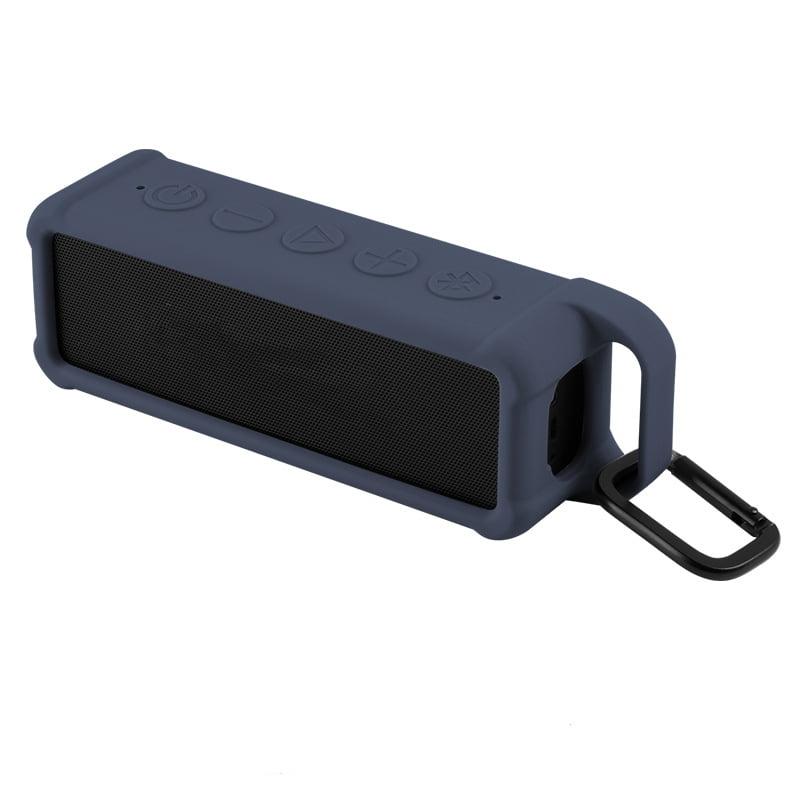
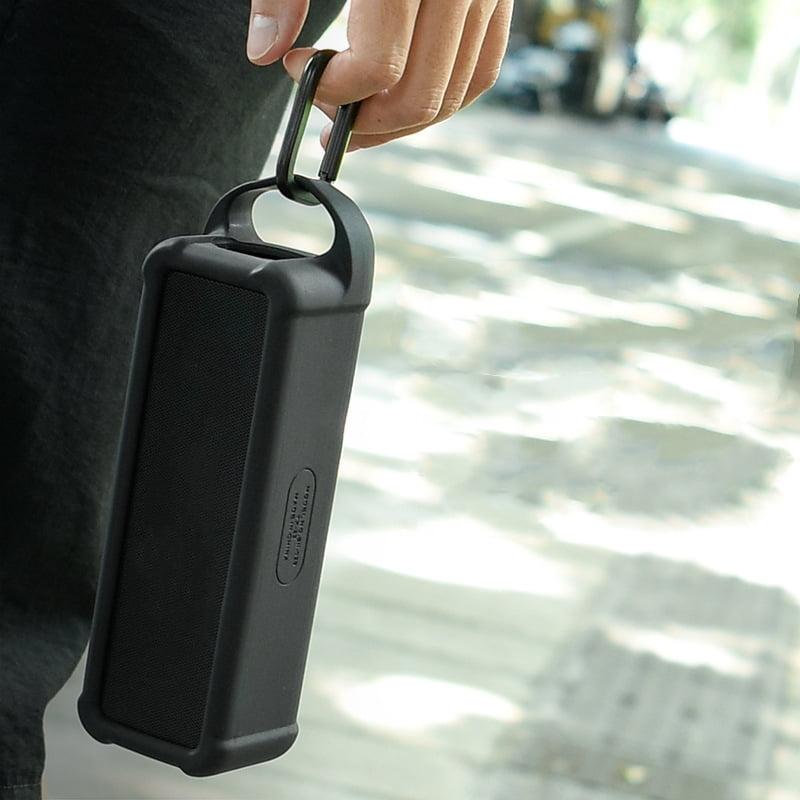
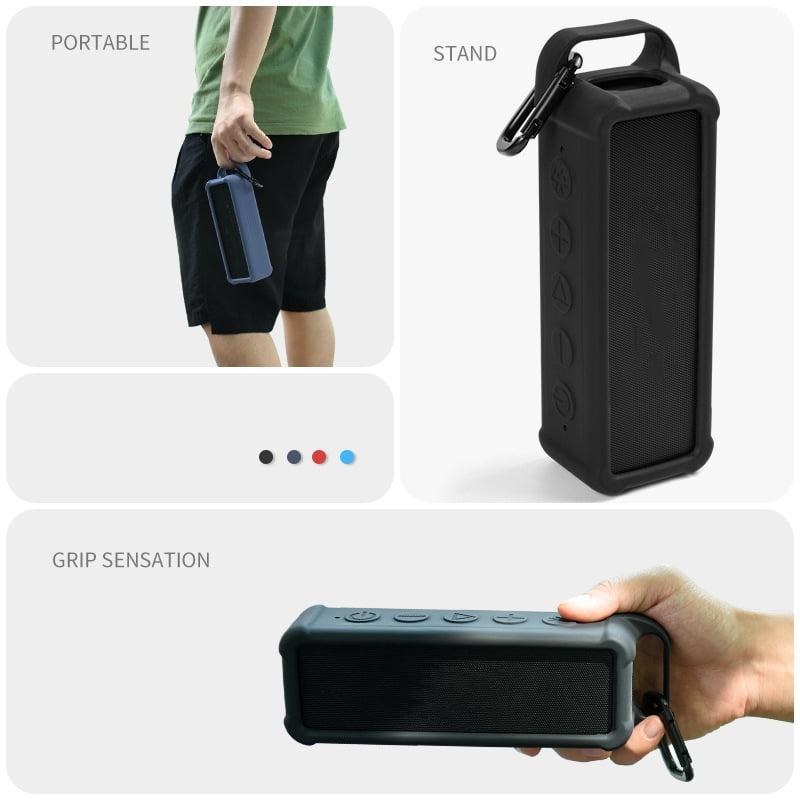
Portable Bluetooth speakers have evolved from tinny afterthoughts to surprisingly capable audio companions. Whether you're hosting a backyard barbecue, taking a camping trip, or just want better sound than your phone's built-in speaker, these devices have become essential tech accessories. But with hundreds of options flooding the market, choosing the right one can feel overwhelming.
Today we're comparing two speakers that represent very different approaches to portable audio: the powerful Monster Shock Plus S21 and the ultra-portable Anker Soundcore 2. While both connect to your devices wirelessly and aim to improve your listening experience, they're designed for completely different users and situations.
Before diving into specifics, it's worth understanding what separates good portable speakers from mediocre ones. The most important factors are audio performance (how good it sounds), battery life (how long it lasts), build quality (how well it's constructed), and connectivity reliability (how well it connects and stays connected to your devices).
Audio performance breaks down into several key areas. Power output, measured in watts, determines how loud a speaker can get without distorting. Frequency response describes how well a speaker reproduces different pitches – from deep bass drums to sparkling cymbals. Soundstage refers to how spacious and immersive the audio feels, rather than sounding like it's coming from a tiny box.
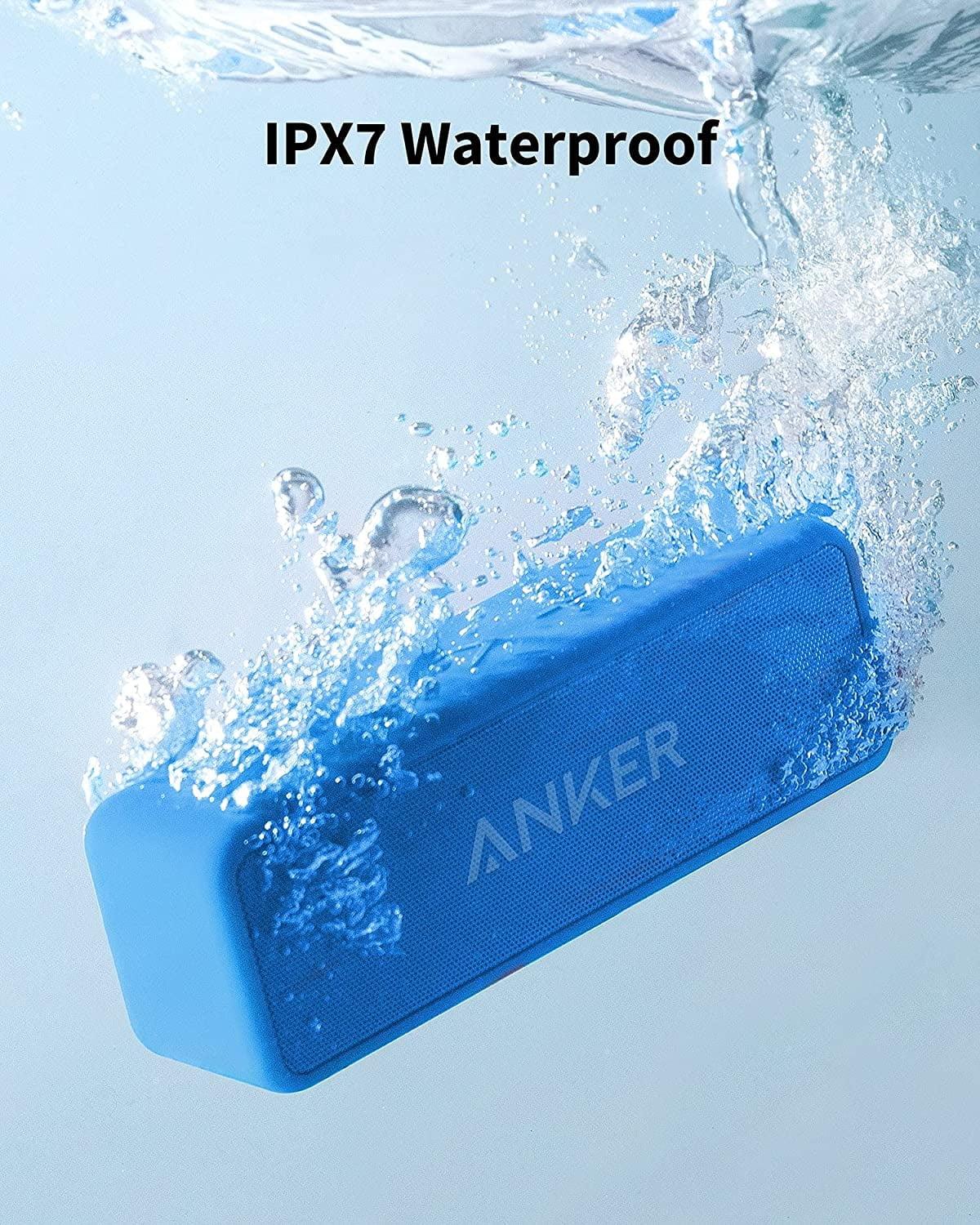
Water resistance has become increasingly important as people use these speakers outdoors. The IPX rating system measures protection against water – IPX5 means it can handle water sprays, while IPX7 can survive brief submersion. Build quality affects both durability and how premium the speaker feels in your hands.
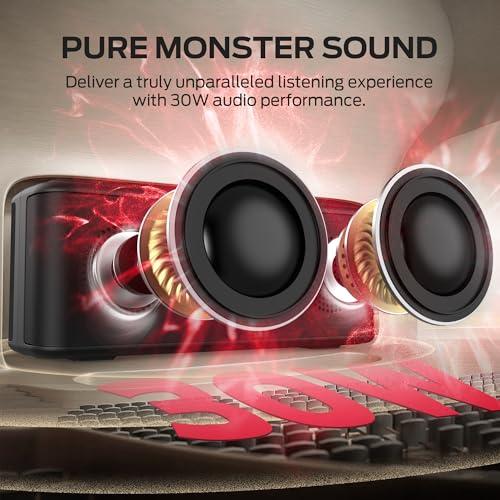
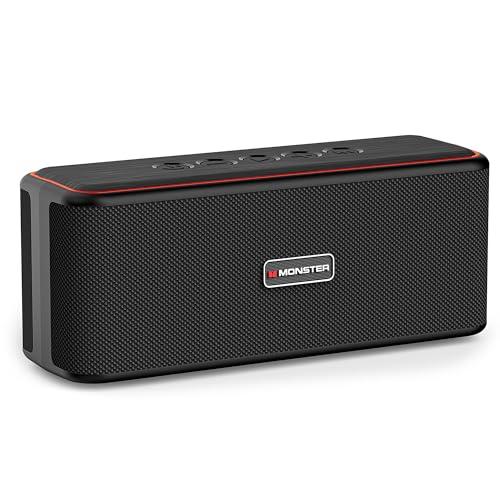
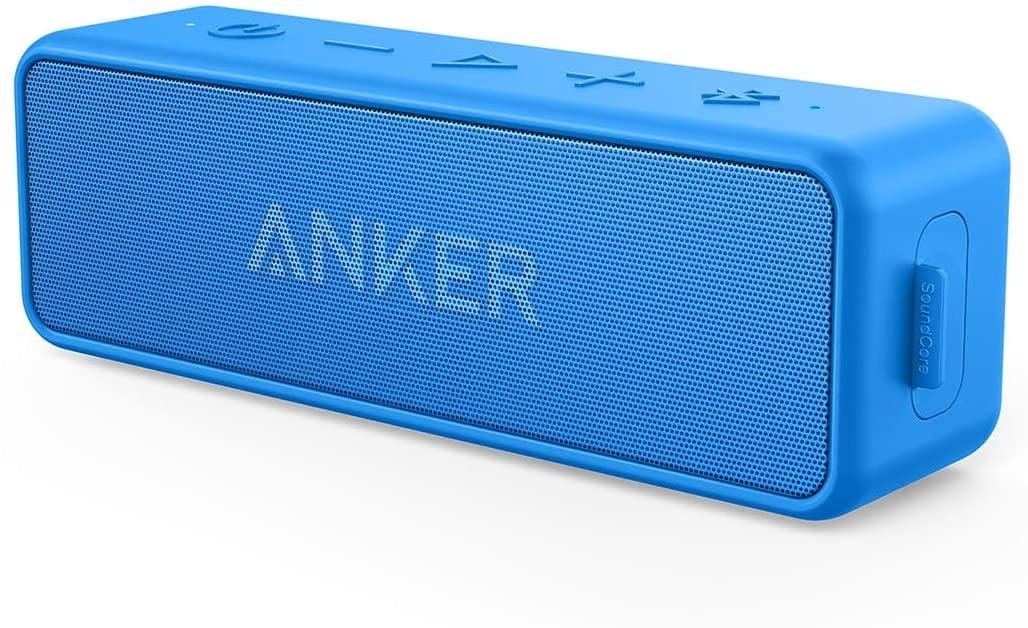
The Monster Shock Plus S21, released in 2024, represents Monster's return to competitive audio after focusing on cables and accessories for years. It packs 30 watts of power into a design built for outdoor adventures and social gatherings. The Anker Soundcore 2, launched in 2017 and refined over several years, takes the opposite approach – maximum portability and value at the expense of raw performance.
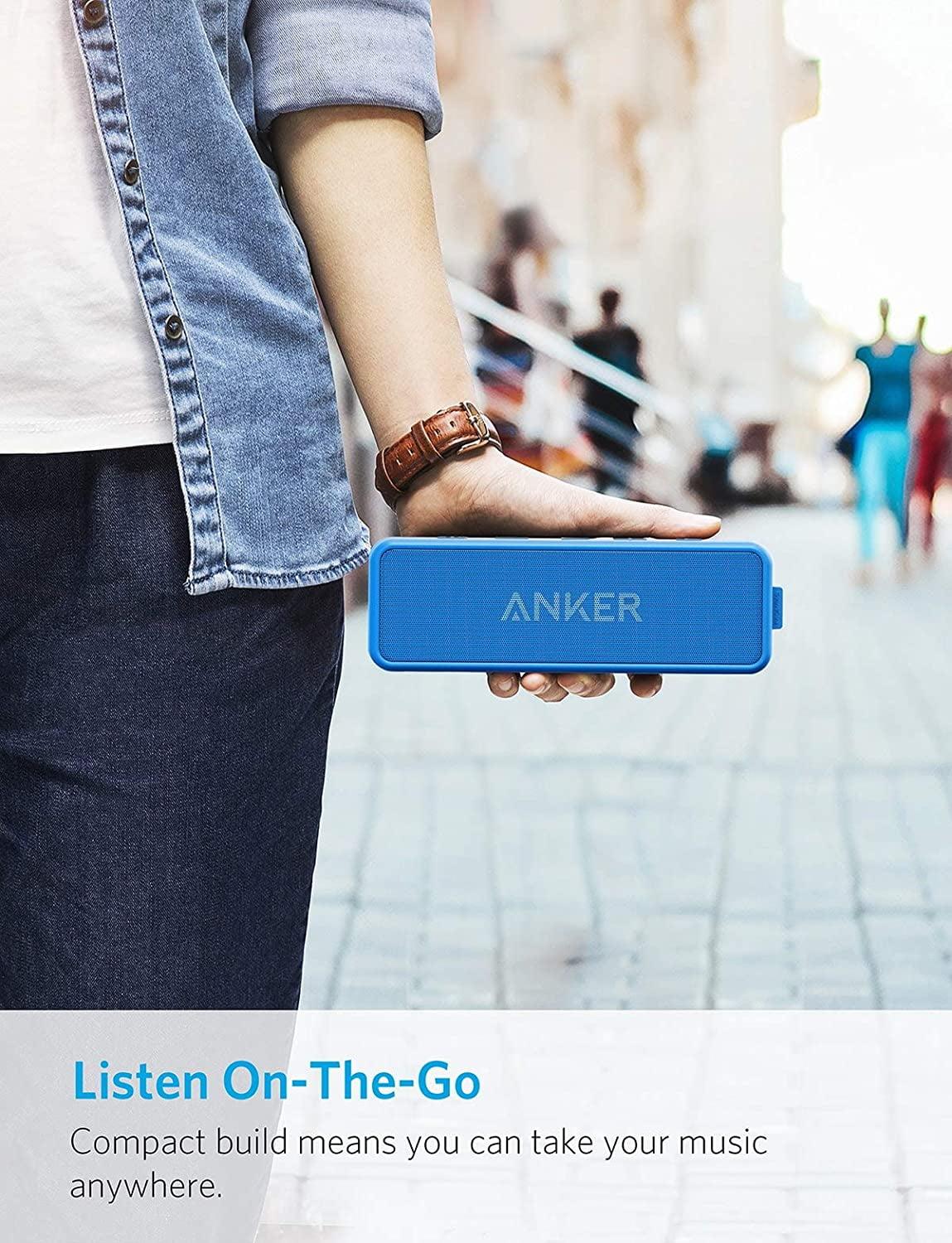
These different design philosophies become immediately apparent when you look at their specifications. The Monster weighs about 2 pounds and measures roughly 10 inches wide, making it substantial but still portable. The Soundcore 2 weighs just 0.6 pounds and fits easily in a backpack's side pocket. One prioritizes performance, the other prioritizes convenience.
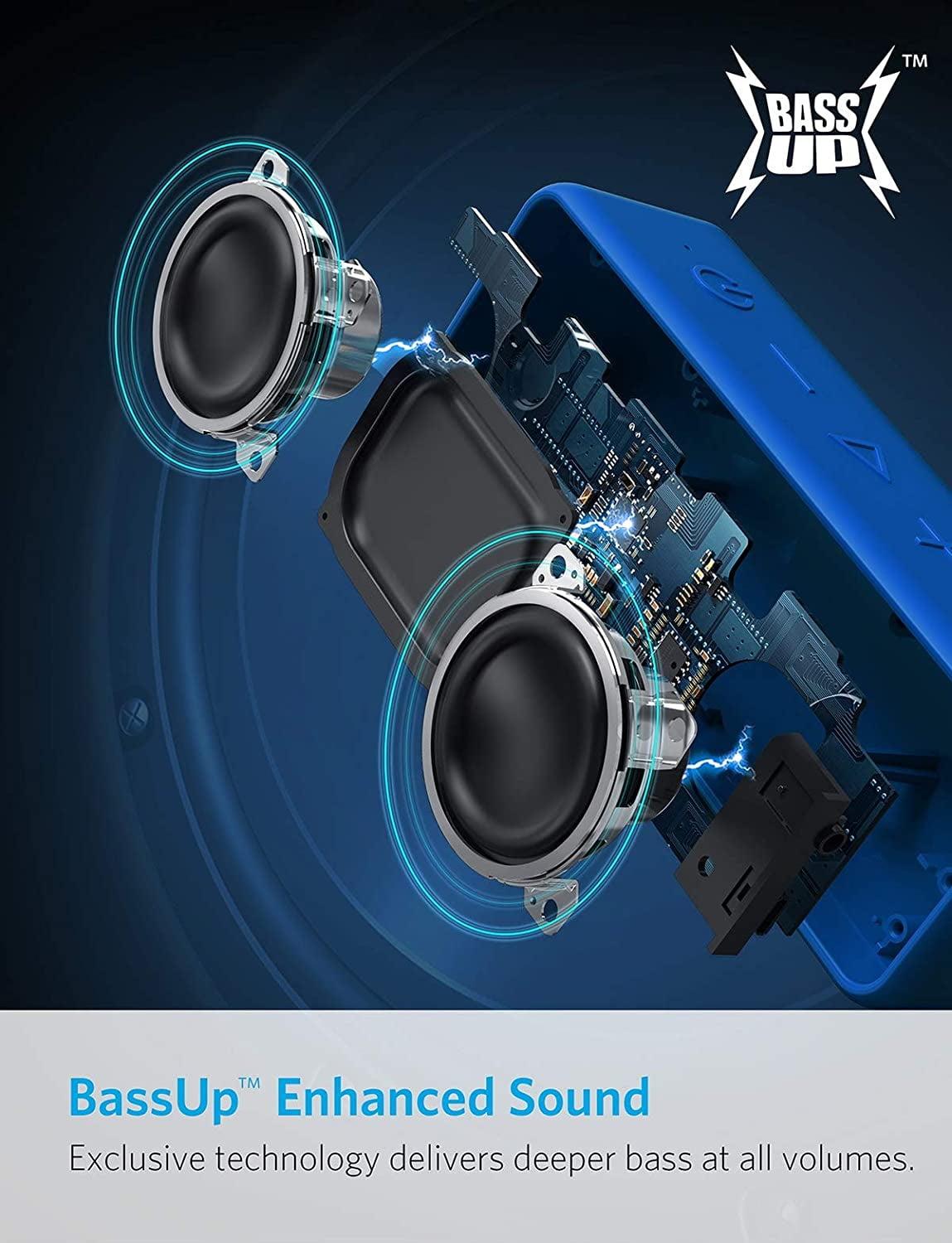
This is where these speakers diverge most dramatically. The Monster Shock Plus S21 delivers 30 watts through dual drivers plus a passive radiator (a component that helps extend bass response without requiring power). In practical terms, this means it can fill a medium-sized room with clear, engaging sound that doesn't strain or distort even at high volumes.
Our research into user experiences reveals that the Monster produces what audio enthusiasts call a "balanced" sound signature. The bass has real impact – you can feel the kick drum in electronic music or the rumble of an explosion in a movie trailer. The midrange, where vocals live, comes through clearly without sounding muffled or distant. High frequencies like cymbals and guitar strings have sparkle and detail without becoming harsh or piercing.
The Anker Soundcore 2, with its 12-watt output, faces physical limitations that no amount of engineering can fully overcome. Multiple professional reviews and user accounts consistently describe weak bass response – you simply don't get the full impact of bass-heavy music genres like hip-hop or electronic dance music. The midrange handles podcasts and audiobooks adequately, but musical vocals often sound veiled or distant. High frequencies lack the crispness and detail that make music engaging.
This power difference becomes especially noticeable in outdoor environments. The Monster can project sound effectively across a backyard or campsite, maintaining clarity and fullness even when competing with ambient noise. The Soundcore 2 struggles in these scenarios, often requiring listeners to stay close to hear music properly.
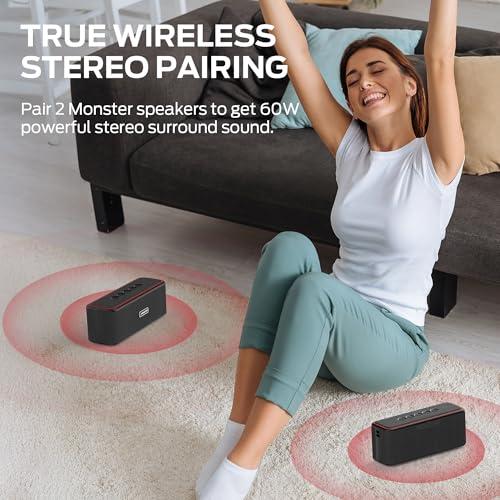
The Monster Shock Plus S21 includes True Wireless Stereo (TWS) pairing, which allows you to connect two units together for a combined 60 watts of stereo sound. This feature transforms the listening experience, creating true left-right channel separation and doubling the overall impact. It's particularly effective for larger gatherings or when you want to create a more immersive audio experience.
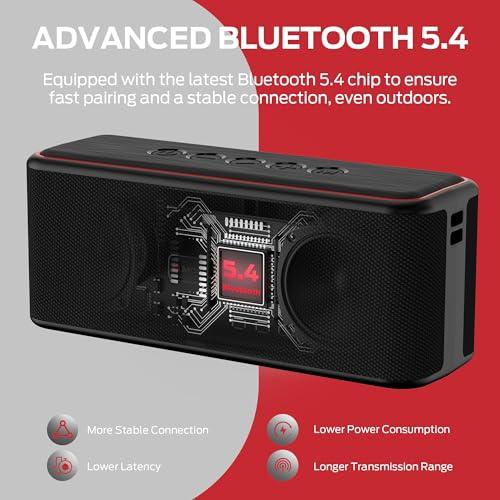
Bluetooth technology has improved significantly over the past few years, and the age difference between these speakers shows. The Monster Shock Plus S21 uses Bluetooth 5.4, the latest standard available at the time of writing. This provides faster pairing, more stable connections, better range, and improved battery efficiency compared to older Bluetooth versions.
The Anker Soundcore 2 uses Bluetooth 4.2, which was standard when it launched in 2017 but feels dated today. While it still connects reliably to most devices, you may experience occasional dropouts, slower pairing, and reduced range compared to newer standards.
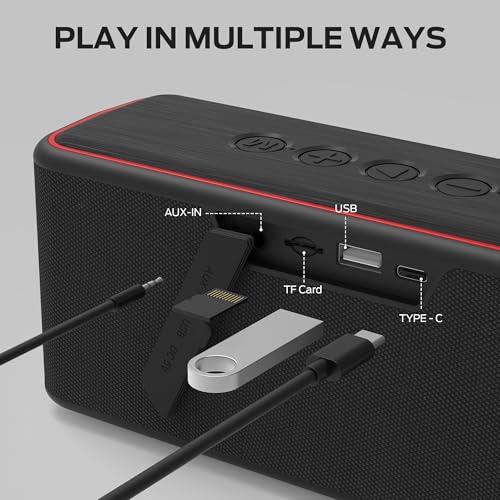
Beyond Bluetooth, the Monster offers multiple connectivity options that the Anker lacks. It includes a TF card slot (for microSD cards), USB-A port, and AUX input, giving you flexibility when Bluetooth isn't available or when you want to play music directly from storage devices. These options prove valuable during travel when you might not want to drain your phone's battery or when Wi-Fi isn't available for streaming.
Both speakers include built-in microphones for hands-free calling, though the Monster's newer Bluetooth standard typically provides clearer call quality.
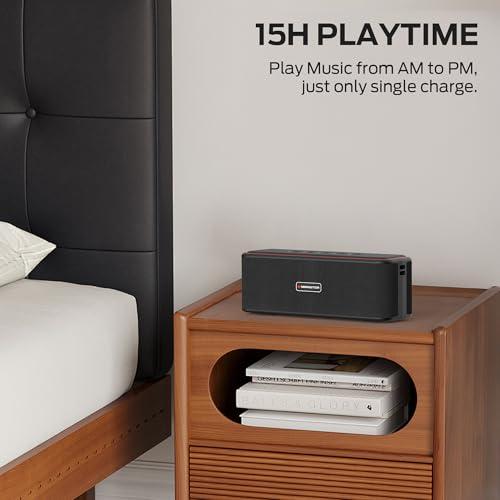
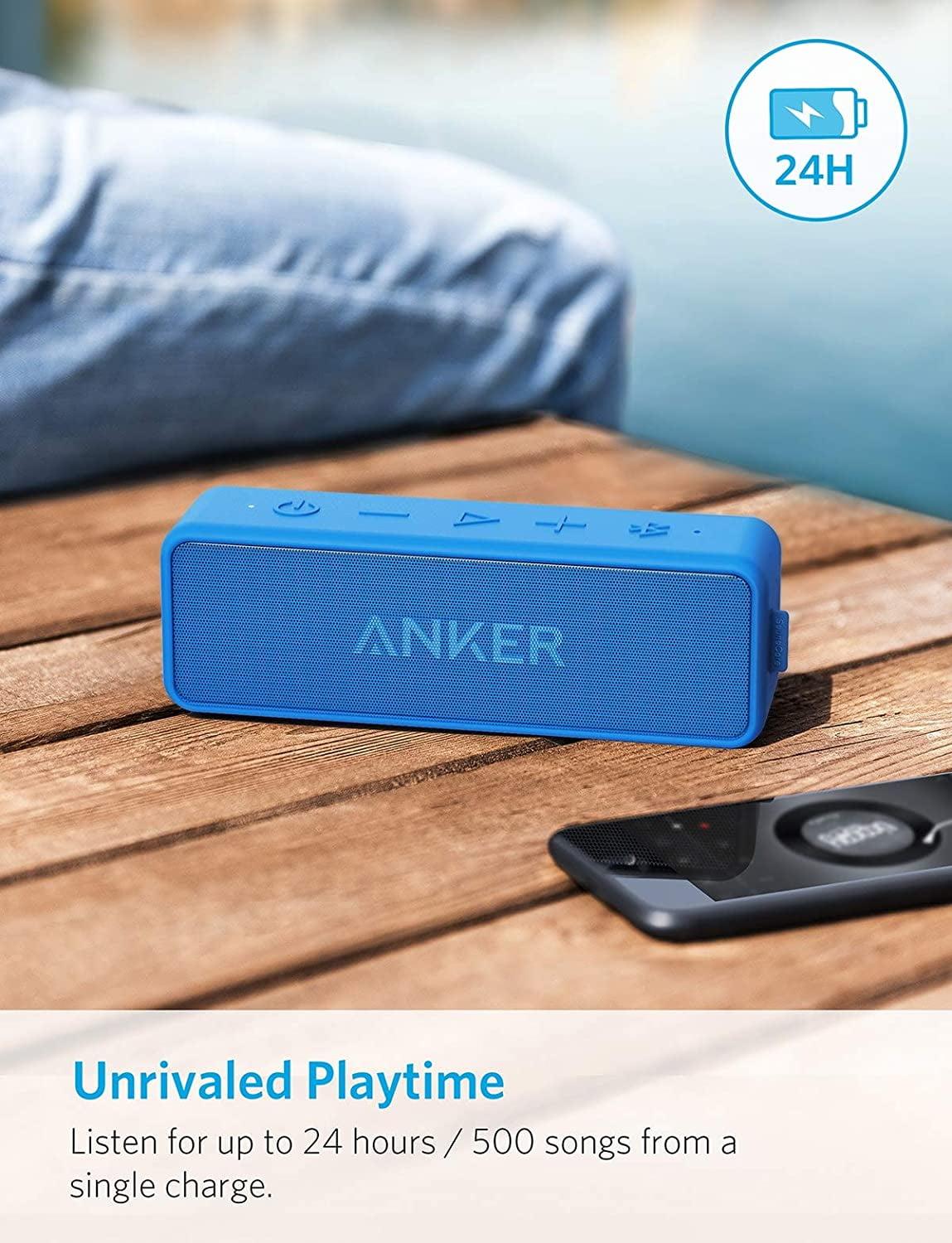
Both speakers claim 15-hour battery life, though real-world performance varies based on volume levels and audio content. Bass-heavy music at high volumes drains batteries faster than quieter acoustic tracks. Our evaluation of user reports suggests both speakers deliver close to their promised battery life under normal listening conditions.
The Monster Shock Plus S21 charges via USB-C in about 2 hours, while the Anker Soundcore 2 uses older micro-USB charging and takes roughly 3 hours to fully charge. USB-C has become the standard for modern devices, making the Monster more convenient if you're already carrying USB-C cables for your phone or laptop.
From a practical standpoint, both speakers provide enough battery life for extended outdoor activities or multi-day trips with occasional charging opportunities.
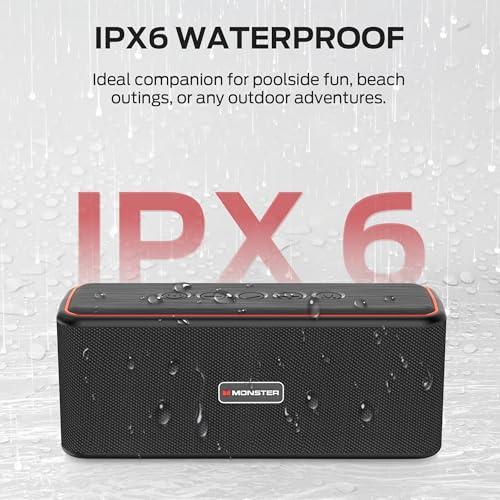
Water resistance represents one area where the older Anker actually outperforms the newer Monster. The Soundcore 2 carries an IPX7 rating, meaning it can survive brief submersion in water – useful if you accidentally drop it in a pool or river. The Monster Shock Plus S21 has an IPX6 rating, which handles splashes, rain, and spills but shouldn't be submerged.
However, the Monster feels more substantial and rugged overall. Its larger size and weight suggest better internal protection for the drivers and electronics. The build quality feels appropriate for outdoor adventures where the speaker might face bumps, drops, and rough handling.
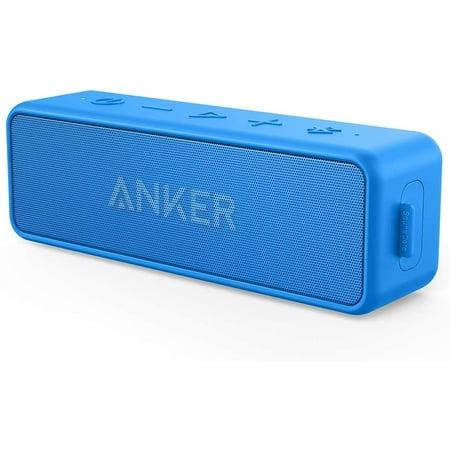
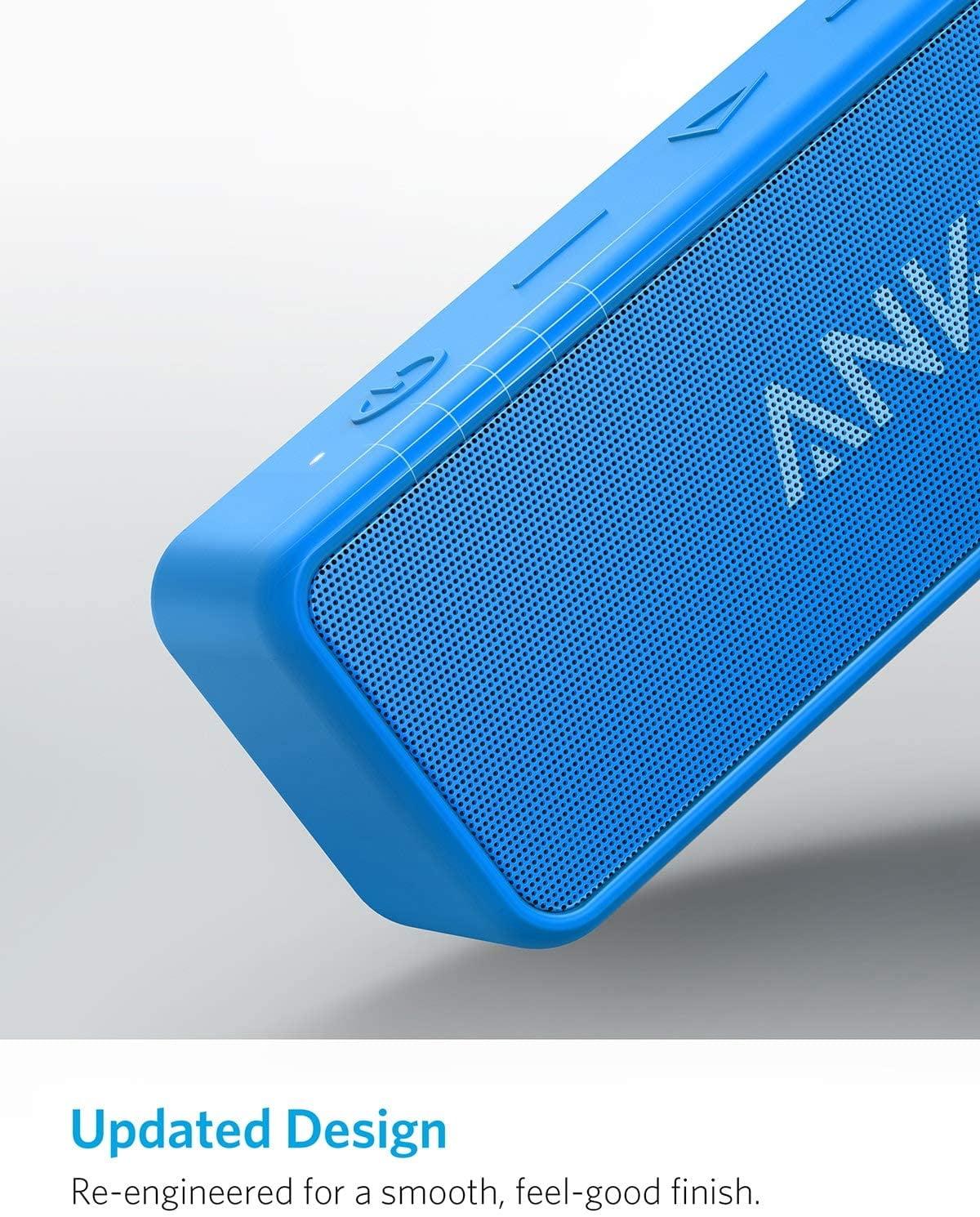
The Anker prioritizes portability with its lightweight construction. It features a metal grille protecting the drivers and rubberized sides for grip, but the overall build feels more delicate. This makes sense given its positioning as an ultra-portable speaker designed for personal use rather than group entertainment.
At the time of writing, these speakers occupy similar price ranges despite their dramatically different capabilities, creating an unusual value proposition. The Monster Shock Plus S21 represents exceptional value for anyone prioritizing audio performance, while the Anker Soundcore 2 appeals to users who value Anker's reputation for reliability and customer service.
The Monster delivers significantly more performance per dollar spent, especially considering its 2.5x power advantage, modern connectivity, and additional features. However, the Anker offers the peace of mind that comes with an established brand known for customer support and consistent pricing.
The Monster Shock Plus S21 excels in scenarios requiring powerful, engaging audio. It's ideal for backyard parties where you need to fill outdoor space with sound. Camping trips benefit from its rugged construction and ability to provide entertainment for groups. Pool parties work well with its IPX6 rating and loud output. The TWS pairing feature makes it suitable for larger gatherings or when you want to create a more sophisticated stereo setup.
For home use, the Monster works well as a secondary audio system for bedrooms, kitchens, or home offices where you want significantly better sound than smartphone speakers without investing in a full home theater system. Its multiple input options make it versatile for different audio sources.
The Anker Soundcore 2 serves different needs effectively. Its ultra-light weight makes it perfect for solo travelers who want personal audio improvement without adding significant bulk to their luggage. The superior water protection suits water sports enthusiasts who need audio near pools, beaches, or rivers. Its compact size works well for apartment dwellers with limited space or those who primarily consume podcasts and audiobooks rather than music.
Neither speaker truly serves as a home theater solution, but they handle video content differently. The Monster Shock Plus S21's superior bass response and higher power output provide much better support for movie soundtracks and video game audio. Action sequences, explosions, and musical scores benefit significantly from its fuller frequency response.
The Anker Soundcore 2 works adequately for dialogue-heavy content like documentaries or talk shows, but struggles with dynamic content that relies on bass impact and wide frequency response. If you occasionally want to improve your laptop or tablet's audio for video content, the Monster provides a much more satisfying experience.
The seven-year gap between these speakers' initial designs reflects significant changes in portable audio technology. Bluetooth 5.4 in the Monster offers improved efficiency and stability compared to the 4.2 standard in the Anker. Driver technology has advanced, allowing manufacturers to extract more performance from compact designs. Battery technology has improved, though both speakers achieve similar runtime through different approaches.
The market has also shifted toward more powerful portable speakers as users demand better audio quality for outdoor activities and social gatherings. The Monster reflects this trend, while the Anker represents the earlier focus on maximum portability over performance.
For most users seeking a portable Bluetooth speaker, the Monster Shock Plus S21 represents the better choice. Its superior audio performance, modern connectivity, and versatile features provide significantly more utility for a similar investment. The difference in sound quality is substantial enough that most people notice it immediately, and the additional features like TWS pairing and multiple inputs add genuine value.
Choose the Monster if you want a speaker that can handle diverse situations – from personal listening to group entertainment, from indoor use to outdoor adventures. Its balanced approach to performance and portability suits most users' needs effectively.
The Anker Soundcore 2 remains the right choice for specific use cases. If you prioritize maximum portability above all else – perhaps for frequent business travel or ultra-light backpacking – its weight advantage becomes crucial. Users who primarily consume spoken content like podcasts may find its limitations less problematic. Those who need maximum water protection for activities near water should also consider the Anker.
However, for users seeking the best overall portable speaker experience, the Monster Shock Plus S21 delivers significantly better performance, features, and versatility. The audio quality difference alone justifies choosing it over the Soundcore 2 for most applications.
The portable speaker market continues evolving rapidly, with new models appearing regularly. But this comparison illustrates the fundamental trade-offs between maximum portability and meaningful performance – understanding your priorities helps determine which approach serves your needs better.
| Monster Shock Plus S21 | Anker Soundcore 2 |
|---|---|
| Power Output - Determines maximum volume and bass impact | |
| 30W (60W with TWS pairing) - Can fill outdoor spaces | 12W - Limited to personal/small room use |
| Audio Quality - Most important for music enjoyment | |
| Balanced sound with deep bass and clear highs | Weak bass, veiled treble - better for podcasts |
| Bluetooth Version - Affects connection stability and range | |
| 5.4 (latest standard, fast pairing, stable connection) | 4.2 (older standard, occasional dropouts possible) |
| Battery Life - How long you can listen between charges | |
| 15 hours with 2-hour USB-C fast charging | 15 hours with 3-hour micro-USB charging |
| Water Resistance - Protection level for outdoor use | |
| IPX6 (splash-proof, handles rain and pool splashes) | IPX7 (brief submersion safe, better for water activities) |
| Weight & Portability - Balance between performance and convenience | |
| ~2 pounds (substantial but portable for better sound) | 0.6 pounds (ultra-lightweight for maximum portability) |
| Connectivity Options - Flexibility beyond Bluetooth | |
| Bluetooth, AUX, TF card, USB-A, USB-C inputs | Bluetooth and AUX only |
| Special Features - Unique capabilities worth considering | |
| True Wireless Stereo pairing for 60W stereo sound | Basic functionality, no pairing capability |
| Best Use Cases - When each speaker shines | |
| Outdoor parties, camping, home entertainment, music listening | Personal travel, podcasts, ultra-portable needs, water sports |
| Value Proposition - Performance vs investment at time of writing | |
| Premium features at competitive pricing due to discounts | Consistent budget pricing with basic reliable performance |
The Monster Shock Plus S21 is significantly louder with 30 watts of power output compared to the Anker Soundcore 2's 12 watts. This means the Monster can fill larger spaces and outdoor areas with clear sound, while the Anker is better suited for personal listening or small rooms.
Both the Monster Shock Plus S21 and Anker Soundcore 2 offer similar 15-hour battery life. However, the Monster charges faster at 2 hours using USB-C, while the Anker takes 3 hours to charge using micro-USB.
The Monster Shock Plus S21 delivers much better bass performance with deeper, more impactful low frequencies. The Anker Soundcore 2 struggles with bass-heavy music and lacks the low-end power that makes music feel engaging and full.
The Anker Soundcore 2 has superior water protection with IPX7 rating, allowing brief submersion. The Monster Shock Plus S21 has IPX6 rating, which handles splashes and rain but shouldn't be submerged. Both work well for poolside use with proper care.
The Anker Soundcore 2 is much more portable, weighing only 0.6 pounds compared to the Monster Shock Plus S21's 2-pound weight. The Anker fits easily in backpacks and luggage, making it ideal for frequent travelers.
Yes, the Monster Shock Plus S21 supports True Wireless Stereo (TWS) pairing, allowing you to connect two units for 60 watts of stereo sound. The Anker Soundcore 2 doesn't offer speaker pairing capabilities.
The Monster Shock Plus S21 is far superior for outdoor parties due to its 30-watt power output, balanced sound quality, and ability to project audio across larger spaces. The Anker Soundcore 2 lacks the volume and bass impact needed for group entertainment.
The Monster Shock Plus S21 offers multiple connectivity options including Bluetooth 5.4, AUX input, TF card slot, and USB ports. The Anker Soundcore 2 provides basic Bluetooth 4.2 and AUX input only, with fewer connection options.
For home entertainment and movie watching, the Monster Shock Plus S21 provides much better performance with its fuller sound, stronger bass, and higher volume capability. The Anker Soundcore 2 works adequately for dialogue but struggles with dynamic movie soundtracks.
Both speakers handle podcasts well, but the Anker Soundcore 2 is actually better suited for spoken content since its audio limitations are less noticeable with podcasts than music. The Monster Shock Plus S21 also excels at podcasts while offering superior music performance.
The Monster Shock Plus S21 typically offers better value with significantly more power, modern features, and superior sound quality. The Anker Soundcore 2 provides decent value for users prioritizing maximum portability and basic functionality over audio performance.
For camping, the Monster Shock Plus S21 is generally better due to its powerful output, rugged build, and ability to entertain groups around a campsite. The Anker Soundcore 2 works well for solo camping or when weight is a critical concern, plus it offers better water protection for activities near rivers or lakes.
We've done our best to create useful and informative comparisons to help you decide what product to buy. Our research uses advanced automated methods to create this comparison and perfection is not possible - please contact us for corrections or questions. These are the sites we've researched in the creation of this article: shopabunda.com - manuals.plus - popsci.com - armorsound.com - manuals.plus - youtube.com - shopstaff.net - thestreet.com - rtings.com - youtube.com - businessinsider.com - youtube.com - youtube.com - mensjournal.com - ratebud.ai - youtube.com - ebay.com - monsterstore.com - newegg.com - angelenaspensacola.com - community.anker.com - forums.androidcentral.com - community.anker.com - youtube.com - community.anker.com - community.anker.com - wirelessplace.com - cnet.com - youtube.com - walmart.com - us.ankerwork.com - support.soundcore.com

Privacy Policy
Terms and Conditions - Affiliate Policy
Home Security
© Copyright 2008-2026.
11816 Inwood Rd #1211, Dallas, TX 75244