

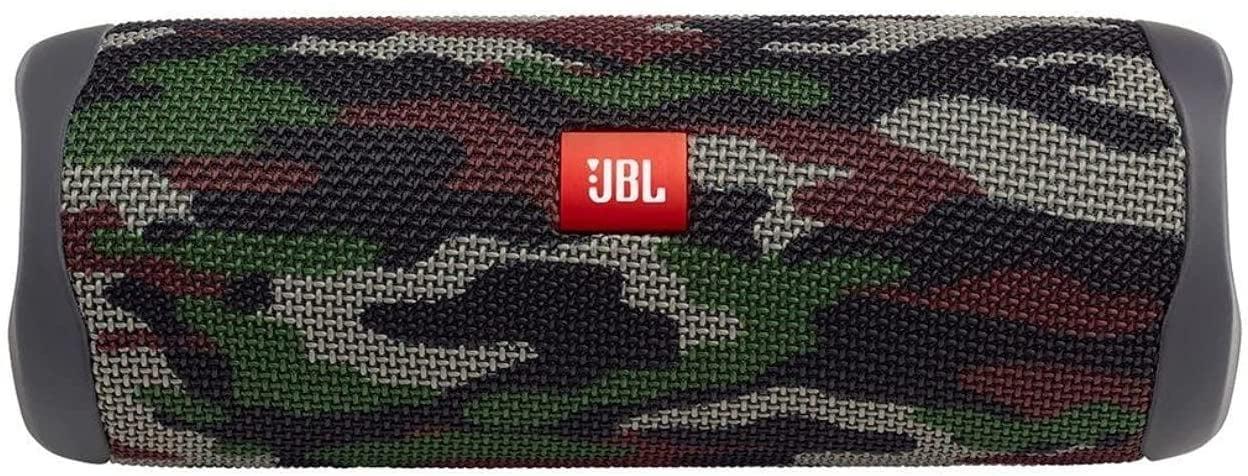
When you're shopping for a portable Bluetooth speaker, you're essentially choosing between two philosophies: raw power versus ultimate portability. The Monster Shock Plus S21 and JBL Flip 5 represent these approaches perfectly, and understanding their differences will help you make the right choice for your needs.
Before diving into specifics, it's worth understanding what separates excellent portable speakers from mediocre ones. The most critical factor is audio performance – how loud can it get while maintaining clarity, and does the bass sound full without overwhelming the mids and highs? Power output, measured in watts (W), gives you a baseline for volume capabilities, but the quality of the drivers (the actual components that produce sound) matters just as much.
Durability comes next, especially water resistance ratings. IPX ratings tell you how well a speaker handles moisture – IPX6 means it can withstand powerful water jets from any direction, while IPX7 can survive being submerged in shallow water. Battery life determines whether your speaker lasts through a full day at the beach or dies halfway through your camping trip.
Connectivity has evolved dramatically in recent years. While all modern speakers use Bluetooth, the version matters significantly. Bluetooth 5.4 offers better range, more stable connections, and lower power consumption compared to older 4.2 versions. Additional inputs like AUX ports, USB connections, and microSD card slots provide backup options when Bluetooth isn't ideal.
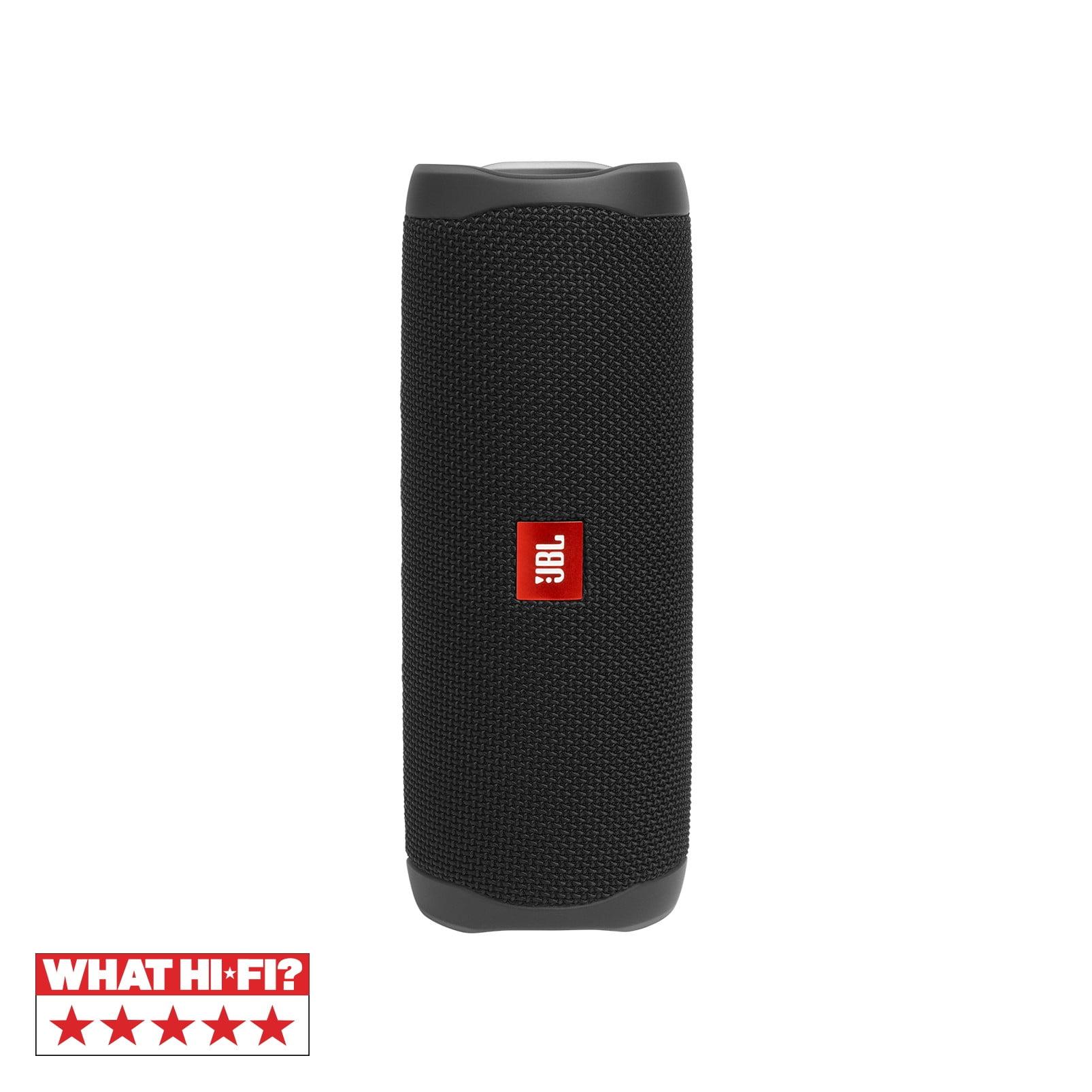
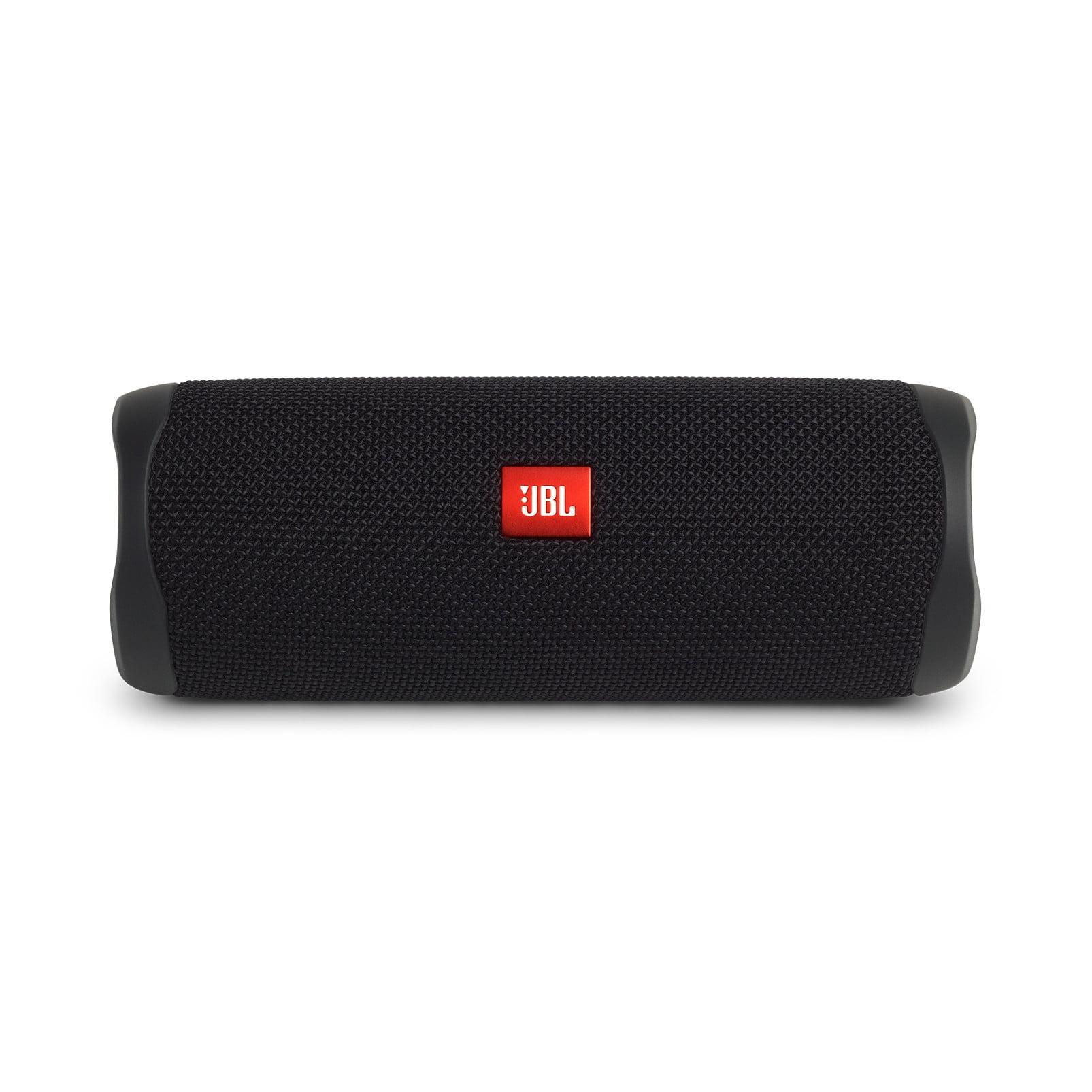
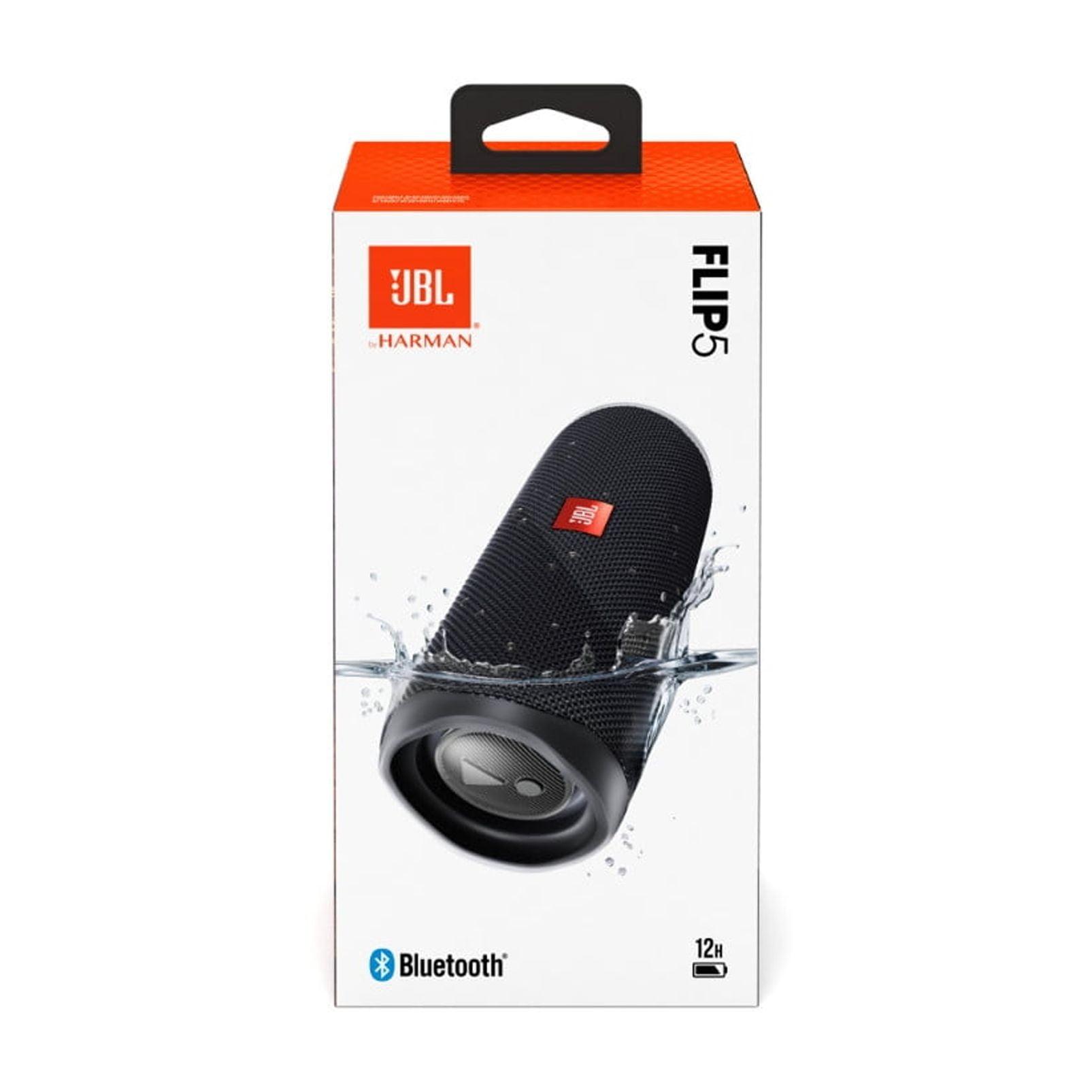
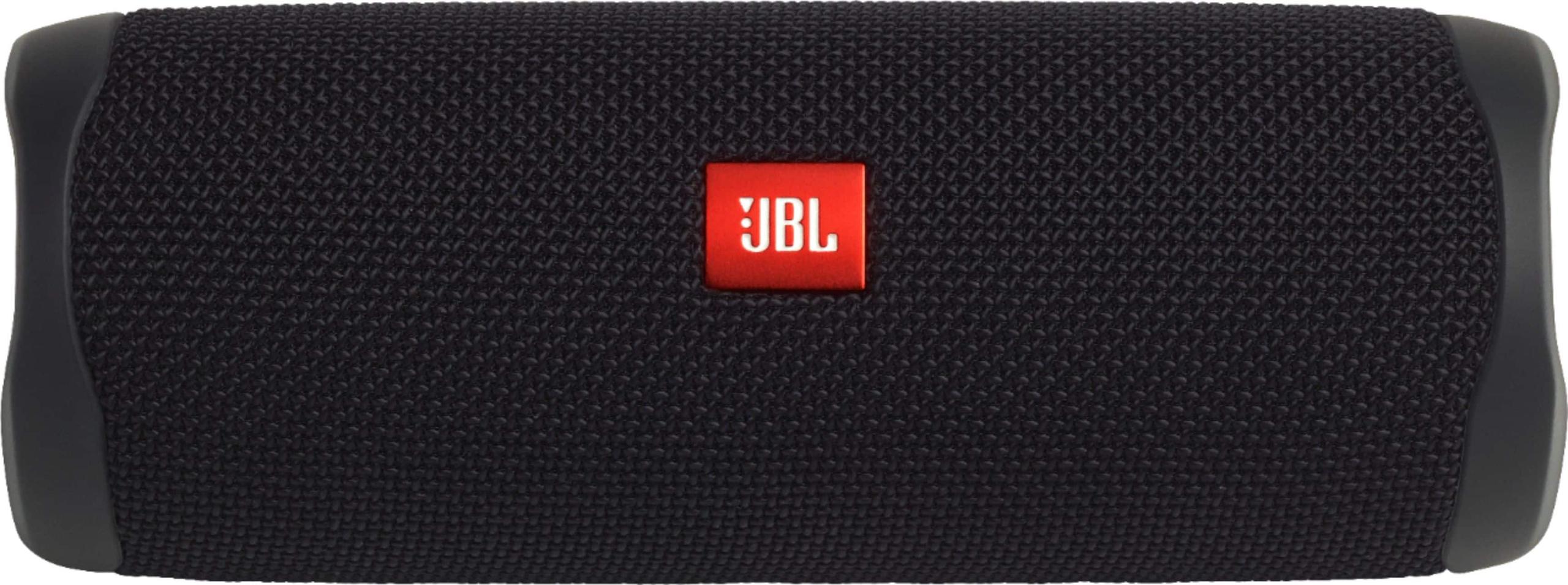
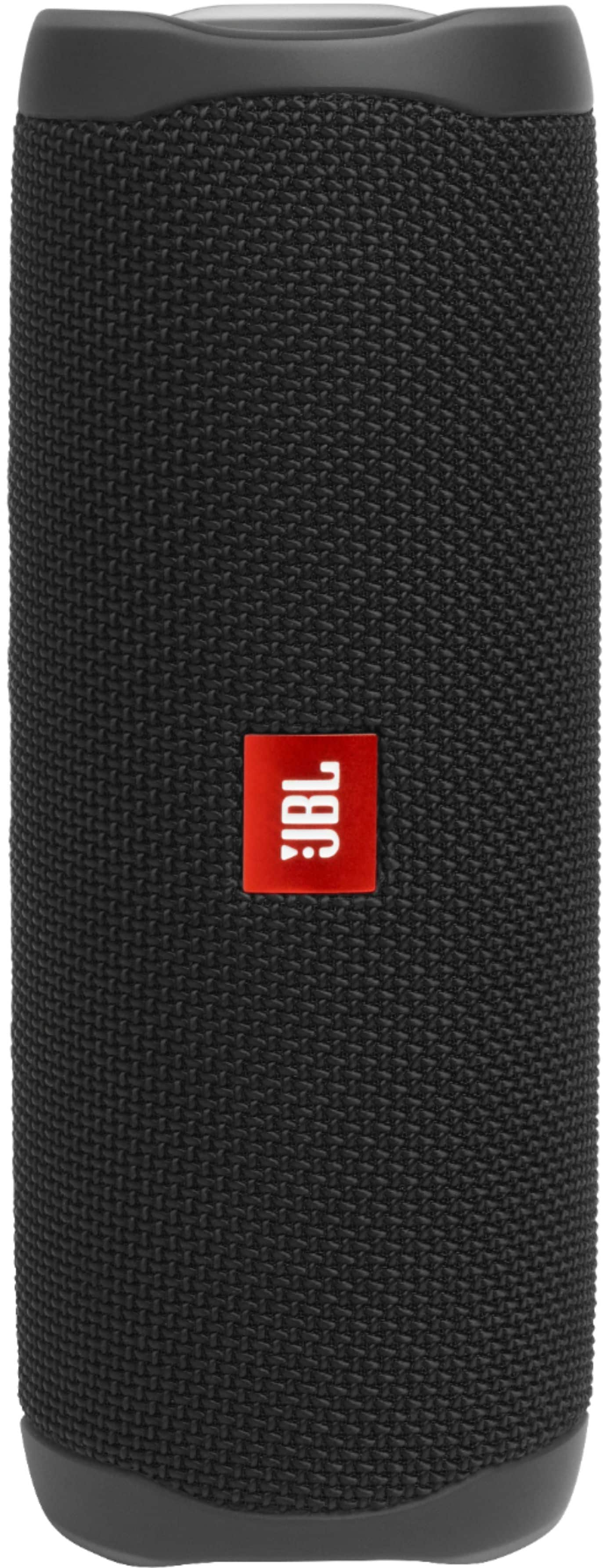
The JBL Flip 5, released in 2019, established itself as the gold standard for ultra-portable speakers. JBL designed it as a refined evolution of their popular Flip series, focusing on reliability and genuine pocket-portability. At the time of its release, it represented cutting-edge design in the compact speaker category.
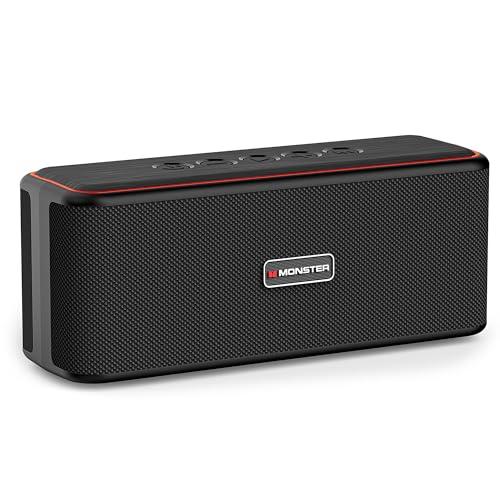
The Monster Shock Plus S21 arrived later as part of Monster's renewed push into consumer audio after their restructuring. This speaker embraces modern connectivity standards like Bluetooth 5.4 while targeting users who want more power without sacrificing too much portability. Monster leveraged their decades of audio engineering experience to create something that bridges the gap between portable and stationary speakers.
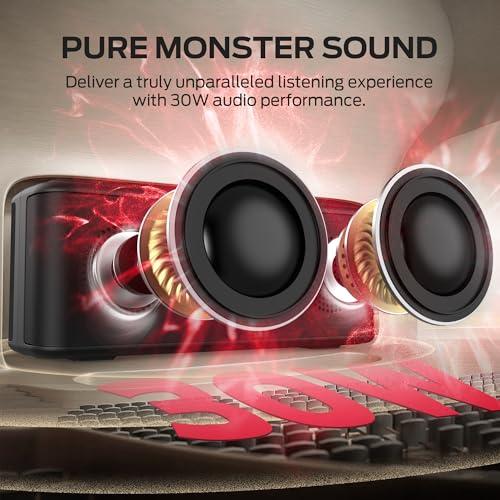
Here's where these speakers diverge most dramatically. The Monster Shock Plus S21 pumps out 30 watts compared to the JBL Flip 5's 20 watts – a 50% power advantage that translates into noticeably louder maximum volume and fuller bass response. In practical terms, this means the Monster can adequately fill a medium-sized room or handle outdoor gatherings where you need to compete with ambient noise.
Power alone doesn't tell the whole story, though. The Monster Shock Plus S21 uses dual dynamic drivers with what Monster calls "Pure Sound Technology" – essentially advanced acoustic tuning that prevents distortion even at maximum volume. During our research into user experiences, the consistent feedback was that the Monster maintains clarity and punchy bass even when cranked up, something many portable speakers struggle with.
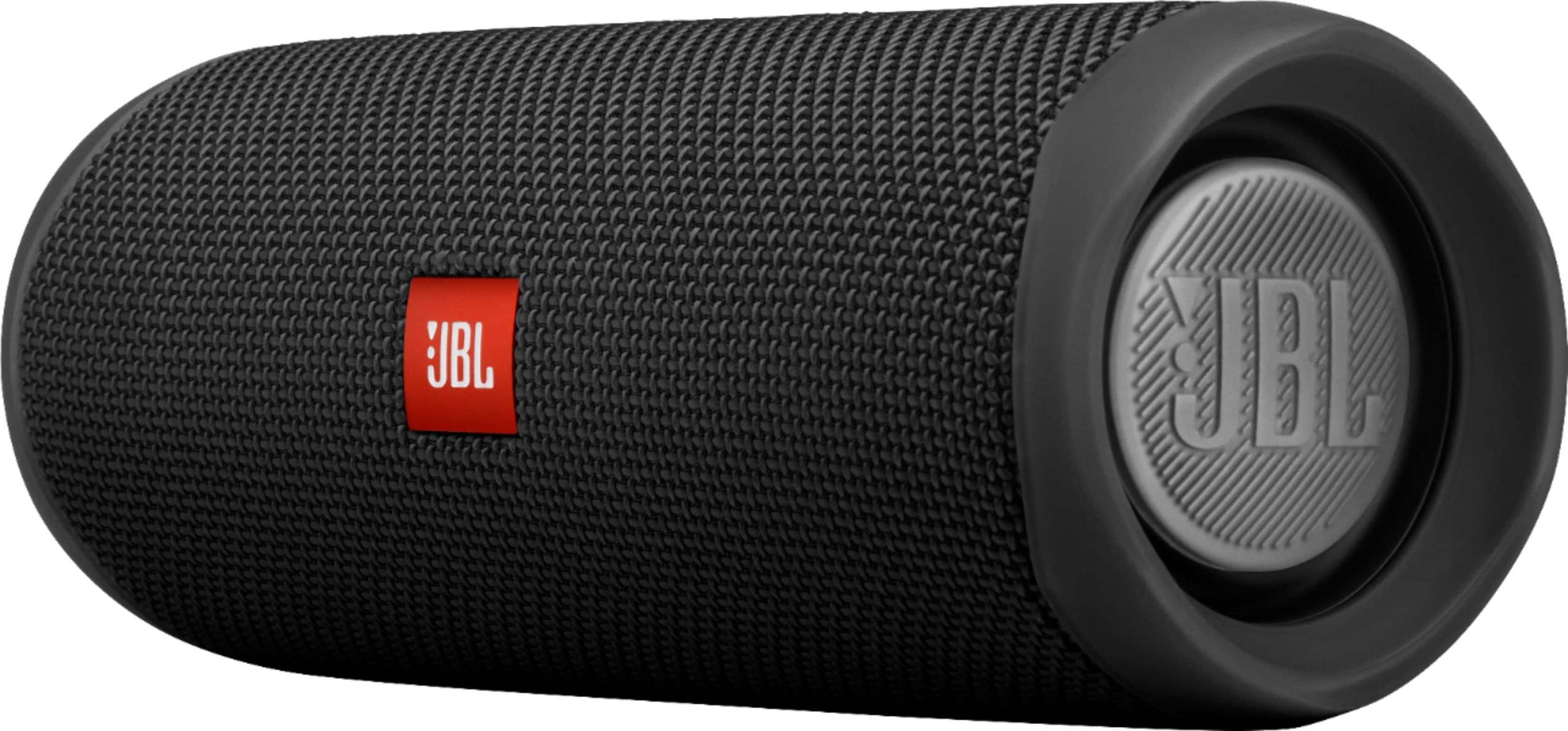
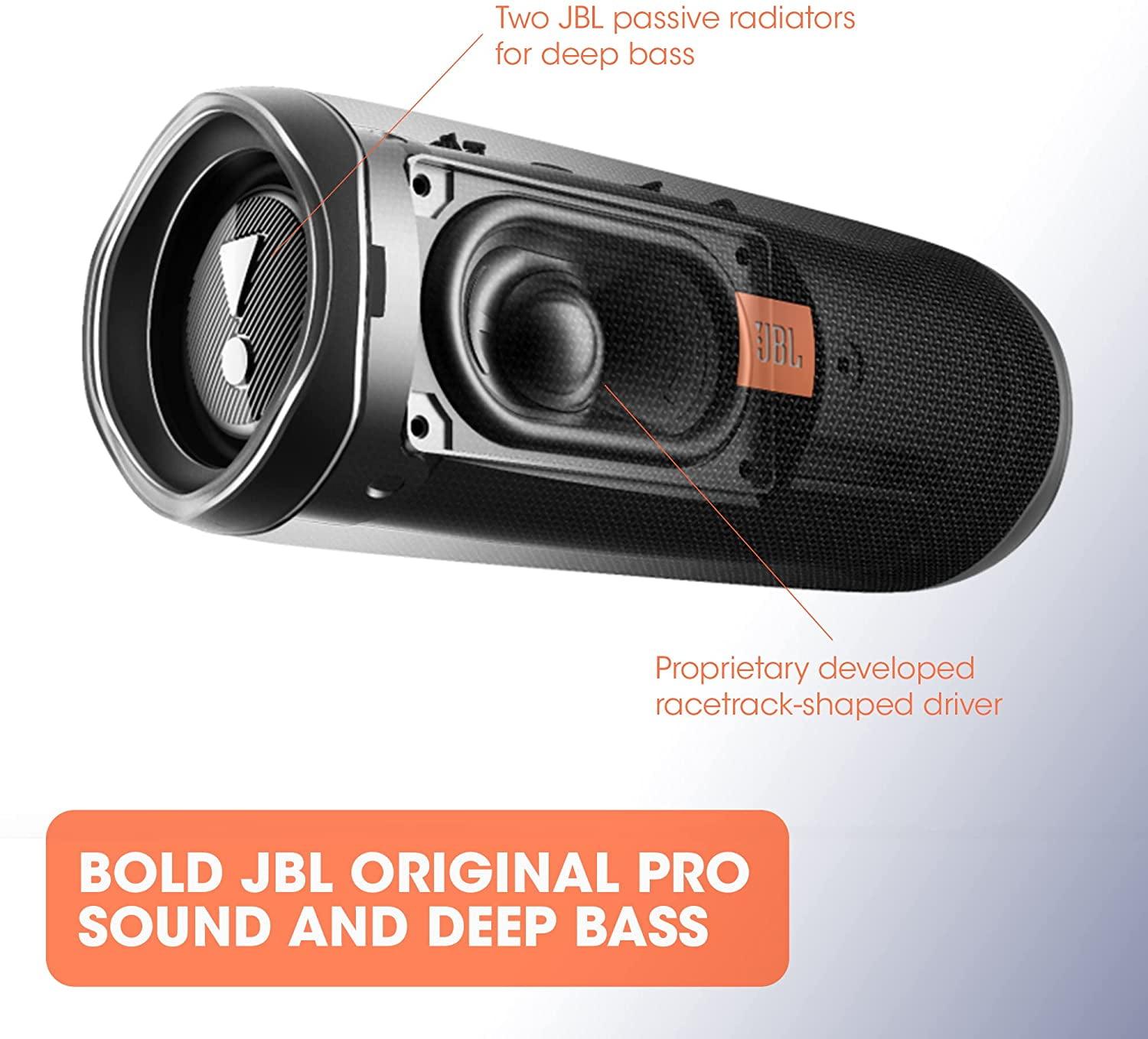
The JBL Flip 5 takes a different approach with its racetrack-shaped driver. This oval design allows JBL to fit a larger driver surface area into the compact cylindrical body, maximizing output for the available space. The result is surprisingly solid bass for such a small speaker, though it simply can't match the Monster's raw power. Where the JBL excels is in balance – the sound signature remains consistent across volume levels, making it ideal for personal listening or small group settings.
For frequency response – how well the speaker reproduces different pitches – the JBL Flip 5 officially covers 65 Hz to 20 kHz. The low end of 65 Hz means it can produce decent bass, though true sub-bass (the rumble you feel in your chest) requires frequencies below 60 Hz. The Monster Shock Plus S21 doesn't publish exact specifications, but user reports consistently mention deeper, more physical bass response, suggesting it reaches lower frequencies more effectively.
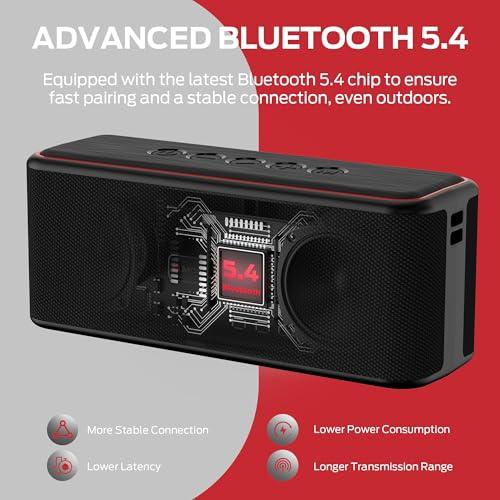
The connectivity battle showcases how technology has advanced since 2019. The Monster Shock Plus S21 sports Bluetooth 5.4, offering several advantages over the JBL Flip 5's Bluetooth 4.2. The newer standard provides roughly double the range (up to 33 feet in real-world conditions), more stable connections that resist dropouts, and better battery efficiency. More importantly, Bluetooth 5.4 reduces audio latency – the delay between pressing play and hearing sound – making it better for watching videos.
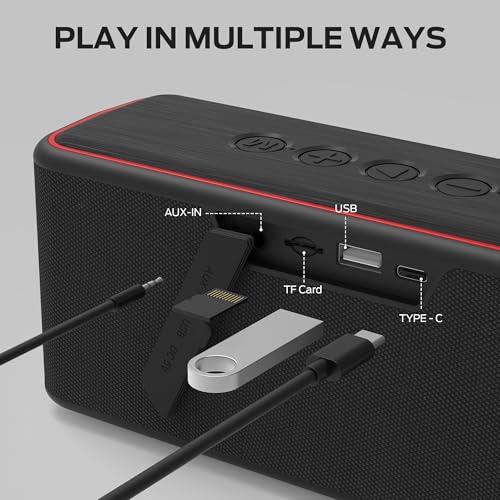
But the Monster Shock Plus S21's real connectivity advantage lies in its multiple input options. Beyond Bluetooth, it accepts AUX cables (the traditional 3.5mm headphone jack), USB connections for direct device charging or audio, and TF cards (microSD cards loaded with music). This flexibility proves invaluable when your phone battery dies, you're in an area with Bluetooth interference, or you want to play music from older devices without wireless capabilities.
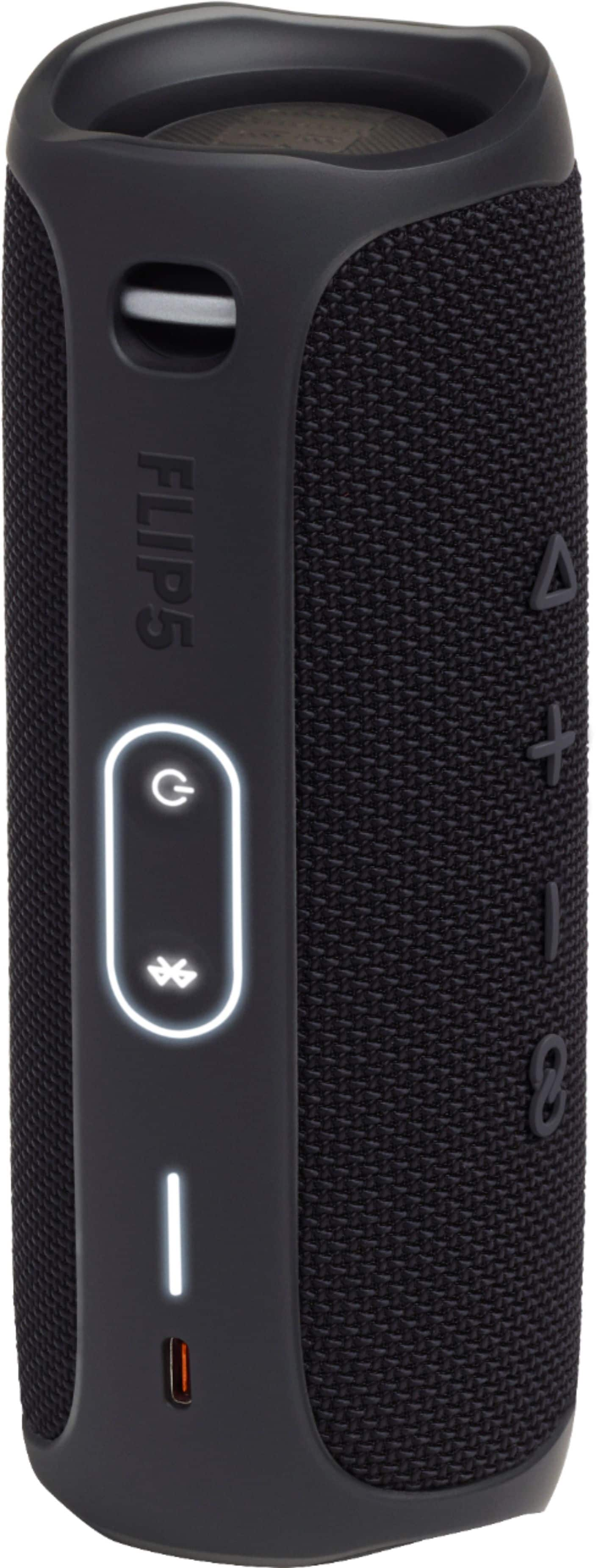
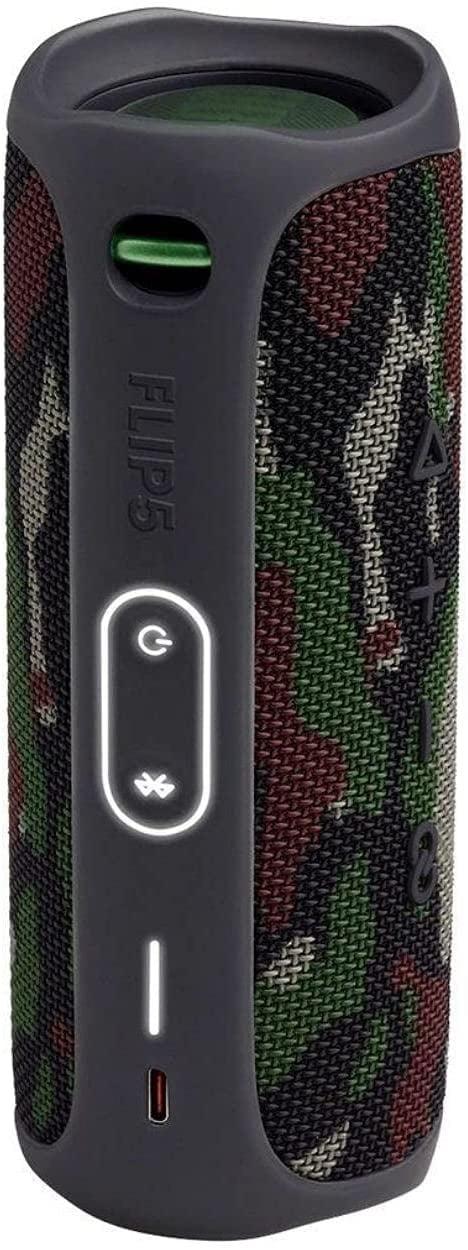
The JBL Flip 5 deliberately simplifies this equation with Bluetooth-only connectivity. JBL removed the AUX port that previous Flip models included, betting that wireless had become reliable enough to eliminate wired backups. For many users, this works perfectly and reduces potential failure points. However, it can leave you stranded if your phone's Bluetooth malfunctions or you want to connect an older laptop without modern wireless standards.
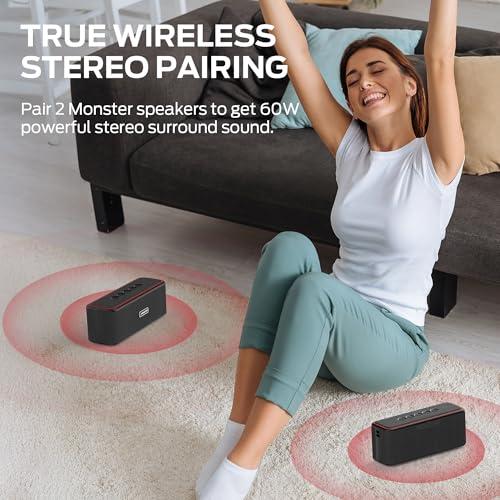
Both speakers offer multi-device pairing, but with different approaches. The Monster Shock Plus S21 supports True Wireless Stereo (TWS), letting you pair two identical speakers for genuine left-right stereo separation and a combined 60-watt output. The JBL Flip 5 uses PartyBoost, JBL's proprietary system that can chain multiple compatible JBL speakers together, though not in true stereo configuration.
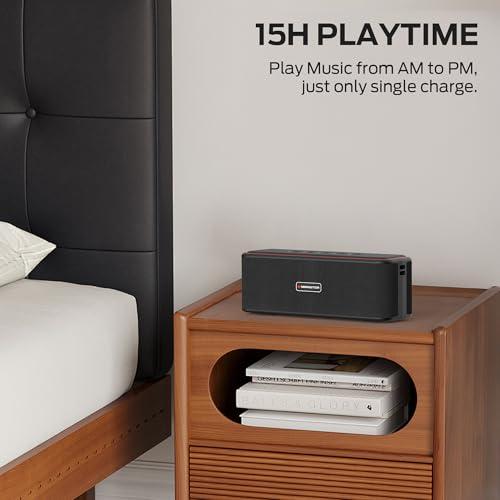
Battery performance often determines real-world usability more than any other specification. The Monster Shock Plus S21 claims 15 hours of playback compared to the JBL Flip 5's 12 hours – a meaningful 25% advantage. More importantly, the Monster achieves this while producing more power, suggesting superior battery management and efficiency.
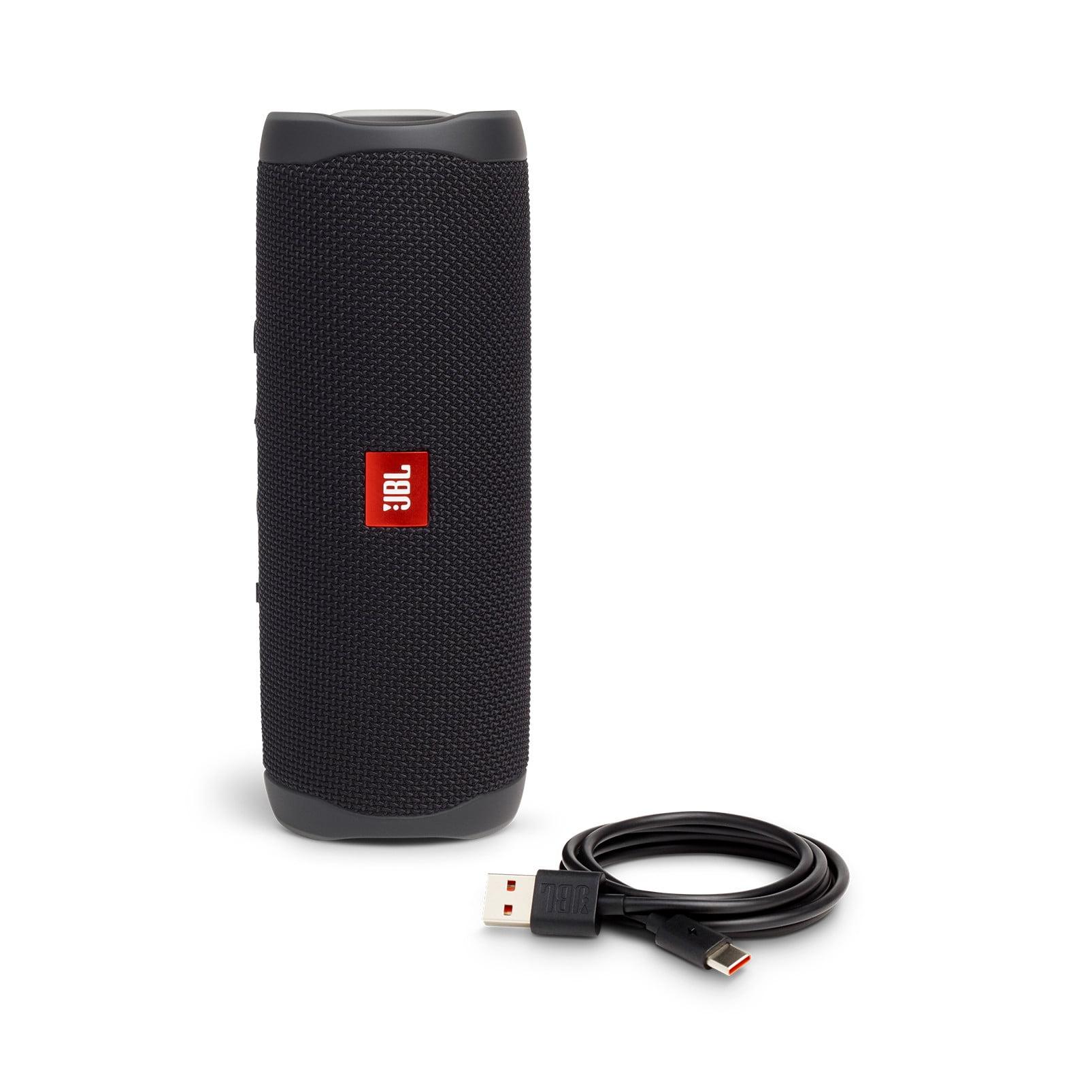
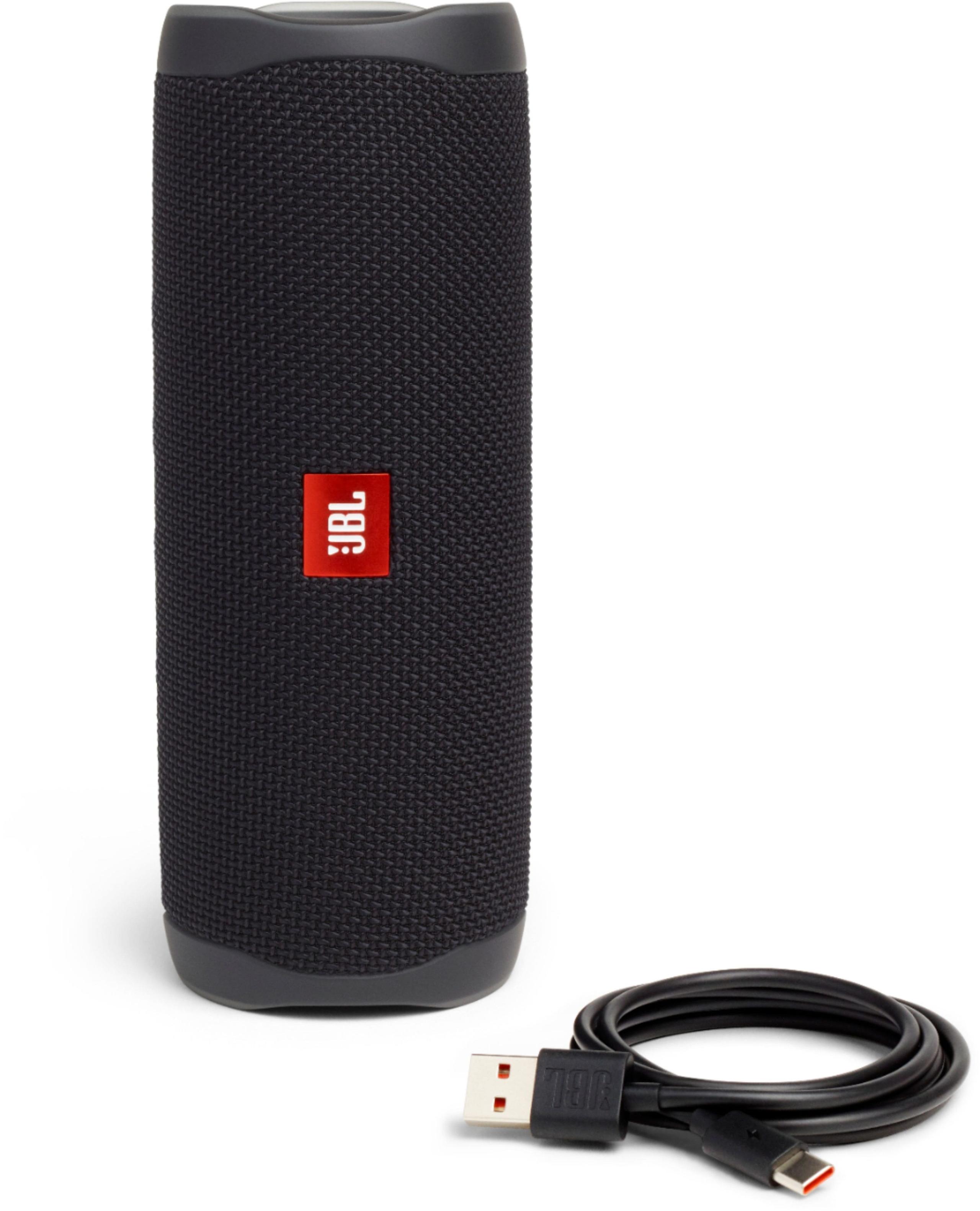
Charging times favor the Monster Shock Plus S21 as well, requiring 2 hours for a full charge versus the JBL Flip 5's 2.5 hours. Both use USB-C, the modern standard that's faster and more durable than older micro-USB ports. USB-C also means you can likely use the same cable that charges your phone or laptop, reducing travel clutter.
From our evaluation of user experiences, battery performance in both speakers remains consistent over time. Neither shows significant degradation after a year of regular use, though like all lithium-ion batteries, capacity will eventually decrease after hundreds of charge cycles.
Water resistance represents one area where the older JBL Flip 5 actually outperforms the newer Monster Shock Plus S21. The JBL's IPX7 rating means it can survive full submersion in up to three feet of water for 30 minutes. You could literally drop it in a swimming pool and retrieve it without damage. This makes it ideal for poolside parties, beach trips, or boating where accidental dunking is possible.
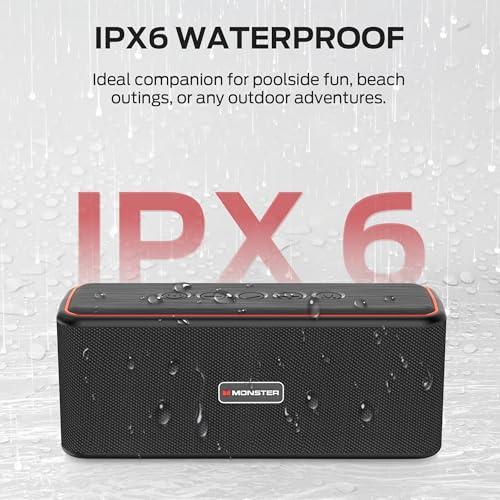
The Monster Shock Plus S21's IPX6 rating provides excellent protection against water jets and heavy rain but cannot withstand submersion. IPX6 means you can spray it with a garden hose or use it during a downpour, but dropping it in water risks damage. For most outdoor activities like camping, patio parties, or hiking, IPX6 proves perfectly adequate.
Both speakers feature durable construction designed to handle drops and bumps. The JBL Flip 5 uses a fabric-wrapped body with rubber end caps, creating a design that's survived countless drops in our research of user experiences. The Monster Shock Plus S21 employs a more traditional plastic chassis with rubber accents, prioritizing acoustic performance over maximum shock resistance.
Here's where the JBL Flip 5 demonstrates its design focus most clearly. At just 1.19 pounds and roughly the size of a large water bottle, it genuinely fits in most backpack side pockets or large jacket pockets. You barely notice carrying it, making it perfect for solo travel, commuting, or hiking where every ounce matters.
The Monster Shock Plus S21 weighs 2.01 pounds – nearly double the JBL's weight – and measures significantly larger at over 10 inches wide. While still portable compared to home speakers, it's more of a "grab and go" speaker than a true pocket companion. This size enables its superior audio performance but limits its travel-friendliness.
Think of it this way: the JBL Flip 5 is what you'd bring on a solo camping trip or throw in your daily work bag. The Monster Shock Plus S21 is what you'd choose for a group camping trip or backyard party where someone designated brings the music system.
While both speakers primarily target portable use, they can serve as temporary home theater solutions or bedroom speakers. The Monster Shock Plus S21's higher power output and lower latency Bluetooth 5.4 make it more suitable for watching movies or TV shows. Its additional connectivity options also mean you can wire it directly to a TV or computer, eliminating any potential audio delay issues that sometimes plague Bluetooth connections.
The multiple input options on the Monster Shock Plus S21 particularly shine in home environments. You might connect it via AUX to an older TV, use USB for computer audio, or load a microSD card with your entire music library for background listening without needing your phone nearby.
The JBL Flip 5 works adequately for indoor use but really shines as a personal speaker. Its balanced sound signature works well for background music or podcast listening, though it lacks the power to serve as a room-filling entertainment system.
At the time of writing, both speakers typically fall into similar price ranges during sales, though the Monster Shock Plus S21 often appears at significantly discounted prices compared to its original MSRP. This pricing makes the value equation particularly interesting.
The JBL Flip 5 represents proven value – you know exactly what you're getting based on millions of units sold and extensive real-world testing. Its build quality, reliability, and brand support justify its price point, especially if maximum portability and water resistance matter most to you.
The Monster Shock Plus S21 offers exceptional value if you prioritize audio performance and modern features. You get 50% more power, longer battery life, faster charging, multiple connectivity options, and newer Bluetooth technology. The main question mark is long-term reliability, as Monster has less recent track record in consumer audio compared to JBL's established presence.
Choose the Monster Shock Plus S21 if you want a speaker that can handle group gatherings, outdoor parties, or situations where you need to fill larger spaces with sound. Its multiple connectivity options make it perfect for users who connect various devices or want backup options when Bluetooth fails. The longer battery life and faster charging suit extended outdoor adventures or frequent use scenarios.
The Monster Shock Plus S21 particularly appeals to tech enthusiasts who appreciate having the latest Bluetooth standard and maximum flexibility. If you might eventually buy a second speaker for stereo pairing, the TWS capability provides a genuine upgrade path to a more substantial sound system.
Choose the JBL Flip 5 if portability trumps everything else. For solo travelers, commuters, hikers, or anyone who needs a speaker that disappears into a bag, the JBL's compact size and light weight prove invaluable. Its superior water resistance makes it the obvious choice for pool parties, beach trips, or water sports where submersion is possible.
The JBL Flip 5 also suits users who prefer simplicity and proven reliability. If you want to pair your phone and play music without dealing with multiple cables or input options, the JBL's streamlined approach eliminates confusion and potential problems.
Both speakers excel in their intended roles, making this choice more about matching your priorities than finding an objectively "better" option. The Monster Shock Plus S21 delivers significantly more audio performance and modern features for situations where you can accept slightly larger size and weight. The JBL Flip 5 remains unmatched for true portability and water resistance, backed by proven reliability.
In our assessment, the Monster Shock Plus S21 offers better overall value for most users, particularly given its frequent discounting at the time of writing. The 50% power advantage, longer battery life, and multiple connectivity options provide tangible benefits that outweigh the size and weight penalties for many scenarios. However, if you specifically need maximum portability or full waterproofing, the JBL Flip 5 remains the clear choice despite being the older design.
Consider your primary use case carefully: group entertainment and outdoor gatherings favor the Monster, while solo use and extreme portability favor the JBL. Either choice will serve you well for years of wireless music enjoyment.
| Monster Shock Plus S21 | JBL Flip 5 |
|---|---|
| Audio Output Power - Determines maximum volume and room-filling capability | |
| 30W (50% more power for louder output) | 20W (adequate for personal/small group use) |
| Battery Life - Critical for outdoor adventures and extended use | |
| 15 hours (3 hours longer runtime) | 12 hours (solid all-day performance) |
| Charging Time - How quickly you get back to full power | |
| 2 hours via USB-C (25% faster charging) | 2.5 hours via USB-C (still reasonably quick) |
| Water Resistance - Protection level for outdoor/poolside use | |
| IPX6 (splash/spray resistant, no submersion) | IPX7 (fully waterproof, survives pool drops) |
| Bluetooth Version - Affects connection stability and range | |
| 5.4 (latest standard, better range and stability) | 4.2 (older but proven reliable) |
| Connectivity Options - Flexibility for different devices and scenarios | |
| Bluetooth, AUX, USB, TF Card (maximum flexibility) | Bluetooth only (simple but limited) |
| Weight - Critical factor for true portability | |
| 2.01 lbs (less portable, better for stationary use) | 1.19 lbs (genuinely pocket-portable) |
| Dimensions - How much space it takes up | |
| 10.08" × 4.02" × 2.99" (larger footprint) | 7.1" × 2.9" × 2.7" (compact cylinder design) |
| Multi-Speaker Pairing - Option to expand your system | |
| TWS pairing for 60W stereo sound | PartyBoost linking with other JBL speakers |
| Built-in Microphone - Hands-free calling capability | |
| Yes (clear voice calls supported) | Not mentioned in specifications |
| Release Year - Technology generation and proven track record | |
| Recent release (newer tech, less proven) | 2019 (established reliability, older standards) |
The Monster Shock Plus S21 is significantly louder with 30W of power output compared to the JBL Flip 5's 20W. This 50% power advantage means the Monster can fill larger rooms and outdoor spaces more effectively, making it better for parties and group gatherings.
The JBL Flip 5 offers superior water protection with its IPX7 rating, allowing full submersion in up to 3 feet of water. The Monster Shock Plus S21 has IPX6 rating, which provides excellent splash and spray resistance but cannot withstand being dropped in water.
The Monster Shock Plus S21 provides 15 hours of playback time, while the JBL Flip 5 offers 12 hours. Both charge via USB-C, but the Monster charges faster at 2 hours compared to the JBL's 2.5 hours.
The JBL Flip 5 is much more portable, weighing only 1.19 lbs compared to the Monster Shock Plus S21's 2.01 lbs. The JBL's compact cylindrical design fits easily in backpacks or large pockets, making it ideal for solo travel and commuting.
The Monster Shock Plus S21 offers multiple connectivity options including Bluetooth 5.4, AUX input, USB port, and TF card slot. The JBL Flip 5 uses Bluetooth 4.2 only, providing simpler operation but less flexibility for connecting different devices.
Yes, both speakers support multi-speaker pairing but use different systems. The Monster Shock Plus S21 uses TWS (True Wireless Stereo) to create genuine left-right stereo sound with two speakers. The JBL Flip 5 uses PartyBoost to link multiple JBL speakers together for louder volume.
The Monster Shock Plus S21 delivers deeper, more powerful bass due to its higher 30W power output and dual dynamic drivers. While the JBL Flip 5 produces solid bass for its compact size, it cannot match the Monster's low-end extension and impact.
The Monster Shock Plus S21 works better for home theater applications due to its higher power output, multiple connectivity options, and newer Bluetooth 5.4 standard with lower latency. The JBL Flip 5 can work for casual TV watching but lacks the power for immersive movie experiences.
The Monster Shock Plus S21 typically offers better value with 50% more power, longer battery life, multiple connectivity options, and modern Bluetooth 5.4 technology. However, the JBL Flip 5 provides proven reliability and superior portability for users who prioritize these features.
The Monster Shock Plus S21 features Bluetooth 5.4, offering better range, more stable connections, and improved battery efficiency compared to the JBL Flip 5's Bluetooth 4.2. The newer standard also provides lower audio latency for watching videos.
It depends on your activities. The JBL Flip 5 excels for water-based activities with its IPX7 waterproof rating and ultra-portable design. The Monster Shock Plus S21 is better for camping, parties, and gatherings where you need more volume and longer battery life.
The Monster Shock Plus S21 includes a built-in microphone for hands-free calling with clear voice quality. The JBL Flip 5 does not specifically mention hands-free calling capability in its feature set, focusing primarily on music playback.
We've done our best to create useful and informative comparisons to help you decide what product to buy. Our research uses advanced automated methods to create this comparison and perfection is not possible - please contact us for corrections or questions. These are the sites we've researched in the creation of this article: shopabunda.com - manuals.plus - popsci.com - armorsound.com - manuals.plus - youtube.com - shopstaff.net - thestreet.com - rtings.com - youtube.com - businessinsider.com - youtube.com - youtube.com - mensjournal.com - ratebud.ai - youtube.com - ebay.com - monsterstore.com - newegg.com - angelenaspensacola.com - whathifi.com - seriousinsights.net - youtube.com - youtube.com - harmanaudio.com - cdwg.com - gzhls.at - kh.jbl.com - support.jbl.com - mm.jbl.com - bestbuy.com - soundguys.com

Privacy Policy
Terms and Conditions - Affiliate Policy
Home Security
© Copyright 2008-2026.
11816 Inwood Rd #1211, Dallas, TX 75244