

The portable projector market has transformed dramatically over the past few years. What started as dim, blurry devices meant for business presentations has evolved into a genuine alternative to traditional TVs. Today's portable projectors pack impressive brightness, smart streaming capabilities, and surprisingly good image quality into compact packages you can actually carry around.
If you're considering jumping into the portable projector world, two models stand out for very different reasons: the budget-friendly TCL C1 Google TV Portable Projector and the premium Hisense M2 Pro 4K Triple Laser Portable Projector. While both earn the "portable" label, they represent fundamentally different approaches to mobile projection, and understanding these differences is crucial to making the right choice.
Before diving into specifics, let's establish what makes a good portable projector. Unlike their massive home theater cousins that require permanent ceiling mounts, portable projectors prioritize convenience and flexibility. The best ones handle setup automatically—no fiddling with focus rings or manually adjusting image geometry.
Brightness measured in lumens determines where you can actually use your projector. Lower brightness means you need darker rooms, while higher brightness allows viewing with some ambient light. Native resolution refers to the actual pixel count the projector can display, which directly impacts image sharpness. Many projectors claim "4K support" but only have 1080p native resolution, meaning they compress 4K content down to fewer pixels.
The light source technology—LED versus laser—affects brightness, color accuracy, and lifespan. LEDs are cheaper and cooler-running but dimmer, while lasers produce more light and better colors but cost significantly more. Throw distance determines how far back you need to place the projector for a given screen size, and keystone correction automatically fixes the trapezoidal distortion that occurs when projecting at an angle.
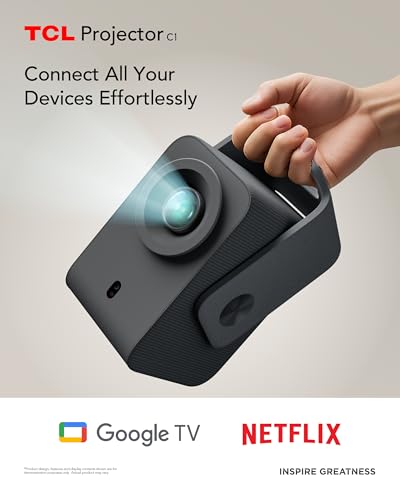
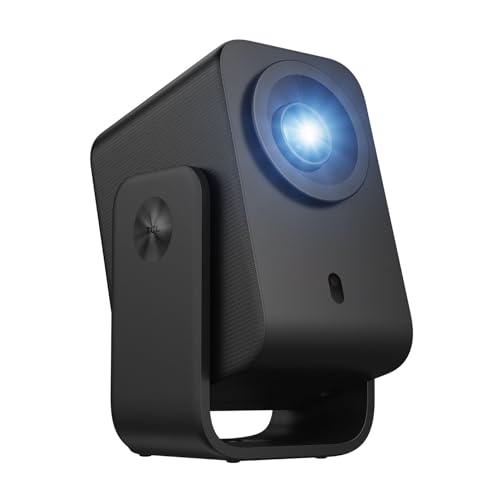
The TCL C1, released in 2024, represents the "ultra-portable streaming projector" category. At roughly the size of a thick hardcover book and weighing under 4 pounds, it's genuinely grab-and-go portable. TCL designed it primarily as a Netflix-and-chill machine with Google TV built-in, targeting users who want the simplest possible projector experience.
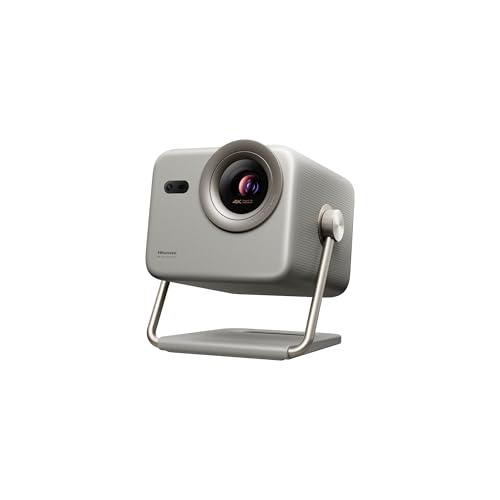
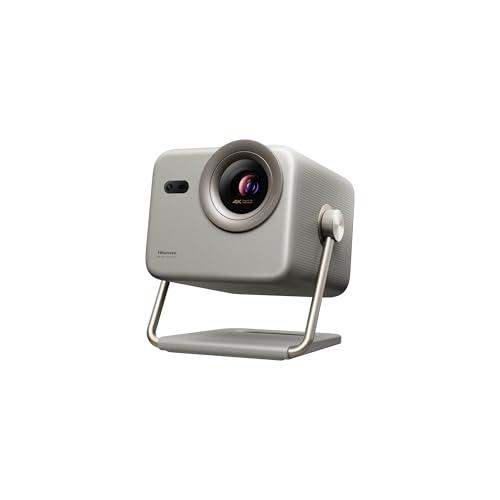
The Hisense M2 Pro, also launched in 2024, takes a different approach entirely. While still portable at about 8.6 pounds, it packs advanced triple-laser technology typically found in projectors costing several thousand dollars more. Hisense positioned it as a "desktop replacement for your TV" rather than just a portable streaming device.
These different design philosophies matter tremendously for how you'll actually use each projector.
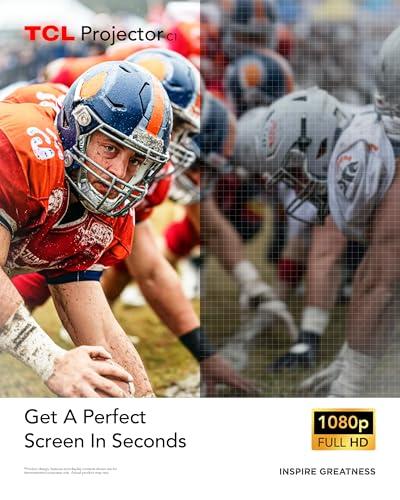
Image quality represents the most dramatic difference between these projectors, and it's not even close. The TCL C1 delivers native 1080p Full HD resolution with 230 ISO lumens of LED brightness. For reference, ISO lumens is a standardized measurement that tends to be more conservative than the ANSI lumen ratings many manufacturers use—so the TCL's 230 ISO lumens roughly translates to what other companies might call 300-350 ANSI lumens.
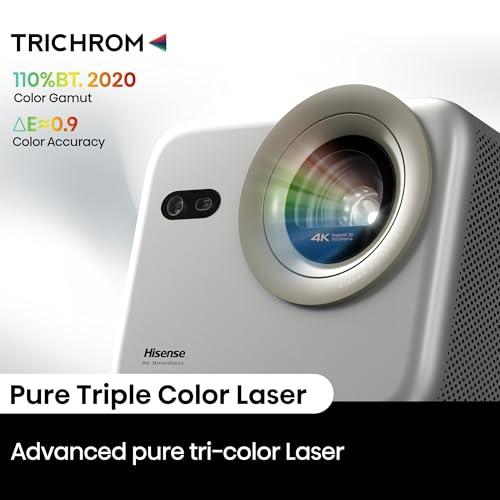
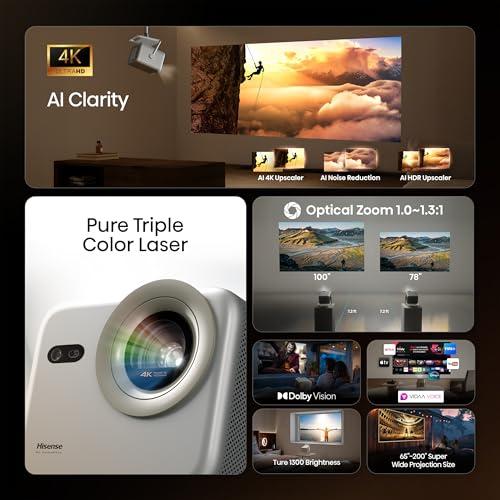
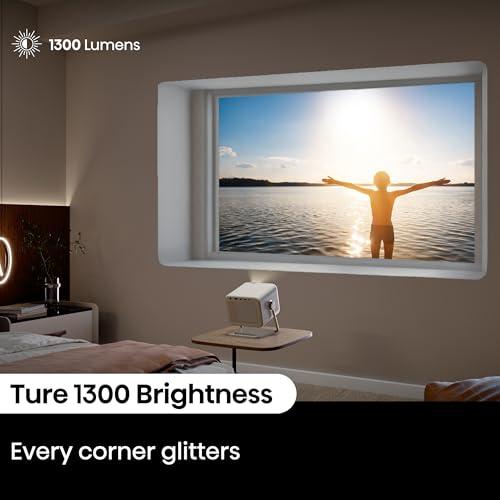
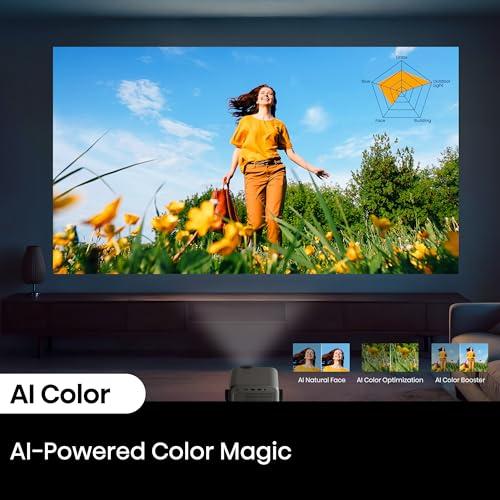
The Hisense M2 Pro operates on an entirely different level with true native 4K UHD resolution (3840×2160 pixels) and 1300 ANSI lumens from its triple-laser light source. That's not just marketing speak—this projector uses separate red, green, and blue lasers (called RGB or TriChroma technology) to achieve a color gamut covering 110% of the BT.2020 standard. Most TVs only manage 70-80% of this color space.
What does this mean in practice? The brightness difference alone is substantial—the Hisense produces roughly 5.6 times more light than the TCL. Where the TCL C1 requires a completely dark room for decent viewing, the Hisense M2 Pro remains watchable with table lamps on or during evening hours with curtains drawn.
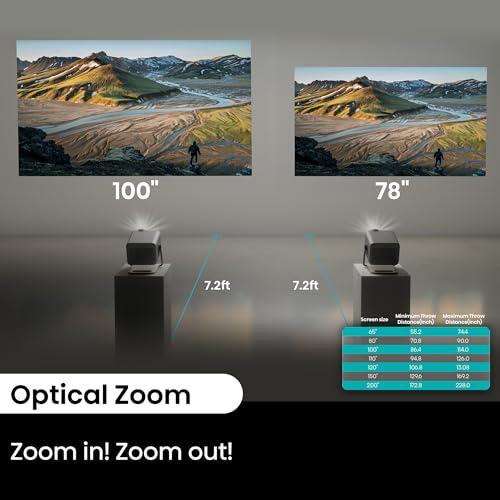
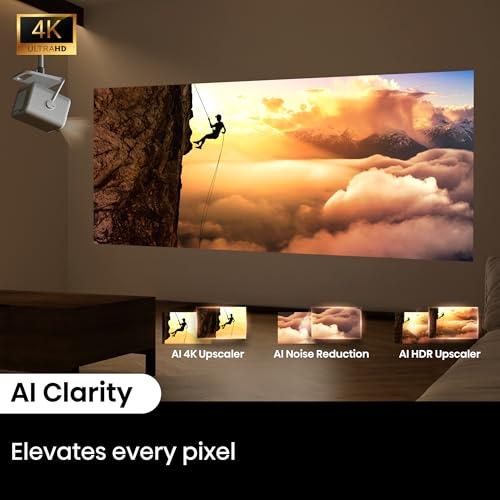
The resolution gap matters even more for larger screens. At 80 inches, the TCL's 1080p resolution starts showing visible pixels if you sit closer than about 10 feet. The Hisense's 4K resolution maintains sharp detail up to 200-inch screens, and its AI upscaling technology (which uses machine learning algorithms to enhance lower-resolution content) makes even 1080p Netflix shows look impressively sharp.
Color accuracy represents another major distinction. Professional reviews consistently measure the Hisense M2 Pro achieving Delta E values around 0.9, which indicates excellent color accuracy—anything under 2.0 is considered professional-grade. The triple-laser system doesn't just produce more colors; it produces the right colors with remarkable precision.
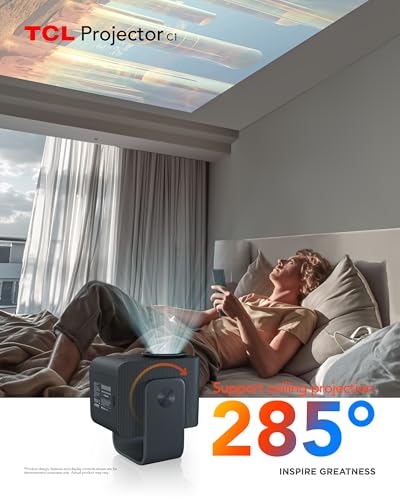
Despite both being "portable," these projectors serve different mobility needs. The TCL C1 weighs 3.9 pounds and measures roughly 5.4 × 5.7 × 9.1 inches—genuinely compact enough to toss in a backpack or carry between rooms without thinking twice. Its integrated handle doubles as a stand, and the 285-degree gimbal allows projection from almost any angle, including straight up at the ceiling for bedtime viewing.
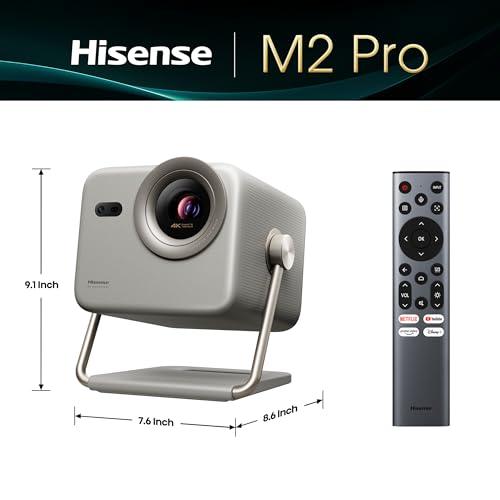
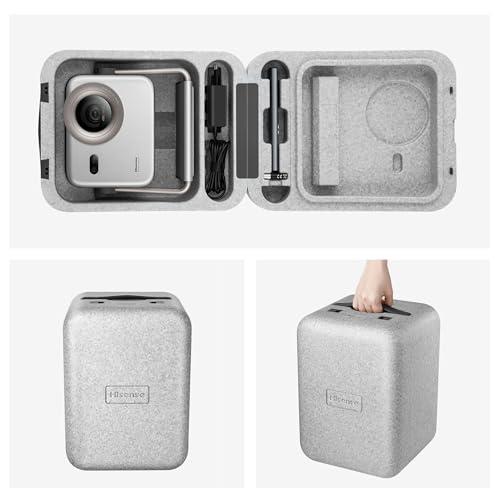
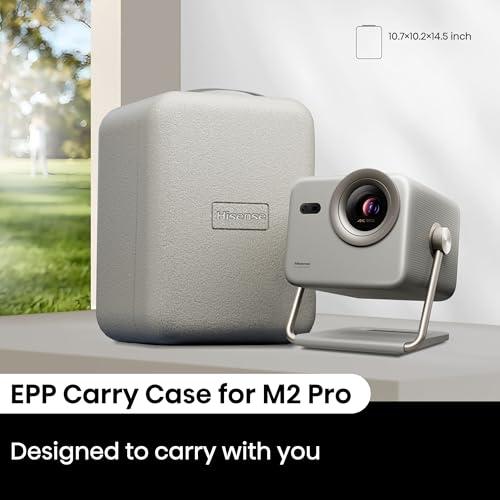
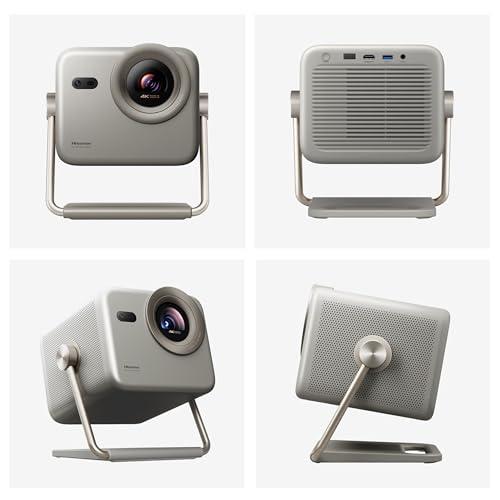
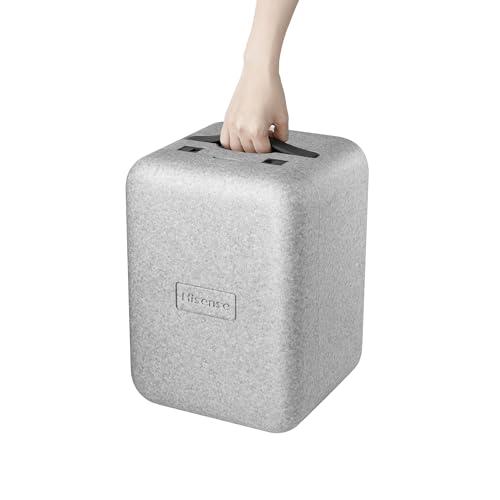
The Hisense M2 Pro at 8.6 pounds and console-sized dimensions falls into "semi-portable" territory. You can certainly move it around, and Hisense includes a protective carrying case, but this isn't something you'll casually relocate daily. Think of it more like a desktop computer—portable when necessary, but designed to stay put most of the time.
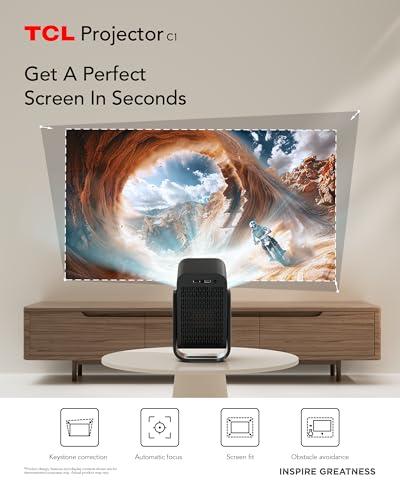
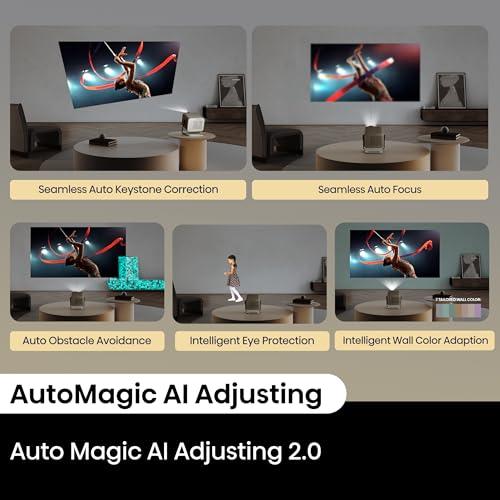
Both projectors feature automatic setup technologies that eliminate the traditional projector hassles. Power them on, and they automatically focus the image, correct keystone distortion, and optimize settings. The Hisense M2 Pro adds wall color adaptation, which adjusts the projected colors based on your wall's hue—surprisingly useful if you're not projecting onto a pure white surface.
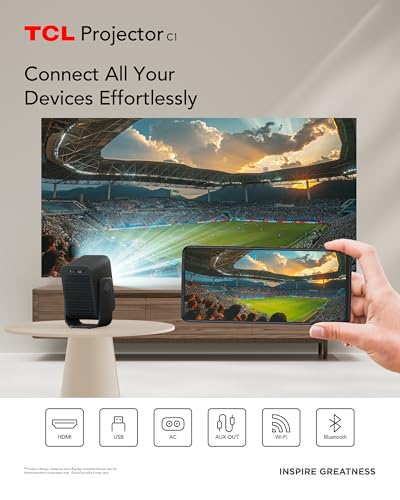
The smart platform choice reveals each manufacturer's priorities. The TCL C1 runs Google TV, which provides access to over 10,000 apps including certified Netflix, YouTube, Disney+, and Prime Video. Google Assistant voice control works as expected, and Chromecast support allows seamless streaming from phones and tablets.
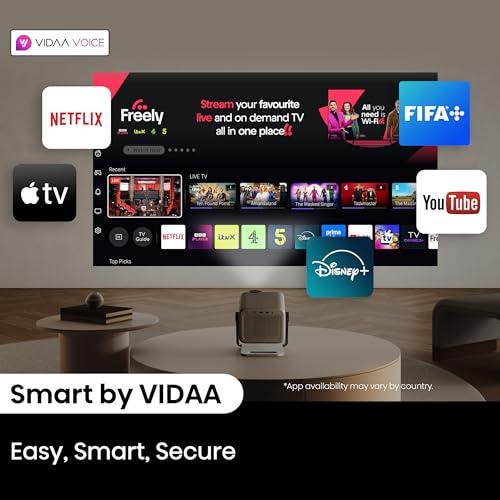
The Hisense M2 Pro uses Hisense's VIDAA OS, which covers the major streaming services but lacks Google TV's comprehensive app ecosystem. However, VIDAA tends to run faster with less lag, and the included remote features voice control with a backlit design for dark-room navigation.
Both projectors can function beyond just streaming. The TCL C1 doubles as a computer monitor via HDMI and even works as a Bluetooth speaker when you're not projecting. The Hisense M2 Pro focuses more on projection quality but handles gaming exceptionally well with its 240Hz refresh rate capability and 12ms input lag.
Gaming represents one area where these projectors truly diverge. The TCL C1 handles casual gaming adequately with 4K@60Hz input support, but it's clearly designed for streaming content rather than competitive gaming.
The Hisense M2 Pro takes gaming seriously with features typically found in dedicated gaming monitors. Its 240Hz refresh rate support at 1080p and 1440p resolutions, combined with 12ms input lag and Auto Low Latency Mode (ALLM), makes it genuinely competitive for fast-paced games. The large projection size—imagine playing on a 150-inch screen—creates an incredibly immersive gaming experience that traditional monitors simply cannot match.
For context, most TVs have input lag between 20-40ms, so the Hisense's 12ms puts it in serious gaming territory. The high refresh rate support means motion appears smoother in fast-action games, reducing blur and ghosting that can affect competitive performance.
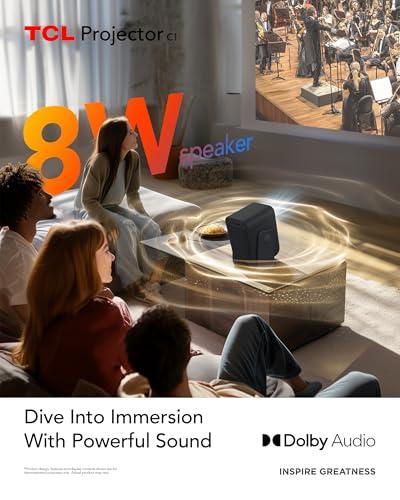
Neither projector will replace a dedicated sound system, but their built-in audio capabilities differ significantly. The TCL C1 includes an 8-watt speaker with Dolby Audio processing—adequate for small rooms and personal viewing but lacking the power for larger spaces or groups.
The Hisense M2 Pro steps up with a 20-watt stereo speaker system supporting both Dolby Audio and DTS Virtual:X spatial audio processing. The sound quality is notably better, with more volume and fuller frequency response. It's actually usable for movie nights without immediately requiring external speakers.
Both projectors support external audio via 3.5mm output or Bluetooth, though Bluetooth introduces slight audio lag that's noticeable with video content.
At the time of writing, these projectors occupy completely different price tiers, making direct value comparison challenging. The TCL C1 typically sells for under $300, while the Hisense M2 Pro commands around $1,000—more than triple the price.
For the TCL C1, the value proposition centers on accessibility and convenience. At its price point, you get a genuinely capable projector with smart TV functionality, automatic setup, and impressive portability. The sealed optical engine design prevents dust intrusion, reducing long-term maintenance concerns that plague many budget projectors.
The Hisense M2 Pro justifies its premium pricing with technologies typically found in projectors costing $2,000 or more. Native 4K resolution, triple-laser brightness, professional color accuracy, and gaming-optimized performance create a package that genuinely competes with high-end TVs rather than just other projectors.
Choose the TCL C1 if you want:
The TCL C1 excels for: Students in dorm rooms, apartment dwellers with limited space, travelers wanting entertainment on-the-go, and anyone curious about projectors but hesitant to invest heavily.
Choose the Hisense M2 Pro if you want:
The Hisense M2 Pro suits: Home theater enthusiasts, serious gamers, content creators, and users planning to replace rather than supplement their primary TV.
For dedicated home theater use, the Hisense M2 Pro represents the clear choice despite its higher cost. Its 1300 ANSI lumens provides sufficient brightness for controlled ambient lighting—you can watch with some room lighting rather than requiring complete darkness. The native 4K resolution and professional color accuracy mean you're not sacrificing image quality for screen size.
The triple-laser light source offers consistent performance over its 25,000-hour lifespan without the color degradation that affects some LED projectors over time. Support for HDR10, HDR10+, Dolby Vision, and HLG ensures compatibility with modern streaming content and 4K Blu-rays.
The TCL C1 works for casual home theater use but requires significant compromises. The 230 ISO lumen output necessitates completely dark rooms, and the 1080p resolution becomes noticeably soft on screens larger than 80-90 inches.
Both projectors succeed within their intended contexts, but choosing between them requires honest assessment of your priorities and usage patterns.
The TCL C1 represents exceptional value for casual users, students, and anyone wanting to experiment with projection without major investment. Its ultra-portability and Google TV integration create a uniquely convenient package that's perfect for supplemental viewing situations.
The Hisense M2 Pro justifies its premium positioning with genuine TV-replacement capabilities. If you're serious about large-screen viewing, gaming performance, or image quality, the price difference becomes reasonable considering the massive performance improvements.
Consider your lighting conditions critically—they'll determine whether the TCL C1's limited brightness becomes a deal-breaker or the Hisense M2 Pro's extra capability goes unused. Similarly, think about screen sizes realistically. If you're primarily watching on 80 inches or smaller, the resolution difference matters less than portability and cost.
The technology improvements in both 2024 models—particularly the AI-enhanced setup and image processing—make either choice significantly better than portable projectors from just 2-3 years ago. Whichever direction you choose, you'll get a capable device that would have seemed impossible at these price points not long ago.
| TCL C1 Google TV Portable Projector | Hisense M2 Pro 4K Triple Laser Portable Projector |
|---|---|
| Native Resolution - Determines maximum image sharpness and detail | |
| 1080p Full HD (1920×1080) with 4K pass-through | True 4K UHD (3840×2160) native resolution |
| Brightness - Critical for ambient light performance and screen size | |
| 230 ISO lumens LED (requires dark rooms) | 1300 ANSI lumens triple laser (usable with ambient light) |
| Light Source Technology - Affects color accuracy, brightness, and lifespan | |
| Single LED with 30,000-hour lifespan | RGB Triple Laser system with 25,000-hour lifespan |
| Color Performance - Important for accurate, vibrant image reproduction | |
| Standard color gamut, adequate accuracy | 110% BT.2020 color space, 0.9 Delta E professional accuracy |
| Portability - Real-world convenience for moving and setup | |
| Ultra-portable: 3.9 lbs, CD case size with handle | Semi-portable: 8.6 lbs, console-sized with carrying case |
| Projection Size Range - Flexibility for different room sizes | |
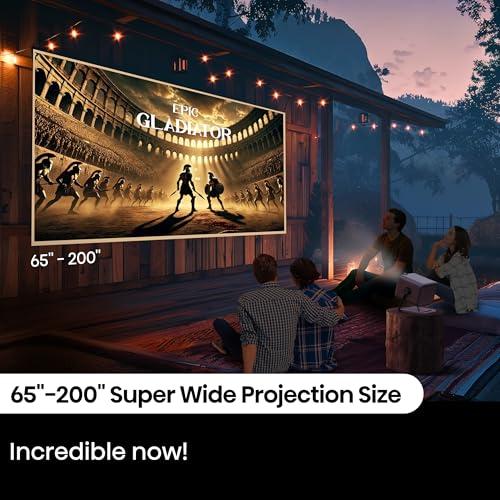
| 40-120 inches (optimal under 100") | 65-200 inches with maintained sharpness |
| Zoom Capability - Placement flexibility without moving projector | |
| 50-100% digital zoom (degrades quality) | 1.0-1.3× optical zoom (maintains full resolution) |
| Gaming Performance - Refresh rates and input lag for responsive gaming | |
| 4K@60Hz input, casual gaming suitable | Up to 240Hz at 1080p/1440p, 12ms input lag, ALLM support |
| Smart Platform - Built-in streaming and app ecosystem | |
| Google TV with 10,000+ apps, Netflix certified | VIDAA OS with major streaming services |
| Audio System - Built-in sound quality and power | |
| 8W single speaker with Dolby Audio | 20W stereo system with DTS Virtual:X |
| Setup Automation - Convenience features for hassle-free use | |
| Auto focus, keystone correction, obstacle avoidance | Auto focus, keystone correction, wall color adaptation |
| Gimbal Design - Projection angle flexibility | |
| 285° swivel capability including ceiling projection | 360° gimbal with 135° vertical range |
| HDR Support - Enhanced contrast and color for premium content | |
| Basic HDR pass-through | Dolby Vision, HDR10+, HDR10, HLG with AI upscaling |
| Connectivity Options - Ports and wireless capabilities | |
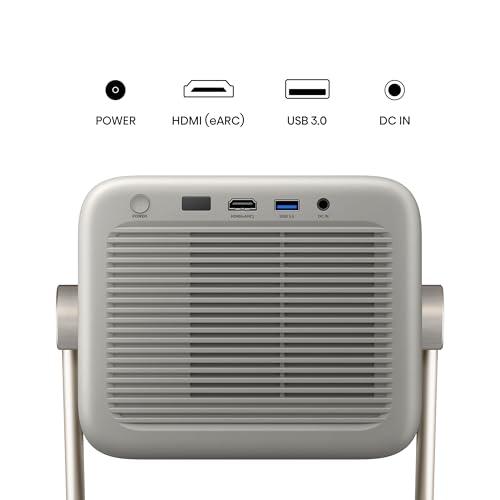
| HDMI 2.1, USB-A, Wi-Fi 5, Bluetooth 5.1 | Similar connectivity plus enhanced wireless performance |
| Unique Features - Special capabilities that set each apart | |
| Bluetooth speaker mode, sealed optical engine | Wall color adaptation, 0% harmful blue light output |
The Hisense M2 Pro 4K Triple Laser Portable Projector is significantly better for home theater applications. Its 1300 ANSI lumens brightness allows viewing with some ambient light, while the TCL C1 Google TV Portable Projector requires completely dark rooms. The Hisense M2 Pro also delivers true 4K resolution up to 200-inch screens with professional color accuracy, making it suitable for serious movie watching and replacing a traditional TV.
The primary difference is performance level and target use. The TCL C1 Google TV Portable Projector is an ultra-portable, budget-friendly streaming device with 1080p resolution and 230 lumens brightness. The Hisense M2 Pro 4K Triple Laser Portable Projector is a premium semi-portable projector with native 4K resolution, 1300 lumens triple-laser brightness, and advanced gaming features at a significantly higher cost.
The TCL C1 Google TV Portable Projector is much more portable, weighing just 3.9 pounds with a compact CD case-sized footprint and integrated handle. The Hisense M2 Pro weighs 8.6 pounds and is console-sized, making it semi-portable but better suited for staying in one location most of the time.
The Hisense M2 Pro 4K Triple Laser Portable Projector can handle moderately lit rooms thanks to its 1300 ANSI lumens output. The TCL C1 Google TV Portable Projector with only 230 ISO lumens requires dark or dimly lit environments for acceptable image quality. For daytime viewing or bright rooms, the Hisense M2 Pro is the only viable option.
The Hisense M2 Pro 4K Triple Laser Portable Projector is designed for serious gaming with 240Hz refresh rate support, 12ms input lag, and Auto Low Latency Mode. The TCL C1 Google TV Portable Projector only supports basic 4K@60Hz input and lacks gaming optimizations, making it suitable only for casual gaming.
The TCL C1 Google TV Portable Projector runs Google TV with access to over 10,000 apps, Netflix certification, and Google Assistant. The Hisense M2 Pro 4K Triple Laser Portable Projector uses VIDAA OS with major streaming services like Netflix, Disney+, and Prime Video, plus voice control and faster performance, though with fewer total apps than Google TV.
The TCL C1 Google TV Portable Projector projects 40-120 inch images, with optimal quality under 100 inches due to its 1080p resolution. The Hisense M2 Pro 4K Triple Laser Portable Projector supports 65-200 inch projection with maintained 4K sharpness throughout the range thanks to its optical zoom system.
The Hisense M2 Pro 4K Triple Laser Portable Projector delivers superior image quality with native 4K resolution, professional color accuracy (0.9 Delta E), and 110% BT.2020 color gamut coverage. The TCL C1 Google TV Portable Projector provides good 1080p image quality for its price range but cannot match the sharpness, brightness, or color performance of the Hisense M2 Pro.
The Hisense M2 Pro 4K Triple Laser Portable Projector features a 20W stereo speaker system with DTS Virtual:X for room-filling sound. The TCL C1 Google TV Portable Projector has an 8W single speaker with Dolby Audio that's adequate for small spaces but lacks the power and spatial audio processing of the Hisense M2 Pro.
Value depends on your needs and budget. The TCL C1 Google TV Portable Projector offers excellent value as an entry-level streaming projector with smart features and true portability. The Hisense M2 Pro 4K Triple Laser Portable Projector provides premium performance that typically costs much more in other projectors, justifying its higher price for users wanting TV-replacement quality.
The TCL C1 Google TV Portable Projector uses an LED light source rated for 30,000 hours of operation. The Hisense M2 Pro 4K Triple Laser Portable Projector features a triple-laser system rated for 25,000+ hours. Both offer years of reliable use, with the TCL C1 having a slight edge in longevity but the Hisense M2 Pro providing consistent performance throughout its lifespan.
The TCL C1 Google TV Portable Projector is ideal for beginners due to its lower cost, simple setup, ultra-portability, and familiar Google TV interface. It allows newcomers to experience projector ownership without major investment. The Hisense M2 Pro 4K Triple Laser Portable Projector is better for users who know they want premium performance and are willing to invest accordingly.
We've done our best to create useful and informative comparisons to help you decide what product to buy. Our research uses advanced automated methods to create this comparison and perfection is not possible - please contact us for corrections or questions. These are the sites we've researched in the creation of this article: youtube.com - thegadgetflow.com - notebookcheck.net - shopabunda.com - youtube.com - youtube.com - youtube.com - youtube.com - tcl.com - androidauthority.com - manuals.plus - westcoast.co.uk - thegadgetflow.com - valueelectronics.com - youtube.com - projectorscreenstore.com - whathifi.com - hisense-usa.com - tomsguide.com - content.syndigo.com - youtube.com - shop.hisense-usa.com - avsforum.com - projectorscreen.com - projectorscreen.com - projectorcentral.com - avsforum.com - youtube.com - projector-database.com

Privacy Policy
Terms and Conditions - Affiliate Policy
Home Security
© Copyright 2008-2026.
11816 Inwood Rd #1211, Dallas, TX 75244