

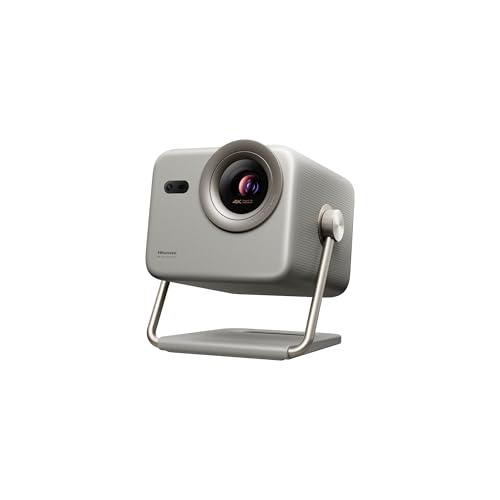
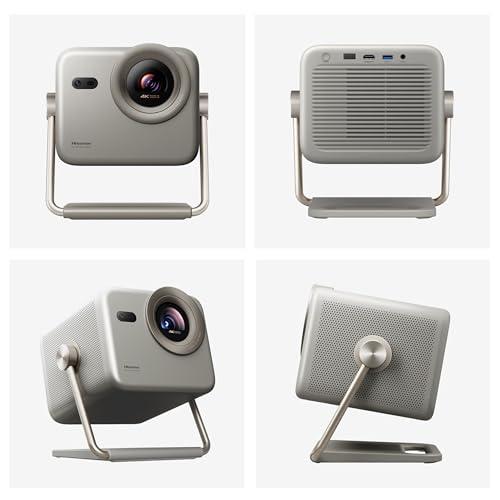
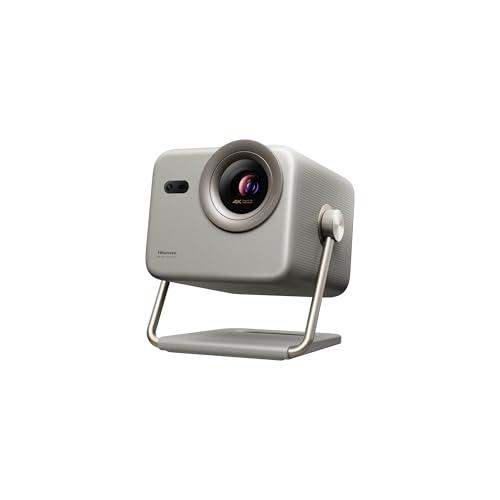
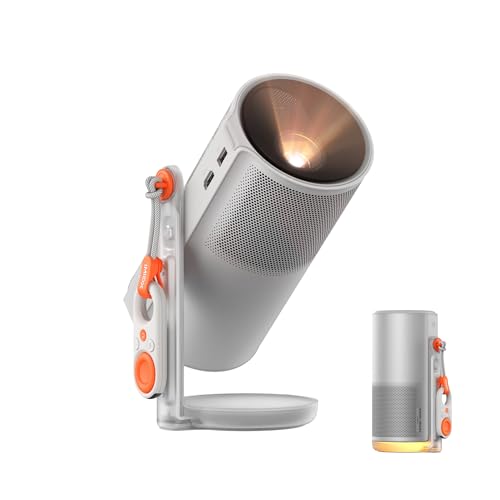
Portable projectors have become surprisingly capable in recent years, but they've also split into two very different camps. On one side, you have devices like the Hisense M2 Pro 4K Triple Laser Portable Projector that push the boundaries of what "portable" means by cramming serious home theater technology into a still-moveable package. On the other side, truly portable projectors like the XGIMI MoGo 4 Portable Projector prioritize convenience and battery power over raw performance.
This split creates a fascinating choice for buyers: Do you want the best possible image quality in something you can still move around, or do you want genuine anywhere-projection capability that fits in a backpack? Let me walk you through what makes each approach compelling and help you figure out which one actually fits your life.
The portable projector category has evolved dramatically since 2020. Early battery-powered projectors were frankly terrible – dim, blurry, and frustrating to use. But advances in LED technology, laser light sources, and processing power have changed everything. Now we have projectors that can actually replace TVs in many scenarios.
However, physics still creates trade-offs. Brighter, sharper images require more power, larger optics, and better cooling – all things that work against true portability. The Hisense M2 Pro, launched in 2025, represents the "portable home theater" philosophy: pack as much performance as possible into something you can still carry between rooms. Meanwhile, the XGIMI MoGo 4, also from 2025, embodies the "anywhere projection" approach: sacrifice some performance for genuine grab-and-go convenience.
Understanding this fundamental split is crucial because it determines everything about how you'll actually use these devices. The wrong choice means either lugging around a heavy projector you rarely move, or squinting at dim, fuzzy images that make you wish you'd spent more.
Let's start with the most important difference: what you'll actually see on screen. The gap between these projectors is enormous, and it comes down to two key technologies.
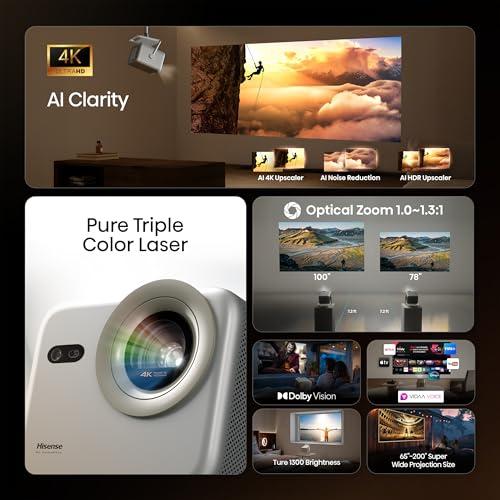
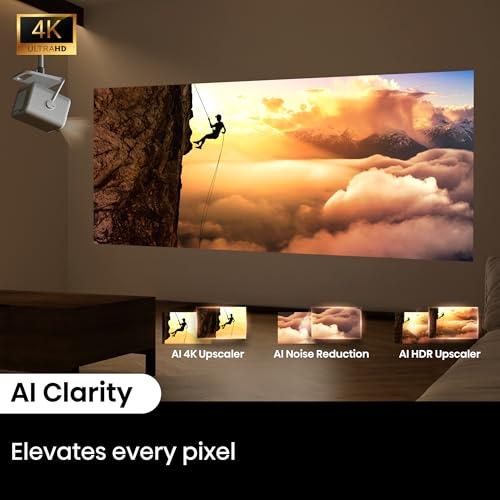
The Hisense M2 Pro delivers true 4K resolution at 3840 x 2160 pixels – that's four times the detail of 1080p. This isn't marketing fluff; you genuinely see the difference on screens larger than 80 inches. Text is razor-sharp, movie details pop, and the overall viewing experience feels more premium. The projector uses a DLP chip with over 2 million tiny mirrors that flip incredibly fast to create each pixel, resulting in precise, stable images.
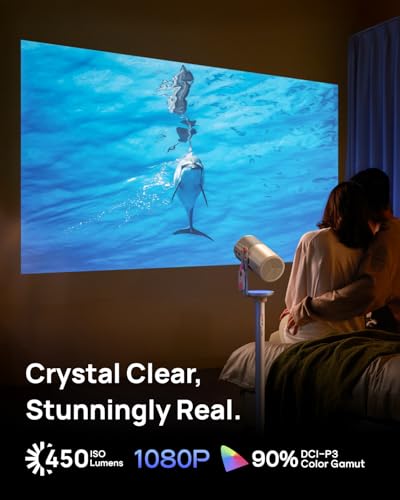
The XGIMI MoGo 4 sticks with 1080p Full HD at 1920 x 1080 pixels. For many people, this is perfectly adequate – Netflix still looks great, games are enjoyable, and casual movie watching works fine. The key limitation appears when you go above 100-inch screen sizes, where individual pixels become visible and details start looking soft.
Here's the practical reality: if you're planning to use screen sizes under 100 inches and primarily watch streaming content, 1080p holds up well. But if you want to go big – really big – or if you're particular about image sharpness, the 4K resolution of the Hisense M2 Pro makes a substantial difference.
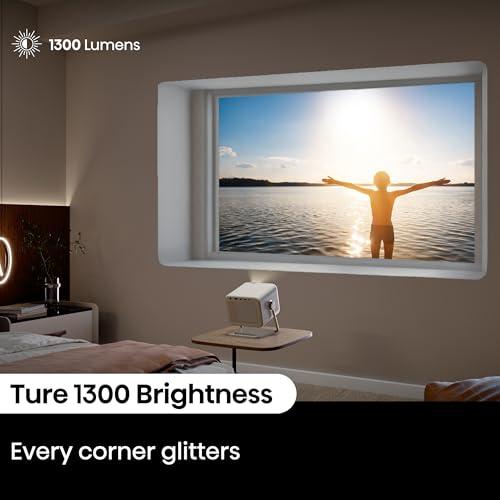
Brightness might be even more important than resolution for practical use. It's measured in lumens, and the difference between these projectors is dramatic. The Hisense M2 Pro outputs 1,300 ANSI lumens, while the XGIMI MoGo 4 manages 450 ISO lumens (the measurement standards are slightly different, but the Hisense is still nearly three times brighter).
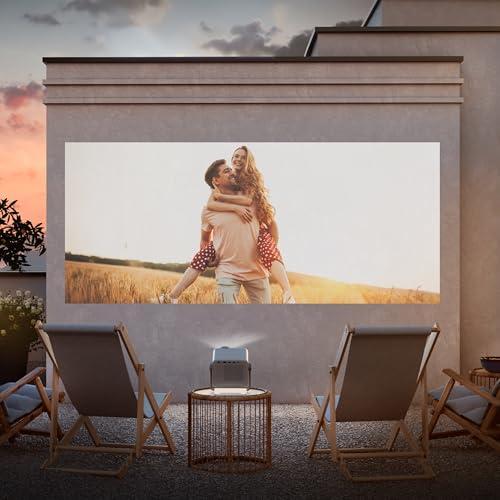
What does this mean in your living room? The Hisense can handle moderately lit environments – you don't need blackout curtains to enjoy movies. You can leave some ambient lighting on and still get a watchable image on screens up to 150 inches. The XGIMI MoGo 4 really needs darkness to shine. In a dim room with curtains drawn, it looks great on screens up to 100 inches. But add any significant ambient light, and the image becomes washed out and disappointing.
This brightness difference fundamentally changes how you use each projector. The Hisense works for impromptu movie nights without extensive room preparation. The XGIMI MoGo 4 requires more planning – you need to control the lighting to get good results.
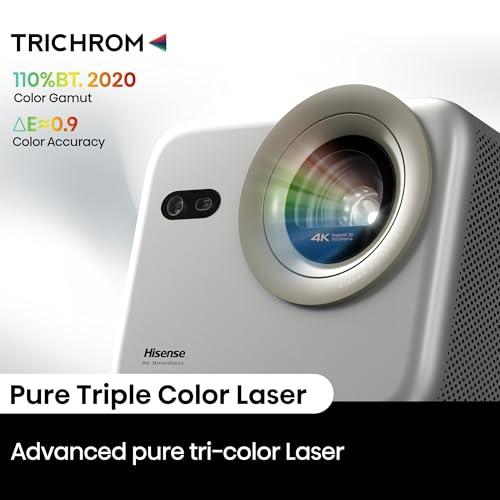
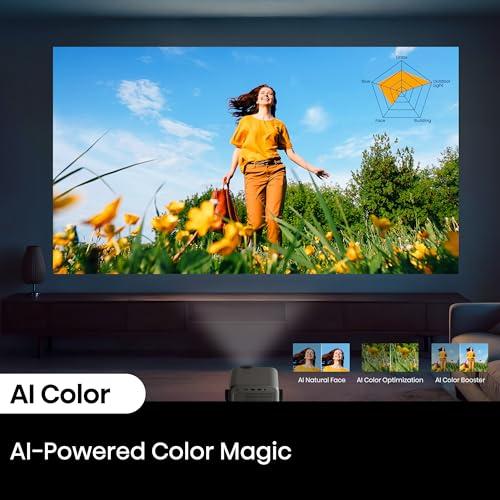
The Hisense M2 Pro uses what's called "triple laser technology" – separate red, green, and blue lasers that combine to create the full color spectrum. This approach covers 110% of the BT.2020 color space, which is the current standard for premium content. Colors look vibrant and accurate, with deep reds, rich blues, and natural skin tones. Laser light sources also maintain their brightness and color accuracy over time, with lifespans exceeding 25,000 hours.
The XGIMI MoGo 4 uses LED technology, which covers about 90% of the DCI-P3 color space – still quite good, but noticeably less vibrant than the laser system. LEDs are more energy-efficient, which helps battery life, but they don't produce colors quite as punchy or accurate as lasers. The difference is most obvious in nature documentaries or animated content where color vibrancy really matters.
Gaming performance has become increasingly important as more people connect consoles and gaming PCs to projectors. The key metrics here are input lag (how long between pressing a button and seeing the result) and refresh rate (how many times per second the image updates).
The Hisense M2 Pro excels with just 12ms of input lag and support for up to 240Hz refresh rates. For context, anything under 20ms feels responsive, so 12ms is excellent. The high refresh rate support means smooth motion in fast-paced games and compatibility with high-end gaming PCs and next-gen consoles.
The XGIMI MoGo 4 manages 56ms input lag, which is adequate for casual gaming but might feel sluggish for competitive players. The 60Hz refresh rate handles most content fine but won't take advantage of high-performance gaming hardware.
If gaming is important to you, especially competitive or high-refresh gaming, the Hisense is the clear winner. For occasional gaming sessions, the MoGo 4 works fine.
Here's where things get interesting. Both projectors claim to be "portable," but they interpret this very differently.
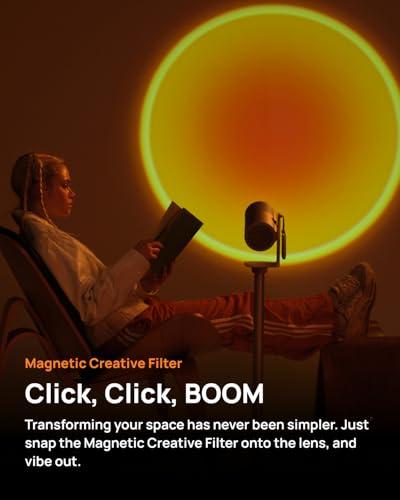
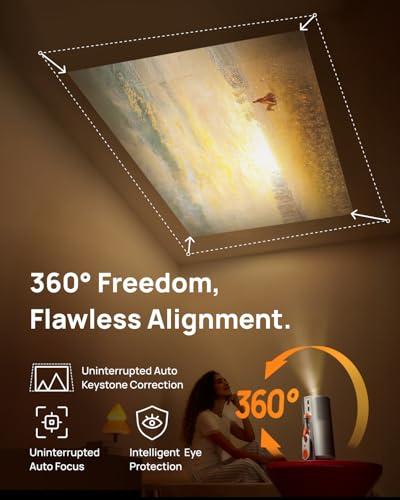
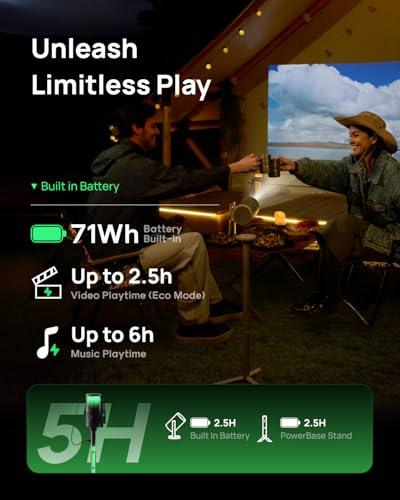
The XGIMI MoGo 4 weighs just 2.9 pounds and includes a built-in battery that provides 2.5 hours of video playback. This is genuine portability – you can stick it in a backpack, hike to a campsite, and watch movies under the stars with no power source. The integrated 360-degree stand means setup takes seconds, and the compact cylindrical design travels easily.
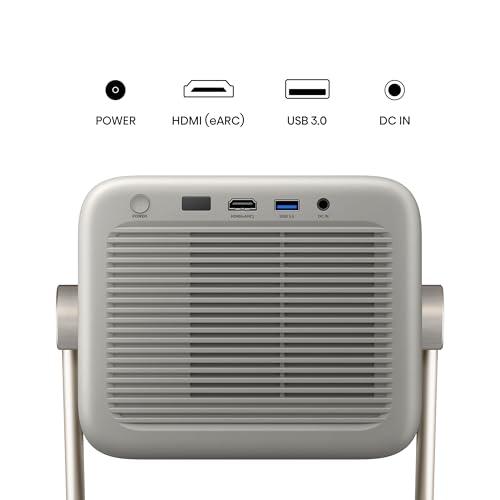
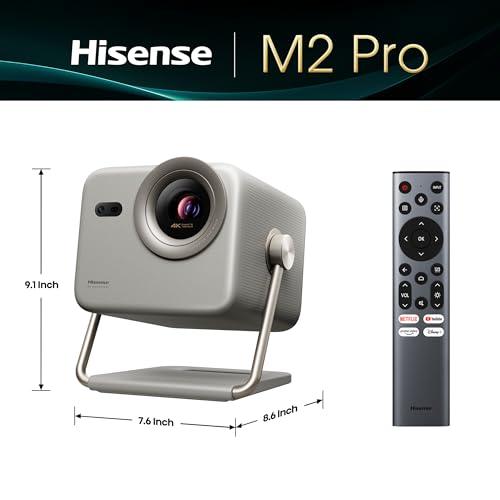
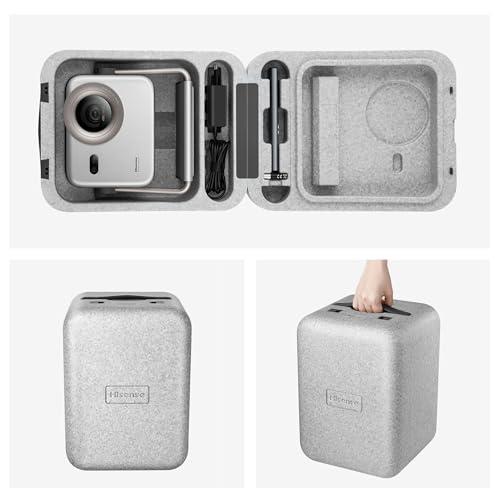
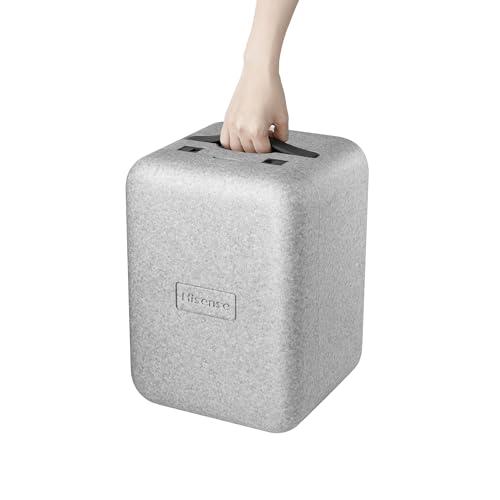
The Hisense M2 Pro weighs 8.6 pounds and requires constant AC power. This isn't backpack-portable, but it's definitely moveable between rooms or to friends' houses. Think of it as a high-performance projector that doesn't need permanent ceiling mounting – you can set it up for movie night, then pack it away.
The battery question is crucial. If you need power-free operation for camping, tailgating, or travel where outlets aren't guaranteed, the MoGo 4 is your only choice here. But if you're moving between powered locations – different rooms, friends' houses, office presentations – the Hisense delivers much better performance per pound.
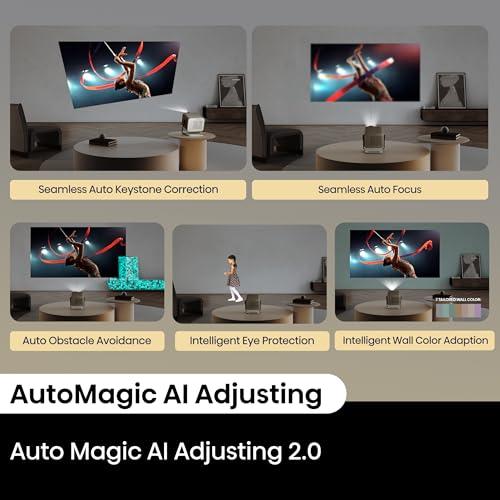
Both projectors include automatic focusing and keystone correction (which squares up the image if you're projecting at an angle), but they approach setup differently. The MoGo 4 emphasizes speed – twist out the stand, power on, and you're watching in under a minute. The Hisense M2 Pro includes more advanced features like optical zoom, which lets you adjust image size without moving the projector or losing quality.
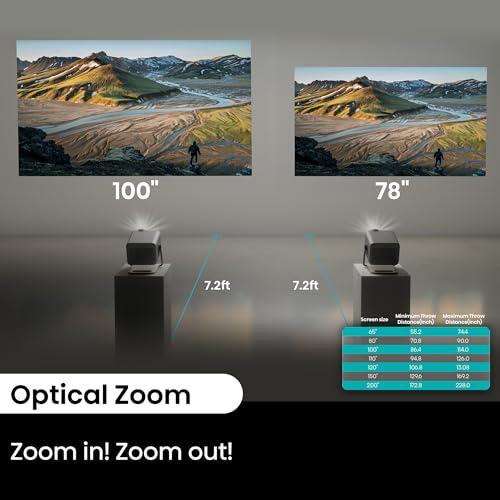
The optical zoom deserves special mention because it's rare in portable projectors. Most projectors only offer digital zoom, which just crops the image and makes it look worse. The Hisense includes true optical zoom with a 1.0-1.3:1 throw ratio, meaning you can fine-tune the screen size and position without compromising image quality.
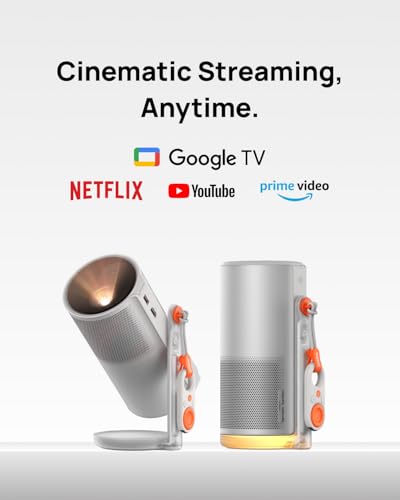
The smart platform choice reveals different priorities. The XGIMI MoGo 4 runs Google TV, which is currently the most comprehensive streaming platform. You get access to essentially every major streaming service, including properly licensed Netflix at full resolution. The interface is fast, familiar to Android users, and regularly updated.
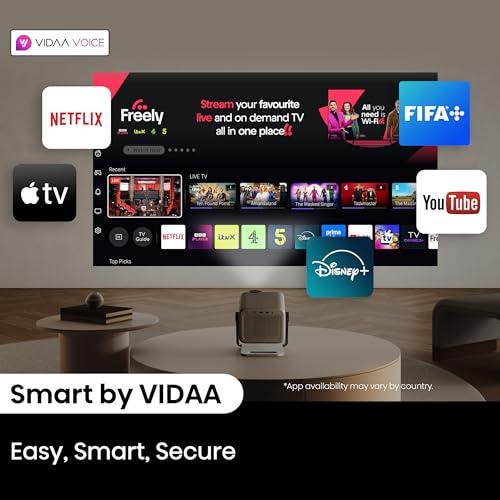
The Hisense M2 Pro uses VIDAA OS, Hisense's proprietary smart platform. It includes the major streaming services – Netflix, Disney+, Amazon Prime Video, Apple TV – but the app selection isn't as extensive as Google TV. However, it works well for the core use case and includes useful features like voice control and screen mirroring.
For most users, both platforms handle essential streaming needs adequately. Google TV offers more flexibility and future-proofing, while VIDAA OS keeps things simple and focused.
Audio performance reflects each projector's design priorities. The Hisense M2 Pro packs dual 10-watt speakers with Dolby Audio and DTS Virtual:X processing – that's genuinely room-filling sound that eliminates the need for external speakers in many scenarios. The larger cabinet allows for better speaker design and more powerful amplification.
The XGIMI MoGo 4 includes dual 6-watt Harman Kardon speakers that sound impressively good for their size. They won't fill a large room like the Hisense speakers, but they're perfectly adequate for near-field listening and even work well as a standalone Bluetooth speaker when you're not projecting.
Both projectors produce better audio than you might expect, but the Hisense has the advantage of size and power for larger viewing environments.
At the time of writing, these projectors occupy very different price tiers. The XGIMI MoGo 4 costs roughly half what the Hisense M2 Pro commands, which reflects their different target markets and technology levels.
From a pure performance-per-dollar perspective, the Hisense offers remarkable value if you prioritize image quality. True 4K resolution, high brightness, and laser technology typically cost much more in traditional projectors. However, this value proposition only works if you'll actually use these premium features.
The MoGo 4 represents excellent value for portability-focused users. You're paying for the convenience of battery power, compact design, and instant setup – features that are genuinely useful if they match your use case.
Long-term ownership costs favor the Hisense due to its laser light source, which should last 25,000+ hours without replacement. LED projectors like the MoGo 4 typically need replacement sooner, and the built-in battery will eventually degrade and require service.
Based on extensive research into user experiences and expert reviews, some clear patterns emerge about how these projectors perform in actual use.
For dedicated home theater use, the Hisense M2 Pro delivers an experience that's genuinely impressive. Users consistently report that 120-150 inch screens look sharp and bright enough for comfortable viewing in moderately lit rooms. The 4K resolution really shines with high-quality content from 4K Blu-rays or streaming services, and the wide color gamut makes HDR content look spectacular.
The MoGo 4 works well for home theater in smaller spaces or when you're willing to control room lighting carefully. On 80-100 inch screens in dark rooms, the image quality is quite satisfying for casual viewing. However, users report that the brightness limitations become frustrating if you want flexibility in viewing conditions.
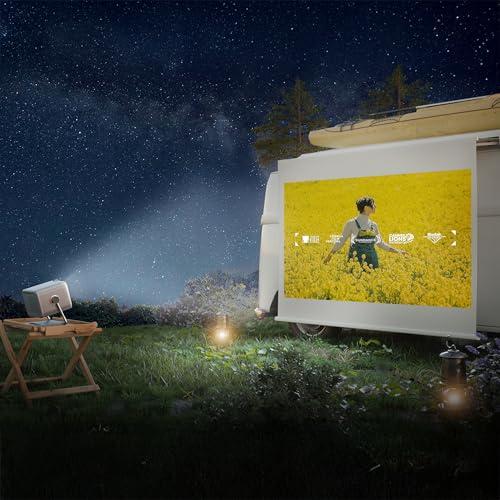
This is where the fundamental design differences become most apparent. The MoGo 4 excels at outdoor movie nights, camping trips, and hotel room entertainment. The battery operation and compact size make scenarios possible that simply aren't practical with AC-powered projectors. Users love the convenience of grabbing it for impromptu outdoor gatherings.
The Hisense M2 Pro can work outdoors if you have power access, and its higher brightness actually performs better in environments with some ambient light. However, the size and power requirements limit its practicality for truly portable outdoor use.
The 2025 model year brought significant improvements to both approaches. The Hisense M2 Pro represents a new generation of "portable" laser projectors that pack serious performance into relatively compact packages. The triple laser technology, AI-powered image processing, and advanced HDR support put it on par with much larger, more expensive home theater projectors.
The XGIMI MoGo 4 showcases how far battery-powered projectors have come. The combination of decent brightness, good color reproduction, and genuinely useful battery life creates possibilities that didn't exist just a few years ago.
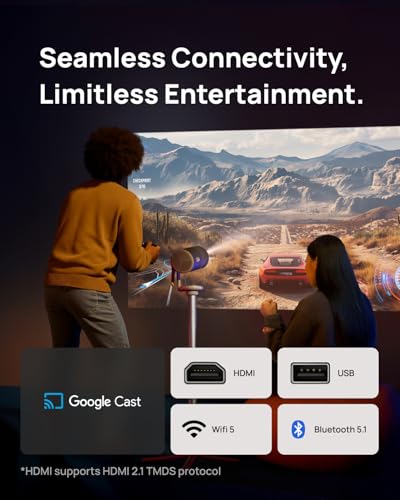
Both projectors include modern connectivity with Wi-Fi 6, Bluetooth 5.0+, and comprehensive codec support for current and emerging streaming standards. They're designed to handle 4K HDR content, high-refresh gaming, and modern smart home integration.
After researching user experiences and expert opinions extensively, the choice between these projectors comes down to a fundamental question: What does "portable" mean to you?
Choose the Hisense M2 Pro if:
Choose the XGIMI MoGo 4 if:
The Hisense M2 Pro is fundamentally a premium home theater projector that happens to be moveable. It delivers an experience that rivals fixed-installation projectors costing significantly more, but it's not truly portable in the grab-and-go sense.
The XGIMI MoGo 4 prioritizes convenience and genuine portability over maximum performance. It opens up use cases that simply aren't possible with AC-powered projectors, but you'll make some image quality compromises to get that flexibility.
Both represent excellent execution of their respective philosophies. Your choice should align with how you actually plan to use a portable projector, not just which specifications look better on paper. Consider your typical viewing environments, power availability, and whether you value maximum quality or maximum convenience in your entertainment setup.
| Hisense M2 Pro 4K Triple Laser Portable Projector | XGIMI MoGo 4 Portable Projector 2025 |
|---|---|
| Resolution - Critical for screen sizes over 100 inches and detail clarity | |
| Native 4K UHD (3840 x 2160) with AI upscaling | 1080p Full HD (1920 x 1080) native |
| Brightness - Most important for ambient light performance | |
| 1,300 ANSI lumens (works in moderately lit rooms) | 450 ISO lumens (requires dark environments) |
| Light Source Technology - Affects color accuracy and lifespan | |
| Triple laser (R+G+B) with 25,000+ hour lifespan | LED with shorter lifespan but better efficiency |
| Color Gamut - Determines color vibrancy and accuracy | |
| 110% BT.2020 (cinema-grade color reproduction) | 90% DCI-P3 (good but less vibrant colors) |
| Screen Size Range - Maximum practical viewing size | |
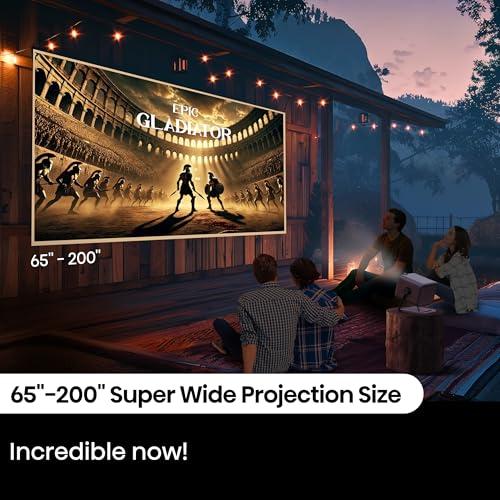
| 65" to 200" (excellent for large home theater) | 40" to 120" (ideal for smaller spaces) |
| Power Source - Fundamental portability difference | |
| AC power only (requires outlet connection) | Built-in battery (2.5 hours video, 5 hours with PowerBase) |
| Weight & Portability - Real-world mobility factor | |
| 8.6 lbs / 3.9 kg (moveable but not backpack-friendly) | 2.9 lbs / 1.32 kg (true grab-and-go portability) |
| Gaming Performance - Input lag and refresh rate for responsive play | |
| 12ms input lag, 240Hz support (excellent for gaming) | 56ms input lag, 60Hz (adequate for casual gaming) |
| Smart Platform - Streaming app availability and updates | |
| VIDAA OS (major apps but limited selection) | Google TV (comprehensive app ecosystem, licensed Netflix) |
| Audio System - Built-in sound quality | |
| Dual 10W Harman Kardon (20W total, room-filling) | Dual 6W Harman Kardon (12W total, good for size) |
| HDR Support - Premium content compatibility | |
| Dolby Vision, HDR10+, HDR10, HLG (full premium support) | HDR10 only (basic HDR enhancement) |
| Optical Features - Image adjustment without quality loss | |
| 1.0-1.3x optical zoom (rare in portable projectors) | Digital zoom only (degrades image quality) |
| Setup Convenience - Time from box to viewing | |
| Auto focus/keystone, requires power setup | Instant setup with twist-out stand, battery operation |
The Hisense M2 Pro 4K Triple Laser Portable Projector delivers significantly better image quality with native 4K resolution (3840 x 2160) compared to the XGIMI MoGo 4 Portable Projector 2025's 1080p resolution. The Hisense M2 Pro also produces brighter images at 1,300 ANSI lumens versus 450 ISO lumens from the MoGo 4, resulting in clearer viewing in ambient light conditions.
Only the XGIMI MoGo 4 Portable Projector 2025 operates on battery power, providing up to 2.5 hours of video playback or 5 hours with the optional PowerBase Stand. The Hisense M2 Pro 4K Triple Laser Portable Projector requires constant AC power connection and cannot operate on battery power alone.
The Hisense M2 Pro offers superior gaming performance with just 12ms input lag and support for up to 240Hz refresh rates, making it excellent for competitive gaming. The XGIMI MoGo 4 has 56ms input lag and 60Hz refresh rate, which works fine for casual gaming but may feel less responsive for serious gamers.
The Hisense M2 Pro 4K Triple Laser Portable Projector supports much larger screen sizes from 65 inches up to 200 inches due to its higher brightness and 4K resolution. The XGIMI MoGo 4 Portable Projector 2025 works best with screen sizes between 40 and 120 inches, with optimal performance below 100 inches.
The XGIMI MoGo 4 is significantly more portable, weighing only 2.9 pounds with a compact cylindrical design and built-in battery. The Hisense M2 Pro weighs 8.6 pounds and requires AC power, making it moveable between rooms but not ideal for true travel portability.
The Hisense M2 Pro 4K Triple Laser Portable Projector excels for home theater with its 4K resolution, high brightness, and large screen capability up to 200 inches. The XGIMI MoGo 4 works well for smaller home theater setups in dark rooms but is limited by its 1080p resolution and lower brightness for larger viewing experiences.
The XGIMI MoGo 4 Portable Projector 2025 runs Google TV with access to over 10,000 apps and fully licensed Netflix at maximum resolution. The Hisense M2 Pro uses VIDAA OS, which includes major streaming services like Netflix, Disney+, and Amazon Prime Video but has a more limited app selection overall.
Both can work outdoors, but with different advantages. The MoGo 4 is better for camping or locations without power due to its battery operation and compact size. The Hisense M2 Pro actually performs better in outdoor environments with some ambient light due to its much higher brightness, but requires access to power outlets.
The Hisense M2 Pro 4K Triple Laser Portable Projector features more powerful audio with dual 10W speakers (20W total) that can fill larger rooms. The XGIMI MoGo 4 has dual 6W Harman Kardon speakers (12W total) that sound impressive for their compact size and can also function as a standalone Bluetooth speaker.
Value depends on your priorities. The XGIMI MoGo 4 offers excellent value for portability-focused users who need battery operation and compact design. The Hisense M2 Pro provides better performance-per-dollar for image quality with its 4K resolution, higher brightness, and advanced laser technology, but costs significantly more.
The Hisense M2 Pro 4K Triple Laser Portable Projector uses laser technology rated for 25,000+ hours of operation without replacement, potentially lasting over a decade of regular use. The XGIMI MoGo 4 Portable Projector 2025 uses LED technology with a shorter lifespan, and its built-in battery will eventually need replacement after several years of regular use.
Both offer automated setup features, but the XGIMI MoGo 4 wins for convenience with its twist-out stand design and instant battery operation. The Hisense M2 Pro includes more advanced features like optical zoom and wall color adaptation, but requires power connection and takes slightly longer to set up initially.
We've done our best to create useful and informative comparisons to help you decide what product to buy. Our research uses advanced automated methods to create this comparison and perfection is not possible - please contact us for corrections or questions. These are the sites we've researched in the creation of this article: thegadgetflow.com - valueelectronics.com - youtube.com - projectorscreenstore.com - whathifi.com - hisense-usa.com - tomsguide.com - content.syndigo.com - youtube.com - shop.hisense-usa.com - avsforum.com - projectorscreen.com - projectorscreen.com - projectorcentral.com - avsforum.com - youtube.com - projector-database.com - projectorcentral.com - whathifi.com - us.xgimi.com - whathifi.com - global.xgimi.com - youtube.com - us.xgimi.com - youtube.com - youtube.com - thesmarthomehookup.com - global.xgimi.com - hometechnologyreview.com - projectorcentral.com - youtube.com - us.xgimi.com

Privacy Policy
Terms and Conditions - Affiliate Policy
Home Security
© Copyright 2008-2026.
11816 Inwood Rd #1211, Dallas, TX 75244