

The portable projector market has exploded in recent years, transforming from basic business tools into legitimate home entertainment alternatives. But choosing between different approaches can be confusing. Today we're comparing two projectors that represent fundamentally different philosophies: the Hisense M2 Pro, a premium 4K laser powerhouse, and the XGIMI Halo+, a genuinely portable battery-powered option.
These aren't direct competitors in the traditional sense. The Hisense M2 Pro launched in 2024 as a high-end 4K solution that happens to be portable, while the XGIMI Halo+ has been available since 2022 as a true grab-and-go entertainment device. Understanding which approach fits your needs requires diving deep into what makes each special.
Before we dive into specifics, let's establish what matters in portable projectors. The technology has advanced dramatically in recent years, with laser light sources replacing traditional lamps and smart operating systems eliminating the need for external streaming devices.
The most critical performance factors are brightness (measured in ANSI lumens - higher numbers mean you can watch in brighter rooms), resolution (how many individual pixels create the image), and color accuracy (how faithfully the projector reproduces the colors the filmmaker intended). Beyond image quality, practical considerations like setup complexity, actual portability, and smart features determine daily usability.
What's particularly interesting about comparing the Hisense M2 Pro and XGIMI Halo+ is how they prioritize these factors differently. One pushes image quality to near-premium levels while maintaining some portability, while the other maximizes convenience and true mobility with quality compromises.
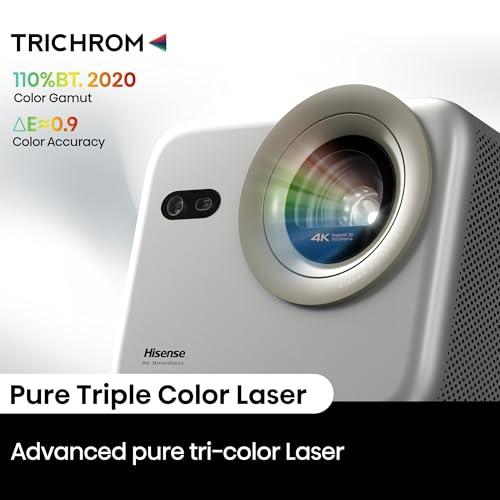
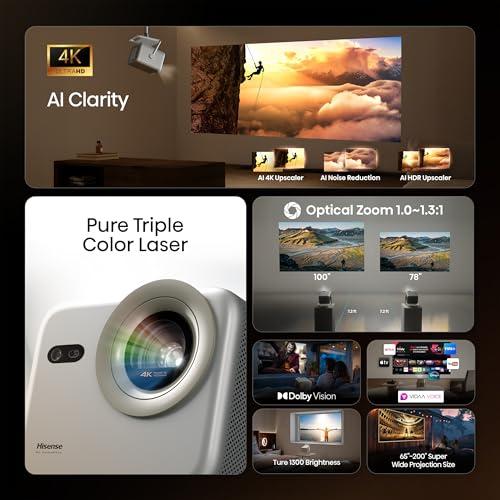
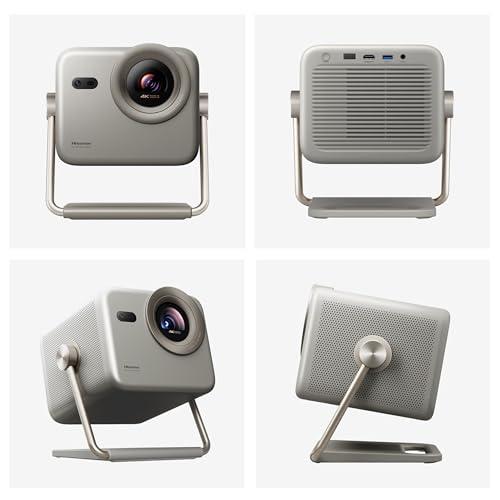
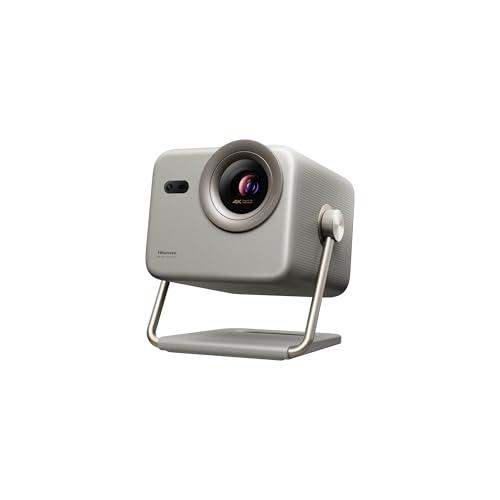
The Hisense M2 Pro represents what happens when you prioritize image quality first and portability second. At its heart lies TriChroma triple laser technology - essentially three separate laser light sources (red, green, and blue) that combine to create the projected image. This isn't just marketing speak; it's a fundamentally different approach from traditional LED projectors.
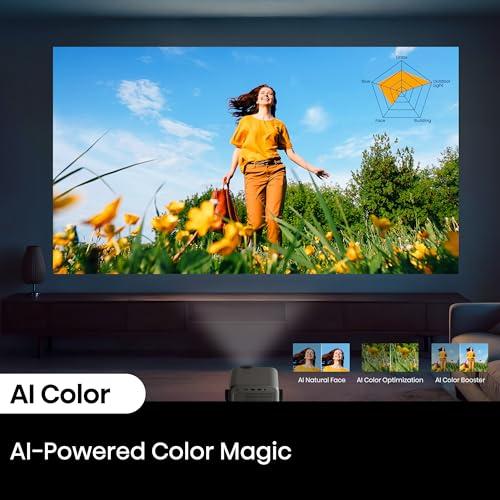
Traditional projectors use a single white light source and color wheels or filters to create colors. Triple laser systems like the M2 Pro's use dedicated lasers for each primary color, resulting in dramatically wider color gamuts (the range of colors the projector can display). The M2 Pro covers 110% of the BT.2020 color space, which is the standard for HDR content. In practical terms, this means colors appear more vibrant and lifelike than most projectors can achieve.
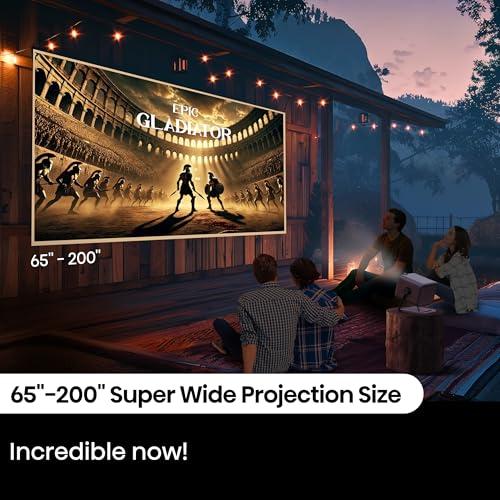
The true 4K UHD resolution (3840×2160 pixels) creates genuinely sharp images up to 200 inches. This isn't pixel shifting or upscaling trickery - it's native 4K using 2.07 million individual micromirrors in the Digital Light Processing (DLP) chip. Each mirror tilts thousands of times per second to create the image, and having more mirrors means finer detail.
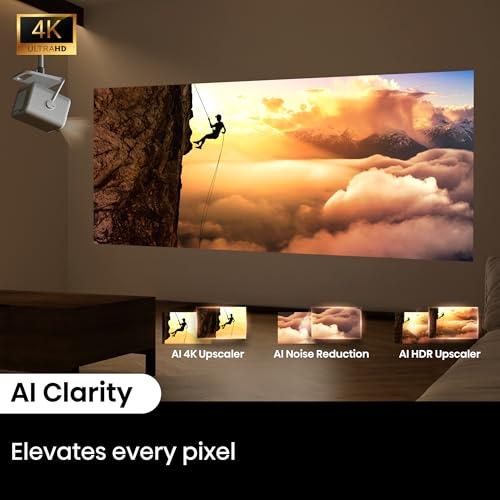
What impressed us most in researching the M2 Pro is its AI 4K Clarity Engine. This system uses artificial intelligence to analyze incoming content and enhance it in real-time. Lower resolution content gets upscaled intelligently, noise gets reduced, and HDR information gets optimized for the display. It's like having a video processing expert constantly tweaking your image for the best possible quality.
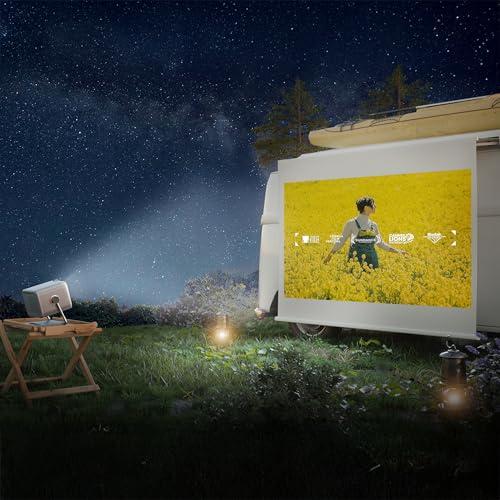
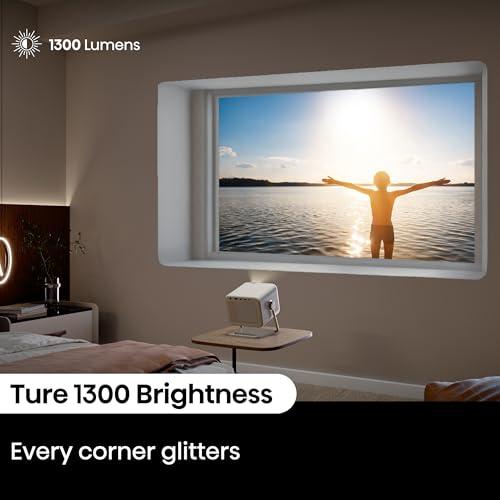
The brightness rating of 1300 ANSI lumens puts the M2 Pro in premium territory. For context, most portable projectors struggle to exceed 800 lumens, making them difficult to use unless you're in a dark room. The M2 Pro's extra brightness means you can enjoy movies during daytime in moderately lit rooms or even outdoors in shaded areas.
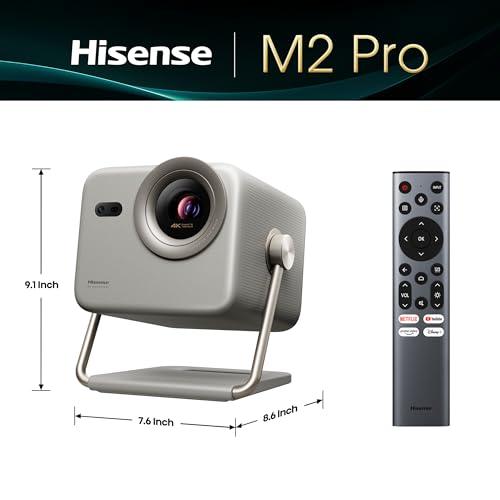
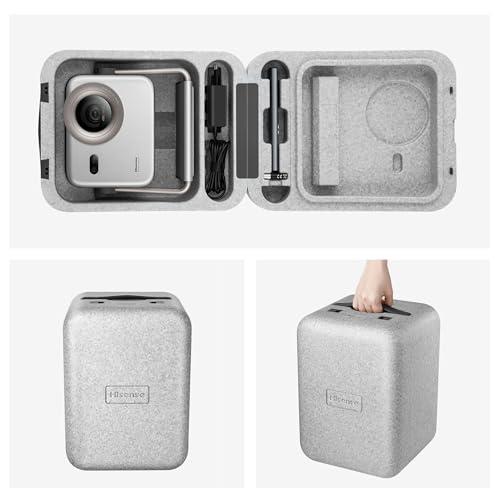
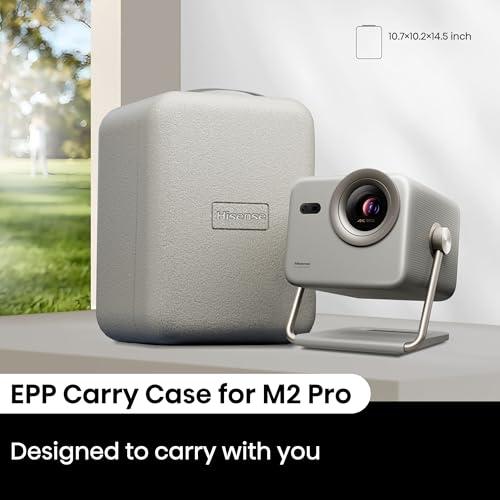
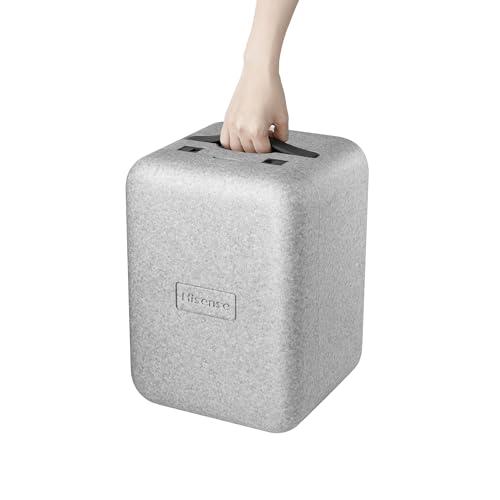
But here's where the "portable" designation gets complicated. At 8.6 pounds, the M2 Pro is hefty for frequent moving around. More critically, it lacks an internal battery, requiring constant AC power. It's portable in the sense that you can move it between rooms or take it to a friend's house, but it's not the grab-and-go device some users expect from "portable" projectors.
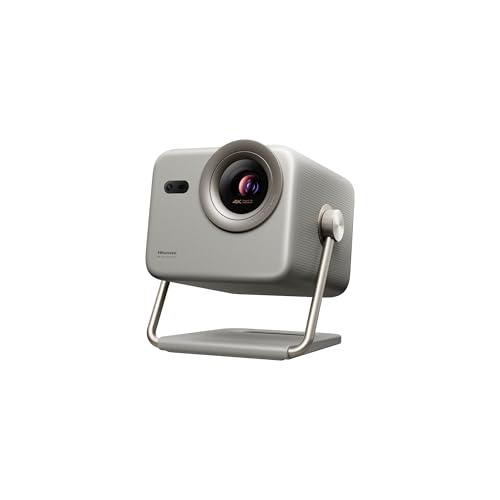
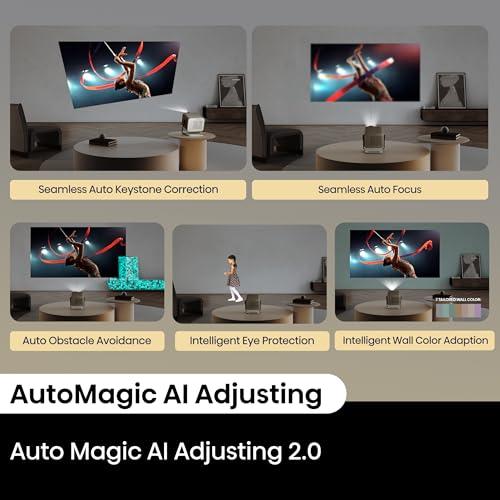
The sophisticated gimbal mounting system deserves special mention. This allows 360-degree horizontal rotation and 135-degree vertical adjustment, meaning you can project onto ceilings, angled walls, or unconventional surfaces. The automatic keystone correction and focus ensure the image stays sharp and properly aligned regardless of placement angle.
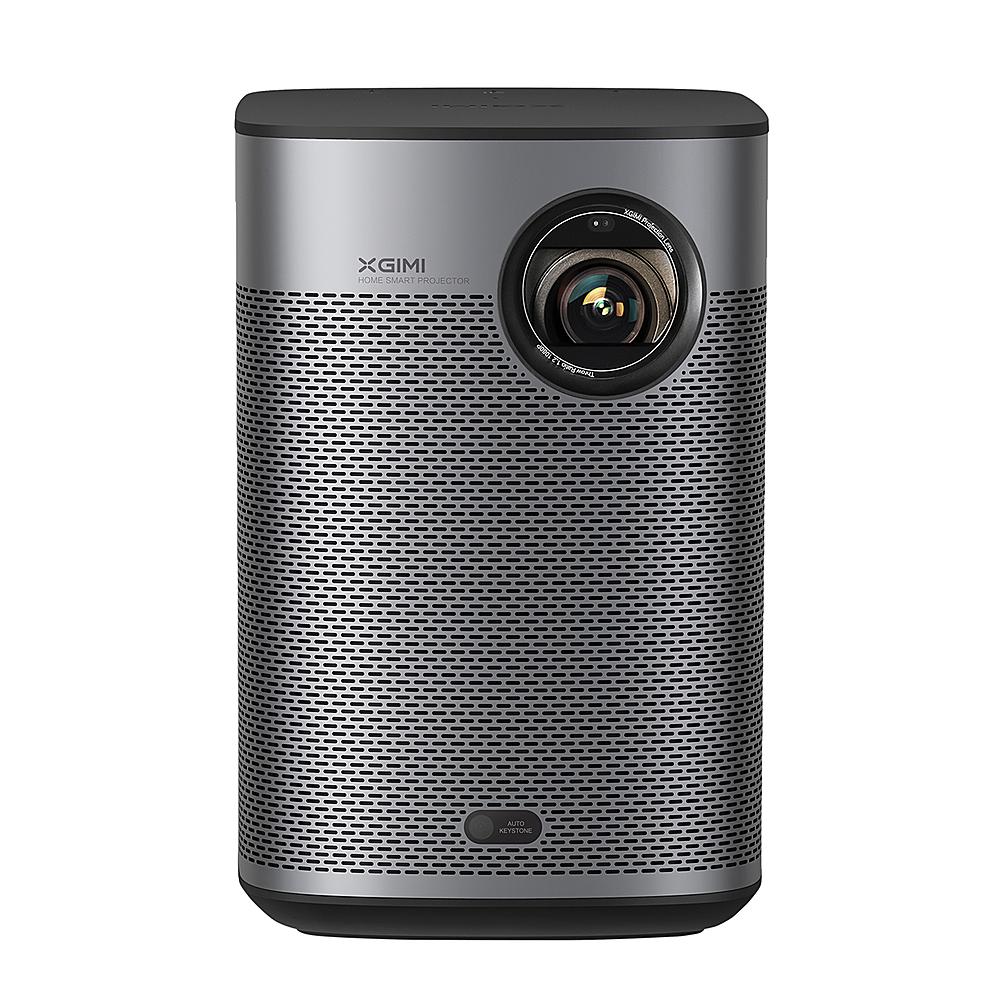
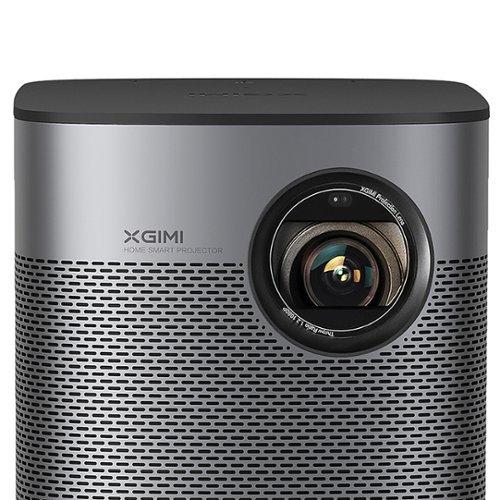
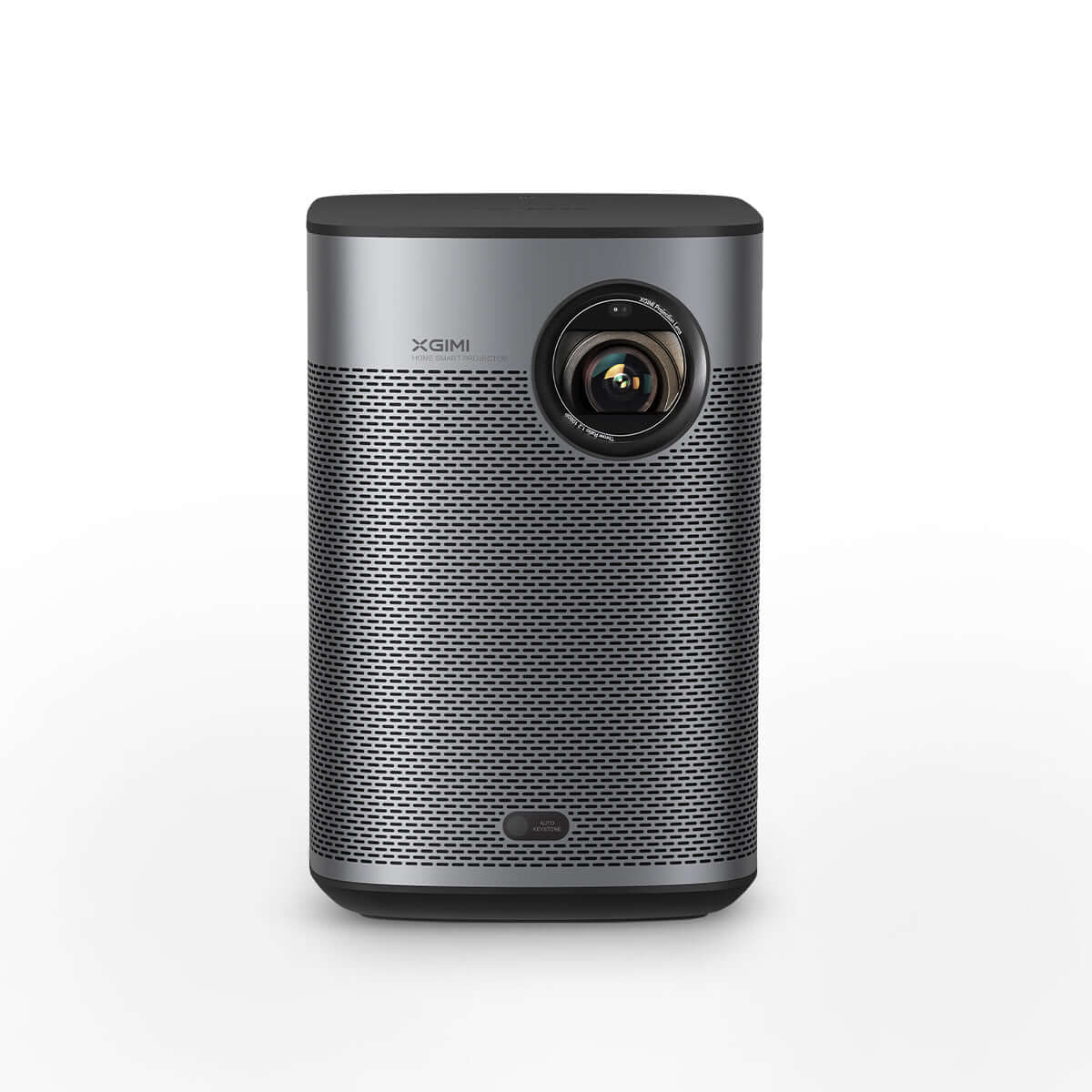
The XGIMI Halo+ takes the opposite approach, prioritizing genuine portability and ease of use over ultimate image quality. At 3.5 pounds with an integrated battery providing 2.5 hours of operation, it truly delivers on the promise of anywhere entertainment.
The Intelligent Screen Adaptation (ISA) technology represents sophisticated engineering in a compact package. The projector uses sensors to automatically detect your projection surface, adjust focus, correct keystone distortion, and even avoid obstacles in the projection path. Set it down, turn it on, and within seconds you have a properly aligned, focused image. This level of automation makes it genuinely user-friendly for people who don't want to fuss with manual adjustments.
The LED light source in the Halo+ represents more traditional projector technology, but XGIMI has optimized it well. While it can't match the color accuracy or brightness of laser systems, it produces what many users describe as pleasing, cinematic image quality. The 700 lumens of brightness is adequate for dark room viewing and produces excellent results in controlled lighting conditions.
The Full HD 1080p resolution might seem limiting compared to 4K alternatives, but it's worth considering your actual content sources. Most streaming services still deliver 1080p for many titles, and the difference between 1080p and 4K becomes less noticeable at typical viewing distances unless you're projecting very large images.
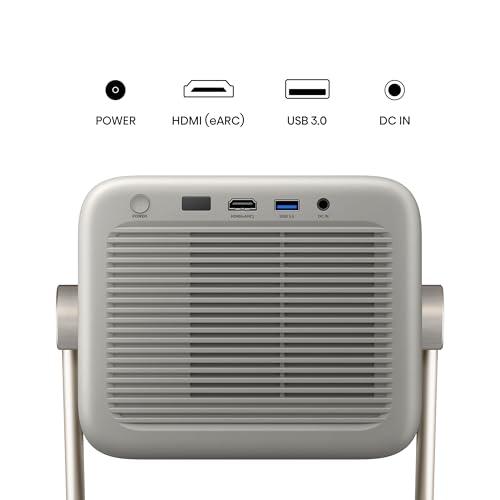
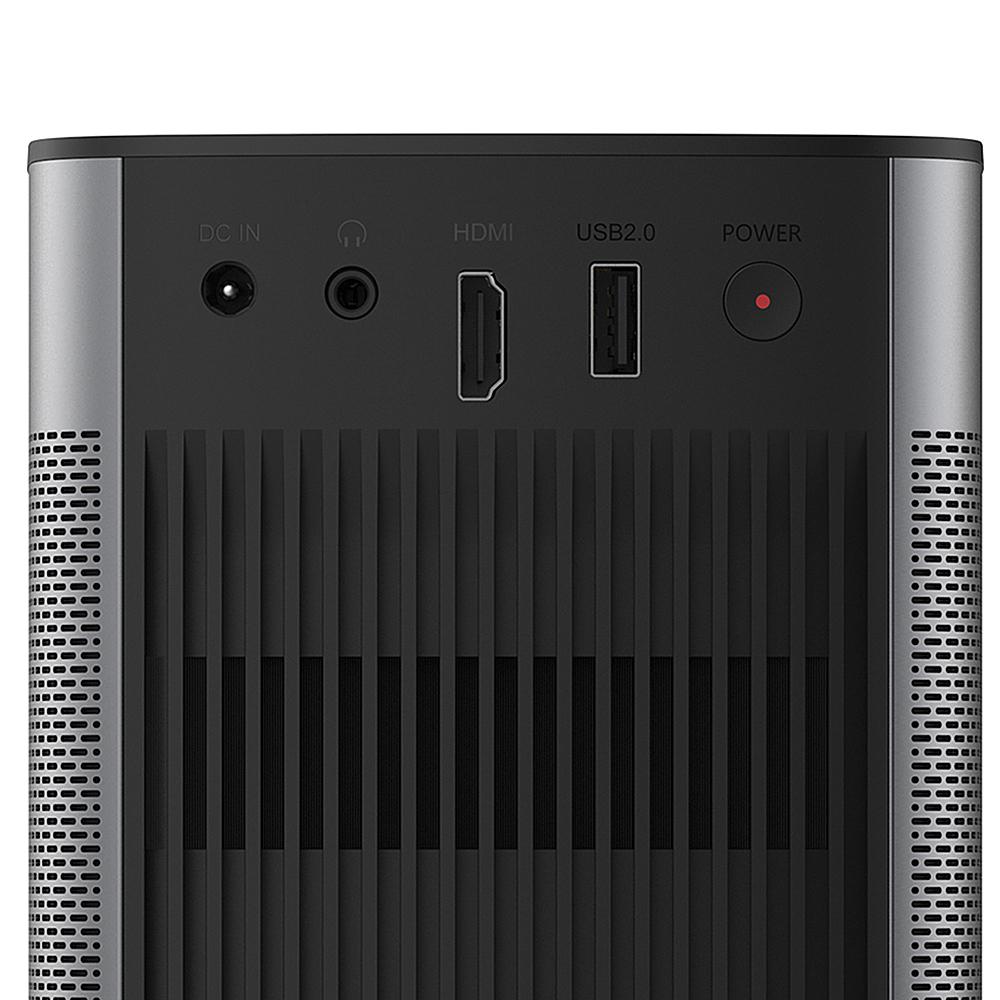
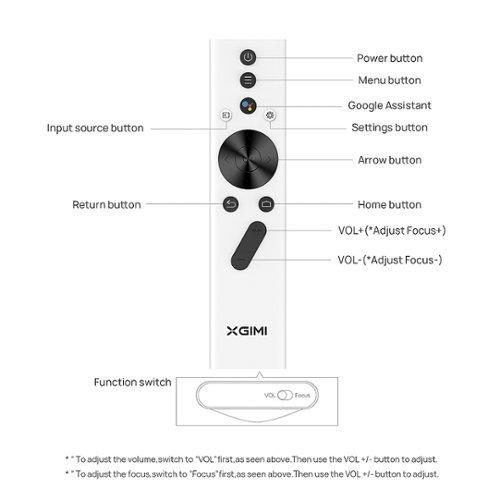
Where the Halo+ particularly shines is in smart features and connectivity. The Android TV operating system provides access to virtually every streaming app, and the interface responds quickly without the lag some projector smart platforms suffer from. The eARC HDMI port is particularly valuable - it can send high-quality audio back to compatible sound systems while receiving video, making it easier to integrate with existing home theater setups.
The Harman Kardon audio tuning on the built-in speakers produces surprisingly rich sound for such a compact device. While you'll still want external speakers for true cinematic audio, the integrated speakers handle casual viewing well and eliminate the need for additional equipment in many scenarios.
The image quality difference between these projectors is substantial but context-dependent. The M2 Pro delivers objectively superior performance in nearly every measurable way. The 4K resolution provides noticeably sharper text and fine details, particularly important for gaming, sports, or any content with small visual elements. The laser color system produces more accurate skin tones, more vivid landscapes, and better color separation in complex scenes.
However, our research into user experiences reveals an interesting nuance. Many users describe the Halo+ as having more "cinematic" image quality despite its technical limitations. The LED system produces slightly softer images with warmer color tones that some viewers prefer for movie watching. It's similar to how some people prefer vinyl records to digital music - technically inferior but aesthetically pleasing.
For home theater use, the M2 Pro is clearly superior. The combination of true 4K resolution, HDR support (including Dolby Vision), and laser brightness creates images that can genuinely compete with premium TVs when projected in the 100-150 inch range. The Halo+ produces excellent results for its class but can't match this level of performance.
Gaming represents a significant differentiator between these projectors. The M2 Pro features a 240Hz refresh rate and 12ms input lag, specifications rarely seen in portable projectors. This makes it genuinely suitable for competitive gaming, fast-paced action games, and console gaming where responsiveness matters.
The Halo+ uses standard refresh rates and higher input lag, making it better suited for casual gaming. Turn-based games, puzzle games, and slower-paced titles work fine, but competitive multiplayer games or fast action sequences may feel less responsive.
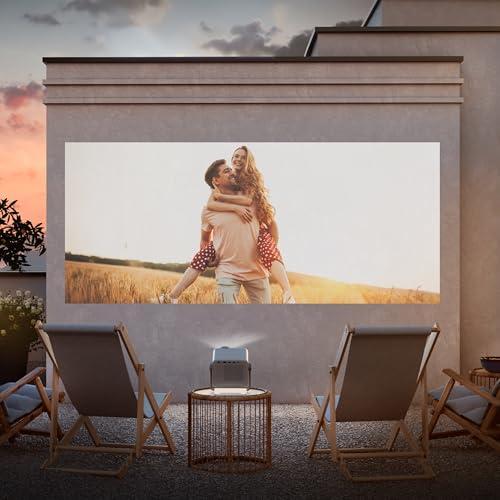
The brightness difference becomes critical in real-world usage scenarios. The M2 Pro's 1300 ANSI lumens allow for viewing in various lighting conditions. You can watch movies in a living room with some ambient light, use it for presentations in moderately lit conference rooms, or even enjoy content outdoors during golden hour lighting.
The Halo+ at 700 lumens requires more controlled lighting for optimal viewing. In dark rooms, it produces excellent images with good contrast. But introduce ambient light, and the image becomes washed out quickly. This limitation significantly impacts where and when you can use the projector effectively.
Both projectors excel at automated setup, but in different ways. The M2 Pro focuses on image optimization - automatically adjusting colors for different wall surfaces (a surprisingly useful feature), correcting keystone distortion, and maintaining focus across different projection distances. The gimbal design allows for creative placement options that fixed projectors can't match.
The Halo+ emphasizes simplicity and speed. The ISA system gets you from power-on to perfect image faster than almost any projector we've researched. The obstacle avoidance feature is particularly clever - it detects objects in the projection path and adjusts the image to work around them rather than projecting onto them.
At the time of writing, these projectors occupy different price tiers, with the M2 Pro commanding a significant premium over the Halo+. The question becomes whether the performance improvements justify the additional cost.
For users prioritizing image quality, the M2 Pro offers excellent value despite its higher price. True 4K resolution, laser technology, and premium brightness levels typically require much more expensive projectors. The smart features, audio quality, and build construction further justify the investment for serious home theater enthusiasts.
The Halo+ represents outstanding value for users prioritizing portability and convenience. The integrated battery alone adds significant value for outdoor use, camping, or situations without convenient power access. The quick setup and user-friendly operation make it appealing for less technical users who want simple, reliable performance.
The laser light source in the M2 Pro offers significant longevity advantages. Rated for 25,000+ hours of operation, it should maintain consistent brightness and color accuracy for many years of regular use. There's no lamp to replace or filter to clean - just reliable operation until the eventual end of life.
The Halo+ uses LED technology that gradually dims over time. While still offering years of useful life, you may notice reduced brightness and color vibrancy after extended use. The integrated battery will also degrade over time, reducing portable operation duration.
Technology advancement considerations favor the M2 Pro as well. Native 4K resolution provides future-proofing as content quality continues improving. The advanced HDR support and wide color gamut ensure compatibility with emerging content standards. The Halo+, while excellent for current needs, may feel dated as 4K content becomes more prevalent.
The choice between these projectors depends entirely on your priorities and usage patterns.
Choose the Hisense M2 Pro if you're building a dedicated home theater setup, even a temporary one. If you want the best possible image quality in a reasonably portable package, this is your projector. Gamers who care about competitive performance should strongly consider the M2 Pro. Those who frequently use projectors for presentations or mixed-use scenarios will appreciate the brightness advantage.
The M2 Pro also makes sense for users who plan to invest in a projector for several years and want future-proof technology. The 4K resolution and advanced features provide longevity that justifies the initial investment.
Choose the XGIMI Halo+ if genuine portability matters more than ultimate image quality. RV travelers, campers, and frequent movers will appreciate the battery operation and compact design. Users who want simple, reliable operation without technical complexity should lean toward the Halo+.
The Halo+ also makes sense for secondary entertainment systems - bedroom viewing, dorm rooms, or supplemental family room use where convenience outweighs performance optimization.
Both projectors excel in their intended roles, but they serve fundamentally different needs. The Hisense M2 Pro pushes portable projector performance to new heights, delivering image quality that legitimately competes with premium home theater systems. The XGIMI Halo+ perfects the art of practical portability, offering excellent performance in a truly mobile package.
Neither choice is wrong, but choosing the right one requires honest assessment of your priorities. If you value image quality above all else and can accept the portability limitations, the M2 Pro delivers exceptional performance. If you need genuine anywhere-entertainment capability and can accept the quality compromises, the Halo+ provides outstanding practical value.
The portable projector market continues evolving rapidly, with new technologies and improved performance appearing regularly. Both projectors represent the current state of the art in their respective approaches, making either a solid investment for the right user. Consider your specific needs, usage patterns, and long-term expectations to make the choice that best serves your entertainment goals.
| Hisense M2 Pro 4K Triple Laser Portable Projector | XGIMI Halo+ Portable Projector |
|---|---|
| Resolution - Higher resolution provides sharper text and fine details, especially important for large screen sizes | |
| Native 4K UHD (3840 x 2160) with 2.07 million micromirrors | Full HD 1080p (1920 x 1080) - adequate for most streaming content |
| Brightness - Critical for viewing in lit rooms and outdoor use | |
| 1,300 ANSI lumens (excellent for moderately lit rooms) | 700 ISO lumens (requires darker environments for best results) |
| Light Source Technology - Affects color accuracy, lifespan, and maintenance | |
| Triple RGB laser system with 25,000+ hour lifespan | LED with gradual brightness degradation over time |
| Color Accuracy - Important for cinematic and professional content | |
| 110% BT.2020 color space coverage with ΔE ~0.9 professional accuracy | Standard LED color gamut with warm, cinematic tones |
| Portability - Determines how easily you can move and use the projector | |
| 8.6 lbs, requires AC power, includes protective carrying case | 3.5 lbs with built-in 2.5-hour battery for true wireless operation |
| Gaming Performance - Matters for console gaming and competitive play | |
| 240Hz refresh rate with 12ms input lag (excellent for gaming) | Standard refresh rate with higher latency (casual gaming only) |
| Smart Platform - Affects app availability and user experience | |
| VIDAA OS with native Netflix, YouTube, Disney+, Prime Video | Android TV with extensive app ecosystem and Google Assistant |
| Audio System - Built-in speakers reduce need for external audio | |
| 20W stereo with Dolby Audio and DTS Virtual:X | 10W Harman Kardon-tuned speakers (impressive for compact size) |
| Setup Automation - Reduces manual adjustments and setup time | |
| Auto focus, keystone correction, wall color adaptation, 360° gimbal | Intelligent Screen Adaptation with obstacle avoidance and quick alignment |
| Projection Flexibility - Determines placement options and screen sizes | |
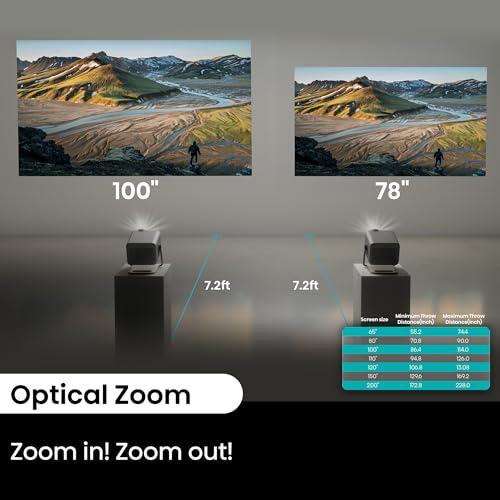
| 65"-200" with 1.0-1.3x optical zoom (maintains 4K sharpness) | 40"-200" with 1.2:1 throw ratio and digital scaling only |
| HDR Support - Important for modern streaming content and 4K movies | |
| Dolby Vision, HDR10, HDR10+, HLG with AI HDR upscaling | HDR10 and HLG support with limited dynamic range |
| Target Use Case - Who this projector serves best | |
| Premium home theater replacement with some portability | True portable entertainment for camping, RV, and frequent moving |
The Hisense M2 Pro delivers superior image quality with native 4K resolution and triple laser technology that covers 110% of the BT.2020 color space. This creates sharper details and more vibrant colors compared to the XGIMI Halo+, which offers Full HD 1080p resolution with LED technology. For dedicated home theater setups, the M2 Pro provides a more cinematic experience.
Only the XGIMI Halo+ works outdoors without power thanks to its built-in battery that provides 2.5 hours of operation. The Hisense M2 Pro requires constant AC power connection, limiting its use to locations with electrical outlets. However, the M2 Pro offers much brighter 1,300 ANSI lumens for better outdoor daytime viewing when power is available.
Both projectors offer automated setup features, but in different ways. The XGIMI Halo+ has Intelligent Screen Adaptation that automatically handles focus, keystone correction, and obstacle avoidance for quick setup. The Hisense M2 Pro features auto focus, keystone correction, and wall color adaptation, plus a 360° gimbal for flexible placement including ceiling projection.
The Hisense M2 Pro is significantly better for gaming with its 240Hz refresh rate and 12ms input lag, making it suitable for competitive gaming and fast-paced action. The XGIMI Halo+ has standard refresh rates and higher input lag, making it better suited for casual gaming like puzzle games or turn-based titles.
The Hisense M2 Pro performs much better in bright rooms with its 1,300 ANSI lumens brightness, allowing viewing in moderately lit environments. The XGIMI Halo+ at 700 lumens requires darker rooms for optimal viewing, as ambient light quickly washes out the image.
The XGIMI Halo+ is truly portable at 3.5 pounds with an integrated battery, making it perfect for camping, RV travel, or frequent room-to-room use. The Hisense M2 Pro weighs 8.6 pounds and requires AC power, making it more of a "moveable" projector suitable for occasional relocation rather than grab-and-go use.
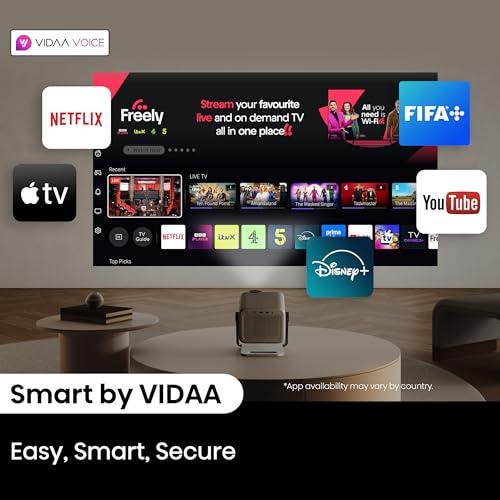
The XGIMI Halo+ runs Android TV with access to virtually every streaming app and Google Assistant integration. The Hisense M2 Pro uses VIDAA OS with native support for major platforms like Netflix, YouTube, Disney+, and Prime Video. Both offer good smart features, but Android TV provides broader app compatibility.
The Hisense M2 Pro has more powerful 20W stereo speakers with Dolby Audio and DTS Virtual:X for immersive sound. The XGIMI Halo+ features 10W Harman Kardon-tuned speakers that sound impressive for their compact size. For serious home theater use, the M2 Pro provides better built-in audio.
This depends on your priorities. The XGIMI Halo+ offers excellent value for portable entertainment with good 1080p quality and true wireless operation. The Hisense M2 Pro costs more but delivers premium 4K performance, laser technology, and features typically found in much more expensive projectors.
The Hisense M2 Pro can effectively replace a TV for daily use thanks to its 4K resolution, bright 1,300 lumens output, and comprehensive smart features. The XGIMI Halo+ works well as a TV replacement in darker rooms but may feel limited for bright daytime viewing or situations requiring the sharpest possible image quality.
The Hisense M2 Pro has better longevity with its laser light source rated for 25,000+ hours of consistent brightness and color accuracy. The XGIMI Halo+ uses LED technology that gradually dims over time, and its integrated battery will eventually degrade, reducing portable operation time.
Both projectors support large screen sizes, but perform differently. The Hisense M2 Pro maintains sharp 4K detail from 65" to 200" screens with optical zoom for flexible placement. The XGIMI Halo+ works well from 40" to 200" but looks best at smaller sizes where the 1080p resolution doesn't show limitations as clearly.
We've done our best to create useful and informative comparisons to help you decide what product to buy. Our research uses advanced automated methods to create this comparison and perfection is not possible - please contact us for corrections or questions. These are the sites we've researched in the creation of this article: thegadgetflow.com - valueelectronics.com - youtube.com - projectorscreenstore.com - whathifi.com - hisense-usa.com - tomsguide.com - content.syndigo.com - youtube.com - shop.hisense-usa.com - avsforum.com - projectorscreen.com - projectorscreen.com - projectorcentral.com - avsforum.com - youtube.com - projector-database.com - bestbuy.com - bestbuy.com - youtube.com - projectorcentral.com - staples.com - youtube.com - rtings.com - us.xgimi.com - youtube.com - cnet.com - us.xgimi.com - youtube.com - marieclaire.com - youtube.com - youtube.com - youtube.com - youtube.com - odpbusiness.com - bhphotovideo.com - bestbuy.com - projectorcentral.com - us.xgimi.com - global.xgimi.com - projectorscreen.com - petra.com - eu.xgimi.com - us.xgimi.com - global.xgimi.com

Privacy Policy
Terms and Conditions - Affiliate Policy
Home Security
© Copyright 2008-2026.
11816 Inwood Rd #1211, Dallas, TX 75244