

The portable projector market has exploded in recent years, transforming from niche tech gadgets into mainstream entertainment solutions. Whether you're setting up a backyard movie night or creating a dedicated home theater space, these compact devices promise to deliver big-screen experiences without the permanent installation of traditional projectors. But with options ranging from budget-friendly streamers to premium laser powerhouses, choosing the right one can feel overwhelming.
Today, we're diving deep into two very different approaches to portable projection: the Hisense M2 Pro 4K Triple Laser Portable Projector and the Aurzen BOOM Mini Smart Projector Google TV. Released in 2025 and representing opposite ends of the market spectrum, these projectors illustrate perfectly how different technologies and price points can serve completely different user needs.
Before we compare these specific models, it's crucial to understand what separates good portable projectors from great ones. The most important factors are brightness (measured in ANSI lumens), resolution, color accuracy, and smart features. Think of ANSI lumens as the projector's ability to cut through ambient light—the higher the number, the better it performs in brighter rooms. Resolution determines how sharp your image looks, especially on larger screens. Color accuracy affects how lifelike movies and photos appear, while smart features determine how easily you can access content without additional devices.
The technology inside these projectors varies dramatically. LED projectors use light-emitting diodes, which are energy-efficient and compact but have limitations in brightness and color range. LCD (Liquid Crystal Display) technology processes images through liquid crystal panels, offering good color reproduction at budget-friendly prices. At the premium end, laser projectors use focused light beams that deliver superior brightness, color accuracy, and longevity—but at significantly higher costs.
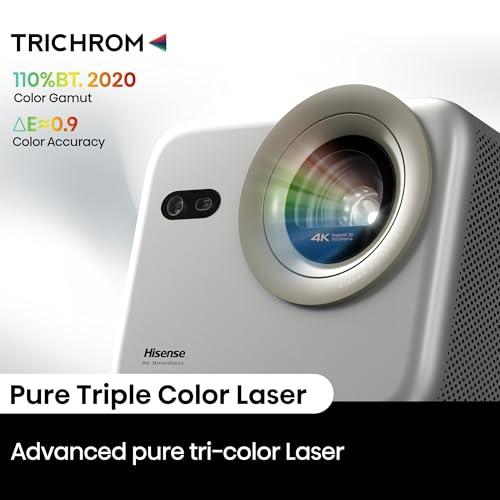
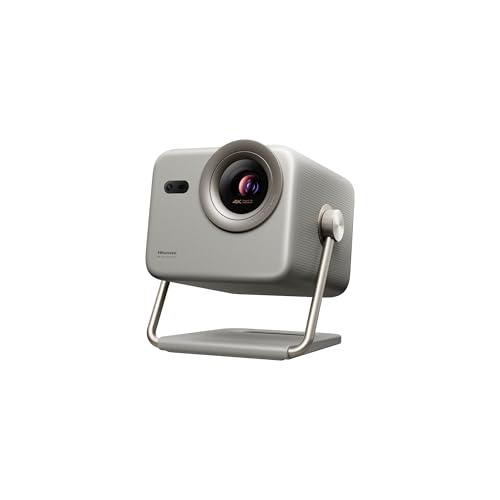
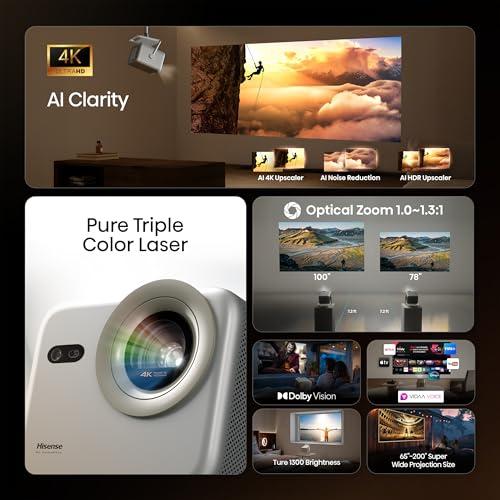
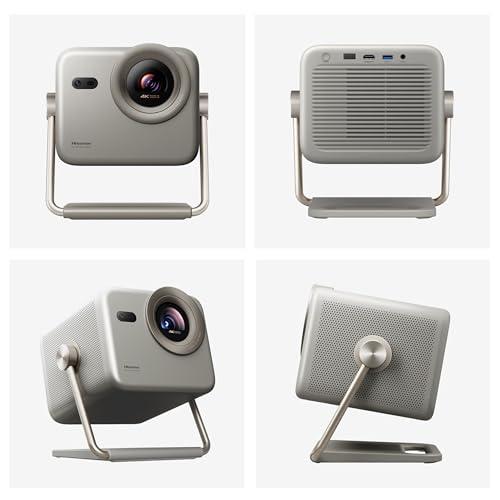
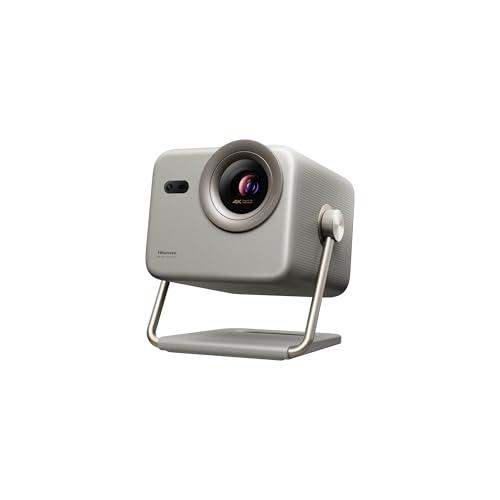
The Hisense M2 Pro represents what happens when you miniaturize high-end home theater technology into a portable package. Released in 2025, this projector uses something called TriChroma triple laser technology—essentially three separate laser light sources for red, green, and blue colors. This isn't just marketing speak; it's a fundamental difference from cheaper projectors that mix colors from a single light source.
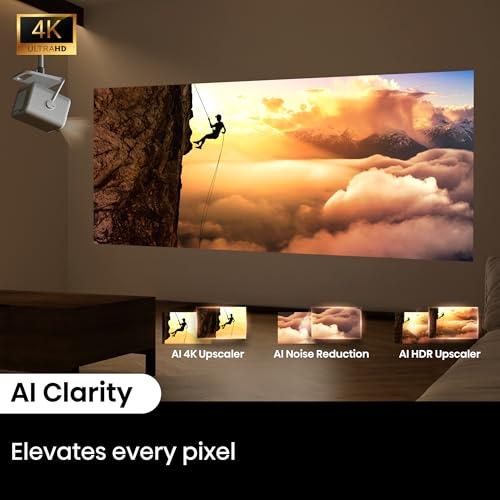
The most impressive aspect of the M2 Pro is its true 4K resolution. While many projectors claim "4K support," the M2 Pro actually projects 3,840 by 2,160 pixels natively. This means every pixel of your 4K Netflix content gets displayed exactly as intended, without upscaling or interpolation tricks. The difference becomes obvious on screen sizes above 100 inches, where lower-resolution projectors start looking noticeably soft or pixelated.
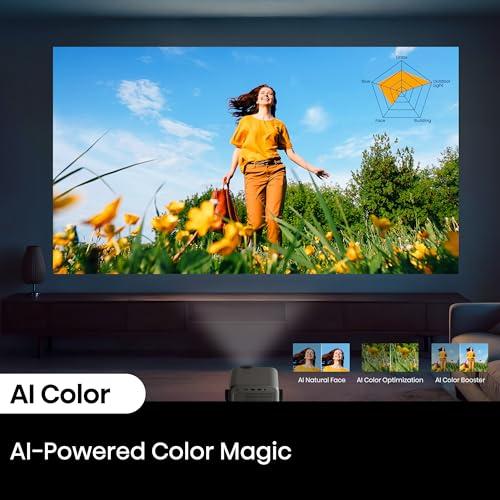
But resolution is only part of the story. The M2 Pro's triple laser system achieves 110% of the BT.2020 color space—a technical measurement that essentially means it can display colors more vivid and accurate than most TVs. In practical terms, this translates to movie scenes that look remarkably lifelike, with subtle color gradations that cheaper projectors simply can't reproduce.
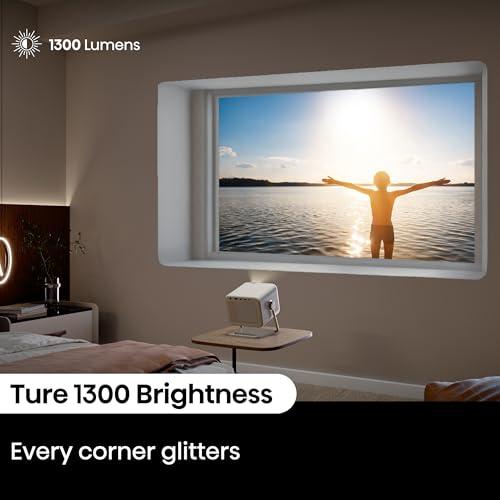
The brightness rating of 1,300 ANSI lumens puts the M2 Pro in genuinely usable territory for rooms with some ambient light. Based on our research into user experiences, this brightness level allows comfortable viewing during evening hours with normal room lighting, something that's impossible with dimmer projectors.
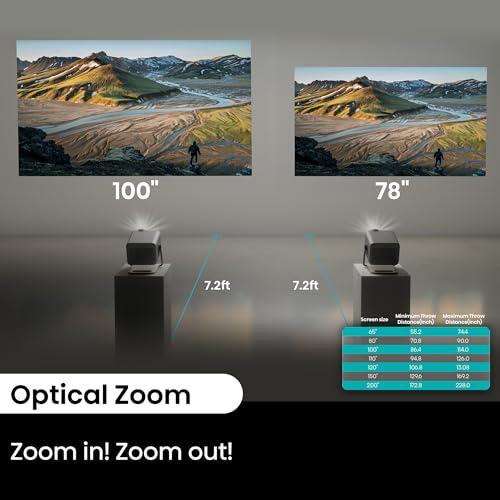
One standout feature is the M2 Pro's optical zoom capability. Unlike digital zoom (which just crops and enlarges the image, reducing quality), optical zoom uses actual lens elements to adjust image size without any quality loss. This means you can fine-tune your screen size and projector placement without compromising the crisp 4K image quality.
The AI processing features deserve attention too. The M2 Pro includes something called AI 4K upscaling, which analyzes lower-resolution content and intelligently fills in detail to approach 4K quality. While not magic, this technology makes a noticeable difference when watching older movies or cable TV content on large screens.
For gaming enthusiasts, the M2 Pro offers impressive specs: 240Hz refresh rate support and just 12ms of input lag. Input lag is the delay between pressing a controller button and seeing the action on screen—12ms is excellent for a projector and competitive with gaming TVs.
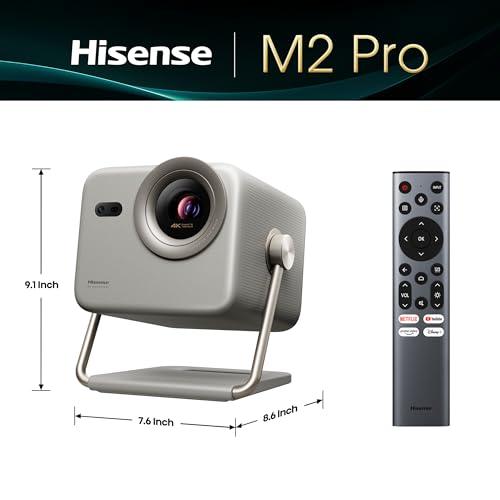
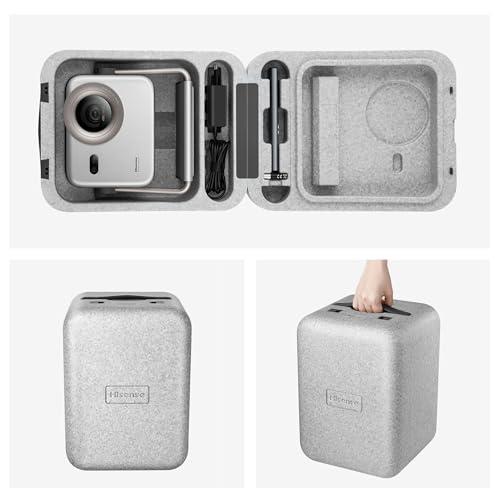
Of course, premium features come with premium pricing. At the time of writing, the M2 Pro costs roughly three times more than budget alternatives. The 8.6-pound weight also makes it more of a "portable home theater" than a truly grab-and-go device.
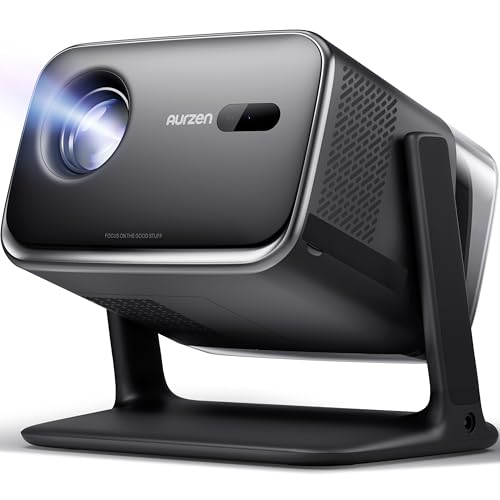
The Aurzen BOOM Mini, also released in 2025, takes a completely different approach. Instead of pushing technical boundaries, it focuses on delivering maximum convenience and smart features at an accessible price point.
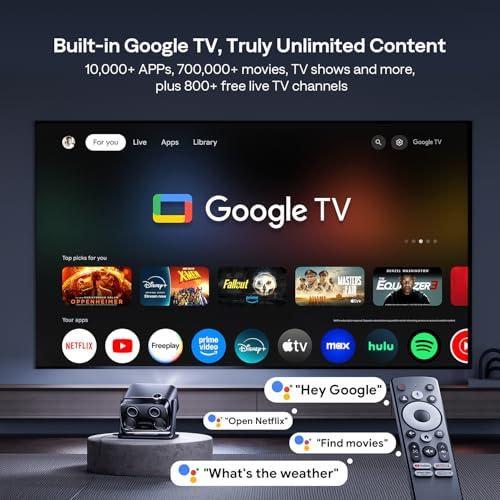
The standout feature of the BOOM Mini is its native Google TV integration. This isn't an add-on or afterthought—Google TV is built into the projector's operating system, giving you direct access to Netflix, Disney+, YouTube, and thousands of other apps without any external devices. For many users, this alone justifies the projector's existence, eliminating the cable mess and complexity of streaming sticks or media players.
The Google TV interface is genuinely well-implemented, with personalized recommendations, voice search through Google Assistant, and seamless casting from phones and tablets. Based on user feedback we've analyzed, the system runs smoothly with minimal lag, which is impressive given the modest 2GB of RAM.
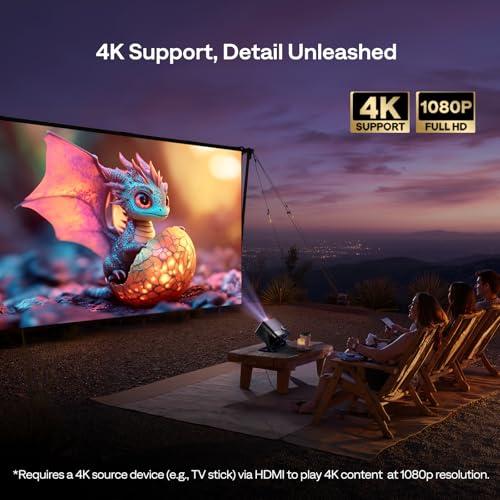
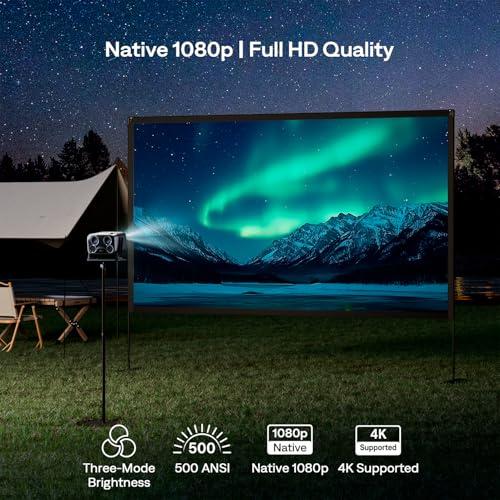
While the BOOM Mini uses "only" 1080p resolution, this LCD-based projector still delivers crisp, detailed images for its price point. The 500 ANSI lumens of brightness requires darker rooms for optimal viewing, but this actually works in the projector's favor for creating that authentic cinema atmosphere.
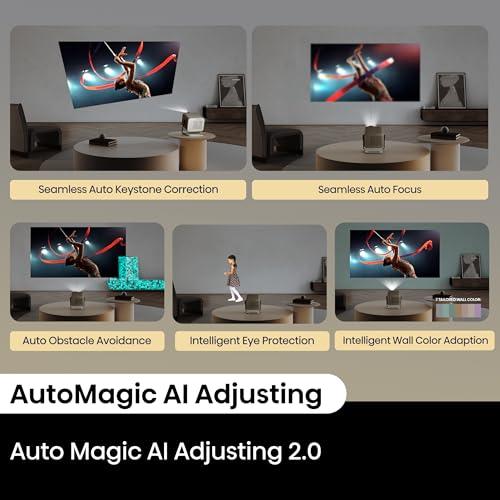
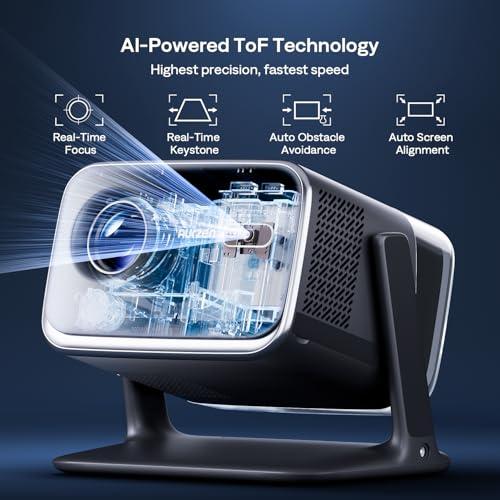
The real magic is in the setup experience. The BOOM Mini uses ToF (Time-of-Flight) sensor technology for autofocus, which measures the distance to your projection surface and adjusts the lens accordingly in about three seconds. Combined with automatic keystone correction (which fixes the trapezoidal distortion when projecting at angles), setup becomes genuinely effortless.
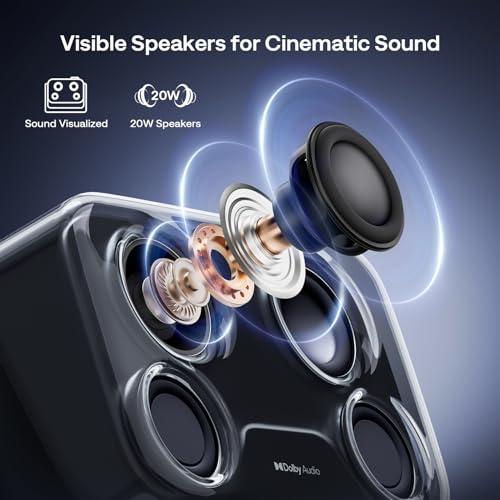
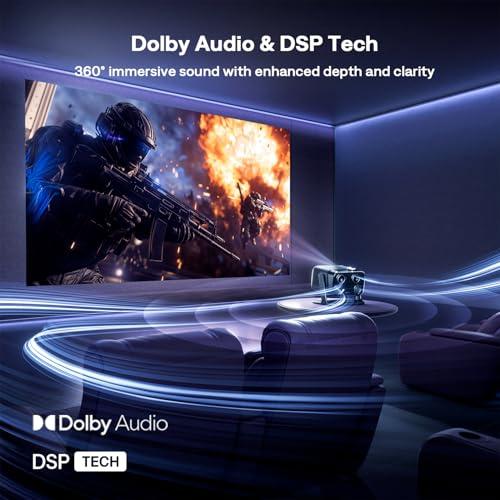
Both projectors include built-in speakers, but their approaches differ. The M2 Pro uses a 20-watt stereo system with Dolby Audio and DTS Virtual:X processing for spatial sound effects. The BOOM Mini also delivers 20 watts total power through dual 10-watt speakers with Dolby Audio support. In practice, both provide surprisingly good sound for their size, though serious home theater enthusiasts will likely want external speakers regardless.
The brightness difference between these projectors is substantial and affects everything about how you use them. The M2 Pro's 1,300 ANSI lumens versus the BOOM Mini's 500 lumens represents nearly a three-fold difference in light output.
In practical terms, the M2 Pro can handle family movie nights in living rooms with normal evening lighting. You might need to dim overhead lights slightly, but you won't need complete darkness. The BOOM Mini requires a darker environment—think basement media room or bedroom with blackout curtains—but creates a more immersive cinema experience as a result.
This is where the technology differences become most apparent. The M2 Pro's triple laser system produces colors that are simply more accurate and vibrant than what the BOOM Mini can achieve with LED technology. The difference is particularly noticeable in nature documentaries, animated movies, and HDR content where subtle color gradations matter.
However, the BOOM Mini still delivers satisfying color performance for its price point. Unless you're comparing them side-by-side, most viewers will find the color reproduction perfectly adequate for movies and TV shows.
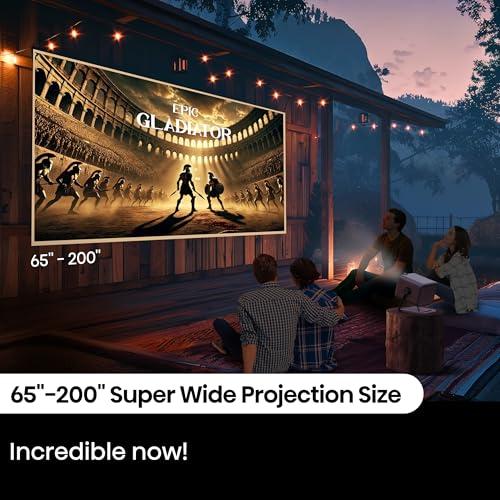
Both projectors can theoretically project images up to 200 inches, but their optimal viewing sizes differ significantly. The M2 Pro's true 4K resolution maintains sharpness even at massive screen sizes—120 to 150 inches is a sweet spot where the quality really shines. The BOOM Mini's 1080p resolution is best kept to 100 inches or smaller for optimal sharpness, though it's still watchable larger.
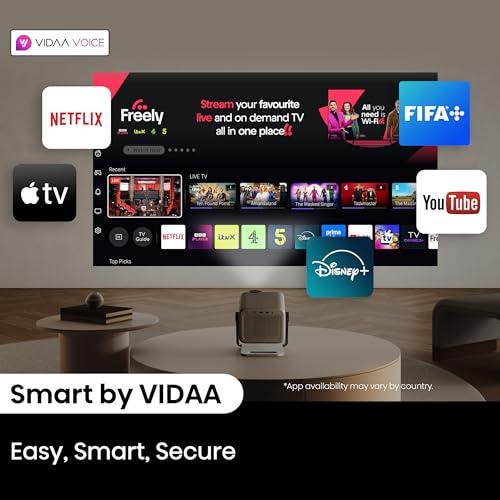
The BOOM Mini wins decisively in the smart features category. Native Google TV integration is simply more convenient than the M2 Pro's VIDAA operating system, which, while functional, doesn't offer the same app selection or interface polish.
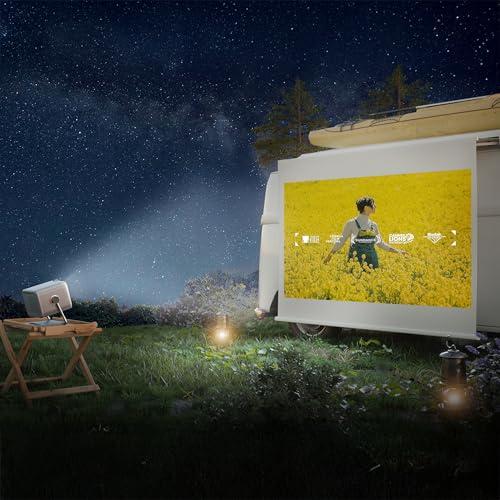
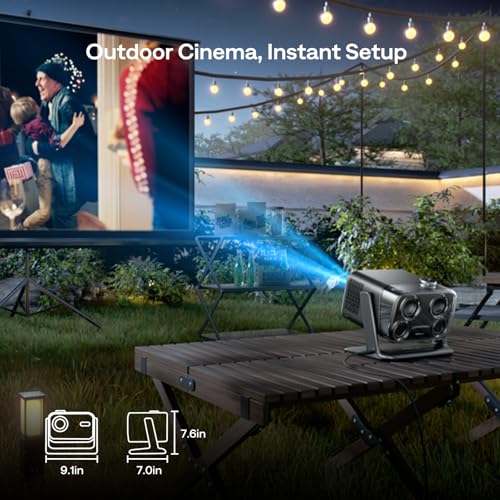
The BOOM Mini's real-time autofocus is genuinely impressive—move the projector, and it automatically refocuses within seconds. The M2 Pro also has autofocus, but it's not quite as instantaneous. For users who frequently move their projector between rooms or take it outdoors, this difference matters significantly.
For gaming enthusiasts, the M2 Pro is the clear winner. The 240Hz refresh rate support and 12ms input lag make it suitable for competitive gaming, while the higher brightness maintains image quality during fast-paced action scenes. The BOOM Mini can handle gaming adequately, but the lower brightness and standard refresh rates make it better suited for casual gaming sessions.
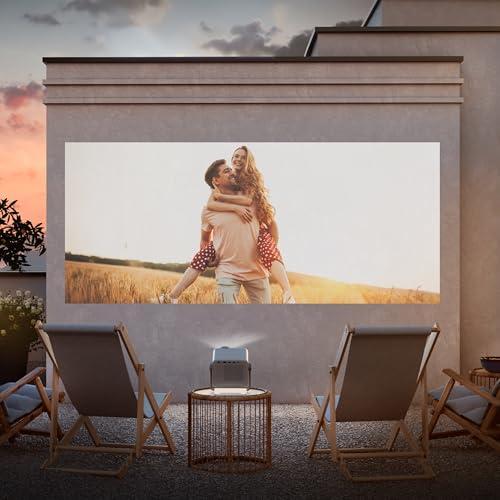
If you're building a dedicated home theater space, the M2 Pro makes more sense despite its higher price. The superior brightness allows for some ambient lighting during intermissions or discussions, while the true 4K resolution and enhanced color accuracy provide a genuinely cinematic experience.
The optical zoom is particularly valuable in home theater setups, allowing you to achieve the perfect screen size without moving the projector. This flexibility is crucial when dealing with fixed seating arrangements or mounting constraints.
For casual home theater use—occasional movie nights or weekend binge-watching—the BOOM Mini offers an excellent balance of performance and convenience. The built-in Google TV eliminates setup complexity, while the darker viewing requirements actually enhance the cinematic atmosphere.
The Hisense M2 Pro is the right choice for users who prioritize image quality above all else. If you're serious about home theater, regularly watch 4K content, or need a projector that works in various lighting conditions, the premium price becomes justified. It's also the better choice for gaming enthusiasts and anyone planning to use screen sizes above 120 inches regularly.
The Aurzen BOOM Mini excels for users who want maximum convenience and smart features without breaking the bank. It's perfect for apartment dwellers, casual movie watchers, and anyone who values plug-and-play simplicity over ultimate performance. The integrated Google TV and quick setup make it ideal for users who want to start watching content immediately without dealing with additional devices or complex configurations.
Both projectors represent significant advances from earlier portable projectors. Five years ago, truly portable projectors typically offered 720p resolution at best, with dim LED light sources that required completely dark rooms. The M2 Pro demonstrates how laser technology has miniaturized to the point where genuine home theater performance fits in a portable package, while the BOOM Mini shows how smart TV integration can eliminate the complexity that once made projectors intimidating for mainstream users.
The choice between these projectors ultimately depends on your priorities and budget. The M2 Pro delivers premium performance that justifies its higher price for serious home theater enthusiasts, while the BOOM Mini provides exceptional value for casual users who prioritize convenience and smart features.
Consider your typical viewing environment, content preferences, and technical comfort level. If you're building a dedicated theater space and want the best possible image quality, invest in the M2 Pro. If you want a versatile, user-friendly projector for occasional entertainment, the BOOM Mini offers outstanding value.
Both projectors represent the current state of portable projection technology at their respective price points, and both deliver on their core promises. The key is understanding which set of compromises aligns better with your needs and expectations.
| Hisense M2 Pro 4K Triple Laser Portable Projector | Aurzen BOOM Mini Smart Projector Google TV |
|---|---|
| Native Resolution - Critical for image sharpness on large screens | |
| True 4K UHD (3840×2160) with 2.07 million micromirrors | 1080p (1920×1080), accepts 4K input but downscales |
| Light Source Technology - Determines brightness, color accuracy, and lifespan | |
| Triple laser (RGB) with 25,000+ hour lifespan | LED with standard lifespan, energy efficient |
| Brightness - Most important for room lighting flexibility | |
| 1,300 ANSI lumens (works in moderately lit rooms) | 500 ANSI lumens (requires dark room for optimal viewing) |
| Color Gamut - Affects how vibrant and lifelike colors appear | |
| 110% BT.2020 professional color space | 40% NTSC standard color space |
| Smart Platform - Determines streaming app access and user experience | |
| VIDAA OS with major streaming apps | Native Google TV with 10,000+ apps and Google Assistant |
| Setup Technology - How quickly you can get watching | |
| Auto-focus, keystone correction, wall color adaptation | Real-time ToF autofocus (3-second adjustment), auto keystone |
| Projection Flexibility - Important for placement options | |
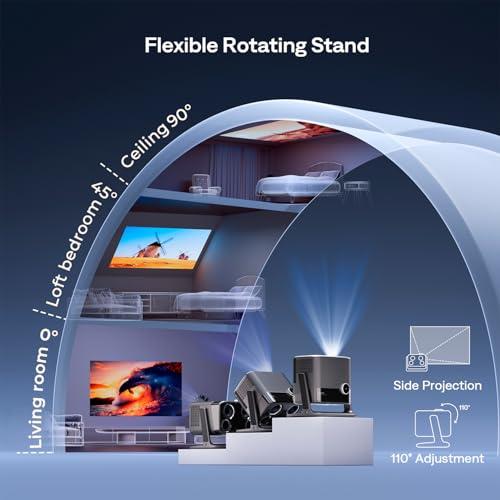
| 1.0-1.3x optical zoom, 360° gimbal design | Digital zoom only, 110° vertical stand adjustment |
| HDR Support - Enhances contrast and detail in compatible content | |
| Dolby Vision, HDR10, HDR10+, HLG | HDR10, HLG |
| Audio System - Built-in sound quality | |
| 20W stereo with Dolby Audio and DTS Virtual:X | 20W dual speakers with Dolby Audio |
| Gaming Performance - Response time and refresh rate for gaming | |
| 240Hz refresh rate, 12ms input lag | Standard refresh rate, higher input lag |
| Weight and Portability - How easy it is to move around | |
| 8.6 lbs, premium build quality | Lighter and more compact design |
| Projection Size Range - Screen size flexibility | |
| 65"-200" with excellent quality throughout | 40"-200", best quality under 100" |
| Connectivity Options - How you connect devices | |
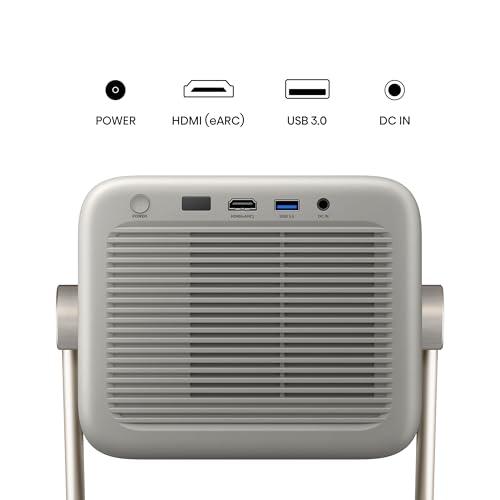
| Wi-Fi, Bluetooth 5.0, HDMI, USB ports | Dual-band Wi-Fi, Bluetooth 5.1, HDMI, 2 USB ports |
| Target User - Who this projector is designed for | |
| Home theater enthusiasts wanting premium portable performance | Casual users prioritizing convenience and smart features |
The Hisense M2 Pro is significantly better for dedicated home theater setups. Its true 4K resolution, 1,300 ANSI lumens brightness, and 110% BT.2020 color space deliver cinema-quality visuals on large screens up to 200 inches. The optical zoom and advanced HDR support make it ideal for permanent installations where image quality is paramount.
The Hisense M2 Pro offers true 4K resolution with triple laser technology, while the Aurzen BOOM Mini provides 1080p resolution with LED technology. This means the M2 Pro delivers sharper, more detailed images with significantly better color accuracy, especially noticeable on screens larger than 100 inches.
The Hisense M2 Pro performs much better in bright rooms with its 1,300 ANSI lumens compared to the BOOM Mini's 500 ANSI lumens. The M2 Pro can handle moderate ambient lighting, while the BOOM Mini requires darker environments for optimal viewing.
The Aurzen BOOM Mini has built-in Google TV, giving you direct access to Netflix, YouTube, Disney+, and thousands of other apps without any additional devices. The Hisense M2 Pro uses VIDAA OS with major streaming apps but has a more limited selection compared to Google TV.
The Aurzen BOOM Mini is more portable with its lighter weight and faster setup. It features real-time autofocus that adjusts in 3 seconds when moved, making it perfect for users who frequently relocate their projector. The M2 Pro is heavier but offers more precise placement options with optical zoom.
The Hisense M2 Pro excels for gaming with 240Hz refresh rate support and just 12ms input lag, making it suitable for competitive gaming. The Aurzen BOOM Mini can handle casual gaming but has higher input lag and standard refresh rates.
Both projectors feature 20W audio systems with Dolby Audio support. The Hisense M2 Pro includes additional DTS Virtual:X processing for spatial sound effects, while the BOOM Mini focuses on clear, room-filling audio. Both provide good sound for their size but may benefit from external speakers in larger rooms.
The Aurzen BOOM Mini wins with native Google TV integration, offering superior app selection, Google Assistant voice control, and seamless casting from mobile devices. The M2 Pro has functional smart features through VIDAA OS but doesn't match the convenience and app ecosystem of Google TV.
The Aurzen BOOM Mini provides exceptional value for casual users, combining smart TV functionality with adequate projection quality at a budget-friendly price. The Hisense M2 Pro offers premium value for serious home theater enthusiasts who prioritize image quality and advanced features.
The Hisense M2 Pro maintains excellent image quality at all sizes from 65" to 200", with optimal performance at 120-150 inches. The BOOM Mini works well from 40" to 200" but delivers best sharpness when kept under 100 inches due to its 1080p resolution.
The Hisense M2 Pro uses laser technology with a 25,000+ hour lifespan, providing years of reliable use with minimal brightness degradation. The BOOM Mini uses LED technology with a shorter but still substantial lifespan, offering good longevity for its price point.
Choose the Hisense M2 Pro if you want the best possible image quality, plan to use it in various lighting conditions, or are building a dedicated home theater. Select the Aurzen BOOM Mini if you prioritize convenience, smart features, and value, especially for casual viewing in dark rooms.
We've done our best to create useful and informative comparisons to help you decide what product to buy. Our research uses advanced automated methods to create this comparison and perfection is not possible - please contact us for corrections or questions. These are the sites we've researched in the creation of this article: thegadgetflow.com - valueelectronics.com - youtube.com - projectorscreenstore.com - whathifi.com - hisense-usa.com - tomsguide.com - content.syndigo.com - youtube.com - shop.hisense-usa.com - avsforum.com - projectorscreen.com - projectorscreen.com - projectorcentral.com - avsforum.com - youtube.com - projector-database.com - aurzen.com - aurzen.com - the-gadgeteer.com - projectorcentral.com - aurzen.com - aurzen.com - youtube.com - bestbuy.com - bestbuy.com - youtube.com - aurzen.com - youtube.com - hometechnologyreview.com - youtube.com - aurzen.com

Privacy Policy
Terms and Conditions - Affiliate Policy
Home Security
© Copyright 2008-2026.
11816 Inwood Rd #1211, Dallas, TX 75244