

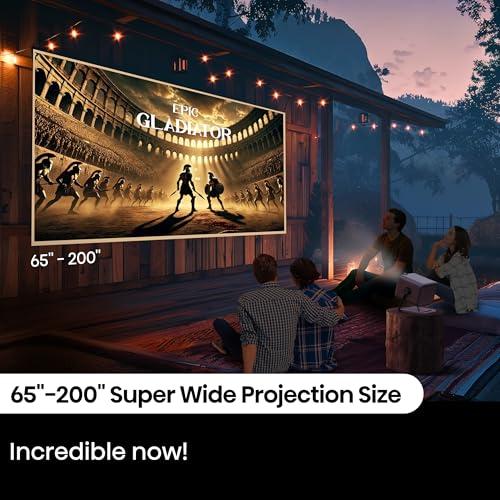
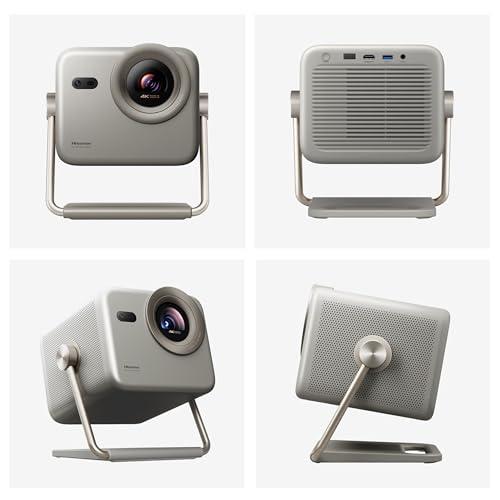
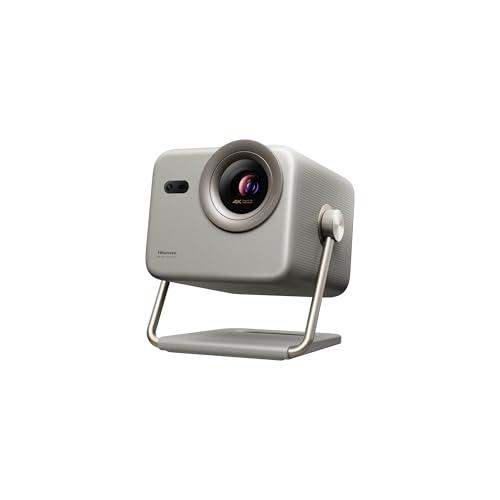
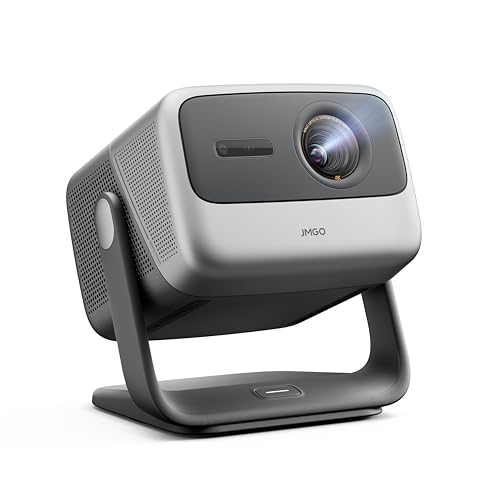
The portable 4K projector market has exploded in recent years, and for good reason. These devices promise to deliver cinema-quality visuals anywhere you want them, without the commitment of mounting a massive projector to your ceiling. But with that convenience comes some tough choices, especially when comparing premium options like the Hisense M2 Pro 4K Triple Laser Portable Projector and the JMGO N1S Pro 4K Projector.
Both projectors launched in 2024, representing the latest thinking in portable projection technology. The Hisense M2 Pro positions itself as the ultimate travel companion, while the JMGO N1S Pro takes a different approach, emphasizing brightness and setup flexibility over maximum portability.
Before diving into the comparison, it's worth understanding what separates these premium portable projectors from both cheaper alternatives and traditional home theater setups. The key innovation here is laser light sources—specifically, triple laser technology that uses separate red, green, and blue lasers instead of a single white laser or LED setup.
This matters because traditional projector light sources often struggle with color accuracy and brightness consistency. LEDs, while long-lasting, typically can't get bright enough for daylight viewing. Single white lasers are brighter but often produce less vibrant colors because they're essentially white light filtered through color wheels or other mechanisms.
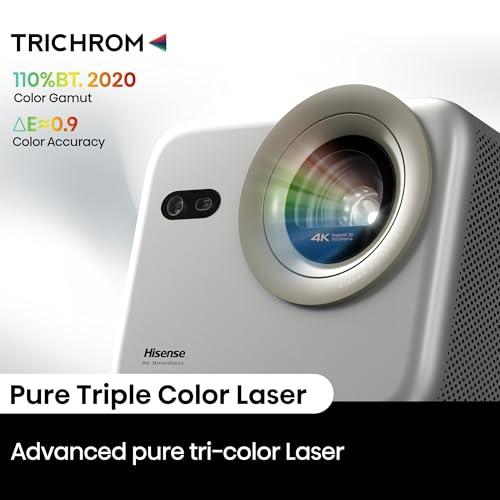
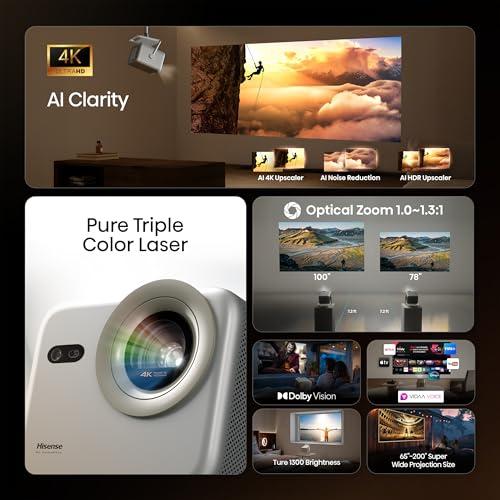
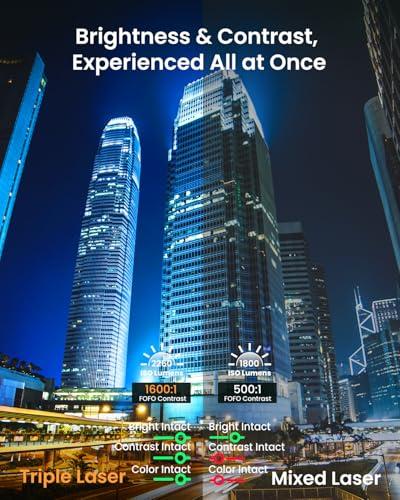
Triple laser systems, like what both the Hisense M2 Pro and JMGO N1S Pro use, generate pure red, green, and blue light directly. This approach delivers both the brightness you need for varied lighting conditions and the color accuracy that makes movies look the way directors intended.
The other major advancement is 4K resolution becoming standard in portable projectors. Just five years ago, most portable projectors maxed out at 1080p, and even that often came with compromises in brightness or color quality. Now, you can genuinely get cinema-level detail in a device you can carry in a backpack.
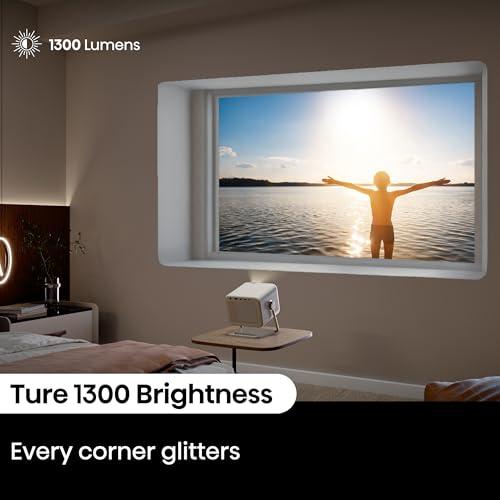
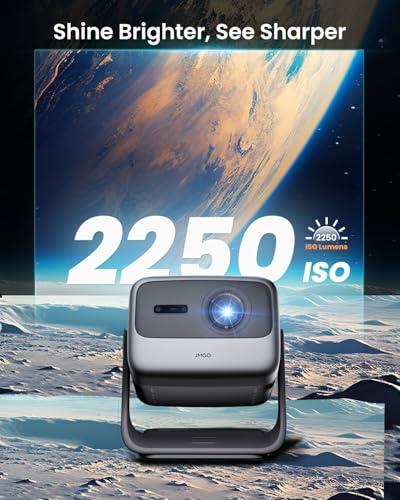
When evaluating any projector, brightness is often the most critical specification, and it's where these two models diverge dramatically. The JMGO N1S Pro delivers 2,400 ANSI lumens, while the Hisense M2 Pro produces 1,300 ANSI lumens.
That 85% brightness advantage for the JMGO isn't just a number on a spec sheet—it fundamentally changes how and where you can use the projector. ANSI lumens, by the way, is the standardized measurement for projector brightness that accounts for uniformity across the entire image, not just the brightest spot.
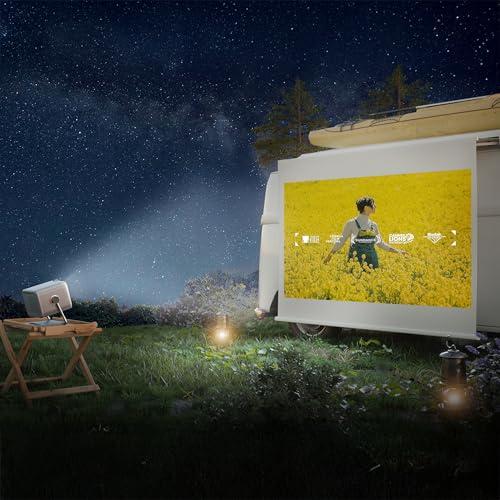
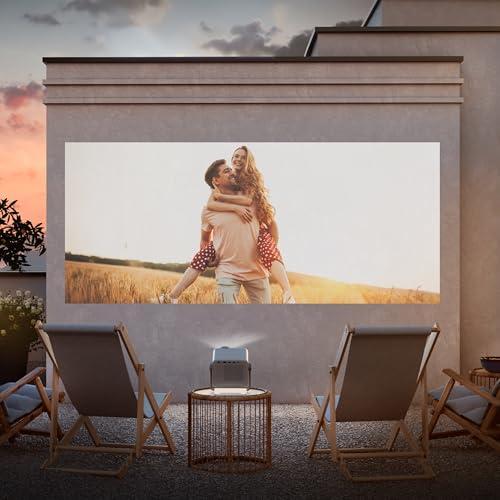
Based on our research into user experiences, the JMGO N1S Pro can produce watchable images in moderately lit rooms, making it suitable for living room use during evening hours with some ambient lighting. The Hisense M2 Pro, while still impressive for its size, really shines in darker environments—think dedicated movie rooms or outdoor screenings after sunset.
This brightness difference matters more than you might think. If you're planning to use your projector primarily in a light-controlled environment, the Hisense M2 Pro has plenty of output. But if you want the flexibility to set up anywhere in your house without drawing all the curtains and dimming every light, the JMGO N1S Pro opens up possibilities that the Hisense simply can't match.
From a technical standpoint, both projectors achieve their brightness through sophisticated laser engines, but the JMGO's higher output likely comes from more powerful laser diodes and more aggressive thermal management. This typically means more fan noise and higher power consumption, though both projectors manage to stay relatively quiet during operation.
Here's where things get interesting, because the two projectors take notably different approaches to color reproduction. The Hisense M2 Pro focuses heavily on color accuracy, achieving a Delta E (color accuracy measurement) of around 0.9, which is exceptionally good for a consumer projector. Delta E measures how far colors deviate from their reference standards—lower numbers mean more accurate colors.
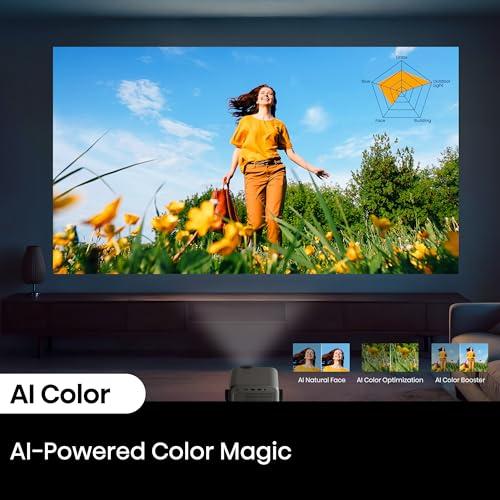
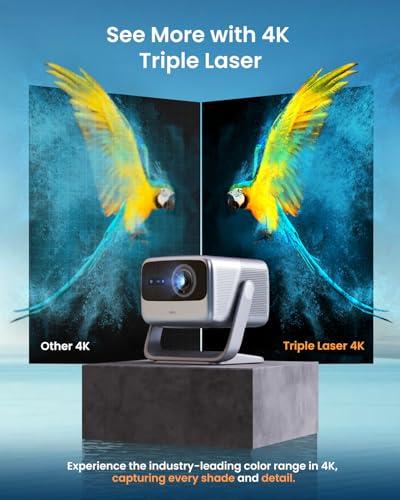
The Hisense M2 Pro uses what Hisense calls TriChroma technology, employing discrete red, green, and blue lasers with sophisticated processing to hit 110% of the BT.2020 color space. BT.2020 is the color standard for 4K content, so covering 110% means this projector can display colors that are even more saturated than what most 4K content contains.
The JMGO N1S Pro also claims 110% BT.2020 coverage, but based on professional reviews, its approach prioritizes visual impact over strict accuracy. Colors appear vibrant and engaging, but they're not necessarily true to the original source material. This isn't necessarily a flaw—many users actually prefer slightly enhanced colors for entertainment content.
Which approach is better depends on your priorities. If you're a movie enthusiast who wants to see films exactly as the director intended, the Hisense M2 Pro delivers reference-level accuracy that rivals much more expensive home theater projectors. If you prioritize colors that pop and make content look engaging, even if they're not perfectly accurate, the JMGO N1S Pro might be more appealing.
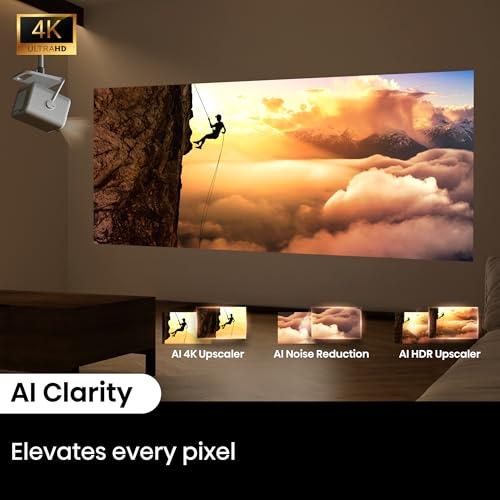
The Hisense M2 Pro also includes advanced AI-powered image processing that analyzes content in real-time to optimize sharpness, reduce noise, and enhance HDR content. This kind of sophisticated processing was typically found only in high-end home theater projectors until recently.
For gaming enthusiasts, the Hisense M2 Pro offers capabilities that are genuinely impressive for a portable projector. Its 240Hz refresh rate support with HSR240 (High Speed Response) technology and 12ms input lag puts it in the same league as gaming monitors designed specifically for competitive play.
Input lag is the delay between when your controller sends a command and when you see the result on screen. For context, most TVs have 20-40ms of input lag, gaming monitors typically range from 1-5ms, and many projectors suffer from 50ms or higher. The Hisense M2 Pro's 12ms is exceptional for any projector, let alone a portable one.
The JMGO N1S Pro, by comparison, supports 4K gaming at 60Hz with approximately 35ms input lag. That's perfectly acceptable for casual gaming and single-player experiences, but competitive gamers will notice the difference.
This gaming performance advantage for the Hisense M2 Pro extends beyond just lag and refresh rates. The projector includes dedicated gaming modes that optimize motion handling and reduce artifacts that can make fast-moving games look stuttery or unclear.
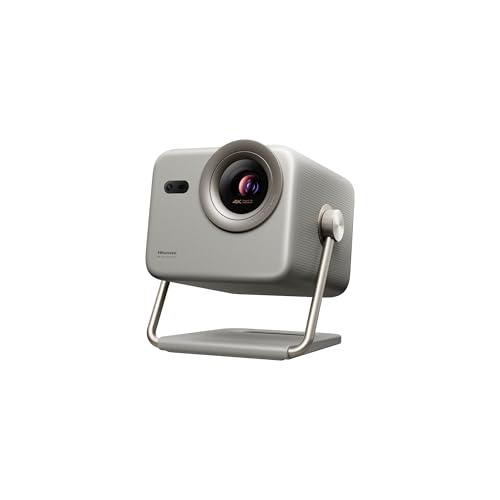
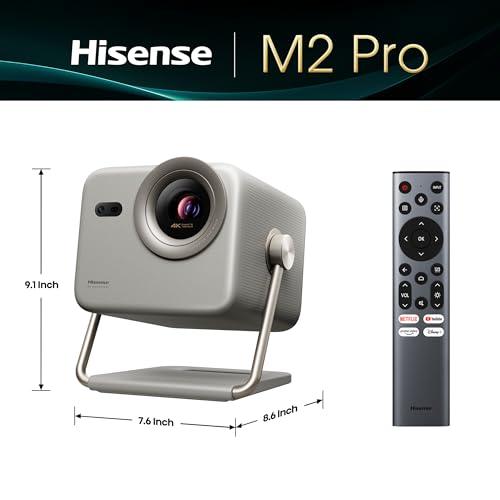
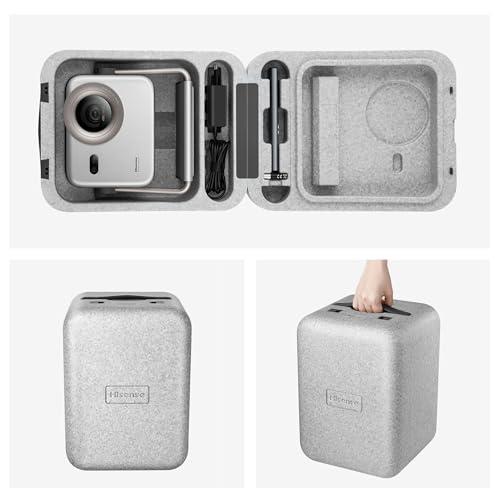
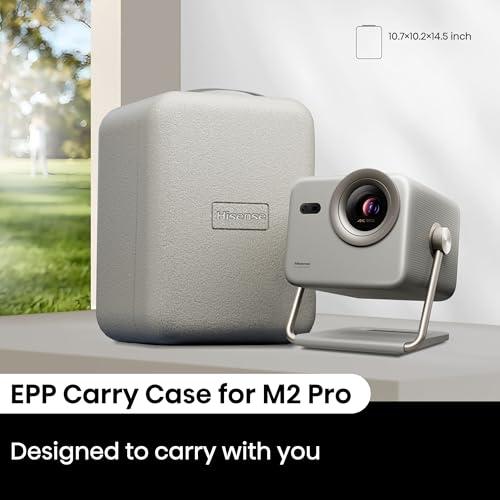
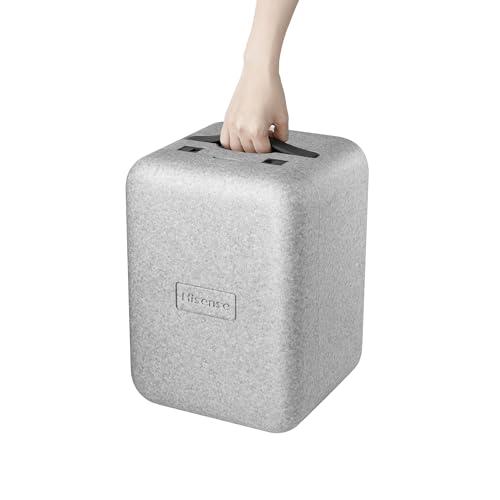
The physical design of these projectors reflects their different priorities. The Hisense M2 Pro weighs 8.6 pounds and measures roughly 8" x 9" x 7"—genuinely portable dimensions that fit comfortably in a backpack or carry-on luggage. It includes a protective carrying case and seems designed for users who actually want to move their projector regularly.
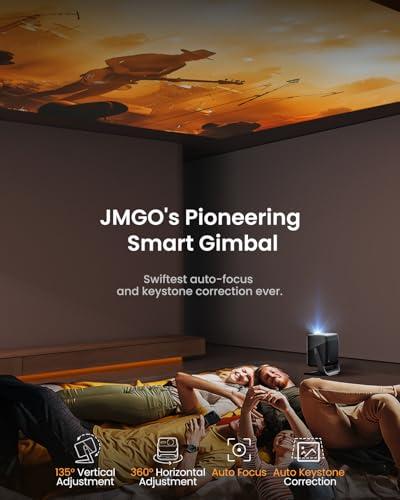
The JMGO N1S Pro, while still technically portable at 9.9 pounds, takes a different approach with its gimbal mounting system. This allows 360-degree horizontal rotation and 135-degree vertical adjustment, meaning you can project onto walls, ceilings, or angled surfaces without moving the base unit.
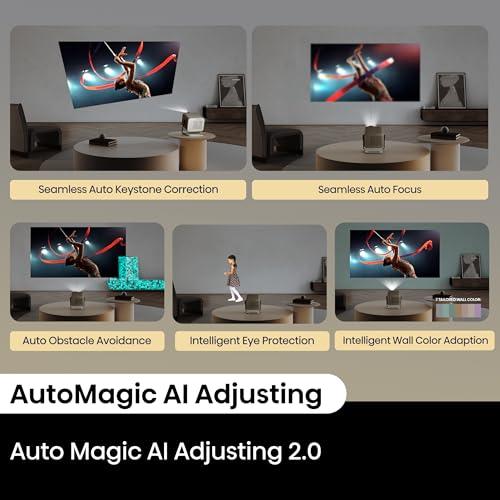
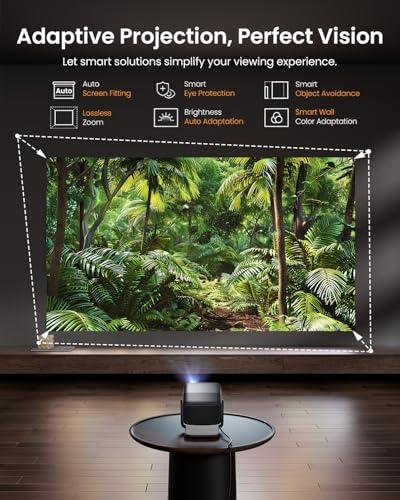
The gimbal system represents sophisticated engineering—it includes sensors that automatically detect obstacles, adjust focus, correct keystoning (image distortion from angled projection), and even dim the laser if someone walks in front of it for safety. These features make setup almost foolproof, but they add weight and complexity.
Which design is better depends on your use case. The Hisense M2 Pro excels for users who genuinely want to travel with their projector or move it between different rooms regularly. The JMGO N1S Pro is better for users who want to set up easily in different locations within their home but aren't necessarily carrying it on vacation.
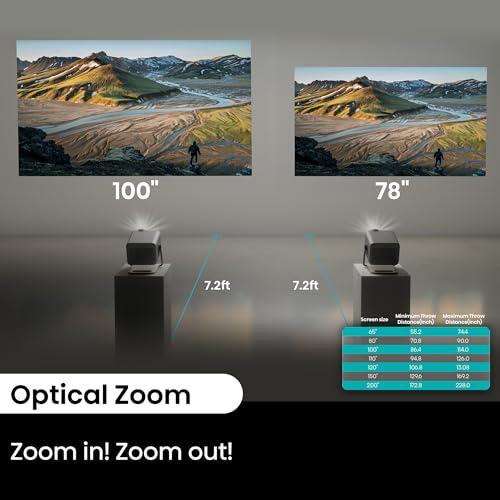
One feature that deserves special attention is the Hisense M2 Pro's optical zoom capability—a 1.0-1.3x range that maintains full 4K resolution across the entire zoom range. This might not sound revolutionary, but it's actually quite rare in projectors, especially portable ones.
Most projectors force you to physically move the device to change image size, or use digital zoom that reduces image quality by cropping and scaling the picture. Optical zoom uses actual lens elements to change the image size without quality loss, just like a camera lens.
This feature provides significant practical flexibility. You can set up the Hisense M2 Pro in the optimal position for your room's layout, then adjust the image size to fit your screen or wall perfectly. The JMGO N1S Pro lacks this capability, requiring precise positioning to achieve the desired image size.
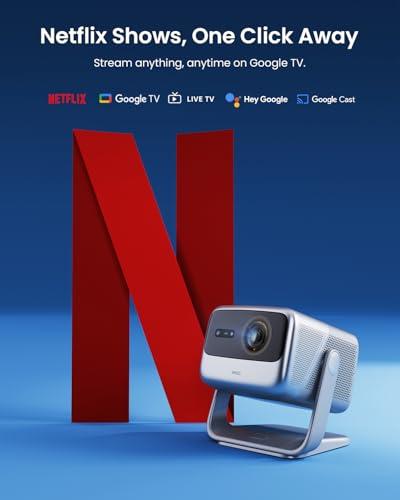
Both projectors include built-in smart platforms, but they take different approaches. The JMGO N1S Pro runs Google TV, which provides access to virtually every major streaming service, including Netflix, Disney+, Prime Video, and thousands of other apps. The Google TV interface is polished, regularly updated, and integrates well with Google Assistant and Chromecast.
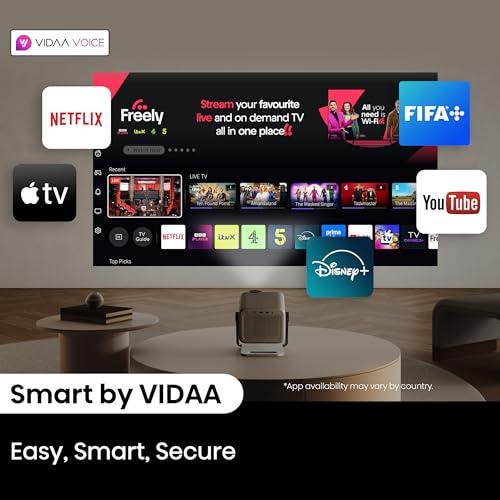
The Hisense M2 Pro uses Hisense's VIDAA OS, which covers the major streaming services but doesn't have the same breadth of app support as Google TV. However, VIDAA has improved significantly in recent years and includes all the streaming services most users actually need.
For most users, both platforms will handle their streaming needs adequately. The Google TV advantage mainly matters if you use more obscure streaming services or prefer Google's ecosystem integration.
Both projectors include 20-watt stereo speaker systems, and surprisingly, they both perform better than expected for their size. The JMGO N1S Pro receives consistently positive feedback for its audio quality, with users praising its bass response and directional sound for a projector.
The Hisense M2 Pro supports Dolby Audio and DTS Virtual:X, which use processing to create a more immersive soundstage from the built-in speakers. In practice, both projectors provide adequate audio for casual viewing, but serious movie enthusiasts will likely want to connect external speakers or soundbars.
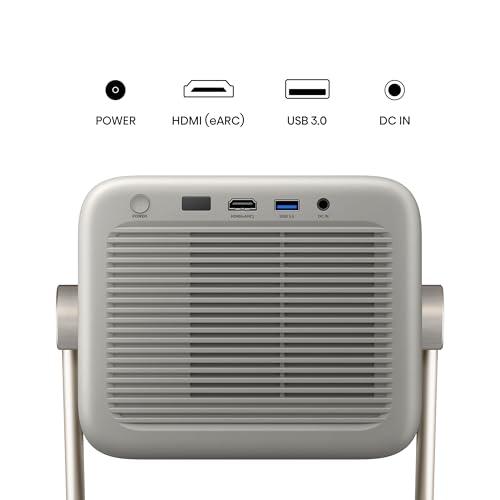
Both projectors include HDMI eARC (enhanced Audio Return Channel) support, which simplifies soundbar connections and allows the projector to pass high-quality audio formats to external audio systems.
At the time of writing, the Hisense M2 Pro costs significantly less than the JMGO N1S Pro—roughly $700 less, which represents about a 35% price difference. This makes the value comparison complex because you're not just comparing features; you're weighing whether the JMGO's advantages justify spending significantly more money.
The Hisense M2 Pro offers exceptional value by including premium features like optical zoom, gaming-optimized performance, and reference-level color accuracy at a more accessible price point. The JMGO N1S Pro commands its premium through superior brightness and setup convenience, but you're paying substantially more for those advantages.
From a pure performance-per-dollar perspective, the Hisense M2 Pro wins decisively. From a convenience and versatility standpoint, the JMGO N1S Pro may justify its premium for users who prioritize those aspects.
For dedicated home theater use, both projectors can deliver genuinely impressive experiences, but they suit different setups. The Hisense M2 Pro's superior color accuracy and gaming performance make it ideal for enthusiasts who want reference-quality reproduction in a controlled environment.
The JMGO N1S Pro's higher brightness makes it better suited for home theaters that can't achieve complete light control, or for users who want to use the same projector for both dedicated movie watching and casual living room entertainment.
Both projectors support HDR content, though the Hisense M2 Pro includes more HDR formats (Dolby Vision, HDR10, HDR10+, HLG) compared to the JMGO N1S Pro's HDR10 support.
After researching extensive user feedback and professional reviews, the choice between these projectors comes down to your priorities and use cases.
Choose the Hisense M2 Pro if you want the best value, prioritize color accuracy, plan to game seriously, need true portability, or have a dedicated dark viewing space. Its combination of advanced features and competitive pricing makes it exceptional for users who want premium performance without premium prices.
Choose the JMGO N1S Pro if you need bright room performance, want effortless setup flexibility, prefer Google TV's ecosystem, or frequently use the projector in varying lighting conditions. The brightness advantage alone may justify the premium for users who can't control ambient light effectively.
Both projectors represent the current state of the art in portable projection, but they're designed for different users. The Hisense M2 Pro maximizes performance and value for dedicated use, while the JMGO N1S Pro maximizes convenience and versatility for varied applications.
In the end, both projectors deliver experiences that would have been impossible in portable form factors just a few years ago. Your choice should align with how and where you plan to use your projector most often—and how much you're willing to spend for specific advantages.
| Hisense M2 Pro 4K Triple Laser Portable Projector | JMGO N1S Pro 4K Projector |
|---|---|
| Brightness - Critical for room lighting flexibility and daytime viewing | |
| 1,300 ANSI lumens (requires darker environments for optimal viewing) | 2,400 ANSI lumens (usable in moderately lit rooms, 85% brighter) |
| Resolution & Display Technology - Core image quality foundation | |
| Native 4K UHD (3840x2160) with AI 4K Clarity Engine | Native 4K UHD (3840x2160) with MALC 2.0 triple laser |
| Color Accuracy - Important for movie enthusiasts and content creators | |
| 110% BT.2020, ΔE ~0.9 (reference-level accuracy, true-to-source colors) | 110% BT.2020 claimed (vibrant but less accurate, entertainment-focused) |
| Gaming Performance - Matters for console gaming and competitive play | |
| 240Hz refresh rate, 12ms input lag (exceptional for competitive gaming) | 60Hz max, ~35ms input lag (adequate for casual gaming only) |
| Optical Zoom - Rare feature that provides setup flexibility without quality loss | |
| 1.0-1.3x optical zoom (maintains full 4K resolution across range) | Fixed focal length, 1.2:1 throw ratio (requires precise positioning) |
| Portability & Weight - Critical for travel and frequent moving | |
| 8.6 lbs, compact design with carrying case (true portability) | 9.9 lbs with gimbal system (portable but optimized for stationary setup) |
| Setup Flexibility - Affects ease of use and positioning options | |
| Auto-focus, keystone correction, wall color adaptation | 360°/135° gimbal adjustment, auto-everything, smart object avoidance |
| Smart Platform - Determines streaming app availability and user experience | |
| VIDAA OS (major services covered, more limited app selection) | Google TV (comprehensive app ecosystem, regular updates) |
| Audio System - Built-in sound quality to reduce need for external speakers | |
| 20W stereo, Dolby Audio, DTS Virtual:X | 20W stereo, Dolby Digital Plus (praised for bass response) |
| HDR Support - Enhanced contrast and color range for premium content | |
| Dolby Vision, HDR10, HDR10+, HLG (comprehensive format support) | HDR10 only (covers most content but missing premium formats) |
| Value Proposition - Performance and features relative to cost | |
| Significantly lower cost with optical zoom, gaming focus, color accuracy | Premium pricing justified by brightness advantage and Google TV |
The JMGO N1S Pro 4K Projector is significantly brighter at 2,400 ANSI lumens compared to the Hisense M2 Pro 4K Triple Laser Portable Projector at 1,300 ANSI lumens. This 85% brightness advantage means the JMGO N1S Pro can handle moderately lit rooms and some ambient light, while the Hisense M2 Pro performs best in darker environments.
The Hisense M2 Pro 4K Triple Laser Portable Projector provides better value, costing significantly less while offering unique features like optical zoom, superior gaming performance, and reference-level color accuracy. The JMGO N1S Pro costs considerably more but justifies the premium with higher brightness and advanced setup convenience.
The Hisense M2 Pro 4K Triple Laser Portable Projector is far superior for gaming with its 240Hz refresh rate and 12ms input lag, making it suitable for competitive gaming. The JMGO N1S Pro 4K Projector is limited to 60Hz gaming with ~35ms input lag, which is fine for casual gaming but not ideal for serious gamers.
The Hisense M2 Pro 4K Triple Laser Portable Projector is more portable at 8.6 pounds with compact dimensions and an included carrying case, making it ideal for travel. The JMGO N1S Pro weighs 9.9 pounds and is designed more for easy setup in different locations rather than frequent transport.
The Hisense M2 Pro 4K Triple Laser Portable Projector delivers superior color accuracy with a Delta E of ~0.9, providing reference-level color reproduction that shows movies as directors intended. The JMGO N1S Pro 4K Projector produces vibrant, engaging colors but prioritizes visual impact over strict accuracy.
The JMGO N1S Pro 4K Projector offers easier setup with its 360°/135° gimbal system, automatic keystone correction, auto-focus, and smart object avoidance features. While the Hisense M2 Pro has auto-setup features, it requires more manual positioning but offers optical zoom for fine-tuning.
The JMGO N1S Pro 4K Projector has better smart features with Google TV, offering comprehensive app support, regular updates, and seamless integration with Google services. The Hisense M2 Pro 4K Triple Laser Portable Projector uses VIDAA OS, which covers major streaming services but has a more limited app ecosystem.
For dedicated home theaters with controlled lighting, the Hisense M2 Pro 4K Triple Laser Portable Projector excels with superior color accuracy and comprehensive HDR support (Dolby Vision, HDR10+). For home theaters that can't achieve complete darkness, the JMGO N1S Pro performs better due to its higher brightness output.
Both projectors feature 20W stereo systems, but the JMGO N1S Pro 4K Projector receives better user feedback for bass response and directional sound. The Hisense M2 Pro 4K Triple Laser Portable Projector supports advanced audio processing with Dolby Audio and DTS Virtual:X for enhanced soundstage creation.
The JMGO N1S Pro 4K Projector offers superior placement flexibility with its gimbal system allowing projection onto walls, ceilings, or angled surfaces without moving the base. The Hisense M2 Pro provides different flexibility through its optical zoom feature, allowing image size adjustment without moving the projector.
Both the Hisense M2 Pro 4K Triple Laser Portable Projector and JMGO N1S Pro 4K Projector use laser light sources rated for 25,000-30,000 hours of operation, essentially lasting decades with normal use. Both offer similar longevity advantages over traditional lamp-based projectors that need bulb replacements every few thousand hours.
Choose the Hisense M2 Pro 4K Triple Laser Portable Projector if you prioritize value, color accuracy, gaming performance, true portability, or have a dark viewing space. Choose the JMGO N1S Pro 4K Projector if you need bright room performance, prefer effortless setup, want comprehensive smart TV features, or frequently use the projector in varying lighting conditions.
We've done our best to create useful and informative comparisons to help you decide what product to buy. Our research uses advanced automated methods to create this comparison and perfection is not possible - please contact us for corrections or questions. These are the sites we've researched in the creation of this article: thegadgetflow.com - valueelectronics.com - youtube.com - projectorscreenstore.com - whathifi.com - hisense-usa.com - tomsguide.com - content.syndigo.com - youtube.com - shop.hisense-usa.com - avsforum.com - projectorscreen.com - projectorscreen.com - projectorcentral.com - avsforum.com - youtube.com - projector-database.com - techradar.com - projectorcentral.com - gray9.in - projectorreviews.com - howtogeek.com - the-gadgeteer.com - projectorcentral.com - global.jmgo.com - global.jmgo.com - cnet.com - cnet.com - youtube.com - global.jmgo.com - avsforum.com - youtube.com - youtube.com

Privacy Policy
Terms and Conditions - Affiliate Policy
Home Security
© Copyright 2008-2026.
11816 Inwood Rd #1211, Dallas, TX 75244