


The world of portable projectors has transformed dramatically over the past few years. What once were dim, clunky devices barely suitable for PowerPoint presentations have evolved into sophisticated entertainment systems that can genuinely replace your TV in many situations. The technology improvements since 2020 have been particularly impressive—we're now seeing true 4K resolution, laser light sources, and smart streaming capabilities packed into devices you can actually carry around.
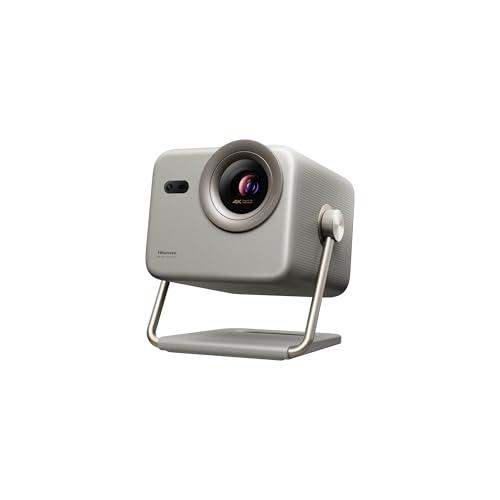
Today, we're comparing two projectors that represent very different approaches to portable projection: the premium Hisense M2 Pro 4K Triple Laser Portable Projector and the ultra-portable XGIMI Elfin Flip Portable Projector. Released in 2024 and 2025 respectively, these devices showcase how manufacturers are tackling the fundamental trade-off between image quality and true portability.
Before diving into specifics, it's worth understanding what makes a portable projector "good." The key considerations go far beyond just throwing a picture on the wall.
Image quality remains paramount—this includes resolution (how sharp the picture looks), brightness (whether you can see it with lights on), color accuracy (how realistic movies and shows appear), and contrast (the difference between bright and dark areas). Portability involves more than just weight; it's about setup time, protection during transport, and how flexible the positioning can be. Smart features have become crucial since most people expect to stream Netflix or YouTube directly without connecting another device.
The value proposition is particularly important in this category because portable projectors range from budget models under $200 to premium units costing several times more. Understanding what you actually get for that price difference is crucial for making the right choice.
The Hisense M2 Pro represents the "premium portable" approach—delivering high-end home theater performance in a relatively compact package. At the time of writing, it sits in the upper price tier of portable projectors, reflecting its advanced triple laser technology and true 4K resolution.
The XGIMI Elfin Flip, positioned in the mid-range segment, prioritizes ultra-portability and user convenience. Its pricing reflects a focus on delivering solid performance while keeping costs reasonable for mainstream buyers.
These different approaches create distinct user experiences that appeal to different needs and budgets.
The most fundamental difference between these projectors lies in their native resolution. The Hisense M2 Pro delivers true 4K UHD resolution (3840×2160 pixels), while the XGIMI Elfin Flip provides Full HD (1920×1080 pixels).
To put this in perspective: 4K has four times as many pixels as Full HD. This translates to dramatically sharper text, clearer fine details in movies, and the ability to sit closer to large screens without seeing individual pixels. When you're projecting onto a 100-inch or larger screen—which is one of the main attractions of projection—that extra resolution becomes immediately apparent.
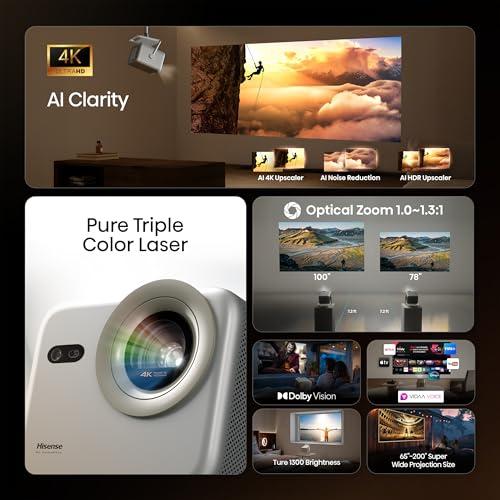
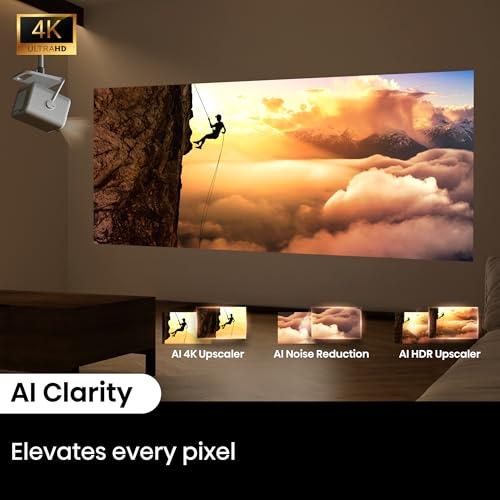
However, resolution alone doesn't tell the whole story. The Hisense M2 Pro includes an AI 4K Clarity Engine that uses artificial intelligence to upscale lower-resolution content. This means your Netflix shows and YouTube videos, which are often delivered in 1080p or lower, get enhanced to look closer to native 4K quality. It's not magic—you can't create detail that wasn't originally there—but it does make standard content look noticeably sharper and cleaner.
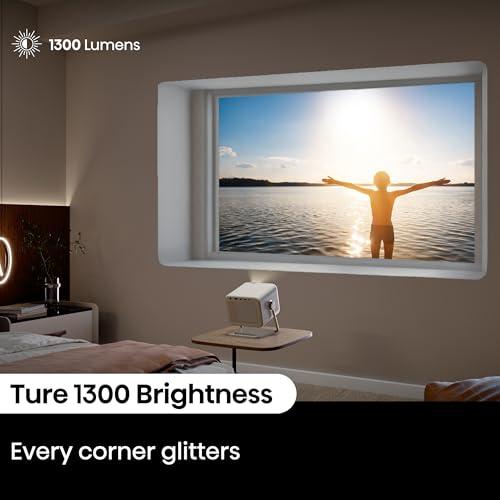
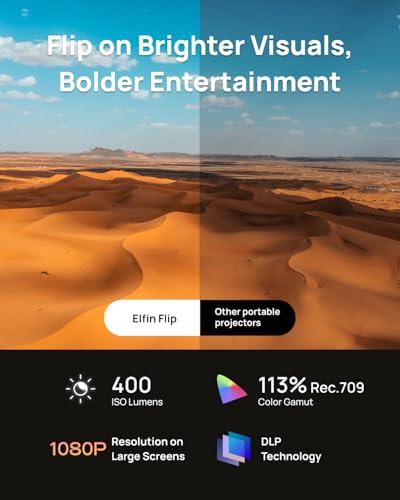
Brightness is where these projectors diverge most dramatically. The Hisense M2 Pro produces 1,300 ANSI lumens, while the XGIMI Elfin Flip outputs 400 ISO lumens. These different measurement standards make direct comparison tricky, but the practical difference is substantial.
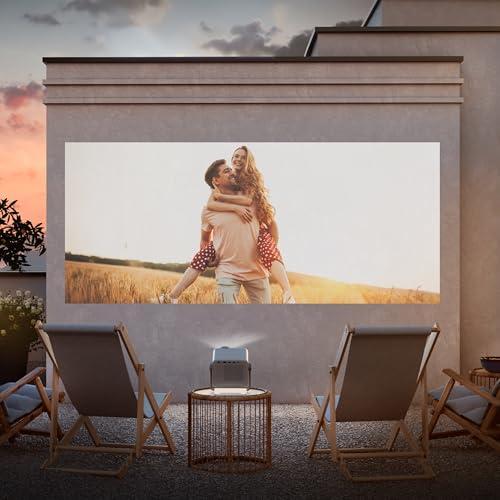
ANSI lumens (American National Standards Institute) and ISO lumens are both standardized measurements, but ANSI is generally considered more stringent. Based on our research into user experiences and professional reviews, the Hisense M2 Pro performs well in rooms with moderate ambient light—think living room with curtains drawn during daytime. The XGIMI Elfin Flip really needs darkness to shine, performing best in dimmed rooms or outdoor evening settings.
This brightness difference fundamentally affects how you'll use each projector. The M2 Pro can function more like a traditional TV, usable throughout the day in normal lighting conditions. The Elfin Flip is better suited for dedicated movie nights or camping trips where you can control the lighting environment.
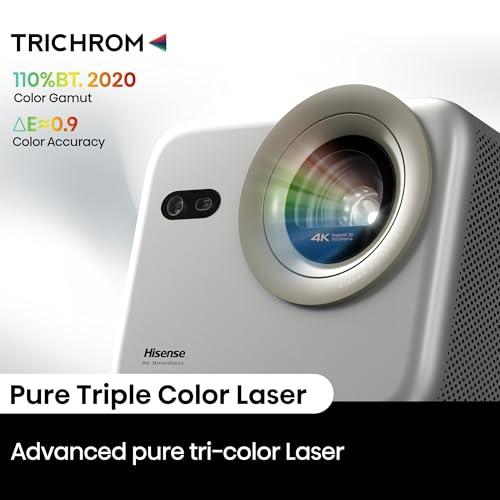
The Hisense M2 Pro uses TriChroma triple laser technology—separate red, green, and blue lasers that combine to create the full color spectrum. This isn't just marketing terminology; it represents a fundamental advance over traditional lamp-based projectors and even single-laser systems.
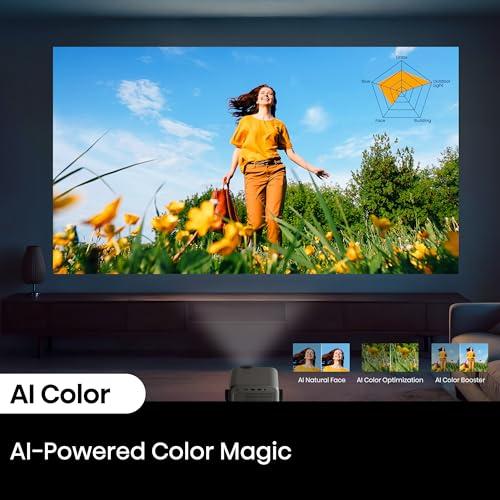
Triple laser technology offers several advantages: exceptional color accuracy (the M2 Pro covers 110% of the BT.2020 color space), consistent brightness over the life of the device, and instant on/off capability. The color space coverage is particularly impressive—BT.2020 is the standard for HDR content, so having 110% coverage means the projector can display colors that are more vivid and accurate than what most TVs can produce.
The XGIMI Elfin Flip uses LED technology, which is more traditional but still effective. LEDs offer good color reproduction (113% of Rec.709 color space) and long life, but they can't match the brightness or color accuracy of premium laser systems. The Rec.709 color space is the standard for regular HD content, so the Elfin Flip handles standard movies and shows well, just not with the expanded color range needed for premium HDR content.
Both light sources are rated for 25,000 hours of use, which translates to about 10-15 years of normal viewing. Unlike traditional lamp projectors that dim significantly over time, both LED and laser maintain consistent brightness throughout their lifespan.
Modern portable projectors have largely solved the setup headaches that plagued earlier generations. Both devices offer comprehensive auto-correction, but with different approaches.
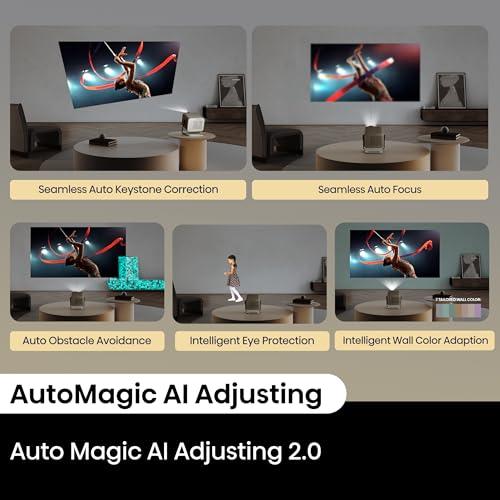
The Hisense M2 Pro focuses on precision and versatility. Its auto-focus system quickly sharpens the image, while auto keystone correction ensures a rectangular picture even when projecting from an angle. The wall color adaptation feature is particularly clever—it automatically adjusts the color output to compensate for projection onto non-white surfaces, maintaining accurate colors whether you're projecting onto a beige wall or gray ceiling.
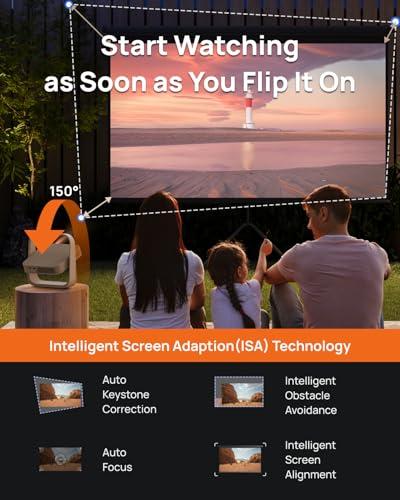
The XGIMI Elfin Flip takes auto-correction further with its Intelligent Screen Adaptation (ISA) system. Beyond basic focus and keystone correction, it includes intelligent obstacle avoidance that detects objects in the projection path and automatically adjusts the image to work around them. If there's a picture frame or wall sconce in the way, the projector will shrink or shift the image to avoid it. The intelligent screen alignment feature can detect the boundaries of a projection screen and automatically fit the image perfectly within them.
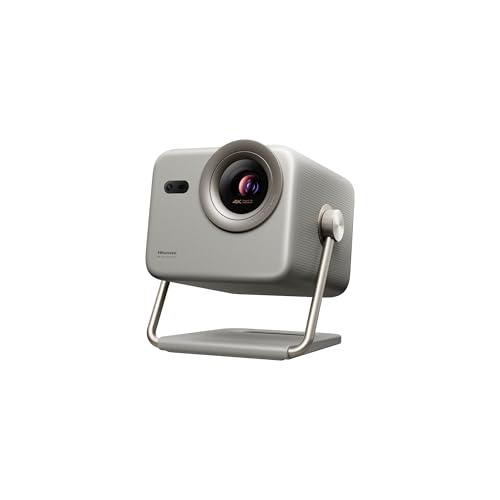
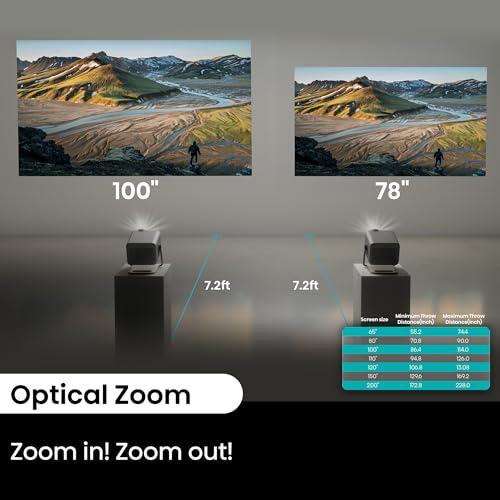
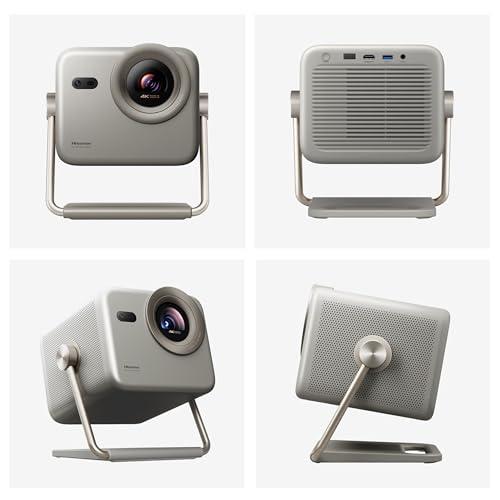
The Hisense M2 Pro incorporates a 360-degree gimbal design that allows projection at virtually any angle. This is particularly valuable for ceiling projection or unconventional setups. The built-in optical zoom (1.0-1.3x magnification) lets you adjust image size without moving the projector, which is crucial for achieving the perfect fit in your space without compromising image quality.
Optical zoom is superior to digital zoom because it doesn't reduce resolution or introduce artifacts. When you digitally zoom, you're essentially cropping the image and enlarging it, which reduces sharpness. Optical zoom uses the lens to magnify the image before it hits the projection chip, maintaining full resolution.
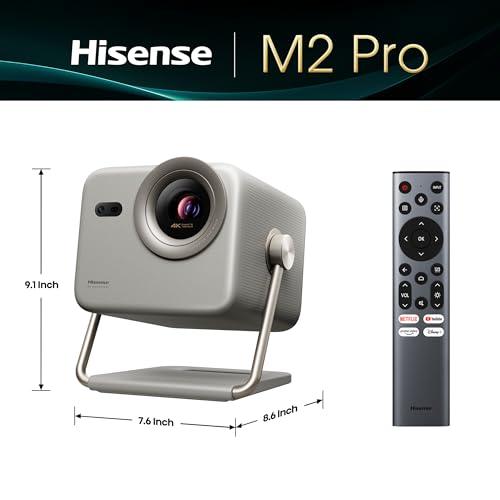
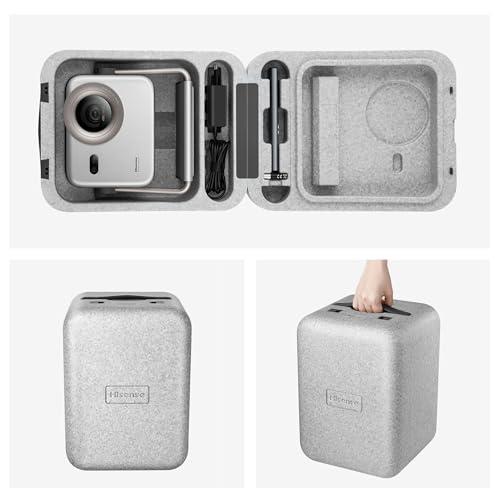
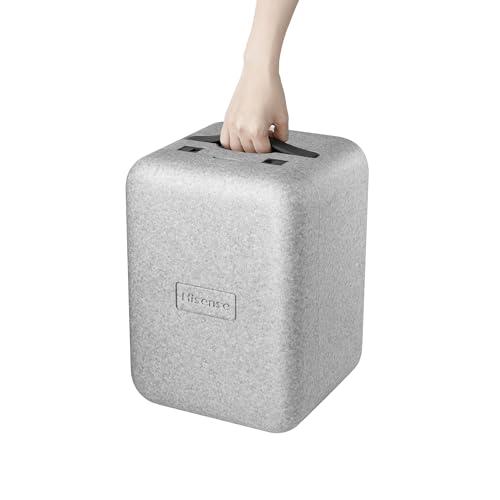
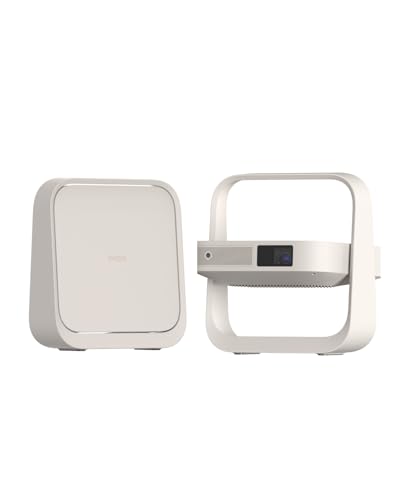
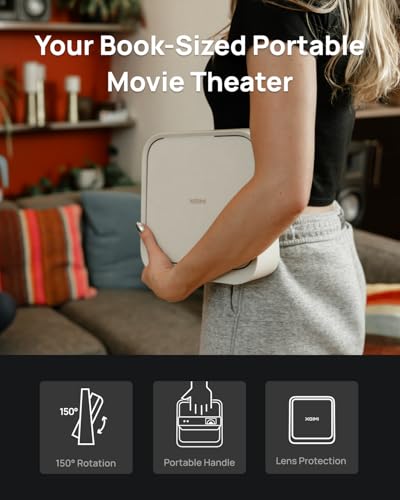
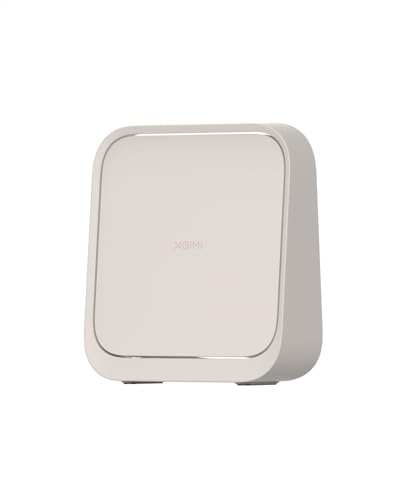
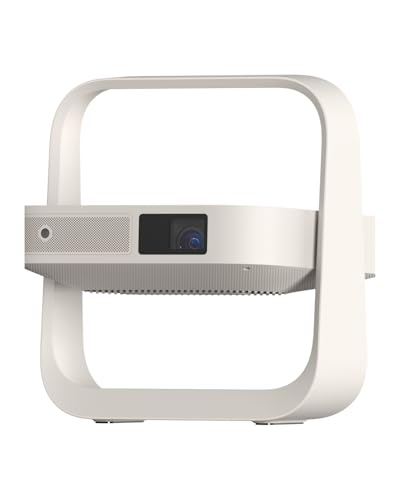
The XGIMI Elfin Flip takes a completely different approach with its innovative flip mechanism. The built-in stand rotates 150 degrees, allowing projection from floor to ceiling angles while protecting the lens during transport. When folded, it looks like a thick book and weighs just 2.6 pounds compared to the M2 Pro's 8.6 pounds. The integrated handle makes it genuinely portable for travel, camping, or moving between rooms.
Gaming on projectors has traditionally been problematic due to input lag—the delay between when you press a controller button and when the action appears on screen. Both projectors address this, but the Hisense M2 Pro goes much further.
The M2 Pro achieves 12ms input lag with a 240Hz refresh rate in gaming mode. To put this in perspective, competitive gamers typically want under 20ms lag, and 240Hz means the projector can display up to 240 frames per second—far exceeding what most gaming consoles can output but ensuring the projector never becomes the bottleneck.
The XGIMI Elfin Flip manages around 10ms input lag, which is actually slightly better for basic gaming, but lacks the high refresh rate support for advanced gaming scenarios. For casual gaming, both are perfectly adequate, but serious gamers will appreciate the M2 Pro's additional capabilities.
Both projectors include smart TV functionality, but with different operating systems and capabilities.
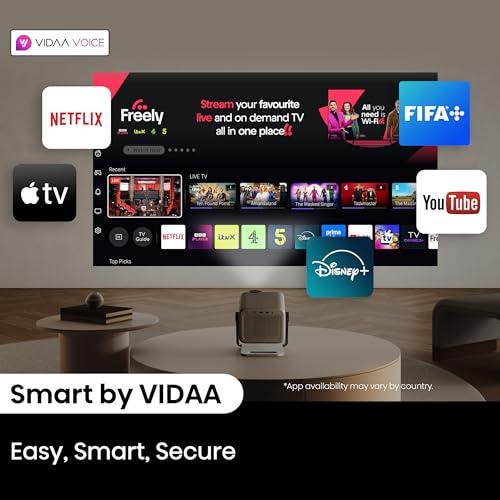
The Hisense M2 Pro runs VIDAA OS, Hisense's proprietary smart TV platform. It includes all major streaming services—Netflix, YouTube, Disney+, Amazon Prime Video, and Apple TV—with direct app access. The interface is fast and responsive, and includes voice control through VIDAA Voice. However, the app selection is more limited compared to full Android TV systems.
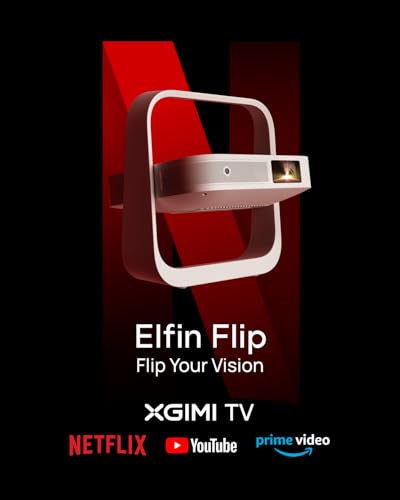
The XGIMI Elfin Flip uses Android TV, which provides access to the full Google Play Store. This means thousands of available apps, Chromecast built-in for easy casting from phones and tablets, and Google Assistant integration. For users who want maximum flexibility in app selection, Android TV is generally preferable.
Both support standard wireless casting protocols like Miracast and offer similar connectivity options including Wi-Fi 5 and Bluetooth.
Projector audio is typically an afterthought, but both devices make serious efforts here.
The Hisense M2 Pro includes a 20W stereo speaker system with Dolby Audio and DTS Virtual:X processing. DTS Virtual:X uses psychoacoustic processing to create the impression of surround sound from stereo speakers—it's not true surround sound, but it does create a wider soundstage than basic stereo. The 20W power output provides sufficient volume for medium-sized rooms without external speakers.
The XGIMI Elfin Flip has more modest 6W dual speakers (3W each) with Dolby Audio support. While adequate for basic viewing, the limited power means you'll likely want external speakers for anything beyond casual use.
At the time of writing, the Hisense M2 Pro commands a significant price premium—roughly 2.5 to 3 times the cost of the XGIMI Elfin Flip. This raises the obvious question: is the performance difference worth the price difference?
The M2 Pro makes sense for users who want a portable projector that can serve as their primary display device. The 4K resolution, high brightness, and excellent color accuracy make it suitable for replacing a traditional TV in many scenarios. If you're setting up a dedicated home theater space, frequently present to groups in various lighting conditions, or are a serious gamer who appreciates high refresh rates, the premium is justifiable.
The optical zoom and 360-degree positioning capability also make it more versatile for permanent or semi-permanent installations where precise image sizing and positioning are important.
The Elfin Flip excels at being a true portable entertainment device. Its ultra-light design, protective flip mechanism, and Android TV flexibility make it ideal for people who want to take their projector places—camping trips, hotel rooms, friend's houses, or just moving between rooms at home.
For users who primarily watch in controlled lighting conditions and don't need 4K resolution for smaller projected screen sizes, the Elfin Flip delivers excellent value. The Full HD resolution is perfectly adequate for screens up to about 120 inches when viewed from normal distances.
For dedicated home theater use, the choice becomes clearer. The Hisense M2 Pro is the obvious choice for several reasons:
The higher brightness means it can work with more screen materials and in rooms that aren't completely dark. The 4K resolution becomes increasingly important as screen sizes grow—at 150+ inches, the difference between 4K and 1080p is immediately apparent. The superior color accuracy and HDR processing provide the cinematic experience most home theater enthusiasts are seeking.
The optical zoom is particularly valuable in home theater installations where the projector position might not perfectly align with the desired screen size. Rather than compromising on placement or screen size, you can adjust optically.
However, the XGIMI Elfin Flip could work for casual home theater use, particularly in smaller spaces or for users who prioritize the ability to easily move or store the projector when not in use.
After researching extensive user reviews and professional evaluations, the choice comes down to your priorities and use cases.
Choose the Hisense M2 Pro if you want the best possible image quality from a portable projector, plan to use it as a primary display device, need it to work in various lighting conditions, or appreciate premium features like optical zoom and advanced gaming support. The price premium is substantial, but the performance advantages are equally significant.
Choose the XGIMI Elfin Flip if true portability is your primary concern, you're budget-conscious but still want good performance, you'll primarily use it in dark or dimmed environments, or you want the flexibility of Android TV's extensive app ecosystem.
Both projectors represent excellent engineering for their respective target markets. The key is honestly assessing how you'll actually use the device and whether the premium features of the M2 Pro align with your needs and budget. For most users, either choice will provide a dramatically better experience than the portable projectors available just a few years ago—it's really a question of whether you prioritize maximum performance or optimal portability and value.
| Hisense M2 Pro 4K Triple Laser Portable Projector | XGIMI Elfin Flip Portable Projector |
|---|---|
| Resolution - Determines image sharpness, especially on large screens | |
| True 4K UHD (3840×2160) with AI upscaling | Full HD (1920×1080) - adequate for most viewing |
| Brightness - Critical for daytime viewing and room lighting flexibility | |
| 1,300 ANSI lumens (works in moderately lit rooms) | 400 ISO lumens (requires dark environments) |
| Light Source Technology - Affects color accuracy, lifespan, and brightness consistency | |
| Triple laser (R+G+B) with 110% BT.2020 color space | LED with 113% Rec.709 color space |
| Weight & Portability - Determines true mobility and setup convenience | |
| 8.6 lbs - portable but substantial | 2.6 lbs - ultra-portable with flip design |
| Screen Size Range - Maximum viewing flexibility | |
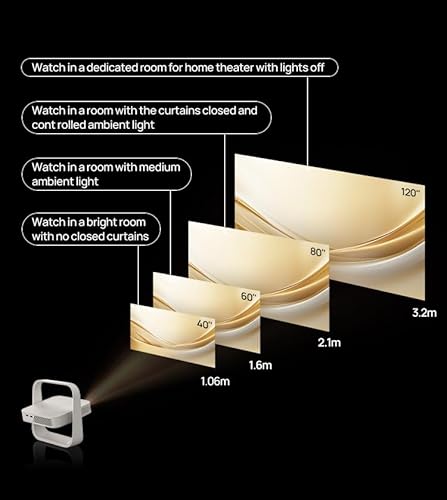
| 65" to 200" with optical zoom | 80" to 150" with digital zoom only |
| Gaming Performance - Important for console and PC gaming | |
| 240Hz refresh rate, 12ms input lag | Standard refresh rate, ~10ms input lag |
| Audio System - Built-in sound quality for standalone use | |
| 20W stereo with Dolby Audio & DTS Virtual:X | 6W dual speakers with basic Dolby Audio |
| Smart Platform - Streaming app availability and interface quality | |
| VIDAA OS with major streaming services | Android TV with Google Play Store access |
| Setup Features - Auto-correction capabilities for easy positioning | |
| Auto-focus, keystone, wall color adaptation, 360° gimbal | Intelligent Screen Adaptation with obstacle avoidance |
| HDR Support - Enhanced contrast and color for premium content | |
| Dolby Vision, HDR10, HDR10+, HLG | HDR10 and HLG support |
| Zoom Capability - Image sizing without quality loss or repositioning | |
| 1.0-1.3x optical zoom (maintains full resolution) | Digital zoom only (reduces image quality) |
| Best For - Ideal use cases based on strengths | |
| Home theater replacement, gaming, bright room viewing | Travel, camping, casual streaming, budget-conscious buyers |
The Hisense M2 Pro 4K Triple Laser Portable Projector is significantly better for home theater applications. Its true 4K resolution, 1,300 ANSI lumens brightness, and triple laser technology with 110% BT.2020 color coverage deliver cinema-quality visuals. The optical zoom and 360° positioning flexibility make it ideal for permanent home theater setups, while HDR support including Dolby Vision ensures premium content looks its best.
The Hisense M2 Pro offers true 4K resolution (3840×2160) compared to the XGIMI Elfin Flip's Full HD (1920×1080). This means the M2 Pro has four times more pixels, resulting in dramatically sharper images, especially on screens larger than 100 inches. The M2 Pro also delivers superior brightness and color accuracy with its triple laser system.
The XGIMI Elfin Flip Portable Projector is much more portable, weighing only 2.6 pounds compared to the Hisense M2 Pro's 8.6 pounds. The Elfin Flip features an innovative flip design that protects the lens during transport and includes an integrated handle, making it ideal for camping, hotel rooms, and frequent relocation.
The Hisense M2 Pro performs well in moderately lit rooms thanks to its 1,300 ANSI lumens output, making it suitable for daytime viewing with curtains drawn. The XGIMI Elfin Flip with 400 ISO lumens requires darker environments for optimal viewing and is better suited for evening use or controlled lighting conditions.
The Hisense M2 Pro 4K Triple Laser Portable Projector offers superior gaming performance with its 240Hz refresh rate and 12ms input lag, making it excellent for competitive gaming. While the XGIMI Elfin Flip has slightly lower input lag at 10ms, it lacks the high refresh rate support that serious gamers prefer.
The XGIMI Elfin Flip runs Android TV, providing access to the full Google Play Store with thousands of apps including all major streaming services. The Hisense M2 Pro uses VIDAA OS with built-in Netflix, YouTube, Disney+, Amazon Prime Video, and Apple TV, though it has a more limited app selection overall.
The Hisense M2 Pro features a more powerful 20W stereo system with Dolby Audio and DTS Virtual:X processing, providing better sound quality for standalone use. The XGIMI Elfin Flip has modest 6W dual speakers that are adequate for basic viewing but may require external speakers for optimal audio experience.
Value depends on your needs. The XGIMI Elfin Flip offers excellent value for casual users who prioritize portability and basic streaming capabilities. The Hisense M2 Pro provides better value for users seeking premium image quality and home theater performance, despite its higher price point.
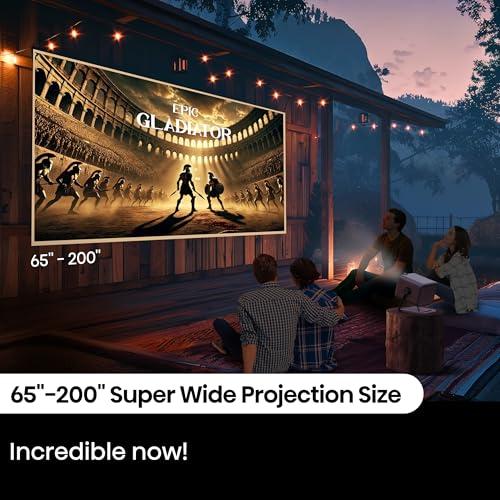
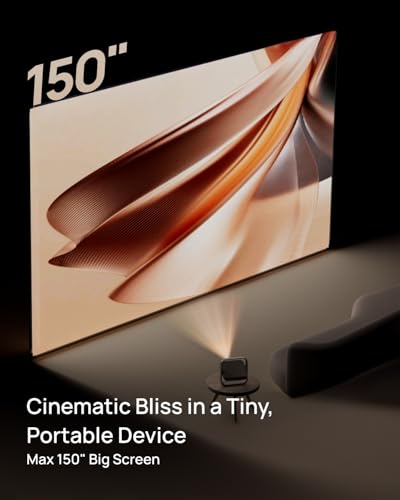
The Hisense M2 Pro can project from 65" to 200" with optical zoom capability, making it suitable for large home theater installations. The XGIMI Elfin Flip supports screen sizes from 80" to 150", which covers most casual viewing scenarios but limits larger installations.
Both projectors are designed for standalone use with built-in smart platforms and speakers. However, the Hisense M2 Pro may benefit from a dedicated projection screen for optimal 4K performance, while the XGIMI Elfin Flip works well projecting directly onto white walls for casual viewing.
The Hisense M2 Pro 4K Triple Laser Portable Projector delivers superior color accuracy with its triple laser system covering 110% of the BT.2020 color space, ideal for HDR content. The XGIMI Elfin Flip covers 113% of Rec.709, which provides good colors for standard content but cannot match the M2 Pro's expanded color range.
Both offer comprehensive auto-correction features, but with different strengths. The Hisense M2 Pro provides optical zoom and 360° gimbal positioning for precise setup flexibility. The XGIMI Elfin Flip features unique Intelligent Screen Adaptation with obstacle avoidance that automatically adjusts the image to work around objects in the projection path.
We've done our best to create useful and informative comparisons to help you decide what product to buy. Our research uses advanced automated methods to create this comparison and perfection is not possible - please contact us for corrections or questions. These are the sites we've researched in the creation of this article: thegadgetflow.com - valueelectronics.com - youtube.com - projectorscreenstore.com - whathifi.com - hisense-usa.com - tomsguide.com - content.syndigo.com - youtube.com - shop.hisense-usa.com - avsforum.com - projectorscreen.com - projectorscreen.com - projectorcentral.com - avsforum.com - youtube.com - projector-database.com - us.xgimi.com - projectorcentral.com - tvsbook.com - us.xgimi.com - bikmantech.com - projectorreviews.com - tvsbook.com - us.xgimi.com - youtube.com - youtube.com - richersounds.com - us.xgimi.com - youtube.com - walmart.com - global.xgimi.com - youtube.com - global.xgimi.com - us.xgimi.com

Privacy Policy
Terms and Conditions - Affiliate Policy
Home Security
© Copyright 2008-2026.
11816 Inwood Rd #1211, Dallas, TX 75244