

The portable projector market has exploded in recent years, but it's split into two dramatically different worlds. On one side, you have premium portable projectors that pack serious performance into relatively compact packages. On the other, there's a new breed of ultra-mini projectors that prioritize convenience above all else. The Hisense M2 Pro 4K Triple Laser Portable Projector and Aurzen ZIP Tri-Fold Portable Mini Projector represent the best of each approach, and choosing between them depends entirely on what matters most to you.
Before diving into specifics, let's clarify what we mean by portable projectors. Traditional home theater projectors are massive, ceiling-mounted units that require permanent installation. Portable projectors, by contrast, are designed to be moved around—but the definition of "portable" varies wildly.
The key considerations that separate good portable projectors from mediocre ones include brightness (measured in ANSI lumens, which tells you how well the image will show up in different lighting conditions), resolution (how sharp and detailed the picture looks), color accuracy (how realistic colors appear), and ease of setup. The eternal challenge is balancing these performance factors with true portability.
What's fascinating is how differently manufacturers approach this challenge. Some prioritize squeezing maximum performance into a reasonably portable package, while others focus on making projection so convenient that you'll actually use it regularly.
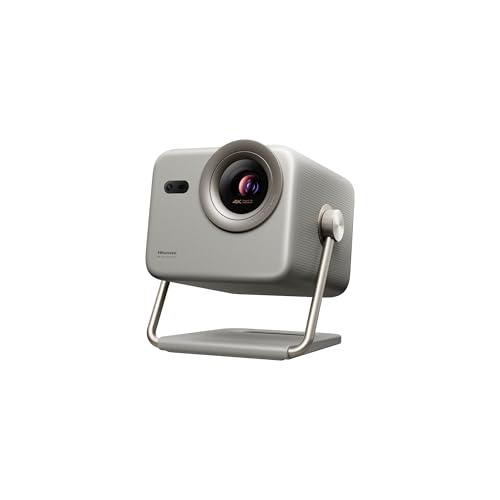
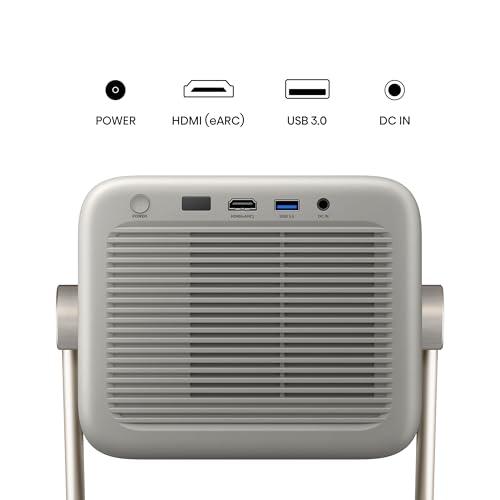
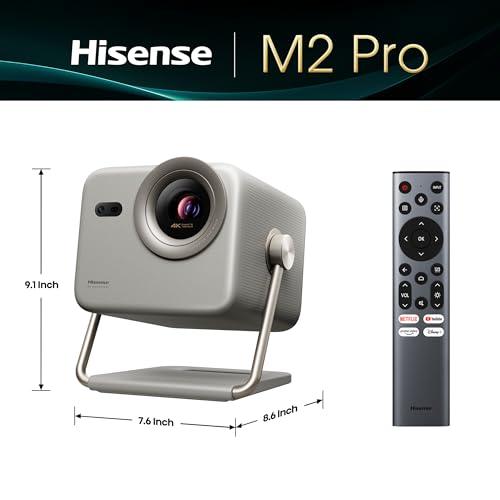
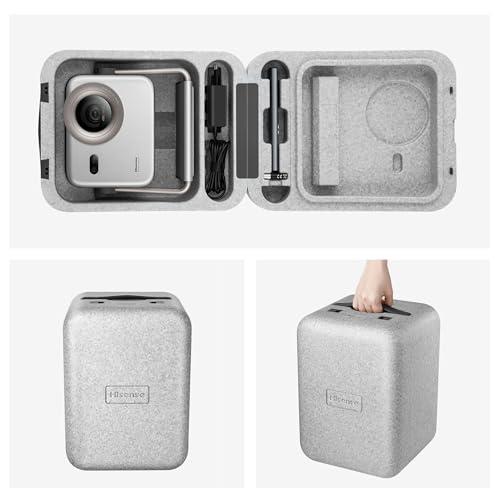
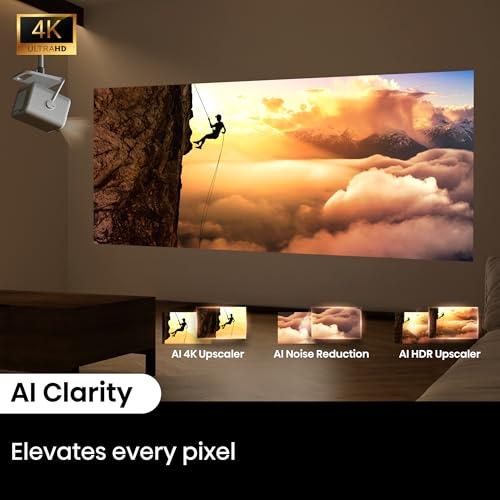
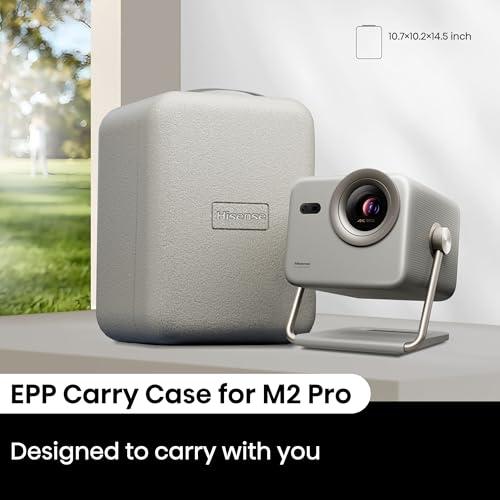
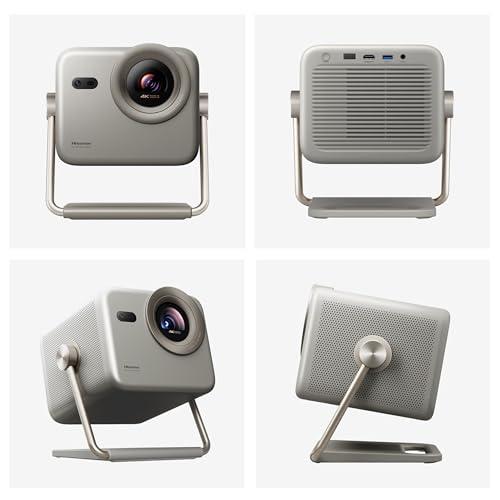
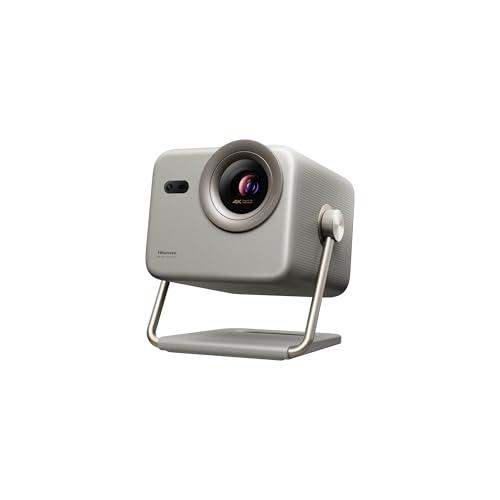
Released in 2024, the Hisense M2 Pro represents Hisense's attempt to miniaturize their professional laser projection technology. At first glance, its 8.6-pound weight might not seem particularly portable, but consider that traditional laser projectors typically weigh 20-40 pounds. The M2 Pro packs genuine 4K resolution and professional-grade brightness into something you can reasonably carry in a backpack.
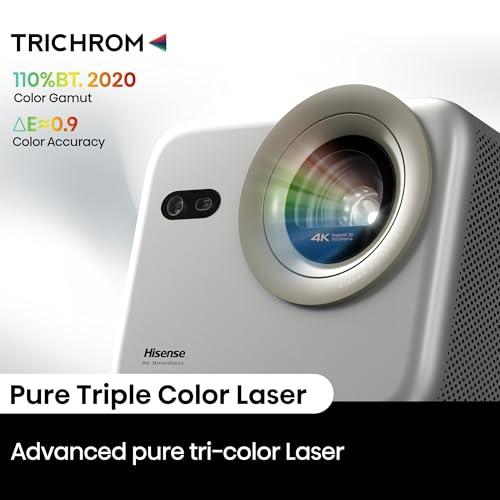
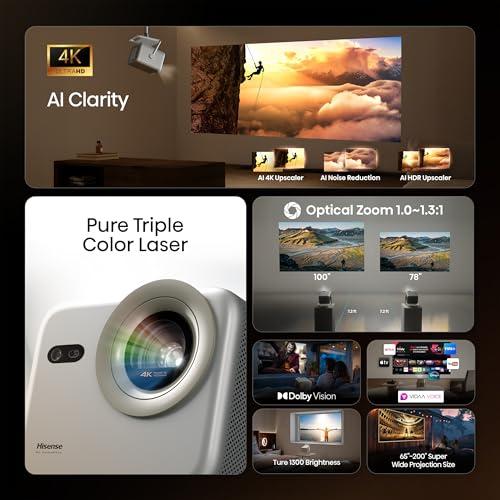
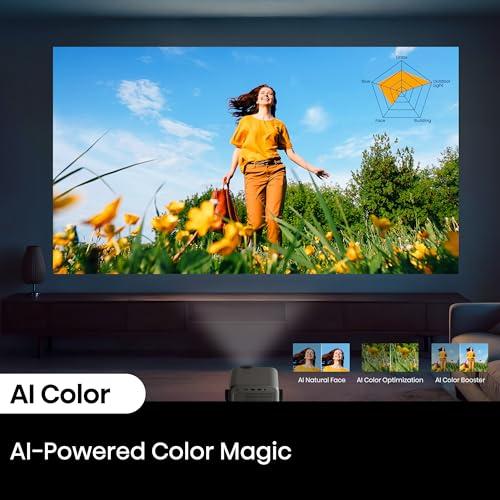
The most impressive aspect of the M2 Pro is its triple laser light source. Instead of using a single white laser or LED like most portable projectors, it employs separate red, green, and blue lasers. This TriChroma technology allows it to reproduce 110% of the BT.2020 color space—a technical way of saying it can display colors more vivid and accurate than most TVs. When you're watching a sunset scene or vibrant animation, the difference is immediately noticeable.
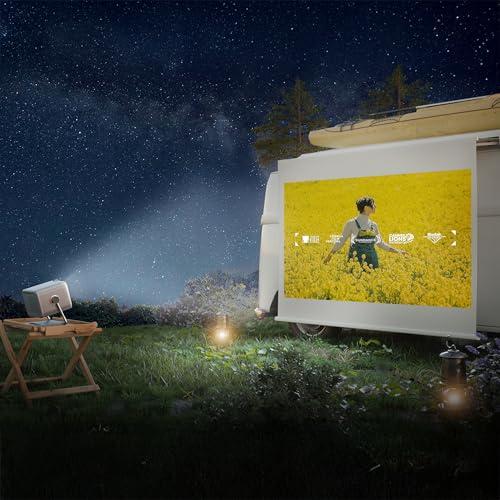
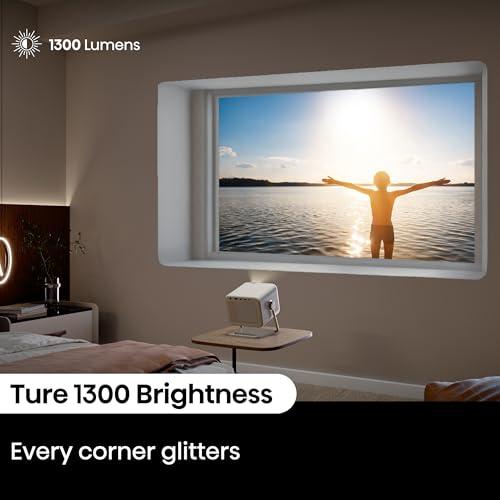
The brightness output of 1,300 ANSI lumens puts it in a completely different league from typical portable projectors. To put this in perspective, most mini projectors struggle to produce 100-200 lumens, making them virtually unusable except in completely dark rooms. The M2 Pro can create a watchable image even with some ambient light, opening up use cases like outdoor movie nights or presentations in meeting rooms with windows.
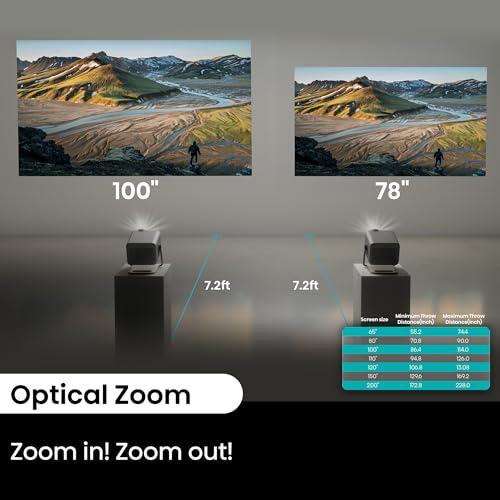
What really sets the M2 Pro apart is its optical zoom capability. Most portable projectors use digital zoom, which essentially crops and stretches the image, reducing quality. The M2 Pro's 1.0-1.3x optical zoom uses actual lens movement to adjust image size without any quality loss—a feature typically found only in high-end home theater projectors.
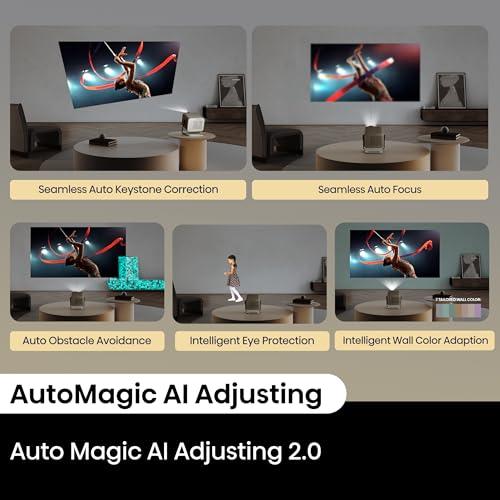
The built-in gimbal system deserves special mention. This allows 360-degree horizontal rotation and 135 degrees of vertical tilt, meaning you can project onto walls, ceilings, or even floors without needing a separate mount. Combined with automatic keystone correction (which fixes the trapezoid distortion when projecting at angles) and auto-focus, setup becomes remarkably simple for such a sophisticated device.
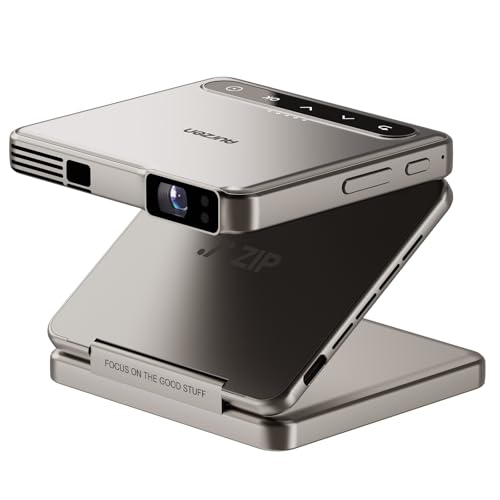
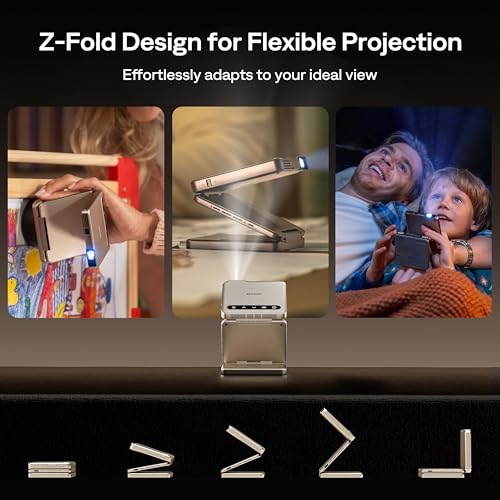
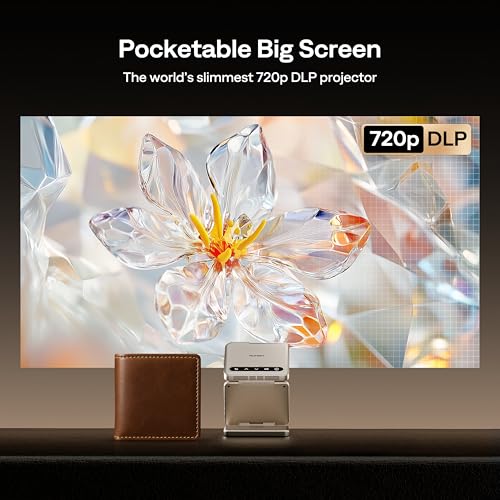
The Aurzen ZIP, launched in 2025, takes a radically different approach. At just 280 grams—lighter than most smartphones—it prioritizes portability above everything else. The tri-fold design is genuinely innovative, folding into a package smaller than a wallet while containing a complete projection system, battery, speakers, and adjustable stand.
The engineering behind this miniaturization is impressive. Aurzen uses Texas Instruments' smallest-ever DMD (Digital Micromirror Device) chip at just 0.16 inches. DMD chips contain millions of tiny mirrors that flip thousands of times per second to create images, and shrinking this technology to such a small size required significant breakthroughs in manufacturing precision.
The ZIP's resolution of 720p might seem modest compared to the M2 Pro's 4K, but it achieves this through clever pixel-shifting technology called XPR. The actual DMD chip has a native resolution of 640x360, but by rapidly shifting pixels between positions, it creates the appearance of 1280x720 resolution. While not as sharp as true 4K, it's perfectly adequate for the smaller screen sizes where the ZIP excels.
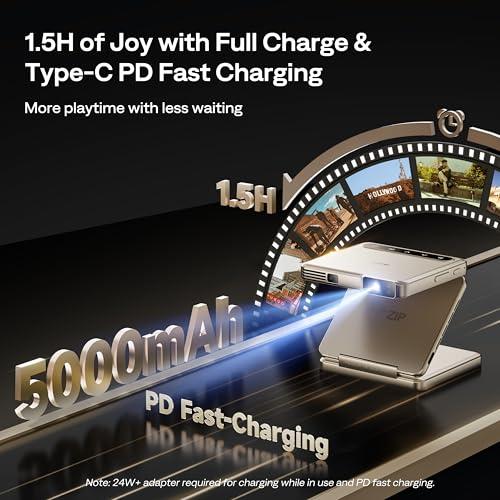
Battery integration is where the ZIP truly shines. The built-in 5,000mAh battery provides about 90 minutes of viewing time, making it completely cordless. This might not sound like much, but it's enough for most movies or presentations, and you can always plug it in to extend runtime. The ability to just grab it and go, without worrying about power cables or finding outlets, fundamentally changes how you use a projector.
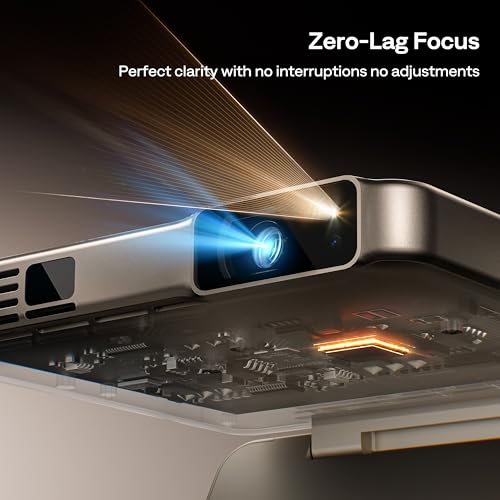
The ToF (Time-of-Flight) auto-focus system is borrowed from smartphone camera technology. It bounces infrared light off surfaces to measure distance 30 times per second, providing instant, accurate focus regardless of projection distance. This eliminates the fumbling with focus rings that plague many portable projectors.
The image quality difference between these projectors is substantial, but context matters enormously. The M2 Pro delivers true 4K resolution with exceptional color accuracy and brightness. When projecting a 100-inch image in a dedicated home theater setup, the difference is dramatic—text is crisp, fine details in movies are clearly visible, and colors pop with cinema-quality vibrancy.
However, the ZIP's 720p resolution isn't necessarily a limitation in its intended use cases. When you're projecting a 50-inch image onto a bedroom ceiling or tent wall, the pixel density is perfectly adequate for Netflix shows, YouTube videos, or casual gaming. The key is matching expectations to use cases.
Color reproduction tells a similar story. The M2 Pro's triple laser system produces colors that rival high-end OLED TVs, while the ZIP's LED system produces good, natural-looking colors that won't wow anyone but work fine for everyday content.
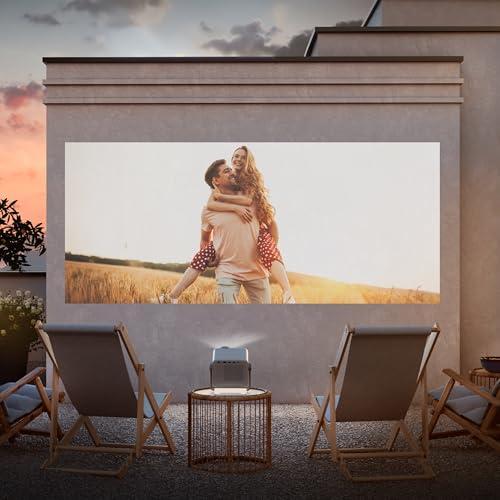
This is where the performance gap becomes most apparent. The M2 Pro's 1,300 ANSI lumens make it usable in moderately lit rooms and suitable for outdoor use even during golden hour. You can set it up in a living room with some lamps on and still get a perfectly watchable image.
The ZIP's 100 ANSI lumens require much more controlled lighting conditions. In a completely dark room, it produces a surprisingly good image, but even moderate ambient light washes out the picture. This isn't necessarily a problem—many people primarily watch content in bedrooms or other naturally dark spaces—but it does limit flexibility.
Based on our research into user experiences, the brightness difference becomes most noticeable when you want to use the projector spontaneously. The M2 Pro adapts to your environment, while the ZIP requires you to adapt your environment to it.
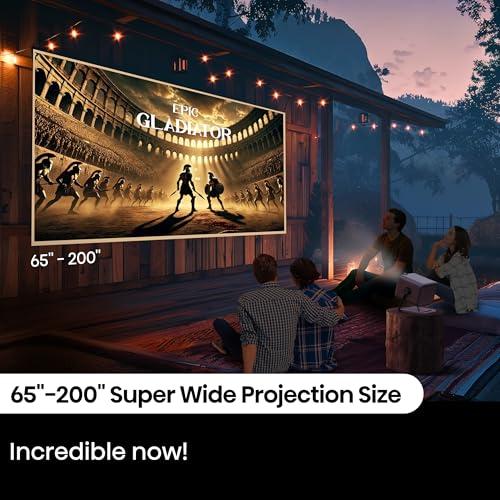
The M2 Pro excels at large screen sizes, comfortably producing sharp images up to 200 inches. This makes it genuinely suitable for backyard movie nights or large presentation venues. The optical zoom means you can fine-tune the image size for any space without moving the projector.
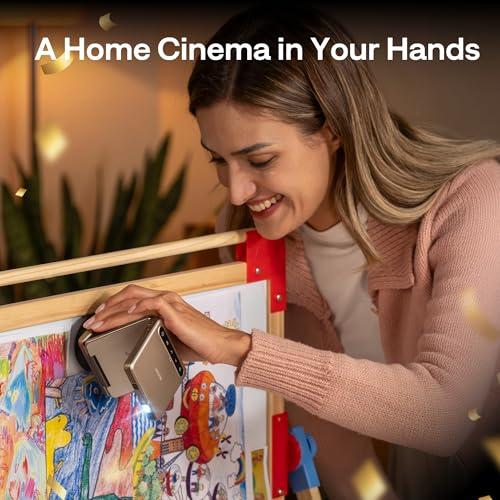
The ZIP works best with smaller screens—typically 40-60 inches—though it can go larger if you're willing to accept a dimmer image. What it lacks in maximum size, it makes up for in flexibility. The tri-fold design and lightweight construction make it trivial to project onto ceilings, which opens up unique use cases like bedtime viewing or creating ambient displays.
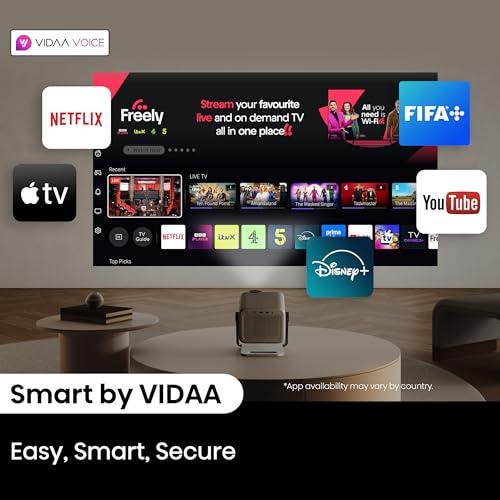
The M2 Pro includes a full smart TV platform with direct access to Netflix, YouTube, Disney+, and other streaming services. This eliminates the need for external streaming devices in many cases. The interface is responsive, and the voice control actually works well enough to be useful.
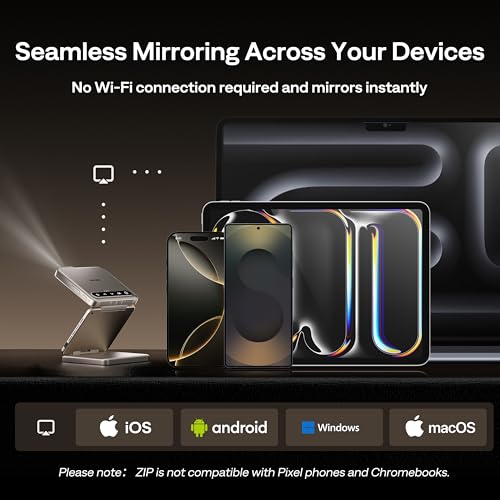
The ZIP takes a different approach, focusing on wireless screen mirroring rather than built-in apps. Its AirLink system allows you to mirror content from phones, tablets, or laptops without needing Wi-Fi—it creates its own direct connection. This works remarkably well for most content, though DRM-protected streaming services require workarounds.
For home theater use, both approaches have merit. The M2 Pro's integrated smart platform is more convenient for dedicated viewing sessions, while the ZIP's mirroring capability makes it better for spontaneous content sharing or when you want to use your phone's superior streaming app interfaces.
Audio is often overlooked in projector discussions, but it matters enormously for the overall experience. The M2 Pro includes genuinely impressive 20-watt speakers with Dolby Audio support. While not quite home theater quality, they're adequate for most content and significantly better than typical TV speakers.
The ZIP's 2-watt speakers are functional but unremarkable—about what you'd expect from a device this small. The Bluetooth 5.4 connectivity makes it easy to pair with wireless headphones or portable speakers, which is probably the intended use case anyway.
This is where the fundamental philosophy difference becomes most apparent. The M2 Pro requires external power, which limits its portability despite the reasonable size. You need to plan around power outlets or invest in a substantial power station for true portability.
The ZIP's built-in battery provides genuine grab-and-go convenience. The 90-minute runtime covers most movies, and the ability to operate completely wirelessly opens up use cases that simply aren't possible with the M2 Pro. Camping trips, hotel rooms, or even just moving between rooms becomes effortless.
Both projectors handle gaming, but with different strengths. The M2 Pro supports 240Hz refresh rates and has just 12ms of input lag, making it genuinely suitable for competitive gaming on a massive screen. The experience of playing games on a 150-inch display is transformative, and the low latency means you won't be at a competitive disadvantage.
The ZIP is limited to 60Hz and has higher input lag, making it more suitable for casual gaming. However, its portability means you can easily set up impromptu gaming sessions anywhere, which has its own appeal.
At the time of writing, these projectors occupy different price tiers, with the M2 Pro positioned as a premium product and the ZIP as a more accessible option. The price difference reflects their different approaches—you're paying significantly more for the M2 Pro's professional-grade performance, while the ZIP offers unique value through its revolutionary portability.
The total cost consideration extends beyond the initial purchase. The M2 Pro may require additional accessories like power stations for true portability, while the ZIP might benefit from optional accessories like the PowerPlay charging stand or CastPlay HDMI dongle.
The Hisense M2 Pro makes sense for users who prioritize image quality and versatility. If you're setting up a home theater, need bright projection for presentations, or want the best possible gaming experience on a large screen, the performance justifies the size and power requirements. It's particularly compelling for users who have reliable power access and don't mind the planning required for truly portable use.
The Aurzen ZIP excels in scenarios where convenience trumps performance. Frequent travelers, van life enthusiasts, students, or anyone who values spontaneous use will find its ultra-portability compelling. It's also excellent for creative applications—ceiling projection for bedtime viewing, art installations, or anywhere traditional projector setup would be impractical.
For home theater use specifically, the M2 Pro is clearly superior, offering cinema-quality imaging that can compete with high-end TVs in many scenarios. The ZIP works better as a secondary display or for casual viewing scenarios where convenience matters more than ultimate quality.
Both projectors represent significant advances in their respective categories. The M2 Pro successfully miniaturizes laser projection technology that was previously confined to expensive, bulky units. The ZIP achieves a level of portability that seemed impossible just a few years ago.
Looking forward, we expect continued convergence—ultra-portable projectors getting brighter and sharper, while premium portable units become smaller and more power-efficient. However, physics still imposes real limits, and these two approaches will likely remain distinct for the foreseeable future.
The choice ultimately comes down to your priorities: transformative image quality with reasonable portability, or revolutionary convenience with acceptable image quality. Both have earned their place in the market by excelling at their intended purposes.
| Hisense M2 Pro 4K Triple Laser Portable Projector | Aurzen ZIP Tri-Fold Portable Mini Projector |
|---|---|
| Resolution - Determines image sharpness and detail quality | |
| Native 4K UHD (3840x2160) with 2.07M micromirrors | 720p HD (1280x720) via XPR pixel-shifting technology |
| Brightness - Critical for ambient light performance and screen size | |
| 1,300 ANSI lumens (usable in moderately lit rooms) | 100 ANSI lumens (requires dark environments) |
| Light Source Technology - Affects color accuracy and lifespan | |
| Triple RGB laser system, 25,000+ hour lifespan | 2-channel LED system, 20,000 hour lifespan |
| Color Gamut - Determines color vibrancy and accuracy | |
| 110% BT.2020 color space (cinema-grade colors) | Standard color reproduction (good for everyday content) |
| Screen Size Range - Maximum useful projection area | |
| 65-200 inches with optical zoom | 40-80 inches (optimal at 40-60 inches) |
| Physical Size & Weight - True portability factor | |
| 7.6" x 8.6" x 9.1", 8.6 lbs (briefcase-sized) | 3.3" x 3.1" x 1", 0.62 lbs (pocket-sized when folded) |
| Power Source - Determines setup flexibility | |
| AC power required (100W consumption) | Built-in 5,000mAh battery (90 minutes runtime) |
| Smart Features - Built-in content access | |
| VIDAA OS with Netflix, YouTube, Disney+, voice control | No built-in apps, wireless screen mirroring only |
| Audio System - Built-in sound quality | |
| Dual 10W speakers with Dolby Audio & DTS Virtual:X | Dual 1W speakers, Bluetooth 5.4 for external audio |
| Setup Convenience - How quickly you can start watching | |
| Auto-focus, keystone correction, 360° gimbal adjustment | ToF zero-lag auto-focus, tri-fold design with integrated stand |
| Gaming Performance - Input lag and refresh rate capabilities | |
| 12ms input lag, 240Hz refresh rate support | 60Hz refresh rate, higher input lag (casual gaming only) |
| Connectivity Options - How you connect devices | |
| Wi-Fi 802.11ac, Bluetooth 5.0, AirPlay2, Miracast | AirLink Wi-Fi-free mirroring, Bluetooth 5.4, optional HDMI dongle |
| Projection Flexibility - Mounting and angle options | |
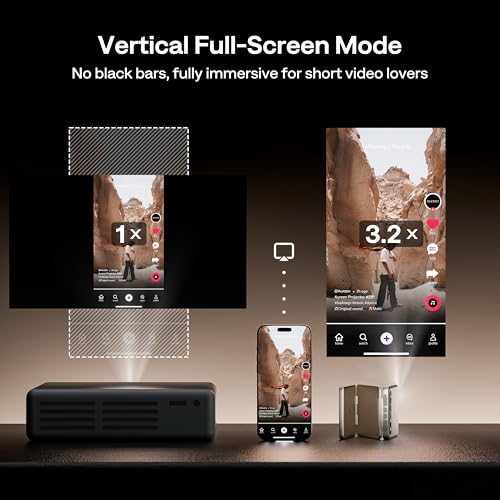
| 360° horizontal, 135° vertical gimbal with optical zoom | 180° flexible projection, landscape/portrait modes |
| Target Use Cases - Who this projector serves best | |
| Home theaters, outdoor movies, presentations, serious gaming | Travel, camping, bedrooms, ceiling projection, casual viewing |
The Hisense M2 Pro 4K Triple Laser Portable Projector is significantly better for home theater applications. It delivers true 4K resolution, 1,300 ANSI lumens brightness, and cinema-quality colors that can fill large screens up to 200 inches. The Aurzen ZIP Tri-Fold Portable Mini Projector is limited to 720p resolution and 100 lumens, making it unsuitable for serious home theater setups but fine for casual bedroom viewing.
The image quality difference is substantial. The Hisense M2 Pro offers native 4K resolution with triple laser technology that produces vibrant, accurate colors covering 110% of the BT.2020 color space. The Aurzen ZIP provides 720p resolution through pixel-shifting technology with standard LED color reproduction. For detailed content and large screens, the M2 Pro is clearly superior.
The Aurzen ZIP Tri-Fold Portable Mini Projector revolutionizes portability at just 0.62 pounds and pocket-sized dimensions when folded. It includes a built-in battery for cordless operation. The Hisense M2 Pro weighs 8.6 pounds and requires external power, making it portable but requiring more planning and setup.
Only the Hisense M2 Pro 4K Triple Laser Portable Projector works well in moderately lit rooms thanks to its 1,300 ANSI lumens brightness. The Aurzen ZIP with only 100 lumens requires dark environments for optimal viewing. If you need daytime or ambient light viewing, the M2 Pro is your only viable option between these two.
The Hisense M2 Pro has significantly better audio with dual 10W speakers featuring Dolby Audio and DTS Virtual:X technology. The Aurzen ZIP Tri-Fold Portable Mini Projector has basic 1W speakers that are functional but limited. For the ZIP, pairing with Bluetooth headphones or speakers is recommended for better audio quality.
The Hisense M2 Pro 4K Triple Laser Portable Projector includes built-in VIDAA OS with direct access to Netflix, YouTube, Disney+, and other streaming platforms. The Aurzen ZIP doesn't have built-in streaming apps but offers wireless screen mirroring from your devices. For DRM-protected content on the ZIP, you may need the optional CastPlay HDMI dongle.
The Hisense M2 Pro is superior for gaming with 12ms input lag, 240Hz refresh rate support, and the ability to create massive gaming displays up to 200 inches. The Aurzen ZIP Tri-Fold Portable Mini Projector is limited to 60Hz refresh rates and higher input lag, making it suitable only for casual gaming rather than competitive play.
Only the Aurzen ZIP has a built-in battery, providing approximately 90 minutes of viewing time from its 5,000mAh capacity. The Hisense M2 Pro 4K Triple Laser Portable Projector requires external power and doesn't include a battery, though you could use it with a portable power station for outdoor use.
Value depends on your needs. The Aurzen ZIP Tri-Fold Portable Mini Projector offers excellent value for its revolutionary portability and convenience features at a lower price point. The Hisense M2 Pro costs significantly more but delivers professional-grade performance that justifies the premium for users prioritizing image quality and versatility.
Both projectors support ceiling projection, but the Aurzen ZIP excels here due to its lightweight design and flexible tri-fold stand that makes ceiling setup effortless. The Hisense M2 Pro 4K Triple Laser Portable Projector can project onto ceilings with its 360° gimbal system, but the larger size and weight make it less convenient for overhead mounting.
The Hisense M2 Pro is much better for outdoor movies thanks to its 1,300 ANSI lumens brightness that can compete with ambient light and create large 100+ inch displays. The Aurzen ZIP Tri-Fold Portable Mini Projector works outdoors only after dark due to its limited 100 lumens brightness, though its battery operation and portability make setup easier.
Both projectors offer easy setup but in different ways. The Aurzen ZIP wins for simplicity - just unfold, power on, and start mirroring from your device with automatic focus and keystone correction. The Hisense M2 Pro 4K Triple Laser Portable Projector requires power connection but features automatic focus, keystone correction, and intelligent wall color adaptation for quick professional setup.
We've done our best to create useful and informative comparisons to help you decide what product to buy. Our research uses advanced automated methods to create this comparison and perfection is not possible - please contact us for corrections or questions. These are the sites we've researched in the creation of this article: thegadgetflow.com - valueelectronics.com - youtube.com - projectorscreenstore.com - whathifi.com - hisense-usa.com - tomsguide.com - content.syndigo.com - youtube.com - shop.hisense-usa.com - avsforum.com - projectorscreen.com - projectorscreen.com - projectorcentral.com - avsforum.com - youtube.com - projector-database.com - aurzen.com - youtube.com - tomsguide.com - aurzen.com - aurzen.com - projectorcentral.com - appleinsider.com - youtube.com - aurzen.com - aurzen.com - aurzen.com - aurzen.com

Privacy Policy
Terms and Conditions - Affiliate Policy
Home Security
© Copyright 2008-2026.
11816 Inwood Rd #1211, Dallas, TX 75244