

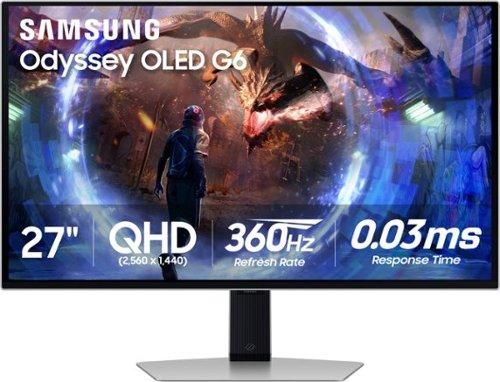
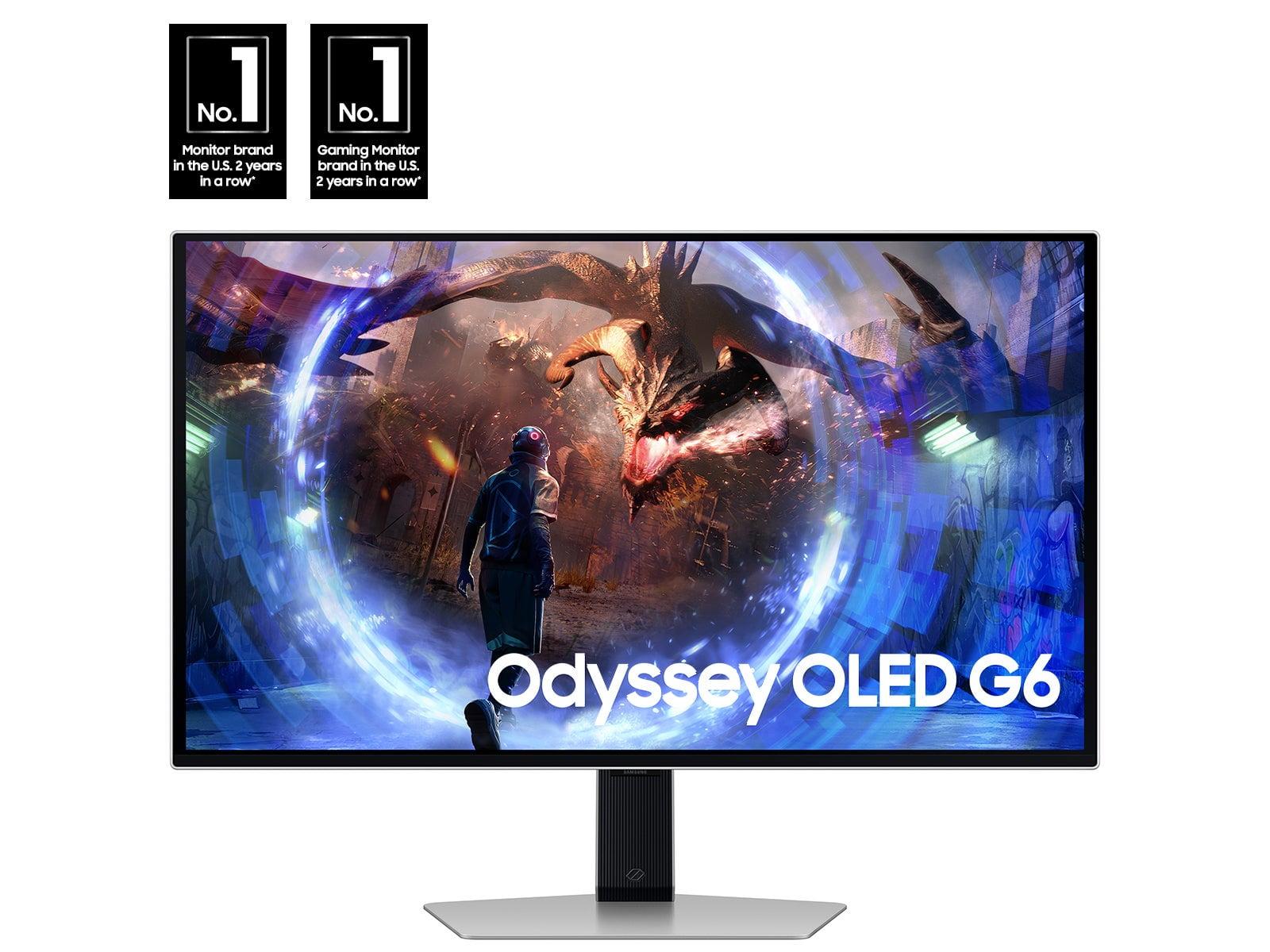

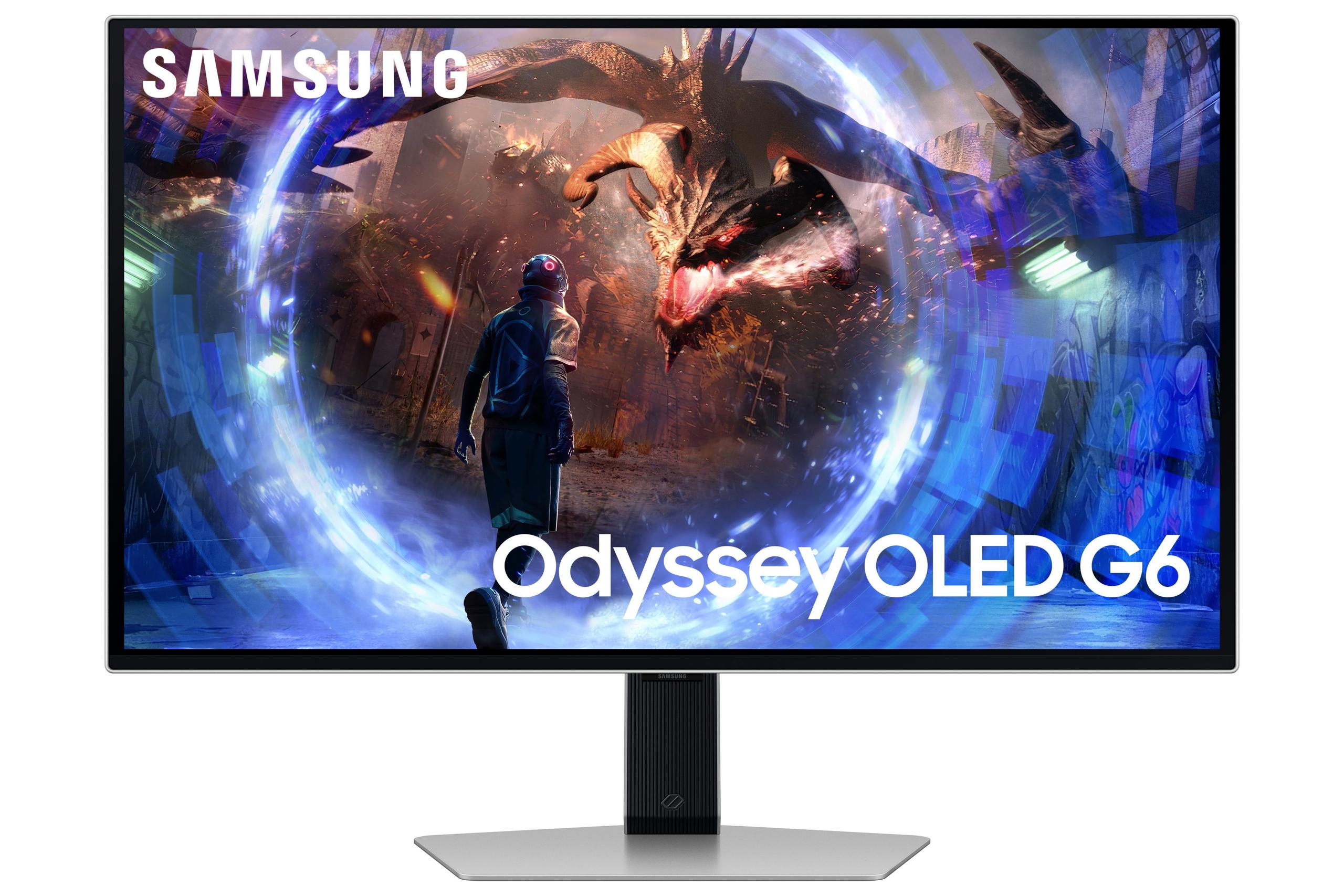
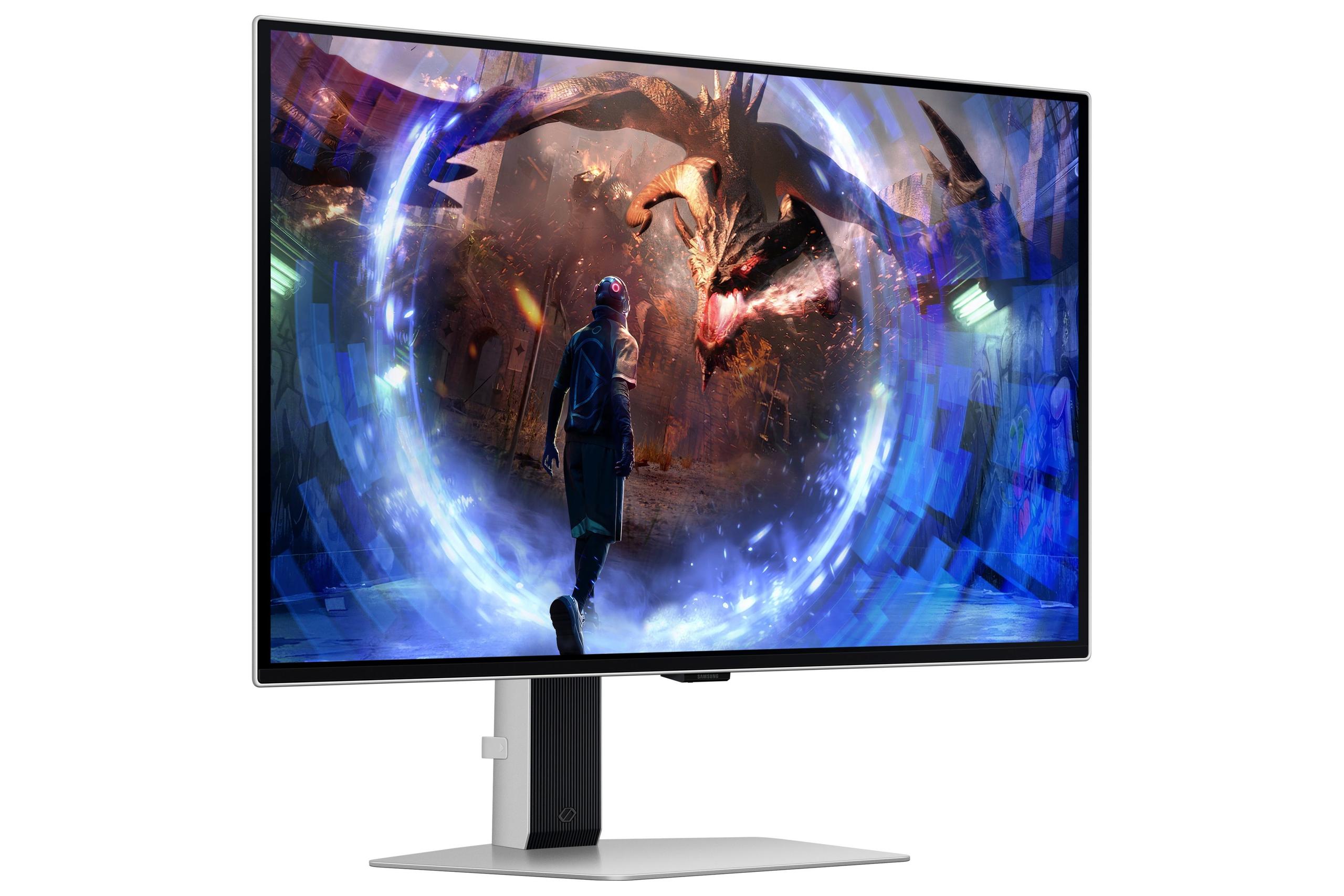
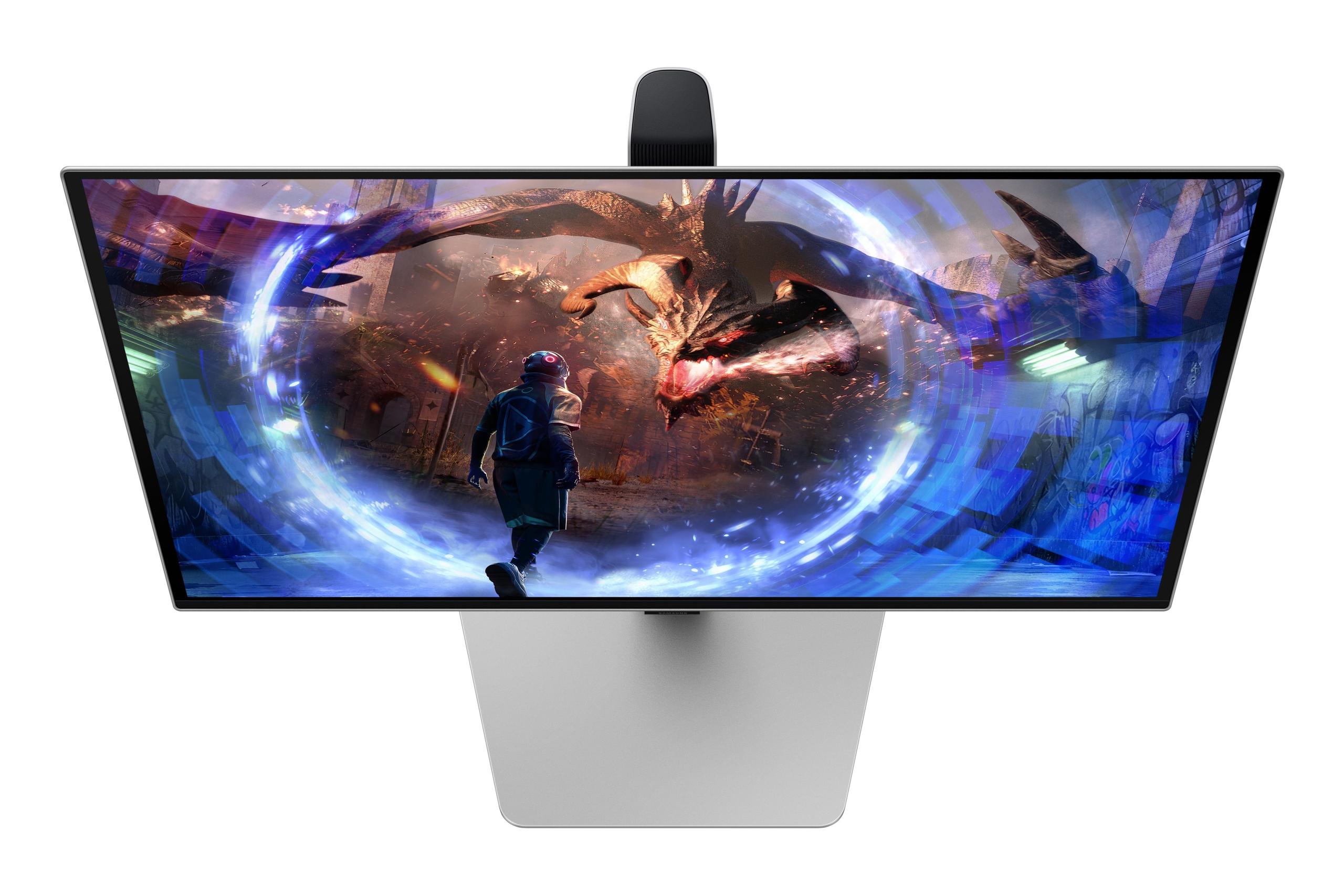
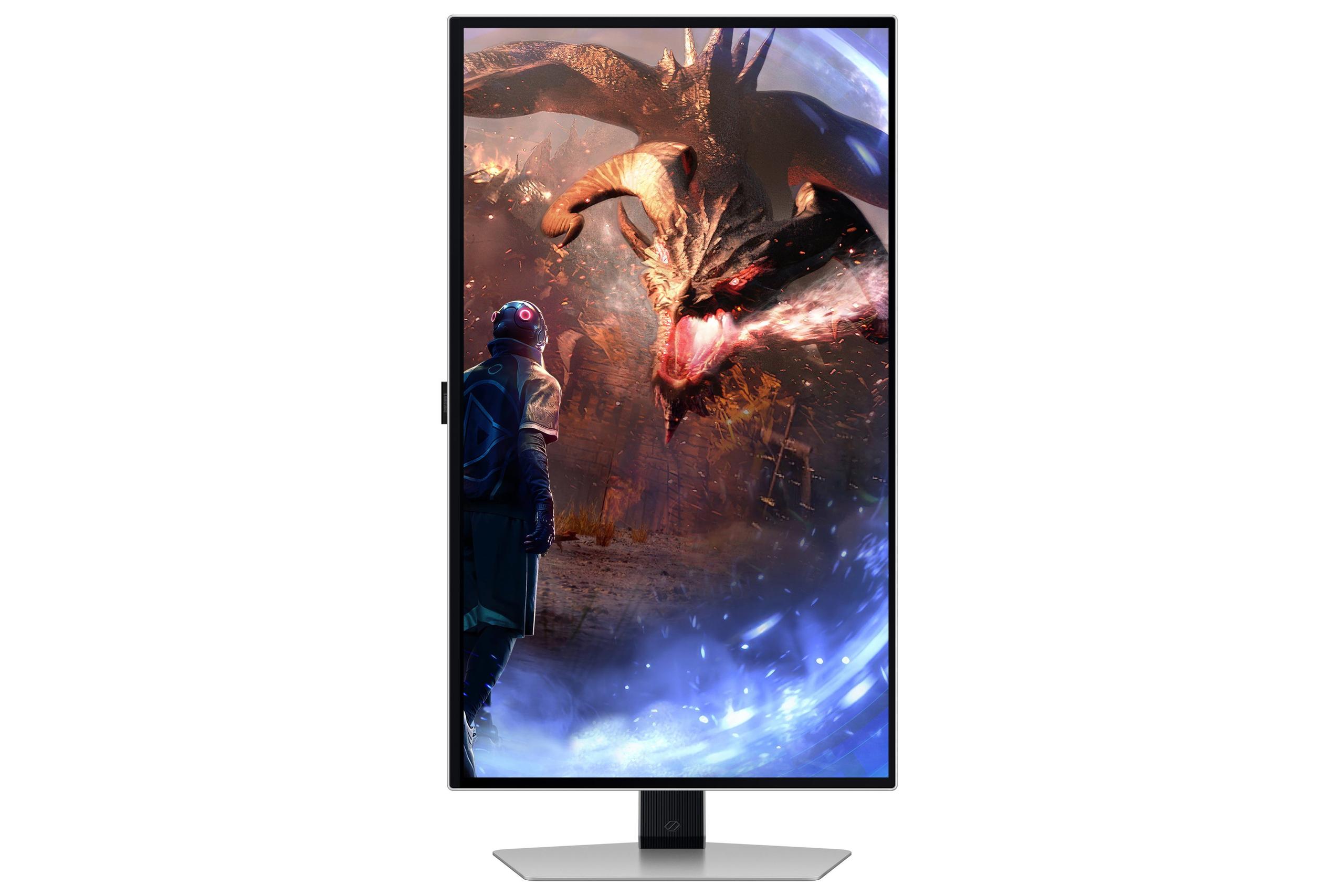

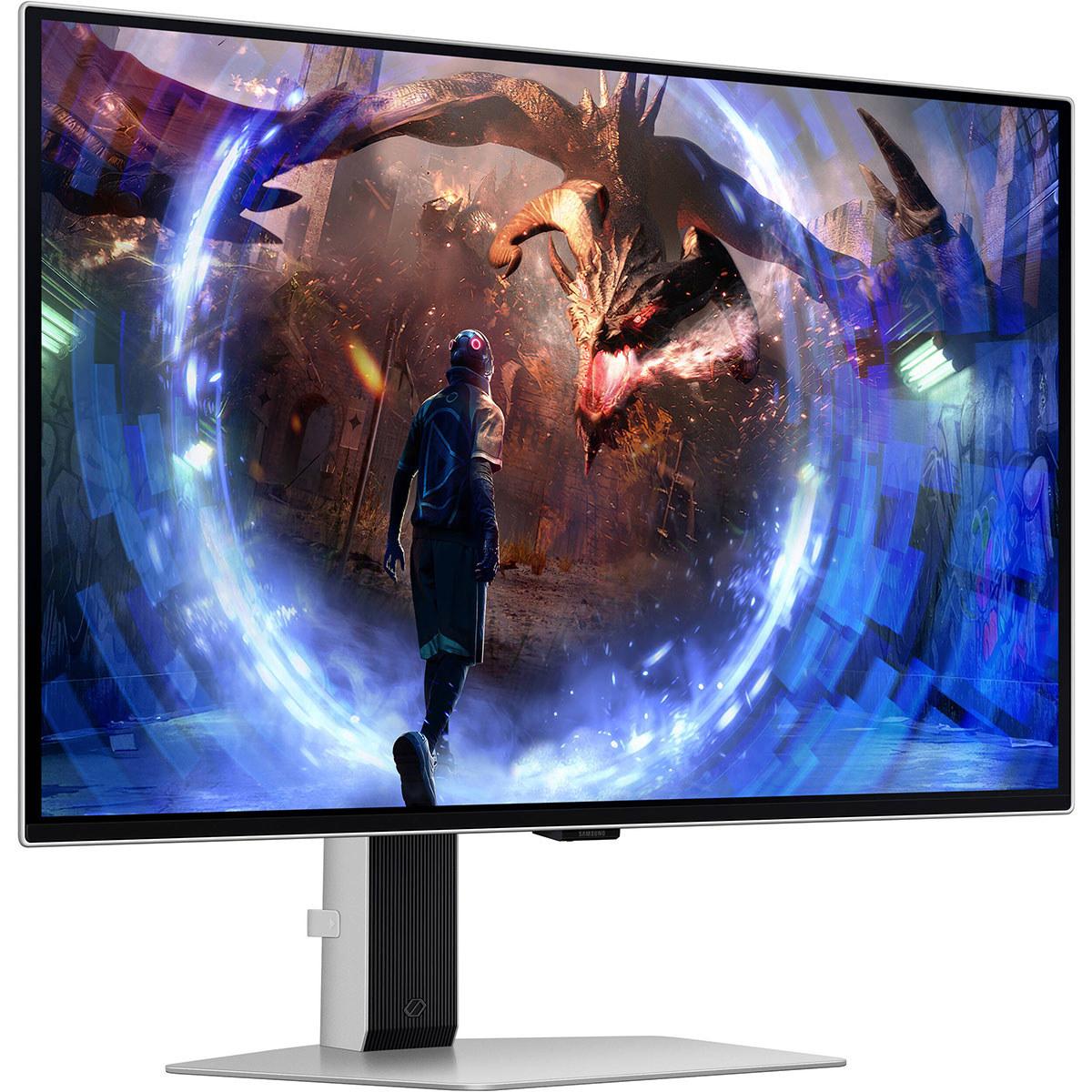
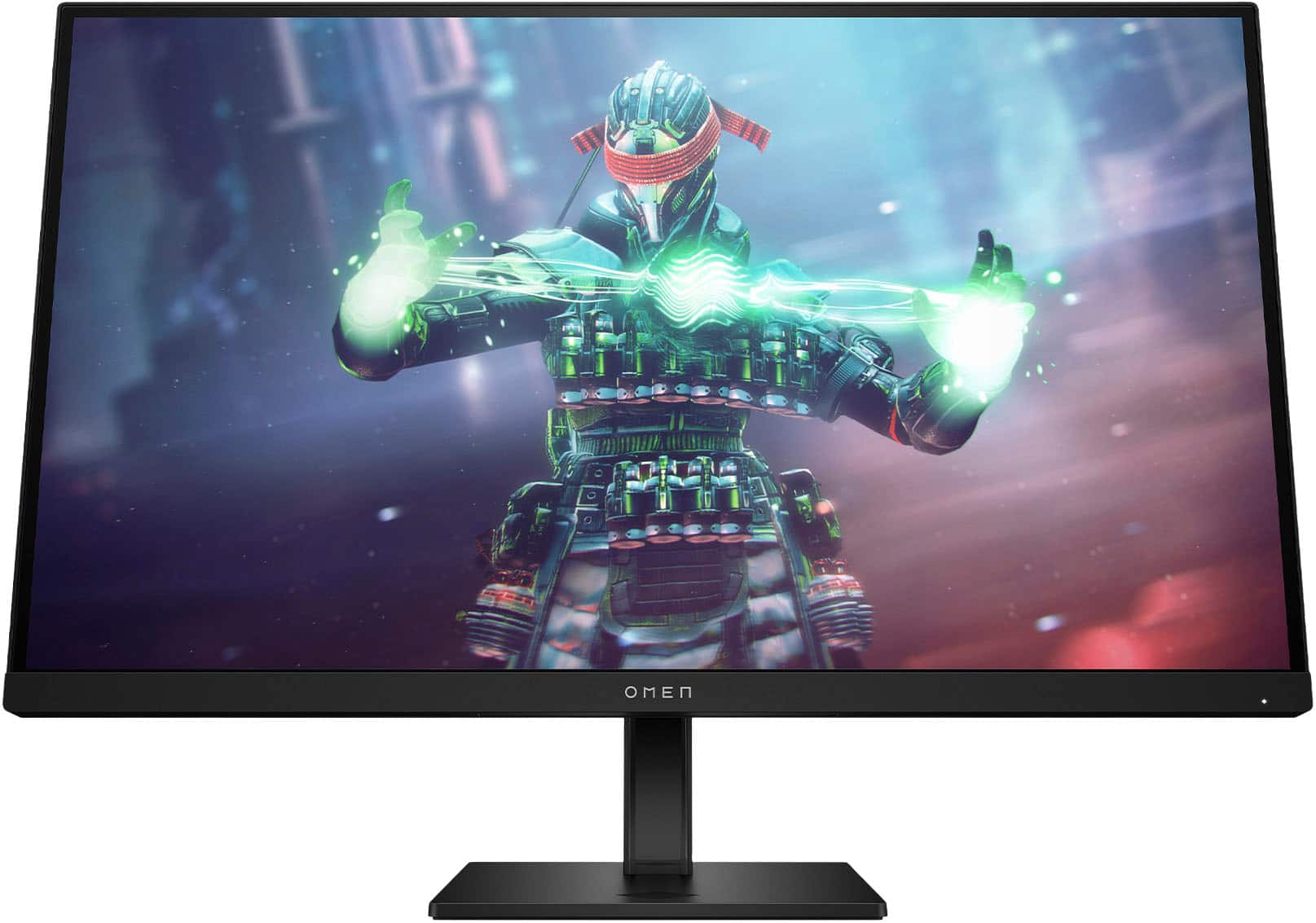
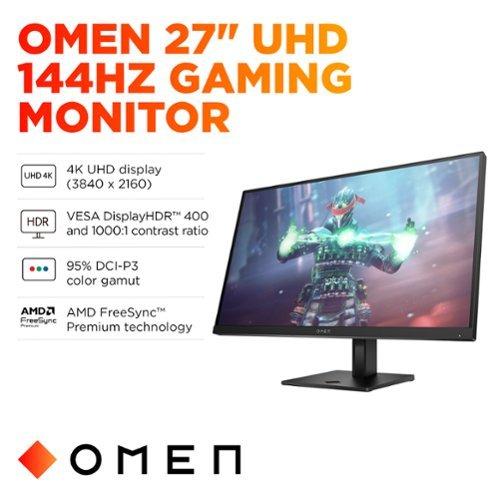
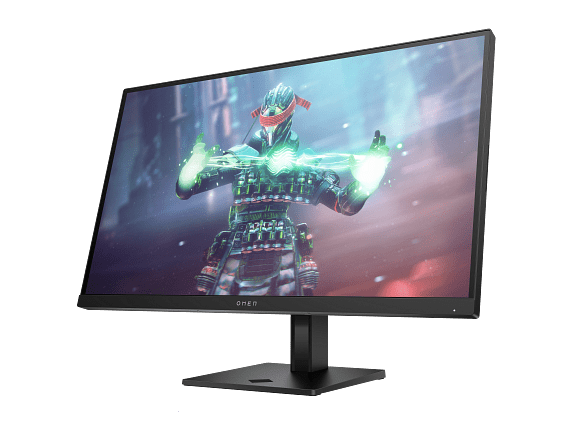
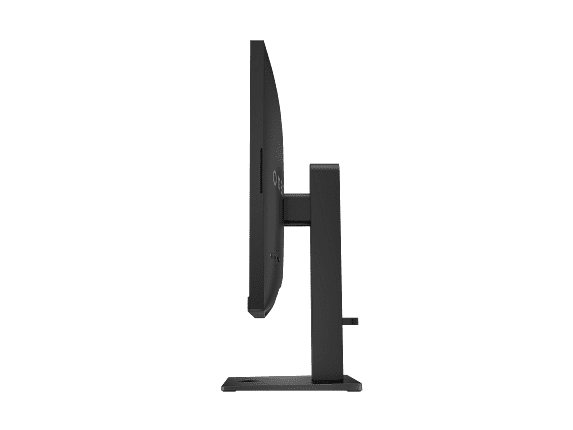
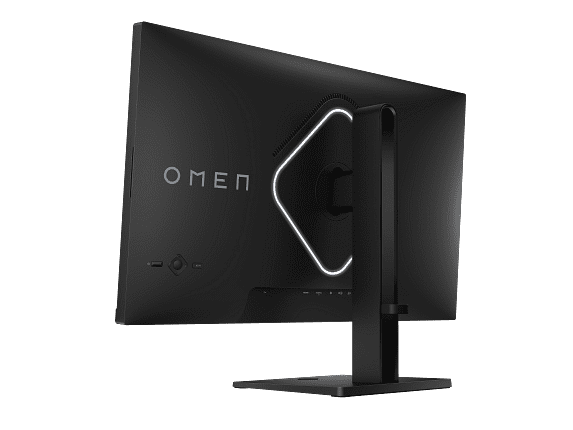
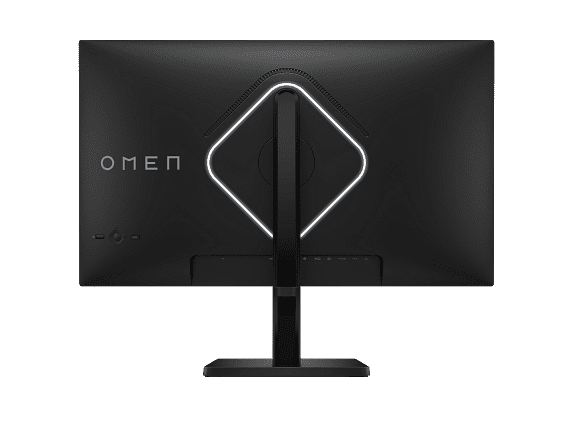
When you're shopping for a gaming monitor in 2024, you're essentially choosing between two fundamentally different philosophies. Do you want the fastest possible gaming experience, or do you prioritize crystal-clear visuals that work for both gaming and everything else? This decision has never been more interesting than with monitors like the Samsung 27" Odyssey OLED G6 and the HP Omen 27k, which represent these competing approaches perfectly.
Gaming monitors have evolved dramatically over the past few years. What used to be a simple choice between "fast" or "pretty" has become a complex landscape of OLED panels, mini-LED backlighting, and refresh rates that would have seemed impossible just a decade ago. At the heart of this evolution lies a fundamental trade-off that affects every gamer: resolution versus refresh rate.
The biggest difference between the Samsung Odyssey OLED G6 and HP Omen 27k comes down to their display technologies, which create completely different user experiences.
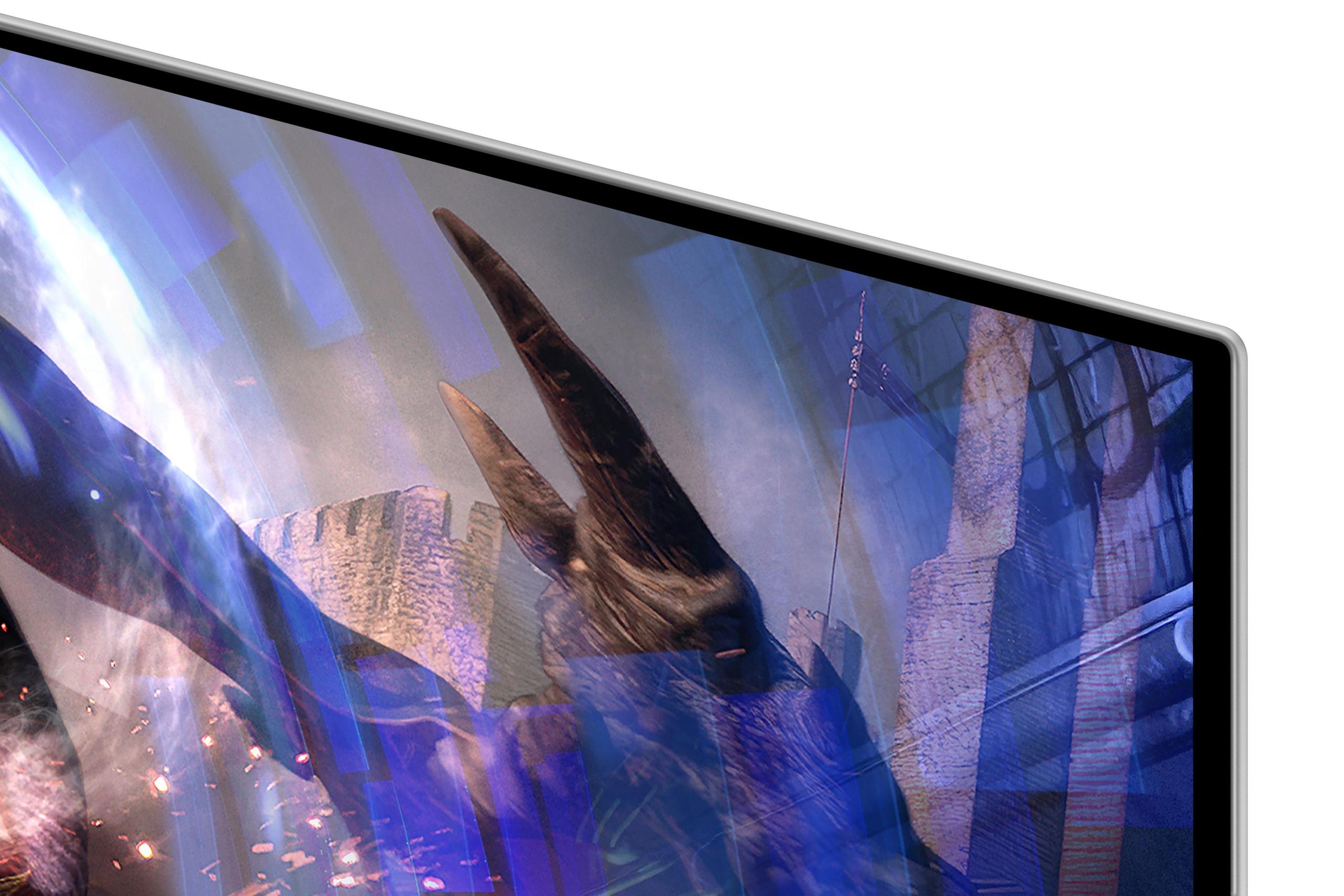
The Samsung G6 uses OLED (Organic Light-Emitting Diode) technology, which represents the current pinnacle of display tech for gaming. Each pixel generates its own light, meaning when a pixel needs to be black, it simply turns off completely. This creates what's called "perfect blacks" – something that traditional LCD monitors can't achieve because they rely on a backlight that's always on.
What this means for you as a gamer is incredible contrast. Dark scenes in games like Cyberpunk 2077 or horror titles look genuinely dark, not the grayish-black you get from most monitors. HDR (High Dynamic Range) content really shines here because the monitor can display true darkness alongside bright highlights in the same scene.
The HP Omen 27k, on the other hand, uses IPS (In-Plane Switching) technology. While it can't achieve OLED's perfect blacks, IPS panels excel in other areas. They're typically brighter, more consistent across different viewing angles, and don't suffer from potential burn-in issues that can affect OLED displays over time. The Omen 27k's IPS panel can reach 400 nits of brightness compared to the Samsung's 250 nits, making it much more usable in bright rooms or near windows.
Here's where things get really interesting. The Samsung G6 uses QHD resolution (2560×1440), while the HP Omen 27k jumps to full 4K UHD (3840×2160). That's 2.25 times more pixels on the HP monitor – a massive difference you'll notice immediately.
At 27 inches, 4K gives you incredibly sharp text and game details. I've found that once you get used to 4K gaming, going back to lower resolutions feels noticeably fuzzy, especially for text-heavy games or when you're doing productivity work between gaming sessions. The pixel density difference is substantial: 163 pixels per inch on the Omen 27k versus 108 on the Samsung G6.
This is where the Samsung Odyssey OLED G6 absolutely dominates. Its 360Hz refresh rate means it can display 360 unique frames per second, compared to the HP Omen 27k's 144Hz. For context, most movies run at 24 frames per second, so we're talking about display speeds that are almost incomprehensibly fast.
But here's the thing – you need a seriously powerful graphics card to push games at 360 frames per second, especially at QHD resolution. We're talking about high-end GPUs like the RTX 4080 or better, and even then, you'll only hit those frame rates in less demanding competitive games like Counter-Strike or Valorant.
The response time difference is even more dramatic. The Samsung G6 achieves a 0.03ms gray-to-gray response time, which is essentially instantaneous. The HP Omen 27k manages 1ms, which is still excellent but noticeably slower in direct comparison. Response time measures how quickly a pixel can change from one color to another, and faster response times mean less motion blur during fast-paced gaming.
In competitive esports titles, the Samsung G6's speed advantage is genuinely noticeable. The ultra-high refresh rate makes tracking moving targets smoother, and the near-zero input lag gives you the slightest edge in reaction-based gameplay. Professional esports players often swear by displays like this because every millisecond matters in competitive gaming.
However, for single-player adventures or strategy games, the HP Omen 27k's 4K resolution creates a more immersive experience. Games like Red Dead Redemption 2 or Assassin's Creed look stunning with all those extra pixels rendering fine details in landscapes and character models. The higher resolution also makes UI elements and text much clearer – important for games with complex interfaces.
If you're gaming on PlayStation 5 or Xbox Series X, the HP Omen 27k has a significant advantage. Its HDMI 2.1 input supports 4K gaming at 120Hz from these consoles, letting you experience games like Spider-Man: Miles Morales or Forza Horizon in their full 4K glory. The Samsung G6 also supports console gaming, but you won't be utilizing its 360Hz capability since consoles max out at 120Hz.
Both monitors support HDR, but they implement it very differently. The Samsung G6's OLED technology provides what many consider "true HDR" because it can display perfect blacks alongside bright highlights. When you're exploring a dark cave that opens onto a bright landscape, the contrast is genuinely striking.
The HP Omen 27k uses VESA DisplayHDR 400 certification with eight-zone local dimming. While not as advanced as OLED's per-pixel control, it still provides a noticeable improvement over standard displays. You might see some "haloing" effects around bright objects on dark backgrounds, but it's generally a solid HDR implementation for the price point.
Both monitors excel in color reproduction, but for different reasons. The Samsung G6 covers 99% of the DCI-P3 color space, which is the standard for digital cinema and modern gaming. Colors appear vibrant and punchy, perfect for the immersive gaming experience OLED enables.
The HP Omen 27k covers 99% sRGB and 95% DCI-P3, making it more versatile for mixed use. If you're doing photo editing, content creation, or other color-critical work alongside gaming, the HP's more balanced color profile might serve you better.
This is where the panels' different technologies create the most practical day-to-day differences. The Samsung G6's 250-nit brightness limitation means it's best suited for darker gaming environments. In my experience, OLED monitors really shine (pun intended) in rooms where you can control the lighting – they look absolutely stunning in dimmer conditions but can appear washed out in bright sunlight.
The HP Omen 27k reaches 400 nits and includes an effective anti-glare coating, making it much more versatile for different room lighting situations. You can game comfortably during the day without closing all the blinds, which is a real practical advantage for many users.
The HP Omen 27k includes several features that make it more versatile for mixed use. Its built-in KVM (Keyboard, Video, Mouse) switch is particularly clever – you can connect two different devices (like a gaming PC and a work laptop) and switch between them while using the same keyboard and mouse. This feature alone makes it appealing for users with multiple devices.
Both monitors include USB hubs, but the HP Omen 27k goes further with USB-C connectivity that supports DisplayPort Alt Mode. While it doesn't provide power delivery for charging laptops, it does make connecting modern devices more convenient.
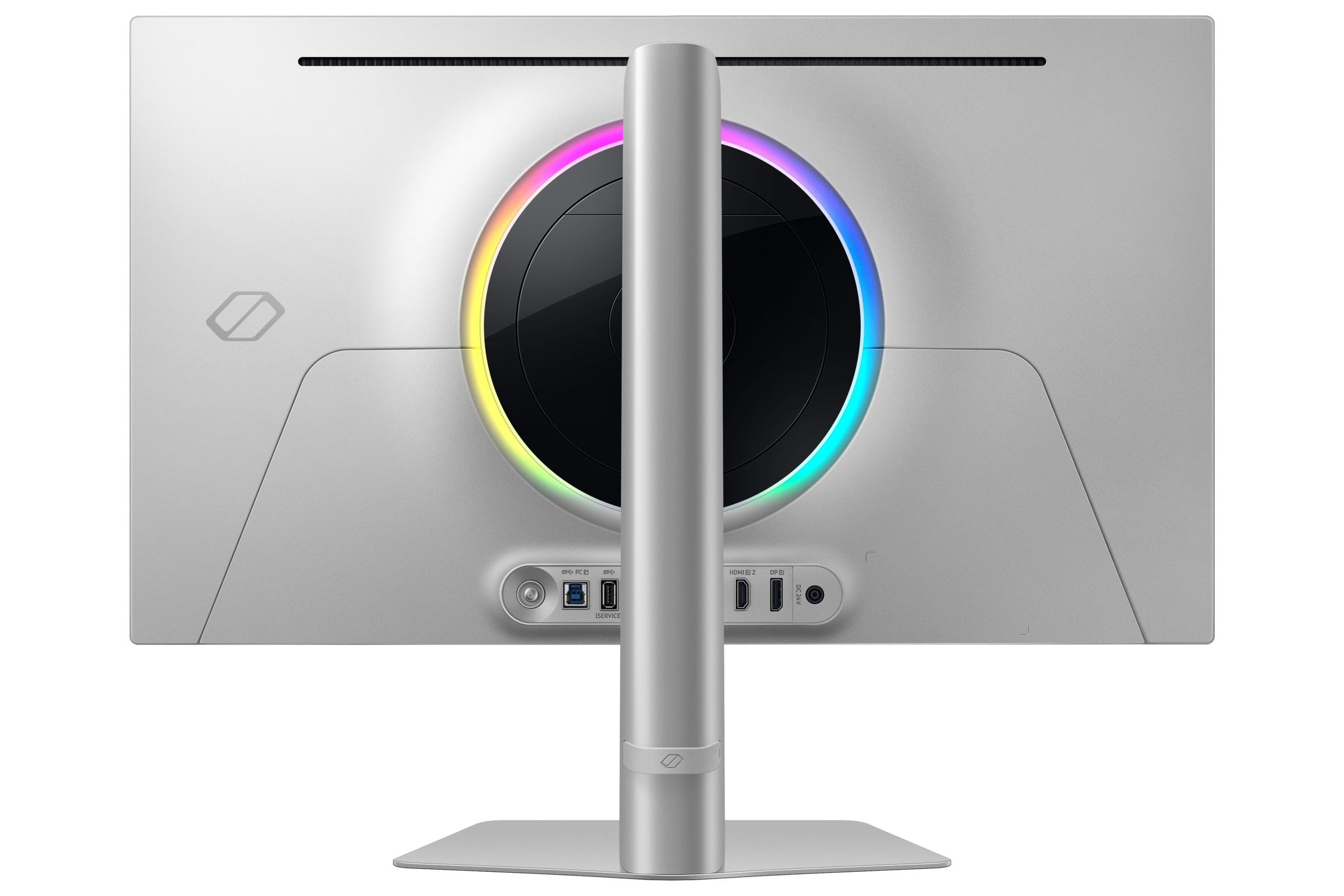
The Samsung G6 focuses more on gaming-specific features, including customizable RGB lighting and advanced gaming modes. Its OLED Safeguard+ technology includes sophisticated burn-in prevention, addressing one of the main concerns people have about OLED displays.
Released in 2024, the Samsung G6 represents cutting-edge display technology that should remain relevant for competitive gaming for years to come. However, the rapid advancement in GPU technology means more games will likely target 4K gaming at high refresh rates, potentially making QHD resolution feel dated sooner.
The HP Omen 27k, released in 2023, already hits the 4K target that's becoming the standard for high-end gaming. As GPUs become more powerful and 4K gaming becomes more accessible, this monitor is well-positioned to remain relevant.
For home theater use, these monitors serve different purposes. The Samsung G6's OLED technology creates an incredibly cinematic experience for movie watching, with perfect blacks that rival dedicated OLED TVs. However, its 27-inch size and gaming-focused features make it less ideal as a primary home theater display.
The HP Omen 27k's 4K resolution makes it excellent for streaming high-resolution content, and its higher brightness works better in typical living room lighting. Both monitors work well for console gaming in a living room setup, though neither replaces a proper large-screen TV for movie nights.
At the time of writing, there's a significant price gap between these monitors, with the Samsung G6 commanding a premium for its OLED technology and ultra-high refresh rate. The question becomes whether the gaming performance benefits justify the additional cost.
For competitive esports players or gaming enthusiasts with high-end hardware, the Samsung G6's performance advantages can justify its premium pricing. The OLED technology and 360Hz refresh rate represent genuinely cutting-edge features that deliver a measurably superior gaming experience in the right circumstances.
The HP Omen 27k offers exceptional value by delivering 4K gaming at a more accessible price point. Considering that 4K gaming monitors typically commanded premium pricing until recently, getting this resolution with solid gaming features and comprehensive connectivity represents strong value for money.
Choosing between the Samsung Odyssey OLED G6 and HP Omen 27k ultimately depends on your specific gaming priorities and usage patterns.
The Samsung G6 makes sense if you're primarily focused on competitive gaming, have a high-end graphics card capable of driving high frame rates, and game in a controlled lighting environment. Its OLED technology and blazing-fast performance create an gaming experience that's genuinely superior for fast-paced, reaction-based games.
The HP Omen 27k is the better choice if you want a versatile monitor that excels at gaming while also handling productivity, content consumption, and mixed use scenarios. Its 4K resolution provides stunning visual clarity that benefits every type of content, while its connectivity options and features make it more practical for everyday use.
Consider your graphics card capability as well. If you're running mid-range hardware, the HP Omen 27k's 4K at 60-120Hz might be more achievable than the Samsung G6's 360Hz target, making the HP a more practical choice.
Both monitors represent excellent examples of their respective approaches to gaming displays. The Samsung G6 pushes the boundaries of gaming performance, while the HP Omen 27k delivers premium features and image quality at a more accessible price point. Your choice should align with your gaming style, hardware capabilities, and how you plan to use the monitor beyond gaming.
| Samsung 27" Odyssey OLED G6 | HP Omen 27k 4K UHD 144Hz Gaming Monitor |
|---|---|
| Display Technology - Determines contrast, brightness, and overall image quality | |
| OLED with perfect blacks and 1,000,000:1 contrast | IPS with consistent colors and wide viewing angles |
| Resolution - Higher resolution means sharper visuals and more detailed gaming | |
| QHD 2560×1440 (108 PPI) | 4K UHD 3840×2160 (163 PPI) - significantly sharper |
| Refresh Rate - Higher rates provide smoother motion in fast-paced games | |
| 360Hz (ultra-smooth for competitive esports) | 144Hz (excellent for most gaming scenarios) |
| Response Time - Lower times reduce motion blur and ghosting | |
| 0.03ms (virtually instantaneous) | 1ms GtG with overdrive (still very fast) |
| Brightness - Higher brightness works better in bright rooms | |
| 250 nits (best in darker environments) | 400 nits (versatile for various lighting conditions) |
| HDR Performance - Better HDR creates more realistic lighting and colors | |
| Per-pixel OLED control with perfect blacks | VESA DisplayHDR 400 with 8-zone local dimming |
| Color Gamut - Wider coverage displays more vibrant and accurate colors | |
| 99% DCI-P3 (cinema-grade colors) | 99% sRGB, 95% DCI-P3 (versatile for mixed use) |
| Gaming Features - Adaptive sync eliminates screen tearing | |
| AMD FreeSync Premium Pro, NVIDIA G-Sync Compatible | AMD FreeSync Premium, NVIDIA G-Sync Compatible, VESA AdaptiveSync |
| Console Gaming Support - HDMI 2.1 enables 4K 120Hz from PS5/Xbox Series X | |
| HDMI 2.1 support (limited by QHD resolution) | HDMI 2.1 with full 4K 120Hz console support |
| Connectivity - More ports and features increase versatility | |
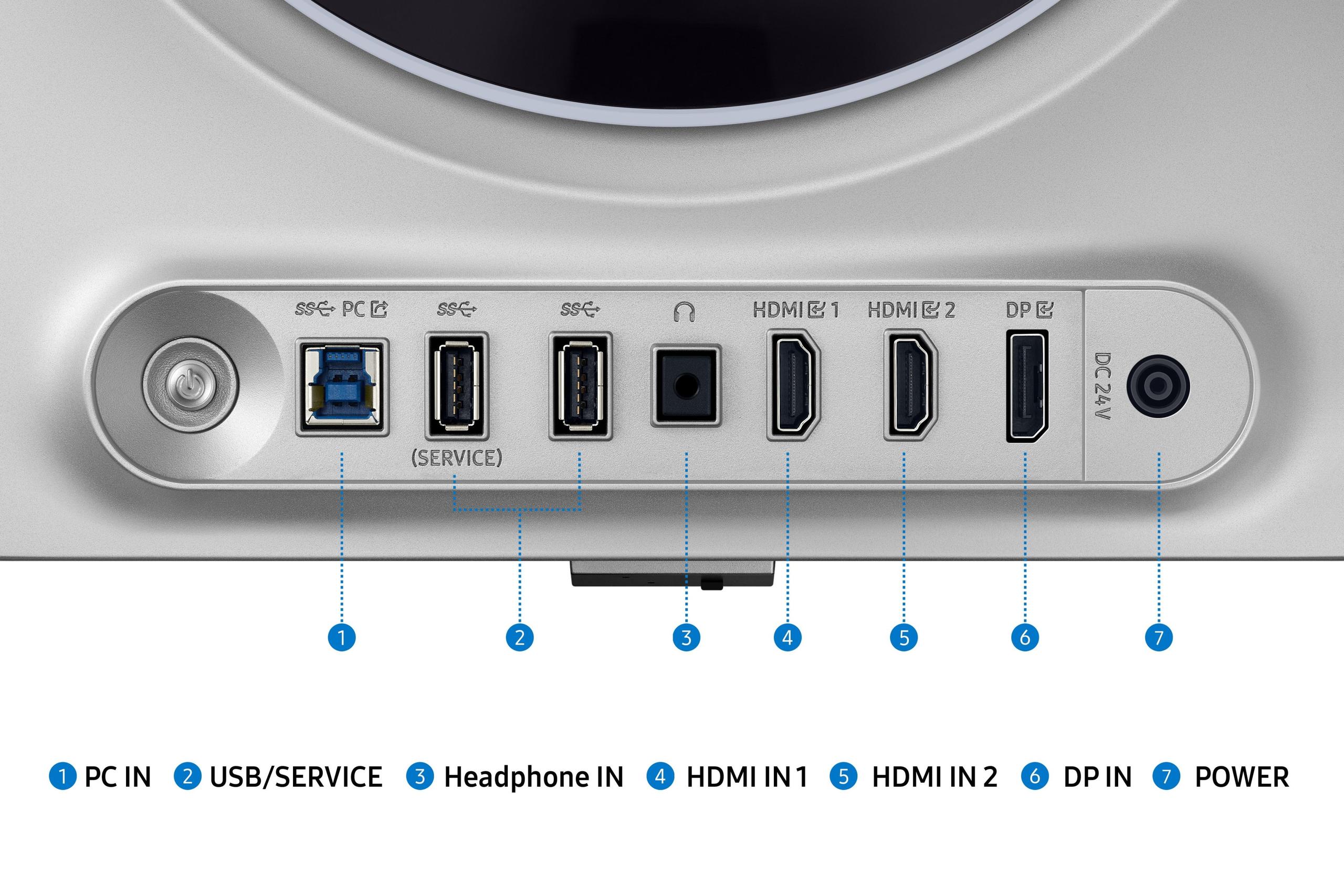
| DisplayPort 1.4, 2x HDMI 2.1, USB hub | DisplayPort 1.4, HDMI 2.1, HDMI 2.0, USB-C, built-in KVM switch |
| Special Features - Unique capabilities that add value | |
| OLED Safeguard+ burn-in protection, RGB lighting | KVM switch for multi-device control, integrated speakers |
| Best Use Case - Primary scenarios where each monitor excels | |
| Competitive esports and fast-paced gaming | 4K gaming, productivity, and mixed-use scenarios |
| Target User - Who benefits most from each monitor's strengths | |
| Competitive gamers with high-end GPUs | Versatile users wanting sharp visuals and connectivity |
The Samsung 27" Odyssey OLED G6 is superior for competitive gaming due to its 360Hz refresh rate and 0.03ms response time, providing ultra-smooth motion and virtually zero input lag. The OLED technology also delivers perfect blacks for better visibility in dark gaming scenarios. The HP Omen 27k is still excellent for gaming at 144Hz but can't match the competitive edge of the Samsung's speed.
The HP Omen 27k offers sharper visuals with 4K resolution (2.25x more pixels than QHD), making text and game details much clearer. However, the Samsung OLED G6 provides superior contrast with perfect blacks and more vibrant colors thanks to OLED technology. Choose the HP for sharpness or the Samsung for contrast and color depth.
The HP Omen 27k is better for console gaming because it supports true 4K resolution at 120Hz via HDMI 2.1, matching what modern consoles can output. While the Samsung G6 also has HDMI 2.1, its QHD resolution doesn't take full advantage of console capabilities that can render games in 4K.
Yes, but different levels are required. The Samsung OLED G6 needs a high-end GPU (RTX 4080 or better) to achieve 360Hz gaming, even at QHD resolution. The HP Omen 27k requires powerful hardware for 4K gaming but is more flexible - you can game at 4K/60Hz with mid-range cards or 4K/120Hz+ with high-end GPUs.
The HP Omen 27k excels at productivity due to its 4K resolution providing incredibly sharp text and detailed spreadsheets. It also includes a built-in KVM switch for managing multiple devices and USB-C connectivity. The Samsung G6 has lower resolution making text less sharp for office work, though its OLED colors are excellent for creative tasks.
The HP Omen 27k reaches 400 nits brightness and includes anti-glare coating, making it suitable for bright rooms and various lighting conditions. The Samsung OLED G6 is limited to 250 nits and works best in darker, controlled lighting environments where its perfect blacks can truly shine.
The Samsung OLED G6 commands a significant premium for its cutting-edge OLED technology and 360Hz performance, targeting serious competitive gamers. The HP Omen 27k offers exceptional value by delivering 4K gaming and comprehensive features at a more accessible price point, making it better for budget-conscious buyers wanting versatility.
The Samsung OLED G6 provides superior HDR with per-pixel brightness control and perfect blacks, creating true cinematic contrast. The HP Omen 27k offers decent HDR with VESA DisplayHDR 400 certification and 8-zone dimming, but can't match OLED's contrast capabilities. For HDR gaming and movies, the Samsung wins decisively.
Both work for content creation but serve different needs. The HP Omen 27k is better for general content creation with its sharp 4K resolution and accurate sRGB color coverage. The Samsung G6 excels for video editing and creative work requiring vibrant colors and deep blacks, though the lower resolution may limit detailed work.
The Samsung OLED G6 includes a 3-year warranty and OLED Safeguard+ technology to prevent burn-in, addressing the main longevity concern with OLED displays. The HP Omen 27k typically comes with a 1-year warranty but uses proven IPS technology with no burn-in risk. Both should last many years with proper use.
The HP Omen 27k provides more comprehensive connectivity with DisplayPort 1.4, HDMI 2.1, HDMI 2.0, USB-C with DisplayPort Alt Mode, and a built-in KVM switch for device switching. The Samsung G6 offers DisplayPort 1.4, dual HDMI 2.1 ports, and USB hub functionality but lacks USB-C and KVM features.
The HP Omen 27k is ideal for mixed gaming and work use due to its sharp 4K resolution for productivity, KVM switch for managing work and gaming PCs, and versatile connectivity including USB-C. The Samsung OLED G6 is specialized for gaming excellence but less practical for daily work tasks due to lower resolution and potential burn-in concerns with static content.
We've done our best to create useful and informative comparisons to help you decide what product to buy. Our research uses advanced automated methods to create this comparison and perfection is not possible - please contact us for corrections or questions. These are the sites we've researched in the creation of this article: bestbuy.com - gamesradar.com - gamesradar.com - versus.com - youtube.com - versus.com - player2.net.au - youtube.com - rtings.com - youtube.com - samsung.com - files.bbystatic.com - techpowerup.com - samsung.com - bestbuy.com - samsung.com - bhphotovideo.com - bestbuy.com - youtube.com - de.shi.com - pangoly.com - tomshardware.com - windowscentral.com - digitaltrends.com - youtube.com - hp.com - youtube.com - hp.com - hp.com - displayspecifications.com - files.bbystatic.com - newegg.com - hp.com - hp.com - hp.com - hp.com - target.com - files.bbystatic.com - displayspecifications.com

Privacy Policy
Terms and Conditions - Affiliate Policy
Home Security
© Copyright 2008-2026.
11816 Inwood Rd #1211, Dallas, TX 75244