

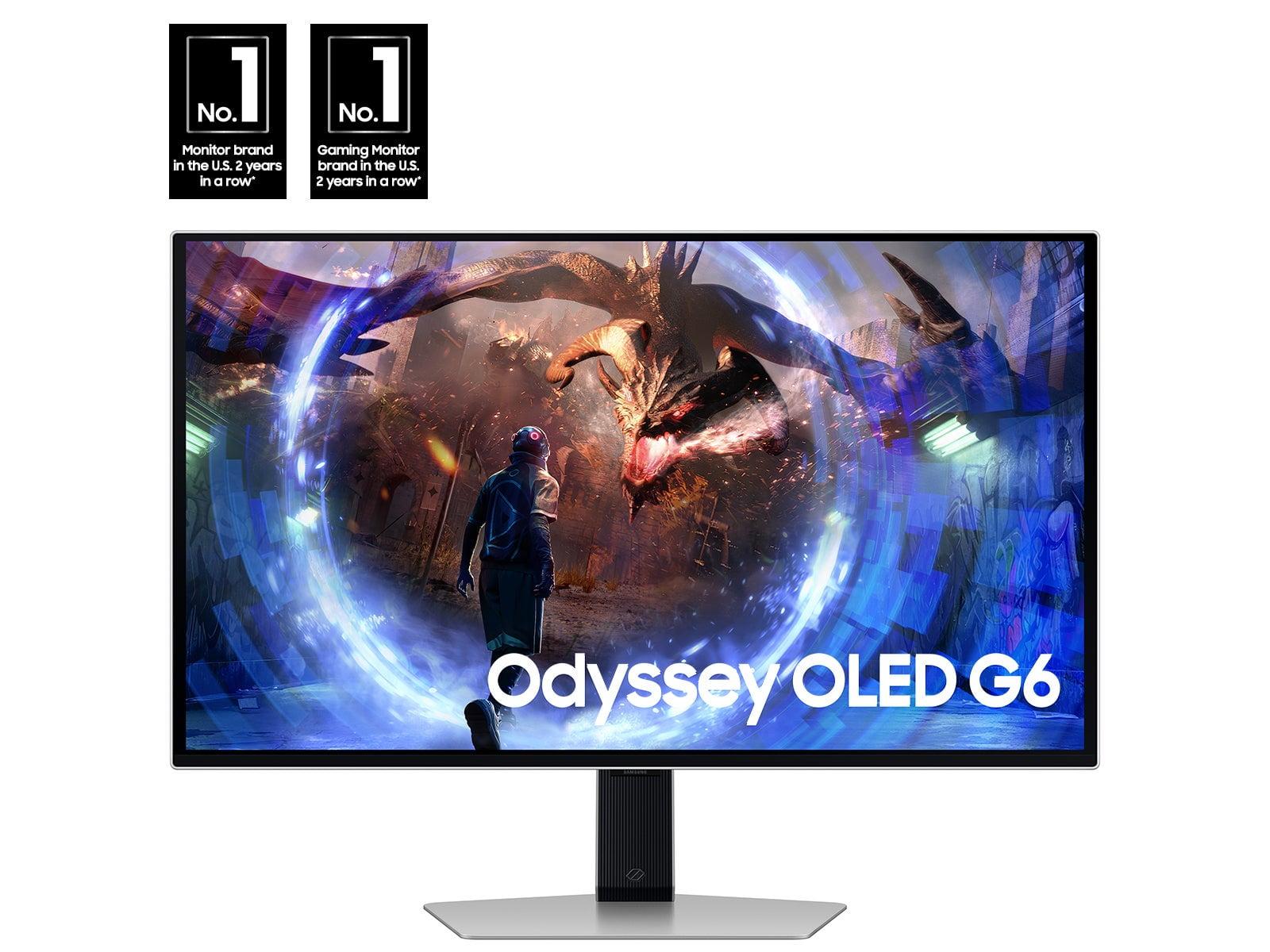

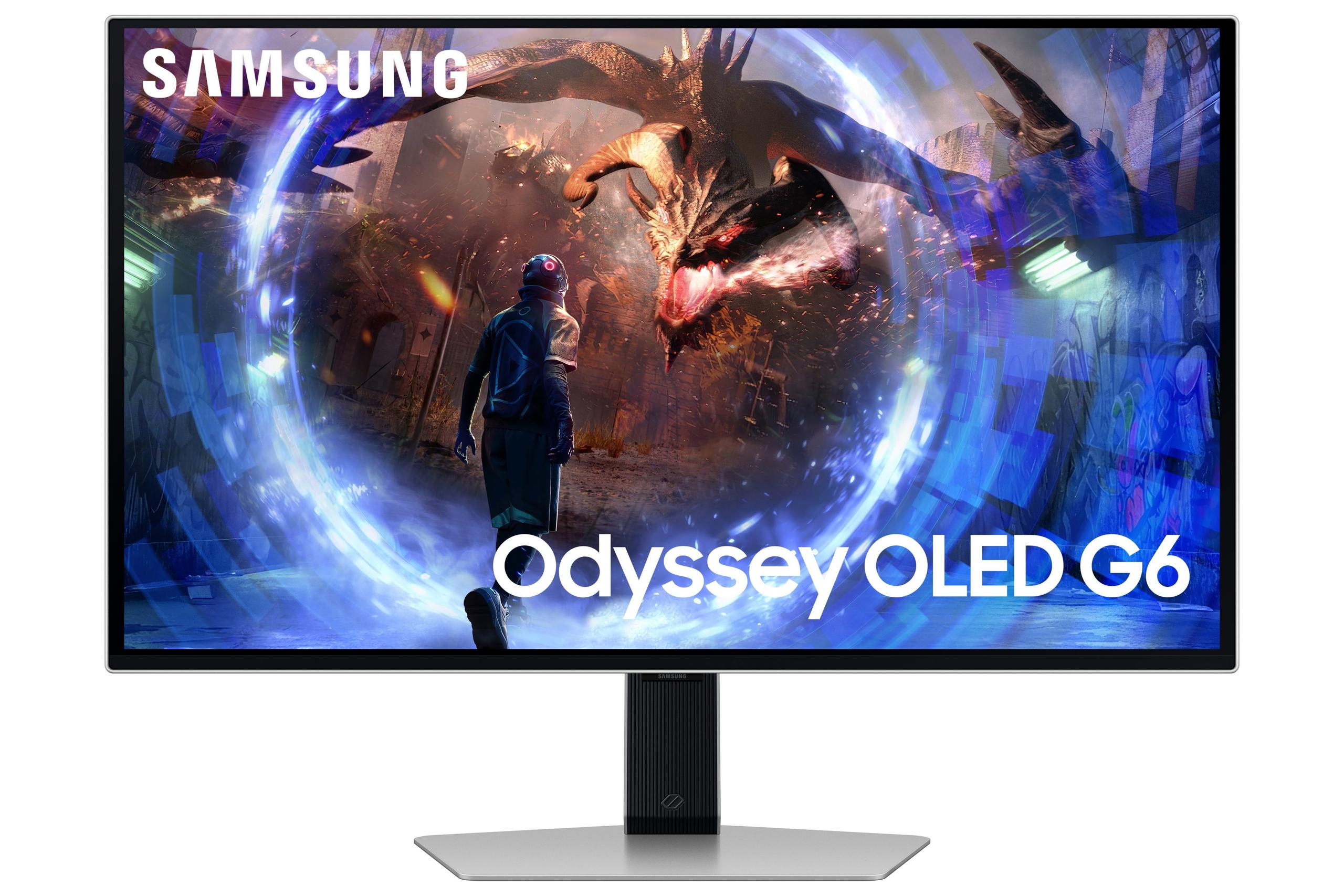

Gaming monitors have come a long way since the days of bulky CRT displays. Today's market offers two distinct philosophies for serious gamers: premium visual experiences that showcase cutting-edge technology, and specialized esports machines built for competitive dominance. The Samsung 27" Odyssey OLED G6 and BenQ Zowie XL2746K represent these two approaches perfectly, each excelling in their respective domains.
Understanding which monitor suits your needs requires diving deep into what makes each tick. These aren't just displays – they're precision instruments designed for different types of gaming excellence.
Before we dive into specifics, let's establish what separates a great gaming monitor from merely good ones. The most critical factors include display technology (how the image is created), refresh rate (how many times per second the screen updates), response time (how quickly pixels change color), and input lag (the delay between your actions and what appears on screen).
Gaming monitors also need specialized features that regular displays don't. Adaptive sync technology eliminates screen tearing by synchronizing the monitor's refresh rate with your graphics card's frame output. Motion blur reduction minimizes the smearing effect when objects move quickly across the screen. These features can mean the difference between landing that crucial headshot and watching your opponent disappear around a corner.
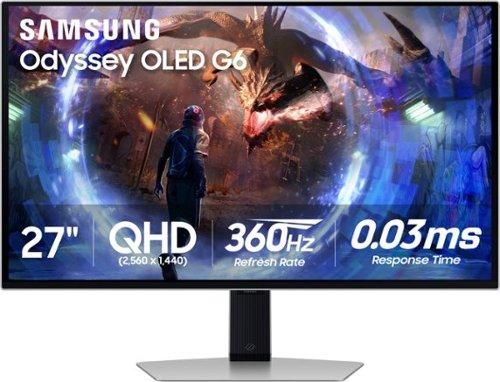
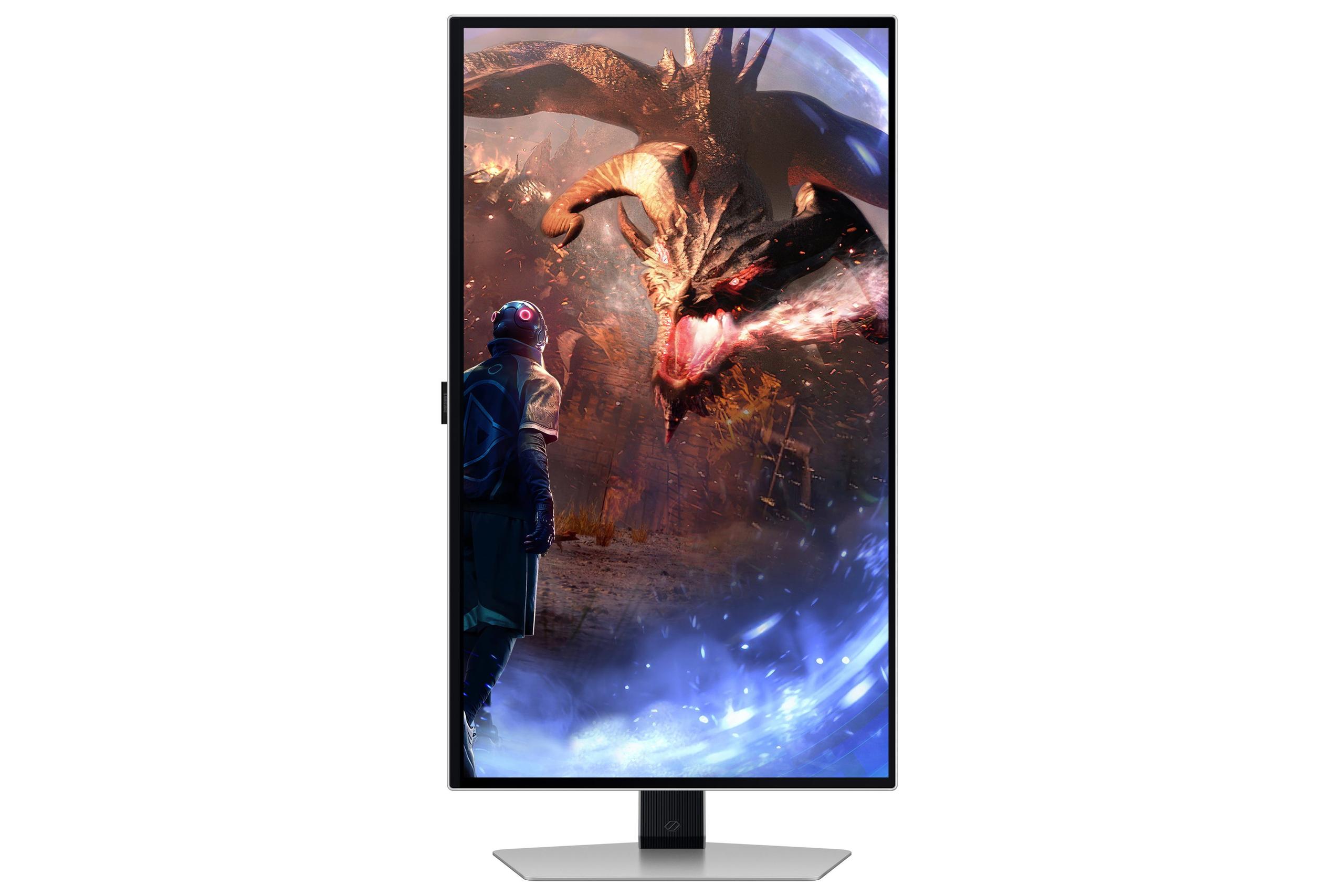
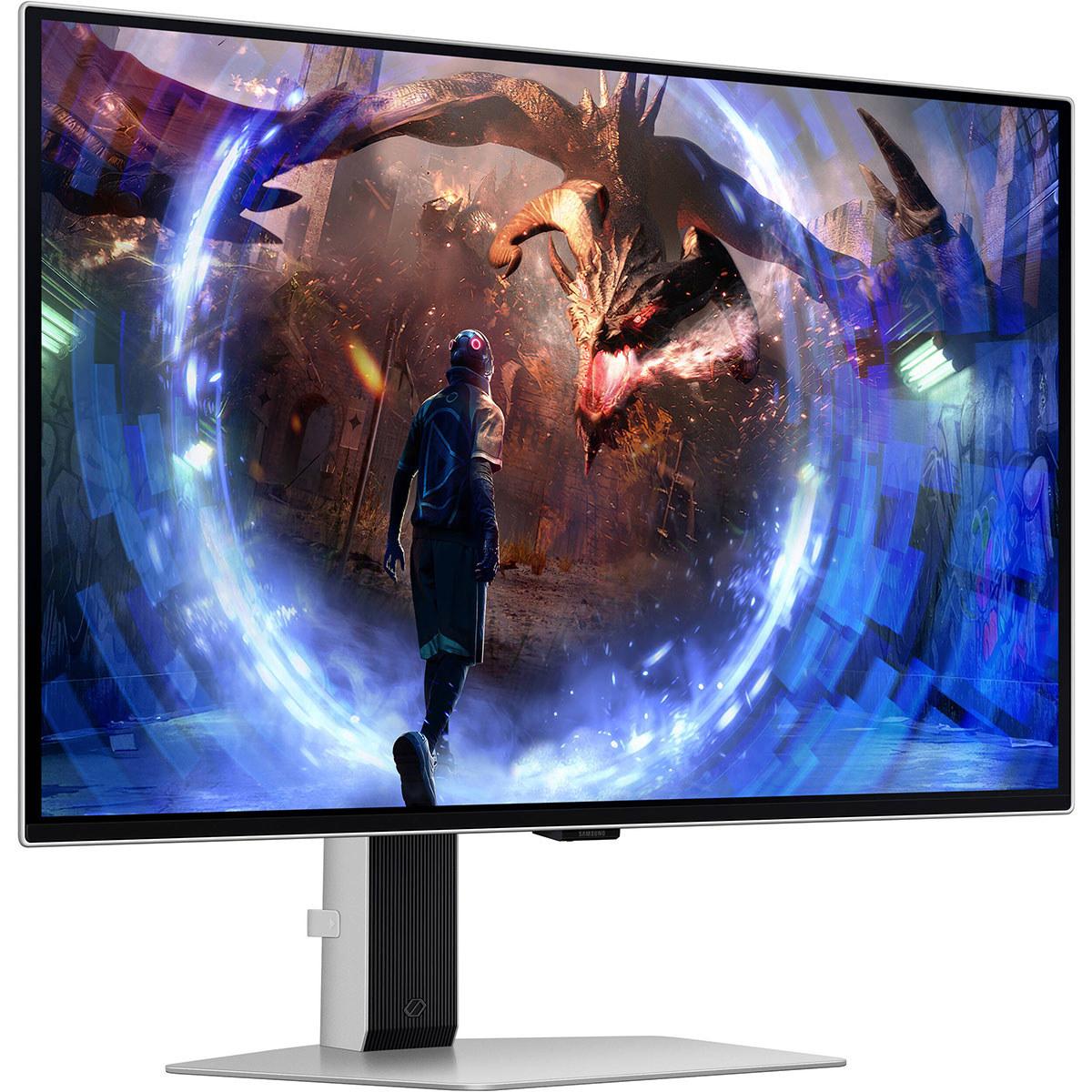
The Samsung Odyssey OLED G6, released in 2024, represents the latest evolution in gaming display technology. It combines quantum dot OLED (QD-OLED) technology – which uses tiny crystals to produce incredibly pure colors – with a blazing 360Hz refresh rate and 1440p resolution. This monitor targets gamers who want the absolute best visual experience without compromising on competitive performance.
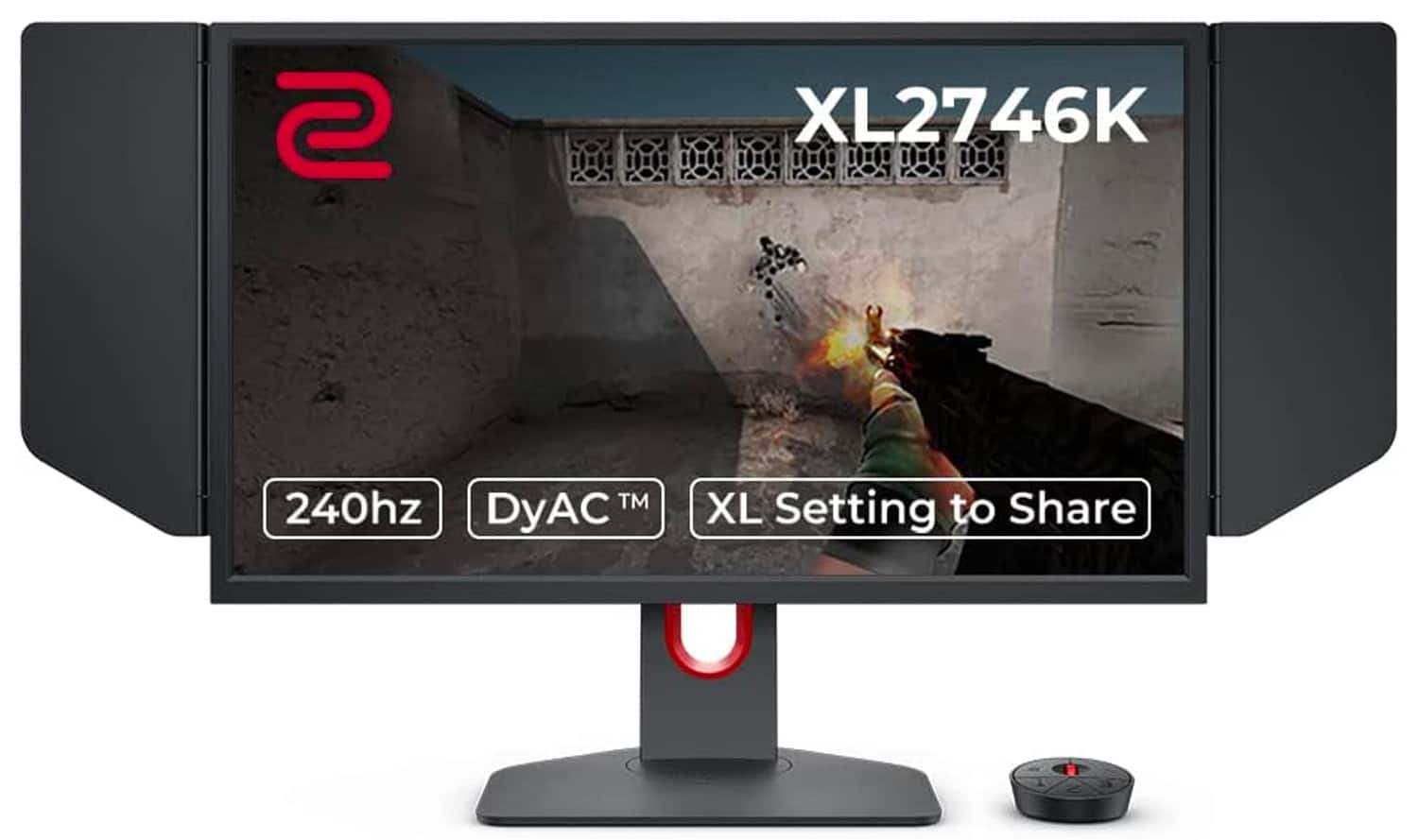
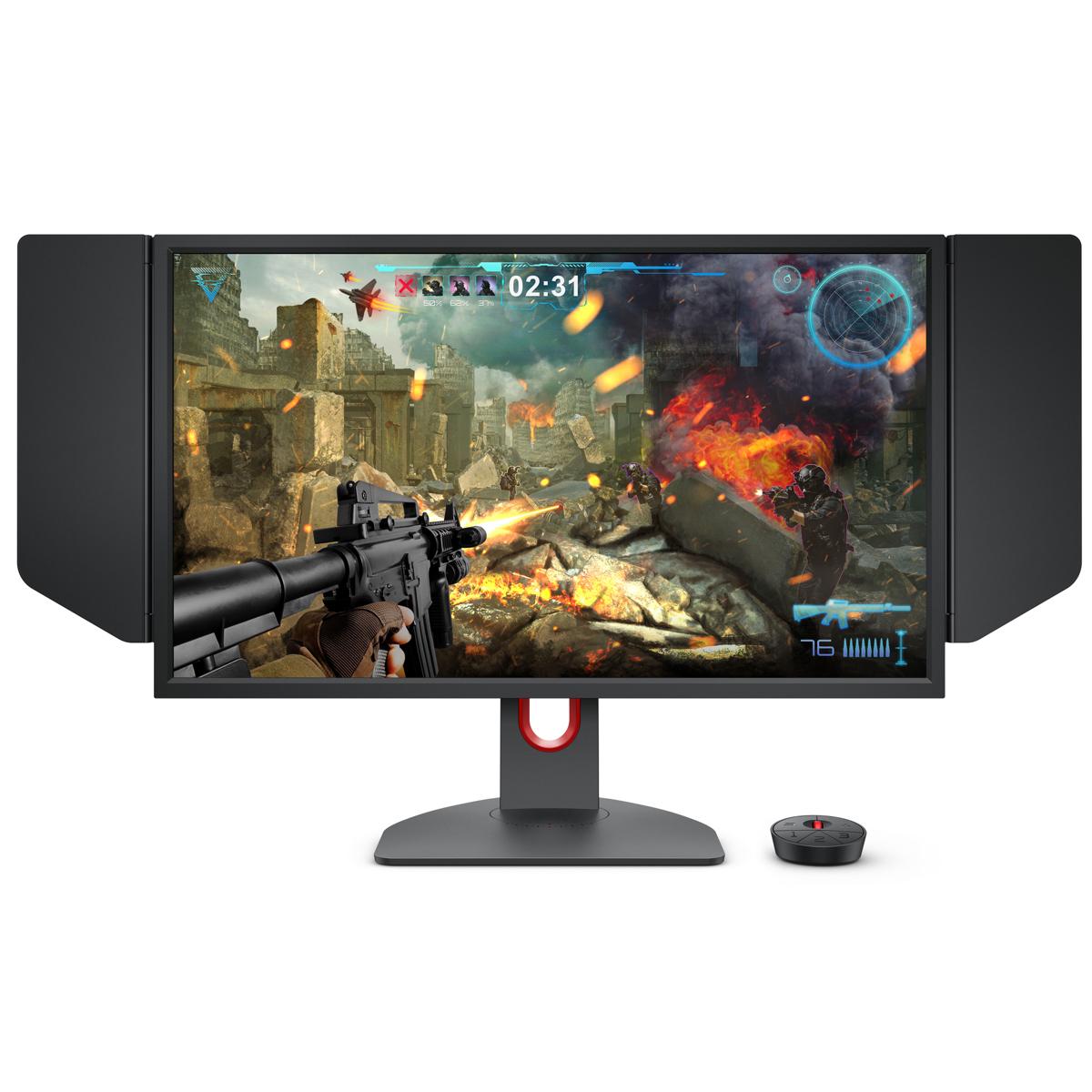
Meanwhile, the BenQ Zowie XL2746K, launched in 2022, takes a different approach entirely. It uses a TN (Twisted Nematic) panel – a older but proven technology known for lightning-fast response times – combined with specialized esports features developed through years of professional gaming partnerships. This monitor is built specifically for competitive FPS gaming, with every feature designed to give players an edge in tournaments.
The fundamental difference between these monitors lies in how they create images. The Samsung Odyssey OLED G6 uses QD-OLED technology, where each pixel emits its own light. Think of it like having millions of tiny, individually controlled light bulbs. When a pixel needs to be black, it simply turns off completely, creating perfect darkness. This results in a contrast ratio of 1,000,000:1 – essentially infinite contrast that makes images pop with incredible depth.
I've spent countless hours gaming on OLED displays, and the difference is immediately apparent. Dark scenes in games like Cyberpunk 2077 or horror titles reveal details that simply disappear into gray mush on traditional LCD screens. The inky blacks make bright elements seem more vibrant by comparison, creating a visual experience that's closer to what our eyes see in real life.
The QD-OLED technology also delivers exceptional color accuracy, covering 99% of the DCI-P3 color space (the standard used in digital cinema). This means games appear more lifelike, with subtle color gradations that lesser displays simply can't reproduce. The Samsung also supports HDR10+ Gaming, a newer standard that dynamically adjusts brightness and contrast scene by scene for optimal visual impact.
In contrast, the BenQ Zowie XL2746K uses a TN panel, which works by twisting liquid crystals to block or allow light from a backlight to pass through. While this sounds primitive compared to OLED, TN panels have a crucial advantage: speed. The liquid crystals in TN panels can change states incredibly quickly, resulting in minimal ghosting (the trailing effect you sometimes see behind moving objects) and virtually no input lag.
The trade-off is significant, though. TN panels typically offer limited viewing angles – colors shift and contrast degrades when you're not looking directly at the screen – and lower overall image quality. The BenQ has a 1,000:1 contrast ratio, which is respectable for TN technology but nowhere near the Samsung's infinite contrast.
However, this limitation matters less for competitive gaming. When you're focused on tracking enemies in Counter-Strike or Valorant, absolute color accuracy takes a backseat to motion clarity and responsiveness. The BenQ's TN panel excels here, providing the crystal-clear motion that professional esports players demand.
One of the most significant differences between these monitors is resolution. The Samsung Odyssey OLED G6 runs at 2560×1440 (QHD), providing 108 pixels per inch on its 27-inch screen. This higher pixel density makes everything sharper – from game interfaces to web browsing text. When playing games like Microsoft Flight Simulator or Red Dead Redemption 2, the extra detail enhances immersion significantly.
The benefits extend beyond gaming. If you use your monitor for work or content consumption, the Samsung's 1440p resolution makes text crisp and readable, reducing eye strain during long sessions. Photo and video editing also benefit from the additional screen real estate and detail.
The BenQ Zowie XL2746K sticks with 1920×1080 (Full HD), resulting in 82 pixels per inch. While this might seem like a downgrade, it's a deliberate choice for competitive gaming. Lower resolution means your graphics card can push higher frame rates more easily, crucial for maintaining that 240Hz refresh rate in demanding esports titles.
Professional gamers often prefer 1080p for another reason: larger targets. In competitive FPS games, enemy models appear slightly larger at 1080p than 1440p when using the same field of view settings. This can make the difference between hitting or missing a long-range shot in games like CS:GO or Apex Legends.
The resolution choice also affects GPU requirements dramatically. Running games at 360Hz and 1440p on the Samsung demands a high-end graphics card like an RTX 4080 or higher. The BenQ can achieve its 240Hz target with more modest hardware, making it accessible to a broader range of competitive gamers.
The refresh rate battle represents one of the most debated topics in gaming. The Samsung Odyssey OLED G6 pushes the envelope with 360Hz, meaning it can display 360 unique frames per second. This creates an incredibly smooth experience, particularly noticeable when panning the camera or tracking fast-moving objects.
From personal experience, the jump from 240Hz to 360Hz is subtle but real. It's most apparent in games with rapid camera movement or when tracking targets across the screen. The motion feels slightly more fluid, and there's a marginal improvement in motion clarity that competitive players might appreciate.
However, the practical benefits depend heavily on your ability to generate enough frames. You need a powerful GPU and optimized game settings to consistently hit 360fps. Even then, the difference between 240Hz and 360Hz is much smaller than the jump from 144Hz to 240Hz, which is dramatic and immediately noticeable.
The BenQ Zowie XL2746K's 240Hz refresh rate shouldn't be dismissed. It's still incredibly fast – we're talking about 4.16 milliseconds between frame updates compared to the Samsung's 2.78 milliseconds. For most competitive games and players, 240Hz provides all the smoothness needed for optimal performance.
What's more important than raw refresh rate numbers is consistency. The BenQ is designed to maintain steady 240Hz performance in esports titles, while the Samsung might struggle to hit 360Hz consistently in more demanding games without significant graphics settings compromises.
Response time – how quickly pixels can change from one color to another – is where these monitors show their true priorities. The Samsung Odyssey OLED G6 boasts an incredible 0.03ms gray-to-gray response time, which is essentially instantaneous. OLED pixels can switch states incredibly quickly because they don't rely on liquid crystals physically rotating.
This ultra-fast response time virtually eliminates ghosting and provides exceptional motion clarity in fast-paced scenes. Combined with the high refresh rate, moving objects appear sharp and well-defined, crucial for tracking enemies in competitive shooters or following fast action in racing games.
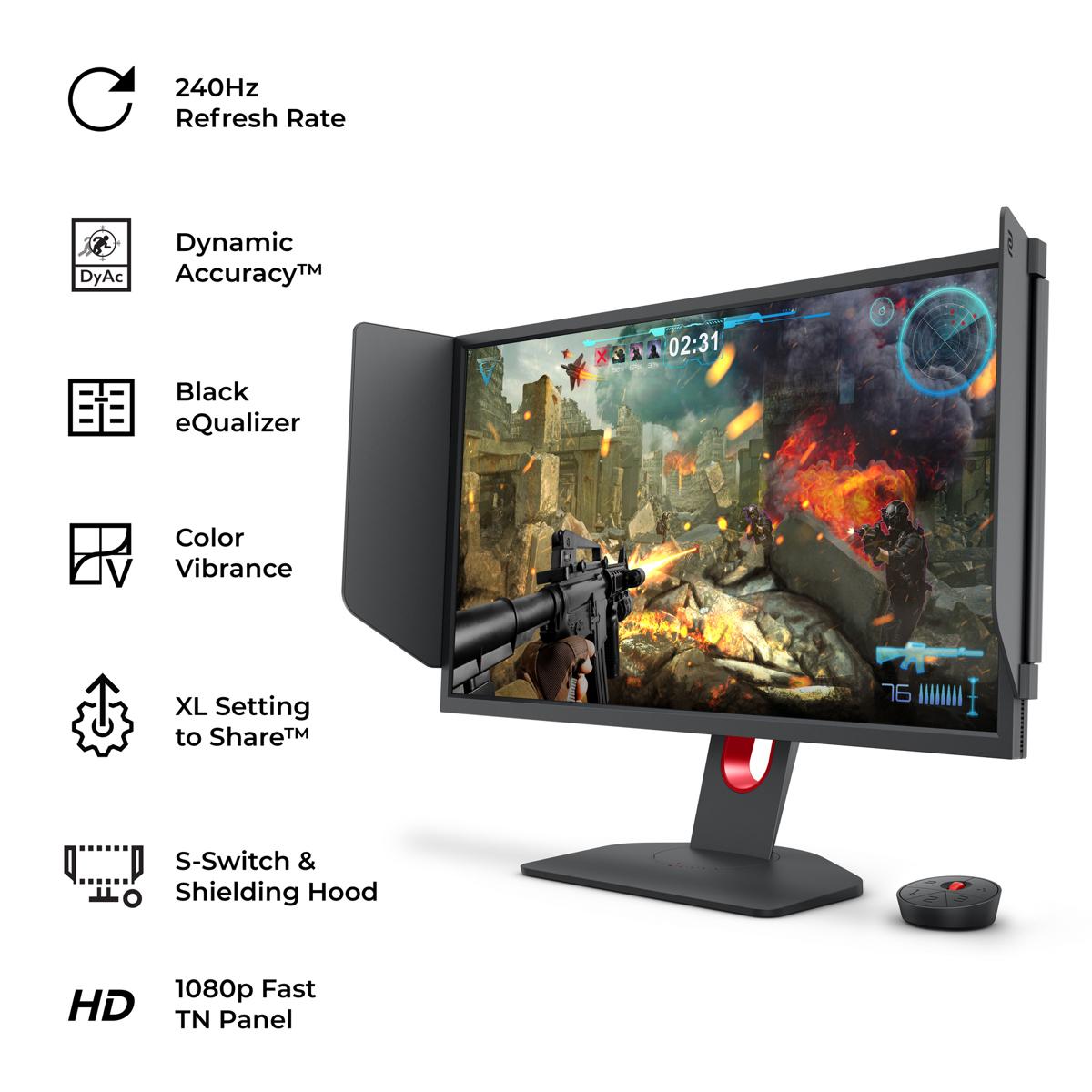
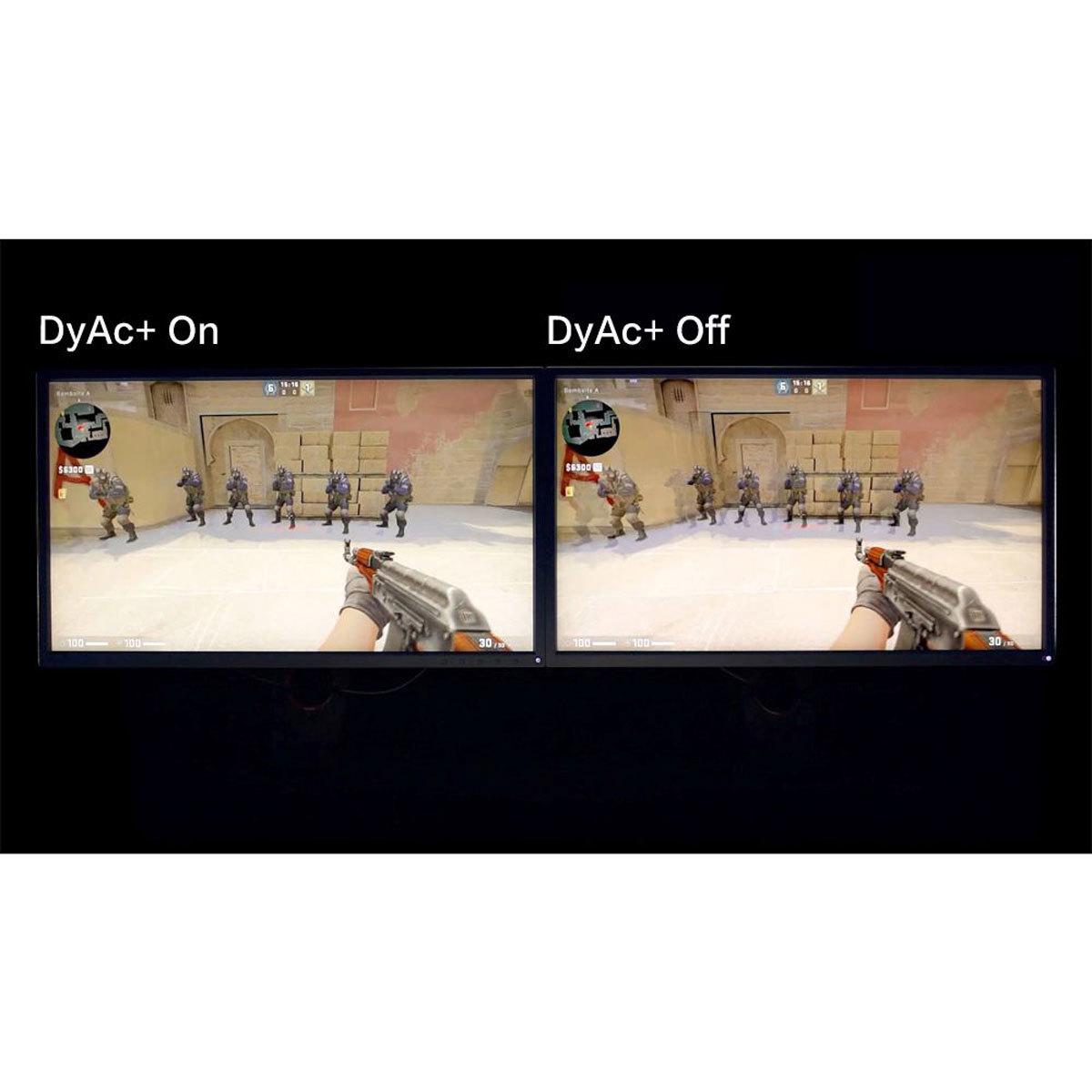
The BenQ Zowie XL2746K specifies 1ms gray-to-gray response time, which might seem slower but tells only part of the story. BenQ's implementation focuses on consistent, stable response times across different color transitions rather than just the fastest possible measurement. More importantly, the BenQ includes DyAc+ (Dynamic Accuracy Plus) technology, a proprietary motion blur reduction system.
DyAc+ works by strobing the backlight in sync with the refresh rate, effectively creating brief moments of darkness between frames. This technique dramatically reduces motion blur and makes moving objects appear incredibly sharp. It's particularly effective in FPS games where tracking enemy movement is crucial. The downside is that DyAc+ reduces overall brightness and can cause flickering that some users find uncomfortable.
I've used both approaches extensively, and each has its merits. The Samsung's OLED provides naturally excellent motion clarity without any artificial processing, while the BenQ's DyAc+ creates an almost supernatural level of motion sharpness that many professional players swear by.
The feature sets of these monitors reflect their different target audiences perfectly. The Samsung Odyssey OLED G6 includes premium gaming features designed to enhance various gaming genres. Its HDR10+ Gaming support provides dynamic tone mapping that adjusts brightness and contrast in real-time, creating more immersive experiences in supported titles.
The Samsung also includes OLED Safeguard+ technology with a dynamic cooling system featuring a pulsating heat pipe – the first of its kind in a monitor. This addresses one of OLED's main concerns: burn-in, where static images can permanently damage the display. The cooling system, combined with logo detection and thermal modulation, helps protect the display during extended gaming sessions.
For adaptive sync, the Samsung supports AMD FreeSync Premium Pro, which eliminates screen tearing and stuttering when your frame rate varies. It also works with NVIDIA graphics cards through G-Sync compatibility, ensuring smooth gameplay regardless of your GPU choice.
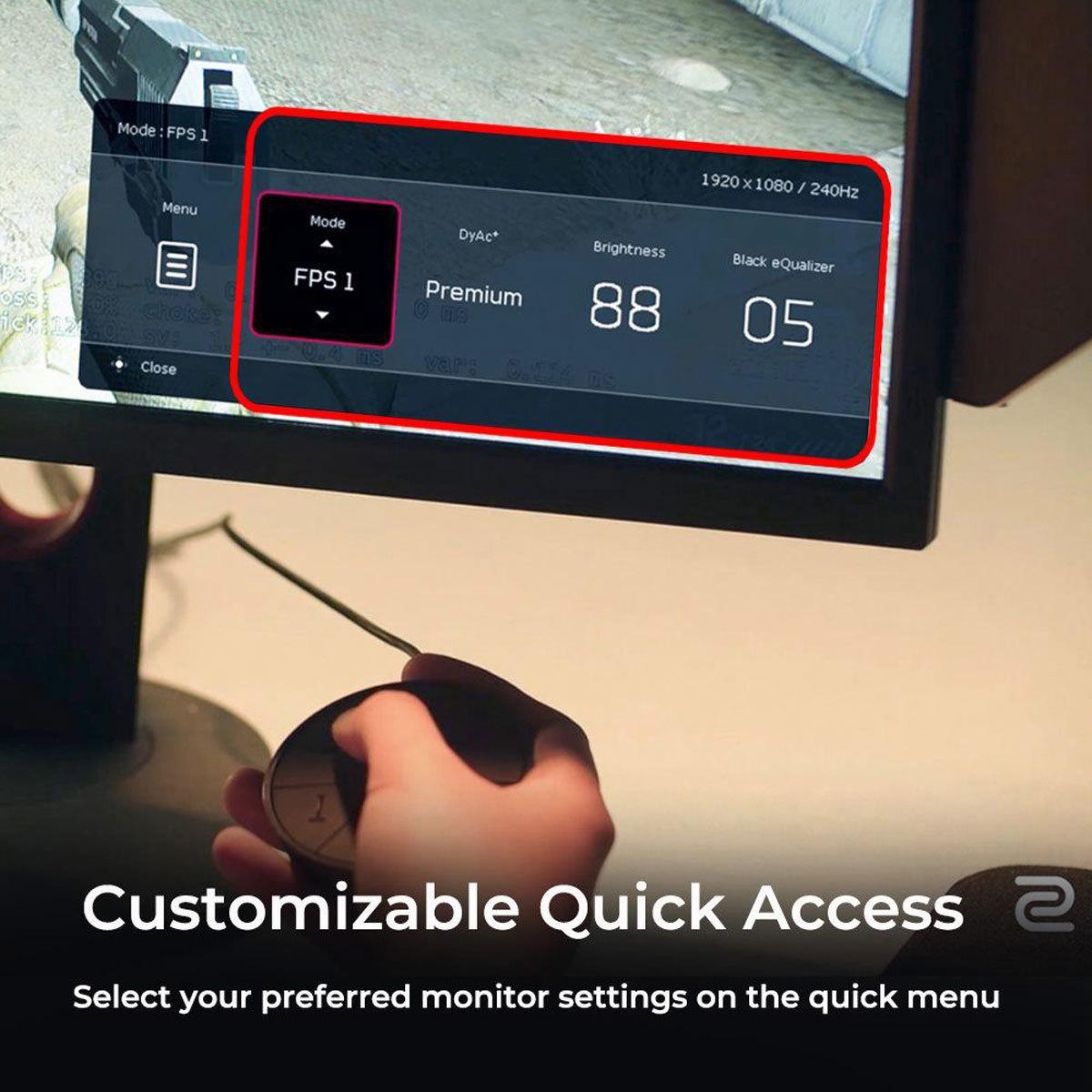
The BenQ Zowie XL2746K takes a completely different approach, focusing on features that directly impact competitive performance. Black eQualizer is perhaps the most practical feature – it brightens dark areas without overexposing bright regions, helping you spot enemies hiding in shadows. This can provide a genuine competitive advantage in games where visibility is crucial.
Color Vibrance allows fine-tuning of color saturation to make enemies stand out more against backgrounds. While this might sound like cheating, it's simply optimizing the display for competitive visibility – similar to how professional drivers adjust their mirrors for optimal vision.
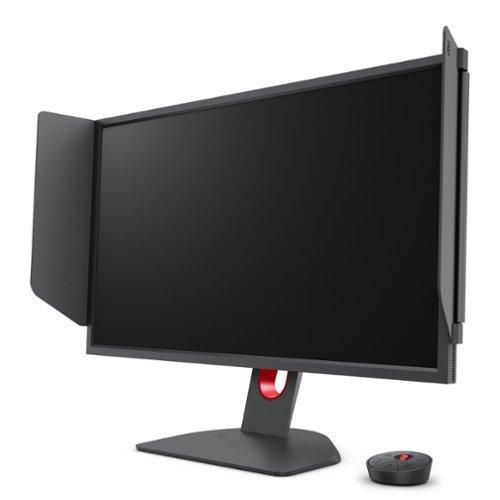
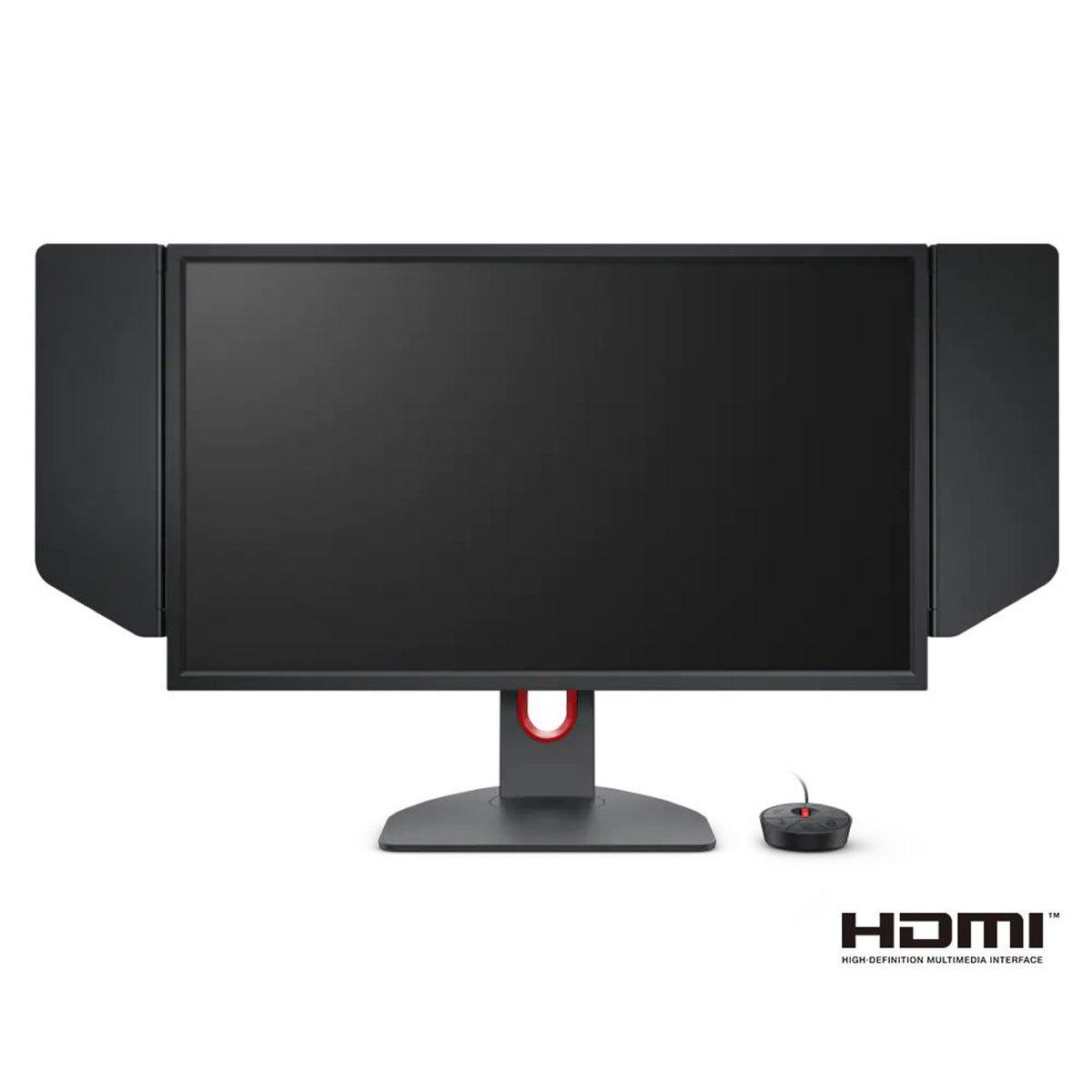
The S Switch is a game-changer for tournament play. This wireless controller lets you quickly switch between up to three saved profiles, adjust settings on the fly, and navigate the monitor's menu system without reaching for buttons on the display itself. During intense matches, this convenience can be invaluable.
The XL Setting to Share feature lets you export and import monitor configurations via simple files. This means you can use the exact same settings as your favorite professional player or quickly share optimal configurations with teammates. It's a small but thoughtful feature that shows BenQ's deep understanding of the esports community.
Brightness capabilities reveal another fundamental difference between these monitors. The BenQ Zowie XL2746K achieves 320 cd/m² (nits) typical brightness, which provides excellent visibility in well-lit tournament venues or bright home setups. This higher brightness can be crucial for competitive gaming, where you need to see every detail clearly regardless of ambient lighting.
The Samsung Odyssey OLED G6 is more limited at 250 nits for standard content, though it can reach 1,000 nits for small HDR highlights. This limitation is common with OLED technology – the trade-off for perfect blacks and infinite contrast is lower peak brightness. In darker environments, this isn't a problem and actually enhances the viewing experience. However, in bright rooms or during daytime gaming, the BenQ has a clear advantage.
For home theater use, the Samsung excels despite its brightness limitation. OLED technology is widely considered the gold standard for movie watching due to its perfect blacks and accurate colors. The monitor supports HDR10+ and provides an cinematic experience that rivals dedicated home theater displays. The 1440p resolution also means you'll see more detail in 4K content than you would on the BenQ's 1080p display.
The Samsung also includes OLED Glare Free technology, which uses a matte coating to reduce reflections from external light sources. This helps maintain image quality even in moderately bright environments, though it can't overcome the fundamental brightness limitations of OLED technology.
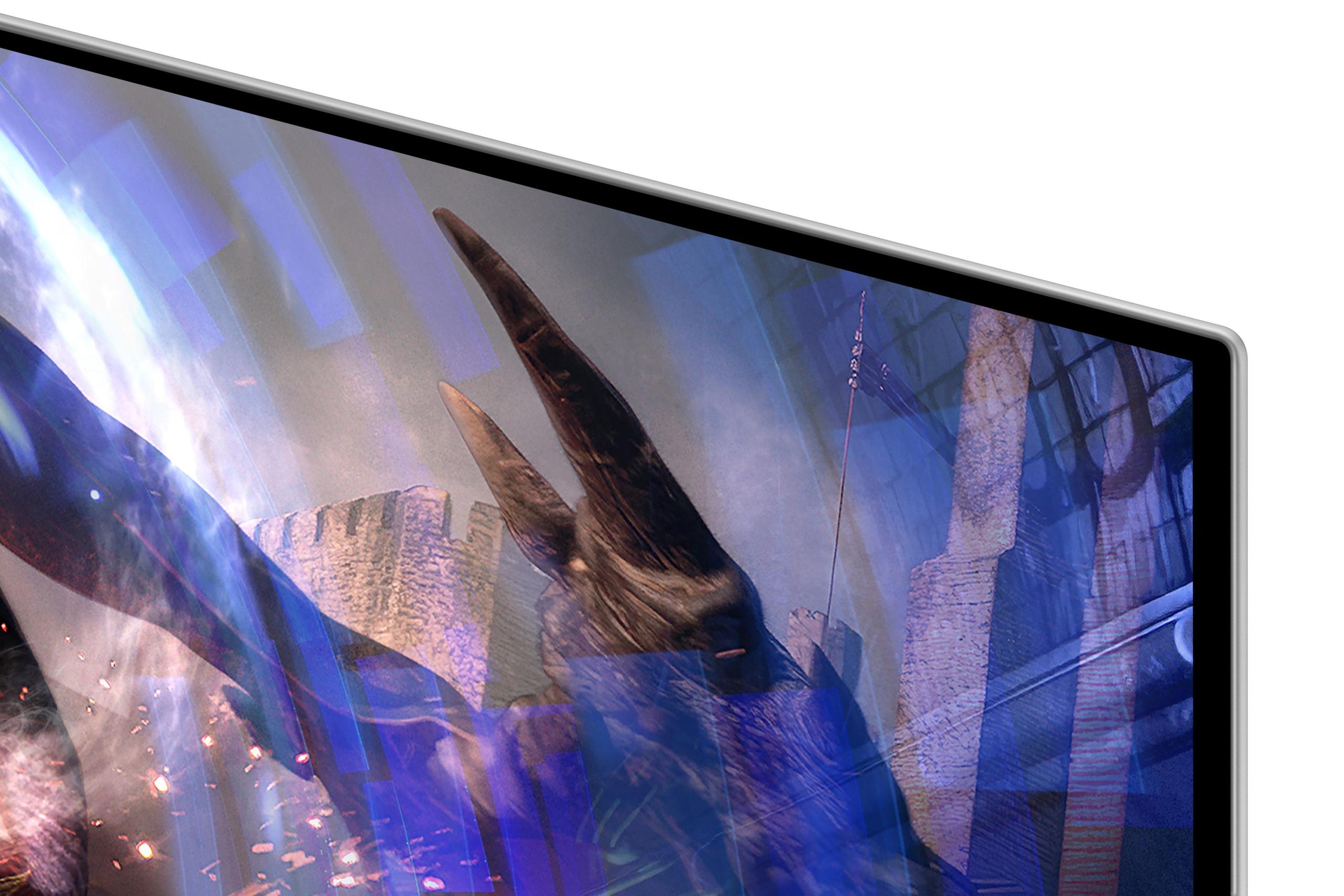
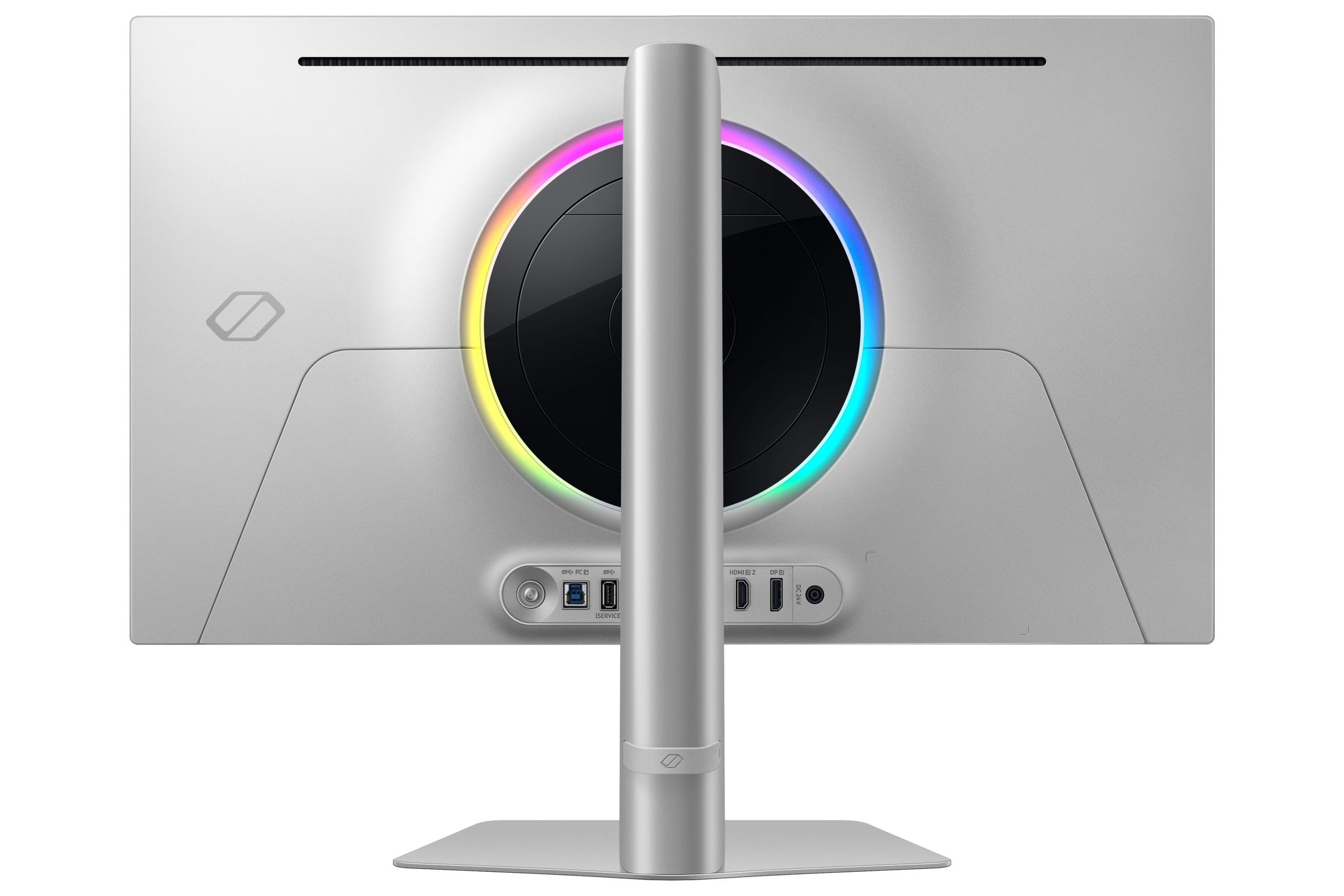
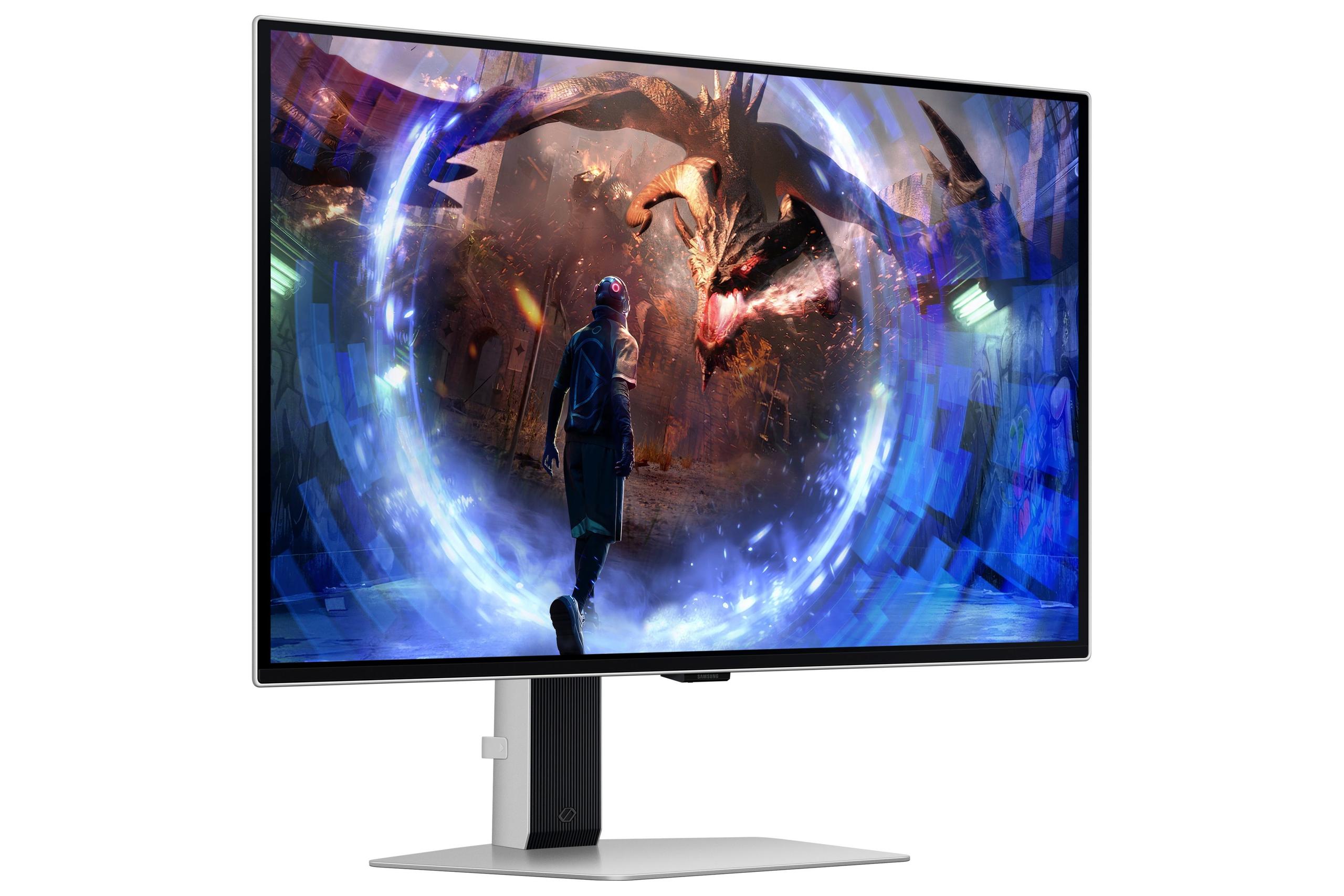
Both monitors offer excellent build quality, but with different philosophies. The Samsung Odyssey OLED G6 features a premium metal chassis with customizable RGB lighting that adds visual flair to any setup. The build quality feels substantial and premium, appropriate for its position in Samsung's high-end gaming lineup.
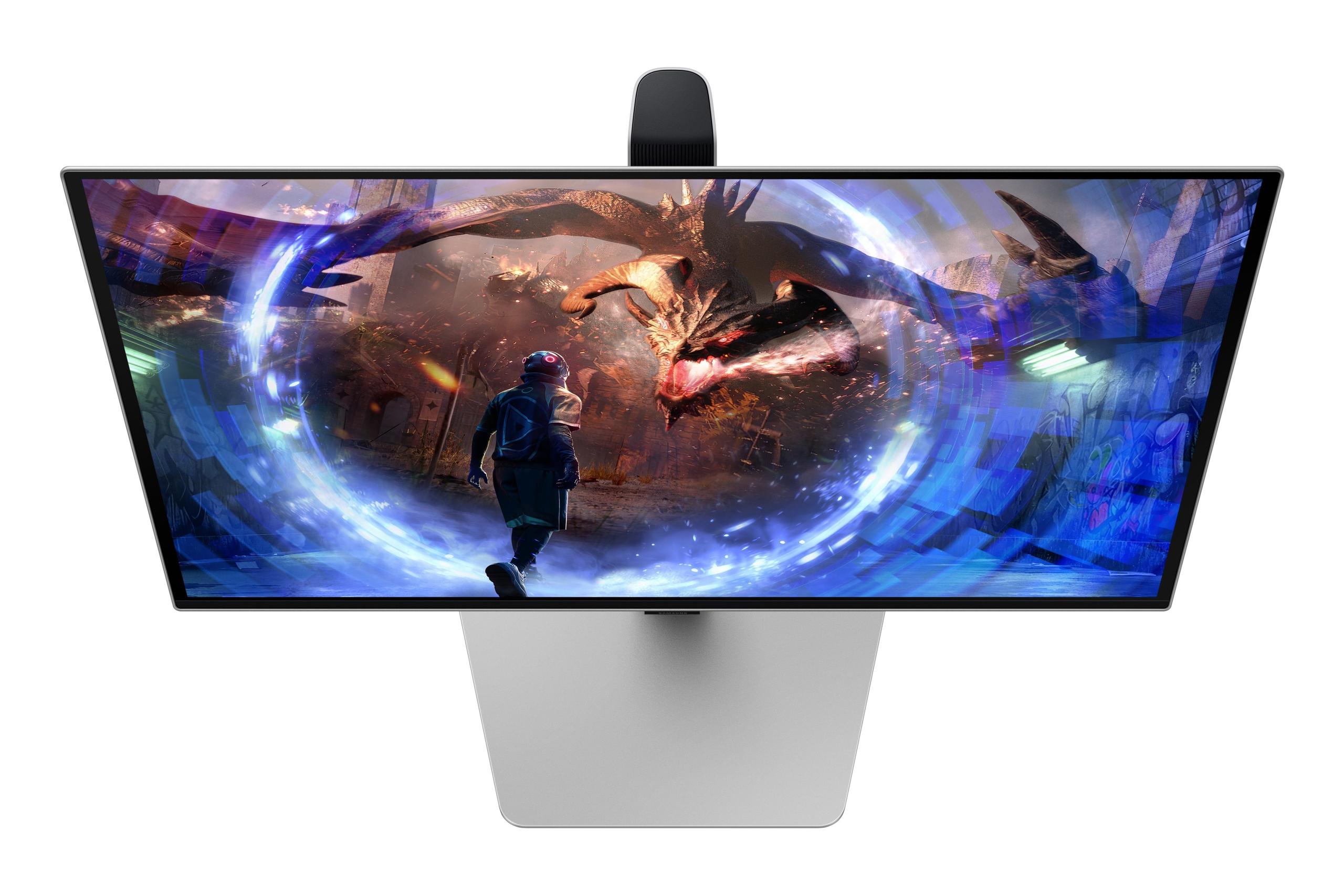
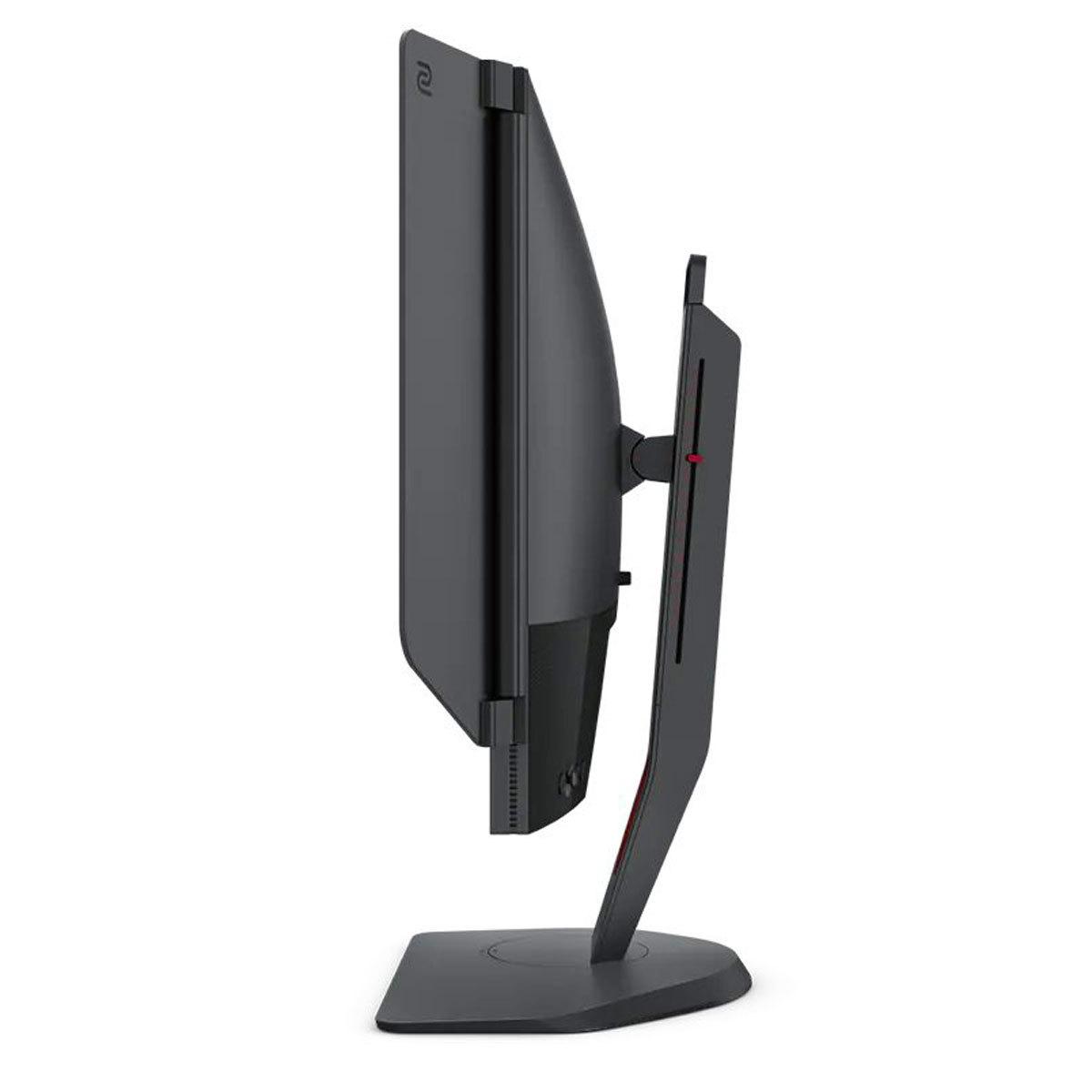
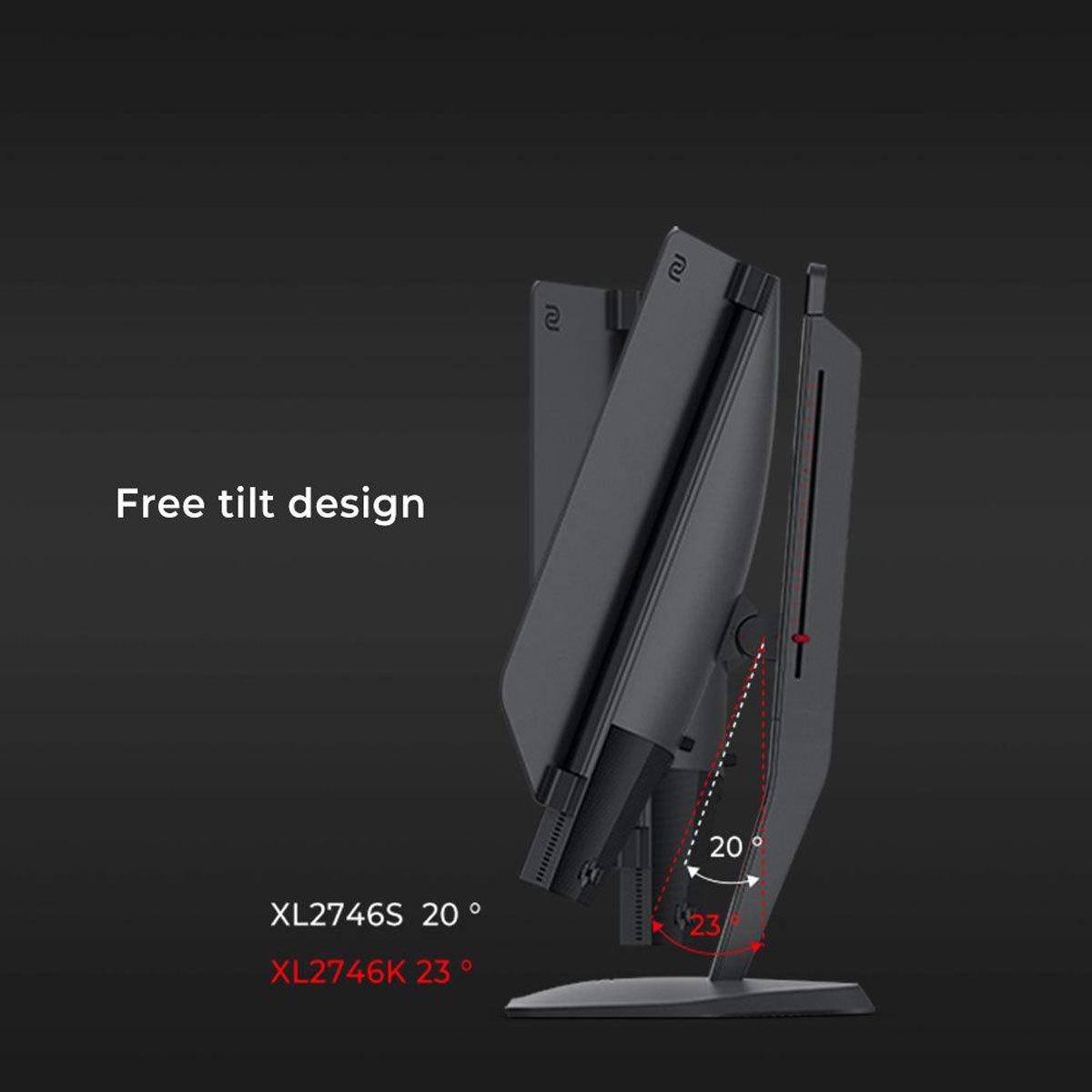
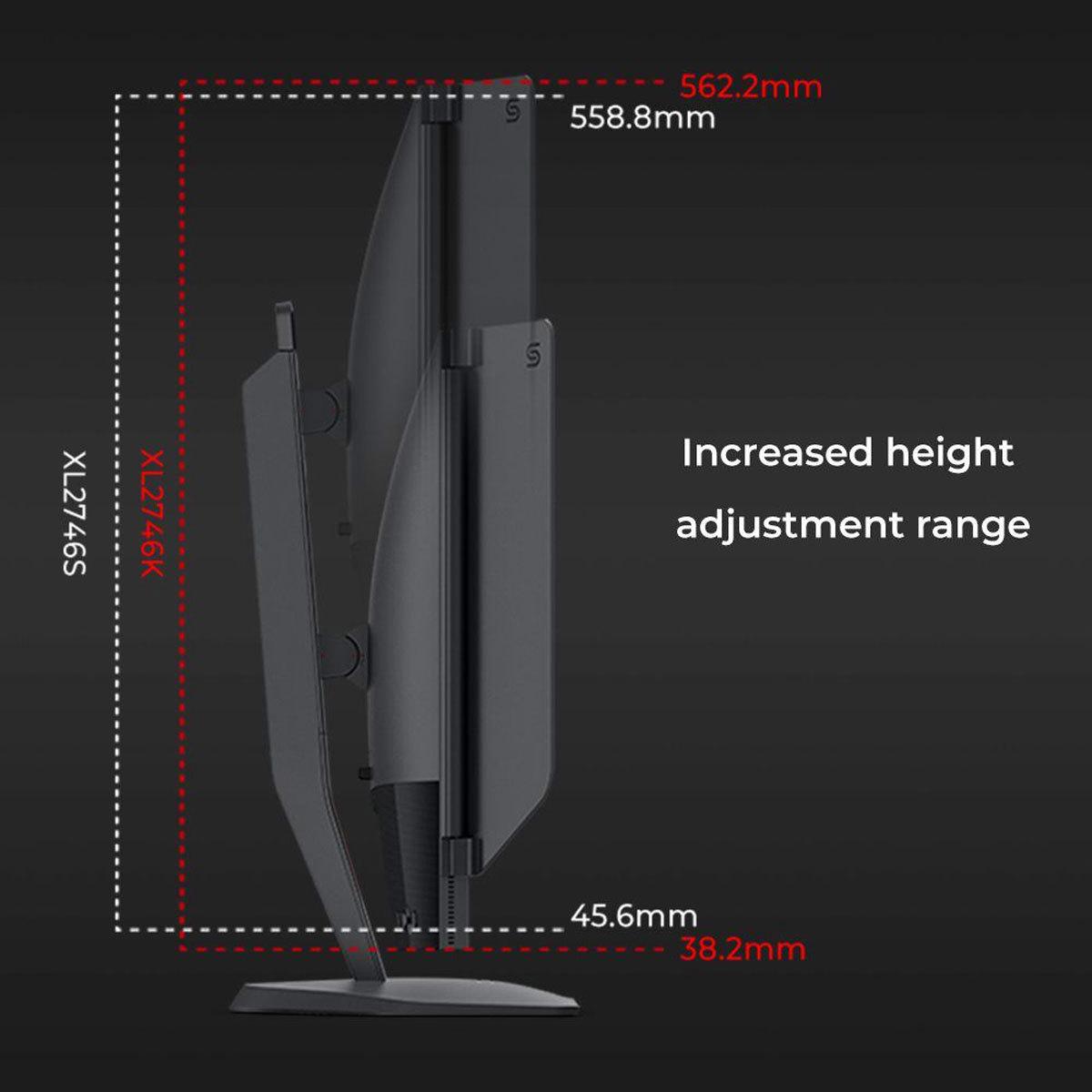
The stand provides comprehensive adjustments including height (up to 155mm), tilt, swivel, and pivot functionality. The movements are smooth and stable, with a base design that's both attractive and functional. The monitor also supports standard VESA mounting if you prefer to use a monitor arm.
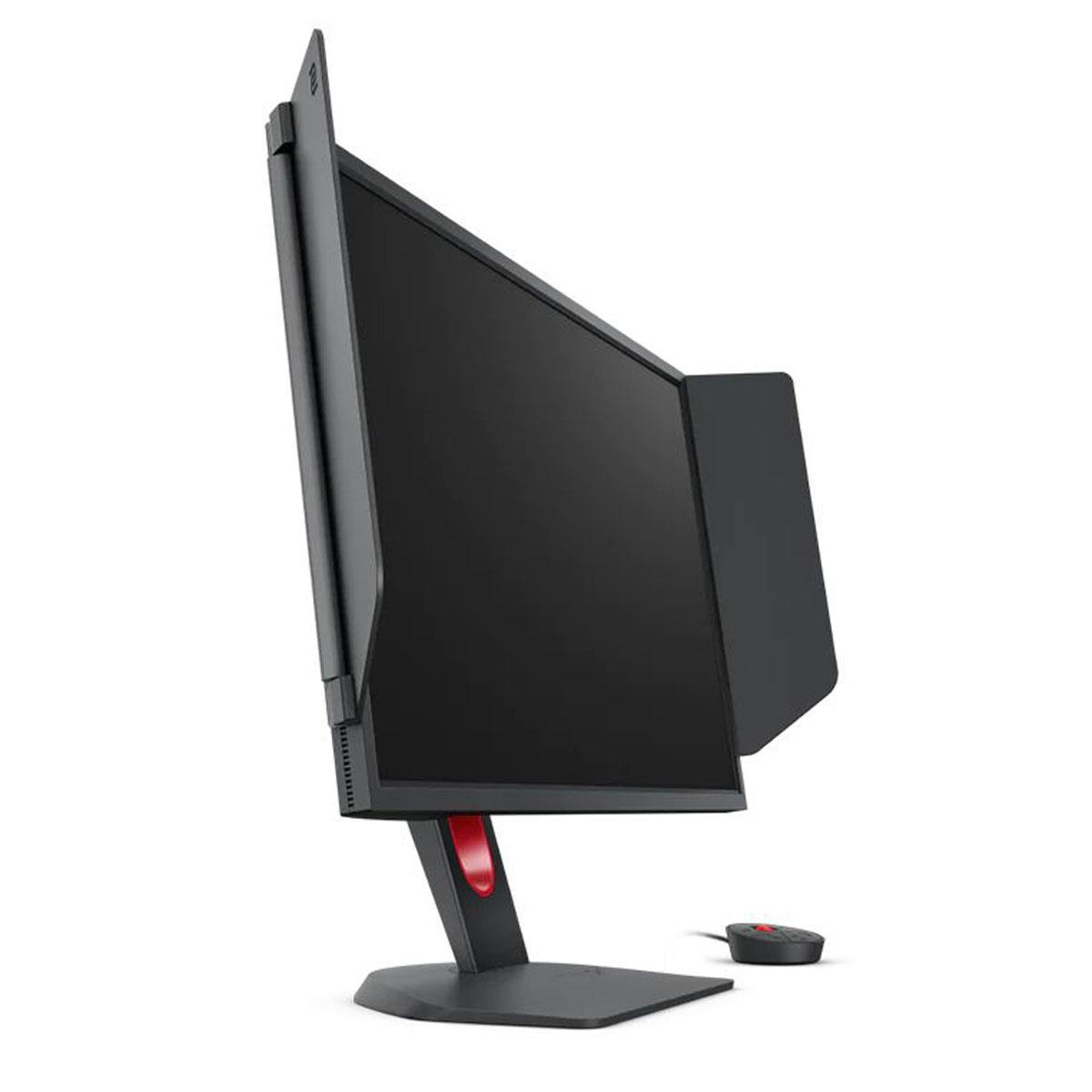
The BenQ Zowie XL2746K prioritizes practicality over aesthetics. The matte black finish resists fingerprints and looks professional in tournament settings. The stand takes up less desk space while maintaining excellent stability – a crucial consideration for competitive setups where desk real estate is often limited.
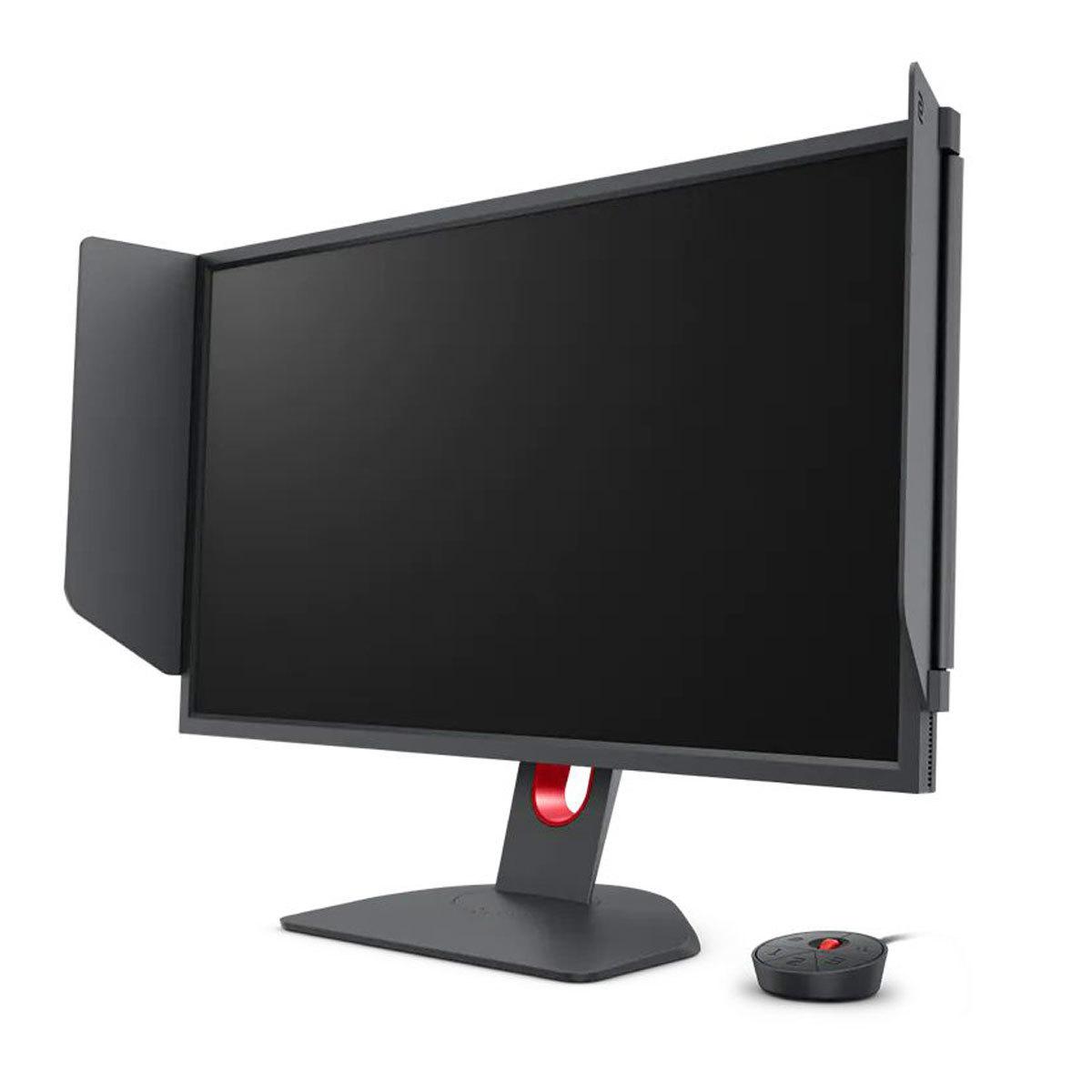
One unique feature of the BenQ is the included shielding hood – detachable side panels that reduce peripheral distractions and help maintain focus during intense gaming sessions. This might seem gimmicky, but many professional players swear by it for maintaining concentration in tournament environments.
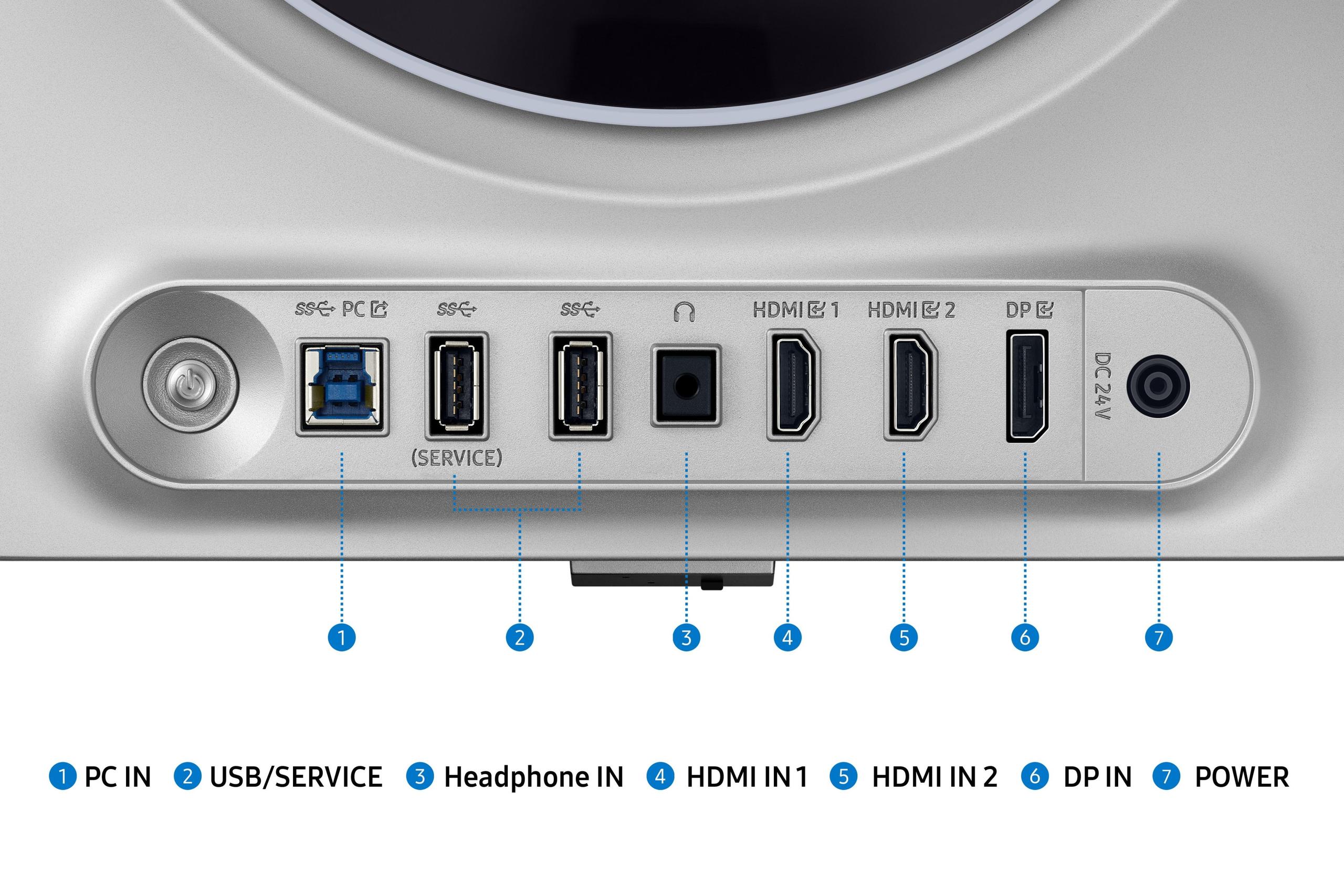
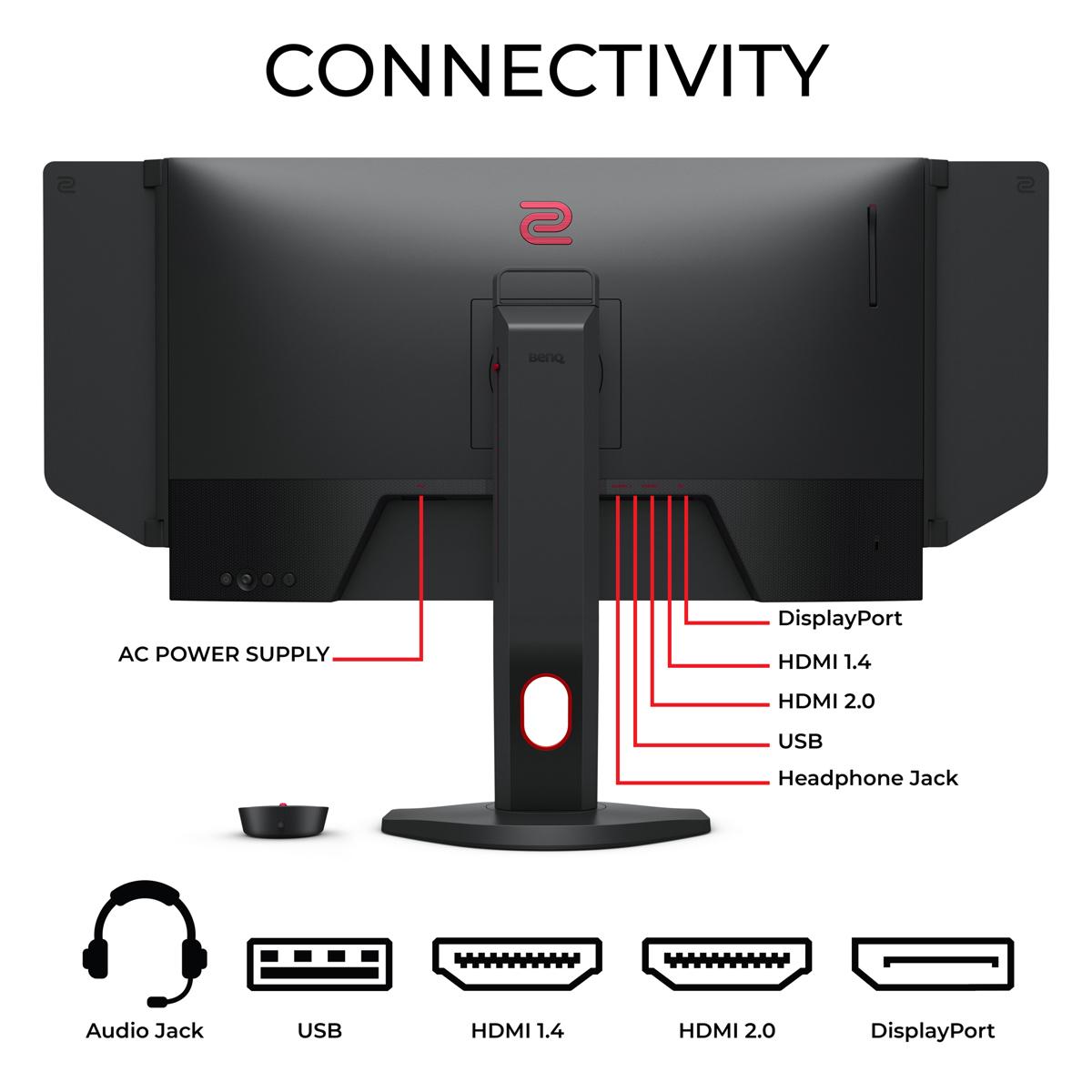
Both monitors offer similar connectivity options, though with different focuses. The Samsung includes HDMI 2.1 ports that support the full bandwidth needed for console gaming at high refresh rates, while the BenQ provides three HDMI 2.0 ports and DisplayPort 1.2 – adequate for its resolution and refresh rate but not optimized for next-generation console features.
At the time of writing, these monitors occupy different price tiers that reflect their positioning and technology. The Samsung Odyssey OLED G6 commands a premium price appropriate for cutting-edge OLED technology and 360Hz performance. It's an investment in the latest display technology that should remain relevant for years to come.
The BenQ Zowie XL2746K offers exceptional value for competitive gamers, providing professional-grade esports features at a more accessible price point. The cost savings compared to the Samsung could fund other gaming peripherals or hardware upgrades.
Consider the total system cost when making your decision. The Samsung demands high-end graphics hardware to fully utilize its 360Hz and 1440p capabilities, while the BenQ can achieve its maximum potential with more modest GPU investments.
The choice between the Samsung 27" Odyssey OLED G6 and BenQ Zowie XL2746K ultimately depends on your gaming priorities and budget at the time of writing.
Choose the Samsung Odyssey OLED G6 if you value the ultimate visual experience and want a monitor that excels across multiple gaming genres. It's perfect for gamers who enjoy both competitive titles and immersive single-player games, or those who use their monitor for content consumption and productivity work alongside gaming. The OLED technology provides an unmatched visual experience that makes games more immersive and enjoyable. You'll need high-end hardware to fully utilize its capabilities and should be comfortable with OLED's brightness limitations in very bright environments.
Choose the BenQ Zowie XL2746K if competitive gaming is your primary focus and you want proven esports performance. It's the better choice for players who primarily play FPS titles like CS:GO, Valorant, or Apex Legends, and who prioritize motion clarity and competitive features over absolute image quality. The specialized gaming features, tournament-tested reliability, and more accessible price point make it an excellent choice for serious competitive players.
Both monitors represent the pinnacle of their respective approaches to gaming displays. The Samsung showcases where gaming monitor technology is heading, while the BenQ perfects the formula that has dominated competitive gaming for years. Your choice should align with whether you prioritize visual excellence and versatility or specialized competitive performance and value.
| Samsung 27" Odyssey OLED G6 QHD 360Hz Gaming Monitor | BenQ Zowie XL2746K 27" 240Hz Esports Gaming Monitor |
|---|---|
| Display Technology - Determines image quality, contrast, and color accuracy | |
| QD-OLED with perfect blacks and infinite contrast | TN panel optimized for speed over image quality |
| Resolution - Affects sharpness and GPU requirements | |
| 2560 × 1440 (1440p) - sharper but demands more GPU power | 1920 × 1080 (1080p) - easier to drive at high frame rates |
| Refresh Rate - How smooth motion appears | |
| 360Hz maximum - cutting-edge but requires high-end GPU | 240Hz - proven sweet spot for competitive gaming |
| Response Time - Eliminates ghosting in fast motion | |
| 0.03ms GtG (near-instantaneous OLED switching) | 1ms GtG with DyAc+ motion blur reduction technology |
| Peak Brightness - Visibility in bright environments | |
| 250 nits SDR, 1000 nits HDR peaks (best in dark rooms) | 320 nits (better for tournament/bright room gaming) |
| Contrast Ratio - Depth of blacks and image pop | |
| 1,000,000:1 (infinite OLED contrast) | 1,000:1 (typical for TN panels) |
| Adaptive Sync - Eliminates screen tearing | |
| AMD FreeSync Premium Pro, G-Sync Compatible | FreeSync Premium, G-Sync Compatible, Adaptive-Sync |
| Gaming Features - Competitive advantages | |
| HDR10+ Gaming, OLED Safeguard+ burn-in protection | DyAc+, Black eQualizer, Color Vibrance, S Switch controller |
| Connectivity - Modern device support | |
| 1× DisplayPort 1.4, 2× HDMI 2.1, USB hub | 1× DisplayPort 1.2, 3× HDMI 2.0, headphone jack |
| Target Use Case - Who benefits most | |
| Premium gaming across genres, content creation, immersive experiences | Competitive FPS gaming, esports tournaments, budget-conscious players |
| Special Technologies - Unique selling points | |
| OLED Glare Free coating, dynamic cooling system | Shielding hood, XL Setting to Share profiles |
The BenQ Zowie XL2746K is specifically designed for competitive gaming and esports. It features specialized gaming technologies like DyAc+ motion blur reduction, Black eQualizer for better shadow visibility, and the S Switch controller for quick setting changes during matches. Professional esports players frequently choose the BenQ XL2746K for tournaments due to its proven performance in competitive environments.
The Samsung Odyssey OLED G6 uses OLED technology where each pixel produces its own light, creating perfect blacks and infinite contrast. The BenQ Zowie XL2746K uses a TN panel that prioritizes speed over image quality. OLED offers superior visual quality with better colors and contrast, while TN panels provide faster response times and lower input lag for competitive gaming.
The Samsung Odyssey OLED G6 delivers significantly better image quality with its OLED display technology. It offers perfect blacks, vibrant colors covering 99% DCI-P3, and HDR10+ Gaming support. The 1440p resolution also provides sharper detail compared to the BenQ XL2746K's 1080p display, making it ideal for immersive single-player gaming experiences.
The difference between the Samsung's 360Hz and the BenQ's 240Hz is noticeable but not dramatic. Most gamers will find 240Hz perfectly smooth for competitive play. The 360Hz refresh rate on the Samsung Odyssey OLED G6 provides marginally smoother motion but requires a high-end GPU to fully utilize and offers diminishing returns compared to the jump from 144Hz to 240Hz.
The BenQ Zowie XL2746K performs better in bright environments with its 320 nits peak brightness compared to the Samsung's 250 nits for standard content. While the Samsung Odyssey OLED G6 includes anti-glare coating, OLED technology generally works best in controlled lighting conditions where its superior contrast can shine.
Both monitors support console gaming, but the Samsung Odyssey OLED G6 offers better console compatibility with HDMI 2.1 ports supporting advanced features from PS5 and Xbox Series X. The BenQ XL2746K works with consoles at 120Hz but is primarily optimized for PC competitive gaming with its specialized esports features.
The BenQ Zowie XL2746K typically offers better value for competitive gamers, providing professional-grade esports features at a more accessible price point. The Samsung Odyssey OLED G6 commands a premium for its cutting-edge OLED technology and 360Hz performance, making it better value for enthusiasts who prioritize visual quality and future-proofing.
The Samsung Odyssey OLED G6 has a faster specified response time at 0.03ms compared to the BenQ XL2746K's 1ms. However, the BenQ includes DyAc+ technology that effectively eliminates motion blur through backlight strobing. Both provide excellent motion clarity, with the Samsung offering naturally fast OLED switching and the BenQ using specialized processing.
The Samsung Odyssey OLED G6 is superior for content creation with its 1440p resolution, accurate colors covering 99% DCI-P3, and excellent contrast ratio. The higher pixel density makes text sharper and provides more screen real estate. The BenQ Zowie XL2746K is optimized specifically for gaming and isn't ideal for color-critical work or productivity tasks.
The Samsung Odyssey OLED G6 includes OLED Safeguard+ technology with dynamic cooling systems, logo detection, and thermal modulation to prevent burn-in. While OLED burn-in is a consideration with static content, Samsung's protection features significantly reduce the risk. The BenQ XL2746K uses traditional LCD technology without burn-in concerns.
Both the Samsung Odyssey OLED G6 and BenQ Zowie XL2746K offer excellent ergonomic stands with height, tilt, swivel, and pivot adjustments. The Samsung features a premium metal build with RGB lighting, while the BenQ includes practical tournament features like a detachable shielding hood and takes up less desk space with its compact base design.
The Samsung Odyssey OLED G6 requires a high-end graphics card like RTX 4070 or better to achieve 360Hz at 1440p in competitive games. The BenQ Zowie XL2746K can reach its 240Hz potential with more modest hardware like RTX 4060 or RX 7600, making it more accessible for budget-conscious competitive gamers who want maximum performance.
We've done our best to create useful and informative comparisons to help you decide what product to buy. Our research uses advanced automated methods to create this comparison and perfection is not possible - please contact us for corrections or questions. These are the sites we've researched in the creation of this article: bestbuy.com - gamesradar.com - gamesradar.com - versus.com - youtube.com - versus.com - player2.net.au - youtube.com - rtings.com - youtube.com - samsung.com - files.bbystatic.com - techpowerup.com - samsung.com - bestbuy.com - samsung.com - bhphotovideo.com - bestbuy.com - youtube.com - de.shi.com - pangoly.com - rtings.com - youtube.com - bestbuy.com - versus.com - youtube.com - versus.com - forums.blurbusters.com - pcmonitors.info - youtube.com - bhphotovideo.com - zowie.benq.com - bhphotovideo.com - device.report - newegg.com - bestbuy.com - displayspecifications.com - provantage.com - zowie.benq.com - smallonlineshop.com.sg - camcor.com

Privacy Policy
Terms and Conditions - Affiliate Policy
Home Security
© Copyright 2008-2026.
11816 Inwood Rd #1211, Dallas, TX 75244