



When I first started testing OLED gaming monitors a few years ago, the technology felt almost magical—perfect blacks, instant response times, and colors that seemed to leap off the screen. But with that magic came some real-world challenges, particularly around pricing and the dreaded burn-in issue. Fast forward to 2024 and 2025, and we're seeing manufacturers like GIGABYTE and ASUS not only tackle these problems head-on but create monitors that genuinely change how we think about gaming displays.
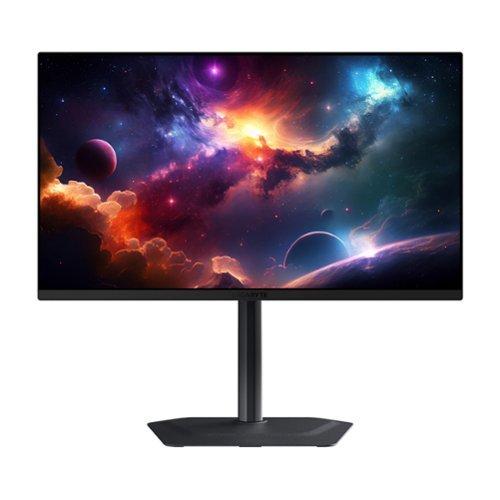
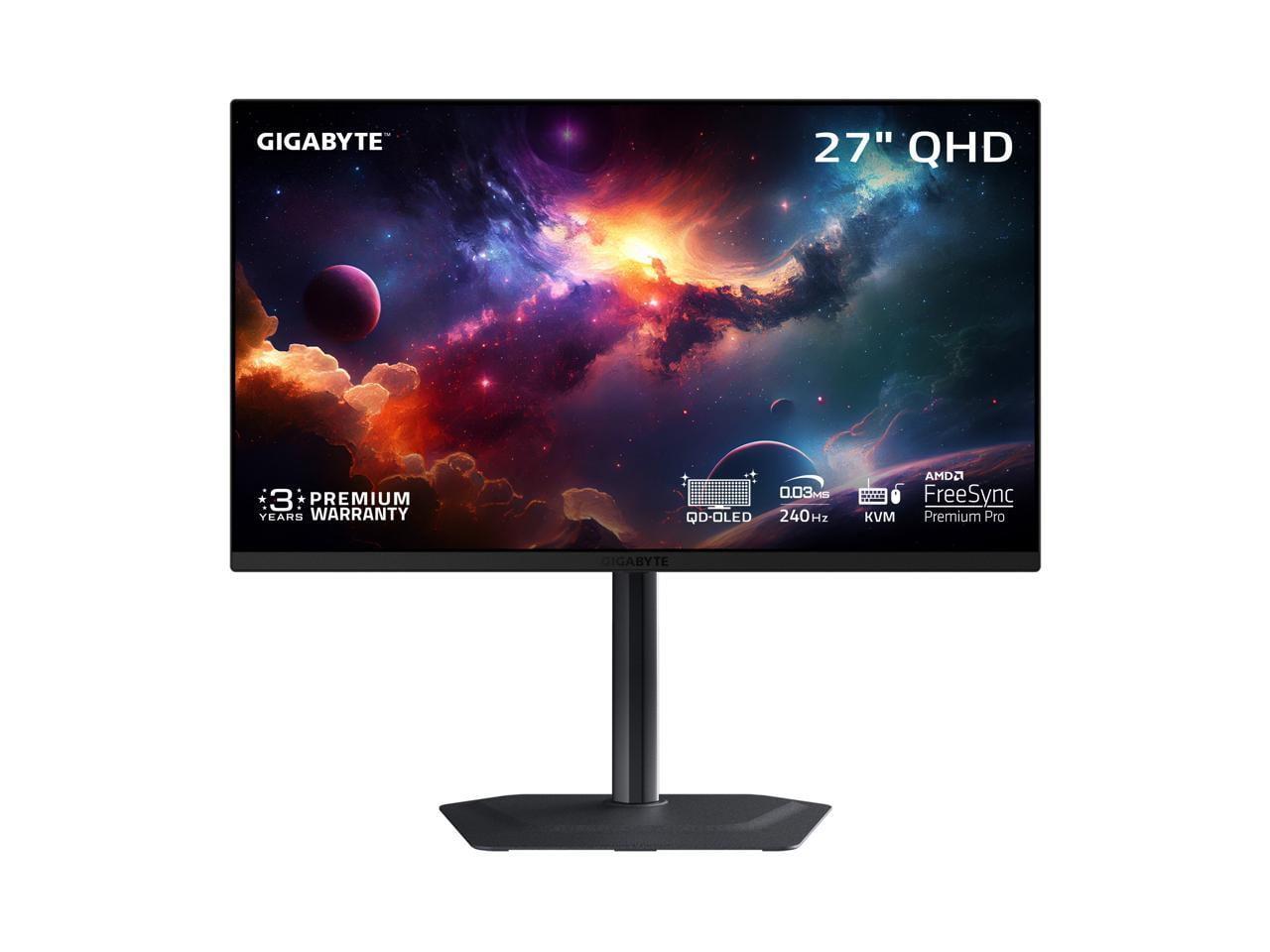
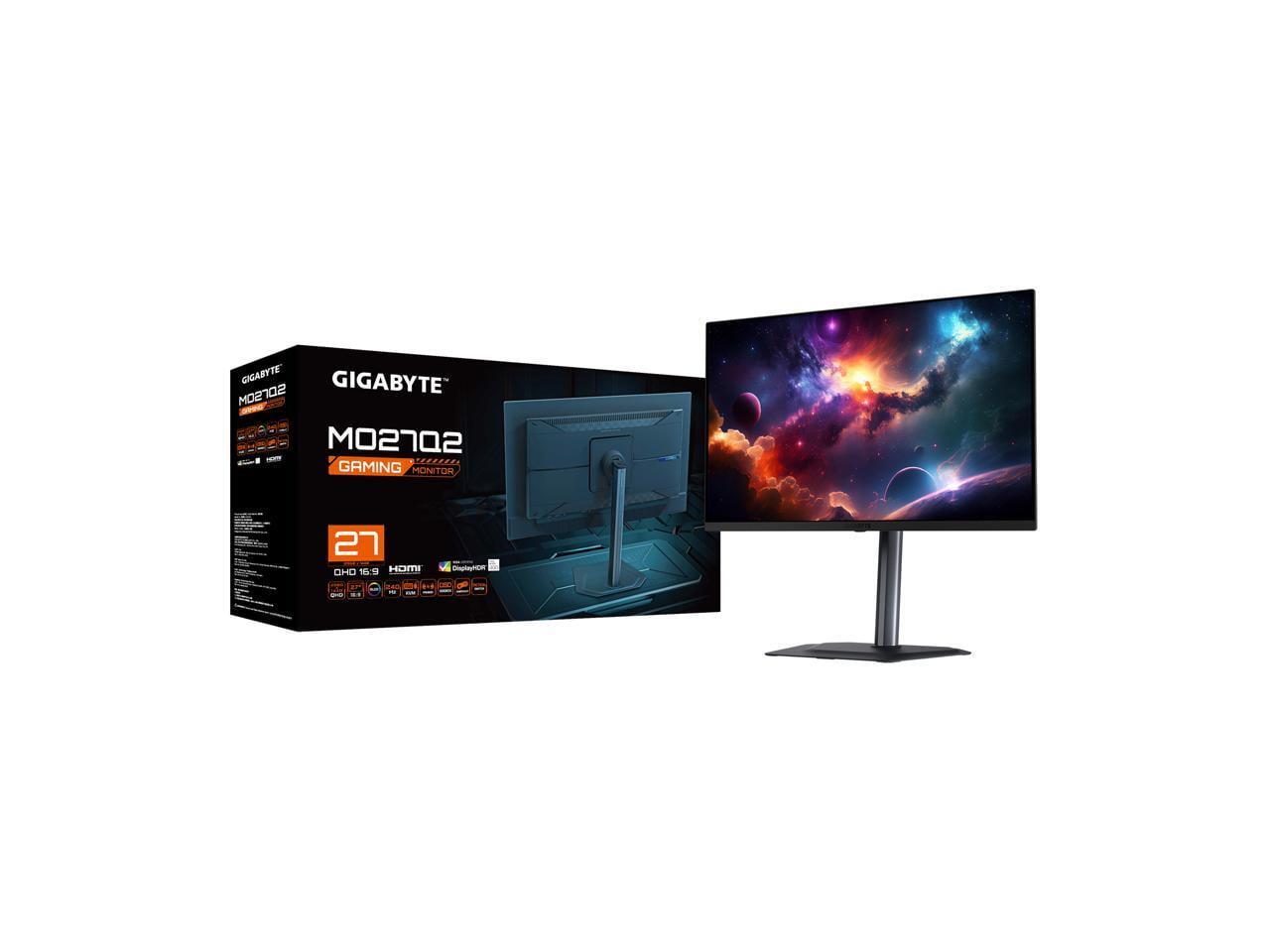
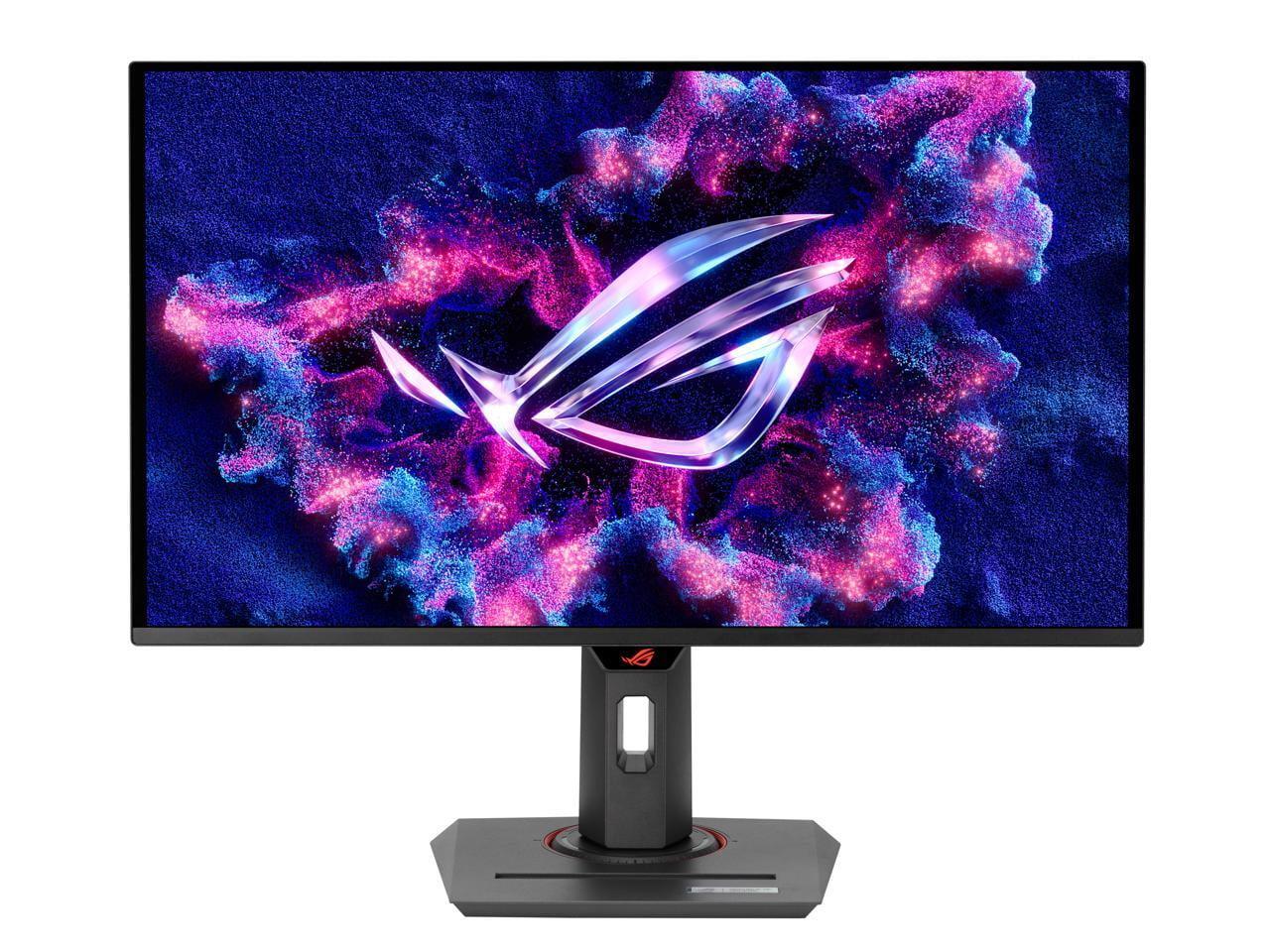
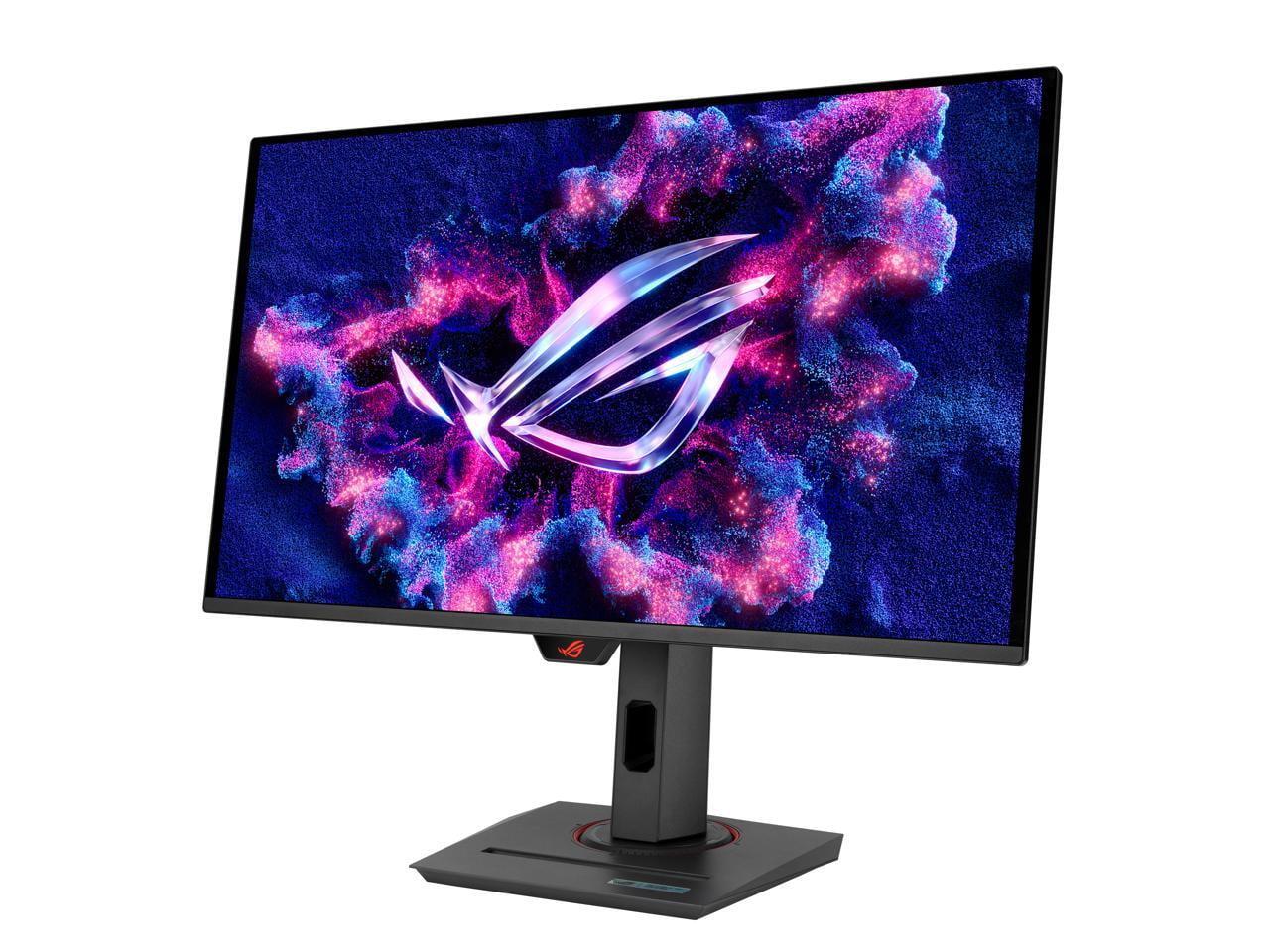
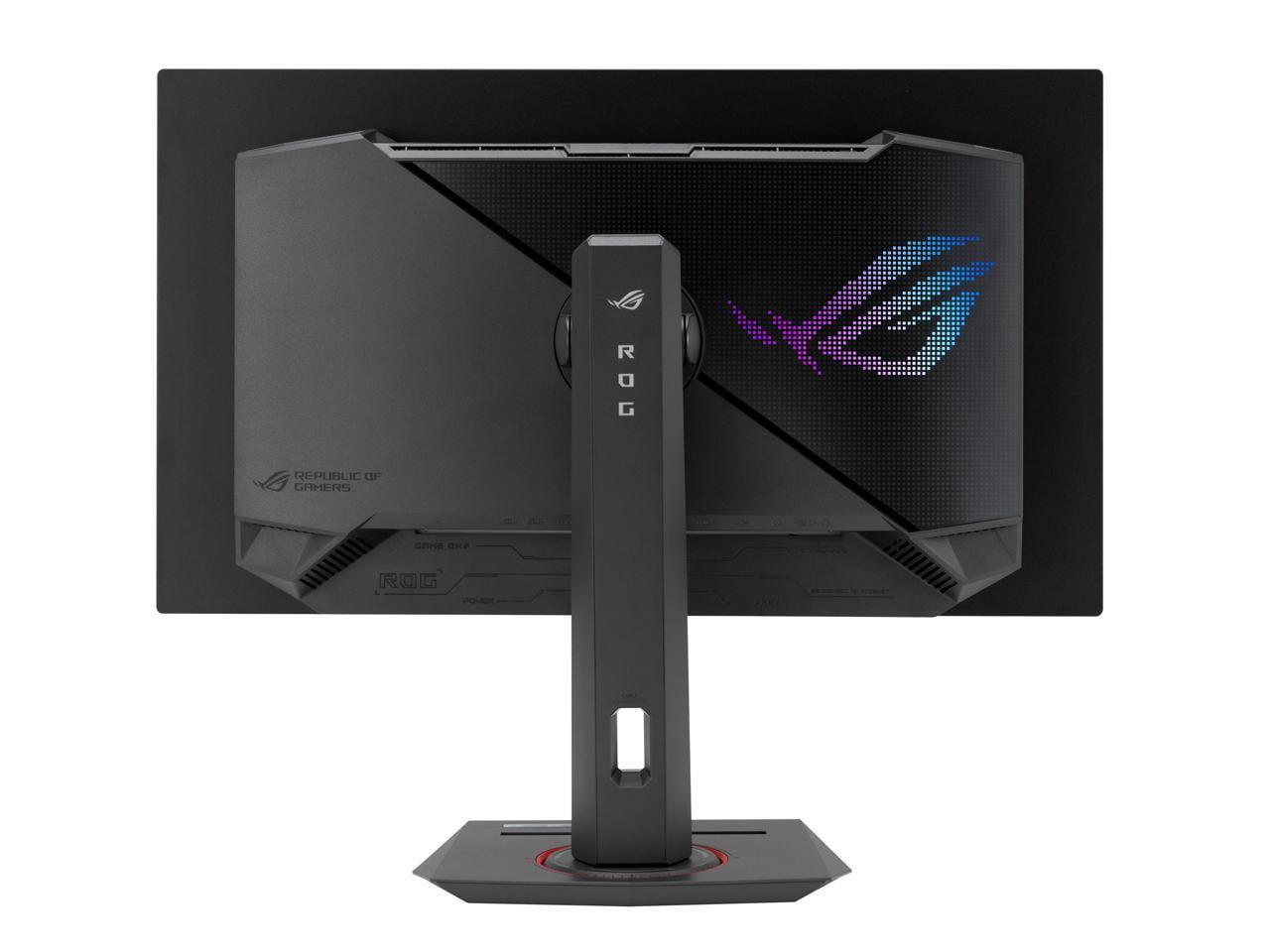
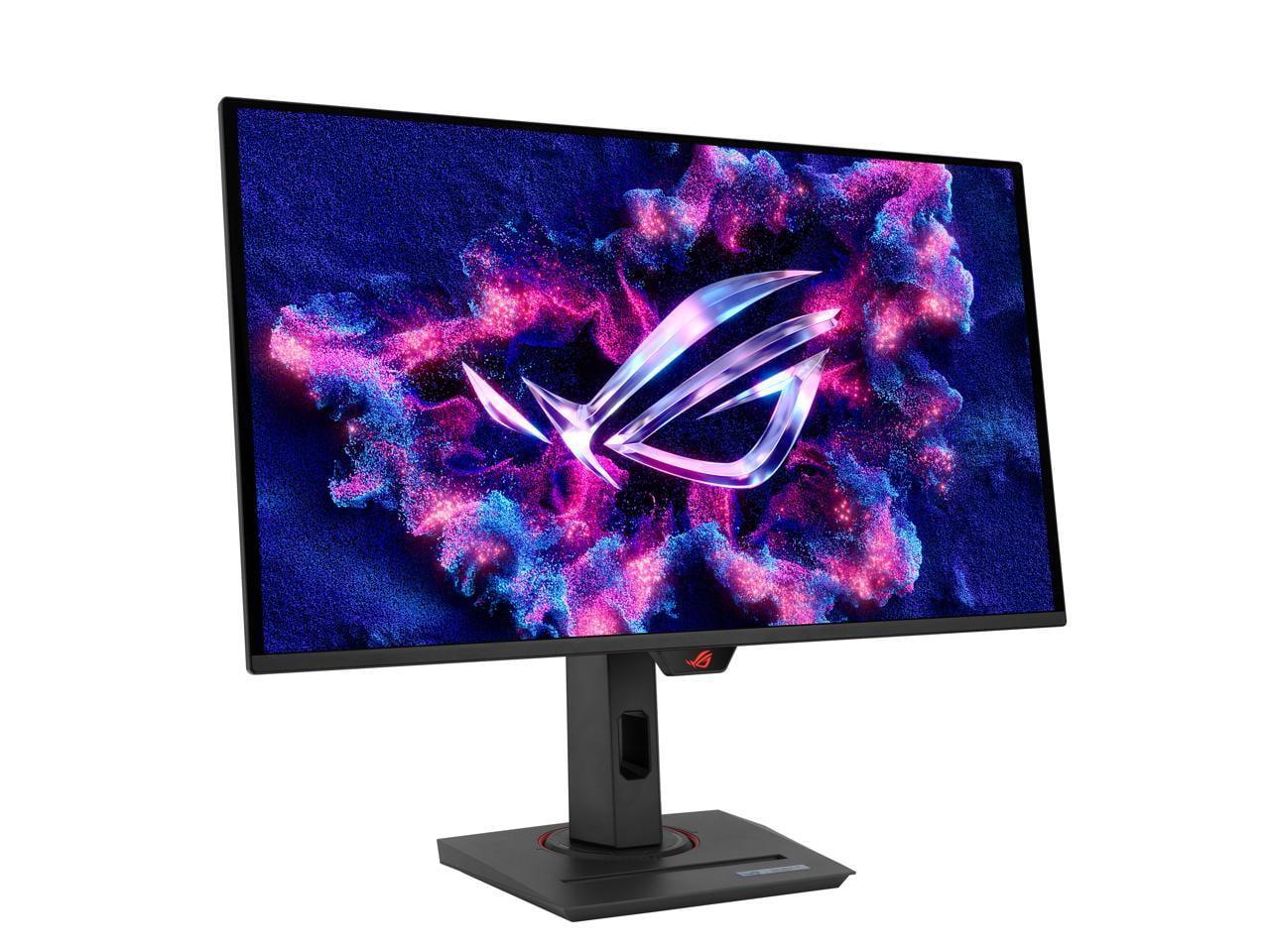
Today, we're comparing two standout models that represent different philosophies in the QD-OLED space: the GIGABYTE MO27Q2 and the ASUS ROG Strix OLED XG27UCDMG. Both launched within the past year, but they target distinctly different users despite sharing the same core OLED technology.
Before diving into the comparison, let's talk about what makes QD-OLED monitors so compelling. QD-OLED combines quantum dots (tiny semiconductor particles that emit specific colors when hit by light) with OLED's self-emissive pixels. The result? You get OLED's perfect blacks and instant pixel response, but with quantum dots providing wider color coverage and better brightness than traditional OLED panels.
Both the GIGABYTE MO27Q2 and ASUS XG27UCDMG use Samsung's QD-OLED panels, though the ASUS model features Samsung's newer 4th-generation technology. This newer panel generation addresses some earlier concerns about text clarity and color fringing—issues that made previous QD-OLED monitors less ideal for productivity work.
The most crucial consideration when shopping for any gaming monitor is understanding what trade-offs you're making. Higher resolution means sharper images but requires more graphics card power. Better OLED protection features add cost but extend your monitor's lifespan. More gaming-focused features might sacrifice some general usability. These two monitors illustrate these trade-offs perfectly.
Here's where these monitors fundamentally diverge. The GIGABYTE MO27Q2 runs at 2560×1440 (QHD), while the ASUS XG27UCDMG pushes 3840×2160 (4K). This isn't just about numbers—it's about completely different use cases and performance requirements.
At 27 inches, QHD gives you 109 pixels per inch (PPI), which hits a sweet spot for gaming. Text is crisp enough for daily use, but your graphics card doesn't have to work overtime to push high frame rates. I've found this resolution particularly excellent for competitive gaming where you want every frame you can get. The pixel density is sufficient that individual pixels aren't visible from normal viewing distances.
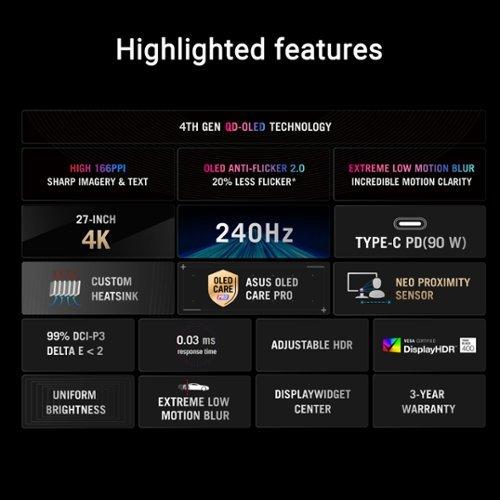
The ASUS monitor, with its 4K resolution, delivers 166 PPI—a massive jump in sharpness. Text looks razor-sharp, fine details in games become more apparent, and the overall visual experience feels more premium. However, this comes at a significant performance cost. Driving 4K at high refresh rates demands serious graphics horsepower.
From a gaming perspective, this resolution difference fundamentally changes your experience. With the GIGABYTE model, you can realistically expect to hit 240Hz in esports titles with a mid-to-high-end graphics card like an RTX 4070. With the ASUS model, you'll likely need an RTX 4080 or better to approach those frame rates, and even then, you might need to adjust settings in demanding games.
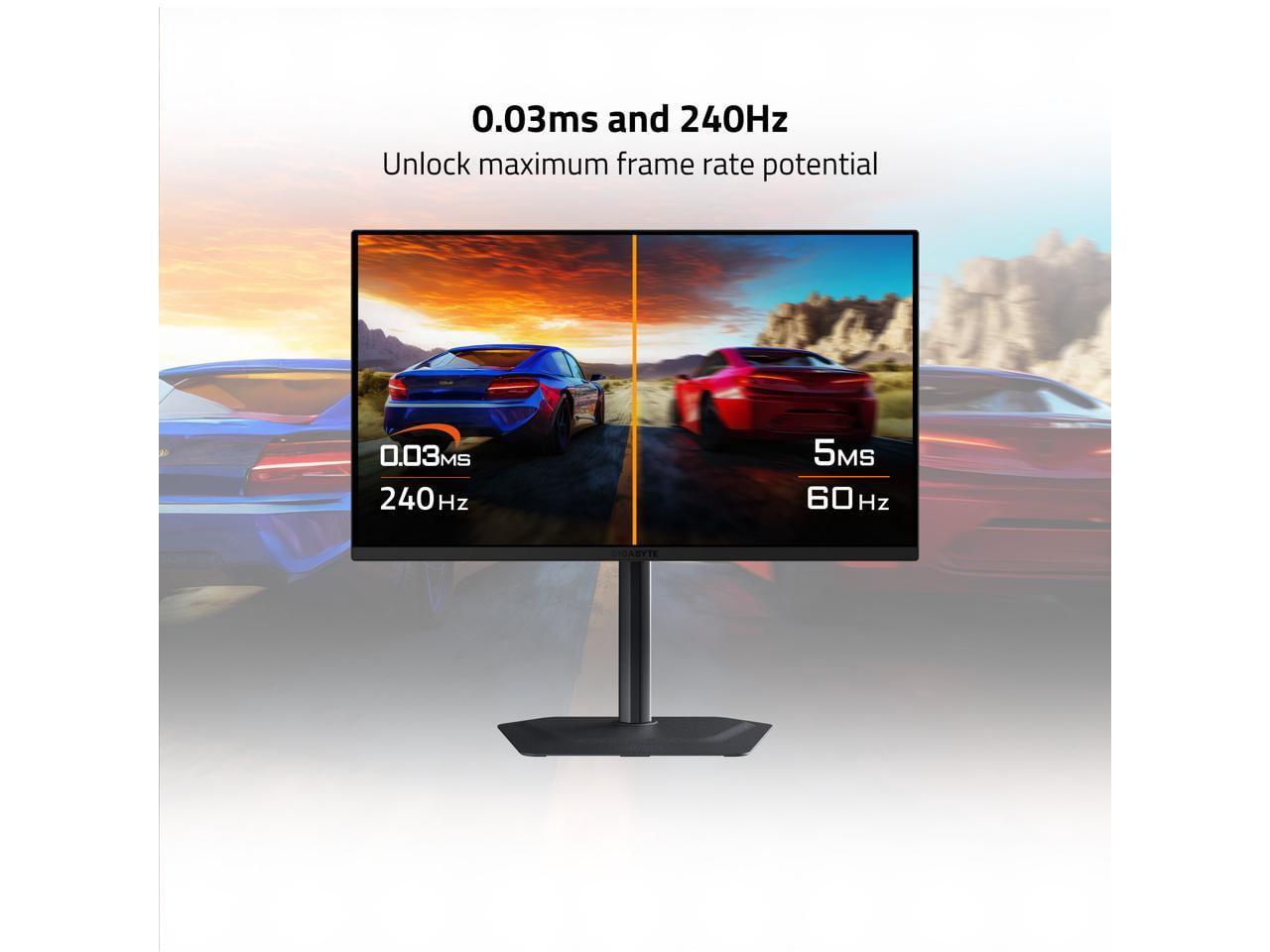
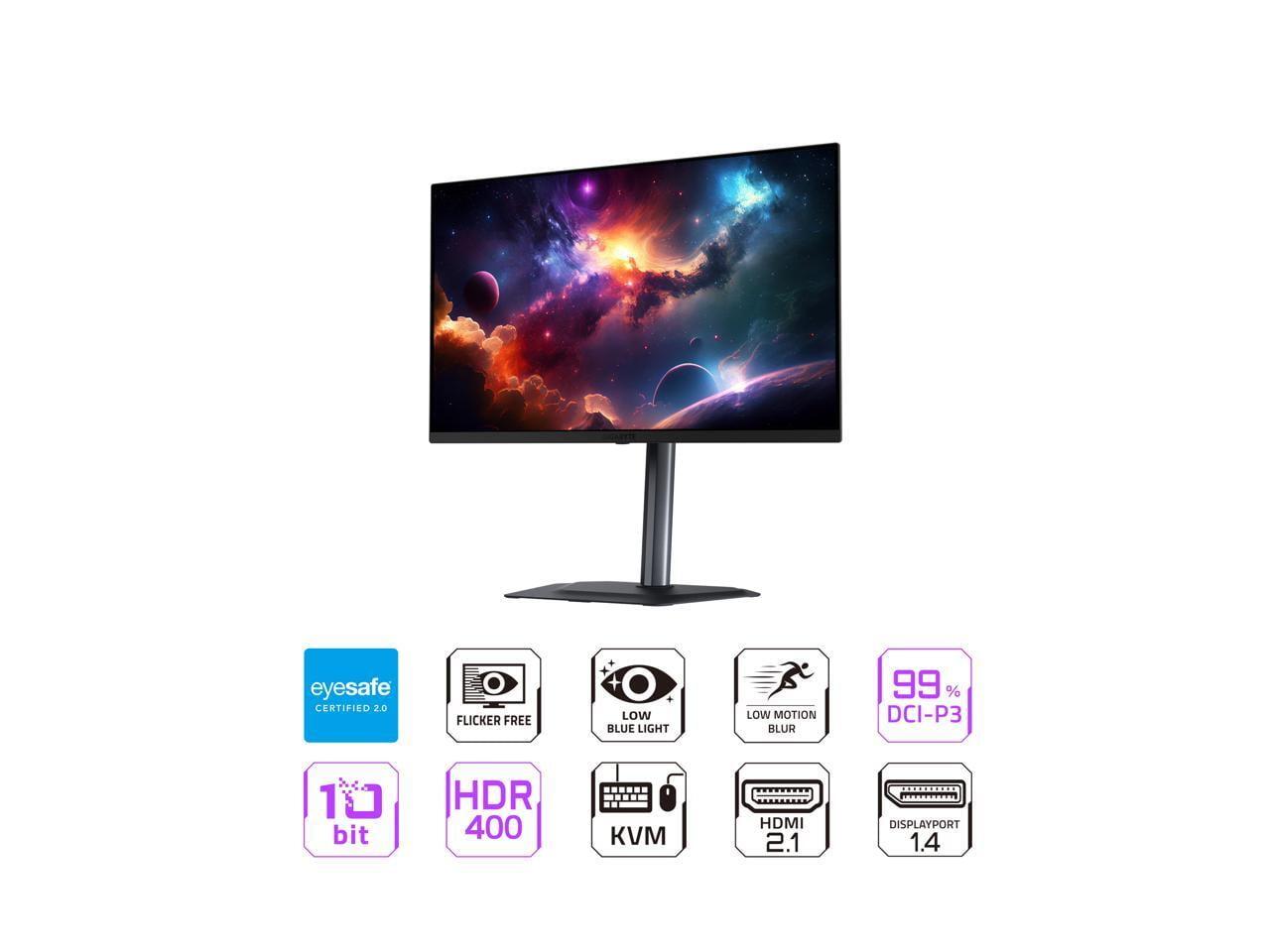
Both monitors share identical core gaming specifications: 240Hz maximum refresh rate, 0.03ms gray-to-gray response time, and support for both AMD FreeSync Premium Pro and NVIDIA G-SYNC compatibility. These numbers represent the absolute cutting edge of gaming monitor performance.
That 0.03ms response time is particularly impressive—it's essentially instantaneous pixel switching that eliminates motion blur and ghosting. Combined with the 240Hz refresh rate, you get incredibly smooth motion that's especially noticeable in fast-paced games. I've tested both monitors with competitive shooters, and the motion clarity is genuinely stunning.
However, the GIGABYTE MO27Q2 includes something unique: a Tactical Switch. This physical button instantly switches the display between its full 27-inch QHD mode and a 24-inch Full HD mode, effectively creating a smaller, more focused gaming area without changing your physical setup. For esports players who prefer the more intimate feel of a 24-inch monitor but want the flexibility of a larger screen, this is brilliant. I've seen competitive players use this feature to switch modes between matches, and it works seamlessly.
The ASUS model takes a different approach, focusing on visual fidelity over competitive features. Its 4K resolution means you can spot enemies at longer distances more easily, and environmental details are significantly sharper. In single-player games, this difference is immediately apparent—games like Cyberpunk 2077 or Red Dead Redemption 2 look genuinely stunning at 4K.
Both monitors support HDR (High Dynamic Range), which expands the range between the darkest and brightest parts of an image, but they implement it differently. HDR on OLED displays is particularly impressive because those perfect blacks create incredible contrast ratios.
The GIGABYTE MO27Q2 is VESA DisplayHDR True Black 400 certified, with a peak brightness of 1000 nits. However, real-world testing suggests it doesn't always hit those peak brightness levels consistently. The HDR experience is good—certainly better than most LCD monitors—but it can feel somewhat limited in very bright scenes.
The ASUS XG27UCDMG also hits 1000 nits peak brightness but does so more consistently thanks to its 4th-generation panel technology. The HDR implementation feels more polished overall, with better tone mapping and more accurate color reproduction in HDR content. If you're planning to use your monitor for HDR gaming or movie watching, the ASUS model provides a noticeably superior experience.
For home theater use, this HDR difference becomes more significant. The ASUS monitor handles HDR movies and shows with greater finesse, though both monitors lack built-in smart TV features. If you're considering either as part of a home theater setup, you'll still need a separate streaming device or console.
OLED burn-in—permanent image retention from static elements—has historically been these panels' biggest weakness. Both manufacturers have implemented comprehensive protection systems, but with different approaches and levels of sophistication.
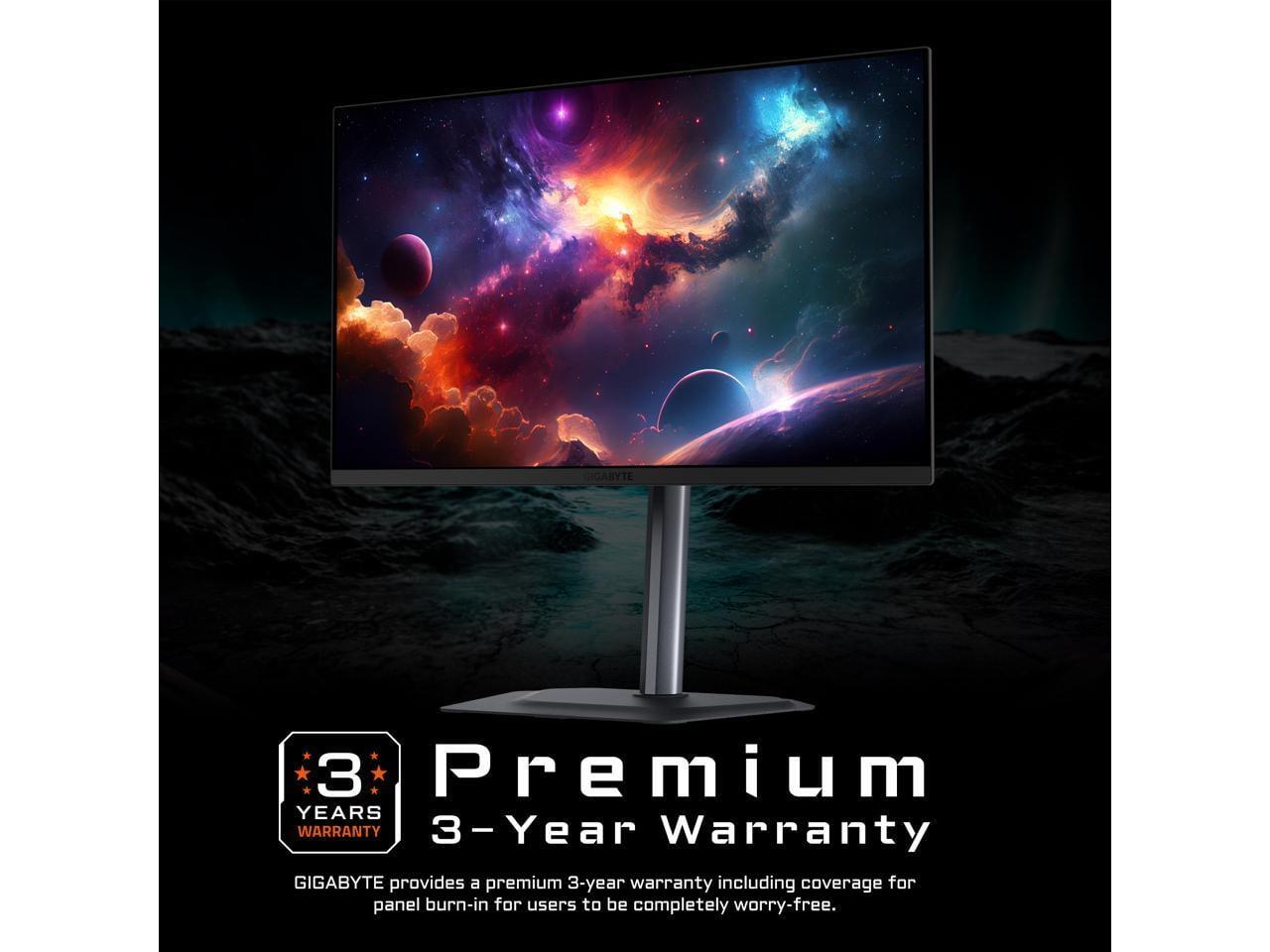
The GIGABYTE MO27Q2 includes AI-based OLED Care, which automatically manages pixel refreshing, brightness adjustments, and other protective measures. It's effective and runs largely in the background, though it's relatively basic compared to newer systems. GIGABYTE backs this with a 3-year warranty that includes burn-in coverage, showing confidence in their protection system.
The ASUS XG27UCDMG features the more advanced OLED Care Pro system, which includes several innovative features. The Neo Proximity Sensor detects when you step away from the monitor and automatically switches it to a black screen, preventing static images from lingering. The monitor also includes OLED Anti-Flicker 2.0 technology, which reduces the flickering that can occur when using variable refresh rates with OLED panels.
From my testing, the ASUS system feels more comprehensive and proactive. The proximity sensor works reliably, and the anti-flicker technology makes a real difference during extended gaming sessions. However, both systems are significant improvements over earlier OLED monitors.
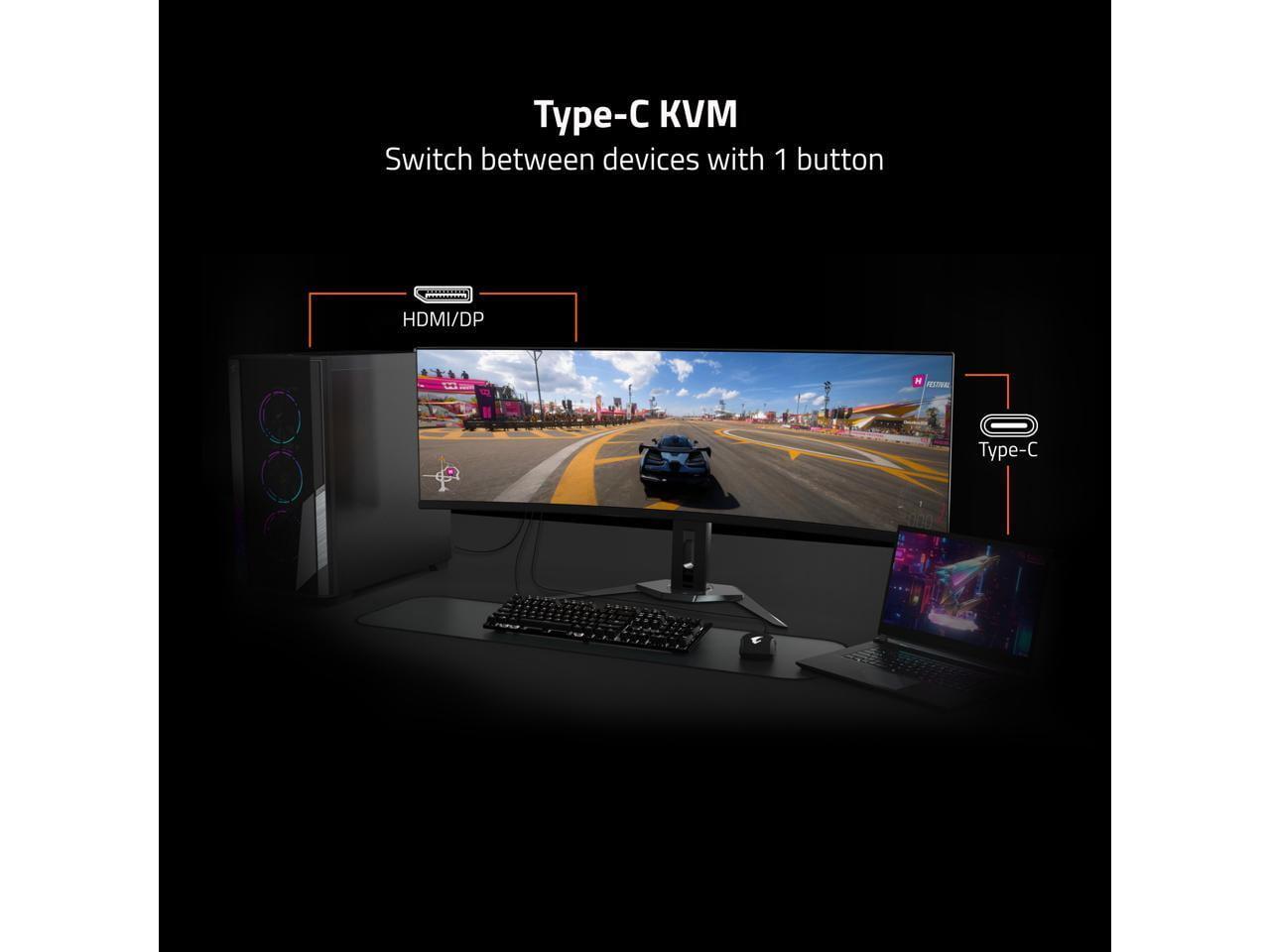
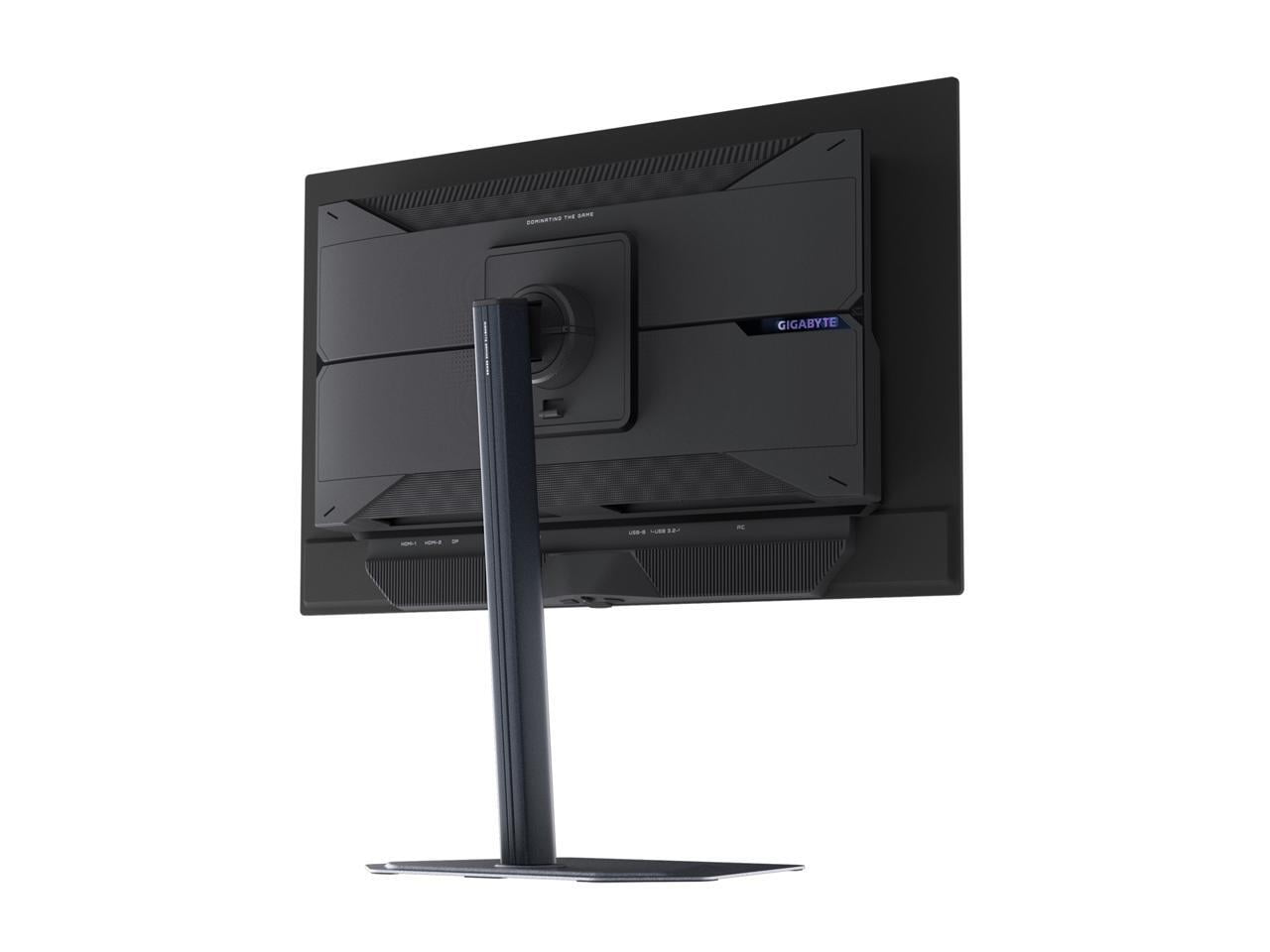
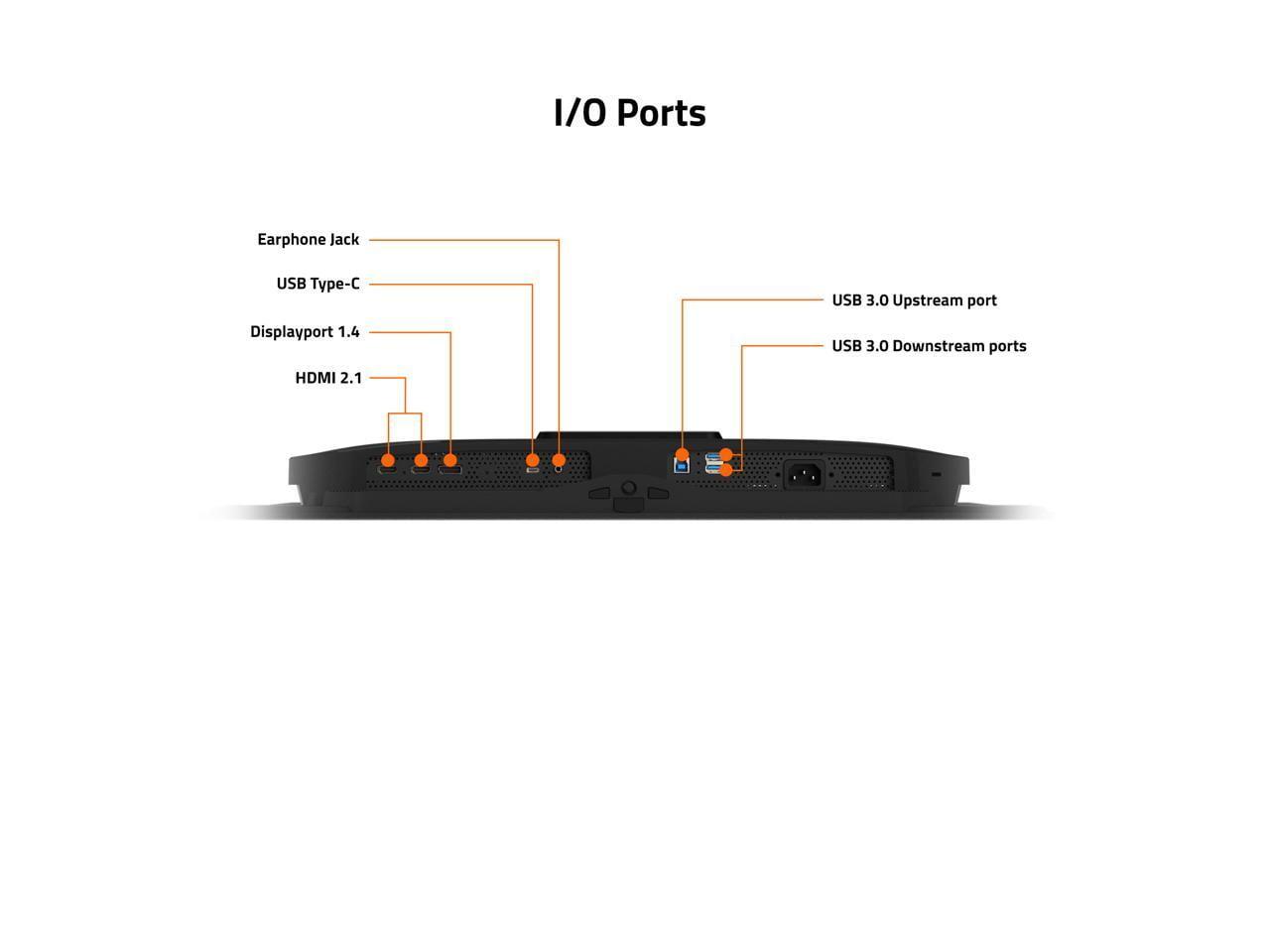
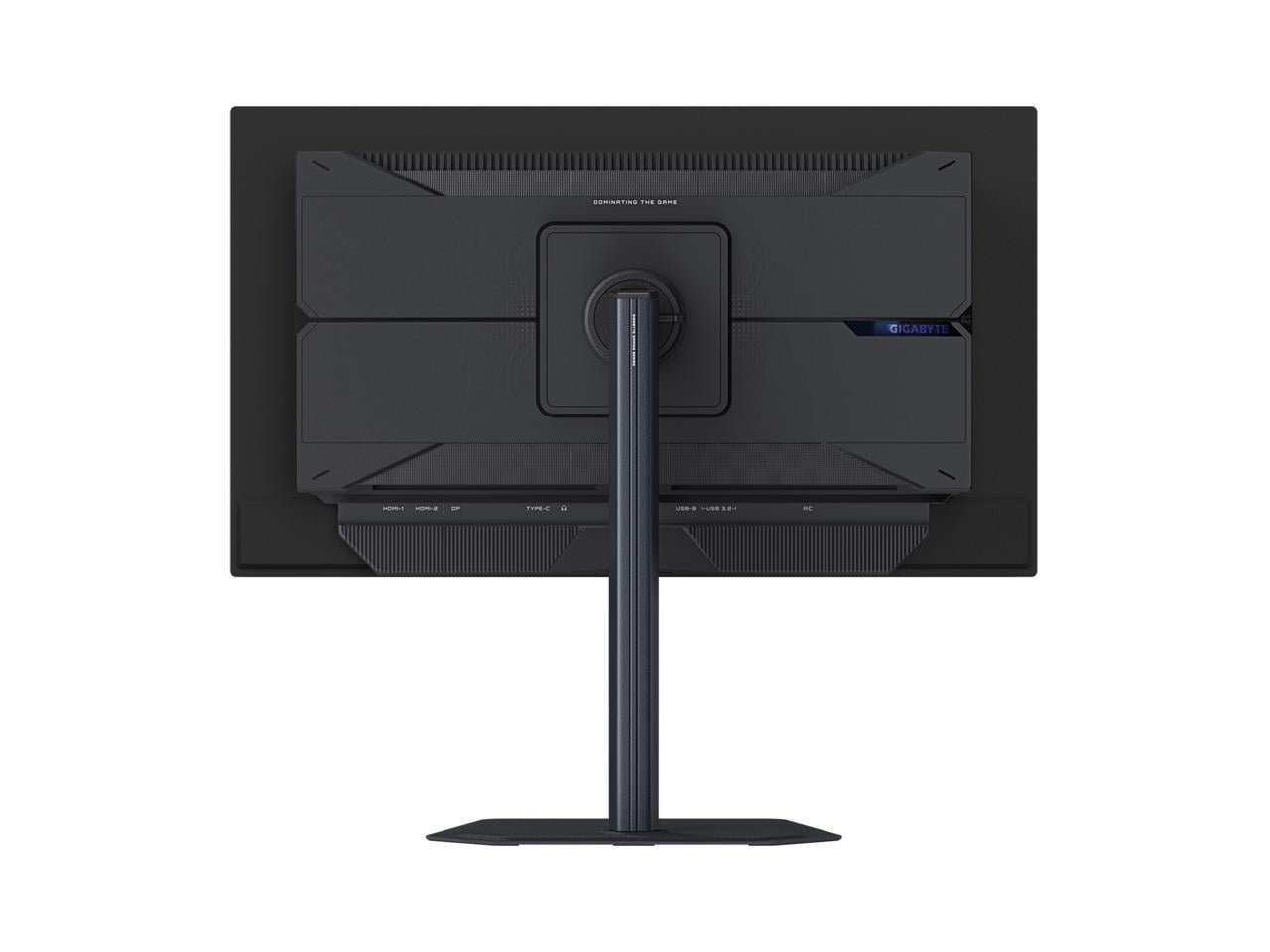
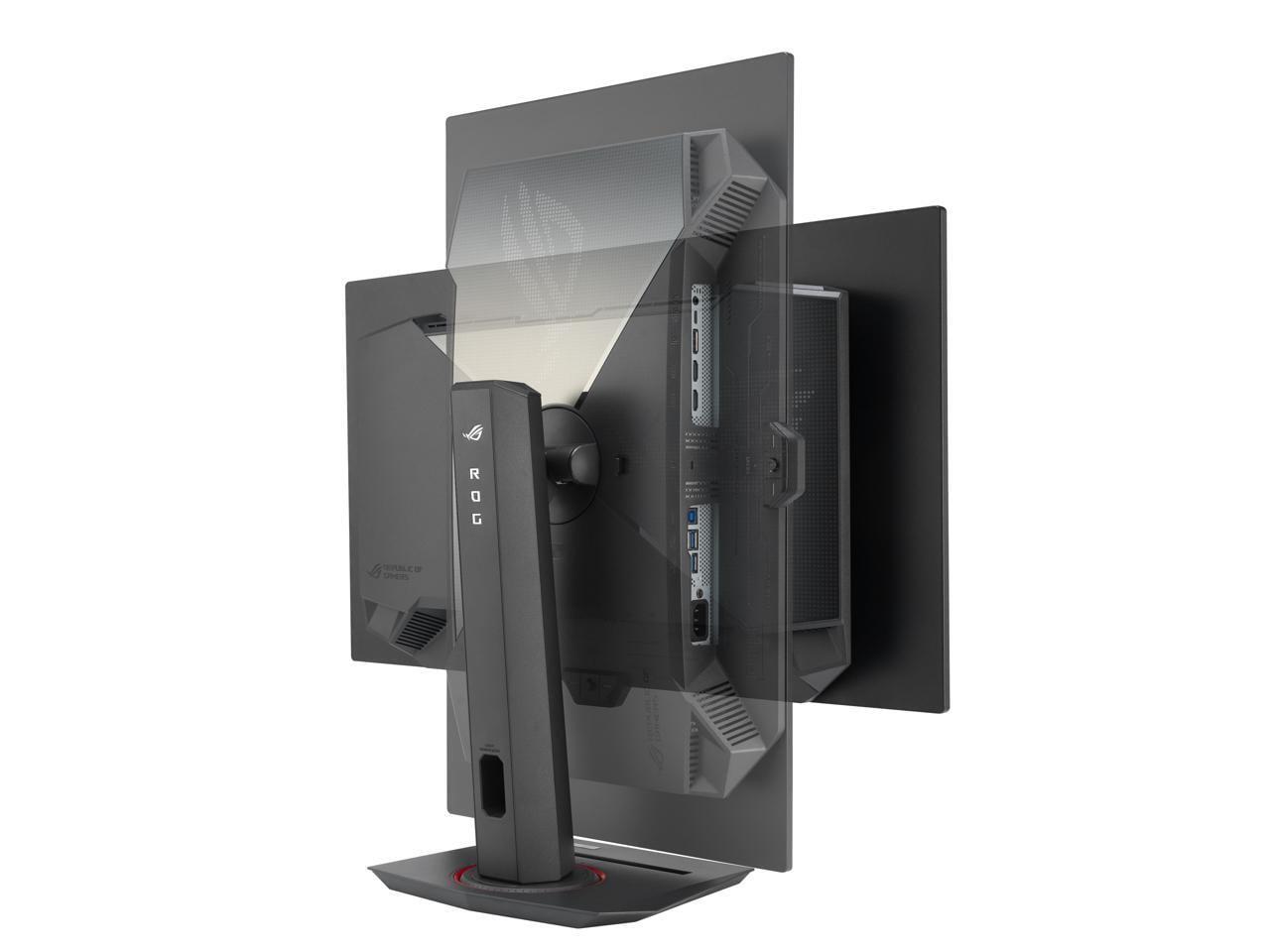
Both monitors offer comprehensive connectivity, but with different emphases. The GIGABYTE MO27Q2 includes two HDMI 2.1 ports, one DisplayPort 1.4, USB-C with 18W power delivery, and a full KVM (keyboard, video, mouse) switch system. The KVM functionality is particularly useful if you switch between a gaming PC and a work laptop regularly.
The ASUS XG27UCDMG matches most of this connectivity but upgrades the USB-C port to 90W power delivery—enough to charge most laptops while providing video signal. This makes it much more practical as a single-cable solution for laptop users. The monitor also includes Auto KVM functionality that seamlessly switches between connected devices.
Unique features set these monitors apart further. The GIGABYTE model includes built-in 5W speakers (basic but functional) and extensive gaming-specific features like customizable crosshairs, timers, and tactical overlays. These aren't revolutionary, but they're handy for competitive gaming.
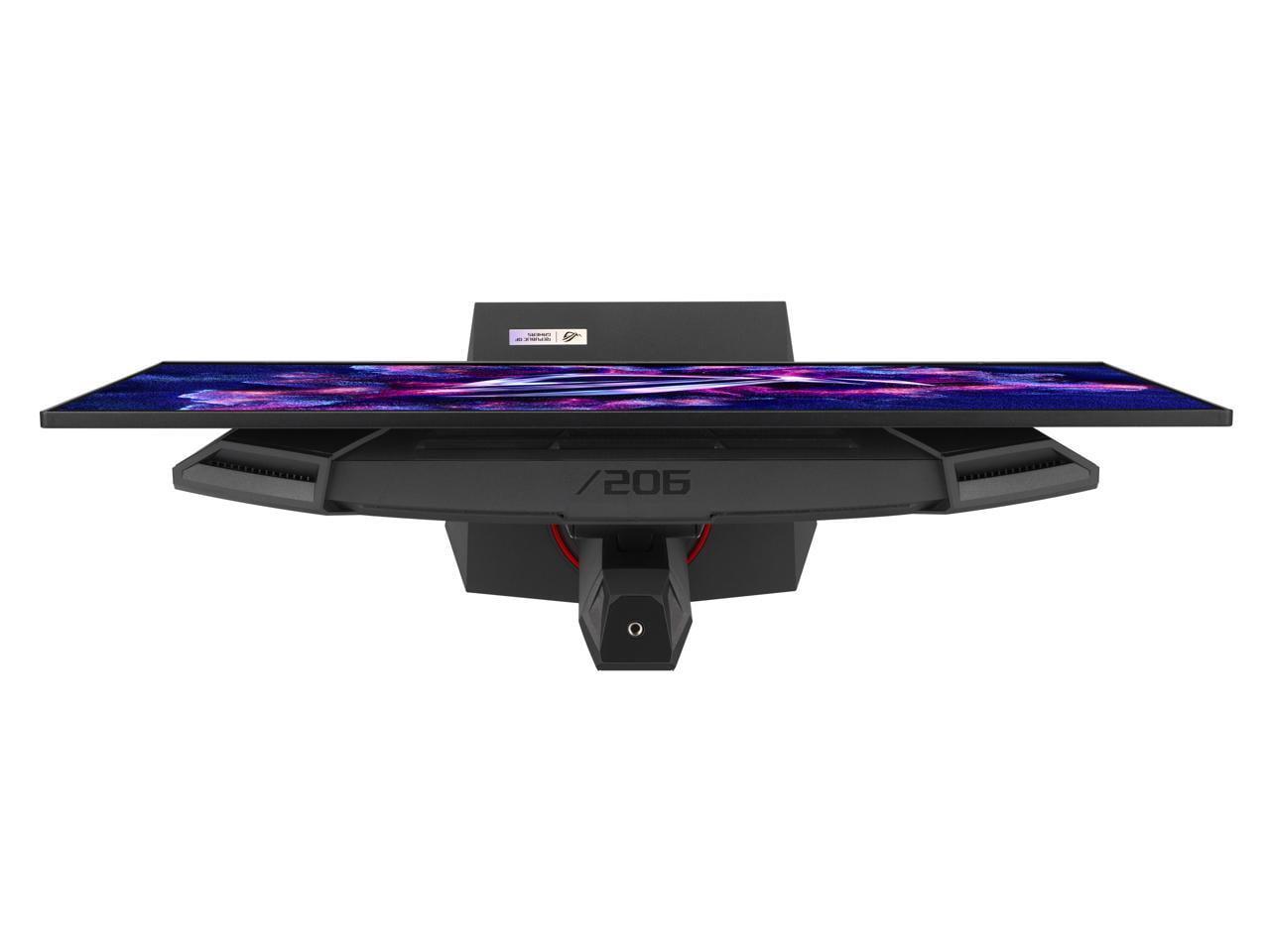
The ASUS monitor focuses more on premium touches: Aura Sync RGB lighting, an integrated phone holder built into the stand, and a 1/4-inch tripod socket for mounting cameras or lights. It also includes the DisplayWidget Center software, which provides easy access to monitor settings and OLED care functions directly from your PC.
At the time of writing, there's a significant price gap between these monitors—roughly $300-400 separating them. This price difference reflects not just the resolution upgrade but also the more advanced panel technology and features in the ASUS model.
The GIGABYTE MO27Q2 represents exceptional value in the QD-OLED space. You're getting premium OLED gaming performance at a more accessible price point. The money you save could go toward a better graphics card, which might provide more noticeable gaming improvements than the resolution upgrade.
The ASUS XG27UCDMG commands a premium, but it delivers tangible benefits: 4K resolution, better HDR performance, more advanced OLED protection, and superior build quality. If you have the budget and graphics power to take advantage of 4K gaming, the premium feels justified.
For competitive and esports gaming, the GIGABYTE MO27Q2 makes more sense. The QHD resolution allows higher frame rates with more reasonable graphics card requirements, and features like the Tactical Switch provide genuine competitive advantages. The lower price also means you can invest more in your graphics card or other components.
Single-player and AAA gaming enthusiasts will likely prefer the ASUS XG27UCDMG. The 4K resolution showcases game visuals properly, and the superior HDR implementation enhances cinematic gaming experiences. Games like Microsoft Flight Simulator, Horizon Forbidden West, or any visually stunning single-player title benefit enormously from the extra resolution and better HDR.
Content creators should strongly consider the ASUS model. The 4K resolution is increasingly important for video editing and content creation, while the superior text clarity makes productivity work more comfortable. The 90W USB-C power delivery also makes it practical for laptop-based creative workflows.
For home theater integration, both monitors work, but with limitations. Neither includes smart TV features, so you'll need external streaming devices. The ASUS monitor handles HDR movies better, but both lack the brightness levels ideal for bright room viewing that you'd get from premium LCD TVs.
The ASUS XG27UCDMG, released in early 2025, represents the current state-of-the-art in QD-OLED technology. Its 4th-generation panel addresses many early concerns about QD-OLED monitors, particularly around text clarity and burn-in susceptibility. The GIGABYTE MO27Q2, while using slightly older panel technology, still delivers excellent performance and proves that earlier QD-OLED generations remain highly competitive.
Since QD-OLED technology first appeared in 2022, we've seen rapid improvements in panel longevity, brightness consistency, and text clarity. These 2024-2025 models represent mature implementations that address most early concerns. Future developments will likely focus on even higher brightness levels and further burn-in resistance improvements.
Your choice between these monitors should primarily depend on your graphics card capability and primary use case. If you're running something like an RTX 4060 Ti or RTX 4070, the GIGABYTE MO27Q2 makes perfect sense—you'll actually be able to take advantage of that 240Hz refresh rate in most games while enjoying premium OLED image quality.
If you're packing an RTX 4080 or better, and you value visual fidelity over absolute frame rates, the ASUS XG27UCDMG provides a genuinely superior visual experience. The 4K resolution, better HDR performance, and advanced OLED protection justify the premium for users who can take full advantage of these features.
Consider also how you'll use the monitor beyond gaming. The ASUS model works better for productivity, content creation, and media consumption, while the GIGABYTE monitor is more focused on pure gaming performance and competitive features.
Both represent excellent implementations of QD-OLED technology, just targeting different users and use cases. Your graphics card, budget, and primary activities should guide your decision more than any other factors. Either way, you're getting access to some of the best gaming monitor technology currently available.
| GIGABYTE MO27Q2 | ASUS ROG Strix OLED XG27UCDMG |
|---|---|
| Resolution - The biggest performance and visual quality difference | |
| 2560×1440 (QHD) - easier to drive, higher framerates | 3840×2160 (4K) - sharper visuals, needs powerful GPU |
| Refresh Rate & Response Time - Gaming performance foundation | |
| 240Hz, 0.03ms GTG (identical performance) | 240Hz, 0.03ms GTG (identical performance) |
| Panel Technology - Image quality and longevity | |
| Samsung QD-OLED (3rd gen equivalent) | Samsung 4th-generation QD-OLED (improved text clarity) |
| Peak Brightness - HDR performance and room lighting | |
| 1000 nits peak (inconsistent real-world performance) | 1000 nits peak (more consistent, better HDR) |
| OLED Burn-in Protection - Long-term reliability | |
| AI-based OLED Care (basic protection) | OLED Care Pro with Neo Proximity Sensor (advanced) |
| Unique Gaming Features - Competitive advantages | |
| Tactical Switch (instant 24" FHD mode) | Higher pixel density for detail spotting |
| USB-C Power Delivery - Laptop convenience | |
| 18W (smartphone charging only) | 90W (full laptop charging and single-cable setup) |
| Built-in Audio - Convenience factor | |
| 2×5W speakers included | No built-in speakers |
| KVM Switch - Multi-device productivity | |
| Full KVM with physical switching | Auto KVM with seamless switching |
| HDR Certification - Content compatibility | |
| VESA DisplayHDR True Black 400 | VESA DisplayHDR True Black 400 (better implementation) |
| Warranty Coverage - Peace of mind | |
| 3 years including burn-in protection | 3 years including burn-in protection |
| Best For - Target use cases | |
| Competitive gaming, mid-range GPUs, value-focused | Visual fidelity gaming, high-end GPUs, content creation |
The primary difference is resolution: the GIGABYTE MO27Q2 runs at 2560×1440 (QHD) while the ASUS ROG Strix OLED XG27UCDMG displays 3840×2160 (4K). This means the ASUS model provides sharper visuals but requires significantly more graphics card power to achieve high frame rates. Both share the same 240Hz refresh rate and 0.03ms response time.
The GIGABYTE MO27Q2 is better suited for competitive gaming due to its QHD resolution allowing higher frame rates with mid-range graphics cards. It also features a unique Tactical Switch that instantly changes to a 24-inch Full HD mode, which many esports players prefer. The lower resolution means you can actually utilize the full 240Hz refresh rate in most competitive games.
For the GIGABYTE MO27Q2, an RTX 4060 Ti or RTX 4070 can comfortably drive QHD at high frame rates. The ASUS XG27UCDMG requires more power—ideally an RTX 4080 or better to take full advantage of 4K at 240Hz. You can use lower-end cards with the ASUS model, but you'll need to reduce settings or accept lower frame rates.
Yes, both the GIGABYTE MO27Q2 and ASUS XG27UCDMG support HDR with VESA DisplayHDR True Black 400 certification and 1000 nits peak brightness. However, the ASUS model delivers better HDR performance with more consistent brightness and superior color accuracy due to its newer 4th-generation QD-OLED panel technology.
The ASUS ROG Strix OLED XG27UCDMG offers superior burn-in protection with its OLED Care Pro system, including a Neo Proximity Sensor that automatically blanks the screen when you're away. The GIGABYTE MO27Q2 uses AI-based OLED Care, which is effective but less sophisticated. Both include 3-year warranties covering burn-in damage.
The ASUS XG27UCDMG is significantly better for productivity due to its 4K resolution providing razor-sharp text clarity. The 4th-generation QD-OLED panel also eliminates the text fringing issues that affected earlier QD-OLED monitors. The GIGABYTE MO27Q2 works for productivity but isn't as sharp for detailed text work or content creation.
The GIGABYTE MO27Q2 provides exceptional value, offering premium QD-OLED gaming performance at a more accessible price point. The money saved compared to the ASUS model could be invested in a better graphics card. However, if you need 4K resolution and have a high-end GPU, the ASUS monitor's premium features justify its higher cost.
Both monitors work excellently with PS5 and Xbox Series X through their HDMI 2.1 ports, supporting up to 120Hz at their respective resolutions. The GIGABYTE MO27Q2 will display console games at QHD resolution, while the ASUS XG27UCDMG can display full 4K console gaming. Both support VRR (Variable Refresh Rate) for smoother console gaming.
The ASUS ROG Strix OLED XG27UCDMG excels at single-player gaming with its 4K resolution showcasing game visuals in stunning detail. Games like Cyberpunk 2077, Red Dead Redemption 2, and Microsoft Flight Simulator look dramatically better at 4K. The GIGABYTE MO27Q2 still provides excellent visuals but lacks the fine detail that makes AAA games truly spectacular.
Both the GIGABYTE MO27Q2 and ASUS XG27UCDMG can work for home theater setups, though they lack smart TV features. The ASUS model is preferable for movies due to its 4K resolution and superior HDR implementation. However, both have lower peak brightness than dedicated TVs, making them better suited for darker viewing environments. You'll need external streaming devices for smart features.
The GIGABYTE MO27Q2 includes 2× HDMI 2.1, DisplayPort 1.4, USB-C (18W power delivery), and KVM switch functionality. The ASUS XG27UCDMG matches this but upgrades to 90W USB-C power delivery, making it practical for laptop charging and single-cable setups. Both include multiple USB ports for peripherals.
Content creators should choose the ASUS ROG Strix OLED XG27UCDMG for its 4K resolution, which is essential for video editing and detailed design work. The superior text clarity, better color accuracy, and 90W USB-C power delivery make it much more practical for creative workflows. The GIGABYTE MO27Q2 works for casual content creation but isn't ideal for professional work requiring pixel-perfect detail.
We've done our best to create useful and informative comparisons to help you decide what product to buy. Our research uses advanced automated methods to create this comparison and perfection is not possible - please contact us for corrections or questions. These are the sites we've researched in the creation of this article: gigabyte.com - youtube.com - newegg.com - mezha.media - tech-critter.com - gigabyte.com - forum.pcmonitors.info - techspot.com - aorus.com - saltynewsnetwork.com - infiniarc.com - gigabyte.com - bestbuy.com - youtube.com - gigabyte.com - gigabyte.com - displayspecifications.com - aorus.com - gigabyte.com - gigabyte.com - bestbuy.com - rog.asus.com - forum.pcmonitors.info - rog.asus.com - windowscentral.com - versus.com - youtube.com - youtube.com - rtings.com - rtings.com - rog.asus.com - rog.asus.com - rog.asus.com - tenforums.com - rog.asus.com - techpowerup.com - bestbuy.com - newegg.com - displayspecifications.com - youtube.com - tftcentral.co.uk - displayninja.com

Privacy Policy
Terms and Conditions - Affiliate Policy
Home Security
© Copyright 2008-2026.
11816 Inwood Rd #1211, Dallas, TX 75244