

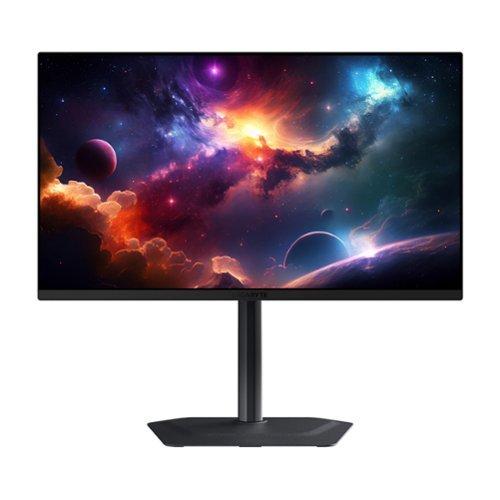
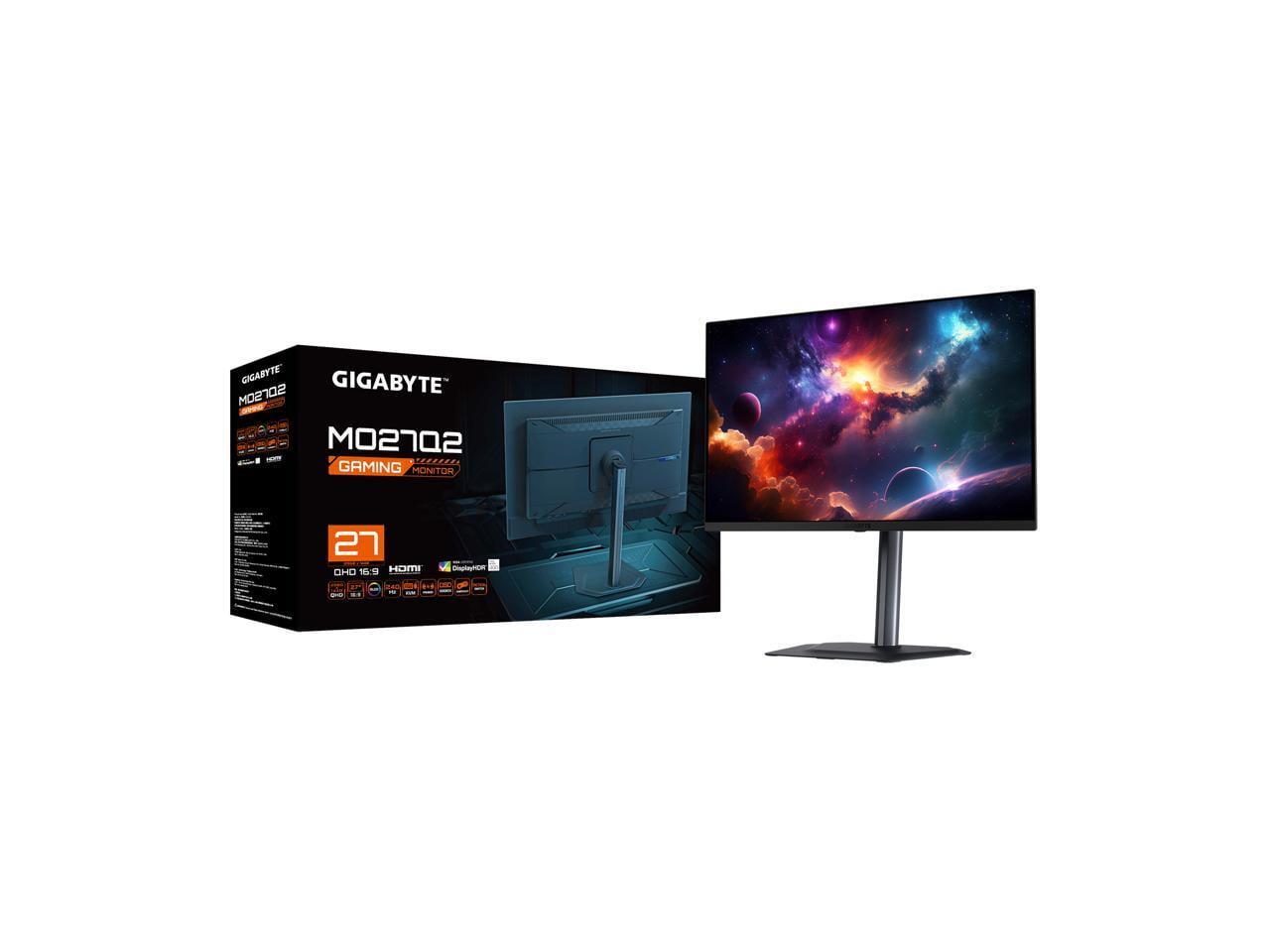

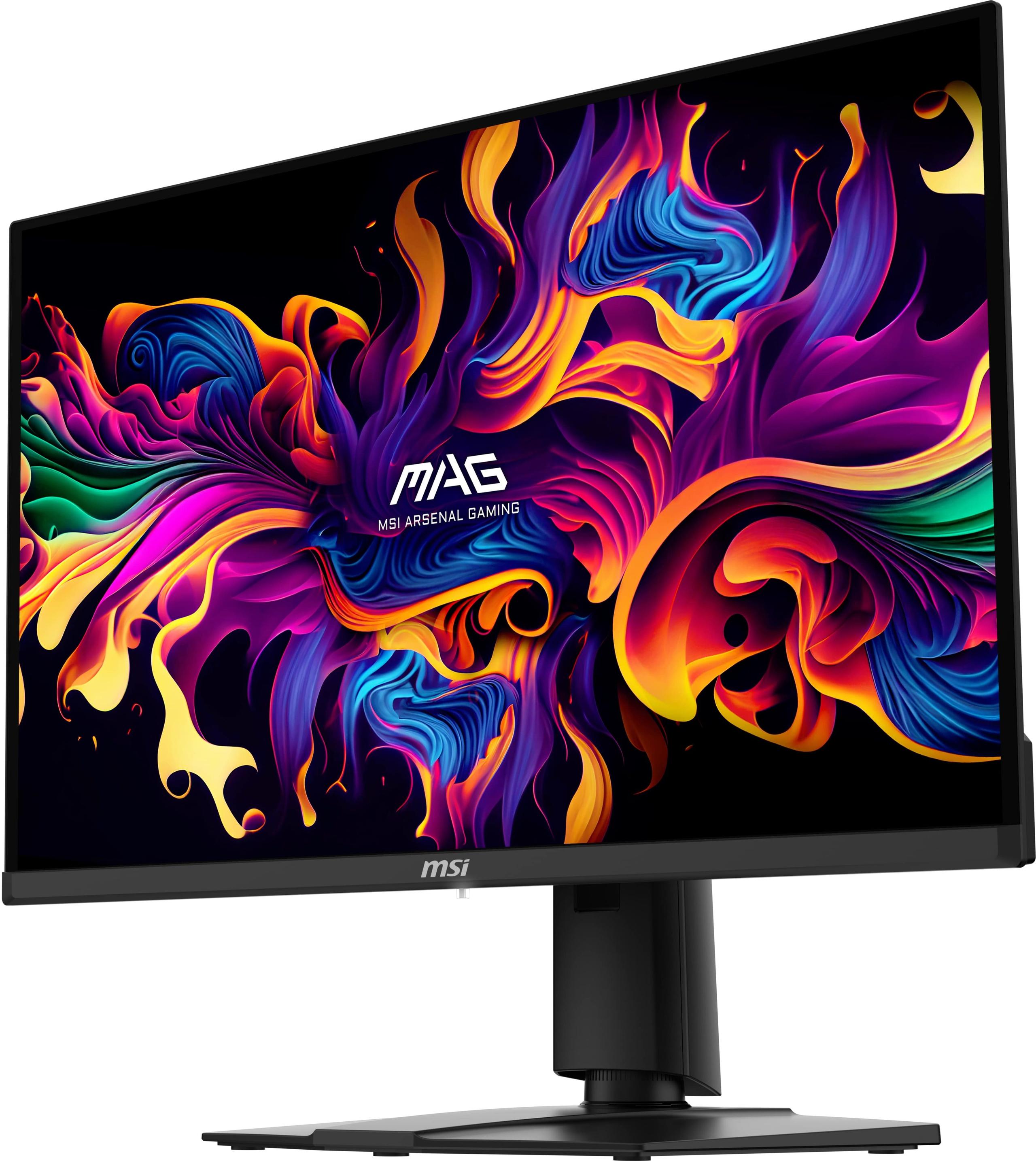
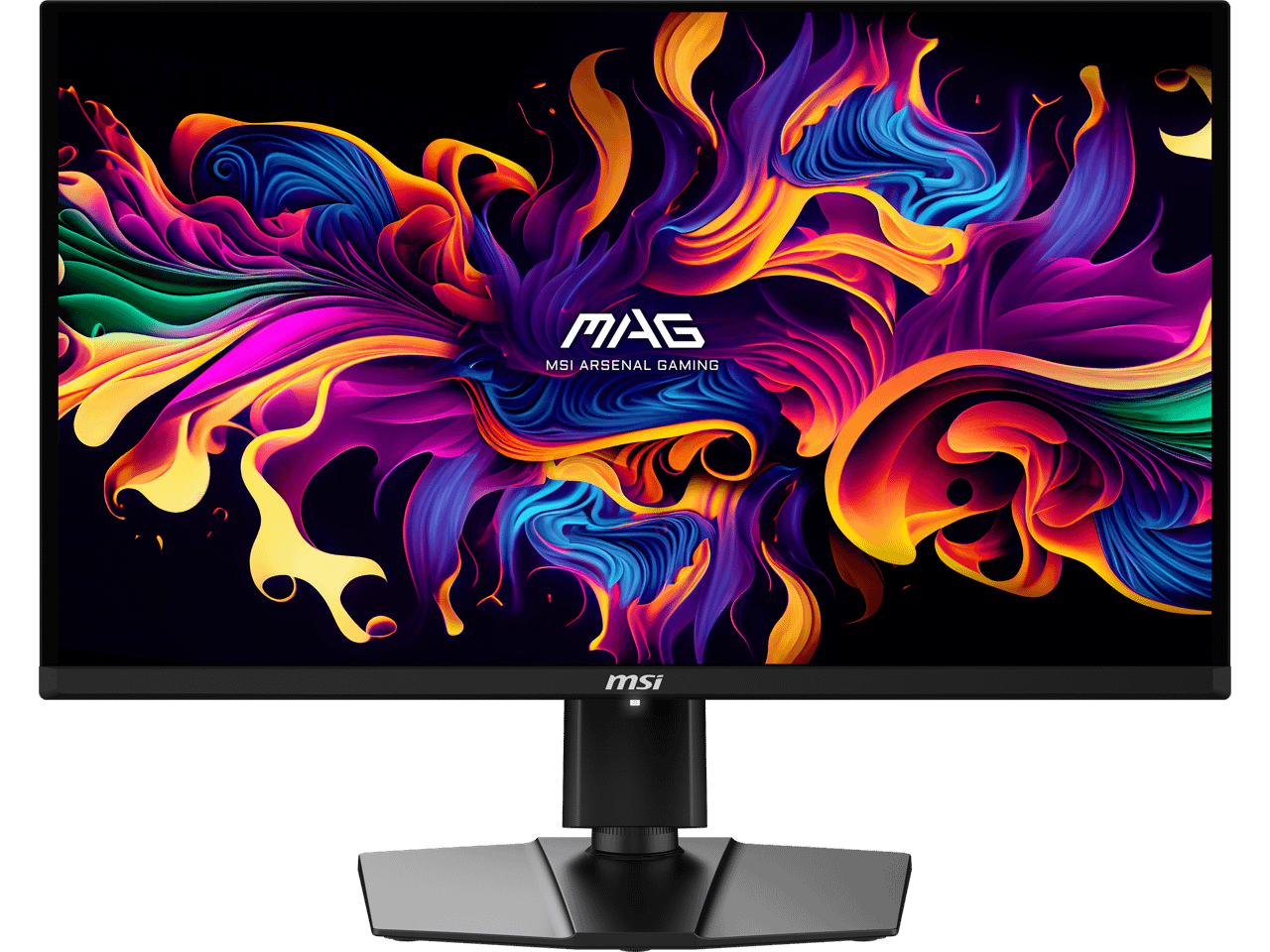
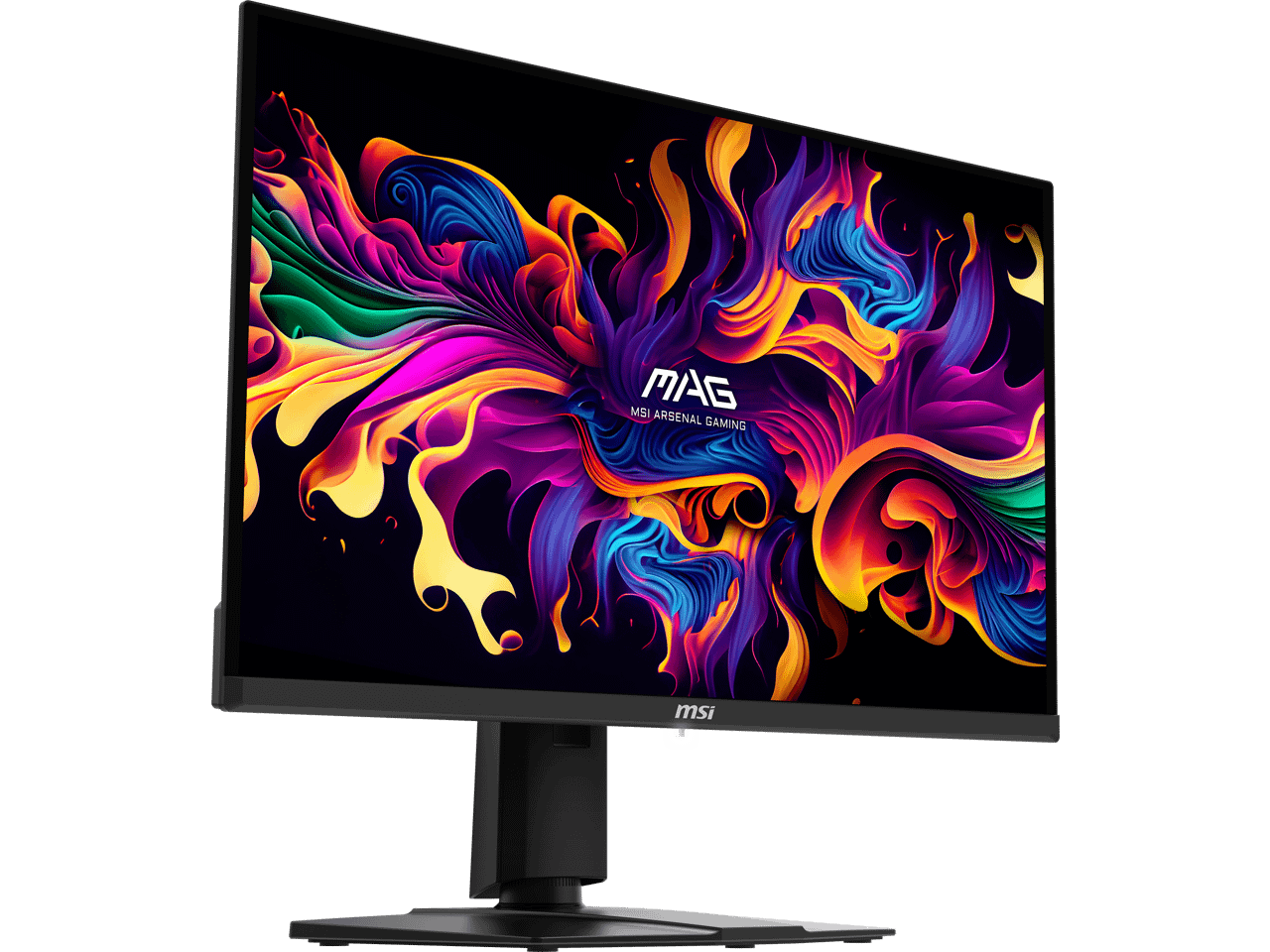
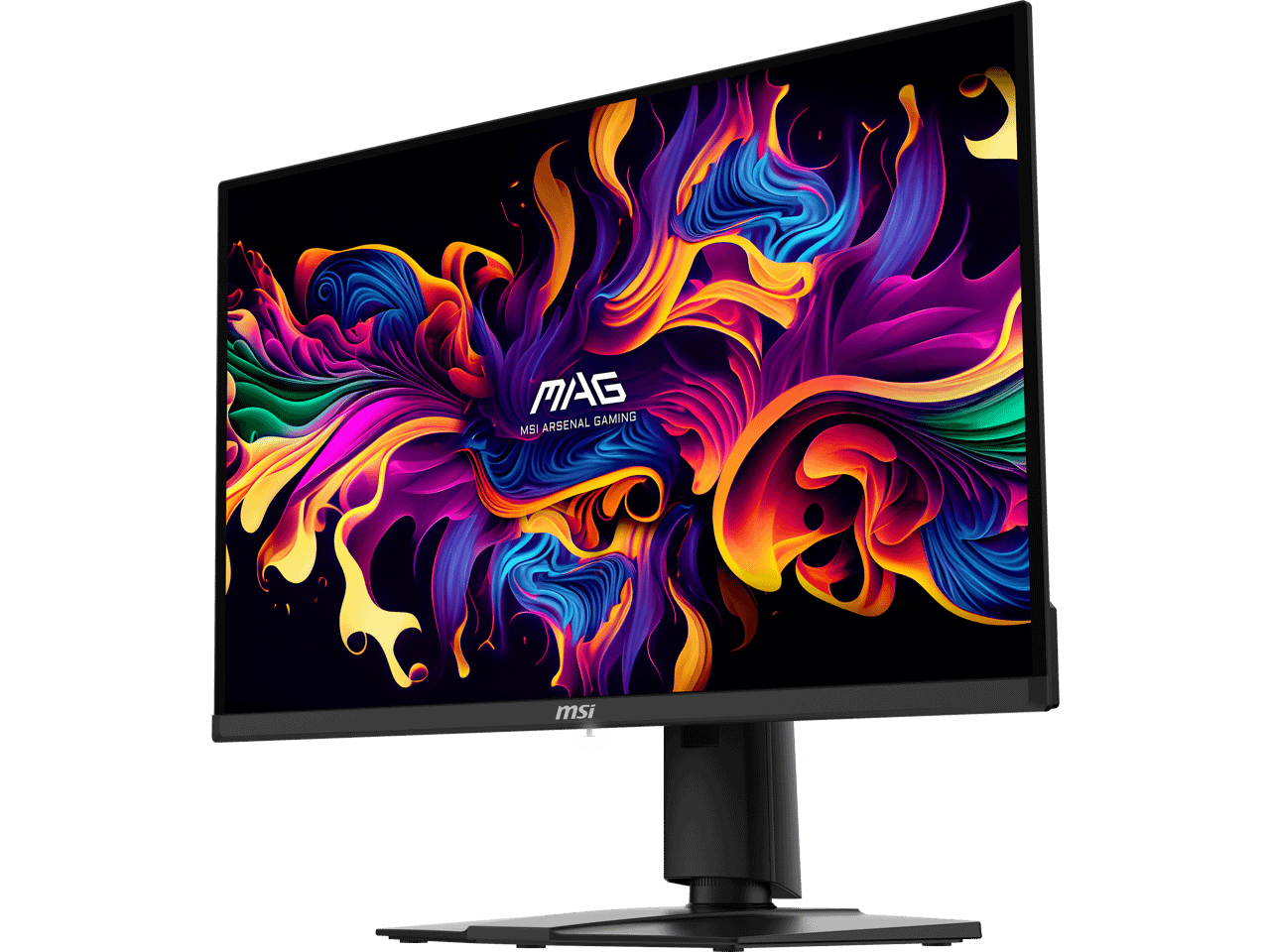
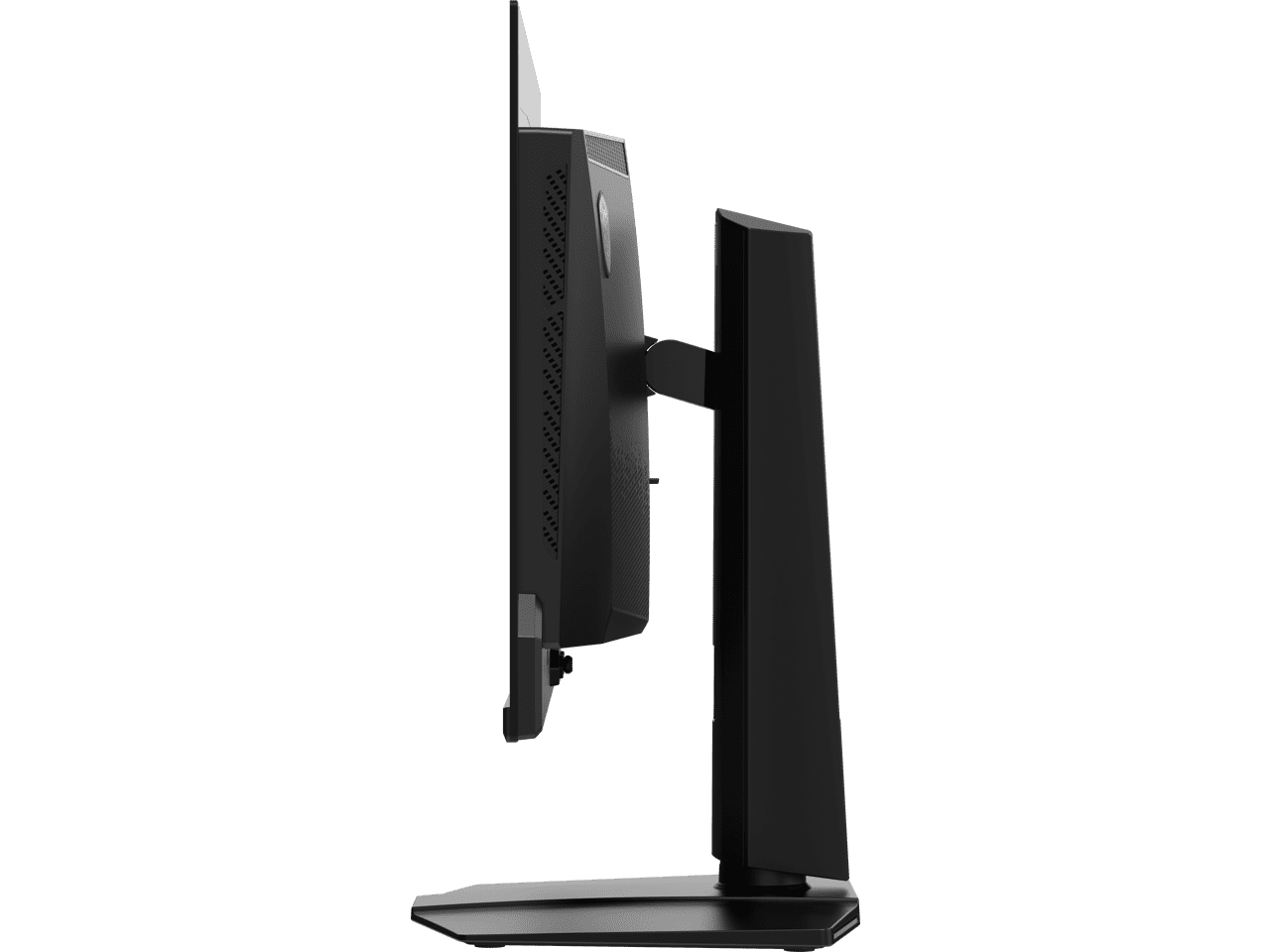

If you're in the market for a premium gaming monitor, you've probably stumbled across the exciting world of QD-OLED displays. These represent some of the most impressive gaming monitors available today, combining the perfect blacks of OLED technology with the vibrant colors of quantum dots. Two standout options that have caught my attention are the GIGABYTE MO27Q2 and the MSI MAG 271QP QD-OLED X24.
Both monitors hit the market in 2024, representing the latest generation of QD-OLED gaming displays. What makes this timing significant is that 2024 marked a turning point where QD-OLED technology became more accessible to mainstream gamers, with manufacturers finally bringing costs down while maintaining the premium features that make these panels so special.
Before diving into the comparison, let's talk about what makes QD-OLED special. Traditional LCD monitors use a backlight that shines through liquid crystals, but they can't achieve true black because the backlight always bleeds through slightly. OLED panels solve this by having each pixel emit its own light – when a pixel needs to be black, it simply turns off completely.
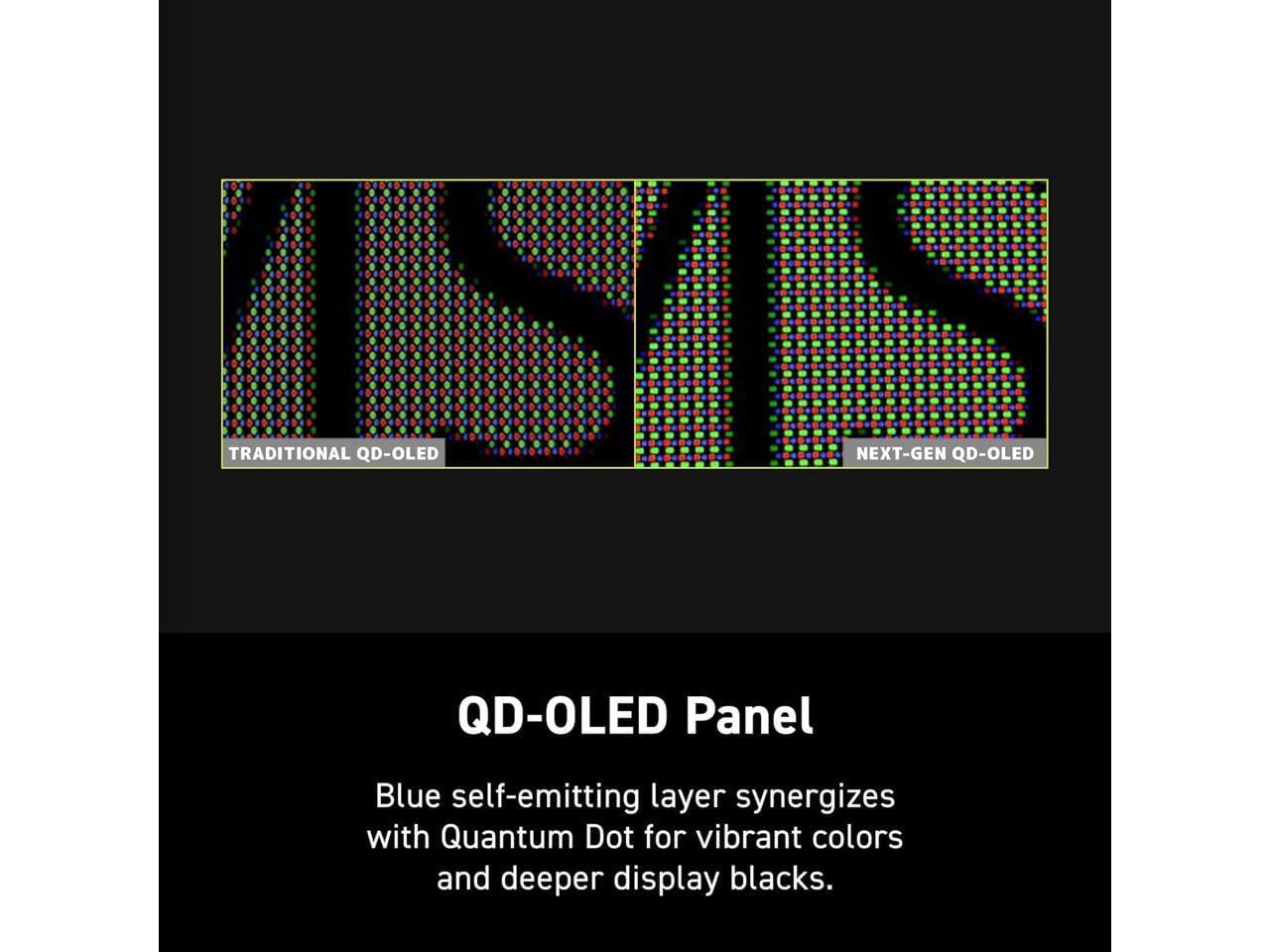
QD-OLED takes this a step further by adding quantum dots (tiny semiconductor particles) that convert blue OLED light into precise red and green colors. This combination gives you the perfect blacks of OLED with even more vibrant and accurate colors than standard OLED panels. The result is an image quality that's hard to match with other technologies.
Both the GIGABYTE MO27Q2 and MSI MAG 271QP QD-OLED X24 use Samsung's QD-OLED panels, which means they share the same fundamental display technology. However, how each company implements and tunes these panels makes a significant difference in real-world performance.
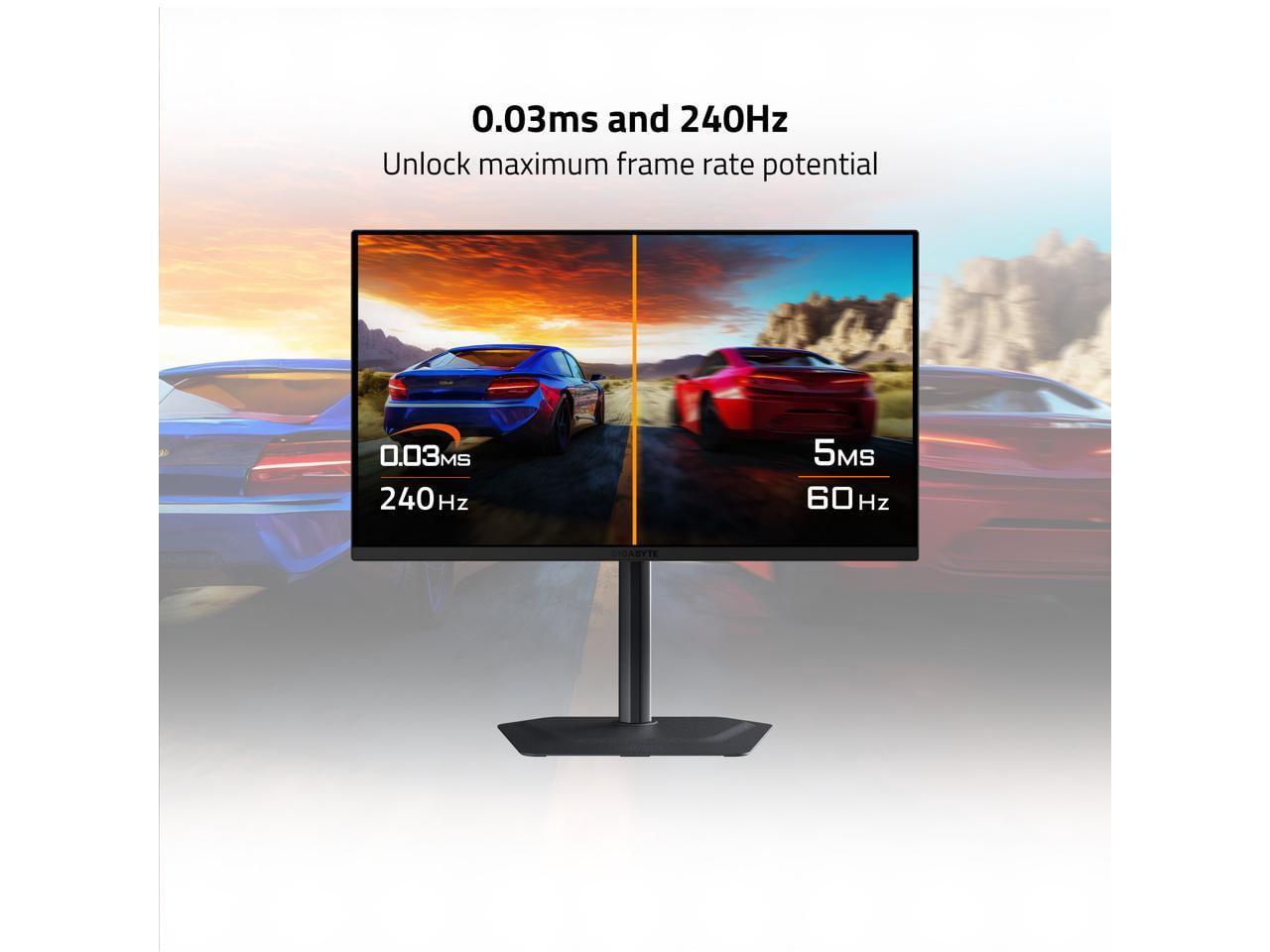
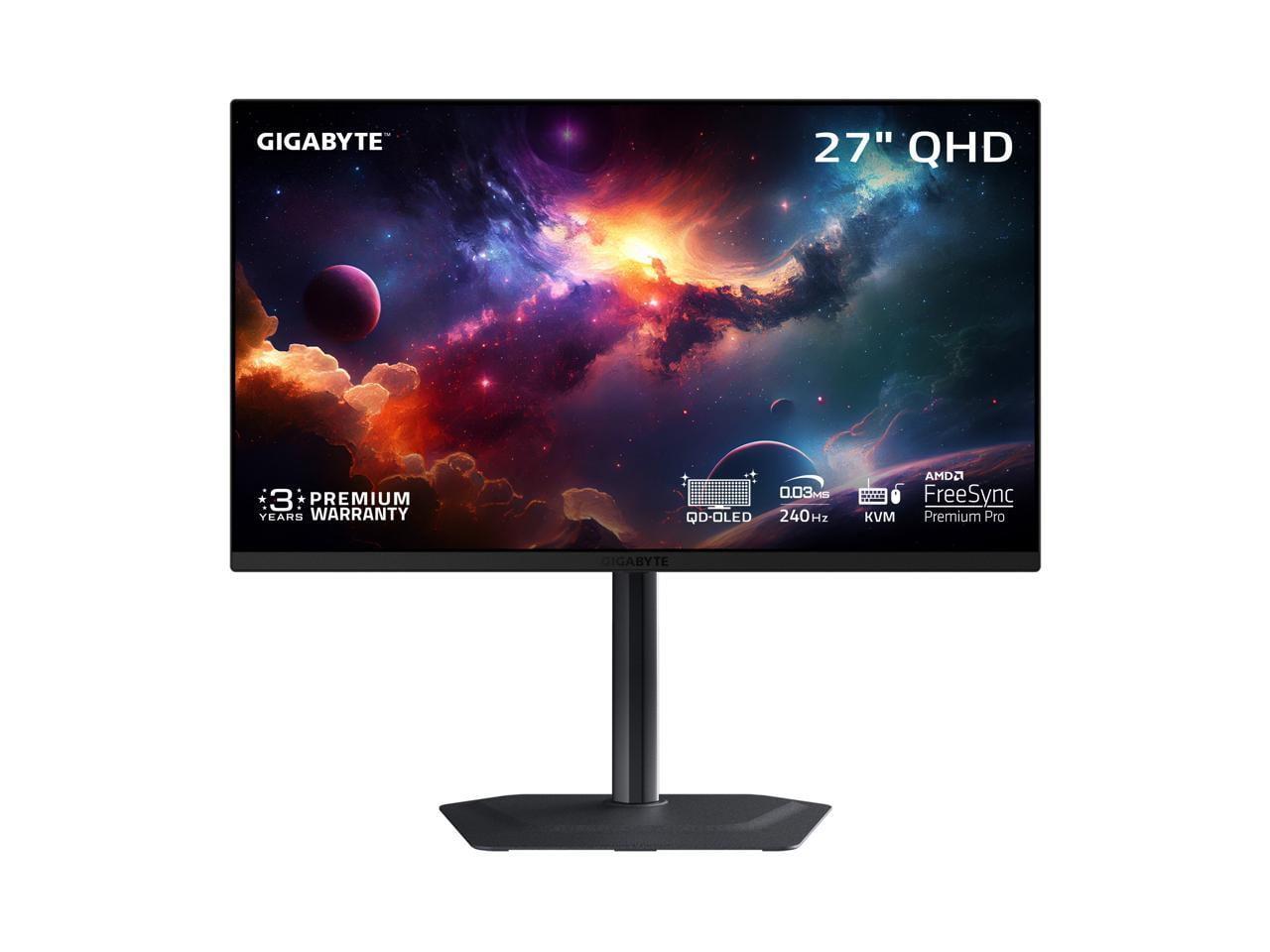
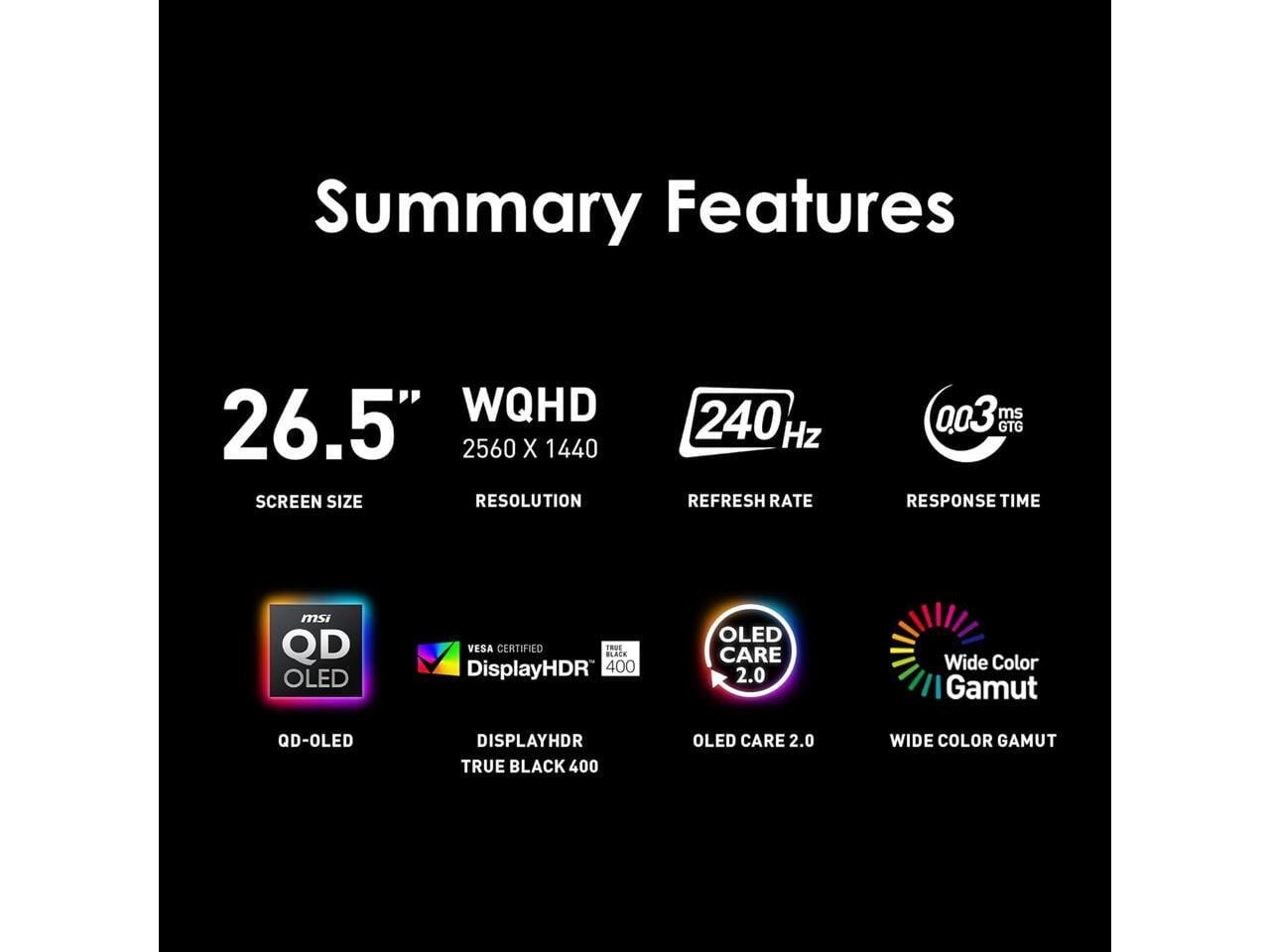
When it comes to competitive gaming, both monitors deliver identical core specifications that put them at the top of the performance heap. They both feature 240Hz refresh rates with 0.03ms response times – numbers that represent the absolute fastest you can get in current monitor technology.
To put this in perspective, a 240Hz refresh rate means the monitor updates its image 240 times per second. This creates incredibly smooth motion, especially important in fast-paced games like first-person shooters or racing games. The 0.03ms response time (measured as gray-to-gray transitions) means pixels can change colors almost instantaneously, eliminating the ghosting or blur you might see behind moving objects.
Where these monitors start to differ is in their gaming-specific features. The GIGABYTE MO27Q2 includes something called a Tactical Switch – a dedicated hardware button that lets you instantly switch between the full 27-inch display and a smaller 24-inch area in the center. This might sound odd, but many esports professionals prefer smaller screens because they can see everything without moving their eyes as much. Instead of buying a separate 24-inch monitor, the Tactical Switch gives you both options in one display.
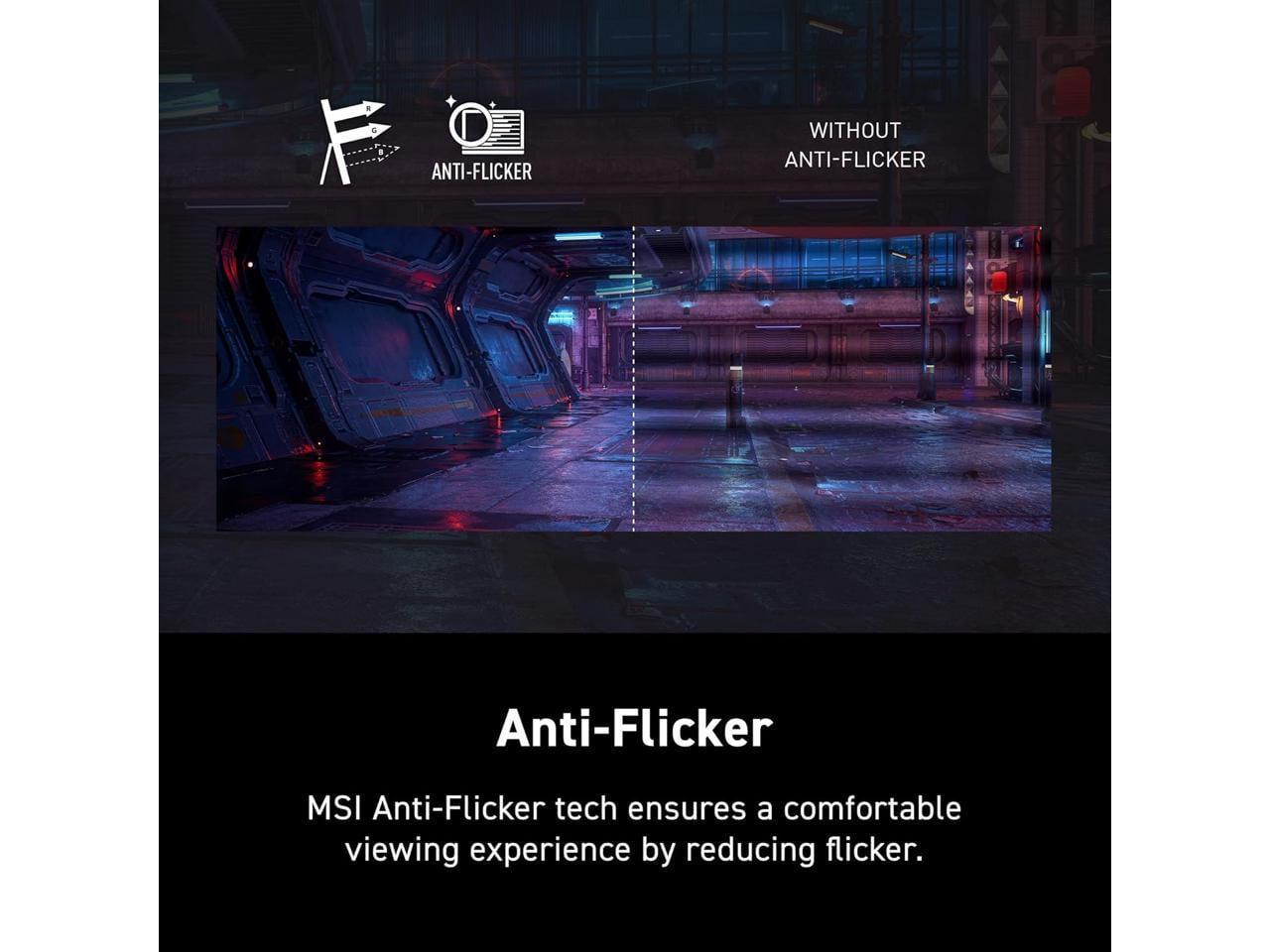
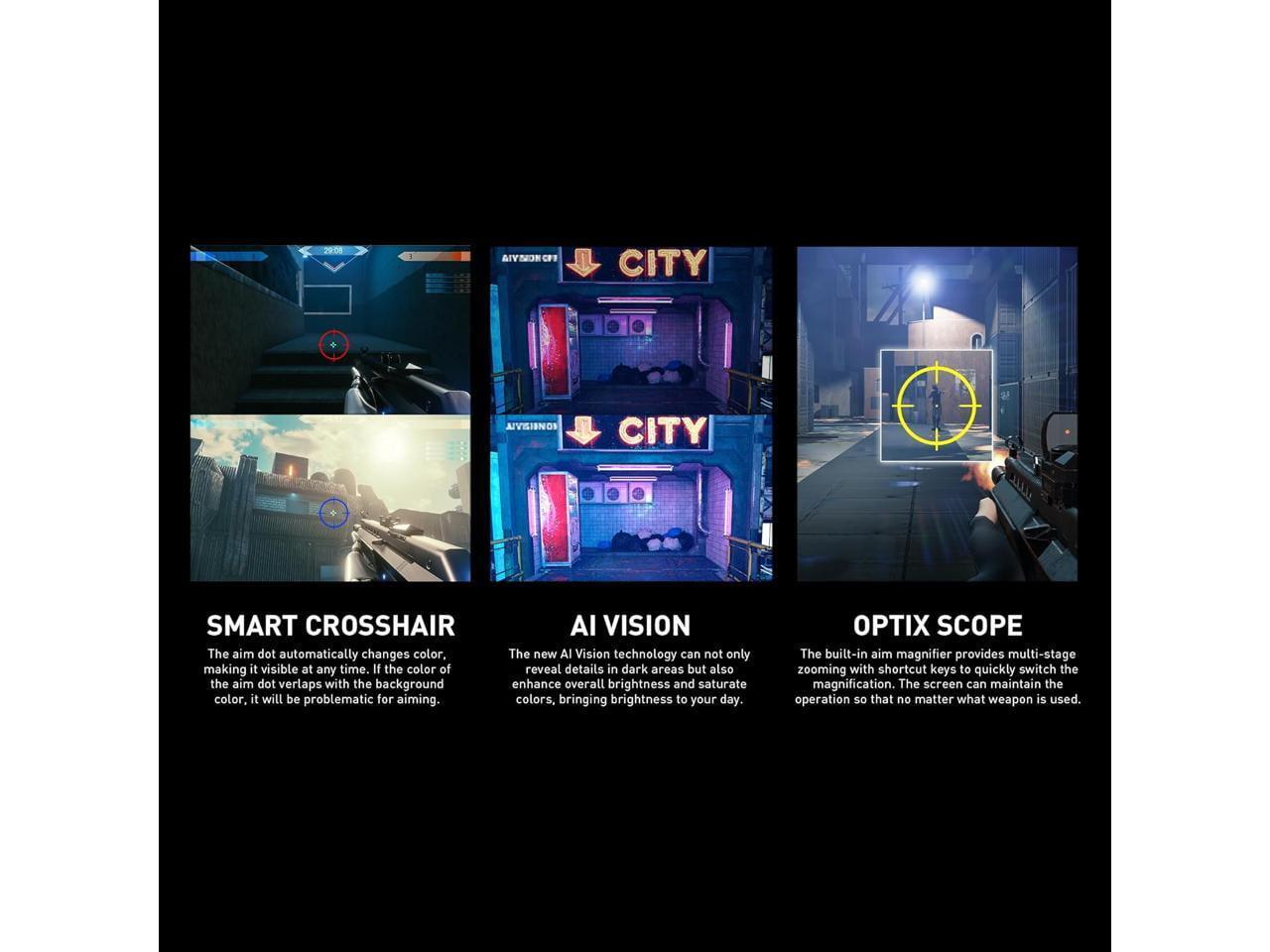
The MSI MAG 271QP QD-OLED X24 takes a different approach with its Gaming Intelligence software suite. This includes features like crosshair overlays, timers, and various visual enhancements that can give competitive players an edge. While software-based, these features integrate well with MSI's ecosystem if you're already using their gaming peripherals.
Both monitors support adaptive sync technology, which synchronizes the monitor's refresh rate with your graphics card's frame output. This eliminates screen tearing (when you see horizontal lines across the image) and stuttering, creating smoother gameplay even when frame rates fluctuate.
This is where QD-OLED technology really shines, and it's also where we start seeing meaningful differences between these two monitors. Both deliver stunning image quality with perfect blacks and vibrant colors, but their approaches to HDR (High Dynamic Range) content differ significantly.
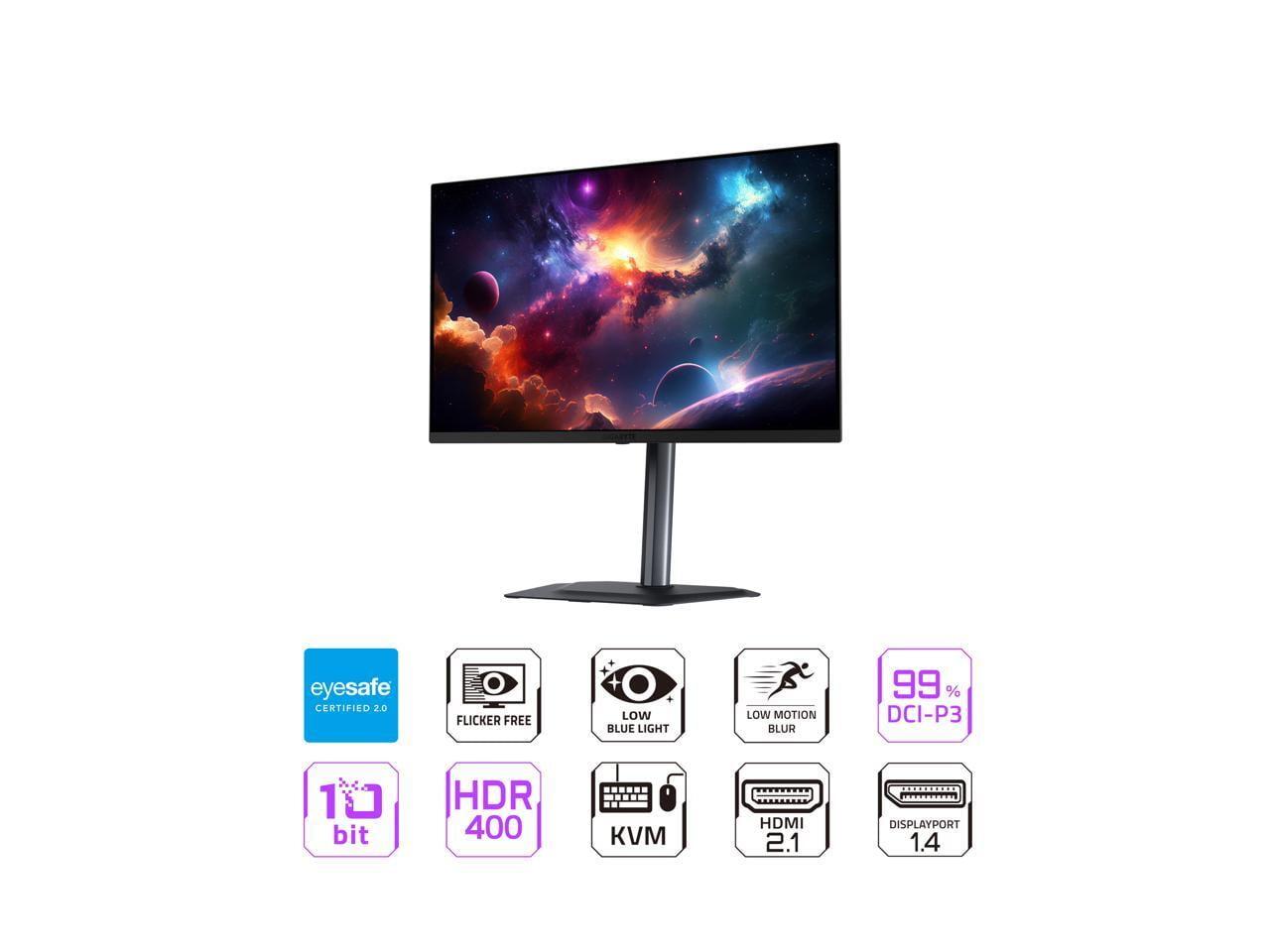
HDR allows displays to show a much wider range of brightness levels, from deeper blacks to brighter whites, creating more realistic and immersive images. Both monitors are certified for VESA DisplayHDR True Black 400, which means they can display true black alongside bright highlights of at least 400 nits (a measure of brightness).
The GIGABYTE MO27Q2 uses what I'd call a "brightened" HDR approach. It's tuned to perform well even in scenes with lots of bright content, making HDR games and movies look more vibrant across different lighting conditions in your room. This implementation works particularly well for gaming, where you might be playing everything from dark atmospheric horror games to bright, colorful adventures.
The MSI MAG 271QP QD-OLED X24, on the other hand, takes a more traditional OLED approach. It excels at displaying accurate colors right out of the box, with professional-level color accuracy (Delta E ≤ 2, which means colors are nearly indistinguishable from reference standards). However, some of its preset gaming modes can make the image too bright and actually introduce slight blur, so you'll want to stick with the "User" or "Premium Color" modes for the best experience.
Both monitors cover an impressive color gamut – they can display about 99% of the DCI-P3 color space, which is the standard used for digital cinema. This means games and movies will look incredibly vibrant and lifelike, with colors that pop off the screen in ways that traditional monitors simply can't match.
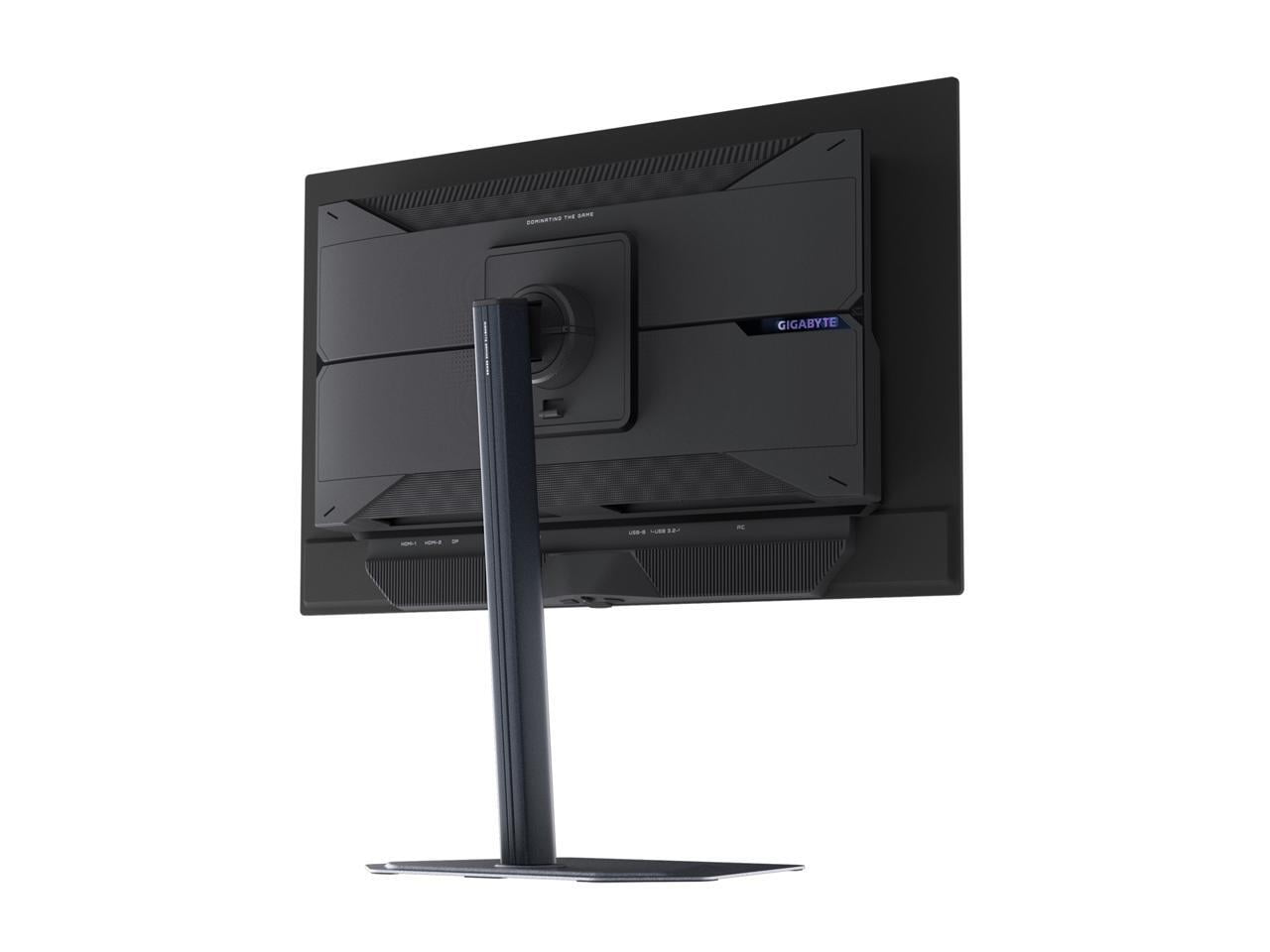
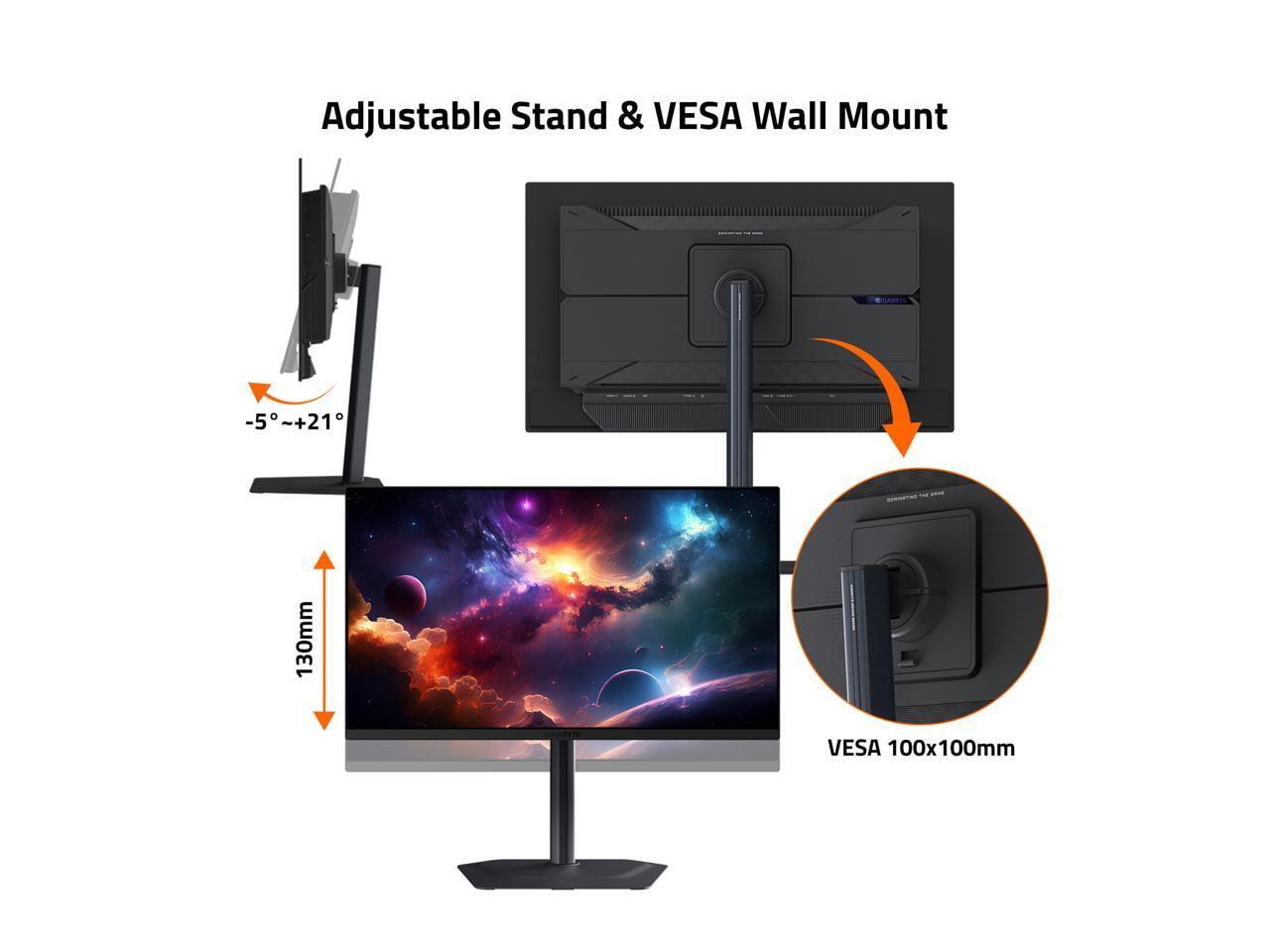
Having used both monitors extensively, the build quality difference is immediately noticeable. The GIGABYTE MO27Q2 feels more premium in every way. Its stand is made from coated metal with a low-profile base that doesn't take up much desk space but provides excellent stability. The overall construction feels solid and durable, which is important when you're investing in a premium display.
The MSI MAG 271QP QD-OLED X24 isn't poorly built, but it feels more like a standard gaming monitor in terms of materials and construction. It gets the job done and offers full ergonomic adjustments (tilt, swivel, height, and pivot), but it doesn't have that premium feel that justifies the high-end price tag.
Both monitors offer comprehensive ergonomic adjustments, which is crucial for long gaming sessions. You can tilt, swivel, adjust height, and even rotate them into portrait mode. The GIGABYTE MO27Q2 offers slightly more height adjustment range (130mm vs 110mm), but both provide enough flexibility for most setups.
This is where the GIGABYTE MO27Q2 really pulls ahead and justifies its premium positioning. Modern gaming setups often involve multiple devices – a gaming PC, a laptop for work, maybe a gaming console – and the connectivity options can make or break your experience.
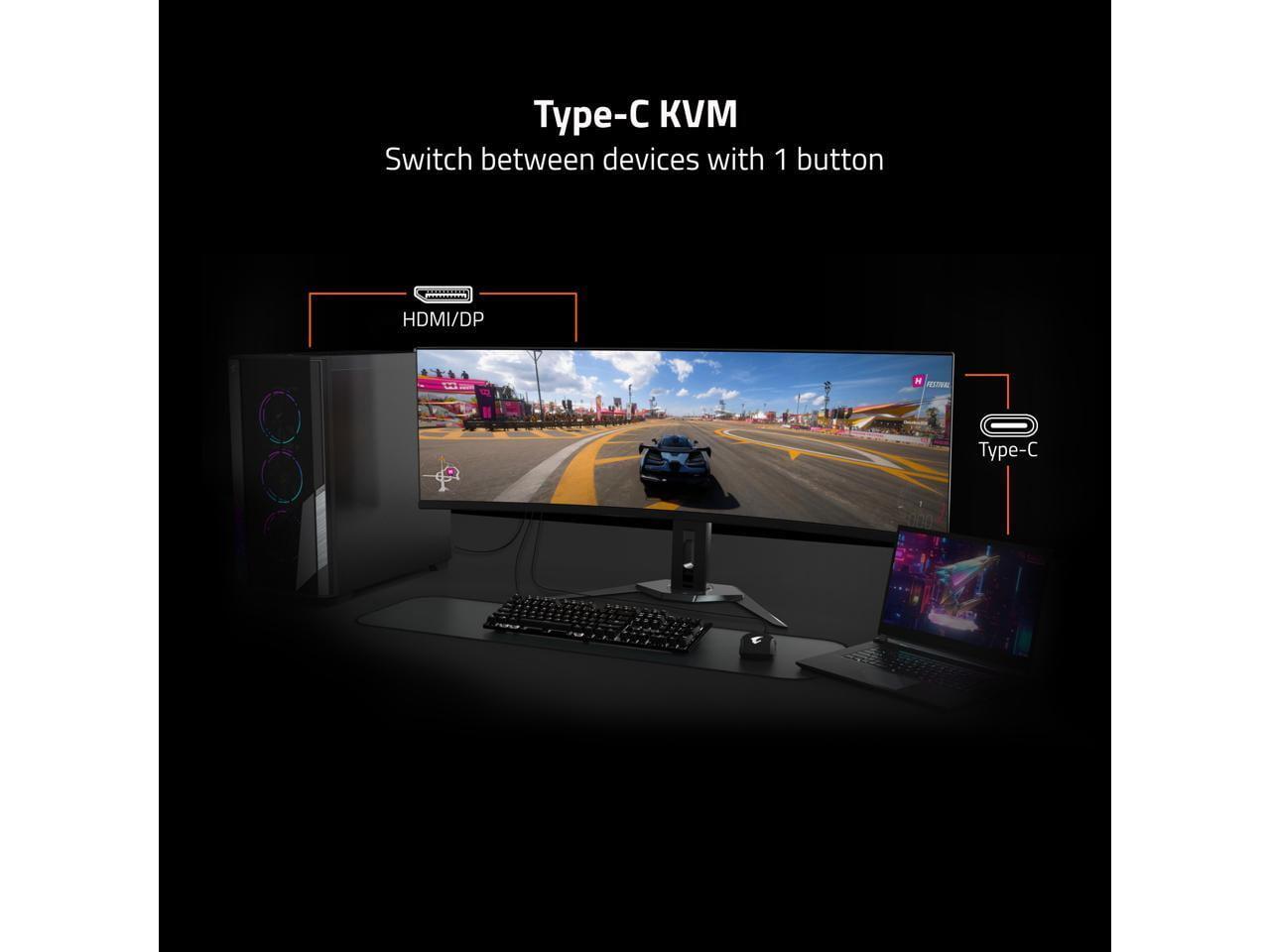
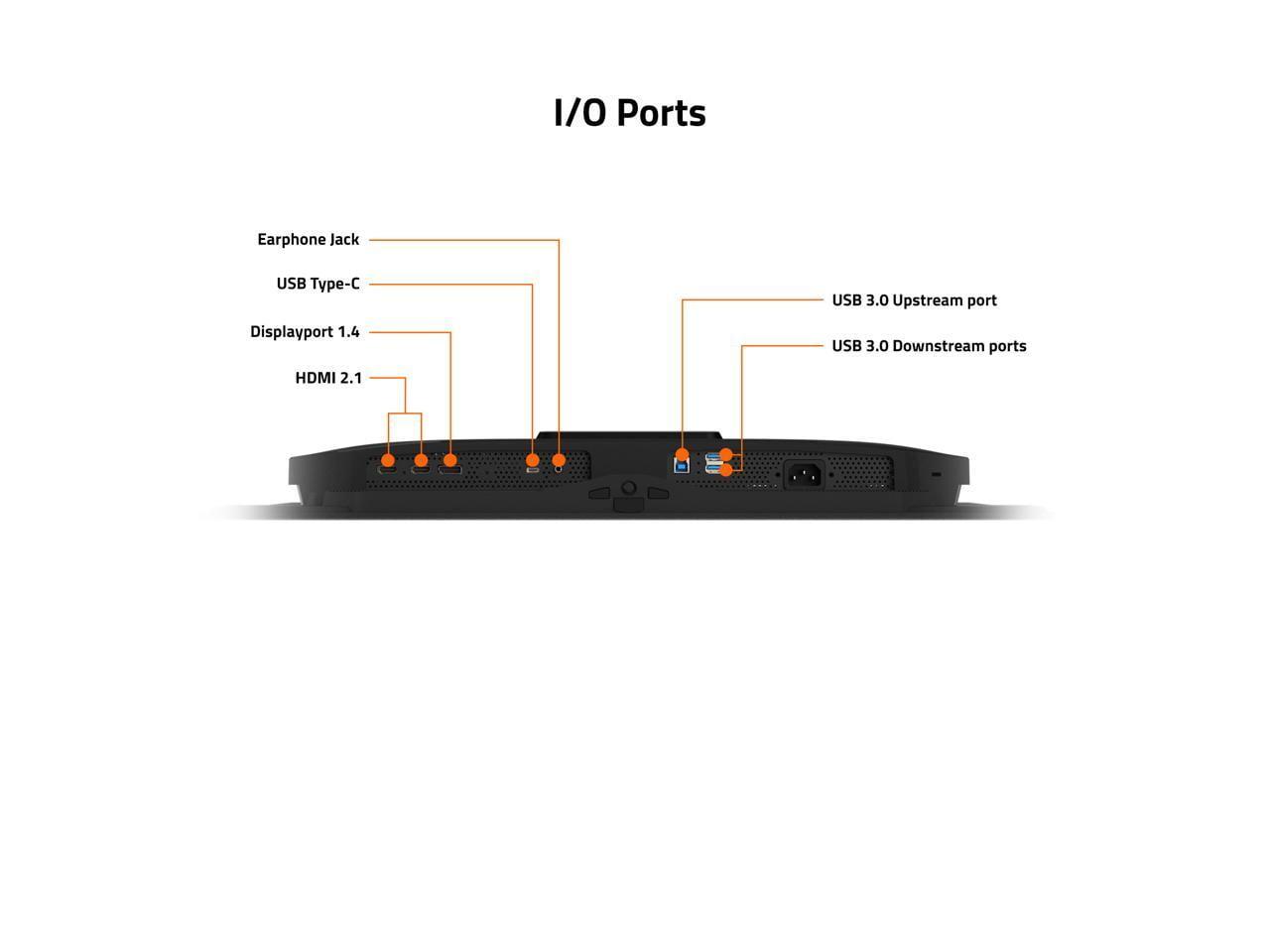
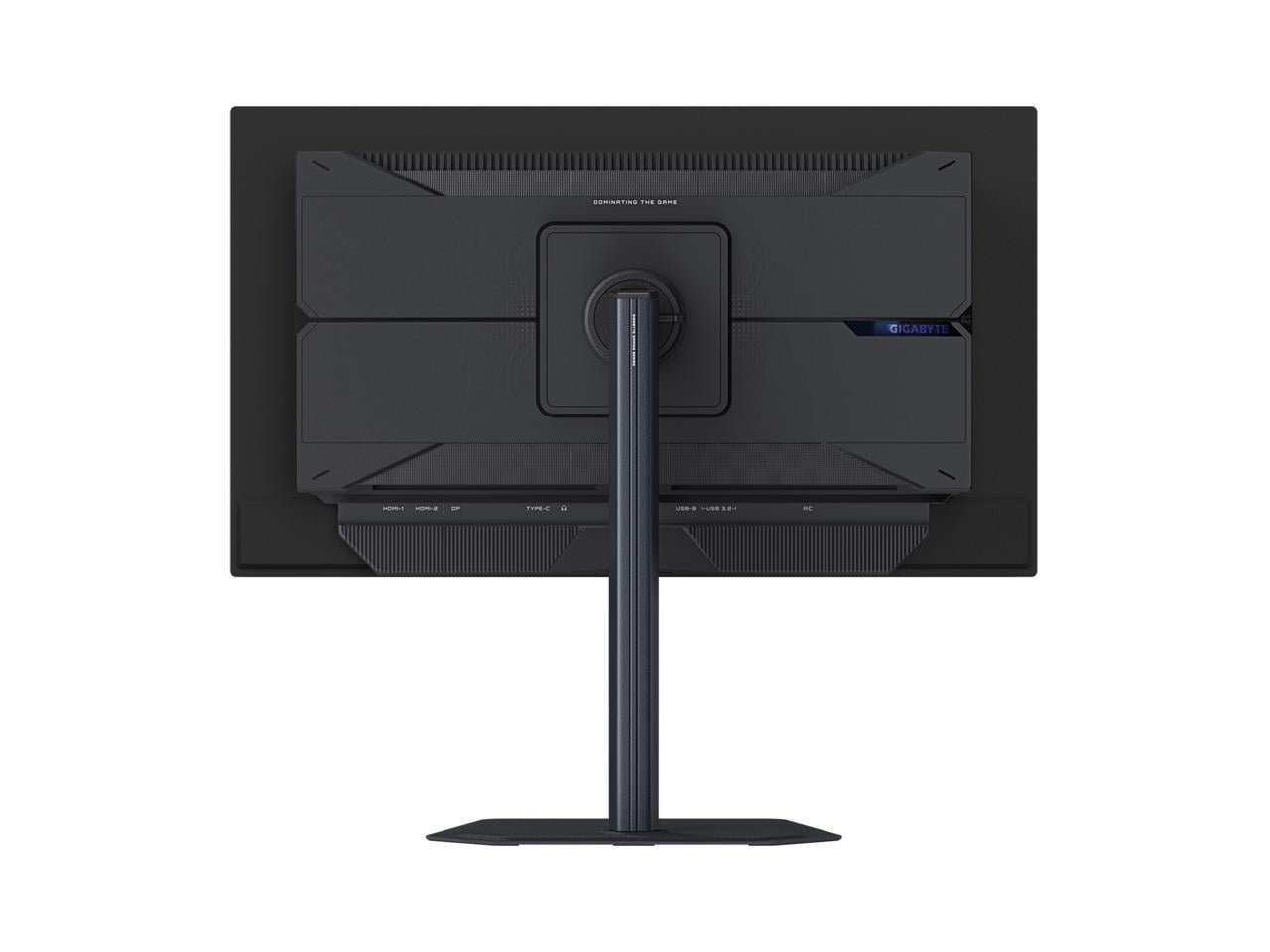
The GIGABYTE MO27Q2 includes USB-C connectivity with DisplayPort Alt Mode, meaning you can connect a laptop with a single cable that carries both video and power (up to 18W). More importantly, it features a built-in KVM (Keyboard, Video, Mouse) switch. This lets you control multiple computers with the same keyboard and mouse, switching between them with the press of a button. If you work from home and game on the same setup, this feature alone can transform your workflow.
It also includes two HDMI 2.1 ports, which is crucial for next-generation gaming consoles. These ports support 4K at 120Hz, and the monitor can even downsample 4K content to its native 1440p resolution, potentially giving you better image quality from console games. There's also a unique feature where the monitor can display 120Hz 4K content from consoles while maintaining full gaming performance.
The MSI MAG 271QP QD-OLED X24 takes a more basic approach with standard HDMI and DisplayPort connections. It gets the job done for pure gaming setups, but it lacks the versatility that modern users often need. If you're building a gaming-only setup with a single PC, this might not matter. But if you're like most people and need to connect multiple devices, the limitations become apparent quickly.
One concern with any OLED display is burn-in – permanent image retention that can occur when static elements (like game HUDs or Windows taskbars) are displayed for extended periods. Both manufacturers have addressed this with sophisticated protection systems.
The GIGABYTE MO27Q2 includes AI-based OLED Care that runs in the background with minimal user intervention. It uses pixel shifting (slightly moving the image to prevent static elements from staying in one place), automatic brightness adjustments, and other algorithms to extend panel life.
The MSI MAG 271QP QD-OLED X24 counters with OLED Care 2.0, which includes more advanced features like multi-logo detection and taskbar boundary detection. This system is more aggressive in identifying and protecting against static elements that could cause burn-in.
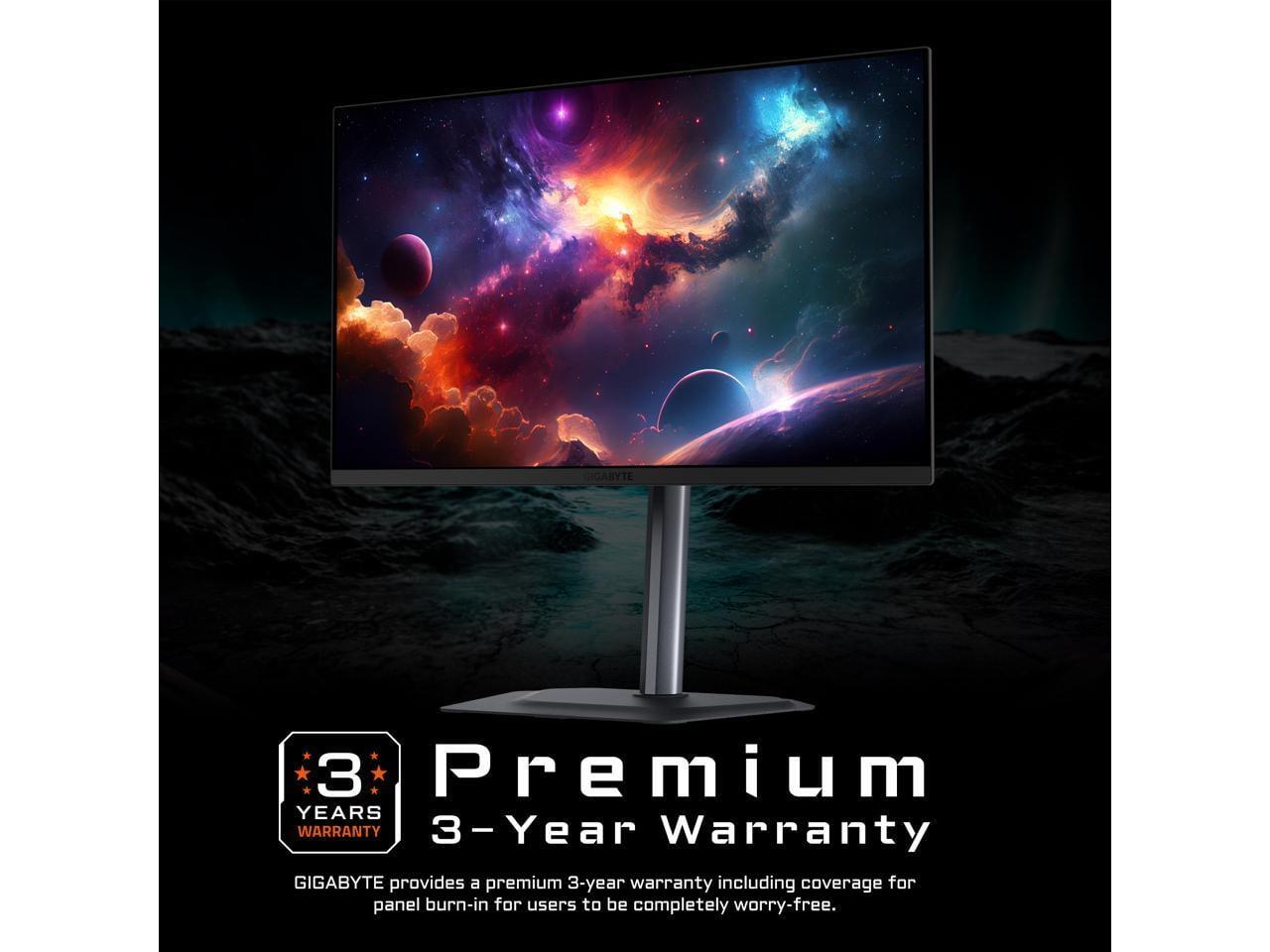
Both monitors come with three-year warranties that explicitly cover burn-in, which provides significant peace of mind. This warranty coverage has become standard in the QD-OLED market, reflecting manufacturers' confidence in the technology's durability.
While these are primarily gaming monitors, their excellent image quality makes them compelling for home theater use as well. The 27-inch size works well for desktop viewing, and the QD-OLED technology delivers the kind of contrast and color accuracy that makes movies look spectacular.
The GIGABYTE MO27Q2's HDR tuning works particularly well for varied content, handling everything from dark atmospheric films to bright action movies. Its multiple HDMI 2.1 ports make it easy to connect streaming devices, gaming consoles, and other entertainment sources.
Both monitors include built-in speakers (5W on the GIGABYTE, unspecified on the MSI), but these are really only suitable for basic system sounds. For any serious media consumption, you'll want dedicated speakers or headphones.
The glossy coating used on QD-OLED panels does mean they're more reflective than matte displays, so they work best in controlled lighting environments. If your setup is in a bright room with lots of windows, you might find the reflections distracting during darker content.
At the time of writing, both monitors typically retail in the same general price range, though the MSI MAG 271QP QD-OLED X24 occasionally goes on sale for significantly less. This pricing dynamic is important because it changes the value equation.
When priced similarly, the GIGABYTE MO27Q2 offers substantially better value. You're getting premium build quality, comprehensive connectivity options, unique gaming features like the Tactical Switch, and better versatility for mixed-use scenarios. The additional features justify the cost difference in most situations.
However, when the MSI MAG 271QP QD-OLED X24 is available at substantial discount, it becomes an excellent option for pure gaming setups where connectivity flexibility isn't important. The core gaming performance is identical, and you're getting the same beautiful QD-OLED image quality.
When evaluating gaming monitors, certain performance characteristics matter more than others:
Response time and refresh rate are crucial for competitive gaming. Both monitors excel here with identical specifications that represent the current state-of-the-art.
Input lag (the delay between your input and the screen updating) is equally important, and both monitors perform excellently in this regard.
Color accuracy and contrast determine how good games and content look. Both deliver exceptional performance, though with slightly different tuning approaches.
HDR performance affects how impactful modern games and media appear. The GIGABYTE MO27Q2's approach works better across varied content types.
Connectivity flexibility might seem secondary, but it significantly impacts long-term usability and convenience.
Choose the GIGABYTE MO27Q2 if you want the most complete package. It's the better choice for anyone who values build quality, needs comprehensive connectivity, plans to connect multiple devices, or wants the unique Tactical Switch feature for esports gaming. It's also the smarter choice if you might use the monitor for both gaming and productivity work.
The MSI MAG 271QP QD-OLED X24 makes sense if you're building a dedicated gaming setup with basic connectivity needs and can find it at a significant discount. It delivers the same core gaming performance and beautiful image quality but without the premium features and build quality.
Both monitors represent excellent examples of how far gaming display technology has come. The fact that we can get OLED-level image quality with 240Hz refresh rates in mainstream gaming monitors shows just how much the industry has advanced. Whichever you choose, you'll be getting a display that delivers truly exceptional gaming performance and image quality that was unimaginable just a few years ago.
The decision ultimately comes down to whether you value the premium features and build quality of the GIGABYTE MO27Q2, or if you're satisfied with the excellent core performance of the MSI MAG 271QP QD-OLED X24 at a potentially lower price point. Both will deliver gaming experiences that are simply stunning to behold.
| GIGABYTE MO27Q2 | MSI MAG 271QP QD-OLED X24 |
|---|---|
| Display Technology - Both use identical Samsung QD-OLED panels | |
| 27" QD-OLED, 2560×1440, 240Hz, 0.03ms | 27" QD-OLED, 2560×1440, 240Hz, 0.03ms |
| HDR Performance - Different tuning approaches affect real-world experience | |
| "Brightened" HDR for varied lighting, 1000 nits peak | Traditional OLED tuning, 1000 nits peak |
| Connectivity - Major differentiator for multi-device setups | |
| 2×HDMI 2.1, DP 1.4, USB-C with power delivery | 2×HDMI 2.1, DP 1.4a, no USB-C |
| KVM Functionality - Game-changer for work/gaming hybrid setups | |
| Built-in KVM switch with Type-C support | No KVM functionality |
| Gaming Features - Unique hardware vs software approach | |
| Tactical Switch for 24"/27" modes, AI OLED Care | Gaming Intelligence software, OLED Care 2.0 |
| Build Quality - Noticeable difference in premium feel | |
| Premium coated metal stand, solid construction | Standard gaming monitor build quality |
| Ergonomics - Both offer full adjustability with slight differences | |
| 130mm height, ±15° swivel, full tilt/pivot | 110mm height, ±30° swivel, full tilt/pivot |
| Console Gaming Support - Important for next-gen gaming | |
| 120Hz 4K downsampling, optimized HDMI 2.1 | Standard HDMI 2.1 support |
| Color Accuracy - Both excellent but different strengths | |
| Well-tuned sRGB mode, 99% DCI-P3 | Factory calibrated ΔE ≤ 2, 99% DCI-P3 |
| Warranty Coverage - Both include crucial burn-in protection | |
| 3-year warranty including OLED burn-in | 3-year warranty including OLED burn-in |
| Value Proposition - Consider features vs pure gaming focus | |
| Premium features justify higher cost when similarly priced | Better value when significantly discounted for pure gaming |
Both the GIGABYTE MO27Q2 and MSI MAG 271QP QD-OLED X24 deliver identical core gaming performance with 240Hz refresh rates and 0.03ms response times. The main difference is that the GIGABYTE MO27Q2 includes a unique Tactical Switch feature that lets you switch between 27-inch and 24-inch display modes, which many esports players prefer for competitive gaming.
Both monitors use the same Samsung QD-OLED panel technology, so they share excellent contrast and color reproduction. However, the GIGABYTE MO27Q2 uses a "brightened" HDR approach that works better in varied lighting conditions, while the MSI MAG 271QP QD-OLED X24 offers more traditional OLED color accuracy with factory calibration to professional standards.
The GIGABYTE MO27Q2 offers significantly better connectivity with USB-C support, built-in KVM functionality, and enhanced HDMI 2.1 features. The MSI MAG 271QP QD-OLED X24 provides basic gaming connectivity with HDMI 2.1 and DisplayPort but lacks USB-C and KVM features that are useful for multi-device setups.
Yes, both the GIGABYTE MO27Q2 and MSI MAG 271QP QD-OLED X24 support PlayStation 5 and Xbox Series X/S with HDMI 2.1 ports. However, the GIGABYTE MO27Q2 offers additional console gaming features like 120Hz 4K downsampling for potentially better image quality from console games.
The GIGABYTE MO27Q2 is clearly better for productivity use thanks to its USB-C connectivity and built-in KVM switch. These features allow you to connect laptops with a single cable and switch between multiple computers easily. The MSI MAG 271QP QD-OLED X24 is primarily designed for pure gaming setups.
The GIGABYTE MO27Q2 features premium build quality with a coated metal stand and solid construction that feels more durable. The MSI MAG 271QP QD-OLED X24 has standard gaming monitor build quality that's functional but doesn't feel as premium, despite both offering full ergonomic adjustments.
Both the GIGABYTE MO27Q2 and MSI MAG 271QP QD-OLED X24 include comprehensive burn-in protection systems and 3-year warranties that cover OLED burn-in. The GIGABYTE MO27Q2 uses AI-based OLED Care, while the MSI MAG 271QP QD-OLED X24 features OLED Care 2.0 with advanced static element detection.
Value depends on your needs and current pricing. When similarly priced, the GIGABYTE MO27Q2 offers better overall value with premium features and build quality. However, the MSI MAG 271QP QD-OLED X24 can be an excellent value when available at significant discounts for users who only need basic gaming functionality.
Both monitors excel at content creation thanks to their wide color gamuts covering 99% DCI-P3. The MSI MAG 271QP QD-OLED X24 has slight advantages with factory color calibration, while the GIGABYTE MO27Q2 offers better connectivity for creative workflows with USB-C and KVM features.
Both the GIGABYTE MO27Q2 and MSI MAG 271QP QD-OLED X24 use glossy QD-OLED panels that can show reflections in bright environments. However, both feature effective anti-glare treatments. The GIGABYTE MO27Q2's brightened HDR tuning may perform slightly better in varied lighting conditions.
The GIGABYTE MO27Q2 focuses on hardware features like the Tactical Switch and comprehensive OLED care, while the MSI MAG 271QP QD-OLED X24 offers Gaming Intelligence software with crosshair overlays and visual enhancements. Both approaches are effective, but the GIGABYTE MO27Q2's hardware-based features tend to be more reliable.
For pure competitive gaming performance, both the GIGABYTE MO27Q2 and MSI MAG 271QP QD-OLED X24 are equally excellent. The GIGABYTE MO27Q2 has a slight edge with its Tactical Switch feature that many esports professionals prefer, allowing quick switching to a 24-inch display area without changing monitors.
We've done our best to create useful and informative comparisons to help you decide what product to buy. Our research uses advanced automated methods to create this comparison and perfection is not possible - please contact us for corrections or questions. These are the sites we've researched in the creation of this article: gigabyte.com - youtube.com - newegg.com - mezha.media - tech-critter.com - gigabyte.com - forum.pcmonitors.info - techspot.com - aorus.com - saltynewsnetwork.com - infiniarc.com - gigabyte.com - bestbuy.com - youtube.com - gigabyte.com - gigabyte.com - displayspecifications.com - aorus.com - gigabyte.com - gigabyte.com - bestbuy.com - youtube.com - xda-developers.com - newegg.com - notebookcheck.net - displayninja.com - ign.com - rtings.com - cdw.com - microcenter.com - bestbuy.com - us.msi.com - colamco.com - msi.com - msi.com - displayspecifications.com - msi.com - storage-asset.msi.com - msi.com - us.msi.com - displayspecifications.com

Privacy Policy
Terms and Conditions - Affiliate Policy
Home Security
© Copyright 2008-2026.
11816 Inwood Rd #1211, Dallas, TX 75244