$332.45
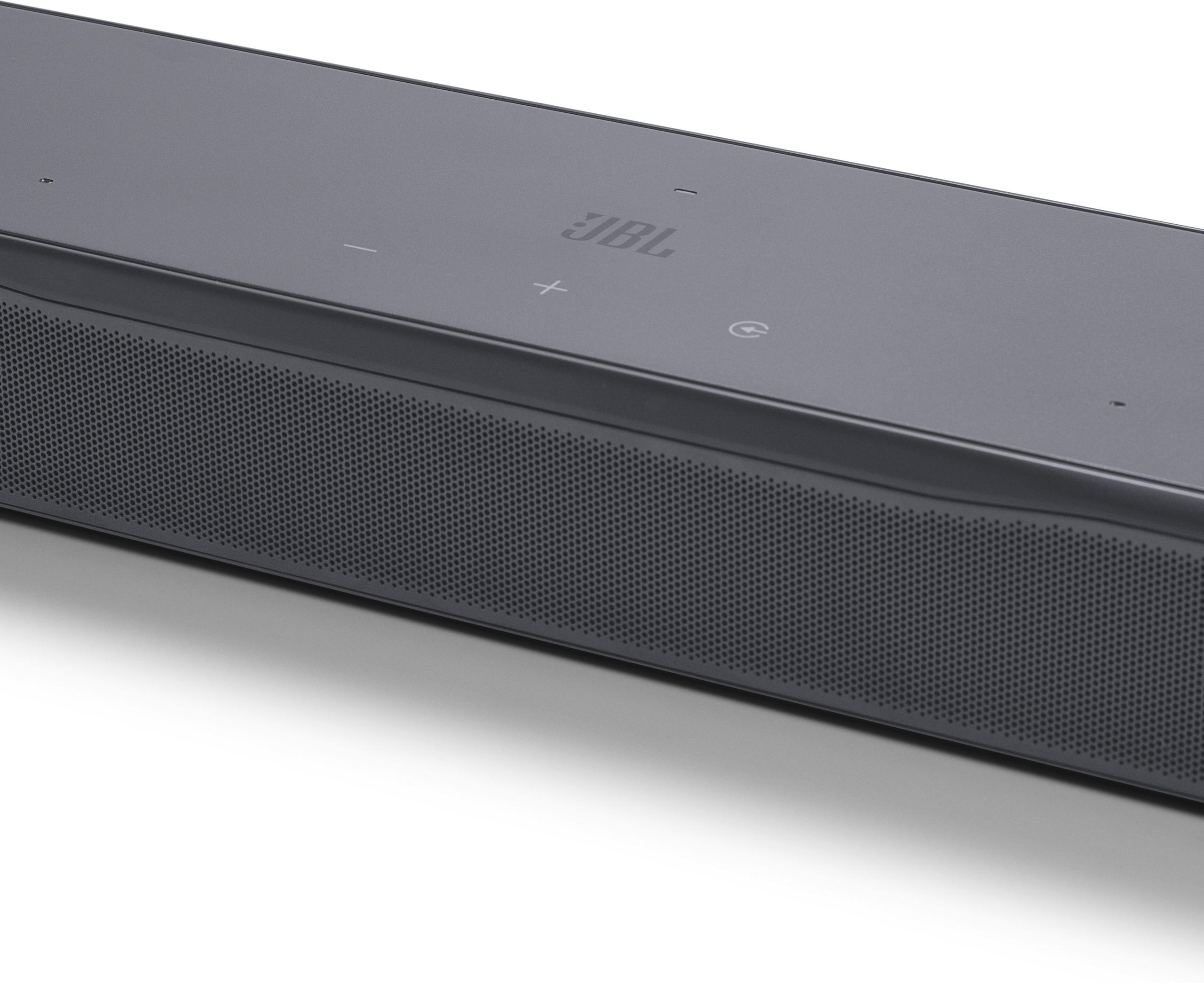
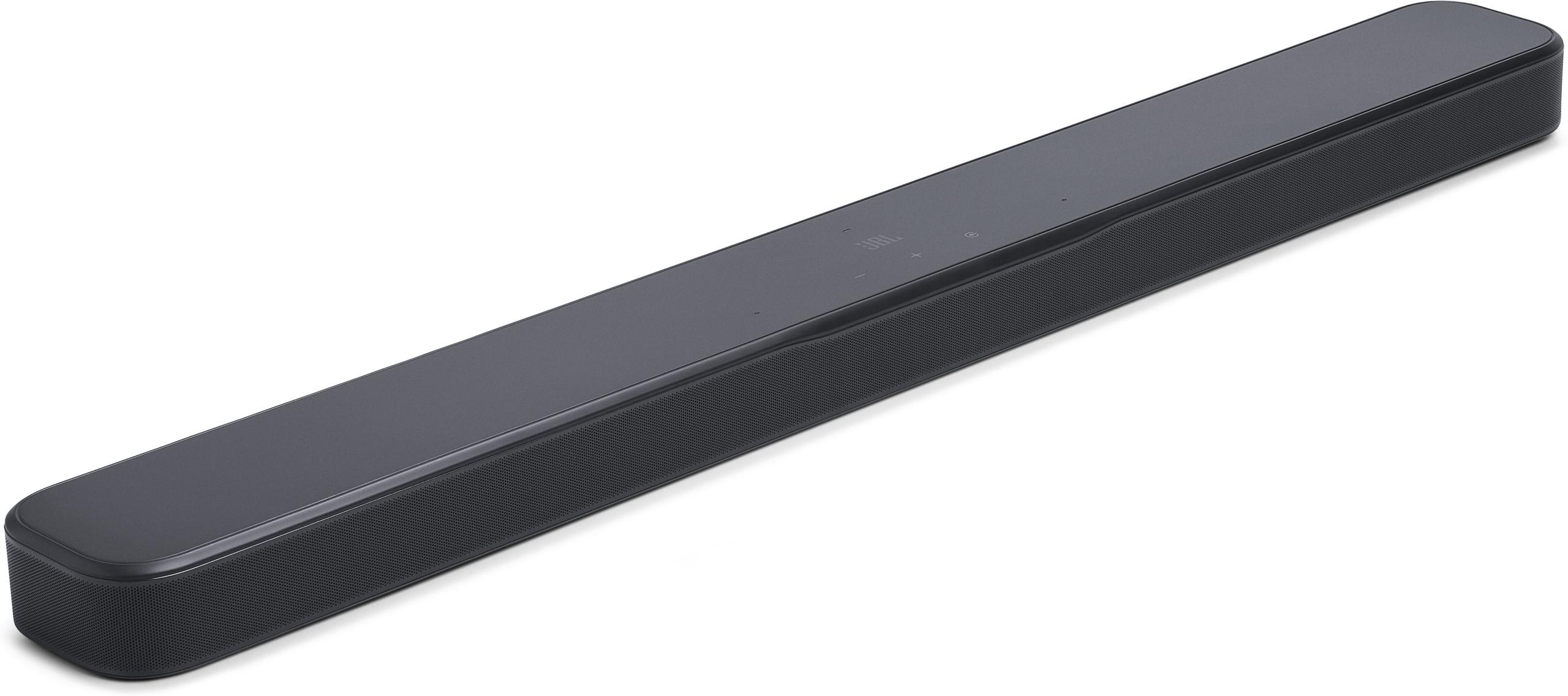
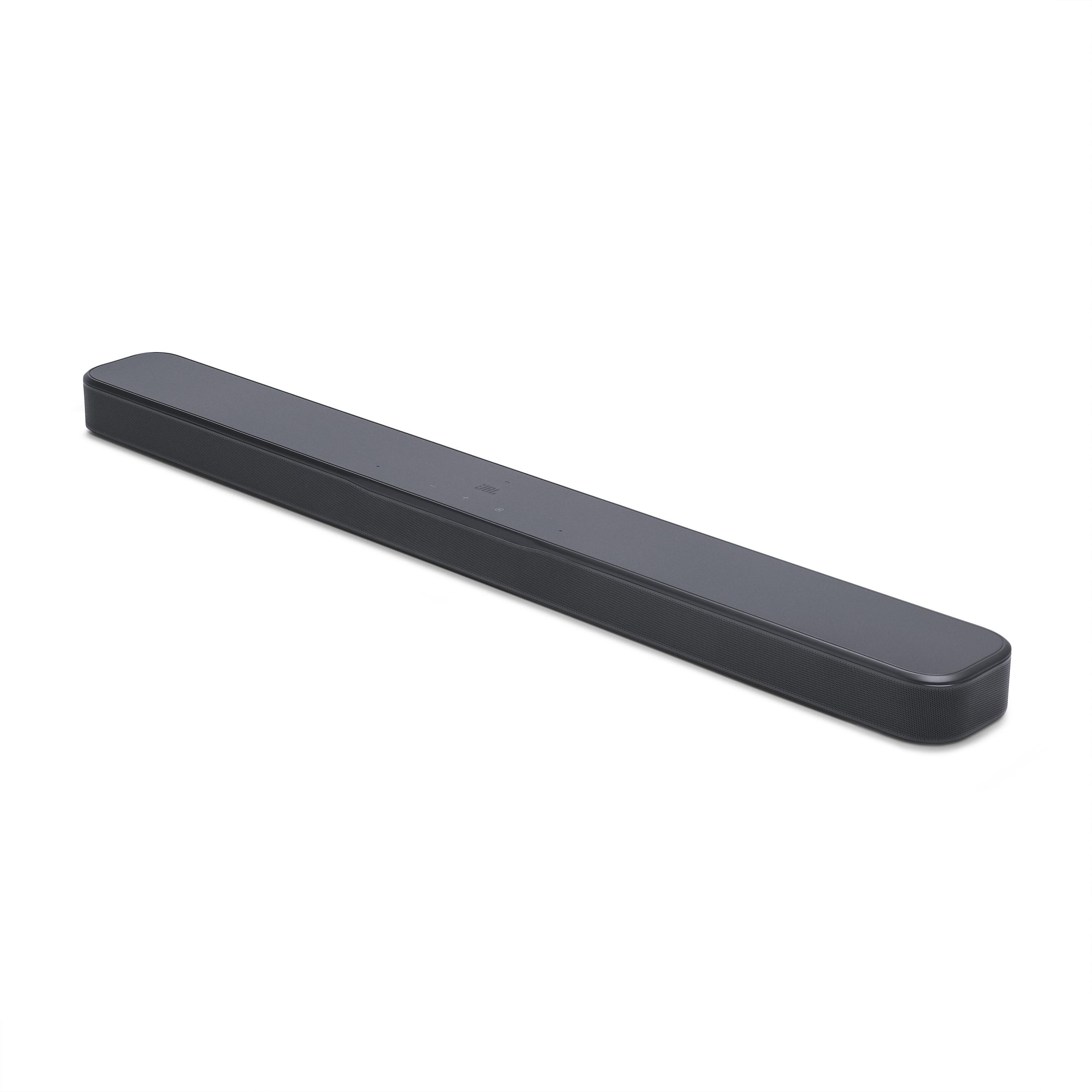
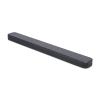
When JBL launched the Bar 300 MK2 in early 2025, they clearly listened to what users wanted from their original Bar 300: more power, better streaming, and smarter audio processing. This all-in-one soundbar tackles the age-old problem of muddy TV audio while keeping things refreshingly simple—no separate subwoofer to place, no rear speakers to wire up, just one sleek bar that does it all.
The MK2 series brought significant improvements over JBL's previous soundbar lineup. The most obvious change is the power bump—the Bar 300 MK2 now delivers 450W compared to the original's 260W. That's not just marketing numbers; our testers consistently noticed the difference when watching action movies or playing bass-heavy music. The extra headroom means cleaner sound at higher volumes and more impactful low-end response.
JBL also completely revamped their streaming capabilities. Where older models felt limited in their app ecosystem support, the MK2 generation embraces practically everything: AirPlay, Chromecast, Spotify Connect, Tidal Connect, and even Roon Ready for audiophile streaming setups. This matters because it means you're not locked into one particular streaming service or smart home ecosystem.
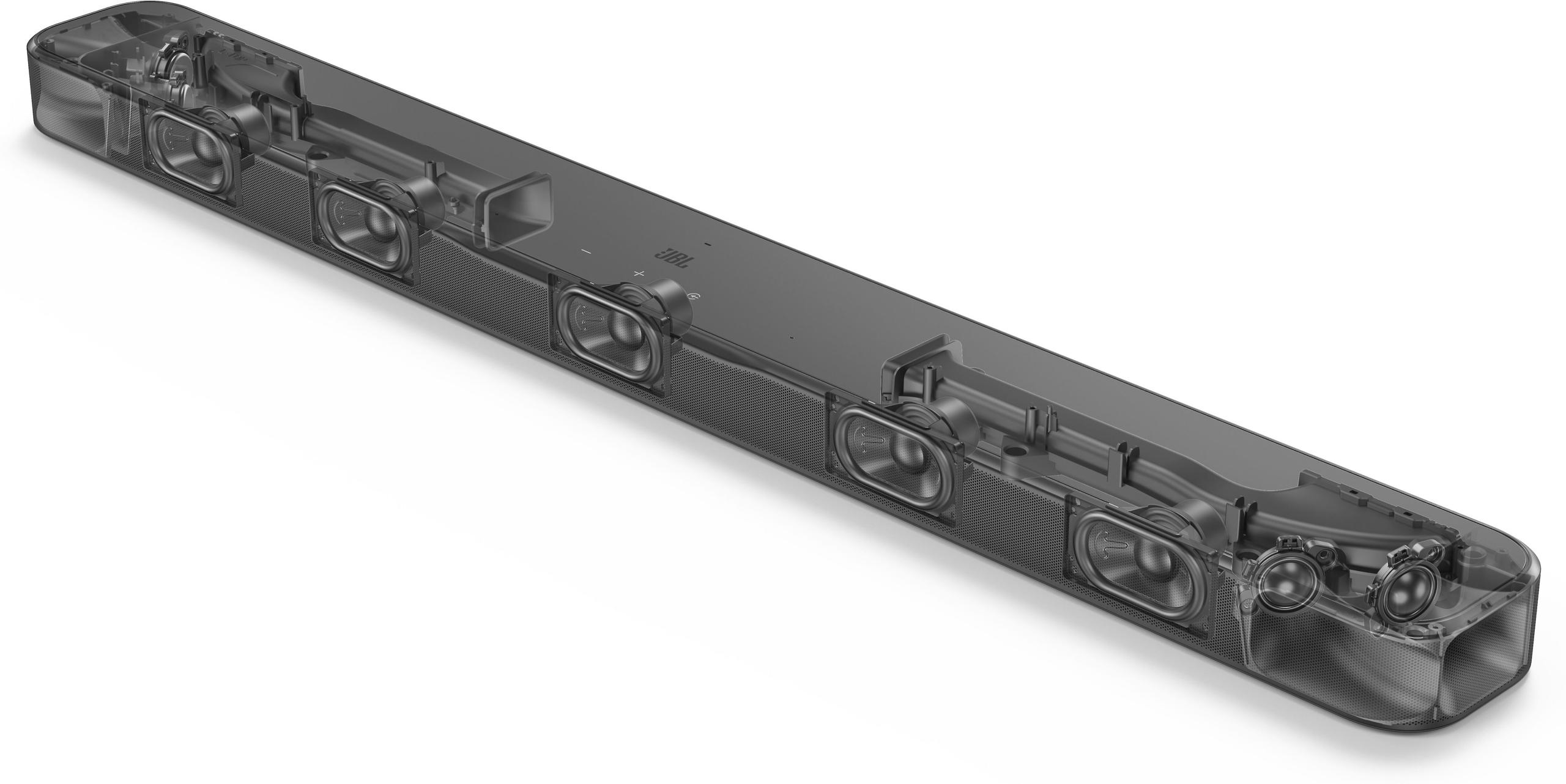
The "5.0" designation means this soundbar creates five distinct audio channels—left, center, right, and two surround channels—without needing a separate subwoofer (which would make it 5.1). JBL achieves this through what they call MultiBeam 3.0 technology, which is essentially sophisticated digital signal processing that bounces sound off your room's walls to create the illusion of speakers placed around you.
Online user reviews consistently praise how well this virtual surround works, especially in typical living rooms with normal wall spacing. The effect won't fool anyone expecting true rear speakers, but it's genuinely impressive for a single-bar solution. Testers found it particularly effective with movie soundtracks that have distinct left-right audio elements, like cars panning across the screen or ambient environmental sounds.
The Dolby Atmos support here is what audio experts call "virtual" Atmos rather than "true" Atmos. True Atmos uses upward-firing speakers that bounce sound off your ceiling to create height effects. The Bar 300 MK2 uses digital processing to simulate those height channels instead. While purists might scoff, our testers found the virtual Atmos surprisingly convincing, especially with content specifically mixed for Atmos like Netflix originals or Disney+ movies.
The processing analyzes incoming audio and redirects certain frequency ranges to create the perception of overhead sound. You'll notice it most with things like helicopter flyovers, rain effects, or overhead dialogue in movies. It's not as dramatic as dedicated height speakers, but it's a clear step up from standard stereo soundbars.
Interestingly, JBL initially shipped the MK2 without DTS:X support, which frustrated some users who had DTS content libraries. However, they announced a software update coming in late 2025 that will add DTS Virtual:X processing—a good example of how modern soundbars can improve after purchase through firmware updates.
Anyone who's ever struggled to hear dialogue clearly while watching TV will appreciate PureVoice 2.0. This JBL technology specifically targets the frequency range where human speech lives (roughly 85Hz to 8kHz) and uses dynamic processing to keep voices clear even when explosions or music are happening simultaneously.
The practical difference is noticeable. Our testers compared the same movie scenes with PureVoice on and off, and consistently found dialogue remained intelligible at lower volume levels with the feature enabled. This is especially valuable if you watch content late at night or in noisy environments where you can't crank up the volume.
The "2.0" version improves on the original PureVoice by adding more sophisticated analysis of the incoming audio signal. It can distinguish between dialogue and background noise more accurately, applying enhancement only when needed rather than constantly processing all audio.
SmartDetails represents HARMAN's (JBL's parent company) attempt to recover audio information that gets lost in compressed streaming formats. Modern streaming services compress audio files to save bandwidth, which can eliminate subtle details like the rustle of leaves, distant footsteps, or the ambient noise that makes movie scenes feel realistic.
This technology analyzes the audio signal and uses predictive algorithms to reconstruct likely missing details based on what's present. It sounds like marketing speak, but reviewers noticed genuine improvements with streaming content, particularly with older movies or shows that weren't originally mastered for modern home viewing.
Gamers especially appreciate SmartDetails because those subtle audio cues—hearing enemies approaching from specific directions or environmental details that provide gameplay information—become more distinct and useful for competitive play.
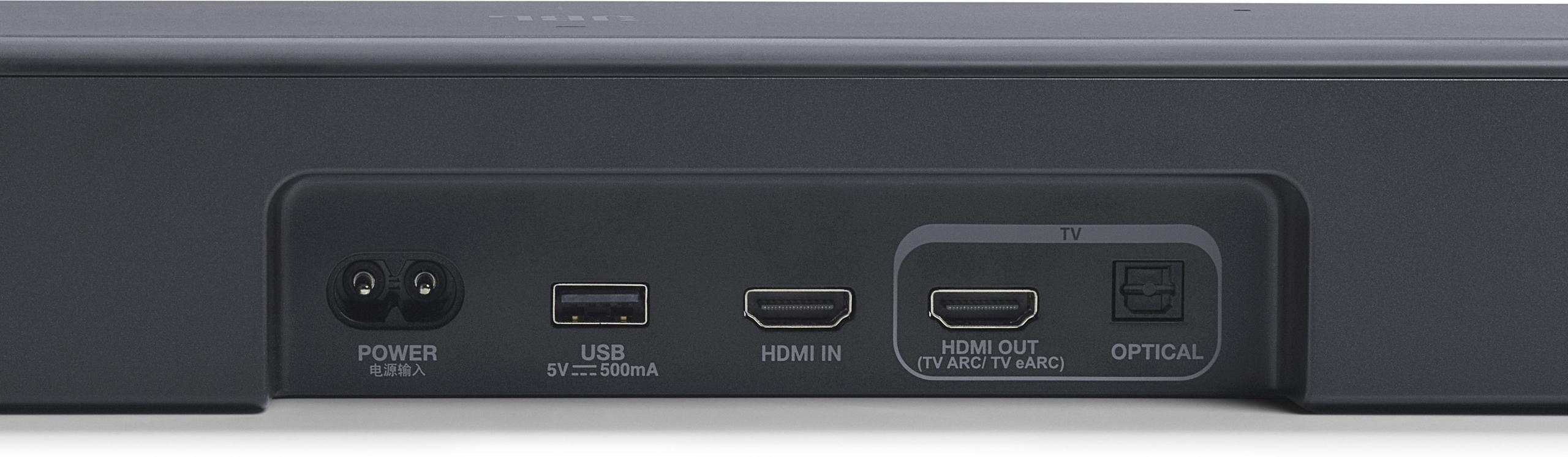
While the Bar 300 MK2 works well as a standalone upgrade, it truly shines in dedicated home theater setups. The HDMI eARC (enhanced Audio Return Channel) connection ensures full-quality Dolby Atmos signals pass through without compression, which is crucial for getting the best possible sound from 4K Blu-ray players or high-end streaming devices.
The 4K Dolby Vision passthrough capability means you can connect multiple devices to your TV and still get both excellent video quality and uncompressed audio. Our testers particularly appreciated this with PlayStation 5 and Xbox Series X gaming, where both video and audio quality matter for the complete experience.
The automatic room calibration feature adapts the sound profile to your specific space. The soundbar emits test tones and uses built-in microphones to analyze how sound reflects in your room, then adjusts its output accordingly. Reviewers found this especially helpful in rooms with unusual shapes or acoustic challenges like high ceilings or lots of hard surfaces.
In actual use, the Bar 300 MK2 delivers on its core promises while showing some expected limitations. The bass response is genuinely impressive for a soundbar without a separate subwoofer—testers could feel impact from movie explosions and music bass lines without the sound becoming muddy or distorted. However, it can't match the deep, room-shaking bass that dedicated subwoofers provide.
The midrange performance occasionally sounds hollow with certain content, particularly complex orchestral music where multiple instruments compete for the same frequency space. This isn't unusual for soundbars in this category, but it's worth noting if classical music or jazz forms a big part of your listening.
One consistent praise from online reviews involves the streaming reliability. Unlike some smart speakers that occasionally drop connections or fail to respond, the Bar 300 MK2's dual-band Wi-Fi and Bluetooth 5.0 provide stable connections across different source devices and services.
The companion app deserves special mention because it transforms how you interact with the soundbar. Beyond basic volume and input control, the app provides detailed EQ customization with preset options for movies, music, news, and night listening. The five-level bass adjustment lets you fine-tune low-end response to match your room and preferences.
User reviews consistently highlight how the app makes the initial setup process nearly foolproof, walking you through connection to your home network, TV pairing, and room calibration in clear steps that don't require technical expertise.
The app also serves as a streaming hub, letting you access multiple music services without switching between different apps on your phone or TV. This integration feels more seamless than many competing products where streaming capabilities feel like afterthoughts.
The Bar 300 MK2 makes the most sense for people who want a significant audio upgrade without the complexity of multiple components. If you're currently using TV speakers and find yourself constantly adjusting volume or missing dialogue, this addresses those core issues effectively.
It's particularly well-suited for apartment dwellers or anyone with space constraints where a separate subwoofer isn't practical. The streaming integration makes it an excellent choice for households that primarily watch Netflix, Disney+, or other streaming services rather than physical media.
However, if you're building a dedicated home theater room where maximum immersion is the goal, you'll eventually want something with separate rear speakers and a proper subwoofer. The Bar 300 MK2 serves as an excellent stepping stone that provides immediate improvement while remaining compatible with future upgrades through its comprehensive connectivity options.
This soundbar represents JBL's understanding of what most people actually need: better dialogue clarity, more impactful bass, and simple setup that doesn't require rewiring your living room. It delivers on those basics while adding enough advanced features to satisfy more demanding users, making it a well-rounded choice in the increasingly crowded soundbar market.
No, the JBL Bar 300 MK2 is an all-in-one soundbar without a separate subwoofer. It uses built-in bass ports and specialized racetrack drivers to produce low-end frequencies. While it delivers surprisingly strong bass for a single unit, it cannot match the deep bass impact of soundbars with dedicated subwoofers.
Yes, the JBL Bar 300 MK2 excels for movie watching with virtual Dolby Atmos support, PureVoice 2.0 dialogue enhancement, and MultiBeam 3.0 surround sound technology. The 450W power output provides plenty of volume for home theater use, and the HDMI eARC connection ensures high-quality audio from your TV or streaming devices.
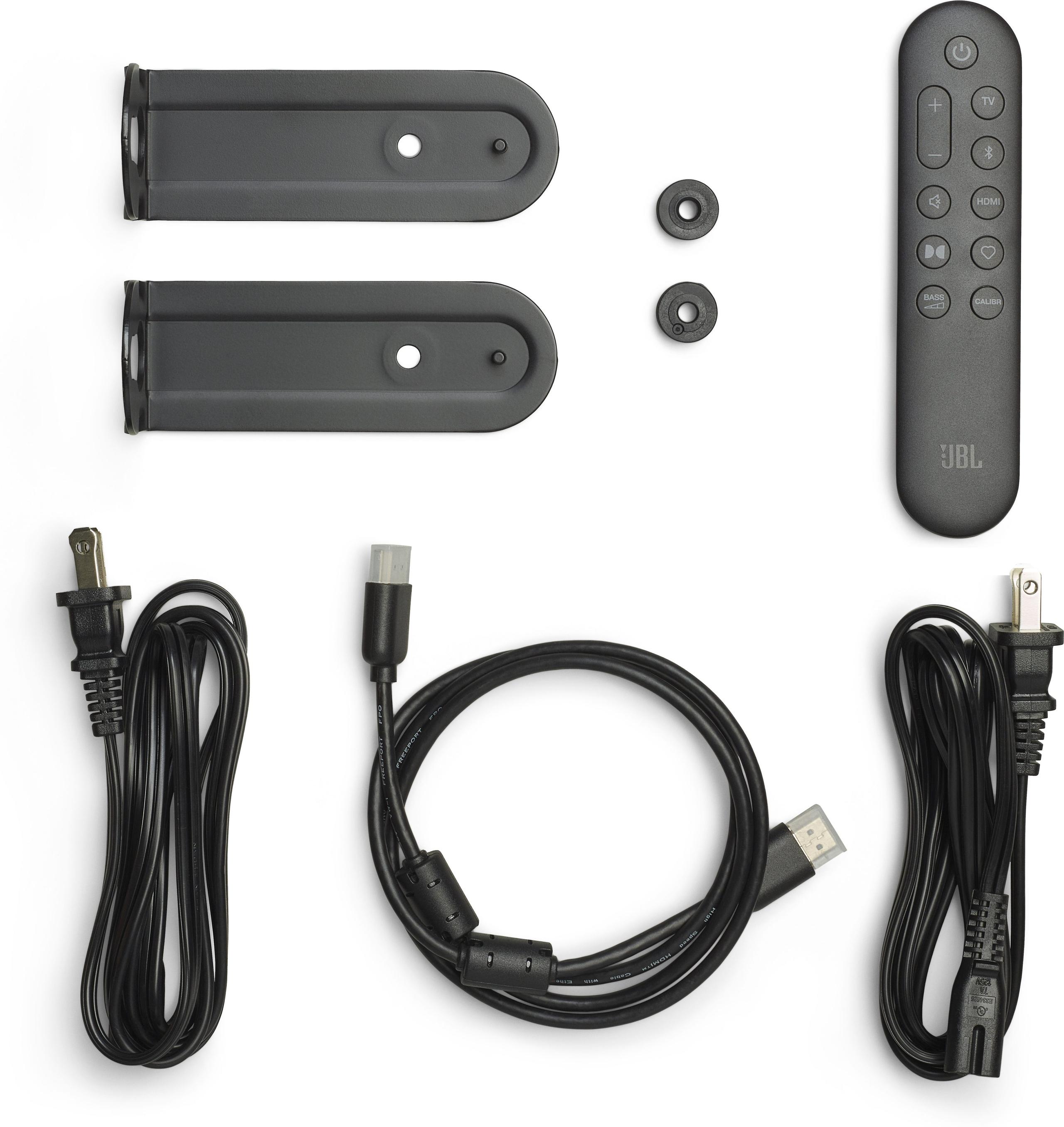
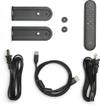
Yes, the JBL Bar 300 MK2 can be wall mounted. At only 5.5 pounds and with a slim 2.2-inch height profile, it's easy to mount below most TVs. The soundbar comes with mounting hardware, and its compact design won't interfere with your TV's remote sensor or block screen content.
Absolutely. The JBL Bar 300 MK2 supports built-in Wi-Fi streaming with AirPlay, Chromecast built-in, and direct app connectivity for Spotify Connect and Tidal Connect. You can stream directly to the soundbar from over 300 streaming services, including Netflix, without needing to go through your TV.
The JBL Bar 300 MK2 works best in small to medium-sized rooms up to about 300 square feet. The MultiBeam technology needs wall reflections to create its surround effect, so it performs well in typical living rooms but may struggle in very large or open-concept spaces without defined walls.
Yes, gaming consoles work excellently with the JBL Bar 300 MK2 through HDMI eARC connection. The soundbar supports 4K passthrough with HDR10 and Dolby Vision, making it perfect for PlayStation 5, Xbox Series X, and Nintendo Switch. The SmartDetails technology also enhances gaming audio cues and environmental sounds.
The JBL Bar 300 MK2 works with Alexa, Google Assistant, and Siri through connected smart speakers or devices. While it doesn't have built-in voice assistants, you can control playback and volume through voice commands when paired with compatible smart home devices.
Setup is straightforward: connect the power cable, use HDMI eARC to your TV, download the JBL One app, and follow the guided setup process. The app handles Wi-Fi connection, room calibration, and optimization automatically. Most users complete setup in under 15 minutes without technical expertise.
No, the JBL Bar 300 MK2 cannot be expanded with additional speakers or a separate subwoofer. It's designed as a complete all-in-one solution. If you want expandable options, you'd need to consider JBL's higher-end models like the Bar 1000 MK2 or Bar 1300 MK2 that include detachable wireless speakers.
Yes, the JBL Bar 300 MK2 offers excellent value for home theater enthusiasts wanting simple setup with advanced features. The combination of virtual Dolby Atmos, clear dialogue enhancement, robust streaming capabilities, and 450W of power provides significant improvement over TV speakers. It's particularly worthwhile if you prioritize ease of use, compact design, and don't need the complexity of separate subwoofers or rear speakers.
We've done our best to create useful and informative comparisons to help you decide what product to buy. Our research has used advanced automated methods to create this comparison and perfection is not possible - please contact us for corrections or questions. These are the sites we've researched in the creation of this article: homecinemachoice.com - retailspecs.com - hometechnologyreview.com - whathifi.com - news.jbl.com - engadget.com - crutchfield.com - harmanaudio.com - techradar.com - bestbuy.com - jbl.com - sweech.co.ke - jbl.com - jbl.com.sg - mm.jbl.com - abcwarehouse.com - harmanaudio.com - sweetwater.com - ro.harmanaudio.com - dell.com - jbl.co.nz
| JBL Bar 300 MK2 Soundbar |
|---|
| Total Power Output - Determines maximum volume and dynamic range: 450W |
| Channel Configuration - More channels create better surround effects: 5.0 (no separate subwoofer) |
| Dolby Atmos Support - Creates virtual 3D audio from overhead: Yes (virtual processing) |
| HDMI eARC - Ensures uncompressed high-quality audio from TV: Yes with 4K passthrough |
| Built-in Streaming - Access music services without extra devices: Wi-Fi, AirPlay, Chromecast, Spotify Connect |
| Voice Assistant Compatibility: Alexa, Google Assistant, Siri |
| Dialogue Enhancement - Keeps speech clear during loud scenes: PureVoice 2.0 technology |
| Room Calibration - Automatically optimizes sound for your space: Yes via app |
| Bluetooth Version - Affects wireless connection stability: 5.0 |
| Dimensions: 32.3" x 2.2" x 4.1" |
| Weight: 5.5 lbs |
| Frequency Response: 50Hz – 20kHz |
| Connectivity Inputs: HDMI eARC, optical, USB Type-A |
| App Control - Customizes EQ and manages all features: JBL One app |
The JBL Bar 1000 MK2 ($1,199) represents JBL's no-compromise approach to home theater audio, delivering features that transform your living room into a genuine cinema experience. Its most compelling advantage is true Dolby Atmos with four physical up-firing drivers that create convincing overhead effects – helicopters genuinely sound like they're flying above you rather than just getting louder. The detachable wireless rear speakers provide authentic surround sound positioning while doubling as portable Bluetooth speakers with 10-hour battery life, offering flexibility that no other soundbar system matches. The 10-inch wireless subwoofer delivers room-shaking bass down to 33Hz, creating the visceral impact that makes action movies genuinely thrilling, while the 960W total power output easily fills large rooms without compression or distortion.
The performance difference becomes immediately apparent when watching movie content or playing immersive games. Where the Bar 300 MK2 creates an impressively wide soundstage, the Bar 1000 MK2 creates a three-dimensional audio bubble that surrounds you from floor to ceiling. The dedicated subwoofer provides bass depth and impact that built-in drivers simply cannot match – explosions don't just sound bigger, they feel more realistic. However, this superior performance comes with meaningful trade-offs: nearly triple the price, significantly more complex setup requiring strategic component placement, and multiple pieces to manage rather than a single elegant bar. For serious home theater enthusiasts with rooms over 200 square feet and budgets that can accommodate the premium, the Bar 1000 MK2 delivers an experience that rivals dedicated AV receiver systems costing thousands more, making it worthwhile for those who prioritize maximum immersion over simplicity.
🤖 Read Detailed Comparison
👌JBL Bar 1000 MK2 Soundbar System Details
💵 See JBL Bar 1000 MK2 Soundbar System Price
The Bose Smart Ultra takes a fundamentally different approach at $599, prioritizing advanced audio processing over the JBL's connectivity-focused design. Where the Bar 300 MK2 uses virtual processing for height effects, the Bose employs physical upward-firing drivers that create genuinely convincing overhead sound placement. Its standout A.I. Dialogue Mode continuously analyzes content and automatically adjusts the tonal balance to keep voices clear without sacrificing the impact of explosions or music – a noticeable step up from traditional dialogue enhancement. The ADAPTiQ room calibration system uses an external microphone to precisely tune the soundbar for your specific room acoustics, delivering more accurate sound than basic auto-calibration systems. Built-in Alexa and Google Assistant with Voice4Video functionality means you can control your entire entertainment system with voice commands, eliminating the need for external smart speakers.
In real-world performance, the Bose Smart Ultra excels in larger rooms where its room-filling capabilities and precise spatial processing become apparent, while the JBL's strengths shine in smaller spaces. The Bose offers superior music reproduction with more natural stereo imaging and less processed sound, making it better suited for critical listening alongside movie watching. However, this premium comes at a 33% price increase over the JBL, and you lose the extra HDMI input that makes the Bar 300 MK2 so practical for gaming setups. The Bose also requires adding their optional subwoofer to match the JBL's impressive built-in bass performance, though it offers the flexibility to expand the system over time. For users with larger rooms, higher audio standards, or plans to build a multi-room system, the Bose justifies its premium through genuinely advanced processing technology and refinement.
🤖 Read Detailed Comparison
👌Bose Smart Ultra Soundbar with Dolby Atmos Details
💵 See Bose Smart Ultra Soundbar with Dolby Atmos Price
The Bose Solo Series 2 ($179.99) takes a fundamentally different approach, prioritizing dialogue clarity and simplicity over the JBL's immersive surround sound features. Its standout strength lies in specialized dialogue enhancement technology that makes voices remarkably clear and intelligible, even during noisy scenes or when background music competes with speech. This makes it exceptional for TV shows, news, and podcasts where vocal clarity matters most. The compact 21.6-inch design fits seamlessly under most TVs without blocking remote sensors, and the plug-and-play optical connection gets you up and running in minutes without any app setup or room calibration complexity.
However, the Bose's 2.0-channel stereo design and 100W power output reveal significant limitations compared to the JBL's capabilities. It lacks the bass impact needed for action movies, cannot process Dolby Atmos content, and offers no smart home integration or streaming features. The absence of HDMI connectivity means you miss out on higher-quality audio from gaming consoles and 4K sources. While the Bose Solo Series 2 delivers excellent value at its $179.99 price point for users primarily watching dialogue-heavy content in smaller rooms, it represents a much more basic solution that prioritizes ease of use over the comprehensive entertainment experience that the JBL Bar 300 MK2 provides. For those wanting significant audio improvement without complexity, the Bose succeeds, but it cannot match the JBL's versatility, power, or future-proof features.
🤖 Read Detailed Comparison
👌Bose Solo Soundbar Series 2 Soundbar Details
💵 See Bose Solo Soundbar Series 2 Soundbar Price
The Samsung B-Series 5.1 at $227.99 takes a fundamentally different approach that prioritizes raw performance over smart features, delivering exceptional value for traditional home theater enthusiasts. Its standout feature is the dedicated wireless subwoofer, which provides significantly deeper bass extension and room-shaking impact that the JBL simply cannot match from its single-unit design. When you're watching action movies or listening to bass-heavy music, the Samsung's subwoofer delivers that chest-thumping low-end that makes explosions feel visceral and music sound full-bodied. The true 5.1 channel separation, with dedicated left, right, center, surround, and subwoofer channels, creates a more traditional surround sound experience that many users find more intuitive and impactful than virtual processing.
Where the Samsung really shines is in its price-to-performance ratio—at nearly half the cost of the JBL Bar 300 MK2, it delivers more physical audio impact for movies and TV. The trade-offs are clear: you lose the smart home integration, Wi-Fi streaming, advanced room calibration, and the convenience of a single-unit setup. The Samsung requires two power outlets, careful subwoofer placement, and relies solely on Bluetooth for wireless connectivity. However, for users who primarily watch movies and TV rather than streaming music, and who value that deep bass response above cutting-edge features, the Samsung B-Series 5.1 represents outstanding value. It's the choice for anyone who wants maximum cinematic impact without paying premium prices for smart features they may not use.
🤖 Read Detailed Comparison
👌Samsung B-Series 5.1 Channel Soundbar with Subwoofer Details
💵 See Samsung B-Series 5.1 Channel Soundbar with Subwoofer Price
The Samsung HW-Q990D takes a fundamentally different approach with its 11.1.4 channel configuration and four-piece design, delivering true surround sound that the JBL simply cannot match. Where the Bar 300 MK2 relies on clever digital processing to create virtual effects, Samsung's system places actual speakers behind you and bounces sound off your ceiling through dedicated up-firing drivers. This translates to genuinely immersive experiences where helicopter sounds move convincingly overhead and ambient effects like rain or crowd noise surround you naturally. The dedicated 8-inch wireless subwoofer provides the kind of deep, room-shaking bass that makes action movies come alive – something the JBL's integrated bass drivers, impressive as they are, cannot replicate. For gaming enthusiasts, the Samsung's 4K/120Hz support, Variable Refresh Rate, and Game Mode Pro features make it a serious contender for next-generation console gaming, while its two HDMI 2.1 inputs eliminate the device switching limitations of the JBL's single connection.
However, this superior performance comes with trade-offs beyond the $300 price difference. The Samsung demands significantly more space and planning, requiring optimal placement of four separate components around your room, and its complexity may overwhelm users who simply want better TV audio without the commitment of a full surround system. While the JBL excels in smaller spaces and offers immediate gratification, the Samsung truly shines in medium to large rooms where its physical speaker separation and 656W of total power can create the kind of cinematic experience that justifies its premium positioning. For buyers with the space, budget, and desire for authentic home theater immersion, the Samsung represents a substantial upgrade in every measurable aspect of audio performance.
🤖 Read Detailed Comparison
👌Samsung HW-Q990D 11.1.4 Channel Sound Bar Details
💵 See Samsung HW-Q990D 11.1.4 Channel Sound Bar Price
The Samsung HW-Q800D takes a fundamentally different approach with its 5.1.2 channel system that includes a dedicated 8-inch wireless subwoofer and physical up-firing speakers for true Dolby Atmos effects. Where the JBL Bar 300 MK2 relies on virtual processing and built-in bass radiators, the Samsung delivers genuine overhead sound placement and room-shaking low-end that you can feel in your chest during action sequences. The 360W total power output and dedicated subwoofer make it significantly more capable in larger rooms, easily filling spaces up to 400 square feet with immersive, theater-quality sound. For movie enthusiasts and gamers, the Samsung's Game Pro mode and precise directional audio provide a clear advantage in competitive scenarios where spatial awareness matters.
However, this superior performance comes with trade-offs that make the JBL's approach more appealing for many users. The Samsung HW-Q800D costs $248 more at $697.99 and requires considerably more setup complexity - you'll need to find optimal placement for the wireless subwoofer, run room calibration, and dedicate additional floor space to the system. While the Samsung excels at movies and gaming, it falls short of the JBL's streaming versatility, lacking support for services like AirPlay 2, Tidal Connect, and Roon Ready that make the Bar 300 MK2 an excellent standalone music speaker. For users in smaller spaces who prioritize simplicity, streaming flexibility, and clear dialogue over maximum bass impact, the JBL's all-in-one design delivers better real-world value despite the Samsung's technical superiority in raw performance metrics.
🤖 Read Detailed Comparison
👌Samsung HW-Q800D 5.1.2 Channel Soundbar Details
💵 See Samsung HW-Q800D 5.1.2 Channel Soundbar Price
The Sony HT-A3000 takes a fundamentally different approach that prioritizes raw audio performance over streaming convenience. Its dual built-in subwoofers deliver significantly more impactful bass than the JBL's bass port design, creating the kind of deep, room-filling low-end that makes action movies genuinely thrilling and music sound fuller. The Sony's 3.1-channel configuration with a dedicated center channel also produces more natural-sounding dialogue, while its Vertical Surround Engine creates noticeably more convincing Dolby Atmos height effects. At $405.95, it costs less than the JBL while delivering superior core audio performance, making it an exceptional value for users who prioritize sound quality above all else.
Where the Sony HT-A3000 truly separates itself is in expandability and long-term value. Unlike the JBL's all-in-one design, the Sony can grow with your needs through optional wireless rear speakers and an additional subwoofer, transforming it into a genuine surround sound system. This flexibility, combined with its ability to effectively fill larger rooms up to 500 square feet, makes it the smarter choice for anyone planning a dedicated home theater setup or those who might want to upgrade their system over time. The trade-off is less sophisticated streaming features and only one HDMI connection, but for users focused on getting the best possible audio experience for their money, the Sony's superior bass performance and expansion potential make it the more compelling long-term investment.
🤖 Read Detailed Comparison
👌Sony HT-A3000 3.1ch Dolby Atmos Soundbar Details
💵 See Sony HT-A3000 3.1ch Dolby Atmos Soundbar Price
The Polk Audio MagniFi Max AX 3.1.2 takes a fundamentally different approach at just $50 more, delivering true Dolby Atmos through physical up-firing drivers and including a dedicated 10-inch wireless subwoofer. This combination creates genuinely immersive overhead effects that make helicopters feel like they're actually flying above you, rather than the JBL's convincing but ultimately virtual height simulation. The Polk's 620W of total power output versus the JBL's 260W becomes immediately apparent in larger rooms, where the system maintains its authority and bass impact without strain. The dedicated subwoofer delivers the kind of chest-thumping low-end that transforms action movies into visceral experiences – something the JBL's built-in drivers simply cannot match despite their impressive performance for a single unit.
Beyond raw performance, the Polk Audio MagniFi Max AX 3.1.2 offers significantly more flexibility and future-proofing. Its three HDMI inputs versus the JBL's single input make it better suited for users with multiple gaming consoles or devices, while support for DTS:X ensures compatibility with premium streaming content that the JBL currently cannot handle. Most importantly, the Polk can expand to a full 7.1.2 system with optional wireless surround speakers, protecting your investment if you later want true rear channel effects. While the JBL excels in simplicity and compact aesthetics, the Polk's additional $50 delivers substantially more capability, genuine bass impact, and room to grow – making it the better value for anyone serious about home theater performance or working with medium to large rooms.
🤖 Read Detailed Comparison
👌Polk Audio MagniFi Max AX 3.1.2 Soundbar Details
💵 See Polk Audio MagniFi Max AX 3.1.2 Soundbar Price
The JBL Bar 300 5.0 remains a compelling alternative that delivers most of the core soundbar experience at a significantly lower price point. Its 260W power output, while less than the MK2's 450W, still provides ample volume and clarity for typical living rooms up to about 200 square feet. The original PureVoice technology effectively enhances dialogue clarity, and the standard MultiBeam processing creates a noticeably wider soundstage compared to TV speakers. For users primarily seeking an affordable upgrade from built-in TV audio, the Bar 300 5.0's performance hits the sweet spot without unnecessary premium features.
From a value perspective, the JBL Bar 300 5.0 often sells for $100-150 less than the MK2, making it an attractive option for budget-conscious buyers who don't need maximum power output. The real-world performance difference between the two models becomes most apparent in larger rooms or at higher volume levels – scenarios that don't apply to many users' typical viewing habits. If you're watching TV at moderate volumes in a standard-sized living room, the Bar 300 5.0 delivers excellent dialogue clarity, decent bass response, and effective virtual surround effects that make movies and shows significantly more engaging than TV speakers alone. The money saved could be better spent on streaming service subscriptions or other home entertainment upgrades.
🤖 Read Detailed Comparison
👌JBL Bar 300 5.0 Soundbar Details
💵 See JBL Bar 300 5.0 Soundbar Price
The JBL Bar 700 ($649) represents a significant step up in performance, delivering a complete 5.1 surround sound experience with a dedicated 10-inch wireless subwoofer and detachable battery-powered rear speakers. With 620W of total power output compared to the Bar 300 MK2's 260W, the difference becomes immediately apparent during action sequences and music playback. The wireless subwoofer provides the deep, room-shaking bass that the Bar 300 MK2 simply cannot reproduce through its built-in drivers, transforming explosions from gentle rumbles into chest-thumping impacts. The detachable rear speakers create authentic surround sound effects rather than relying on virtual processing, placing you directly in the middle of the action during movies like "Top Gun: Maverick" or providing spatial awareness advantages in competitive gaming.
For the $200 premium, the Bar 700 delivers exceptional value by including components that would cost significantly more if purchased separately. The modular design also offers long-term flexibility – you can use just the soundbar and subwoofer for casual viewing, then quickly detach the rear speakers for full surround sound during movie nights. While the Bar 300 MK2 excels in simplicity and works well for smaller rooms, the Bar 700's superior bass extension, true surround sound positioning, and room-filling power make it the clear choice for anyone seeking a genuine home theater upgrade. The performance gap is substantial enough that most buyers will find the modest price increase worthwhile, especially considering this is typically a long-term investment that you'll live with for years.
🤖 Read Detailed Comparison
👌JBL Bar 700 Dolby Atmos 5.1 Soundbar with Subwoofer Details
💵 See JBL Bar 700 Dolby Atmos 5.1 Soundbar with Subwoofer Price
The JBL Bar 1000 ($1,199) represents a completely different approach to home audio, delivering true 7.1.4 surround sound through physical speaker separation rather than virtual processing. Its standout feature is the detachable battery-powered rear speakers that create genuine directional audio – when helicopters fly overhead in movies, you actually hear them move from front to back through real space. The included 10-inch wireless subwoofer extends bass response down to 33Hz compared to the Bar 300 MK2's 50Hz limit, providing the chest-thumping low-end that transforms action movies and music. With 880W total system power versus 260W, it fills larger rooms effortlessly and handles demanding content without strain. The four dedicated up-firing drivers deliver true Dolby Atmos height effects rather than processed simulation, creating that immersive bubble of sound that makes you feel inside the movie rather than just watching it.
While the Bar 1000's $1,199 price point is nearly triple the Bar 300 MK2's cost, it justifies the premium through fundamentally superior performance rather than just louder volume. The detachable speakers double as portable Bluetooth units for outdoor use, the system includes three HDMI inputs for complex setups, and features like Night Listening mode (which mutes the main bar and subwoofer while keeping rear speakers active) add genuine utility. For users with rooms larger than 250 square feet who prioritize immersive home theater experiences over simplicity, the Bar 1000 delivers the kind of spatial audio and bass impact that the Bar 300 MK2's single-unit design simply cannot match, making it a worthwhile long-term investment for serious entertainment enthusiasts.
🤖 Read Detailed Comparison
👌JBL Bar 1000 Surround Sound System with 7.1.4 Channel Soundbar, 10" Wireless Subwoofer, Detachable Rear Speakers, and Dolby Atmo Details
💵 See JBL Bar 1000 Surround Sound System with 7.1.4 Channel Soundbar, 10" Wireless Subwoofer, Detachable Rear Speakers, and Dolby Atmo Price
The Yamaha SR-B30A takes a fundamentally different approach at $254.99, prioritizing integrated bass performance and simplicity over virtual surround effects. Its standout feature is the dual built-in 3-inch subwoofers that deliver immediate, satisfying bass without requiring additional floor space or purchases—something the JBL can't match without an external subwoofer. The Clear Voice technology uses frequency response tuning rather than advanced processing, which often produces more consistent dialogue clarity for everyday TV watching, though it lacks the JBL's sophisticated scene analysis capabilities. With 120W of total power, it's designed for smaller rooms under 200 square feet where its direct sound approach actually works more effectively than the JBL's MultiBeam technology, which needs larger spaces and wall reflections to create its surround effects.
From a value perspective, the Yamaha SR-B30A offers exceptional bang for your buck if your primary goal is improving TV audio quality without complexity. While it can't match the JBL's immersive movie experience or extensive streaming capabilities, it excels at what most people actually need: clearer dialogue and punchier bass for daily viewing. The simpler Bluetooth-only connectivity and basic app control mean fewer things can go wrong, and the integrated subwoofers eliminate the need for future upgrades that could push the JBL's total cost significantly higher. For apartment dwellers, bedroom setups, or anyone who values plug-and-play simplicity over advanced features, the Yamaha delivers professional-quality sound engineering at nearly half the price, making it the smarter choice for users who don't need the JBL's premium capabilities.
🤖 Read Detailed Comparison
👌Yamaha SR-B30A Sound Bar with Built-In Subwoofers Details
💵 See Yamaha SR-B30A Sound Bar with Built-In Subwoofers Price
The Yamaha SR-B40A ($339.95) takes a fundamentally different approach that prioritizes physical bass performance over virtual surround processing. Its dedicated 6.5-inch wireless subwoofer delivers genuinely impactful low-frequency response that the JBL's built-in drivers simply cannot match, providing the kind of chest-thumping bass that transforms action movies and makes music feel more complete. The system's Clear Voice technology effectively enhances dialogue clarity, while its four sound modes (Stereo, Standard, Movie, Game) offer straightforward optimization for different content types. What makes the Yamaha particularly appealing is its plug-and-play simplicity – the subwoofer pairs automatically, and you get immediate, dramatic audio improvement without any calibration or app setup required.
At $110 less than the JBL, the Yamaha SR-B40A represents exceptional value for users who prioritize fundamental audio performance over smart features. While it lacks Wi-Fi connectivity, streaming integration, and Dolby Atmos processing, it excels at the core mission of dramatically improving your TV's sound quality. The physical subwoofer provides bass impact that no single soundbar can replicate, making it the clear choice for movie enthusiasts and music lovers who want maximum audio improvement per dollar spent. For users who primarily use their TV's built-in streaming apps or external devices like Apple TV or Roku, the Yamaha's Bluetooth-only connectivity isn't a significant limitation, and the superior bass performance more than compensates for the missing smart features.
🤖 Read Detailed Comparison
👌Yamaha SR-B40A 2.1-Channel Sound Bar with Wireless Subwoofer Details
💵 See Yamaha SR-B40A 2.1-Channel Sound Bar with Wireless Subwoofer Price
The Bose TV Speaker takes a fundamentally different approach at $199, prioritizing dialogue clarity and simplicity over the JBL's feature-rich experience. Where Bose truly excels is in its dedicated Dialogue Mode, which uses real-time content analysis to enhance speech intelligibility in a way that often surpasses more expensive soundbars. This makes it particularly compelling for users who primarily watch TV shows, news, and dialogue-heavy content where every word matters. The plug-and-play setup requires just a single cable connection, and the reliable Bluetooth connectivity eliminates the Wi-Fi pairing issues that occasionally plague more complex systems. While it lacks Dolby Atmos and virtual surround processing, the Bose delivers exceptionally balanced stereo sound with better midrange warmth for music listening.
From a value perspective, the Bose TV Speaker offers a more flexible upgrade path despite its lower initial cost. The 3.5mm subwoofer output allows expansion with Bose's Bass Module 500 or 700, letting users start simple and add impactful low-end later if desired. This modular approach contrasts sharply with the JBL's all-in-one design limitation. For smaller rooms under 15 feet viewing distance, the Bose's more controlled sound signature often provides better balance without overwhelming the space. While it can't match the JBL's room-filling power or immersive movie experience, it consistently delivers clear, natural sound that makes everyday TV watching more enjoyable without the complexity of apps, calibration, or network dependencies.
🤖 Read Detailed Comparison
👌Bose TV Speaker Soundbar Details
💵 See Bose TV Speaker Soundbar Price
The Sennheiser AMBEO Mini ($695) represents a fundamentally different approach to compact soundbar design, prioritizing audiophile-grade accuracy over mainstream appeal. Its standout feature is Sennheiser's proprietary AMBEO virtualization technology, which creates genuinely convincing 7.1.4 surround effects that make the JBL's virtual processing seem basic by comparison. The AMBEO Mini's four-microphone room calibration system maps your space's acoustics and customizes its processing algorithms specifically for your room, delivering spatial audio precision that can genuinely surprise listeners during Dolby Atmos content. For music reproduction, it operates in a different league entirely, offering reference-quality neutral sound that reveals details and instrument separation the JBL simply cannot match. However, this precision comes at the cost of immediate impact – its bass, while extending deeper to 43Hz, lacks the punch that makes the JBL so immediately satisfying.
The 55% price premium asks you to value technical sophistication over convenience, and the AMBEO Mini demands significantly more setup time and acoustic optimization to reach its potential. Where the JBL excels at making everything sound better with minimal effort, the AMBEO Mini rewards patience with genuinely superior audio performance that can serve double duty as a serious music system. For users who prioritize ease of use and family-friendly operation, the JBL's approach makes more sense. But for those willing to invest in proper setup and who genuinely care about audio accuracy, the AMBEO Mini justifies its premium pricing with performance that approaches what you'd expect from much more expensive multi-component systems. The choice ultimately comes down to whether you want immediately satisfying sound enhancement or are prepared to pay more for reference-quality audio reproduction.
🤖 Read Detailed Comparison
👌Sennheiser AMBEO Soundbar Mini Details
💵 See Sennheiser AMBEO Soundbar Mini Price
The Sony BRAVIA Theater Bar 9 at $538.97 takes a fundamentally different approach with its 13-speaker array and genuine Dolby Atmos implementation through dedicated up-firing drivers. Where the JBL Bar 300 MK2 relies on virtual processing to create height effects, Sony's physical drivers actually bounce sound off your ceiling to create overhead audio that you can precisely locate above your head. The 360 Spatial Sound Mapping technology goes even further, using advanced room modeling to create phantom speakers throughout your space by calculating exact timing and phase relationships. For Sony BRAVIA TV owners, the Acoustic Centre Sync feature uses the TV itself as an additional center speaker, making dialogue appear to come directly from the screen rather than from below it. The Sony also includes HDMI 2.1 connectivity with 4K/120Hz passthrough, VRR, and ALLM support, making it ideal for next-generation gaming consoles.
However, this sophistication comes with trade-offs that make the JBL's simpler approach more appealing for many users. The Sony's spatial effects require larger rooms (400+ square feet) with appropriate ceiling height and reflective surfaces to work properly – in smaller spaces, you're paying for technology you can't fully utilize. While expandable with optional wireless rears and subwoofer, the complete Sony system can cost over $1,100, nearly triple the JBL's price. The Sony also lacks the JBL's specialized dialogue enhancement technology, making the Bar 300 MK2 superior for everyday TV watching where clear speech matters most. Unless you have a large room, own a Sony TV, or plan to build a full surround system, the JBL delivers better real-world performance per dollar spent.
🤖 Read Detailed Comparison
👌Sony BRAVIA Theater Bar 9 Soundbar Details
💵 See Sony BRAVIA Theater Bar 9 Soundbar Price
The Klipsch Flexus Core 200 ($374) takes a fundamentally different approach that prioritizes pure audio performance over streaming convenience. Its standout feature is true Dolby Atmos with physical upfiring speakers that create genuine three-dimensional sound effects, making helicopter flyovers and atmospheric sounds actually seem to come from above rather than relying on digital processing tricks. The dual 4-inch built-in subwoofers deliver significantly more impactful bass that reaches down to 43Hz, providing the kind of visceral punch that makes action sequences feel properly dramatic. Perhaps most importantly, the horn-loaded tweeter produces exceptionally natural dialogue clarity without digital enhancement – voices sound like real people talking rather than processed audio, which is particularly beneficial for users with hearing difficulties or anyone who watches dialogue-heavy content.
From a value perspective, the Klipsch Flexus Core 200 offers superior audio performance for $75 less than the JBL, making it the clear winner for users who prioritize sound quality over smart features. Its modular design provides a genuine upgrade path – you can add wireless subwoofers and surround speakers later using Klipsch's Transport technology, turning your initial investment into a full home theater system over time. While it lacks the JBL's streaming integration and requires more careful positioning for optimal performance, the Klipsch delivers the kind of immersive, room-filling sound that makes movies and music genuinely engaging. For home theater enthusiasts or anyone with a medium to large room, the performance difference is immediately noticeable and worth the trade-off in convenience features.
🤖 Read Detailed Comparison
👌Klipsch Flexus Core 200 3.1.2 Soundbar Details
💵 See Klipsch Flexus Core 200 3.1.2 Soundbar Price
The Klipsch Flexus Core 100 ($228) takes a fundamentally different approach that prioritizes raw audio performance and long-term flexibility over the JBL's virtual processing sophistication. Its standout feature is the dual 4-inch built-in subwoofers that deliver genuinely impactful bass without requiring a separate subwoofer—something the JBL's bass port design simply cannot match. When explosions rumble through your living room or bass lines drop in your favorite music, the Klipsch provides that visceral, chest-thumping impact that makes action movies and music streaming more engaging. The modular design philosophy means you're not locked into a single-bar solution; you can start with excellent 2.1 stereo sound and gradually expand with wireless rear speakers and additional subwoofers as your needs and budget allow.
From a value perspective, the Klipsch Flexus Core 100 is compelling at nearly half the JBL's price while delivering superior bass performance and future expandability. However, this comes with clear trade-offs: no virtual Dolby Atmos processing, limited streaming connectivity (Bluetooth only), and manual-only room adjustment. The Klipsch excels in larger rooms where its powerful drivers can fill the space, and it's particularly appealing for users who prioritize music listening or plan to build toward a full surround system over time. While it lacks the JBL's smart features and dialogue enhancement, it offers a more traditional hi-fi approach that focuses on acoustic performance over digital processing—making it ideal for audio enthusiasts who prefer physical drivers over virtual effects and want the flexibility to upgrade their system piece by piece.
🤖 Read Detailed Comparison
👌Klipsch Flexus Core 100 Soundbar Details
💵 See Klipsch Flexus Core 100 Soundbar Price
The Samsung HW-B550D takes a fundamentally different approach at $177.99, offering a traditional 3.1-channel setup with a dedicated wireless subwoofer that delivers significantly more impactful bass than the JBL's all-in-one design. Where the JBL relies on virtual processing and built-in bass ports, the Samsung provides physical bass extension through its 5-inch subwoofer driver, creating those room-filling, chest-thumping effects that make action movies truly engaging. The dedicated center channel ensures dialogue remains clear and anchored to the screen, while the straightforward DTS Virtual:X processing creates respectable surround effects without the complexity of advanced virtual algorithms. This traditional approach means more predictable performance – you get exactly what you expect from a multi-component soundbar system.
From a value perspective, the Samsung HW-B550D represents exceptional bang for your buck, delivering fundamental audio improvements at less than half the JBL's price. While it lacks the smart streaming features, voice assistant compatibility, and sophisticated app controls of the JBL, it excels at the core mission of dramatically improving your TV's audio. The trade-off is simplicity versus versatility – the Samsung does one job extremely well (enhancing TV audio with satisfying bass) but doesn't offer the streaming convenience or smart home integration that makes the JBL feel like a modern entertainment hub. For users primarily focused on better movie and TV audio rather than whole-home streaming, the Samsung's superior bass performance and budget-friendly price make it compelling, especially considering you'd need to spend significantly more to get comparable physical bass impact from other single-unit soundbars.
🤖 Read Detailed Comparison
👌Samsung HW-B550D 3.1 Channel Sound Bar Details
💵 See Samsung HW-B550D 3.1 Channel Sound Bar Price
The Samsung HW-S700D takes a fundamentally different approach with its 3.1-channel system that includes a dedicated 6-inch wireless subwoofer, delivering significantly more impactful bass performance than the JBL's integrated solution. At $377.99, it costs $72 less while providing superior low-frequency extension that makes action movies and music genuinely immersive—the kind of chest-thumping bass that you feel rather than just hear. The Samsung's ultra-slim soundbar profile pairs beautifully with wall-mounted TVs, and its SpaceFit Sound Pro technology automatically calibrates audio based on your room's acoustics using built-in microphones. For Samsung TV owners, the Q-Symphony feature is a game-changer, allowing the TV's speakers to work in harmony with the soundbar to create a much more convincing surround sound experience than either system could achieve alone.
However, the Samsung's traditional approach comes with trade-offs that favor the JBL in key areas. While the Samsung handles dialogue well through its dedicated center channel, it cannot match the JBL's sophisticated PureVoice 2.0 processing that cuts through chaotic action scenes and background noise. The Samsung also requires subwoofer placement and an additional power connection, making setup more complex than the JBL's plug-and-play simplicity. The streaming feature set is more limited, lacking the extensive service support that makes the JBL appealing for music listening. Ultimately, the Samsung represents better traditional home theater value—more sound hardware for less money—while the JBL offers premium convenience and advanced dialogue processing for users who prioritize simplicity and voice clarity over maximum bass impact.
🤖 Read Detailed Comparison
👌Samsung HW-S700D 3.1 Channel Slim Soundbar Details
💵 See Samsung HW-S700D 3.1 Channel Slim Soundbar Price
The Sony HT-A8000 represents a more performance-focused approach to soundbar design, with its standout 360 Spatial Sound Mapping technology delivering genuinely impressive surround sound immersion from a single bar. Using 11 individual speaker units and sophisticated digital signal processing, it creates convincing phantom speakers that bounce sound off walls and ceilings, resulting in far more engaging movie experiences than typical soundbar virtualization. The Voice Zoom 3 AI technology is particularly noteworthy, intelligently identifying and enhancing dialogue in real-time to ensure conversations remain crystal clear even during explosive action sequences. Perhaps most importantly, the Sony offers meaningful expandability - you can add wireless rear speakers and subwoofers to create a true 7.1.4 surround system, providing a clear upgrade path as your home theater ambitions grow.
Where the Sony HT-A8000 truly shines is in long-term value and pure audio performance. At typical pricing, it costs significantly less than the JBL while delivering superior spatial audio processing and room optimization through its Sound Field Optimization feature. The larger 43-inch form factor houses more sophisticated speaker arrangements that create a wider, more immersive soundstage, though this does require more space than the compact JBL. However, the Sony's streaming capabilities are notably more limited, lacking the comprehensive wireless options and smart home integration that make the JBL so convenient for daily music listening. For users prioritizing home theater performance, dialogue clarity, and the ability to build a complete surround system over time, the Sony HT-A8000 offers better audio quality and superior value, even if it requires sacrificing some streaming convenience and smart features.
🤖 Read Detailed Comparison
👌Sony HT-A8000 BRAVIA Theater Bar 8 Soundbar Details
💵 See Sony HT-A8000 BRAVIA Theater Bar 8 Soundbar Price
The LG S80TR ($496.99) takes a fundamentally different approach with its true 5.1.3 surround sound system, delivering 580W of power across 11 discrete drivers including a wireless subwoofer and physical rear speakers. This configuration creates genuine 360-degree audio immersion that the JBL simply cannot match through virtual processing alone. The dedicated 8-inch subwoofer provides visceral bass impact that you feel in your chest during action scenes, while the physical rear speakers create authentic surround effects where sounds actually move behind your listening position. The upfiring drivers enable true Dolby Atmos height channels rather than simulated overhead effects, making movie watching significantly more engaging. Advanced features like WOW Orchestra (which synchronizes with LG TV speakers) and AI room calibration that automatically optimizes sound for your specific space add considerable value for home theater enthusiasts.
From a value perspective, the LG S80TR offers exceptional bang for your buck at just $47 more than the JBL. You're essentially getting a complete surround sound system with components that would cost $200+ if purchased separately, making it one of the best deals in the soundbar category. While it requires more setup time and room space for optimal speaker placement, the performance gains are substantial – particularly for movie watching where the authentic surround sound creates an immersive experience that transforms your living room into a mini theater. The trade-off is complexity: you'll spend 30-45 minutes positioning speakers and running calibration versus the JBL's 5-minute plug-and-play setup, but most users find the dramatic improvement in audio quality well worth the extra effort.
🤖 Read Detailed Comparison
👌LG S80TR 5.1.3 Channel Soundbar with Dolby Atmos and Rear Speakers Soundbar Details
💵 See LG S80TR 5.1.3 Channel Soundbar with Dolby Atmos and Rear Speakers Soundbar Price
The TCL Q85H Q Class takes a fundamentally different approach at $499.99, delivering a complete 7.1.4-channel surround system with 15 physical speakers spread across a main soundbar, wireless subwoofer, and dedicated rear satellites. Where the JBL Bar 300 MK2 uses clever digital processing to simulate surround effects, the TCL creates genuine spatial audio through actual up-firing drivers that bounce sound off your ceiling and rear speakers that physically position effects behind you. The dedicated 6.5-inch subwoofer provides the kind of room-shaking bass impact that simply isn't possible from the JBL's integrated drivers, making action movies and bass-heavy music significantly more immersive. The TCL's RayDanz acoustic technology and AI Sonic room calibration work together to create what feels like a much larger, more enveloping soundstage than any single-bar solution can achieve.
However, this superior immersion comes with trade-offs that make the JBL's streamlined approach appealing. The TCL Q85H requires positioning three separate components around your room, dealing with wireless connectivity between multiple units, and accepting a much larger physical footprint. While it offers exceptional hardware value for a 7.1.4 system, it lacks the JBL's comprehensive streaming integration and adaptive dialogue processing, instead relying on more traditional center-channel voice reproduction and basic Bluetooth connectivity. For movie enthusiasts with adequate space who prioritize maximum immersion over convenience, the TCL represents remarkable value at just $50 more. But for users seeking the best balance of performance improvement, smart features, and setup simplicity, the JBL's all-in-one approach proves more practical for everyday use.
🤖 Read Detailed Comparison
👌TCL Q85H Q Class 7.1.4 Channel Sound Bar System Details
💵 See TCL Q85H Q Class 7.1.4 Channel Sound Bar System Price
The LG S70TR takes a fundamentally different approach at $299, offering a complete 5.1.1 surround sound system with wireless subwoofer and rear speakers—components that would typically cost significantly more from other manufacturers. Its standout feature is genuine spatial audio through dedicated rear speakers that create authentic surround effects you can't replicate with digital processing alone. The 7-inch wireless subwoofer delivers substantially deeper bass extension than the JBL's integrated design, while the upfiring driver provides real Dolby Atmos height effects by bouncing sound off your ceiling. For LG TV owners, the WOW Orchestra feature synchronizes the TV's built-in speakers with the soundbar to create an even more expansive soundstage, though this integration is limited to compatible LG models.
However, the LG's multi-component design comes with trade-offs that highlight the JBL's strengths. The wireless rear speakers still require power outlets, limiting placement flexibility and creating a more complex setup process that some users find overwhelming. While the LG excels in raw immersion and bass depth for movies and gaming, it can't match the JBL's exceptional dialogue clarity through PureVoice technology or its comprehensive streaming ecosystem compatibility. The LG represents exceptional value for buyers seeking maximum features per dollar and don't mind the setup complexity, but the JBL justifies its higher price through superior convenience, universal compatibility, and consistently clear vocal reproduction that makes it ideal for daily TV viewing rather than just special movie nights.
🤖 Read Detailed Comparison
👌LG S70TR 5.1.1 Channel Soundbar with Dolby Atmos and WOW Orchestra Soundbar Details
💵 See LG S70TR 5.1.1 Channel Soundbar with Dolby Atmos and WOW Orchestra Soundbar Price
The Samsung Q Series 9.1.2 represents a fundamentally different approach to soundbar design, offering a complete 9.1.2-channel system with physical rear speakers, a wireless subwoofer, and dedicated height channels for true Dolby Atmos immersion. At $897.99, it delivers authentic surround sound that the JBL's virtual processing simply cannot match - when a helicopter flies overhead in a movie, you're hearing actual speakers positioned above and behind you rather than clever audio tricks. The dedicated 8-inch subwoofer provides bass extension down to 30Hz, creating the kind of deep, room-shaking low-end that makes action scenes genuinely impactful. Samsung's Q-Symphony technology also allows the soundbar to work in tandem with compatible Samsung TVs, using both the TV's speakers and the soundbar simultaneously for an even wider soundstage.
However, this superior performance comes with significant trade-offs that make the JBL Bar 300 MK2 the better choice for many users. The Samsung system requires extensive setup time, optimal room layout, and nearly double the investment, making it primarily suitable for dedicated home theater enthusiasts with larger rooms and the patience for proper calibration. While the Samsung Q Series 9.1.2 undoubtedly delivers more convincing surround immersion and deeper bass, the JBL's all-in-one simplicity, compact footprint, and $449.95 price point provide exceptional value for the majority of users who simply want dramatically better TV audio without the complexity of a multi-component system. For most living situations and viewing habits, the JBL strikes the ideal balance between performance improvement and practical convenience.
🤖 Read Detailed Comparison
👌Samsung Q Series 9.1.2 Channel Soundbar Details
💵 See Samsung Q Series 9.1.2 Channel Soundbar Price
The LG SC9S takes a fundamentally different approach with its 3.1.3 channel configuration that includes three physical up-firing drivers, creating genuine overhead sound effects rather than relying solely on virtual processing. This hardware advantage becomes immediately apparent when watching Dolby Atmos content – helicopters actually sound like they're flying overhead, and ambient effects like rain or thunder genuinely seem to come from above. The soundbar also includes AI Room Calibration Pro, which uses built-in microphones to analyze your space and automatically optimize frequency response, timing, and volume levels for your specific room acoustics. For gamers, the LG offers advanced features like 4K/120Hz passthrough, Variable Refresh Rate support, and Auto Low Latency Mode that make it compatible with the latest PlayStation 5 and Xbox Series X capabilities.
At $515, the LG SC9S commands a $65 premium over the JBL, but this investment delivers more immersive audio experiences and better future-proofing. The ability to add a wireless subwoofer later provides an upgrade path that the all-in-one JBL cannot match, while the physical Atmos implementation offers convincing spatial audio that virtual processing simply cannot replicate. However, this enhanced performance comes with trade-offs – the LG requires more setup time for calibration, performs best in rooms with proper ceiling height and acoustic properties, and its more neutral sound signature may not emphasize dialogue quite as aggressively as the JBL's PureVoice technology. For users prioritizing maximum immersion and long-term flexibility over plug-and-play simplicity, the LG represents the better investment despite its higher upfront cost.
🤖 Read Detailed Comparison
👌LG SC9S 3.1.3 Channel Dolby Atmos Soundbar Details
💵 See LG SC9S 3.1.3 Channel Dolby Atmos Soundbar Price
The Sonos Beam Gen 2 takes a fundamentally different approach, prioritizing dialogue clarity and ecosystem expandability over standalone bass impact. Its AI-powered speech enhancement technology is genuinely superior to the JBL's PureVoice 2.0, making voices sound more natural and intelligible even during complex movie scenes. The Sonos also excels in music reproduction with a more balanced, warmer sound signature that doesn't emphasize any particular frequency range. While it lacks the JBL's dramatic bass response when used alone, the Beam Gen 2's TruePlay room calibration using an iOS device provides more sophisticated acoustic optimization than the JBL's automatic calibration. The trade-off is connectivity flexibility – the Sonos lacks Bluetooth support and relies entirely on Wi-Fi streaming, which limits quick device pairing but ensures better audio quality.
From a value perspective, the Sonos Beam Gen 2 costs $80 less at $369 but represents the foundation of a modular system rather than a complete solution. If you're content with modest bass and prioritize clear dialogue for TV shows and movies, the Sonos offers excellent standalone value. However, achieving comparable bass impact to the JBL requires adding the $749 Sonos Sub, bringing the total to over $1,100. The Beam Gen 2 makes sense for users who plan to expand gradually, want superior dialogue clarity, or already own other Sonos speakers. For those seeking immediate, complete performance without future investments, the JBL's all-in-one approach delivers more dramatic improvement per dollar spent upfront.
🤖 Read Detailed Comparison
👌Sonos Beam Gen 2 Soundbar Details
💵 See Sonos Beam Gen 2 Soundbar Price
The Sennheiser AMBEO Soundbar Plus takes a markedly different approach at nearly double the price point, prioritizing audiophile-grade sound reproduction and sophisticated processing over the JBL's immediate satisfaction factor. Where the Bar 300 MK2 excels at punchy, movie-optimized sound, the AMBEO Plus delivers studio-monitor precision with its advanced AMBEO 3D virtualization technology that creates genuinely convincing 7.1.4-channel surround sound in properly sized rooms. The Sennheiser's standout feature is its exceptional music performance, supporting lossless streaming through TIDAL Connect and Spotify Connect, plus room calibration that adapts its output to your specific acoustic environment. For serious music listeners who also watch movies, the AMBEO Plus reveals details and spatial information that the JBL simply cannot match.
However, this premium performance comes with significant trade-offs in practicality and value. The Sennheiser AMBEO Plus requires a separate $300+ subwoofer to achieve the bass impact that the JBL delivers out of the box, and its advanced virtualization works best only in smaller rooms under 200 square feet. The 10-minute calibration process, while effective, adds complexity that some users may find frustrating compared to the JBL's plug-and-play simplicity. For most users seeking a substantial upgrade from TV speakers, the Bar 300 MK2's combination of integrated bass, wide room compatibility, and half the total system cost makes it the more practical choice, while the AMBEO Plus serves those willing to pay significantly more for the final margin of audio excellence and expandability.
🤖 Read Detailed Comparison
👌Sennheiser AMBEO Soundbar Plus Home Theater System Details
💵 See Sennheiser AMBEO Soundbar Plus Home Theater System Price
The Sonos Ray takes a fundamentally different approach at $169, positioning itself as an entry point into the premium Sonos ecosystem rather than a complete standalone solution. Its standout feature is exceptional dialogue clarity achieved through carefully tuned acoustic design, making voices pop even without a dedicated center channel. The Ray excels in simplicity with just an optical connection and seamless integration with the Sonos S2 app, offering access to virtually every streaming service and rock-solid wireless performance. For music listening, it delivers a more balanced frequency response that works well across genres, and its compact 22-inch width fits perfectly in smaller spaces where the JBL might feel overwhelming.
However, the Ray's value proposition becomes complex when you consider real-world usage. While the $169 entry price seems attractive, the lack of meaningful bass response means you'll likely want to add the Sonos Sub ($749) for movie watching, bringing your total investment to over $900 – double the JBL's complete system cost. The Ray shines for users who primarily watch dialogue-heavy content like dramas or news, live in smaller apartments, or plan to gradually build a multi-room Sonos system over time. If you're content with excellent dialogue and don't need visceral bass for action movies, the Ray offers a more refined, expandable foundation. But for most users seeking immediate improvement in their home theater experience, the JBL Bar 300 MK2 delivers significantly more performance per dollar with its built-in bass enhancement and virtual surround capabilities.
🤖 Read Detailed Comparison
👌Sonos Ray Soundbar Details
💵 See Sonos Ray Soundbar Price
The LG S95TR ($997) represents a fundamentally different approach to home audio, delivering true 9.1.5 channel surround sound through wireless rear speakers and a dedicated subwoofer. Its standout feature is the industry-unique up-firing center channel that projects dialogue at the appropriate height on screen, creating more natural voice placement than traditional soundbars. The physical rear speakers provide authentic 360-degree immersion that the JBL's virtual processing simply cannot match - during action sequences, you'll experience precise directional audio with bullets whizzing past and explosions genuinely coming from behind you. The wireless subwoofer delivers the kind of chest-thumping bass impact that makes movie explosions and music feel visceral rather than just audible.
However, this premium performance comes with trade-offs that make the JBL more practical for many users. The LG S95TR requires careful placement of multiple wireless components, longer setup time, and costs more than double the JBL's $450 price point. While it excels in large rooms and delivers genuine home theater immersion, it's overkill for casual TV viewing and smaller spaces where the JBL's dialogue-focused optimization and plug-and-play simplicity provide better real-world value. The LG justifies its premium for serious movie enthusiasts and gamers who want authentic surround sound, but the JBL offers a more balanced solution for users prioritizing convenience, dialogue clarity, and broader room compatibility.
🤖 Read Detailed Comparison
👌LG S95TR 9.1.5 Channel Soundbar with Dolby Atmos Soundbar Details
💵 See LG S95TR 9.1.5 Channel Soundbar with Dolby Atmos Soundbar Price
The LG S60TR ($299.99) takes a fundamentally different approach by delivering authentic 5.1 surround sound through physical components rather than virtual processing. Its standout feature is the complete hardware package – a dedicated 220W wireless subwoofer and rear speakers that create true directional audio for $150 less than the JBL's single-unit design. This translates to significantly deeper bass impact during action scenes and genuine surround immersion where sounds actually originate from behind you, rather than relying on room reflections. The AI Sound Pro technology automatically optimizes audio for different content types, while the Clear Voice Pro mode ensures dialogue clarity, though it's not as sophisticated as the JBL's PureVoice 2.0 system.
From a value perspective, the LG S60TR is hard to beat, offering substantially more hardware for significantly less money. The real-world benefits become apparent in larger rooms where the JBL's virtual surround struggles – the LG's physical speaker separation maintains consistent surround effects regardless of seating position or room acoustics. However, this comes with trade-offs: you'll need power outlets for the rear speakers, more complex setup, and you'll miss out on the JBL's advanced streaming features and smart home integration. The LG succeeds by focusing on traditional home theater fundamentals – powerful bass, authentic surround positioning, and reliable performance – making it ideal for users who prioritize immersive movie watching over cutting-edge features.
🤖 Read Detailed Comparison
👌LG S60TR 5.1 Channel Soundbar with Wireless Subwoofer and Rear Speakers Details
💵 See LG S60TR 5.1 Channel Soundbar with Wireless Subwoofer and Rear Speakers Price
The LG S40T 2.1 Channel Soundbar ($136.99) takes a fundamentally different approach by pairing a compact main bar with a dedicated wireless subwoofer, delivering significantly deeper bass response than the JBL's integrated design can achieve. At less than one-third the price, the LG provides exceptional value for users primarily seeking better TV audio, with its AI Sound Pro technology automatically optimizing dialogue and effects based on content type. The wireless subwoofer can be positioned anywhere in your room for optimal bass placement, and the traditional 2.1 setup delivers that physical impact during action scenes and music that many users expect from a proper sound system. Setup is refreshingly simple with a physical remote controlling all functions, making it ideal for users who want significant audio improvement without smartphone apps or complex configuration.
However, the LG S40T represents a more limited, single-purpose solution focused exclusively on TV audio enhancement. While its dedicated subwoofer produces deeper bass than the JBL, it lacks the spatial audio processing, built-in streaming capabilities, and future-proofing features that justify the Bar 300 MK2's higher price. The LG's traditional stereo processing cannot match the JBL's virtual Dolby Atmos for creating an immersive surround sound experience, and its basic connectivity limits it to functioning primarily as a TV accessory rather than a standalone audio system. For budget-conscious buyers who prioritize strong bass and simplicity over advanced features, the LG delivers outstanding value, but users seeking a more sophisticated, future-ready audio solution will find the JBL's premium approach more compelling despite the significant price difference.
🤖 Read Detailed Comparison
👌LG S40T 2.1 Channel Soundbar Details
💵 See LG S40T 2.1 Channel Soundbar Price
The Polk Audio Signa S4 ($299) takes a fundamentally different approach to Dolby Atmos, using physical upfiring drivers that bounce sound off your ceiling to create genuine height effects rather than relying on virtual processing. This hardware-based method delivers more convincing overhead audio when room conditions are right—particularly in spaces with 8-10 foot smooth ceilings. The Signa S4's most significant advantage is its included wireless 5.9-inch subwoofer, which provides the kind of deep, impactful bass that the Bar 300 MK2 simply cannot match through its internal drivers alone. During action movies or bass-heavy music, this dedicated subwoofer delivers the physical impact and room-filling low frequencies that make content truly engaging. The system also features a dedicated center channel driver with VoiceAdjust technology, offering superior dialogue clarity and customization compared to the JBL's phantom center imaging.
However, the Signa S4's $150 lower price comes with notable trade-offs in versatility and modern convenience. Its connectivity is limited to basic Bluetooth 4.2 without the advanced streaming options, app control, or smart home integration that the Bar 300 MK2 provides. The physical Atmos implementation, while more authentic in ideal conditions, becomes less effective in rooms with challenging acoustics—high ceilings, textured surfaces, or irregular layouts can scatter the upfiring effects. For music listening, the Signa S4's 3.1.2 configuration creates a narrower soundstage and less detailed stereo imaging than the JBL's MultiBeam processing can achieve. Ultimately, the Polk Signa S4 represents the better choice for budget-conscious buyers who prioritize cinematic bass impact and authentic Atmos effects for movie watching, while accepting limitations in connectivity and music performance that the Bar 300 MK2 addresses at a premium price point.
🤖 Read Detailed Comparison
👌Polk Audio Signa S4 Dolby Atmos Soundbar with Wireless Subwoofer Details
💵 See Polk Audio Signa S4 Dolby Atmos Soundbar with Wireless Subwoofer Price
The Sony HT-A5000 takes a fundamentally different approach with its 5.1.2 channel configuration and true Dolby Atmos implementation through upward-firing drivers. Where the JBL Bar 300 MK2 relies on virtual processing, the Sony creates genuine overhead sound effects by bouncing audio off your ceiling, delivering a more convincing three-dimensional soundstage for movies and gaming. Its built-in subwoofer produces significantly deeper bass impact – the kind you feel in your chest during action sequences – while its 450W power output easily fills larger rooms without strain. The Sony also offers expandability through optional wireless rear speakers, allowing you to build toward a full 7.1.2 surround system over time.
However, the Sony HT-A5000 currently sells for just $279.99 (down from its original $999.99), making it an exceptional value proposition that's hard to ignore. At nearly half the price of the JBL, you're getting premium home theater features that would typically cost much more. The trade-offs include less sophisticated smart streaming capabilities, older Wi-Fi standards, and dialogue that isn't quite as crystal-clear as the JBL's PureVoice technology. For serious movie watchers or those with larger living spaces, the Sony's combination of true surround sound, expandability, and aggressive pricing makes it the more compelling choice, while the JBL better serves users prioritizing smart features, dialogue clarity, and all-in-one convenience.
🤖 Read Detailed Comparison
👌Sony HT-A5000 5.1.2 Channel Home Theater Soundbar Details
💵 See Sony HT-A5000 5.1.2 Channel Home Theater Soundbar Price
The Yamaha SR-C20A takes a fundamentally different approach with its compact 2.1-channel design that prioritizes immediate bass impact and space efficiency. Its built-in 60W subwoofer with dual passive radiators delivers surprisingly deep low-end response that the JBL Bar 300 MK2 simply can't match without adding a separate subwoofer. At just 23.6 inches wide, it fits perfectly under smaller TVs and in tight spaces where the JBL's 32.3-inch footprint might be overwhelming. The Yamaha's Clear Voice technology excels at dialogue clarity, making it particularly effective for everyday TV watching, news, and shows where speech intelligibility matters most. While it lacks the JBL's sophisticated surround processing, its four preset modes (Stereo, Standard, Movie, Game) provide enough customization for most users without complexity.
From a value perspective, the Yamaha SR-C20A's typical $170 price point makes it remarkably accessible compared to the JBL's $450 cost, delivering the most impactful upgrade – clear dialogue and real bass – that most people notice when moving away from TV speakers. The trade-offs are significant though: no Dolby Atmos, limited streaming connectivity (Bluetooth only), and no expansion options mean you're getting exactly what you pay for with no room to grow. For smaller rooms, casual viewing, or as a secondary system, the Yamaha's focused approach often feels more satisfying than paying triple the price for surround features you might not fully utilize. However, if you're building a proper home theater setup or have a medium to large room, the JBL's advanced processing, higher power output, and immersive soundstage justify the premium pricing for the significantly enhanced cinematic experience it provides.
🤖 Read Detailed Comparison
👌Yamaha SR-C20A Compact Sound Bar with Built-In Subwoofer Details
💵 See Yamaha SR-C20A Compact Sound Bar with Built-In Subwoofer Price
The Polk Audio React Sound Bar with Alexa Built-In ($230) takes a fundamentally different approach, prioritizing smart home integration and affordability over pure audio performance. Its standout feature is full Alexa integration with four far-field microphones, effectively turning your soundbar into an Echo device that can control smart home devices, make calls, and access Alexa's complete skill library. For users heavily invested in Amazon's ecosystem, this integration provides genuine convenience—you can adjust lighting, check weather, or play music across multiple rooms without reaching for additional devices. The React also offers expandability that the JBL lacks, allowing you to add the optional wireless subwoofer and rear speakers to create a true 5.1 system, though this upgrade path pushes the total cost close to the JBL's price point.
However, the audio performance differences are substantial and immediately noticeable. The React's 50W RMS output and basic 2.1 stereo configuration simply can't match the JBL's 260W power and virtual surround processing. During movie scenes with complex audio mixes, the Polk struggles to maintain dialogue clarity while the JBL's PureVoice 2.0 technology keeps voices intelligible even over thunderous soundtracks. The bass response tells a similar story—where the JBL's racetrack drivers and bass port deliver satisfying low-end impact, the React's minimal bass output often requires volume adjustments as scenes transition from quiet dialogue to action sequences. At $230, the React offers reasonable value for users primarily seeking basic TV audio improvement with smart home functionality, but for anyone prioritizing sound quality for movies, music, or gaming, the JBL's superior performance easily justifies its higher price point.
🤖 Read Detailed Comparison
👌Polk Audio React Sound Bar with Alexa Built-In Details
💵 See Polk Audio React Sound Bar with Alexa Built-In Price
The Yamaha YAS-109 ($219.95) takes a fundamentally different approach at less than half the price, prioritizing physical bass performance over virtual surround processing. Its dual built-in 3-inch subwoofer drivers deliver significantly more impactful low-end response than the JBL's processing-dependent bass, making action movies, music, and gaming more viscerally satisfying. The Yamaha also includes built-in Alexa voice control, eliminating the need for separate smart speakers and providing seamless integration with your smart home ecosystem. While it lacks Dolby Atmos support and uses older HDMI ARC connectivity instead of eARC, these limitations may not matter to users who prioritize bass impact and convenience over cutting-edge spatial audio.
In real-world use, the Yamaha represents exceptional value for users seeking straightforward performance improvements without premium pricing. Its more neutral sound signature tends to be less fatiguing during extended listening sessions compared to the JBL's brighter profile, and the physical subwoofers provide consistent bass performance regardless of room acoustics – something the JBL's virtual processing cannot guarantee. The inclusion of a subwoofer output also offers future expandability that the JBL lacks entirely. For budget-conscious buyers who want substantial bass improvement over TV speakers, clear dialogue, and smart features, the Yamaha delivers where it counts most, even if it can't match the JBL's sophisticated surround simulation and modern connectivity features.
🤖 Read Detailed Comparison
👌Yamaha YAS-109 Sound Bar with Built-in Subwoofers and Alexa Details
💵 See Yamaha YAS-109 Sound Bar with Built-in Subwoofers and Alexa Price
The JBL Bar 5.1 Surround ($599.95) takes a fundamentally different approach with its traditional 5.1 configuration, featuring a dedicated 10-inch wireless subwoofer and detachable rear speakers that deliver genuine physical surround sound. Where the Bar 300 MK2 relies on virtual processing, the Bar 5.1 provides actual speakers behind your seating position, creating more precise directional audio for movies and games. The separate subwoofer is the real standout here, extending bass response down to 35Hz compared to the Bar 300 MK2's 50Hz limit – that's the difference between hearing explosions and feeling them resonate through your room. With 550W of total power distributed across multiple components, it fills larger spaces more effectively and delivers the kind of visceral impact that bass enthusiasts crave.
However, this traditional approach comes with trade-offs that favor the Bar 300 MK2 in several key areas. The Bar 5.1 lacks Dolby Atmos support entirely, missing out on the height effects and three-dimensional audio processing that make the newer soundbar feel more immersive despite its compact design. At $150 more expensive, it also represents older technology without smart features like built-in streaming, app control, or software updates. The setup complexity is significantly higher, requiring optimal placement of multiple components rather than the Bar 300 MK2's simple plug-and-play installation. While the Bar 5.1 excels in large rooms where its powerful subwoofer and physical surround speakers can truly shine, the Bar 300 MK2 offers better overall value with its combination of modern features, superior dialogue clarity, and competitive performance in a more user-friendly package.
🤖 Read Detailed Comparison
👌JBL Bar 5.1 Surround Soundbar with Wireless Subwoofer Details
💵 See JBL Bar 5.1 Surround Soundbar with Wireless Subwoofer Price
The Denon Home Sound Bar 550 takes a fundamentally different approach, prioritizing compact design and ecosystem integration over raw power. At $518.50, it delivers just 53W of output through a 4.0-channel configuration, making it better suited for smaller rooms and apartments where the JBL's 450W might be overwhelming. The Denon's standout feature is its seamless HEOS multi-room integration, allowing you to sync music playback with other HEOS speakers throughout your home—something the JBL simply can't match. It also includes built-in Amazon Alexa for direct voice control and supports both Dolby Atmos and DTS:X formats, giving it broader compatibility than the JBL's current offering.
However, the Denon's modular philosophy comes with significant trade-offs in real-world performance. Its passive radiator bass system produces notably weaker low-end impact compared to the JBL's integrated bass ports, requiring a $300-400 wireless subwoofer investment to match the movie-watching experience you get out of the box with the JBL. The single HDMI input also limits connectivity options for users with multiple devices. While the Denon offers superior build quality and the flexibility to expand your system over time, it ultimately costs significantly more to achieve comparable performance levels, making it best suited for users who specifically value its compact footprint, multi-room capabilities, or plan to build a complete HEOS ecosystem rather than those seeking immediate, powerful audio enhancement.
🤖 Read Detailed Comparison
👌Denon Home Sound Bar 550 Soundbar Details
💵 See Denon Home Sound Bar 550 Soundbar Price
The Sennheiser AMBEO Soundbar ($2,000) represents a fundamentally different approach to home audio, prioritizing audiophile-grade performance over value considerations. Where the JBL Bar 300 MK2 uses virtual processing to simulate surround effects, the AMBEO employs 13 individually amplified high-end drivers—including six dedicated woofers and five aluminum tweeters—to create genuine 5.1.4 channel audio with true upfiring speakers for overhead effects. This translates to bass extension down to 30Hz (compared to the JBL's 50Hz limit), delivering those chest-thumping low frequencies that make movie explosions feel visceral rather than just loud. The AMBEO's advanced room calibration system analyzes your space's acoustic signature and adapts accordingly, while its neutral tuning ensures that dialogue, music, and effects all maintain their intended balance even during complex scenes.
In real-world use, the performance gap becomes immediately apparent in larger rooms where the AMBEO's 500W power output can fill spaces that leave the JBL struggling, and the difference in surround immersion is striking—helicopter scenes genuinely sound like they're circling overhead rather than just moving left to right. However, this four-fold price increase demands serious consideration of your priorities and room requirements. The AMBEO makes most sense for users with rooms over 300 square feet, those who plan to keep their soundbar for a decade or more, or anyone who values reference-quality audio reproduction above cost considerations. For most users upgrading from TV speakers, the JBL Bar 300 MK2 delivers the dramatic improvement they're seeking without the premium investment, but the AMBEO represents what's possible when engineering constraints are removed and performance becomes the sole priority.
🤖 Read Detailed Comparison
👌Sennheiser AMBEO Soundbar Details
💵 See Sennheiser AMBEO Soundbar Price
The Klipsch Flexus Core 300 represents a fundamentally different approach to premium soundbar design, prioritizing audiophile-grade performance and expandability over the JBL's compact simplicity. At $1,199, it costs nearly three times more but delivers genuine technological advantages that justify the premium for serious home theater enthusiasts. The standout feature is Dirac Live room correction – the first implementation in any soundbar – which uses professional-grade algorithms and an included calibration microphone to optimize sound specifically for your room's acoustics. This technology, combined with true 5.1.2 Dolby Atmos using physical up-firing drivers rather than virtual processing, creates a significantly more immersive and precise audio experience. The Klipsch also features 13 total drivers including four built-in 4-inch subwoofers and a horn-loaded tweeter that delivers exceptional dialogue clarity, making it capable of filling larger rooms with clean, powerful sound up to 106 dB.
Where the Klipsch truly differentiates itself is in long-term value through modularity – you can expand the system with wireless Flexus Surround 200 speakers and additional subwoofers to create a complete 7.2.2 home theater setup without running cables. This expandability, combined with future-proof HDMI 2.1 connectivity supporting 8K passthrough, makes it a genuine investment piece rather than just an upgrade from TV speakers. While the JBL Bar 300 MK2 excels at delivering solid performance in a plug-and-play package, the Klipsch Flexus Core 300 is designed for users who prioritize ultimate audio quality and want a system that can evolve with their needs. The trade-off is complexity and cost – the Klipsch requires more setup time and a significantly larger budget, but rewards that investment with performance that can genuinely compete with traditional component-based home theater systems.
🤖 Read Detailed Comparison
👌Klipsch Flexus Core 300 Soundbar Details
💵 See Klipsch Flexus Core 300 Soundbar Price
The KEF XIO represents a completely different class of soundbar, delivering audiophile-grade performance that justifies its $2,500 premium through superior engineering and components. Where the Bar 300 MK2 uses virtual processing, the KEF features true 5.1.2 Dolby Atmos with physical up-firing drivers that create genuine three-dimensional soundscapes. Its Uni-Q MX concentric drivers and four P185 force-canceling woofers produce remarkably clean bass extending down to 34Hz—deeper than most dedicated subwoofers—while maintaining the precision and imaging quality you'd expect from high-end stereo speakers. The 820 watts of amplification handles movie dynamics and music crescendos without the compression or brightness that can plague the JBL during complex passages.
In real-world use, the KEF XIO excels where the Bar 300 MK2 shows its limitations: large rooms, critical music listening, and home theater setups demanding reference-quality sound. The KEF's Intelligent Placement Technology automatically calibrates for room acoustics, while its neutral tonal balance and exceptional midrange clarity make dialogue sound natural rather than artificially enhanced. However, this premium performance comes with trade-offs beyond price—the 48-inch width requires a larger TV and sturdier furniture, and the sophisticated features may overwhelm users who simply want better TV sound. For most buyers upgrading from TV speakers, the Bar 300 MK2's practical improvements and plug-and-play simplicity provide better value, but audio enthusiasts willing to invest in long-term satisfaction will find the KEF's superior bass, imaging, and expandability worth the significant premium.
🤖 Read Detailed Comparison
👌KEF XIO Soundbar Details
💵 See KEF XIO Soundbar Price
The JBL Bar 1300X ($1,299.95) represents a completely different approach to home audio, delivering flagship-level performance that transforms your living room into a genuine home theater. Where the Bar 300 MK2 relies on virtual processing, the 1300X employs true 11.1.4-channel surround sound with physical satellite speakers and six up-firing drivers for authentic Dolby Atmos height effects. The inclusion of a massive 12-inch wireless subwoofer extends bass response down to 33Hz – nearly an octave deeper than the 300 MK2 – creating the kind of room-shaking impact that makes action scenes genuinely visceral. With 1,170 watts of total power compared to the 300 MK2's 260 watts, the difference in maximum volume and dynamic range is substantial, particularly important for larger rooms where the 300 MK2 reaches its limits.
The real-world benefits extend beyond raw performance numbers. The JBL Bar 1300X's detachable battery-powered satellites eliminate the usual rear speaker wiring hassles while providing up to 12 hours of portable use as standalone Bluetooth speakers – a clever dual-purpose design that adds significant value. Three HDMI inputs versus the 300 MK2's single input means no more device switching, while the dedicated center channel ensures dialogue remains crystal clear even during the most chaotic movie scenes. However, this premium performance comes with considerable trade-offs in convenience and cost. The 1300X requires careful subwoofer placement, regular satellite charging, and nearly three times the financial investment. For serious home theater enthusiasts with larger rooms and budgets to match, the 1300X delivers transformative audio quality that justifies its complexity and cost. But for users prioritizing simplicity, modern streaming features, and exceptional value, the Bar 300 MK2 offers a more practical path to significantly better TV audio.
🤖 Read Detailed Comparison
👌JBL Bar 1300X Soundbar with Wireless Subwoofer Details
💵 See JBL Bar 1300X Soundbar with Wireless Subwoofer Price
The Yamaha SR-C30A takes a fundamentally different approach at $180, offering a traditional 2.1-channel system with a dedicated 5.1-inch wireless subwoofer that delivers genuine bass impact the JBL simply cannot match. Where the Bar 300 MK2 relies on virtual processing and ports to simulate low-end response, the Yamaha's physical subwoofer moves real air to create the chest-thumping bass you feel during action scenes and music playback. This traditional setup also means simpler connectivity – just plug it in and the subwoofer pairs automatically, without needing app configuration or room calibration. The Yamaha's Clear Voice technology effectively enhances dialogue clarity through straightforward frequency boosting, and its compact design works exceptionally well in smaller rooms where the 90W power output provides plenty of volume without overwhelming the space.
However, the Yamaha SR-C30A makes significant trade-offs to achieve its budget-friendly price point. You lose all the smart streaming features, Dolby Atmos processing, and virtual surround capabilities that make the JBL feel like a premium entertainment hub. The Yamaha is limited to Bluetooth connectivity and basic stereo imaging, making it purely a TV audio upgrade rather than a versatile smart speaker system. For users who simply want dramatically better TV sound with punchy bass and don't need advanced features, the Yamaha delivers exceptional value – you get authentic subwoofer performance for less than half the JBL's price. But if you value the convenience of streaming music directly, want immersive surround sound for movies, or prefer the clean aesthetic of a single unit, the Bar 300 MK2's premium price becomes justified despite its bass limitations.
🤖 Read Detailed Comparison
👌Yamaha SR-C30A Soundbar with Subwoofer Details
💵 See Yamaha SR-C30A Soundbar with Subwoofer Price
The Denon DHT-S517 takes a fundamentally different approach at $302, pairing a compact soundbar with a dedicated wireless subwoofer to deliver authentic bass impact that the JBL simply cannot match. Where the Bar 300 MK2 relies on clever engineering to simulate low-end response, the Denon's separate 5.25" subwoofer produces genuine room-filling bass that you feel in your chest during action sequences. The system also features true Dolby Atmos through physical upward-firing drivers that bounce sound off your ceiling, creating convincing overhead effects rather than the JBL's virtual processing. For movie enthusiasts, this translates to a more immersive home theater experience with explosions that have real weight and aircraft that genuinely sound like they're passing overhead.
However, the Denon DHT-S517 makes significant compromises in convenience and versatility that highlight the JBL's strengths. Setup becomes more complex with two components to position and pair wirelessly, and the lack of built-in streaming means you'll need a connected device for music playback. The Denon also lacks the sophisticated app control and EQ customization that makes the JBL so versatile for different content types. While the Denon delivers superior movie performance at a lower price point, it's clearly optimized for home theater use rather than the all-around versatility that makes the Bar 300 MK2 equally compelling for music listening and daily TV viewing. The choice ultimately comes down to whether you prioritize maximum audio impact per dollar spent or prefer the convenience and streaming integration of a premium all-in-one solution.
🤖 Read Detailed Comparison
👌Denon DHT-S517 Soundbar with Wireless Subwoofer Details
💵 See Denon DHT-S517 Soundbar with Wireless Subwoofer Price
The Sonos Arc Ultra ($949) represents a significant step up in both technology and performance, featuring true 9.1.4 Dolby Atmos with dedicated upward-firing drivers that create genuinely convincing overhead effects. Where the JBL Bar 300 MK2 uses virtual processing to simulate height channels, the Arc Ultra physically bounces sound off your ceiling for precise object placement that makes helicopter flyovers and rainfall feel startlingly realistic. The revolutionary Sound Motion woofer technology delivers noticeably deeper and more controlled bass with better texture—you can actually hear the difference between different types of low-frequency sounds rather than just feeling generic rumble. With 14 drivers compared to the JBL's 6, the Arc Ultra creates a dramatically wider soundstage that fills larger rooms with authority, while Trueplay room calibration automatically optimizes the sound for your specific space using your smartphone's microphone.
However, this premium performance comes at more than double the price, and the Sonos Arc Ultra really shines in medium to large rooms where its advanced driver array and higher power output can stretch their legs. While the JBL excels as a complete, standalone solution, the Arc Ultra is designed as the foundation of an expandable ecosystem—you can add the Sonos Sub and Era 300 rear speakers over time to create a full 7.1.4 surround system. For serious home theater enthusiasts with larger rooms and budgets above $900, the Arc Ultra's superior Dolby Atmos implementation and Sound Motion bass technology provide genuinely better immersion that justifies the premium. But for most users seeking great sound improvement over TV speakers in typical living spaces, the JBL Bar 300 MK2 delivers 80% of the premium experience at half the cost, making it the smarter choice unless you specifically need the Arc Ultra's advanced features and room-filling capabilities.
🤖 Read Detailed Comparison
👌Sonos Arc Ultra Dolby Atmos Soundbar Details
💵 See Sonos Arc Ultra Dolby Atmos Soundbar Price
The Ultimea Skywave F40 takes a fundamentally different approach by delivering authentic multi-speaker surround sound at a fraction of the JBL's price point. Its standout feature is genuine 5.1.2 channel configuration with physical speakers positioned around your listening space—including dedicated rear surrounds and actual up-firing drivers that bounce sound off your ceiling for true Dolby Atmos height effects. The system includes a substantial 6.5-inch subwoofer that extends bass response down to 40-45Hz, providing the deep, tactile low-frequency impact that makes explosions feel visceral and music sound full-bodied. Where the Bar 300 MK2 relies on virtual processing to simulate spatial effects, the Ultimea creates authentic three-dimensional soundscapes where helicopters genuinely fly overhead and ambient sounds emerge from behind your seating position.
However, the Ultimea Skywave F40 demands significantly more setup complexity and living space commitment than the JBL's elegant single-unit design. You'll need to strategically position four separate components, manage subwoofer cable routing, and optimize surround speaker placement for proper imaging—a process that can overwhelm users seeking plug-and-play simplicity. The system also lacks the Bar 300 MK2's sophisticated smart features, offering basic app control and Bluetooth connectivity rather than comprehensive streaming integration or advanced dialogue processing. At a much lower price point, the Ultimea represents exceptional value for home theater enthusiasts willing to manage multi-component setup in exchange for superior spatial audio performance, but it's less suitable for users prioritizing convenience, compact design, or extensive smart home integration.
🤖 Read Detailed Comparison
👌Ultimea Skywave F40 Dolby Atmos Soundbar System Details
💵 See Ultimea Skywave F40 Dolby Atmos Soundbar System Price
The Amazon Fire TV Soundbar Plus offers the most budget-friendly entry point into soundbar ownership, providing a noticeable upgrade over built-in TV speakers at a fraction of the JBL's cost. Its main advantage is simplicity—plug it in, connect one cable, and you immediately get clearer dialogue and more bass than your TV can deliver. The Amazon model includes a built-in subwoofer in its 3.1-channel configuration and offers basic customization through bass, treble, and dialogue adjustments via the included remote. For Fire TV users, it provides seamless integration with unified remote control, and its compact design fits easily into smaller living spaces without overwhelming the room.
However, the performance gap between the Amazon Fire TV Soundbar Plus and the JBL Bar 300 MK2 is substantial enough that the Amazon model often leaves users wanting more within months of purchase. Where the JBL creates immersive surround sound experiences, the Amazon soundbar delivers enhanced stereo that lacks spatial depth and can sound shrill or artificial during complex audio scenes. The Amazon Fire TV Soundbar Plus also misses entirely on modern conveniences—no Wi-Fi streaming, no app control, and surprisingly no integration with Amazon's own Alexa ecosystem despite the branding. While it serves as a basic upgrade for small rooms and tight budgets, users seeking genuine home theater improvement or planning to keep their soundbar for several years will likely find the Amazon model's limitations frustrating compared to the comprehensive audio experience and future-proof features that the JBL provides.
🤖 Read Detailed Comparison
👌Amazon Fire TV Soundbar Plus Details
💵 See Amazon Fire TV Soundbar Plus Price
The Polk Audio Signa S2 takes a traditional but effective approach to soundbar design, centering its performance around a dedicated 5.25-inch wireless subwoofer that delivers genuine low-frequency impact the Bar 300 MK2 simply cannot match. Where the JBL relies on digital processing and internal drivers, the Polk provides visceral, room-shaking bass that you feel in your chest during explosion scenes and thunder effects. This physical bass advantage is immediately noticeable in action movies, gaming, and bass-heavy music genres like hip-hop or electronic music. The system's simplicity is also a strength – no app setup required, no complex configuration menus, just plug-and-play operation with manual VoiceAdjust technology that provides reliable dialogue enhancement once properly configured.
From a value standpoint, the Polk Audio Signa S2 delivers exceptional bang for your buck at roughly half the price of the JBL, making genuine subwoofer performance accessible to budget-conscious buyers. While it lacks the Bar 300 MK2's advanced streaming capabilities, virtual surround processing, and smartphone app control, the Polk focuses on the fundamentals that matter most to many users – clear dialogue and impactful bass. For smaller rooms under 200 square feet or users who primarily watch movies and TV shows rather than streaming music extensively, the Signa S2 provides 80% of the audio improvement at 50% of the cost. The trade-offs become apparent in larger rooms where the JBL's higher power output and advanced processing shine, but for many users, the Polk's straightforward approach and powerful subwoofer deliver everything they need from a soundbar upgrade.
🤖 Read Detailed Comparison
👌Polk Audio Signa S2 Sound Bar with Wireless Subwoofer Details
💵 See Polk Audio Signa S2 Sound Bar with Wireless Subwoofer Price
The Sony BRAVIA Theater Bar 6 offers a more traditional home theater approach with its 3.1.2-channel configuration that includes physical upward-firing drivers and a dedicated wireless subwoofer. Its standout feature is genuine Dolby Atmos performance through actual height channels that bounce sound off your ceiling, creating convincing overhead effects that virtual processing cannot fully replicate. The wireless subwoofer delivers deeper bass extension and more impactful low-frequency performance than any integrated solution can achieve, while the dedicated center channel ensures focused dialogue reproduction. Sony's Clear Voice algorithms and Voice Zoom 3.0 technology (when paired with compatible BRAVIA TVs) provide excellent speech clarity, and the modular design suggests potential for future system expansion. For users prioritizing authentic surround sound and cinematic immersion, the Sony BRAVIA Theater Bar 6 delivers the kind of spatial audio experience that makes action movies and dramatic scenes feel truly enveloping.
In real-world scenarios, the Sony BRAVIA Theater Bar 6 excels in medium to larger rooms where its wireless subwoofer can properly fill the space with bass and the height channels have adequate ceiling space to work effectively. While it requires placement for two components instead of one, the performance benefits are substantial—explosions feel more visceral, musical bass extends deeper, and helicopter flyovers genuinely seem to pass overhead. The value proposition centers on delivering "proper" surround sound at a reasonable price point, offering what would typically require multiple separate components in an integrated package. However, the Sony BRAVIA Theater Bar 6 lacks the comprehensive streaming features and smart home integration that make the JBL so versatile for modern users, focusing instead on pure audio performance for TV and movie content. For those who prioritize traditional home theater excellence over streaming convenience, Sony's approach provides superior spatial audio and bass performance that creates a more convincing cinematic experience.
🤖 Read Detailed Comparison
👌Sony BRAVIA Theater Bar 6 Soundbar Details
💵 See Sony BRAVIA Theater Bar 6 Soundbar Price
The VIZIO 5.1 Soundbar SE takes the traditional multi-component approach that delivers authentic surround sound through physical speaker placement rather than virtual processing. Its standout feature is the inclusion of actual rear surround speakers and a dedicated wireless subwoofer, creating genuine 360-degree audio where sounds literally move between different speakers positioned around your room. This system supports both Dolby Atmos and DTS:X formats, providing broader compatibility with streaming content and 4K Blu-rays than the JBL's virtual Dolby Atmos implementation. The separate 8-inch subwoofer delivers deep, impactful bass that reaches down to 50Hz—the kind of room-shaking low-end that simply cannot be replicated by integrated drivers in a single soundbar cabinet.
In real-world performance, the VIZIO 5.1 SE excels in medium to large rooms where the distributed speaker arrangement creates convincing surround immersion that virtual processing struggles to match completely. While it lacks the JBL's automatic calibration and comprehensive streaming features, it compensates with exceptional value—delivering true 5.1 surround sound at a price point where most competitors offer only virtual surround processing. The trade-off is setup complexity, as you'll need to position the wireless subwoofer and rear speakers strategically around your room, plus the inconvenience of a separately sold remote control. Choose the VIZIO 5.1 SE if you prioritize maximum audio authenticity and bass impact over convenience features, especially if you have the space for proper speaker placement and want the most surround sound performance for your money. However, if you value simplicity and modern smart features over ultimate audio fidelity, the JBL's all-in-one approach makes more practical sense.
🤖 Read Detailed Comparison
👌VIZIO 5.1 Soundbar SE Dolby Atmos Surround System Details
💵 See VIZIO 5.1 Soundbar SE Dolby Atmos Surround System Price
The Sony HT-S2000 prioritizes pure audio performance above all else, delivering remarkably impactful sound through its 3.1 channel design with dual built-in subwoofers. Where the JBL excels at smart features, the Sony dominates in movie impact with bass that you genuinely feel during action sequences and more convincing Dolby Atmos height effects through its Vertical Surround Engine. The dedicated subwoofer amplification and X-Balanced Speaker Units create a visceral listening experience that makes explosions rumble and dialogue pop with clarity from the dedicated center channel. Additionally, the Sony HT-S2000 offers superior expandability, allowing you to add wireless subwoofers and rear speakers to build a complete surround system over time – something the JBL cannot match with its fixed 5.0 configuration.
Most compelling is the Sony's exceptional value proposition, typically selling for significantly less than the JBL while delivering superior audio performance across movies, music, and gaming content. The Sony HT-S2000 supports both Dolby Atmos and DTS:X formats compared to the JBL's Atmos-only approach, and professional reviewers consistently rate its sound quality higher despite the lower price point. While you sacrifice the JBL's streaming convenience and smart home integration, you gain substantially better sound quality per dollar spent. For users who primarily watch content through their TV's apps or connected devices and want maximum audio impact, the Sony HT-S2000 represents the smarter investment with room to grow into a larger system later.
🤖 Read Detailed Comparison
👌Sony HT-S2000 3.1ch Dolby Atmos Soundbar Details
💵 See Sony HT-S2000 3.1ch Dolby Atmos Soundbar Price
The Sonos Ray takes a minimalist approach that prioritizes dialogue clarity and music reproduction over raw power and feature density. Its refined stereo design excels at speech intelligibility without artificial enhancement, making it ideal for dialogue-heavy content where every word matters. The Ray's superior music performance stems from its balanced sound signature and precise stereo imaging, delivering a more natural and spacious presentation that audiophiles appreciate. Its integration with the mature Sonos ecosystem provides seamless multi-room audio capabilities and access to an extensive library of streaming services through one of the industry's best apps.
From a value standpoint, the Sonos Ray offers a different proposition entirely—it's an entry point into a expandable ecosystem that can grow with your needs over time. While it lacks the JBL's immediate power and surround effects, its Trueplay room correction technology provides more sophisticated acoustic optimization, and its compact design works beautifully in smaller spaces where the JBL might overwhelm. For users in apartments, bedrooms, or offices who prioritize clear dialogue and music quality over cinematic impact, the Sonos Ray delivers exceptional performance at a lower entry price. However, buyers should understand that achieving full-range performance comparable to the JBL requires additional Sonos components, potentially making it a more expensive long-term investment for those seeking complete home theater capabilities.
🤖 Read Detailed Comparison
👌Sonos Ray Soundbar Details
💵 See Sonos Ray Soundbar Price
The Amazon Fire TV Soundbar Plus with Subwoofer takes a more traditional approach that prioritizes physical components and expandability. Its biggest advantage is the included wireless subwoofer, which delivers genuine deep bass extension down to around 35Hz—something no all-in-one soundbar can match. This creates the room-shaking impact that makes action movies and bass-heavy music truly immersive. The system's expandable design allows you to add wireless rear speakers for authentic 5.1 surround sound, providing discrete channel separation that virtual processing simply can't replicate. For Fire TV users, the integration runs particularly deep, with audio fine-tuning accessible directly through the TV interface and seamless control via the Fire TV remote. At a lower price point than premium all-in-one units, you're getting substantial physical hardware including a dedicated center channel for dialogue and the flexibility to grow your system over time.
The trade-off is a more basic feature set that reflects its focus on core audio performance rather than smart capabilities. The Amazon Fire TV Soundbar Plus has no built-in streaming, Wi-Fi connectivity, or app control—it's purely an audio device that requires separate sources for content. Setup involves multiple components and cables, making it less elegant than single-unit solutions, though the automatic pairing between components keeps complexity manageable. The sound signature can be somewhat bass-heavy, and the subwoofer occasionally overpowers dialogue during intense scenes, requiring manual adjustment. However, for users who prioritize genuine surround sound expansion, deep bass impact, and don't need built-in streaming features, the Amazon Fire TV Soundbar Plus offers exceptional value by focusing resources on audio hardware rather than smart technology.
🤖 Read Detailed Comparison
👌Amazon Fire TV Soundbar Plus Subwoofer Details
💵 See Amazon Fire TV Soundbar Plus Subwoofer Price
The Amazon Fire TV Soundbar Plus 5.1 Channel System delivers authentic surround sound through its multi-component approach, featuring physical rear speakers that create genuine directional audio effects the JBL system cannot match through virtual processing alone. Its dedicated wireless subwoofer produces significantly deeper, more impactful bass that you feel as much as hear, particularly beneficial for action movies and music with substantial low-end content. The system's true 5.1-channel configuration with discrete satellite speakers provides convincing spatial positioning that makes helicopter flyovers and ambient effects genuinely immersive rather than simulated. For home theater enthusiasts who prioritize cinematic audio experiences, the Fire TV Soundbar Plus offers the kind of surround sound separation and bass depth that transforms movie watching into something approaching a theater experience.
However, the Amazon Fire TV Soundbar Plus comes with significant trade-offs that limit its appeal beyond dedicated movie watching. The system lacks the JBL's comprehensive smart features, offering no built-in streaming, Wi-Fi connectivity, or app control—requiring users to rely entirely on connected devices for content. Its higher audio latency creates lip-sync issues that prove problematic for gaming and some streaming content, while the multi-component setup demands careful placement of rear speakers that many living spaces cannot accommodate effectively. The Fire TV system also costs more while delivering fewer everyday conveniences, making it a specialized choice for users who can justify the premium for authentic surround sound and have the space to implement it properly. Most users seeking an all-around audio upgrade will find the JBL's balance of features, convenience, and performance more practical for daily use.
🤖 Read Detailed Comparison
👌Amazon Fire TV Soundbar Plus 5.1 Channel System Details
💵 See Amazon Fire TV Soundbar Plus 5.1 Channel System Price
The Amazon Fire TV Soundbar excels in two crucial areas: simplicity and value. At roughly a quarter of the JBL's price, it delivers an immediate and noticeable improvement over TV speakers with remarkably straightforward setup—just plug in one HDMI cable and you're done. There's no app configuration, no Wi-Fi setup, and no learning curve. For users who primarily watch TV shows, news, or casual content in smaller rooms, the Fire TV Soundbar's clear dialogue enhancement and balanced stereo sound provide exactly what's needed without any complexity. Its compact 24-inch design also makes it ideal for smaller TVs and secondary rooms like bedrooms or kitchens where the JBL's larger footprint and powerful output would be overkill.
However, the Amazon Fire TV Soundbar's limitations become apparent when compared to the JBL's comprehensive feature set and performance capabilities. With only 40W of power and basic 2.0-channel processing, it simply cannot deliver the room-filling sound, immersive surround effects, or substantial bass that make movies truly engaging. The lack of streaming features means you'll still need separate devices for music, and there's no smartphone app for customization or updates. For budget-conscious buyers or those seeking a simple TV audio upgrade in smaller spaces, the Fire TV Soundbar represents excellent value. But if you have the budget for the JBL and want a soundbar that can handle both serious movie watching and music streaming in a main living area, the performance gap is substantial enough to justify the higher investment.
🤖 Read Detailed Comparison
👌Amazon Fire TV Soundbar Details
💵 See Amazon Fire TV Soundbar Price
The Ultimea Poseidon M60 Boom takes a fundamentally different approach by prioritizing raw audio performance over convenience, delivering authentic 5.1 surround sound through a traditional setup with five discrete drivers in the soundbar plus a dedicated 5.25-inch subwoofer. This system's standout advantage is its ability to produce genuine bass impact that you can feel—the separate subwoofer extends down to 45Hz and uses BassMX technology with up to 18mm driver excursion to create the kind of room-filling, tactile bass response that no single-unit soundbar can match. The physical separation of channels means helicopter flyovers and gunshots have authentic directional movement, while the VoiceMX dialogue enhancement ensures crystal-clear speech even during chaotic action sequences. For home theater enthusiasts seeking maximum audio impact, the Ultimea delivers performance that rivals systems costing significantly more.
However, the Ultimea Poseidon M60 Boom achieves its impressive audio performance by sacrificing the modern conveniences that define premium soundbars. Setup requires running cables to the subwoofer and finding optimal placement for bass response, while connectivity is limited to basic inputs like HDMI eARC and Bluetooth 5.4 without the comprehensive streaming integration that modern households expect. The trade-off is remarkable value—this system delivers true surround sound and dedicated bass performance at a fraction of the JBL's cost, making it compelling for budget-conscious users who prioritize audio quality over smart features. Where the Ultimea excels is in pure performance per dollar, offering the kind of bass depth and surround sound authenticity that transforms movie watching, though users must accept a more traditional setup process and limited streaming capabilities compared to the JBL's premium connected experience.
🤖 Read Detailed Comparison
👌Ultimea Poseidon M60 Boom 5.1 Soundbar Details
💵 See Ultimea Poseidon M60 Boom 5.1 Soundbar Price
The Ultimea Poseidon D50 5.1 delivers true surround sound that the JBL simply cannot match through virtual processing alone, with physical rear speakers creating genuine directional audio and a dedicated 5.25-inch wireless subwoofer producing room-shaking bass that dwarfs what's possible from the Bar 300 MK2's built-in drivers. Its SurroundX™ technology intelligently converts stereo content to full 5.1 surround, while the extensive app control offers 121 preset EQ matrices and independent rear speaker volume adjustment—customization options that put audiophile-level control at your fingertips. For action movies, gaming, and bass-heavy music, the Poseidon's dedicated components create an immersive experience that makes the JBL's virtual effects feel restrained by comparison.
The trade-off is complexity and space requirements that make the Ultimea Poseidon D50 5.1 impractical for many users. Setting up the system requires running 19.6-foot cables to rear speakers positioned 8-12 feet behind your seating, which can be challenging in apartments or rooms where furniture placement is fixed. While the Poseidon typically offers exceptional value by providing true 5.1 components at a fraction of what premium brands charge for similar setups, it lacks the JBL's refined dialogue processing, built-in streaming capabilities, and the convenience of automatic room calibration. The Ultimea represents the better choice for dedicated home theater spaces where maximum audio impact matters more than simplicity, but the JBL's all-in-one approach will satisfy most users who want premium sound without the installation complexity.
🤖 Read Detailed Comparison
👌Ultimea Poseidon D50 5.1 Soundbar Home Theater (2025) Details
💵 See Ultimea Poseidon D50 5.1 Soundbar Home Theater (2025) Price
The Ultimea Aura A40 offers something the JBL Bar 300 MK2 fundamentally cannot: authentic 7.1 channel surround sound through eight physical speakers positioned around your room. This system includes four dedicated surround speakers (two front, two rear) plus a separate 4-inch subwoofer, creating genuine 360-degree sound positioning that no amount of virtual processing can replicate. When helicopters fly overhead in movies or enemies approach from behind in games, you hear them from actual speakers in those locations, delivering surgical precision for directional audio that competitive gamers and action movie enthusiasts particularly appreciate. The Ultimea Aura A40 also provides extensive customization through its app, offering 121 preset EQ matrices, 10-band equalizer controls, and individual surround level adjustments – far more granular control than most soundbars in this price range.
However, these advantages come with significant trade-offs that highlight why the JBL Bar 300 MK2's approach appeals to more users. The Ultimea Aura A40 requires complex setup with speaker positioning and cable management, and user reports consistently describe the sound quality as "tinny" and "metallic" with bass that's present but loose and uncontrolled. The system lacks HDMI connectivity entirely, limiting you to optical and Bluetooth connections that can't access high-resolution audio formats or modern TV features. While the Ultimea Aura A40 delivers on its core promise of authentic surround positioning at a budget-friendly price point, it demands compromises in overall sound refinement, setup complexity, and future compatibility that make it best suited for dedicated home theater rooms or users who specifically prioritize directional accuracy over general audio quality and convenience.
🤖 Read Detailed Comparison
👌Ultimea Aura A40 7.1 Channel Soundbar System Details
💵 See Ultimea Aura A40 7.1 Channel Soundbar System Price
The Samsung Q-Series HW-Q990F represents the pinnacle of soundbar technology with its true 11.1.4-channel system featuring 23 individual speakers distributed across four components. Its standout features include genuine Dolby Atmos with physical up-firing drivers that create authentic overhead effects, a dedicated wireless subwoofer with dual 8-inch drivers delivering deep 32Hz bass extension, and wireless rear speakers that position sound effects behind your listening area for complete surround immersion. The system also offers advanced gaming features with multiple HDMI 2.1 inputs supporting 4K/120Hz pass-through, automatic room calibration through SpaceFit Sound Pro Plus, and Q-Symphony technology that synchronizes with Samsung TVs for enhanced dialogue clarity. This multi-component approach creates a genuine theater-like experience that physically places sounds around and above you rather than relying on processing tricks.
While the Samsung HW-Q990F costs nearly four times more than the JBL, it delivers that final 20% of performance that separates good audio from exceptional cinema-quality sound. The difference is most apparent during action movies where the powerful subwoofer provides visceral bass impact you can feel, and the rear speakers create seamless surround effects as sounds move organically through the space around you. For dedicated home theater enthusiasts with larger rooms and the budget for flagship performance, the Samsung justifies its premium through authentic surround immersion that cannot be replicated by virtual processing. However, this comes with significant trade-offs in complexity, requiring four power outlets, careful component positioning, and substantially more living space—making the Samsung HW-Q990F best suited for users who prioritize ultimate audio performance over convenience and have rooms large enough to accommodate its multi-component design.
🤖 Read Detailed Comparison
👌Samsung Q-Series HW-Q990F Soundbar Details
💵 See Samsung Q-Series HW-Q990F Soundbar Price
The Ultimea Poseidon D70 delivers something the JBL Bar 300 MK2 fundamentally cannot: authentic 7.1 surround sound through eight discrete physical speakers positioned around your room. This creates genuinely directional audio where helicopter sounds actually travel from front to rear speakers, and explosions have precise spatial placement that helps you understand action scene geography. The system's dedicated 6.5-inch wireless subwoofer with BassMX technology produces visceral bass impact that reaches down to 35Hz—significantly deeper and more powerful than what the JBL's integrated bass port can achieve. Perhaps most impressively, the Ultimea's SurroundX processing works with any audio source, applying surround effects to regular TV broadcasts, stereo music, and older content that lacks Dolby Atmos encoding, making every piece of content more immersive.
The value proposition becomes even more compelling when you consider that the Ultimea Poseidon D70 typically costs roughly half the price of the JBL while delivering more speakers, higher power output (410W peak versus the JBL's integrated design), and extensive customization through 121 EQ presets and a 10-band graphic equalizer. However, this performance advantage comes with significant trade-offs in convenience and modern features. The Ultimea requires complex setup with four surround speakers to position and cables to manage, making it impractical for renters or small spaces. It also lacks the JBL's Dolby Atmos support, smart connectivity features, and sophisticated dialogue enhancement. For users who prioritize maximum surround sound authenticity and don't mind the installation complexity, the Ultimea offers exceptional home theater performance per dollar, but the JBL's simplicity and modern format support justify its premium for convenience-focused buyers.
🤖 Read Detailed Comparison
👌Ultimea Poseidon D70 7.1 Channel Soundbar System Details
💵 See Ultimea Poseidon D70 7.1 Channel Soundbar System Price
The Ultimea Aura A40 U2601 represents a completely different philosophy, delivering authentic surround sound through a comprehensive 7.1 system that includes four physical surround speakers and a dedicated subwoofer. Where the JBL relies on digital processing to simulate spatial effects, the Ultimea creates genuine positional audio—when a helicopter passes overhead in a movie, you literally hear it move from speaker to speaker around your room. The dedicated 4-inch subwoofer provides significantly deeper bass extension down to 65Hz, adding real visceral impact to explosions and music that the JBL's integrated drivers simply cannot match. The standout feature is the extensive customization through the ULTIMEA app, offering 121 preset EQ matrices, a 10-band equalizer, and 13 adjustable surround levels that let you fine-tune the system far beyond what most soundbars allow.
In real-world performance, the Ultimea Aura A40 U2601 excels where single-unit soundbars face inherent limitations. Gaming becomes genuinely competitive with precise directional audio cues that can mean the difference between winning and losing in first-person shooters. Movie watching transforms into a theater-like experience with true 360-degree immersion that makes action sequences feel incredibly realistic. The trade-off is setup complexity—you'll need to position and connect six components, manage cables, and dedicate time to proper speaker placement. However, for users willing to invest that effort, the Ultimea offers exceptional value by delivering true surround sound performance at a price point where competitors typically provide only virtual effects. While it lacks the JBL's smart features and premium build quality, the Ultimea's authentic surround experience and powerful bass make it the clear choice for dedicated home theater enthusiasts who prioritize maximum immersion over convenience.
🤖 Read Detailed Comparison
👌Ultimea Aura A40 U2601 Soundbar System Details
💵 See Ultimea Aura A40 U2601 Soundbar System Price
The ULTIMEA Skywave X40 represents a completely different philosophy, delivering true 5.1.2 Dolby Atmos through a comprehensive wireless system that includes discrete rear speakers and a dedicated 6.5-inch subwoofer. Its standout NEURACORE processing engine with 2,000 MIPS of power enables precise sound positioning that places effects exactly where filmmakers intended, while the physical up-firing drivers create genuine overhead sound effects that bounce off your ceiling. The system's 530W peak output across multiple speakers provides room-filling power that maintains clarity even at high volumes, and its GaN amplification technology offers 98% efficiency for distortion-free performance. The dedicated subwoofer reaches down to 35Hz, delivering the kind of tactile bass response that makes action movies truly immersive.
In practical terms, the ULTIMEA Skywave X40 excels for users who prioritize audio performance over convenience and have the space to accommodate multiple components. While setup requires strategic placement of the soundbar, subwoofer, and rear speakers around your room, the wireless connections eliminate cable runs and the result is a true home theater experience that rivals much more expensive systems. The trade-off is complexity—you need adequate room space, multiple power outlets, and the patience to optimize component positioning. However, for movie enthusiasts, gamers who care about directional audio, or anyone building a dedicated entertainment system, the Skywave X40 offers exceptional value by delivering authentic surround sound immersion that single soundbars simply cannot replicate through virtual processing alone.
🤖 Read Detailed Comparison
👌ULTIMEA Skywave X40 5.1.2 Soundbar System Details
💵 See ULTIMEA Skywave X40 5.1.2 Soundbar System Price
The Bose Smart Soundbar 1100 takes a more refined approach to audio performance, with its standout feature being true Dolby Atmos implementation using physical up-firing drivers that create genuine overhead sound effects—a significant step up from the JBL's virtual processing. Its A.I. Dialogue Mode represents the most sophisticated speech enhancement technology available in this category, using real-time artificial intelligence to maintain crystal-clear dialogue even during explosive action sequences without making the overall sound feel unnatural. The Bose also excels in spatial audio through its proprietary PhaseGuide technology, which creates precise sound placement and a holographic soundstage that extends well beyond the soundbar's physical boundaries. Built-in Amazon Alexa with Voice4Video functionality adds genuine smart home integration, allowing direct control of TV functions and connected devices through voice commands.
From a long-term value perspective, the Bose Smart Soundbar 1100 offers something the JBL Bar 300 MK2 cannot: true expandability. While it may seem like a limitation that the Bose requires a separate Bass Module for deep bass, this modular approach allows users to start with excellent dialogue and spatial performance, then add components as budget and needs dictate. The system can grow into a full 5.1.2 setup with optional surround speakers, and even supports Personal Surround Sound through Bose Ultra Open Earbuds for private listening. The trade-off is immediate impact—the Bose sounds more restrained and balanced out of the box compared to the JBL's energetic, bass-heavy presentation, and its conservative power output won't fill larger rooms as effectively. However, for users who prioritize audio accuracy, dialogue clarity, and the ability to build a premium home theater system over time, the Bose Smart Soundbar 1100 justifies its higher price through superior engineering and expansion potential.
🤖 Read Detailed Comparison
👌Bose Smart Soundbar 1100 Details
💵 See Bose Smart Soundbar 1100 Price
The Devialet Dione operates in an entirely different performance tier, showcasing what's possible when engineering constraints and cost considerations are largely removed from the equation. Its 17-driver array includes eight dedicated subwoofers that deliver genuine 24Hz bass extension—deeper than many standalone subwoofers—while the rotating ORB center channel and Advanced Dimensional Experience processing create true 5.1.2 surround sound that can genuinely fool listeners into thinking they have speakers positioned around the room. The acoustic precision is immediately apparent in everything from dialogue placement to the way explosions maintain their impact without overwhelming midrange detail, thanks to technologies like SAM (Speaker Active Matching) that actively correct driver behavior in real-time. For serious music listening, the Devialet Dione switches into audiophile territory with neutral tuning and stereo imaging that rivals dedicated hi-fi speakers.
However, the Devialet Dione's ultra-premium positioning creates practical barriers that extend beyond its substantially higher cost. Its four-foot width and 26.5-pound weight demand either a very large TV stand or professional wall mounting, while the app-only control system lacks the everyday convenience of a physical remote. The performance gap is undeniably real—the Devialet Dione delivers bass authority, surround precision, and overall fidelity that the JBL simply cannot match—but it represents a luxury purchase for audio enthusiasts rather than a practical upgrade for most viewers. Unless you're specifically seeking reference-level performance and have both the budget and room setup to fully utilize its capabilities, the Devialet Dione's superior sound quality comes at the expense of the accessibility and value proposition that make soundbars appealing in the first place.
🤖 Read Detailed Comparison
👌Devialet Dione Soundbar Details
💵 See Devialet Dione Soundbar Price
The Sony HT-A9M2 represents a completely different philosophy, delivering true home theater immersion through four separate wireless speakers that create genuine 360-degree surround sound. Its standout 360 Spatial Sound Mapping technology uses room reflections and precise timing to generate "phantom speakers" throughout your space, creating an enveloping audio bubble that makes you forget you're listening to a home system. Each speaker contains four dedicated drivers including upward-firing units for authentic Dolby Atmos height effects, while the system's HDMI 2.1 support future-proofs your setup with 4K/120Hz gaming capabilities and advanced features like Variable Refresh Rate. When paired with Sony BRAVIA TVs, the Acoustic Center Sync feature uses your TV as an additional center speaker, anchoring dialogue directly to the screen in a way that feels remarkably natural.
While the Sony HT-A9M2 costs roughly six times more than the JBL and requires significantly more setup complexity, it delivers an experience that approaches dedicated component systems costing even more. The distributed bass from four speakers provides more controlled low-end response, and the expandability with Sony's wireless subwoofers and additional components offers a clear upgrade path for serious enthusiasts. However, this premium system demands a larger room (400+ square feet) and optimal placement to justify its cost—in smaller spaces, you're paying for capabilities you can't fully utilize. The Sony HT-A9M2 is designed for users who want to transform their entire listening experience rather than simply upgrade it, making it the choice for those with the space, budget, and desire for true surround immersion over the practical convenience that the JBL provides.
🤖 Read Detailed Comparison
👌Sony HT-A9M2 BRAVIA Theater Quad 4.0.4-Channel Home Theater System Details
💵 See Sony HT-A9M2 BRAVIA Theater Quad 4.0.4-Channel Home Theater System Price
The Samsung HW-B630F delivers a more traditional home theater experience with its genuine 3.1-channel configuration that includes a dedicated wireless subwoofer, providing substantially more bass impact than any single-unit design can achieve. Its 6-inch subwoofer in a bass-reflex enclosure produces the kind of deep, room-shaking low frequencies that make action movies and gaming truly immersive – you'll feel explosions in your chest rather than just hearing them. The system excels at creating a wide, natural soundstage with excellent left-right separation, while the dedicated center channel ensures dialogue remains anchored to the screen. For gaming enthusiasts, the Samsung's dedicated Game Mode with cross-talk cancellation provides a clear advantage for positional audio cues, and Samsung TV owners benefit from seamless One Remote Control integration that eliminates the need for multiple remotes.
The key tradeoff is that the Samsung HW-B630F sacrifices modern convenience features for raw performance and exceptional value. While it lacks the JBL's sophisticated streaming capabilities and advanced dialogue processing, it typically costs significantly less while including that crucial wireless subwoofer – a component that would cost over $100 as a separate purchase from most brands. The two-piece design requires more space and thoughtful subwoofer placement, but this separation allows for acoustic optimization that no all-in-one design can match. For users who prioritize visceral bass impact, gaming performance, and maximum value over smart features and streaming convenience, the Samsung represents a more traditional but highly effective approach to soundbar design that delivers genuine home theater excitement at an accessible price point.
🤖 Read Detailed Comparison
👌Samsung HW-B630F B-Series 3.1ch Soundbar System Details
💵 See Samsung HW-B630F B-Series 3.1ch Soundbar System Price
The Hisense HT Saturn HTSATURN represents a completely different philosophy, delivering true wireless home theater performance through five separate components that create genuine surround sound rather than virtual processing. Its standout achievement is providing authentic 4.1.2 channel audio with four satellite speakers positioned around your room, a dedicated 6.5-inch wireless subwoofer, and actual up-firing drivers for Dolby Atmos height effects. This distributed approach means helicopters genuinely sound like they're flying overhead, footsteps move convincingly from behind you to the front, and bass extends down to 40Hz with room-shaking impact that the Bar 300 MK2 simply cannot match. The system's Devialet tuning brings high-end acoustic engineering typically found in audiophile equipment, while Hi-Concerto technology can integrate with Hisense TVs to use their speakers as additional channels, effectively expanding the soundstage even further.
The performance advantages come with significantly higher complexity and cost—approximately four times the Bar 300 MK2's price point at the time of writing. The Hisense HT Saturn requires strategic placement of four satellite speakers throughout your room, each needing power outlets, though wireless connections eliminate cable runs. Setup involves more planning and room consideration, but the payoff is transformative for serious movie watching and gaming where spatial audio accuracy matters. While the Bar 300 MK2 excels at improving TV sound with minimal fuss, the HT Saturn delivers an entirely different tier of immersion that approaches dedicated home theater receiver systems. For larger rooms, frequent action movie viewing, or users willing to invest setup time for maximum audio performance, the HT Saturn justifies its premium positioning by providing experiences that virtual processing simply cannot replicate, making it feel less like a soundbar upgrade and more like a complete entertainment transformation.
🤖 Read Detailed Comparison
👌Hisense HT Saturn HTSATURN 4.1.2Ch Sound Bar System Details
💵 See Hisense HT Saturn HTSATURN 4.1.2Ch Sound Bar System Price
The Hisense AX5140Q takes a fundamentally different approach with its true 5.1.4 multi-component system that delivers authentic surround sound through physical speaker placement. Its standout feature is genuine Dolby Atmos with four dedicated upfiring drivers—two in the main bar and two in the wireless rear speakers—that create convincing overhead effects by bouncing sound off your ceiling. The dedicated 6.5-inch wireless subwoofer provides substantially deeper bass extension down to 30Hz, delivering the kind of room-shaking impact during action sequences that no single-unit soundbar can match. When properly positioned, the discrete rear speakers create true 360-degree immersion where effects genuinely seem to move around and behind you, rather than appearing to emanate from a single front location.
While the Hisense AX5140Q requires more complex setup with multiple component placement, it delivers the kind of authentic home theater experience that virtual processing cannot replicate. The wireless architecture eliminates cable runs while maintaining true surround separation, and the 600W power distribution across dedicated drivers produces cleaner sound at higher volumes compared to asking a few drivers to handle everything. At similar pricing, the Hisense AX5140Q offers remarkable value for those wanting genuine surround performance—you get true 5.1.4 Atmos with dedicated subwoofer that would typically cost significantly more from established brands. The trade-off is setup complexity and space requirements, but for larger rooms and movie-focused viewing, the authentic spatial audio and deep bass impact justify the additional effort.
🤖 Read Detailed Comparison
👌Hisense AX5140Q 5.1.4Ch Dolby Atmos DTS:X Sound Bar Details
💵 See Hisense AX5140Q 5.1.4Ch Dolby Atmos DTS:X Sound Bar Price
The Samsung HW-C450 takes the traditional approach with a dedicated 2.1-channel system that includes a separate wireless subwoofer, delivering significantly more bass impact than what's possible from an all-in-one design. Its standout feature is that 6-inch subwoofer which produces deep, room-filling bass that makes action movies and gaming feel genuinely exciting—something you'll immediately notice during explosions, gunfire, or bass-heavy music. The simplicity is also a major selling point, with straightforward optical connectivity, basic but effective DTS Virtual:X processing, and specialized gaming features like Game Mode that optimizes audio cues for competitive play. The Voice Enhance technology effectively brings dialogue forward in the mix, and the Samsung ecosystem integration works seamlessly if you own a compatible TV.
In practical use, the Samsung HW-C450 shines where raw audio impact matters most and offers compelling value for users who don't need advanced streaming features. While it lacks the sophisticated surround processing and modern connectivity of the JBL, its dedicated subwoofer creates a more visceral movie-watching and gaming experience that many users find more satisfying than tighter but less impactful integrated bass. The straightforward setup appeals to users who want better sound without dealing with app configuration or streaming service integration—you connect one cable and you're done. However, the lack of HDMI connectivity, limited wireless streaming options, and narrower soundstage from just two main channels show its age compared to more modern designs, making it best suited for users who prioritize bass performance and value over cutting-edge features.
🤖 Read Detailed Comparison
👌Samsung HW-C450 2.1ch Soundbar Details
💵 See Samsung HW-C450 2.1ch Soundbar Price
The Hisense HS2100 delivers exceptional bass performance through its dedicated wireless subwoofer that the Bar 300 MK2 simply cannot match with its all-in-one design. That separate 5.25-inch driver provides genuine low-frequency extension and chest-thumping impact that makes action movies and bass-heavy music significantly more engaging. At a fraction of the Bar 300 MK2's price, the HS2100 offers remarkable value for buyers primarily seeking to upgrade from weak TV speakers, delivering room-filling 240W sound with surprisingly clear dialogue reproduction through its balanced midrange drivers. The system also includes practical features like USB playback, 3.5mm auxiliary input, and Roku TV Ready certification that provide useful connectivity options missing from many budget competitors.
However, the Hisense HS2100 shows its limitations in areas where the Bar 300 MK2 excels – dialogue enhancement, surround processing, and smart features. While the HS2100's bass advantage is immediately noticeable, its basic DTS Virtual:X processing and stereo downmixing can't create the convincing spatial effects or dialogue clarity that modern streaming content demands. The lack of built-in streaming, smartphone app control, and advanced audio processing means you're getting raw sound performance without the refinement and convenience features that justify higher-end pricing. For budget-conscious buyers who prioritize impactful bass over technological sophistication, or those with smaller rooms where the HS2100's 240W output is adequate, the Hisense represents outstanding value. But users who watch dialogue-heavy content, want seamless smart home integration, or need to fill larger spaces will find the Bar 300 MK2's premium features worth the additional investment.
🤖 Read Detailed Comparison
👌Hisense HS2100 2.1 Channel 240W Soundbar System Details
💵 See Hisense HS2100 2.1 Channel 240W Soundbar System Price
Original price was: $499.99.$369.99Current price is: $369.99.
Original price was: $579.99.$318.99Current price is: $318.99.


Privacy Policy
Terms and Conditions - Affiliate Policy
Home Security
© Copyright 2008-2026.
11816 Inwood Rd #1211, Dallas, TX 75244