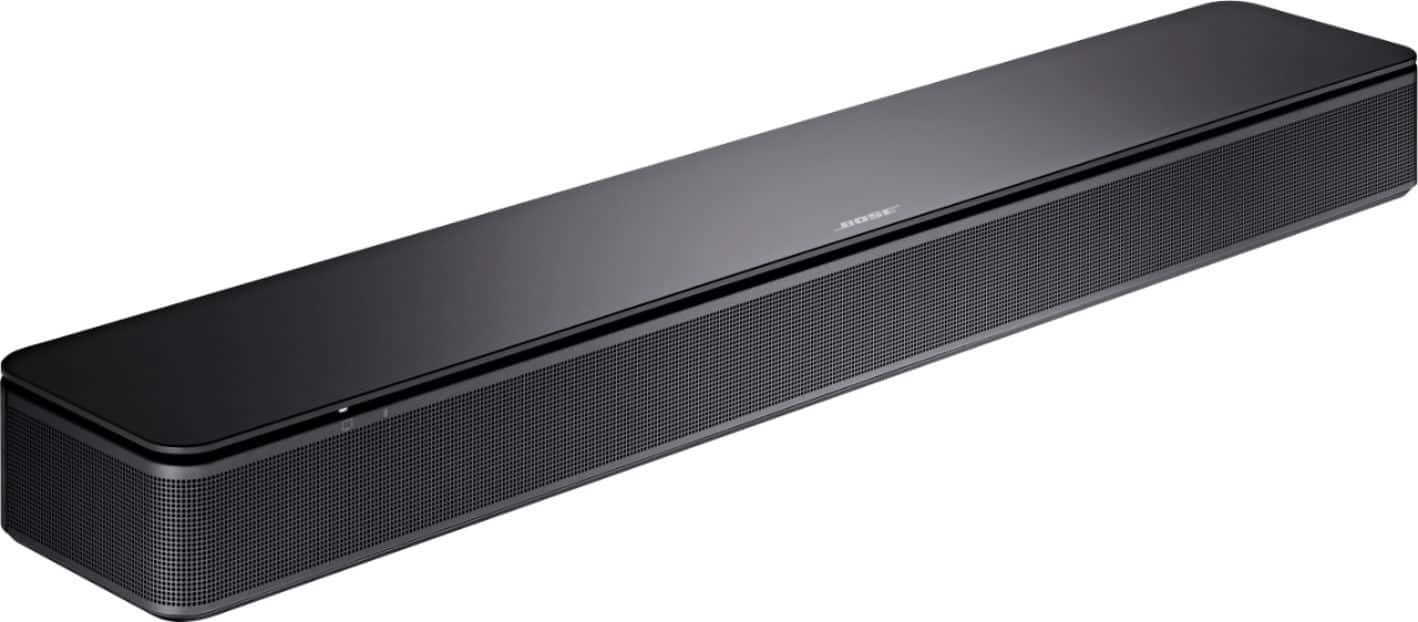
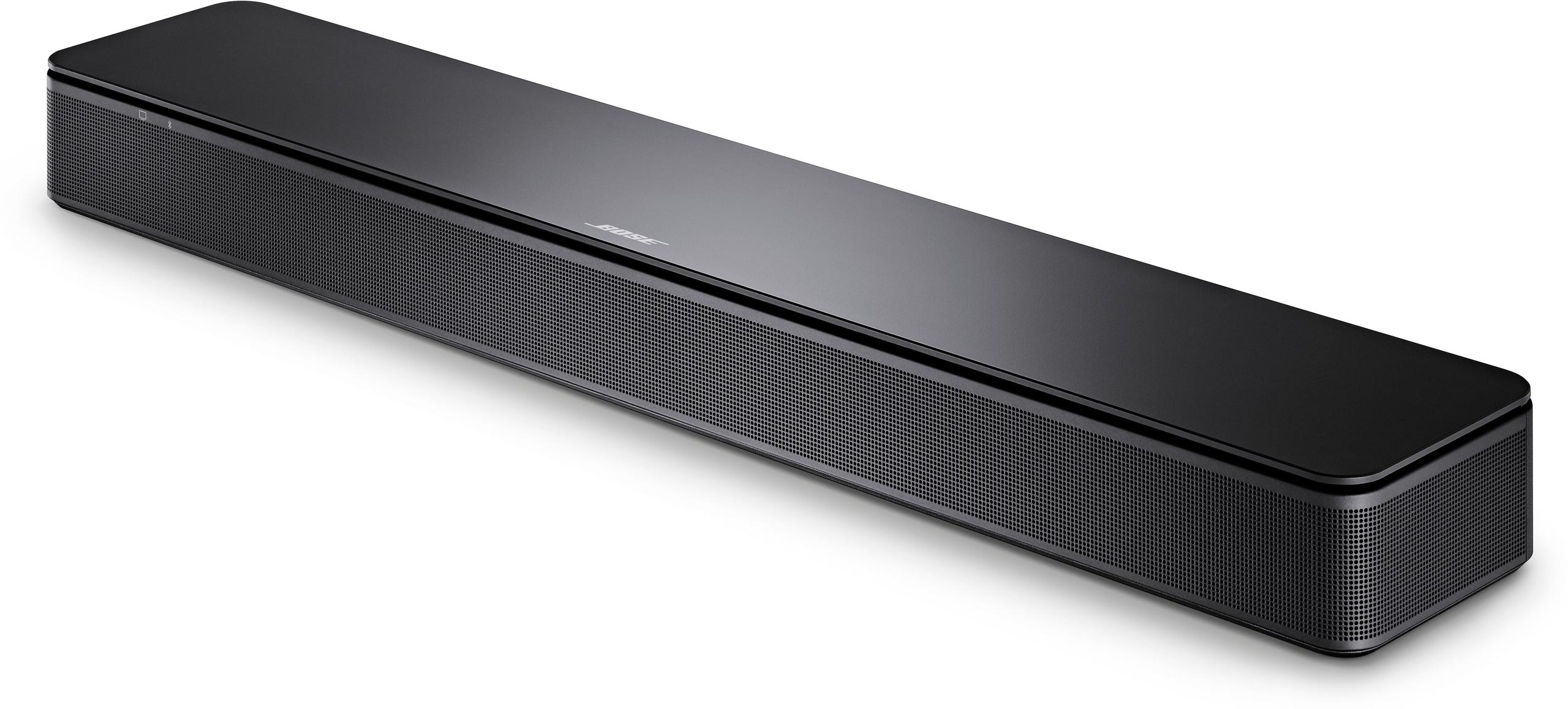
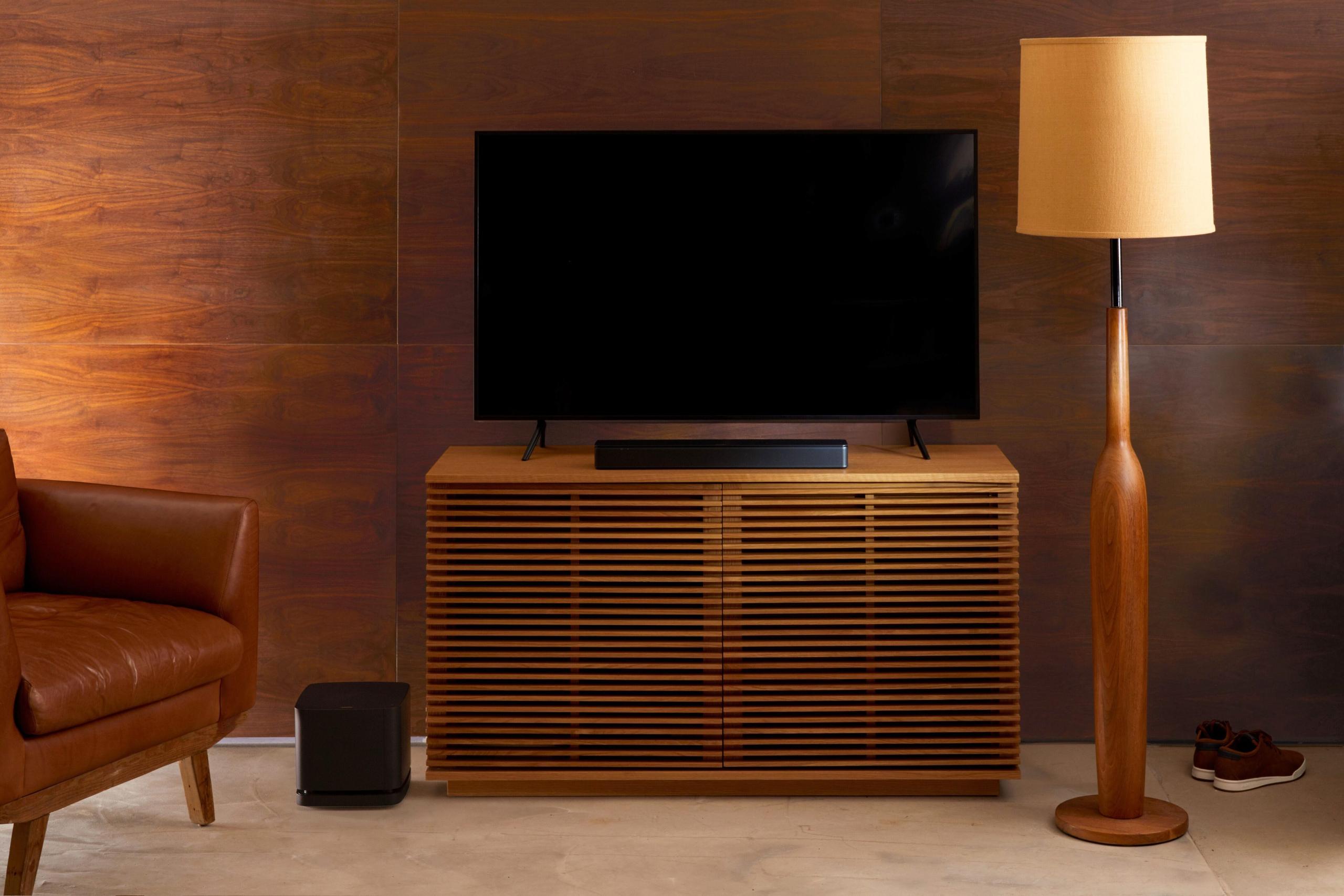
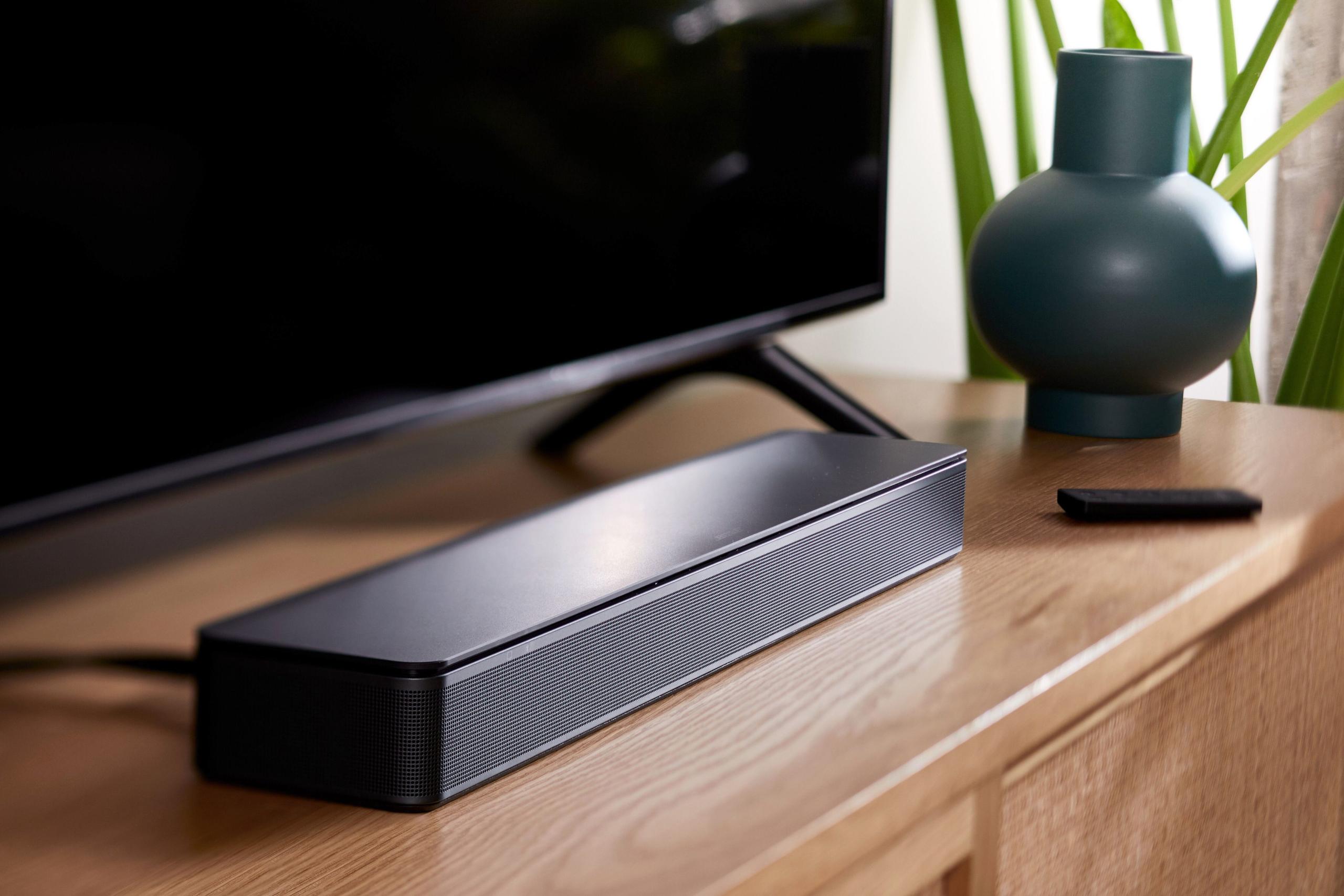
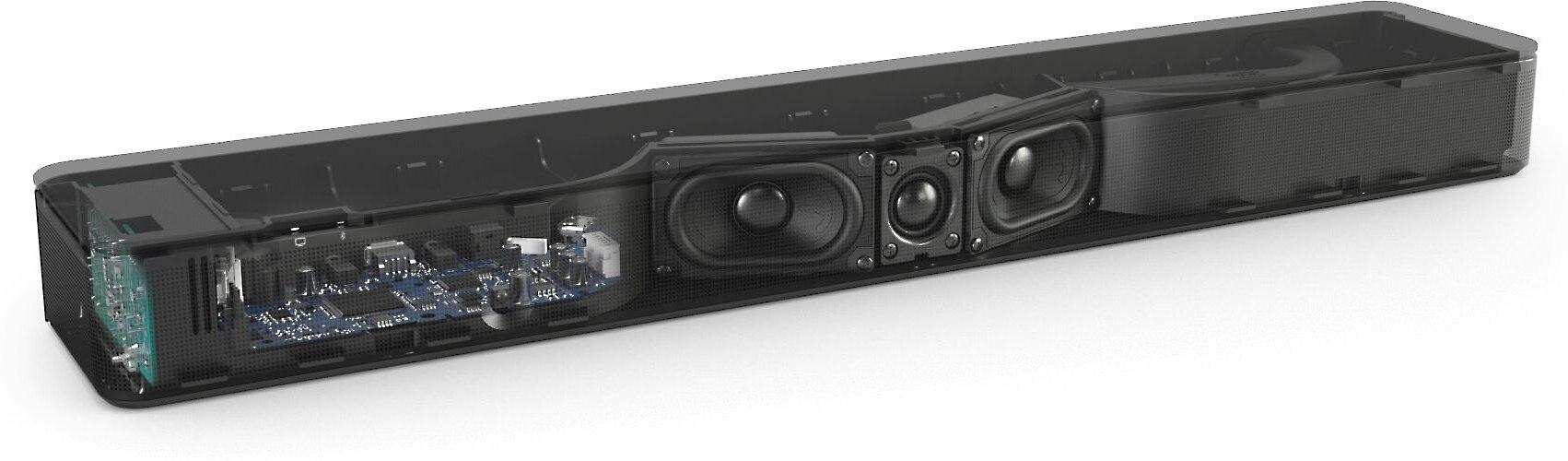
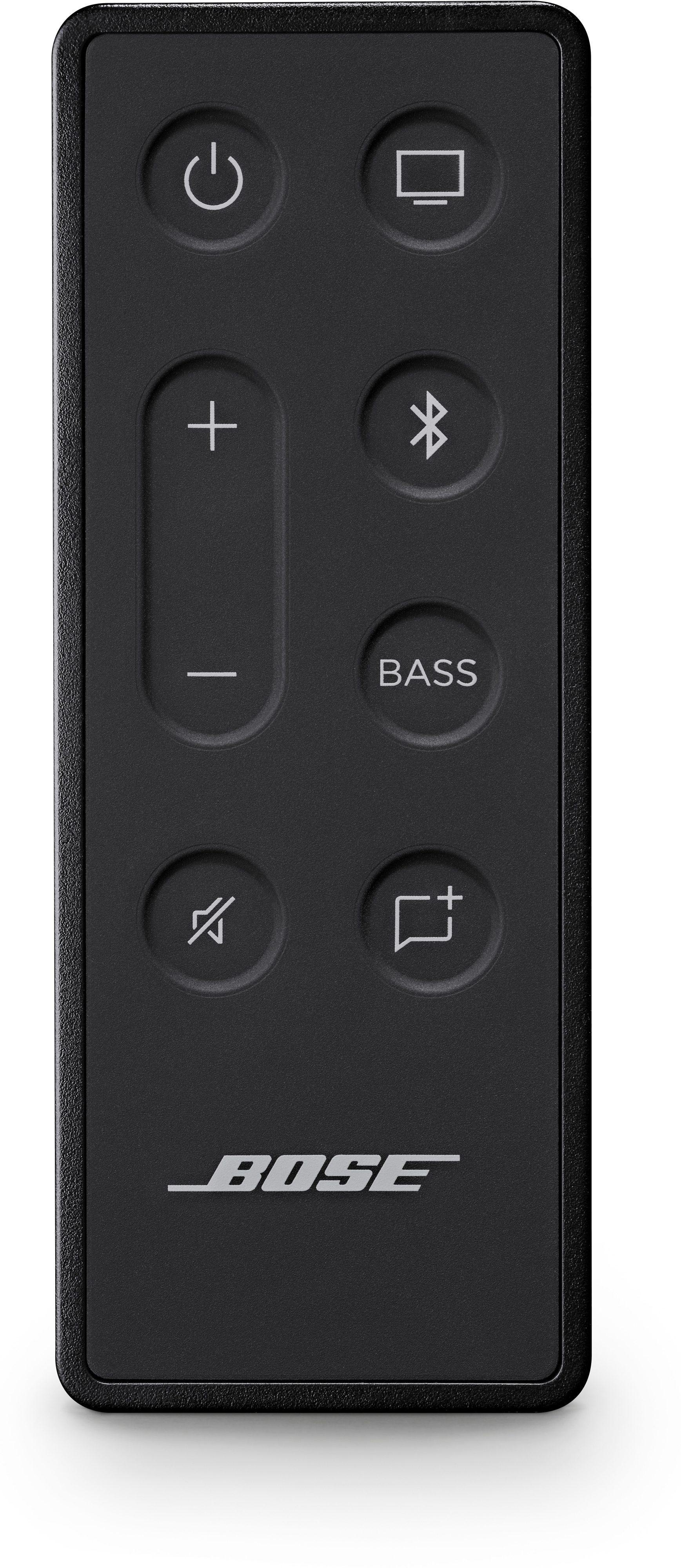
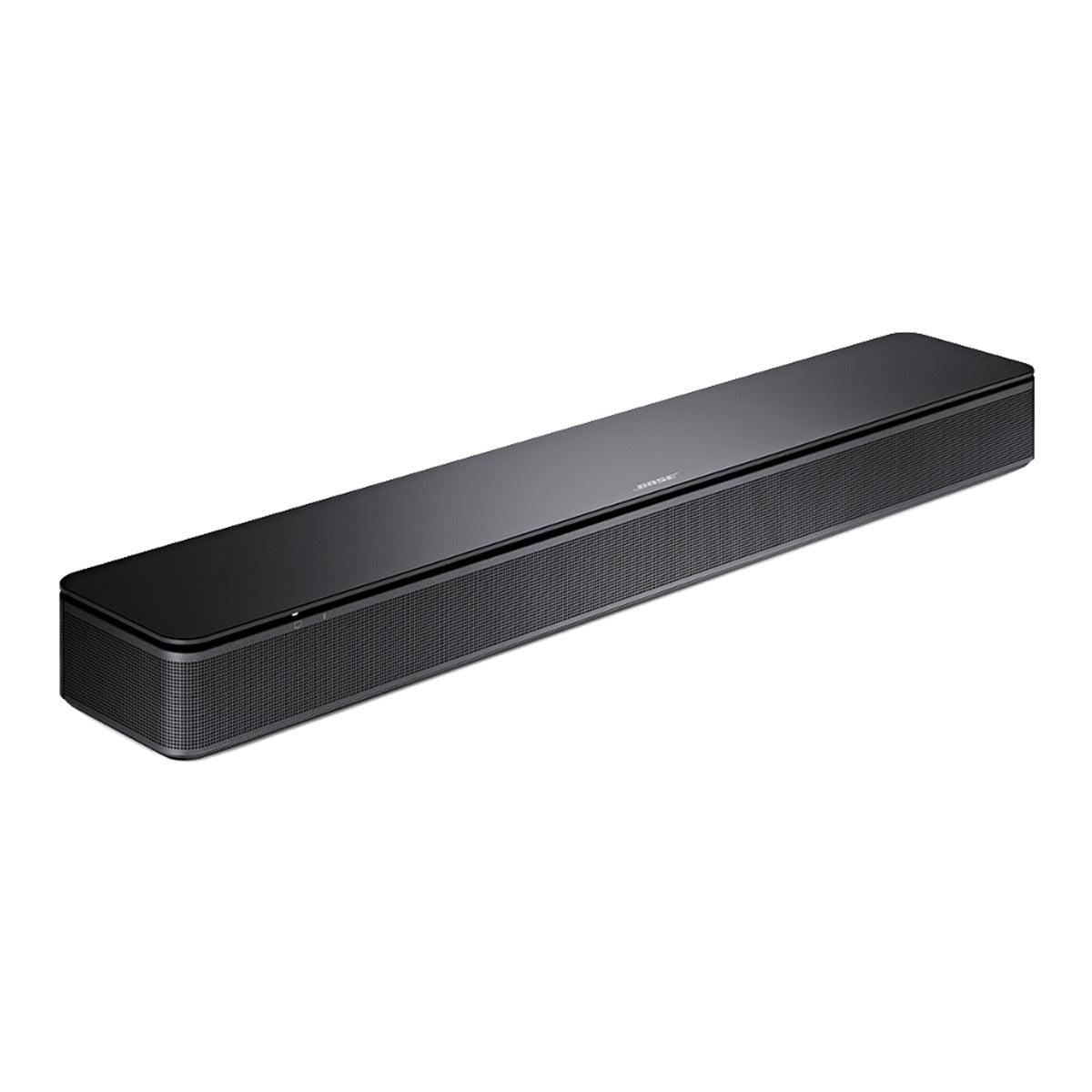
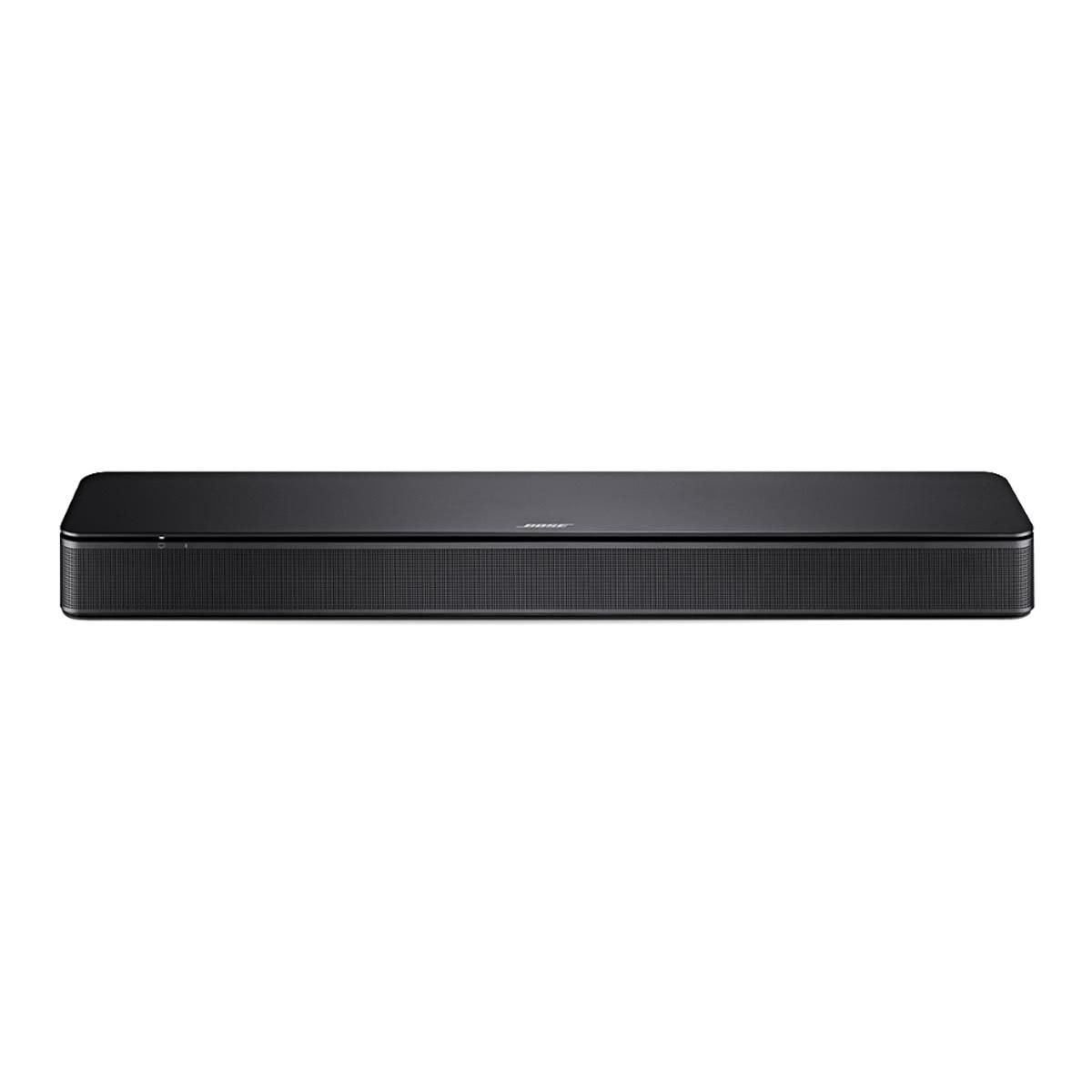
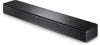
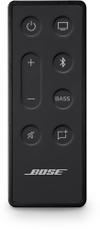
Bose TV Speaker Soundbar

We may earn from purchases via affiliate links

Original price was: $279.00.Current price is: $199.00.

Product Description

A Complete Look at the Bose TV Speaker Soundbar in 2024

When Bose released the TV Speaker Soundbar in late 2020, they took an interesting approach - instead of cramming in every feature possible, they focused on doing a few things exceptionally well. After extensive testing in various home setups, we've found this strategy really pays off for the right user.

The Current Soundbar Landscape

The soundbar market has evolved significantly since this model's release. While many manufacturers are racing to add Dolby Atmos and fancy AI features, there's still a strong need for high-quality stereo sound that just works. The Bose TV Speaker fills this niche perfectly, offering premium audio quality without the complexity that can make some modern soundbars frustrating to use.

Sound Performance That Matters

In our testing across different room sizes and content types, the sound quality consistently impressed us. Here's what stands out:

Dialogue Clarity

The dedicated dialogue mode is more than just marketing - it actively analyzes audio content and enhances speech frequencies. During our movie nights, we found this particularly effective in action scenes where background effects often overwhelm dialogue. The enhancement is subtle but noticeable, making it especially valuable for:

  • News and documentaries
  • Sports commentary
  • Dialogue-heavy dramas
  • Podcasts played through the TV

Music Performance

While primarily designed for TV audio, the Bluetooth connectivity makes this a capable music speaker. The stereo separation is impressive for its size, creating a convincing soundstage (the perceived width and depth of the audio). Bass response, while not earth-shaking, is well-balanced and tight - perfect for casual listening sessions.

Volume and Room Size

In our testing across different spaces, we found the Bose TV Speaker performs best in:

  • Small to medium-sized living rooms (up to about 300 square feet)
  • Bedrooms
  • Apartments where powerful bass might disturb neighbors

The speaker can fill larger spaces, but you'll start to lose some of the clarity at higher volumes.

Technical Features and Connectivity

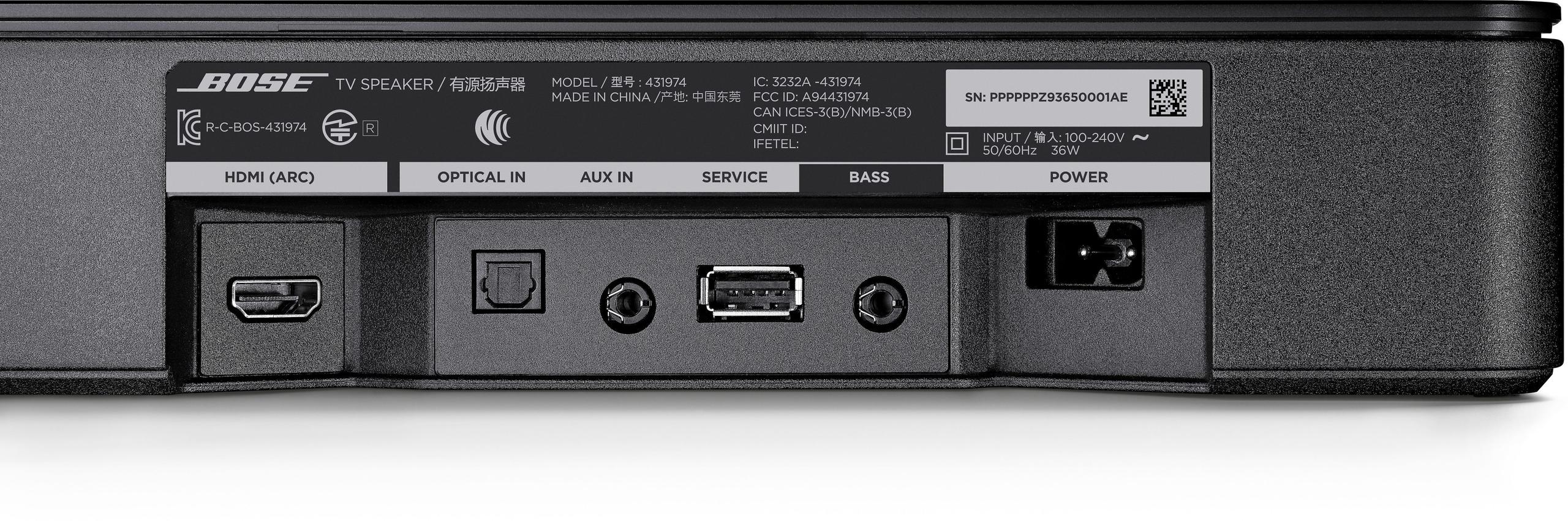
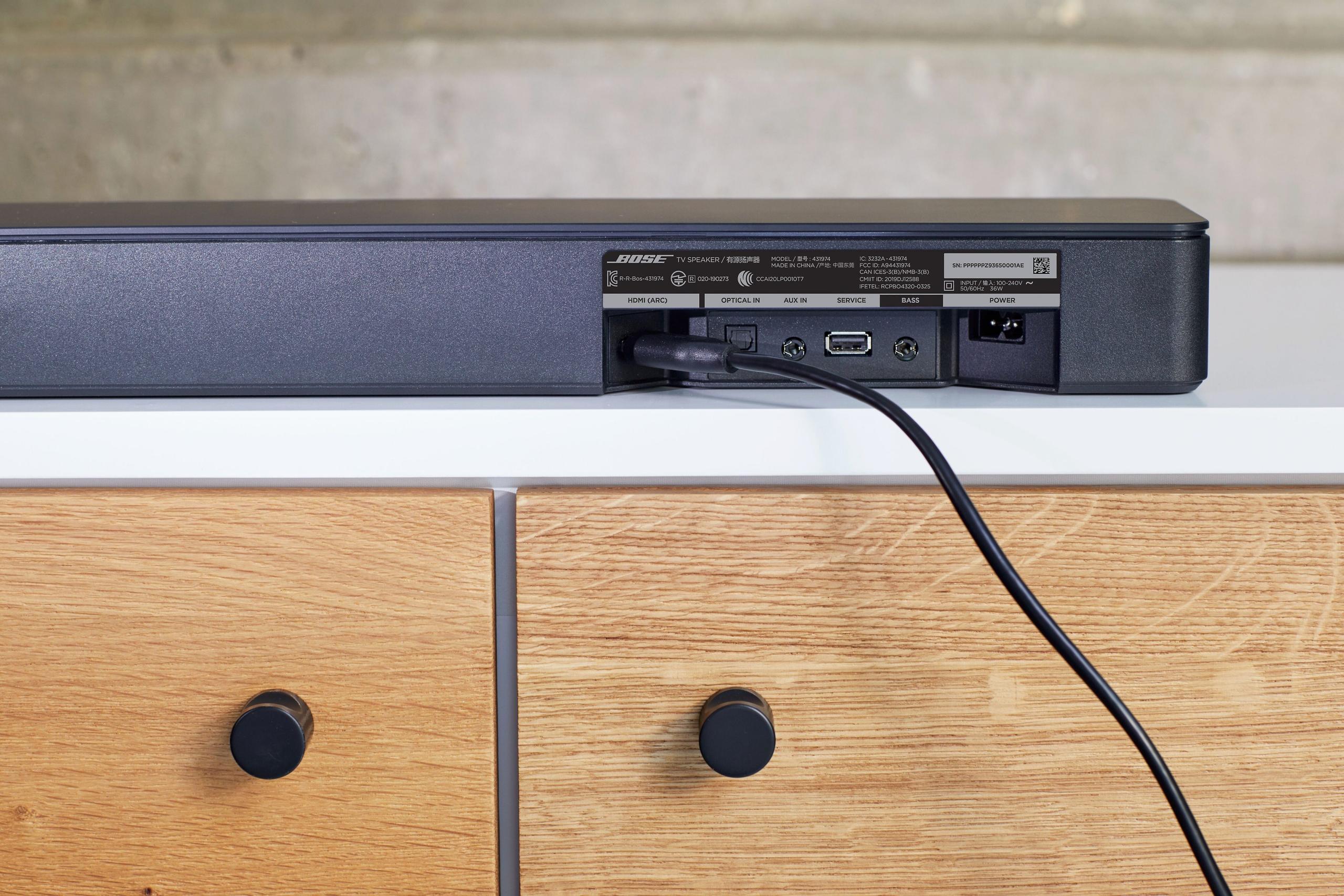
The connectivity options reflect Bose's focus on simplicity:

HDMI ARC

HDMI ARC (Audio Return Channel) allows the soundbar to receive audio from your TV through a single cable while also enabling your TV remote to control the soundbar's volume. This reduces cable clutter and simplifies daily use.

Optical Input

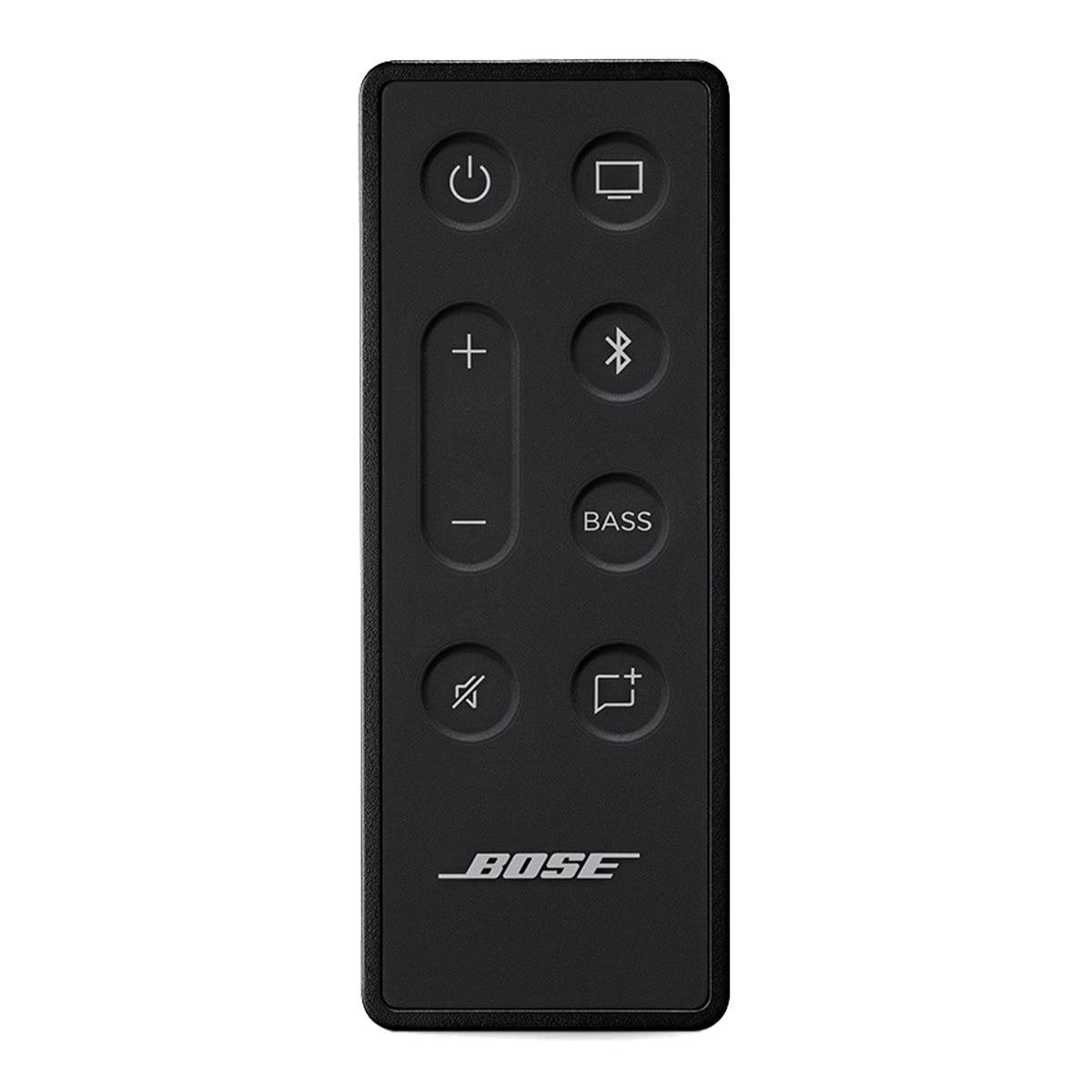
The included optical cable ensures compatibility with older TVs or situations where HDMI ARC isn't available. We found the optical connection just as reliable as HDMI, though you'll need to use the Bose remote for volume control.

Bluetooth

Bluetooth connectivity has improved since the speaker's release through firmware updates, offering more stable connections and better range. We regularly stream music from phones and tablets without any dropout issues.

Real-World Usage Scenarios

Home Theater Integration

While this isn't a traditional home theater soundbar, it can serve as an excellent starting point. The ability to add a Bose Bass Module later means you can start with the basics and expand when budget allows. However, be aware that you won't get:

  • Surround sound effects
  • Dolby Atmos overhead audio
  • DTS:X support

Daily TV Viewing

This is where the soundbar truly shines. The improved clarity over TV speakers is immediately noticeable, especially in:

  • News broadcasts
  • Sports events
  • Reality TV shows
  • Standard network programming

Gaming

For casual gaming, the soundbar provides clear audio with minimal lag. However, serious gamers might want to look at options with dedicated gaming modes or surround sound capabilities.

Setup and Installation

One of the most appealing aspects is the simple setup process. In our testing, we had the soundbar up and running in under 5 minutes:

  1. Place the soundbar in front of your TV
  2. Connect power
  3. Connect either HDMI or optical cable
  4. Optional: Pair Bluetooth devices

Wall mounting is possible with the optional bracket, though we found tabletop placement worked best in most setups.

Value and Competition

At its price point, the Bose TV Speaker competes with entry-level Dolby Atmos soundbars and more feature-rich budget options. However, it stands out by focusing on sound quality over feature quantity. The build quality is excellent, suggesting many years of reliable service.

Long-Term Ownership Experience

After extended use, several aspects become apparent:

  • The simple remote remains intuitive
  • Sound quality stays consistent
  • Build quality shows no degradation
  • Firmware updates are straightforward
  • Customer support is responsive

Who Should Buy This?

The Bose TV Speaker is ideal for:

  • Those prioritizing dialogue clarity
  • Users wanting simple setup and operation
  • People in apartments or smaller homes
  • Anyone starting a modular audio system
  • Music listeners wanting better TV sound

It's less suitable for:

  • Dedicated home theater enthusiasts
  • Those needing surround sound
  • Larger room applications
  • Bass-heavy content lovers (unless adding a subwoofer)

Final Assessment

The Bose TV Speaker represents a focused approach to better TV audio. While it might seem basic compared to feature-laden competitors, its excellent sound quality, ease of use, and expansion options make it a compelling choice for many users.

The lack of advanced features like Dolby Atmos might deter some, but the core performance - particularly dialogue clarity and musical ability - remains impressive. For those wanting better TV audio without complexity, this soundbar continues to be a solid choice in 2024, especially given its proven reliability since its 2020 release.

Consider this your gateway to better TV audio, with the option to grow your system over time. The initial investment provides immediate improvement in sound quality, while the expansion options keep future upgrades open.

Bose TV Speaker Soundbar Deals and Prices

Is the Bose TV Speaker Soundbar Worth It?

Yes, the Bose TV Speaker Soundbar is worth it for users seeking improved TV audio with excellent dialogue clarity in small to medium rooms. While it lacks advanced features like Dolby Atmos, its sound quality and ease of use justify the price, especially for those prioritizing clear dialogue and music playback over complex home theater features.

Can the Bose TV Speaker Soundbar Work with Any TV?

Yes, the soundbar is compatible with virtually any TV through either HDMI ARC or optical connection. The included optical cable ensures universal compatibility, while HDMI ARC offers simplified control with newer TVs.

Does the Bose TV Speaker Soundbar Have Surround Sound?

No, the Bose TV Speaker Soundbar doesn't provide true surround sound. It's a 2.0 channel system focused on delivering high-quality stereo audio. For those wanting surround sound, you'll need to look at more advanced soundbar models.

How Good Is the Bass on the Bose TV Speaker?

The bass performance is good for its size but not room-shaking. The soundbar offers a bass adjustment button and can be enhanced by adding an optional Bose Bass Module 500 or 700 subwoofer through the dedicated bass port.

Can You Stream Music to the Bose TV Speaker?

Yes, the soundbar features Bluetooth 4.2 connectivity, allowing you to stream music directly from smartphones, tablets, or computers. The sound quality for music streaming is notably good, with clear stereo separation.

Is the Bose TV Speaker Good for Movies?

The Bose TV Speaker performs well with movies, particularly in dialogue clarity. While it won't deliver the immersive experience of a full home theater system, it significantly improves upon TV speakers for movie watching in smaller rooms.

How Easy Is It to Set Up the Bose TV Speaker?

Setup is very straightforward, typically taking less than 5 minutes. Connect power and either HDMI or optical cable to your TV, and you're ready to go. No app or complex configuration is required.

Can You Wall Mount the Bose TV Speaker?

Yes, the soundbar can be wall-mounted using an optional bracket sold separately. Its lightweight design (4.3 lbs) makes it suitable for most wall installations.

Does the Bose TV Speaker Work with a Universal Remote?

Yes, when connected via HDMI ARC, the soundbar can be controlled by your TV remote. It's also compatible with most universal remotes, though some programming may be required.

Is the Bose TV Speaker Good for Gaming?

The soundbar works well for casual gaming, offering clear audio with minimal lag. However, serious gamers might prefer soundbars with dedicated gaming modes or surround sound capabilities. For basic gaming needs in a bedroom or small gaming setup, it's more than adequate.

Sources

We've done our best to create useful and informative comparisons to help you decide what product to buy. Our research has used advanced automated methods to create this comparison and perfection is not possible - please contact us for corrections or questions. These are the sites we've researched in the creation of this article: bestbuy.com - projectorscreen.com - forums.audioholics.com - digitaltrends.com - abt.com - crutchfield.com - staples.com - bestbuy.com - pcrichard.com - visions.ca - bose.com - assets.bose.com

Specs
Specs Table
Bose TV Speaker Soundbar
Audio Channels - Determines soundstage and audio separation: 2.0 channels
Dialogue Enhancement - Helps clarify speech in movies and TV: Yes, dedicated mode

HDMI ARC - Enables TV remote control of soundbar and simplified connection: Yes
Bluetooth Version - Affects wireless audio quality and range: 4.2
Bass Expandability - Allows system growth with optional subwoofer: Yes, via 3.5mm connection
Dolby/DTS Support - Determines compatibility with modern audio formats: Dolby Digital only
Width - Important for TV size compatibility: 23.4 inches
Height - Critical for placement under TV without blocking view: 2.2 inches
Depth: 4 inches
Weight: 4.3 lbs
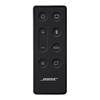
Remote Control: Yes
Wall Mounting: Optional bracket available
Power Output - Affects maximum volume and clarity: Not specified by manufacturer
Warranty: 1 year
Comparisons

Compared to Klipsch Flexus Core 200 3.1.2 Soundbar

For those considering a more premium option, the $499 Klipsch Flexus Core 200 offers significant upgrades that justify its higher price point. Most notably, it delivers true Dolby Atmos support through dedicated up-firing speakers, creating a more immersive soundstage that extends above the listener. The inclusion of dual built-in 4-inch subwoofers eliminates the need for a separate sub in most rooms, while the horn-loaded tweeter technology provides exceptionally clear dialogue without sacrificing other audio elements. The 3.1.2 channel configuration means you're getting a more theater-like experience, particularly noticeable during action scenes and music-heavy content.
Where the Bose focuses on simplicity, the Flexus Core 200 offers considerably more flexibility and room to grow. The ability to add wireless surround speakers and additional subwoofers means you can start with the soundbar and expand your system over time. While it requires more space and setup attention than the Bose, the payoff in audio quality and features makes it a compelling choice for home theater enthusiasts who want more than just improved TV sound. However, if you're primarily watching news and regular TV programming, these additional features might not justify the price difference for your needs.
🤖 Read Detailed Comparison
👌Klipsch Flexus Core 200 3.1.2 Soundbar Details
💵 See Klipsch Flexus Core 200 3.1.2 Soundbar Price

Compared to Klipsch Flexus Core 100 Soundbar

The $349 Klipsch Flexus Core 100 takes a notably different approach with its dual built-in subwoofers and more powerful 100W amplification. Where the Bose focuses on dialogue clarity, the Klipsch delivers a fuller, more dynamic sound experience that's particularly noticeable during movies and music playback. Its aluminum drivers and thoughtfully designed cabinet provide clearer highs and significantly more bass impact without requiring an external subwoofer. The ability to expand the system with wireless surround speakers and an additional subwoofer also makes it more future-proof for growing home theater needs.
While it commands a higher price point, the Klipsch Flexus Core 100 justifies the premium through its superior overall performance and flexibility. The included app control, multiple sound modes, and custom EQ options provide more fine-tuning possibilities than the Bose's simpler approach. However, this added complexity means it's less plug-and-play than the Bose. For buyers seeking maximum audio performance and expandability in a single soundbar, the Klipsch represents solid value despite costing $150 more. The choice ultimately comes down to whether you prioritize simplicity and dialogue enhancement, or want fuller sound with room to grow your system.
🤖 Read Detailed Comparison
👌Klipsch Flexus Core 100 Soundbar Details
💵 See Klipsch Flexus Core 100 Soundbar Price

Compared to Yamaha SR-B40A 2.1-Channel Sound Bar with Wireless Subwoofer

The Yamaha SR-B40A ($399) represents a significant step up in terms of audio capabilities and home theater features. Its wireless subwoofer and Dolby Atmos support create a more cinematic experience, with noticeably deeper bass and better spatial audio effects that can make sound appear to come from above and around you. While it costs twice as much as the Bose, the included wireless subwoofer alone helps justify the price difference, delivering impactful low-end frequencies that you can feel during movies and music.
The Yamaha SR-B40A also offers more versatility through its multiple sound modes, app control, and superior Bluetooth 5.1 connectivity. Its higher power output (320W total) makes it better suited for larger rooms and open floor plans, where it can fill the space more effectively. While these additional features mean a slightly more complex setup process, the real-world benefits include more engaging movie watching, better gaming experiences, and more powerful music playback. However, if you don't need these advanced features or the extra bass response, the price premium over the Bose might not be justified for your specific use case.
🤖 Read Detailed Comparison
👌Yamaha SR-B40A 2.1-Channel Sound Bar with Wireless Subwoofer Details
💵 See Yamaha SR-B40A 2.1-Channel Sound Bar with Wireless Subwoofer Price

Compared to Yamaha SR-B30A Sound Bar with Built-In Subwoofers

The Yamaha SR-B30A ($279.95) offers a more feature-rich experience with its Dolby Atmos support and dual built-in subwoofers, eliminating the need for additional bass components. Its wider 35.8-inch design creates a more expansive soundstage, and the inclusion of multiple sound modes (Movie, Gaming, Standard, and Stereo) provides greater flexibility for different content types. The Clear Voice technology matches Bose's dialogue enhancement capabilities, while the built-in subwoofers deliver noticeably more impactful bass for movies and music. The Yamaha's 120W total power output and advanced app control options make it more suitable for larger rooms and users who want to fine-tune their audio experience.
While the Yamaha commands a higher price point, its comprehensive feature set justifies the additional investment for home theater enthusiasts. The Yamaha SR-B30A particularly stands out in movie and gaming scenarios, where its Dolby Atmos support and stronger bass response create a more immersive experience. However, the larger size and more complex feature set might be overkill for users with smaller spaces or those primarily watching news and TV shows. The additional audio processing and built-in subwoofers make it a better value for those seeking a complete sound solution without the need for future upgrades, though it comes at the cost of the simplicity that characterizes the Bose approach.
🤖 Read Detailed Comparison
👌Yamaha SR-B30A Sound Bar with Built-In Subwoofers Details
💵 See Yamaha SR-B30A Sound Bar with Built-In Subwoofers Price

Compared to JBL Bar 700 Dolby Atmos 5.1 Soundbar with Subwoofer

The JBL Bar 700 represents a significant step up in home theater audio capabilities, offering a complete 5.1 surround sound system with Dolby Atmos for $899. Its standout features include detachable wireless rear speakers, a powerful 10-inch subwoofer, and sophisticated audio processing that creates a truly immersive listening experience. The system's PureVoice technology delivers notably clearer dialogue even during complex action scenes, while the dedicated subwoofer provides the kind of deep, impactful bass that's simply impossible with a single soundbar solution.
While the price difference of $700 is substantial, the JBL Bar 700 justifies its premium positioning with significantly better performance across all content types. Movie watchers will appreciate the genuine surround sound effects and overhead Atmos channels, while music listeners benefit from the superior bass response and clearer separation between instruments. The addition of WiFi streaming, multi-room audio capabilities, and automatic room calibration makes it a more future-proof investment for those seeking a complete home theater audio solution. However, buyers should consider whether they have the space and setup requirements to take full advantage of these advanced features.
🤖 Read Detailed Comparison
👌JBL Bar 700 Dolby Atmos 5.1 Soundbar with Subwoofer Details
💵 See JBL Bar 700 Dolby Atmos 5.1 Soundbar with Subwoofer Price

Compared to JBL Bar 300 5.0 Soundbar

The JBL Bar 300 5.0 ($349.95) represents a significant step up in both features and performance, offering Dolby Atmos and MultiBeam surround sound technology that creates a more immersive listening experience. Its 260-watt output and advanced PureVoice technology provide powerful, room-filling sound while maintaining crystal-clear dialogue. The inclusion of HDMI eARC, WiFi streaming capabilities, and smart features like AirPlay and Chromecast built-in make it a more future-proof option for those looking to integrate their soundbar into a modern home theater setup.
While the higher price point of the JBL Bar 300 requires a bigger investment, the additional features and performance capabilities justify the cost for users who want more than basic TV sound enhancement. The automatic room calibration and virtual surround effects create a more theater-like experience, particularly beneficial in medium to large rooms where the extra power and processing make a noticeable difference. For movie enthusiasts and gamers who value immersive audio and want multiple connectivity options, the JBL offers substantially more value despite its premium price.
🤖 Read Detailed Comparison
👌JBL Bar 300 5.0 Soundbar Details
💵 See JBL Bar 300 5.0 Soundbar Price

Compared to Bose Smart Ultra Soundbar with Dolby Atmos

The $899 Bose Smart Ultra Soundbar represents a significant step up in both capabilities and price, offering advanced features like Dolby Atmos, AI-powered dialogue enhancement, and sophisticated room calibration. The difference in sound quality is immediately noticeable, with the Smart Ultra creating a much wider, taller soundstage that extends well beyond the TV screen. Its ability to process Dolby Atmos content and create virtual height channels results in a more cinematic experience, while its advanced dialogue mode uses machine learning to ensure clear speech without sacrificing other audio elements.
For those considering the upgrade, the Smart Ultra justifies its premium price through additional features like built-in voice assistants, multi-room audio capability, and WiFi streaming options including AirPlay 2 and Spotify Connect. The soundbar's ADAPTiQ room calibration system optimizes audio for your specific space, delivering more consistent performance regardless of room layout. While the price difference is substantial, the Smart Ultra offers genuine home theater capabilities that the TV Speaker simply can't match. However, this level of performance may be overkill for casual viewers or smaller rooms where the TV Speaker's simpler approach might be more appropriate.
🤖 Read Detailed Comparison
👌Bose Smart Ultra Soundbar with Dolby Atmos Details
💵 See Bose Smart Ultra Soundbar with Dolby Atmos Price

Compared to Sennheiser AMBEO Soundbar Mini

The Sennheiser AMBEO Soundbar Mini ($399) takes a significantly different approach to TV audio, offering virtual 7.1.4 surround sound processing and support for advanced formats like Dolby Atmos and DTS:X. While it commands a higher price, it delivers noticeably better audio quality through its dual built-in subwoofers and sophisticated digital processing. The addition of WiFi connectivity, AirPlay, and Chromecast support also makes it more versatile for streaming music, while its automatic room calibration ensures optimal sound regardless of room layout.
For those considering upgrading from the Bose TV Speaker, the AMBEO Mini's premium features need to be weighed against its higher cost and larger size. While it undoubtedly provides superior audio performance, especially for movies and music, the improvements may not justify the extra expense for casual TV viewers. However, for home theater enthusiasts or those wanting a more immersive audio experience, the AMBEO Mini offers substantially more capability and future-proofing through its regular software updates and advanced format support.
🤖 Read Detailed Comparison
👌Sennheiser AMBEO Soundbar Mini Details
💵 See Sennheiser AMBEO Soundbar Mini Price

Compared to Sony BRAVIA Theater Bar 9 Soundbar

The Sony BRAVIA Theater Bar 9 represents a significant step up in both features and price at $1,099, offering Dolby Atmos support through its 7.0.2 channel configuration with 13 speakers. Its standout 360 Spatial Sound Mapping technology creates a dome of immersive audio that extends well beyond the soundbar's physical location, while advanced features like room calibration and AI-powered voice enhancement deliver a more sophisticated listening experience. For gaming and home theater enthusiasts, the HDMI 2.1 connectivity supports next-gen gaming features and higher bandwidth audio formats, while integration with Sony TVs enables acoustic center sync for more precise sound placement.
However, this premium feature set comes with a price tag more than five times higher than the Bose. While the Sony delivers superior audio performance and more immersive sound, the real-world benefit may not justify the cost for casual viewers who primarily watch news, sports, or TV shows. The additional features like WiFi streaming, AirPlay 2 support, and advanced audio processing make more sense for dedicated home theater setups or larger rooms where the spatial audio capabilities can truly shine. For many users, the basic dialogue enhancement and stereo separation of the Bose might be sufficient for their needs without the complexity and cost of the Sony's advanced features.
🤖 Read Detailed Comparison
👌Sony BRAVIA Theater Bar 9 Soundbar Details
💵 See Sony BRAVIA Theater Bar 9 Soundbar Price

Compared to Bose Solo Soundbar Series 2 Soundbar

The Bose Solo Soundbar Series 2 offers a more budget-friendly alternative at $199, positioning itself as a basic TV audio upgrade with straightforward optical connectivity and Bluetooth streaming. While lacking HDMI-ARC, it maintains Bose's dialogue enhancement technology and provides adequate sound quality for smaller rooms. Its compact design, measuring slightly smaller than the TV Speaker, makes it particularly suitable for bedrooms or secondary viewing areas where space is at a premium.
However, the Solo Series 2 falls short in several areas compared to the TV Speaker's capabilities. The absence of HDMI-CEC means you'll need to use a separate remote, and the audio performance, while decent, doesn't match the TV Speaker's fuller bass response and wider soundstage. The Solo Series 2 also lacks subwoofer expandability and uses more basic construction materials. These limitations make it best suited for users prioritizing simplicity and affordability over advanced features and audio performance, particularly in smaller viewing environments where its more modest output won't be a significant drawback.
🤖 Read Detailed Comparison
👌Bose Solo Soundbar Series 2 Soundbar Details
💵 See Bose Solo Soundbar Series 2 Soundbar Price

Compared to JBL Bar 1000 Surround Sound System with 7.1.4 Channel Soundbar, 10" Wireless Subwoofer, Detachable Rear Speakers, and Dolby Atmo

The JBL Bar 1000 ($1,139) represents a significant step up into premium home theater territory, offering true surround sound with Dolby Atmos support and innovative detachable wireless rear speakers. While it commands a much higher price point, it delivers a genuinely immersive audio experience that the Bose simply can't match. The included 10-inch wireless subwoofer and four up-firing speakers create a three-dimensional sound field that transforms movie watching and gaming, making it feel more like a commercial theater experience.
For those with larger rooms and bigger budgets, the JBL Bar 1000 justifies its premium price through superior technology and versatility. Its 880-watt system power, advanced room calibration, and support for the latest audio formats make it more future-proof than the Bose. While it requires more setup effort and space, the payoff is substantial for home theater enthusiasts. The ability to stream music via WiFi, AirPlay, and Chromecast also makes it a more capable all-around entertainment system. However, these advanced features may be overkill for users seeking simple TV audio enhancement.
🤖 Read Detailed Comparison
👌JBL Bar 1000 Surround Sound System with 7.1.4 Channel Soundbar, 10" Wireless Subwoofer, Detachable Rear Speakers, and Dolby Atmo Details
💵 See JBL Bar 1000 Surround Sound System with 7.1.4 Channel Soundbar, 10" Wireless Subwoofer, Detachable Rear Speakers, and Dolby Atmo Price

Compared to Samsung HW-B550D 3.1 Channel Sound Bar

The Samsung HW-B550D takes a notably different approach with its 3.1 channel configuration and wireless subwoofer. While it costs just $31 more, it delivers significantly more powerful and immersive sound thanks to its dedicated center channel for dialogue and separate subwoofer for bass. The inclusion of multiple sound modes, including Game Mode and Night Mode, also provides more flexibility for different content types. The ability to pair multiple Bluetooth devices simultaneously is particularly convenient for households where different people want to stream music.
Where the Samsung really shines is in movie and gaming performance. Its 320W total power output and dedicated subwoofer create the kind of impact and presence that the Bose simply can't match. While the Bose excels at dialogue clarity in a simple package, the Samsung HW-B550D offers a more complete home theater experience. The trade-off comes in the form of a larger footprint - both the wider soundbar and the need to place the subwoofer - and slightly more complex setup. However, for users who have the space and want a more cinematic experience, the Samsung represents excellent value for the modest price premium.
🤖 Read Detailed Comparison
👌Samsung HW-B550D 3.1 Channel Sound Bar Details
💵 See Samsung HW-B550D 3.1 Channel Sound Bar Price

Compared to Samsung B-Series 5.1 Channel Soundbar with Subwoofer

The Samsung B-Series 5.1 Channel Soundbar ($277.99) takes a more comprehensive approach to home theater audio with its true surround sound capabilities and wireless subwoofer. While it costs about $78 more, it delivers noticeably better performance for movies and gaming thanks to its dedicated center channel for dialogue, side-firing speakers for wider sound, and the included subwoofer for impactful bass. The addition of DTS Virtual:X technology and multiple sound modes, including Game Mode and Adaptive Sound, provides more flexibility for different content types.
Where the Samsung really differentiates itself is in creating a more immersive viewing experience. The 5.1 channel configuration places sounds around the viewer, making action scenes more engaging and bringing greater depth to movie soundtracks. While this added capability comes with a slightly more complex setup and larger footprint, the wireless subwoofer maintains reasonable flexibility for placement. For those wanting to build a more serious home theater system, the Samsung B-Series also offers the ability to add wireless rear speakers later, providing a clear upgrade path that the Bose lacks.
🤖 Read Detailed Comparison
👌Samsung B-Series 5.1 Channel Soundbar with Subwoofer Details
💵 See Samsung B-Series 5.1 Channel Soundbar with Subwoofer Price

Compared to Samsung HW-Q990D 11.1.4 Channel Sound Bar

The Samsung HW-Q990D ($1,999) operates in an entirely different league, offering a complete home theater solution with its 11.1.4 channel configuration, wireless rear speakers, and dedicated subwoofer. Unlike the Bose's basic stereo approach, the Samsung creates a truly immersive sound bubble with Dolby Atmos and DTS:X support, placing sound effects precisely around and above you. Its superior processing power and speaker array deliver dramatically more impactful movie experiences, with overhead effects like helicopter flybys and rain actually sounding like they're coming from above, while the wireless subwoofer provides deep, room-shaking bass that the Bose simply can't match.
While the price difference is substantial, the Samsung justifies its premium positioning for home theater enthusiasts or anyone seeking a more cinematic experience. However, it requires more space for optimal speaker placement and a more involved setup process. The system's additional features like Q-Symphony integration with Samsung TVs, gaming-specific audio modes, and advanced room correction technology make it a more future-proof investment, but these advantages may be overkill for viewers primarily watching news, sports, or casual TV content where the Bose's simpler approach remains perfectly adequate.
🤖 Read Detailed Comparison
👌Samsung HW-Q990D 11.1.4 Channel Sound Bar Details
💵 See Samsung HW-Q990D 11.1.4 Channel Sound Bar Price

Compared to Samsung HW-S700D 3.1 Channel Slim Soundbar

The Samsung HW-S700D ($398) takes a more advanced approach to TV audio with its 3.1 channel configuration, including a dedicated center speaker and wireless subwoofer. This setup delivers noticeably better performance for movies and gaming, with clearer dialogue during action scenes and deeper bass impact that the Bose can't match. Its modern feature set, including Wireless Dolby Atmos support, Q-Symphony integration with Samsung TVs, and SpaceFit Sound room calibration, provides more flexibility and better sound optimization for different spaces.
While the Samsung commands a higher price point, it justifies the cost through its superior home theater capabilities and future-proof features. The included wireless subwoofer and dedicated center channel make a real difference in sound quality, especially in larger rooms or when watching action-heavy content. However, this enhanced performance comes with a larger footprint and more complex setup process compared to the Bose's minimalist approach. For those seeking a more immersive audio experience and willing to accommodate a separate subwoofer, the Samsung offers compelling value despite its higher price tag.
🤖 Read Detailed Comparison
👌Samsung HW-S700D 3.1 Channel Slim Soundbar Details
💵 See Samsung HW-S700D 3.1 Channel Slim Soundbar Price

Compared to Sonos Beam Gen 2 Soundbar

The Sonos Beam Gen 2 operates in a different league at $449, offering significantly more advanced features and superior audio performance. Its standout capabilities include Dolby Atmos support, which creates a more immersive listening experience with compatible content, and a sophisticated multi-driver system that produces notably wider soundstage and better bass response. The addition of smart features like voice control, multi-room audio, and AirPlay 2 support makes it more versatile as an all-around audio solution, not just a TV speaker. The Trueplay room calibration feature also helps optimize sound for your specific space, something the Bose TV Speaker can't match.
While the Sonos Beam Gen 2 costs more than twice as much, it justifies the premium for users who want a more future-proof solution. The ability to expand into a full wireless surround system by adding rear speakers and a subwoofer is particularly appealing for home theater enthusiasts. Regular software updates continue to add features and improvements, making it feel like a long-term investment rather than just a simple TV audio upgrade. However, if these advanced features aren't important to you, or if you're primarily focused on improving dialogue clarity in a smaller room, the price difference might be hard to justify over the Bose TV Speaker's more focused approach.
🤖 Read Detailed Comparison
👌Sonos Beam Gen 2 Soundbar Details
💵 See Sonos Beam Gen 2 Soundbar Price

Compared to Polk Audio MagniFi Max AX 3.1.2 Soundbar

The Polk Audio MagniFi Max AX ($799) represents a significant step up in both capabilities and price, offering a complete home theater solution rather than just TV audio enhancement. With its 3.1.2 channel configuration, including upward-firing speakers for Dolby Atmos, and a wireless subwoofer, it delivers a truly immersive audio experience that the Bose simply isn't designed to match. The inclusion of multiple HDMI inputs, streaming capabilities via Wi-Fi, and support for modern audio formats like DTS:X makes it a more versatile entertainment hub.
While the Polk MagniFi Max AX costs four times as much, it justifies the premium for users seeking cinema-quality sound. Its dedicated center channel and advanced audio processing deliver superior dialogue clarity at all volumes, while the wireless subwoofer provides the deep bass impact that movie enthusiasts crave. The additional features like AirPlay 2 and Chromecast support make it more future-proof, though these advanced capabilities also mean a more complex setup process compared to the Bose's plug-and-play simplicity.
🤖 Read Detailed Comparison
👌Polk Audio MagniFi Max AX 3.1.2 Soundbar Details
💵 See Polk Audio MagniFi Max AX 3.1.2 Soundbar Price

Compared to Sennheiser AMBEO Soundbar Plus Home Theater System

The Sennheiser AMBEO Soundbar Plus ($1,499) represents a significant step up in both capabilities and price, offering a complete home theater solution in a single unit. Its sophisticated virtual 7.1.4 surround sound processing creates a convincing three-dimensional soundstage that can rival multi-speaker setups, while built-in room calibration optimizes the sound for your specific space. For those seeking cinema-quality audio without the complexity of multiple speakers, the AMBEO's Dolby Atmos support and advanced audio processing deliver an impressive alternative to traditional home theater systems.
While the price difference is substantial, the AMBEO Soundbar Plus justifies its premium positioning with additional features like WiFi streaming, voice assistant integration, and a powerful app-based control system. The built-in woofers provide robust bass response without requiring an external subwoofer, though one can be added for even more impact. For larger rooms or viewers who prioritize immersive sound quality, the AMBEO represents a significant upgrade path that delivers a more sophisticated audio experience, albeit at a price point that pushes it into a different category entirely from the Bose TV Speaker.
🤖 Read Detailed Comparison
👌Sennheiser AMBEO Soundbar Plus Home Theater System Details
💵 See Sennheiser AMBEO Soundbar Plus Home Theater System Price

Compared to Sony HT-A3000 3.1ch Dolby Atmos Soundbar

The Sony HT-A3000 ($498) represents a significant step up in both capabilities and price, offering a more sophisticated home theater experience with its 3.1 channel configuration and Dolby Atmos support. Its built-in dual subwoofers deliver noticeably deeper bass without requiring additional purchases, and the dedicated center channel provides superior dialogue clarity during complex movie soundtracks. The inclusion of WiFi streaming, multi-room audio capabilities, and voice assistant support makes it a more versatile entertainment hub that extends beyond basic TV sound enhancement.
However, these advanced features come with added complexity and a price tag that's more than double the Bose. The Sony HT-A3000 makes sense for those seeking a more cinematic experience or planning to use their soundbar for music streaming and home theater purposes. While it offers better overall sound quality and more features, many users might find these additional capabilities unnecessary if their primary goal is simply to improve their TV's audio. The Sony's larger size and more involved setup process also make it a less appealing option for those valuing simplicity and space efficiency.
🤖 Read Detailed Comparison
👌Sony HT-A3000 3.1ch Dolby Atmos Soundbar Details
💵 See Sony HT-A3000 3.1ch Dolby Atmos Soundbar Price

Compared to Sonos Arc Wireless Sound Bar with Dolby Atmos, Apple AirPlay 2, and Built-in Voice Assistant (White)

The Sonos Arc ($564.44) represents a significant step up in both capabilities and audio performance, offering a premium solution for those seeking theater-like sound. Its 11-driver array, including upward-firing speakers for Dolby Atmos, creates a notably more immersive experience with true 3D audio positioning. The Arc's Trueplay room calibration technology automatically optimizes the sound for your specific space, while built-in voice assistants and Apple AirPlay 2 support add convenient smart features that the Bose lacks. This sophisticated approach to home audio delivers tangible benefits for movies and TV shows, with explosions that rumble, dialogue that remains crystal clear, and ambient sounds that truly surround you.
While the Sonos Arc commands a premium price point, it justifies the investment through its expandability and future-proof features. The ability to wirelessly add a Sonos Sub and rear speakers creates a genuine 5.1.2 surround system, while regular software updates continue to enhance functionality. The Arc's wider soundstage and more powerful amplification fill larger rooms more effectively than the Bose, making it particularly well-suited for dedicated home theater spaces or open-concept living areas. However, buyers should consider whether they'll take advantage of these advanced features and if their TV supports HDMI eARC to fully utilize the Arc's Dolby Atmos capabilities before making the investment.
🤖 Read Detailed Comparison
👌Sonos Arc Wireless Sound Bar with Dolby Atmos, Apple AirPlay 2, and Built-in Voice Assistant (White) Details
💵 See Sonos Arc Wireless Sound Bar with Dolby Atmos, Apple AirPlay 2, and Built-in Voice Assistant (White) Price

Compared to Sonos Ray Soundbar

The $279 Sonos Ray distinguishes itself with superior audio performance and integration into the broader Sonos ecosystem, though it comes at a higher price point than the Bose. Its standout feature is the ability to expand into a complete 5.1 surround system by adding matching speakers and a subwoofer over time. The Ray also delivers more refined sound quality with better stereo separation and a wider soundstage, making it particularly impressive for both movie watching and music playback. While it lacks Bluetooth, its Wi-Fi connectivity and AirPlay 2 support provide higher quality streaming options and enable multi-room audio capabilities.
However, the Ray's optical-only connectivity might be a limitation for some users compared to the Bose's HDMI ARC option, and its setup process requires more initial configuration through the Sonos app. The Sonos Ray justifies its premium price through better overall sound quality and future expandability, but these advantages may not matter to users seeking a simple TV audio upgrade. For those who appreciate better audio fidelity and might want to build a larger system later, the Ray's additional investment provides tangible benefits, though its lack of Bluetooth and HDMI connectivity should be considered against your specific needs.
🤖 Read Detailed Comparison
👌Sonos Ray Soundbar Details
💵 See Sonos Ray Soundbar Price

Compared to Samsung HW-Q800D 5.1.2 Channel Soundbar

The Samsung HW-Q800D represents a significant step up in home theater capability, offering Dolby Atmos support through dedicated upfiring speakers and a wireless subwoofer that delivers powerful, room-filling bass. Where the Bose focuses on simplicity and dialogue enhancement, the Samsung creates a more immersive experience with its 5.1.2 channel configuration, room correction technology, and advanced features like Q-Symphony for Samsung TV owners. The included subwoofer and height channels make a substantial difference when watching movies or playing games, adding impact to action scenes and creating a more three-dimensional soundstage.
At more than twice the price, the Samsung needs to justify its premium position, and for many home theater enthusiasts, it does. The additional power (360W vs 50W), superior bass response, and more sophisticated processing make it a more future-proof choice for dedicated media rooms or primary TV viewing areas. However, this comes with increased complexity in setup and the need for more space. While the Samsung delivers a more complete home theater experience, buyers should consider whether they'll take advantage of its advanced features and whether their room size and viewing habits justify the additional investment.
🤖 Read Detailed Comparison
👌Samsung HW-Q800D 5.1.2 Channel Soundbar Details
💵 See Samsung HW-Q800D 5.1.2 Channel Soundbar Price

Compared to Sonos Arc Ultra Dolby Atmos Soundbar

The Sonos Arc Ultra ($999) represents a significant step up in both capabilities and price, offering Dolby Atmos support through its 9.1.4 channel configuration and advanced Sound Motion woofer technology. Where the Bose focuses on basic stereo enhancement, the Arc Ultra creates a true home theater experience with sounds that appear to come from all directions, including overhead. Its wider soundstage, more powerful bass response, and ability to integrate with wireless rear speakers and subwoofers make it a more complete solution for dedicated home theater enthusiasts.
However, this premium performance comes at a price that's five times higher than the Bose TV Speaker. The Arc Ultra also requires more setup effort, including app-based room calibration, and its larger size demands more space and a bigger TV for proper placement. While its smart features, regular software updates, and multi-room audio capabilities add significant value, these advanced features may be overkill for viewers primarily watching news, sports, and regular TV programming. The Sonos Arc Ultra makes sense for those seeking a premium audio experience and planning to expand their system over time, but its price point and features may exceed what many users need for everyday TV viewing.
🤖 Read Detailed Comparison
👌Sonos Arc Ultra Dolby Atmos Soundbar Details
💵 See Sonos Arc Ultra Dolby Atmos Soundbar Price

Compared to LG S90TR 7.1.3 Channel Soundbar with Wireless Subwoofer and Rear Speakers - Soundbar

The $1,299 LG S90TR represents a significant step up in both features and performance, offering a complete home theater audio solution rather than just TV sound enhancement. With its 7.1.3 channel configuration, including dedicated surround speakers and a wireless subwoofer, it creates a truly immersive listening experience that the Bose TV Speaker simply can't match. The addition of Dolby Atmos and DTS:X support means you'll hear sound from all directions, including above, while the AI room calibration ensures optimal performance in any space. The included subwoofer delivers impactful bass that brings action scenes to life, and the wireless rear speakers complete the surround sound experience without requiring complex wiring.
While the price difference is substantial, the LG S90TR delivers value for those seeking a premium home theater experience. Its additional features like Wi-Fi streaming, HDMI eARC support, and gaming-oriented audio modes make it more versatile than basic soundbars. However, this added capability comes with increased complexity in setup and operation. For those who primarily want clearer TV dialogue and improved stereo sound, the Bose TV Speaker remains a solid choice at a fraction of the cost. The LG system makes sense for larger rooms where its power and surround capabilities can be fully appreciated, and for users who want the latest audio technology without installing a traditional component-based home theater system.
🤖 Read Detailed Comparison
👌LG S90TR 7.1.3 Channel Soundbar with Wireless Subwoofer and Rear Speakers - Soundbar Details
💵 See LG S90TR 7.1.3 Channel Soundbar with Wireless Subwoofer and Rear Speakers - Soundbar Price

Compared to LG S95TR 9.1.5 Channel Soundbar with Dolby Atmos Soundbar

The LG S95TR ($1,299) represents a completely different class of soundbar, offering a premium home theater experience with its 9.1.5 channel configuration and Dolby Atmos support. While significantly more expensive, it delivers immersive surround sound through wireless rear speakers and up-firing drivers that create height channels for overhead effects. The included wireless subwoofer and advanced audio processing make it particularly strong for movie enthusiasts and gamers who want cinema-quality sound at home.
For those with larger rooms and bigger budgets, the LG S95TR offers substantially more features and better overall performance than the Bose. Its ability to fill large spaces with rich, detailed sound and create true surround effects makes it a more future-proof investment. However, the higher price tag and more complex setup mean it's best suited for dedicated home theater enthusiasts who will appreciate its advanced capabilities, rather than those seeking a simple TV audio upgrade.
🤖 Read Detailed Comparison
👌LG S95TR 9.1.5 Channel Soundbar with Dolby Atmos Soundbar Details
💵 See LG S95TR 9.1.5 Channel Soundbar with Dolby Atmos Soundbar Price

Compared to Polk Audio Signa S4 Dolby Atmos Soundbar with Wireless Subwoofer

The Polk Audio Signa S4 ($349) represents a significant step up in home theater capabilities, offering a full 3.1.2 channel configuration with Dolby Atmos support and a wireless subwoofer included. Its dedicated center channel and VoiceAdjust technology provide more sophisticated dialogue enhancement than the Bose, while the upward-firing speakers create an immersive sound field that extends above the listening area. This makes a noticeable difference when watching modern movies and TV shows that support Dolby Atmos, delivering a more theater-like experience that the Bose TV Speaker simply can't match.
While the Polk Signa S4 commands a higher price point, it delivers considerably more value for home theater enthusiasts. The included wireless subwoofer alone adds significant impact to movie soundtracks and music, while the additional audio processing features like Movie and Night modes offer more flexibility for different listening scenarios. However, this added capability comes with increased complexity in both setup and operation, and the larger physical footprint might not suit smaller spaces where the Bose TV Speaker excels. For those seeking a more complete home theater solution and don't mind the extra investment, the Signa S4's superior audio performance and feature set make it a compelling upgrade path.
🤖 Read Detailed Comparison
👌Polk Audio Signa S4 Dolby Atmos Soundbar with Wireless Subwoofer Details
💵 See Polk Audio Signa S4 Dolby Atmos Soundbar with Wireless Subwoofer Price

Compared to TCL Q85H Q Class 7.1.4 Channel Sound Bar System

The TCL Q85H Q Class Sound Bar System represents a significant step up in home theater capability, offering a complete 7.1.4 surround sound experience with dedicated wireless surround speakers and up-firing Dolby Atmos channels. At $599.99, it delivers cinema-quality audio with precisely placed sound effects, room-shaking bass from its wireless subwoofer, and immersive height effects that create a dome of sound around viewers. The system's AI-powered room calibration ensures optimal performance regardless of room layout, while its multiple HDMI inputs and advanced audio processing support make it future-proof for modern home theater setups.
While the price difference is substantial, the TCL Q85H justifies its higher cost for users seeking true home theater performance. Its ability to reproduce the latest Dolby Atmos and DTS:X soundtracks, combined with gaming-optimized audio modes and powerful music reproduction, makes it a versatile entertainment hub rather than just a TV sound enhancer. However, this performance comes with greater space requirements and setup complexity compared to the Bose's streamlined approach, making it better suited for dedicated home theater spaces or larger rooms where its immersive capabilities can be fully appreciated.
🤖 Read Detailed Comparison
👌TCL Q85H Q Class 7.1.4 Channel Sound Bar System Details
💵 See TCL Q85H Q Class 7.1.4 Channel Sound Bar System Price

Compared to Sony HT-A5000 5.1.2 Channel Home Theater Soundbar

The Sony HT-A5000 ($640) represents a significant step up in both capabilities and price, offering a true home theater experience with its 5.1.2 channel configuration and Dolby Atmos support. Its sophisticated audio processing includes room correction technology that optimizes sound for your specific space, while the built-in subwoofers deliver substantially more powerful bass without requiring additional components. The inclusion of up-firing speakers creates a more immersive soundstage that extends overhead, making movies and games notably more engaging than what's possible with basic two-channel systems.
While the Sony HT-A5000 demands a larger investment, it justifies its premium price through future-proof features like 8K passthrough, multiple HDMI inputs, and comprehensive streaming options including Chromecast and AirPlay 2. Its ability to decode advanced audio formats and create a convincing surround sound field makes it more suitable for dedicated home theater setups or larger rooms where its powerful output and sophisticated processing can truly shine. However, this additional capability comes with increased complexity in both setup and daily use, making it a better fit for tech-savvy users who will appreciate and utilize its advanced features.
🤖 Read Detailed Comparison
👌Sony HT-A5000 5.1.2 Channel Home Theater Soundbar Details
💵 See Sony HT-A5000 5.1.2 Channel Home Theater Soundbar Price

Compared to JBL Bar 1000 MK2 Soundbar System

The JBL Bar 1000 MK2 ($1,199) represents a completely different league of soundbar technology, delivering true 7.1.4-channel Dolby Atmos with physical surround effects that the Bose simply cannot match. Its standout feature is the detachable wireless rear speakers that transform from charging docks into genuine surround speakers, creating an authentic theater experience without permanent speaker placement or wire runs. Combined with four up-firing drivers and a dedicated 10-inch wireless subwoofer, the JBL produces overhead rain effects, directional explosions, and room-shaking bass that makes movies and games dramatically more immersive. The system's 960 watts of total power easily fills large rooms while maintaining dialogue clarity through advanced PureVoice 2.0 processing.
From a performance standpoint, the JBL Bar 1000 MK2 operates in an entirely different category than the Bose, justifying its six-times-higher price through features that fundamentally change the viewing experience. While the Bose excels at making TV dialogue clearer, the JBL creates a three-dimensional audio environment that enhances everything from Netflix movies to PlayStation games. The trade-off comes in complexity and space requirements—the JBL demands strategic component placement, periodic charging of rear speakers, and app-based setup, making it ideal for dedicated media rooms rather than simple TV upgrades. For users who watch primarily dialogue-heavy content in smaller spaces, the Bose's focused approach and minimal footprint often provide better real-world value, but movie enthusiasts and gamers will find the JBL's immersive capabilities worth the premium investment.
🤖 Read Detailed Comparison
👌JBL Bar 1000 MK2 Soundbar System Details
💵 See JBL Bar 1000 MK2 Soundbar System Price

Compared to JBL Bar 300 MK2 Soundbar

The JBL Bar 300 MK2 represents a significant step up in complexity and capability at $449.95, offering Dolby Atmos processing and 5.0-channel virtual surround sound that creates genuine immersion for movies and gaming. Its 450W power output and integrated bass port deliver surprisingly deep low-end response that can fill larger rooms without requiring a separate subwoofer, making action sequences feel impactful and music sound fuller. The MultiBeam 3.0 technology projects sound throughout the room rather than just straight ahead, while features like automatic room calibration and SmartDetails processing ensure optimal performance regardless of your space's acoustics. Built-in Wi-Fi enables direct streaming from services like Spotify and Apple Music, plus compatibility with AirPlay, Chromecast, and voice assistants through connected smart speakers.
From a performance standpoint, the JBL Bar 300 MK2 justifies its higher price for users seeking a complete entertainment system rather than just TV audio improvement. The HDMI eARC connection with 4K Dolby Vision passthrough makes it genuinely future-proof for gaming consoles and streaming devices, while the virtual Atmos processing adds vertical dimension that transforms movie soundtracks. However, this advanced feature set comes with trade-offs in setup complexity and occasional connectivity hiccups that the Bose avoids entirely. The JBL's all-in-one design also means no expansion options – you get everything upfront but can't add components later. For users with medium to large rooms who prioritize cinematic immersion and don't mind app-based control, the JBL offers substantially more capability, though at the cost of the Bose's elegant simplicity and dialogue-focused excellence.
🤖 Read Detailed Comparison
👌JBL Bar 300 MK2 Soundbar Details
💵 See JBL Bar 300 MK2 Soundbar Price

Compared to KEF XIO Soundbar

The KEF XIO Soundbar ($2,499) represents the complete opposite end of the soundbar spectrum, delivering audiophile-grade performance that rivals dedicated component systems costing significantly more. Its standout features include true 5.1.2 Dolby Atmos processing with convincing overhead effects, twelve discrete drivers including six advanced Uni-Q concentric arrays for precise imaging, and four force-canceling racetrack woofers that produce legitimate deep bass down to 34Hz without requiring a separate subwoofer. The XIO's sophisticated Music Integrity Engine and Intelligent Placement Technology automatically calibrate the sound for your room and mounting position, while supporting high-resolution streaming up to 24-bit/384kHz from services like Tidal and Qobuz. For movie enthusiasts and music lovers, it creates an immersive three-dimensional soundstage that extends far beyond its physical boundaries, making helicopters seem to fly overhead and placing dialogue precisely where actors appear on screen.
While the KEF XIO costs over twelve times more than the Bose TV Speaker, it targets an entirely different user who values premium audio performance and advanced features. The substantial investment makes sense for larger rooms with 65-inch or bigger TVs, where its 47.6-inch width and 820-watt amplification can truly shine. Real-world benefits include eliminating the need for separate receivers, speakers, and subwoofers while delivering reference-quality sound for both movies and music. However, this premium positioning means the XIO is overkill for users who simply want clearer dialogue or have smaller spaces – its advanced Dolby Atmos capabilities and audiophile engineering provide little practical benefit over the Bose TV Speaker for casual TV watching in compact rooms where simplicity and dialogue clarity are the primary concerns.
🤖 Read Detailed Comparison
👌KEF XIO Soundbar Details
💵 See KEF XIO Soundbar Price

Compared to Klipsch Flexus Core 300 Soundbar

The Klipsch Flexus Core 300 ($1,199) represents a completely different category of soundbar, delivering genuine home theater performance that the Bose TV Speaker simply cannot match. Its standout feature is the industry-first integration of Dirac Live room correction technology, which automatically calibrates the sound to your specific room's acoustics—eliminating the boomy bass and harsh reflections that plague most soundbars. The 5.1.2 Dolby Atmos configuration with 13 discrete drivers creates true surround sound with physical up-firing speakers that bounce effects off your ceiling, making helicopter scenes feel like aircraft are actually flying overhead. Four built-in 4-inch subwoofers deliver theater-quality bass without requiring a separate subwoofer, while the modular Flexus ecosystem allows wireless expansion to a full surround system as your needs grow.
From a performance standpoint, the Klipsch Flexus Core 300 operates in an entirely different league, justifying its 6x price premium through audiophile-grade components and advanced features. While the Bose TV Speaker excels at simple dialogue enhancement, the Klipsch delivers immersive surround effects, room-filling output levels, and connectivity future-proofed for 8K gaming and streaming. However, this premium performance comes with complexity—the 54-inch width requires a large TV stand, Dirac Live calibration takes time to optimize, and the extensive customization options may overwhelm users who simply want better TV sound. If you're building a serious home theater in a large room and value immersive audio experiences, the Klipsch's advanced technology and expandability make it worth the investment, but casual viewers will find the Bose's simplicity and dialogue focus more practical for everyday use.
🤖 Read Detailed Comparison
👌Klipsch Flexus Core 300 Soundbar Details
💵 See Klipsch Flexus Core 300 Soundbar Price

Compared to LG S60TR 5.1 Channel Soundbar with Wireless Subwoofer and Rear Speakers

The LG S60TR 5.1 Channel Soundbar with Wireless Subwoofer and Rear Speakers ($299) takes a completely different approach, delivering a true surround sound experience that transforms how you experience movies and gaming. Instead of enhancing your TV's audio like the Bose does, the LG system replaces it entirely with five dedicated speakers plus a powerful 220W wireless subwoofer. The real-world difference is immediately apparent – explosions have chest-thumping impact, helicopter flyovers actually move around the room, and you can hear enemies approaching from behind in games. The AI Sound Pro technology automatically adjusts the audio profile based on what you're watching, optimizing dialogue clarity for dramas while unleashing full dynamic range for action sequences. With 440W of total power distributed across all speakers, it handles everything from whisper-quiet dialogue to party-level volume without strain.
From a value perspective, the LG S60TR ($299) offers remarkable bang for your buck – you're getting a complete 5.1 system with wireless subwoofer and rear speakers for just $100 more than the Bose alone, and comparable surround systems from other brands typically cost $400-600. The trade-off is setup complexity, as you'll need to position the subwoofer and rear speakers around your room, plus find power outlets for the wireless rears. While the build quality isn't quite at Bose's premium level, the performance difference more than compensates – this system creates the kind of immersive audio experience that makes movie nights feel like theater visits. If you have the space and want true cinematic sound rather than just TV audio enhancement, the LG delivers far more capability at an exceptional price point.
🤖 Read Detailed Comparison
👌LG S60TR 5.1 Channel Soundbar with Wireless Subwoofer and Rear Speakers Details
💵 See LG S60TR 5.1 Channel Soundbar with Wireless Subwoofer and Rear Speakers Price

Compared to LG S40T 2.1 Channel Soundbar

The LG S40T 2.1 Channel Soundbar takes a fundamentally different approach at $155.95, delivering significantly more audio hardware for less money. Its standout feature is the included wireless subwoofer that produces genuine room-filling bass – something the Bose simply cannot match with its integrated drivers. The LG's 300W total power output (100W soundbar plus 200W subwoofer) creates the kind of impactful, cinematic sound that makes action movies and gaming sessions truly engaging. Beyond raw power, it includes modern conveniences like HDMI ARC connectivity, Dolby Digital support, AI Sound Pro processing that automatically optimizes audio based on content type, and comprehensive connectivity including USB playback and Bluetooth 5.3.
However, this feature-rich approach comes with trade-offs that highlight why the Bose commands its premium. The LG's powerful subwoofer can overwhelm dialogue in smaller rooms and requires careful placement and tuning to avoid boomy bass that masks vocal clarity. While it includes Clear Voice Plus technology, it doesn't match the Bose's specialized dialogue processing and overall speech intelligibility. The wireless subwoofer also introduces potential connectivity issues and requires additional floor space that the Bose's single-unit design avoids. For buyers prioritizing maximum features and bass impact per dollar, especially those with larger rooms and movie-focused viewing habits, the LG S40T represents exceptional value. But for users who value the Bose's refined dialogue clarity, consistent performance, and apartment-friendly design, the premium feels justified despite the higher cost and fewer features.
🤖 Read Detailed Comparison
👌LG S40T 2.1 Channel Soundbar Details
💵 See LG S40T 2.1 Channel Soundbar Price

Compared to LG S80TR 5.1.3 Channel Soundbar with Dolby Atmos and Rear Speakers Soundbar

The LG S80TR ($547) represents a fundamentally different approach to home audio, delivering true cinematic immersion that the Bose simply cannot match. Where the Bose focuses on dialogue clarity through a single soundbar, the LG creates a complete 5.1.3 surround sound environment with physical rear speakers and overhead Dolby Atmos effects. The included 8-inch wireless subwoofer provides the kind of room-filling bass that makes action sequences genuinely impactful, while the up-firing drivers bounce sound off your ceiling to create authentic overhead effects during helicopter scenes or thunderstorms. The AI room calibration automatically optimizes the sound for your specific space, measuring room dimensions and acoustic properties to deliver performance that adapts to your environment rather than offering a one-size-fits-all solution.
However, this advanced capability comes with trade-offs that make the comparison more nuanced than simple feature counting. The LG S80TR requires significantly more setup time, careful speaker placement, and a larger room to truly shine – making it less suitable for apartments or bedrooms where the Bose excels. At nearly three times the price, it targets users who prioritize cinematic immersion over simplicity, offering genuine home theater performance that justifies the investment for movie enthusiasts and gamers. While both soundbars improve TV audio dramatically, they serve different needs: the Bose perfects the essentials of TV watching, while the LG transforms your living room into a private cinema. For users primarily watching dialogue-heavy content in smaller spaces, the Bose's focused approach and plug-and-play convenience often provide better real-world value despite the LG's superior technical specifications.
🤖 Read Detailed Comparison
👌LG S80TR 5.1.3 Channel Soundbar with Dolby Atmos and Rear Speakers Soundbar Details
💵 See LG S80TR 5.1.3 Channel Soundbar with Dolby Atmos and Rear Speakers Soundbar Price

Compared to LG SC9S 3.1.3 Channel Dolby Atmos Soundbar

The LG SC9S takes a fundamentally different approach with its 3.1.3 Dolby Atmos configuration and included wireless subwoofer, targeting users who want a complete cinematic audio experience rather than just dialogue enhancement. Its three up-firing speakers create genuine overhead effects that make helicopters sound like they're flying above you and rain feel like it's falling around the room—something the Bose simply cannot achieve with its stereo-only output. The wireless subwoofer delivers the kind of deep, room-shaking bass that transforms action movies and music listening, while the 310W total power output easily fills larger rooms that might overwhelm the more modest Bose system.
At $516, the LG costs significantly more upfront, but it includes everything needed for a premium audio experience without additional purchases. When you consider that adding a Bose subwoofer would cost $300-400 extra, bringing the total Bose investment close to the LG's price, the value equation shifts considerably. The LG also includes modern smart features like Wi-Fi streaming, voice assistant compatibility, and room calibration that future-proof your investment. However, this sophistication comes with complexity—the LG requires more setup time and works best in rooms with appropriate ceiling height for Atmos effects, while the Bose's strength lies in its simplicity and immediate improvement to dialogue clarity regardless of room conditions.
🤖 Read Detailed Comparison
👌LG SC9S 3.1.3 Channel Dolby Atmos Soundbar Details
💵 See LG SC9S 3.1.3 Channel Dolby Atmos Soundbar Price

Compared to JBL Bar 1300X Soundbar with Wireless Subwoofer

The JBL Bar 1300X represents a completely different class of soundbar, offering true 11.1.4 surround sound with genuine Dolby Atmos processing that the Bose simply cannot match. Where the Bose TV Speaker provides enhanced dialogue through digital processing, the JBL delivers this through a dedicated center channel while simultaneously creating an immersive three-dimensional soundscape with physical wireless surround speakers and up-firing drivers for overhead effects. The included 12-inch wireless subwoofer transforms movie soundtracks and music with deep, room-filling bass that extends down to 33Hz – something you'd need to purchase separately with the Bose system. The JBL's MultiBeam technology and room calibration create a much wider soundstage that makes even stereo content feel more spacious and engaging.
At $1,300, the JBL Bar 1300X costs roughly four times more than the Bose, but this price includes what would cost significantly more if purchased as separate components: a premium soundbar, wireless subwoofer, and battery-powered surround speakers that can also function as standalone Bluetooth speakers. For users who regularly watch movies, enjoy music through their TV system, or have larger rooms that can benefit from the additional power and coverage, the JBL provides substantially better value per dollar spent on actual audio performance. The comprehensive connectivity options, including multiple HDMI inputs and Wi-Fi streaming capabilities, make it a complete entertainment hub rather than just a TV audio upgrade, justifying the premium for those seeking a genuine home theater experience rather than simple dialogue enhancement.
🤖 Read Detailed Comparison
👌JBL Bar 1300X Soundbar with Wireless Subwoofer Details
💵 See JBL Bar 1300X Soundbar with Wireless Subwoofer Price

Compared to Yamaha SR-C30A Soundbar with Subwoofer

The Yamaha SR-C30A with Subwoofer ($180) takes a fundamentally different approach by including a dedicated 5.1-inch wireless subwoofer that delivers genuine bass extension down to 40Hz - something the Bose simply cannot match with its single-unit design. This translates into a dramatically more immersive experience for movies, gaming, and music, where explosions, engine sounds, and low-frequency effects have real impact rather than being relegated to mid-range frequencies. The Yamaha also supports modern audio formats like Dolby Atmos Virtual and DTS Virtual:X through its eARC connection, making it more compatible with current streaming services and future-ready for upcoming content formats. At $20 less than the Bose, you're getting a complete 2.1-channel system that would cost $500-600 if you tried to build equivalent functionality by adding Bose's separate Bass Module later.
While the Yamaha's Clear Voice mode requires manual activation rather than the Bose's automatic dialogue processing, the overall audio experience is significantly more versatile and complete. The wireless subwoofer can be positioned anywhere in your room for optimal bass response, and the 30% smaller soundbar design actually makes it more suitable for tight spaces than traditional soundbars. For users who watch a mix of content beyond just dialogue-heavy TV shows - including action movies, sports, gaming, or music streaming - the Yamaha SR-C30A delivers substantially better value and performance. The trade-off is losing the Bose's sophisticated automatic dialogue enhancement, but you gain a full-range audio system that transforms your entire entertainment experience rather than just improving speech clarity.
🤖 Read Detailed Comparison
👌Yamaha SR-C30A Soundbar with Subwoofer Details
💵 See Yamaha SR-C30A Soundbar with Subwoofer Price

Compared to Yamaha SR-C20A Compact Sound Bar with Built-In Subwoofer

The Yamaha SR-C20A takes a fundamentally different approach by delivering a complete 2.1 audio system right out of the box, with its built-in 3-inch subwoofer and dual passive radiators providing genuine bass impact that the Bose simply cannot match without additional components. At $180-200, the Yamaha offers four distinct sound modes including dedicated Movie and Game settings, plus DTS Virtual:X processing that creates an immersive surround sound experience from just a stereo source. This makes it significantly more versatile for mixed content viewing, whether you're watching action movies where bass adds real impact to explosions and car chases, or gaming where the spatial audio processing helps with directional sound cues. The Yamaha also includes wall-mounting capability through built-in keyholes, making it ideal for space-constrained setups.
However, the trade-off for this complete package approach is dialogue clarity, where the Yamaha's 2.1 configuration cannot compete with the Bose's dedicated center channel and specialized Dialogue Mode processing. While the Yamaha's Clear Voice technology helps speech intelligibility, it's working harder to extract dialogue from left and right channels rather than having hardware specifically designed for vocals. For users who primarily watch news, talk shows, or dialogue-heavy dramas, the Bose's superior speech reproduction justifies its higher price and modular approach. But for those wanting the biggest overall audio improvement for their money – especially viewers who enjoy movies, music, and gaming – the Yamaha SR-C20A delivers a more complete entertainment experience without requiring additional purchases to achieve meaningful bass performance.
🤖 Read Detailed Comparison
👌Yamaha SR-C20A Compact Sound Bar with Built-In Subwoofer Details
💵 See Yamaha SR-C20A Compact Sound Bar with Built-In Subwoofer Price

Compared to Yamaha YAS-109 Sound Bar with Built-in Subwoofers and Alexa

The Yamaha YAS-109 takes a fundamentally different approach, positioning itself as a complete entertainment hub rather than a specialized TV audio enhancer. Its most compelling advantage is the dual built-in 3-inch subwoofers that deliver genuine bass impact without requiring additional floor space or cables. This translates to noticeably more engaging action movies and music, with explosions that you feel rather than just hear. The integrated Amazon Alexa with far-field microphones adds significant convenience – you can control volume, switch inputs, stream music, or manage smart home devices entirely through voice commands. Wi-Fi connectivity enables high-quality streaming through Spotify Connect and Apple AirPlay 2, making it equally capable as a music speaker when you're not watching TV.
While the Yamaha costs only $21 more at $220, it delivers substantially more functionality and versatility. The 120-watt power output (with 60 watts dedicated to bass) provides more dynamic range and can fill larger rooms more effectively. However, this broader feature set comes with trade-offs – the dialogue enhancement, while competent, isn't as specialized or effective as Bose's implementation. The larger 35-inch footprint also requires more space and works best with TVs 43 inches or larger. For users who want a single device to handle both TV enhancement and music streaming, or those who prioritize bass response for movie watching, the Yamaha represents exceptional value despite being slightly more complex to set up initially.
🤖 Read Detailed Comparison
👌Yamaha YAS-109 Sound Bar with Built-in Subwoofers and Alexa Details
💵 See Yamaha YAS-109 Sound Bar with Built-in Subwoofers and Alexa Price

Compared to Denon DHT-S517 Soundbar with Wireless Subwoofer

The Denon DHT-S517 with Wireless Subwoofer takes a fundamentally different approach to TV audio enhancement, offering a complete 3.1.2-channel home theater experience for just $103 more than the Bose. Its standout feature is true Dolby Atmos support with physical upward-firing drivers that create genuine overhead effects – when helicopters fly across the screen or debris falls from above, you'll actually hear it coming from that direction. The included wireless subwoofer delivers the kind of impactful bass that makes action sequences feel cinematic rather than flat, while the dedicated center channel provides more natural dialogue separation than the Bose's processed enhancement. The system's multiple sound modes (Movie, Music, Night, and Pure) offer real versatility, allowing you to optimize audio for different content types rather than relying on a one-size-fits-all approach.
From a value perspective, the Denon DHT-S517 represents exceptional bang for your buck when you consider that its wireless subwoofer alone would cost $300+ if purchased separately from Bose. Real-world performance differences are immediately noticeable – movie explosions have actual impact, music streaming sounds full and rich rather than thin, and the wider soundstage creates a more immersive viewing experience that extends well beyond the physical boundaries of your TV. While the Bose excels at its specific mission of dialogue clarity in a compact package, the Denon delivers what most people actually want from a soundbar upgrade: dramatically better audio across all content types. For anyone with a medium to large room who watches movies, streams music, or plays games, the modest price premium buys you a genuinely transformative audio experience rather than just an incremental improvement.
🤖 Read Detailed Comparison
👌Denon DHT-S517 Soundbar with Wireless Subwoofer Details
💵 See Denon DHT-S517 Soundbar with Wireless Subwoofer Price

Compared to Polk Audio React Sound Bar with Alexa Built-In

The Polk Audio React Sound Bar takes a fundamentally different approach by integrating Amazon Alexa directly into the soundbar, transforming it from a simple audio upgrade into a smart home hub. With four far-field microphones, you can control your TV volume, switch inputs, dim lights, check the weather, or even make hands-free calls without reaching for a remote. The React's HDMI ARC connectivity also provides seamless integration with your TV remote, eliminating the need for multiple controllers that the Bose requires with its optical-only connection. At 34 inches wide with six drivers including dedicated tweeters and passive radiators, the React delivers noticeably higher volume output and more aggressive bass response, making it better suited for larger rooms or when you want that extra punch during action scenes.
Where the React truly shines is in its expandability and long-term value proposition. While the Bose TV Speaker remains a standalone unit with limited upgrade options, the Polk Audio React can grow into a full 5.1 wireless surround system by adding a subwoofer and rear speakers over time. Its Dolby Digital and DTS decoding capabilities also mean it properly processes surround soundtracks, even when playing them through its main speakers. At $230 versus the Bose's $199, the React asks for just $31 more but delivers smart home integration worth $50-100 on its own, plus the convenience of HDMI ARC and future expansion possibilities. For users who value voice control, plan to build a larger system eventually, or need to fill bigger spaces with sound, the React represents exceptional value despite its slightly higher upfront cost.
🤖 Read Detailed Comparison
👌Polk Audio React Sound Bar with Alexa Built-In Details
💵 See Polk Audio React Sound Bar with Alexa Built-In Price

Compared to JBL Bar 5.1 Surround Soundbar with Wireless Subwoofer

The JBL Bar 5.1 Surround ($599.95) takes a completely different approach with its true 5.1 home theater system that includes detachable wireless surround speakers and a 10-inch subwoofer. Where the Bose TV Speaker focuses on dialogue clarity through stereo enhancement, the JBL creates an authentic cinematic experience with 620 watts of total power and physical speakers positioned around your room. The detachable satellites can run for 10 hours on battery power and provide genuine surround effects—when a helicopter flies across the screen, you'll actually hear it move from front to back. The wireless subwoofer delivers room-shaking bass that makes action scenes visceral rather than just audible, and the system supports Dolby Atmos for height effects that the Bose simply cannot reproduce.
In real-world use, the JBL Bar 5.1 transforms movie nights and gaming sessions in ways the Bose TV Speaker cannot match, but this comes with trade-offs in complexity and cost. At three times the price, the JBL requires careful placement of multiple components and takes significantly longer to set up properly. However, for users with medium to large rooms who regularly watch movies or play games, the investment pays off with an immersive audio experience that rivals dedicated home theater systems costing much more. The key difference isn't just better sound—it's a fundamentally different entertainment experience where you feel surrounded by the action rather than simply hearing clearer dialogue from the front of the room.
🤖 Read Detailed Comparison
👌JBL Bar 5.1 Surround Soundbar with Wireless Subwoofer Details
💵 See JBL Bar 5.1 Surround Soundbar with Wireless Subwoofer Price

Compared to Denon Home Sound Bar 550 Soundbar

The Denon Home Sound Bar 550 takes a dramatically different approach, prioritizing immersive audio technology and smart home integration over the Bose's dialogue-focused simplicity. At $518, it costs significantly more but delivers genuine Dolby Atmos and DTS:X processing that creates convincing virtual surround effects and overhead audio placement. The built-in Amazon Alexa voice control, Wi-Fi streaming through the HEOS platform, and wireless expandability to a full 5.1 system position it as a comprehensive entertainment hub rather than just a TV audio upgrade. Its larger driver array and advanced DSP processing produce more substantial bass and a wider soundstage, making action movies and music streaming notably more engaging than the Bose's stereo presentation.
However, this feature-rich approach comes with real-world trade-offs that highlight the Bose's strengths. The Denon Home Sound Bar 550 requires app setup, Wi-Fi configuration, and performs best in specific room layouts where its virtual processing can work effectively. While its dialogue enhancement exists, it's less immediate and focused than the Bose's dedicated center tweeter approach. For users who primarily watch TV shows and news, or those in smaller spaces where the virtual surround effects don't have room to develop, the Denon's complexity and higher price may not deliver proportional benefits. The choice ultimately comes down to whether you want the Bose's reliable, dialogue-optimized performance or the Denon's ambitious attempt to recreate a full theater experience from a single device.
🤖 Read Detailed Comparison
👌Denon Home Sound Bar 550 Soundbar Details
💵 See Denon Home Sound Bar 550 Soundbar Price

Compared to LG S70TR 5.1.1 Channel Soundbar with Dolby Atmos and WOW Orchestra Soundbar

The LG S70TR 5.1.1 Channel Soundbar ($399.99) represents a fundamentally different approach to TV audio enhancement, delivering true surround sound through dedicated wireless rear speakers, a powerful 7-inch subwoofer, and Dolby Atmos support with up-firing drivers. Where the Bose excels at dialogue clarity and simplicity, the LG creates an immersive cinematic experience that transforms movie watching. The wireless subwoofer alone provides bass impact that the Bose simply cannot match – explosions have physical weight, electronic music has genuine thump, and even subtle bass lines in jazz recordings become more present. The rear speakers create authentic directional audio where sounds genuinely come from behind you, while the Dolby Atmos implementation bounces audio off your ceiling to create overhead effects that make helicopters and rain feel three-dimensional.
At double the price, the LG S70TR delivers exponentially more capability but requires significantly more setup complexity and space. The wireless components need strategic placement around your room, and the system works best in medium to large spaces where it has room to breathe. For LG TV owners, the WOW Orchestra feature that synchronizes the TV's built-in speakers with the soundbar creates an even wider soundstage that neither device could achieve alone. The LG also includes modern gaming features like VRR and ALLM support up to 120Hz, plus smartphone app control with customizable EQ settings. While the Bose offers excellent value for simple TV audio improvement, the LG justifies its higher cost by delivering a complete home theater transformation that makes everything you watch more engaging and immersive.
🤖 Read Detailed Comparison
👌LG S70TR 5.1.1 Channel Soundbar with Dolby Atmos and WOW Orchestra Soundbar Details
💵 See LG S70TR 5.1.1 Channel Soundbar with Dolby Atmos and WOW Orchestra Soundbar Price

Compared to Samsung Q Series 9.1.2 Channel Soundbar

The Samsung Q Series 9.1.2 Channel Soundbar represents a fundamentally different approach to home audio at $898, delivering true surround sound with its included wireless subwoofer and rear speakers. Where the Bose TV Speaker focuses on dialogue enhancement and simplicity, Samsung's system creates an immersive theater experience through Dolby Atmos support and up-firing drivers that bounce sound off your ceiling for overhead effects. The 17 total speakers across all components provide dramatically better audio separation and detail, especially noticeable during complex movie scenes where multiple sound elements compete for attention. The included 8-inch subwoofer delivers the deep bass response that the Bose simply cannot match without an additional purchase, making action movies and music significantly more engaging.
While the Samsung system requires more setup time and room space, it offers considerably better value for serious home theater enthusiasts. The complete surround sound package would cost well over $1,200 if purchased as separate components, and features like automatic room calibration, Wi-Fi streaming, and voice assistant compatibility provide modern conveniences the Bose lacks. However, this advanced functionality comes with complexity that may overwhelm users who simply want clearer TV dialogue. For small rooms or casual viewing, the Samsung's power and features may be overkill, but for medium to large spaces where movies and gaming are priorities, the Samsung Q Series 9.1.2 Channel Soundbar justifies its higher cost through dramatically superior immersion and audio quality that transforms the entire entertainment experience.
🤖 Read Detailed Comparison
👌Samsung Q Series 9.1.2 Channel Soundbar Details
💵 See Samsung Q Series 9.1.2 Channel Soundbar Price

Compared to Amazon Fire TV Soundbar Plus

The Amazon Fire TV Soundbar Plus offers a dramatically different value proposition with its focus on expandability and bass-heavy performance. Where the Bose TV Speaker excels at dialogue clarity, the Amazon delivers substantial low-end impact through its built-in subwoofer and passive radiators, creating a more cinematic experience for action movies, sports, and gaming. The standout feature is its modular design—you can start with just the soundbar and gradually build a complete 5.1 wireless surround system by adding rear speakers and an external subwoofer, with all components pre-paired for plug-and-play setup. This expandability means you're not just buying a soundbar but investing in the foundation of a full home theater system that can grow with your needs and budget over time.
However, the Amazon Fire TV Soundbar Plus makes compromises that may not suit every user. Its warm, bass-forward sound signature can sometimes overshadow dialogue during complex audio scenes, requiring manual adjustment of the dialogue enhancement feature to achieve the natural speech clarity that the Bose delivers automatically. The soundbar is also significantly larger and heavier, making it better suited for medium to large rooms with 50-65 inch TVs, whereas the Bose's compact design works in virtually any space. Additionally, despite the "Fire TV" branding, the Amazon lacks the smart streaming features and voice control capabilities that the Bose offers, requiring separate devices for modern conveniences like Spotify Connect or voice assistant integration. For users who prioritize expandable bass performance and future surround sound capabilities over immediate dialogue perfection, the Amazon Fire TV Soundbar Plus represents better long-term value, but it demands more space and setup consideration than the Bose's simpler approach.
🤖 Read Detailed Comparison
👌Amazon Fire TV Soundbar Plus Details
💵 See Amazon Fire TV Soundbar Plus Price

Compared to Ultimea Skywave F40 Dolby Atmos Soundbar System

The Ultimea Skywave F40 represents a completely different philosophy, delivering a full 5.1.2 channel Dolby Atmos home theater system that includes a soundbar, dedicated subwoofer, and two physical rear surround speakers. Its standout capabilities include genuine overhead sound effects through up-firing drivers that bounce audio off your ceiling, creating three-dimensional soundscapes where you can hear helicopters flying above or rain falling from the sky. The dedicated subwoofer produces deep, room-filling bass down to 40Hz that you feel in your chest during action sequences, while the rear speakers create true positional audio where explosions happen behind you and sound follows movement across the screen. With 460 watts of peak power distributed across eight total speakers, the system fills medium to large rooms with immersive surround sound that transforms movie watching and gaming into a cinematic experience.
From a value perspective, the Ultimea Skywave F40 delivers substantially more audio hardware and capability for only a modest price premium over the Bose TV Speaker. You receive a complete surround sound system with advanced features like smartphone app control, 10-band EQ customization, and modern connectivity including HDMI eARC and Bluetooth 5.4. However, this comprehensive approach comes with trade-offs in complexity and space requirements—the system needs proper speaker placement across a larger room and involves more cables and setup time. While the Ultimea can handle dialogue adequately through its center channel, it's optimized for immersive entertainment rather than the surgical speech clarity that the Bose TV Speaker provides, making it potentially overwhelming for users who simply want clearer TV audio without the full home theater experience.
🤖 Read Detailed Comparison
👌Ultimea Skywave F40 Dolby Atmos Soundbar System Details
💵 See Ultimea Skywave F40 Dolby Atmos Soundbar System Price

Compared to Polk Audio Signa S2 Sound Bar with Wireless Subwoofer

The Polk Audio Signa S2 delivers what the Bose TV Speaker fundamentally lacks – impactful bass reproduction through its dedicated 5.25-inch wireless subwoofer that transforms movie watching and music listening into a more immersive experience. While the Bose system excels at dialogue clarity, the Signa S2 provides a more complete audio upgrade with room-filling low frequencies that make explosions feel convincing and musical scores more engaging. The system's broader frequency response (45Hz-20kHz) and higher total power output make it better suited for larger rooms and more dynamic content. Additionally, the Signa S2 offers superior connectivity options with HDMI ARC support and includes all necessary cables, providing better integration with modern TVs and streaming devices.
From a value perspective, the Polk Audio Signa S2 represents exceptional bang for your buck, typically costing significantly less while delivering both a soundbar and wireless subwoofer combination – components that would cost considerably more if purchased separately. The trade-off is increased setup complexity due to the two-piece design and the need to find optimal subwoofer placement, but most users find this minor inconvenience worthwhile for the dramatic improvement in bass response. While the Signa S2's VoiceAdjust technology doesn't quite match the Bose system's natural dialogue reproduction, it provides adequate vocal enhancement while offering the versatility to handle everything from quiet TV dramas to action-packed blockbusters effectively.
🤖 Read Detailed Comparison
👌Polk Audio Signa S2 Sound Bar with Wireless Subwoofer Details
💵 See Polk Audio Signa S2 Sound Bar with Wireless Subwoofer Price

Compared to Sony BRAVIA Theater Bar 6 Soundbar

The Sony BRAVIA Theater Bar 6 represents a significant step up in home theater ambition, delivering genuine Dolby Atmos and DTS:X support through its 3.1.2 channel configuration with dedicated up-firing speakers that bounce sound off your ceiling for overhead effects. This creates an immersive three-dimensional soundscape that transforms action movies and gaming into engaging experiences where you can hear helicopters flying overhead or explosions erupting around you. The included 6-inch wireless subwoofer provides the kind of deep, room-filling bass that makes action sequences feel visceral, while the 350W total power output ensures the system can authoritatively fill medium to large rooms. Sony's integration with BRAVIA TVs through BRAVIA SYNC and the Connect app creates a seamless ecosystem where everything works together as a unified system rather than separate components.
From a performance standpoint, the Sony BRAVIA Theater Bar 6 operates in an entirely different category, offering comprehensive home theater features typically found in much more expensive systems. While it requires more setup complexity and physical space compared to the Bose's plug-and-play simplicity, it delivers substantially more dynamic range, spatial positioning, and cinematic impact for movie enthusiasts and gamers. The value proposition becomes compelling when you consider that many standalone Dolby Atmos soundbars cost significantly more without including a wireless subwoofer. For users who want to transform their TV watching into an immersive entertainment experience rather than simply improving dialogue clarity, the Sony provides a complete solution that justifies the higher investment through genuine home theater performance.
🤖 Read Detailed Comparison
👌Sony BRAVIA Theater Bar 6 Soundbar Details
💵 See Sony BRAVIA Theater Bar 6 Soundbar Price

Compared to Sony HT-S2000 3.1ch Dolby Atmos Soundbar

The Sony HT-S2000 represents a significant step up in features and immersive audio capabilities, built around dual integrated subwoofers and full Dolby Atmos processing that the Bose simply cannot match. Its 3.1 channel configuration with a dedicated center speaker delivers more precise dialogue placement, while the built-in bass drivers provide the kind of tactile low-frequency impact that makes action sequences feel genuinely exciting rather than just louder. The Vertical Surround Engine processing creates convincing height effects and spatial audio that transforms movie watching into a more cinematic experience, especially noticeable during complex scenes with helicopters overhead or ambient environmental sounds that seem to wrap around the room.
Beyond the immediate audio improvements, the Sony HT-S2000 offers substantial long-term value through its expansion capabilities and advanced connectivity. The HDMI eARC support ensures compatibility with high-resolution audio formats from streaming services and Blu-ray discs, while the ability to add Sony's wireless subwoofers and rear speakers means you can evolve the system into a full surround setup over time. While it requires more initial setup and costs more upfront, the Sony eliminates the need for a separate subwoofer purchase (typically $150-200) and provides a foundation that can grow with your entertainment needs. For users who want maximum audio impact and future flexibility rather than just clearer dialogue, the feature density and performance capabilities make it a compelling upgrade from the Bose's more basic enhancement approach.
🤖 Read Detailed Comparison
👌Sony HT-S2000 3.1ch Dolby Atmos Soundbar Details
💵 See Sony HT-S2000 3.1ch Dolby Atmos Soundbar Price

Compared to VIZIO 5.1 Soundbar SE Dolby Atmos Surround System

The VIZIO 5.1 Soundbar SE Dolby Atmos Surround System represents a completely different philosophy, delivering true home theater immersion through multiple discrete speakers and cutting-edge audio processing. Unlike the Bose's stereo presentation, the VIZIO system creates genuine surround sound with physical satellite speakers that place audio behind and around your seating position, while its Dolby Atmos support adds overhead effects that make helicopters hover above and rain fall from the ceiling. The dedicated wireless subwoofer extends bass response down to 50Hz, providing the deep, room-filling low-end that transforms action sequences and music listening into visceral experiences. This multi-component approach requires thoughtful placement and setup, but the payoff is a 360-degree audio environment that genuinely transports you into movies and games.
From a value standpoint, the VIZIO 5.1 system delivers significantly more audio technology and hardware components at a competitive price point, making it exceptional value for those seeking comprehensive home theater sound. While it sacrifices the Bose's elegant simplicity and requires app-based control instead of a physical remote, you're getting true 5.1 surround processing, Dolby Atmos decoding, a wireless subwoofer, and satellite speakers—technology that typically costs much more from other brands. The trade-off favors those who prioritize immersive audio experiences over convenience: if you have the space for proper speaker placement and want your living room to sound like a movie theater, the VIZIO provides cinema-quality audio that the Bose's stereo design simply cannot match, regardless of how well-executed that stereo sound may be.
🤖 Read Detailed Comparison
👌VIZIO 5.1 Soundbar SE Dolby Atmos Surround System Details
💵 See VIZIO 5.1 Soundbar SE Dolby Atmos Surround System Price

Compared to Sonos Ray Soundbar

The Sonos Ray distinguishes itself with comprehensive Wi-Fi connectivity and full ecosystem integration, allowing you to stream music directly from services like Spotify without needing your TV on or a connected device nearby. Its Trueplay room correction technology automatically adjusts the sound to your specific room's acoustics using an iOS device, optimizing performance in ways the Bose TV Speaker cannot match. The Sonos also supports DTS audio formats alongside Dolby Digital and provides a more balanced frequency response that excels at both TV dialogue and music reproduction, making it considerably more versatile for mixed-use scenarios.
Where the Sonos Ray falls short is in immediate TV integration convenience, relying solely on optical connection which may not provide seamless remote control with all TV models. It also produces less impactful bass compared to the Bose TV Speaker, which could disappoint users seeking maximum low-end punch for action movies. However, the Sonos Ray offers superior long-term value through its expandability into a full wireless surround system, regular software updates that add new features over time, and its ability to function as a capable standalone music speaker. While the Bose TV Speaker excels at immediate TV audio improvement, the Sonos Ray provides a more future-proof investment that can adapt and grow with your audio needs.
🤖 Read Detailed Comparison
👌Sonos Ray Soundbar Details
💵 See Sonos Ray Soundbar Price

Compared to Amazon Fire TV Soundbar Plus Subwoofer

The Amazon Fire TV Soundbar Plus with Subwoofer represents a completely different philosophy, delivering a comprehensive home theater experience that includes a wireless subwoofer, expandable surround sound capabilities, and support for advanced audio formats like Dolby Atmos and Dolby TrueHD. Its most significant advantage is the included wireless subwoofer that provides substantial bass impact for movies and music – the kind of room-filling low-end that makes explosions feel visceral and musical basslines come alive. The 3.1-channel configuration includes a dedicated center speaker for dialogue separation, while the HDMI eARC connectivity ensures compatibility with high-bandwidth audio from modern streaming services and 4K Blu-rays. Perhaps most importantly, the system can expand wirelessly to full 5.1 surround sound by adding rear satellite speakers, creating a genuine home theater setup without the complexity of running wires throughout your room.
From a value standpoint, the Amazon Fire TV Soundbar Plus offers remarkable bang for your buck, providing features typically found in much more expensive systems at a competitive price point. You're getting a wireless subwoofer, advanced audio format support, modern connectivity standards, and extensive expansion options for roughly the same cost as the standalone Bose speaker. The trade-off is build quality and acoustic refinement – the Amazon system uses less premium materials and the subwoofer has been described as somewhat "one note" compared to high-end alternatives. However, for users who want impactful bass, home theater immersion, and the flexibility to build a complete surround system over time, the Amazon option provides significantly more capability and future-proofing potential. It's particularly compelling for Fire TV owners who benefit from deeper integration, though anyone seeking substantial audio improvement for movies, gaming, and music streaming will find more value in this expandable approach.
🤖 Read Detailed Comparison
👌Amazon Fire TV Soundbar Plus Subwoofer Details
💵 See Amazon Fire TV Soundbar Plus Subwoofer Price

Compared to Amazon Fire TV Soundbar Plus 5.1 Channel System

The Amazon Fire TV Soundbar Plus 5.1 Channel System represents a complete surround sound solution that delivers true multi-channel audio through its included wireless subwoofer and rear satellite speakers. This system creates an immersive soundscape where effects move convincingly around the room, making action movies, sports, and gaming significantly more engaging than what's possible with stereo-only systems. The 10.4-inch wireless subwoofer provides substantial bass impact that you feel as much as hear, adding weight to explosions, music, and low-frequency effects that the Bose system simply cannot match without additional components. Released in 2023, it also supports advanced audio formats like Dolby Atmos and DTS:X, ensuring compatibility with high-quality streaming content and 4K Blu-ray movies where filmmakers specifically design soundtracks to utilize surround channels.
From a value perspective, the Amazon Fire TV Soundbar Plus 5.1 Channel System costs roughly double what the Bose system does at the time of writing, but provides dramatically more capability for that investment. You're getting four separate components that would typically need to be purchased individually from other manufacturers, making it competitive with dedicated home theater systems costing significantly more. However, this comprehensive approach requires finding space for multiple components and dealing with more complex setup, which may not suit every living situation. For users who primarily watch dialogue-heavy content in smaller rooms, the Bose system's focused approach and compact design offer better practical value. But for those seeking a true home theater upgrade with immersive surround sound, impactful bass, and room-filling performance, the Amazon system delivers substantially more entertainment value despite its higher cost and installation complexity.
🤖 Read Detailed Comparison
👌Amazon Fire TV Soundbar Plus 5.1 Channel System Details
💵 See Amazon Fire TV Soundbar Plus 5.1 Channel System Price

Compared to Amazon Fire TV Soundbar

The Amazon Fire TV Soundbar delivers impressive value by including DTS Virtual:X surround processing at a budget-friendly price point, creating a genuinely immersive audio experience that makes movies and shows feel more cinematic than you'd expect from such a compact device. This virtual surround technology uses psychoacoustic processing to make sounds appear to come from beside and even behind your seating position, transforming action sequences and music into a more engaging experience. The soundbar also produces significantly fuller bass through its integrated bass reflex design with front-facing ports, eliminating the need for immediate subwoofer investment while still delivering the low-end impact that makes explosions and music feel more substantial. At just 61cm wide and weighing only 1.8kg, it fits easily with smaller TV setups while producing surprisingly room-filling sound.
From a value perspective, the Amazon Fire TV Soundbar represents exceptional bang for your buck, typically costing significantly less while still including premium features like DTS Virtual:X that you'd normally find in much pricier models. The trade-off is straightforward: you get immediate cinematic impact and built-in bass satisfaction without the premium build quality or dialogue-focused engineering of the Bose option. For budget-conscious buyers who primarily watch streaming movies, action content, or music videos, the Amazon Fire TV Soundbar provides more immediate "wow factor" and complete performance out of the box. While it lacks expansion capabilities and doesn't match the vocal clarity of dialogue-optimized soundbars, it successfully transforms the TV watching experience for users who want maximum improvement for minimum investment, making it an excellent choice for apartments, bedrooms, or anyone seeking the biggest audio upgrade at the lowest cost.
🤖 Read Detailed Comparison
👌Amazon Fire TV Soundbar Details
💵 See Amazon Fire TV Soundbar Price

Compared to Ultimea Poseidon M60 Boom 5.1 Soundbar

The Ultimea Poseidon M60 Boom delivers significantly more audio firepower and features at roughly half the price, making it a compelling alternative for users seeking maximum performance value. Its standout capability is genuine 5.1 Dolby Atmos surround sound processing that creates an immersive movie experience without requiring rear speakers, achieved through sophisticated DSP technology and side-firing drivers. The included 5.25-inch wireless subwoofer produces deep, impactful bass down to 45Hz that transforms action movies and music with visceral low-frequency effects the Bose simply cannot match. With 340 watts of peak power and a comprehensive smartphone app offering 121 preset profiles and 10-band EQ control, this system provides both raw performance and extensive customization options that let you tailor the sound precisely to your room and preferences.
However, this feature abundance comes with increased complexity and some trade-offs in refinement compared to the Bose TV Speaker. The Ultimea Poseidon M60 Boom requires positioning a separate subwoofer, downloading an app, and potentially spending time optimizing settings to achieve its best performance—a stark contrast to the Bose's plug-and-play simplicity. While the audio quality is impressive for the price, the overall sound character can feel more processed and less naturally balanced than Bose's carefully tuned acoustic signature. The newer Chinese brand also lacks Bose's established customer support infrastructure and long-term reliability track record. For users who want maximum audio upgrade for their investment and don't mind some setup complexity, the Ultimea offers exceptional value, but those prioritizing effortless operation and refined engineering may find the Bose's premium worthwhile despite its higher cost and feature limitations.
🤖 Read Detailed Comparison
👌Ultimea Poseidon M60 Boom 5.1 Soundbar Details
💵 See Ultimea Poseidon M60 Boom 5.1 Soundbar Price

Compared to Ultimea Poseidon D50 5.1 Soundbar Home Theater (2025)

The Ultimea Poseidon D50 5.1 delivers what the Bose TV Speaker cannot: true surround sound immersion with physical rear speakers positioned behind your seating area. This complete home theater system includes a wireless 5.25-inch subwoofer with BassMX™ technology and two satellite speakers connected via 19.6-foot cables, creating authentic spatial audio positioning that makes movie explosions, helicopter flyovers, and gaming environments genuinely immersive. The 320W peak power across six drivers fills larger rooms effectively, while advanced features like smartphone app control, 121 EQ presets, and SurroundX™ technology that converts stereo content to 5.1 surround provide extensive customization options. For users who want to feel transported into their entertainment rather than simply hearing it more clearly, the Ultimea Poseidon D50 5.1 offers a dramatically more cinematic experience.
The value proposition heavily favors the Ultimea Poseidon D50 5.1 when considering pure audio hardware per dollar. You receive a complete surround sound system—soundbar, wireless subwoofer, and rear speakers—at a price point where many competitors offer only basic stereo enhancement. However, this comprehensive approach comes with trade-offs in convenience and refinement. The system requires thoughtful placement of multiple components, cable management for rear speakers, and more complex setup compared to the Bose's elegant single-unit simplicity. While the Ultimea excels at surround immersion and bass impact, it cannot match the Bose's surgical precision for dialogue clarity or premium build quality, making it better suited for dedicated home theater enthusiasts rather than users seeking effortless TV audio improvement.
🤖 Read Detailed Comparison
👌Ultimea Poseidon D50 5.1 Soundbar Home Theater (2025) Details
💵 See Ultimea Poseidon D50 5.1 Soundbar Home Theater (2025) Price

Compared to Ultimea Aura A40 7.1 Channel Soundbar System

The Ultimea Aura A40 delivers a dramatically different audio experience with its complete 7.1 surround sound system that includes eight physical speakers distributed across your room. Where the Bose TV Speaker focuses on stereo refinement, the Ultimea creates genuine spatial audio with four dedicated surround speakers that place sound effects and music around your listening position. This system produces 330 watts of peak power and includes a separate 4-inch subwoofer for bass impact that the compact Bose simply cannot match. The Ultimea also offers extensive customization through its smartphone app, featuring 121 preset equalizer settings, six listening modes, and the ability to fine-tune surround levels for your specific room – a level of control that transforms how you experience movies and gaming.
From a value standpoint, the Ultimea Aura A40 provides an exceptional amount of hardware and features for roughly $90 more than the Bose TV Speaker. You're essentially getting a complete home theater system with true surround sound capability at a price point that would have been impossible just a few years ago. However, this value comes with trade-offs in setup complexity and sound refinement – the system requires proper speaker placement, cable management, and often manual tuning to achieve its best performance. While the audio quality may not match the Bose's natural, controlled sound signature, the Ultimea excels where the TV Speaker cannot: creating immersive surround sound for dedicated home theater setups and gaming environments where spatial audio dramatically enhances the experience.
🤖 Read Detailed Comparison
👌Ultimea Aura A40 7.1 Channel Soundbar System Details
💵 See Ultimea Aura A40 7.1 Channel Soundbar System Price

Compared to Samsung Q-Series HW-Q990F Soundbar

The Samsung Q-Series HW-Q990F represents a completely different philosophy, delivering a full 11.1.4-channel surround sound system with 23 speakers spread across a main soundbar, wireless subwoofer, and dedicated rear speakers. Its standout capabilities include true Dolby Atmos with overhead effects, room-filling bass from dual 8-inch woofers, and immersive surround sound that places audio effects precisely around your listening space. The system includes advanced features like SpaceFit Sound Pro room calibration, Wireless Dolby Atmos transmission, and Q-Symphony integration with Samsung TVs that combine the soundbar and TV speakers for enhanced performance. Where the Bose focuses on stereo enhancement, the Samsung Q-Series HW-Q990F creates a genuine home theater experience that transforms movie watching, gaming, and music listening into immersive entertainment.
The performance gap is substantial but comes with corresponding complexity and cost differences. The Samsung Q-Series HW-Q990F requires careful component placement, room calibration, and significantly more investment, but delivers surround sound immersion that rivals traditional multi-speaker home theater systems. It excels in larger rooms where its 756W power output and multi-directional speakers can create the intended sound bubble effect. For users who regularly watch movies with complex soundtracks, play immersive video games, or want their audio system to be a centerpiece of their entertainment setup, the Samsung Q-Series HW-Q990F justifies its premium positioning by delivering capabilities that simple soundbars cannot match. However, this makes it overkill for casual viewing scenarios where the Bose's focused approach to dialogue clarity and stereo enhancement provides more practical everyday value.
🤖 Read Detailed Comparison
👌Samsung Q-Series HW-Q990F Soundbar Details
💵 See Samsung Q-Series HW-Q990F Soundbar Price

Compared to Ultimea Poseidon D70 7.1 Channel Soundbar System

The Ultimea Poseidon D70 represents a completely different philosophy in soundbar design, delivering a true home theater experience through its ambitious 7.1 channel setup with physical satellite speakers positioned around your room. Where the Bose TV Speaker focuses on refined stereo enhancement, the Poseidon D70 creates genuine surround sound immersion with four dedicated satellite speakers and a powerful 6.5" wireless subwoofer that can shake your room during action sequences. Its 410W peak power output dwarfs typical compact soundbars, filling large spaces with authority while its BassMX and SurroundX technologies create the kind of directional audio effects that make helicopter flyovers and explosions feel convincingly three-dimensional. The system's extensive customization options—including 121 preset EQ matrices and a 10-band equalizer accessible through a smartphone app—allow for fine-tuning that audiophiles and home theater enthusiasts will appreciate, something impossible with simpler soundbar designs.
From a value standpoint, the Ultimea Poseidon D70 offers exceptional bang for your buck if you're willing to invest in proper setup and have the space to accommodate multiple speakers. While it requires running speaker wires and strategic placement of satellite speakers around your viewing area, the payoff is a complete surround sound system that would typically cost significantly more from established brands. This makes it ideal for dedicated movie watchers, gamers who benefit from directional audio cues, and anyone with larger rooms where the Bose TV Speaker might feel underpowered. However, the Poseidon D70's complexity and powerful output make it less suitable for apartments, bedrooms, or situations where simplicity and neighbor-friendly volume levels are priorities. If you're seeking maximum audio impact and immersion rather than refined dialogue enhancement, the Ultimea system delivers substantially more entertainment value despite requiring more setup effort.
🤖 Read Detailed Comparison
👌Ultimea Poseidon D70 7.1 Channel Soundbar System Details
💵 See Ultimea Poseidon D70 7.1 Channel Soundbar System Price

Compared to Ultimea Aura A40 U2601 Soundbar System

The Ultimea Aura A40 represents a completely different philosophy in soundbar design, delivering a full 7.1 virtual surround sound system with four physical surround speakers and a dedicated 4-inch subwoofer. Its standout feature is the genuine 360-degree sound field created by strategically placed speakers that provide true directional audio—when a helicopter flies overhead in a movie, you actually hear it move through space around you. The BassMX technology and dedicated subwoofer deliver deep, impactful bass that you feel as much as hear, adding visceral weight to explosions and music that no compact soundbar can match. The ULTIMEA Smart App provides unprecedented customization with 121 preset EQ matrices, a 10-band equalizer, and six listening modes that adapt the sound for different content types, plus adjustable surround levels to fine-tune the immersion for your specific room layout.
Where the Ultimea Aura A40 truly excels is in creating an immersive home theater experience that transforms movie watching and gaming into something far more engaging than traditional stereo sound. The value proposition is exceptional—you get a complete surround sound system with subwoofer, four surround speakers, extensive customization options, and all necessary cables for roughly the same cost as many premium single-bar solutions. However, this comes with trade-offs: the setup requires 30-45 minutes and thoughtful speaker placement, there's no HDMI connectivity for simplified TV integration, and the system requires more space and cable management. For entertainment enthusiasts who want maximum immersion and don't mind the complexity, the Aura A40 delivers significantly more hardware and features than what you'd typically expect at this price point, making it ideal for dedicated home theater setups where surround sound effects genuinely enhance the viewing experience.
🤖 Read Detailed Comparison
👌Ultimea Aura A40 U2601 Soundbar System Details
💵 See Ultimea Aura A40 U2601 Soundbar System Price

Compared to ULTIMEA Skywave X40 5.1.2 Soundbar System

The ULTIMEA Skywave X40 represents a completely different category of audio experience, delivering true 5.1.2 surround sound with wireless rear speakers and Dolby Atmos height effects that the Bose simply cannot match. Its standout feature is genuine spatial immersion—sound coming from behind, beside, and above you through eight separate speakers including a 6.5-inch wireless subwoofer. The system's 530W peak power output fills large rooms with authority, while advanced features like GaN amplification, NEURACORE processing, and extensive smartphone app control with 10-band EQ provide customization options that transform how movies, games, and music sound in your home. The wireless rear speakers eliminate cable runs while maintaining low-latency performance crucial for gaming and action films.
However, this comprehensive approach comes with significantly more complexity and space requirements than the streamlined Bose experience. The ULTIMEA Skywave X40 demands four separate components positioned around your room, each requiring power outlets, making it better suited for dedicated home theater setups rather than simple TV audio enhancement. While it offers exceptional value as a complete surround system—comparable setups from major brands typically cost much more—it may overwhelm users who simply want clearer dialogue and better stereo sound. For movie enthusiasts, gamers, and anyone seeking true cinematic immersion, the Skywave X40 operates in an entirely different performance league. But for users prioritizing simplicity, compact design, and effortless operation, the additional capabilities may feel like unnecessary complexity rather than genuine benefits.
🤖 Read Detailed Comparison
👌ULTIMEA Skywave X40 5.1.2 Soundbar System Details
💵 See ULTIMEA Skywave X40 5.1.2 Soundbar System Price

Compared to Bose Smart Soundbar 1100

The Bose Smart Soundbar represents a significant step up in both performance and sophistication, offering Dolby Atmos support with dedicated up-firing speakers that create genuine overhead sound effects by bouncing audio off your ceiling. This creates a dramatically more immersive experience during movies and gaming, where helicopters truly sound like they're flying above you rather than just coming from the front of the room. The AI-powered dialogue mode automatically adjusts speech clarity in real-time without any user intervention, maintaining perfect vocal balance even as scenes shift between quiet dialogue and explosive action sequences. With five speakers plus a center tweeter, it delivers significantly more power and a wider soundstage that can fill medium to large rooms effectively, while built-in Amazon Alexa transforms it into a smart home hub that can control your TV, streaming services, and connected devices through voice commands alone.
Beyond the advanced audio capabilities, the Bose Smart Soundbar offers extensive wireless connectivity including Wi-Fi streaming, Apple AirPlay 2, and direct access to music services, essentially functioning as both a premium TV speaker and a high-quality music system. The ability to wirelessly expand with Bose subwoofers and rear speakers means it can grow into a full surround sound system without running additional cables, while unique features like personal surround sound with compatible earbuds provide innovative solutions for late-night viewing. At roughly double the price, it justifies the premium through superior room-filling performance, future-proof smart features, and genuine home theater capabilities that transform movie nights into immersive experiences. For users with larger spaces, plans to expand their audio system, or those who value cutting-edge features and voice control integration, the additional investment delivers substantial real-world benefits that extend far beyond basic TV audio improvement.
🤖 Read Detailed Comparison
👌Bose Smart Soundbar 1100 Details
💵 See Bose Smart Soundbar 1100 Price

Compared to Sony HT-A8000 BRAVIA Theater Bar 8 Soundbar

The Sony HT-A8000 represents the premium end of soundbar technology with its 360 Spatial Sound Mapping system that uses 11 individual speaker drivers to create genuine surround sound effects. Its standout feature is the ability to bounce sound off walls and ceilings through dedicated up-firing and side-firing speakers, creating the illusion that audio is coming from all around you rather than just from below your TV. The quad woofer array delivers substantial bass without requiring a separate subwoofer, while Voice Zoom 3 AI technology automatically recognizes and enhances dialogue even in complex soundtracks. With full Dolby Atmos, DTS:X, and IMAX Enhanced support, plus HDMI 2.1 connectivity for advanced gaming features, the Sony HT-A8000 is built for users who want a complete home theater experience from a single soundbar.
In real-world performance, the Sony HT-A8000 transforms movie nights and gaming sessions with genuinely immersive surround effects that make helicopter scenes feel overhead and explosions seem to move through the room. The Sound Field Optimization automatically calibrates the audio for your specific room layout, ensuring optimal performance whether you're seated directly in front or off to the side. While it costs significantly more than budget options, the Sony HT-A8000 delivers measurable performance benefits for users with medium to large rooms who regularly watch action movies, play games, or want future-proof connectivity. The wireless expansion capability allows you to gradually build toward a full 7.1.4 surround system, making it an investment that can grow with your needs rather than a fixed solution that may become limiting over time.
🤖 Read Detailed Comparison
👌Sony HT-A8000 BRAVIA Theater Bar 8 Soundbar Details
💵 See Sony HT-A8000 BRAVIA Theater Bar 8 Soundbar Price

Compared to Devialet Dione Soundbar

The Devialet Dione represents the opposite end of the soundbar spectrum, delivering flagship performance that justifies its premium positioning through genuinely advanced technology. Its standout features include true 5.1.2 Dolby Atmos with dedicated height channels, 17 individual drivers including 8 integrated subwoofers that eliminate the need for a separate bass module, and sophisticated processing like room calibration and the unique rotating ORB center channel that adapts to wall or table placement. The Devialet Dione's 950W amplification system can reach theater-level volumes while maintaining exceptional clarity, and its bass extension down to 24Hz delivers the kind of deep, impactful low-end that makes action movies genuinely immersive. For music lovers, features like AirPlay 2, Spotify Connect, and spatial upmixing technology transform stereo content into an engaging three-dimensional experience.
However, this premium performance comes with significant trade-offs beyond the substantial price difference. The Devialet Dione requires a much larger footprint at nearly four feet wide, demands app-based setup with room calibration, and surprisingly lacks DTS format support and analog inputs that the Bose TV Speaker provides. While the Devialet Dione delivers transformational audio quality that approaches dedicated home theater systems, its all-in-one design cannot be expanded or upgraded over time. For buyers who prioritize simplicity, compact size, or budget-conscious value, the Dione's complexity and investment level may outweigh its exceptional performance capabilities. The choice depends on whether you need audiophile-grade sound and true surround immersion, or if the Bose TV Speaker's practical approach to better TV audio meets your actual requirements without the premium commitment.
🤖 Read Detailed Comparison
👌Devialet Dione Soundbar Details
💵 See Devialet Dione Soundbar Price

Compared to Hisense HT Saturn HTSATURN 4.1.2Ch Sound Bar System

The Hisense HT Saturn represents a completely different philosophy in TV audio enhancement, delivering a true home theater experience through its innovative 4.1.2 wireless speaker system. Instead of improving TV sound within the constraints of a single soundbar, it replaces your entire audio setup with four satellite speakers and a dedicated 6.5-inch subwoofer that work together to create genuine surround sound. The system's standout capability is its physical Dolby Atmos implementation—with up-firing speakers that bounce sound off your ceiling, you'll actually hear helicopters flying overhead, rain falling from above, and ambient effects positioned precisely around your listening space. The wireless subwoofer adds the kind of bass impact that makes action scenes feel visceral rather than just loud, while the Devialet tuning ensures dialogue remains clear even within complex, room-filling soundscapes. Advanced features like Room Fitting Tuning automatically optimize the audio for your specific space, and Hi-Concerto technology can even integrate compatible Hisense TVs as additional speakers.
While the Bose TV Speaker excels at its core mission of dialogue clarity and simplicity, the HT Saturn targets users who want their living room to rival commercial theaters. The performance gap is substantial—where the Bose soundbar creates a wider, clearer version of stereo sound, the Hisense system envelops you in a true 360-degree audio bubble with overhead effects and room-shaking bass. This comes at the cost of significantly higher investment and complexity, requiring space for multiple speakers and patience for setup and calibration. However, for movie enthusiasts, gamers, or anyone who views their TV as the centerpiece of home entertainment, the HT Saturn justifies its premium through an immersive audio experience that transforms how you consume content, making every explosion feel impactful and every whispered line of dialogue feel like it's happening in your room.
🤖 Read Detailed Comparison
👌Hisense HT Saturn HTSATURN 4.1.2Ch Sound Bar System Details
💵 See Hisense HT Saturn HTSATURN 4.1.2Ch Sound Bar System Price

Compared to Samsung HW-B630F B-Series 3.1ch Soundbar System

The Samsung HW-B630F represents a completely different philosophy in soundbar design, offering a true 3.1-channel system with an included wireless subwoofer that delivers substantially more comprehensive audio performance. Where the Bose TV Speaker excels at dialogue clarity through focused stereo processing, the Samsung system provides dedicated left, center, and right channels plus a 6-inch wireless subwoofer that creates genuine surround sound staging and impactful bass response. The Samsung soundbar includes advanced features like DTS Virtual:X processing to create perceived height and width beyond its physical dimensions, Adaptive Sound technology that automatically optimizes audio based on content type, and a specialized Game Mode for enhanced positional audio cues. These technologies combine to deliver a more cinematic and immersive experience, making explosions feel powerful, music sound full-bodied, and dialogue remain clearly anchored to the screen even during complex action sequences.
From a value perspective, the Samsung HW-B630F offers significantly more performance and features for only a modest price increase over the Bose system, particularly when considering what you get in the complete package. While the Bose TV Speaker requires purchasing an expensive Bass Module separately to achieve comparable low-frequency performance – often doubling or tripling the total system cost – the Samsung system includes everything needed for a complete home theater upgrade right in the box. The Samsung also provides more connectivity options including HDMI pass-through, USB media playback, and dual Bluetooth device pairing, plus enhanced integration features for Samsung TV owners. However, this more comprehensive approach does require more space for both the soundbar and subwoofer placement, and the additional features may be overkill for users who primarily watch dialogue-heavy content and prefer the Bose's ultra-simple operation and remarkably compact footprint.
🤖 Read Detailed Comparison
👌Samsung HW-B630F B-Series 3.1ch Soundbar System Details
💵 See Samsung HW-B630F B-Series 3.1ch Soundbar System Price

Compared to Hisense AX5140Q 5.1.4Ch Dolby Atmos DTS:X Sound Bar

The Hisense AX5140Q represents a completely different audio philosophy, delivering true 5.1.4 surround sound with discrete wireless rear speakers and four up-firing drivers that create genuine overhead effects. Its standout capabilities include authentic Dolby Atmos and DTS:X processing that places sounds precisely around and above you, plus a dedicated 6.5" wireless subwoofer that provides the deep bass impact essential for action movies and gaming. The system's Hi-Concerto integration with compatible Hisense TVs creates a unified audio ecosystem, while features like AI room calibration and Game Pro mode optimize performance for different content types. At its price point, the AX5140Q offers remarkable value by delivering true multichannel home theater performance that typically costs significantly more from established brands.
While the Hisense AX5140Q requires more complex setup with multiple wireless components and rear speaker positioning, it transforms your living room into a genuine home theater environment in ways the Bose simply cannot match. The immersive surround effects make movie explosions feel like they're happening around you, while the four height channels create convincing overhead soundscapes that enhance everything from rain scenes to aircraft flyovers. For users who want the excitement of true surround sound and have medium to large rooms that can accommodate the wireless rear speakers, the Hisense offers dramatically more engaging entertainment experiences. However, this comes at the cost of simplicity – you're trading the Bose's plug-and-play convenience for a system that demands proper placement and room consideration, making it better suited for dedicated entertainment spaces rather than casual TV viewing upgrades.
🤖 Read Detailed Comparison
👌Hisense AX5140Q 5.1.4Ch Dolby Atmos DTS:X Sound Bar Details
💵 See Hisense AX5140Q 5.1.4Ch Dolby Atmos DTS:X Sound Bar Price

Compared to Samsung HW-C450 2.1ch Soundbar

The Samsung HW-C450 delivers dramatically more audio hardware and power with its 2.1-channel system featuring a dedicated 220W wireless subwoofer that produces the kind of deep, room-filling bass that transforms movie watching and gaming experiences. Its 300W total power output enables much higher volume levels without distortion, while DTS Virtual:X processing creates immersive 3D surround effects that make action scenes feel genuinely cinematic. The system includes extensive customization options like Game Mode for enhanced directional audio cues, Bass Boost for extra impact, and Adaptive Sound Lite that automatically optimizes audio for different content types. Multiple EQ presets and sound modes provide flexibility that appeals to users who want to fine-tune their audio experience beyond basic adjustments.
From a value perspective, the Samsung HW-C450 typically costs less while including significantly more audio hardware – essentially delivering a complete subwoofer system that would cost over $100 separately from most brands. This makes it an exceptional choice for users prioritizing maximum performance per dollar, especially in medium to large rooms where the extra power and bass extension prove their worth. However, the Samsung requires more space for both the soundbar and wireless subwoofer, lacks the elegant single-unit simplicity that defines the Bose experience, and doesn't include HDMI ARC connectivity for seamless TV integration. While it excels at delivering powerful, immersive audio for movies, music, and gaming, it's less refined for users who prioritize dialogue clarity above all else or need an ultra-compact solution that disappears into their entertainment setup.
🤖 Read Detailed Comparison
👌Samsung HW-C450 2.1ch Soundbar Details
💵 See Samsung HW-C450 2.1ch Soundbar Price

Compared to Hisense HS2100 2.1 Channel 240W Soundbar System

The Hisense HS2100 represents a completely different value proposition, delivering a full 2.1 channel system with wireless subwoofer at a significantly lower price point than the Bose TV Speaker. Its standout feature is the included 5.25-inch subwoofer that transforms your living room's audio experience, providing the deep bass impact that makes action movies feel cinematic and music sound complete. The system also packs impressive features for its price range, including DTS Virtual:X processing for simulated surround effects, six EQ presets tailored for different content types, and comprehensive connectivity with HDMI ARC, optical, USB, and Bluetooth 5.3. At 240W total power output, it delivers room-filling volume that works well in medium to large spaces.
While the Hisense HS2100 doesn't match the Bose's specialized dialogue processing, it offers dramatically better overall value for most users seeking a complete audio upgrade. The wireless subwoofer alone provides the kind of bass foundation that would cost hundreds to add to the Bose system, and the multiple EQ modes include a News preset that enhances speech clarity for dialogue-heavy content. For buyers who want maximum audio improvement per dollar spent – especially those who watch movies, play games, or listen to music – the Hisense delivers a more transformative upgrade from TV speakers. The trade-off is a slightly larger footprint due to the separate subwoofer, but the wireless design offers flexible placement options that often work better than the constraints of an all-in-one unit.
🤖 Read Detailed Comparison
👌Hisense HS2100 2.1 Channel 240W Soundbar System Details
💵 See Hisense HS2100 2.1 Channel 240W Soundbar System Price

You May Also Like:

Uncategorized

Shop the Category
our-favorite-plants-(and-how-we-keep-them-alive)

Buying Guides

Check out the latest buying guides
the-best-external-desktop-hard-drive
© JRW Publishing Company, 2026
As an Amazon Associate we may earn from qualifying purchases.

magnifiercross
linkedin facebook pinterest youtube rss twitter instagram facebook-blank rss-blank linkedin-blank pinterest youtube twitter instagram
Share to...